
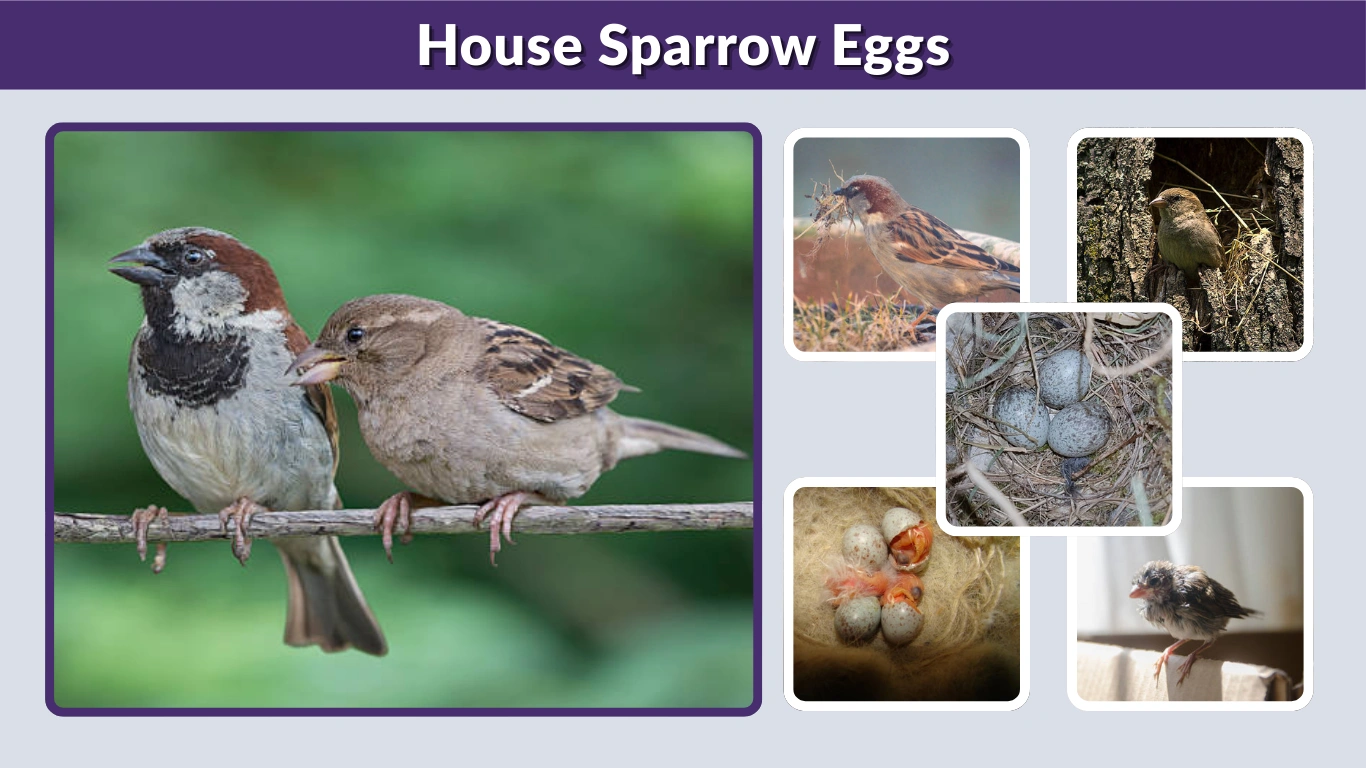
House sparrow eggs are among the most frequently encountered wild bird eggs in neighborhoods, gardens, and nest boxes. These small speckled eggs appear from spring through late summer and are often mistaken for the eggs of house finches, song sparrows, swallows, and bluebirds. Because house sparrows are cavity nesters and highly adaptable, their eggs show up in vents, roofs, sheds, and birdhouses across many regions. This guide explains exactly what house sparrow eggs look like, how to identify them, when they hatch, and how their nesting cycle works.
How to Identify House Sparrow Eggs
- Small oval eggs
- Typically white, cream, pale gray, or pale green
- Speckled with brown, gray, or black dots
- Slightly glossy shell
- Found in deep, messy nests filled with grass and feathers
- Usually 3–7 eggs per clutch
Because house sparrow eggs vary in color and pattern, they can confuse new birdwatchers—but the nest structure and placement offer strong identification clues.
Appearance and Characteristics of House Sparrow Eggs
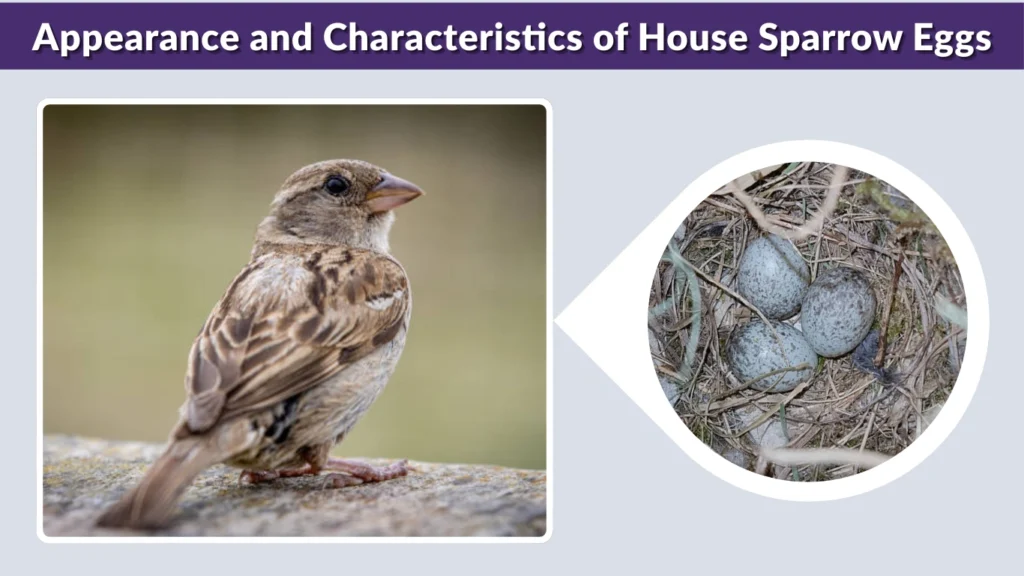
House sparrow eggs are remarkably variable. Some appear nearly white with light speckles, while others are heavily blotched with dark pigments. The variation depends on genetics, the age of the female, and environmental factors. A typical egg is oval-shaped with a smooth surface, often slightly glossy. Speckles tend to concentrate around the wider end of the egg, though distribution can differ between clutches.
Egg color ranges from white to pale gray or greenish. This variation sometimes causes confusion with the eggs of similar species, but sparrow eggs typically show heavier speckling and a more muted base tone. The surface texture is firm yet thin, designed to allow efficient heating during incubation.
House Sparrow Egg Color
The color of house sparrow eggs can include:
- White or creamy white
- Light gray
- Pale greenish tint
- Brown or black speckling
While myths circulate about “house sparrows laying blue eggs,” this is rare. True blue eggs almost always come from Eastern bluebirds, robins, or house finches. Sparrows may occasionally produce a faint bluish sheen, but fully blue eggs are not normal for the species.
The speckling pattern of sparrow eggs is one of their most distinctive traits. Some are lightly dotted while others appear heavily blotched or freckled. Eggs in the same nest may show noticeable differences, reflecting natural variation.
House Sparrow Egg Size and Measurements
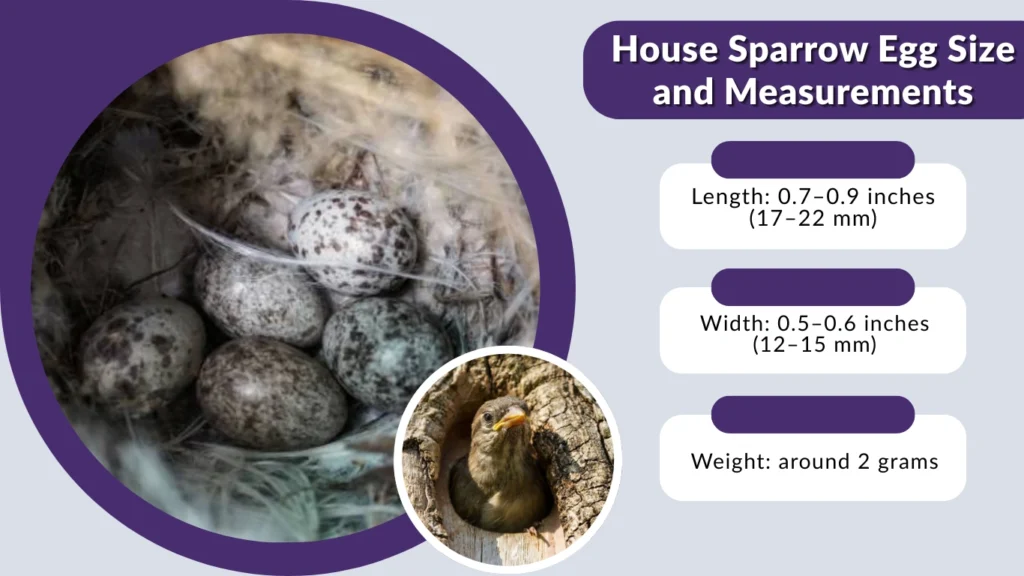
House sparrow eggs are small compared to many backyard bird species. Typical measurements include:
- Length: 0.7–0.9 inches (17–22 mm)
- Width: 0.5–0.6 inches (12–15 mm)
- Weight: around 2 grams
Their small size allows multiple eggs to fit neatly inside the dome-like nest chamber. For birdwatchers, size is an essential clue when distinguishing sparrow eggs from those of house finches (larger and bluer), bluebirds (solid blue), or barn swallows (elongated shape).
A quick size comparison:
- House Sparrow Egg: 0.7–0.9 in
- House Finch Egg: ~0.8 in, pale blue
- Bluebird Egg: ~0.9 in, bright blue
- Song Sparrow Egg: similar speckles but laid in open cup nests
This comparison helps eliminate confusion when identifying eggs in nest boxes.
Clutch Size and How Many Eggs House Sparrows Lay
House sparrows are prolific breeders. A typical clutch contains 3–7 eggs, but some pairs lay up to eight in rare cases. They nest multiple times per year—often 2 to 4 broods during warm seasons. In urban or indoor locations where warmth is constant, sparrows may even attempt additional broods.
Female house sparrows lay one egg per day, usually in the early morning. If a clutch fails due to predation, weather, or disturbance, they may lay a replacement clutch within days.
Some key details about laying frequency:
- Peak laying months: April–July
- Eggs per clutch: 3–7
- Broods per year: 2–4 (sometimes 5 in warm climates)
- Do females lay eggs without mating? Yes, but these eggs are infertile
- Do sparrows lay eggs in other birds’ nests? Rare but possible, especially in competitive situations
Their high reproductive rate is one reason house sparrows spread so successfully in urban areas.
Incubation and Hatching Time
Incubation Period
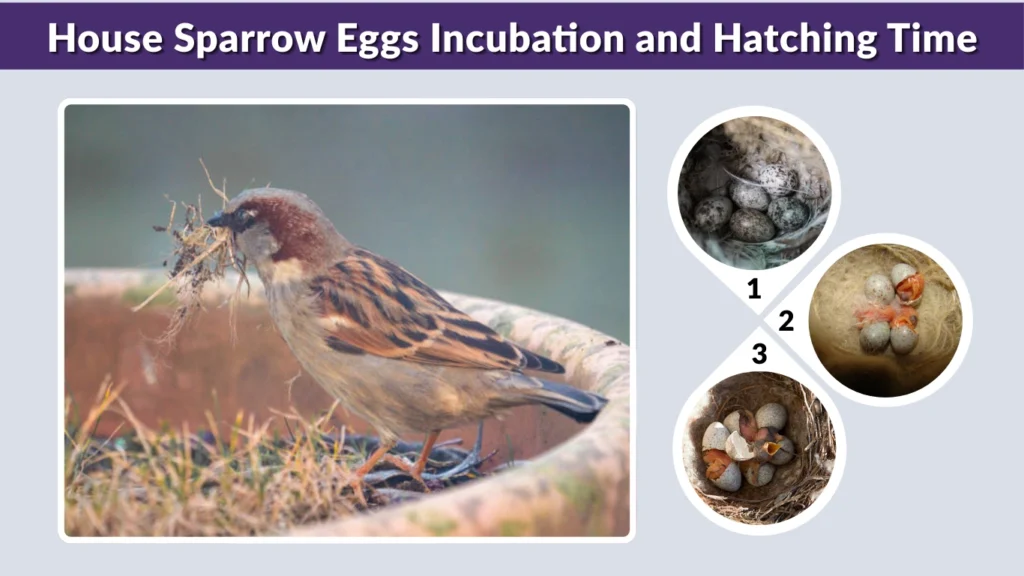
House sparrow eggs require 10–14 days of incubation. Females perform most of the incubation, though males sometimes assist briefly. The eggs remain warm and stable within the densely feather-lined chamber of the nest.
Hatching Time
After incubation, all eggs in a clutch typically hatch within 24 hours of each other. This synchronized hatch helps ensure equal feeding opportunities among chicks.
Some signs of imminent hatching include:
- Slight cracking or “pipping” on the surface
- Dullness in shell color
- Increased parental activity around the nest
- Audible peeping sounds inside the egg
How Long House Sparrow Eggs Take to Hatch
Once incubation begins, house sparrow eggs hatch in 10–14 days. Temperature, nest placement, and parental attentiveness influence the exact timeline. In warm, sheltered areas—such as vents, roofs, and nest boxes attached to buildings—eggs may hatch slightly faster. Cooler temperatures, heavy rain, or disturbed nests may extend the period by a day or two. Because both parents bring food immediately after hatching, the chicks grow rapidly and fledge at around 14–17 days old.
House Sparrow Nest and Eggs: How They Work Together
House sparrows construct tightly packed nests with a deep interior chamber specifically designed to protect their eggs. The nest is lined with feathers, cotton, or soft grasses to help insulate the eggs during incubation. Females spend the majority of the day warming the eggs, leaving only briefly to feed. Males often remain nearby and guard the area from competitors.
Sparrow eggs are usually placed close together in the warmest part of the nest. The dense dome-like structure helps maintain consistent humidity and shields the eggs from predators. Because house sparrows breed early in the year, their nests must provide insulation during cold spring mornings.
Do House Sparrows Sit on Their Eggs?
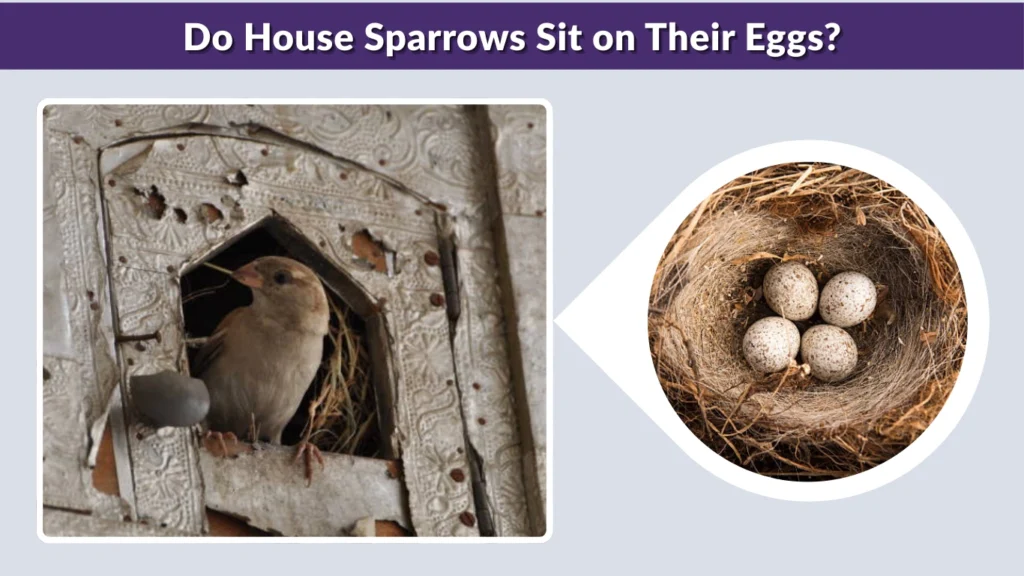
Yes. Female house sparrows begin sitting on their eggs once the clutch is complete or nearly complete, depending on the bird. This delayed incubation results in synchronized hatching, ensuring all chicks develop at a similar rate. Sparrows typically incubate 75–85% of the day, with brief breaks for feeding and stretching.
Males occasionally take short shifts, though the female performs most of the incubation work. During cold weather, the female may remain on the eggs nearly continuously.
Do House Sparrows Abandon Their Eggs?
Abandonment is uncommon but does happen under specific conditions:
- Human disturbance or repeated nest box checks
- Nest parasitism or takeover by other birds
- Predators near the nest
- Eggs that fail to develop
- Severe cold or sudden weather changes
If eggs remain unincubated for more than 24 hours, they are likely abandoned or infertile. Invasive house sparrows rarely abandon viable eggs unless the nesting site becomes unsafe.
Do House Sparrows Move Their Eggs?
No. House sparrows do not move or relocate their eggs. If eggs are found outside the nest, it is usually due to:
- Predation
- A competing bird removing them
- A nest collapse
- A parent bird ejecting a damaged or infertile egg
Because sparrows cannot carry eggs in their beaks, they rely on the stability of the nest itself to protect their clutch.
House Sparrow Egg Comparisons
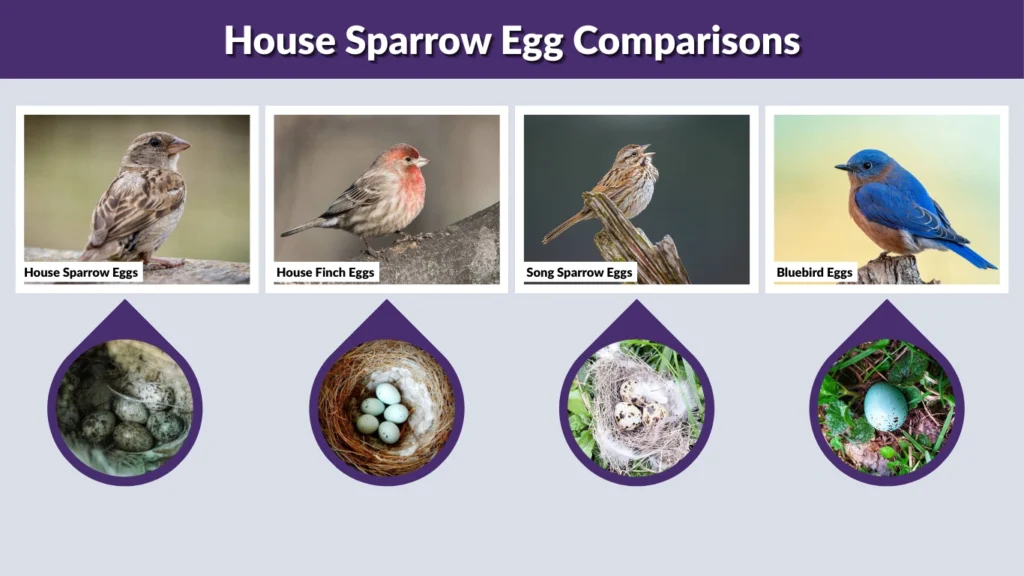
Identifying sparrow eggs often requires comparing them to similar species. Below are the key differences.
House Finch vs House Sparrow Eggs
- House Finch Eggs: Pale blue or bluish-white, sometimes lightly speckled
- House Sparrow Eggs: White/gray/greenish with heavy speckles
- Finch nests are open cups; sparrows create dome-like cavities.
Song Sparrow vs House Sparrow Eggs
- Both species have speckled eggs
- Song sparrow eggs are often slightly larger with more reddish spots
- Nests differ: song sparrows nest in open cups on the ground or low shrubs.
Bluebird vs House Sparrow Eggs
- Bluebird eggs are bright blue or white, never speckled
- Bluebird nests are neat cups; sparrows fill the entire box with grasses and feathers.
Tree Sparrow vs House Sparrow Eggs
- Similar size
- Tree sparrow eggs have finer speckling and are found in woodland cavities
- House sparrows nest around buildings, roofs, and man-made cavities.
Barn Swallow Egg vs House Sparrow Egg
- Barn swallow eggs are creamy with fine speckles
- Nest structure is the giveaway—swallows build mud cup nests on ledges.
House Sparrow Egg Charts (Reference Section)
Color Chart
- White
- Light cream
- Gray
- Pale green
- Brown-black speckling (light to heavy)
Size Chart
| Species | Length | Width |
| House Sparrow | 0.7–0.9 in | 0.5–0.6 in |
| House Finch | ~0.8 in | ~0.6 in |
| Bluebird | ~0.9 in | ~0.7 in |
Speckle Pattern Chart
- Light freckling
- Medium spotting
- Heavy blotches
- Dense dark speckles
Candling Chart (Embryo Development)
Day-by-day changes in veining, embryo movement, and darkening of the egg.
Cultural Symbolism of House Sparrow Eggs
Sparrows have symbolic value in many cultures. Their eggs are often seen as signs of:
- New beginnings
- Family harmony
- Protection and warmth
- Prosperity
In Vastu and Indian traditions, sparrows nesting or laying eggs in a home is viewed as good luck. In European folklore, a sparrow’s eggs represent fertility and the renewal of spring.
FAQ
What do house sparrow eggs look like?
House sparrow eggs are small, oval, and typically white, cream, light gray, or pale green with brown or black speckles. They have a smooth, slightly glossy shell and are usually found in deep, messy nests lined with feathers. Their heavy speckling makes them easy to identify.
When do house sparrows lay eggs?
House sparrows begin laying eggs as early as late February and continue through August. Peak laying months are April through July, when food sources are abundant. Females lay one egg per day until the clutch is complete, usually forming 3–7 eggs per brood.
How many eggs does a house sparrow lay?
A typical house sparrow clutch contains 3–7 eggs, though larger clutches occasionally occur. They produce 2–4 broods per year, depending on climate and food availability. In warm urban environments, sparrows may nest even more frequently due to consistent shelter and warmth.
How long do house sparrow eggs take to hatch?
House sparrow eggs hatch in 10–14 days once incubation begins. Warmer temperatures and sheltered nesting spots may speed up development slightly. All eggs in the clutch generally hatch within 24 hours of each other, allowing the chicks to grow and compete equally for food.
Do house sparrows incubate their eggs constantly?
Female house sparrows perform most of the incubation, spending about 75–85% of each day warming the eggs. They leave only briefly to feed. Males sometimes take short incubation shifts, but the female is the primary caretaker until the chicks hatch.
