
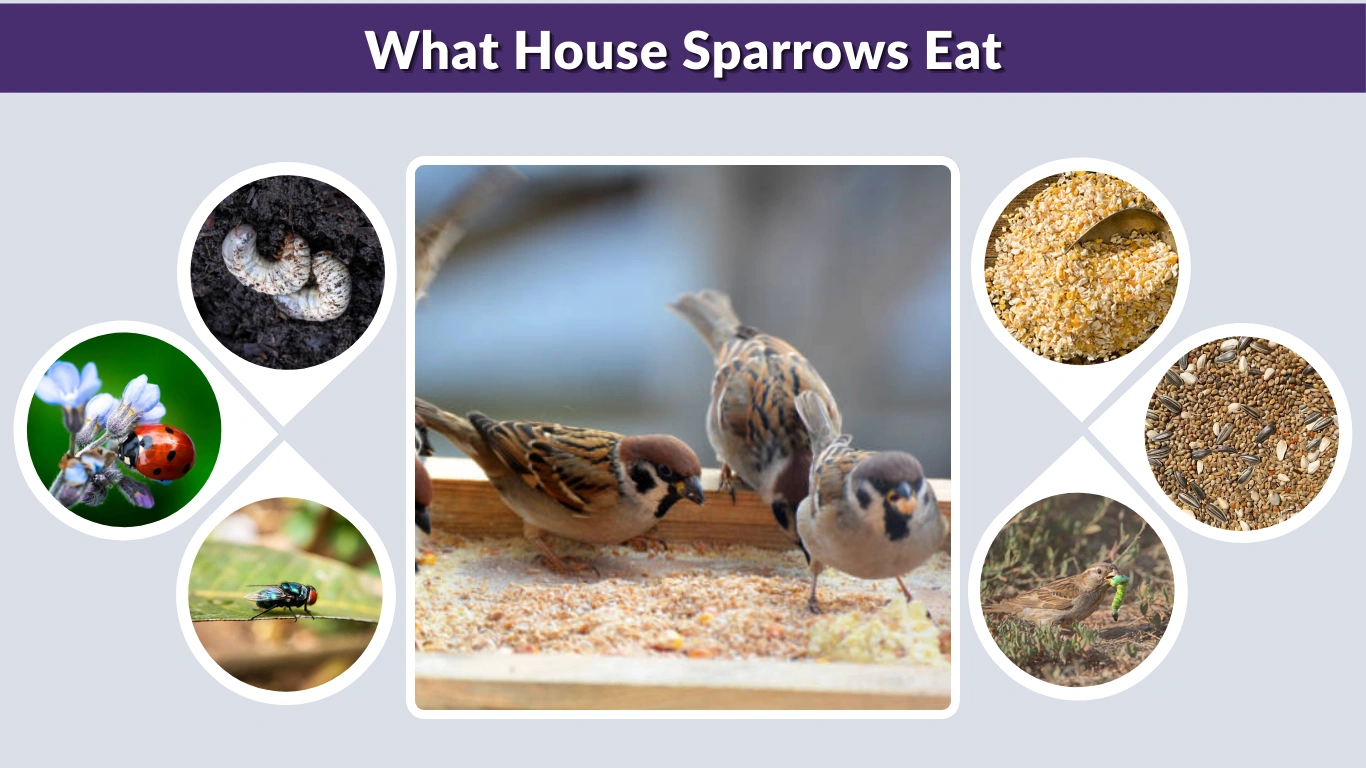
House Sparrows are among the world’s most adaptable birds, capable of thriving in cities, farmland, and rural neighborhoods. Their diet is extremely flexible, allowing them to eat almost anything from seeds and grains to insects, fruits, and even human food scraps. Because they show up in overwhelming numbers at backyard feeders, many birdwatchers want to understand exactly what they eat—and how to control their feeding behavior. This guide breaks down everything House Sparrows eat, what they feed their young, what foods to avoid, and how to stop them from consuming all the birdseed at your feeder.
What Do House Sparrows Eat?
House Sparrows are opportunistic omnivores. Their natural diet includes seeds, grains, insects, and various plant materials, but human environments have expanded their choices significantly. In the wild, they rely on weed seeds, small grains, and insects. Near people, they readily consume commercial birdseed, food scraps, and agricultural crops. This ability to use nearly any food source explains their global success and why they often dominate backyard feeders.
Their seasonal diet also shifts. In spring and summer, they consume more insects to support breeding and growth of chicks. In fall and winter, seeds and grains become their primary calories, especially in cold climates. This dietary flexibility allows House Sparrows to survive in regions with harsh winters and limited natural food.
Because they forage in flocks, they can overwhelm bird feeders quickly. Many birdwatchers report that House Sparrows “eat all the bird seed” because they feed rapidly, aggressively, and often return multiple times throughout the day.
House Sparrow Identification Through Diet
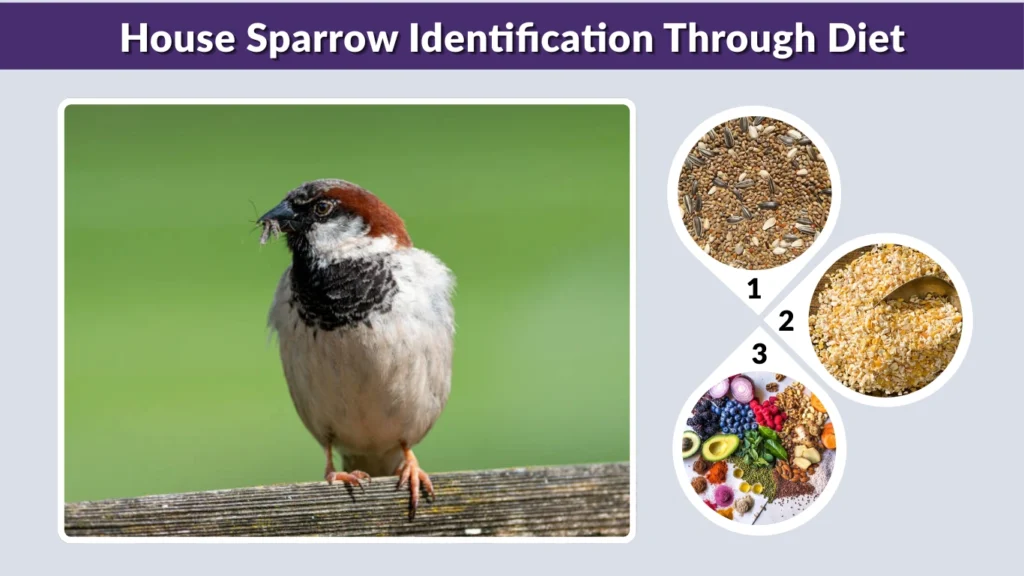
Understanding what they eat can also help identify them. House Sparrows are especially drawn to:
- Small & medium seeds
- Grains and cracked corn
- Insects (especially spring through summer)
- Fruit and plant material
- Human food scraps
- Weed seeds and grasses
- Soft invertebrates like worms and larvae
If a bird is consuming a wide variety of food types—especially grains and urban scraps—it is likely a House Sparrow.
Seeds House Sparrows Eat
Seeds make up the majority of an adult House Sparrow’s diet, particularly in fall and winter. They prefer seeds that are small, easy to crack, and energy-dense. Their strong conical beaks allow them to process many types of seeds, but they show clear preferences.
Sunflower Seeds
House Sparrows do eat sunflower seeds, including black oil sunflower seeds and striped sunflower seeds, though they prefer cracked or smaller seeds because striped sunflower shells can be tougher. Black oil sunflower seeds are easier for them to open, making them a common target at backyard feeders.
Safflower Seeds
Many birdwatchers ask: Do House Sparrows eat safflower seeds?
Sparrows generally dislike safflower, making it one of the best seeds to deter them. While they might occasionally sample it, they usually avoid feeders that offer safflower exclusively.
Nyjer/Thistle Seed
A common question is whether sparrows eat nyjer seed or thistle seed.
House Sparrows rarely eat nyjer because it is tiny and designed for finches with specialized beaks. This makes nyjer feeders another excellent sparrow deterrent.
Peanuts, Nuts & Almonds
House Sparrows will eat peanuts, chopped nuts, and even almonds if they are broken into small pieces. However, they avoid whole nuts or large fragments. “Nuts and dried fruit” mixes will attract them if the pieces are small enough to swallow.
Parakeet & Mixed Bird Foods
Because House Sparrows eat a wide range of grains, they will eat parakeet food, budgie mix, and most small commercial seed blends. They adapt easily to any seed source.
Insects House Sparrows Eat
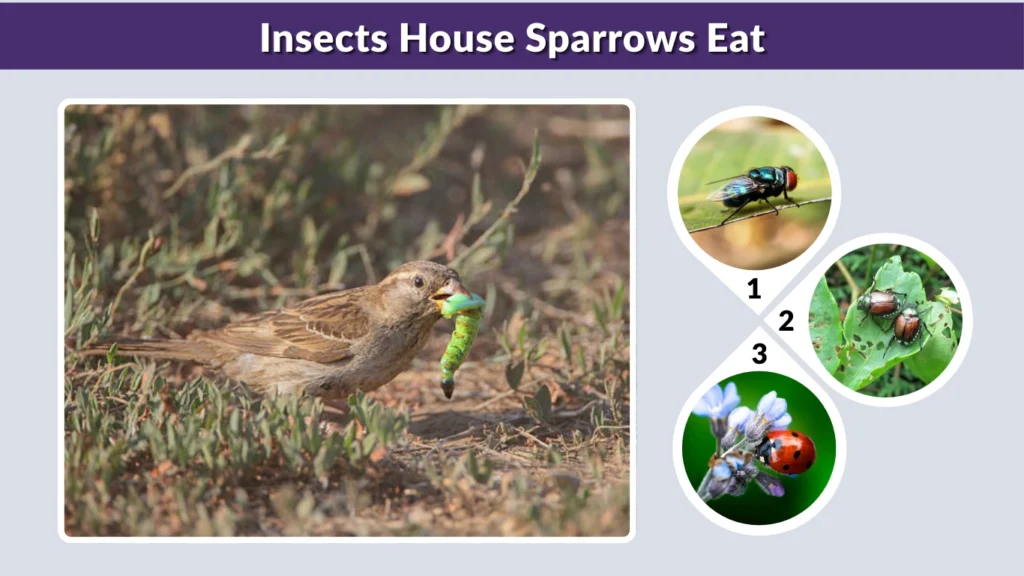
Insects are crucial to House Sparrows, especially during breeding season. Chicks and fledglings require extremely high protein, so adult sparrows deliver insects almost exclusively to their young.
House Sparrows eat:
- Ants
- Flies
- Beetles
- Japanese beetles
- Mosquitoes
- Ladybugs
- Spiders
- Worms
- Mealworms
- Soft-bodied larvae
- Caterpillars
- Aphids and small garden pests
During summer, insects may make up nearly half of their diet. This insect consumption helps them raise multiple broods and supports rapid chick development. Their ability to hunt small bugs also explains why they thrive in agricultural and garden settings, where insect populations are plentiful.
Fruits & Other Foods House Sparrows Eat
House Sparrows also eat fruit, though it represents a smaller portion of their overall diet. They prefer soft fruits such as apples, berries, and grapes. They may taste oranges, but citrus is not a major part of their diet.
They also eat human foods, including:
- Bread (not recommended; low nutrition)
- Rice (safe but not nutritious)
- Crumbs and scraps
- Small pieces of vegetables
Their ability to use human food makes them highly adaptable, but these items should not be offered intentionally because they offer little nutritional value.
What House Sparrows Eat in Winter
Winter drastically changes the feeding habits of House Sparrows. With insects scarce, they rely almost entirely on seeds, grains, and human-provided food sources. Backyard feeders become important for their survival, especially in northern climates. They consume black oil sunflower seeds, millet, cracked corn, and any mixed seed blend that offers calories with minimal effort.
Their foraging patterns also shift. During winter, House Sparrows form tight flocks that move through neighborhoods in search of reliable food sources. They feed more frequently and aggressively, often returning to the same location many times a day. Because winter demands higher energy use, they may even eat foods they normally ignore.
House Sparrows also take advantage of agricultural areas where livestock feed and spilled grain provide consistent nutrition. Their ability to exploit human activity helps them maintain high populations year-round.
What Baby House Sparrows Eat
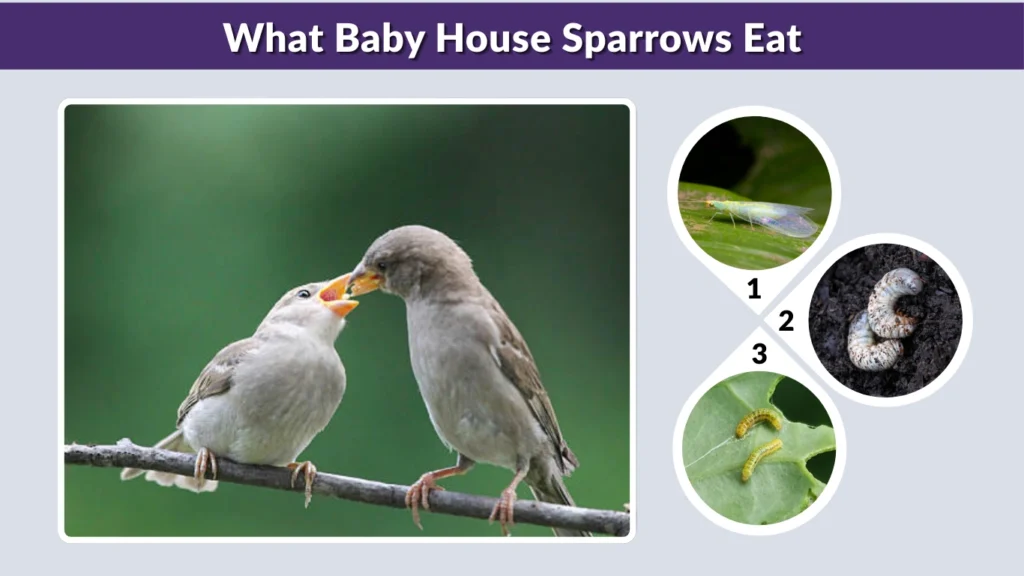
Baby House Sparrows—chicks, nestlings, and fledglings—eat a diet very different from adults. While adult sparrows eat mostly seeds, baby sparrows require insects for rapid growth. Parents feed them a steady diet of:
- Soft-bodied insects
- Caterpillars
- Spiders
- Small flies
- Mosquitoes
- Beetle larvae
- Mealworms (when provided at feeders)
This insect-rich diet provides essential protein, moisture, and nutrients that seeds alone cannot supply. Parent sparrows make dozens of feeding trips per hour, gathering insects from shrubs, lawns, and gardens. As chicks grow into fledglings, the ratio shifts and parents begin introducing small seeds.
By the time fledglings leave the nest permanently, they gradually transition to the adult seed-heavy diet. Queries such as what do fledgling house sparrows eat, what do house sparrow chicks eat, and what do baby house sparrows eat all point to this same nutritional pattern: insects first, seeds later.
House Sparrow Eating Habits & Behavior
House Sparrows are aggressive, opportunistic feeders. They are highly social and typically feed in groups, making them more competitive than many native birds. This flocking behavior allows them to dominate feeders, especially when food is abundant or unsecured.
They prefer platform feeders, ground feeding areas, and wide open trays where multiple birds can eat at once. Because they are bold, they will approach patios, outdoor dining areas, and even take advantage of human food spills. In many urban spaces, House Sparrows are known for snatching crumbs, eating leftovers, and gathering around outdoor restaurants and cafés.
Their ability to eat rapidly and return repeatedly throughout the day explains why many birdwatchers struggle with the issue of house sparrows eating all the food. They simply outcompete slower, more cautious species.
Can You Eat House Sparrows?
Some search queries, such as can you eat house sparrows or are house sparrows good to eat, reference the idea of consuming sparrows. Historically, sparrows were eaten in parts of Europe and Asia, but today they are not considered a food source and are protected or regulated in many regions. Eating House Sparrows is generally discouraged due to legal restrictions, ethical considerations, and the potential risk of urban contaminants.
Queries about eating house sparrow eggs fall into the same category—egg collection is often illegal and disrupts local ecology. The recommended approach is always conservation-minded and respectful of wildlife laws.
Predators: What Eats House Sparrows?
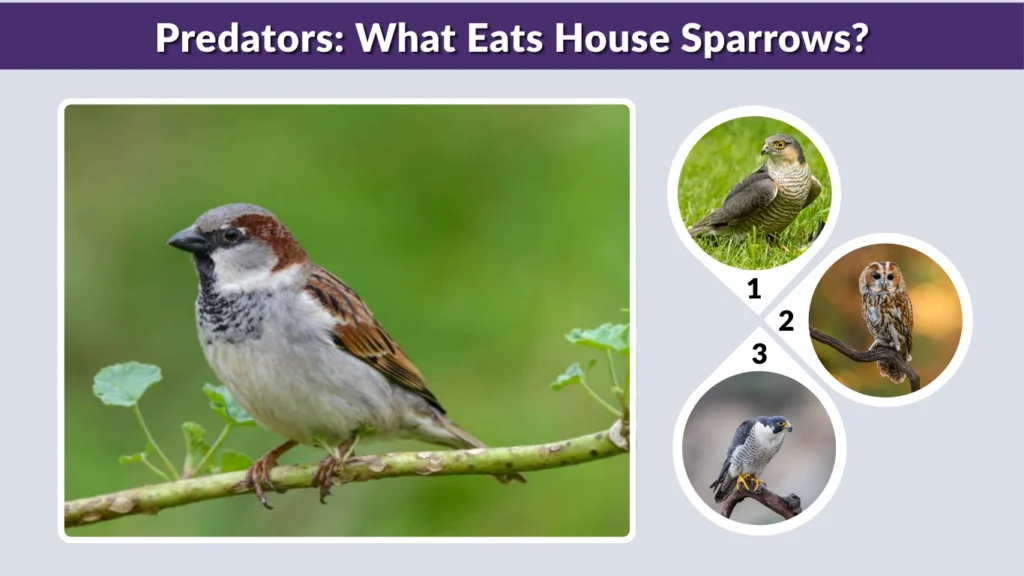
Despite being abundant, House Sparrows face many predators. These birds are preyed upon by:
- Hawks
- Owls
- Falcons
- Snakes
- Cats
- Raccoons
- Corvids (which eat eggs and nestlings)
Eggs and chicks are especially vulnerable. Predators such as snakes and larger birds will raid nests, explaining the frequent search terms like what eats house sparrow eggs and what animals eat house sparrow eggs. In urban environments, cats remain the most common danger.
How to Stop House Sparrows From Eating All the Bird Seed
Many homeowners look for ways to reduce sparrow dominance at feeders. Several strategies work effectively:
Use Seeds House Sparrows Dislike
Safflower and nyjer seeds attract cardinals, chickadees, goldfinches, and other desirable species while discouraging sparrows.
Choose Sparrow-Resistant Feeders
Tube feeders with small ports or weight-sensitive feeders keep sparrows away while allowing smaller birds access.
Remove Open Platforms
Platform and tray feeders encourage sparrows because they allow group feeding. Switching feeder styles significantly reduces sparrow activity.
Limit Cracked Corn & Millet
These grains are sparrow favorites. Reducing them in blends decreases sparrow numbers while still supporting other birds.
Modify Habitat
Dense shrubs and clutter invite sparrow roosts. Tidying the area, trimming hedges, and reducing open perches near feeders can discourage them.
These methods collectively reduce sparrow pressure without harming them or disrupting the natural balance of local wildlife.
Comparison Table: Foods House Sparrows Eat vs Avoid
| Food Type | House Sparrows Eat It? | Notes |
| Sunflower seeds | Yes | Prefer black oil |
| Nyjer | Rarely | Effective deterrent |
| Safflower | No/rare | Strong deterrent |
| Fruit | Yes | Prefer soft fruits |
| Insects | Yes | Essential for chicks |
| Bread | Yes (not ideal) | Low nutrition |
| Peanuts | Yes (chopped) | Avoid salted |
| Mealworms | Yes | Highly nutritious |
| Tomatoes | Very rarely | Acidic |
| Nuts | Sometimes | Must be small |
Habitat & Feeding Environment
House Sparrow diet shifts according to environment. In cities, they rely heavily on food scraps, bakery waste, and human debris. In suburbs, they frequent feeders, lawns, and gardens. In farms and rural landscapes, grain crops and livestock feed provide abundant nutrition. Their ability to adapt to any habitat makes them one of the most successful bird species worldwide.
Range & Seasonal Influence
House Sparrows live across North America, Europe, Asia, and parts of Africa and South America, and their diet changes with each region. Northern populations consume more seeds and rely heavily on winter feeders, while warmer-climate sparrows eat more insects and plant material year-round.
FAQ
What do House Sparrows eat in the wild?
In the wild, they eat primarily weed seeds, insects, grains, and small plant materials. Their wild diet remains seed-heavy but shifts toward insects during breeding season.
Can House Sparrows eat bread or rice?
Yes, but these foods are low in nutrients and should not be offered intentionally. They provide poor energy and lack essential vitamins and proteins.
Do House Sparrows eat insects or just seeds?
They eat both. Adults prefer seeds, while babies require insects. During summer, sparrows intensify insect hunting to support chick development.
What do fledgling House Sparrows eat?
Fledglings receive insects at first, then gradually shift toward seeds as they begin to self-feed.
What foods keep House Sparrows away from feeders?
Nyjer and safflower seeds are the most effective. Tube feeders with small ports also exclude sparrows.
