
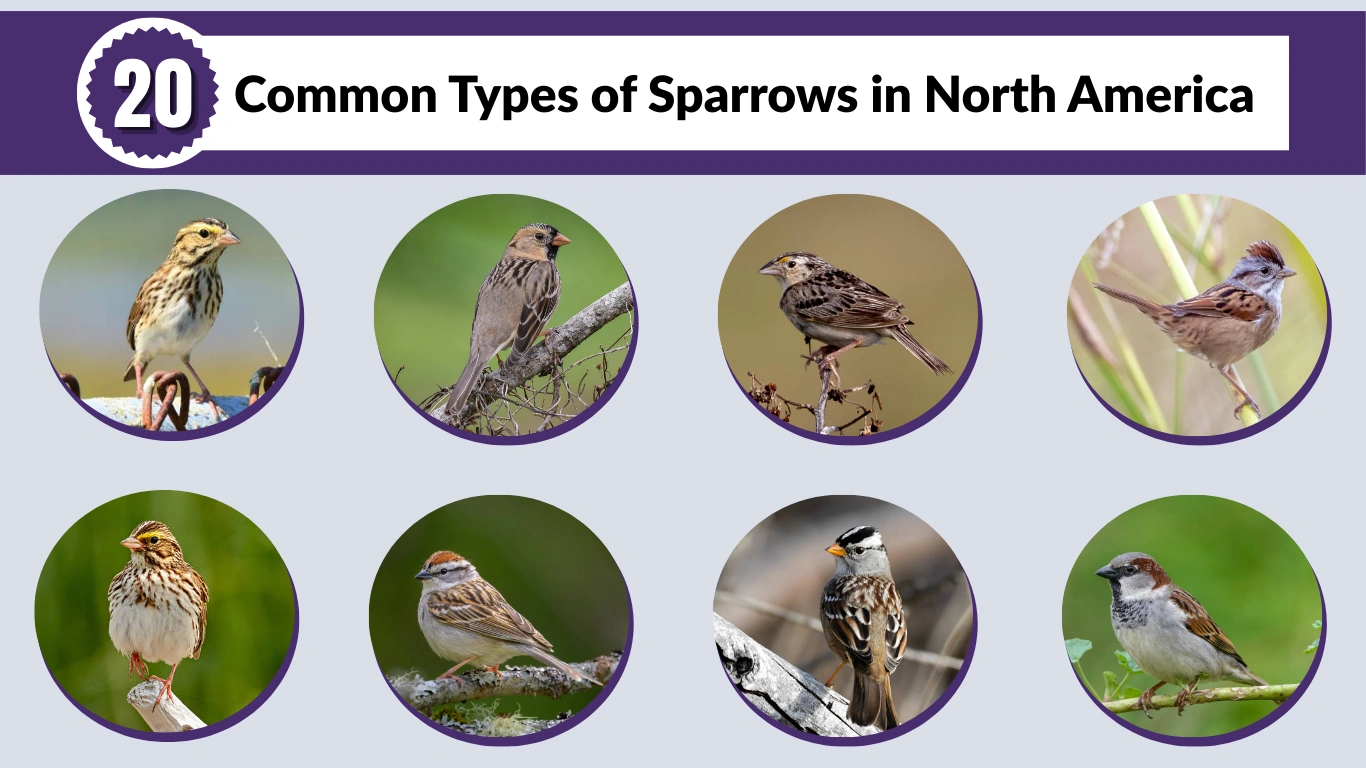
Sparrows are among the most familiar and widespread birds in North America, appearing in backyards, grasslands, forests, wetlands, and city streets. Although many people see them as simple brown birds, sparrows actually include a wide variety of species, each with its own unique markings, songs, and behaviors. From the bold house sparrow in urban areas to secretive marsh sparrows hidden in reeds, North America is home to many common sparrow types worth knowing and identifying.
1. House Sparrow (Passer domesticus)
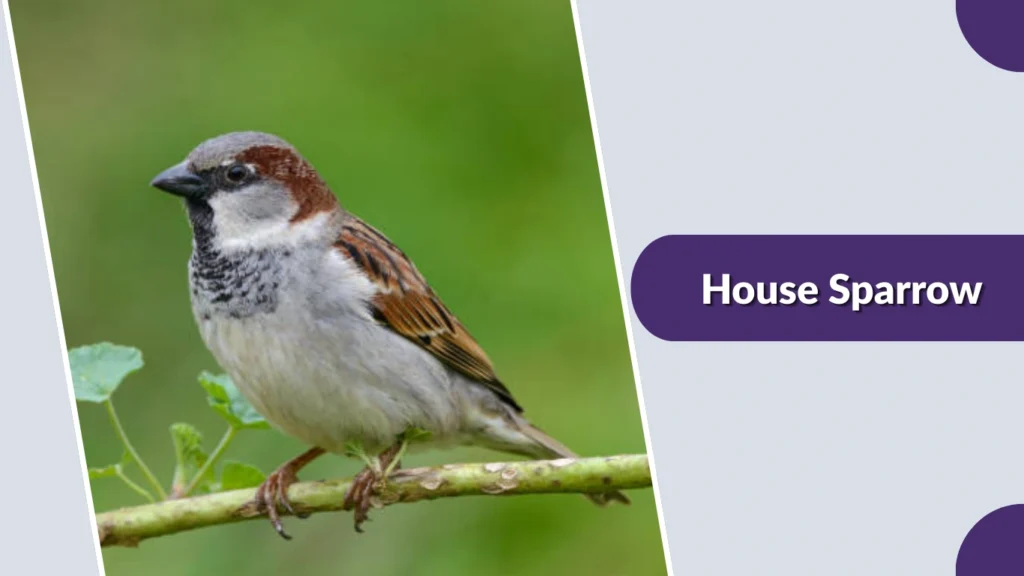
The house sparrow is one of the most widespread and recognizable birds in North America. Originally introduced from Europe in the 1800s, it quickly adapted to cities, towns, and farms. Today, it is commonly seen around buildings, gardens, parking lots, and outdoor restaurants, often living very close to people.
Identification
- Small, chunky bird with a short tail and thick, cone-shaped beak
- Males have a gray crown, chestnut-brown neck, black throat (“bib”), and gray underparts
- Females are plain brown and gray with a pale eyebrow stripe
- Average length: about 6 inches (15 cm)
- Constant chirping and hopping behavior around human structures
Habitat and Range
House sparrows are strongly associated with human settlements. They thrive in cities, suburbs, farms, and villages where buildings provide nesting sites and food is abundant. In North America, they are found almost everywhere, from southern Canada through the United States and into parts of Mexico.
Diet and Feeding Behavior
House sparrows are opportunistic feeders. They mainly eat seeds, grains, and crumbs from human activity, but they also consume insects, especially during the breeding season. You often see them foraging on the ground in flocks, picking at grass seeds, spilled birdseed, and scraps.
Breeding and Lifecycle
House sparrows nest in cavities such as roof gaps, vents, streetlights, and nest boxes. They build messy nests from grass, feathers, and trash. A pair may raise several broods each year, and chicks grow quickly, leaving the nest about two weeks after hatching.
2. Song Sparrow (Melospiza melodia)
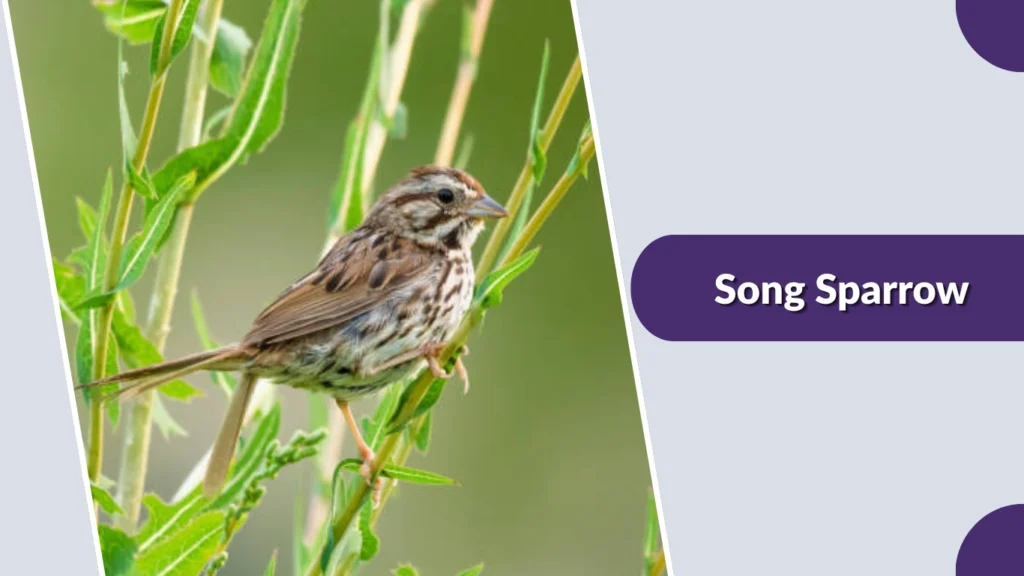
The song sparrow is one of the most familiar native sparrows in North America, well known for its rich, musical songs and adaptability to many environments. It is commonly found in gardens, wetlands, fields, and woodland edges, often staying visible while singing from shrubs or low branches.
Identification
- Medium-sized sparrow with a long, rounded tail
- Brown upperparts with dark streaks and a grayish face
- Heavily streaked white breast with a central dark spot
- Thick, conical bill suited for seeds and insects
- Soft gray eyebrow and bold facial striping
Habitat and Range
Song sparrows inhabit a wide variety of habitats, including marshes, streamsides, meadows, parks, and suburban gardens. Their range covers most of North America, from Alaska and Canada through the United States and into northern Mexico.
Diet and Feeding Behavior
Their diet consists of seeds, berries, and insects. During warmer months, they eat many beetles, caterpillars, and spiders, helping control pests. In winter, they switch mostly to seeds and often visit backyard feeders.
Breeding and Lifecycle
Song sparrows usually nest low in shrubs, grasses, or on the ground. The female builds a cup-shaped nest, and several broods may be raised each year. Eggs hatch in about two weeks, and young birds fledge shortly after.
3. White-throated Sparrow (Zonotrichia albicollis)
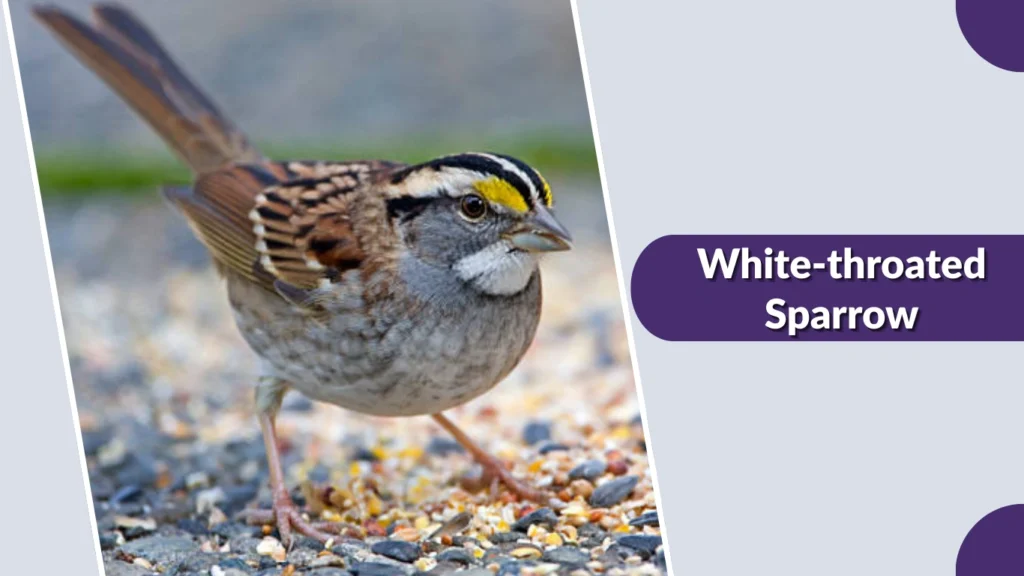
The white-throated sparrow is a striking and well-loved North American sparrow, famous for its clear whistled song that many people remember as “Oh-sweet-Canada-Canada.” It is especially common during migration and winter in gardens and forest edges.
Identification
- Gray chest and bright white throat patch
- Bold black-and-white or tan-and-white head stripes
- Yellow spots between the eyes and bill
- Brown wings with light striping
- Short, stout bill adapted for seed eating
Habitat and Range
White-throated sparrows breed in northern forests of Canada and the northeastern United States. In winter, they migrate south to much of the eastern and central U.S., where they favor woodland edges, thickets, and backyard feeding areas.
Diet and Feeding Behavior
They mainly eat seeds, fruits, and insects. In fall and winter, they forage on the ground beneath shrubs, scratching leaf litter for seeds. During summer, they consume more insects and small invertebrates.
Breeding and Lifecycle
White-throated sparrows build their nests on or near the ground in dense vegetation. The female incubates the eggs while the male guards the territory. Chicks hatch after about 11–14 days and leave the nest within two weeks.
4. White-crowned Sparrow (Zonotrichia leucophrys)
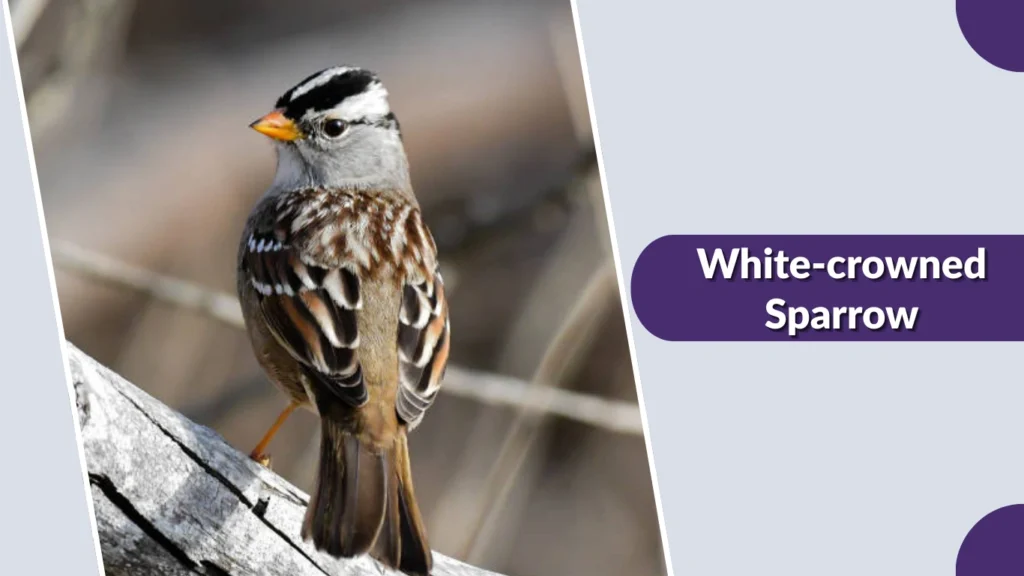
The white-crowned sparrow is a bold, clean-marked sparrow that is easy to recognize by its striking head pattern. It is a common sight across much of North America, especially during migration, when flocks appear in gardens, parks, and open brushy areas.
Identification
- Distinct black-and-white striped crown
- Gray face, throat, and underparts
- Brown wings with pale wing bars
- Pink or orange bill
- Medium-sized sparrow with a long tail
Habitat and Range
White-crowned sparrows breed in Arctic tundra, alpine meadows, and northern forests. During migration and winter, they are widespread across the United States and parts of Mexico, favoring hedgerows, fields, scrublands, and suburban yards.
Diet and Feeding Behavior
Their diet includes seeds, grains, berries, and insects. They commonly forage on the ground in small groups, scratching soil and leaf litter. In summer, insects make up a larger portion of their food, especially for feeding chicks.
Breeding and Lifecycle
Nests are usually placed on or near the ground, hidden in shrubs or grasses. The female builds the nest and incubates the eggs. Both parents help feed the young, which fledge about 10 to 14 days after hatching.
5. Chipping Sparrow (Spizella passerina)
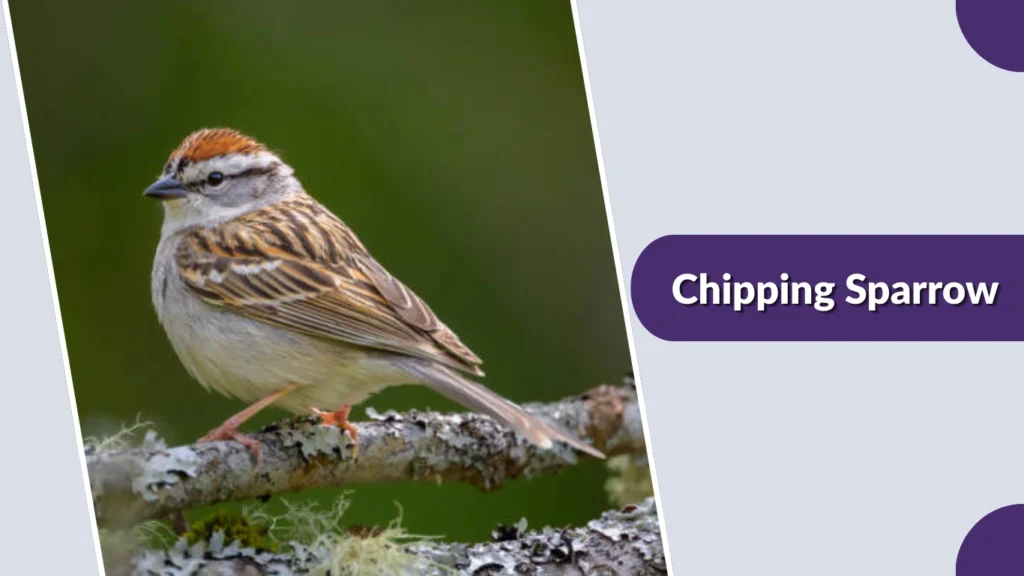
The chipping sparrow is a small, slim sparrow often seen hopping across lawns or perched in low trees. Its neat appearance and dry, trilling song make it a familiar bird in neighborhoods, parks, and forest edges throughout much of North America.
Identification
- Rusty-red cap and clean gray face
- Bold black eye line
- Pale gray underparts without heavy streaking
- Thin, pointed bill compared to many sparrows
- Long, narrow tail
Habitat and Range
Chipping sparrows live in open woodlands, orchards, parks, and suburban areas. They breed across most of the United States and Canada and migrate south to the southern U.S., Mexico, and Central America for winter.
Diet and Feeding Behavior
They feed mainly on seeds and small insects. In warmer months, insects are especially important for raising young. Chipping sparrows often forage on open ground, picking up seeds from grass and visiting backyard feeders.
Breeding and Lifecycle
Chipping sparrows build neat, cup-shaped nests in trees or shrubs. The female incubates the eggs, which hatch in about 11 days. Young birds leave the nest roughly two weeks later but continue to be fed by the parents.
6. Field Sparrow (Spizella pusilla)
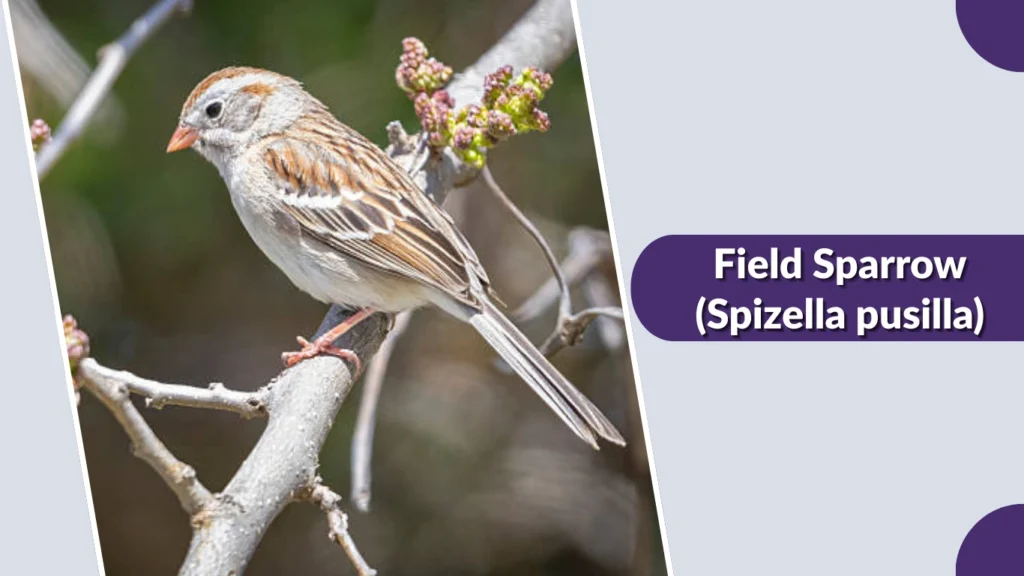
The field sparrow is a gentle-looking, warm-colored sparrow known for its soft pink bill and long tail. It is often heard before it is seen, singing a sweet, whistling song from low shrubs in open countryside and brushy fields.
Identification
- Warm brown back with subtle streaking
- Plain gray face with a thin white eye ring
- Pink bill and pinkish legs
- Long, rounded tail
- Clean, mostly unstreaked breast
Habitat and Range
Field sparrows prefer open habitats such as old fields, meadows, overgrown pastures, and woodland edges. They are most common in the eastern and central United States, breeding from southern Canada to the southern U.S., and wintering mainly in the southeastern states.
Diet and Feeding Behavior
They feed largely on grass seeds and small insects. In summer, beetles, caterpillars, and grasshoppers are important foods, especially for young birds. They usually forage on the ground, moving quietly through low vegetation.
Breeding and Lifecycle
Field sparrows build their nests low in shrubs or grasses. The female lays three to five eggs, and several broods may be raised in one season. Chicks leave the nest about 8 to 10 days after hatching.
7. Savannah Sparrow (Passerculus sandwichensis)
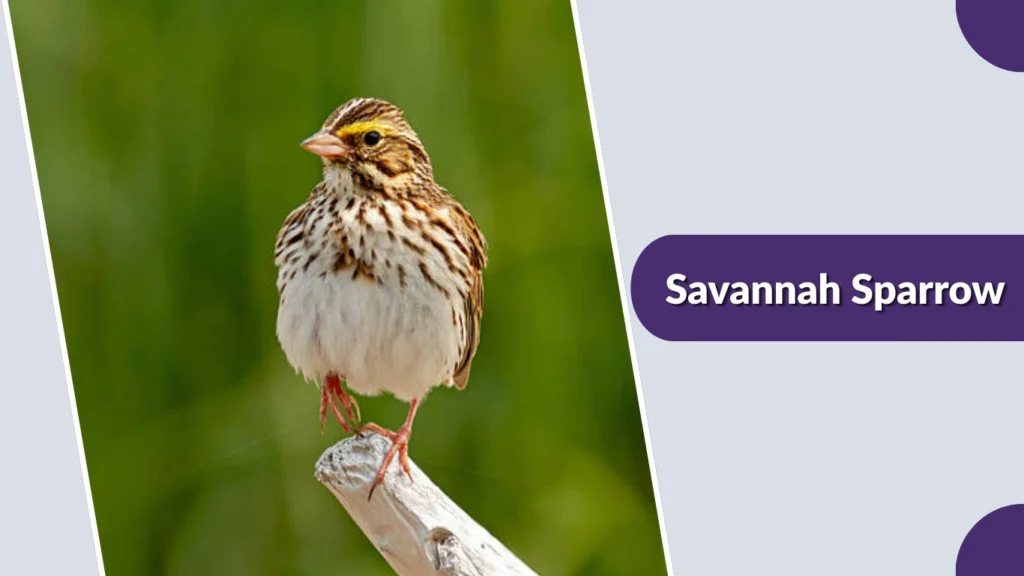
The savannah sparrow is a widespread and variable sparrow, easily recognized by its streaked body and small yellow patch near the eye. It is one of the most common sparrows of open landscapes across North America.
Identification
- Brown and gray streaked back and wings
- Heavily streaked chest with a central spot
- Short tail and small, pointed bill
- Yellowish mark in front of the eye
- Overall slim, ground-dwelling appearance
Habitat and Range
Savannah sparrows are found in grasslands, coastal marshes, agricultural fields, tundra, and meadows. They breed across much of Canada and the northern United States and migrate south for winter throughout the U.S., Mexico, and Central America.
Diet and Feeding Behavior
Their diet consists mainly of seeds, but insects become very important in the breeding season. They forage on the ground, walking rather than hopping, and often flush suddenly from grasses when disturbed.
Breeding and Lifecycle
Nests are built on the ground, hidden in grasses. The female incubates the eggs, and both parents feed the chicks. Young savannah sparrows usually fledge about 10 to 12 days after hatching.
8. Fox Sparrow (Passerella iliaca)
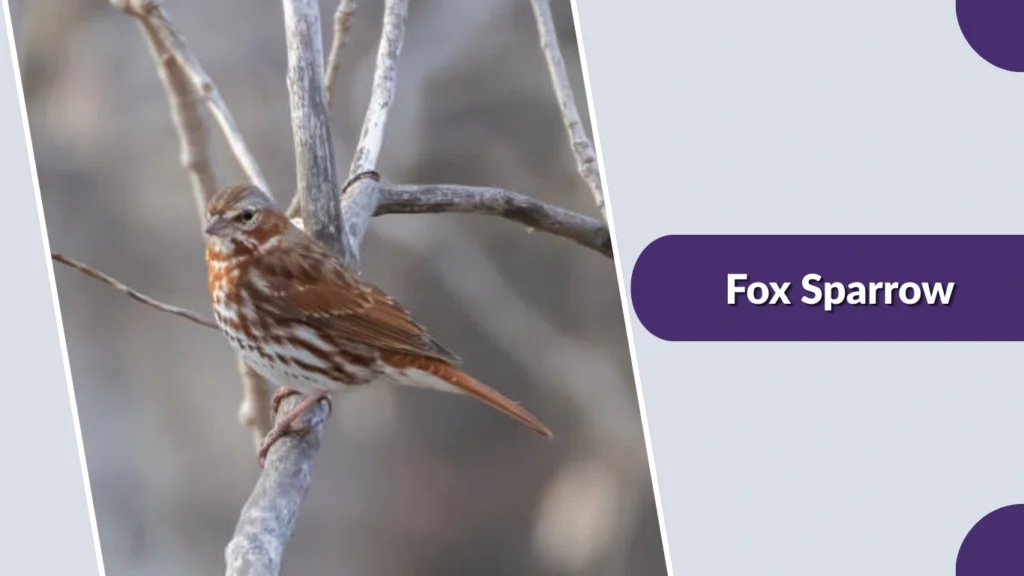
The fox sparrow is a large, powerful sparrow with rich coloring and bold spotting. It is especially noticeable for its habit of noisily scratching through leaves with both feet while searching for food.
Identification
- Large sparrow with a thick, strong bill
- Rich reddish-brown or gray upperparts (varies by region)
- White to gray breast heavily spotted with dark markings
- Rounded tail and chunky body shape
- Often seen kicking leaf litter while foraging
Habitat and Range
Fox sparrows breed in northern forests, thickets, and mountainous regions. In winter, they migrate to the southern United States and the Pacific Coast, favoring dense shrubs, woodland edges, and brushy gardens.
Diet and Feeding Behavior
They eat seeds, berries, and insects. Fox sparrows are well known for double-scratching in leaf litter to uncover insects and fallen seeds. During the breeding season, they consume more invertebrates.
Breeding and Lifecycle
Nests are built on or near the ground, or sometimes low in shrubs. The female incubates the eggs, and both parents feed the young. Chicks usually leave the nest around 9 to 11 days after hatching.
9. Lincoln’s Sparrow (Melospiza lincolnii)
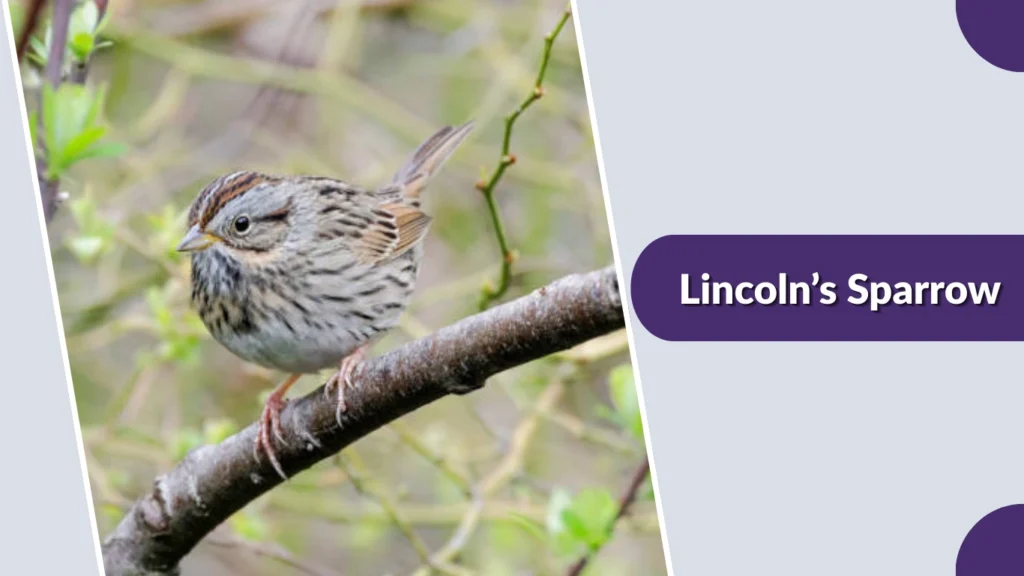
Lincoln’s sparrow is a shy, finely marked sparrow often found skulking in dense vegetation. Although not always easy to see, its soft, musical song is commonly heard during spring and fall migration.
Identification
- Fine, buffy streaking on the breast and sides
- Gray face with a buff-colored eye stripe
- Thin, delicate bill
- Brown, finely streaked back
- Small, slim-bodied sparrow
Habitat and Range
Lincoln’s sparrows breed in northern wetlands, bogs, and shrubby areas across Canada and the northern U.S. During migration and winter, they move south into the United States and Mexico, using marsh edges, thickets, and overgrown fields.
Diet and Feeding Behavior
They feed on seeds, small fruits, and insects. Lincoln’s sparrows usually forage low to the ground, picking food from soil, mud, and low plants, often near water.
Breeding and Lifecycle
Nests are built on or near the ground in dense vegetation. The female incubates the eggs, and both parents feed the chicks. Young birds fledge roughly 10 to 12 days after hatching.
10. Swamp Sparrow (Melospiza georgiana)
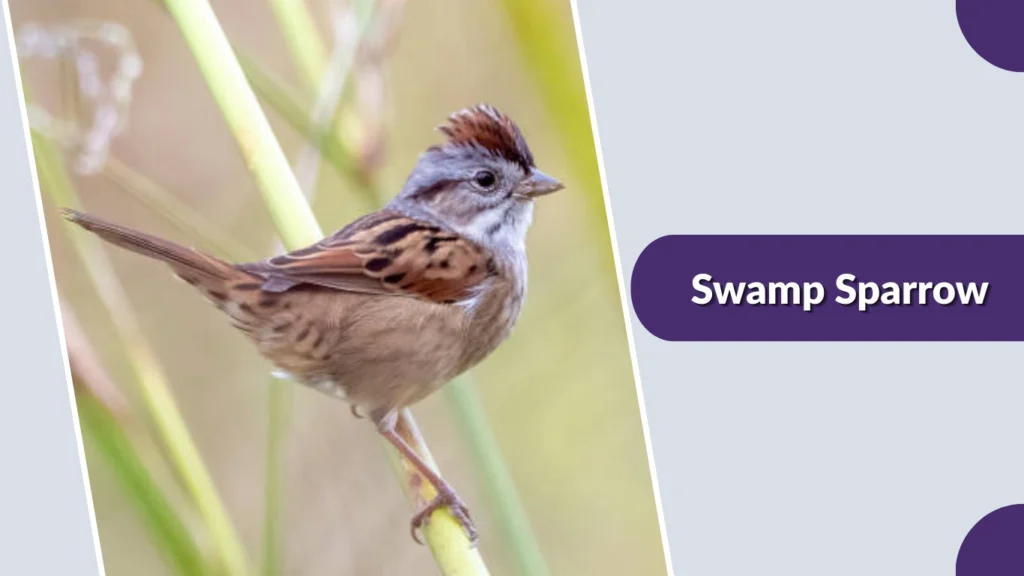
The swamp sparrow is a secretive bird of wetlands and marshes, often seen clinging to reeds or low shrubs near water. Its rich, rusty wings and soft trilling song make it a distinctive sparrow in the right habitat.
Identification
- Gray face and breast with a clean, unstreaked look
- Rich chestnut wings and back
- Rusty cap and gray eyebrow
- Medium-sized sparrow with a rounded tail
- Often stays low in wet vegetation
Habitat and Range
Swamp sparrows live mainly in freshwater marshes, bogs, and wet meadows. They breed across southern Canada and the northern United States and migrate south in winter to the southeastern U.S., favoring dense wetland vegetation.
Diet and Feeding Behavior
They eat seeds, aquatic insects, spiders, and small invertebrates. Swamp sparrows forage low in marsh plants or along muddy edges, sometimes wading in shallow water to pick up food.
Breeding and Lifecycle
Nests are built low in reeds or shrubs above water. The female incubates the eggs, and both parents help feed the chicks. Young usually fledge about 9 to 12 days after hatching.
11. Vesper Sparrow (Pooecetes gramineus)
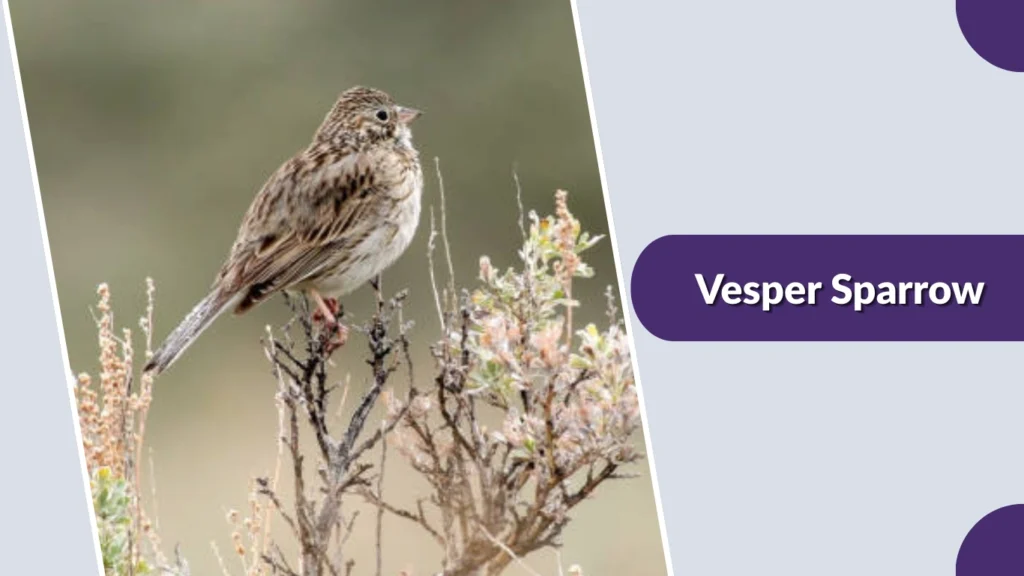
The vesper sparrow is a ground-loving bird of open country, named for its pleasant evening song. It is often seen perched on fence posts or walking through fields and grasslands.
Identification
- Brown streaked back and crown
- White outer tail feathers visible in flight
- Pale eye ring and lightly streaked breast
- Medium-sized sparrow with a slender build
- Often flushes from the ground when approached
Habitat and Range
Vesper sparrows prefer dry, open habitats such as prairies, farmlands, and short-grass fields. They breed across much of the United States and southern Canada and migrate to the southern U.S. and Mexico in winter.
Diet and Feeding Behavior
Their diet includes seeds, grasses, and insects. In summer, grasshoppers, beetles, and caterpillars are important foods. They forage mostly on the ground, walking rather than hopping.
Breeding and Lifecycle
Nests are built on the ground in shallow depressions hidden by grass. The female incubates the eggs, and both parents feed the young. Chicks usually leave the nest around 10 to 12 days after hatching.
12. Dark-eyed Junco (Junco hyemalis)
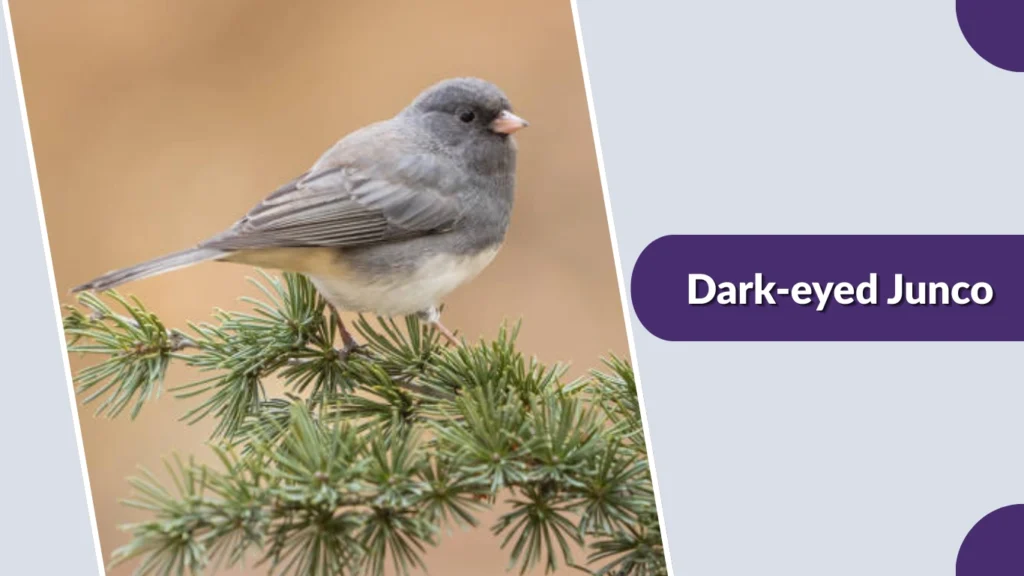
The dark-eyed junco is often called the “snowbird” because it commonly appears around homes and feeders in winter. Although sometimes not thought of as a sparrow, it belongs to the sparrow family and is one of the most widespread sparrow species in North America.
Identification
- Smooth gray, brown, or blackish upperparts depending on region
- White belly with sharply contrasting sides
- Pinkish bill
- White outer tail feathers that flash in flight
- Rounded head and fairly long tail
Habitat and Range
Dark-eyed juncos breed mainly in northern forests and mountainous regions. In winter, they move south across most of the United States, commonly visiting woodlands, parks, and backyard feeding areas.
Diet and Feeding Behavior
They feed mostly on seeds, but insects become important in summer. Juncos often forage on the ground in flocks, hopping and scratching for fallen seeds. They readily visit feeders for millet and cracked corn.
Breeding and Lifecycle
Nests are usually placed on the ground or in low banks and roots. The female builds the nest and incubates the eggs. Young birds fledge about 9 to 13 days after hatching.
13. Grasshopper Sparrow (Ammodramus savannarum)
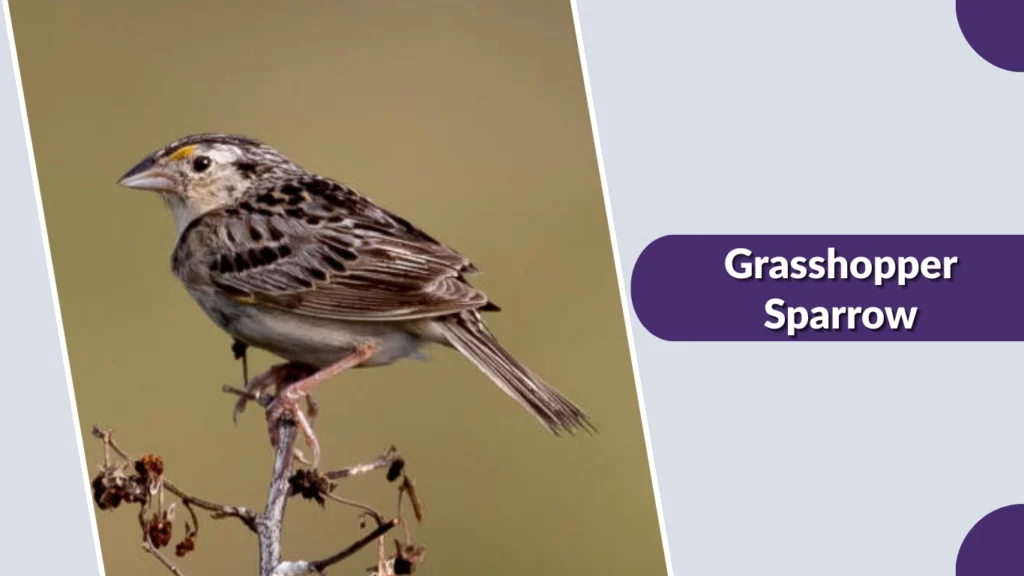
The grasshopper sparrow is a small, flat-headed sparrow of open grasslands, named for its thin, insect-like buzzing song. It is more often heard than seen, as it blends well with dry grasses.
Identification
- Flat head with a short, thick bill
- Pale breast with little to no streaking
- Yellowish mark in front of the eye
- Brown and black patterned back
- Short tail and compact body
Habitat and Range
Grasshopper sparrows live in native prairies, hayfields, and open grasslands. They breed across much of the central and eastern United States and southern Canada and migrate south into the southern U.S., Mexico, and the Caribbean.
Diet and Feeding Behavior
They eat insects, especially grasshoppers, beetles, and caterpillars, along with seeds. They forage low on the ground, often running between grass clumps rather than flying.
Breeding and Lifecycle
Nests are built on the ground under thick grass. The female incubates the eggs, and both parents feed the chicks. Young sparrows fledge about 9 to 12 days after hatching.
14. Lark Sparrow (Chondestes grammacus)
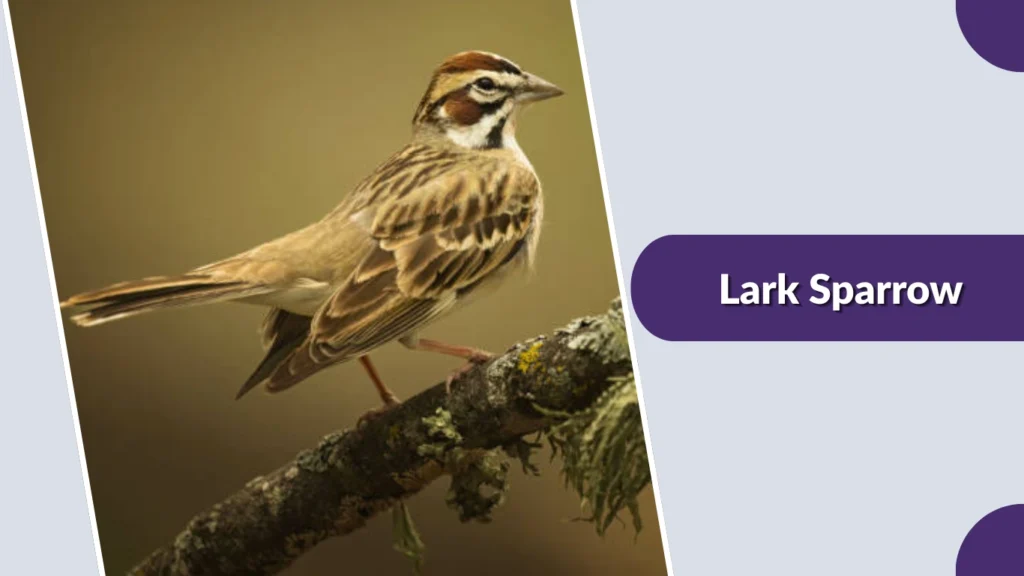
The lark sparrow is a strikingly patterned sparrow with a bold facial design and a melodious song. It is commonly seen in open habitats, often feeding on the ground or singing from fence posts and low shrubs.
Identification
- Bold black, chestnut, and white facial pattern
- White underparts with a dark central chest spot
- Brown, streaked back
- Long tail with white corners visible in flight
- Thick, pale bill
Habitat and Range
Lark sparrows prefer open woodlands, grasslands with scattered shrubs, deserts, and farmland. They breed across much of the central and western United States and migrate south to the southern U.S. and Mexico in winter.
Diet and Feeding Behavior
They eat seeds, grains, and insects. During summer, insects such as beetles, caterpillars, and grasshoppers are important. Lark sparrows usually forage on open ground, often in loose flocks outside the breeding season.
Breeding and Lifecycle
Nests are built on the ground or low in shrubs. The female incubates the eggs, and both parents feed the chicks. Young birds typically leave the nest about 9 to 12 days after hatching.
15. Harris’s Sparrow (Zonotrichia querula)
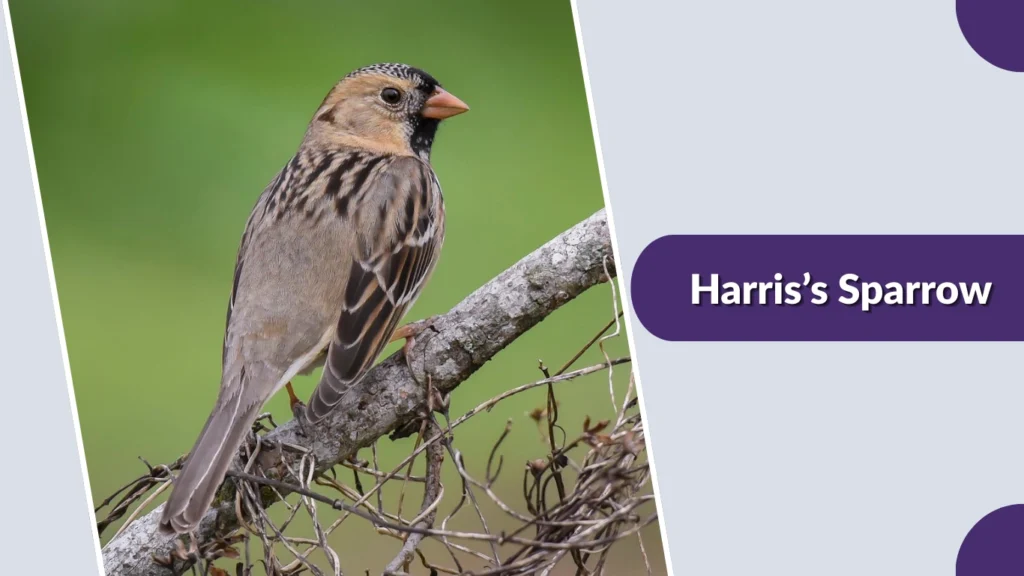
Harris’s sparrow is the largest sparrow native to North America and is easily recognized by its bold black face and bib. It is a favorite winter visitor to feeders in the central United States.
Identification
- Black crown, face, and throat
- Gray cheeks and underparts
- Brown, streaked back
- Thick, pinkish bill
- Large, robust sparrow shape
Habitat and Range
Harris’s sparrows breed only in a small region of northern Canada near the Arctic tree line. In winter, they migrate to the central United States, inhabiting woodlands, hedgerows, parks, and suburban areas.
Diet and Feeding Behavior
They feed mainly on seeds, fruits, and insects. In winter, they commonly visit backyard feeders, eating sunflower seeds and millet. They forage mostly on the ground beneath shrubs.
Breeding and Lifecycle
Nests are built on or near the ground in dense shrubs. The female incubates the eggs, and both parents feed the young. Chicks fledge about 9 to 11 days after hatching.
16. Clay-colored Sparrow (Spizella pallida)
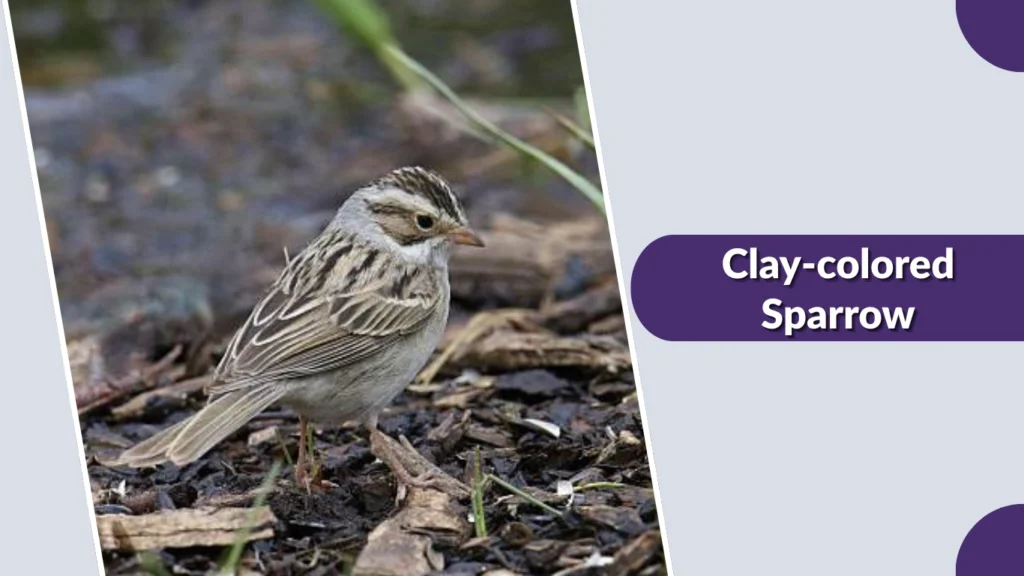
The clay-colored sparrow is a small, pale sparrow with a neat, crisp head pattern. It is more often heard than seen, giving a dry, buzzing song from shrubs in open woodland and brushy grasslands.
Identification
- Pale gray-brown body with minimal streaking
- Distinct dark cheek patch bordered by pale lines
- Light crown stripes and pale eyebrow
- Small, pinkish bill
- Slim body and long tail
Habitat and Range
Clay-colored sparrows breed in brushy fields, shrubby grasslands, and open woodland edges across central Canada and the northern United States. In winter, they migrate south to the southern U.S., Mexico, and Central America.
Diet and Feeding Behavior
They feed mainly on seeds and small insects. During summer, insects become important for feeding young. Clay-colored sparrows forage low in shrubs or on the ground, often moving quietly through vegetation.
Breeding and Lifecycle
Nests are built low in shrubs or small trees. The female incubates the eggs, and both parents help feed the chicks. Young birds usually leave the nest 9 to 12 days after hatching.
17. Brewer’s Sparrow (Spizella breweri)
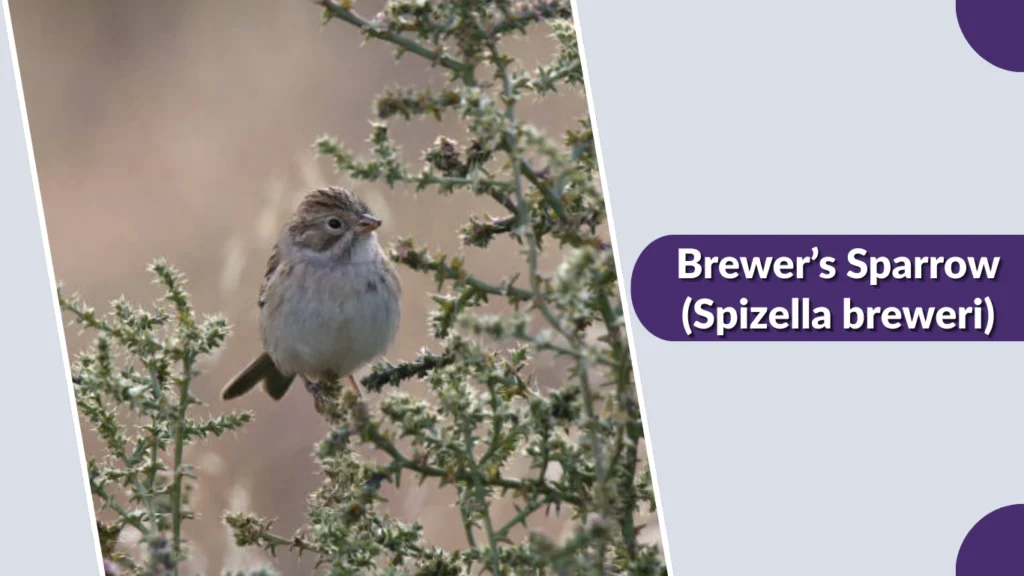
Brewer’s sparrow is a small, gray-brown sparrow of the western shrublands, known for its subtle appearance and sweet, tinkling song. It blends easily into sagebrush and dry scrub habitats.
Identification
- Soft gray face with faint eyebrow
- Finely streaked brown back
- Pale, lightly streaked underparts
- Thin, pointed bill
- Small, slender sparrow shape
Habitat and Range
Brewer’s sparrows are strongly associated with sagebrush and dry shrublands of the western United States and southern Canada. They breed in these regions and migrate south to the southwestern U.S. and Mexico in winter.
Diet and Feeding Behavior
They eat insects, spiders, and seeds. In summer, insects dominate the diet, while seeds become more important in fall and winter. They usually forage low in shrubs or on the ground.
Breeding and Lifecycle
Nests are placed low in sagebrush or shrubs. The female incubates the eggs, and both parents feed the chicks. Fledging occurs about 8 to 10 days after hatching.
18. LeConte’s Sparrow (Ammospiza leconteii)
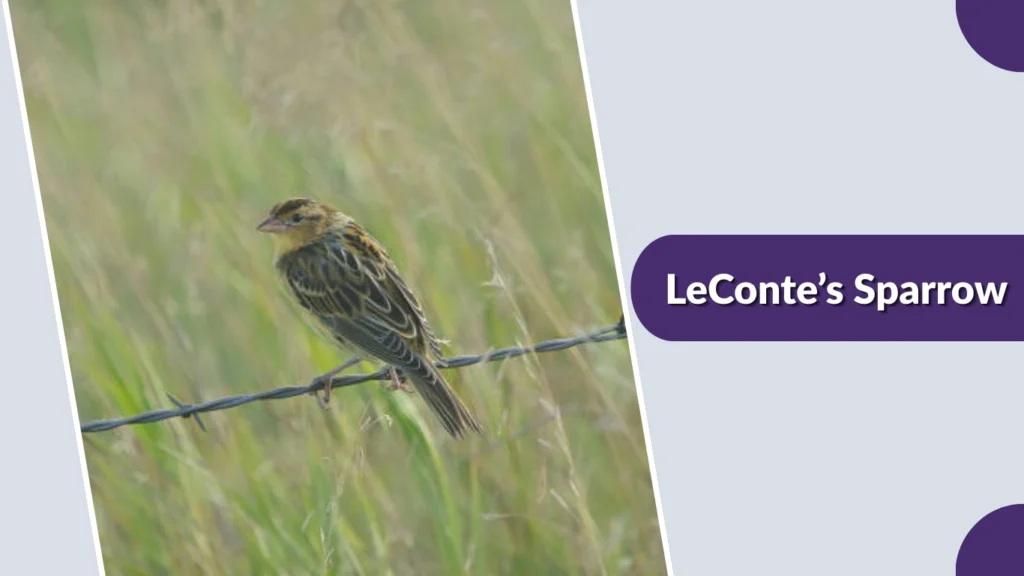
LeConte’s sparrow is a tiny, beautifully patterned sparrow that is often difficult to spot because it hides in thick grasses. It is best known for its bright buffy face and fine, crisp markings.
Identification
- Bright orange-buff face with gray cheek and crown stripes
- Finely streaked back with black and white lines
- Pale, lightly marked breast
- Very small body with a short tail
- Thin, pointed bill
Habitat and Range
LeConte’s sparrows breed in wet meadows and northern grasslands of Canada and the north-central United States. In winter, they migrate to the southeastern United States, favoring coastal prairies, rice fields, and grassy wetlands.
Diet and Feeding Behavior
They feed mainly on insects and seeds. During the breeding season, insects such as flies and beetles are especially important. LeConte’s sparrows forage low in dense grasses, rarely flying far.
Breeding and Lifecycle
Nests are hidden on the ground under thick vegetation. The female incubates the eggs, and both parents feed the chicks. Young birds usually fledge about 7 to 10 days after hatching.
19. Nelson’s Sparrow (Ammospiza nelsoni)
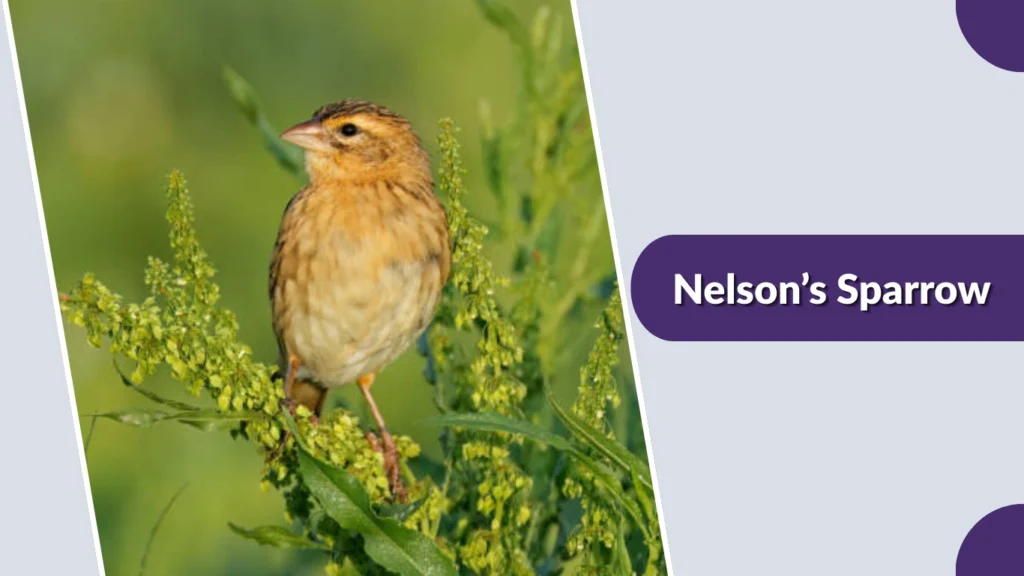
Nelson’s sparrow is a small, secretive marsh sparrow with a soft gray and buff appearance. It is most often found creeping through dense grasses in coastal and inland wetlands.
Identification
- Gray face and crown with buffy cheeks
- Orange-buff breast and face wash
- Finely streaked back
- Short tail and small bill
- Often stays hidden in marsh vegetation
Habitat and Range
Nelson’s sparrows breed in northern freshwater and saltwater marshes of Canada and the northern United States. In winter, they migrate to coastal marshes along the Atlantic and Gulf coasts.
Diet and Feeding Behavior
They eat insects, small crustaceans, spiders, and seeds. Nelson’s sparrows forage low in marsh grasses, picking food from mud, stems, and shallow water edges.
Breeding and Lifecycle
Nests are built on or near the ground in dense marsh plants. The female incubates the eggs, and both parents feed the chicks. Fledging usually occurs about 8 to 11 days after hatching.
20. Seaside Sparrow (Ammospiza maritima)
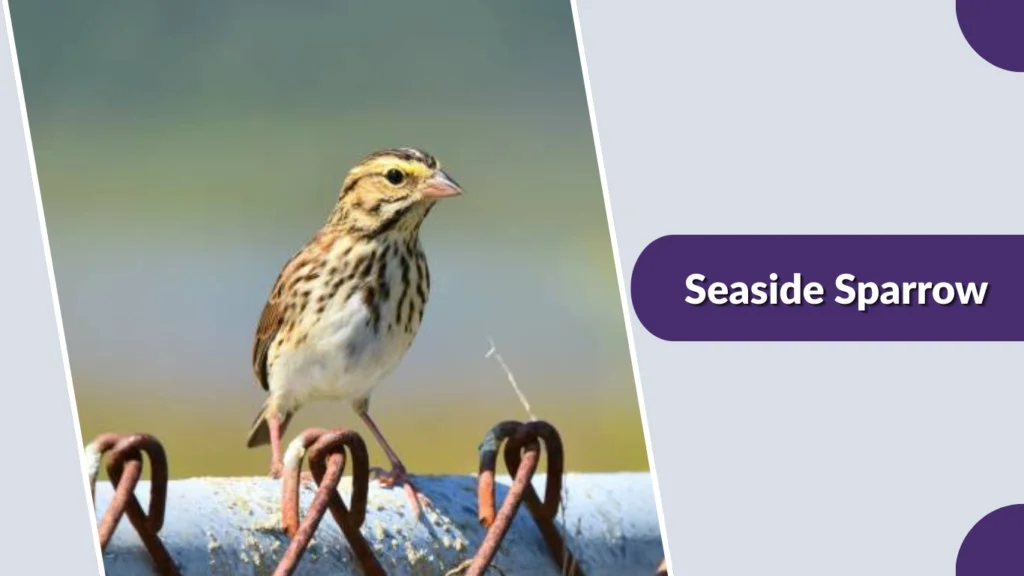
The seaside sparrow is a specialized coastal bird, perfectly adapted to life in salty marshes. It is often seen perched low on reeds or creeping through cordgrass near tidal waters.
Identification
- Dark gray face and breast
- Olive-brown back with darker streaks
- Yellow patch in front of the eye
- Short, rounded tail
- Thick, pointed bill
Habitat and Range
Seaside sparrows live almost entirely in salt and brackish marshes along the Atlantic and Gulf coasts of North America. They are mostly non-migratory, staying year-round in coastal wetlands.
Diet and Feeding Behavior
They feed on insects, spiders, small crustaceans, and seeds. Seaside sparrows forage low in marsh grasses, picking prey from mud and stems, and sometimes chasing small insects in short flights.
Breeding and Lifecycle
Nests are built low in marsh vegetation, often just above the high-tide line. The female incubates the eggs, and both parents feed the chicks. Young birds usually fledge about 9 to 12 days after hatching.
