
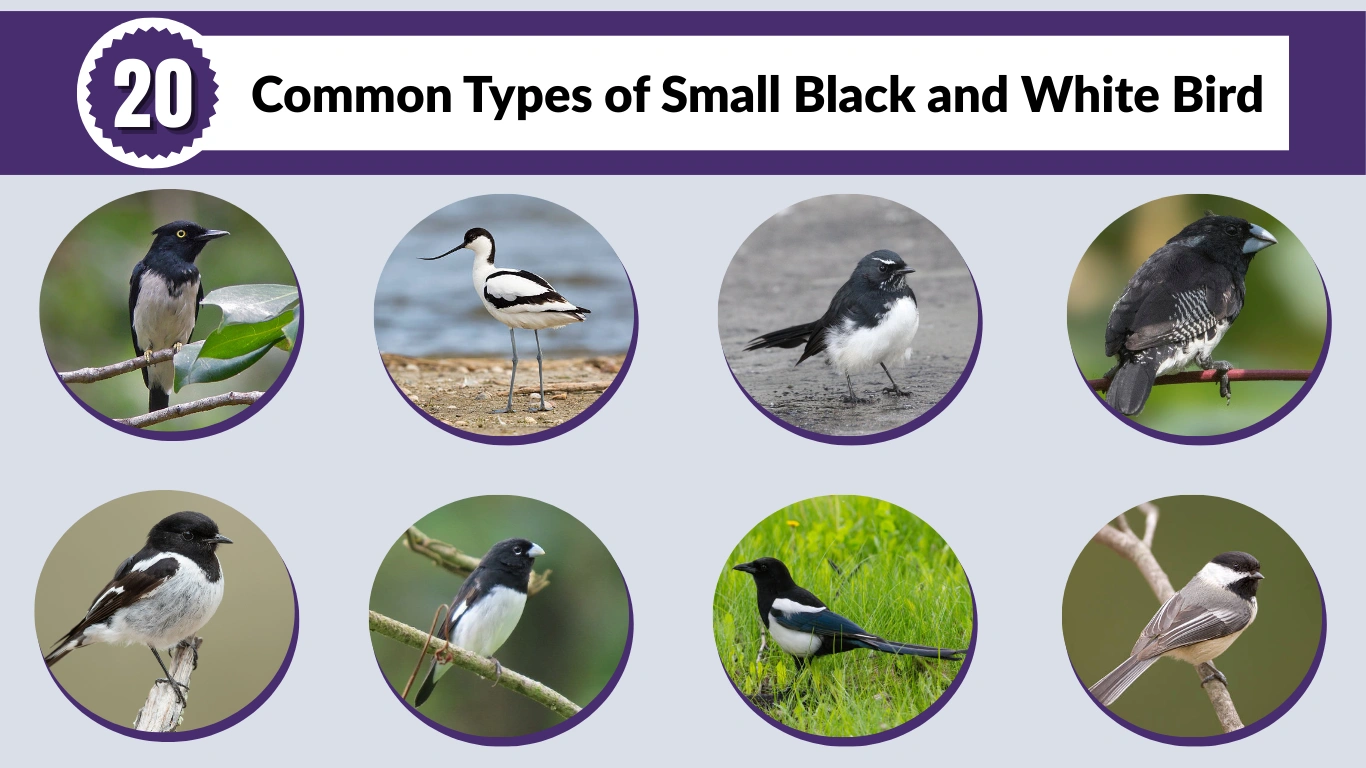
Small black and white birds are some of the most charming and easily recognizable species in the bird world. Their bold color patterns, lively movements, and pleasant calls make them favorites among birdwatchers and nature lovers. From forest-dwelling chickadees and nuthatches to waterside wagtails and kingfishers, these birds occupy many different habitats across the globe. Despite their small size, they play an important role in controlling insects, spreading seeds, and adding constant motion and life to natural and urban environments.
1. Black-capped Chickadee
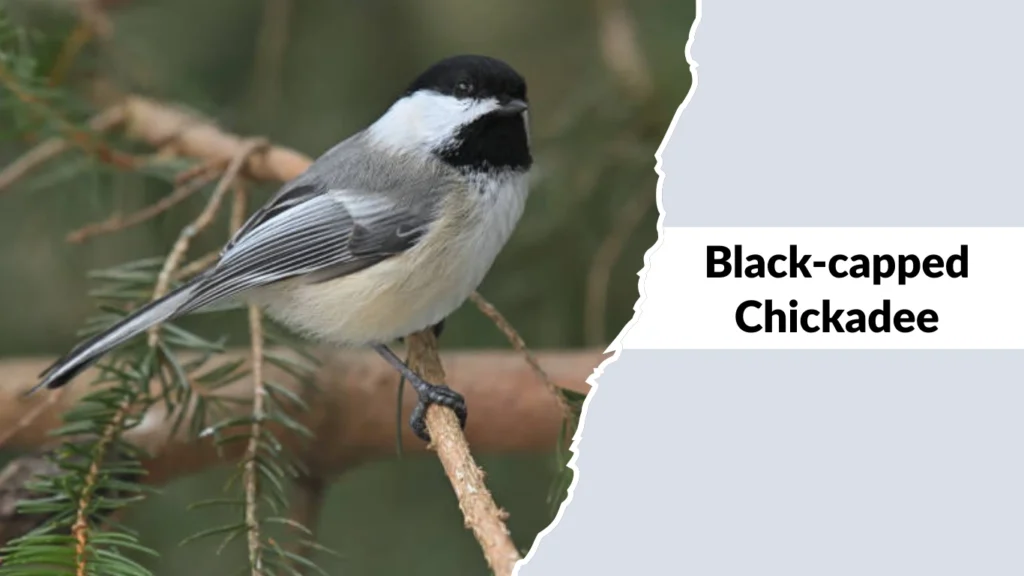
The Black-capped Chickadee is a small, energetic songbird best known for its bold black cap and bib contrasted against bright white cheeks. Commonly found across North America, this tiny bird is friendly, curious, and often seen hopping between branches or visiting backyard feeders. Despite its small size, it is highly adaptable and survives harsh winters with remarkable resilience.
Identification
- Small, round-bodied bird with a short neck
- Distinct black cap and black throat (bib)
- Bright white cheeks
- Soft gray back with pale underparts
- Short tail and small, sharp bill
Habitat
Black-capped Chickadees live in a wide range of environments, including deciduous and mixed forests, woodland edges, city parks, and suburban gardens. They readily adapt to human surroundings and are frequent visitors to backyard feeders, especially in cold regions.
Behaviors
This species is extremely active and acrobatic, often hanging upside down while foraging. Chickadees are social birds, traveling in small flocks outside the breeding season. They are also known for their “chick-a-dee-dee-dee” call, which changes depending on perceived threats.
Diet
Black-capped Chickadees eat mainly insects, spiders, seeds, and berries. During warmer months, insects make up most of their diet, while in winter they rely more on seeds and stored food. They are famous for caching food in bark crevices to eat later.
2. Carolina Chickadee
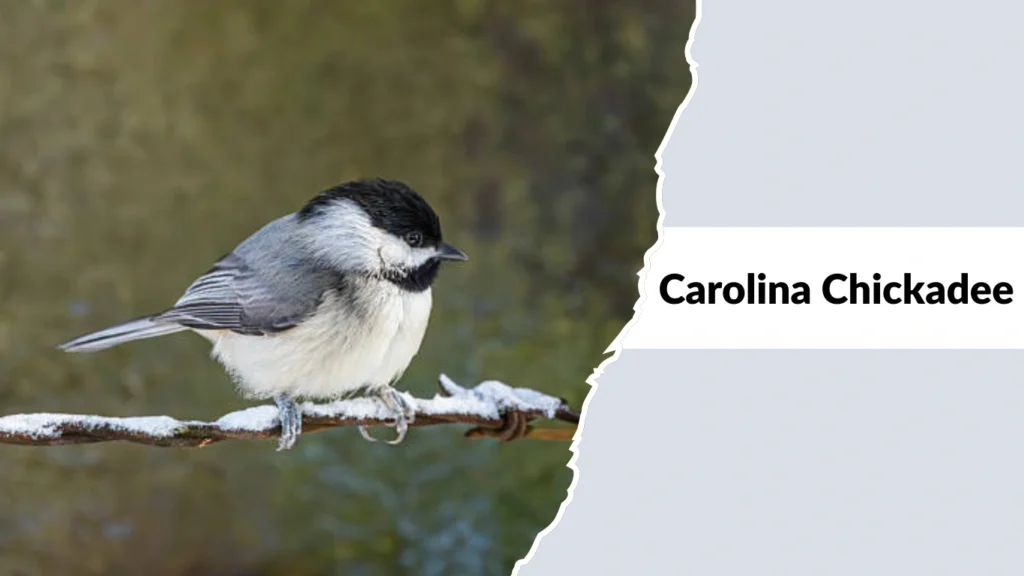
The Carolina Chickadee is a tiny, lively black-and-white songbird closely related to the Black-capped Chickadee. It is common in the southeastern United States, where it flits through trees and shrubs with quick, jerky movements. This bird is well known for its cheerful calls and its habit of visiting backyard feeders.
Identification
- Very small, round-bodied bird
- Black cap and black throat patch
- Clean white cheeks
- Soft gray back with pale gray to whitish underparts
- Short tail and small, pointed bill
Habitat
Carolina Chickadees inhabit deciduous and mixed woodlands, forest edges, parks, and suburban areas. They adapt easily to human environments and are often seen in gardens, especially where trees and feeders are available.
Behaviors
These birds are highly active and curious, often moving in small flocks. They frequently hang upside down while searching for food and communicate with a variety of soft chips and clear whistled calls. During the breeding season, pairs become more territorial.
Diet
Their diet consists mainly of insects, spiders, seeds, and berries. In warmer months, they rely heavily on insects, while in winter they eat more seeds and visit feeders. Like other chickadees, they store food in hidden spots for later use.
3. White-breasted Nuthatch
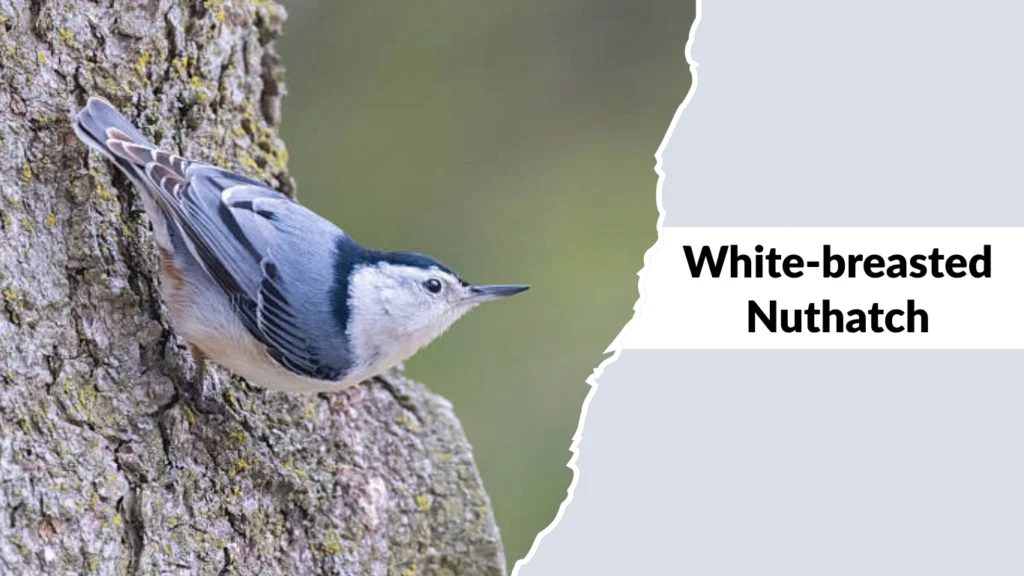
The White-breasted Nuthatch is a small, compact bird easily recognized by its black cap, bright white face, and habit of creeping headfirst down tree trunks. It is a common sight in woodlands and backyards, often calling loudly while moving along bark in search of hidden insects and seeds.
Identification
- Small, stocky body with short tail
- Black or dark gray cap (darker in males)
- Bright white face, throat, and underparts
- Blue-gray back and wings
- Long, slightly upturned bill
Habitat
White-breasted Nuthatches live in mature deciduous forests, mixed woodlands, orchards, city parks, and suburban neighborhoods. They prefer areas with large trees, which provide both food and nesting cavities.
Behaviors
This species is famous for walking head-down along tree trunks and branches. It is usually seen alone or in pairs, but may join mixed feeding flocks in winter. Their loud nasal “yank-yank” call often gives away their presence.
Diet
They feed mainly on insects, spiders, and other small invertebrates during warmer months. In fall and winter, they switch more to seeds and nuts, often wedging large seeds into bark and hammering them open.
4. Black-and-white Warbler
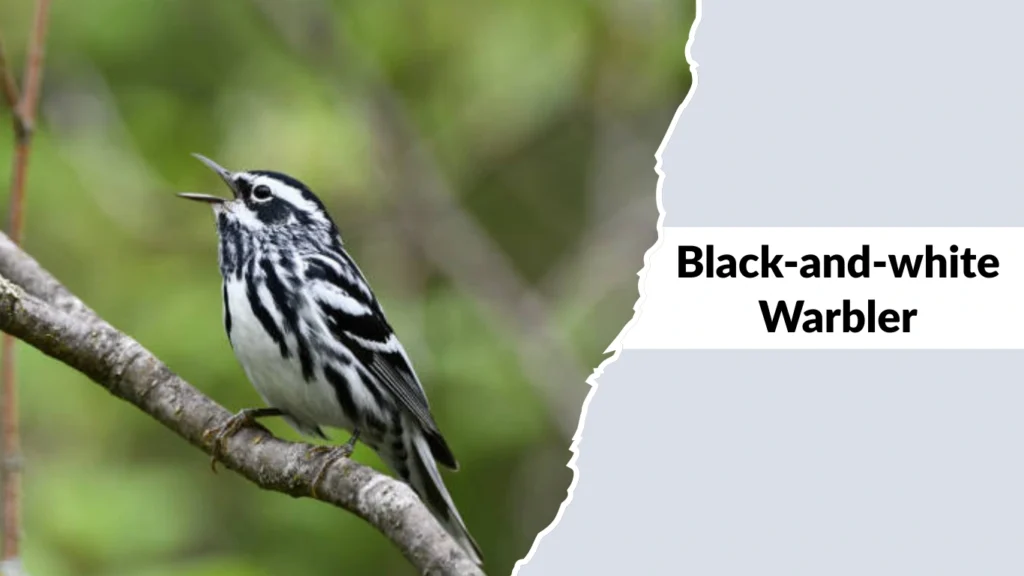
The Black-and-white Warbler is a strikingly patterned small songbird with bold black and white streaks over its entire body. Unlike many warblers, it behaves more like a nuthatch, creeping along tree trunks and branches while probing bark for insects. Its unique appearance and climbing style make it easy to identify.
Identification
- Small, slim-bodied warbler
- Strong black and white stripes on head, back, and wings
- White underparts with dark streaking
- Thin, pointed bill
- Longish legs suited for creeping on bark
Habitat
Black-and-white Warblers are found in deciduous and mixed forests, wooded parks, and forest edges. During migration, they may also appear in gardens and shrublands. They prefer areas with plenty of mature trees for foraging.
Behaviors
This bird forages by creeping up, down, and around tree trunks and large branches, often spiraling like a tiny woodpecker. It is usually seen alone, actively searching bark crevices for insects rather than hopping among leaves.
Diet
Its diet is made up mainly of insects, spiders, and larvae found on tree bark. During migration and in wintering areas, it may also eat small berries, but insects remain its primary food source.
5. Downy Woodpecker
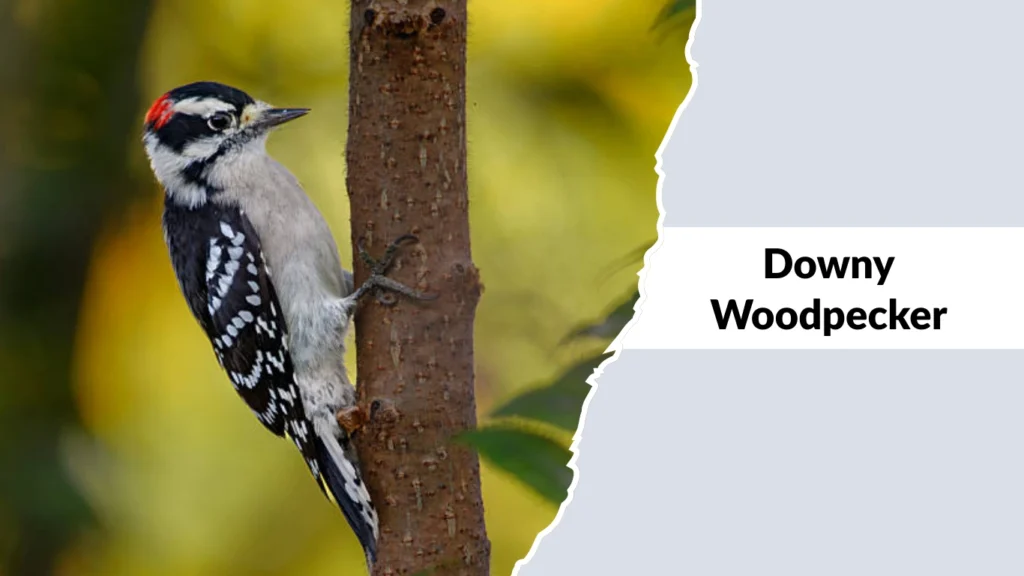
The Downy Woodpecker is the smallest and one of the most common woodpeckers in North America. It is easily recognized by its black-and-white plumage, short bill, and lively movements as it climbs tree trunks and branches. This friendly species is a regular visitor to backyard feeders.
Identification
- Very small woodpecker with compact body
- Black-and-white checkered back
- White underparts and white stripe down the back
- Black head with white facial markings
- Males have a small red patch on the back of the head
Habitat
Downy Woodpeckers live in open woodlands, deciduous forests, river edges, orchards, parks, and suburban gardens. They adapt well to human environments and are commonly seen wherever trees are present.
Behaviors
These woodpeckers move actively along trunks, branches, and even tall weeds, tapping and probing for insects. They often join mixed-species feeding flocks and communicate with sharp “pik” calls and rapid drumming on wood.
Diet
Their diet includes insects, larvae, spiders, seeds, and berries. They also eat suet and sunflower seeds from feeders. Insects hidden under bark make up a large part of their natural food.
6. Pied Wagtail
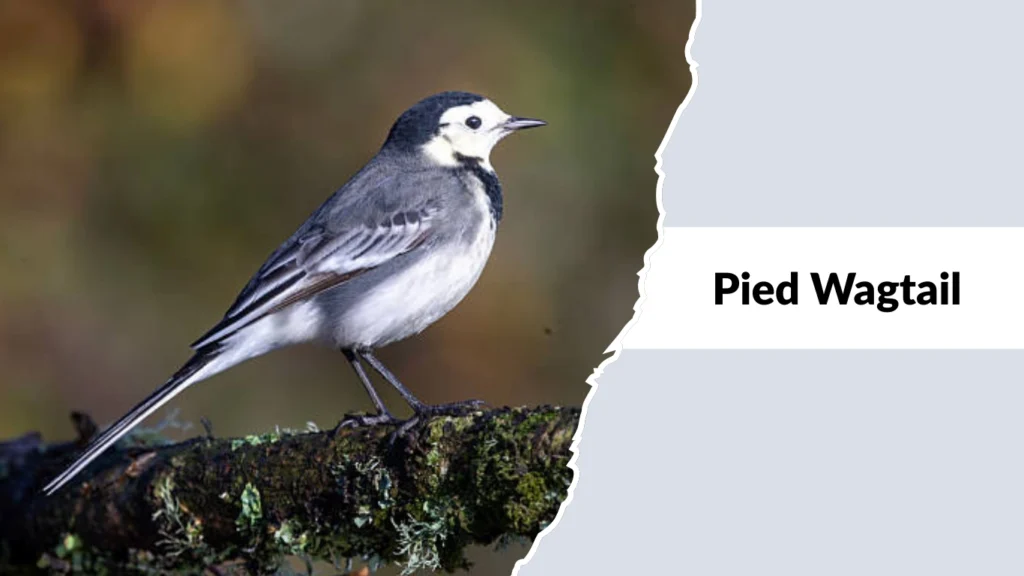
The Pied Wagtail is a slim, black-and-white bird best known for its long tail, which it constantly wags up and down. It is commonly seen walking or running on the ground near water, fields, towns, and even busy streets, making it one of the most familiar small black-and-white birds in many regions.
Identification
- Small, slender body with very long tail
- Black head and throat with white face
- Gray to black back with white wing markings
- White underparts
- Thin, pointed bill and long legs
Habitat
Pied Wagtails inhabit open countryside, farmland, riverbanks, wetlands, city parks, gardens, and urban areas. They are highly adaptable and often live close to human settlements, nesting on buildings and bridges.
Behaviors
This species is almost always seen on the ground, walking or running rather than hopping. Its constant tail-wagging is a key behavior. Pied Wagtails are active, alert, and often gather in flocks, especially in the non-breeding season.
Diet
They feed mainly on insects and other small invertebrates, which they catch on the ground or in short flights. Flies, beetles, spiders, and larvae form the bulk of their diet, especially near water and grassy areas.
7. Black-billed Magpie
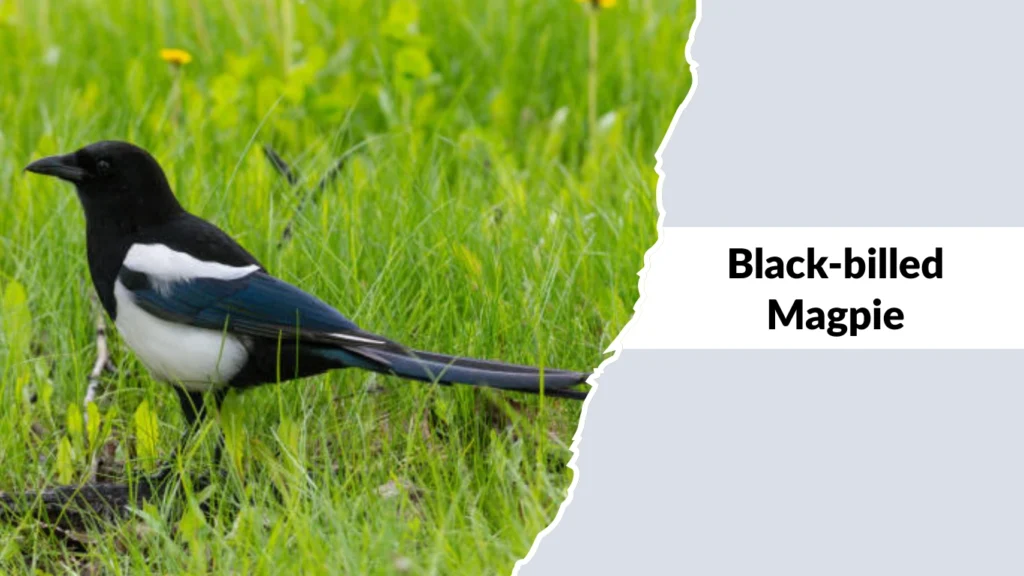
The Black-billed Magpie is a striking black-and-white bird with a very long tail and glossy plumage that often shines blue or green in sunlight. Although slightly larger than most “small birds,” it is commonly included among familiar black-and-white birds and is well known for its intelligence and bold behavior.
Identification
- Medium-sized bird with very long tail
- Black head, chest, wings, and tail with white belly and shoulder patches
- Strong, straight black bill
- Iridescent blue-green sheen on wings and tail
- Long, wedge-shaped tail
Habitat
Black-billed Magpies live in open country with scattered trees, farmland, grasslands, river valleys, and suburban areas. They often nest in tall trees or shrubs and are frequently seen near human activity.
Behaviors
This species is highly intelligent and social, often seen in pairs or small groups. Magpies walk and hop on the ground while foraging and are known for their curiosity, complex calls, and boldness around people and animals.
Diet
They are omnivorous, feeding on insects, small mammals, eggs, carrion, seeds, grains, and human scraps. Their flexible diet helps them survive in a wide variety of environments.
8. Black Phoebe
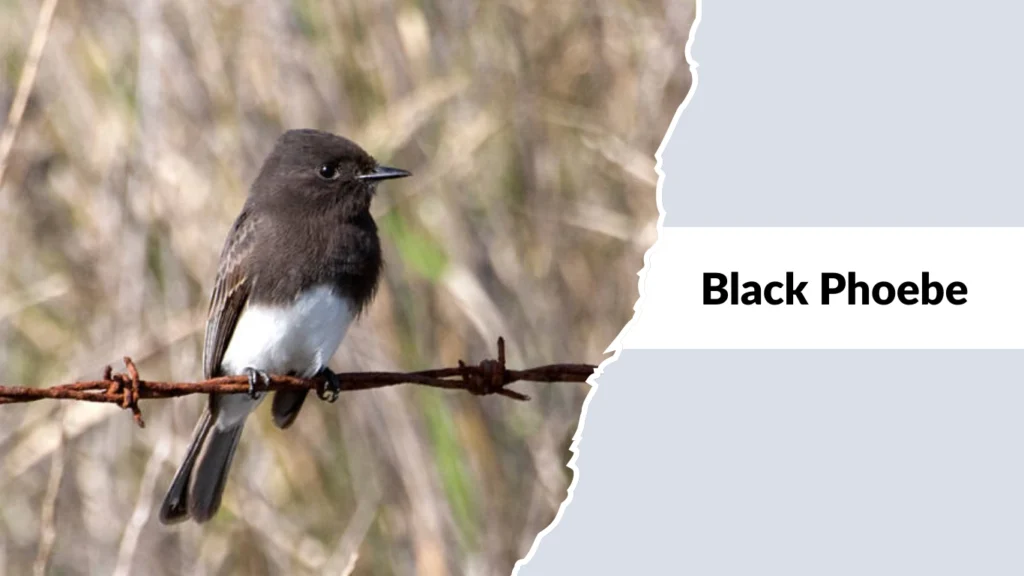
The Black Phoebe is a small, elegant flycatcher with a bold black-and-white pattern and a habit of perching quietly before darting out to catch insects. It is commonly found near water and open areas, where it can be seen bobbing its tail while scanning for prey.
Identification
- Small, slim-bodied bird
- Sooty black head, chest, and back
- Clean white belly and undertail
- Medium-length tail often flicked downward
- Thin, straight black bill
Habitat
Black Phoebes prefer areas close to water, including streams, rivers, ponds, wetlands, and coastal zones. They are also found in farms, parks, and suburban neighborhoods, especially where there are walls, bridges, or buildings for nesting.
Behaviors
This bird often perches in the open and makes short, quick flights to catch flying insects before returning to the same perch. Tail bobbing is a constant behavior. Black Phoebes are usually seen alone or in pairs and can be quite territorial.
Diet
Their diet consists mainly of flying insects such as flies, mosquitoes, beetles, and moths. They may also eat spiders and occasionally small aquatic insects picked from near the water’s surface.
9. Pied Kingfisher
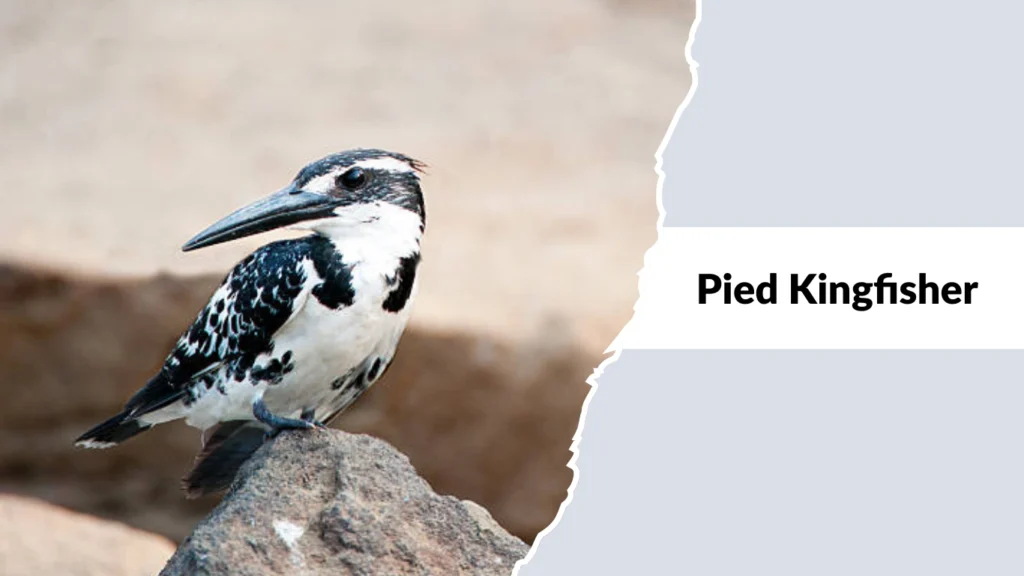
The Pied Kingfisher is a striking small-to-medium black-and-white bird famous for its ability to hover over water before diving headfirst to catch fish. With its bold spots and crisp patterning, it is one of the easiest kingfishers to recognize.
Identification
- Medium-sized bird with large head and long pointed bill
- Black-and-white spotted crown and wings
- White underparts with black breast bands
- Short tail and strong neck
- Sharp, dagger-like bill adapted for fishing
Habitat
Pied Kingfishers live near rivers, lakes, ponds, wetlands, estuaries, and coastal lagoons. They require clear water for hunting and often perch on branches, poles, or wires overlooking water.
Behaviors
They are well known for hovering in place above water before plunging down to catch fish. Pied Kingfishers are active, vocal, and often seen alone or in pairs defending fishing territories.
Diet
Their diet is mainly fish, along with aquatic insects, small crustaceans, and tadpoles. They catch prey by diving from the air or from a perch and swallowing it headfirst.
10. Black-and-white Flycatcher
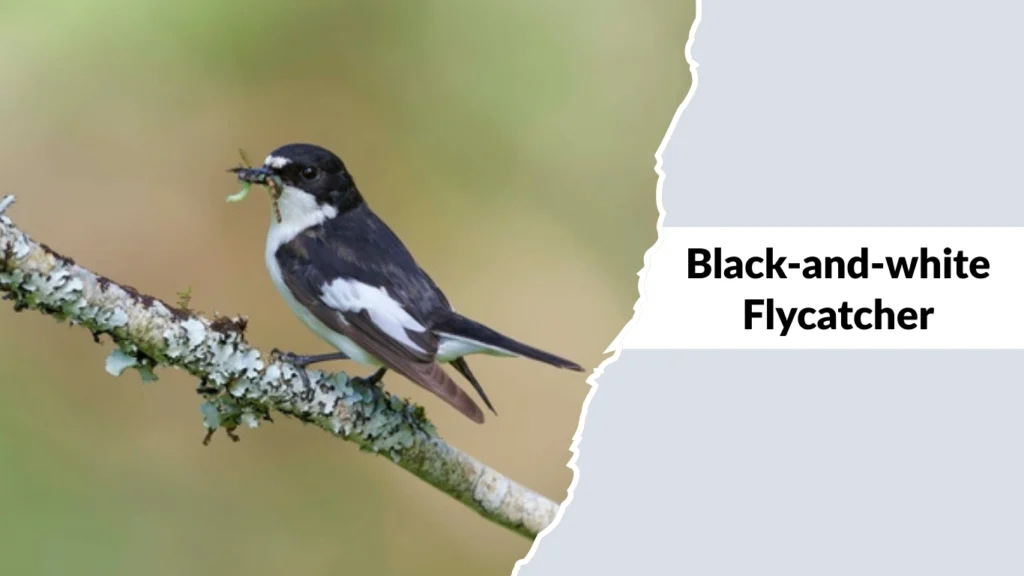
The Black-and-white Flycatcher is a small, slim songbird known for its contrasting plumage and quick aerial hunting style. It is often seen perched quietly before making short, sharp flights to snap insects from the air or off leaves.
Identification
- Small, slender body
- Black upperparts with white underparts
- White wing bars or patches
- Thin, pointed bill suited for catching insects
- Upright posture when perched
Habitat
This bird inhabits open woodlands, forest edges, gardens, and lightly wooded areas. It prefers habitats with scattered trees or shrubs that provide good perching spots for flycatching.
Behaviors
Black-and-white Flycatchers are sit-and-wait hunters. They frequently return to the same perch after catching insects in midair. They are alert birds, often flicking their tails and giving sharp calls to defend feeding areas.
Diet
Their diet consists mainly of flying insects such as flies, gnats, beetles, and small moths. Occasionally, they also pick spiders or caterpillars from leaves and twigs.
11. Black-tailed Gnatcatcher
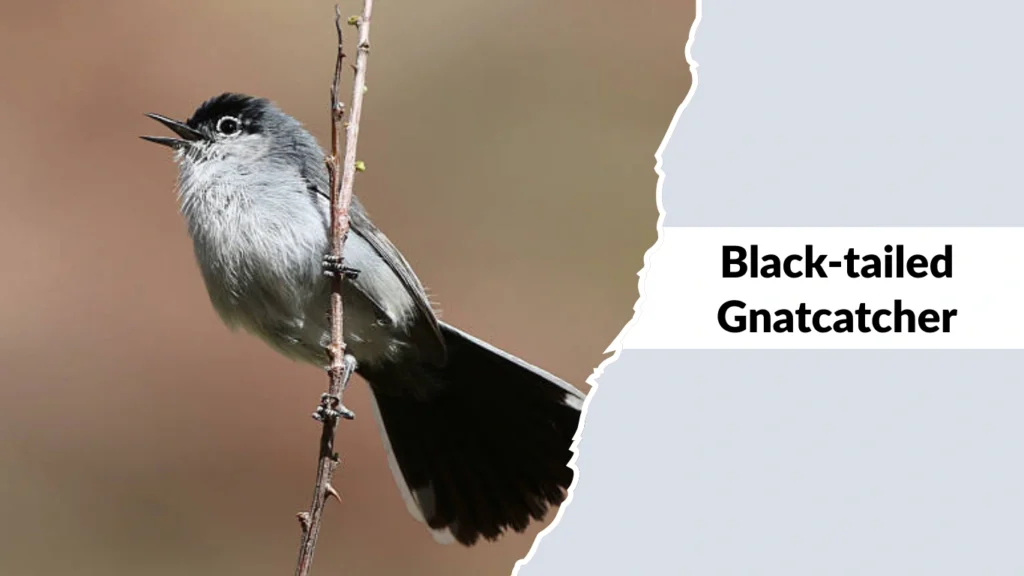
The Black-tailed Gnatcatcher is a tiny, energetic black-and-white bird often seen flitting through shrubs and low trees. Its restless movements, long tail, and soft, buzzy calls make it noticeable despite its very small size.
Identification
- Very small, slim-bodied bird
- Pale gray to whitish underparts with darker upperparts
- Long, narrow tail with black outer feathers and white edges
- Thin, needle-like bill
- Large dark eyes giving a gentle expression
Habitat
Black-tailed Gnatcatchers prefer dry, open habitats such as desert scrub, thorny bushes, open woodland, and semi-arid regions. They are usually found in low vegetation rather than tall forests.
Behaviors
They are constantly on the move, flicking their tails and wings while searching for tiny insects. Gnatcatchers are curious and often approach intruders while giving soft scolding calls.
Diet
Their diet is made up almost entirely of very small insects and spiders, including gnats, aphids, beetles, and caterpillars picked from leaves and twigs.
12. Black-and-white Seedeater
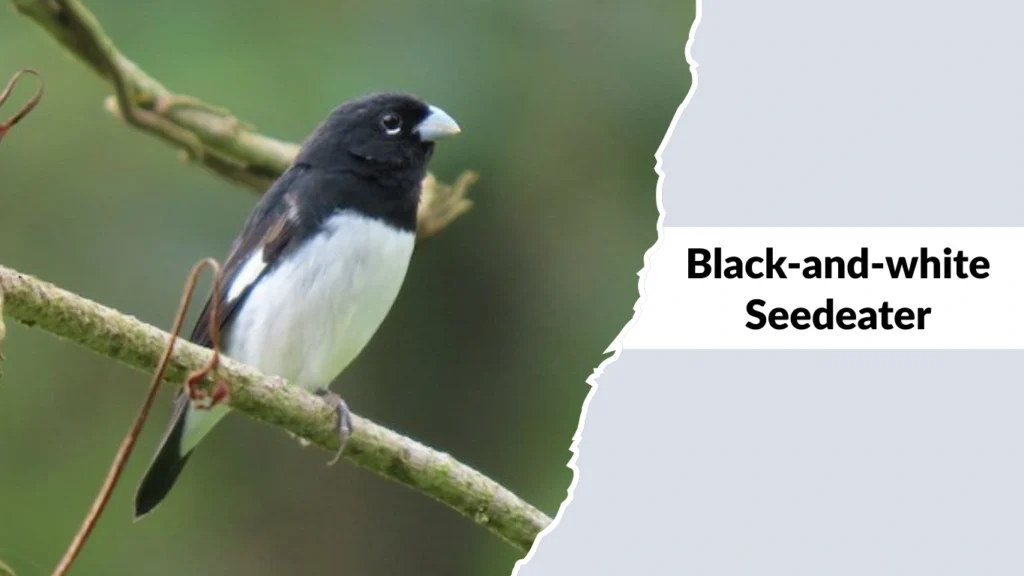
The Black-and-white Seedeater is a small, compact songbird known for its bold contrast between dark upperparts and pale underparts. It is often seen perched on grasses or low shrubs, where it feeds quietly on seeds and small insects.
Identification
- Small, chunky body with short tail
- Black head and upperparts
- White or pale underparts
- Thick, conical bill adapted for seed-eating
- Males are more sharply black-and-white than females
Habitat
Black-and-white Seedeaters are commonly found in grasslands, open fields, savannas, farmland edges, and shrubby areas. They prefer open habitats with plenty of seed-bearing plants.
Behaviors
These birds often perch low and make short flights between grasses. They may be seen alone or in pairs, and sometimes gather in small groups while feeding. Males frequently sing from exposed perches during the breeding season.
Diet
Their diet consists mainly of grass seeds and small plant seeds. During the breeding season, they also eat insects and larvae, which provide extra protein.
13. Eurasian Magpie
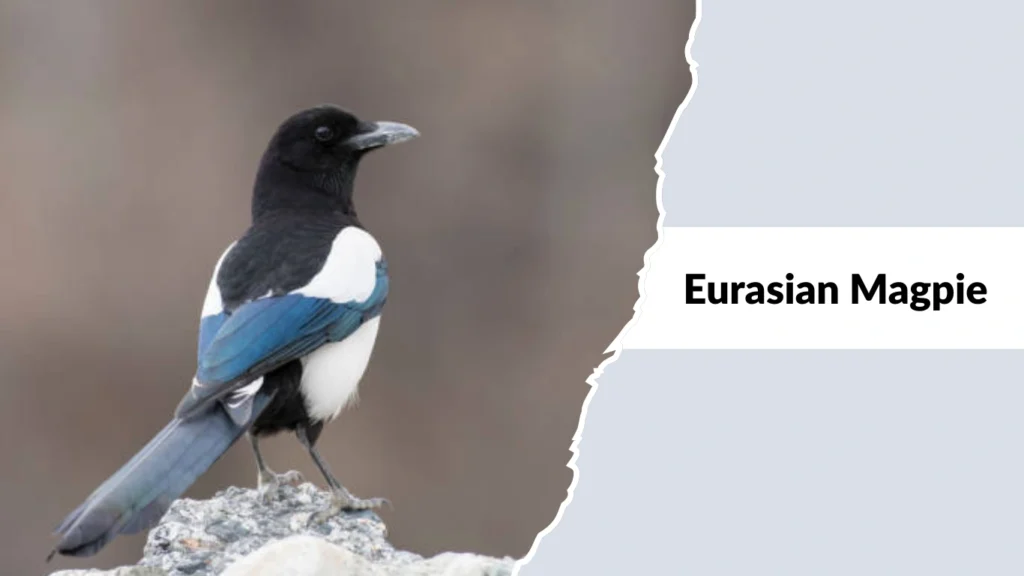
The Eurasian Magpie is a bold, intelligent black-and-white bird with a very long tail and glossy feathers that often shine blue and green in sunlight. It is one of the most recognizable birds across Europe and Asia and is commonly seen near towns as well as in open countryside.
Identification
- Medium-sized bird with very long tail
- Black head, chest, wings, and tail with white belly and shoulder patches
- Strong black bill
- Iridescent blue-green sheen on wings and tail
- Long, graduated tail
Habitat
Eurasian Magpies live in open woodlands, farmland, parks, gardens, and suburban areas. They prefer landscapes with scattered trees and open ground for foraging and tall trees for nesting.
Behaviors
Magpies are highly intelligent and curious. They walk confidently on the ground, investigate new objects, and are often seen in pairs or small family groups. They are also very vocal, producing a wide range of harsh and chattering calls.
Diet
They are omnivorous, feeding on insects, worms, small mammals, eggs, carrion, seeds, fruits, and human food scraps. Their flexible diet allows them to thrive in many environments.
14. Black-and-white Mannikin
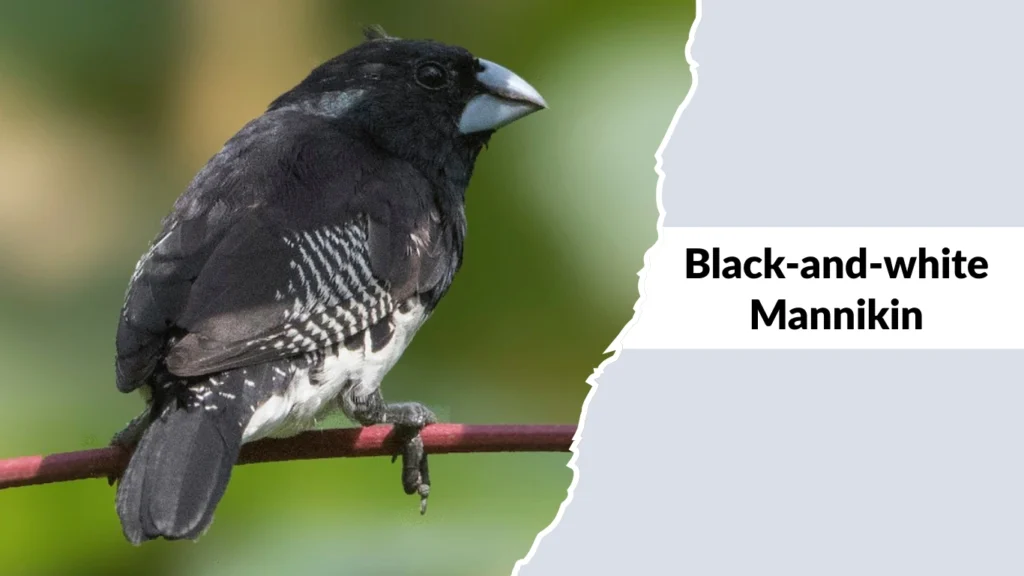
The Black-and-white Mannikin is a tiny, round-bodied finch-like bird known for its neat black-and-white plumage and social nature. It is often seen in small flocks, moving through grassy areas and reed beds in search of seeds.
Identification
- Very small, plump body
- Black head, chest, and upperparts
- White belly and flanks
- Short tail
- Thick, pale conical bill
Habitat
This species is commonly found in grasslands, open fields, wetlands edges, rice paddies, and areas with tall grasses. It prefers habitats rich in seed-producing plants.
Behaviors
Black-and-white Mannikins are highly social and usually feed and move in groups. They fly in short, quick bursts and often perch close together. Soft chirps and twittering calls are typical of feeding flocks.
Diet
Their diet consists mainly of grass seeds and small grains. They may also eat tiny insects, especially during the breeding season when extra protein is needed.
15. Pied Bushchat
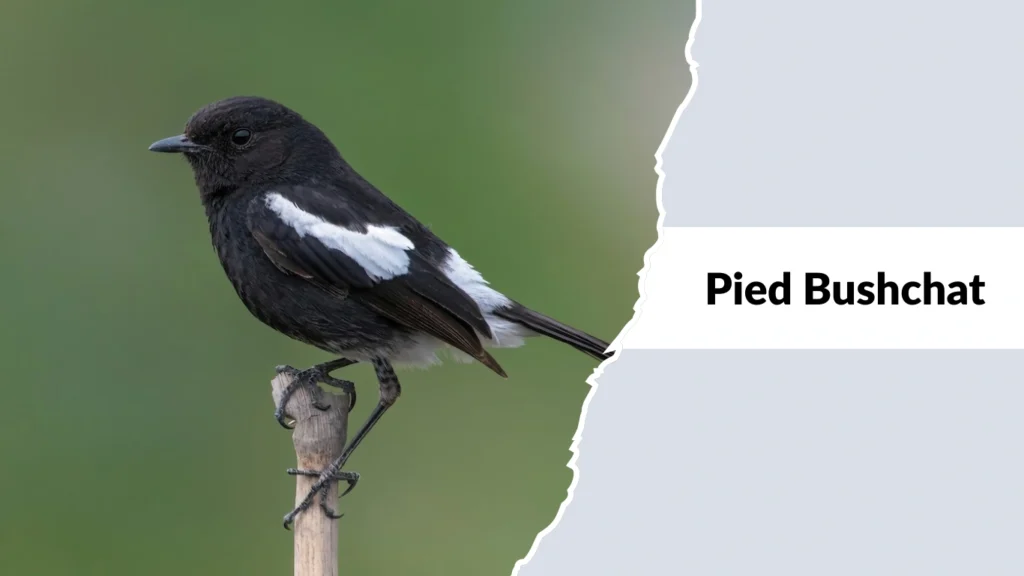
The Pied Bushchat is a small, upright songbird with bold black-and-white coloring and a lively personality. It is often seen perched on shrubs, fences, or tall grasses, watching the ground for insects before making quick dives to catch prey.
Identification
- Small, slim bird with upright posture
- Black head and upperparts (male)
- White shoulder patch and white underparts
- Long legs and medium-length tail
- Thin, pointed bill
Habitat
Pied Bushchats inhabit open grasslands, scrubland, farmland, and roadside bushes. They prefer open areas with scattered low vegetation where they can perch and hunt.
Behaviors
This species frequently flicks its tail and wings while perched. It hunts by dropping to the ground to catch insects, then returning to a low perch. Males are territorial and often sing from exposed spots.
Diet
Pied Bushchats feed mainly on insects such as beetles, grasshoppers, ants, and flies. Occasionally, they may eat small spiders and other invertebrates.
16. Black-and-white Robin
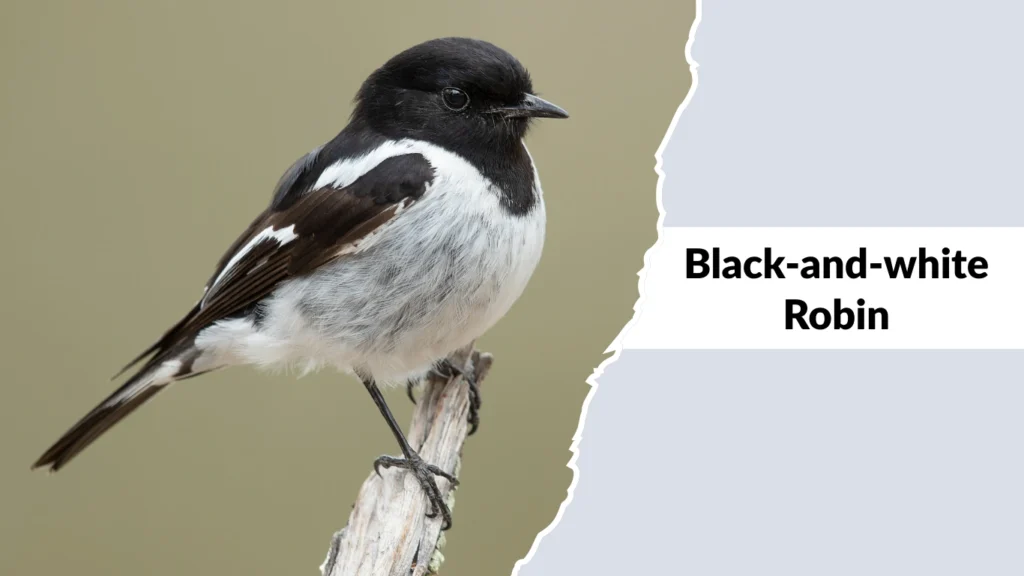
The Black-and-white Robin is a small, striking songbird known for its contrasting plumage and active foraging style. It often moves quickly through undergrowth and low branches, making short flights and hops while searching for food.
Identification
- Small, slim-bodied bird
- Black upperparts with clean white underparts
- White patches or bars on wings
- Medium-length tail
- Thin, pointed bill
Habitat
This bird is found in forest edges, open woodlands, gardens, and shrubby areas. It prefers habitats with low vegetation where insects are plentiful.
Behaviors
Black-and-white Robins are active and alert, often flicking their tails and making short flights close to the ground. They may be seen alone or in pairs, especially during the breeding season.
Diet
Their diet consists mainly of insects, worms, and small invertebrates. They hunt on or near the ground, picking prey from soil, leaf litter, and low plants.
17. White-cheeked Tit
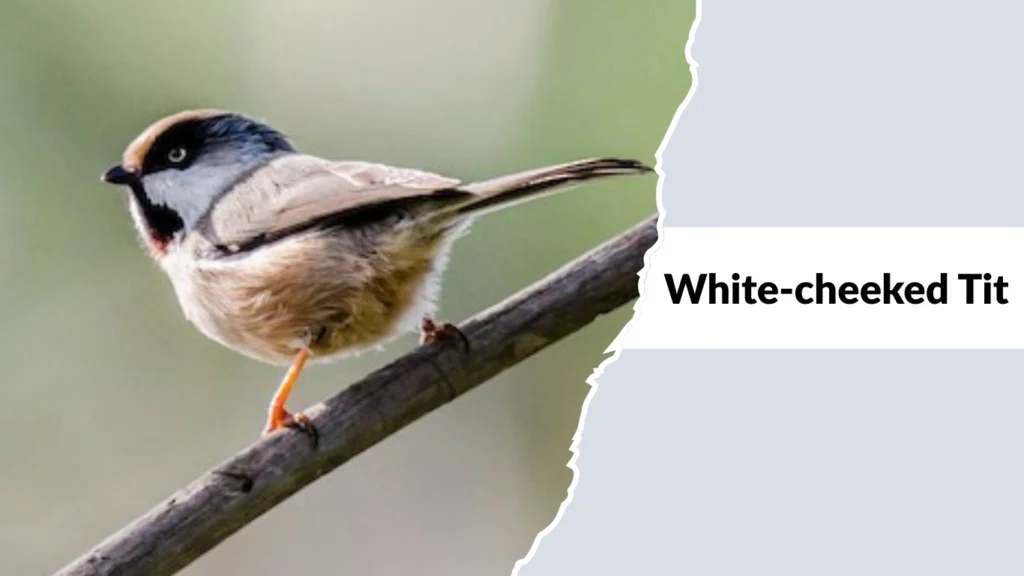
The White-cheeked Tit is a small, lively black-and-white bird with a neat appearance and quick, acrobatic movements. It is closely related to chickadees and is commonly seen flitting through trees and shrubs in search of food.
Identification
- Small, round-bodied bird
- Black head and throat
- Bright white cheeks
- Gray to blackish upperparts
- Short tail and small, sharp bill
Habitat
White-cheeked Tits inhabit open woodlands, forest edges, parks, gardens, and urban green spaces. They prefer areas with plenty of trees and shrubs where insects and seeds are available.
Behaviors
These birds are highly active, often hanging upside down while foraging. They usually move in pairs or small flocks and communicate with soft chips and high-pitched calls.
Diet
They feed mainly on insects, caterpillars, spiders, and other small invertebrates. Seeds and berries become more important in colder seasons, and they may also visit feeders.
18. Black-and-white Fantail
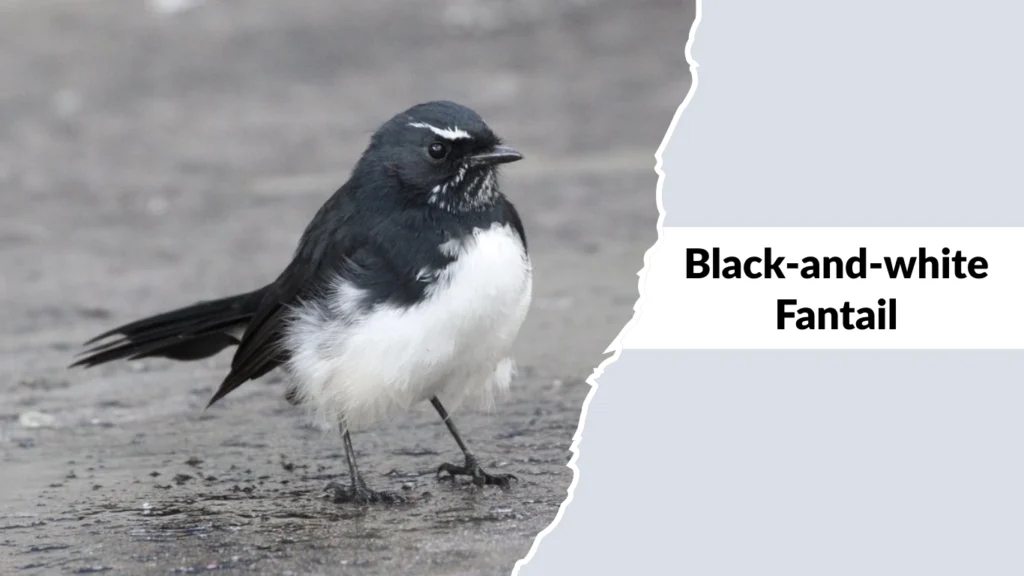
The Black-and-white Fantail is a small, energetic bird best known for its constantly fanned tail and quick, darting movements. Its bold black-and-white pattern and fluttering flight make it easy to notice as it chases insects through the air.
Identification
- Small, slim bird with a long, fan-shaped tail
- Black-and-white patterned plumage
- White eyebrow or facial markings
- Thin, pointed bill
- Rounded wings for agile flight
Habitat
Black-and-white Fantails are found in forests, woodland edges, gardens, parks, and mangroves, depending on region. They prefer areas with trees and open spaces where flying insects are common.
Behaviors
Fantails are extremely active and often spread their tails widely while foraging. They frequently follow people or animals to catch insects stirred up from the ground. Their flight is light, fluttery, and highly maneuverable.
Diet
Their diet consists mainly of flying insects such as flies, mosquitoes, and moths. They also pick spiders and small bugs from leaves and branches.
19. Pied Avocet
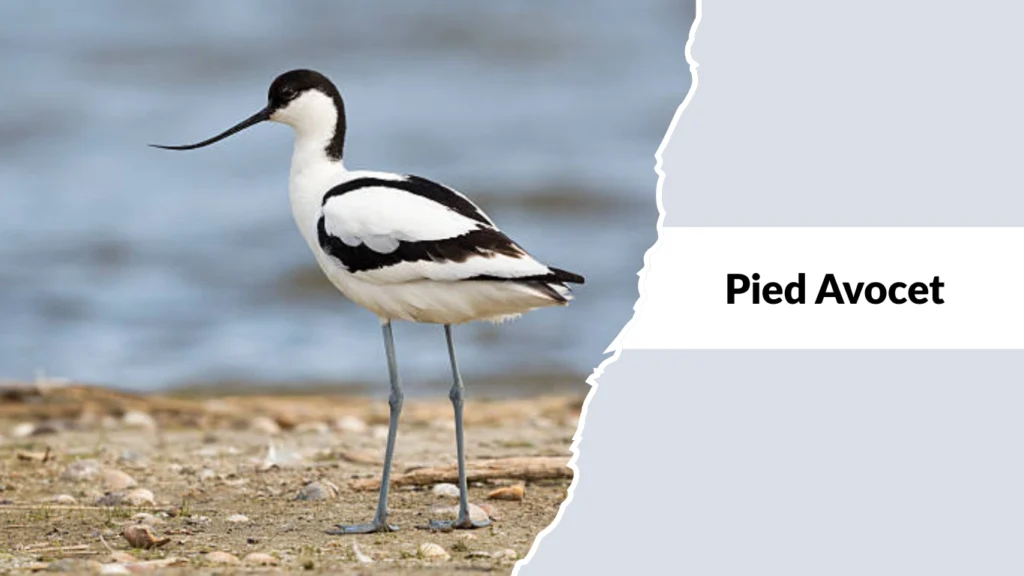
The Pied Avocet is an elegant black-and-white bird easily recognized by its long bluish legs and slender, upturned bill. Although slightly larger than most “small birds,” it is a very common black-and-white species in wetlands and coastal areas.
Identification
- Slender body with long legs
- Black-and-white plumage with black cap and wing patches
- Long, thin bill curved upward
- White neck and underparts
- Graceful, lightweight appearance
Habitat
Pied Avocets inhabit shallow wetlands, coastal lagoons, mudflats, salt marshes, and estuaries. They prefer open, watery environments where they can wade and sweep their bills for food.
Behaviors
They feed by sweeping their upturned bills side to side through shallow water. Pied Avocets are social birds, often seen in flocks. During the breeding season, they become more vocal and defensive around nesting areas.
Diet
Their diet includes aquatic insects, small crustaceans, worms, and mollusks. They locate prey by touch as they sweep their bills through the water.
20. Black-and-white Shrike
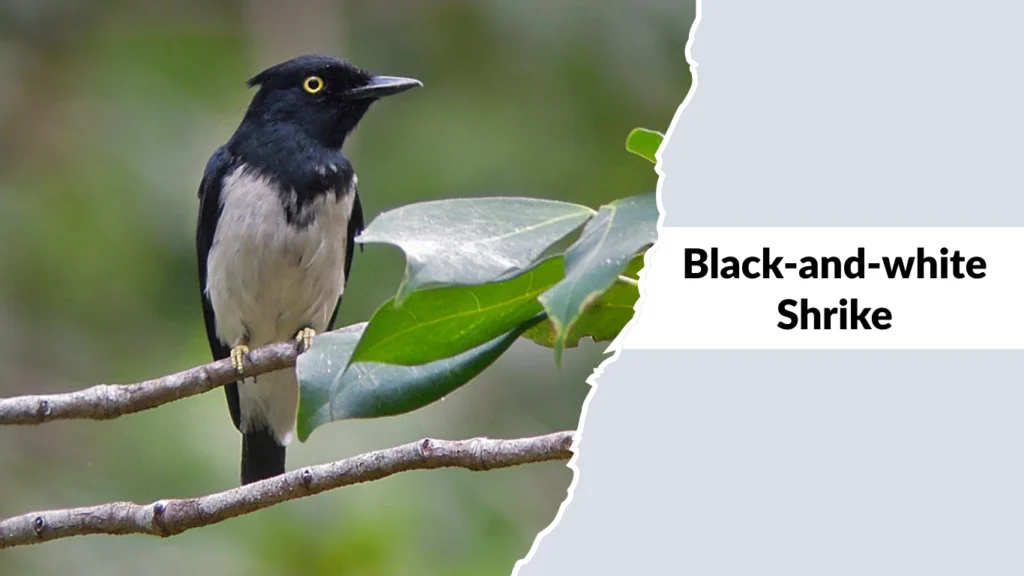
The Black-and-white Shrike is a small to medium-sized songbird known for its bold facial mask and predatory habits. Despite its pretty appearance, it is a skilled hunter that catches insects and small animals.
Identification
- Medium-small bird with large head
- Black mask across the eyes
- Gray to black upperparts with white underparts
- Strong, hooked bill
- Long tail with white edges
Habitat
This shrike lives in open countryside, grasslands, scrubland, farmland, and areas with scattered trees or bushes. It prefers open spaces where it can spot prey from exposed perches.
Behaviors
Shrikes often perch in open view and watch for prey before swooping down to catch it. They are famous for impaling prey on thorns or sharp twigs for storage.
Diet
They feed on large insects, lizards, small birds, and rodents. Insects such as grasshoppers and beetles make up a major part of their diet.
FAQs
What are some common examples of small black and white birds?
Small black and white birds include species like chickadees, nuthatches, black-and-white warblers, wagtails, fantails, and some flycatchers. These birds are found worldwide and are often recognized by their strong color contrast, active behavior, and frequent presence in gardens, forests, and open habitats.
Why do many small birds have black and white coloration?
Black and white plumage provides strong visual contrast that can help with species recognition, communication, and camouflage in dappled light. In forests and shrublands, this pattern can break up the bird’s outline, making it harder for predators to detect them among branches and shadows.
Are small black and white birds usually insect eaters?
Most small black and white birds rely heavily on insects, especially during spring and summer. They eat flies, beetles, caterpillars, and spiders. Many species switch to seeds and berries in colder months when insects become scarce, helping them survive year-round.
Where are small black and white birds commonly found?
These birds are found in a wide range of habitats, including forests, woodland edges, wetlands, grasslands, parks, and gardens. Some prefer trees and bark, while others live near water or open ground. Many adapt well to human environments and visit backyard feeders.
How can you attract small black and white birds to your garden?
You can attract them by providing sunflower seeds, suet, fresh water, and natural shelter like shrubs and trees. Avoid heavy pesticide use so insects remain available. Nest boxes and quiet, undisturbed corners also encourage these birds to visit and stay.
