
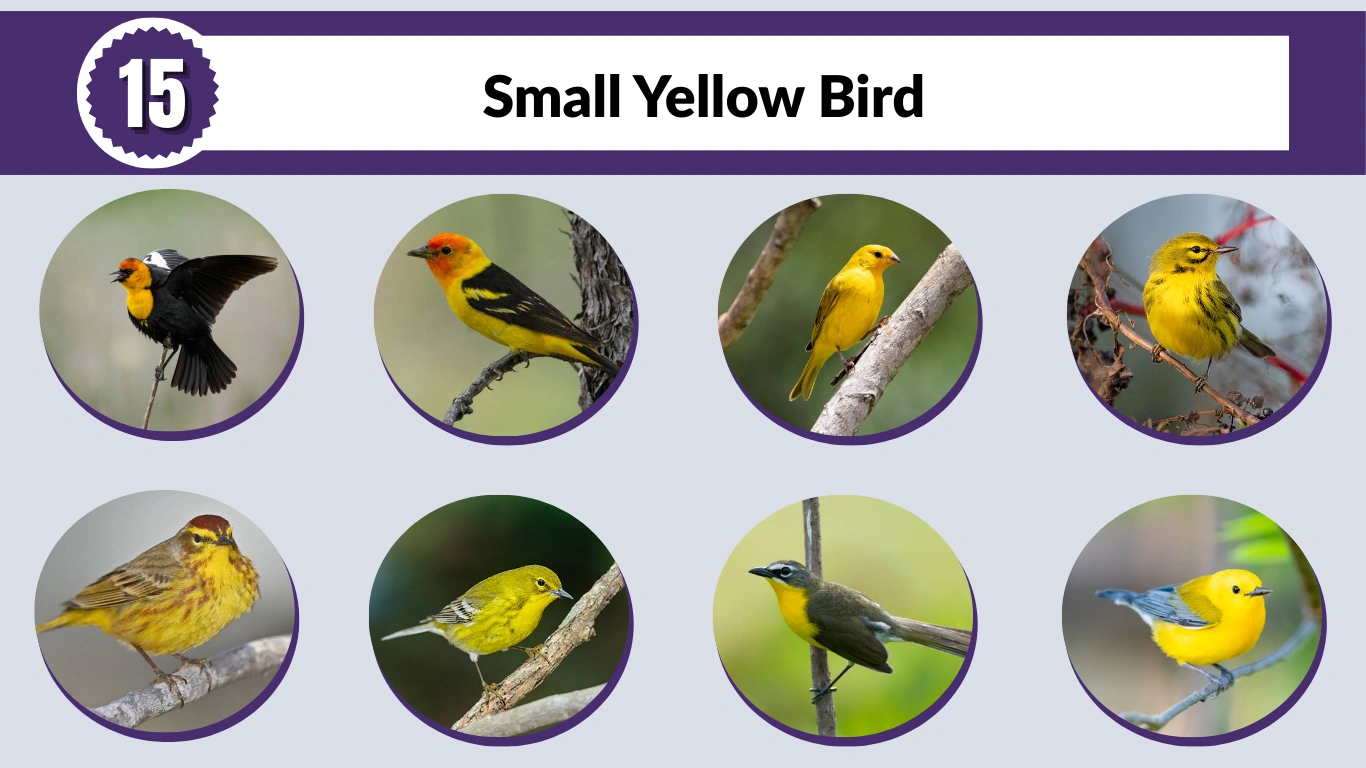
Small yellow birds bring flashes of color and energy to forests, wetlands, and backyard gardens. Their bright plumage makes them easy to notice, yet many species differ greatly in size, song, behavior, and habitat. From seed-loving goldfinches to insect-hunting warblers, these birds play an important role in natural ecosystems. Learning to recognize small yellow birds helps birdwatchers appreciate subtle field marks, seasonal changes, and the rich diversity found among even the smallest songbirds.
1. American Goldfinch
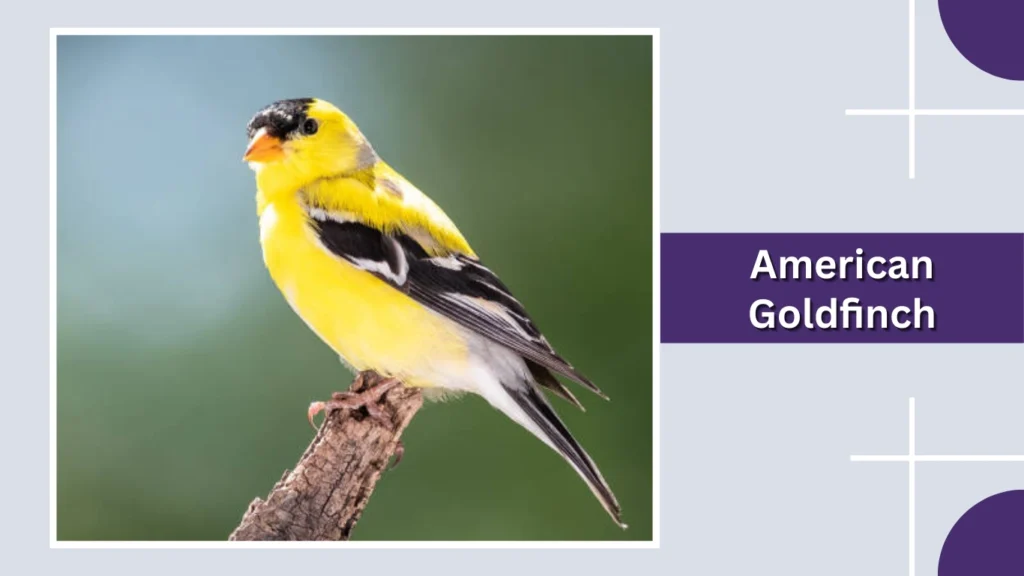
The American Goldfinch is one of the brightest and most recognizable small yellow birds in North America. During the breeding season, males display vivid lemon-yellow plumage with contrasting black wings and cap, making them stand out in gardens, fields, and open woodlands.
Identification
- Small finch with bright yellow body (especially males in summer)
- Black cap on the forehead (males)
- Black wings with bold white markings
- Pale, whitish belly and undertail area
- Short, conical pinkish bill and notched tail
Habitat
American Goldfinches are commonly found in open fields, meadows, woodland edges, riverbanks, and suburban gardens. They prefer areas with abundant seed-producing plants such as thistles and sunflowers and are frequent visitors to backyard feeders.
Diet
Their diet consists mostly of seeds, especially thistle, sunflower, and other composite plants. Unlike many birds, they are strict vegetarians for much of the year, though they may occasionally eat small insects during the breeding season.
Behavior
American Goldfinches are social and often seen in small flocks, especially outside the breeding season. Their flight is bouncy and undulating, usually accompanied by a cheerful “per-chick-o-ree” call.
2. Yellow Warbler
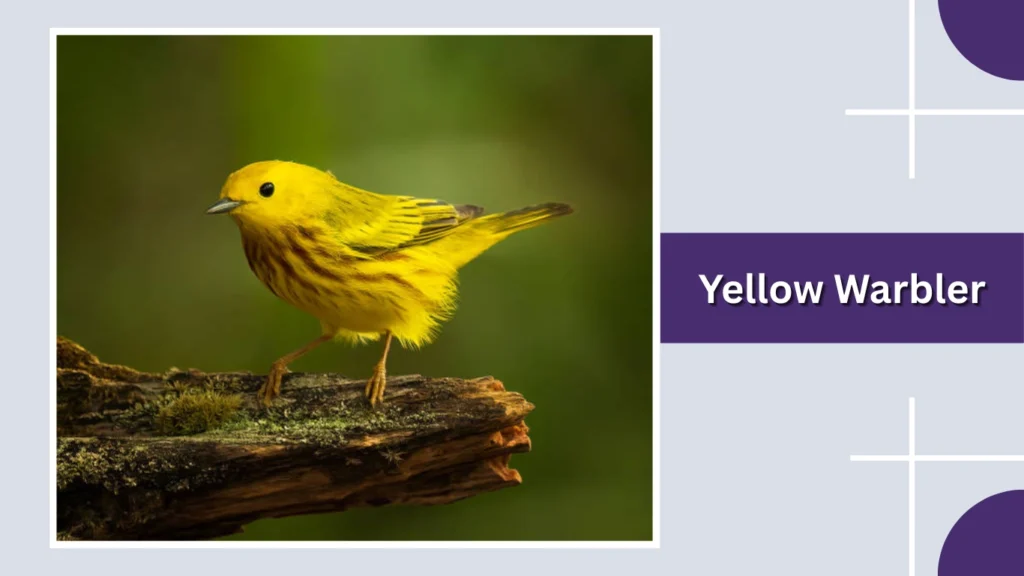
The Yellow Warbler is a small, lively songbird known for its bright yellow body and sweet, whistled song. It is one of the most widespread warblers in the Americas and is commonly seen flitting through shrubs and trees near water.
Identification
- Small bird with overall bright yellow plumage
- Males show faint reddish streaks on the chest
- Thin, pointed dark bill
- Rounded head and short tail
- Usually about 11–13 cm (4.3–5.1 in) long
Habitat
Yellow Warblers prefer wet habitats such as riverbanks, marsh edges, willow thickets, and damp woodland areas. They are also found in gardens and parks with dense shrubs, especially during migration.
Diet
They feed mainly on insects and spiders, picking caterpillars, beetles, flies, and aphids from leaves and branches. This insect-rich diet makes them important for natural pest control.
Behavior
Yellow Warblers are active foragers, constantly moving through foliage. Their song is a rapid, musical series of notes often described as “sweet-sweet-sweet, I’m-so-sweet.”
3. Wilson’s Warbler
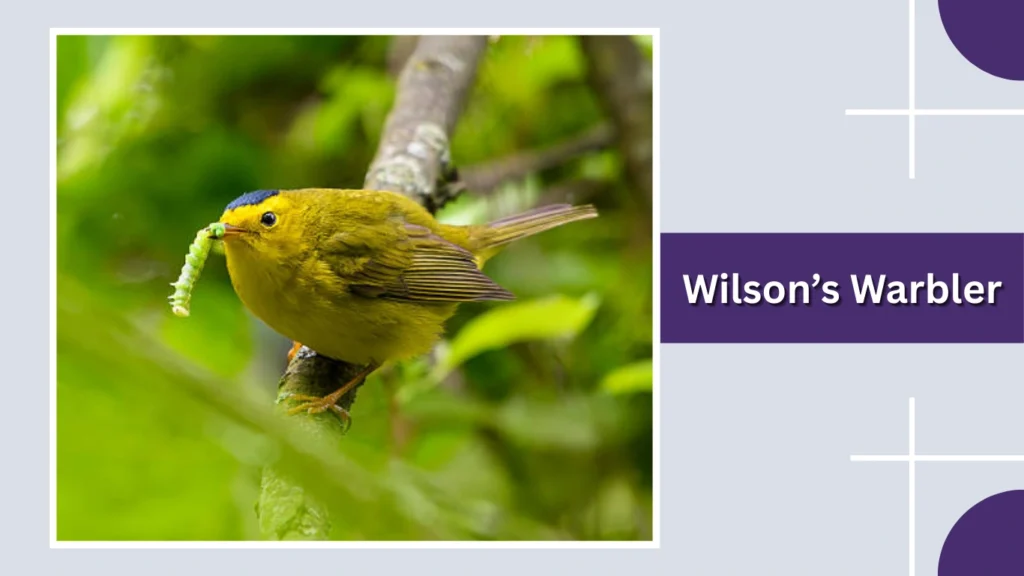
The Wilson’s Warbler is a tiny, energetic yellow bird best known for the small black cap seen on many males. Despite its small size, it is bold and active, constantly moving through shrubs and low branches in search of insects.
Identification
- Very small bird with bright yellow face and underparts
- Males often have a small, round black cap
- Olive-green back and wings
- Thin, pointed dark bill
- About 10–11 cm (3.9–4.3 in) long
Habitat
Wilson’s Warblers breed mainly in moist thickets, willow stands, and forest edges, especially near streams. During migration, they can be found in almost any habitat with trees or shrubs, including gardens and parks.
Diet
Their diet is almost entirely insects and spiders. They pick tiny insects from leaves, buds, and bark and occasionally catch prey in short, quick flights.
Behavior
These warblers are restless and quick-moving, often flicking their wings and tail. Their sharp “chit” call is frequently heard, and their song is a rapid, lively series of notes.
4. Common Yellowthroat
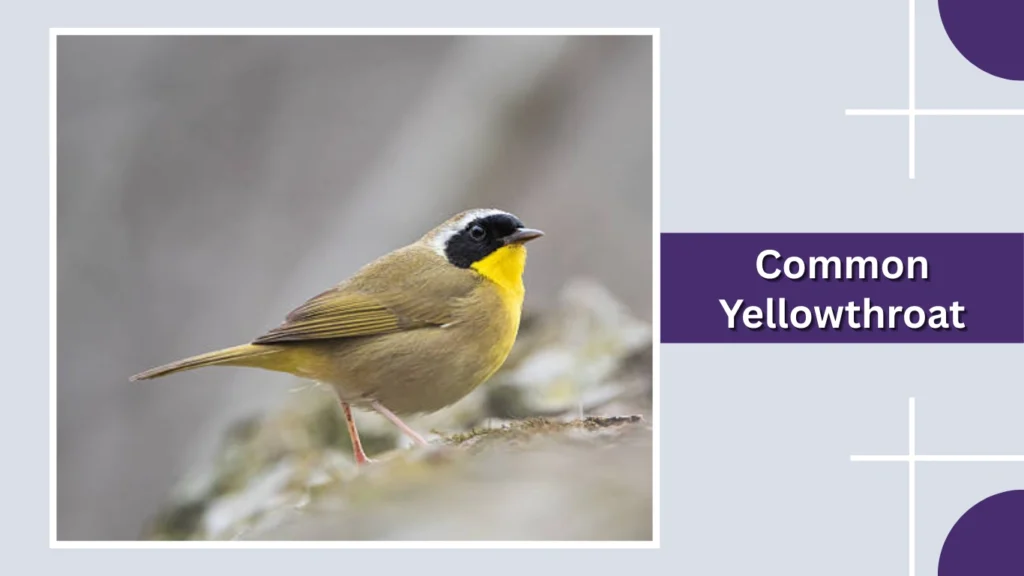
The Common Yellowthroat is a small, bright yellow bird often seen darting through dense vegetation. Males are especially distinctive, showing a bold black facial mask that contrasts sharply with their yellow throat and chest.
Identification
- Small warbler with bright yellow throat and chest
- Olive to brownish back and wings
- Males have a bold black mask bordered with white
- Thin, pointed dark bill
- About 11–13 cm (4.3–5.1 in) long
Habitat
Common Yellowthroats favor wetlands, marshes, reed beds, overgrown fields, and dense shrubs. They are frequently found near water but also live in thick roadside vegetation and brushy edges.
Diet
They mainly eat insects, spiders, and small invertebrates. Beetles, flies, caterpillars, and grasshoppers form a large part of their diet, making them helpful in controlling insect populations.
Behavior
These birds are secretive but active, usually staying low in thick cover. Their familiar song sounds like “wichity-wichity-wichity,” often heard before the bird is clearly seen.
5. Pine Warbler
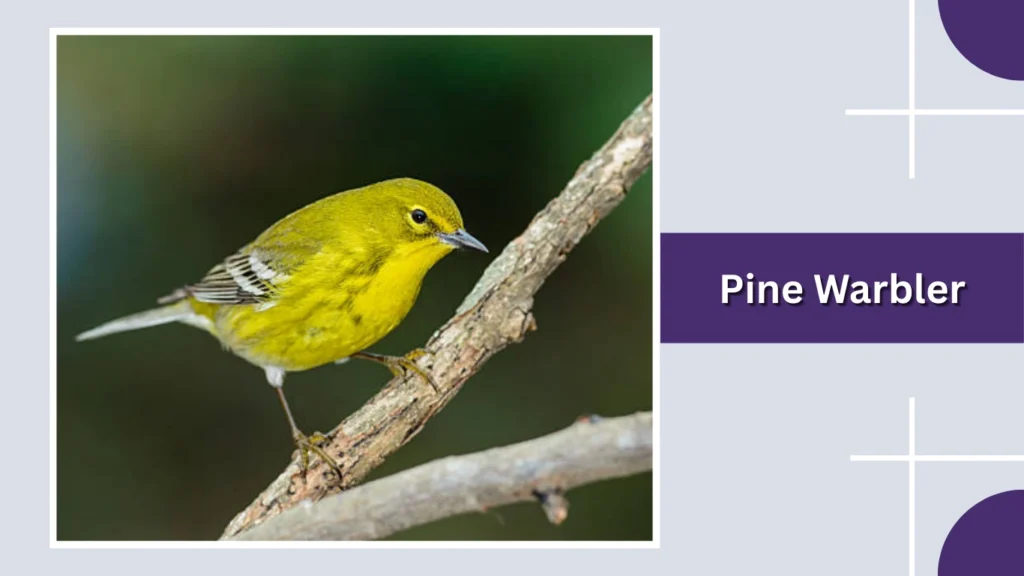
The Pine Warbler is a small yellow bird with olive-gray wings and a soft, warm-yellow belly. Unlike many warblers, it often forages high in pine trees and is one of the few warblers that regularly eats seeds.
Identification
- Small warbler with yellow face, throat, and belly
- Olive-gray back and wings with pale wing bars
- Whitish to pale gray lower belly and undertail
- Thin, pointed dark bill
- About 12–14 cm (4.7–5.5 in) long
Habitat
Pine Warblers are closely associated with pine forests and pine plantations. They are also found in mixed woods that contain pines, and they may visit feeders, especially in winter.
Diet
Their diet includes insects, spiders, and caterpillars during warmer months. In fall and winter, they eat seeds and will readily take sunflower seeds, suet, and peanuts from feeders.
Behavior
Pine Warblers move more slowly than many other warblers, often creeping along branches and trunks. Their song is a musical, trilling series of notes, and they are among the earliest warblers to begin singing in spring.
6. Prothonotary Warbler
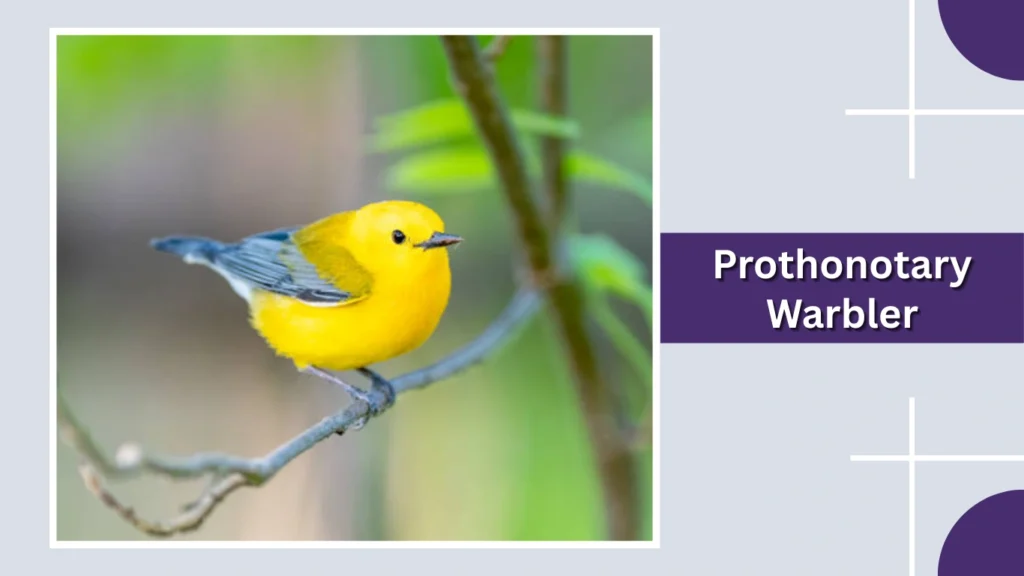
The Prothonotary Warbler is a striking small yellow bird with a glowing golden head and chest contrasted by blue-gray wings. It is often called the “golden swamp warbler” because of its strong association with wet, wooded habitats.
Identification
- Small warbler with brilliant golden-yellow head and underparts
- Blue-gray wings and back
- Large dark eyes and fairly thick, pointed bill
- No wing bars
- About 13–14 cm (5.1–5.5 in) long
Habitat
Prothonotary Warblers live in flooded forests, swamps, mangroves, and wooded wetlands. They nest in tree cavities, often over standing or slow-moving water.
Diet
They feed mainly on insects, spiders, snails, and other small invertebrates. They often forage low over water or among vegetation, picking prey from leaves, bark, and branches.
Behavior
These warblers are active and curious, frequently flicking their wings and tail. Males sing a loud, ringing “sweet-sweet-sweet-sweet” song that carries well through swampy forests.
7. Nashville Warbler
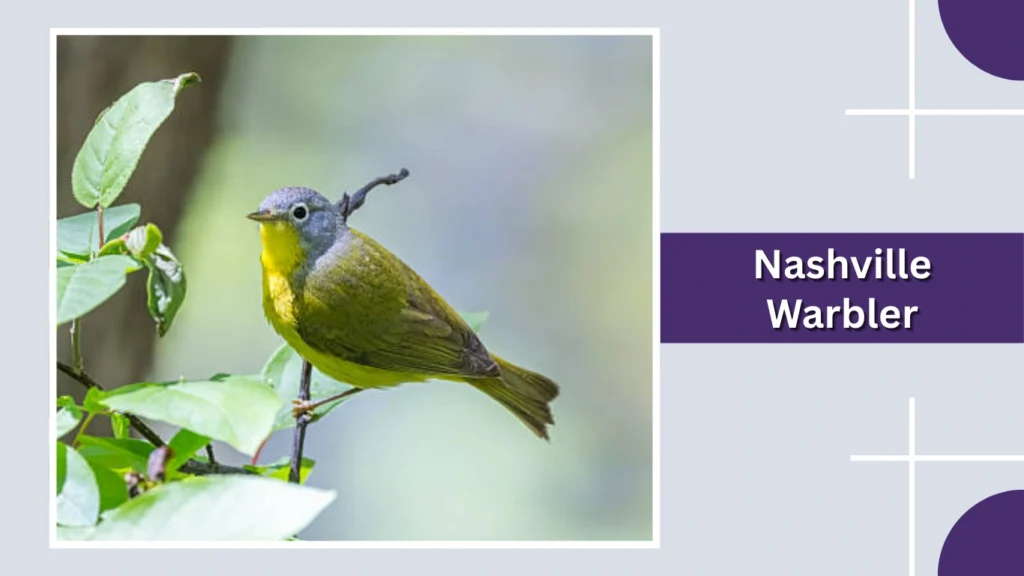
The Nashville Warbler is a small, bright yellow bird with a soft gray head and a faint white eye ring. Despite its name, it breeds mainly in northern forests and is a common migrant through gardens and woodland edges.
Identification
- Small warbler with yellow throat and belly
- Gray head with a thin white eye ring
- Olive-green back and wings
- Thin, pointed dark bill
- About 11–13 cm (4.3–5.1 in) long
Habitat
Nashville Warblers breed in open coniferous and mixed forests with dense undergrowth. During migration, they are widely found in parks, gardens, shrubby fields, and forest edges.
Diet
Their diet consists mostly of insects and spiders. They forage actively in low vegetation, picking caterpillars, beetles, flies, and other small prey from leaves and twigs.
Behavior
Nashville Warblers are quick, restless birds that flick their tails and wings as they move. Their song is a high, two-part series of notes, ending in a rapid trill.
8. Yellow-breasted Chat
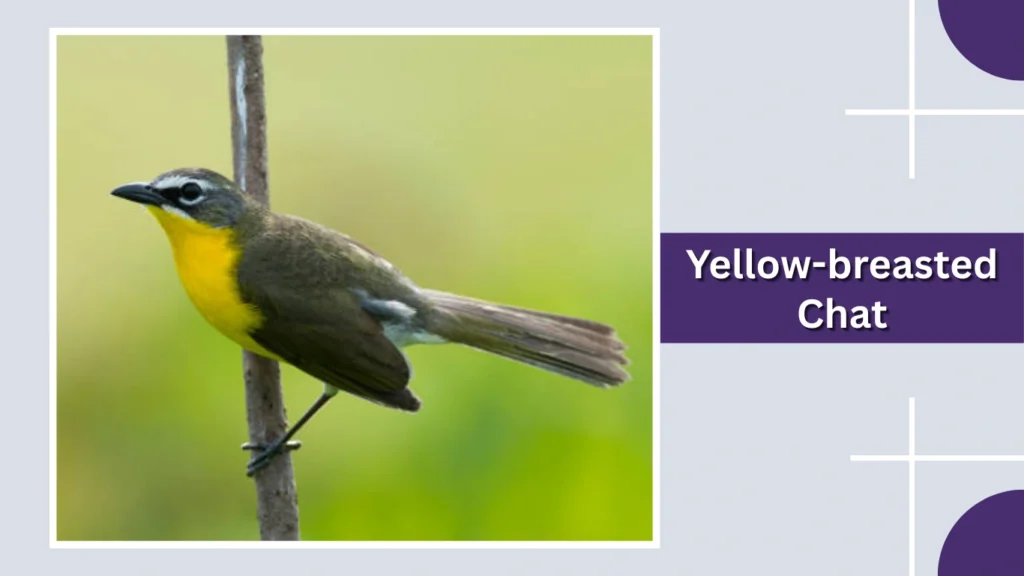
The Yellow-breasted Chat is the largest of the warblers and is known for its bright yellow chest and bold facial markings. Although bulkier than most small yellow birds, it is often included in yellow bird lists because of its striking coloration.
Identification
- Medium-small bird with bright yellow throat and breast
- Olive-green back and wings
- White “spectacles” around the eyes
- Thick, dark bill and long tail
- About 17–19 cm (6.7–7.5 in) long
Habitat
Yellow-breasted Chats favor dense shrubs, thickets, woodland edges, and overgrown fields. They are often found in tangled vegetation near streams or clearings.
Diet
They eat insects, spiders, caterpillars, and also a variety of berries and small fruits, especially later in the year.
Behavior
Chats are secretive but very vocal. They produce a wide range of odd whistles, clucks, and croaks. Males often perform exaggerated display flights during the breeding season, slowly flapping their wings while singing.
9. Lesser Goldfinch
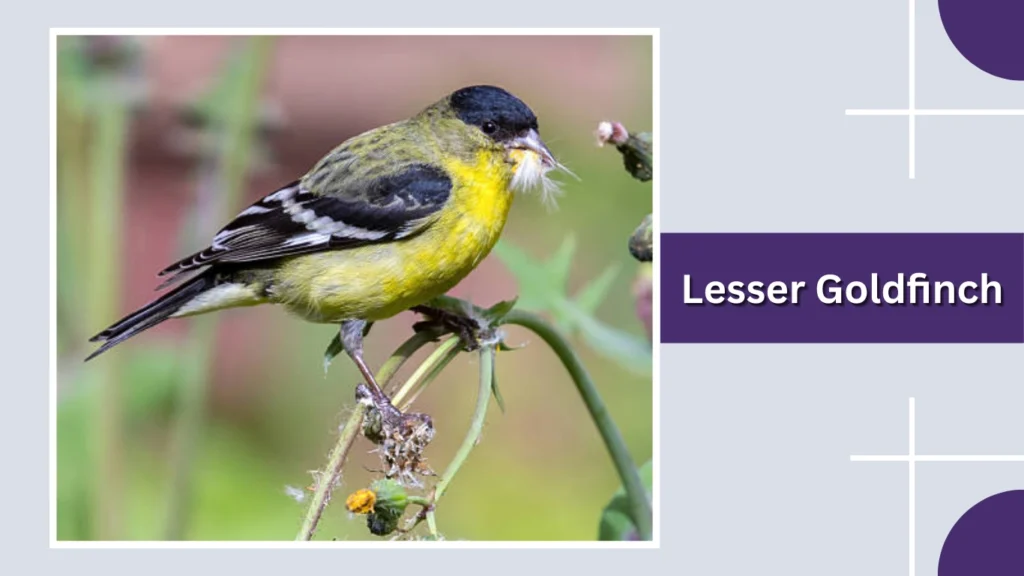
The Lesser Goldfinch is a small, active finch with bright yellow underparts and contrasting dark wings. It is especially common in the western and southwestern parts of North America and frequently visits gardens and feeders.
Identification
- Small finch with bright yellow belly and chest
- Black (or dark green) back and cap in males
- Black wings with bold white patches
- Short, conical bill
- About 10–12 cm (3.9–4.7 in) long
Habitat
Lesser Goldfinches live in open woodlands, scrublands, desert edges, parks, and suburban gardens. They thrive in areas with scattered trees, weeds, and flowering plants.
Diet
They feed mainly on seeds, especially sunflower, thistle, and weed seeds. They also eat buds and occasionally small insects.
Behavior
Lesser Goldfinches are social and often seen in flocks. They are agile and acrobatic, frequently hanging upside down while feeding. Their calls are high-pitched and musical, and flocks are often noisy.
10. Hooded Warbler
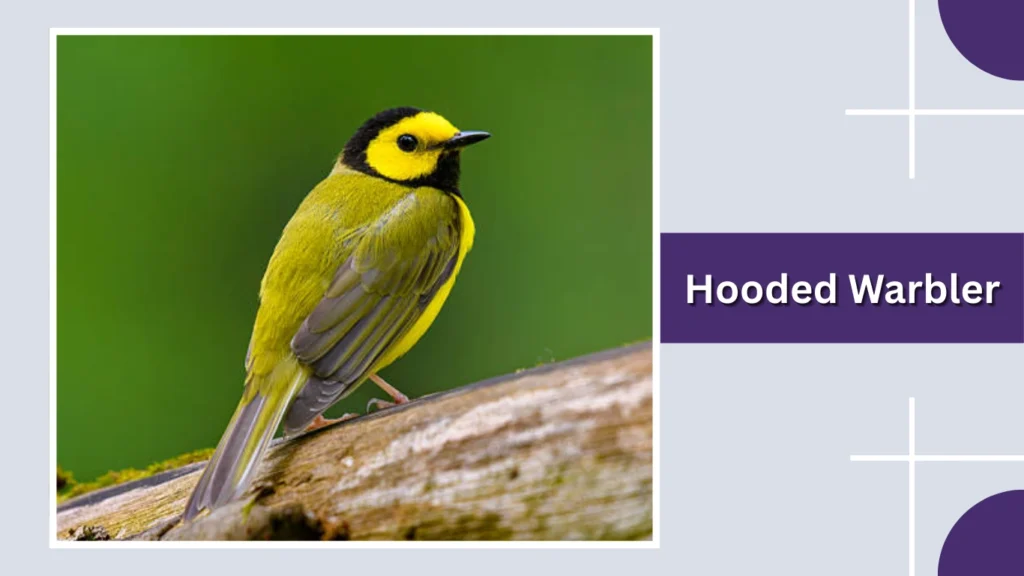
The Hooded Warbler is a small, striking yellow bird best known for the bold black hood that surrounds the face and throat of adult males. Its bright yellow underparts make it stand out in shaded forest understories.
Identification
- Small warbler with bright yellow face, throat, and belly
- Adult males have a bold black hood and mask
- Olive-green back and wings
- Thin, pointed dark bill
- About 12–14 cm (4.7–5.5 in) long
Habitat
Hooded Warblers live mainly in mature deciduous forests with dense understory. They prefer moist woodlands, forest edges, and shady thickets where thick vegetation provides nesting cover.
Diet
Their diet consists mostly of insects and spiders. They forage low in shrubs and small trees, picking caterpillars, beetles, flies, and other small prey from leaves.
Behavior
Hooded Warblers are active but often stay hidden in dense growth. Males are territorial and sing a clear, ringing song during the breeding season, often from low branches.
11. Palm Warbler
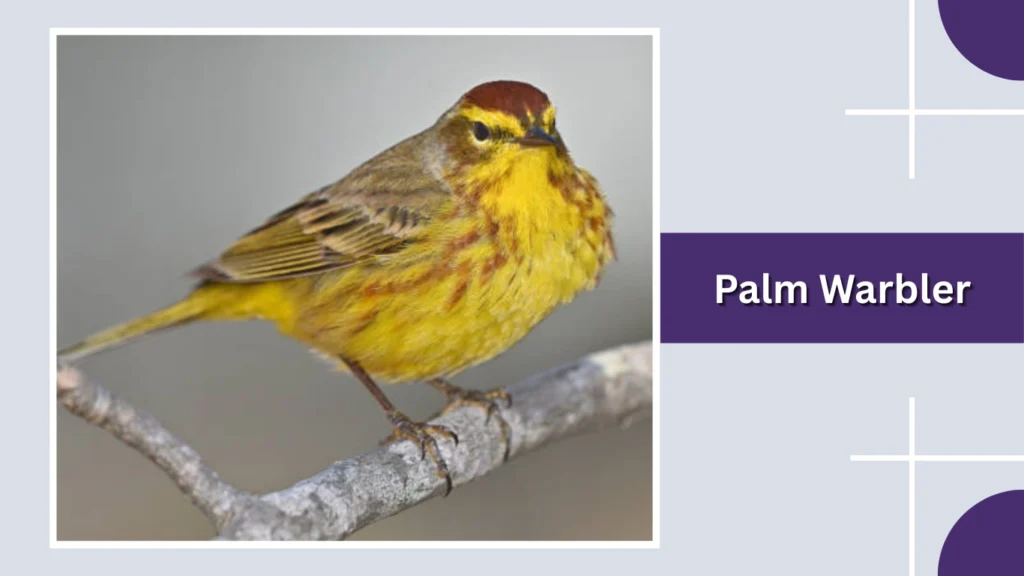
The Palm Warbler is a small yellow bird with a bright yellow belly and a constantly wagging tail. It often feeds on the ground, making it easier to spot than many other warblers.
Identification
- Small warbler with yellow belly and undertail
- Brownish-olive back with faint streaking
- Yellow throat and face, often with a rusty cap
- Thin, pointed dark bill
- About 12–14 cm (4.7–5.5 in) long
Habitat
Palm Warblers are commonly found in open habitats such as fields, forest edges, bogs, scrublands, and coastal areas. During migration, they are frequent visitors to parks, gardens, and open lawns.
Diet
They mainly eat insects and spiders, including beetles, flies, ants, and caterpillars. In cooler seasons, they may also consume small berries and seeds.
Behavior
Palm Warblers are well known for their constant tail-pumping. They often walk or hop on the ground while foraging, unlike many warblers that stay high in trees.
12. Prairie Warbler
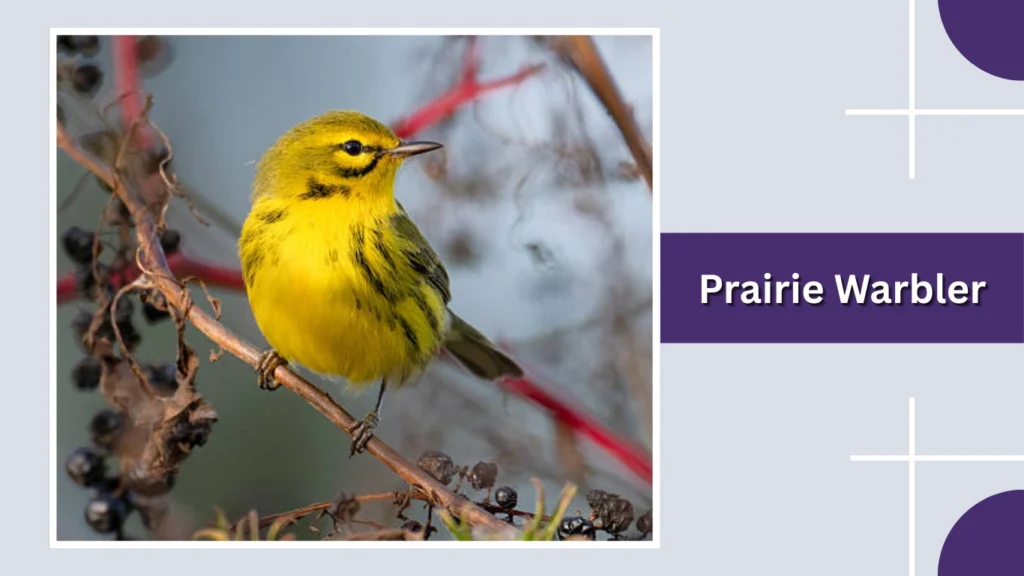
The Prairie Warbler is a small, bright yellow songbird with an energetic personality and a sweet, rising song. Its yellow underparts and subtle facial markings make it a favorite among birdwatchers in open, brushy habitats.
Identification
- Small warbler with bright yellow throat and belly
- Olive-green back with dark streaks on the sides
- Black lines on the face and a dark eye stripe
- Thin, pointed dark bill
- About 11–13 cm (4.3–5.1 in) long
Habitat
Prairie Warblers prefer shrubby fields, regenerating forests, pine barrens, coastal scrub, and woodland edges. They are often found in sunny, open areas with low, dense vegetation.
Diet
They feed mainly on insects and spiders, including caterpillars, beetles, flies, and leafhoppers. They forage actively among shrubs and small trees.
Behavior
Prairie Warblers are active and restless, frequently flicking their tails while moving through low vegetation. Their song rises in pitch and speed, often described as a series of buzzy notes.
13. Yellow Canary (Domestic Canary)
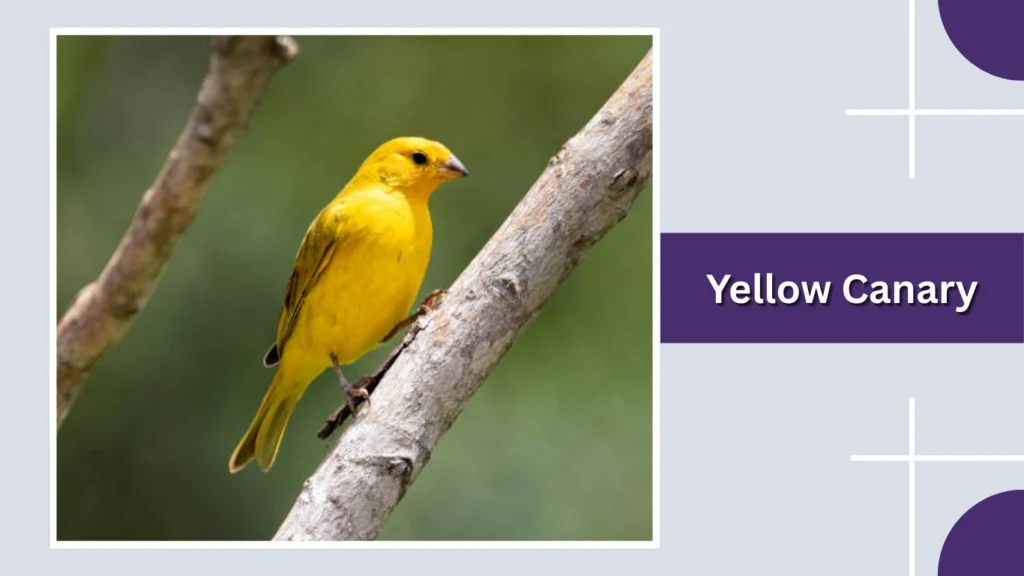
The Yellow Canary is a small, bright yellow bird best known as a popular cage bird, bred for its vivid color and beautiful song. Unlike the wild warblers and finches on this list, canaries are usually seen in homes, aviaries, and pet shops rather than natural habitats.
Identification
- Small finch-like bird with bright yellow plumage
- Rounded head and compact body
- Short, conical pale bill
- Slightly notched tail
- About 12–13 cm (4.7–5.1 in) long
Habitat
Domestic canaries originate from the wild Atlantic canary of the Canary Islands, Madeira, and the Azores. Today, yellow canaries are mainly kept in captivity, though escaped birds may survive briefly in mild climates.
Diet
They eat mostly seeds, especially canary seed, millet, and small grains. Fresh greens, fruits, and specially formulated pellets are also important in captivity to maintain good health.
Behavior
Canaries are known for their pleasant, rolling songs, especially males. They are generally calm, active birds that hop frequently and enjoy perching and bathing.
14. Western Tanager
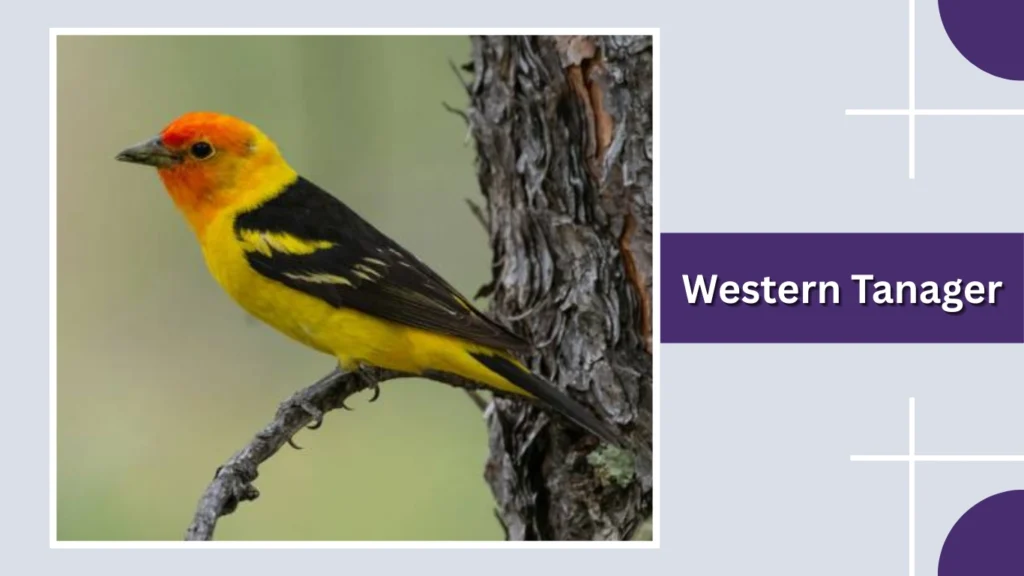
The Western Tanager is a colorful small bird, but it is often included among yellow birds because of its bright yellow body, especially when seen from a distance. Males are particularly striking, with a flaming orange-red head contrasting with their yellow body.
Identification
- Small songbird with bright yellow body
- Males have a vivid red-orange head and black wings
- Black wings with pale wing bars
- Stout, slightly pointed bill
- About 16–19 cm (6.3–7.5 in) long
Habitat
Western Tanagers are found in coniferous and mixed forests, especially pine and mountain forests. During migration, they appear in parks, gardens, and open woodlands.
Diet
They eat insects, spiders, and other invertebrates, along with fruits and berries. They often catch insects in midair or pick them from leaves and branches.
Behavior
Western Tanagers move quietly through treetops, often going unnoticed despite their bright color. Their song is soft and robin-like, and they are more often heard than clearly seen.
15. Yellow-headed Blackbird
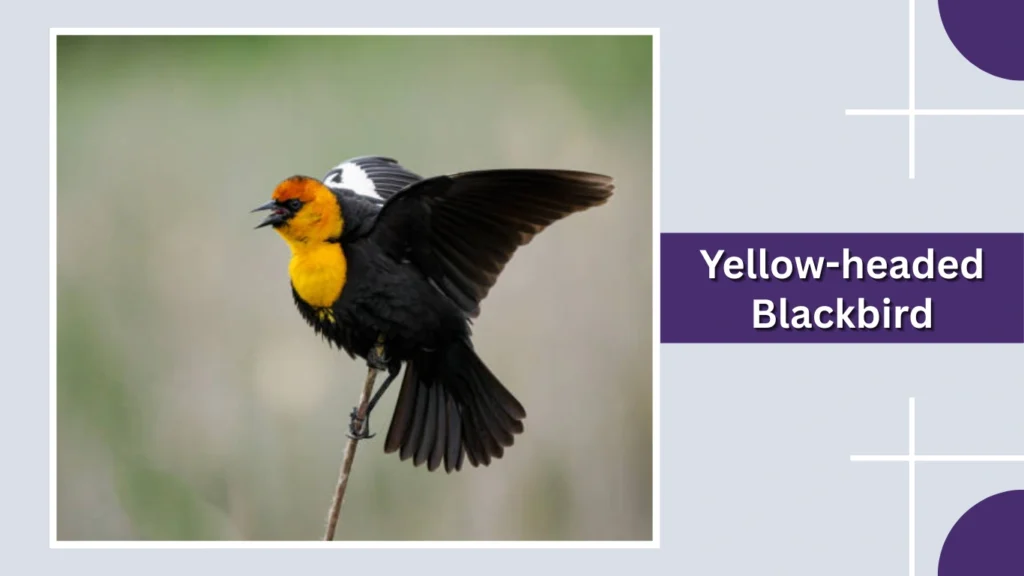
The Yellow-headed Blackbird is a bold, medium-small bird with a brilliant yellow head and chest contrasted against a black body. Though darker overall, its intense yellow makes it one of the most striking “yellow birds” in North America.
Identification
- Medium-small blackbird with bright yellow head and breast
- Black body, wings, and tail
- White wing patch visible in flight
- Thick, pointed dark bill
- About 22–26 cm (8.7–10.2 in) long
Habitat
Yellow-headed Blackbirds are strongly tied to wetlands. They breed in marshes with cattails and reeds and are often seen near lakes, ponds, and wet meadows.
Diet
They feed on insects, aquatic invertebrates, and seeds. During breeding season, insects make up a large part of their diet, while in fall and winter they switch more to grains and seeds.
Behavior
These birds are noisy and colonial. Males give harsh, mechanical-sounding calls and aggressively defend nesting territories within marshes.
FAQs
What is the most common small yellow bird?
The American Goldfinch is one of the most common small yellow birds in North America. It is frequently seen in gardens, open fields, and at backyard feeders, especially in summer when males turn bright yellow. Its social behavior and bouncing flight make it easy to recognize.
Are all small yellow birds warblers?
No, not all small yellow birds are warblers. While many yellow birds belong to the warbler family, others like goldfinches, tanagers, and canaries are different types of songbirds. Body shape, bill type, feeding style, and habitat help distinguish them.
Where are small yellow birds usually found?
Small yellow birds can be found in a wide range of habitats, including forests, wetlands, shrublands, gardens, and open fields. Some species prefer dense vegetation near water, while others are more common in treetops, pine forests, or suburban backyards.
What do small yellow birds eat?
Most small yellow birds eat insects, spiders, seeds, and berries. Warblers mainly eat insects, while finches like goldfinches focus more on seeds. Seasonal changes often affect their diet, with more insects eaten in spring and summer.
Why are so many small birds yellow?
Yellow coloring often comes from pigments in the birds’ diet, especially carotenoids found in plants and insects. Bright yellow plumage can help attract mates, signal good health, and sometimes blend into sunlit leaves, offering light camouflage in forest habitats.
