
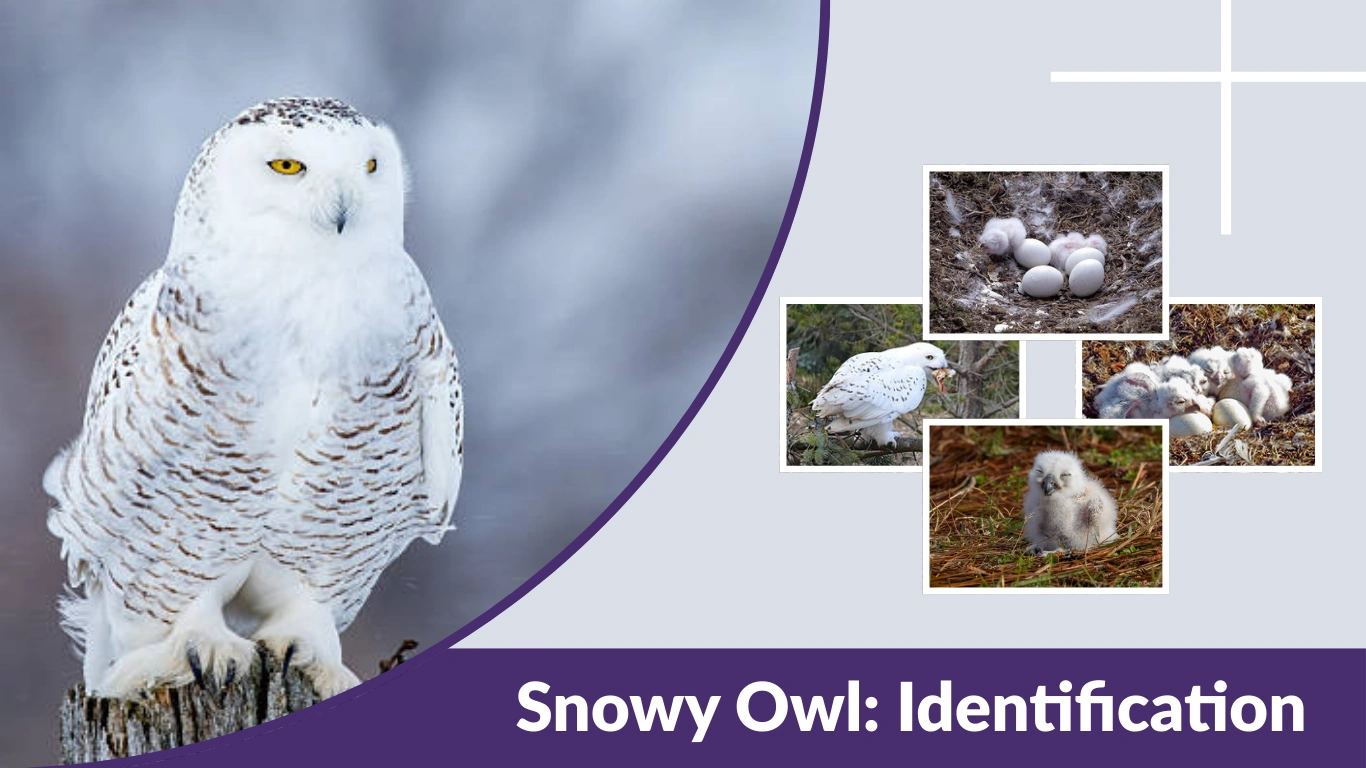
The snowy owl is one of the most iconic birds of the Arctic, instantly recognized by its striking white feathers and piercing yellow eyes. Unlike many owls, it is often active during the day, especially in summer, when the tundra experiences constant daylight. Native to the far northern regions, the snowy owl is built for extreme cold and open landscapes. Exploring its identification features, habitat, behavior, and survival strategies reveals how this powerful predator thrives where few birds can endure.
Species Overview and Scientific Classification
The snowy owl’s scientific name is Bubo scandiacus, and it belongs to the owl family Strigidae. It is one of the largest owl species in the world and is specially adapted to Arctic life. The name “snowy owl” reflects both its pale coloration and its strong association with snowy tundra environments.
This species is distinct from forest-dwelling owls because it prefers wide, open terrain rather than dense trees. Its powerful build, long wings, and keen senses make it an effective hunter across frozen plains. In Arctic ecosystems, the snowy owl plays a major role as a top predator, influencing rodent populations and maintaining ecological balance.
Geographic Range and Seasonal Distribution
Breeding Range in the Arctic
Snowy owls breed across the high Arctic regions of the Northern Hemisphere. Their primary breeding grounds include northern Canada, Alaska, Greenland, Iceland, and large areas of Siberia and northern Russia. These vast tundra landscapes provide low vegetation, open visibility, and abundant summer prey, particularly lemmings.
During the breeding season, snowy owls establish territories on the tundra and remain there to nest and raise young. The endless summer daylight allows them to hunt at all hours, supporting the intense food demands of growing owlets.
Winter Range and Irruptions
As winter approaches and prey availability changes, many snowy owls move south from the Arctic. They may travel into southern Canada and the northern United States, appearing in coastal dunes, open fields, prairies, and even airports where wide open space resembles tundra.
Some years see massive southward movements known as irruptions. These events are often linked to changes in lemming populations. When prey numbers drop in the Arctic, snowy owls roam widely in search of food, sometimes reaching regions where they are rarely seen.
Physical Appearance and Identification
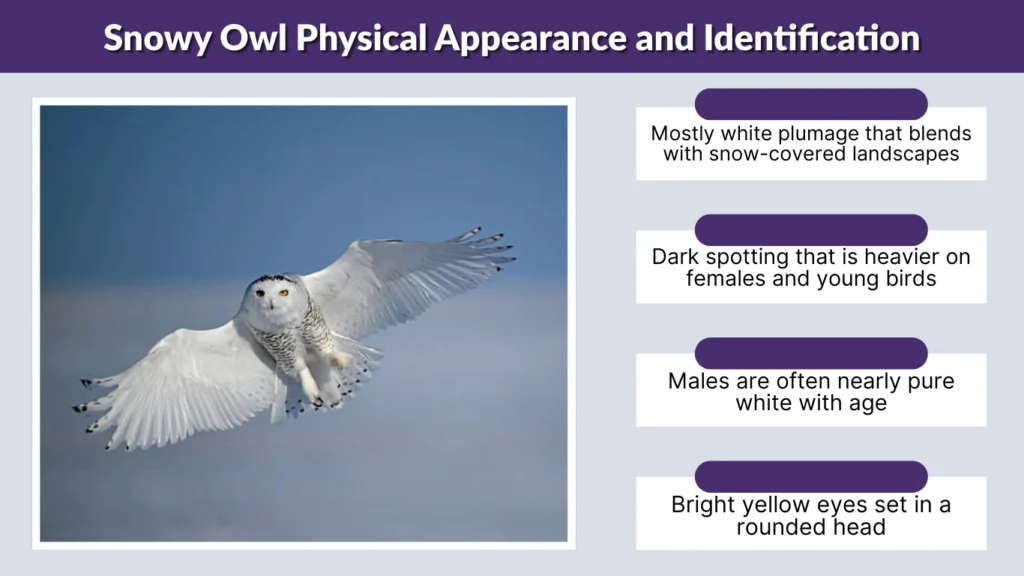
The snowy owl is among the easiest owls to identify due to its bright coloration and bulky form. Its appearance reflects both Arctic camouflage and physical power.
- Mostly white plumage that blends with snow-covered landscapes
- Dark spotting that is heavier on females and young birds
- Males are often nearly pure white with age
- Bright yellow eyes set in a rounded head
- Thick feathers covering legs and feet for insulation
- Broad wings and a heavy, muscular body
The snowy owl lacks the prominent ear tufts seen on many other owls, giving it a smooth, rounded profile. When perched on the ground or low posts, it often sits upright, scanning its surroundings with slow, deliberate head movements. This posture, combined with its white feathers, makes it appear ghostlike against snowy terrain.
Size, Wingspan, and Weight Characteristics
Snowy owls are large, powerful birds. Adults typically measure between 20 and 28 inches in length, making them noticeably bigger than barn owls and many forest owls. Their wingspan ranges from about 4 to 5.5 feet, allowing for strong, efficient flight across open landscapes.
Weight varies depending on sex and food availability. Females are significantly heavier, often weighing between 4 and 6 pounds, while males usually weigh between 3 and 4 pounds. This size difference helps females defend nests and regulate egg temperatures in harsh conditions.
Their broad wings allow them to glide low over the tundra or coastlines while searching for prey. The combination of size, strength, and endurance enables snowy owls to survive long periods in extreme cold.
Habitat Preferences and Living Environments
Summer Habitat
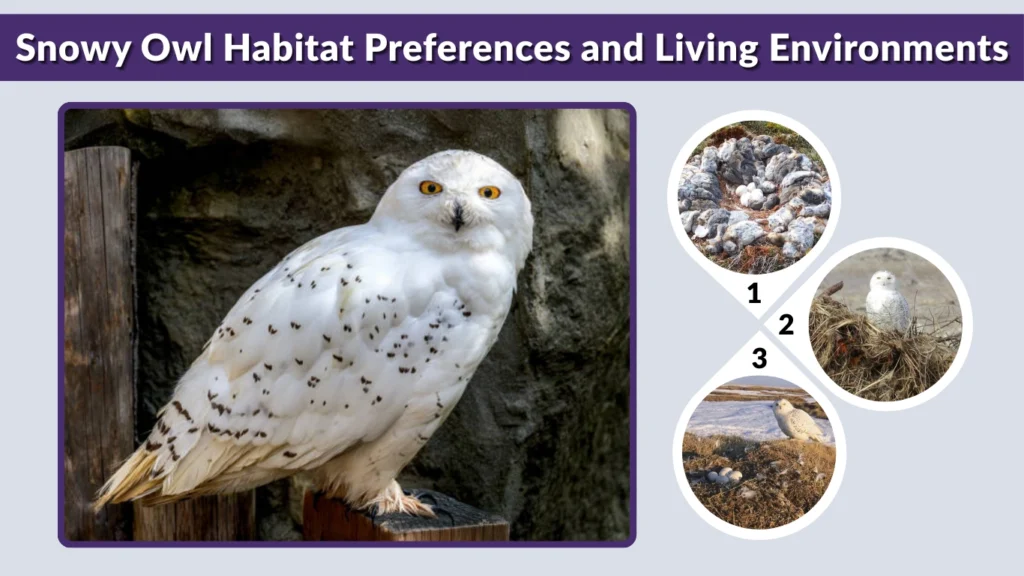
During summer, snowy owls live almost exclusively on the Arctic tundra. This habitat is characterized by flat or gently rolling land, short grasses, mosses, lichens, and scattered rocks. Trees are virtually absent, forcing the owls to rely on ground perches, small rises, and rocky outcrops.
The open tundra offers clear visibility for spotting prey and detecting threats. Snowy owls often nest on raised mounds, which give them wide views of their surroundings and help keep nests dry.
Winter Habitat
In winter, snowy owls shift to open habitats farther south. They are commonly found in coastal dunes, salt marshes, agricultural fields, large lakeshores, and prairies. They are also known for using human-made open areas such as airports and industrial fields, where prey is abundant and visibility is high.
These winter environments mirror the openness of tundra, allowing snowy owls to continue their ground-oriented hunting style even far from the Arctic.
Diet and Hunting Techniques
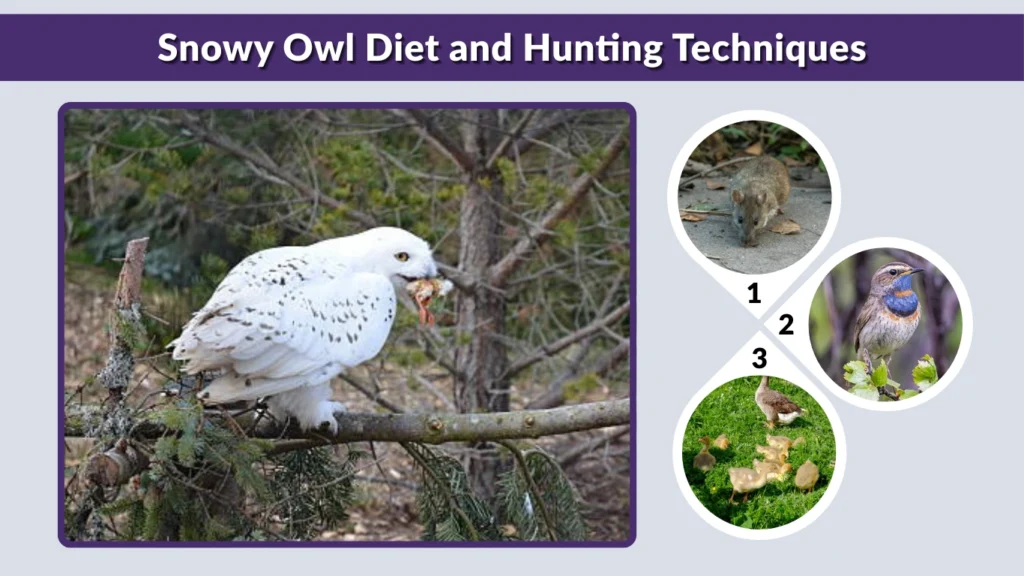
The snowy owl is a powerful predator whose survival is closely tied to the availability of small mammals, especially in the Arctic. Unlike many owls that hunt primarily at night, snowy owls often hunt during the day, taking advantage of the constant summer light of the tundra.
- Lemmings, which make up the majority of the diet during breeding season
- Other rodents such as voles and mice
- Birds including ducks, geese, and shorebirds
- Fish and aquatic animals near coastal areas
- Carrion when fresh prey is limited
- Ground-perching ambush and low-level flight hunting
Snowy owls frequently hunt from the ground or from low perches. They rely on sharp eyesight to detect movement across open landscapes, then launch fast, direct attacks. Their strong talons and hooked beak allow them to subdue prey quickly. During years when lemmings are abundant, snowy owls may breed in high numbers. When prey declines, they may roam widely in search of food.
Behavior and Activity Patterns
Diurnal and Crepuscular Habits
Unlike most owl species, snowy owls are often active during daylight hours. This adaptation is essential in the Arctic, where summer days may have no darkness at all. Even outside the breeding season, snowy owls are commonly seen hunting at dawn and dusk, though they may still hunt at night when conditions are favorable.
Their flight is strong and steady rather than silent and fluttering. Snowy owls frequently sit for long periods scanning their surroundings before making sudden hunting strikes. This patient behavior conserves energy in cold environments.
Territorial and Seasonal Behavior
During breeding season, snowy owls become highly territorial. Males defend nesting areas with aerial displays, calls, and aggressive postures. Intruders, including predators and even much larger animals, may be chased away.
In winter, snowy owls are generally more tolerant of one another, especially in areas with abundant food. Their seasonal movements are influenced by prey cycles rather than strict migration routes, leading to unpredictable winter appearances far south of the Arctic.
Intelligence and Arctic Adaptations
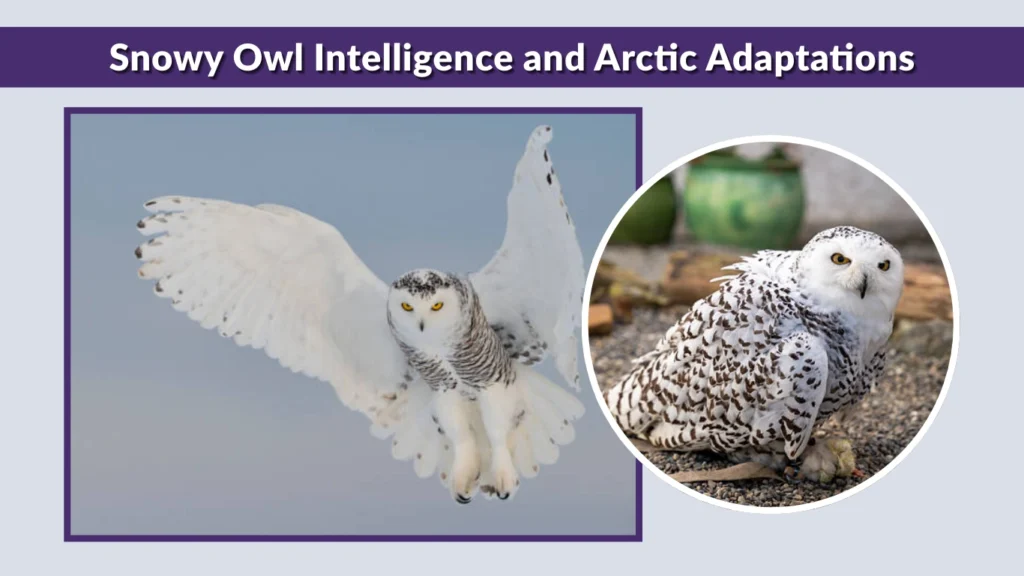
Snowy owls possess a range of adaptations that allow them to thrive in one of Earth’s harshest climates. Their feathers are exceptionally dense, covering not only their bodies but also their legs and toes. This insulation traps heat and protects skin from icy winds.
Their white plumage provides camouflage against snow and ice, helping them approach prey unnoticed. Large eyes gather light efficiently, enhancing vision during low-contrast Arctic conditions. Snowy owls also conserve energy by limiting unnecessary movement and resting for long periods between hunts.
Another critical adaptation is their flexible breeding strategy. They may skip breeding in years of food shortage and reproduce heavily when prey is abundant. This responsiveness to environmental conditions increases long-term survival.
Breeding Season and Courtship Behavior
Courtship Displays
Courtship begins in late spring as snowy owls return to Arctic breeding grounds. Males perform aerial displays, flying with exaggerated wingbeats while calling to attract females. Food offerings are common, with males presenting prey to potential mates as a demonstration of hunting ability.
Once a pair forms, they establish and defend a breeding territory. Vocalizations and posturing strengthen pair bonds and warn rivals to stay away.
Nesting Sites and Nest Construction
Snowy owls do not build traditional nests. Instead, females scrape shallow depressions in the ground, often on raised tundra mounds or ridges. These sites provide visibility and drainage, reducing flooding risk from melting snow.
Nests are typically unlined or sparsely lined with feathers. Their simplicity reflects the scarcity of nesting materials in Arctic environments.
Eggs, Owlets, and Growth Stages
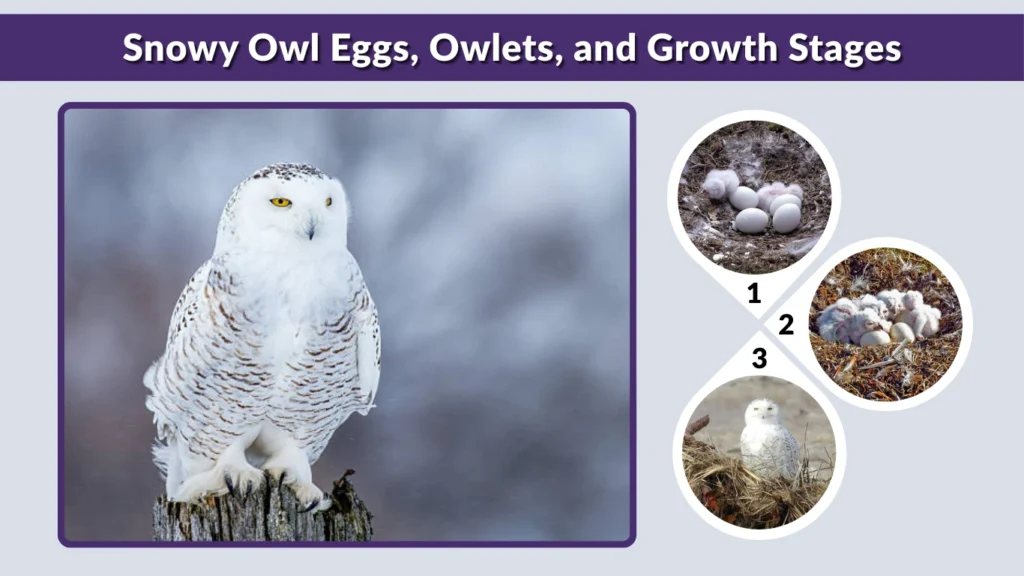
Females usually lay between three and eleven eggs, depending on food availability. In years of abundant prey, clutches may be large. Incubation lasts about 31 to 33 days and is performed mainly by the female, while the male supplies food.
Owlets hatch covered in white down and are fed constantly. They grow rapidly during the short Arctic summer. After a few weeks, they leave the nest and wander nearby, hiding among vegetation while parents continue to feed them. Full independence develops over several months as young owls learn to hunt.
Calls, Sounds, and Communication
Snowy owls are less vocal than many other owls, but they use a variety of sounds to communicate.
- Deep hoots used mainly during breeding season
- Harsh alarm calls when threatened
- Soft clucking sounds between mates
- High-pitched begging calls from chicks
- Defensive hisses and bill-snapping
These sounds help coordinate breeding, defend territories, and maintain contact between parents and offspring.
Lifespan, Mortality, and Natural Threats
In the wild, snowy owls commonly live 8 to 12 years, though some individuals survive longer. Juveniles face high mortality due to starvation, predation, and severe weather. Eggs and chicks may be taken by Arctic foxes, gulls, and skuas.
Adult snowy owls have few natural enemies, but human activities pose increasing threats. Collisions with vehicles, wind turbines, and aircraft are major risks. Climate change also affects prey cycles and breeding success, making conservation awareness increasingly important.
Ecological Importance and Environmental Role
Snowy owls are key predators of lemmings and other rodents, helping regulate their populations. This control influences vegetation growth and the broader Arctic food web. Their breeding success often reflects ecosystem health, making them valuable indicators of environmental change.
Fluctuations in snowy owl numbers can signal shifts in climate, prey availability, and tundra stability, highlighting their importance in Arctic ecology.
Relationship With Humans and Cultural Significance
Snowy owls hold deep cultural meaning in many northern Indigenous traditions, symbolizing endurance, guidance, and the spirit of the Arctic. In modern times, they have become icons of polar wildlife, attracting birdwatchers and photographers worldwide.
Public interest in snowy owls supports conservation education. Although they may appear approachable, they are wild animals and require respectful distance. Protecting habitats and reducing human-related threats are vital for their future.
FAQs
How can you easily identify a snowy owl?
Snowy owls are identified by their mostly white plumage, bright yellow eyes, and large, rounded bodies. Males are often nearly pure white, while females and young birds have darker markings. Their preference for open landscapes and daytime activity also helps distinguish them.
Where do snowy owls live most of the year?
Most snowy owls spend the breeding season on the Arctic tundra across northern North America, Greenland, and Siberia. In winter, many move south into Canada and the northern United States, occupying open areas such as coastlines, grasslands, and agricultural fields.
What do snowy owls mainly eat?
Lemmings are the primary food source during the breeding season, but snowy owls also eat other rodents, birds, and occasionally fish. Their flexible diet allows them to survive in both Arctic and temperate environments.
Why do snowy owls move south in winter?
Snowy owls move south mainly in response to prey availability. When lemming populations decline in the Arctic, owls roam widely in search of food. These movements can lead them far south of their usual range during irruption years.
How long do snowy owls live?
In the wild, snowy owls usually live between 8 and 12 years, though some individuals survive longer. In protected environments, they may live more than 20 years. Survival depends heavily on food supply, weather, and human-related risks.
