

The Canyon Wren is a small yet captivating bird best known for its beautiful, cascading song that echoes through rocky landscapes. Found primarily in canyons, cliffs, and desert regions, this bird is perfectly adapted to life among rugged terrain. Its rich coloration and graceful movements make it a favorite among birdwatchers. Despite its size, the Canyon Wren stands out for its unique vocal abilities and specialized habitat, offering a fascinating glimpse into the diversity of nature.
What is a Canyon Wren?
The Canyon Wren (Catherpes mexicanus) is a small songbird belonging to the wren family, Troglodytidae. It is widely distributed across the southwestern United States and parts of Mexico, where rocky landscapes dominate the environment. Unlike many other wrens, the Canyon Wren is highly specialized for life on cliffs and steep rock faces.
This bird is known for its agility and ability to move effortlessly along vertical surfaces. Its strong feet and curved claws allow it to cling to rocks, making it well suited for navigating rugged terrain. The Canyon Wren is also famous for its distinctive song, which sets it apart from other bird species.
Key Characteristics
- Cliff-dwelling bird adapted to rocky environments
- Produces a clear, descending musical song
- Highly agile climber on steep surfaces
- Usually seen alone or in pairs
Canyon Wren Physical Description

The Canyon Wren has a striking appearance that reflects its environment. Its body is mostly a warm reddish-brown color, which helps it blend into rocky surroundings. In contrast, its throat and chest are bright white, creating a noticeable visual distinction.
Its long, slender, slightly curved bill is ideal for reaching into narrow crevices to find food. The bird’s tail is relatively long and often shows dark bands, which may be visible when it moves or spreads its feathers.
Identification Features
- Color: Reddish-brown body with a white throat and chest
- Bill: Long and slightly curved for probing cracks
- Tail: Dark with subtle bands
- Body Shape: Slim and adapted for climbing
- Movement: Frequently seen clinging to rock surfaces
These features make the Canyon Wren easier to identify, especially in rocky habitats where few other small birds behave in the same way.
Canyon Wren Habitat
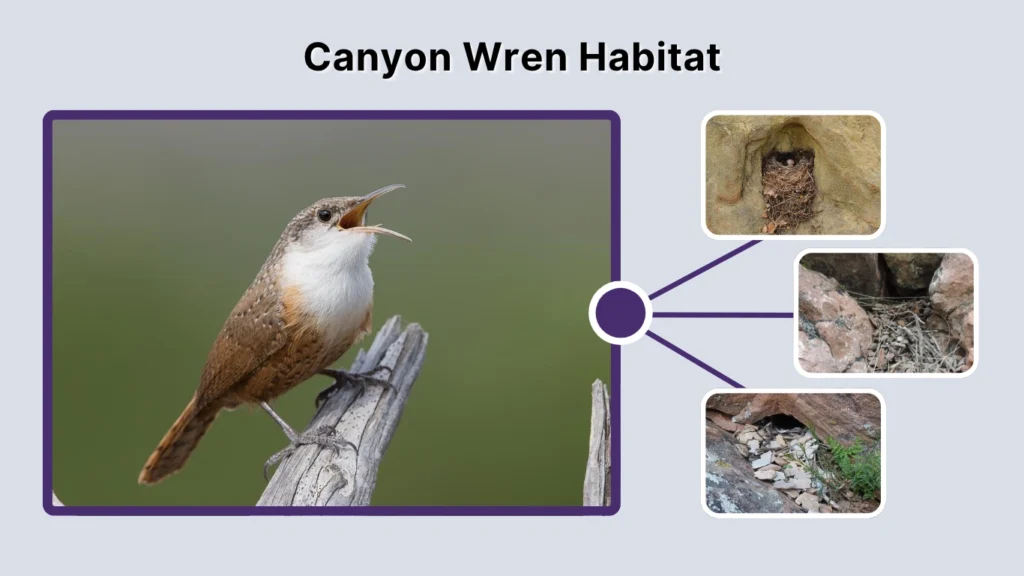
The Canyon Wren is closely associated with rocky environments. It prefers habitats such as steep canyons, cliffs, rocky outcrops, and desert landscapes. These areas provide both shelter and access to food, making them ideal for survival.
Unlike many birds that rely on trees, the Canyon Wren depends on rock formations for nesting and protection. Its ability to live in such rugged environments reduces competition with other species and allows it to thrive in areas that might seem inhospitable.
Where Do Canyon Wrens Live?
Canyon Wrens are primarily found in the southwestern United States, including states such as Arizona, Utah, Texas, and New Mexico. Their range also extends into parts of Mexico.
They are often found at various elevations, from low desert areas to higher mountainous regions, as long as rocky terrain is available. Their presence is strongly tied to cliffs and rock walls, which they use for nesting and daily activities.
Behavior and Lifestyle
Climbing Ability
One of the most remarkable traits of the Canyon Wren is its climbing ability. It moves effortlessly along vertical rock surfaces, using its strong feet to grip uneven textures. This allows it to explore areas that many other birds cannot access.
Unlike birds that rely heavily on flight, the Canyon Wren often prefers climbing and hopping between rocks. This behavior helps it conserve energy while searching for food.
Territorial Behavior
Canyon Wrens are generally territorial birds. They defend their chosen area, especially during the breeding season, using both vocalizations and physical displays. Their song plays a key role in marking territory and communicating with other birds.
They are typically seen alone or in pairs rather than in large groups. This solitary nature helps reduce competition for resources within their specialized habitat.
Canyon Wren Song

Unique Descending Song
The Canyon Wren is famous for its beautiful and distinctive song. It produces a series of clear, musical notes that gradually descend in pitch. This cascading effect creates a soothing and melodic sound that echoes through canyon walls.
The structure of the song is often described as one of the most beautiful among North American birds. The echoing acoustics of rocky environments enhance the sound, making it even more striking.
Purpose of Song
The Canyon Wren’s song serves several important functions. One of its primary purposes is to establish and defend territory. By producing a loud and distinctive series of notes, the bird signals its presence to others and warns potential rivals to stay away.
The song is also used to attract mates during the breeding season. A strong, clear song indicates a healthy and capable individual, making it more appealing to potential partners. In the echoing environment of canyons, this vocal communication becomes especially effective.
Canyon Wren Diet

What Do Canyon Wrens Eat?
The Canyon Wren mainly feeds on insects and other small invertebrates. Its diet includes ants, beetles, spiders, and small larvae that are commonly found in rocky environments. These food sources are plentiful in crevices and cracks within cliffs and rocks.
Feeding Behavior
The Canyon Wren uses its long, curved bill to probe into narrow spaces where insects hide. It carefully searches rock surfaces, often pausing to inspect small openings before extracting prey.
Unlike birds that feed in open areas, the Canyon Wren relies heavily on its ability to navigate uneven terrain. Its climbing skills allow it to reach hidden food sources that are inaccessible to many other species.
Canyon Wren Nesting
Nest Location
Canyon Wrens build their nests in sheltered locations within rocky environments. Common nesting sites include crevices in cliffs, ledges, and cracks in rock walls. These hidden spots provide protection from predators and harsh weather.
The placement of the nest is usually carefully chosen to ensure safety and stability. By nesting above ground level and within narrow spaces, the Canyon Wren reduces the risk of disturbance.
Nest Structure
The nest of a Canyon Wren is typically cup-shaped and constructed from materials such as twigs, grass, moss, and small fibers. Inside, the nest is lined with softer materials to create a comfortable environment for eggs and chicks.
This structure helps insulate the young birds and keeps them secure within the rocky surroundings. The careful design of the nest reflects the bird’s adaptation to its unique habitat.
Canyon Wren vs Rock Wren
Key Differences
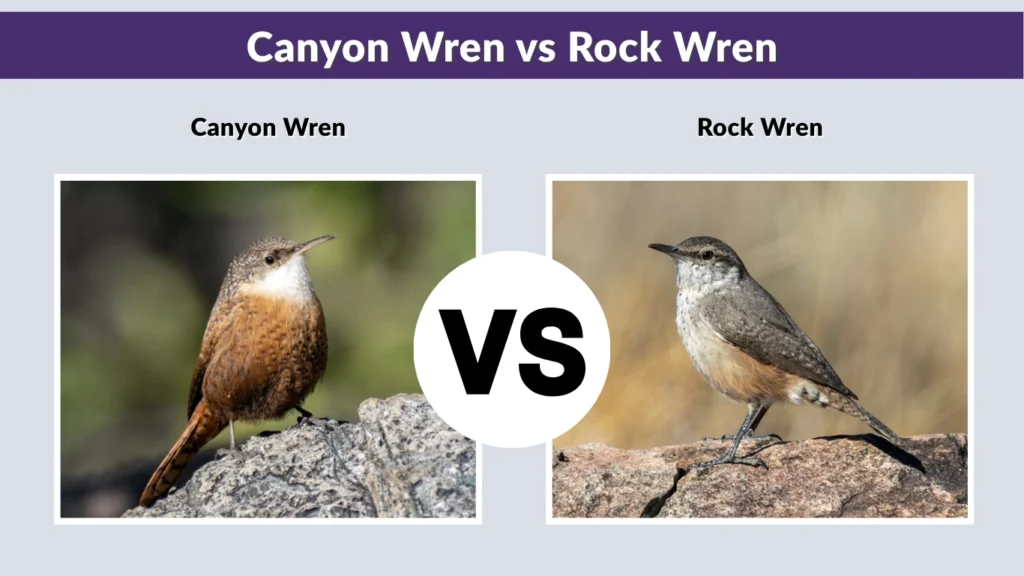
Although the Canyon Wren and Rock Wren share similar environments, they differ in several ways. The Canyon Wren is more specialized for steep cliffs and vertical rock faces, while the Rock Wren is often found on flatter, rocky ground.
In terms of appearance, the Canyon Wren has a richer reddish-brown coloration and a distinct white throat, whereas the Rock Wren tends to have more muted tones.
Their songs also differ significantly. The Canyon Wren is known for its smooth, descending melody, while the Rock Wren produces a more varied and less musical series of notes. These differences help birdwatchers distinguish between the two species.
Migration and Range
The Canyon Wren is generally considered a non-migratory bird. Most populations remain within their established territories throughout the year, especially in regions where the climate remains relatively stable.
However, some individuals may move short distances in response to seasonal changes or food availability. These movements are typically local rather than long-distance migrations.
Their ability to adapt to different elevations and environmental conditions allows them to survive in both hot desert climates and cooler mountainous areas.
Canyon Wren Facts
The Canyon Wren is known for having one of the most beautiful songs among North American birds. Its cascading notes create a calming and recognizable sound in rocky landscapes.
It is also an expert climber, capable of navigating vertical surfaces with ease. Unlike many birds, it spends much of its time on rock faces rather than in trees.
Another interesting fact is that the Canyon Wren prefers remote and rugged environments, which makes it less commonly seen but highly valued by bird enthusiasts who seek it out.
Ecological Importance
The Canyon Wren plays an important role in its ecosystem by helping control insect populations. By feeding on a variety of small invertebrates, it contributes to maintaining ecological balance within rocky habitats.
Additionally, its presence can indicate a healthy environment. Because it relies on stable rock formations and clean habitats, the Canyon Wren serves as a subtle indicator of environmental quality in canyon ecosystems.
How to Spot a Canyon Wren
Spotting a Canyon Wren requires patience and attention to sound. The best way to locate this bird is by listening for its distinctive descending song, which often echoes through canyons.
Birdwatchers should focus on rocky cliffs, canyon walls, and desert outcrops. Early morning is usually the best time for observation, as the bird is most active and vocal.
Although it can be difficult to see due to its camouflaged coloring, its movement along rock surfaces and its unique song make it easier to identify once located.
FAQs
What does a Canyon Wren look like?
The Canyon Wren has a reddish-brown body, a bright white throat, and a long curved bill. Its slim shape and banded tail help distinguish it from similar birds.
Where do Canyon Wrens live?
Canyon Wrens live in rocky habitats such as cliffs, canyons, and desert landscapes, mainly in the southwestern United States and parts of Mexico.
What do Canyon Wrens eat?
They primarily eat insects and small invertebrates, including spiders, ants, and beetles, which they find in rock crevices.
Why is the Canyon Wren song unique?
Its song consists of clear, descending notes that create a cascading effect. The sound often echoes beautifully in canyon environments.
Are Canyon Wrens migratory?
No, Canyon Wrens are mostly non-migratory. They usually stay within the same region year-round, with only minor local movements.
Conclusion
The Canyon Wren is a remarkable bird that thrives in rugged and rocky environments. Its graceful movements, specialized climbing ability, and unforgettable song make it a unique member of the wren family. By understanding its habitat, diet, and behavior, we gain a deeper appreciation for this species and the ecosystems it inhabits. Protecting these natural landscapes ensures that the Canyon Wren continues to enchant listeners with its beautiful song for generations to come.
