
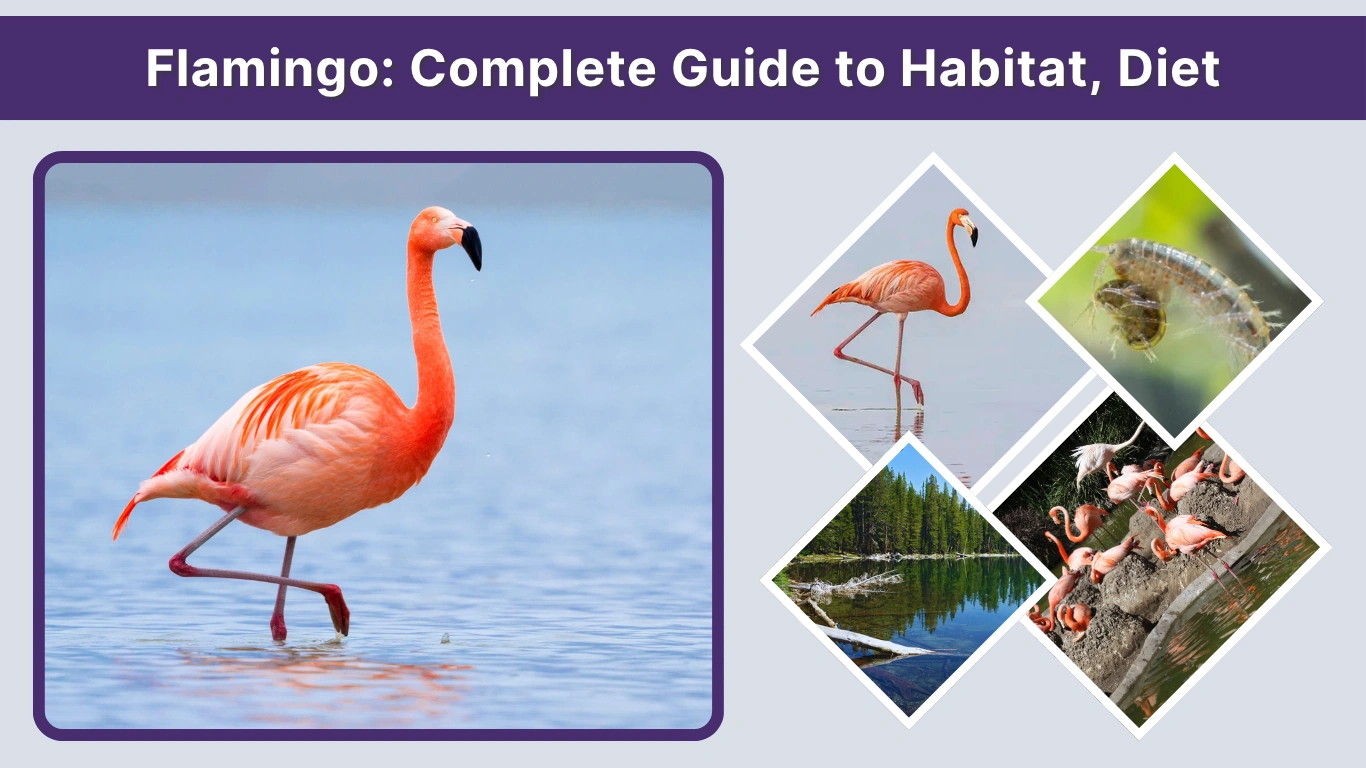
Flamingos are among the most recognizable birds in the world, known for their vibrant pink color, long legs, and graceful stance. Found in warm regions across the globe, these unique birds thrive in shallow waters and large colonies. Their unusual feeding habits and striking appearance make them a favorite among birdwatchers and nature lovers. In this guide, you’ll discover everything about flamingos, including their habitat, diet, baby development, and fascinating flying behavior.
What is a Flamingo?
Flamingos belong to the family Phoenicopteridae and are wading birds famous for their distinctive body shape and coloration. There are six main species of flamingos, including the greater flamingo, lesser flamingo, Chilean flamingo, and American flamingo.
These birds are widely distributed across parts of Africa, South America, the Caribbean, southern Europe, and Asia. They prefer warm, tropical, and subtropical environments where shallow water bodies are abundant.
Flamingos are highly social birds, often living in large colonies that can number in the thousands. This group behavior helps protect them from predators and increases their chances of finding food efficiently.
Flamingo Identification
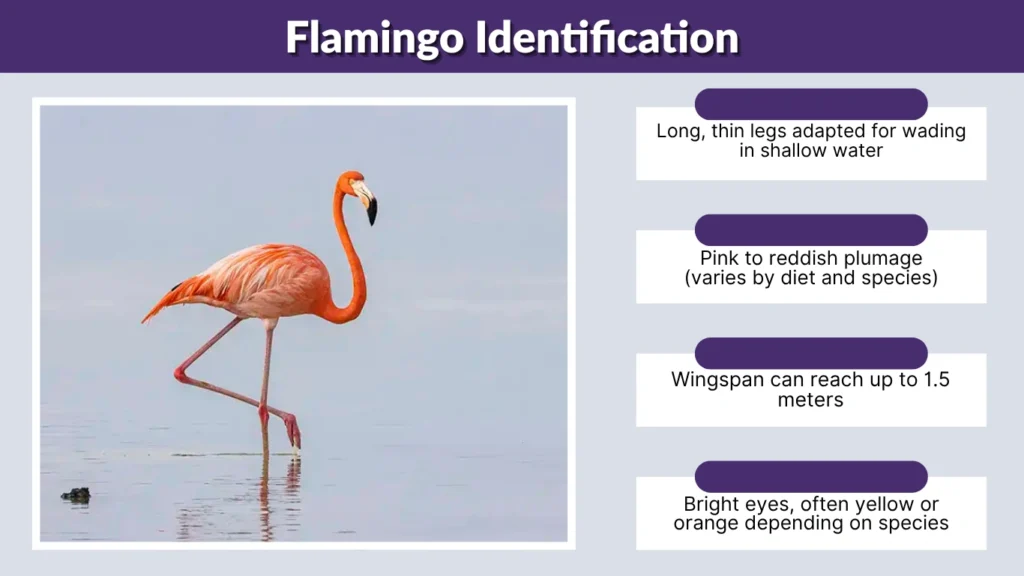
Flamingos are among the easiest birds to recognize thanks to their unique shape, color, and posture. Their long legs, curved beak, and often bright pink feathers make them stand out in any wetland environment. Even from a distance, their elegant stance and group behavior help birdwatchers quickly identify them.
Key Identification Features
- Long, thin legs adapted for wading in shallow water
- S-shaped neck that stretches out during flight
- Downward-curved beak designed for filter feeding
- Pink to reddish plumage (varies by diet and species)
- Black flight feathers visible when wings are spread
- Bright eyes, often yellow or orange depending on species
Quick Field Tips
- Often seen standing on one leg
- Usually found in large flocks or colonies
- Moves slowly while feeding in water
- Feeds with head upside down in shallow water
Size & Shape
- Tall, slender body (one of the tallest wading birds)
- Long neck and legs give a graceful appearance
- Wingspan can reach up to 1.5 meters (depending on species)
These distinctive traits make flamingos easy to identify, even for beginners observing birds in the wild.
Flamingo Habitat
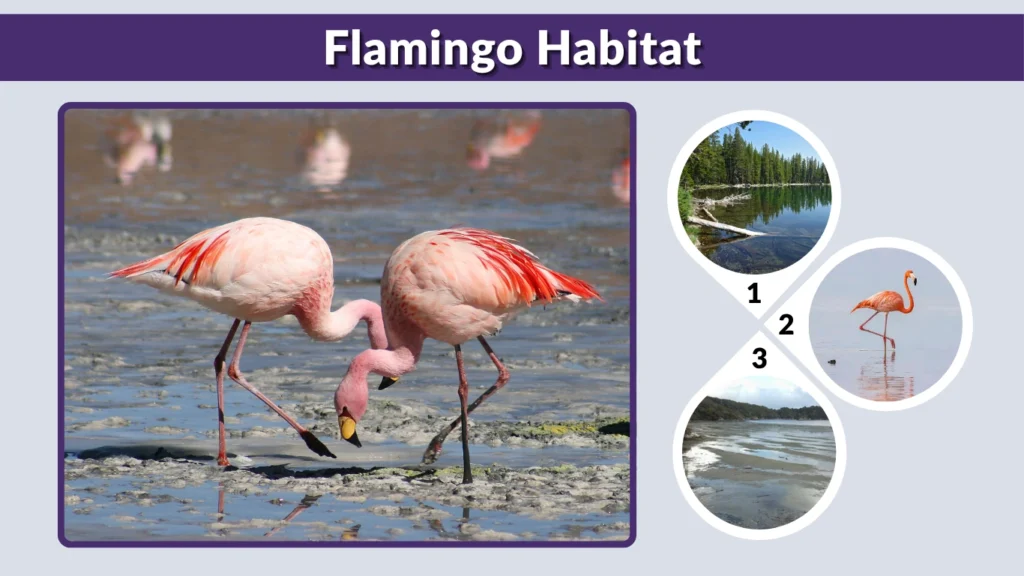
Flamingos are specially adapted to live in environments that many other animals cannot tolerate.
Natural Habitats
Flamingos typically inhabit:
- Shallow lakes
- Saltwater lagoons
- Mudflats
- Coastal wetlands
These environments provide the ideal conditions for feeding and nesting.
Geographic Range
Flamingos are found across multiple continents, including:
- Africa (especially large populations)
- South America
- Parts of Asia and the Middle East
- Southern Europe
Their presence is closely tied to the availability of suitable wetland habitats.
Habitat Adaptations
Flamingos have several adaptations that allow them to survive in harsh conditions. They can tolerate highly salty or alkaline water thanks to specialized glands that remove excess salt from their bodies.
Their long legs help them wade into deeper waters, while their unique beaks allow them to filter tiny food particles from mud and water.
Flamingo Diet
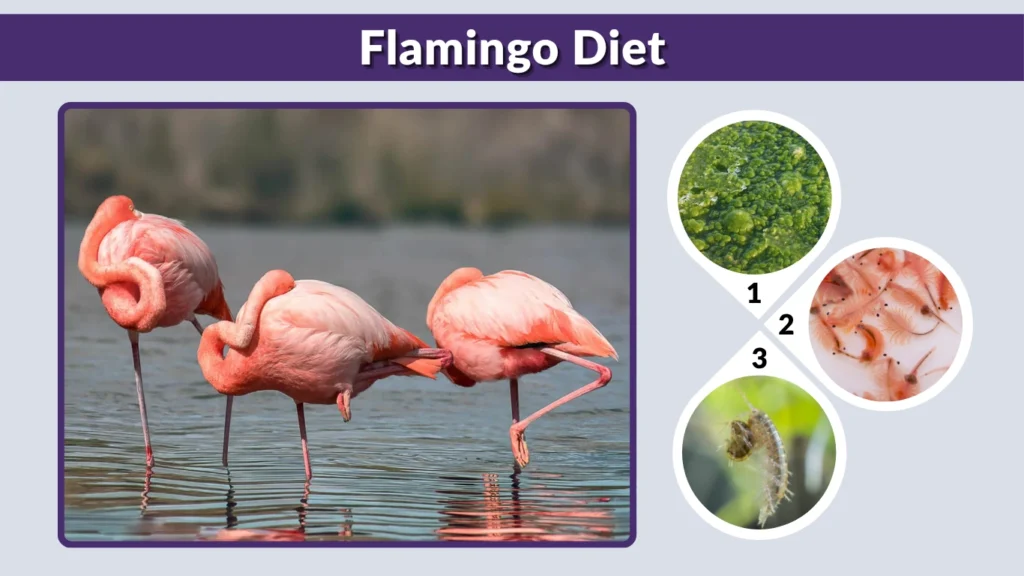
Flamingos have one of the most unique feeding systems in the bird world.
What Do Flamingos Eat?
Flamingos primarily feed on:
- Algae
- Brine shrimp
- Small crustaceans
- Plankton
These food sources are abundant in their wetland habitats.
Unique Feeding Method
Flamingos are filter feeders, meaning they separate food from water using their specialized beaks. They often feed with their heads upside down, sweeping their beaks through the water.
Their tongues act like pumps, pushing water in and out while trapping food particles inside. This efficient system allows them to consume large quantities of tiny organisms.
Diet and Color Connection
The flamingo’s diet is directly responsible for its color. Carotenoid pigments found in algae and crustaceans are processed by the bird’s body and deposited into feathers.
A flamingo with a richer diet will appear more brightly colored, while a poor diet can lead to fading coloration.
Flamingo Baby (Chicks)
Baby flamingos are quite different in appearance from their colorful parents and go through fascinating developmental stages.
Appearance of Baby Flamingos
Newly hatched flamingo chicks are:
- Covered in soft gray or white down feathers
- Born with straight beaks (not curved yet)
- Much smaller and less colorful than adults
Their pink coloration develops later as they begin eating carotenoid-rich foods.
Growth and Development
As flamingo chicks grow:
- Their beaks gradually curve downward
- Feathers change from gray to pink over time
- They begin walking and exploring shortly after hatching
Young flamingos often gather in groups called “crèches,” where many chicks stay together for safety while parents search for food.
Flamingo Milk Feeding
One of the most unique features of flamingo parenting is “crop milk.” Both male and female flamingos produce this nutrient-rich liquid in their digestive tract.
This milk is fed directly to the chicks and is essential for their early growth. It contains fats, proteins, and pigments that eventually contribute to the chick’s coloration.
Flamingo Nesting & Reproduction
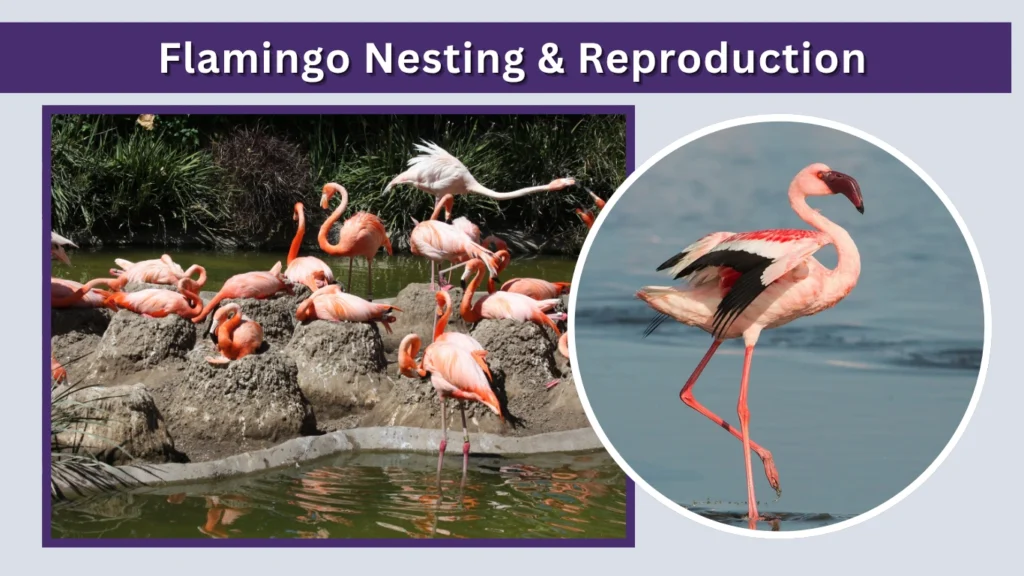
Flamingos have distinctive nesting habits that are closely tied to their watery environments.
Nest Structure
Flamingos build cone-shaped nests made of mud. These nests:
- Are raised above water level
- Help protect eggs from flooding
- Provide a stable platform for incubation
Each nest typically holds a single egg.
Breeding Behavior
Flamingos breed in large colonies, sometimes numbering thousands of birds. Courtship involves synchronized group displays, including head movements and wing spreading.
This coordinated behavior helps strengthen pair bonds and ensures successful mating.
Egg and Incubation
Flamingos usually lay one egg per breeding season. Both parents take turns incubating the egg, which hatches after about 27–31 days.
After hatching, both parents continue to care for and feed the chick.
Flamingo Flying
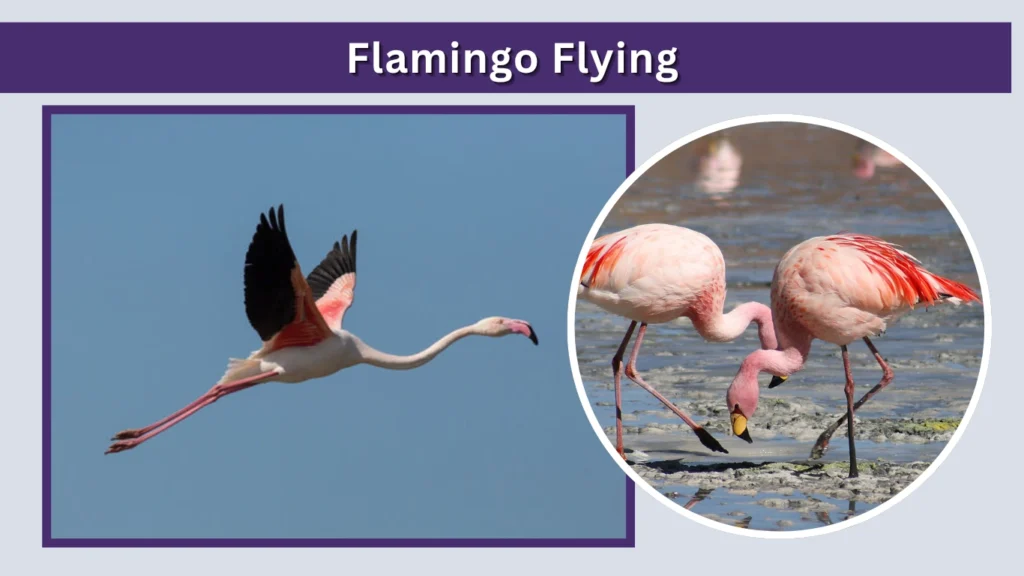
Despite their long legs and heavy bodies, flamingos are strong and capable fliers.
Can Flamingos Fly?
Yes, flamingos can fly very well. Although they may appear awkward on land, they are surprisingly graceful in the air.
How Flamingos Fly
Flamingos have a unique flying posture:
- Neck stretched straight forward
- Legs extended straight behind
- Steady wingbeats with occasional gliding
Their wings reveal black flight feathers that contrast with their pink bodies.
Flight Patterns & Migration
Flamingos often fly in flocks, sometimes forming lines or loose formations. Many species migrate or travel long distances in search of food and suitable breeding grounds.
They typically fly at night and can cover hundreds of kilometers in a single journey.
Flamingo Behavior
Flamingos are highly social birds that depend on group living for survival.
They form large colonies, which provide protection from predators and improve feeding efficiency. Communication is an important part of their behavior, with various calls used to maintain group cohesion.
Flamingos are also known for their iconic one-legged stance. While the exact reason is still debated, it may help conserve body heat or reduce muscle fatigue.
Flamingo Facts
Flamingos are full of surprising and fascinating traits.
Interesting Facts
- Flamingos can stand on one leg for long periods
- They live in colonies that can number in the thousands
- Their pink color depends entirely on their diet
Lifespan
Flamingos can live for several decades. In the wild, they often live 20–30 years, while those in captivity may live even longer.
Predators & Threats
Flamingos face threats from:
- Large birds of prey
- Mammals such as foxes
- Habitat loss and environmental changes
Eggs and chicks are especially vulnerable to predators.
How Flamingos Adapt to Their Environment
Flamingos are specially adapted to survive in extreme environments.
- Salt glands help remove excess salt from their bodies
- Strong legs allow them to stand and walk in muddy water
- Specialized beaks enable efficient filter feeding
These adaptations make flamingos highly successful in habitats where few other animals can thrive.
FAQs
Why are flamingos pink?
Their pink color comes from carotenoid pigments found in their diet.
Do flamingos fly long distances?
Yes, flamingos can travel hundreds of kilometers during migration or in search of food.
What do baby flamingos eat?
They are fed crop milk by their parents before transitioning to solid food.
Where do flamingos live?
They live in warm regions with shallow water, such as lagoons and wetlands.
Conclusion
Flamingos are truly remarkable birds, combining unique physical features with fascinating behaviors. From their vibrant color and specialized diet to their strong flying ability and social lifestyle, they stand out as one of nature’s most iconic species. Understanding their habitat, feeding habits, and life cycle not only deepens appreciation for these birds but also highlights the importance of protecting the delicate ecosystems they depend on.
