
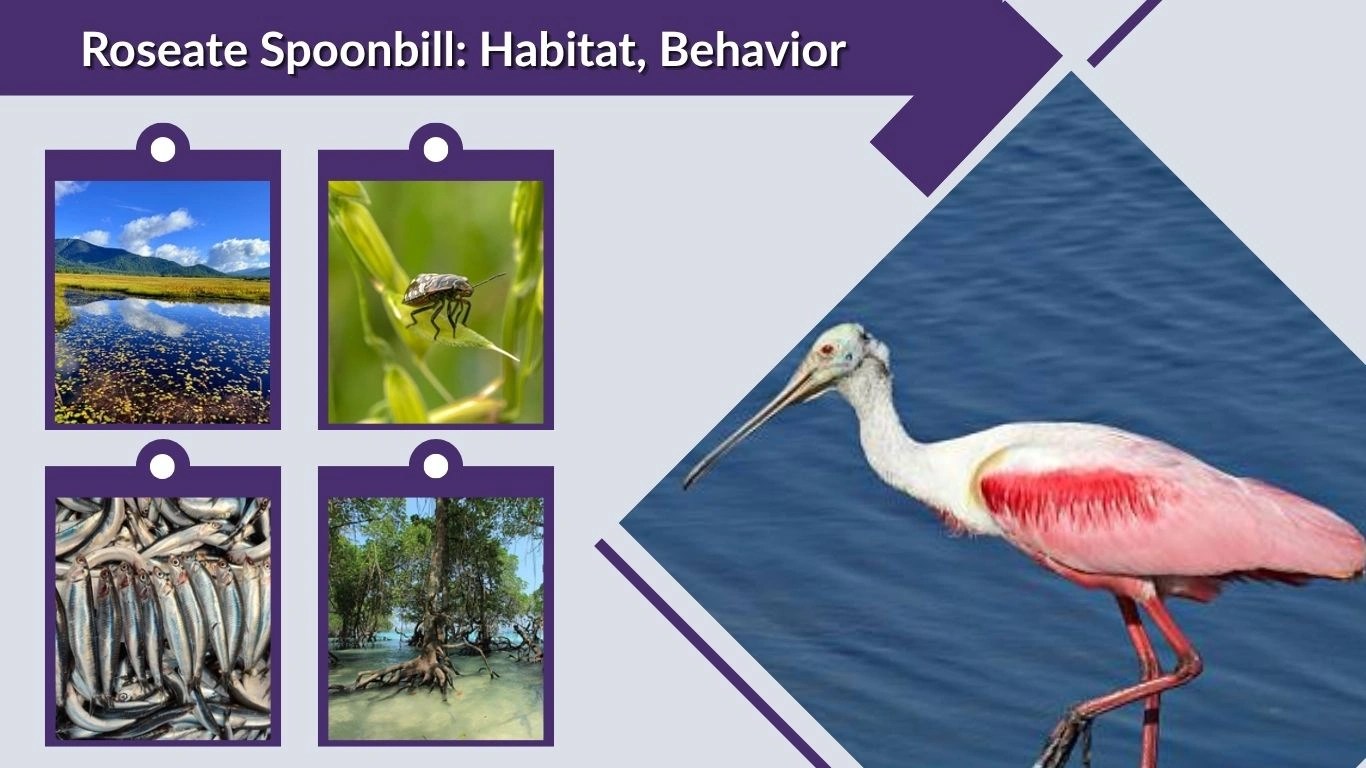
The Roseate Spoonbill is one of the most eye-catching birds in the Americas, known for its bright pink feathers and uniquely shaped bill. Often mistaken for a flamingo, this wading bird stands out with its graceful movements and unusual feeding style. Found mainly in coastal wetlands and marshes, the Roseate Spoonbill is a favorite among birdwatchers. Its vibrant color and fascinating behavior make it a truly remarkable species to observe in the wild.
What is a Roseate Spoonbill?
Scientific Classification
The Roseate Spoonbill (Platalea ajaja) belongs to the Threskiornithidae family, which also includes ibises. This group of birds is known for their long legs, curved or specialized bills, and preference for wetland habitats.
Overview of the Species
The Roseate Spoonbill is a large wading bird recognized for its striking pink color and distinctive spoon-shaped bill. It is commonly found in shallow waters, where it feeds and socializes with other birds. Unlike flamingos, which filter-feed while standing still, spoonbills actively sweep their bills through the water to catch prey. Their unique behavior and appearance make them easy to identify.
Roseate Spoonbill Physical Characteristics
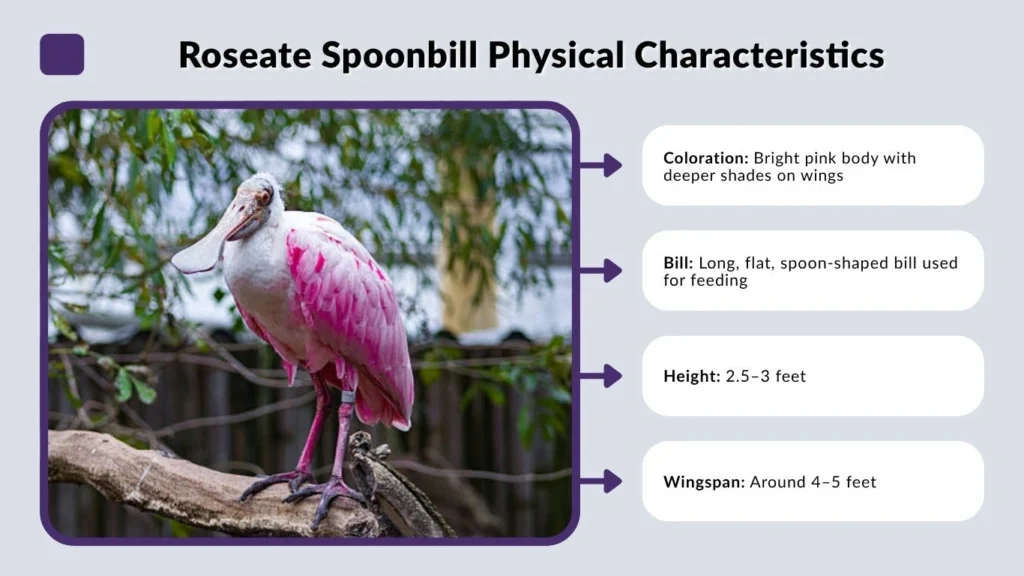
The Roseate Spoonbill is a striking wading bird known for its bright pink color and unique bill shape. Its elegant body, long legs, and smooth flight make it easy to spot in wetlands and coastal areas. The combination of vivid coloration and unusual features sets it apart from most other water birds.
Key Physical Features:
- Coloration: Bright pink body with deeper shades on wings
- Bill: Long, flat, spoon-shaped bill used for feeding
- Height: 2.5–3 feet (75–90 cm)
- Wingspan: Around 4–5 feet (120–150 cm)
- Legs: Long and strong, ideal for wading in shallow water
- Neck: Long and slightly curved
- Face: Bare, pale greenish or gray skin around the face
- Juveniles: Paler pink with less vibrant coloration
These features make the Roseate Spoonbill easy to identify, especially when seen feeding or flying over shallow wetlands.
Roseate Spoonbill Habitat
Natural Habitat
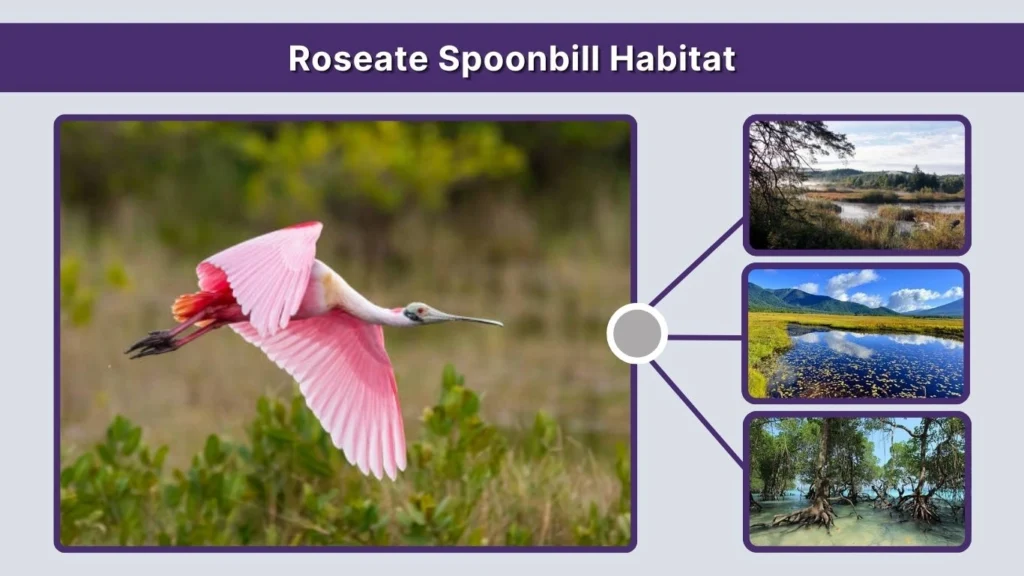
Roseate Spoonbills thrive in wetlands, including marshes, lagoons, mangroves, and coastal estuaries. These areas provide the shallow water and abundant food sources they need to survive.
Geographic Range
This species is commonly found in the southern United States, especially in Florida, Texas, and along the Gulf Coast. It is also widely distributed across Central America, the Caribbean, and parts of South America.
Preferred Environment
They prefer shallow water environments where they can easily forage. Areas with calm water and rich aquatic life are ideal for feeding and nesting.
Roseate Spoonbill Diet and Feeding Behavior
What Do Roseate Spoonbills Eat?
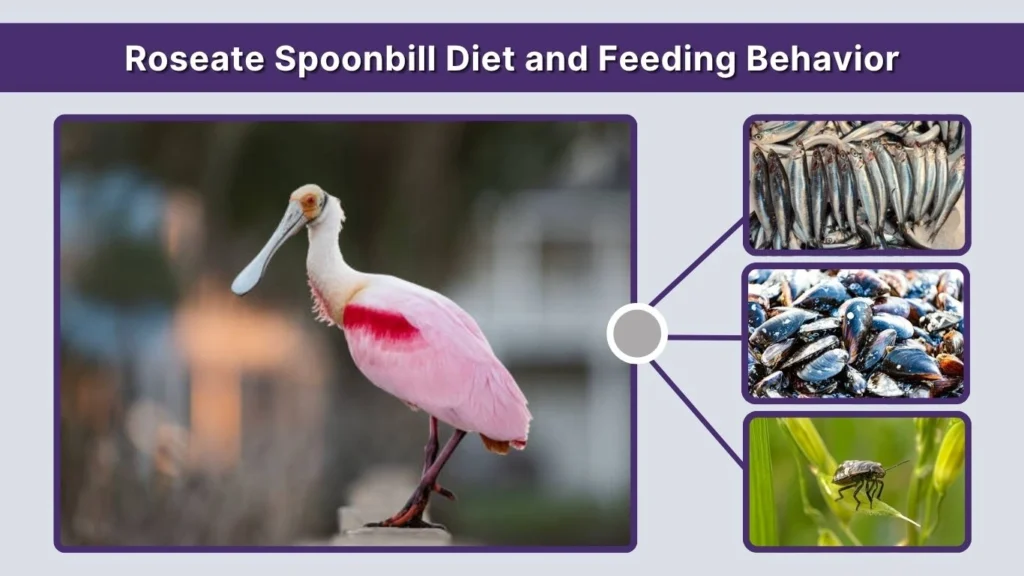
The Roseate Spoonbill feeds on small fish, crustaceans, insects, and aquatic invertebrates. Their diet is rich in nutrients that support their energy needs and coloration.
Unique Feeding Method
Unlike many birds that rely on sight, the Roseate Spoonbill uses its sense of touch. It sweeps its bill side to side in the water, snapping it shut when it detects prey. This method is both efficient and distinctive.
Why Are They Pink?
The bird’s pink coloration comes from pigments called carotenoids, found in the crustaceans and other foods they consume. A diet rich in these pigments results in brighter feathers, similar to flamingos.
Roseate Spoonbill Behavior and Lifestyle
Daily Activity
Roseate Spoonbills are active during the day, spending most of their time feeding, resting, or preening. They are often seen wading slowly through shallow water in search of food.
Social Behavior
These birds are highly social and are often found in groups. They may feed and nest alongside other wading birds such as herons, egrets, and ibises. Living in groups provides safety and increases feeding efficiency.
Roseate Spoonbill Nesting and Reproduction
Nesting Habits
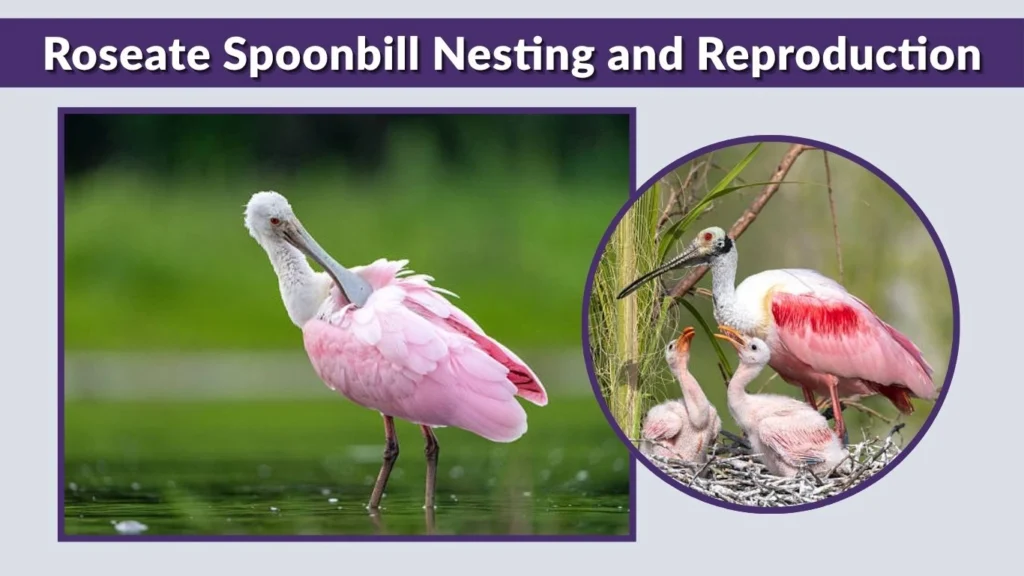
Roseate Spoonbills typically build their nests in trees or dense shrubs, often over water for added protection. The nests are made from sticks and lined with softer materials like leaves and grass. They usually nest in colonies alongside other wading birds.
Breeding Season
The breeding season varies depending on location but generally occurs during warmer months when food is abundant. During this time, pairs form and begin preparing nests for raising their young.
Parental Care
Both parents share responsibilities in caring for the eggs and chicks. The female lays a small clutch of eggs, which are incubated by both adults. After hatching, the chicks are fed regurgitated food until they are strong enough to feed on their own.
Roseate Spoonbill Range and Distribution
U.S. Population
In the United States, Roseate Spoonbills are most commonly found in Florida, Texas, and along the Gulf Coast. Their populations in these areas have grown due to conservation efforts.
Global Distribution
Beyond the U.S., these birds are widely distributed across Central America, the Caribbean, and much of South America. They are well-adapted to tropical and subtropical climates.
Roseate Spoonbill vs Flamingo
Key Differences
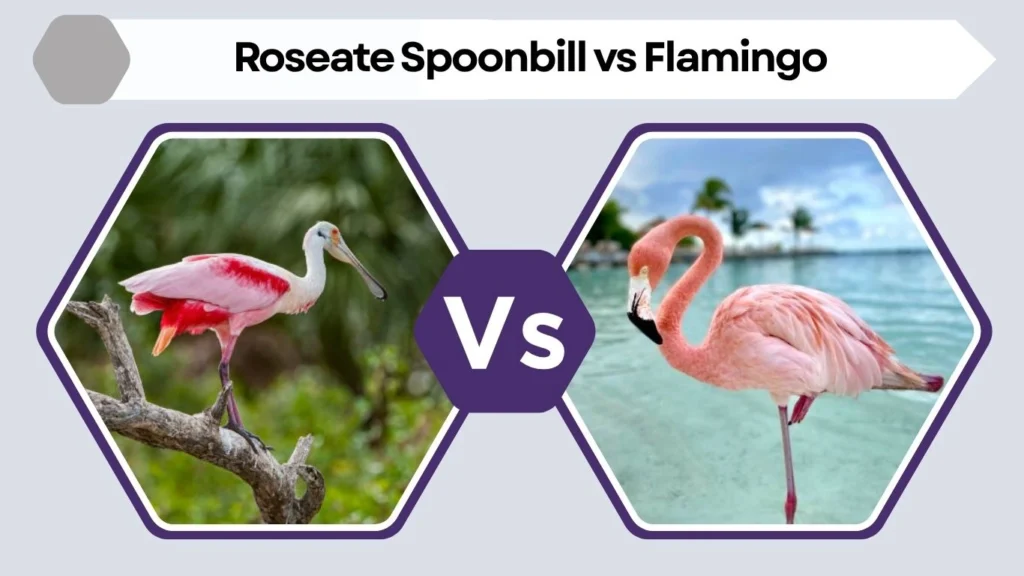
Although both birds are pink, the Roseate Spoonbill and flamingo are quite different. Spoonbills have a flat, spoon-shaped bill, while flamingos have a curved bill designed for filter feeding. Spoonbills also tend to have a shorter neck and a more varied feeding technique.
Similarities
Both species share a pink coloration due to their diet and are often found in similar wetland habitats. This similarity is why they are frequently confused with one another.
Interesting Roseate Spoonbill Facts
- Their pink color depends on their diet and can fade if their diet changes.
- They use their bill like a sensor to detect prey underwater.
- They are social birds that often live and feed in groups.
- They are sometimes called “spoonbills” because of their unique bill shape.
Conservation Status
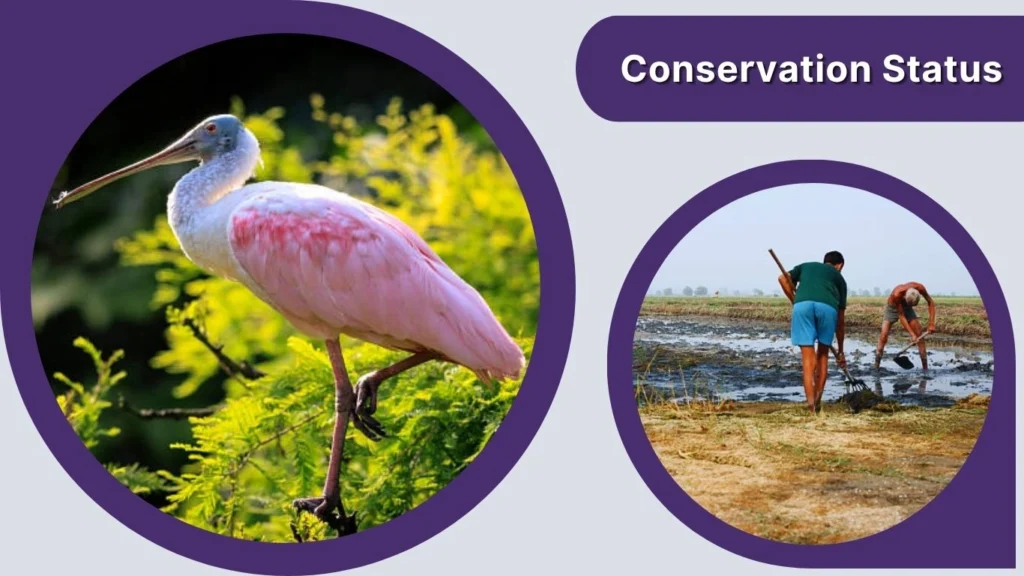
The Roseate Spoonbill is not currently endangered, but it has faced population declines in the past due to habitat loss and hunting. Today, conservation efforts and habitat protection have helped stabilize their numbers. Protecting wetlands remains essential for their long-term survival.
How to Identify a Roseate Spoonbill in the Wild
Key Identification Tips
Look for a pink bird with a long neck and a wide, spoon-shaped bill. The bright color and unique bill make it easy to distinguish from other wading birds.
Field Identification
They are most often seen in shallow wetlands, slowly sweeping their bill through the water. Observing this feeding behavior is one of the easiest ways to identify them.
FAQs
How did the Roseate Spoonbill get its name?
The name comes from its spoon-shaped bill, which it uses to sweep through water while feeding.
Do roseate spoonbills migrate?
Some populations migrate short distances depending on season and food availability, while others remain in the same region year-round.
How long do roseate spoonbills live?
They typically live around 10–15 years in the wild, though some may live longer in protected environments.
Are roseate spoonbills social birds?
Yes, they are highly social and often found feeding and nesting in groups, sometimes alongside other wading birds.
Where is the best place to see a roseate spoonbill?
They are commonly seen in coastal wetlands of Florida, Texas, and parts of Central and South America, especially in shallow water areas.
Conclusion
The Roseate Spoonbill is a fascinating bird known for its vibrant color, unique feeding style, and graceful presence in wetlands. From its spoon-shaped bill to its social behavior, it offers a truly unique glimpse into the diversity of bird life. By protecting wetland habitats and supporting conservation efforts, we can ensure that this beautiful species continues to thrive. Whether you are a birdwatcher or nature enthusiast, spotting a Roseate Spoonbill is always a memorable experience.
