
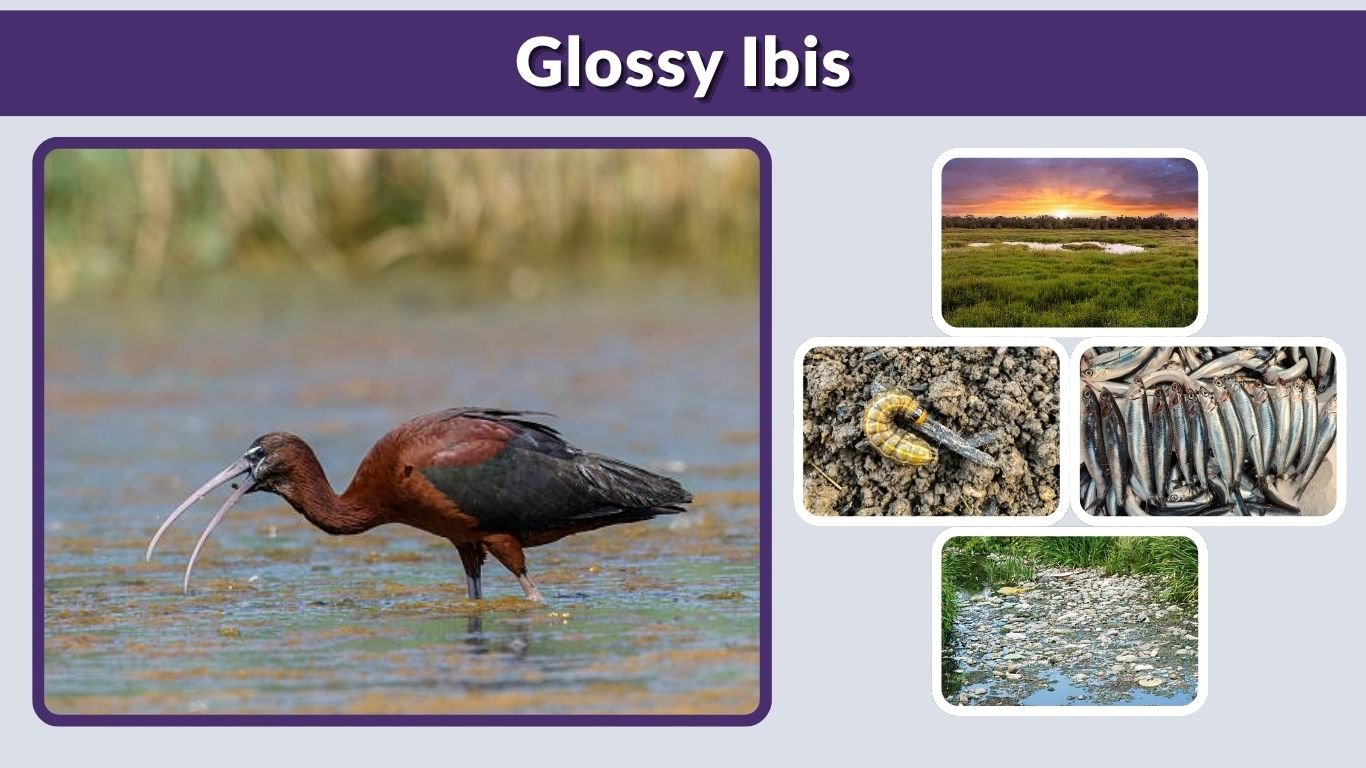
The Glossy Ibis (Plegadis falcinellus) is a striking wading bird known for its dark, iridescent plumage that shimmers in shades of green, bronze, and purple under sunlight. Found across multiple continents, this species thrives in wetlands, marshes, and coastal environments. Unlike some rare birds, the Glossy Ibis has a wide global presence, yet it remains fascinating due to its graceful movements and unique feeding style. Understanding its habitat, diet, and behavior helps reveal why this bird plays an important role in maintaining healthy wetland ecosystems.
What Is a Glossy Ibis?
The Glossy Ibis is a medium-sized bird belonging to the ibis family. It is easily recognized by its curved bill and glossy feather coloration. This bird is highly adaptable and can be found in a variety of wetland environments around the world.
Physical Appearance
- Dark plumage with metallic green, bronze, and purple sheen
- Long, downward-curved bill adapted for probing mud
- Slender body with long legs suited for wading
Glossy Ibis Size
- Body length typically ranges from 55 to 65 cm
- Wingspan averages between 80 and 105 cm
- Lightweight structure that supports efficient flight
Glossy Ibis Habitat and Range
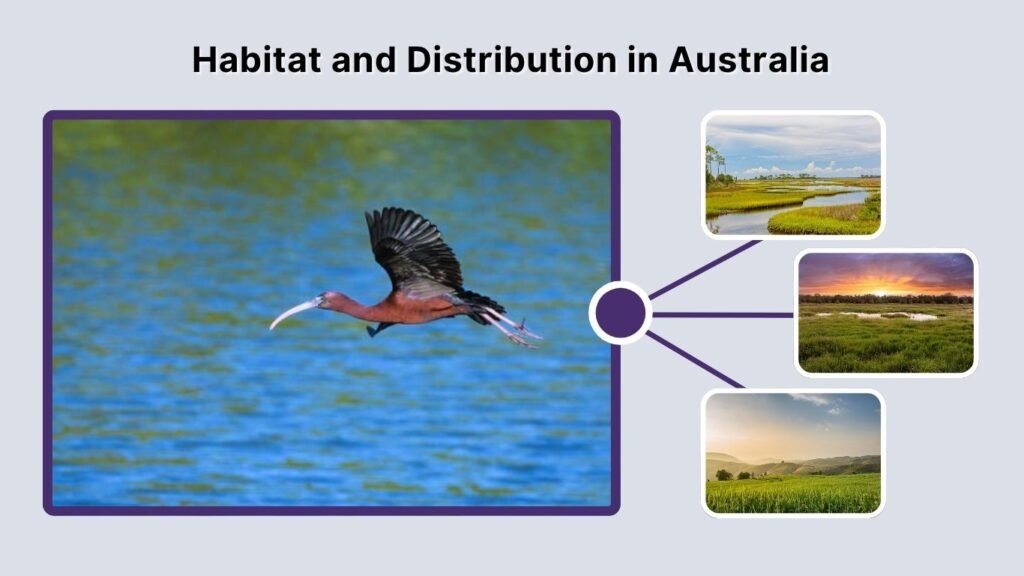
The Glossy Ibis is strongly associated with wetland ecosystems, where it finds both food and shelter. Its ability to adapt to different environments has allowed it to spread across a wide geographic range. Despite this adaptability, it still depends heavily on water-rich habitats for survival.
Preferred Habitat
- Freshwater marshes and swamps
- Flooded agricultural fields such as rice paddies
- Coastal lagoons and estuaries
Global Range
- Found in Europe, Africa, Asia, and the Americas
- Expanding populations in some regions due to climate shifts
- Often seen in areas with seasonal wetlands
Glossy Ibis Migration
- Some populations migrate long distances
- Birds in colder regions move to warmer areas during winter
- Migration routes often follow major wetland systems
Glossy Ibis Diet and Feeding Behavior
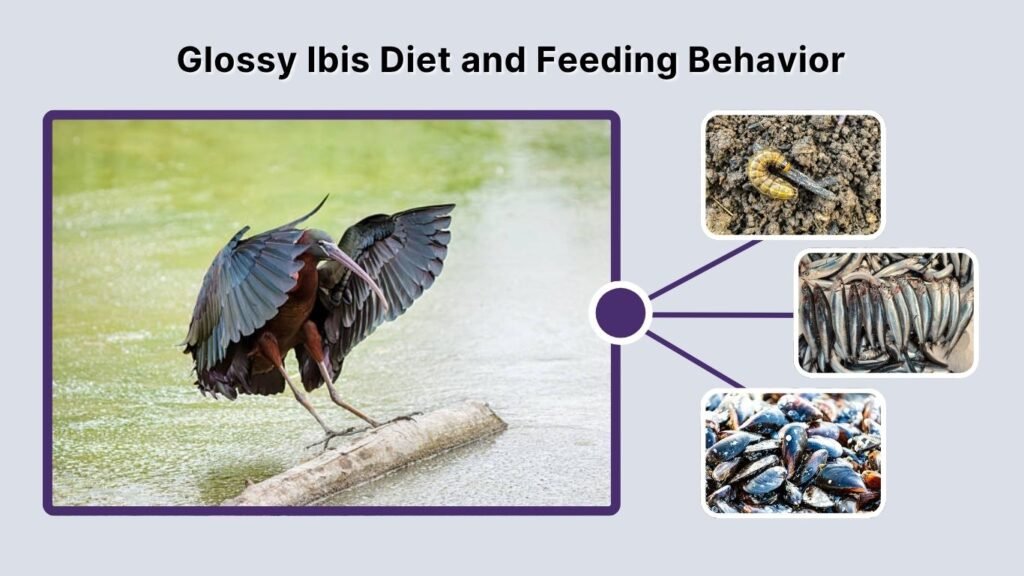
The Glossy Ibis is an opportunistic feeder that relies on wetland environments to find food. Its feeding behavior is both efficient and specialized, allowing it to exploit a wide variety of prey. This adaptability helps the species survive in changing environmental conditions.
Glossy Ibis Diet
- Insects and larvae found in mud
- Small fish and amphibians
- Crustaceans, worms, and other invertebrates
Feeding Techniques
- Uses its curved bill to probe soft mud
- Feeds in shallow water with slow, steady movements
- Often forages in groups to increase feeding success
Glossy Ibis Behavior and Lifestyle
The Glossy Ibis is generally social and often seen in flocks, especially during feeding and migration. It adapts well to shared habitats and frequently mixes with other wading birds. Its daily activity revolves around feeding, resting, and maintaining its feathers. Unlike more solitary species, this bird benefits from group living, which offers protection and improves foraging efficiency. Its calm and methodical movements make it a distinctive presence in wetland environments.
Glossy Ibis Breeding, Eggs, and Juveniles
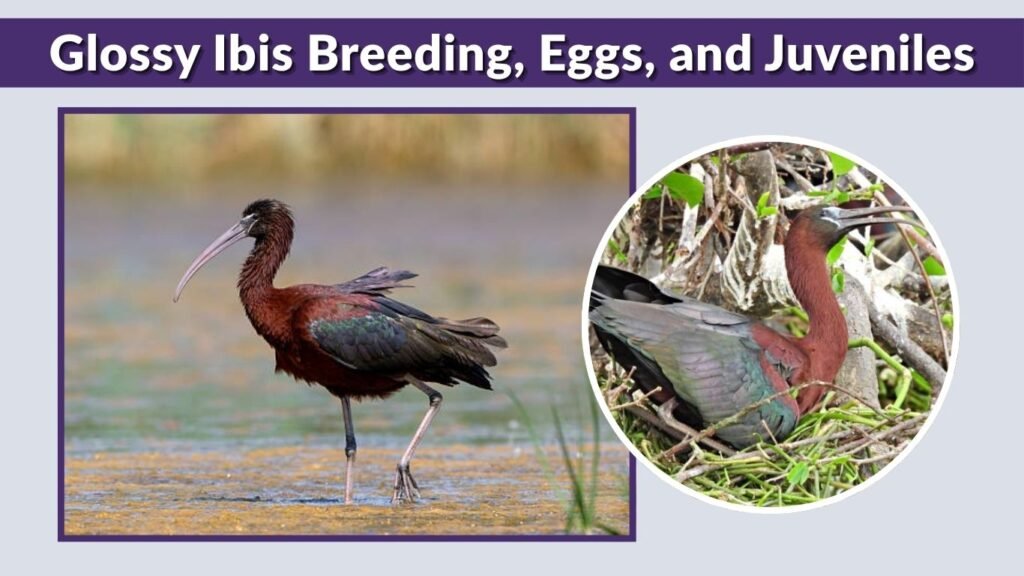
The breeding cycle of the Glossy Ibis is closely linked to water availability and seasonal changes. These birds typically nest in colonies, often alongside other waterbirds, which helps provide safety from predators.
Nesting and Eggs
- Nests built in reeds, shrubs, or low trees near water
- Clutch size usually ranges from 3 to 5 eggs
- Eggs are typically bluish-green in color
Juvenile Glossy Ibis
- Juveniles have dull brown feathers without strong iridescence
- Gradually develop glossy coloration as they mature
- Learn feeding skills by observing adult birds
Glossy Ibis vs White-Faced Ibis
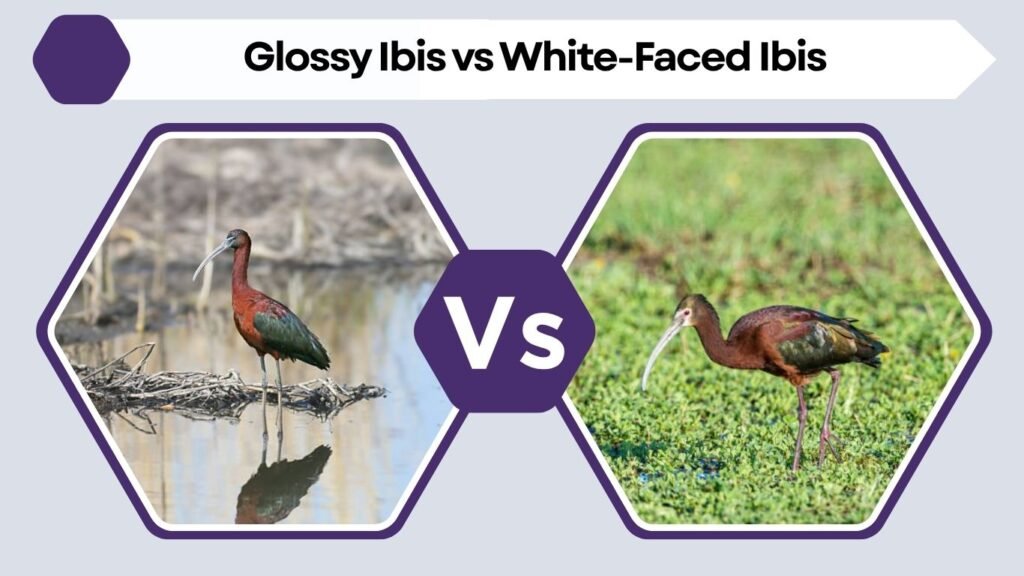
The Glossy Ibis and White-faced Ibis are very similar in appearance, which often causes confusion among bird watchers. However, there are clear differences that help distinguish between the two species, especially during the breeding season.
Key Identification Differences
- Glossy Ibis has a darker face without a white border
- White-faced Ibis shows a noticeable white line around the face
- Eye color differs, especially in breeding plumage
Habitat and Behavior Differences
- Both species share overlapping ranges in some regions
- Glossy Ibis is more widespread globally
- White-faced Ibis is more common in North America
Glossy Ibis Sound and Communication
The Glossy Ibis is not a highly vocal bird, but it does produce a variety of sounds, especially during the breeding season or when interacting within flocks. Its calls are usually low and guttural, often described as grunts or croaks. These sounds help maintain group coordination and play a role in courtship behavior. While generally quiet, communication becomes more noticeable when birds gather in colonies, where vocal signals help strengthen social bonds and alert others to potential threats.
Interesting Glossy Ibis Facts
The Glossy Ibis is full of fascinating traits that make it unique among wetland birds. Its adaptability and wide distribution have contributed to its success as a species.
- One of the most widespread ibis species in the world
- Feathers display iridescent colors under sunlight
- Often seen feeding in mixed flocks with other birds
- Can quickly adapt to new wetland environments
Conservation Status and Threats
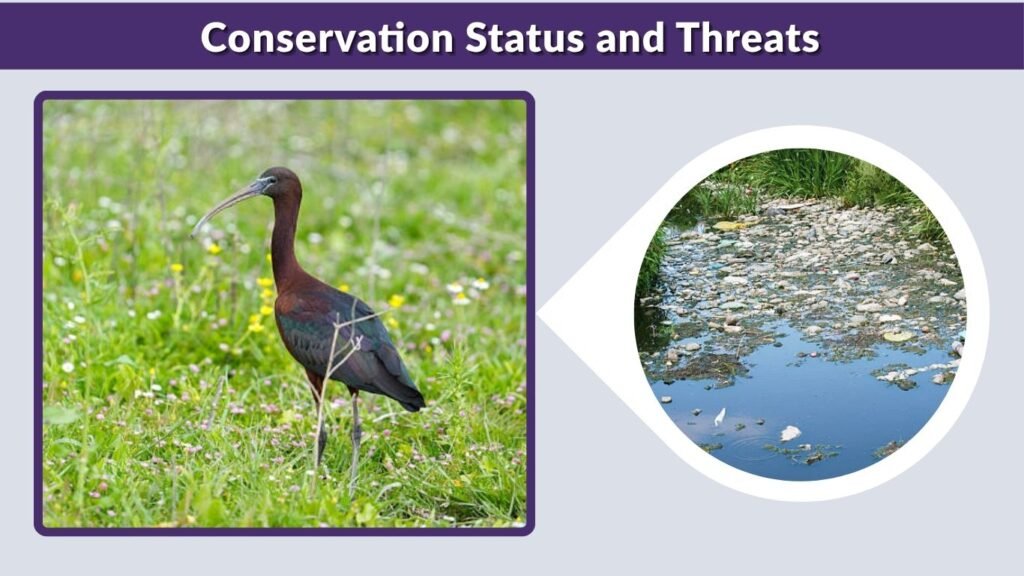
Although the Glossy Ibis is not currently considered endangered, its survival still depends on the health of wetland ecosystems. Changes in environmental conditions can have a direct impact on its population.
Current Status
- Classified as a species of Least Concern
- Stable population in many regions
- Expanding range in some areas
Major Threats
- Loss of wetlands due to human development
- Water pollution affecting food sources
- Climate change altering migration and breeding patterns
Importance in Ecosystem
The Glossy Ibis plays a crucial role in maintaining the balance of wetland ecosystems. By feeding on insects, small aquatic animals, and other invertebrates, it helps control populations that could otherwise grow excessively. Its presence also indicates a healthy environment, as it relies on clean water and abundant food sources. In this way, the Glossy Ibis acts as both a regulator and an indicator species, highlighting the importance of conserving wetlands for biodiversity.
FAQs
What is a Glossy Ibis?
The Glossy Ibis is a medium-sized wading bird known for its dark, shiny plumage and long curved bill. It belongs to the ibis family and is widely found in wetlands across multiple continents.
Where does the Glossy Ibis live?
It lives in wetlands such as marshes, swamps, flooded fields, and coastal lagoons. The species is found across Europe, Africa, Asia, and the Americas.
What do Glossy Ibises eat?
Glossy Ibises mainly eat insects, small fish, amphibians, and crustaceans. They use their curved bills to probe mud and shallow water to find food.
How can you identify a juvenile Glossy Ibis?
Juvenile Glossy Ibises have dull brown feathers and lack the iridescent shine seen in adults. Their coloration becomes more vibrant as they mature.
Do Glossy Ibises migrate?
Yes, many populations migrate seasonally. Birds living in colder regions travel to warmer areas during winter and return to breeding grounds in spring.
