
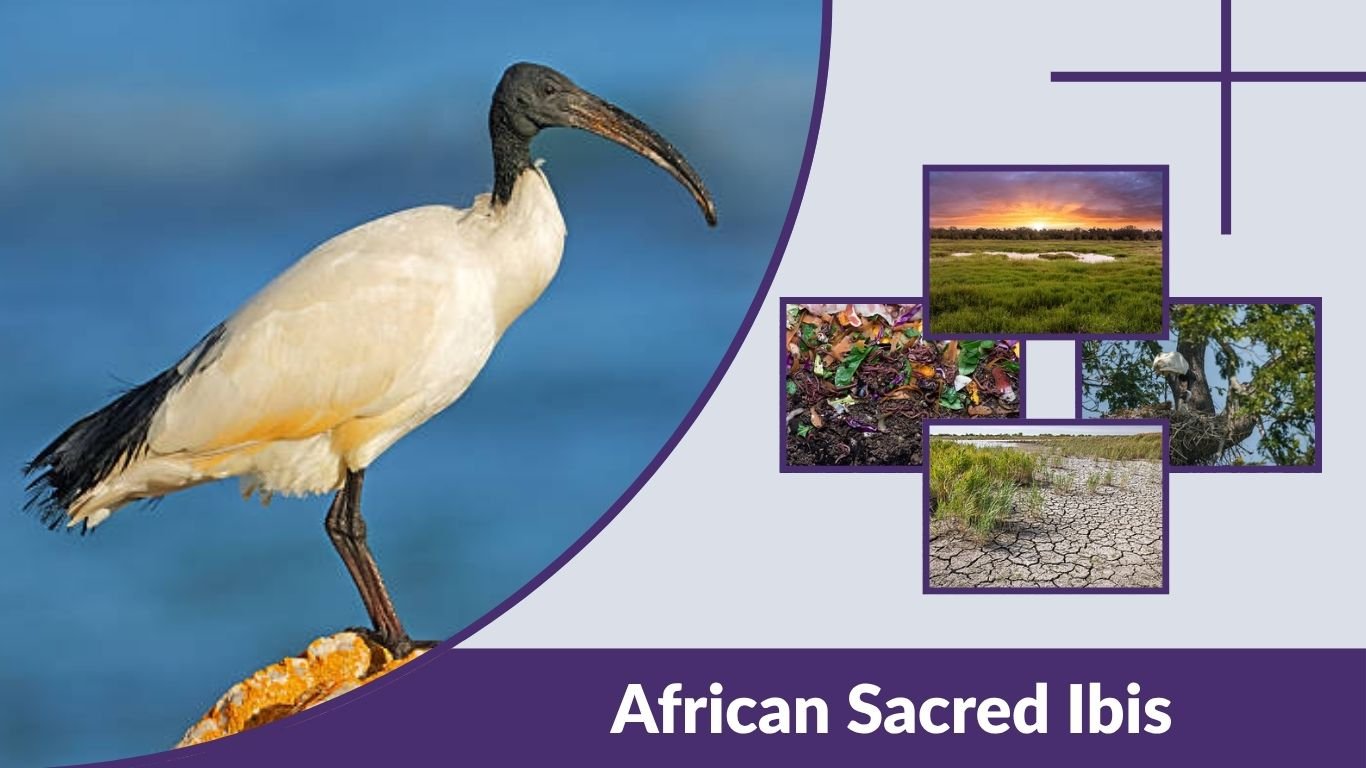
The African Sacred Ibis (Threskiornis aethiopicus) is a distinctive wading bird known for its striking appearance and historical significance. Recognized by its white body, black head, and long curved bill, this bird has fascinated humans for centuries, especially in ancient Egypt where it was considered sacred. Today, it is widely found across Africa and even in some parts of Europe. Its adaptability, varied diet, and social nature make it an important species in wetland ecosystems and a subject of interest for bird enthusiasts.
What Is the African Sacred Ibis?
The African Sacred Ibis is a medium-to-large wading bird belonging to the ibis family. It is well known for its elegant shape and ability to thrive in different environments, from wetlands to urban areas.
Physical Appearance
- White body with contrasting black head and neck
- Long, downward-curved black bill
- Black legs and dark wing tips visible in flight
Size and Wingspan
- Body length typically ranges from 65 to 75 cm
- Wingspan can reach up to 110–125 cm
- Strong wings suited for steady flight
African Sacred Ibis Habitat and Distribution
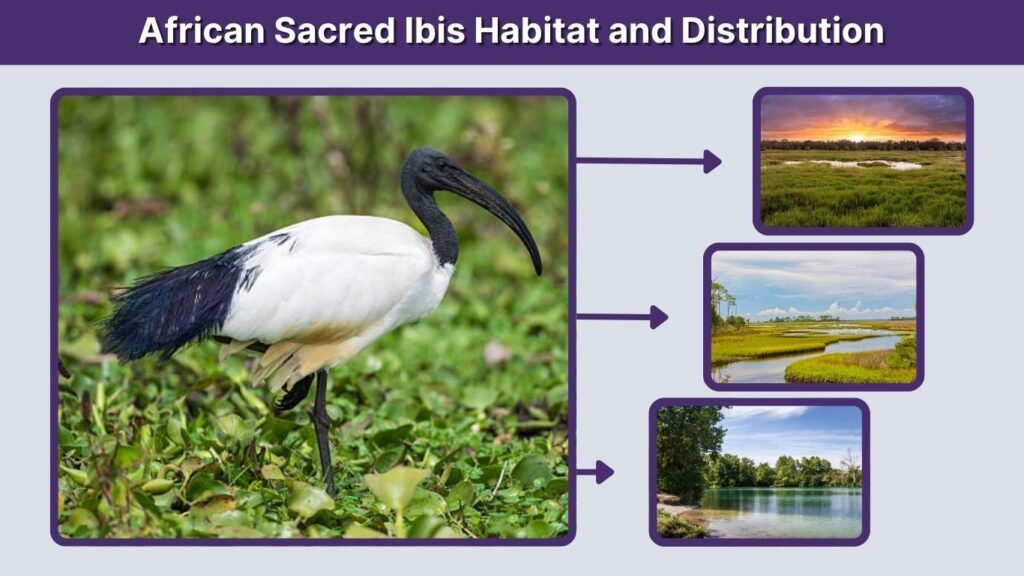
The African Sacred Ibis is highly adaptable and can live in a wide range of environments. It prefers areas where water and food are easily available, but it is also known to thrive near human settlements. This flexibility has allowed the species to expand beyond its native range.
Preferred Habitat
- Wetlands such as marshes and swamps
- Riverbanks and lakeshores
- Coastal lagoons and estuaries
Global Range
- Native to Sub-Saharan Africa
- Introduced populations in parts of Europe
- Often found near agricultural and urban areas
African Sacred Ibis Diet and Feeding Behavior
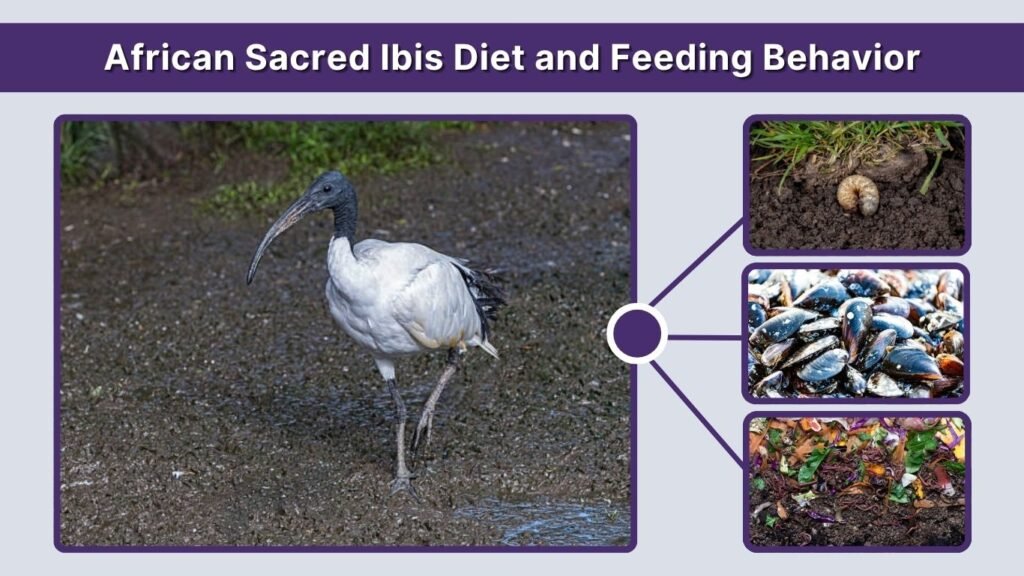
The African Sacred Ibis is an opportunistic feeder with a highly varied diet. Its feeding habits allow it to survive in both natural and human-altered environments. The bird uses its long, curved bill to probe mud and shallow water in search of food.
African Sacred Ibis Diet
- Insects and larvae
- Small fish and amphibians
- Carrion and organic waste
Feeding Techniques
- Probes soft mud with its bill to locate prey
- Feeds in shallow water or on land
- Often scavenges in groups near human activity
African Sacred Ibis Behavior and Lifestyle
The African Sacred Ibis is a highly social bird that often forms large flocks, especially during feeding and breeding. It is active during the day and spends much of its time searching for food or resting near water sources. This species is known for its adaptability and intelligence, allowing it to survive in both wild and urban environments. Its calm but alert behavior helps it respond quickly to threats while maintaining strong group coordination.
African Sacred Ibis Breeding and Reproduction
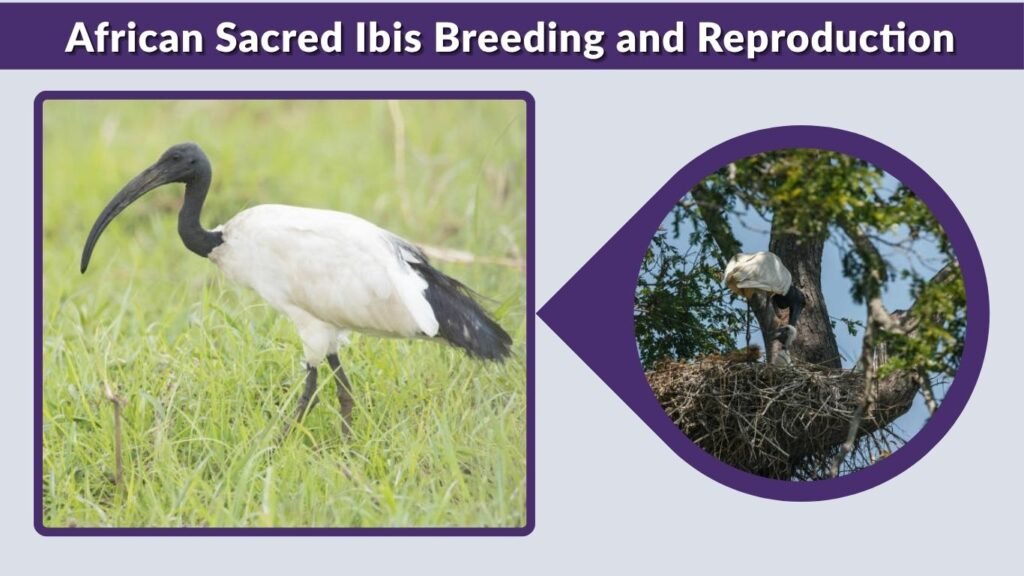
The African Sacred Ibis breeds in colonies, often alongside other waterbirds. This communal nesting strategy provides safety in numbers and improves survival rates for chicks. Breeding usually coincides with seasons when food is abundant, ensuring enough resources for growing young.
Nesting Habits
- Nests built in trees, bushes, or reed beds
- Large colonies sometimes containing hundreds of pairs
- Reuse of nesting sites in favorable locations
Eggs and Chicks
- Clutch size usually ranges from 2 to 4 eggs
- Eggs are typically pale with a rough texture
- Both parents take part in incubation and feeding
African Sacred Ibis Sound and Communication
The African Sacred Ibis is generally a quiet bird, but it does produce sounds, especially during breeding and social interactions. Its vocalizations are often low and guttural, including croaks and grunts. These sounds are mainly used within colonies to communicate with mates or signal mild alarm. While not loud or melodic, these calls are important for maintaining social bonds and coordinating behavior in large groups.
Interesting African Sacred Ibis Facts
This bird has several fascinating traits that make it unique among wading species and historically important.
- Revered in ancient Egypt and linked to the god Thoth
- Frequently seen scavenging in urban and rural areas
- Highly adaptable to different environments
- Can travel long distances in search of food
Conservation Status and Threats
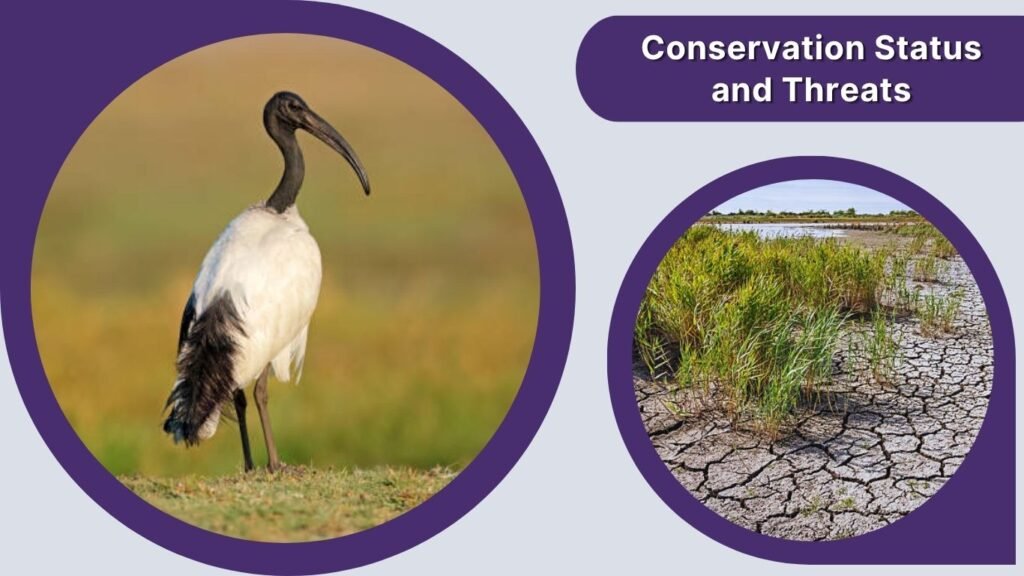
The African Sacred Ibis is currently considered a species of low concern globally, but its population trends vary by region. In some areas, it has adapted well to human environments, while in others, habitat changes affect its numbers.
Current Status
- Classified as Least Concern globally
- Stable or increasing in some regions
- Expanding range in introduced areas
Major Threats
- Habitat degradation in wetlands
- Pollution affecting food sources
- Human-wildlife conflicts in urban settings
Importance in Ecosystem
The African Sacred Ibis plays a key role in maintaining ecological balance. By feeding on insects, small animals, and organic waste, it helps control pest populations and contributes to environmental cleanliness. Its presence in wetlands also signals a functioning ecosystem with available resources. As both a predator and scavenger, it supports biodiversity and nutrient recycling, making it an important species in both natural and human-influenced habitats.
FAQs
What is the African Sacred Ibis?
The African Sacred Ibis is a wading bird known for its white body, black head, and long curved bill. It belongs to the ibis family and is widely distributed across Africa and some parts of Europe.
What does the African Sacred Ibis eat?
It eats a wide variety of food, including insects, fish, amphibians, and carrion. Its flexible diet allows it to survive in both natural wetlands and urban environments.
Why is it called the Sacred Ibis?
The name comes from ancient Egypt, where the bird was considered sacred and associated with the god Thoth, symbolizing wisdom and knowledge.
What sound does the African Sacred Ibis make?
The bird produces low croaking and grunting sounds. These vocalizations are mostly heard during breeding or when birds interact within colonies.
Where does the African Sacred Ibis live?
It lives in wetlands, riverbanks, coastal areas, and even urban locations. Its adaptability allows it to thrive in a wide range of environments.
