
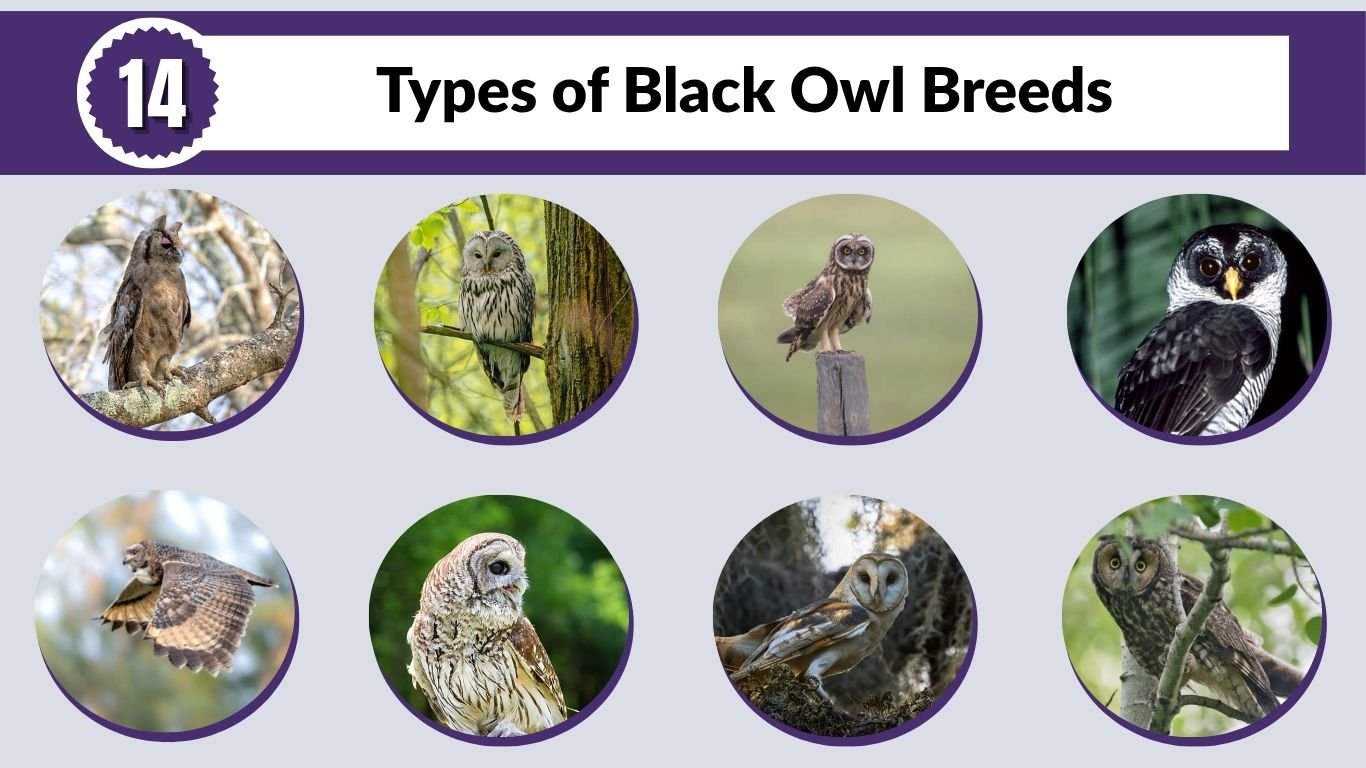
Black or dark-colored owls are some of the most mysterious and fascinating birds of prey. Their deep plumage helps them blend into shadows, making them excellent nocturnal hunters. These owls can be found across forests, woodlands, and tropical regions around the world.
In this guide, you’ll discover 14 types of black or dark morph owl breeds, along with key details about their identification, size, habitat, and behavior.
1. Great Horned Owl
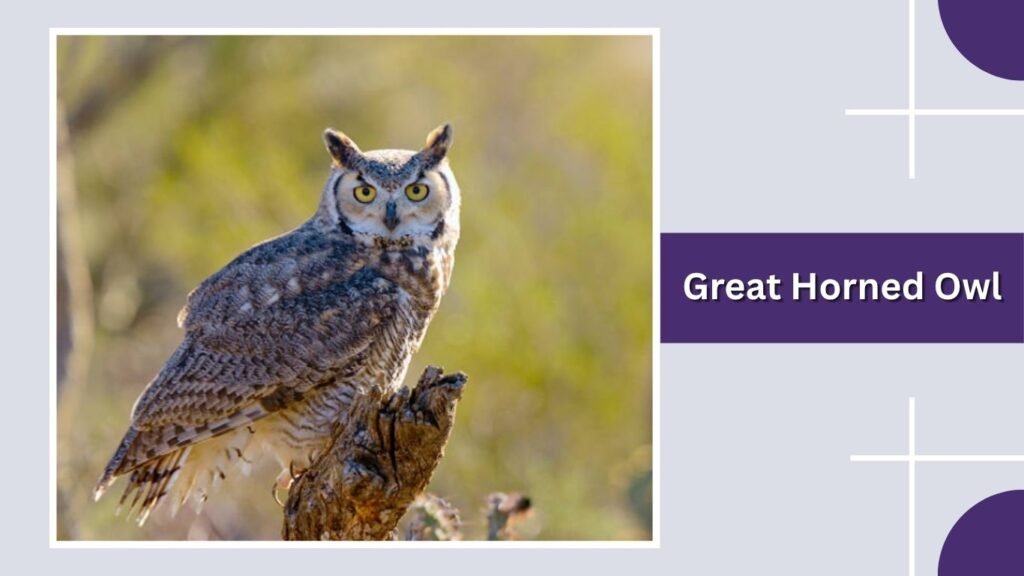
The Great Horned Owl is one of the most widespread and powerful owls in the Americas. Known for its distinctive ear tufts that resemble horns, this owl is a fierce nocturnal predator and highly adaptable to different environments.
Identification
- Large owl with prominent ear tufts (“horns”)
- Mottled gray-brown plumage with a white throat patch
- Bright yellow eyes
- Thick, powerful body and strong talons
Size
Great Horned Owls typically measure about 18 to 25 inches in length, with a wingspan of 3.3 to 4.8 feet. Females are larger than males and can weigh up to 5.5 pounds.
Diet
They are opportunistic hunters, feeding on a wide variety of prey including rabbits, rodents, birds, reptiles, and even other owls. Their powerful grip allows them to take down relatively large animals.
Habitat
These owls are extremely adaptable and can be found in forests, deserts, wetlands, grasslands, and urban areas. They often use abandoned nests built by other birds.
Behavior
Great Horned Owls are mainly nocturnal and are known for their deep, hooting calls. They are territorial and highly aggressive when defending their nests.
2. Barred Owl
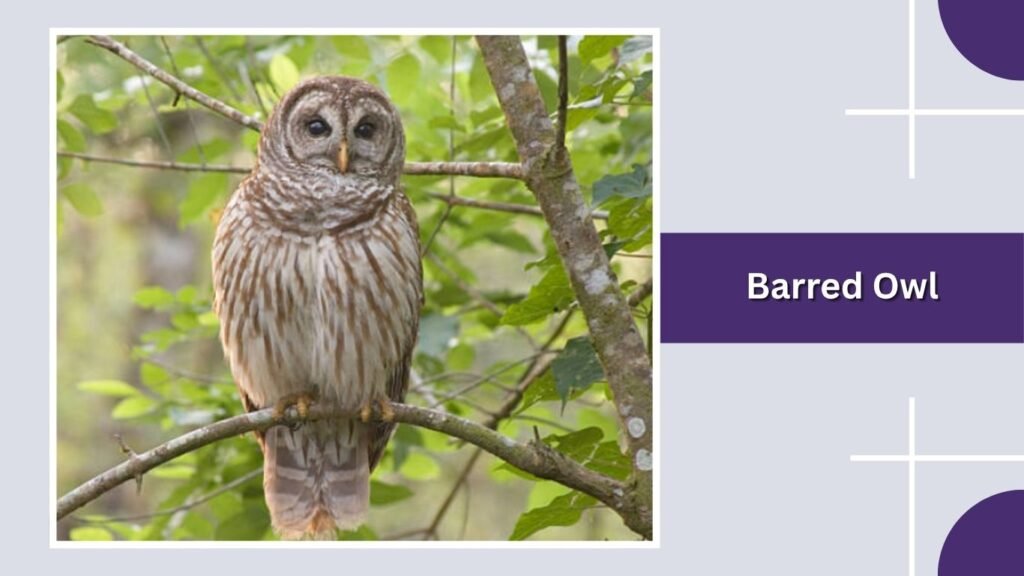
The Barred Owl is a large and distinctive owl known for its soulful eyes and unique call that sounds like “who cooks for you, who cooks for you all.” It is commonly found in wooded areas and is especially associated with mature forests near water. This owl is mostly active at night but is also known to be active during the day, particularly in quiet, shaded habitats.
Identification
- Rounded head with no ear tufts
- Dark brown eyes (unlike many owls with yellow eyes)
- Brown and white striped (“barred”) pattern on chest and belly
- Pale face with concentric rings
Size
Barred Owls typically measure about 16 to 25 inches in length, with a wingspan ranging from 38 to 49 inches. Females are slightly larger than males, though both sexes look very similar in appearance. Their broad wings and relatively short tail give them a sturdy, compact look in flight.
Diet
Barred Owls are opportunistic feeders with a varied diet. They mainly consume small mammals such as mice, voles, and squirrels. They also hunt birds, frogs, reptiles, and even fish when near water. Their silent flight and sharp hearing make them effective nighttime hunters.
Habitat
These owls prefer dense forests, especially those near rivers, swamps, or wetlands. They thrive in mature woodlands with large trees that provide nesting cavities. In recent years, they have also adapted to suburban areas with enough tree cover.
Behavior
Barred Owls are known for their calm and curious nature. They often perch quietly while scanning for prey and may even watch humans from a distance. Unlike many owls, they are sometimes active during daylight hours. Their haunting call is often heard echoing through forests, especially at dusk and dawn.
3. Spotted Owl
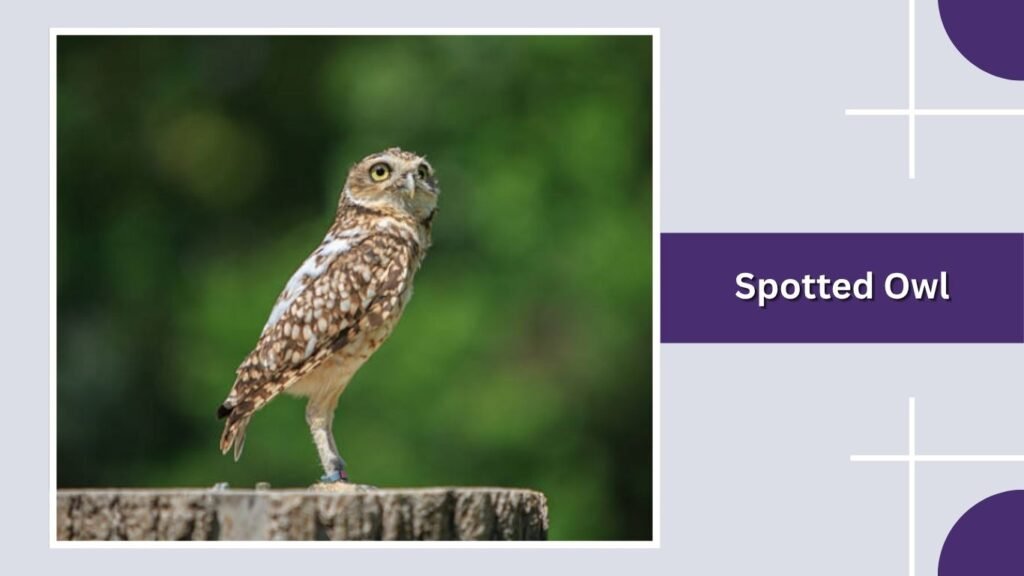
The Spotted Owl is a medium-sized owl known for its dark coloration and white spotting across its body. It is closely associated with old-growth forests and is considered an important species for conservation due to habitat loss.
Identification
- Dark brown plumage with distinct white spots
- Rounded head without ear tufts
- Large dark eyes
- Pale facial disk with subtle markings
Size
Spotted Owls measure about 16 to 19 inches in length, with a wingspan of 39 to 43 inches. Females are slightly larger than males but have similar markings and appearance.
Diet
They mainly feed on small mammals such as rodents, especially flying squirrels and woodrats. They may also eat birds and insects when available.
Habitat
These owls prefer dense, old-growth forests with large trees and thick canopy cover. They rely heavily on undisturbed forest environments for nesting and hunting.
Behavior
Spotted Owls are mostly nocturnal and very quiet. They hunt by perching and listening for prey before making a silent flight to capture it. They are also known for their soft, repeated hooting calls.
4. Black-and-white Owl
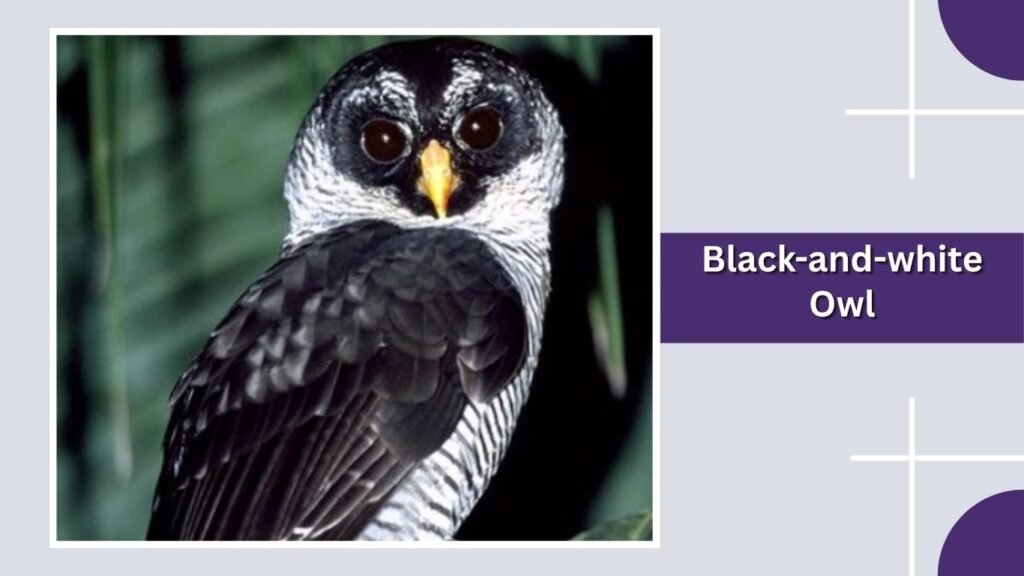
The Black-and-white Owl is a striking and unique species found in Central and South America. It is easily recognized by its bold contrasting colors and is one of the few owl species with such a distinctive pattern.
Identification
- Bold black-and-white plumage with strong contrast
- Rounded head without ear tufts
- Dark facial disk with white markings
- Bright yellow eyes
Size
Black-and-white Owls measure about 14 to 16 inches in length, with a wingspan of around 30 to 36 inches. Females are slightly larger than males but look very similar.
Diet
They mainly feed on insects such as beetles and moths. They may also eat small vertebrates like lizards and small mammals when available.
Habitat
These owls prefer tropical forests, especially dense lowland and mountain forests. They are often found in areas with thick vegetation and abundant insect life.
Behavior
Black-and-white Owls are nocturnal and often perch quietly while scanning for prey. They are known for their distinctive calls and are usually found alone or in pairs within forested habitats.
5. Spectacled Owl
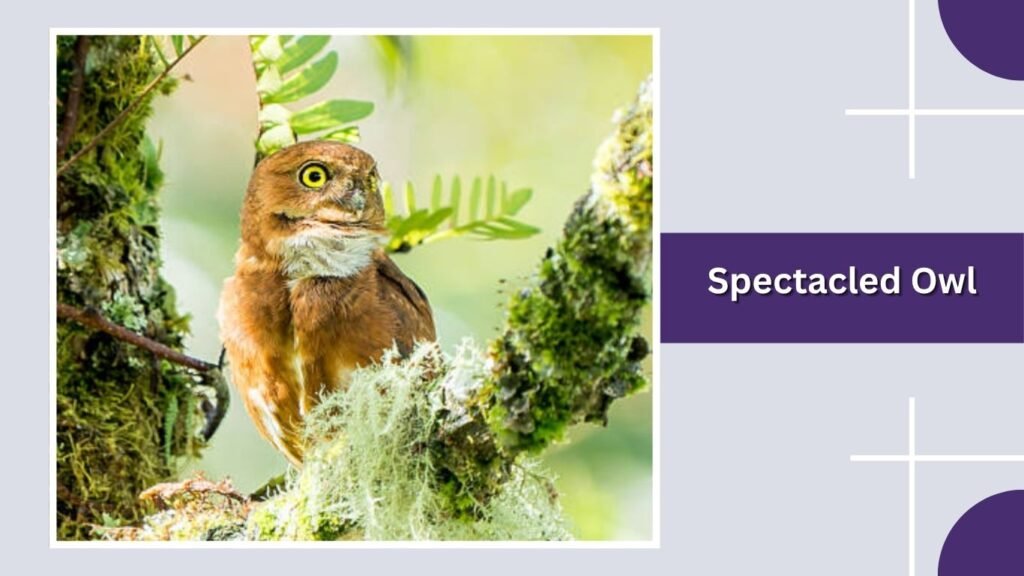
The Spectacled Owl is a large and striking tropical owl named for the distinctive “spectacle-like” markings around its eyes. Found in Central and South America, it is known for its calm nature and powerful presence in dense forests.
Identification
- Dark brown body with a pale face
- White markings around the eyes resembling spectacles
- Yellow eyes with a contrasting dark facial disk
- Cream-colored chest and upper belly
Size
Spectacled Owls measure about 17 to 20 inches in length, with a wingspan of around 30 to 36 inches. Females are slightly larger and heavier than males.
Diet
They feed on a variety of prey including small mammals, birds, insects, and reptiles. Larger individuals may even hunt opossums and other medium-sized animals.
Habitat
These owls prefer tropical rainforests, woodlands, and plantations. They are usually found in dense, humid environments with plenty of tree cover.
Behavior
Spectacled Owls are mostly nocturnal and are known for their deep, knocking calls. They are generally calm and less aggressive compared to some other owl species, often staying hidden during the day.
6. Tawny Owl (Dark Morph)
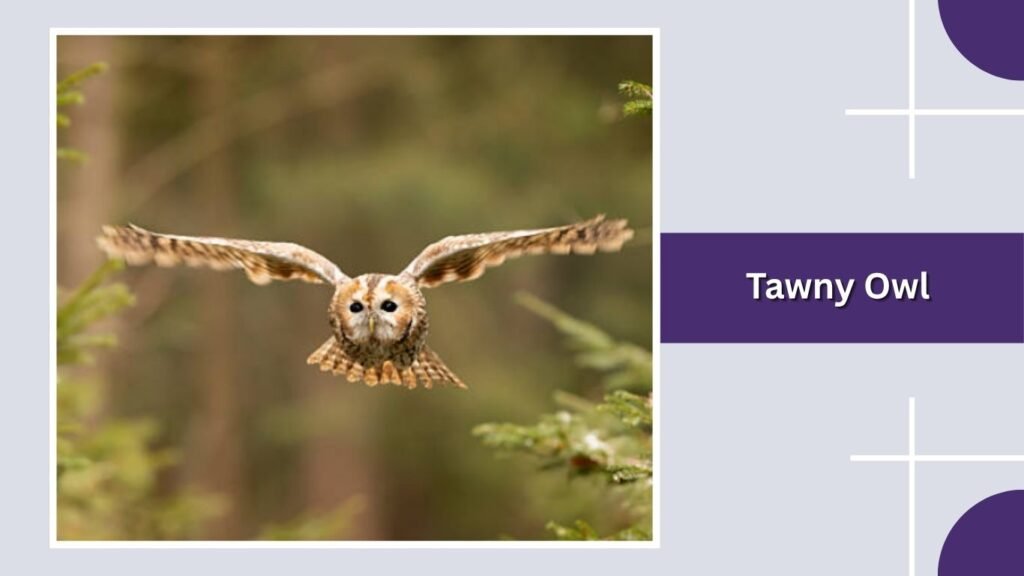
The Tawny Owl (dark morph) is a variation of the common Tawny Owl, known for its deeper brown coloration. It is a familiar owl across Europe and parts of Asia, often associated with woodlands and quiet countryside areas.
Identification
- Dark brown (chocolate-colored) plumage in the dark morph
- Rounded head with no ear tufts
- Large dark eyes
- Compact body with a short tail
Size
Tawny Owls measure about 14 to 16 inches in length, with a wingspan of 32 to 41 inches. Females are larger than males but both share similar features.
Diet
They mainly feed on small mammals such as mice and voles. They also eat birds, insects, and amphibians depending on availability.
Habitat
These owls prefer deciduous and mixed forests, parks, and gardens. They are highly adaptable and often live close to human settlements.
Behavior
Tawny Owls are nocturnal and known for their classic hooting calls often heard at night. They are territorial and usually stay within the same area year-round.
7. Long-eared Owl (Dark Morph)
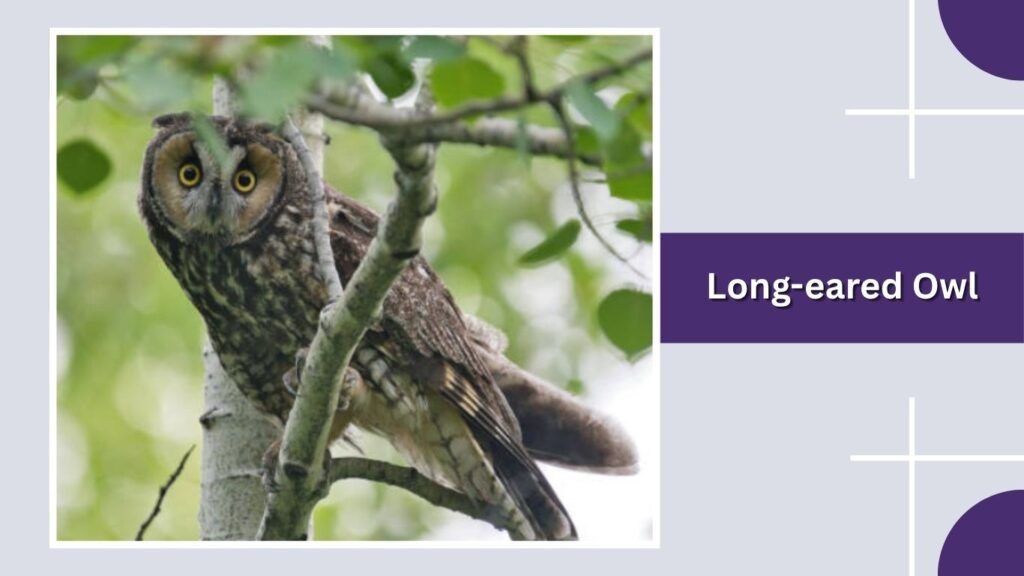
The Long-eared Owl (dark morph) is a slender and secretive owl known for its long ear tufts and darker overall coloration. It is widely distributed across many regions and is often difficult to spot due to its excellent camouflage.
Identification
- Tall ear tufts that resemble “horns”
- Dark brown plumage in the dark morph
- Orange eyes with a dark facial disk
- Slim body with long wings
Size
Long-eared Owls measure about 13 to 16 inches in length, with a wingspan of 35 to 40 inches. Females are slightly larger than males but appear very similar.
Diet
They mainly feed on small mammals such as voles and mice. Occasionally, they may also eat small birds and insects.
Habitat
These owls prefer forests, woodlands, and areas with dense tree cover. They often roost in groups during the day in thick vegetation.
Behavior
Long-eared Owls are nocturnal and very secretive. They rely on camouflage to avoid detection and are rarely seen during the day, becoming active mainly at night for hunting.
8. Short-eared Owl (Dark Morph)
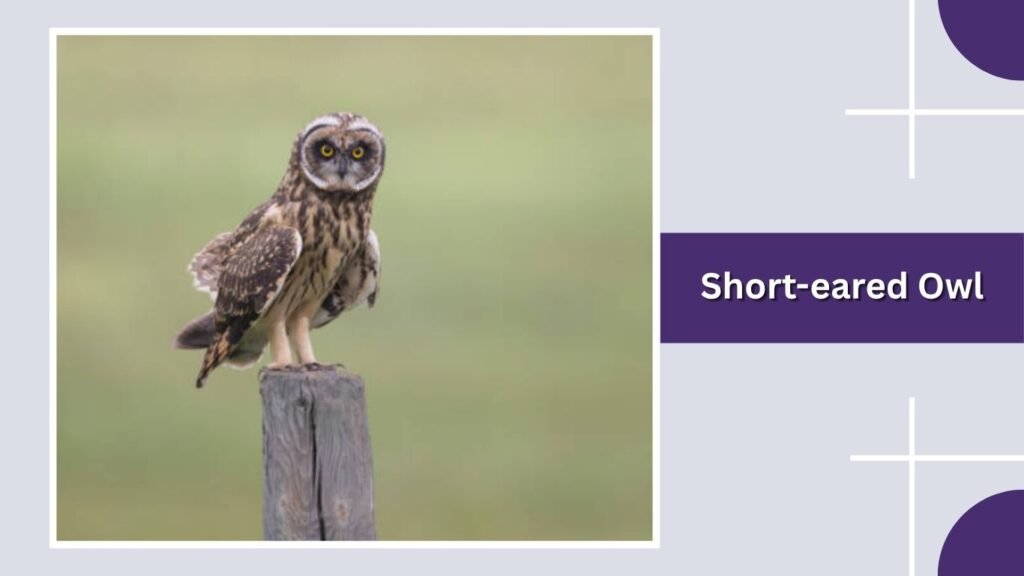
The Short-eared Owl (dark morph) is a ground-nesting owl known for its open-country lifestyle and active hunting behavior during daylight hours. Unlike many owls, it is often seen flying low over fields and grasslands.
Identification
- Darker brown plumage in the dark morph
- Short, barely visible ear tufts
- Yellow eyes with dark patches around them
- Broad wings with pale and dark patterning
Size
Short-eared Owls measure about 13 to 17 inches in length, with a wingspan of 33 to 43 inches. Females are slightly larger than males, though both look similar.
Diet
They mainly feed on small mammals such as voles, mice, and other rodents. They may also eat small birds when available.
Habitat
These owls prefer open habitats like grasslands, marshes, and agricultural fields. They often nest on the ground in areas with tall grasses.
Behavior
Short-eared Owls are partially diurnal, meaning they can be active during the day, especially at dawn and dusk. They fly low over open land while hunting, using slow, steady wingbeats.
9. Barn Owl (Dark Morph)
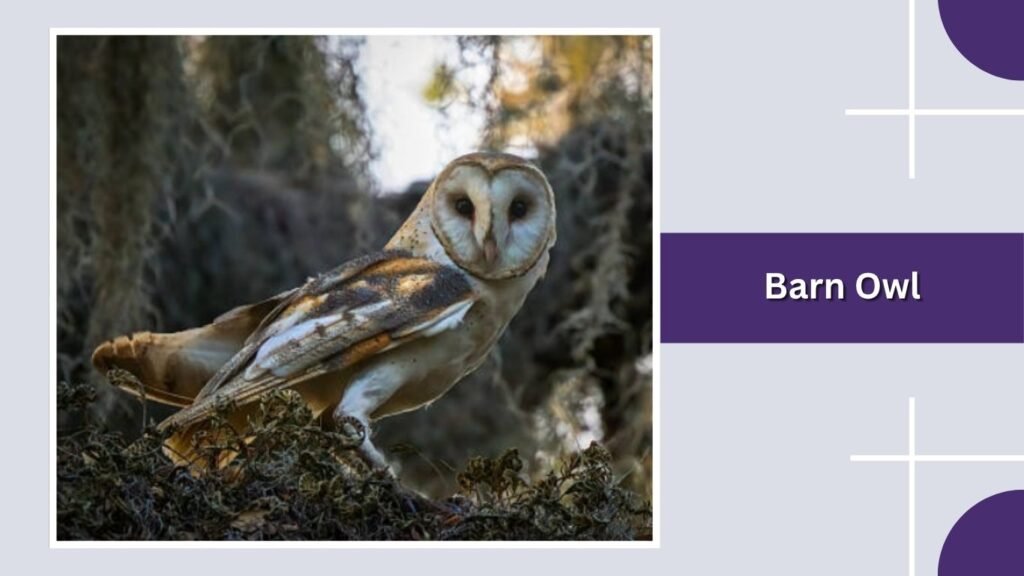
The Barn Owl (dark morph) is a variation of the widely distributed Barn Owl, known for its ghostly appearance and silent flight. The dark morph has a richer, deeper coloration compared to the typical pale form, giving it a more shadowy look.
Identification
- Heart-shaped facial disk
- Darker brown and mottled plumage in the dark morph
- Black eyes set in a pale face
- Long legs and a slender body
Size
Barn Owls measure about 13 to 15 inches in length, with a wingspan of 39 to 49 inches. Females are slightly larger and often darker than males.
Diet
They primarily feed on small mammals, especially rodents like mice and rats. They play an important role in controlling pest populations.
Habitat
Barn Owls prefer open habitats such as farmlands, grasslands, and areas near human structures like barns and old buildings where they often nest.
Behavior
They are nocturnal hunters, flying silently as they search for prey. Their excellent hearing allows them to locate animals even in complete darkness.
10. Ural Owl (Dark Morph)
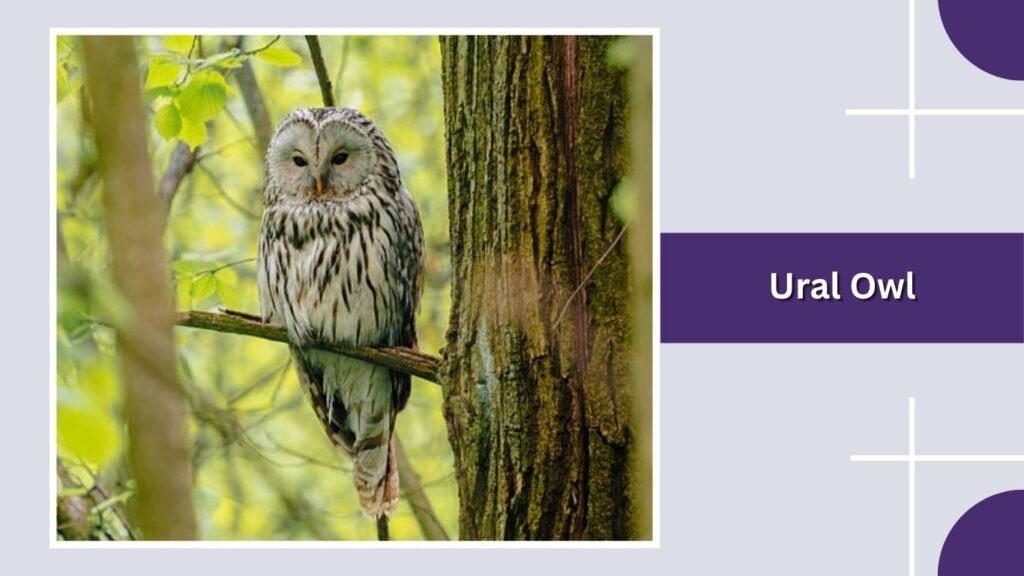
The Ural Owl (dark morph) is a large forest owl known for its rounded head and darker, richer coloration in this variation. It is commonly found across parts of Europe and Asia and is recognized for its calm but powerful presence.
Identification
- Dark brown plumage with subtle streaking in the dark morph
- Rounded head without ear tufts
- Large dark eyes
- Long tail and broad wings
Size
Ural Owls measure about 20 to 24 inches in length, with a wingspan of 43 to 52 inches. Females are larger and heavier than males, giving them a more robust appearance.
Diet
They mainly feed on small mammals such as voles and mice. They may also hunt birds, amphibians, and occasionally larger prey depending on availability.
Habitat
These owls prefer dense forests, especially coniferous and mixed woodlands. They often nest in tree cavities or use old nests of other birds.
Behavior
Ural Owls are mostly nocturnal but can be active at dusk and dawn. They are known to be quite bold when defending their nests and can show aggressive behavior toward intruders.
11. Brown Wood Owl
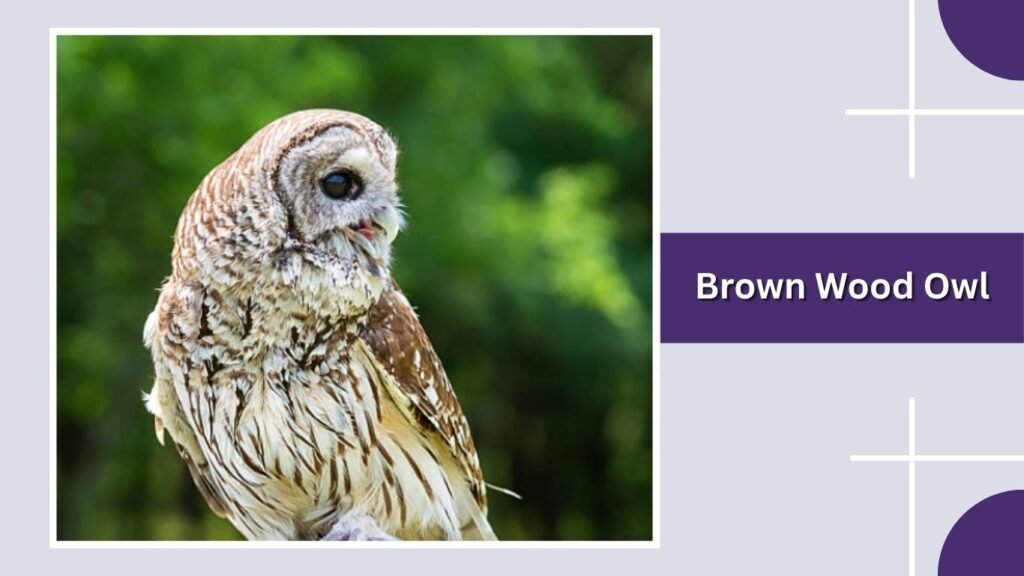
The Brown Wood Owl is a large and powerful owl found across South and Southeast Asia. It is known for its deep hooting calls and strong presence in forested areas.
Identification
- Rich brown plumage with pale streaks on the underside
- Rounded head without ear tufts
- Dark eyes set in a pale facial disk
- Broad wings and a sturdy body
Size
Brown Wood Owls measure about 18 to 22 inches in length, with a wingspan of around 45 to 55 inches. Females are slightly larger than males but appear very similar.
Diet
They mainly feed on small mammals such as rodents, along with birds, reptiles, and insects. They are opportunistic hunters and will take a variety of prey.
Habitat
These owls prefer forests, wooded areas, and plantations. They are often found in regions with dense tree cover and near water sources.
Behavior
Brown Wood Owls are nocturnal and are known for their deep, resonant calls that echo through forests at night. They usually remain hidden during the day and become active after sunset.
12. Mottled Wood Owl
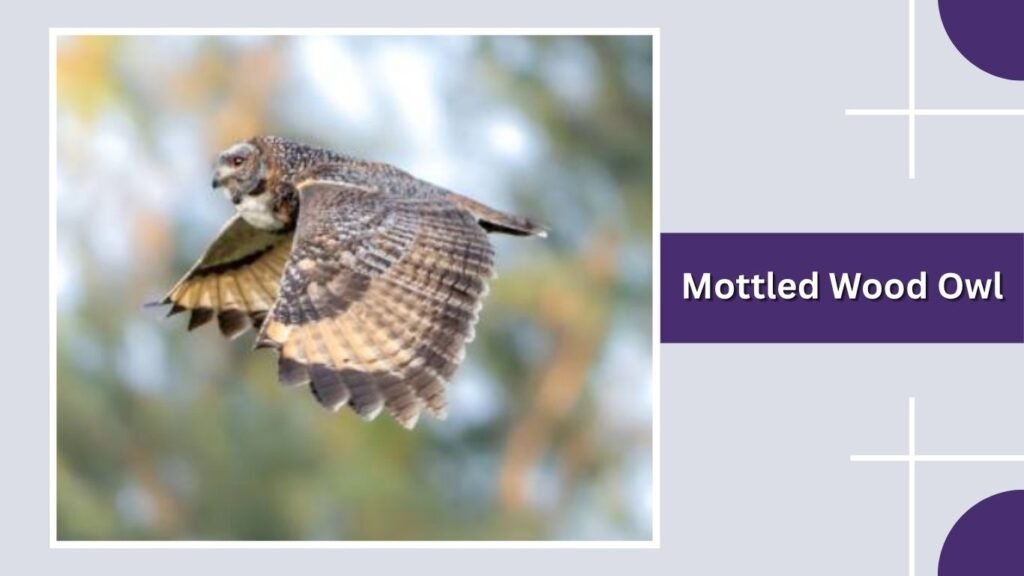
The Mottled Wood Owl is a medium to large owl found in South Asia, especially in India and Sri Lanka. It is known for its distinctive appearance and deep, haunting calls that are often heard at night.
Identification
- Grayish-brown mottled plumage with fine streaks
- Rounded head without ear tufts
- Dark eyes set in a pale facial disk
- Broad wings and a compact body
Size
Mottled Wood Owls measure about 18 to 20 inches in length, with a wingspan of around 45 to 50 inches. Females are slightly larger than males but both share similar features.
Diet
They mainly feed on small mammals such as rodents and bats. They also hunt birds, reptiles, and large insects depending on availability.
Habitat
These owls prefer forests, groves, and wooded areas near human settlements. They are often found in large trees and sometimes in urban green spaces.
Behavior
Mottled Wood Owls are nocturnal and very vocal. Their deep, echoing calls are commonly heard during the night. They usually remain hidden during the day and become active after dusk.
13. Dusky Eagle-Owl
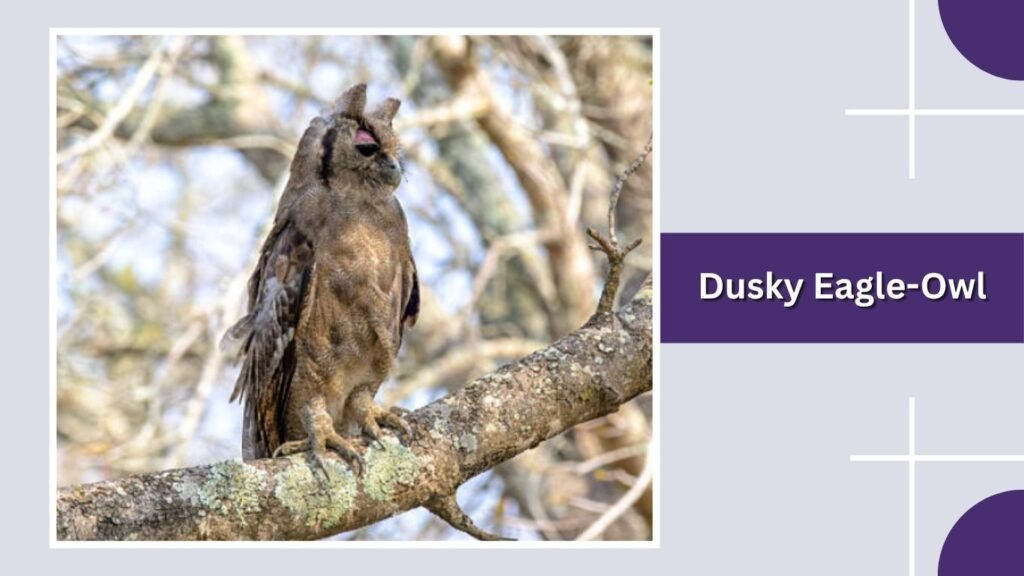
The Dusky Eagle-Owl is a large and powerful owl found in parts of Asia, particularly in forested and hilly regions. It is known for its deep coloration and strong hunting ability.
Identification
- Dark brown to dusky plumage with faint streaks
- Prominent ear tufts
- Large orange or yellow eyes
- Broad wings and strong, heavy body
Size
Dusky Eagle-Owls measure about 20 to 24 inches in length, with a wingspan of around 50 to 60 inches. Females are larger and more robust than males.
Diet
They mainly feed on small to medium-sized mammals, birds, and reptiles. Their strength allows them to capture relatively large prey.
Habitat
These owls prefer forests, rocky hills, and mountainous regions. They often roost in dense vegetation or on cliffs during the day.
Behavior
Dusky Eagle-Owls are nocturnal and highly territorial. They are known for their deep, resonant calls and powerful, silent flight while hunting at night.
14. Fraser’s Eagle-Owl
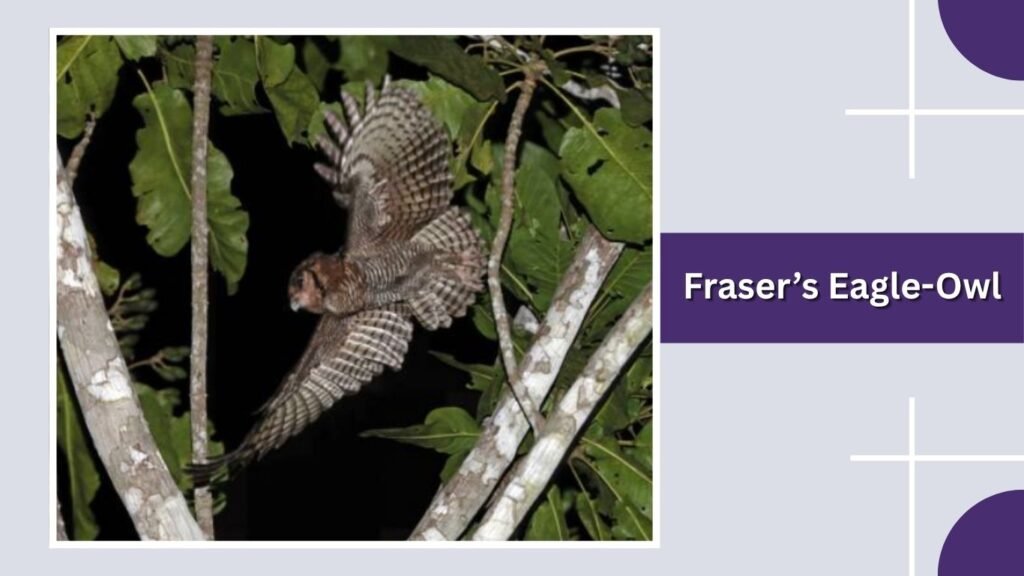
Fraser’s Eagle-Owl is a medium-sized forest owl found in Central and West Africa. It is known for its striking facial pattern and elusive nature, often remaining hidden within dense forest habitats.
Identification
- Dark brown plumage with lighter barring
- Distinct facial disk with bold dark borders
- Prominent ear tufts
- Bright orange eyes
Size
Fraser’s Eagle-Owls measure about 15 to 17 inches in length, with a wingspan of around 30 to 36 inches. Females are slightly larger than males but look very similar.
Diet
They mainly feed on small mammals, birds, insects, and reptiles. They are opportunistic hunters and take advantage of available prey in their environment.
Habitat
These owls prefer dense tropical forests, especially lowland rainforests. They are often found in areas with thick vegetation and limited human disturbance.
Behavior
Fraser’s Eagle-Owls are nocturnal and very secretive. They are more often heard than seen, with soft, low calls echoing through the forest at night.
