
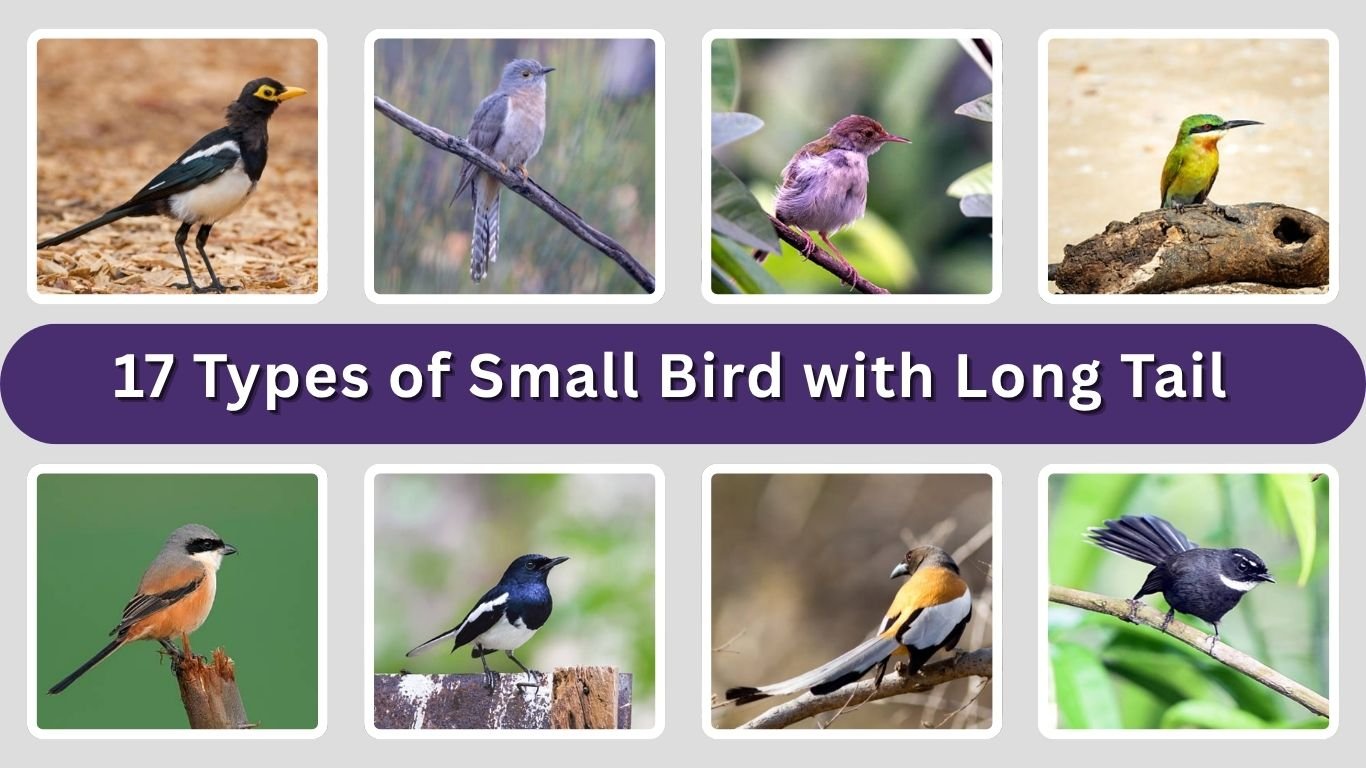
Small birds with long tails are among the most elegant and eye-catching species in the bird world. Their extended tails not only enhance their beauty but also play important roles in balance, flight control, and communication. From forests and grasslands to gardens and urban areas, these birds can be found in a wide range of habitats across the globe.
In this guide, you’ll discover 17 types of small birds with long tails, each with unique features, behaviors, and lifestyles. Whether it’s the graceful Asian Paradise Flycatcher or the energetic White Wagtail, these birds showcase how tail length can vary in shape, function, and visual appeal. This list focuses on identification, habitat, behavior, and lifespan to give you a clear and engaging understanding of each species.
1. Long-tailed Tit
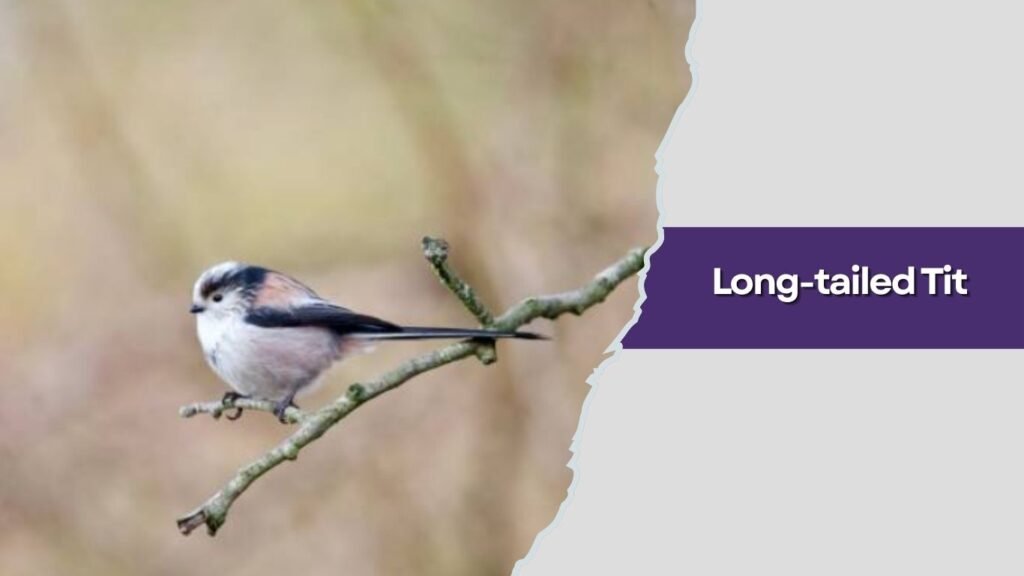
A tiny, fluffy bird known for its strikingly long tail and sociable nature. It is often seen moving in small groups, especially during cooler months. Despite its delicate appearance, it is well adapted to survive in varying climates by staying active and cooperative within its flock.
Identification
- Very small, rounded body with a noticeably long, narrow tail
- Soft, fluffy feathers giving a puffed-up look
- Predominantly white head with bold black eye-stripes
- Subtle pinkish hues along the flanks and sides
- Short, stubby black beak suited for picking insects
- Dark wings with lighter edging
Habitat
Long-tailed Tits are commonly found in temperate regions across Europe and Asia. They prefer deciduous and mixed woodlands, especially areas with dense undergrowth. Hedgerows, scrublands, and even suburban gardens are also suitable habitats, provided there are enough trees and shrubs for nesting and shelter. These birds build intricate, dome-shaped nests using moss, spider webs, and feathers, usually hidden deep within bushes or tree branches. During colder months, they may expand their range slightly in search of food, often appearing in parks and cultivated areas.
Behaviors
These birds are highly social and rarely seen alone. They move in small flocks, especially outside the breeding season, maintaining constant communication through soft, high-pitched calls. Their movement is quick and acrobatic, hopping and flitting between branches while foraging. They often cooperate within groups to keep warm by huddling together during cold nights. Their playful and energetic nature makes them a delight to observe as they explore their surroundings.
Diet and Lifespan
The Long-tailed Tit primarily feeds on insects, spiders, and tiny invertebrates, which it skillfully picks from leaves and bark. During winter, when insect availability drops, it supplements its diet with seeds and occasionally berries. This seasonal flexibility helps it survive harsh conditions. In the wild, their lifespan is relatively short, typically around 2 to 3 years, though some individuals may live longer under favorable conditions.
2. Asian Paradise Flycatcher
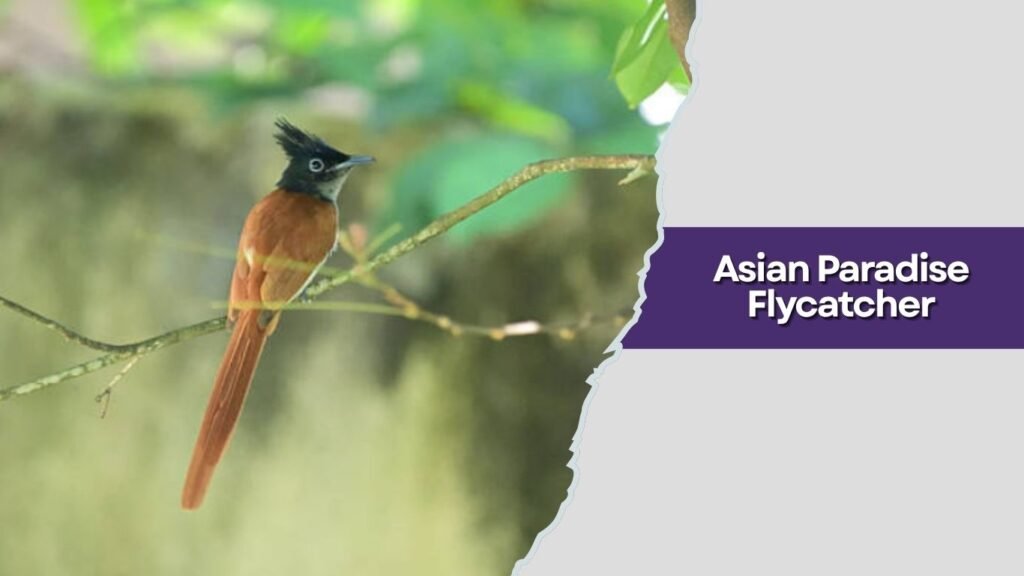
A graceful and eye-catching bird, the Asian Paradise Flycatcher is famous for its extremely long, flowing tail and elegant flight. Males, especially, display striking plumage that makes them one of the most beautiful small birds in their range.
Identification
- Slender body with very long, ribbon-like tail feathers (in males)
- Adult males may be white or rufous with glossy black head
- Females and juveniles are mostly rufous-brown with shorter tails
- Distinctive blue eye-ring and small, sharp beak
- Smooth, silky-looking plumage
- Agile wings suited for aerial insect catching
Habitat
This species is widely found across South and Southeast Asia. It prefers forests, wooded areas, bamboo groves, and well-vegetated gardens. During the breeding season, it often inhabits dense forests with plenty of tree cover, while in migration or winter, it may appear in more open woodland and plantations. It builds small cup-shaped nests on thin branches, usually well hidden among leaves. Availability of water sources and insects plays a key role in its habitat selection.
Behaviors
Asian Paradise Flycatchers are mostly solitary or seen in pairs during breeding. They are active and agile, often seen darting through the air to catch insects mid-flight. Their long tail flows behind them, making their flight appear smooth and elegant. They are generally quiet but may produce sharp calls during interaction. During migration, they travel long distances and adapt quickly to different environments. Their alert and swift nature helps them avoid predators effectively.
Diet and Lifespan
Their diet mainly consists of flying insects such as flies, beetles, and moths. They catch prey in mid-air using quick, precise movements. Occasionally, they may pick insects from leaves or branches. This high-protein diet supports their active lifestyle. The average lifespan of an Asian Paradise Flycatcher in the wild is around 5 to 6 years, although exact data may vary depending on environmental conditions and predation risks.
3. Fork-tailed Drongo
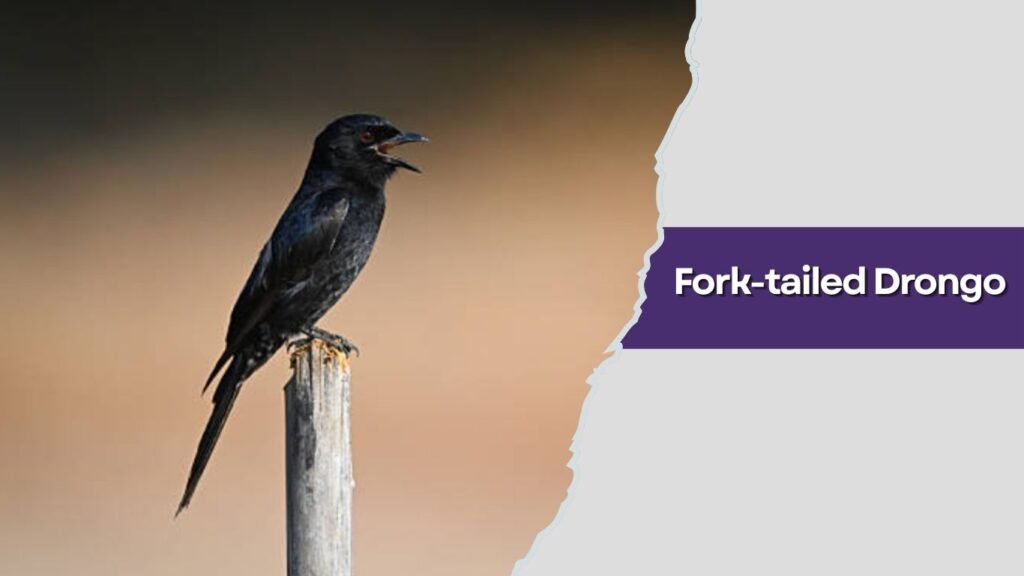
The Fork-tailed Drongo is a bold and intelligent bird known for its deeply forked tail and fearless personality. Despite its relatively small size, it often dominates much larger birds and is admired for its sharp calls and remarkable mimicry skills.
Identification
- Glossy black plumage with a metallic sheen
- Deeply forked tail, giving it a distinctive silhouette
- Medium-small size with a strong, slightly hooked beak
- Bright, alert eyes
- Sleek and streamlined body built for agile flight
- Slight iridescence visible in good lighting
Habitat
Fork-tailed Drongos are widely distributed across open woodlands, savannas, farmlands, and lightly forested regions. They prefer areas with scattered trees or perches, which allow them to watch for prey. These birds are also commonly seen near human settlements, including villages and agricultural fields, where insects are abundant. They tend to avoid dense forests, favoring more open environments where their aerial hunting style is most effective. Nests are typically built high in trees, offering a clear view of the surroundings.
Behaviors
This bird is famously fearless and aggressive when it comes to defending its territory. It is known to chase away much larger birds, including hawks and crows. Fork-tailed Drongos are highly intelligent and are capable of mimicking the calls of other species. In some cases, they use this ability to trick other animals into dropping food, which they then steal. They are usually seen alone or in pairs but may gather in small groups when food is plentiful. Their flight is quick and acrobatic, often involving sudden twists and turns.
Diet and Lifespan
Their diet mainly consists of insects such as beetles, grasshoppers, termites, and flies. They often catch prey mid-air or snatch it from the ground. Occasionally, they may eat small vertebrates or nectar. Their opportunistic feeding habits make them highly adaptable. The average lifespan of a Fork-tailed Drongo in the wild is around 6 to 10 years, depending on environmental conditions and availability of food.
4. Black Drongo
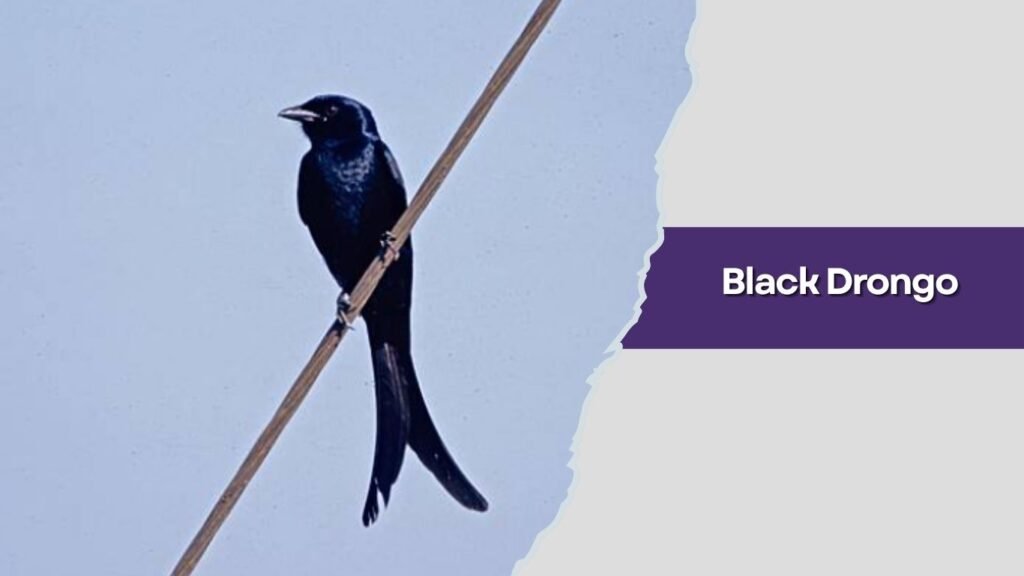
The Black Drongo is a striking and confident bird, easily recognized by its glossy black color and distinctive forked tail. It is commonly seen perched openly on wires or treetops, keeping a watchful eye over its surroundings.
Identification
- Entirely black plumage with a slight metallic shine
- Deeply forked tail, though shorter than some drongo species
- Medium-small body with a strong, slightly curved beak
- Red or dark reddish-brown eyes
- Upright posture when perched
- Sleek and smooth feather texture
Habitat
Black Drongos are highly adaptable and are commonly found in open habitats such as farmlands, grasslands, urban areas, and roadsides. They prefer places with scattered trees, electric wires, or fences that provide good vantage points for spotting prey. Unlike many forest birds, they thrive in human-modified environments and are often seen near villages and agricultural fields. They avoid dense forests and instead favor open or semi-open landscapes where their hunting style is most effective.
Behaviors
This bird is well known for its bold and aggressive nature. It frequently chases away larger birds, including crows and birds of prey, to defend its territory. Black Drongos are usually seen alone or in pairs but can gather in small groups in areas with abundant food. They are highly alert and often perch in exposed locations, making quick flights to catch insects. Their flight is swift and acrobatic, and they often return to the same perch after hunting.
Diet and Lifespan
The Black Drongo primarily feeds on insects such as grasshoppers, beetles, ants, and termites. It often catches prey mid-air or picks it from the ground. Sometimes, it follows grazing animals or farming activity to catch disturbed insects. This opportunistic feeding behavior makes it highly successful in various environments. The average lifespan of a Black Drongo is around 7 to 10 years in the wild, depending on habitat and predation pressures.
5. Scissor-tailed Flycatcher
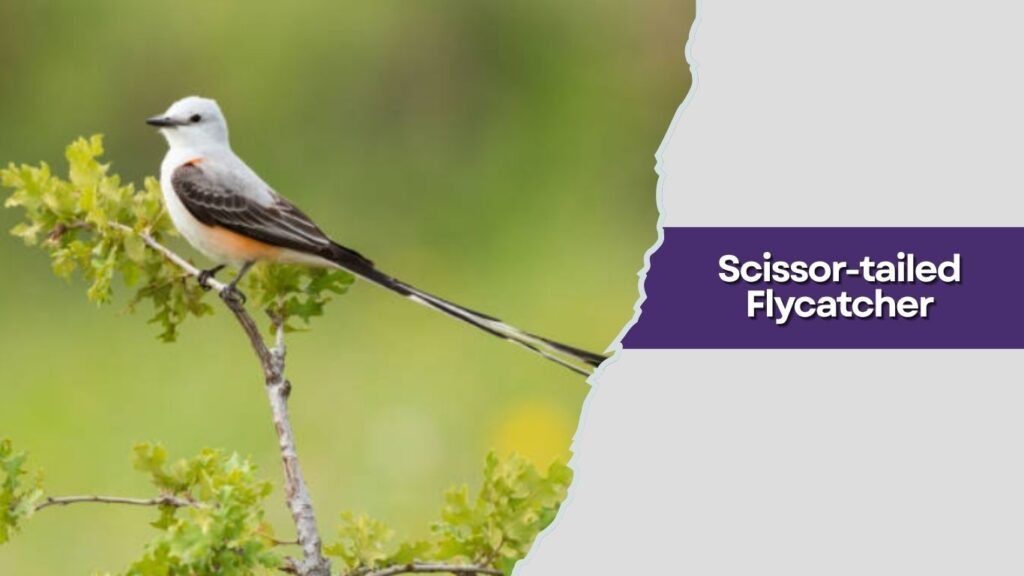
The Scissor-tailed Flycatcher is a graceful and highly recognizable bird, famous for its exceptionally long, forked tail that opens and closes like scissors during flight. Its elegant appearance and aerial agility make it one of the most striking small birds in open landscapes.
Identification
- Pale gray body with soft pink or salmon-colored sides
- Extremely long, deeply forked tail (especially in males)
- Black wings with white patches visible in flight
- Small, slender body with a straight, pointed beak
- Light-colored head with subtle contrast around the eyes
- Tail often spreads wide like scissors when flying
Habitat
This species is primarily found in open and semi-open habitats such as grasslands, prairies, farmlands, and roadside areas. It prefers regions with scattered trees, fences, or utility wires that provide ideal perching spots for hunting. During the breeding season, it is often associated with rural landscapes and lightly wooded areas. In non-breeding periods, it migrates to warmer regions, including parts of Central America. The availability of open space is crucial, as it relies heavily on aerial hunting techniques.
Behaviors
Scissor-tailed Flycatchers are highly active and are often seen perched in exposed locations before making quick, graceful flights to catch insects. Their long tail plays a key role in maneuverability, allowing sharp turns and controlled glides. They are generally seen alone or in pairs but may gather in loose groups during migration. Males perform impressive aerial displays, especially during the breeding season, to attract mates. Their flight is smooth, buoyant, and visually striking.
Diet and Lifespan
Their diet mainly consists of flying insects such as flies, beetles, grasshoppers, and moths. They catch prey mid-air with precision and may occasionally pick insects from vegetation. This insect-rich diet supports their energetic lifestyle. The average lifespan of a Scissor-tailed Flycatcher is around 5 to 8 years in the wild, though survival can vary depending on migration challenges and environmental conditions.
6. Red-billed Streamertail
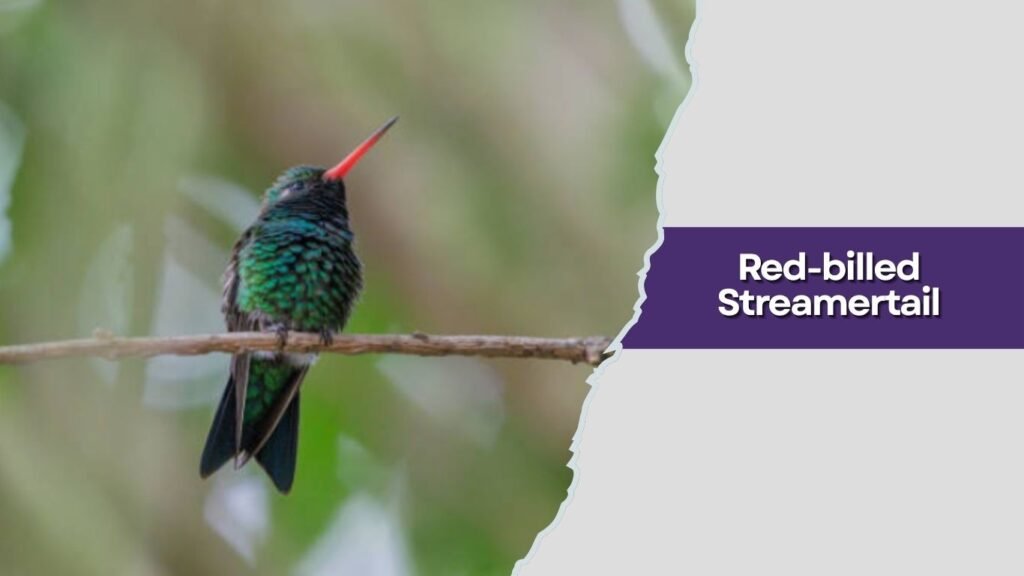
The Red-billed Streamertail is a dazzling hummingbird best known for its extremely long, flowing tail streamers and shimmering green plumage. Native to Jamaica, it is often called the “Doctor Bird” and is admired for its beauty and swift, hovering flight.
Identification
- Metallic green body with an iridescent sheen
- Bright red, slightly curved bill
- Long, elegant tail streamers (very prominent in males)
- Dark wings that beat rapidly during flight
- Small, compact body typical of hummingbirds
- Females lack long streamers and have shorter, simpler tails
Habitat
This species is commonly found in gardens, forests, plantations, and mountainous regions across Jamaica. It thrives in areas rich in flowering plants, which provide nectar, its primary food source. Red-billed Streamertails adapt well to human presence and are frequently seen in backyard gardens and parks. They prefer habitats with a mix of open spaces and trees, allowing easy access to flowers while providing safe perching and nesting spots. Nests are small and cup-shaped, often built on thin branches using plant fibers and spider silk.
Behaviors
Red-billed Streamertails are highly active and spend much of their time hovering near flowers. Their wings beat extremely fast, allowing them to stay suspended in the air while feeding. Males are territorial and may aggressively defend feeding areas from other hummingbirds. Their long tail streamers create a soft humming or whirring sound during flight. They are usually seen alone, except during breeding. Their quick, darting movements and brilliant colors make them easy to spot despite their small size.
Diet and Lifespan
Their diet mainly consists of nectar from a variety of flowering plants, which provides the energy needed for their rapid wing movements. They also consume small insects and spiders for protein. This balanced diet supports their high metabolism. The average lifespan of a Red-billed Streamertail is around 6 to 10 years in the wild, depending on environmental conditions and food availability.
7. Green Bee-eater
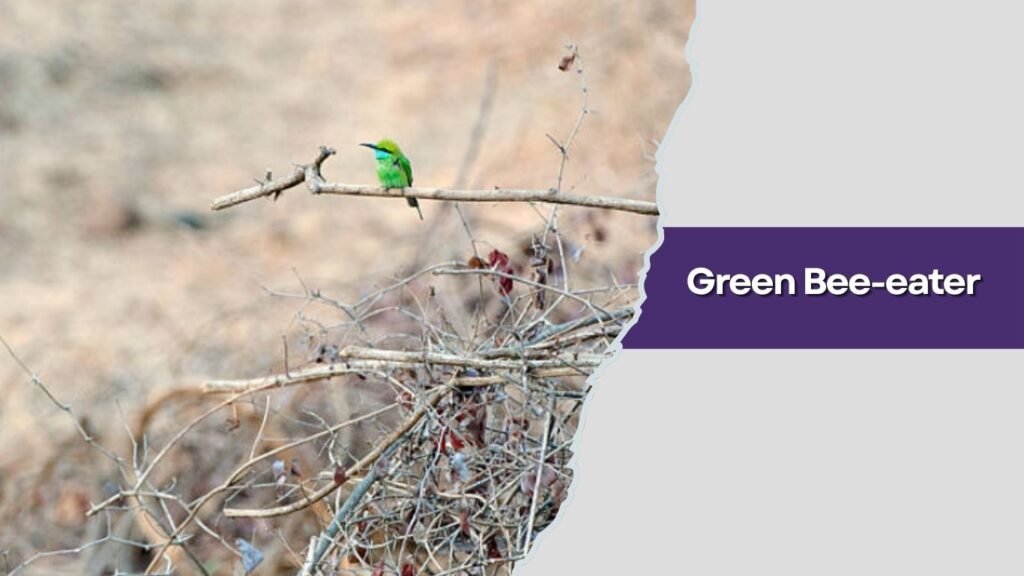
The Green Bee-eater is a slender, vividly colored bird known for its graceful shape and elongated central tail feathers. Its bright green plumage and elegant flight make it a common yet striking sight in open landscapes.
Identification
- Bright green body with a smooth, glossy appearance
- Slender build with a slightly curved, pointed black beak
- Distinct black eye-stripe running through the face
- Blue throat patch bordered by a thin black line
- Long central tail feathers forming a delicate extension
- Short legs and a streamlined body for agile flight
Habitat
Green Bee-eaters are widely distributed across South Asia and parts of Southeast Asia. They prefer open habitats such as grasslands, farmlands, scrublands, and sandy areas. These birds are often seen near riverbanks, open fields, and even roadside wires where they can perch and scan for prey. They avoid dense forests, favoring areas with clear visibility and scattered vegetation. For nesting, they dig long tunnels in sandy soil or earthen banks, creating safe chambers at the end where eggs are laid.
Behaviors
These birds are highly active during the day and are often seen perched in groups or small flocks. They frequently return to the same perch after short flights to catch prey. Their flight is smooth and slightly gliding, with quick bursts of speed. Green Bee-eaters are social and may roost together in large numbers. They are also known for a unique behavior—before eating stinging insects like bees, they repeatedly strike them against a perch to remove the sting.
Diet and Lifespan
As their name suggests, their diet mainly consists of bees, wasps, and other flying insects such as dragonflies and butterflies. They are expert aerial hunters, catching prey mid-flight with precision. This high-protein diet supports their active lifestyle. The average lifespan of a Green Bee-eater is around 5 to 7 years in the wild, although survival can vary depending on habitat conditions and predator presence.
8. Blue-tailed Bee-eater
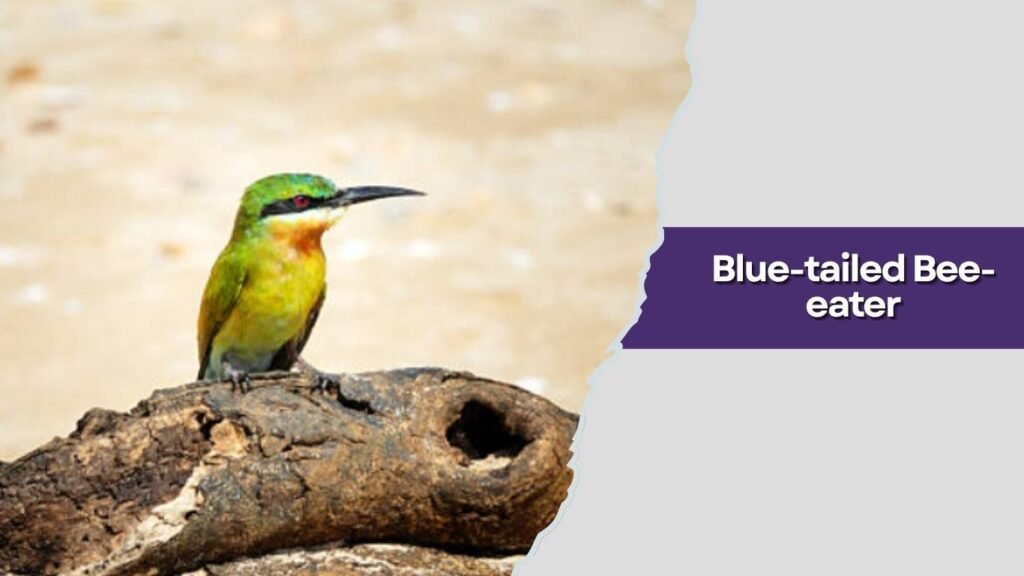
The Blue-tailed Bee-eater is a vibrant and elegant bird, easily recognized by its colorful plumage and elongated tail feathers. It is highly skilled in aerial hunting and is often seen gliding gracefully over open areas in search of insects.
Identification
- Bright green body with a contrasting blue tail and lower back
- Golden-yellow throat bordered by a thin black line
- Distinct black eye-stripe across the face
- Slender, slightly curved black beak
- Long central tail feathers extending beyond the rest of the tail
- Streamlined body built for swift and agile flight
Habitat
Blue-tailed Bee-eaters are commonly found across South and Southeast Asia. They prefer open habitats such as sandy riverbanks, coastal areas, grasslands, and agricultural fields. These birds are strongly associated with water bodies, especially during breeding season, as they nest in sandy banks by digging long tunnels. They are also seen perched on wires, branches, or bare ground where visibility is clear. Seasonal movements are common, and they may migrate locally in response to weather and food availability.
Behaviors
These birds are highly social and are often seen in small to large flocks, especially during migration or roosting periods. They are active hunters, frequently making swift, acrobatic flights to catch insects mid-air. Like other bee-eaters, they return to the same perch after each hunting attempt. They also exhibit cooperative behavior during nesting, sometimes forming colonies. Before consuming stinging insects, they skillfully remove the sting by hitting the prey against a hard surface.
Diet and Lifespan
Their diet mainly consists of flying insects such as bees, wasps, dragonflies, and flying ants. They rely on keen eyesight and quick reflexes to catch prey in flight. This diet provides the energy needed for their active lifestyle. The average lifespan of a Blue-tailed Bee-eater is around 6 to 8 years in the wild, though this can vary depending on environmental conditions and predation.
9. Greater Racket-tailed Drongo
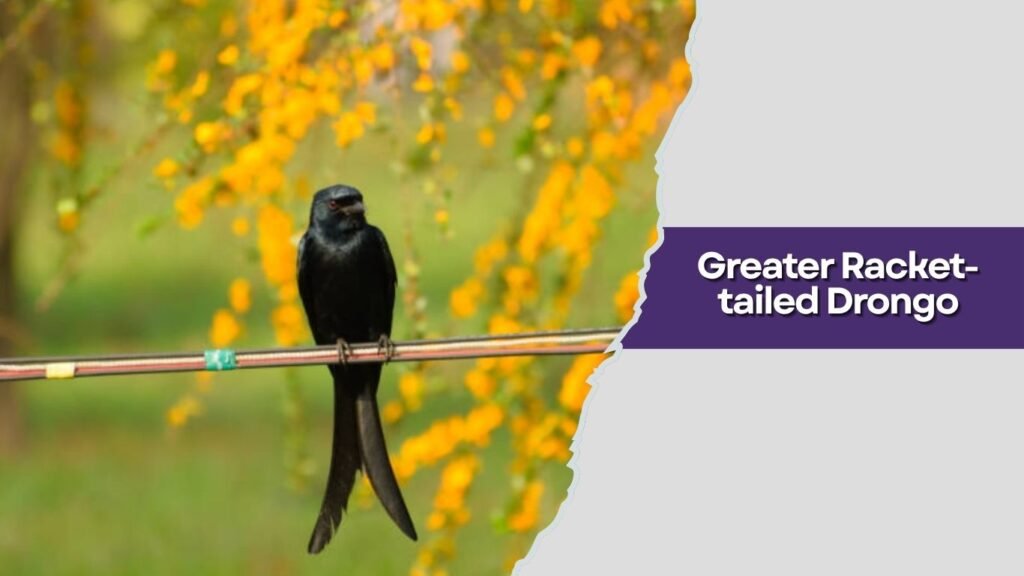
The Greater Racket-tailed Drongo is a striking and intelligent bird, best known for its unique tail with long extensions ending in racket-shaped tips. Its glossy black appearance and remarkable vocal abilities make it one of the most fascinating birds in forest ecosystems.
Identification
- Glossy black plumage with a metallic blue or green sheen
- Long tail with distinctive racket-shaped tips at the ends
- Slight crest on the head, giving a raised, alert look
- Red or dark reddish eyes
- Strong, slightly hooked black beak
- Medium-small body with elegant proportions
Habitat
This species is commonly found in tropical and subtropical forests across South and Southeast Asia. It prefers dense woodlands, evergreen forests, and forest edges where there is a rich diversity of insects. Unlike some other drongos, it is more closely associated with forest interiors rather than open fields. It can also be found in hilly regions and shaded plantations. The bird usually nests in trees, placing its nest high on branches where it remains concealed by foliage.
Behaviors
Greater Racket-tailed Drongos are highly intelligent and are famous for their ability to mimic the calls of many other bird species. They often follow mixed-species feeding flocks, using their mimicry to confuse other birds or take advantage of disturbed insects. They are bold and may defend their territory aggressively against intruders. Their flight is smooth and controlled, with their unique tail streamers trailing behind, adding to their dramatic appearance.
Diet and Lifespan
Their diet mainly consists of insects such as beetles, ants, and grasshoppers, which they catch in mid-air or pick from foliage. They may also consume small vertebrates or nectar occasionally. This flexible feeding habit helps them adapt to different environments. The average lifespan of a Greater Racket-tailed Drongo is around 8 to 12 years in the wild, depending on habitat quality and availability of food.
10. White-throated Fantail
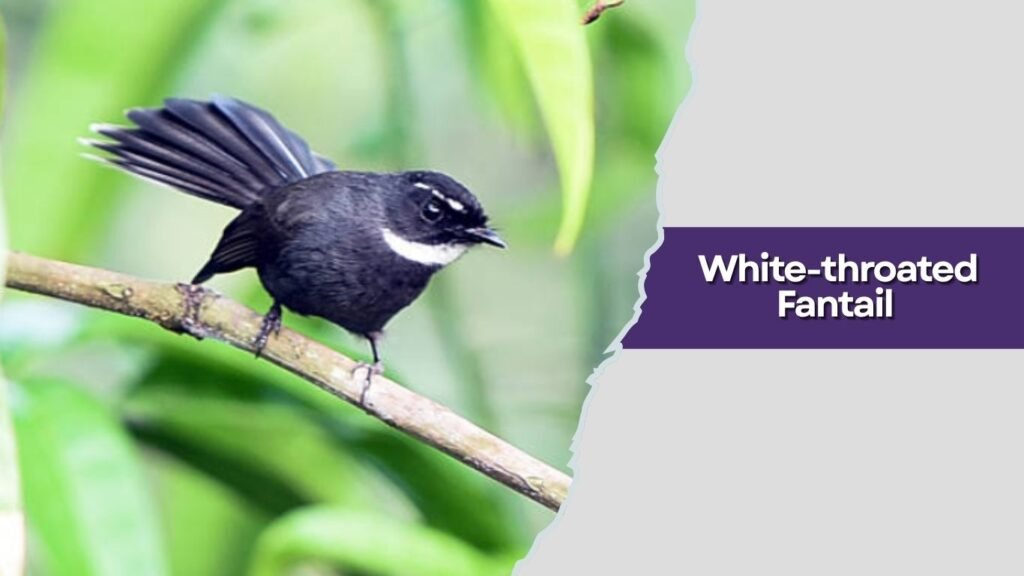
The White-throated Fantail is a lively and elegant bird, admired for its constantly fanned tail and energetic movements. Its contrasting black-and-white plumage and expressive behavior make it easy to notice in wooded areas.
Identification
- Black upperparts with a bright white throat and eyebrow
- Broad, fan-shaped tail often spread wide
- White tips on tail feathers creating a striking pattern
- Slender body with a slightly curved beak
- Dark eyes with a sharp, alert expression
- Constant tail fanning gives it a distinctive appearance
Habitat
White-throated Fantails are commonly found in forests, woodlands, gardens, and plantations across South and Southeast Asia. They prefer areas with dense vegetation and plenty of tree cover, which provide both shelter and feeding opportunities. These birds are also adaptable and can be seen in urban parks and backyard gardens. They usually stay in lower to mid-level branches, moving actively through foliage. Their nests are small and neatly built, often placed on thin branches or forks in trees.
Behaviors
This bird is extremely active and rarely stays still for long. It constantly fans and flicks its tail while moving through branches in search of food. White-throated Fantails are usually seen alone or in pairs and are known for their curious nature, sometimes coming close to humans. Their flight is quick and fluttery, with frequent short hops between branches. They often follow insects disturbed by other animals or human activity, taking advantage of easy feeding opportunities.
Diet and Lifespan
Their diet mainly consists of insects such as flies, moths, ants, and small beetles. They catch prey either in mid-air or by picking it off leaves and branches. This varied insect diet supports their high activity level. The average lifespan of a White-throated Fantail is around 5 to 7 years in the wild, though it can vary depending on environmental conditions and predation.
11. Rufous Treepie
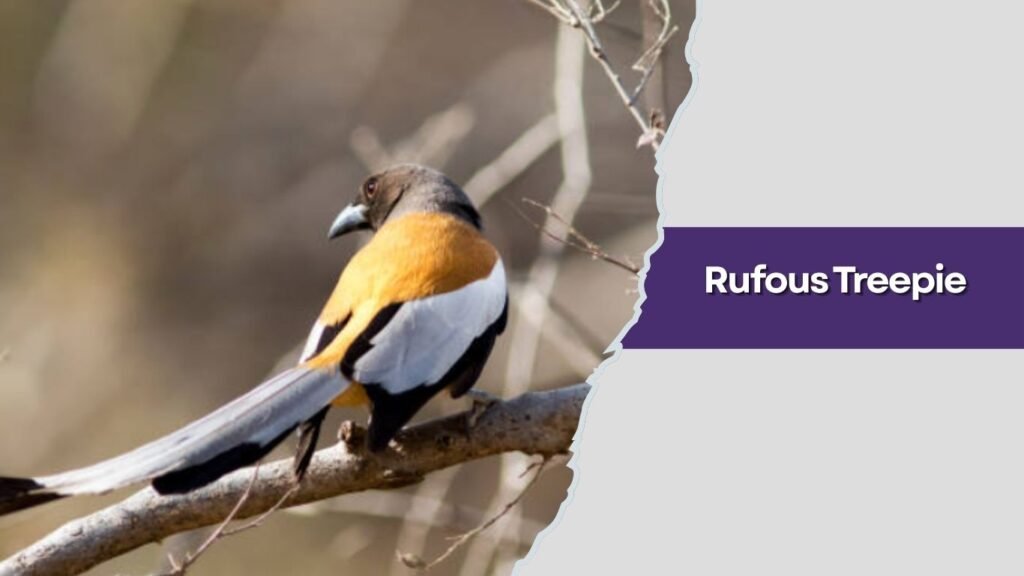
The Rufous Treepie is a striking and intelligent bird with a long, graduated tail and warm rufous coloration. It belongs to the crow family and is known for its adaptability, curiosity, and frequent presence near human settlements.
Identification
- Warm rufous-brown body with contrasting black head and neck
- Long, graduated tail with black and white tips
- Distinct white patch on wings visible in flight
- Strong, slightly curved black beak
- Pale eyes that stand out against the dark head
- Medium-sized body with an elegant, elongated shape
Habitat
Rufous Treepies are commonly found across the Indian subcontinent in open forests, woodlands, gardens, and urban areas. They prefer habitats with scattered trees rather than dense forests, making them well-suited to parks, villages, and agricultural landscapes. These birds are highly adaptable and often thrive near human habitation where food is readily available. They build cup-shaped nests in trees, usually well concealed among leaves and branches for protection.
Behaviors
These birds are highly active, social, and often seen in pairs or small groups. They move confidently through trees, using their long tail for balance. Rufous Treepies are known for their intelligence and opportunistic behavior, often scavenging or stealing food when the opportunity arises. They produce a variety of calls and are quite vocal. Their flight is steady and direct, and they frequently hop between branches while exploring their surroundings.
Diet and Lifespan
Rufous Treepies are omnivorous and have a varied diet that includes insects, fruits, seeds, small reptiles, eggs, and even scraps from human sources. This flexible diet allows them to survive in diverse environments. They may also scavenge carrion occasionally. The average lifespan of a Rufous Treepie is around 8 to 12 years in the wild, depending on environmental conditions and availability of resources.
12. Oriental Magpie Robin
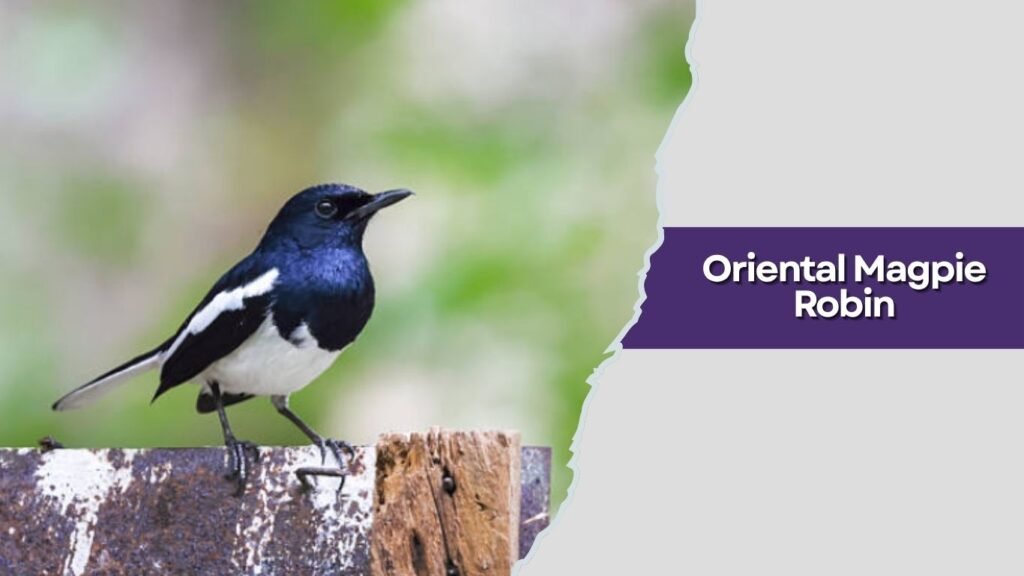
The Oriental Magpie Robin is a small, elegant bird known for its long tail, upright posture, and melodious song. It is commonly found in gardens and urban areas, where its cheerful presence and vocal nature make it a favorite among birdwatchers.
Identification
- Glossy black upperparts in males, with bright white underparts
- Females are more grayish-black with duller contrast
- Long tail often held upright and frequently flicked
- Distinct white wing patches visible in flight
- Slender body with a fine, pointed black beak
- Dark eyes with an alert expression
Habitat
This bird is widely distributed across South and Southeast Asia. It prefers open woodlands, gardens, parks, and urban areas with scattered trees and shrubs. The Oriental Magpie Robin adapts very well to human environments and is often seen near houses, courtyards, and roadside vegetation. It avoids dense forests, favoring areas where it can easily move between open ground and perches. Nests are usually built in tree cavities, wall crevices, or even man-made structures.
Behaviors
Oriental Magpie Robins are active and confident birds, often seen hopping on the ground or perching in visible spots. They are known for their beautiful and complex songs, especially during the breeding season, when males sing loudly to attract mates and defend territory. The bird frequently flicks its tail up and down, a characteristic behavior. It is usually solitary or seen in pairs, showing strong territorial instincts.
Diet and Lifespan
Their diet mainly consists of insects such as ants, beetles, caterpillars, and small worms. They often forage on the ground, picking prey with quick movements. Occasionally, they may eat fruits and seeds. This varied diet helps them thrive in different environments. The average lifespan of an Oriental Magpie Robin is around 5 to 10 years in the wild, depending on habitat conditions and predation risks.
13. Common Tailorbird
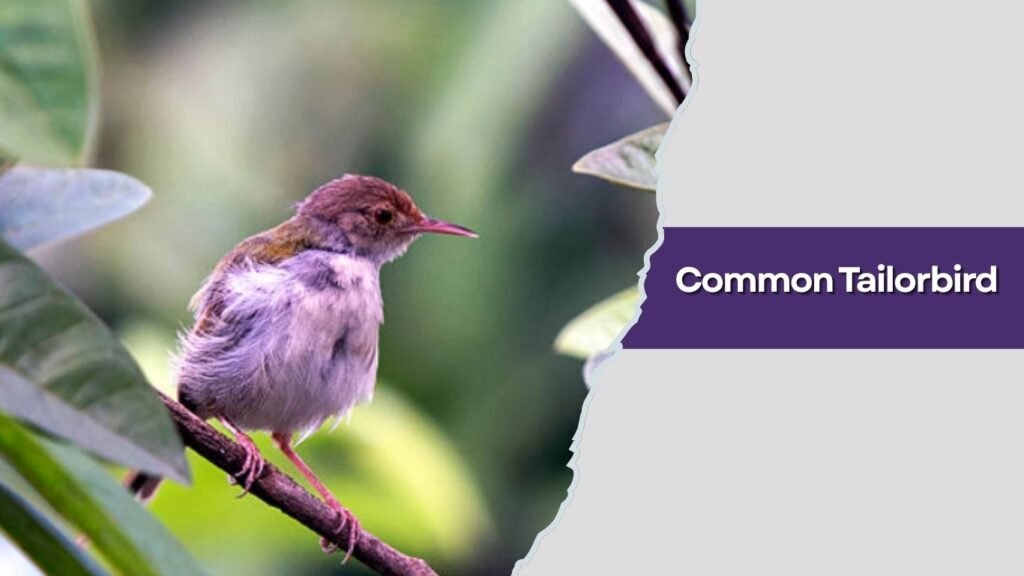
The Common Tailorbird is a small, active bird best known for its long tail and unique nesting behavior, where it “stitches” leaves together to create a cradle-like nest. Its lively movements and sharp calls make it easy to notice despite its small size.
Identification
- Small, slender body with an upright stance
- Greenish upperparts and pale underparts
- Rufous (reddish-brown) crown on the head
- Long tail often held upright and flicked frequently
- Thin, slightly curved beak suited for picking insects
- Bright, alert eyes with a sharp expression
Habitat
Common Tailorbirds are widely found across South and Southeast Asia. They prefer gardens, shrublands, hedges, and forest edges rather than dense forests. These birds are especially common in urban and suburban areas, often living close to human habitation. They thrive in areas with thick bushes and low vegetation, which provide both cover and nesting material. Their nests are uniquely crafted by stitching leaves together using plant fibers or spider silk, usually hidden within dense foliage for protection.
Behaviors
This bird is extremely active and rarely stays still. It moves quickly through bushes and low branches, often remaining partially hidden. The Common Tailorbird is known for its loud, repetitive calls that help mark its territory. It is usually seen alone or in pairs and is quite territorial. Its tail is frequently raised and flicked as it moves. Despite its small size, it is bold and alert, always ready to dart away at the slightest disturbance.
Diet and Lifespan
The Common Tailorbird mainly feeds on insects such as ants, beetles, caterpillars, and small larvae. It forages by picking prey from leaves, stems, and the ground. Occasionally, it may consume small fruits or nectar. This insect-rich diet supports its high energy levels. The average lifespan of a Common Tailorbird is around 3 to 5 years in the wild, depending on environmental conditions and predation.
14. White Wagtail

The White Wagtail is a slender and graceful bird, well known for its long, constantly wagging tail. It is often seen walking or running along open ground near water, displaying a distinctive and lively movement style.
Identification
- Slim body with a long, narrow tail
- Black, white, and gray plumage with clear contrast
- White face with black throat and crown (varies slightly by region)
- Thin, pointed black beak
- Long legs adapted for walking on the ground
- Tail constantly wagging up and down
Habitat
White Wagtails are widely distributed across Europe, Asia, and parts of Africa. They prefer open habitats such as riverbanks, wetlands, fields, grasslands, and urban areas. These birds are strongly associated with water sources, often seen near streams, lakes, and ponds. However, they also adapt well to human environments, including roadsides, rooftops, and farmland. They require open ground for feeding and nearby structures or vegetation for nesting. Nests are typically built in crevices, under bridges, or among rocks.
Behaviors
White Wagtails are active and energetic, spending much of their time walking or running on the ground in search of food. Their most distinctive behavior is the constant wagging of their tail, which continues even when they are standing still. They are usually seen alone or in pairs but may gather in larger groups during migration or roosting. Their flight is undulating, with quick wingbeats followed by short glides. They are alert birds and often emit sharp, short calls while moving.
Diet and Lifespan
Their diet mainly consists of insects such as flies, beetles, and small aquatic invertebrates. They often forage near water or damp soil where insects are abundant. Occasionally, they may eat seeds or small crustaceans. This varied diet helps them adapt to different environments. The average lifespan of a White Wagtail is around 4 to 8 years in the wild, depending on environmental conditions and predation.
15. Fan-tailed Cuckoo
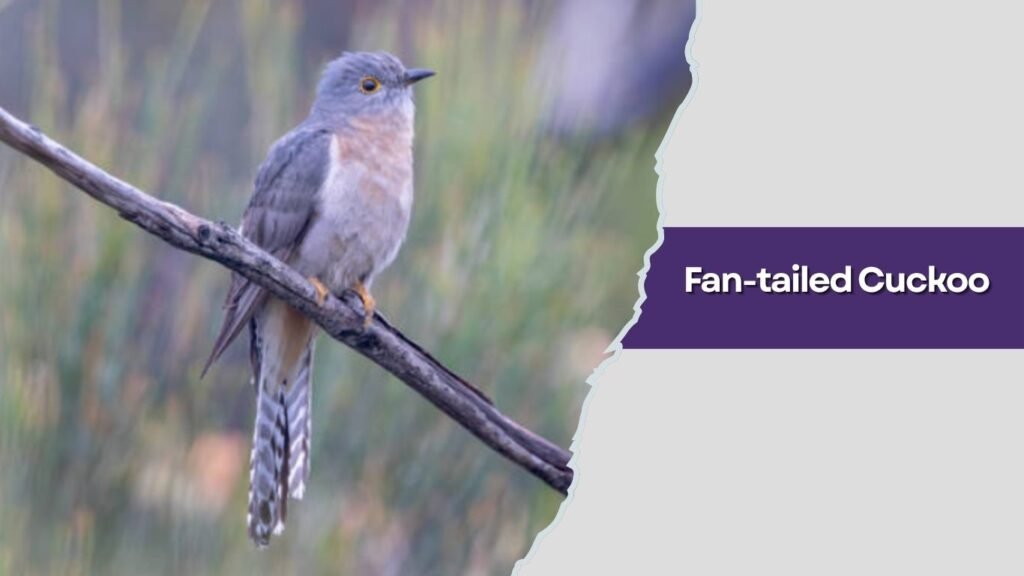
The Fan-tailed Cuckoo is a slender and secretive bird recognized for its long, graduated tail and soft, repetitive calls. Though not always easy to spot, its distinctive voice often reveals its presence in wooded areas.
Identification
- Slender body with a long, fan-shaped tail
- Brownish-gray upperparts with pale underparts
- Fine barring on the chest and tail feathers
- Slight crest on the head, giving a raised look
- Medium-length, slightly curved beak
- Tail often spread slightly, showing its layered pattern
Habitat
Fan-tailed Cuckoos are typically found in forests, woodlands, shrublands, and dense vegetation. They prefer habitats with thick cover, which helps them stay hidden while moving through branches. These birds are often associated with moist forests and areas near water sources but can also be seen in gardens and plantations. They rely on the presence of host bird species, as they lay their eggs in other birds’ nests. Their secretive nature makes them more often heard than seen.
Behaviors
This bird is generally solitary and quiet in movement but becomes noticeable through its repetitive and melodic calls. It spends much of its time moving cautiously through foliage, rarely staying in open view. Like many cuckoos, it is a brood parasite, meaning it lays its eggs in the nests of other bird species and leaves the host to raise its young. Its flight is smooth and direct, often short-distance within dense vegetation. It remains alert and avoids unnecessary exposure.
Diet and Lifespan
The Fan-tailed Cuckoo mainly feeds on insects, especially caterpillars, beetles, and other soft-bodied invertebrates. It may also consume hairy caterpillars that other birds avoid. This diet helps control insect populations in its habitat. The average lifespan of a Fan-tailed Cuckoo is around 4 to 6 years in the wild, though exact data can vary due to its elusive nature and limited long-term studies.
16. Long-tailed Shrike
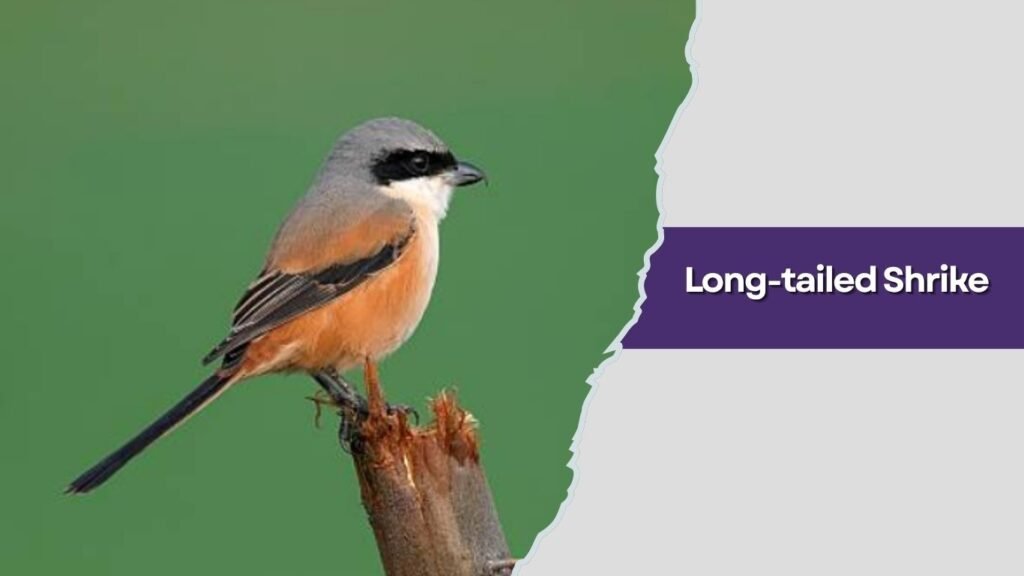
The Long-tailed Shrike is a bold and striking bird known for its long tail, sharp hunting skills, and distinctive black facial mask. Despite its small size, it behaves like a predator, often seen perched prominently while scanning for prey.
Identification
- Grayish head with a bold black mask across the eyes
- Rufous-brown back and pale underparts
- Long, narrow tail often held straight or slightly drooped
- Strong, hooked beak adapted for catching and tearing prey
- Black wings with subtle white markings
- Upright and alert posture when perched
Habitat
Long-tailed Shrikes are widely found across Asia in open habitats such as grasslands, scrublands, farmlands, and forest edges. They prefer areas with scattered bushes, trees, or fences that serve as lookout points. These birds are also common near villages and agricultural fields, where prey is abundant. They avoid dense forests, favoring open or semi-open landscapes. Nests are usually built in thorny bushes or small trees, offering protection from predators.
Behaviors
This bird is known for its predatory and territorial nature. It often perches in exposed locations, watching for movement before swooping down to capture prey. One of its most unique behaviors is impaling prey on thorns or barbed wire, creating a “food store” for later consumption. Long-tailed Shrikes are usually solitary or seen in pairs and are highly defensive of their territory. Their flight is direct and purposeful, often short-distance between perches.
Diet and Lifespan
The Long-tailed Shrike feeds on a variety of prey, including insects, small birds, lizards, and rodents. Its strong beak allows it to handle relatively large prey for its size. This varied and protein-rich diet supports its active hunting lifestyle. The average lifespan of a Long-tailed Shrike is around 6 to 10 years in the wild, depending on habitat conditions and availability of food.
17. Yellow-billed Blue Magpie
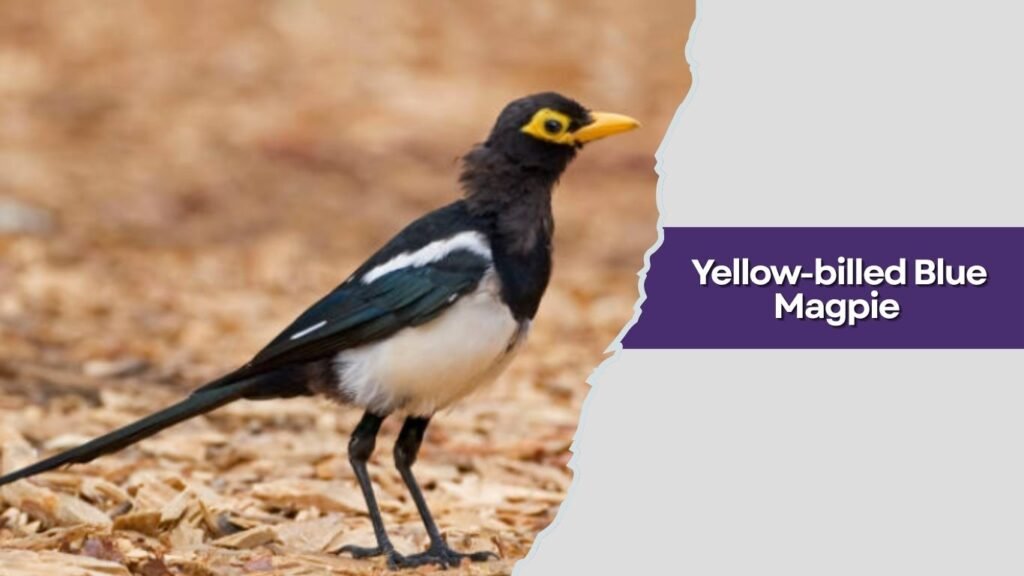
The Yellow-billed Blue Magpie is a colorful and elegant bird, recognized for its long tail and vibrant blue plumage. Its striking appearance and lively behavior make it one of the most attractive members of the crow family in mountainous regions.
Identification
- Bright blue body with a glossy black head and neck
- Long, graduated tail with white tips and bold markings
- Distinct yellow bill and legs
- Pale eyes that contrast with the dark head
- Strong, slightly curved beak
- Medium-sized body with a long, flowing tail
Habitat
This species is mainly found in mountainous forests across parts of Asia. It prefers temperate forests, wooded valleys, and forest edges, often at higher elevations. Yellow-billed Blue Magpies are also seen near rural settlements where trees are abundant. They favor areas with dense tree cover for nesting but also require open spaces nearby for movement and foraging. Nests are typically built in trees, well hidden among branches to protect from predators.
Behaviors
Yellow-billed Blue Magpies are highly social and are usually seen in small, noisy groups. They move actively through trees, using their long tails for balance as they hop between branches. These birds are curious and intelligent, often investigating their surroundings. They communicate with a variety of loud calls and may cooperate within groups when searching for food or defending territory. Their flight is strong and slightly gliding, with the long tail trailing behind.
Diet and Lifespan
They are omnivorous and feed on insects, fruits, seeds, small animals, and occasionally eggs or nestlings. This varied diet allows them to adapt to different environments. They often forage both in trees and on the ground. The average lifespan of a Yellow-billed Blue Magpie is around 10 to 15 years in the wild, depending on environmental conditions and availability of food.
FAQs
What makes a bird “long-tailed”?
A bird is considered long-tailed when its tail is noticeably longer than its body or proportionally extended compared to similar species. These tails may help with balance, flight control, display during mating, or communication within flocks.
Are long-tailed birds good flyers?
Yes, most long-tailed birds are excellent flyers. Their extended tails often improve maneuverability, allowing sharp turns and controlled flight. In some species, the tail also helps with gliding and maintaining stability while catching prey mid-air.
Do long tails help birds survive?
Long tails can provide several survival advantages, including better balance while perching, improved agility in flight, and enhanced attraction during mating displays. However, they can also make birds more visible to predators in some environments.
Where can long-tailed birds commonly be found?
Long-tailed birds are found in a wide range of habitats, including forests, grasslands, wetlands, and urban areas. Their presence depends on food availability, climate, and suitable nesting sites rather than tail length alone.
Are all long-tailed birds small in size?
No, not all long-tailed birds are small. While many small birds have long tails, there are also medium and large species with extended tails. Tail length varies by species and is often linked to behavior, habitat, and evolutionary traits.