
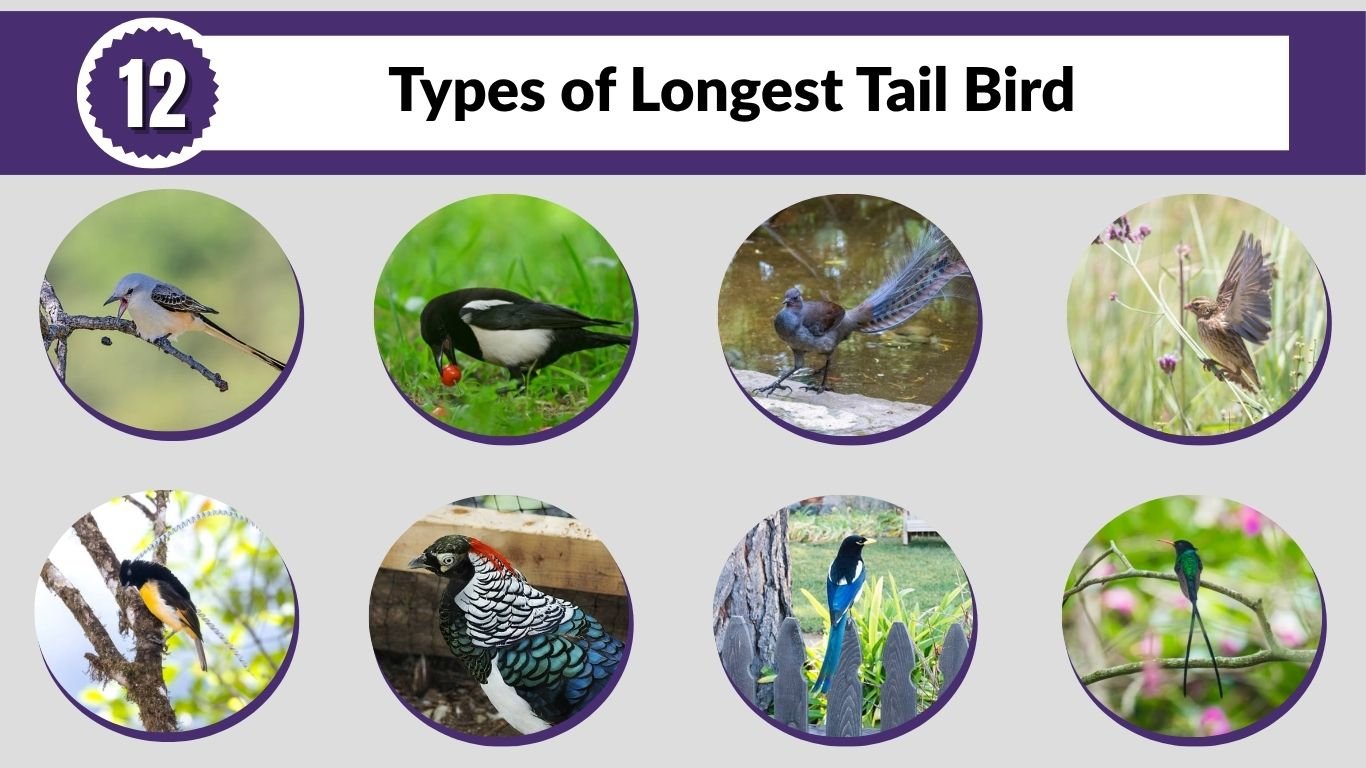
Birds with long tails are some of the most fascinating creatures in the natural world. Their impressive tail feathers not only add beauty but also serve important roles in flight, balance, and courtship displays. From tropical forests to open grasslands, these birds can be found across diverse habitats. In this article, we explore 12 birds known for their exceptionally long tails, highlighting their unique features, behaviors, and environments. Each species showcases how nature blends elegance with function in remarkable ways.
1. Ribbon-tailed Astrapia
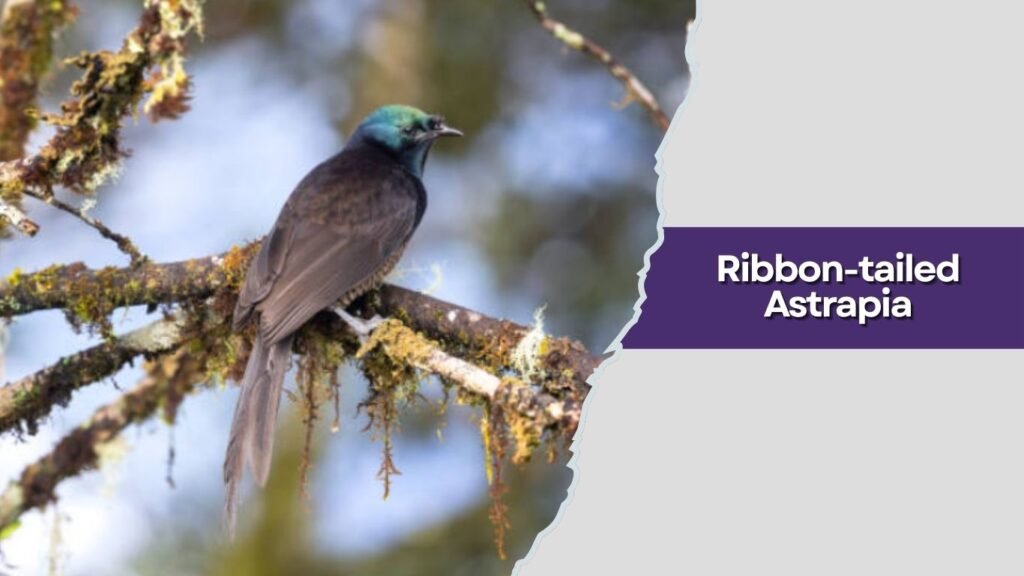
The Ribbon-tailed Astrapia is one of the most extraordinary birds in the world, famous for having the longest tail feathers relative to body size. Native to the highland forests of Papua New Guinea, this bird is admired for its elegance and dramatic appearance.
Identification
- Velvet-black body with a subtle iridescent sheen
- Extremely long, white ribbon-like tail feathers (can exceed three times body length)
- Glossy green and bronze tones on the head and throat
- Small head with a slender, slightly curved beak
- Males have much longer tails than females
- Bright, striking plumage that stands out in forest light
Habitat
Ribbon-tailed Astrapias are found in the montane forests of Papua New Guinea, typically at elevations between 1,800 and 3,000 meters. They prefer dense, mossy forests with tall trees and thick canopy cover. These birds are often associated with remote and less disturbed habitats, where they can move freely through the upper forest layers. The cool, moist environment of high-altitude forests provides the ideal conditions for their survival, offering both shelter and a rich supply of food sources.
Behaviors
This bird is generally solitary and spends much of its time moving quietly through the forest canopy. Males are known for their elaborate courtship displays, where they use their long tail feathers to attract females. These displays involve controlled movements and postures that highlight their striking appearance. Despite their long tails, they are capable of agile flight, though they tend to move more slowly and gracefully compared to other birds. Their behavior is often calm and deliberate.
Diet and Lifespan
The Ribbon-tailed Astrapia primarily feeds on fruits, berries, and small invertebrates. It forages in the canopy, picking food from branches and leaves. This mixed diet provides the necessary nutrients for maintaining its energy and feather health. While exact lifespan data is limited, it is estimated that these birds can live around 5 to 8 years in the wild, depending on environmental conditions and predation.
2. Resplendent Quetzal
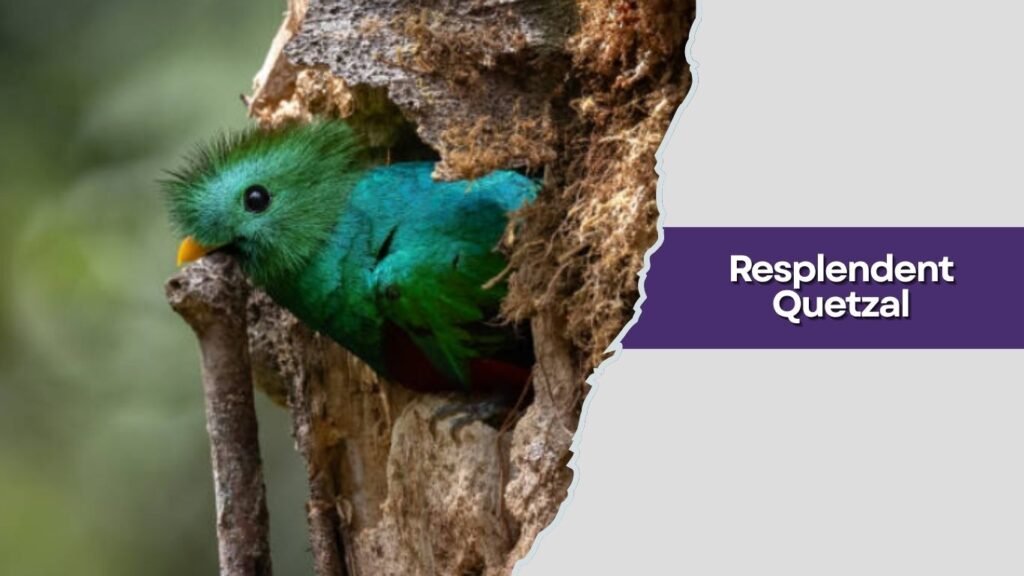
The Resplendent Quetzal is a legendary bird known for its brilliant colors and exceptionally long tail feathers in males. Native to Central America, it is often associated with ancient cultures and is admired for its beauty and symbolic importance.
Identification
- Bright green iridescent body with a shimmering effect
- Rich red underparts creating a bold color contrast
- Very long, flowing upper tail feathers in males
- Small, rounded head with a short, slightly curved beak
- Dark eyes with a gentle expression
- Females are less colorful with shorter tails
Habitat
Resplendent Quetzals inhabit cloud forests and humid montane forests in Central America. They prefer dense, high-altitude environments with abundant fruiting trees, especially wild avocados. These forests provide cool temperatures, high humidity, and thick vegetation, all of which are essential for their survival. They are often found in remote and protected forest areas where human disturbance is minimal. Nesting usually occurs in tree cavities, often in decaying trunks.
Behaviors
These birds are generally solitary or seen in pairs, especially during the breeding season. They move quietly through the forest canopy, making short, smooth flights between trees. Males perform graceful displays to attract females, showcasing their long tail feathers. Despite their striking appearance, they can be difficult to spot due to their calm and secretive behavior. They are not highly vocal but may produce soft, whistling calls.
Diet and Lifespan
The Resplendent Quetzal mainly feeds on fruits, particularly small avocados, which play a major role in its diet. It also consumes insects, small frogs, and lizards occasionally. This varied diet supports its nutritional needs in forest habitats. The average lifespan of a Resplendent Quetzal is around 10 to 20 years in the wild, depending on environmental conditions and habitat protection.
3. Greater Racket-tailed Drongo
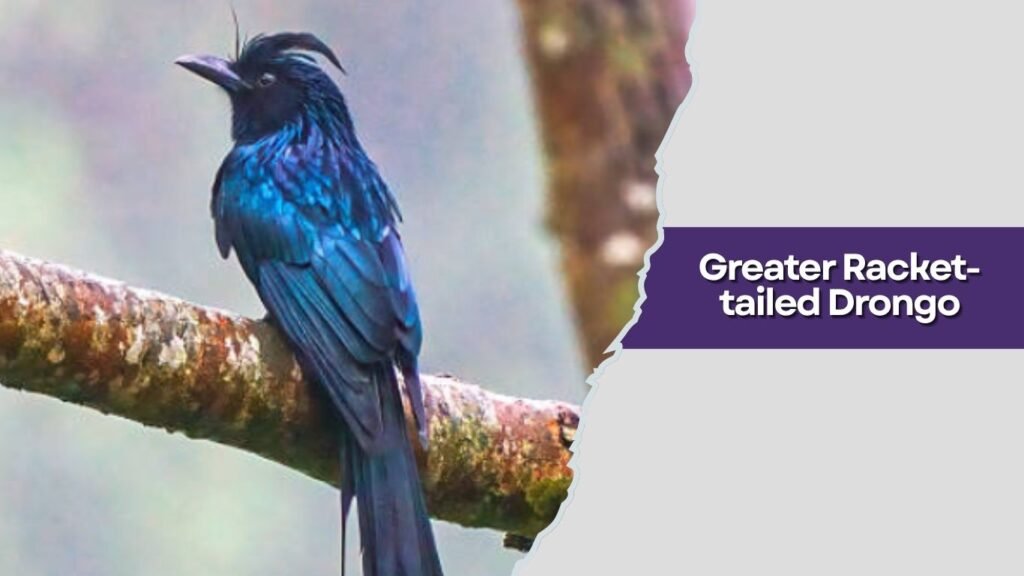
The Greater Racket-tailed Drongo is a fascinating bird known for its uniquely shaped tail feathers that end in racket-like tips. Beyond its appearance, it is highly intelligent and famous for its ability to mimic a wide variety of sounds, making it one of the most intriguing long-tailed birds in forest ecosystems.
Identification
- Glossy black plumage with a metallic blue or green sheen
- Long tail with extended shafts ending in racket-shaped tips
- Slight crest on the head, giving a raised and alert look
- Bright red or dark reddish eyes
- Strong, slightly hooked black beak
- Medium-sized body with a sleek and elegant structure
Habitat
This species is widely distributed across South and Southeast Asia, where it inhabits tropical and subtropical forests. It prefers dense evergreen forests, forest edges, and shaded plantations. Unlike many birds that thrive in open areas, the Greater Racket-tailed Drongo is more commonly found within forest interiors, where tree cover is thick and insect life is abundant. It is also seen in hilly and mountainous regions, adapting well to different elevations as long as sufficient vegetation is present. Nests are typically built high in trees, well hidden among leaves.
Behaviors
The Greater Racket-tailed Drongo is known for its remarkable intelligence and complex behavior. It often joins mixed-species feeding flocks, taking advantage of insects disturbed by other birds. Its ability to mimic the calls of other species is especially notable, and it sometimes uses this skill to confuse or distract other animals. It is also bold and territorial, occasionally chasing away larger birds. Its flight is smooth and controlled, with its long tail streamers trailing behind, creating a striking visual effect.
Diet and Lifespan
Its diet mainly consists of insects such as beetles, ants, and grasshoppers, which it catches either in mid-air or by picking from foliage. It may also consume small vertebrates, nectar, or fruits when available. This flexible diet allows it to thrive in various forest environments. The average lifespan of a Greater Racket-tailed Drongo is around 8 to 12 years in the wild, depending on habitat conditions and food availability.
4. Asian Paradise Flycatcher
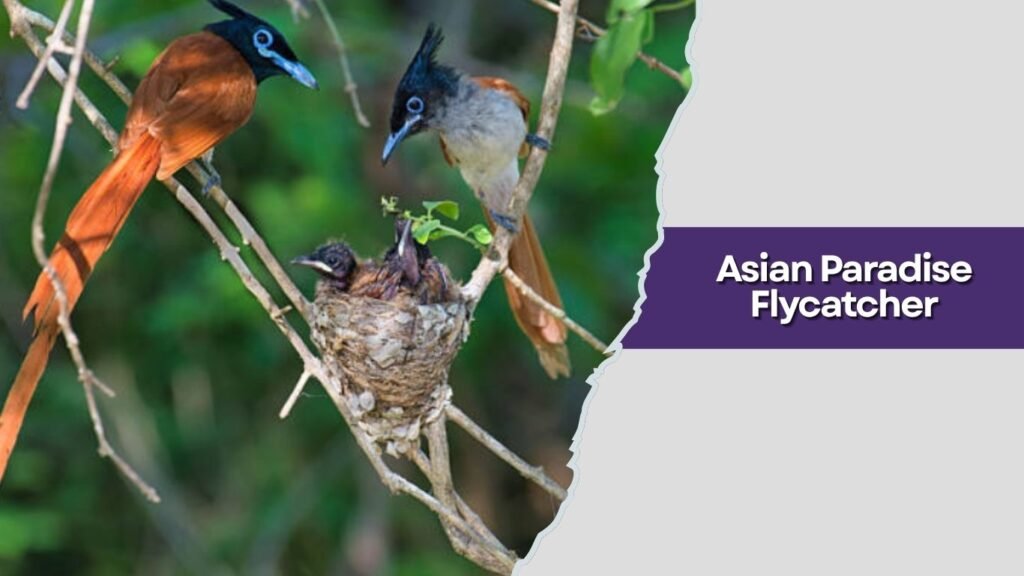
The Asian Paradise Flycatcher is one of the most visually stunning birds, especially the male, which develops extremely long, flowing tail streamers. Its graceful flight and contrasting colors make it a standout species in forested habitats.
Identification
- Slender body with very long, ribbon-like tail feathers in males
- Adult males may be pure white or rich rufous with a glossy black head
- Females are shorter-tailed and mostly rufous-brown
- Bright blue eye-ring around dark eyes
- Small, sharp beak suited for catching insects
- Smooth, silky plumage with elegant proportions
Habitat
Asian Paradise Flycatchers are widely found across South and Southeast Asia. They prefer forests, wooded areas, bamboo groves, and well-shaded gardens. During the breeding season, they are usually found in dense forests with thick canopy cover, while in non-breeding periods, they may move to more open woodlands and plantations. They rely on areas with abundant insect life and access to water. Their nests are small, cup-shaped structures built on thin branches, often hidden among leaves.
Behaviors
These birds are agile and active, often seen darting through the air to catch insects. Their long tails flow behind them, adding elegance to their flight. They are typically solitary or seen in pairs, especially during breeding. Males perform subtle aerial displays to attract females. They are generally quiet but may produce short, sharp calls. Their alert nature and quick reflexes help them navigate dense vegetation with ease.
Diet and Lifespan
Their diet mainly consists of flying insects such as flies, moths, and beetles, which they catch mid-air with precision. Occasionally, they may pick insects from leaves or branches. This insect-based diet supports their energetic lifestyle. The average lifespan of an Asian Paradise Flycatcher is around 5 to 6 years in the wild, though it can vary depending on environmental conditions and predation.
5. Long-tailed Widowbird

The Long-tailed Widowbird is a remarkable grassland bird famous for the male’s extremely long, flowing tail, which becomes especially prominent during the breeding season. Its dramatic appearance and slow, display flight make it one of the most eye-catching long-tailed birds in open landscapes.
Identification
- Male has an exceptionally long, black tail that can reach over half a meter
- Glossy black plumage during breeding season
- Bright red or orange shoulder patches (epaulettes)
- Females are brown, streaked, and have much shorter tails
- Short, conical beak suited for seeds
- Medium-sized body with strong legs
Habitat
Long-tailed Widowbirds are native to sub-Saharan Africa, where they inhabit open grasslands, savannas, and agricultural fields. They prefer wide, open spaces with tall grasses that provide both cover and nesting material. During the breeding season, males establish territories in grass-rich areas, while females choose nesting spots hidden within dense vegetation. These birds are highly dependent on grassland ecosystems and are rarely found in forests or heavily urbanized environments.
Behaviors
Males are known for their slow, fluttering display flights, during which they showcase their long tails to attract females. These displays are energy-intensive and are a key part of their mating strategy. Outside the breeding season, males lose their long tail feathers and resemble females more closely. They are generally social and may be seen in small groups when not breeding. Their movements are mostly ground-based, with short flights between perches.
Diet and Lifespan
The Long-tailed Widowbird primarily feeds on grass seeds and small grains, though it may also consume insects, especially during the breeding season when extra protein is needed. It forages mostly on the ground, picking food from grass and soil. This seed-based diet suits its grassland habitat. The average lifespan of a Long-tailed Widowbird is around 5 to 8 years in the wild, depending on environmental conditions and predation.
6. Red-billed Streamertail

The Red-billed Streamertail is a spectacular hummingbird known for its incredibly long, flowing tail streamers and shimmering green body. Native to Jamaica, it is often called the “Doctor Bird” and is admired for its speed, agility, and dazzling appearance.
Identification
- Iridescent green body with a glossy metallic shine
- Bright red, slightly curved bill
- Extremely long, thin tail streamers in males
- Dark wings that beat rapidly during flight
- Small, compact body typical of hummingbirds
- Females have shorter tails and less dramatic coloration
Habitat
This species is widely found across Jamaica in forests, gardens, plantations, and mountainous regions. It thrives in areas rich in flowering plants, which provide a steady source of nectar. Red-billed Streamertails adapt well to human environments and are commonly seen in parks and backyard gardens. They prefer habitats that offer both open spaces for feeding and trees or shrubs for nesting. Their nests are small and delicate, usually built on thin branches using plant fibers and spider silk.
Behaviors
Red-billed Streamertails are extremely active and spend much of their time hovering near flowers. Their wings beat at high speeds, allowing precise control in the air. Males are territorial and may defend feeding areas aggressively against rivals. Their long tail streamers produce a faint humming sound during flight. They are usually solitary except during breeding, and their quick, darting movements make them both fascinating and challenging to observe closely.
Diet and Lifespan
Their diet mainly consists of nectar from a wide variety of flowers, providing the energy needed for their high metabolism. They also consume small insects and spiders for protein. This balanced diet supports their active lifestyle. The average lifespan of a Red-billed Streamertail is around 6 to 10 years in the wild, depending on environmental conditions and food availability.
7. Superb Lyrebird
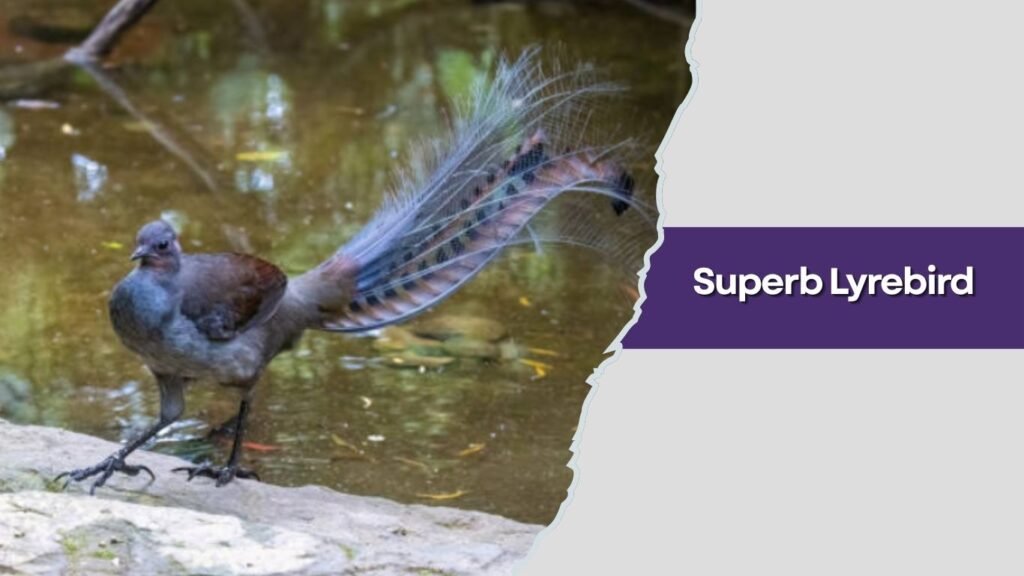
The Superb Lyrebird is one of the most remarkable birds in the world, famous for its elaborate tail and extraordinary ability to mimic sounds. Native to Australia, it is especially known for the male’s ornate tail feathers that resemble the shape of a lyre when displayed.
Identification
- Brown body with soft, earthy tones
- Large, elaborate tail in males with curved outer feathers forming a lyre shape
- Fine, filament-like inner tail feathers
- Strong legs adapted for ground movement
- Medium-sized body with a slightly curved beak
- Females have simpler, shorter tails
Habitat
Superb Lyrebirds are found in the dense forests of southeastern Australia. They prefer moist eucalyptus forests, rainforests, and woodland areas with thick leaf litter. These habitats provide both cover and abundant food sources. They spend most of their time on the forest floor, where the ground is rich in insects and organic material. Dense vegetation is essential for their nesting and protection from predators. Nests are usually built low, often on the ground or in sheltered spots among roots and rocks.
Behaviors
This bird is best known for its incredible mimicry skills. It can imitate the calls of other birds, as well as environmental sounds like chainsaws or camera shutters. Males perform elaborate courtship displays, spreading their large tail over their body while singing and mimicking sounds to attract females. They are generally solitary and shy, preferring to stay hidden in dense vegetation. Most of their activity involves scratching through leaf litter in search of food.
Diet and Lifespan
Superb Lyrebirds feed mainly on insects, spiders, worms, and other small invertebrates found in the soil. They use their strong legs to dig and turn over leaf litter while foraging. This diet supports their energy needs in forest environments. The average lifespan of a Superb Lyrebird can range from 10 to 15 years in the wild, depending on habitat conditions and predation.
8. Yellow-billed Blue Magpie

The Yellow-billed Blue Magpie is a vibrant and elegant bird, admired for its long, flowing tail and striking blue coloration. Found mainly in mountainous regions, it combines beauty with intelligence and social behavior.
Identification
- Bright blue body with a glossy black head and neck
- Long, graduated tail with white tips and bold markings
- Distinct yellow bill and legs
- Pale eyes that contrast with the dark head
- Strong, slightly curved beak
- Medium-sized body with an elongated, graceful shape
Habitat
This species is typically found in montane forests across parts of Asia. It prefers temperate woodlands, forest edges, and wooded valleys, often at higher elevations. Yellow-billed Blue Magpies are also seen near rural areas where trees are abundant. They require dense tree cover for nesting but also benefit from nearby open spaces for foraging. These birds build their nests in trees, usually well hidden among thick branches and foliage to protect against predators.
Behaviors
Yellow-billed Blue Magpies are highly social birds and are usually seen in small, noisy groups. They move actively through trees, using their long tails for balance as they hop and glide between branches. These birds are curious and intelligent, often exploring their surroundings and interacting within their group. They communicate with a range of loud calls and may cooperate when searching for food or defending territory. Their flight is steady, with occasional gliding, and their long tails trail behind them in a striking manner.
Diet and Lifespan
They are omnivorous and have a varied diet that includes insects, fruits, seeds, and small animals. They may also consume eggs or nestlings when the opportunity arises. This flexible diet helps them adapt to different environments. The average lifespan of a Yellow-billed Blue Magpie is around 10 to 15 years in the wild, depending on habitat quality and food availability.
9. Eurasian Magpie
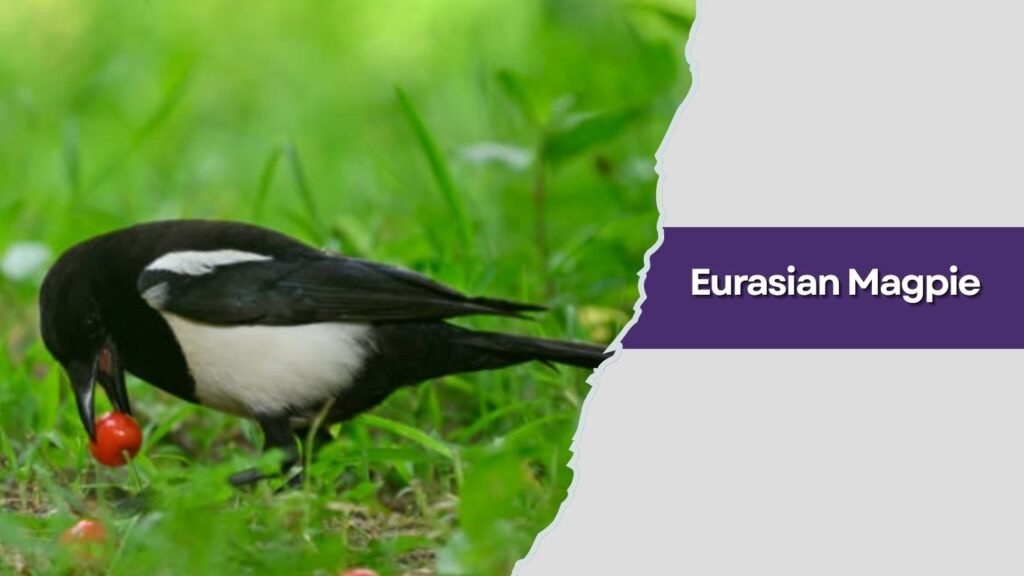
The Eurasian Magpie is a highly intelligent and adaptable bird, well known for its long tail and striking black-and-white plumage. It belongs to the crow family and is often associated with curiosity and problem-solving abilities.
Identification
- Black and white body with strong contrast
- Long, graduated tail with a glossy green and blue iridescent sheen
- Black head, chest, and back with white belly and shoulders
- Strong, straight black beak
- Medium-sized body with a sleek, elongated shape
- Shiny feathers that reflect metallic colors in sunlight
Habitat
Eurasian Magpies are widely distributed across Europe, Asia, and parts of North Africa. They prefer open landscapes with scattered trees, such as farmlands, grasslands, parks, and suburban areas. These birds are highly adaptable and often thrive near human settlements, including cities and villages. They avoid dense forests, favoring areas where they can easily move between open ground and perching sites. Their nests are large, dome-shaped structures built high in trees, often using sticks and lined with softer materials.
Behaviors
Eurasian Magpies are known for their intelligence, curiosity, and social behavior. They are often seen in pairs or small groups and communicate with a variety of calls. These birds are capable of recognizing themselves in mirrors, indicating advanced cognitive ability. They are bold and may investigate unfamiliar objects or environments. Their flight is strong and direct, and their long tail helps with balance and control during movement.
Diet and Lifespan
They are omnivorous and feed on a wide range of food, including insects, small animals, fruits, seeds, and human food scraps. They may also scavenge or steal food when the opportunity arises. This flexible diet allows them to survive in diverse environments. The average lifespan of a Eurasian Magpie is around 10 to 15 years in the wild, depending on environmental conditions and availability of resources.
10. Lady Amherst’s Pheasant
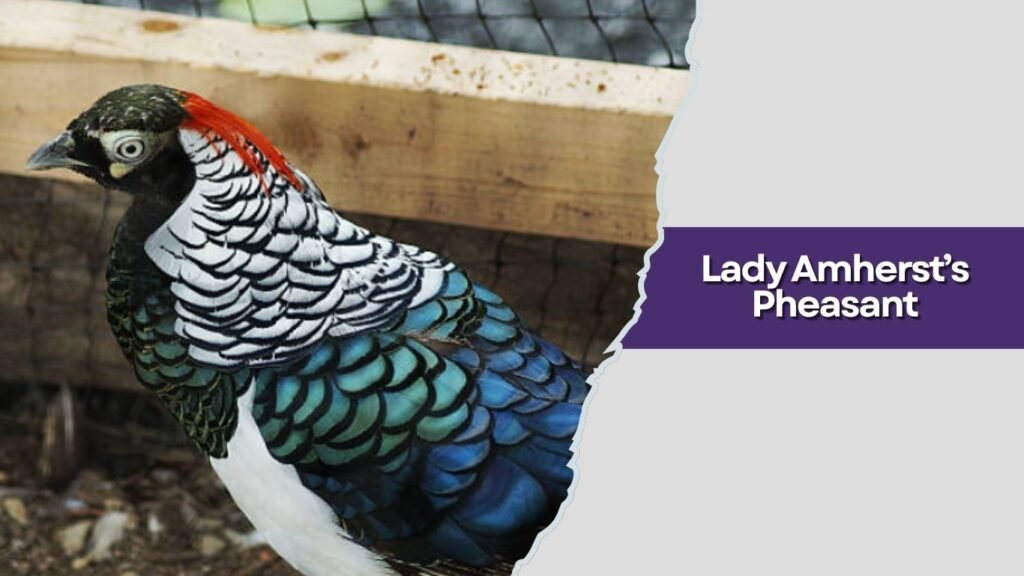
Lady Amherst’s Pheasant is a stunning bird known for its incredibly long, patterned tail and vibrant plumage. Native to southwestern China and Myanmar, it is admired for its elegance and dramatic appearance, especially in males.
Identification
- Bright, multi-colored plumage with metallic green, blue, red, and white
- Extremely long, banded tail with black and white patterns
- White hood with black scale-like markings around the neck
- Red crest on the head
- Strong, slightly curved beak
- Females are brown with shorter, less noticeable tails
Habitat
This species is typically found in mountainous forests, dense woodlands, and bamboo thickets. It prefers areas with thick undergrowth, which provide cover and protection. Lady Amherst’s Pheasants are often seen in forest edges and secondary growth areas where food is abundant. They tend to stay on the ground but roost in trees at night. These birds require quiet, undisturbed habitats with access to both dense vegetation and open foraging spaces.
Behaviors
Lady Amherst’s Pheasants are generally shy and secretive, spending most of their time on the forest floor. Males are more visible during the breeding season, when they display their colorful plumage and long tail to attract females. They move quietly through undergrowth and are quick to hide when disturbed. Their flight is short and powerful, usually used as a last escape option. They are mostly solitary or seen in pairs.
Diet and Lifespan
Their diet consists mainly of seeds, leaves, berries, and small insects. They forage on the ground, scratching through leaf litter to find food. This varied diet supports their survival in forest environments. The average lifespan of Lady Amherst’s Pheasant is around 10 to 15 years in the wild, depending on habitat conditions and predation.
11. King of Saxony Bird-of-Paradise
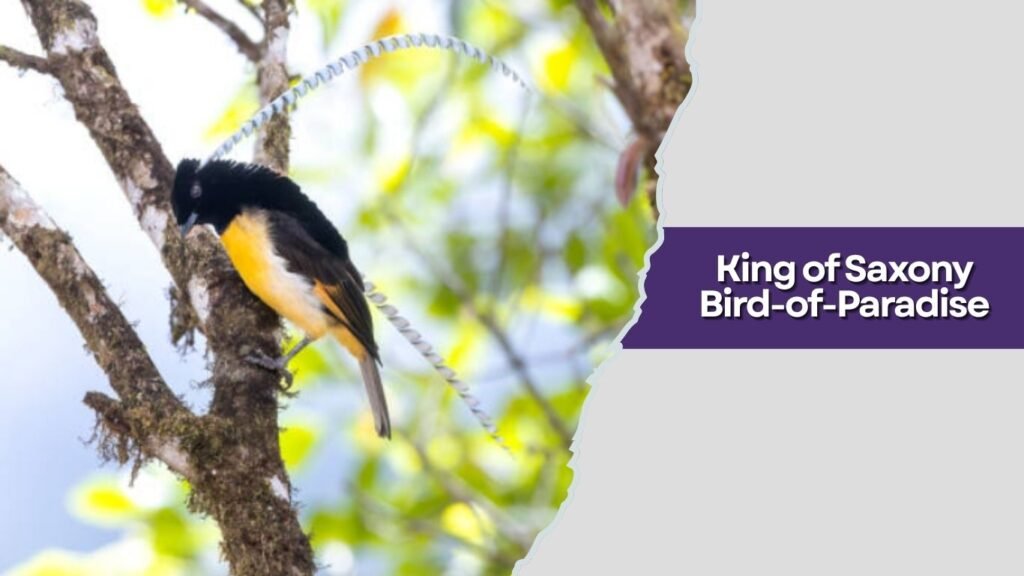
The King of Saxony Bird-of-Paradise is one of the most unique birds in the world, famous for its extraordinary head plumes that extend far beyond its body. Although not a traditional tail feature, these long ornamental feathers create a dramatic long-appendage appearance.
Identification
- Black body with velvety texture
- Bright blue eyes and vivid yellow mouth interior
- Two extremely long head plumes with flag-like tips
- Slim body with a small head and short beak
- Females are brown and lack long plumes
- Elegant but unusual appearance compared to other birds
Habitat
This species is found in the mountainous forests of Papua New Guinea. It prefers dense, high-altitude forests with thick vegetation and tall trees. These habitats provide the cover and resources needed for survival, including abundant insects and fruits. The bird is typically found in remote and undisturbed areas, where human activity is minimal. It stays mostly within the forest canopy, rarely venturing into open spaces.
Behaviors
The King of Saxony Bird-of-Paradise is best known for its elaborate courtship displays. Males perform unique dances while waving their long head plumes in synchronized movements to attract females. These displays are both visual and rhythmic, making them highly distinctive. The bird is generally solitary and quiet outside the breeding season. It moves carefully through branches, maintaining a low profile to avoid predators.
Diet and Lifespan
Its diet mainly consists of fruits, insects, and small invertebrates. It forages in the forest canopy, picking food from branches and leaves. This mixed diet supports its energy needs in dense forest environments. The average lifespan of this species is estimated to be around 6 to 10 years in the wild, though detailed data is limited due to its remote habitat.
12. Scissor-tailed Flycatcher
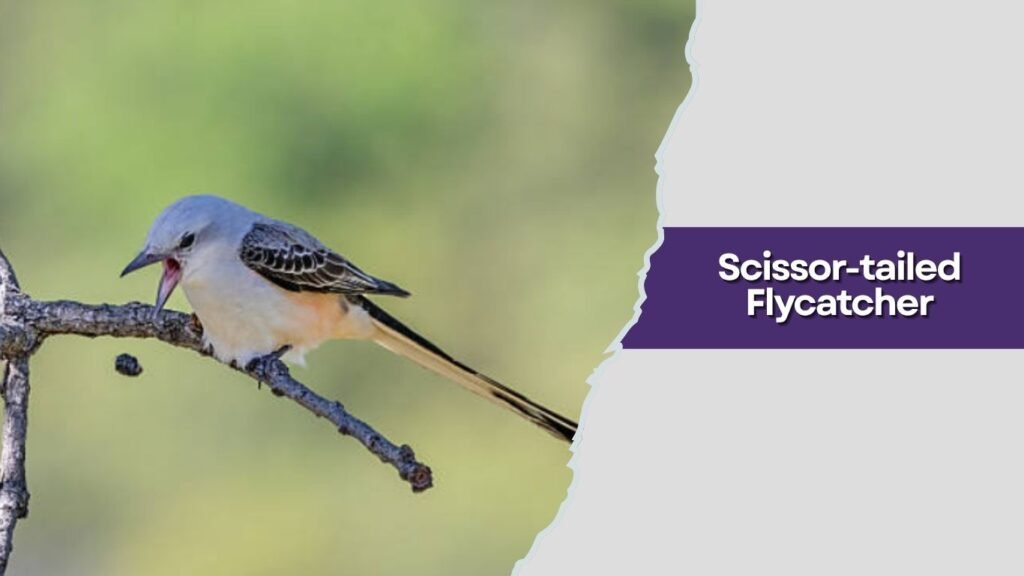
The Scissor-tailed Flycatcher is a graceful and visually striking bird, famous for its extremely long, forked tail that opens and closes like scissors during flight. Its elegant movements and soft coloration make it one of the most recognizable long-tailed birds in open landscapes.
Identification
- Pale gray body with soft pink or salmon-colored sides
- Very long, deeply forked tail (especially in males)
- Black wings with noticeable white patches
- Small head with a straight, pointed beak
- Slender body built for agile aerial movement
- Tail spreads widely in flight, resembling scissors
Habitat
This bird is commonly found in open habitats such as grasslands, prairies, farmlands, and roadside areas. It prefers regions with scattered trees, fences, or utility wires that provide good perching spots. During the breeding season, it is often seen in rural and semi-open landscapes. In colder months, it migrates to warmer regions, especially Central America. Open space is essential for this species, as it relies on aerial hunting and clear visibility to locate prey.
Behaviors
Scissor-tailed Flycatchers are active and often perch in exposed locations before making quick flights to catch insects. Their long tail helps with balance and maneuverability during flight. Males perform aerial displays during the breeding season, showcasing their tail to attract females. They are usually seen alone or in pairs but may gather in small groups during migration. Their flight is smooth, buoyant, and highly controlled.
Diet and Lifespan
Their diet mainly consists of flying insects such as flies, beetles, grasshoppers, and moths. They catch prey mid-air with precision and occasionally pick insects from vegetation. This insect-based diet supports their energetic lifestyle. The average lifespan of a Scissor-tailed Flycatcher is around 5 to 8 years in the wild, depending on environmental conditions and migration challenges.
FAQs
Which bird has the longest tail in the world?
The Ribbon-tailed Astrapia is considered one of the birds with the longest tail relative to its body size. In absolute length, some pheasants and birds-of-paradise also have extremely long tails, but the Astrapia stands out for its dramatic proportions.
Why do some birds have very long tails?
Long tails are often a result of sexual selection, where males develop elaborate features to attract females. They can also help with balance, flight control, and display behaviors during courtship or territorial interactions.
Do long-tailed birds fly well?
Yes, most long-tailed birds are capable of flying efficiently. While very long tails may slightly reduce speed, they improve maneuverability and control, especially during aerial displays or when navigating complex environments.
Are long tails a disadvantage for birds?
Long tails can sometimes make birds more visible to predators and may require extra energy to maintain. However, the advantages in mating success and flight control often outweigh these disadvantages in many species.
Where are long-tailed birds commonly found?
Long-tailed birds are found worldwide in various habitats, including forests, grasslands, mountains, and wetlands. Their distribution depends on species, food availability, and environmental conditions rather than tail length alone.
