
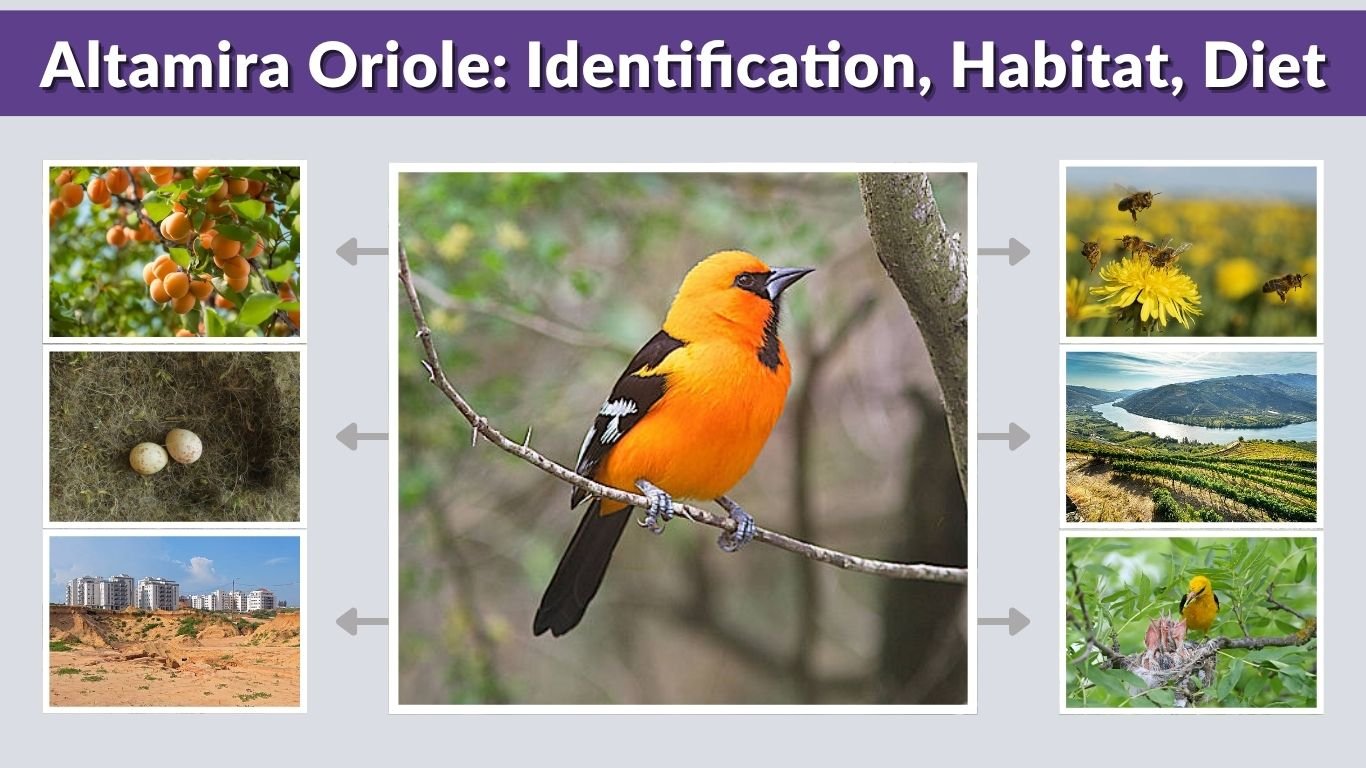
The Altamira Oriole is one of the most striking and fascinating songbirds found in North America. Known for its brilliant orange plumage and bold black markings, this large oriole species stands out among its relatives. Commonly found in parts of Mexico, Central America, and southern Texas, it has become a favorite among birdwatchers. With its unique nesting habits and melodic calls, the Altamira Oriole offers both beauty and intrigue to anyone interested in birds.
What is the Altamira Oriole?
Scientific Classification
The Altamira Oriole (Icterus gularis) belongs to the Icteridae family, which includes blackbirds, grackles, and other orioles. It is one of the largest members of this family, making it easy to distinguish from smaller oriole species.
Overview of the Species
This bird is especially notable for its size, vibrant coloration, and adaptability. Unlike some migratory orioles, the Altamira Oriole is mostly non-migratory, meaning it tends to stay in the same region year-round. Its bold presence and loud, whistling calls make it a noticeable addition to any habitat it occupies.
Altamira Oriole Physical Characteristics
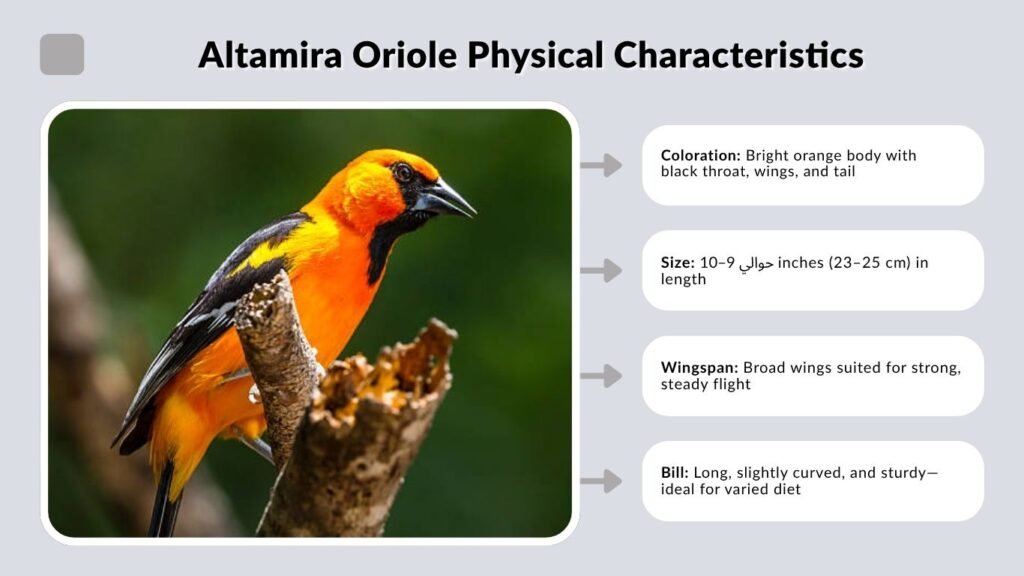
The Altamira Oriole is a large, eye-catching bird known for its bold colors and strong build. Its striking appearance makes it one of the easiest orioles to identify in its range. With a combination of bright orange plumage and deep black accents, this species stands out clearly against green foliage and open landscapes.
Key Physical Features:
- Coloration: Bright orange body with black throat, wings, and tail
- Size: حوالي 9–10 inches (23–25 cm) in length
- Wingspan: Broad wings suited for strong, steady flight
- Bill: Long, slightly curved, and sturdy—ideal for varied diet
- Tail: Long and rounded, helping with balance and movement
- Sex Differences: Males and females look very similar
- Juveniles: Duller colors with less defined markings
These features not only enhance its beauty but also help birdwatchers quickly distinguish the Altamira Oriole from other similar species.
Altamira Oriole Habitat and Range
Geographic Distribution
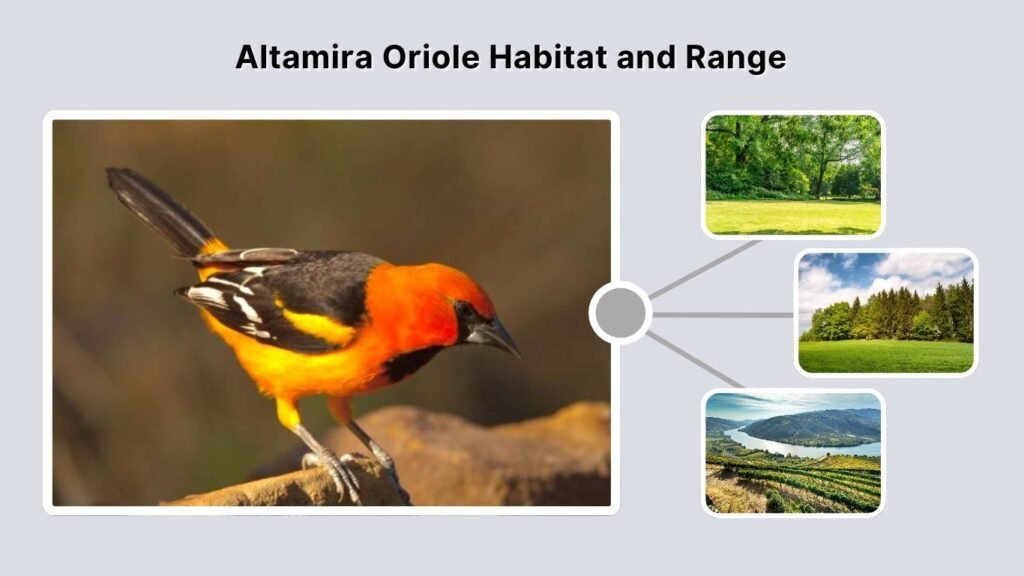
The Altamira Oriole is primarily found in Mexico and Central America, where it thrives in warm climates. In the United States, it is most commonly seen in southern Texas, particularly in the Rio Grande Valley.
Preferred Habitat
This species prefers open woodlands, forest edges, riverbanks, and even suburban areas. It is highly adaptable and often lives near human settlements, especially where food sources are readily available. Palm trees and tall deciduous trees are common nesting sites.
Range Expansion
In recent years, the Altamira Oriole has gradually expanded its range northward into parts of Texas. This expansion is likely due to a combination of climate factors and increased availability of suitable habitats. As a result, more birdwatchers in the United States are getting the chance to observe this vibrant species.
Altamira Oriole Behavior and Lifestyle
Daily Activity
The Altamira Oriole is a diurnal bird, meaning it is active during the day. It spends much of its time foraging for food, singing, and maintaining its territory. Its loud and melodic calls are often heard before the bird is seen.
Social Behavior
These birds are typically solitary or found in pairs, especially during the breeding season. While not highly social, they may occasionally be seen near other birds when feeding. However, they are known to be territorial and will defend their nesting areas from intruders.
Flight and Movement
Altamira Orioles have a strong and steady flight pattern. They often move between trees and feeding areas with purpose, rarely appearing erratic. Their flight is direct, with consistent wingbeats, making them easy to follow visually.
Diet and Feeding Habits
Natural Diet
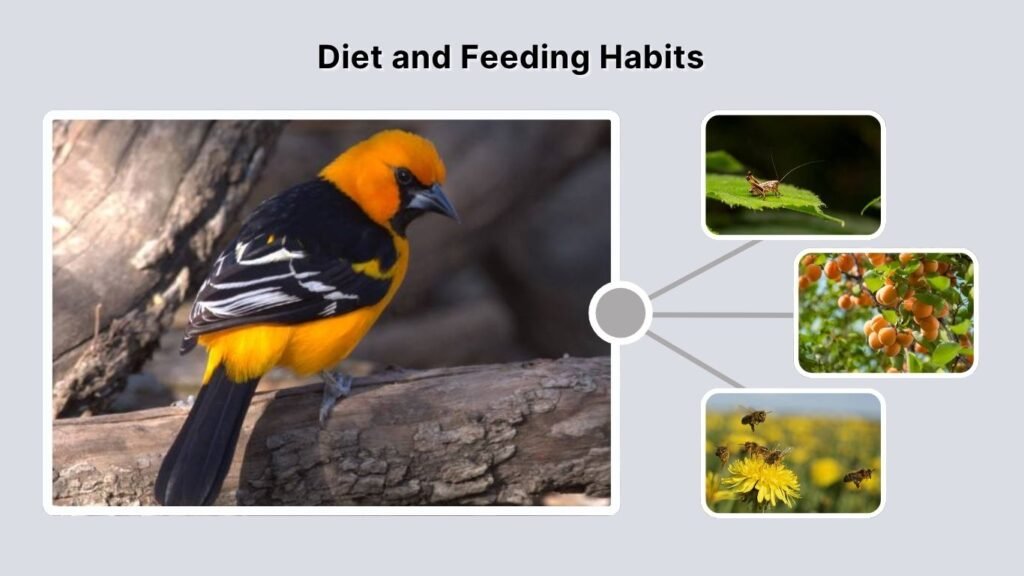
The diet of the Altamira Oriole is varied and includes insects, fruits, and nectar. Insects such as beetles and caterpillars provide essential protein, especially during the breeding season. Fruits and nectar add necessary sugars and energy to their diet.
Feeding Behavior
These birds typically forage in trees and shrubs, carefully searching for food among leaves and branches. They are also known to visit backyard feeders, especially if offered fruits like oranges or sweet foods such as jelly.
Ecological Role
The Altamira Oriole plays an important role in its ecosystem. By feeding on insects, it helps control pest populations. Additionally, its consumption of nectar contributes to pollination, supporting plant reproduction.
Altamira Oriole Nesting and Reproduction
Nest Structure
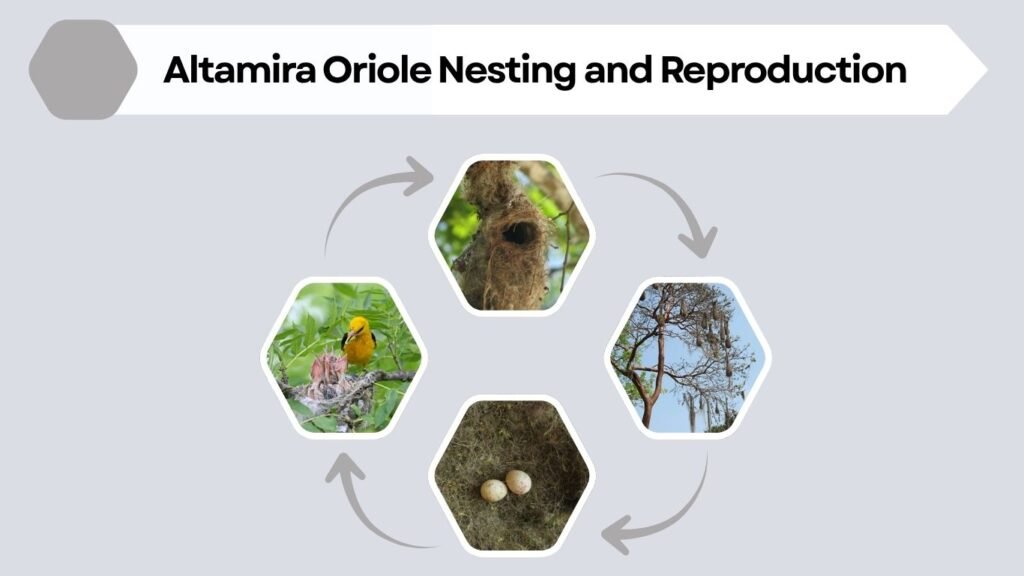
One of the most remarkable features of the Altamira Oriole is its nest. It builds a long, hanging woven nest that can reach up to two feet in length. These nests are skillfully crafted using plant fibers, grasses, and other natural materials. The design helps protect eggs and chicks from predators and harsh weather conditions.
Nesting Locations
Altamira Orioles typically place their nests high in trees, often at the ends of branches. Palm trees are a favorite choice, but they may also use utility poles or tall deciduous trees. The height and placement of the nest provide added safety from ground-based predators.
Breeding Cycle
The breeding season usually occurs during the warmer months when food is abundant. The female lays a small clutch of eggs, which she incubates for about two weeks. During this time, the male may help by bringing food and guarding the territory.
Parental Care
Once the eggs hatch, both parents are involved in feeding and protecting the chicks. The young birds remain in the nest until they are strong enough to fly. Even after leaving the nest, they may stay close to their parents for some time as they learn to forage and survive independently.
Altamira Oriole Call and Sounds
Vocal Characteristics
The Altamira Oriole is known for its clear, whistling calls. Its song is often described as a series of rich, musical notes that carry over long distances. These sounds make it easier for birdwatchers to locate the bird even when it is hidden among foliage.
Purpose of Calls
Like many birds, the Altamira Oriole uses its calls for communication. Males often sing to attract mates and establish territory. Calls may also be used to warn off intruders or communicate with their partner and offspring.
How to Identify an Altamira Oriole
Key Identification Features
Identifying an Altamira Oriole is relatively easy due to its bright orange body and bold black markings. Its large size compared to other orioles is another important clue. The black throat patch and long tail further distinguish it from similar species.
Differences from Similar Species
The Altamira Oriole is often confused with the Hooded Oriole or Baltimore Oriole. However, it is noticeably larger and has a more extensive black throat patch. Its range is also more limited, which can help narrow down identification.
Field Identification Tips
When observing birds in the wild, pay attention to size, coloration, and behavior. The Altamira Oriole’s strong flight and loud, musical calls are useful indicators. Spotting it in southern Texas or tropical regions increases the likelihood of correct identification.
How to Attract Altamira Orioles
Best Foods to Offer
To attract Altamira Orioles to your backyard, offer foods they enjoy such as fresh orange halves, grape jelly, and nectar. These sweet options are especially appealing and can encourage regular visits.
Ideal Backyard Setup
Providing a suitable environment is key. Place feeders in open, visible areas near trees or shrubs. Orioles prefer spaces where they can easily access food while still having nearby cover for safety.
Additional Tips
Adding a clean water source, such as a birdbath, can make your yard even more attractive. Avoid using pesticides, as these can reduce the availability of insects and harm birds directly. Creating a natural, bird-friendly habitat increases your chances of attracting this species.
Interesting Facts About Altamira Oriole
- It is the largest oriole species found in North America.
- Its hanging nest is one of the longest built by any bird in the region.
- Although rare in the U.S., its population in Texas is slowly increasing.
- It adapts well to human environments, often nesting near homes and roads.
Conservation Status
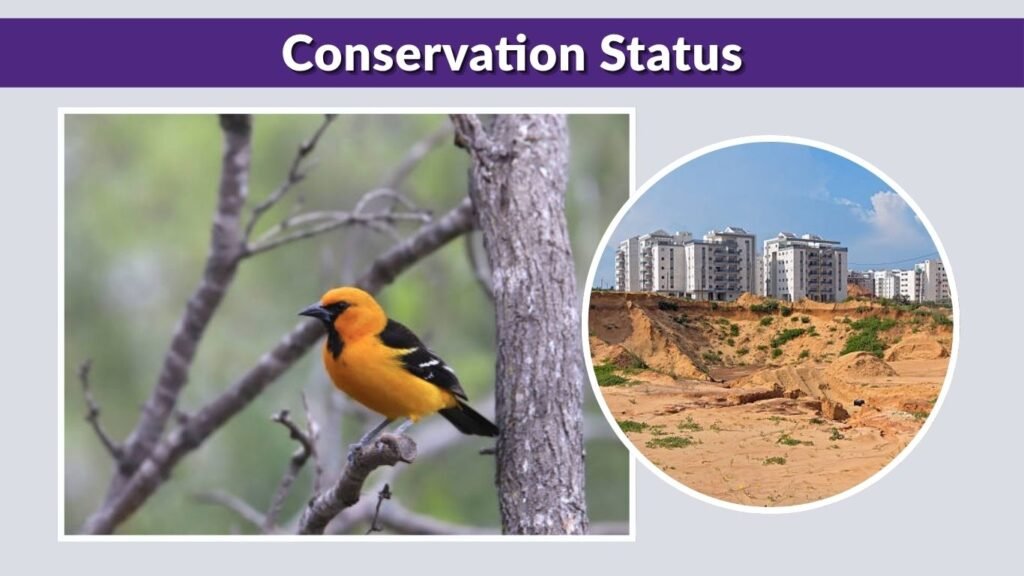
The Altamira Oriole is currently not considered endangered, but like many bird species, it faces challenges. Habitat loss due to urban development and environmental changes can impact its population. Protecting natural habitats and maintaining bird-friendly spaces are important steps in ensuring its long-term survival.
Altamira Oriole in Texas
Where to Find Them
In the United States, the best place to see the Altamira Oriole is in the Rio Grande Valley of southern Texas. Wildlife refuges, parks, and areas with abundant trees provide ideal viewing opportunities.
Best Time for Birdwatching
These birds can be seen year-round in their range, but sightings are often more frequent during the breeding season when they are more active and vocal.
FAQs
What makes the Altamira Oriole different from other orioles?
The Altamira Oriole is larger than most other orioles and has a more extensive black throat patch. Its long, hanging nest and strong, melodic calls also make it unique.
Where can I see an Altamira Oriole in the United States?
You can most commonly spot this bird in southern Texas, especially in the Rio Grande Valley, where it lives year-round.
What is the lifespan of an Altamira Oriole?
In the wild, Altamira Orioles typically live around 6–10 years, depending on environmental conditions and threats.
Do Altamira Orioles migrate?
No, they are mostly non-migratory birds. They tend to stay in the same region throughout the year, especially in warm climates.
What type of nest does the Altamira Oriole build?
It builds a long, woven hanging nest made from plant fibers, often suspended from tree branches to protect against predators.
Conclusion
The Altamira Oriole is a truly remarkable bird, admired for its vivid colors, unique nesting habits, and melodic calls. Found mainly in warmer regions, it continues to capture the attention of bird enthusiasts and nature lovers alike. By understanding its behavior and habitat needs, we can better appreciate and support this beautiful species. Whether you are a seasoned birdwatcher or a beginner, spotting an Altamira Oriole is always a rewarding experience.
