
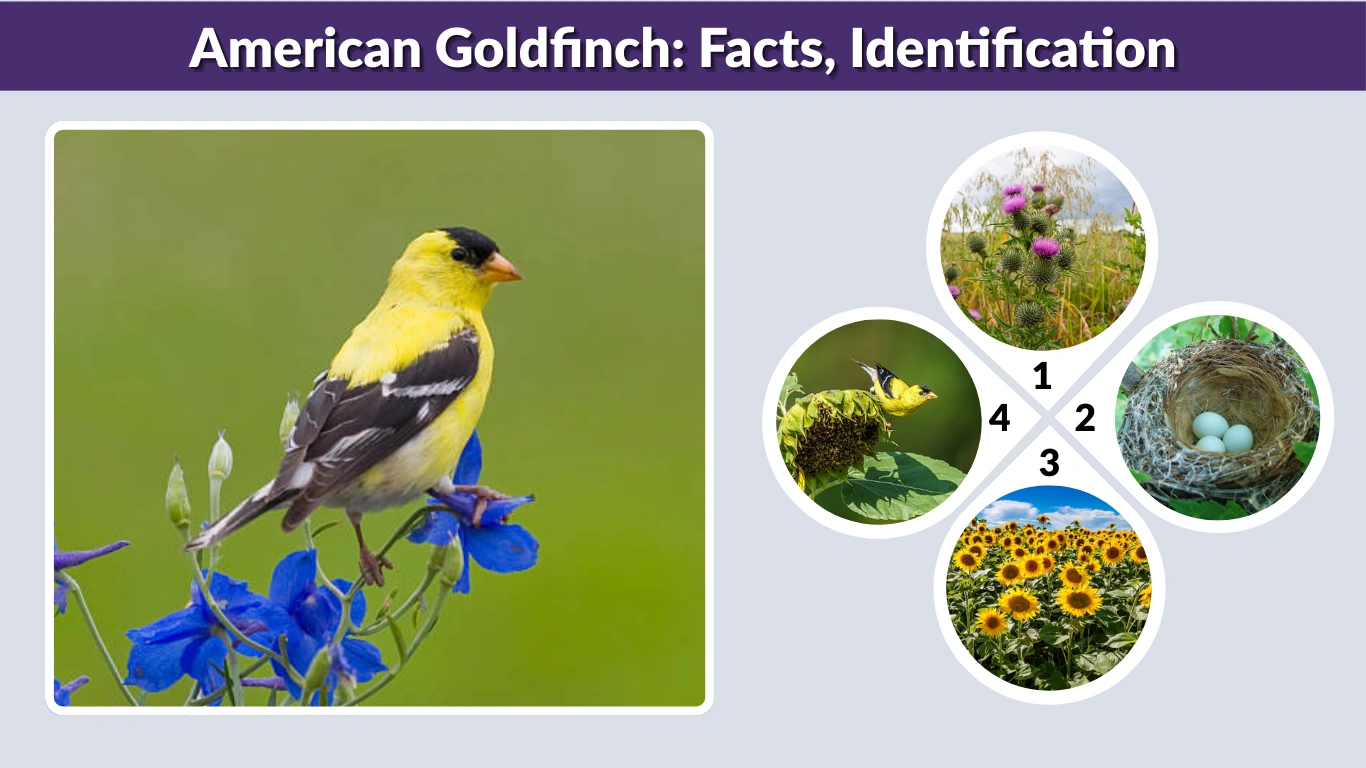
The American goldfinch (Spinus tristis) is one of the most cheerful and recognizable backyard birds in North America. Known for its brilliant yellow summer plumage and lively flight pattern, this small finch brightens fields, gardens, and feeders across the United States and southern Canada. Despite its delicate appearance, the American goldfinch is hardy, adaptable, and uniquely tied to seed-rich habitats. In this guide, you’ll discover essential American goldfinch facts, identification tips, habitat preferences, and feeding behavior.
American Goldfinch Facts
The American goldfinch belongs to the finch family (Fringillidae) and is sometimes called the “wild canary” because of its bright coloring and musical song. It is also the official state bird of Iowa, New Jersey, and Washington.
This species is relatively small but energetic. Adults typically measure between 4.3 and 5.1 inches in length, with a wingspan of 7.5 to 8.7 inches. They weigh less than an ounce, usually between 0.4 and 0.7 ounces. Despite their tiny size, they are strong fliers and often travel in small flocks.
The American goldfinch is listed as a species of Least Concern, meaning its population remains stable and widespread. Their adaptability to both wild and suburban environments has helped maintain healthy numbers.
Quick Facts at a Glance
- Scientific name: Spinus tristis
- Length: 4.3–5.1 inches
- Wingspan: 7.5–8.7 inches
- Weight: 0.4–0.7 oz
- Conservation status: Least Concern
- Range: Southern Canada and most of the United States
Interesting Facts
One fascinating American goldfinch fact is that it is one of the strictest vegetarians among North American birds. Unlike many songbirds that feed insects to their young, goldfinches rely heavily on seeds year-round.
Another unique trait is their late nesting season. While most birds breed in spring, American goldfinches typically wait until mid-to-late summer. This timing aligns with the peak availability of thistle and other seed-producing plants.
Their flight pattern is also distinctive. They move in a graceful, undulating motion—rising and falling in a wave-like path—while often calling out a cheerful “po-ta-to-chip” sound.
Perhaps most striking is their seasonal color change. Males transform from dull olive tones in winter to brilliant yellow with a black cap in summer, making them easy to identify during breeding season.
American Goldfinch Identification
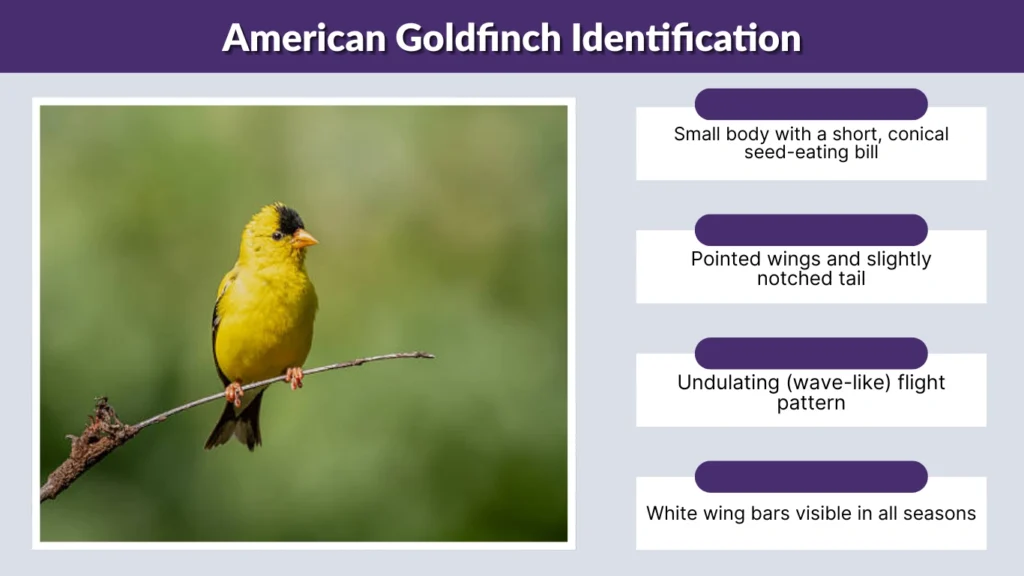
The American goldfinch is a small, brightly colored finch that changes appearance with the seasons. Proper identification depends on plumage, behavior, flight pattern, and vocalizations. While breeding males are easy to recognize, females and winter birds require closer observation. Below is a quick, practical guide to identifying this cheerful songbird.
Key Identification Features (Quick Overview)
- Small body with a short, conical seed-eating bill
- Pointed wings and slightly notched tail
- Undulating (wave-like) flight pattern
- White wing bars visible in all seasons
- Social behavior, often seen in small flocks
Male (Breeding Season)
- Bright lemon-yellow body
- Bold black cap (forehead)
- Black wings with white wing bars
- White rump visible in flight
- Most vibrant in late spring and summer
Female (Breeding Season)
- Dull yellow to olive body
- No black cap
- Subtle white wing bars
- Overall softer, less contrasting colors
Winter Plumage (Both Sexes)
- Brownish or olive tones
- Black cap absent
- Pale wing bars still visible
- Often mistaken for sparrows or other finches
Song and Call Clues
- Flight call sounds like “po-ta-to-chip”
- Light, musical, canary-like song
- Frequent calling while flying
By combining visual clues with behavior and vocalizations, American goldfinch identification becomes much easier—especially when observing them at feeders or in open fields.
American Goldfinch Habitat
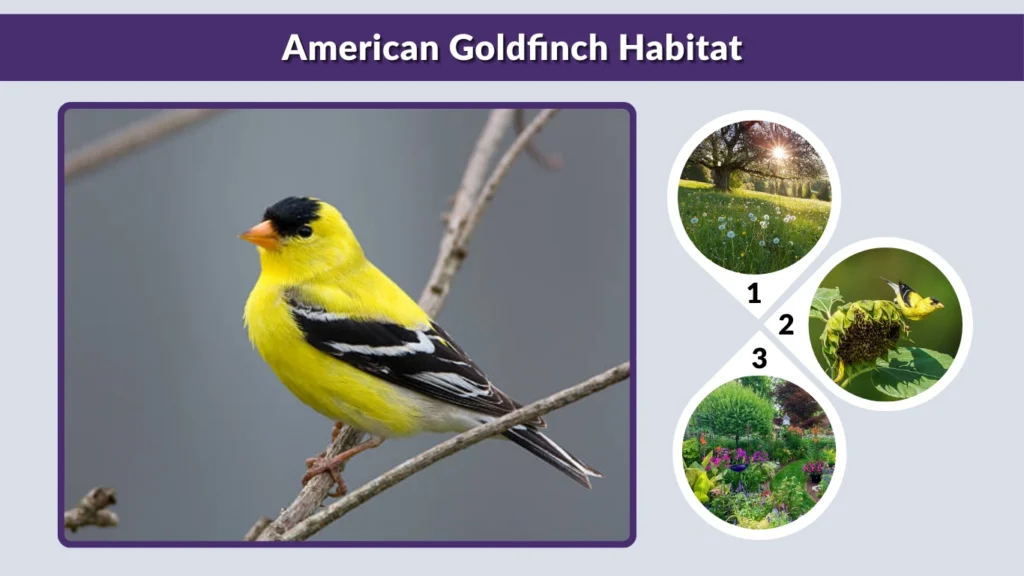
The American goldfinch thrives in open, seed-rich environments. Unlike forest-dependent birds, they prefer areas with abundant weeds, grasses, and flowering plants.
Natural Habitat
You’ll commonly find American goldfinches in:
- Open fields
- Meadows
- Prairie edges
- Roadsides
- Floodplains
They are especially drawn to areas with thistles, sunflowers, asters, and other seed-producing plants. These habitats provide both food and nesting materials.
Urban and Backyard Habitat
American goldfinches adapt well to suburban environments. Gardens, parks, and backyard feeders often attract them, particularly if Nyjer (thistle) seed is available.
Planting native flowers such as coneflowers, black-eyed Susans, and sunflowers can naturally encourage goldfinches to visit. They are social birds and frequently gather in small flocks at feeders.
Geographic Range
The American goldfinch breeds across southern Canada and much of the northern and central United States. In winter, northern populations migrate southward, though some remain year-round in milder climates.
They are considered partial migrants, meaning migration patterns vary depending on food availability and weather conditions.
What Does the American Goldfinch Eat?
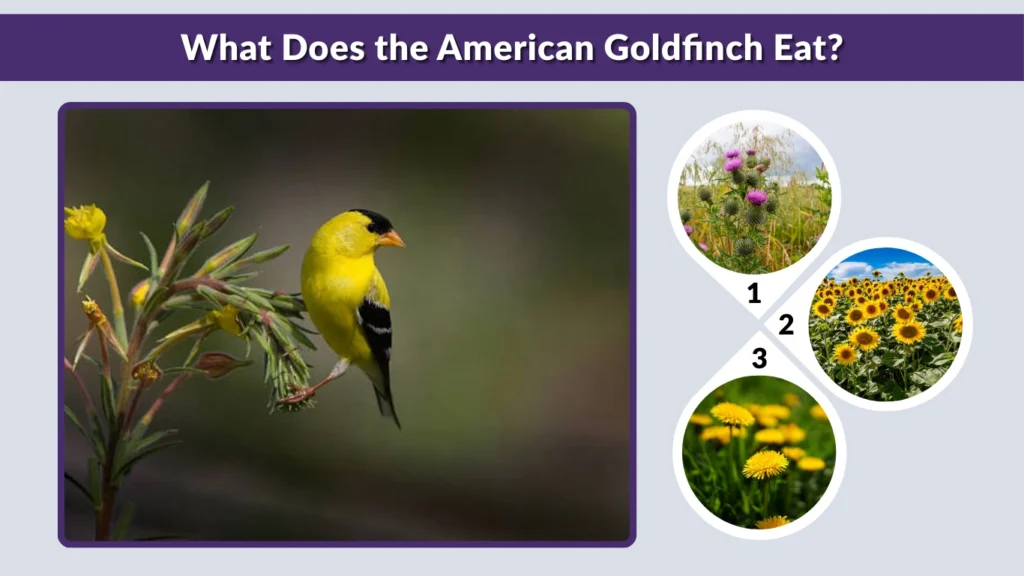
The American goldfinch is primarily a seed-eating bird and is considered one of the strictest vegetarians among North American songbirds. Its diet consists almost entirely of plant material, making it unique compared to many birds that rely heavily on insects during breeding season.
Primary Diet
American goldfinches favor small seeds, especially those from:
- Thistle (Nyjer)
- Sunflower
- Dandelion
- Ragweed
- Aster and other wildflowers
Nyjer seed is particularly attractive to them, which is why specialized thistle feeders are so effective in backyards. Their small, conical bills are perfectly adapted for extracting seeds from flower heads.
Seasonal Diet Changes
Unlike many birds, goldfinches maintain a seed-based diet year-round. Even during nesting season, they feed seeds to their young rather than insects. Occasionally, they may consume small insects for extra protein, but this makes up only a tiny portion of their diet.
Their late breeding season aligns with peak seed production, ensuring a steady food supply for chicks.
Feeding Behavior
American goldfinches are agile feeders. They cling acrobatically to swaying plant stems and hang upside down to reach seeds. At feeders, they often feed in small flocks and are generally peaceful, though minor squabbles can occur.
Their social feeding habits make them delightful to watch, especially when several bright yellow males gather together in summer.
American Goldfinch Nest
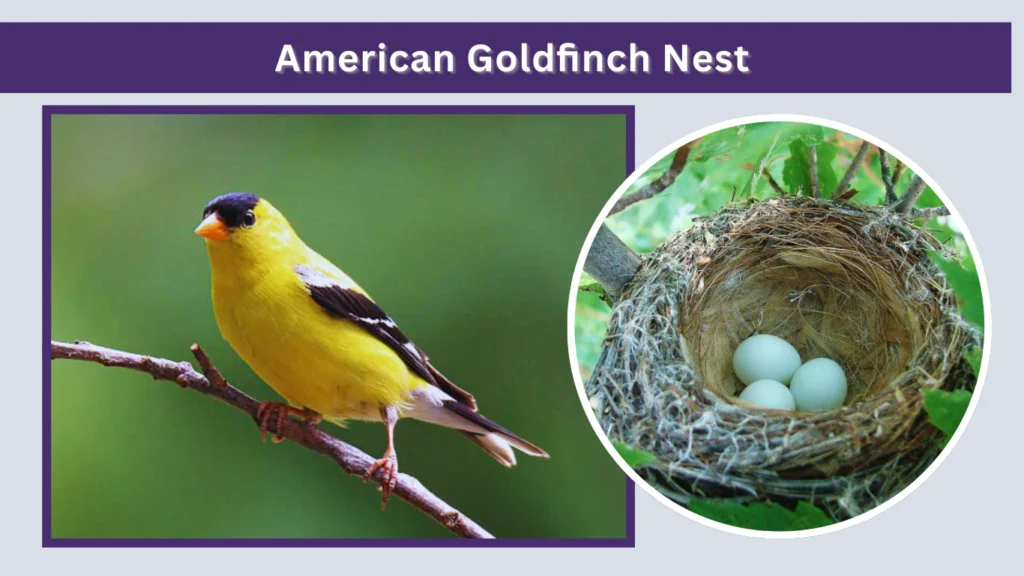
The American goldfinch has one of the latest nesting seasons among North American songbirds. Breeding usually begins in July or even August, much later than most backyard birds.
Nesting Season
Goldfinches time their nesting period to coincide with abundant seed availability, particularly thistle. This ensures that enough food is available for both parents and chicks.
Pairs typically form during mid-summer, and breeding may continue into early fall in some regions.
Nest Location
Nests are usually placed in shrubs or small trees, often:
- 4–10 feet above ground
- Near open fields or gardens
- Close to reliable food sources
They prefer locations that offer some protection from predators while still allowing easy access to feeding areas.
Nest Construction
The female builds the nest, creating a tightly woven cup-shaped structure. She uses:
- Plant fibers
- Grass
- Strips of bark
- Spider silk
- Soft plant down (such as thistle fluff)
The nest is compact, sturdy, and remarkably well-insulated. Spider silk helps bind materials together, making the structure flexible yet strong.
American Goldfinch Eggs
Once the nest is complete, the female lays a small clutch of eggs and begins incubation.
Egg Appearance
American goldfinch eggs are pale blue or bluish-white, smooth, and unmarked. Their soft coloration helps them blend subtly within the nest.
Clutch Size
A typical clutch contains 4 to 6 eggs. In favorable conditions, some pairs may attempt a second brood within the same season.
Incubation and Fledging
Incubation lasts about 12 to 14 days and is handled primarily by the female. During this time, the male provides food for her.
After hatching, both parents feed the chicks. Young goldfinches usually fledge within 11 to 17 days but may remain dependent on their parents for a short period afterward.
American Goldfinch Lifespan
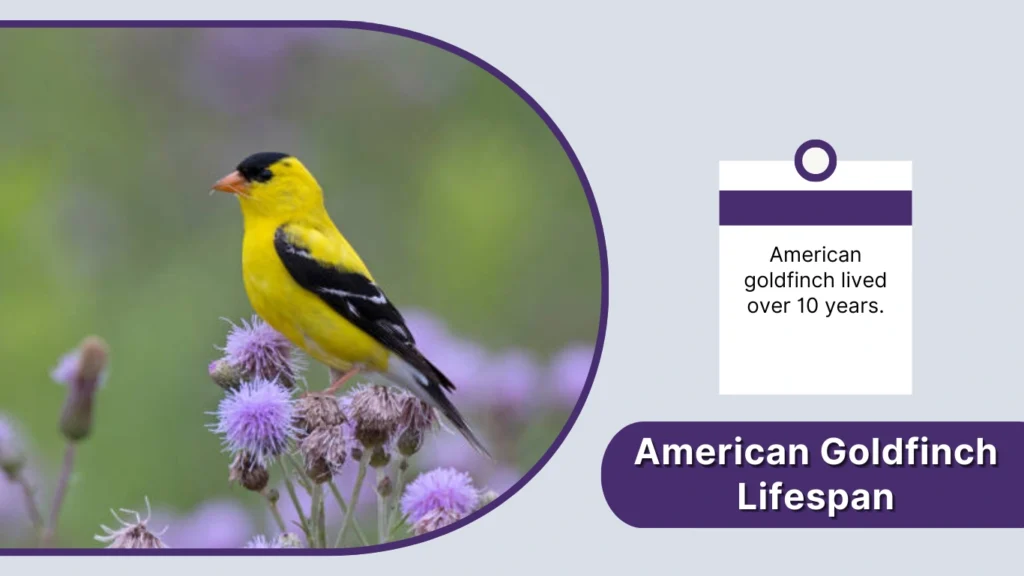
The average American goldfinch lifespan in the wild is around 3 to 6 years. However, some individuals have been recorded living significantly longer under favorable conditions.
The oldest recorded American goldfinch lived over 10 years. Survival depends on factors such as food availability, weather, predation, and habitat quality.
Common threats include:
- Hawks and domestic cats
- Snakes
- Severe storms
- Window collisions
- Habitat loss
Their flocking behavior, camouflage during winter, and adaptability to backyard feeders all help increase survival rates.
American Goldfinch vs Lesser Goldfinch
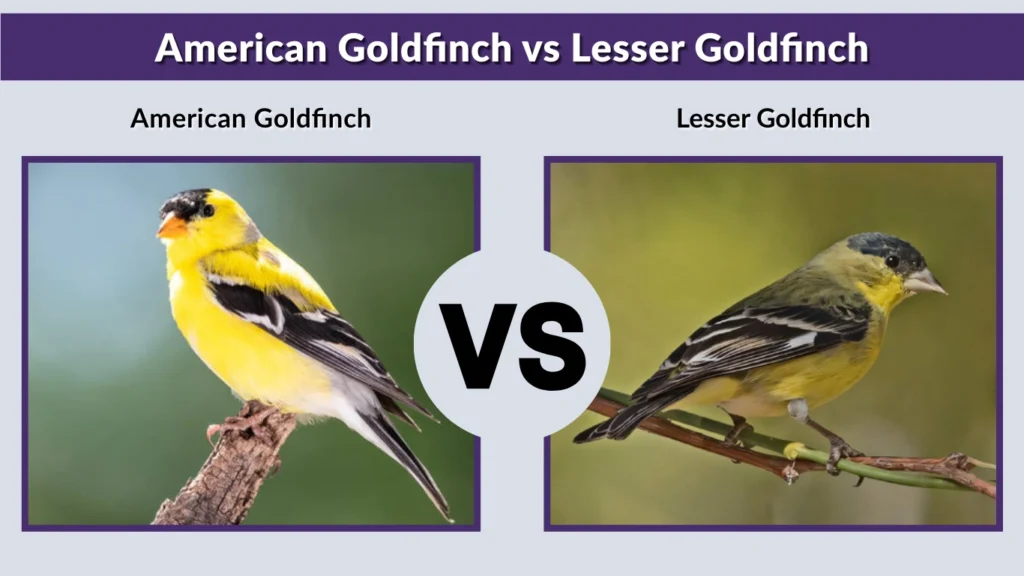
The American goldfinch is sometimes confused with the lesser goldfinch, especially in regions where their ranges overlap.
Size Differences
The lesser goldfinch is slightly smaller than the American goldfinch, with a shorter wingspan and more compact appearance.
Color and Markings
Male American goldfinches have bright yellow backs during breeding season. In contrast, male lesser goldfinches typically have black backs with yellow underparts.
Females of both species appear more subdued, but range and subtle color differences help distinguish them.
Range Differences
American goldfinches are widespread across the eastern and central United States and southern Canada.
Lesser goldfinches are primarily found in the southwestern United States, Mexico, and along parts of the West Coast.
Song and Behavior Differences
Both species have musical songs, but their vocal patterns differ slightly in tone and rhythm. Habitat preference can also vary, with lesser goldfinches often favoring more arid or western environments.
FAQs
Do American goldfinches migrate?
Yes, American goldfinches are partial migrants. Northern populations move south for winter, while birds in milder climates may stay year-round. Migration patterns depend largely on food availability and weather conditions.
How can I attract American goldfinches to my yard?
Offer Nyjer (thistle) seed in specialized feeders and plant native flowers like sunflowers and coneflowers. Providing fresh water and avoiding pesticides will also make your yard more attractive to goldfinches.
When do American goldfinches nest?
They nest later than most birds, usually beginning in July or August. Their breeding season coincides with peak seed production, ensuring enough food for their chicks.
What predators threaten American goldfinches?
Common predators include hawks, snakes, and domestic cats. Severe weather and window collisions also pose risks. Dense shrubs and safe feeding areas help reduce these threats.
How long do American goldfinches live?
Most American goldfinches live between 3 and 6 years in the wild, though some have been recorded living over 10 years under favorable conditions.
Conclusion
The American goldfinch is a vibrant and adaptable songbird that brings color and music to fields, gardens, and backyard feeders across North America. From its bright summer plumage to its seed-based diet and late nesting habits, this small finch stands out in many ways. By understanding American goldfinch identification, habitat, diet, and lifespan, bird lovers can better appreciate—and attract—this cheerful wild canary.
