
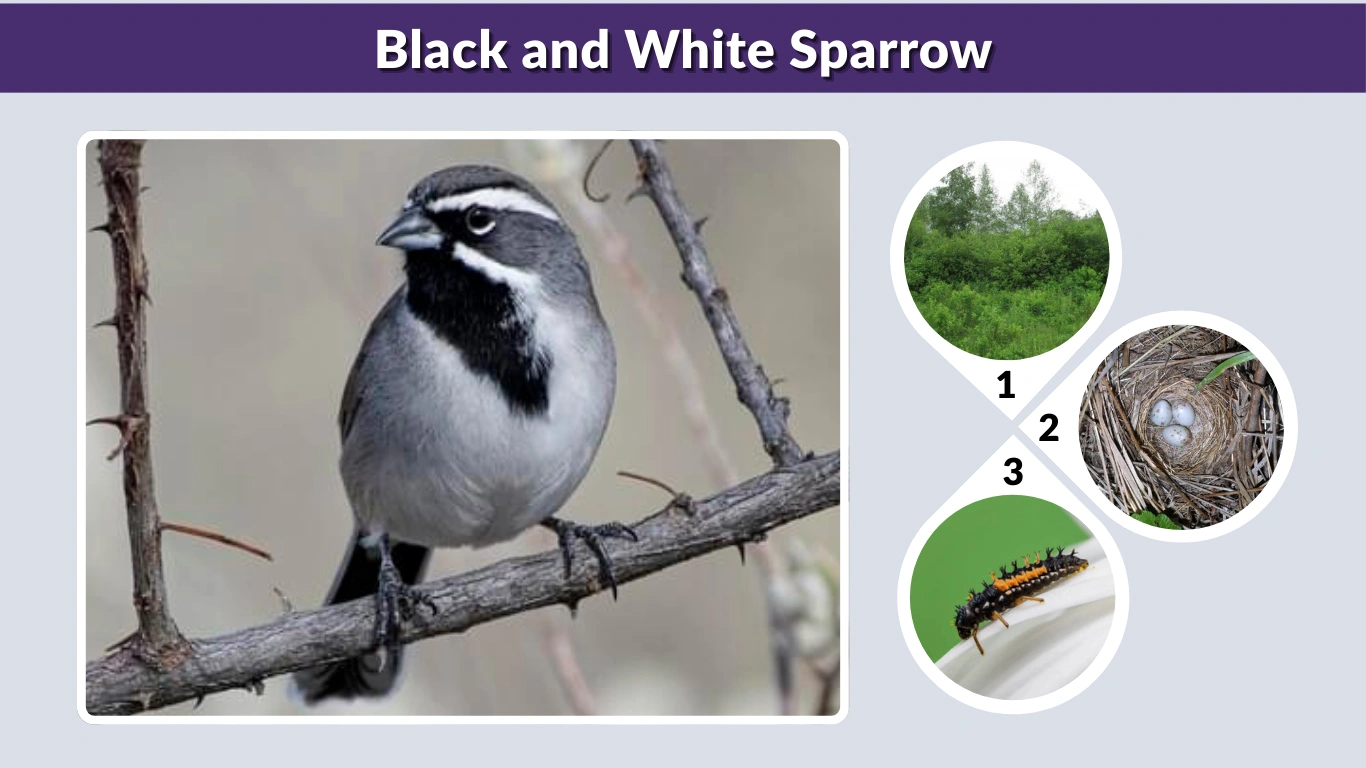
The term “black and white sparrow” is commonly used to describe several sparrow species that show strong black-and-white markings, especially on the head and wings. These bold patterns make them easier to notice and identify compared to many brown-streaked sparrows. From backyard feeders to wild shrublands, black-and-white sparrows are widespread and familiar birds across North America, attracting both beginner birdwatchers and experienced naturalists.
Overview and Meaning of “Black and White Sparrow”
“Black and white sparrow” is not the official name of a single species. Instead, it is a popular descriptive phrase people use when they see a sparrow with high-contrast markings. Birds such as the white-crowned sparrow, white-throated sparrow, Harris’s sparrow, and golden-crowned sparrow often fit this description.
These sparrows share similar body shapes and behaviors but differ in head patterns, songs, and preferred habitats. Understanding these differences helps birdwatchers move from a general visual impression to accurate identification.
Because many people first notice birds by color, “black and white sparrow” has become a common search term linked to image searches, backyard bird sightings, and beginner identification guides.
Identification Guide for Black and White Sparrows
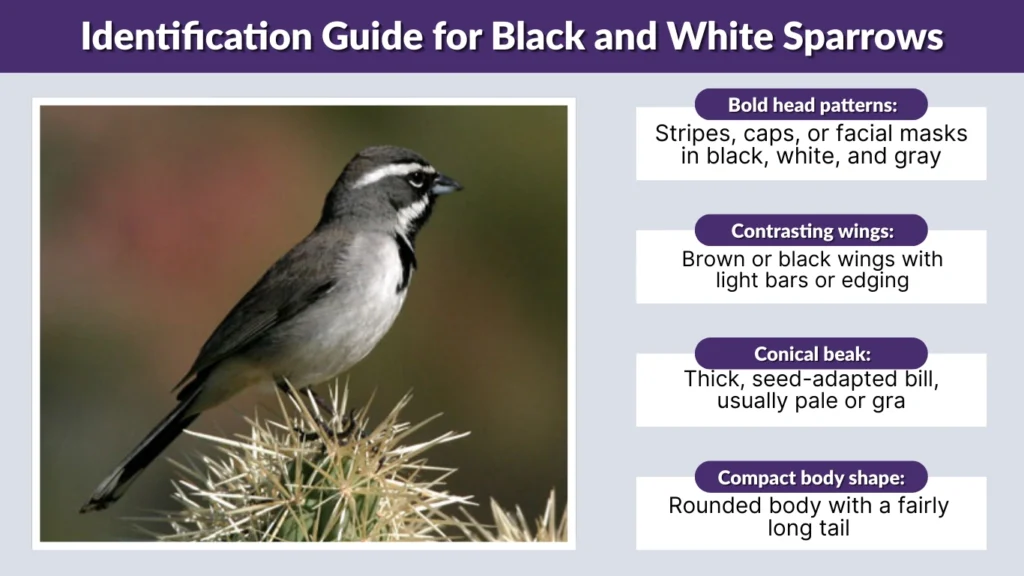
Although species vary, most black-and-white sparrows can be identified by several shared visual features:
- Bold head patterns: Stripes, caps, or facial masks in black, white, and gray
- Contrasting wings: Brown or black wings with light bars or edging
- Conical beak: Thick, seed-adapted bill, usually pale or gray
- Compact body shape: Rounded body with a fairly long tail
- Age variation: Juveniles often show browner, softer versions of adult patterns
Careful attention to head markings is often the fastest way to narrow down which black-and-white sparrow you are seeing.
Common Black and White Sparrow Species
White-Crowned Sparrow
The white-crowned sparrow is one of the most well-known black-and-white sparrows. It has clean black-and-white (or black-and-gray) stripes on the crown, a pale gray face, and a light-colored bill. This species is widespread across North America and is commonly seen in open areas, shrublands, and gardens, especially during migration and winter.
White-Throated Sparrow
The white-throated sparrow has a striking black-and-white head pattern combined with a bright yellow patch between the eye and beak. Its clear whistled song makes it one of the most easily recognized sparrows by sound. It favors forest edges, woodlands, and brushy areas, often feeding on the ground beneath shrubs.
Harris’s Sparrow
Harris’s sparrow is the largest North American sparrow and is famous for its black face, throat, and crown that contrast with a pale gray body. It breeds in northern Canada and winters mainly in the central United States. Because of its limited breeding range, it is considered a special sighting for many birders.
Golden-Crowned Sparrow
The golden-crowned sparrow shows bold black head stripes surrounding a yellow or golden patch on the crown. It is most common in western North America, especially along the Pacific coast. During winter, it often visits gardens, parks, and feeders, where its strong head pattern stands out clearly.
Color Pattern and Plumage Details
Black-and-white sparrows display high-contrast patterns that serve both communication and camouflage functions. The dark and light stripes on the head help individuals recognize members of their own species, especially during the breeding season.
Their wings and backs usually remain brown and streaked, blending well with soil, leaf litter, and dry grasses. This combination allows the bird’s body to stay camouflaged while the head markings remain visible to mates and rivals.
Most species go through seasonal molts. After molting, plumage often appears fresher and more sharply defined, while worn feathers later in the season can look duller or browner.
Habitat and Geographic Range
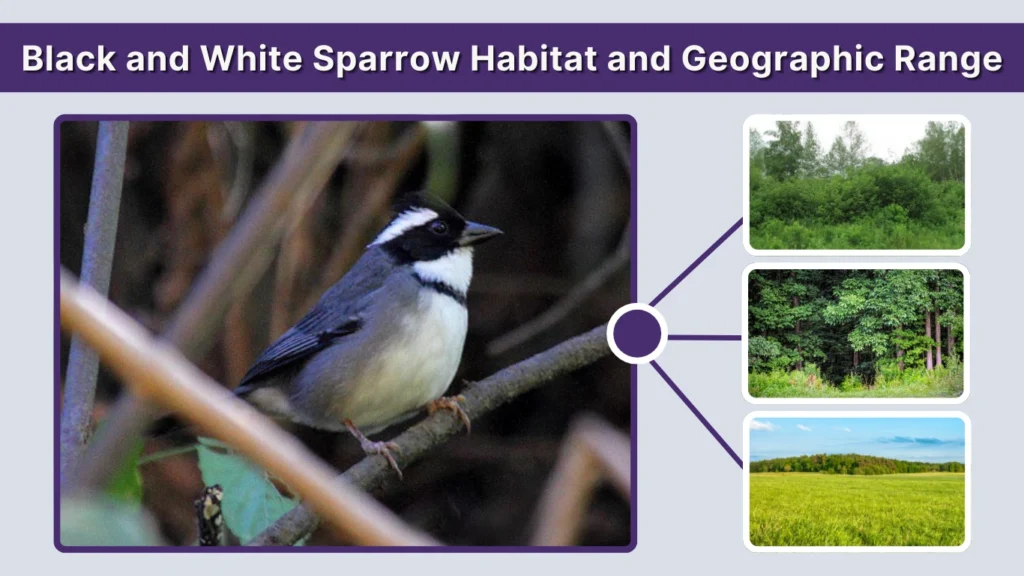
Typical Habitats
Black-and-white sparrows occupy a wide range of environments. Common habitats include tundra, shrublands, forest edges, grasslands, farms, and suburban gardens. They usually prefer areas with low vegetation where they can forage on the ground but still find cover.
Many species adapt well to human-altered landscapes, regularly visiting parks, roadside edges, and backyard feeding stations.
Where Black and White Sparrows Are Found
Most black-and-white sparrows are native to North America. Some breed in the far north or high mountains and migrate south in winter, while others remain in milder regions year-round. Western species are especially common along the Pacific coast, while central and eastern regions host different seasonal populations.
Behavior and Daily Life
Black-and-white sparrows spend much of their time on or near the ground. They typically hop while foraging, scratching through leaves and soil to uncover seeds and insects. This ground-feeding habit makes them easy to observe in open areas, along trails, and under shrubs.
Outside the breeding season, many species are social and form loose flocks. These groups move together while feeding, increasing their chances of spotting predators. During spring, males become more territorial and sing frequently from visible perches to defend nesting areas.
Diet and Feeding Habits
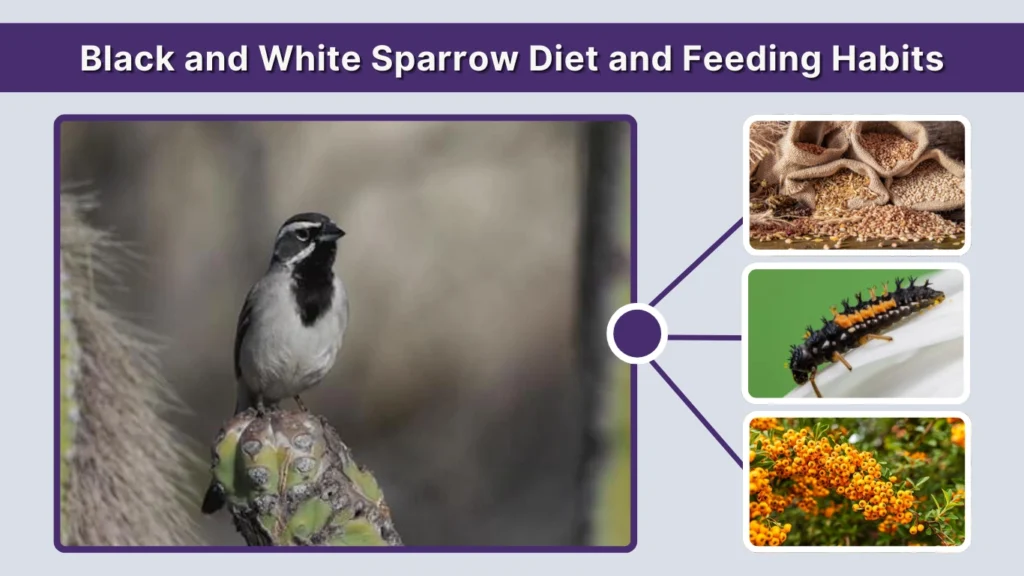
Black-and-white sparrows have flexible diets that allow them to live in many habitats. Common food sources include:
- Seeds and grains from grasses and weeds
- Insects and larvae, especially in spring and summer
- Small fruits and berries during colder months
- Tender plant parts such as buds and shoots
At backyard feeders, they are often attracted to millet, cracked corn, and mixed seed blends.
Song and Vocal Communication
Types of Songs
Most black-and-white sparrows produce clear, whistled songs or simple trills. Each species has its own pattern, and many also show regional “dialects.” Songs are usually delivered from shrubs, low trees, or fences.
Why Sparrows Sing
Singing is mainly used to attract mates and defend territory. Short calls help maintain contact between flock members and serve as alarm signals when predators approach.
Breeding and Life Cycle
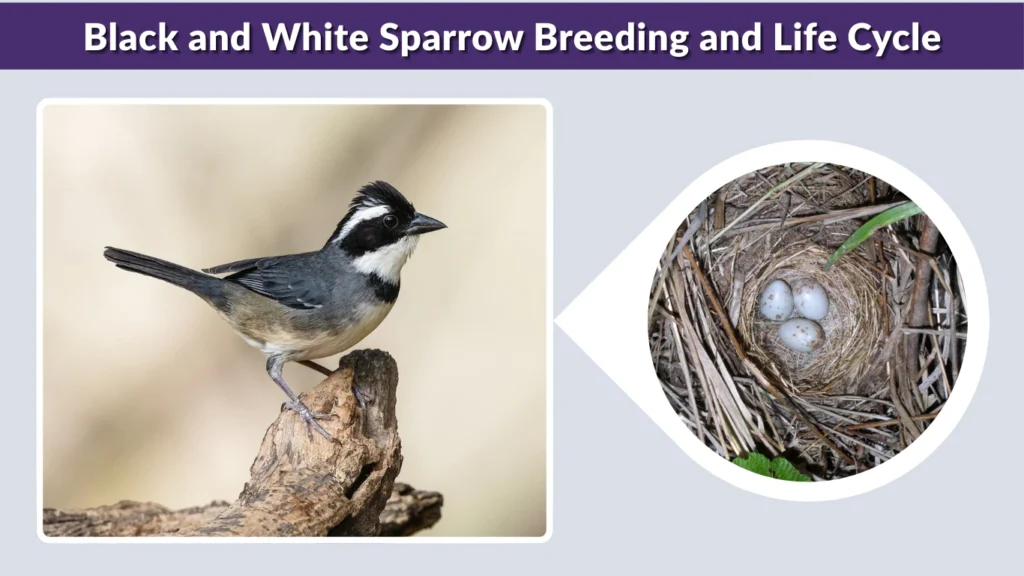
Nesting Habits
Nests are typically built low in shrubs or on the ground, hidden among grasses and leaves. They are made from twigs, grass, moss, and lined with soft materials. Females usually lay three to five eggs per clutch.
Both parents often take part in feeding the chicks, bringing insects and other high-protein foods needed for rapid growth.
Growth Stages
Eggs hatch after about two weeks. The chicks grow quickly and usually leave the nest within 10 to 14 days. After fledging, young sparrows remain near the nest site while learning to forage independently.
Migration and Seasonal Movement
Many black-and-white sparrows are migratory. Northern breeders travel south in fall to escape harsh winters and return north in spring to breed. Some coastal and southern populations remain in the same region all year.
Migration timing depends on daylight, temperature, and food availability. Some individuals travel thousands of kilometers between breeding and wintering grounds.
Black and White Sparrow vs Other Look-Alike Birds
Black-and-white sparrows are often confused with birds such as juncos, buntings, and some finches. Juncos usually have thicker bodies and more uniform coloring. Buntings often show brighter colors, while finches typically have shorter tails and heavier beaks.
Careful attention to head patterns, song, and habitat helps separate sparrows from these similar birds.
Predators and Survival Strategies
Living close to the ground exposes black-and-white sparrows to many dangers. Their main survival strategies include:
- Avoiding predators such as hawks, owls, snakes, and cats
- Using camouflage provided by streaked brown plumage
- Flocking behavior to increase early warning
- Quick, low flight to escape into cover
These traits allow them to survive in both wild and urban environments.
Ecological Importance
Black-and-white sparrows play an important role in controlling seed and insect populations. By feeding on seeds, they influence plant growth patterns, and by consuming insects, they help limit the spread of many small invertebrates.
They also serve as a vital food source for birds of prey, mammals, and reptiles, supporting healthy food webs.
Relationship With Humans
Many black-and-white sparrows adapt easily to human activity. They are frequent visitors to gardens, farms, and urban parks. Bird feeders provide important winter food sources, and people often enjoy observing their social behavior and distinctive markings.
These sparrows have also been important in scientific research, particularly in studies of migration, communication, and learning.
Conservation Status and Threats
Most black-and-white sparrow species are not currently endangered. Their wide distribution and adaptable habits have helped maintain stable populations.
However, habitat loss, climate change, and window collisions pose ongoing risks. Protecting natural shrublands, breeding grounds, and migration corridors is essential for their long-term survival.
Interesting Facts About Black and White Sparrows
Some black-and-white sparrows learn their songs from adult birds, developing local accents similar to human dialects. Others migrate thousands of kilometers each year, navigating using Earth’s magnetic field, the sun, and stars.
FAQs
What sparrow is black and white?
Several species are commonly described as black and white sparrows, including the white-crowned sparrow, white-throated sparrow, Harris’s sparrow, and golden-crowned sparrow. These birds have bold head patterns that contrast strongly with lighter facial areas.
Are black and white sparrows rare?
Most black-and-white sparrows are not rare. Many are widespread across North America and are frequently seen in open habitats, forest edges, and backyard gardens, especially during migration and winter.
Where do black and white sparrows live?
They live throughout much of North America. Some breed in northern or mountainous regions and migrate south for winter, while others remain year-round in milder coastal and southern areas.
How do you identify a black and white sparrow?
Identification is based mainly on head patterns, crown stripes, facial patches, body size, and song. Observing habitat and season also helps narrow down which species you are seeing.
Are black and white sparrows migratory?
Many black-and-white sparrows migrate seasonally. Northern populations usually move south in fall and return north in spring, while some southern and coastal groups stay in one region all year.
