
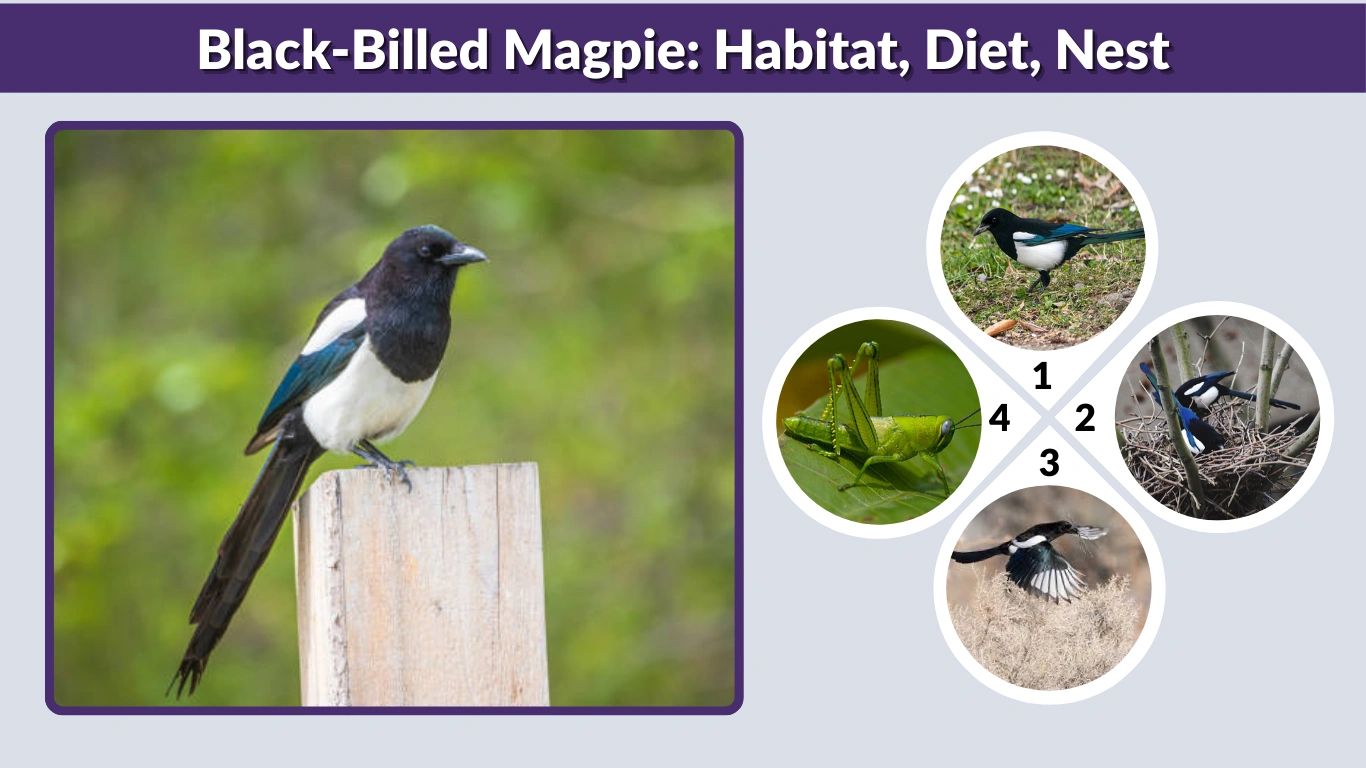
The black-billed magpie is one of the most striking and intelligent birds found in western North America. With its bold black-and-white plumage, shimmering blue-green wings, and exceptionally long tail, this bird is hard to miss. A member of the corvid family—alongside crows and ravens—the black-billed magpie is known for its curiosity, problem-solving skills, and adaptability. From open grasslands to suburban neighborhoods, this fascinating species thrives in a variety of environments. In this guide, we’ll explore its habitat, diet, nesting habits, and interesting facts.
Overview of the Black-Billed Magpie
The black-billed magpie (Pica hudsonia) belongs to the corvid family, a group of birds widely recognized for their intelligence. Corvids include crows, ravens, and jays, and they are considered among the smartest birds in the world.
Native to western North America, the black-billed magpie is commonly found across the western United States, parts of Alaska, and the Canadian prairie provinces. It is generally a year-round resident, meaning it does not migrate long distances.
Adult magpies typically live around 4 to 6 years in the wild, although many face threats from predators and environmental challenges. Their intelligence and adaptability, however, allow them to survive in both natural and human-altered landscapes.
How to Identify a Black-Billed Magpie Bird
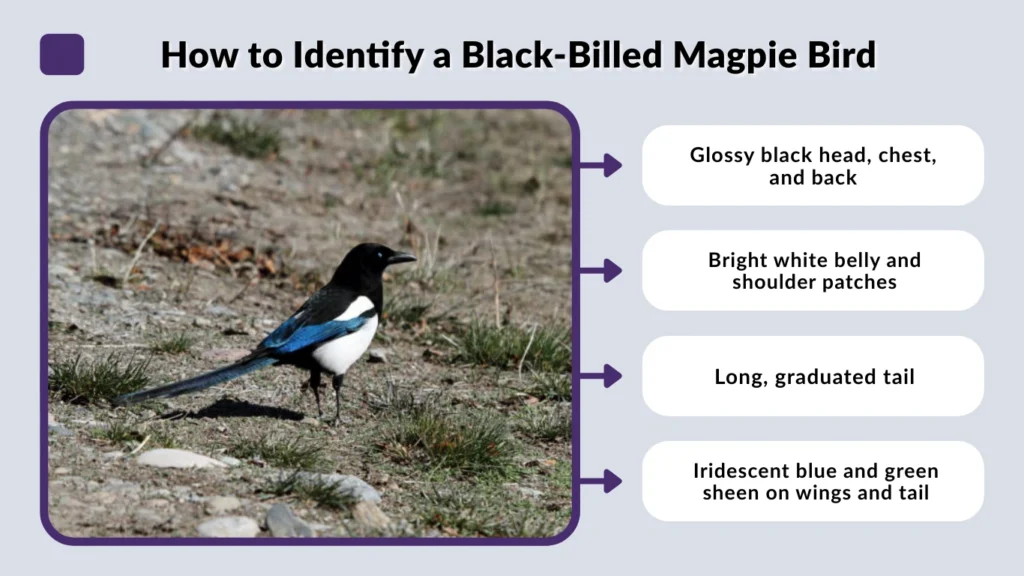
Recognizing a black-billed magpie is relatively easy due to its distinctive coloring and long tail.
Physical Appearance
The black-billed magpie has a bold and contrasting color pattern:
- Glossy black head, chest, and back
- Bright white belly and shoulder patches
- Long, graduated tail
- Iridescent blue and green sheen on wings and tail
- Solid black, slightly curved bill
In good lighting, the wings and tail shimmer with metallic blue-green hues, adding to the bird’s dramatic appearance.
One of its most notable features is its long tail, which often makes up about half of its total body length.
Size and Wingspan
The black-billed magpie measures approximately 18 to 24 inches in length, including its tail. The tail itself can account for nearly 10 to 12 inches of that measurement.
Its wingspan typically ranges from 20 to 24 inches. While its body size is moderate, the extended tail makes it appear larger and more elegant in flight.
Black-Billed vs Yellow-Billed Magpie
The black-billed magpie is often compared to the yellow-billed magpie, a closely related species.
Key differences include:
- Bill Color: Black-billed magpies have entirely black bills, while yellow-billed magpies have bright yellow bills.
- Geographic Range: Yellow-billed magpies are found only in California, whereas black-billed magpies occupy a much broader western range.
- Facial Markings: Yellow-billed magpies have yellow skin around the eyes.
For most observers outside California, the magpie they encounter will almost certainly be the black-billed species.
Black-Billed Magpie Habitat
Geographic Range
Black-billed magpies are widely distributed throughout western North America. Their range includes:
- Western and central United States
- Canadian prairie provinces such as Alberta, Saskatchewan, and Manitoba
- Parts of Alaska
They prefer open landscapes rather than dense forests.
Preferred Habitats
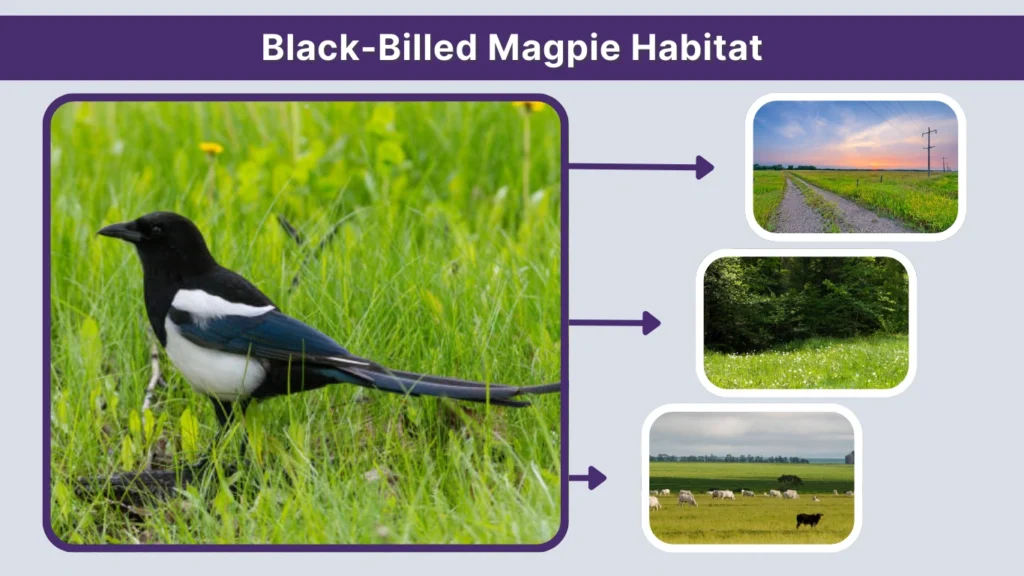
The black-billed magpie thrives in a variety of open and semi-open habitats, including:
- Grasslands
- Farmland and ranches
- Forest edges
- Riparian corridors near rivers and streams
- Suburban neighborhoods with scattered trees
They are often seen near livestock, as grazing animals stir up insects and provide additional feeding opportunities. Fence posts, utility poles, and tree branches are common perching spots.
Seasonal Behavior
Black-billed magpies are mostly non-migratory birds. They remain in their territories year-round, though they may move short distances in response to extreme winter weather or food shortages.
During winter, they sometimes gather in small communal roosts, particularly in sheltered areas with available food sources. Their adaptability allows them to survive cold prairie winters as well as warmer temperate climates.
Black-Billed Magpie Diet
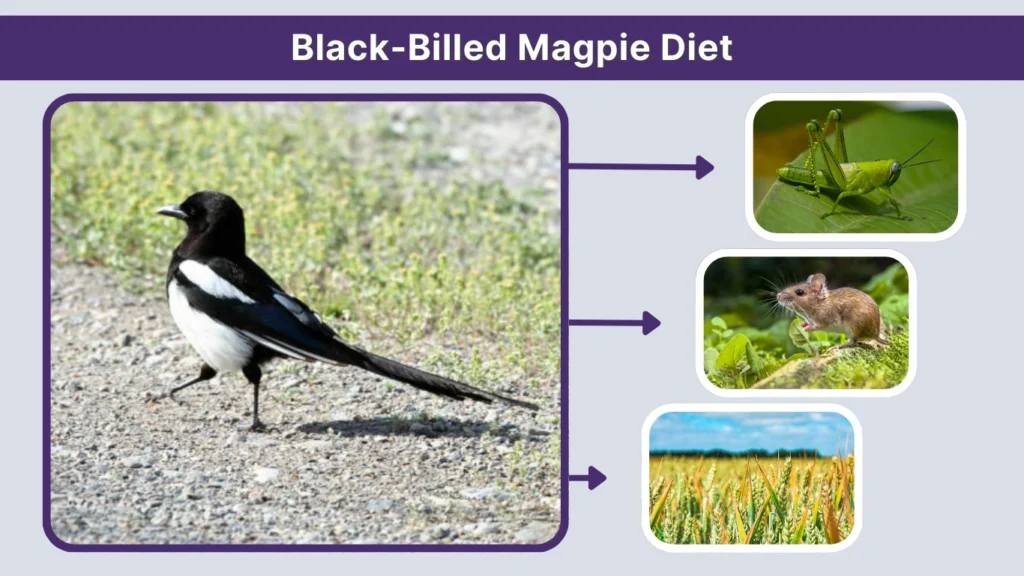
The black-billed magpie has a highly varied and opportunistic diet, which contributes to its success across diverse habitats.
Omnivorous Feeding Habits
Magpies are omnivores, meaning they eat both animal and plant matter. Their animal-based diet includes:
- Insects such as grasshoppers and beetles
- Small rodents
- Bird eggs and nestlings
- Carrion (dead animals)
As scavengers, they play an important ecological role by helping clean up animal remains.
Plant-Based Foods
In addition to animal prey, black-billed magpies consume:
- Seeds
- Grains
- Berries
- Fruits
They readily take advantage of agricultural areas where grain and crop remnants are available.
H3: Feeding Behavior
Black-billed magpies often forage on the ground, walking and hopping while scanning for food. They are alert and opportunistic, frequently following predators or livestock to find disturbed insects or scraps.
Another remarkable behavior is food caching. Magpies sometimes hide excess food in small holes in the ground or other concealed spots, returning later when resources are scarce.
Black-Billed Magpie Nest
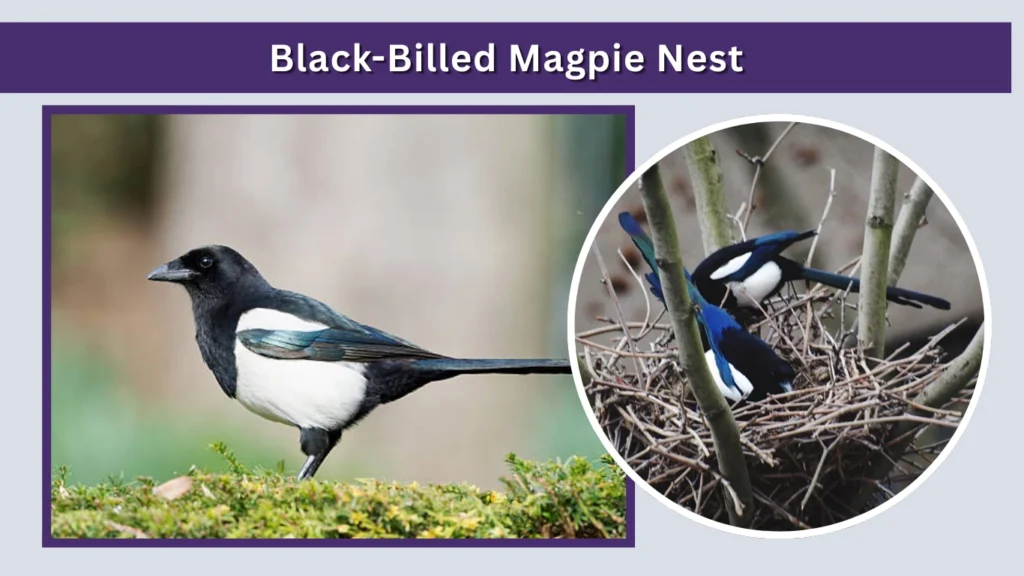
One of the most impressive features of the black-billed magpie is its large and complex nest. Unlike many birds that build simple open nests, magpies construct enclosed, dome-shaped structures that provide protection from predators and harsh weather.
Nest Structure
The black-billed magpie nest is a bulky structure made primarily of sticks and twigs. Key characteristics include:
- A large dome-shaped outer frame
- A mud-lined inner cup
- A side entrance rather than an open top
- A protective stick roof
The mud layer helps strengthen the nest and adds insulation. Inside, the nesting cup may be lined with softer materials such as grass, rootlets, or hair to cushion the eggs.
These nests can be quite large—sometimes over two feet tall—and are often visible from a distance during winter when trees have lost their leaves.
Nest Location
Black-billed magpies typically build their nests in:
- Tall trees
- Dense shrubs
- Shelterbelts or windbreaks
- Utility poles
- Farmstead trees
They prefer elevated sites that offer a good view of the surrounding area, allowing them to detect predators early.
In some regions, magpies reuse or refurbish old nests, either their own or those built by other magpies.
Breeding and Reproduction
Breeding season usually begins in early spring. The female lays between 5 and 9 eggs, which are pale in color with darker speckles.
The incubation period lasts about 16 to 21 days and is primarily handled by the female, while the male brings food to her during this time.
After hatching, both parents feed the nestlings. The young birds remain in the nest for approximately 3 to 4 weeks before fledging. Even after leaving the nest, juveniles may stay close to their parents for a short period while learning to forage independently.
Behavior and Intelligence
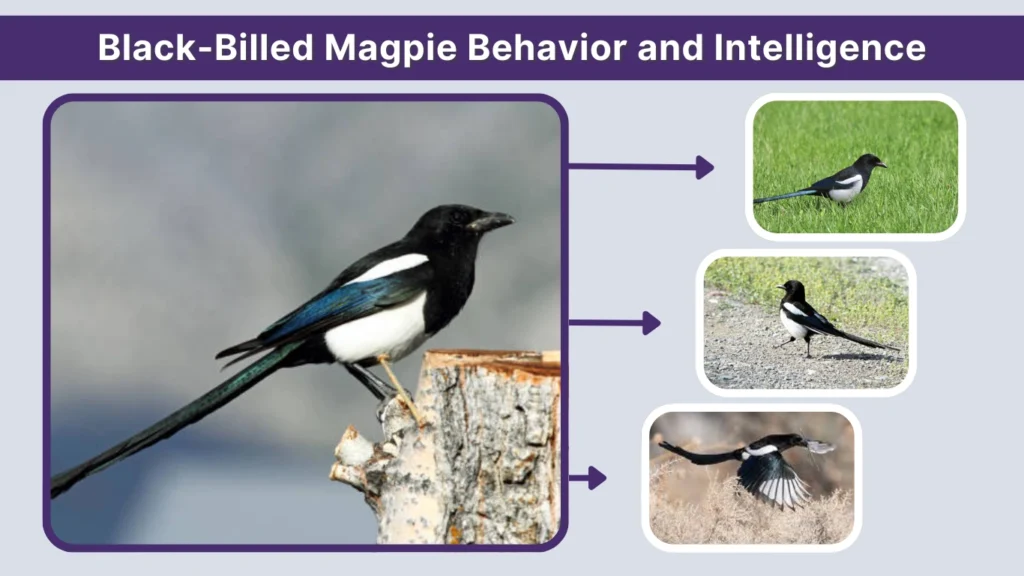
As members of the corvid family, black-billed magpies are exceptionally intelligent birds. Their behavior often reflects advanced cognitive abilities.
Social Structure
Black-billed magpies are usually seen in pairs or small family groups. During the breeding season, they can become territorial and defend nesting areas from other birds.
Outside of breeding season, they may gather in loose groups, especially where food is abundant. Young birds often remain near their parents through late summer and fall.
Intelligence and Problem-Solving
Magpies demonstrate impressive problem-solving skills. Studies of corvids show that they can:
- Remember the locations of food caches
- Adapt quickly to new food sources
- Recognize individual human faces
- Learn from experience
Food caching is especially important during winter months when resources are less predictable. Their strong memory helps them relocate hidden food later.
Vocalizations
Black-billed magpies are highly vocal birds. Their calls include:
- Harsh chattering sounds
- Rapid squawks
- Whistles and softer notes
These vocalizations help maintain communication between mates and group members. Alarm calls are particularly loud and alert other birds to potential danger.
Role in the Ecosystem
Despite sometimes being misunderstood, black-billed magpies play an important ecological role.
As insect predators, they help control populations of grasshoppers and other agricultural pests. Their scavenging behavior assists in cleaning up carrion, reducing the spread of disease.
Magpies also contribute to seed dispersal when they consume berries and transport seeds to new locations. Their presence in grasslands and open woodlands supports overall ecosystem balance.
Interesting Black-Billed Magpie Facts
- The tail can account for nearly half of the bird’s total body length.
- It belongs to one of the most intelligent bird families in the world.
- Black-billed magpies can recognize and remember human faces.
- Their nests are among the most complex structures built by North American songbirds.
- They are highly adaptable and thrive in both rural and suburban environments.
FAQs
What does a black-billed magpie eat?
Black-billed magpies are omnivores with a varied diet. They eat insects such as grasshoppers and beetles, small mammals, bird eggs, and carrion. They also consume seeds, grains, berries, and fruit. Their adaptable feeding habits allow them to thrive in grasslands, farmland, and suburban areas year-round.
Where do black-billed magpies live?
Black-billed magpies live primarily in western North America, including the western United States, Canadian prairie provinces, and parts of Alaska. They prefer open habitats such as grasslands, farmland, forest edges, and suburban neighborhoods with scattered trees for nesting and perching.
How do black-billed magpies build their nests?
Black-billed magpies build large dome-shaped nests made of sticks and mud. The structure includes a side entrance and a protective roof. Inside, they create a mud-lined cup and soften it with grass or hair. Nests are usually built high in trees or shrubs for safety.
Are black-billed magpies aggressive?
Black-billed magpies can be territorial during breeding season and may defend their nests from predators or other birds. However, they are not typically aggressive toward humans. Their bold and curious behavior sometimes gives the impression of aggressiveness when they approach closely.
How long do black-billed magpies live?
In the wild, black-billed magpies typically live around 4 to 6 years, though some may live longer under favorable conditions. Survival depends on food availability, habitat quality, and avoiding predators such as hawks, owls, and mammals.
Conclusion
The black-billed magpie is a bold, intelligent, and adaptable bird that stands out across western North America. From its shimmering blue-green wings to its impressive dome-shaped nest, this corvid displays remarkable skill and resilience. Its varied diet and scavenging habits support ecosystem health, while its intelligence sets it apart from many other species. Whether seen perched on a fence post or soaring across open grassland, the black-billed magpie remains one of the most fascinating birds in its range.
