
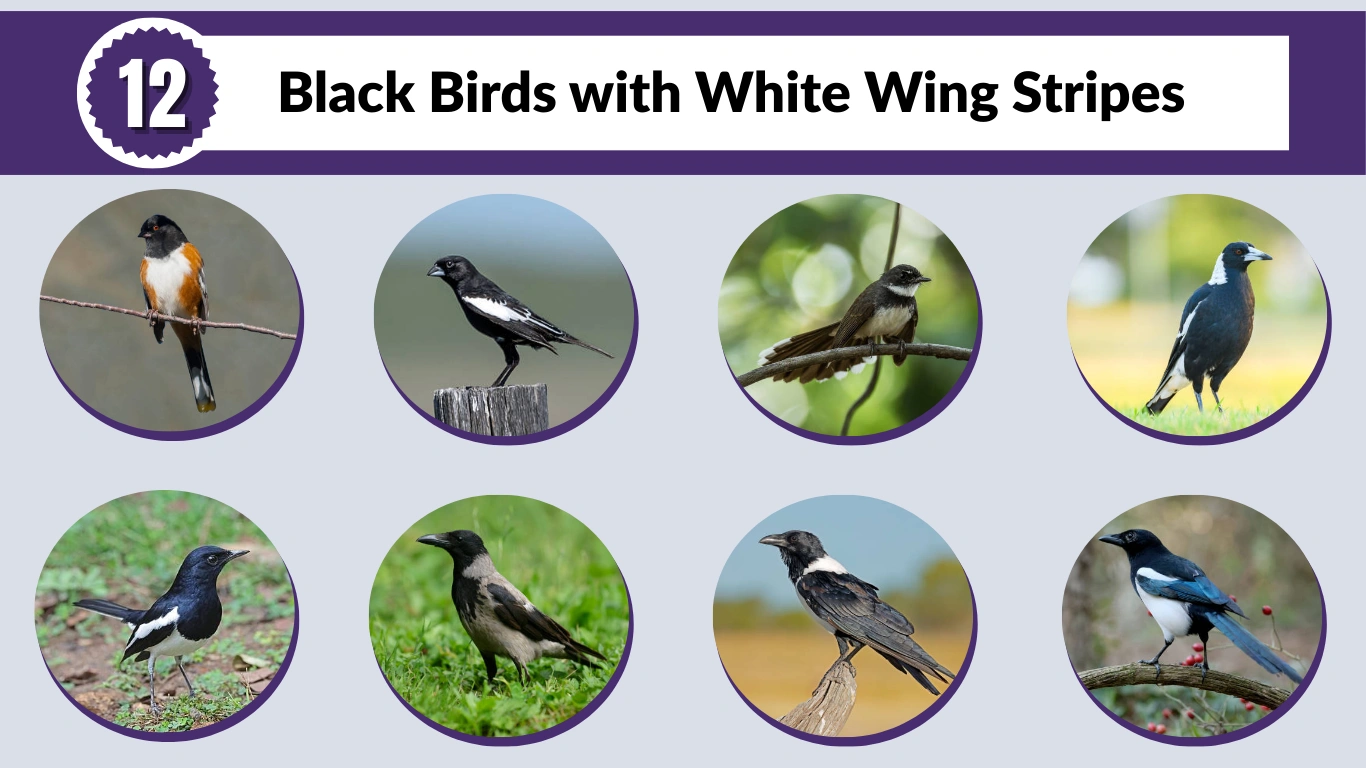
Black birds with white stripes or patches on their wings are some of the most visually striking birds in the world. The sharp contrast in their plumage makes them easy to identify, especially in flight, and often helps distinguish closely related species. Found across different continents and habitats, these birds vary greatly in size, behavior, and intelligence. This guide highlights notable species that share this bold black-and-white wing pattern, focusing on their key features, colors, and natural behaviors.
1. Magpie
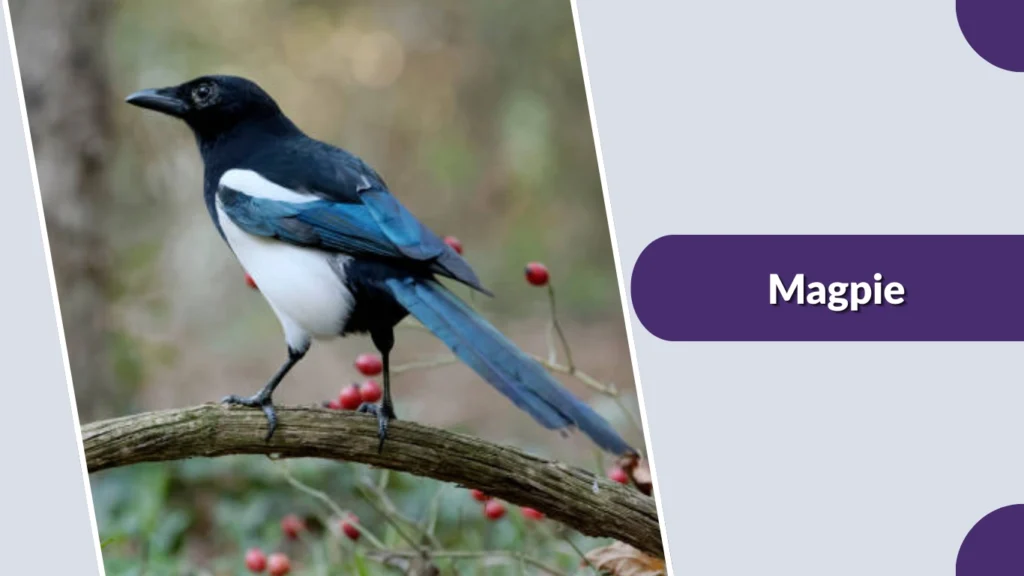
The magpie is a striking black-and-white bird best known for its bold contrast, intelligence, and adaptability. Found across Europe, Asia, and parts of Australia (different species), magpies are highly social and often seen in open countryside, parks, and near human settlements.
Identification
- Black body with prominent white patches or stripes on the wings
- Long tail with a slight sheen
- Medium to large size compared to other songbirds
Color
Magpies have glossy black feathers that may show green or blue iridescence in sunlight. The wings and belly feature clean white markings, which are especially visible during flight.
Habitat & Behavior
Magpies thrive in open fields, farmland, woodlands, and urban areas. They are known for their intelligence, strong territorial behavior, and complex vocalizations, often living in pairs or small groups.
2. Pied Crow
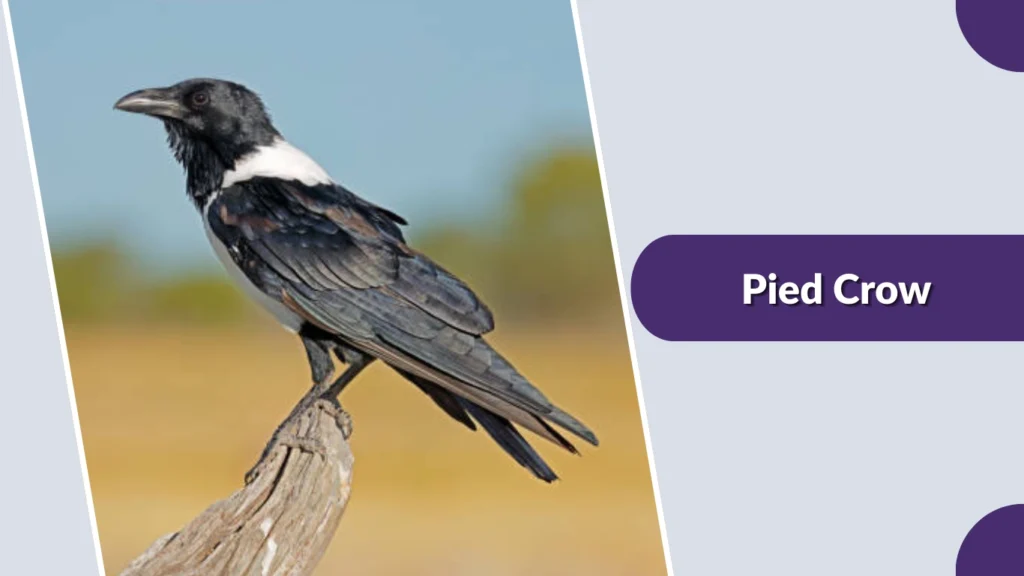
The pied crow is a bold, highly adaptable bird commonly seen across sub-Saharan Africa. Known for its sharp intelligence and confident behavior, this species thrives close to human settlements as well as in open natural landscapes. Its black body contrasted with bright white wing and chest markings makes it easy to recognize, especially in flight.
Identification
- Black head, throat, back, and tail
- Distinct white chest, belly, and wing panels
- Strong black bill and sturdy legs
Color
The pied crow displays a dramatic black-and-white pattern. The black feathers are matte to slightly glossy, while the white areas on the chest and wings are clean and clearly defined. When flying, the white wing patches stand out sharply against the dark body, creating a striking visual contrast.
Habitat & Behavior
Pied crows are extremely versatile and can be found in savannas, grasslands, coastal regions, farmland, towns, and cities. They are opportunistic feeders, eating insects, small animals, carrion, eggs, grains, and human food waste. Their intelligence allows them to solve problems, steal food cleverly, and adapt quickly to changing environments. Pied crows are often seen alone or in pairs, but they may gather in larger groups where food is abundant. They are also known for their loud, harsh calls and fearless attitude, even toward larger animals.
3. Common Raven
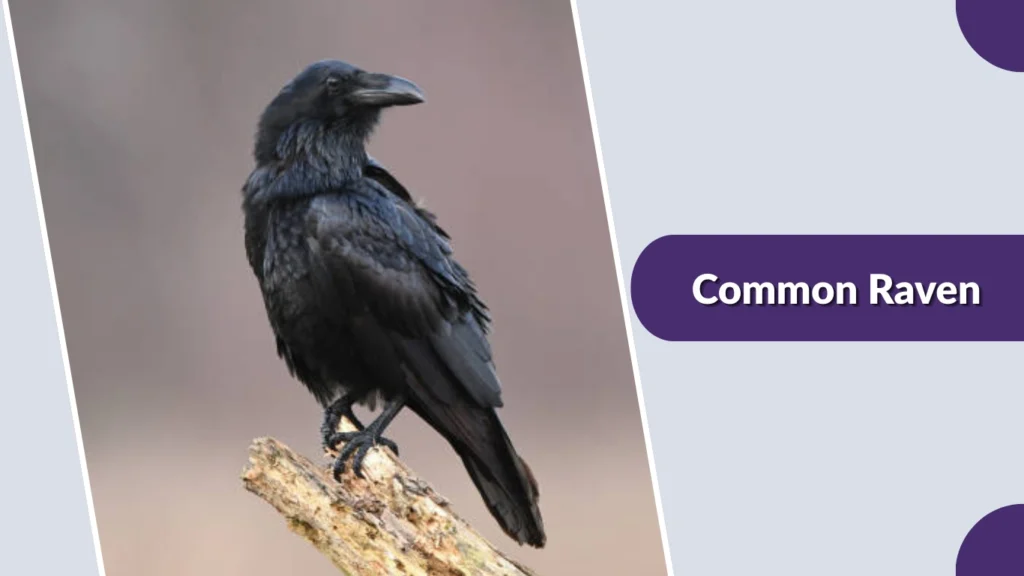
The common raven is one of the largest and most intelligent members of the crow family, found across the Northern Hemisphere. Revered in mythology and folklore, ravens are known for their deep voices, problem-solving skills, and complex social behavior. Though mostly black, some individuals show pale or whitish markings on the wings due to feather wear or rare color variation.
Identification
- Large, heavy-bodied bird with a thick neck
- Entirely black plumage, sometimes with pale or worn wing feathers
- Long, wedge-shaped tail visible in flight
Color
Ravens are predominantly black, but their feathers often shine with blue, purple, or green iridescence in sunlight. In some cases, especially in older or worn feathers, lighter streaks or patches may appear on the wings, giving a striped or faded look. This subtle variation can sometimes be mistaken for white markings at a distance.
Habitat & Behavior
Common ravens occupy a wide range of habitats, including mountains, forests, deserts, tundra, coastlines, and even urban areas. They are highly intelligent birds capable of using tools, mimicking sounds, and remembering food locations over long periods. Ravens are usually seen in pairs but may gather in large numbers at feeding or roosting sites. Their vocal range is impressive, featuring deep croaks, knocks, clicks, and even playful sounds during flight. Curious and adaptable, ravens often engage in aerial acrobatics and social play, setting them apart from many other birds.
4. Hooded Crow
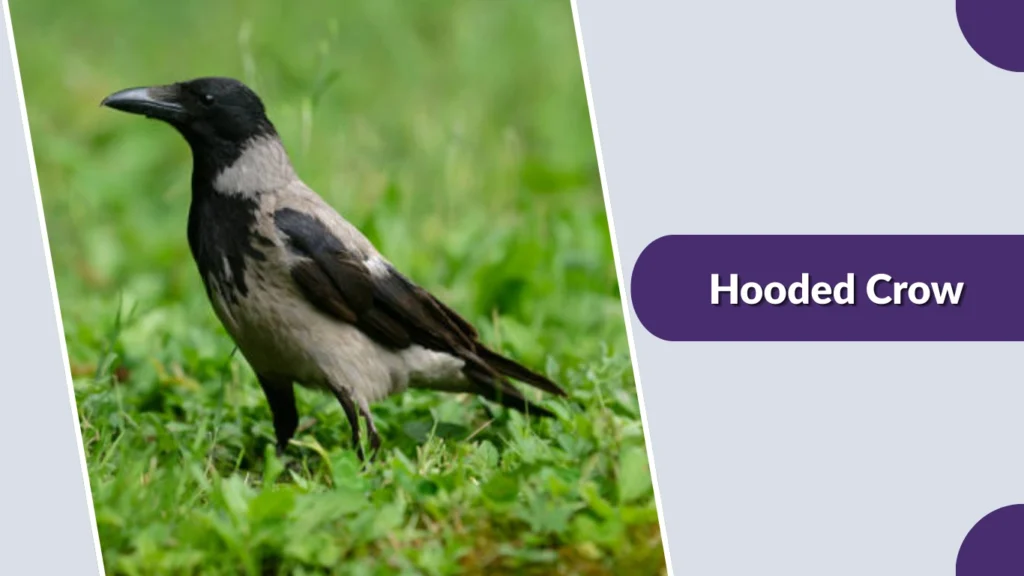
The hooded crow is a distinctive and intelligent bird found across northern and eastern Europe, the Middle East, and parts of Asia. Closely related to the carrion crow, it is easily recognized by its two-tone appearance, combining dark and pale feathers. Hooded crows are highly adaptable and often live close to humans.
Identification
- Black head, throat, wings, tail, and thighs
- Pale grey body and wing coverts
- Strong black bill and legs
Color
The hooded crow shows a clear contrast between jet-black and ash-grey plumage. The black feathers may appear slightly glossy in sunlight, while the grey areas look soft and muted. In flight, the dark wings and tail frame the lighter body, sometimes giving the impression of pale or striped wings from a distance.
Habitat & Behavior
Hooded crows inhabit farmland, coastlines, open woodlands, riverbanks, and urban areas. They are omnivorous, feeding on insects, small animals, eggs, carrion, grains, and food scraps. Known for their intelligence, they can use tools, remember food locations, and adapt quickly to new challenges. Hooded crows are usually seen alone or in pairs but may gather in groups during winter or at rich food sources. They are vocal birds, communicating with a variety of harsh calls.
5. Black-billed Magpie
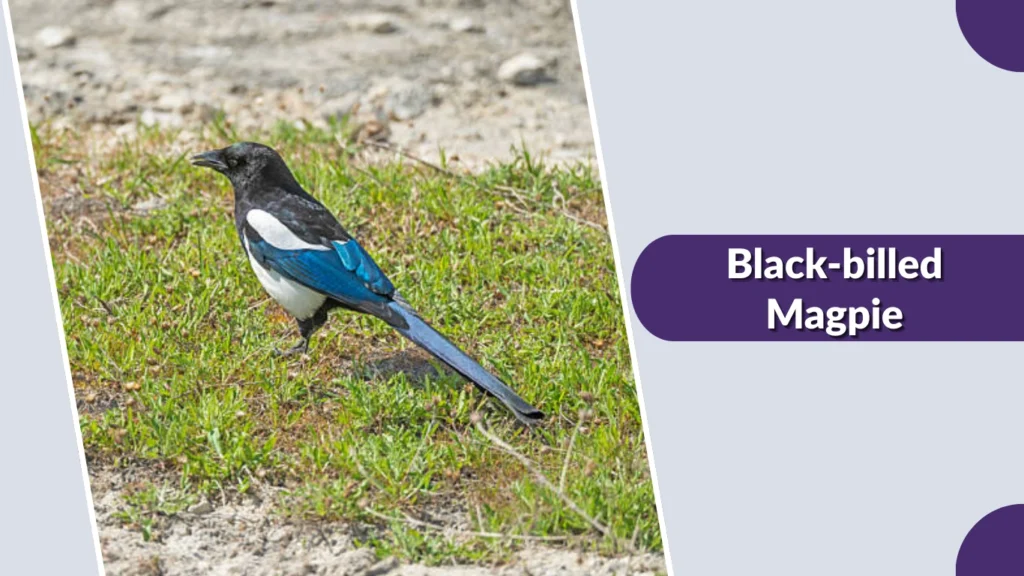
The black-billed magpie is a bold and eye-catching bird native to western North America. Famous for its long tail and striking black-and-white plumage, this magpie is both curious and highly intelligent. It is often seen hopping on the ground or flying with slow, deliberate wingbeats.
Identification
- Black head, chest, back, and long tail
- White belly and prominent white wing patches
- Long, graduated tail with a slight iridescent sheen
Color
This magpie displays strong contrast between deep black and bright white feathers. The black areas often shimmer with blue or green iridescence in good light, while the white wing patches appear as bold stripes during flight. These white markings are especially noticeable when the bird spreads its wings.
Habitat & Behavior
Black-billed magpies prefer open habitats such as grasslands, farmlands, river valleys, and forest edges, but they also thrive in towns and rural settlements. They are opportunistic feeders, eating insects, small mammals, carrion, seeds, fruits, and human leftovers. Social and intelligent, magpies often live in pairs or small family groups and are known for their problem-solving skills and curiosity toward shiny or unfamiliar objects. Their calls are loud and chattering, making them hard to miss in their environment.
6. Australian Magpie
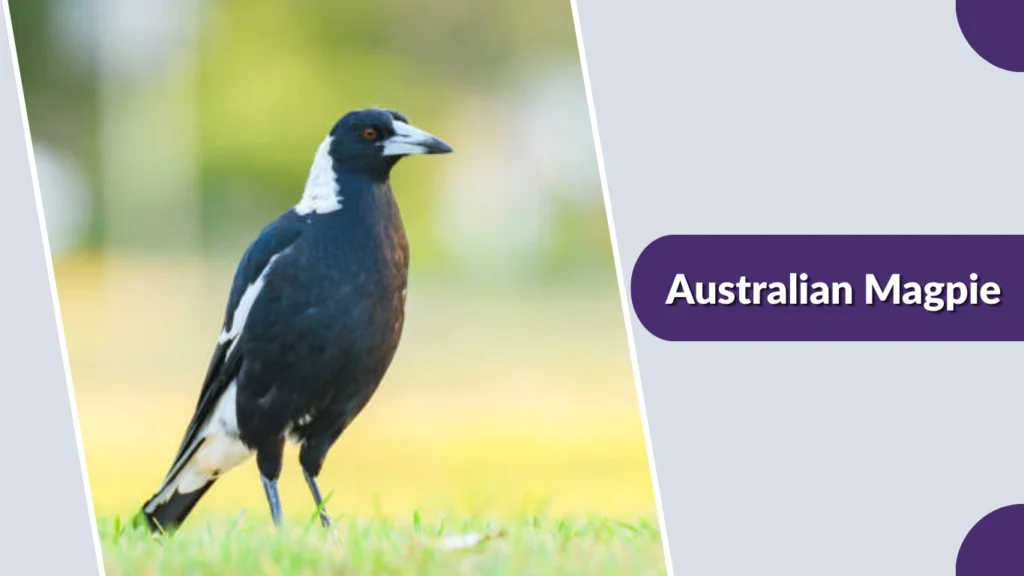
The Australian magpie is a well-known and highly intelligent bird native to Australia and southern New Guinea. Loved by many for its beautiful, complex songs and respected for its bold personality, this bird is commonly found in both rural and urban environments. Its black body with white wing and shoulder markings makes it especially noticeable in flight.
Identification
- Black head and body with white nape (in many adults)
- Prominent white patches or stripes on wings
- Strong legs and straight, pointed bill
Color
Australian magpies display sharp black-and-white contrast. The black feathers often have a glossy sheen, while the white areas on the wings, back of the neck, and shoulders appear bright and clean. When flying, the white wing markings form clear stripes that stand out against the dark body.
Habitat & Behavior
These magpies inhabit open grasslands, parks, farmland, sports fields, and suburban areas. They are ground feeders, mainly eating insects, larvae, small reptiles, and seeds. Australian magpies are highly territorial, especially during breeding season, when some individuals may swoop to defend their nests. They usually live in social groups with complex hierarchies and are known for their advanced vocal abilities, producing rich flute-like songs often heard at dawn and dusk.
7. Oriental Magpie-Robin
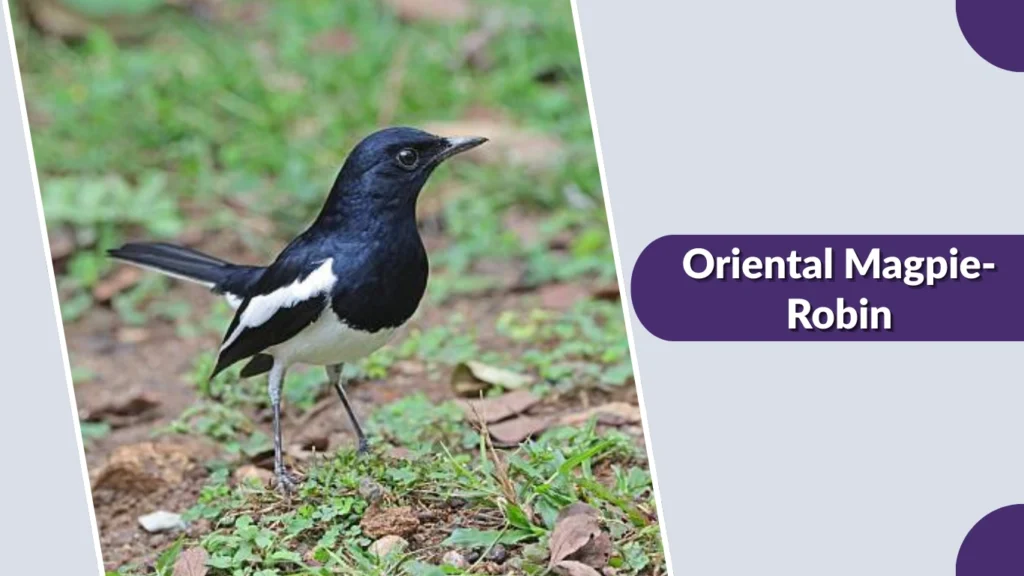
The oriental magpie-robin is a small but striking bird widely found across South and Southeast Asia. Often associated with gardens, villages, and forest edges, it is admired for its melodious song and bold black-and-white plumage. Despite its name, it is more closely related to robins than true magpies.
Identification
- Black head, back, and tail
- White wing stripes and white belly
- Slender body with an upright posture
Color
This species has glossy black upperparts that may shine with a bluish tint in sunlight. The wings feature distinct white stripes or patches that are very noticeable during flight. The underparts are bright white, creating a clean contrast with the dark upper body.
Habitat & Behavior
Oriental magpie-robins prefer open woodlands, gardens, farmland, and areas near human habitation. They are often seen perched upright on fences or low branches, flicking their tails. Their diet consists mainly of insects, worms, and small invertebrates. Known for their sweet and varied songs, males sing loudly to defend territory and attract mates, especially during the breeding season. These birds are usually solitary or seen in pairs and are active during the early morning and late afternoon.
8. Pied Currawong
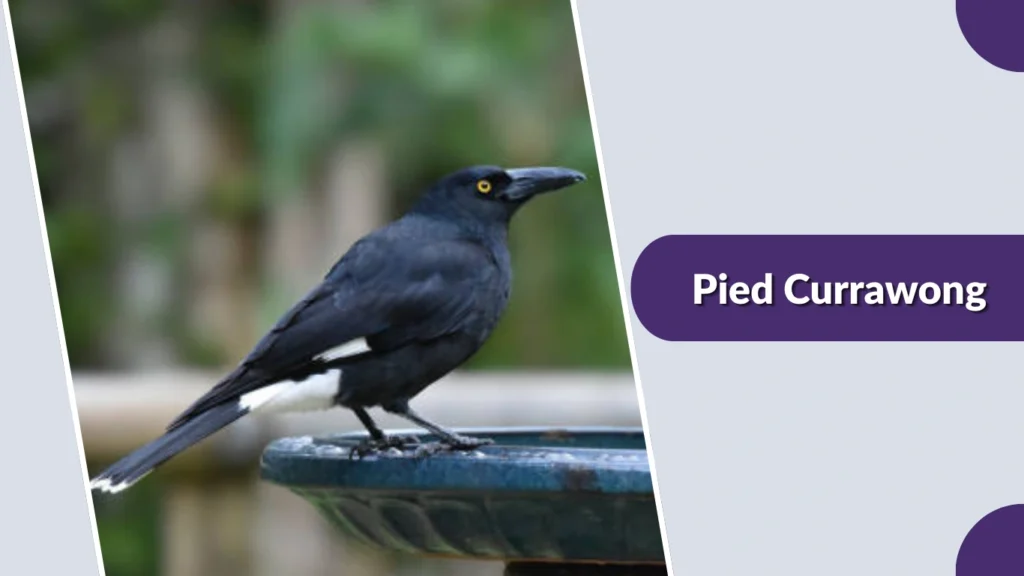
The pied currawong is a large, confident bird native to eastern Australia, known for its loud calls and bold black-and-white appearance. It is highly adaptable and has expanded its range into urban areas, where it often becomes a dominant presence among local bird species.
Identification
- Black head, back, wings, and tail
- Prominent white patches at the base of the wings
- Strong hooked bill and yellow eyes
Color
Pied currawongs are mostly black with crisp white wing patches that appear as stripes when the wings are spread. The black plumage may show a slight glossy sheen, while the white markings remain bright and clearly defined, especially noticeable during flight.
Habitat & Behavior
This species inhabits forests, woodlands, coastal regions, parks, and suburban areas. Pied currawongs are omnivorous, feeding on insects, small animals, fruits, seeds, and carrion. They are known for their aggressive behavior toward smaller birds, especially during breeding season. Often seen alone or in pairs, they communicate with loud, ringing calls that carry over long distances.
9. Black-and-white Fantail
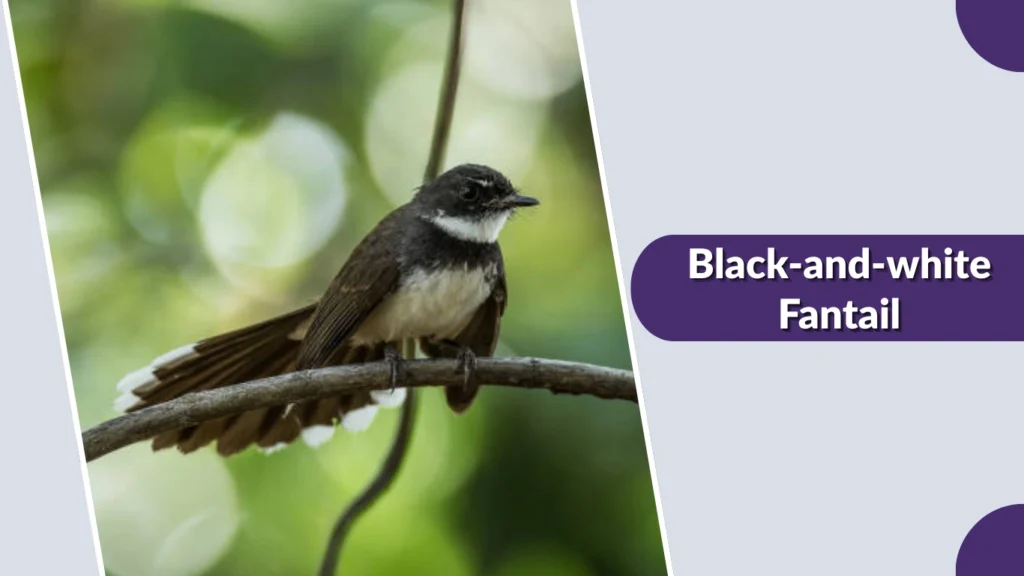
The black-and-white fantail is a small, energetic bird found across parts of Southeast Asia and Australasia. Easily recognized by its constantly fanned tail and contrasting plumage, this bird is very active and often seen fluttering rapidly through the air.
Identification
- Small body with a long, fan-shaped tail
- Black upperparts with white wing markings
- White underparts and eyebrow line
Color
This fantail shows a clean contrast between black and white feathers. The wings display pale stripes or edges that stand out against the dark upperparts, while the tail has white tips that become obvious when spread. The overall coloration gives the bird a crisp, patterned appearance.
Habitat & Behavior
Black-and-white fantails live in forests, mangroves, gardens, and woodland edges. They feed mainly on insects, which they catch in midair using quick, agile movements. Constant tail-fanning is a key behavior, believed to help flush out insects. These birds are curious and fearless, often approaching humans closely. They are usually seen alone or in pairs and are active throughout the day, especially in shaded areas.
10. White-winged Chough
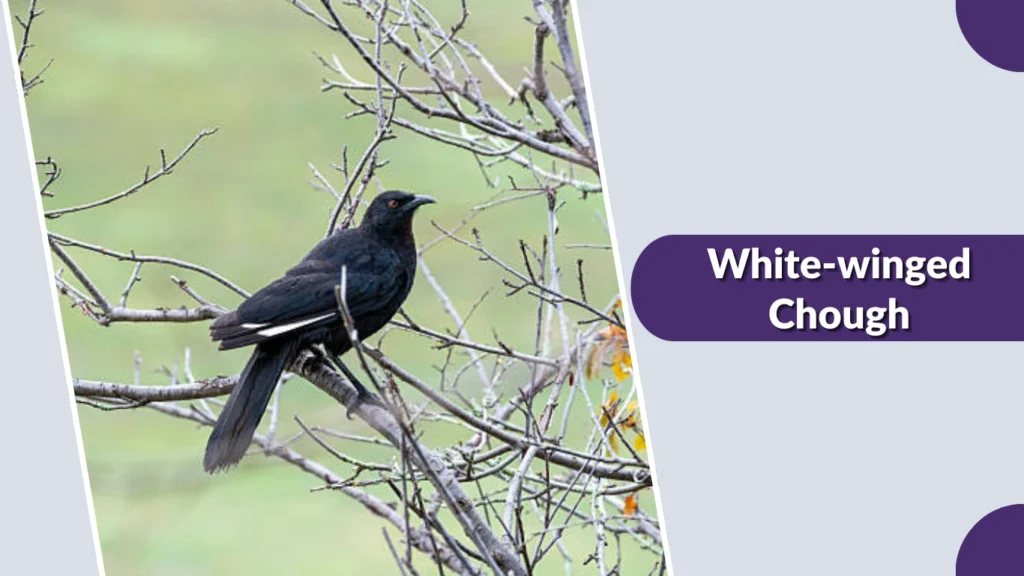
The white-winged chough is a distinctive, social bird native to Australia. Often mistaken for a crow at a distance, it stands out when in flight due to its bold white wing panels. This species is well known for its cooperative breeding behavior and strong family bonds.
Identification
- Entirely black body when perched
- Large white patches on wings visible in flight
- Long legs and slightly curved bill
Color
At rest, the white-winged chough appears completely black. When it opens its wings, striking white panels are revealed, forming clear stripes along the wings. The black feathers may show a subtle sheen, while the white wing areas are bright and sharply contrasting.
Habitat & Behavior
White-winged choughs inhabit open woodlands, grasslands, farmland, and lightly forested areas. They are ground foragers, feeding on insects, larvae, seeds, and small invertebrates. Highly social, they live in family groups that cooperate in nest building, feeding young, and defending territory. Their calls are loud and nasal, and groups are often seen moving together across open ground.
11. Spotted Towhee
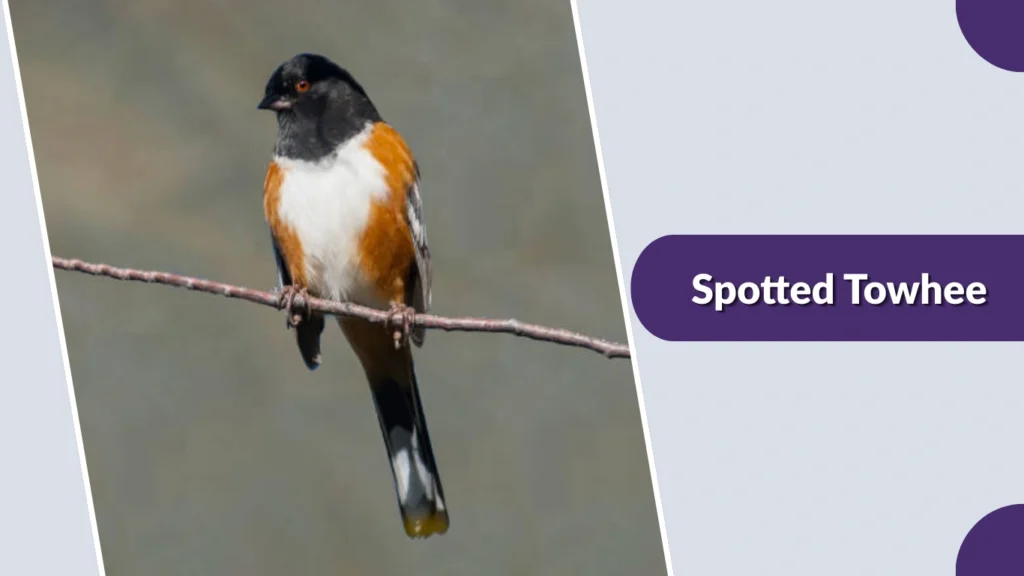
The spotted towhee is a medium-sized songbird native to North America, commonly found in shrubby habitats and woodland edges. While not entirely black, its bold dark plumage combined with white wing spots and markings gives it a striking, patterned appearance.
Identification
- Black head, back, and upper chest (male)
- White spots on wings and back
- Reddish-brown flanks and white belly
Color
Male spotted towhees have deep black upperparts that contrast strongly with bright white wing spots, creating a striped effect when the wings are folded. The flanks are rich rufous, adding warm tones to the otherwise black-and-white pattern. Females show similar markings but with dark brown instead of black.
Habitat & Behavior
Spotted towhees prefer dense shrubs, forest edges, chaparral, and overgrown gardens. They forage mainly on the ground, using a distinctive double-scratch motion to uncover insects, seeds, and berries. These birds are often shy and remain hidden in vegetation, but their sharp calls and rustling sounds reveal their presence. Usually solitary or seen in pairs, spotted towhees are territorial during the breeding season.
12. Lark Bunting
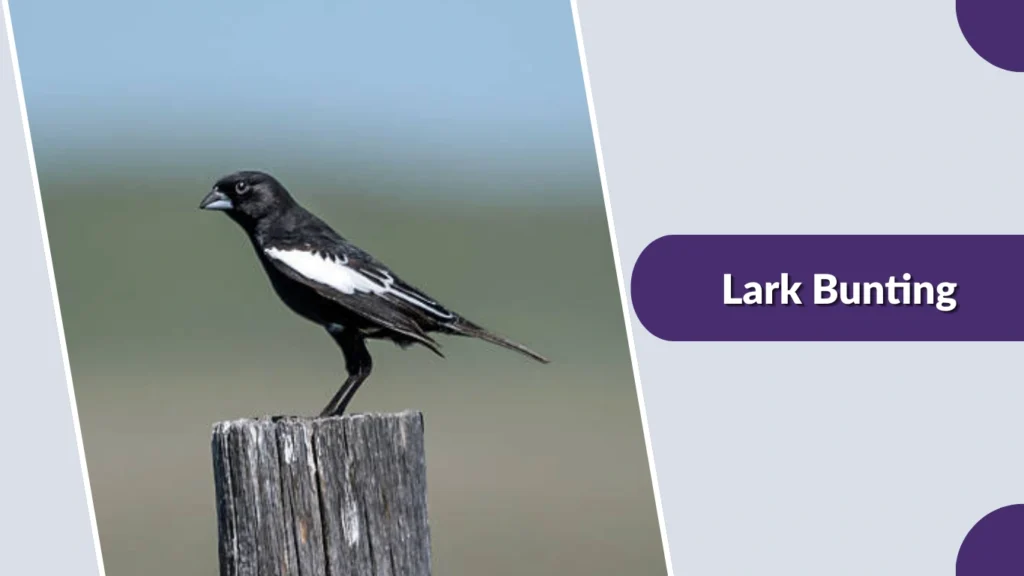
The lark bunting is a distinctive grassland bird native to central and western North America. It is best known for the male’s dramatic breeding plumage, which features a mostly black body accented by bold white wing patches. This species is also the state bird of Colorado and is closely tied to open prairie landscapes.
Identification
- Mostly black body in breeding males
- Large white patches on the wings
- Thick, conical bill typical of buntings
Color
During the breeding season, male lark buntings appear jet black with striking white wing panels that look like clear stripes in flight. Outside the breeding season, males become brown and streaked, while females remain brown year-round with subtle streaking. The white wing markings, however, are present in all plumages and remain a key identifying feature.
Habitat & Behavior
Lark buntings inhabit open grasslands, prairies, and agricultural fields. They feed primarily on seeds and insects, shifting toward more insects during the breeding season. These birds are often seen in loose flocks outside breeding months, while males become territorial when nesting. Their flight is buoyant and fluttering, and males frequently sing from low shrubs or the ground to defend territory and attract mates.
