
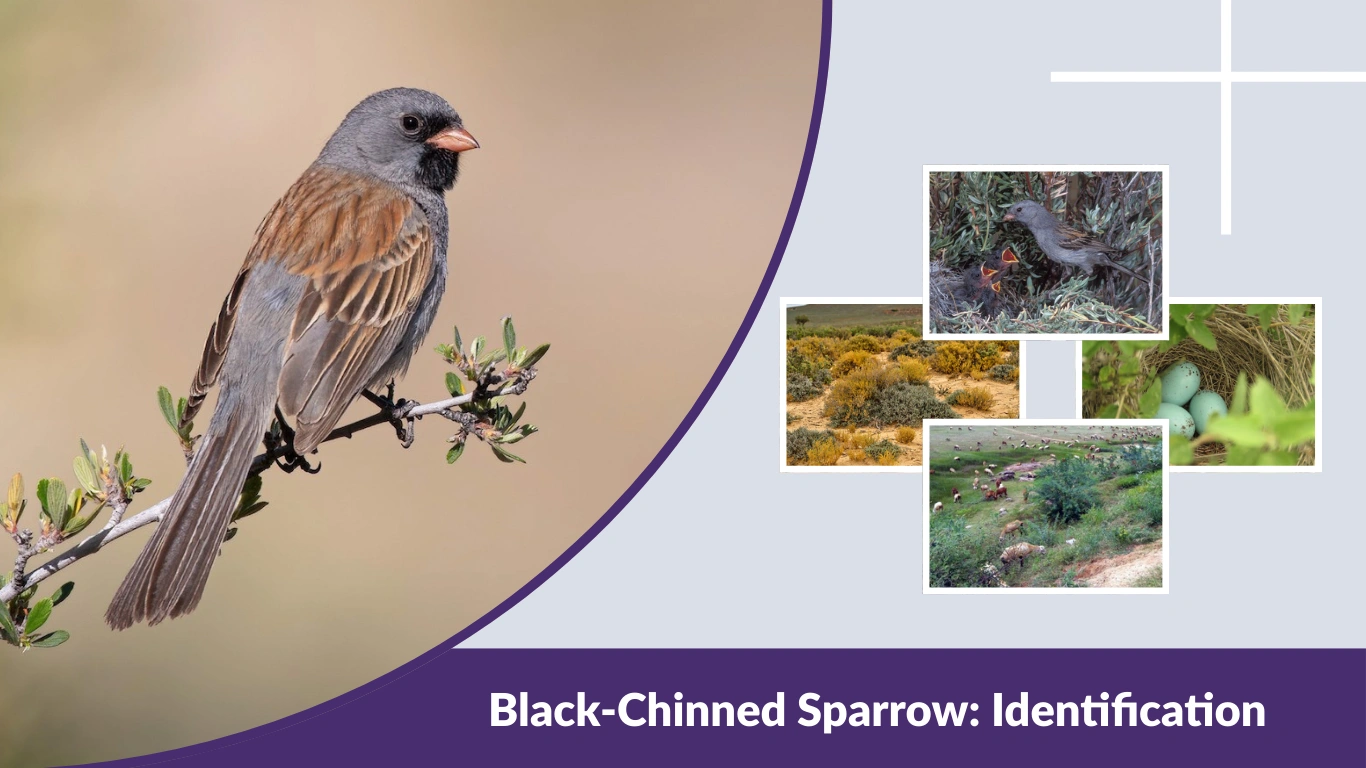
The black-chinned sparrow (Spizella atrogularis) is a small, slender songbird native to the arid regions of the southwestern United States and parts of Mexico. Though modest in appearance, this sparrow is best known for the male’s distinctive black throat patch during the breeding season. It prefers dry, brushy landscapes and is often heard singing from the top of desert shrubs. In this guide, you’ll learn how to identify the black-chinned sparrow, where it lives, what it eats, and how it behaves in its rugged habitat.
What Is a Black-Chinned Sparrow?
The black-chinned sparrow belongs to the New World sparrow family, a group that includes many small, seed-eating songbirds across North America. Its scientific name, Spizella atrogularis, reflects one of its key features—“atrogularis” means black-throated.
Unlike many sparrows that inhabit grassy fields or forests, the black-chinned sparrow is strongly associated with dry, rocky hillsides and desert scrub. It thrives in environments where shrubs, low trees, and scattered grasses provide both cover and nesting sites.
This species is generally quiet and inconspicuous outside the breeding season. Its gray plumage blends well with dry vegetation and rocky terrain, offering natural camouflage from predators. During spring and early summer, however, males become more visible as they sing from exposed perches to establish territory and attract mates.
Black-Chinned Sparrow Identification
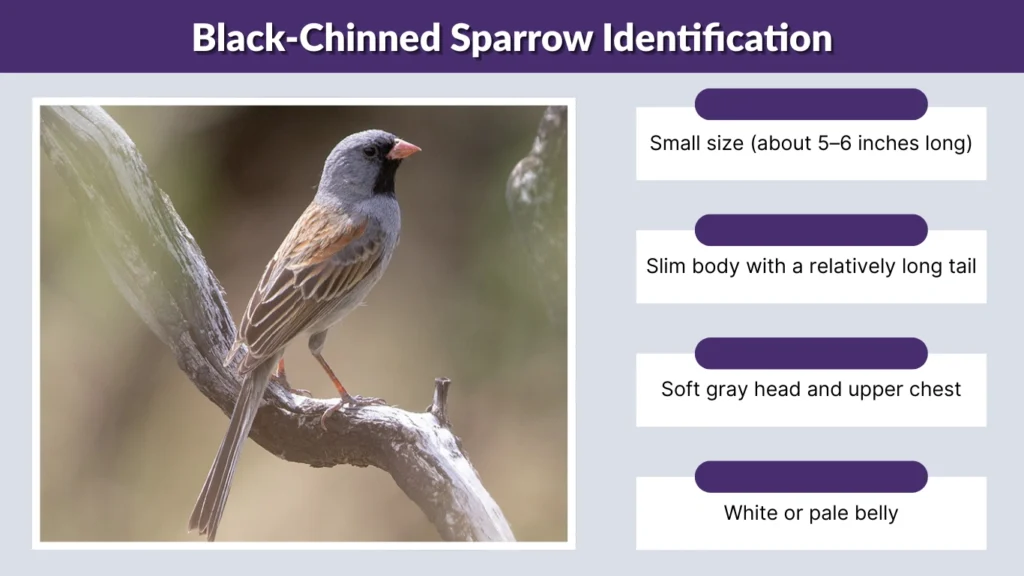
The black-chinned sparrow is a small, slim songbird best known for the male’s bold black throat patch during the breeding season. Its overall gray and white coloration helps it blend into dry, brushy habitats of the southwestern United States and Mexico. While it may look plain at first glance, careful attention to its throat marking, clean breast, and habitat can make identification easier.
Key Identification Features
- Small size (about 5–6 inches long)
- Slim body with a relatively long tail
- Soft gray head and upper chest
- White or pale belly
- Distinct black throat patch (breeding males)
- Thin, pointed bill
- Often found in desert scrub and chaparral
Male vs Female Differences
- Males: Bold black chin and throat in breeding season
- Females: Fainter or reduced dark throat marking
- Non-breeding males: Less sharply defined black patch
How to Tell It Apart from Similar Sparrows
- Lacks the rusty cap seen on Chipping sparrows
- No strong facial striping like Brewer’s sparrow
- Clean, unstreaked gray breast
- Prefers dry, brushy hillsides rather than grassy fields
Observing both plumage details and habitat type is the most reliable way to confirm a black-chinned sparrow sighting.
Black-Chinned Sparrow Habitat
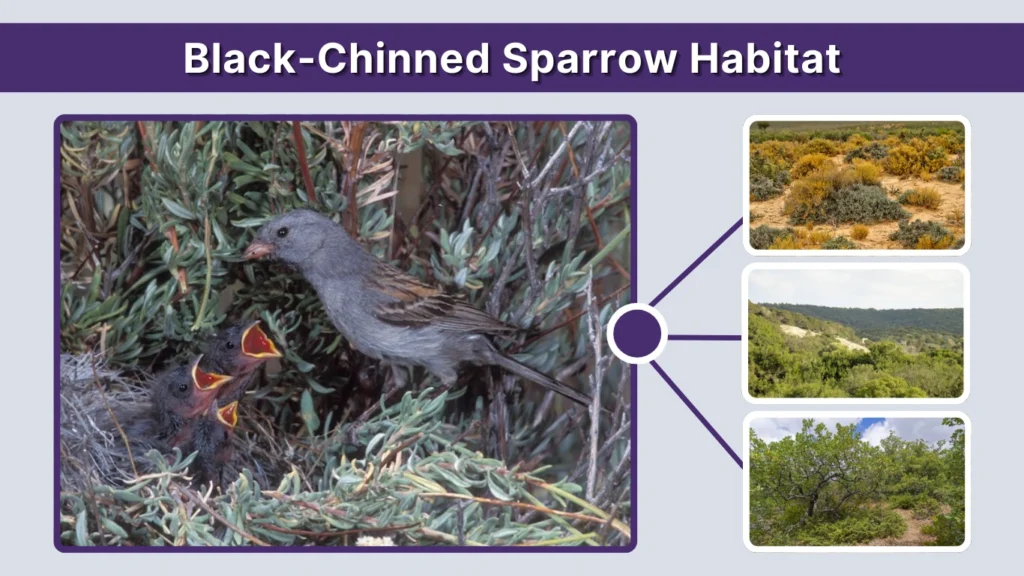
The black-chinned sparrow is closely tied to dry, brush-filled landscapes. Its habitat preferences distinguish it from many other sparrow species.
Preferred Environment
This species thrives in:
- Desert scrub
- Chaparral
- Brushy hillsides
- Juniper and oak woodlands
- Rocky canyon slopes
It prefers areas with scattered shrubs rather than dense forests or open grasslands. Shrubs provide cover from predators, nesting sites, and elevated singing perches.
The bird’s gray plumage blends well with dry grasses and dusty vegetation, making it well adapted to arid terrain.
Geographic Range
The black-chinned sparrow is primarily found in the southwestern United States, including:
- Arizona
- New Mexico
- Texas
- California
- Nevada
- Utah
Its range also extends into northern and central Mexico.
During the breeding season, populations are most concentrated in upland desert and scrub habitats. In winter, some individuals move to slightly lower elevations or further south into Mexico.
Elevation and Seasonal Movement
Unlike long-distance migrants, the black-chinned sparrow is considered a partial migrant. Some populations remain in the same general region year-round, while others shift southward or to lower elevations during colder months.
In mountainous areas, birds may breed at mid-elevations and descend during winter when temperatures drop. These seasonal movements help them find consistent food supplies and milder weather conditions.
Black-Chinned Sparrow Diet
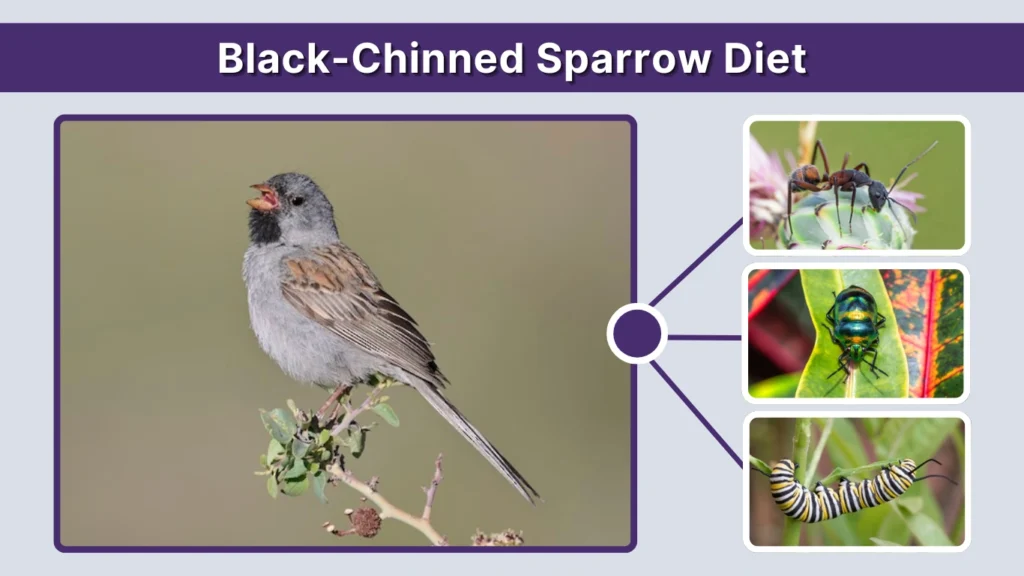
The black-chinned sparrow has a flexible diet that changes with the seasons.
Main Food Sources
Its diet includes:
- Ants
- Beetles
- Caterpillars
- Grasshoppers
- Spiders
- Seeds from grasses and shrubs
During the breeding season, insects make up a large portion of the diet, providing necessary protein for growing chicks. In cooler months, seeds become more important.
Feeding Behavior
Black-chinned sparrows typically forage on or near the ground. They move with quick, light hops beneath shrubs, searching for insects or fallen seeds.
They often stay close to cover while feeding, darting into thicker vegetation if disturbed. This cautious feeding style reduces exposure to predators in open desert landscapes.
Behavior and Vocalizations
The black-chinned sparrow may appear quiet and inconspicuous, but during the breeding season, it becomes more noticeable through its song and territorial displays. Much of its behavior revolves around defending territory and attracting mates in dry, open habitats.
Song and Calls
The male black-chinned sparrow is known for its high-pitched, thin, and musical song. The song often consists of a series of rapid trills and clear notes delivered in a steady rhythm. Though not loud compared to some other songbirds, it carries surprisingly well across desert scrub.
Males typically sing from exposed perches such as the tops of shrubs, small trees, or rocky outcrops. This elevated position allows them to project their song and monitor their territory.
In addition to its song, the black-chinned sparrow produces soft chip notes used for communication between mates or as alarm calls when predators approach.
Territorial Behavior
During the breeding season, males become strongly territorial. Singing is one of the primary ways they establish and defend their space. If another male enters the area, vocal exchanges may occur, sometimes followed by short chases.
Territory size can vary depending on habitat quality. Areas with abundant shrubs and food sources may support smaller, closely spaced territories, while poorer habitats require larger defended areas.
Social Behavior
Outside of the breeding season, black-chinned sparrows are less territorial. They may be seen alone or in small groups and sometimes join mixed-species flocks during migration or winter.
Despite occasional grouping, they remain relatively quiet and prefer staying within brushy cover rather than perching in open areas for long periods.
Black-Chinned Sparrow Nesting Habits
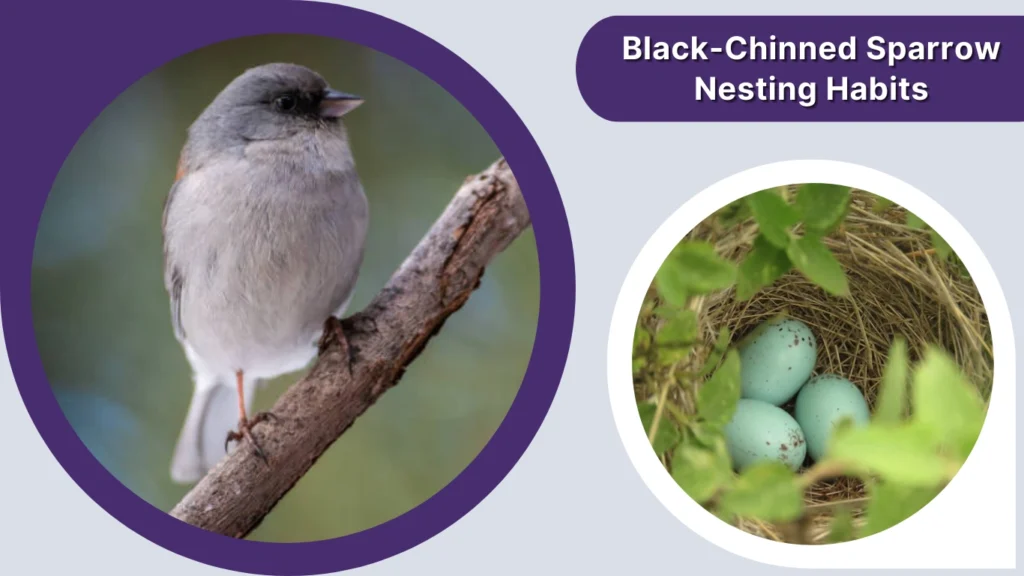
Nesting takes place in spring and early summer when food is plentiful and temperatures are favorable.
Nest Location
The female typically builds the nest in a low shrub or bush, often between 1 and 3 feet above the ground. Dense vegetation provides protection from predators and shields the nest from intense sun exposure.
Common nesting plants include desert shrubs, chaparral bushes, and small oak or juniper trees. The nest is usually well concealed and difficult to spot.
Nest Structure
The nest is cup-shaped and carefully constructed from:
- Dry grasses
- Plant fibers
- Small twigs
- Rootlets
The inner lining may consist of finer grasses or soft plant material to cushion the eggs. The overall structure is compact and sturdy, helping it remain stable in windy desert conditions.
Breeding Season
Breeding generally occurs from late spring through early summer. The female lays a clutch of 2 to 4 eggs, which are typically pale with light speckling.
Incubation lasts about 11 to 14 days and is primarily carried out by the female. After hatching, both parents help feed the chicks. Nestlings usually fledge about 9 to 12 days after hatching.
If conditions are favorable, pairs may attempt more than one brood in a season.
Migration and Seasonal Patterns
The black-chinned sparrow is considered a partial migrant. Some populations remain in the same region year-round, especially in milder desert climates. Others move south into Mexico or descend to lower elevations during winter.
In mountainous areas, seasonal elevation shifts are common. Birds breed at mid-elevations during warmer months and relocate when colder weather reduces insect availability.
These flexible movement patterns allow the species to adapt to varying desert conditions without undertaking long-distance migrations like many other sparrows.
Conservation Status and Threats
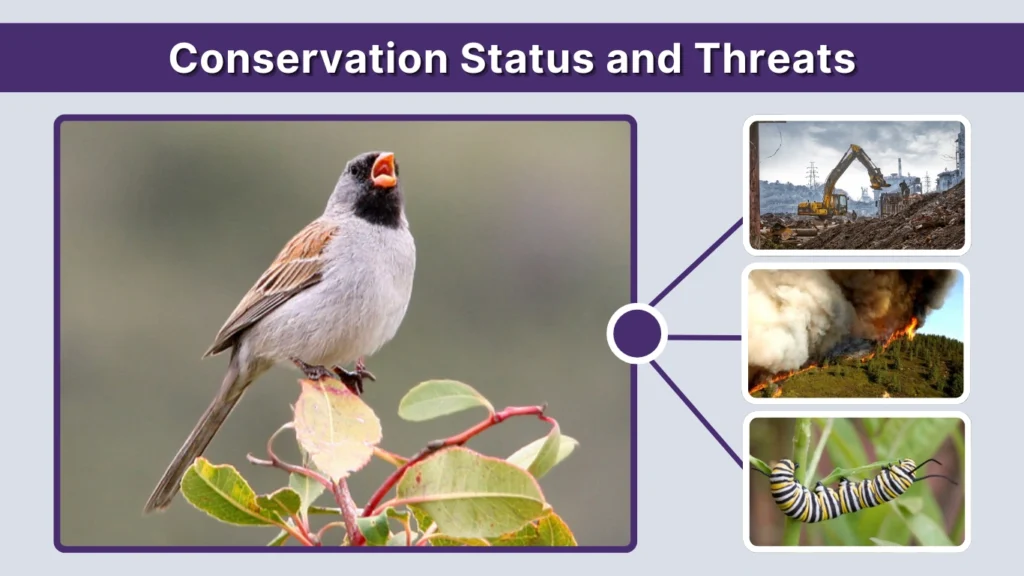
The black-chinned sparrow is generally considered stable across much of its range. However, like many desert species, it faces environmental pressures.
Current Population Status
Overall populations are not currently classified as endangered. In many areas of the southwestern United States, the species remains locally common in suitable habitat.
Long-term monitoring is important, however, as desert ecosystems are sensitive to environmental change.
Major Threats
Key threats include:
- Habitat loss from urban expansion
- Overgrazing in some regions
- Increased wildfire frequency
- Climate change affecting vegetation patterns
Desert scrub and chaparral habitats are particularly vulnerable to development and fire cycles, which can alter shrub density and nesting cover.
Conservation Efforts
Protecting native shrubland and desert ecosystems is essential for the black-chinned sparrow’s continued stability. Land management practices that maintain healthy shrub cover benefit this species and many other desert birds.
Conservation efforts often focus on preserving large tracts of intact habitat and monitoring wildfire impacts.
FAQs
Where does the black-chinned sparrow live?
The black-chinned sparrow lives primarily in the southwestern United States and parts of Mexico. It prefers desert scrub, chaparral, and brushy hillsides with scattered shrubs and low trees.
How do you identify a black-chinned sparrow?
Look for a small gray sparrow with a white belly and a black throat patch, especially in breeding males. It has a slim body, long tail, and typically inhabits dry, brushy landscapes.
What does a black-chinned sparrow eat?
It eats a mix of insects and seeds. During the breeding season, insects like ants and beetles are common, while seeds become more important during cooler months.
Is the black-chinned sparrow migratory?
It is a partial migrant. Some populations remain year-round in warm areas, while others move south or to lower elevations during winter.
What does its song sound like?
Its song is high-pitched and musical, made up of rapid trills and clear notes. Males often sing from the tops of shrubs during breeding season.