
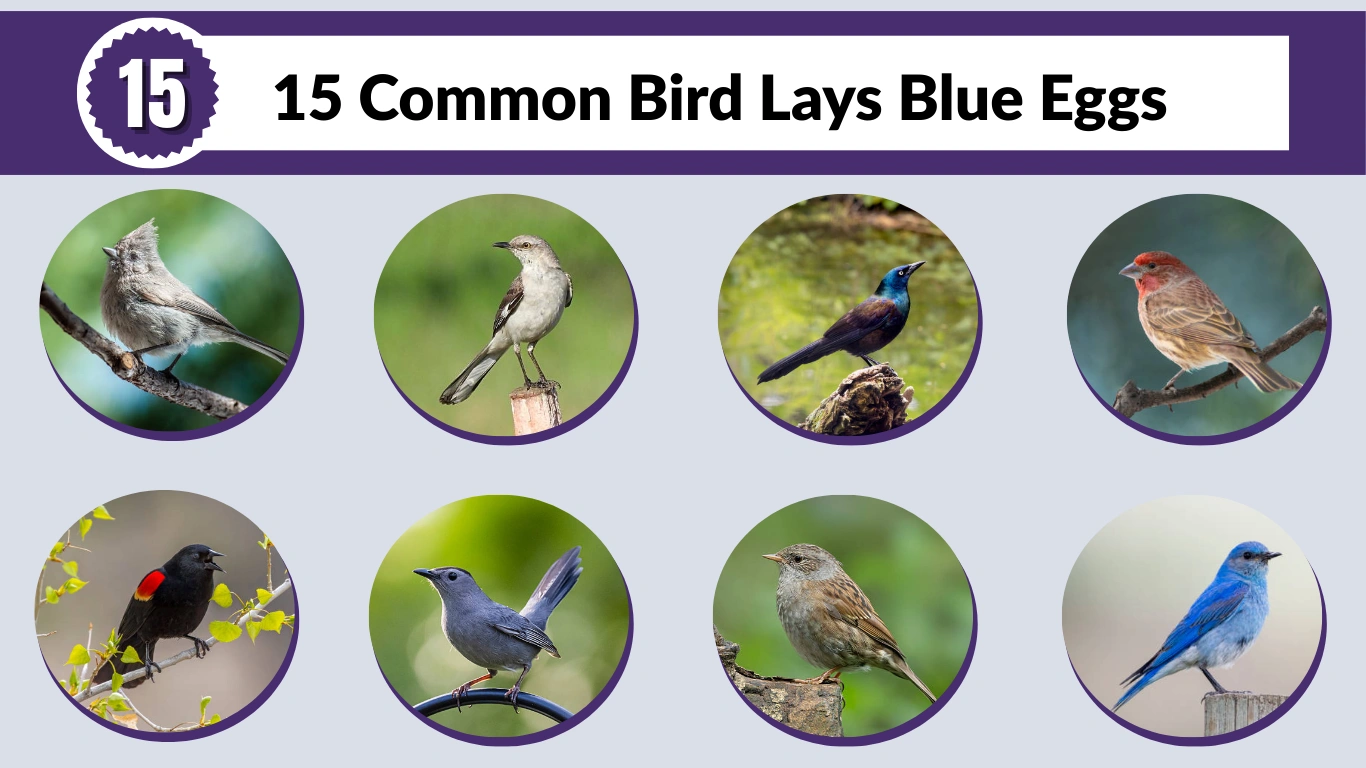
Bird eggs come in many beautiful colors, but blue eggs are among the most fascinating. The unique blue shade comes from a natural pigment called biliverdin, which is added to the eggshell during formation. Many bird species around the world lay blue or bluish-green eggs, especially songbirds and thrushes. These eggs often help camouflage the nest and may also signal the health of the mother bird. From the well-known American Robin to the colorful Eastern Bluebird, several birds are famous for their blue eggs. In this article, you will discover 15 common birds that lay blue eggs.
1. American Robin
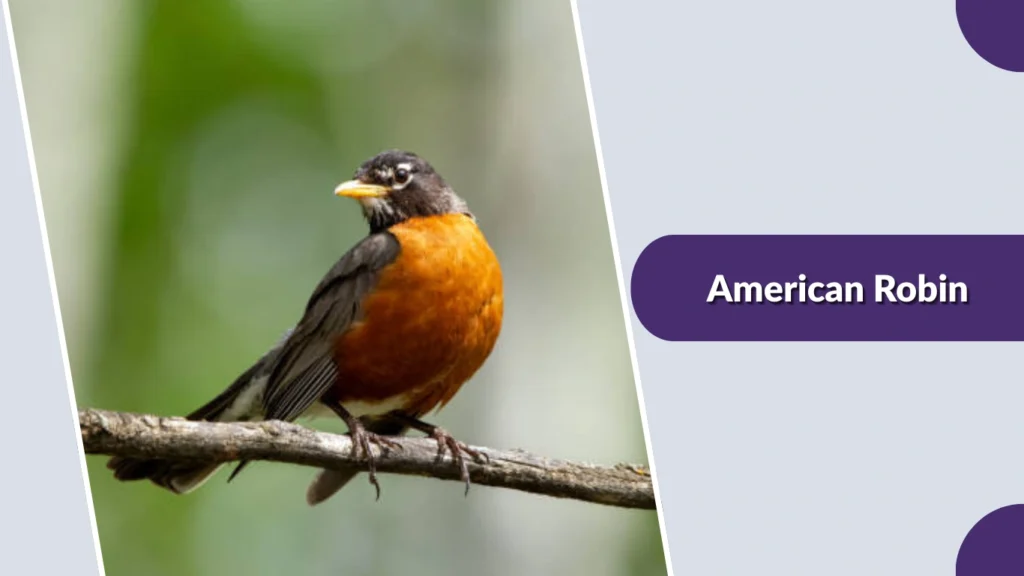
The American Robin is one of the most recognizable birds in North America and is famous for laying bright blue eggs. These eggs are so distinctive that the color is often called “robin’s egg blue.” Robins commonly nest in trees, shrubs, and sometimes on buildings, making them a familiar sight in many backyards during the breeding season.
Identification
- Medium-sized songbird with a round body
- Bright orange-red breast
- Dark gray to brown back and wings
- Yellow bill with a dark tip
- White markings around the eyes and on the lower belly
Habitat
American Robins are highly adaptable and live in a wide range of environments. They are commonly found in forests, gardens, parks, lawns, and suburban neighborhoods. Robins prefer open areas with scattered trees where they can easily search for food on the ground.
Behaviors
Robins are active and social birds, especially during the breeding season. They are often seen hopping across lawns while searching for worms. During nesting, females build cup-shaped nests using grass, mud, and twigs. They usually lay three to five blue eggs per clutch.
Diet
The American Robin has an omnivorous diet. They primarily eat earthworms, insects, and other invertebrates during spring and summer. In fall and winter, their diet shifts more toward fruits and berries such as juniper, holly, and crabapples.
Lifecycle
The breeding season for American Robins typically begins in early spring. Females incubate the eggs for about 12 to 14 days. After hatching, the chicks stay in the nest for around two weeks before fledging. Robins may raise two or even three broods in a single season.
2. Eastern Bluebird
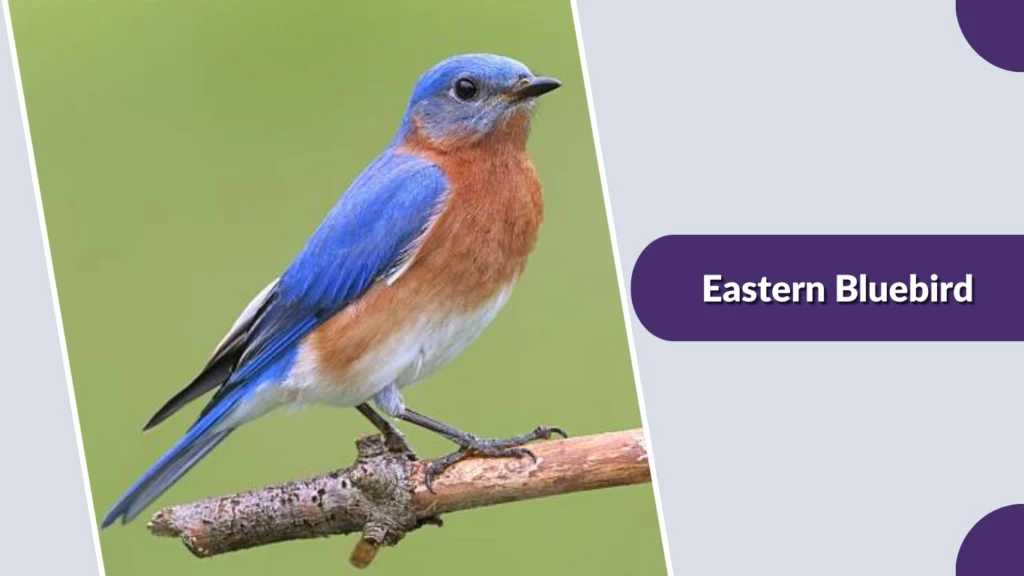
The Eastern Bluebird is a small, colorful songbird well known for its bright blue plumage and soft, musical calls. It is also one of the birds that lays pale blue eggs. These birds are commonly seen perched on fences, wires, or tree branches in open countryside and suburban areas.
Identification
- Small songbird with a compact body
- Bright blue head, back, and wings
- Rusty orange throat and chest
- White belly
- Short, straight bill
Habitat
Eastern Bluebirds prefer open habitats such as meadows, farmlands, orchards, and open woodlands. They are often found near fields with scattered trees or fence posts. Because they are cavity nesters, they commonly use tree holes, old woodpecker nests, or nest boxes placed by people.
Behaviors
Eastern Bluebirds are generally calm and gentle birds. They often perch quietly while scanning the ground for insects. During the breeding season, the female builds a nest inside a cavity using grasses and pine needles. A typical clutch contains four to five pale blue eggs.
Diet
Their diet mainly consists of insects and small invertebrates such as beetles, caterpillars, and grasshoppers. In colder months, when insects are less available, they eat fruits and berries including dogwood, sumac, and holly.
Lifecycle
Eastern Bluebirds usually breed from early spring through summer. The female incubates the eggs for about 12 to 14 days. After hatching, the chicks remain in the nest for roughly 16 to 21 days before leaving. Many pairs raise two broods in a single breeding season.
3. Mountain Bluebird
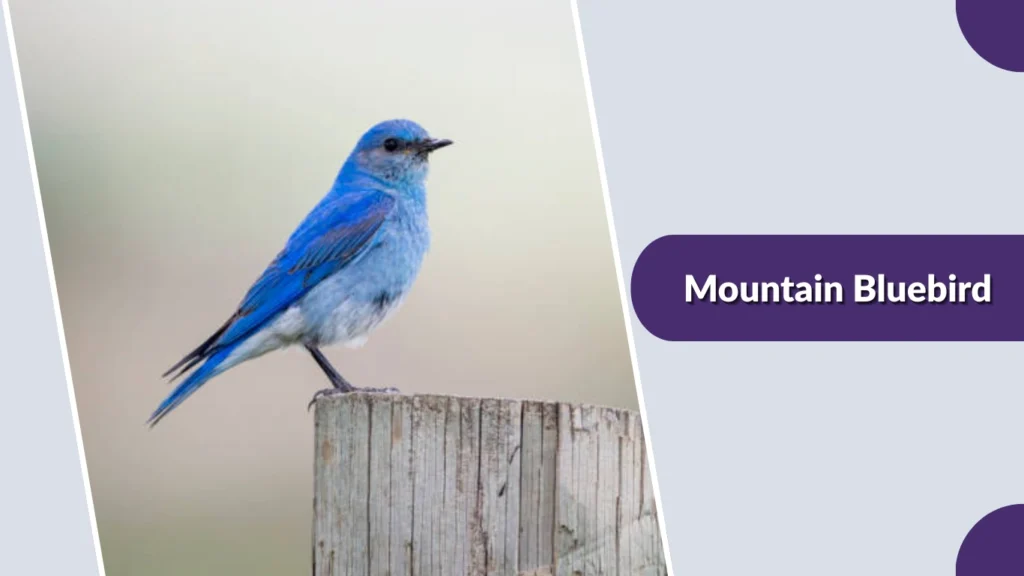
The Mountain Bluebird is a striking songbird known for its brilliant sky-blue feathers. Unlike some other bluebirds, the male is almost entirely blue. This species lays pale blue eggs and is commonly found in open landscapes across western North America.
Identification
- Small thrush with a slender body
- Bright sky-blue plumage in males
- Females are grayish-brown with bluish wings and tail
- Thin, straight black bill
- Long wings and short legs
Habitat
Mountain Bluebirds prefer open habitats such as grasslands, mountain meadows, prairies, and open woodlands. They are often seen in areas with scattered trees or fence posts that provide good perching spots. Like other bluebirds, they nest in cavities, including natural tree holes and nest boxes.
Behaviors
These birds are often seen perched on posts or low branches while scanning for insects. They frequently hover briefly before dropping to the ground to catch prey. During nesting, the female builds a simple nest of grasses inside a cavity and usually lays four to six pale blue eggs.
Diet
Mountain Bluebirds mainly feed on insects such as beetles, grasshoppers, caterpillars, and spiders. During colder months, they supplement their diet with berries and small fruits when insects are less available.
Lifecycle
Breeding usually begins in spring when pairs form nesting territories. The female incubates the eggs for about 13 to 14 days. After hatching, the chicks stay in the nest for around 18 to 21 days before fledging. Some pairs may raise two broods in a season.
4. Western Bluebird
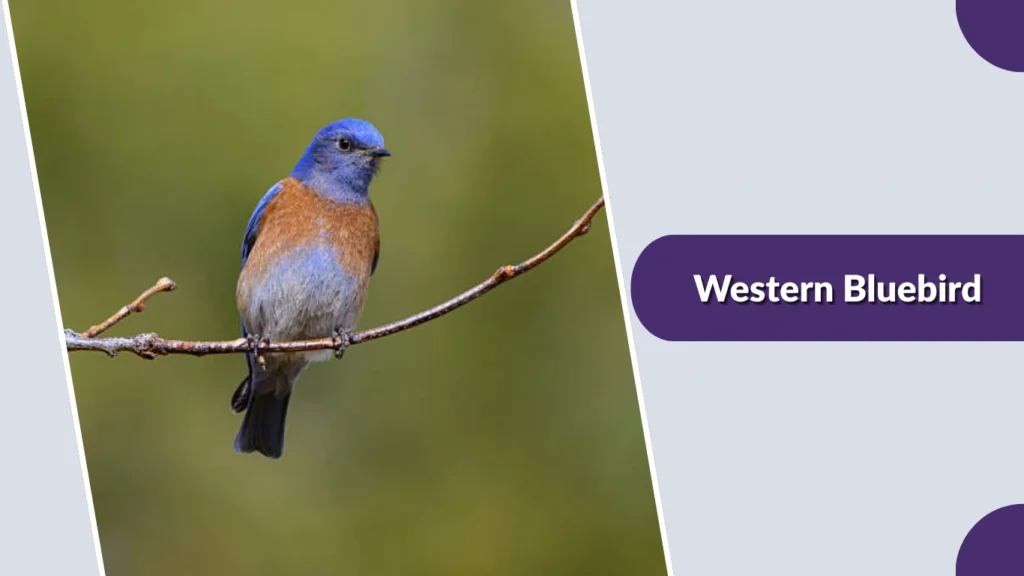
The Western Bluebird is a beautiful songbird found mainly in western North America. Like other bluebirds, it lays soft blue eggs during the breeding season. These birds are often seen in open woodlands and grassy areas where they perch quietly before flying down to catch insects.
Identification
- Small songbird with a compact body
- Deep blue head, wings, and back
- Rusty orange chest and sides
- Grayish-blue belly
- Short, straight bill
Habitat
Western Bluebirds prefer open forests, oak woodlands, farmlands, and parklands. They are commonly found in areas with scattered trees and open ground. Since they are cavity nesters, they use natural tree holes, old woodpecker cavities, and nest boxes.
Behaviors
Western Bluebirds are social birds and sometimes gather in small groups outside the breeding season. They often perch on branches or fence posts while watching for prey. During nesting, the female builds a nest inside a cavity using grasses and plant materials and lays around four to six blue eggs.
Diet
Their diet mainly consists of insects such as beetles, grasshoppers, and caterpillars. They also eat spiders and other small invertebrates. In fall and winter, they consume berries and small fruits when insects are less available.
Lifecycle
Breeding usually begins in spring. The female incubates the eggs for about 12 to 14 days. After hatching, the chicks remain in the nest for roughly 18 to 22 days before leaving. Western Bluebirds may raise more than one brood during the breeding season.
5. European Starling
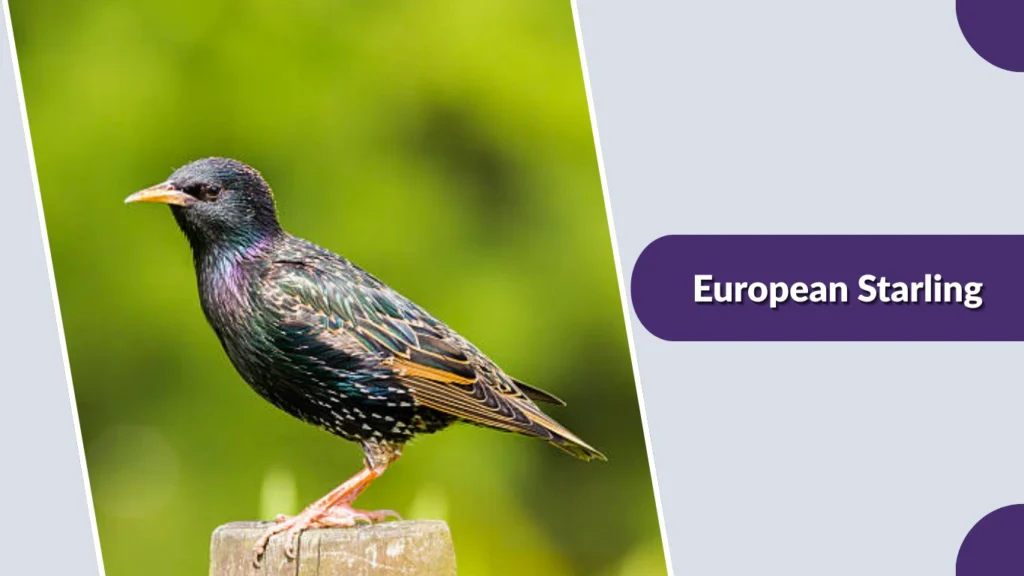
The European Starling is a highly adaptable bird that has spread across many parts of the world. It is known for its glossy, iridescent feathers and strong flocking behavior. This species lays pale blue eggs and often nests in cavities found in trees, buildings, or other structures.
Identification
- Medium-sized bird with a compact body
- Glossy black plumage with green and purple iridescence
- Short tail and pointed wings
- Yellow bill during breeding season
- Speckled white spots in winter plumage
Habitat
European Starlings thrive in a variety of environments, including cities, suburbs, farmland, and open countryside. They prefer areas with access to open ground for feeding and nearby cavities for nesting, such as tree holes or building crevices.
Behaviors
These birds are very social and often form large flocks, especially outside the breeding season. Their flocks can create impressive aerial displays known as murmurations. During nesting, females lay about four to six pale blue eggs in a cavity nest lined with grasses and feathers.
Diet
European Starlings have a varied diet. They commonly eat insects, earthworms, and other invertebrates found in soil. They also feed on fruits, seeds, and grains, especially in agricultural areas.
Lifecycle
Breeding typically begins in spring. The female incubates the eggs for around 12 days. Once hatched, the chicks remain in the nest for about three weeks before fledging. In favorable conditions, starlings may raise more than one brood in a season.
6. Dunnock
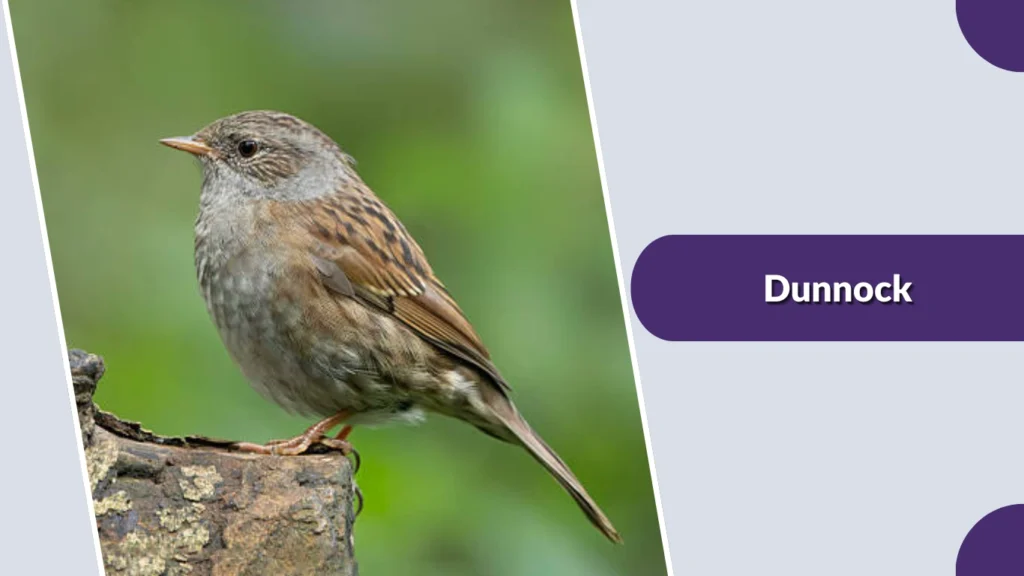
The Dunnock is a small, modest-looking bird commonly found in gardens and hedgerows across Europe and parts of Asia. Although it is not brightly colored, it is well known for laying beautiful blue eggs. Dunnocks are often seen quietly hopping along the ground while searching for food.
Identification
- Small, sparrow-like bird with a slim body
- Brown streaked back and wings
- Gray head and chest
- Thin, pointed bill
- Pinkish legs
Habitat
Dunnocks prefer habitats with dense vegetation such as hedgerows, shrubs, gardens, woodland edges, and parks. They stay close to cover and are often found in areas with thick bushes where they can hide easily.
Behaviors
Dunnocks are usually solitary and spend much of their time on the ground. They move quickly through low vegetation while searching for insects. During the breeding season, the female builds a neat cup-shaped nest in dense shrubs and typically lays three to five bright blue eggs.
Diet
Their diet mainly consists of insects, spiders, and other small invertebrates. Dunnocks also eat seeds and small plant materials, especially during colder months when insects are less available.
Lifecycle
Breeding season begins in early spring. The female incubates the eggs for about 12 to 13 days. After hatching, the chicks stay in the nest for around 10 to 14 days before fledging. Dunnocks may produce multiple broods during a single breeding season.
7. Song Thrush
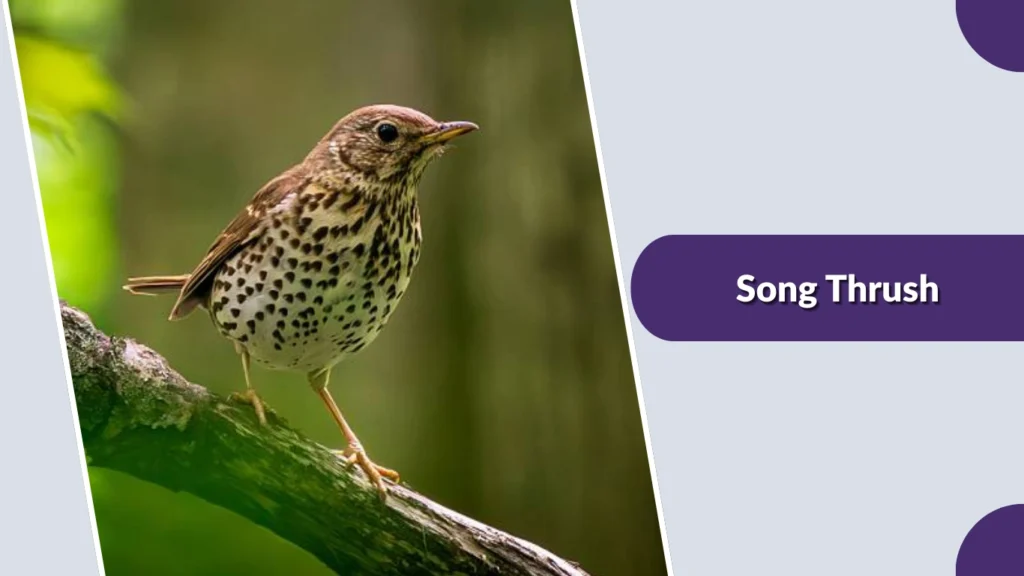
The Song Thrush is a well-known European songbird famous for its loud, melodious singing. It is also recognized for laying bright blue eggs marked with dark spots. These birds are commonly found in gardens, woodlands, and parks where they forage for food on the ground.
Identification
- Medium-sized thrush with a round body
- Warm brown upperparts
- Cream or white underparts with dark brown spots
- Short, straight bill
- Pinkish legs
Habitat
Song Thrushes live in a variety of habitats including forests, hedgerows, farmland, gardens, and city parks. They prefer areas with trees or shrubs for nesting and open ground nearby where they can search for food.
Behaviors
Song Thrushes are famous for their repetitive and clear songs, often heard early in the morning or evening. They are also known for using stones as “anvils” to break open snail shells. The female builds a sturdy nest in shrubs or trees and usually lays four to five blue eggs with black spots.
Diet
Their diet includes earthworms, insects, snails, and other small invertebrates. They also eat berries and fruits, especially during autumn and winter when insect food becomes scarce.
Lifecycle
The breeding season typically starts in spring. The female incubates the eggs for about 12 to 14 days. After hatching, the chicks stay in the nest for roughly two weeks before fledging. Song Thrushes may raise two or three broods in a year.
8. Eurasian Blackbird
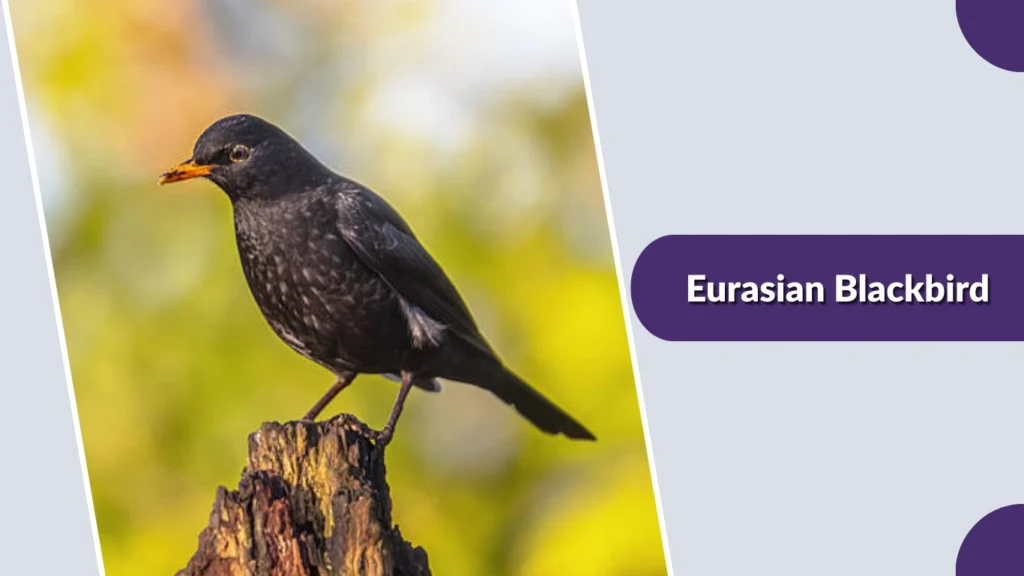
The Eurasian Blackbird is a common thrush found across Europe, Asia, and North Africa. It is well known for its rich, flute-like song and for laying beautiful blue-green eggs with brown markings. These birds are frequently seen in gardens, parks, and woodland edges.
Identification
- Medium-sized thrush with a rounded body
- Male is entirely black with a bright yellow bill and eye-ring
- Female is dark brown with a slightly lighter throat
- Long tail and strong legs
- Smooth, glossy plumage
Habitat
Eurasian Blackbirds thrive in woodlands, gardens, hedgerows, parks, and suburban areas. They prefer habitats with dense shrubs or trees for nesting and open ground nearby for feeding.
Behaviors
These birds are often seen hopping across lawns while searching for food. Males are especially known for their melodious singing from treetops or rooftops. The female builds a sturdy cup-shaped nest using grass, mud, and twigs, and typically lays three to five blue-green eggs with reddish-brown speckles.
Diet
Their diet mainly includes earthworms, insects, snails, and other small invertebrates. They also eat berries and fruits, particularly in autumn and winter when insect food becomes less available.
Lifecycle
The breeding season usually begins in early spring. The female incubates the eggs for about 12 to 14 days. Once hatched, the chicks remain in the nest for around two weeks before fledging. Eurasian Blackbirds often raise multiple broods during a single breeding season.
9. Gray Catbird
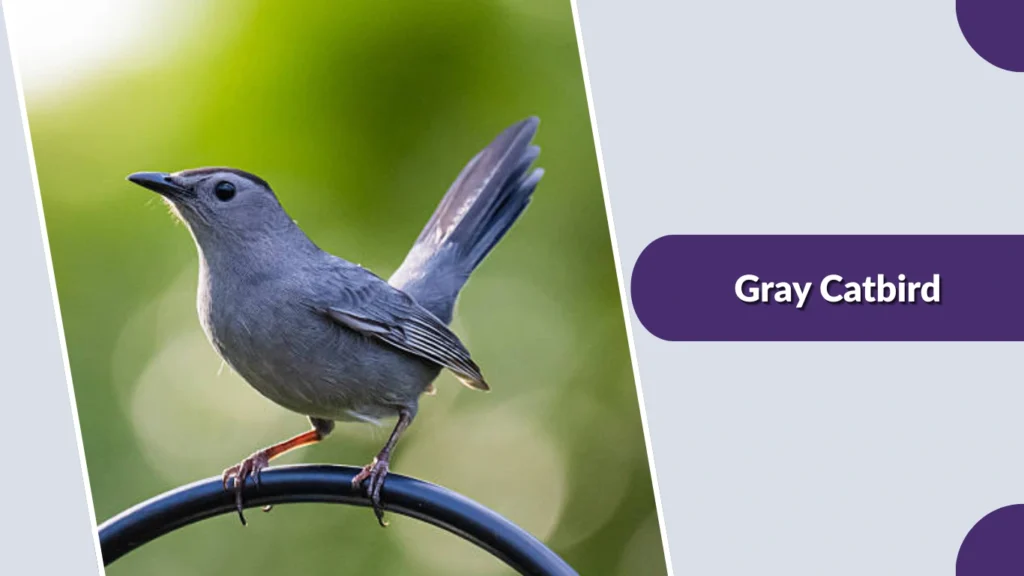
The Gray Catbird is a sleek songbird named for its distinctive call that sounds like a cat’s meow. It is a member of the mimid family, meaning it can mimic the sounds of other birds. Gray Catbirds lay beautiful blue-green eggs and are commonly found in dense shrubs and garden thickets.
Identification
- Medium-sized songbird with a slim body
- Smooth slate-gray plumage
- Black cap on the head
- Rusty patch under the tail
- Thin, slightly curved black bill
Habitat
Gray Catbirds prefer habitats with thick vegetation such as shrublands, forest edges, gardens, hedgerows, and parks. They are especially common in areas with dense bushes that provide good cover for nesting.
Behaviors
These birds are usually secretive and spend much of their time hiding in dense shrubs. They are excellent vocalists and often sing a mix of whistles, chatters, and mimicry. The female builds a cup-shaped nest in thick shrubs and typically lays three to five turquoise-blue eggs.
Diet
Gray Catbirds eat a wide variety of foods. Their diet includes insects, beetles, caterpillars, ants, and spiders. They also eat many types of berries and fruits, especially during late summer and fall.
Lifecycle
Breeding usually begins in late spring. The female incubates the eggs for about 12 to 13 days. After hatching, the chicks remain in the nest for roughly 10 to 12 days before fledging. Gray Catbirds usually raise one or two broods each year.
10. House Finch
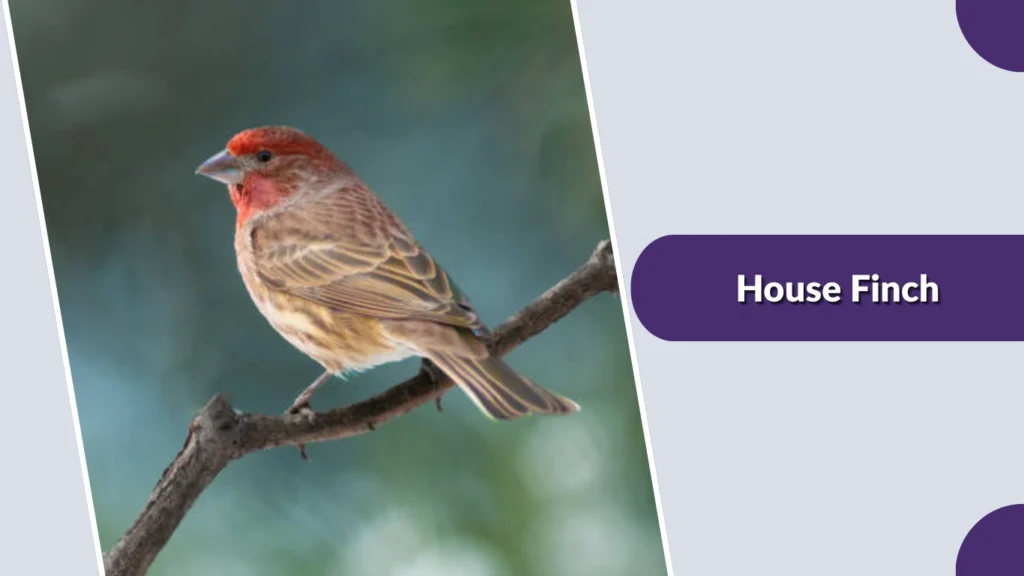
The House Finch is a small and cheerful songbird commonly found in towns, cities, and suburban areas. It is well known for its pleasant warbling song and adaptability to human environments. House Finches typically lay pale blue eggs, often lightly speckled, inside cup-shaped nests built on buildings, trees, or ledges.
Identification
- Small songbird with a compact body
- Brown streaked back and belly
- Males have red coloring on the head, throat, and chest
- Females are brown and heavily streaked without red
- Short, conical bill
Habitat
House Finches thrive in urban and suburban environments, including neighborhoods, parks, farms, and open woodlands. They frequently nest on building ledges, hanging plants, trees, and shrubs close to human activity.
Behaviors
These birds are social and often seen in small flocks, especially around bird feeders. During the breeding season, the female builds a small cup-shaped nest using twigs, grasses, and feathers. She usually lays three to five pale blue eggs that may have light speckles.
Diet
House Finches mainly eat seeds, grains, and plant materials. They also feed on buds, fruits, and berries. Unlike many songbirds, they eat relatively few insects and rely mostly on plant-based foods.
Lifecycle
Breeding can begin as early as late winter in some areas. The female incubates the eggs for about 12 to 14 days. After hatching, the chicks stay in the nest for around 12 to 15 days before fledging. House Finches may raise several broods during a single breeding season.
11. Red-winged Blackbird
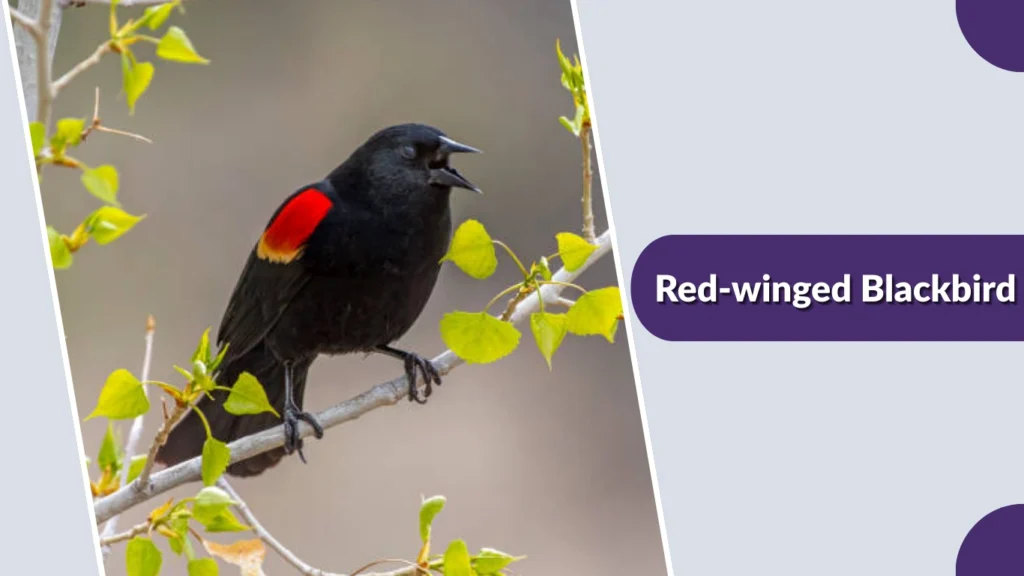
The Red-winged Blackbird is a striking and widely distributed bird across North America. It is especially known for the male’s bold red and yellow shoulder patches. This species lays pale blue to bluish-green eggs with dark markings and often nests in wetlands and marshy areas.
Identification
- Medium-sized blackbird with a sturdy body
- Male is glossy black with bright red and yellow shoulder patches
- Female is brown with heavy streaks, resembling a large sparrow
- Sharp, pointed bill
- Medium-length tail
Habitat
Red-winged Blackbirds are most commonly found in wetlands, marshes, ponds, and grassy fields. They prefer areas with tall vegetation such as reeds and cattails where they can easily hide their nests.
Behaviors
These birds are highly territorial during the breeding season. Males often perch on tall plants and loudly defend their nesting areas. Females build cup-shaped nests attached to reeds or grasses over water and usually lay three to four bluish-green eggs with dark markings.
Diet
Red-winged Blackbirds have a varied diet that includes insects, spiders, seeds, and grains. During the breeding season, they mainly feed on insects, while in fall and winter they often eat seeds and agricultural grains.
Lifecycle
Breeding begins in spring when males establish territories in wetland areas. The female incubates the eggs for about 11 to 13 days. After hatching, the chicks stay in the nest for roughly 10 to 14 days before leaving. Many pairs raise one or two broods per season.
12. Common Grackle
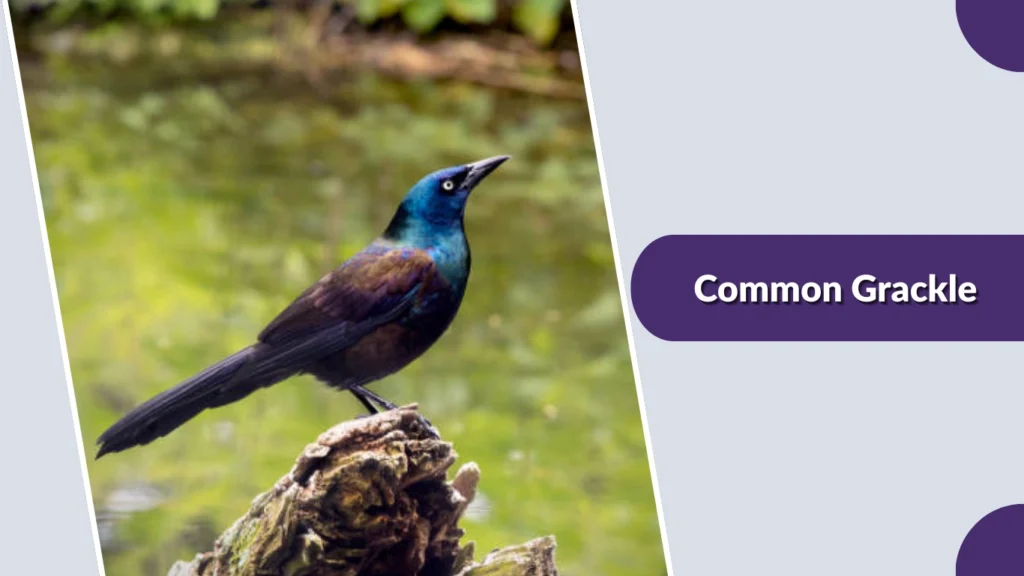
The Common Grackle is a large, glossy blackbird known for its iridescent feathers and piercing yellow eyes. This adaptable species often lays pale blue to bluish-green eggs with dark markings. Common Grackles are frequently seen in open fields, wetlands, and urban areas where they forage for food.
Identification
- Large blackbird with a long body and tail
- Glossy black plumage with purple or green iridescence
- Bright yellow eyes
- Long, pointed bill
- Long legs and strong stance
Habitat
Common Grackles inhabit a wide range of environments including wetlands, farmland, parks, suburbs, and city areas. They often nest in tall trees near water but can also be found in urban parks and residential neighborhoods.
Behaviors
These birds are highly social and often gather in large flocks, especially outside the breeding season. During nesting, females build bulky cup-shaped nests in trees or shrubs using twigs, grasses, and mud. A typical clutch contains four to six bluish eggs with dark spots or streaks.
Diet
Common Grackles are opportunistic feeders. Their diet includes insects, earthworms, small fish, frogs, seeds, grains, and fruits. They are also known to forage in agricultural fields and occasionally steal food from other birds.
Lifecycle
Breeding typically begins in spring. The female incubates the eggs for about 12 to 14 days. After hatching, the chicks remain in the nest for around two weeks before fledging. Common Grackles usually raise one brood per breeding season.
13. Northern Mockingbird
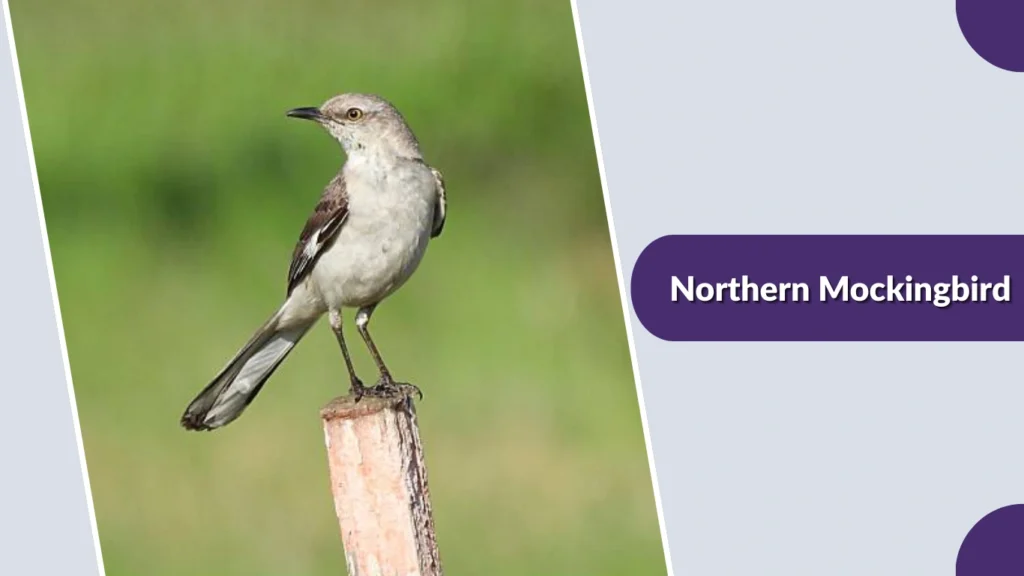
The Northern Mockingbird is a well-known songbird famous for its ability to mimic the sounds of many other birds and even environmental noises. This species lays pale blue or greenish eggs with brown spots. Northern Mockingbirds are commonly found in gardens, parks, and suburban neighborhoods.
Identification
- Medium-sized songbird with a slender body
- Gray upperparts and pale gray or white underparts
- Long tail with white outer feathers
- White wing patches visible in flight
- Thin, slightly curved bill
Habitat
Northern Mockingbirds live in open areas with shrubs and scattered trees. They are commonly found in residential neighborhoods, parks, farmland edges, and open woodlands. These birds prefer areas that provide both open feeding spaces and dense shrubs for nesting.
Behaviors
Northern Mockingbirds are very vocal and can imitate the songs of many other bird species. Males often sing for long periods, especially during the breeding season. The female builds a cup-shaped nest in shrubs or small trees and typically lays three to five bluish eggs with brown speckles.
Diet
Their diet includes a mix of insects and fruits. They commonly eat beetles, ants, grasshoppers, and caterpillars. During fall and winter, they rely more on berries and small fruits such as holly and mulberry.
Lifecycle
Breeding usually begins in spring. The female incubates the eggs for about 12 to 13 days. Once hatched, the chicks remain in the nest for roughly 11 to 13 days before fledging. Northern Mockingbirds often raise two or three broods in one breeding season.
14. Juniper Titmouse
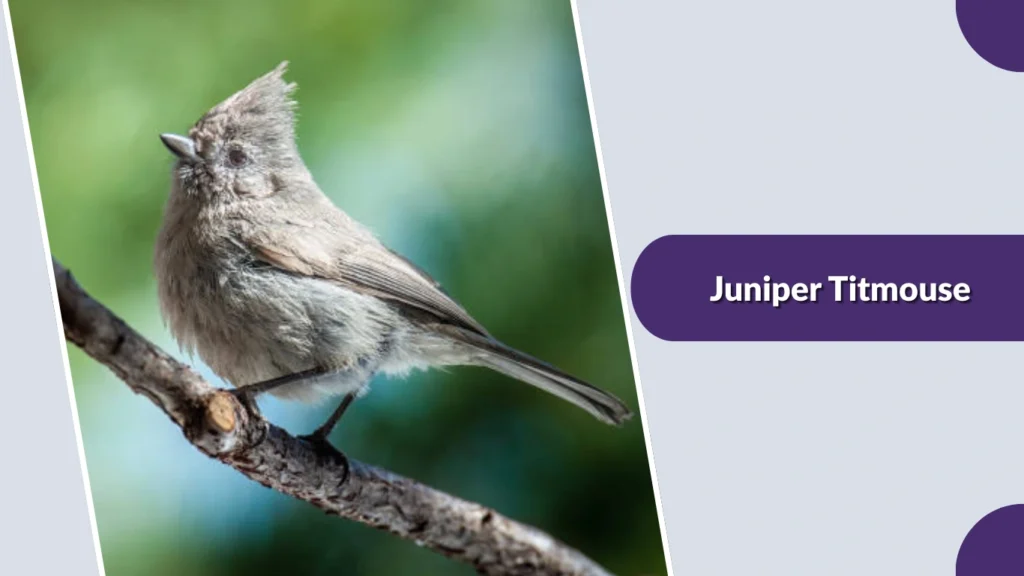
The Juniper Titmouse is a small gray songbird found mainly in the western United States. It belongs to the titmouse family and is known for its soft calls and active behavior. This species lays pale blue eggs, often lightly speckled, in nests built inside tree cavities.
Identification
- Small bird with a compact body
- Soft gray plumage overall
- Slight crest on the head
- Dark eyes and small black bill
- Long tail compared to body size
Habitat
Juniper Titmice are most commonly found in dry woodlands, especially areas dominated by juniper and pinyon pine trees. They prefer open woodland habitats with scattered trees where natural cavities are available for nesting.
Behaviors
These birds are active and curious, often moving quickly through branches while searching for food. They usually travel in pairs or small family groups. During nesting, the female builds a soft nest inside a tree cavity and lays about five to seven pale blue eggs with small speckles.
Diet
Juniper Titmice mainly feed on insects such as beetles, caterpillars, and spiders. They also eat seeds and small plant materials, especially during winter when insects are less abundant.
Lifecycle
The breeding season typically begins in spring. The female incubates the eggs for about 14 days. After hatching, the chicks remain in the nest for roughly 16 to 18 days before leaving. Parents continue feeding the young for some time after they fledge.
15. European Greenfinch
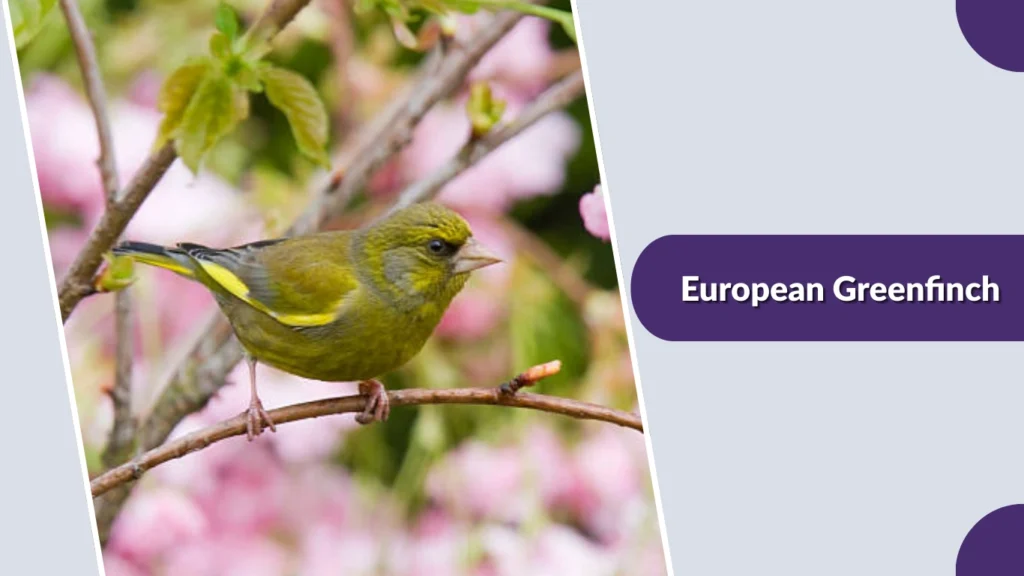
The European Greenfinch is a sturdy songbird commonly found across Europe, parts of Asia, and North Africa. It is known for its olive-green plumage and strong, seed-cracking bill. This species lays pale blue eggs, usually marked with small brown or purple spots, in nests built in shrubs or trees.
Identification
- Medium-sized finch with a thick body
- Olive-green plumage with yellow flashes on the wings and tail
- Strong, conical bill designed for cracking seeds
- Dark eyes and short neck
- Males are brighter green than females
Habitat
European Greenfinches are commonly found in gardens, parks, farmland, hedgerows, and woodland edges. They adapt well to human environments and are frequently seen around bird feeders and cultivated areas.
Behaviors
These birds are often seen perched on treetops or feeding in small flocks. During the breeding season, the female builds a neat cup-shaped nest in dense shrubs or trees. She usually lays four to six pale blue eggs with darker speckles.
Diet
The diet of the European Greenfinch mainly consists of seeds from grasses, weeds, and trees. They also eat berries and occasionally insects, especially during the breeding season when protein is important for feeding chicks.
Lifecycle
Breeding typically begins in spring. The female incubates the eggs for about 13 to 14 days. After hatching, the chicks remain in the nest for roughly two weeks before fledging. European Greenfinches may raise two broods during a breeding season.
FAQs
Which birds are known for laying blue eggs?
Several bird species lay blue eggs. Some of the most well-known include the American Robin, Eastern Bluebird, Mountain Bluebird, European Starling, Dunnock, and Gray Catbird. The blue color comes from a pigment called biliverdin that is deposited on the eggshell during formation.
Why are some bird eggs blue?
Blue eggs are colored by a natural pigment called biliverdin. This pigment is added to the eggshell while the egg forms inside the female bird. The amount of pigment determines how deep the blue color appears.
Are blue bird eggs rare?
Blue eggs are not extremely rare, but they are less common than white or speckled eggs. Many songbirds, thrushes, and some blackbirds produce blue or bluish-green eggs.
Do all bluebirds lay blue eggs?
Most bluebird species lay blue eggs, but not always. Some Eastern Bluebirds may lay pale pink or white eggs instead of blue, although blue eggs are the most common.
What bird lays the brightest blue eggs?
The American Robin is famous for laying some of the brightest blue eggs. The color is so distinctive that the shade is commonly referred to as “robin’s egg blue.”
