
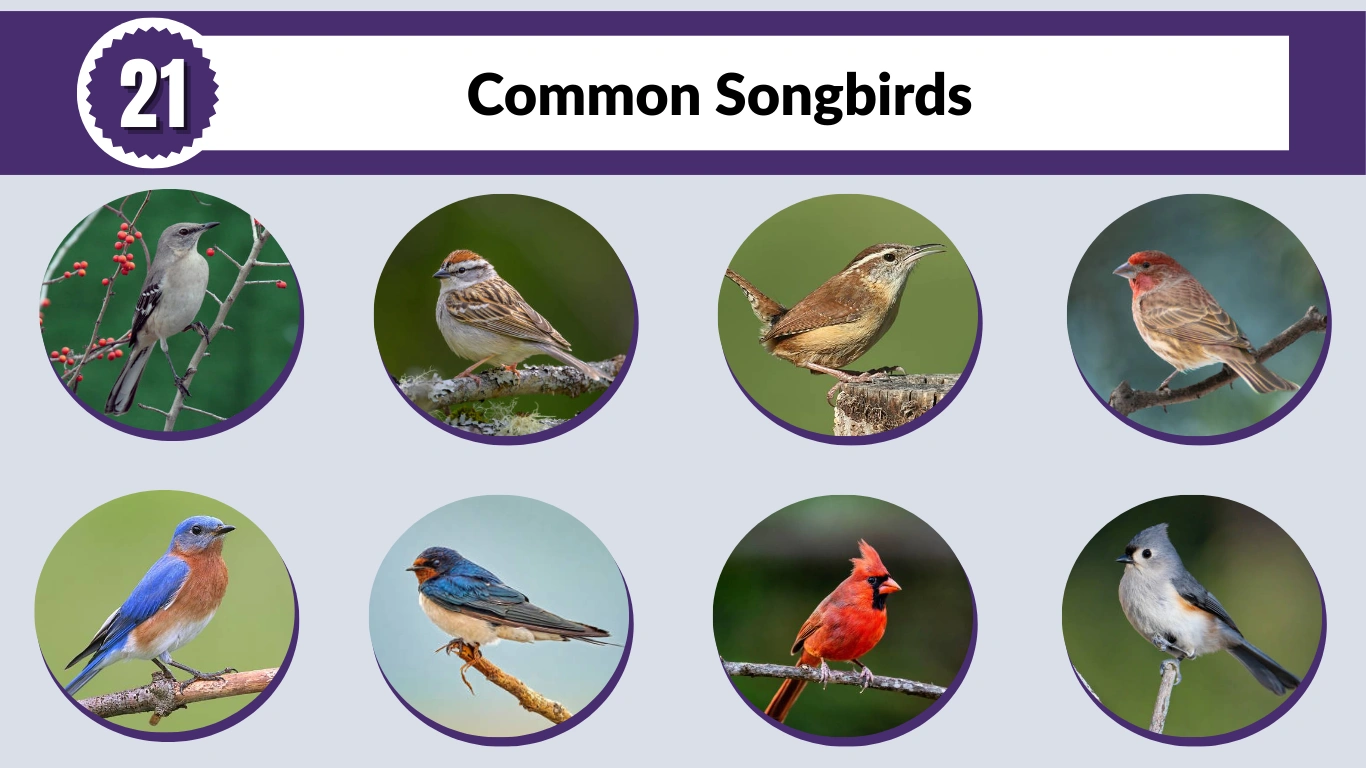
Songbirds bring color, movement, and music to our everyday surroundings, making them some of the most beloved birds in the world. From backyards and gardens to forests and wetlands, these birds are found in a wide variety of habitats and are often recognized by their distinctive songs and behaviors. This guide highlights 21 common songbirds, offering clear and engaging information about each species. Whether you are a beginner birdwatcher or simply curious about the birds you see and hear daily, this list will help you identify and better understand these familiar feathered companions.
1. American Robin
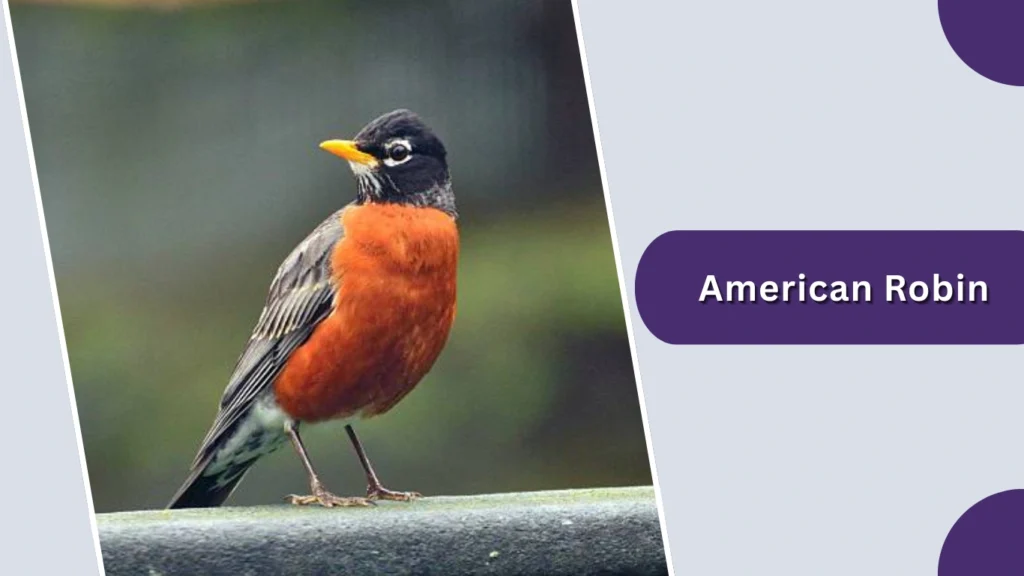
The American Robin is one of the most recognizable and widespread songbirds in North America. Frequently seen on lawns, fields, and forest edges, it is especially famous for its early-morning song and its association with springtime. Its bold coloring and confident behavior make it easy to spot, even for beginners in birdwatching.
Identification
- Grayish-brown back and head
- Bright orange to reddish breast
- White throat marked with dark streaks
- Yellow bill, darker in winter
- Medium-sized body with long legs and upright posture
Habitat
American Robins thrive in a wide variety of habitats. They are commonly found in deciduous and mixed forests, woodland edges, parks, gardens, farms, and suburban neighborhoods. They prefer open ground for foraging, combined with trees or shrubs for nesting and shelter. Their adaptability allows them to live close to humans without difficulty.
Behaviors
Robins are active, ground-feeding birds often seen running a short distance, stopping suddenly, and cocking their heads to listen for movement underground. They are strongly territorial during the breeding season and will aggressively defend nesting areas. Their song is loud, clear, and musical, often heard at dawn and dusk.
Diet
Their diet mainly consists of earthworms, insects, spiders, and other invertebrates during spring and summer. In fall and winter, they shift toward berries and fruits, including holly, juniper, and crabapples.
Lifespan
American Robins usually live between 2 and 6 years in the wild. However, some individuals have been known to survive over a decade under favorable conditions.
2. House Sparrow
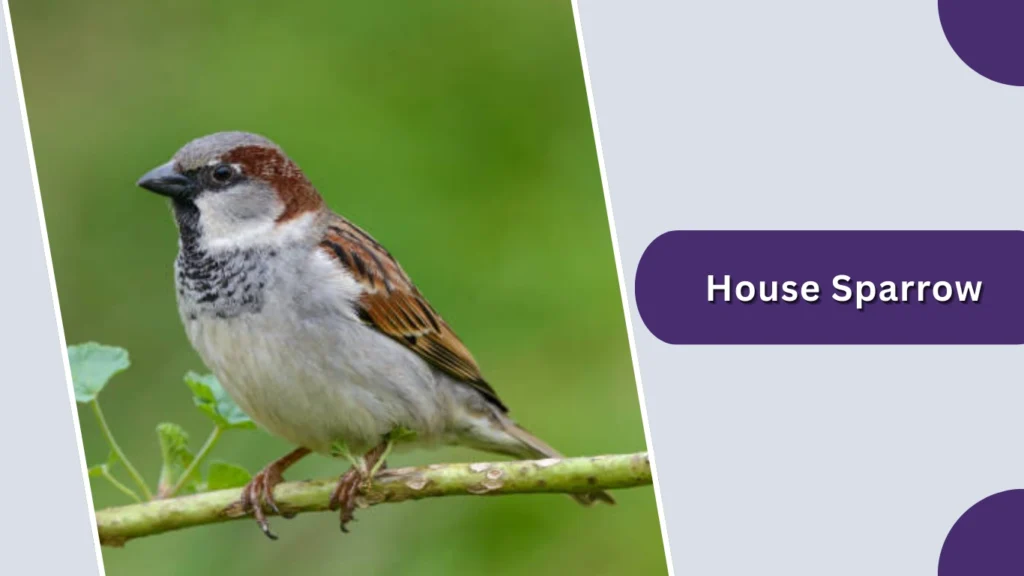
The House Sparrow is a small, energetic songbird that lives closely alongside humans. Originally native to Europe and Asia, it is now found across much of the world. Its adaptability, social nature, and constant activity make it one of the most commonly observed birds in urban and suburban areas.
Identification
- Small, stocky body
- Males have gray crowns, black bibs, and chestnut-colored necks
- Females are plain brown and gray with a pale eyebrow stripe
- Short, thick, cone-shaped bill
- Short tail and rounded wings
Habitat
House Sparrows are strongly associated with human settlements. They are commonly found in cities, towns, farms, villages, and suburbs. They nest in buildings, roof crevices, vents, and other man-made structures, though they may also use trees or shrubs when available. They rarely inhabit dense forests or remote wilderness areas.
Behaviors
These birds are highly social and often seen in noisy flocks. They are bold and curious, frequently hopping on sidewalks, outdoor cafes, or bird feeders. House Sparrows communicate with constant chirping sounds and show strong dominance behavior around food sources.
Diet
House Sparrows eat a varied diet that includes seeds, grains, crumbs, insects, and food scraps. During the breeding season, insects become especially important for feeding chicks.
Lifespan
In the wild, House Sparrows typically live 3–5 years, though many do not survive their first year. Some individuals have been recorded living over 10 years.
3. Northern Cardinal
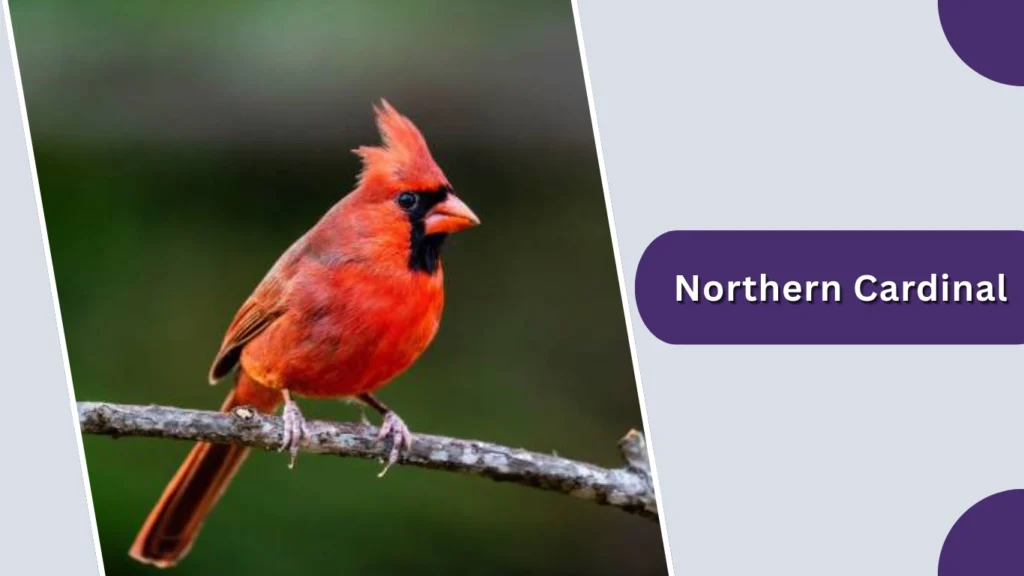
The Northern Cardinal is a striking and well-loved songbird, best known for its brilliant red coloration and clear, whistling song. It is a year-round resident across much of North America and is often seen at backyard feeders, making it a favorite among bird enthusiasts.
Identification
- Males are bright red with a black mask around the face
- Females are warm brown with reddish highlights on wings and tail
- Prominent crest on the head
- Thick, orange-red cone-shaped bill
- Medium-sized body with long tail
Habitat
Northern Cardinals inhabit a wide range of environments including woodlands, forest edges, shrublands, wetlands, gardens, and suburban areas. They prefer dense shrubs or thickets for nesting and cover, often staying close to ground level. Their ability to adapt to human-altered landscapes has helped their population expand over time.
Behaviors
Cardinals are territorial, especially during the breeding season, and males may aggressively defend their space, even attacking reflections in windows or mirrors. Unlike many songbirds, both males and females sing. They are usually seen in pairs or small family groups rather than large flocks.
Diet
Their diet consists mainly of seeds, grains, and fruits, along with insects such as beetles, grasshoppers, and caterpillars during warmer months. They readily visit bird feeders, especially for sunflower seeds.
Lifespan
Northern Cardinals generally live 3–5 years in the wild, though some individuals have been known to survive for more than 10 years under favorable conditions.
4. Blue Jay
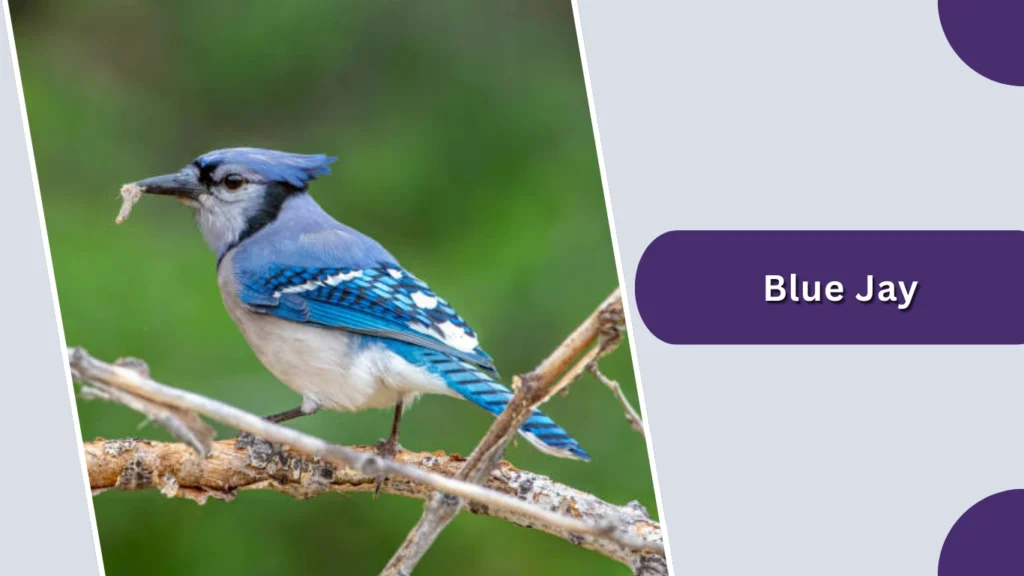
The Blue Jay is a bold, intelligent songbird known for its striking blue plumage and loud, varied calls. Often seen in woodlands and suburban neighborhoods, it is both admired for its beauty and noted for its assertive personality and complex social behavior.
Identification
- Bright blue upperparts with white underparts
- Black necklace-like band across the chest
- White face with black markings
- Prominent crest on the head
- Strong black bill and long tail
Habitat
Blue Jays are commonly found in deciduous and mixed forests, especially areas with oak trees. They also thrive in parks, gardens, and suburban neighborhoods with mature trees. They prefer habitats that provide both open spaces for foraging and dense cover for nesting and protection.
Behaviors
These birds are highly intelligent and curious. Blue Jays are known for mimicking the calls of hawks, possibly to warn other birds or deceive rivals. They are social but can be aggressive, especially around food sources. Jays often cache food, storing it for later use.
Diet
Blue Jays have a varied diet that includes acorns, nuts, seeds, fruits, insects, and occasionally small vertebrates. Acorns are especially important and play a role in forest regeneration, as forgotten caches may sprout into new trees.
Lifespan
In the wild, Blue Jays typically live around 5–7 years, though some individuals have been recorded living more than 15 years.
5. American Goldfinch
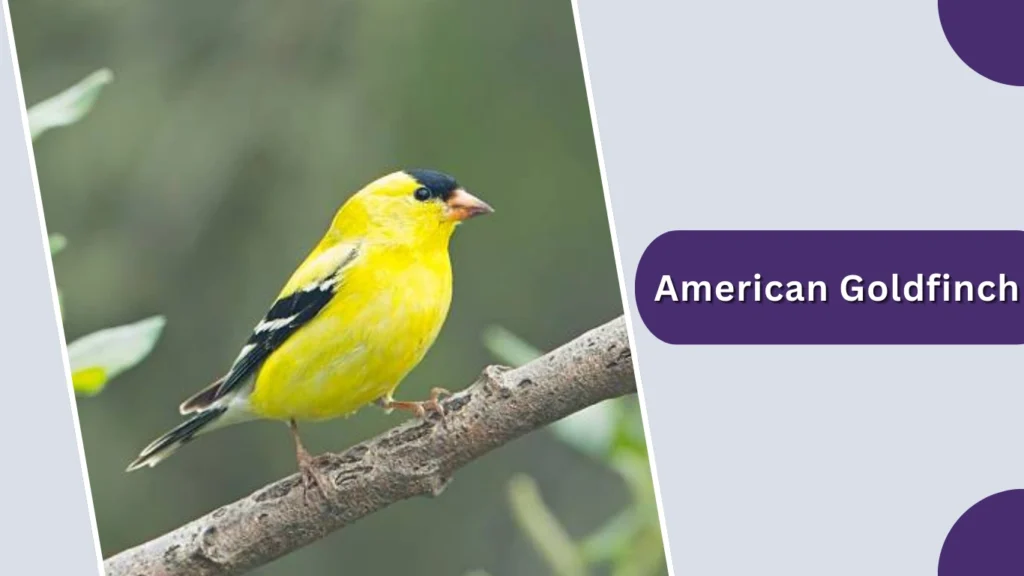
The American Goldfinch is a small, lively songbird admired for its bright yellow breeding plumage and cheerful, undulating flight. It is commonly seen in open fields and backyards, especially where seed-bearing plants are abundant.
Identification
- Males are bright yellow with a black forehead and black wings
- Females are duller yellow-brown
- Black wings with white wing bars
- Short, notched tail
- Small, conical orange bill
Habitat
American Goldfinches prefer open habitats such as meadows, fields, grasslands, and roadsides. They are also common in gardens and suburban areas with plenty of seed-producing plants. Unlike many songbirds, they often breed later in the summer, timing nesting with peak seed availability.
Behaviors
These birds are social and usually seen in small flocks, especially outside the breeding season. Their flight pattern is distinctive, rising and falling in a wave-like motion. Goldfinches are agile climbers and are often seen clinging to plant stems while feeding.
Diet
Their diet consists almost entirely of seeds, particularly from thistles, sunflowers, and asters. Insects are occasionally eaten, especially during the breeding season, but seeds remain their primary food source year-round.
Lifespan
American Goldfinches typically live 3–6 years in the wild, with some individuals surviving up to 10 years under favorable conditions.
6. Song Sparrow
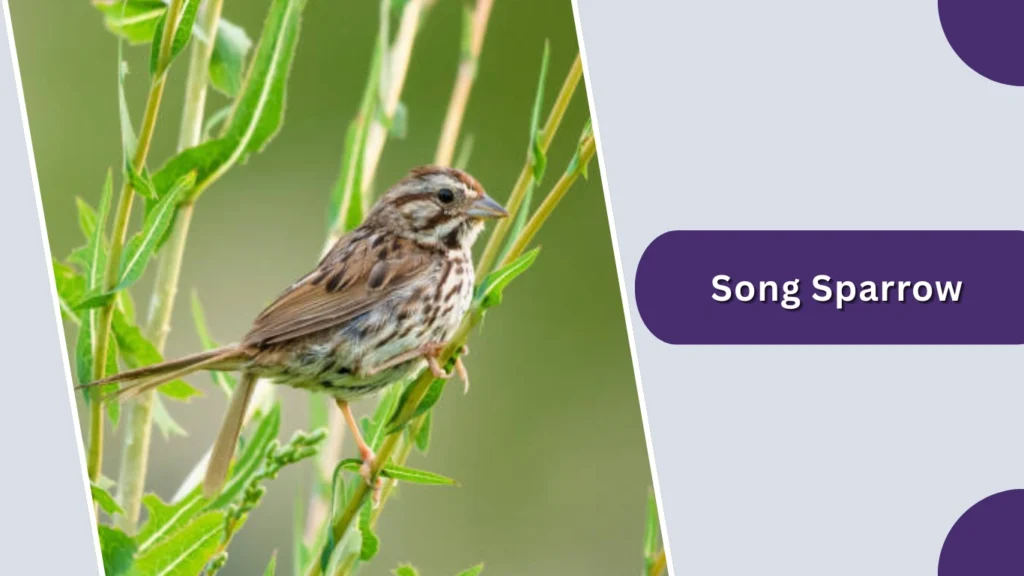
The Song Sparrow is a common and highly variable songbird, known for its rich, melodic singing and widespread distribution. It is often heard before it is seen, singing from shrubs, fences, or low tree branches.
Identification
- Brown and gray streaked body
- Thick dark streaks on the chest forming a central spot
- Rounded head with a long, rounded tail
- Short, thick bill
- Overall medium-sized sparrow shape
Habitat
Song Sparrows inhabit a wide range of environments including wetlands, marshes, grasslands, forest edges, gardens, and suburban areas. They prefer locations with dense shrubs or low vegetation near water but can adapt to many different landscapes.
Behaviors
These birds are territorial during breeding season and use their song to defend their space. Song Sparrows often forage on or near the ground and may be seen hopping through vegetation. Their song varies widely by region, with individuals learning local “dialects.”
Diet
Their diet includes insects, spiders, seeds, and berries. During warmer months, they rely more on insects, while seeds and plant material become more important in colder seasons.
Lifespan
Song Sparrows typically live 2–4 years in the wild, though some individuals have been recorded living up to 11 years.
7. European Starling
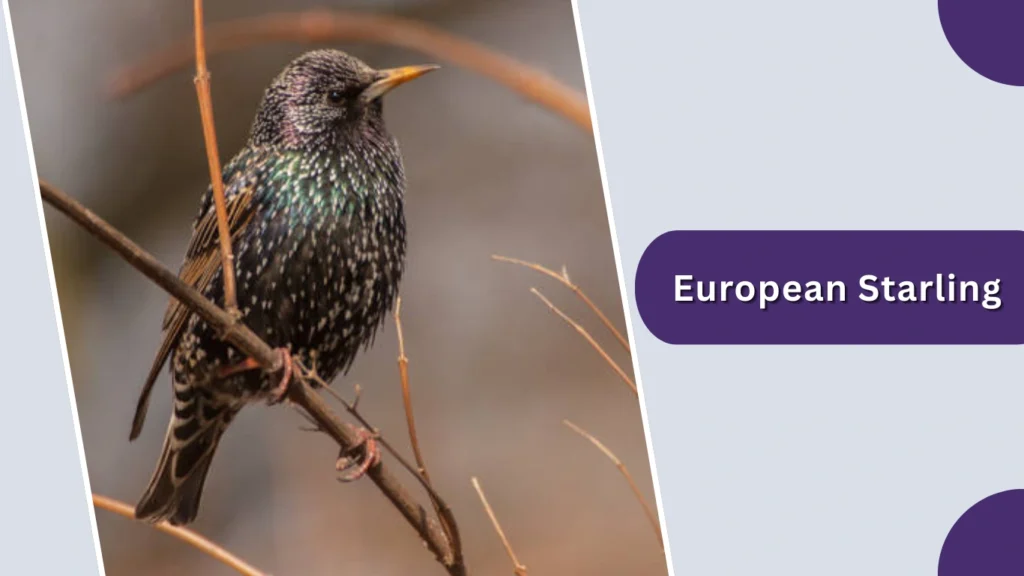
The European Starling is a highly adaptable and social songbird known for its glossy plumage and remarkable vocal abilities. Introduced to North America in the late 1800s, it has since spread widely and is now one of the most common birds in urban and rural areas.
Identification
- Medium-sized bird with a stocky body
- Glossy black plumage with purple and green sheen
- White speckles, especially visible in winter
- Short tail and pointed wings
- Yellow bill in breeding season, darker in winter
Habitat
European Starlings occupy a wide range of habitats, including cities, towns, farmland, grasslands, parks, and open woodlands. They strongly favor areas close to human activity and often nest in cavities such as building vents, holes in trees, and nest boxes.
Behaviors
Starlings are highly social and often gather in large flocks, especially outside the breeding season. These flocks can form dramatic aerial displays known as murmurations. They are aggressive competitors for nesting sites and are known for mimicking the sounds of other birds and even mechanical noises.
Diet
Their diet is extremely varied and includes insects, earthworms, fruits, seeds, and food scraps. They forage mainly on the ground, probing soil with their bills to locate prey.
Lifespan
European Starlings typically live 2–3 years in the wild, though some individuals have been known to survive up to 15 years.
8. Mourning Dove
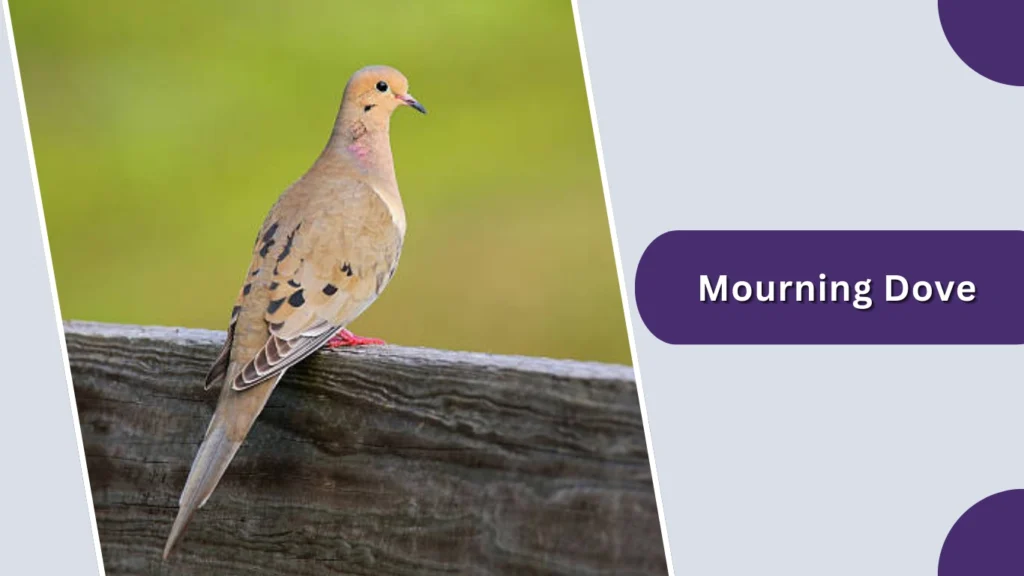
The Mourning Dove is a gentle, slender songbird recognized by its soft, mournful cooing calls and graceful flight. It is widespread across North America and commonly seen perched on wires, rooftops, or foraging on open ground.
Identification
- Slim body with a small head
- Soft gray-brown plumage
- Black spots on the wings
- Long, pointed tail with white edges
- Small black bill
Habitat
Mourning Doves inhabit open and semi-open areas such as grasslands, farmlands, deserts, woodland edges, parks, and suburban neighborhoods. They adapt well to human environments and often nest on ledges, buildings, or in trees and shrubs.
Behaviors
These birds are calm and often seen in pairs or small groups. Their flight is fast and direct, with sharp wing whistles during takeoff. Mourning Doves spend much of their time on the ground feeding and are known for their strong homing ability.
Diet
Their diet consists almost entirely of seeds, including grasses, grains, and weeds. They swallow seeds whole and store them temporarily in their crop before digestion.
Lifespan
Mourning Doves typically live 1–3 years in the wild, although some individuals have been recorded living more than 10 years under ideal conditions.
9. Black-capped Chickadee
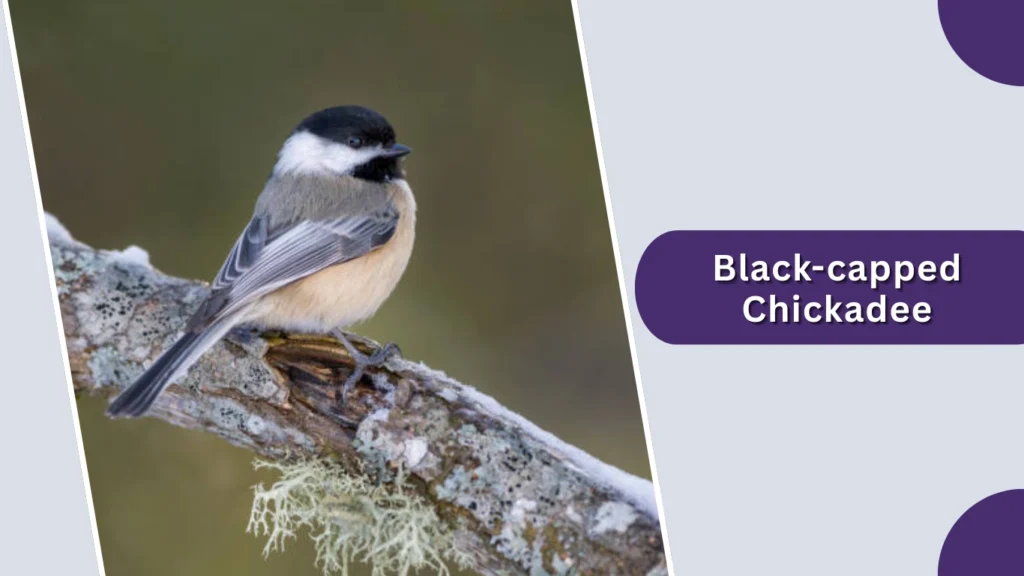
The Black-capped Chickadee is a small, lively songbird known for its distinctive “chick-a-dee-dee-dee” call and friendly behavior. It is a year-round resident in many regions and is often one of the most approachable birds at feeders.
Identification
- Black cap and black throat bib
- White cheeks
- Soft gray back and wings
- Pale buff to whitish underparts
- Small body with a short neck and tail
Habitat
Black-capped Chickadees live in deciduous and mixed forests, woodland edges, parks, and suburban areas. They prefer habitats with trees and shrubs that provide both food and nesting cavities, often using old woodpecker holes or nest boxes.
Behaviors
These birds are curious and energetic, frequently hanging upside down while foraging. They form mixed-species flocks in winter and have excellent spatial memory, allowing them to remember hundreds of food cache locations.
Diet
Their diet includes insects, spiders, seeds, and berries. Insects make up a large portion of their summer diet, while seeds and stored food are more important during winter months.
Lifespan
Black-capped Chickadees typically live 2–3 years in the wild, though some individuals have been recorded living up to 12 years.
10. Tufted Titmouse
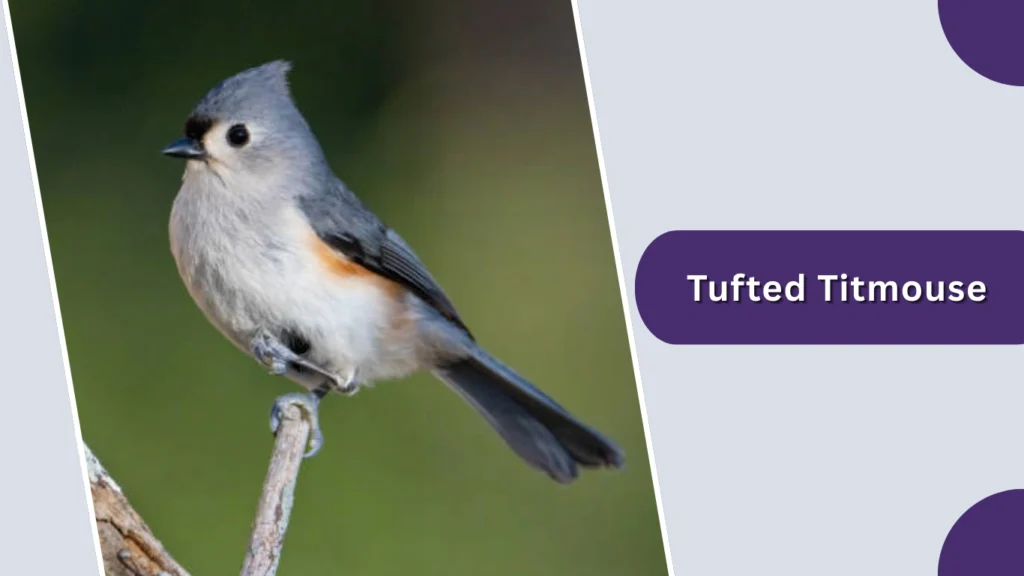
The Tufted Titmouse is a small, energetic songbird known for its gray plumage, large dark eyes, and distinctive crest. Often heard before it is seen, this bird is a regular visitor to backyard feeders and is closely related to chickadees.
Identification
- Soft gray upperparts with pale underparts
- Prominent gray crest on the head
- Large black eyes
- Rusty or peach-colored flanks
- Short, stout bill
Habitat
Tufted Titmice are commonly found in deciduous and mixed forests, woodland edges, parks, and suburban neighborhoods. They prefer areas with mature trees that provide natural cavities for nesting, but they readily use nest boxes as well.
Behaviors
These birds are active and inquisitive, often moving quickly through branches while foraging. They are usually seen in pairs or small family groups and often join mixed-species flocks in winter. Titmice are known for their clear, whistled “peter-peter-peter” calls.
Diet
Their diet consists of insects, spiders, seeds, nuts, and berries. They often carry larger food items away to pound them open against a branch before eating.
Lifespan
Tufted Titmice generally live 2–3 years in the wild, though some individuals have been known to survive over 10 years.
11. Red-winged Blackbird
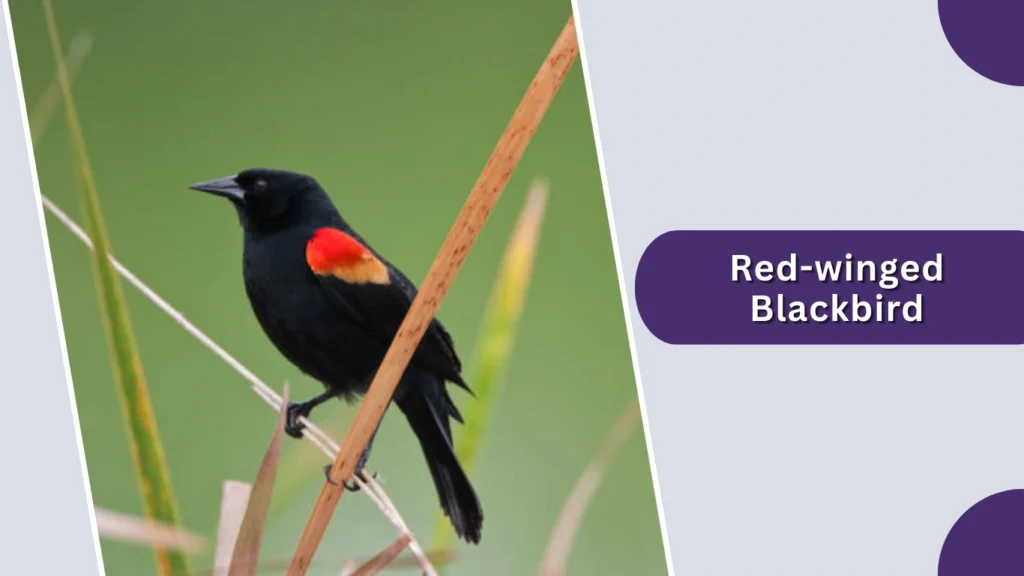
The Red-winged Blackbird is a bold and unmistakable songbird, especially the male with its striking red and yellow shoulder patches. Common across wetlands and open fields, it is often heard singing loudly from cattails or fence posts.
Identification
- Males are black with bright red shoulder patches edged in yellow
- Females are brown and heavily streaked
- Medium-sized body with a long tail
- Pointed bill
- Strong, upright posture
Habitat
Red-winged Blackbirds prefer wetlands, marshes, ponds, and wet meadows, but they are also found in agricultural fields, grasslands, and roadside ditches. They usually nest in dense vegetation close to water, where cover is abundant.
Behaviors
These birds are highly territorial during breeding season. Males aggressively defend their nesting areas and may dive-bomb much larger animals, including humans. Outside the breeding season, they form large flocks that can number in the thousands.
Diet
Their diet includes insects, seeds, grains, and plant material. Insects dominate during spring and summer, while seeds and grains are more important in fall and winter.
Lifespan
Red-winged Blackbirds typically live 2–4 years in the wild, though some individuals have been recorded living up to 15 years.
12. Downy Woodpecker
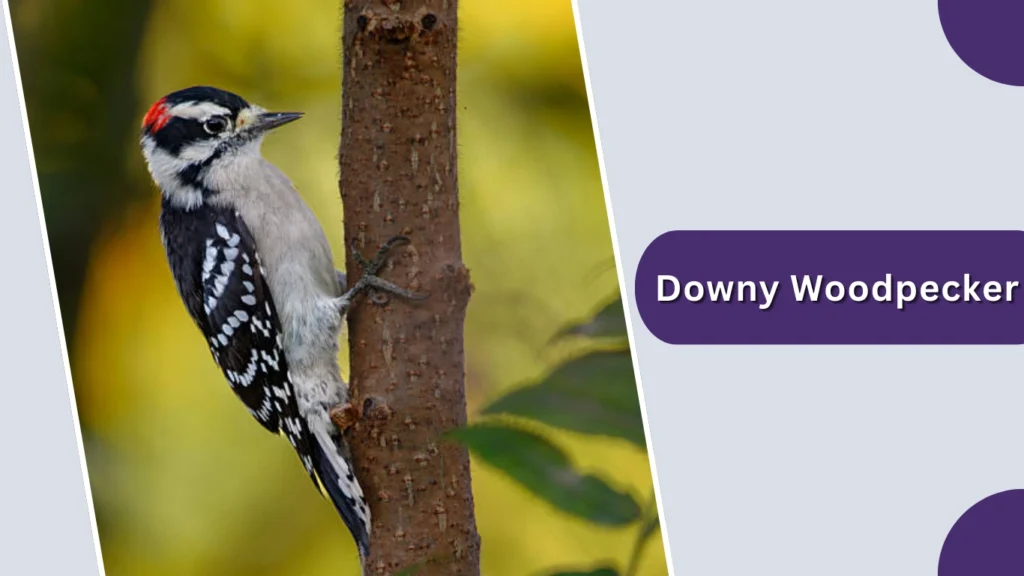
The Downy Woodpecker is the smallest and most common woodpecker in North America. Despite its small size, it is energetic and easy to recognize, often visiting backyard feeders and moving skillfully along tree trunks and branches.
Identification
- Black-and-white patterned plumage
- White back with black wings spotted in white
- White underparts
- Small, straight bill
- Males have a small red patch on the back of the head
Habitat
Downy Woodpeckers live in deciduous forests, woodlands, orchards, parks, and suburban areas. They prefer habitats with trees, especially those with dead wood, which provides both food and nesting sites. Their adaptability allows them to thrive even in urban neighborhoods.
Behaviors
These birds are active and agile, often seen climbing tree trunks or hanging from branches. They use short, sharp pecks to search for insects beneath bark. Downy Woodpeckers frequently join mixed-species flocks in winter and are known for their gentle drumming sounds.
Diet
Their diet mainly consists of insects such as beetles, ants, and caterpillars. They also eat seeds, berries, and sap, and they readily visit feeders for suet and sunflower seeds.
Lifespan
Downy Woodpeckers usually live 1–3 years in the wild, though some individuals have been known to survive up to 11 years.
13. White-breasted Nuthatch
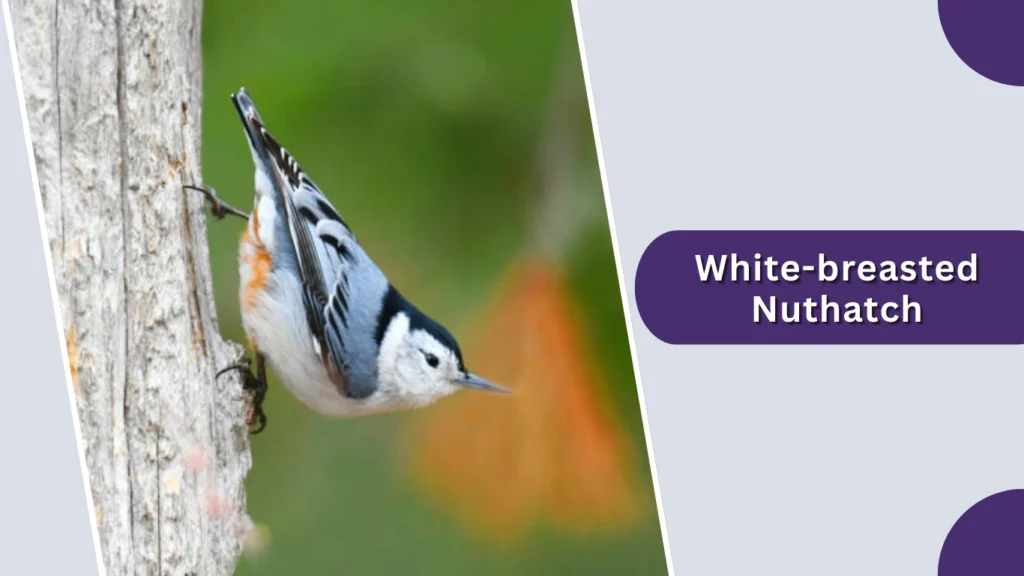
The White-breasted Nuthatch is a small but distinctive songbird, famous for its ability to climb headfirst down tree trunks. Its bold pattern and nasal calls make it easy to recognize in forests and backyard settings.
Identification
- White face and underparts
- Blue-gray back and wings
- Black cap on males, gray cap on females
- Short tail
- Long, straight bill
Habitat
White-breasted Nuthatches are commonly found in mature deciduous and mixed forests, particularly those with large trees. They also adapt well to parks, gardens, and suburban areas where suitable trees are present for nesting and foraging.
Behaviors
These birds are agile climbers and often move in all directions along tree bark. They frequently join mixed-species flocks in winter and communicate with loud, nasal calls. Nuthatches are known to wedge seeds into bark crevices before hammering them open.
Diet
Their diet includes insects, spiders, seeds, and nuts. Acorns and large seeds are especially important, particularly during colder months when insects are scarce.
Lifespan
White-breasted Nuthatches typically live 2–4 years in the wild, though some individuals have been recorded living up to 12 years.
14. Barn Swallow
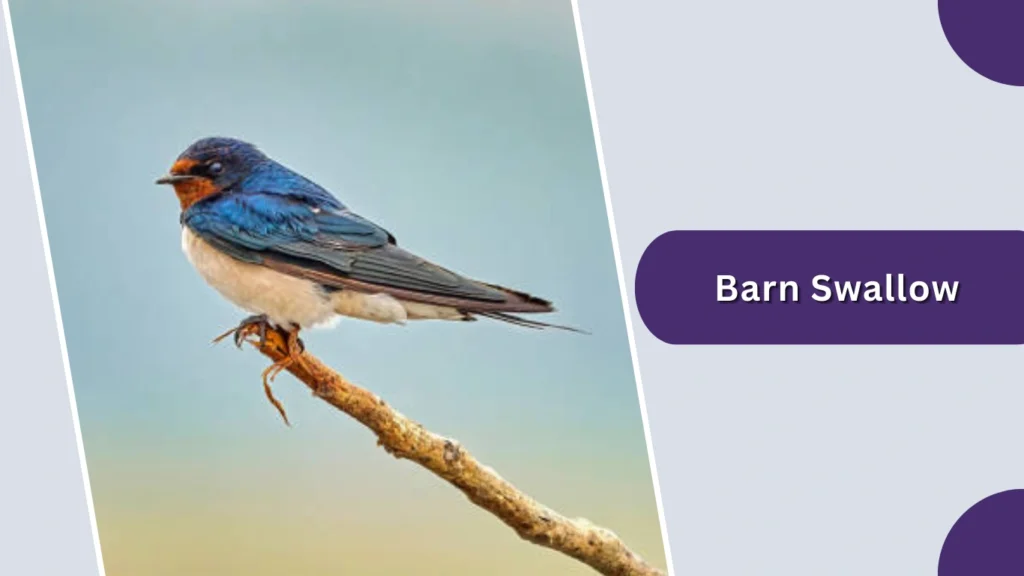
The Barn Swallow is a graceful, fast-flying songbird best known for its deeply forked tail and aerial feeding style. Often seen swooping low over fields and water, it is closely associated with farms and open countryside.
Identification
- Glossy blue upperparts
- Cinnamon to rust-colored throat and forehead
- Pale underparts
- Long, deeply forked tail with white spots
- Slim body with pointed wings
Habitat
Barn Swallows prefer open areas such as farmland, meadows, wetlands, and grasslands. They commonly nest on human-made structures including barns, bridges, and sheds, using mud to build their cup-shaped nests on ledges and beams.
Behaviors
These birds are highly agile fliers and spend much of their time in the air catching insects. They are social and often nest in loose colonies. Barn Swallows migrate long distances, traveling between North America and Central or South America each year.
Diet
Their diet consists almost entirely of flying insects such as flies, mosquitoes, beetles, and moths. They catch prey midair, often flying low over open ground or water.
Lifespan
Barn Swallows typically live 4–8 years in the wild, though some individuals have been recorded surviving more than 15 years.
15. Common Grackle
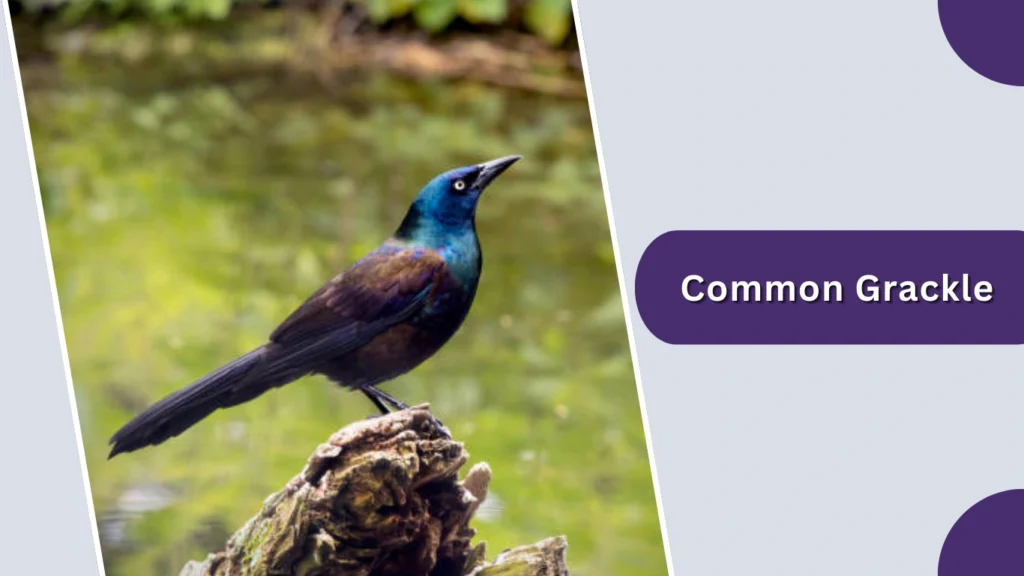
The Common Grackle is a large, glossy songbird known for its striking yellow eyes and loud, harsh calls. Often seen in large groups, it is a familiar sight in open areas, farmlands, and urban environments.
Identification
- Black, iridescent plumage with purple and green sheen
- Bright yellow eyes
- Long, keel-shaped tail
- Strong, slightly curved bill
- Larger and more slender than most blackbirds
Habitat
Common Grackles inhabit open woodlands, farmland, parks, wetlands, and suburban areas. They adapt easily to human-altered landscapes and often nest in trees, shrubs, or occasionally on buildings. They are especially common near open fields and water sources.
Behaviors
These birds are highly social and often gather in large flocks, especially outside the breeding season. Grackles are bold and sometimes aggressive, frequently dominating feeding areas. Their calls are loud and varied, ranging from whistles to harsh, metallic sounds.
Diet
Common Grackles are omnivorous and eat insects, seeds, grains, fruits, small vertebrates, and food scraps. They forage on the ground, in trees, and even in shallow water.
Lifespan
Common Grackles typically live 2–4 years in the wild, though some individuals have been recorded living up to 20 years.
16. Eastern Bluebird
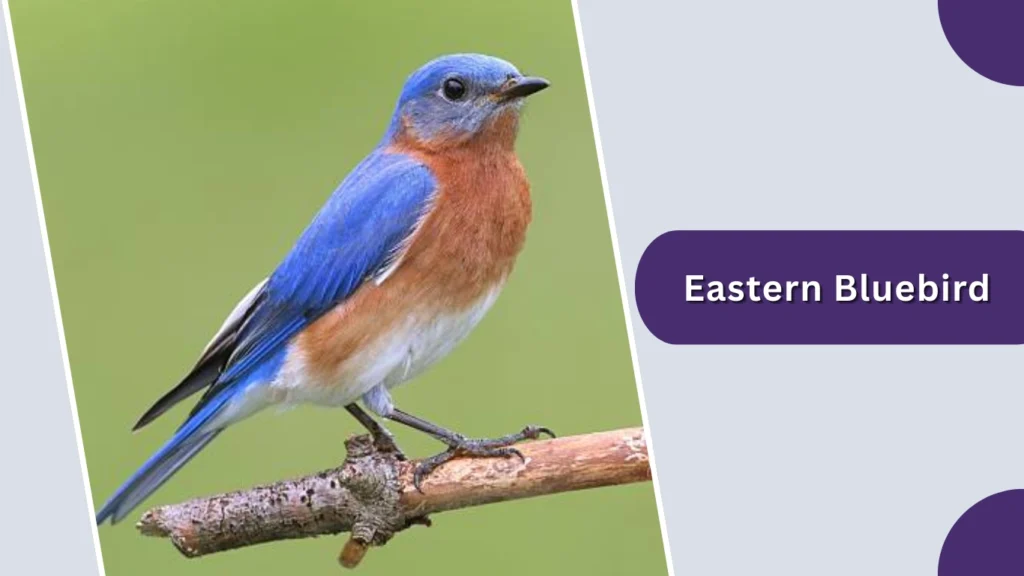
The Eastern Bluebird is a small, colorful songbird admired for its bright blue upperparts and warm orange breast. It is often associated with open countryside and is a favorite among birdwatchers due to its gentle behavior and pleasant appearance.
Identification
- Bright blue head, back, and wings
- Rusty orange breast and throat
- White belly
- Short, straight bill
- Compact body with rounded head
Habitat
Eastern Bluebirds prefer open habitats such as meadows, pastures, fields, and golf courses with scattered trees or fence posts. They rely on natural cavities or nest boxes for nesting, as they cannot excavate their own holes.
Behaviors
These birds are often seen perched quietly before swooping down to catch prey on the ground. They are generally calm and social, forming small family groups outside the breeding season. Eastern Bluebirds are also known to return to the same nesting sites year after year.
Diet
Their diet consists mainly of insects such as beetles, grasshoppers, and caterpillars during warmer months. In winter, they eat berries and small fruits, especially when insects are scarce.
Lifespan
Eastern Bluebirds typically live 3–6 years in the wild, though some individuals have been known to survive more than 10 years.
17. Dark-eyed Junco
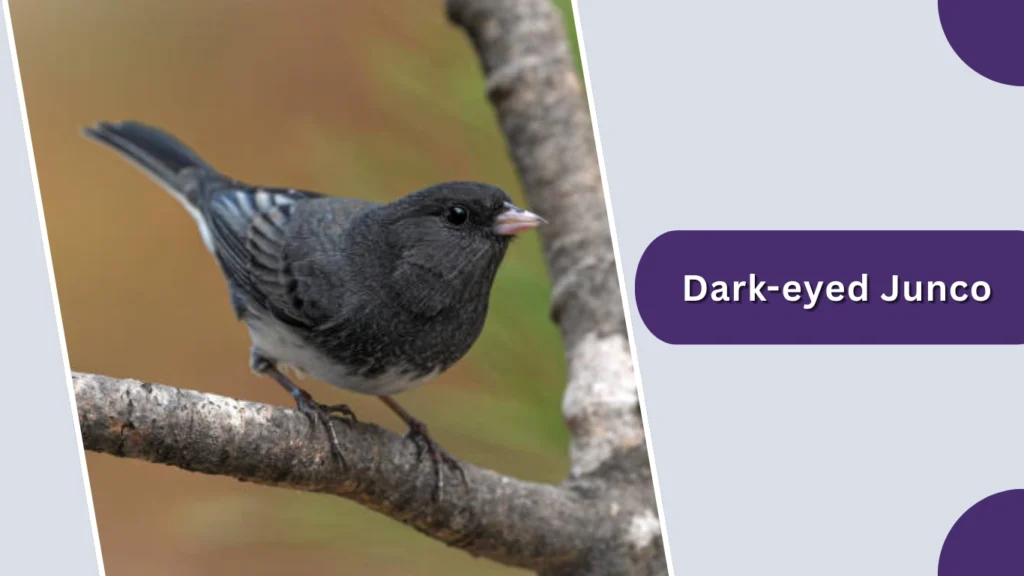
The Dark-eyed Junco is a small, neat-looking songbird often called the “snowbird” because it commonly appears in many regions during winter. It is easily recognized by its contrasting colors and frequent ground-feeding behavior.
Identification
- Slate-gray head and upperparts in most populations
- White belly and undertail coverts
- Pinkish or pale bill
- Dark eyes
- Rounded body with a long tail often flicked to show white edges
Habitat
Dark-eyed Juncos breed in coniferous or mixed forests, often in mountainous or northern regions. During winter, they move to more open habitats such as woodlands, fields, parks, gardens, and suburban areas.
Behaviors
These birds spend much of their time on the ground, hopping and scratching for food. They are usually seen in small flocks outside the breeding season. When startled, juncos often flash their white tail feathers as they fly away.
Diet
Their diet is mainly composed of seeds and grains, especially in winter. During the breeding season, they also eat insects and other small invertebrates, which are important for feeding young.
Lifespan
Dark-eyed Juncos typically live 3–5 years in the wild, though some individuals have been recorded living up to 11 years.
18. House Finch
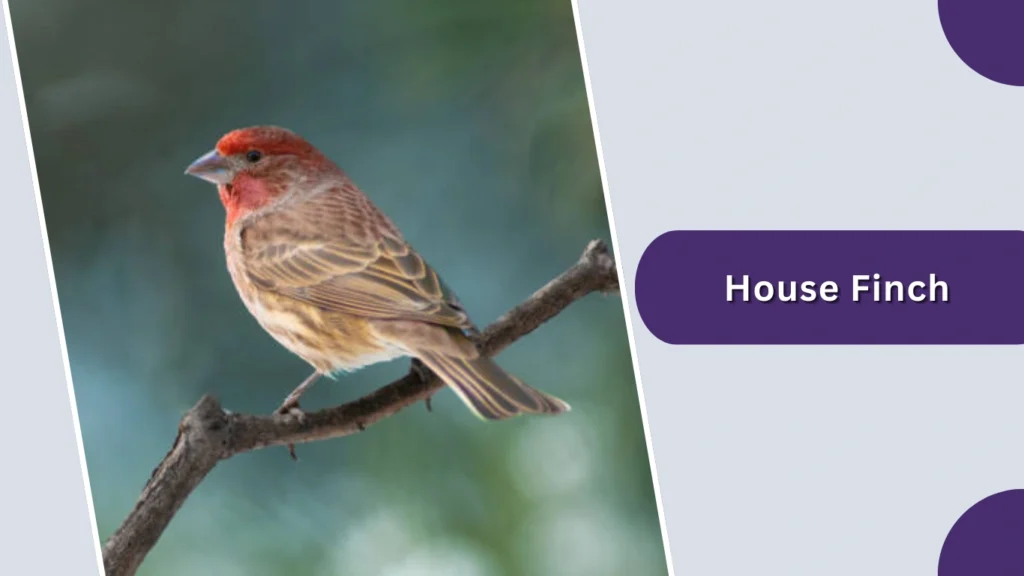
The House Finch is a small, social songbird commonly found in cities and suburban neighborhoods. Known for its cheerful song and adaptability, it frequently visits bird feeders and is one of the most familiar backyard birds.
Identification
- Males have red coloring on the head, chest, and rump
- Females are brown and heavily streaked
- Short, conical bill
- Medium-length tail
- Compact body shape
Habitat
House Finches inhabit urban areas, suburbs, farms, deserts, and open woodlands. They readily nest on buildings, hanging planters, ledges, and trees. Their close association with human environments has helped them spread widely.
Behaviors
These birds are highly social and often seen in small flocks. Males sing complex, warbling songs, especially during the breeding season. House Finches are generally non-aggressive and often feed peacefully alongside other bird species.
Diet
Their diet consists mainly of seeds, fruits, and buds. They also eat insects occasionally, particularly during breeding season. At feeders, they prefer sunflower and millet seeds.
Lifespan
House Finches typically live 3–6 years in the wild, though some individuals have been known to survive up to 11 years.
19. Carolina Wren
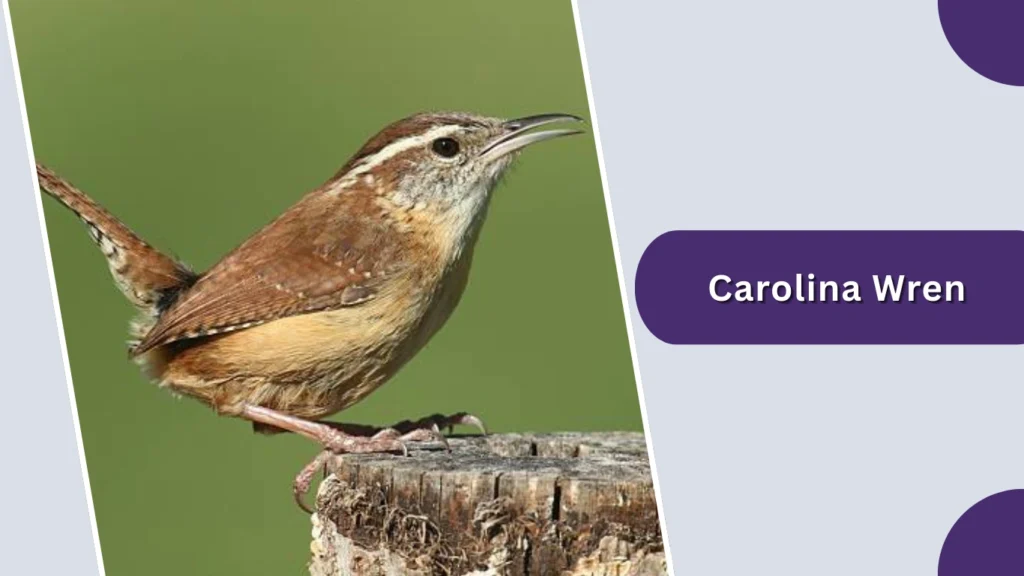
The Carolina Wren is a small but bold songbird known for its loud, ringing song and energetic personality. Despite its compact size, it has a powerful voice that carries far through forests and neighborhoods. This species is a year-round resident in much of its range and often becomes familiar to people due to its habit of nesting close to homes.
Identification
- Warm reddish-brown upperparts
- Buff to whitish underparts
- Bold white eyebrow stripe
- Long, slightly curved bill
- Short tail often held upright
Habitat
Carolina Wrens live in a variety of habitats, including forests, woodlands, swamps, gardens, parks, and suburban areas. They prefer areas with dense shrubs, vines, brush piles, or thick undergrowth that provide shelter and nesting sites. These birds readily use human-made structures such as sheds, flowerpots, mailboxes, and garages for nesting.
Behaviors
These wrens are active and curious, frequently hopping through low vegetation and investigating crevices. They are usually seen alone or in pairs and remain strongly territorial throughout the year. Carolina Wrens are known for their loud, repeated songs, often described as “tea-kettle, tea-kettle,” which can be heard even in winter.
Diet
Their diet mainly consists of insects and spiders, including beetles, caterpillars, grasshoppers, and ants. They may also eat seeds and small fruits, especially during colder months when insects are less available.
Lifespan
Carolina Wrens typically live 3–6 years in the wild, though some individuals have been recorded surviving over 10 years under favorable conditions.
20. Chipping Sparrow
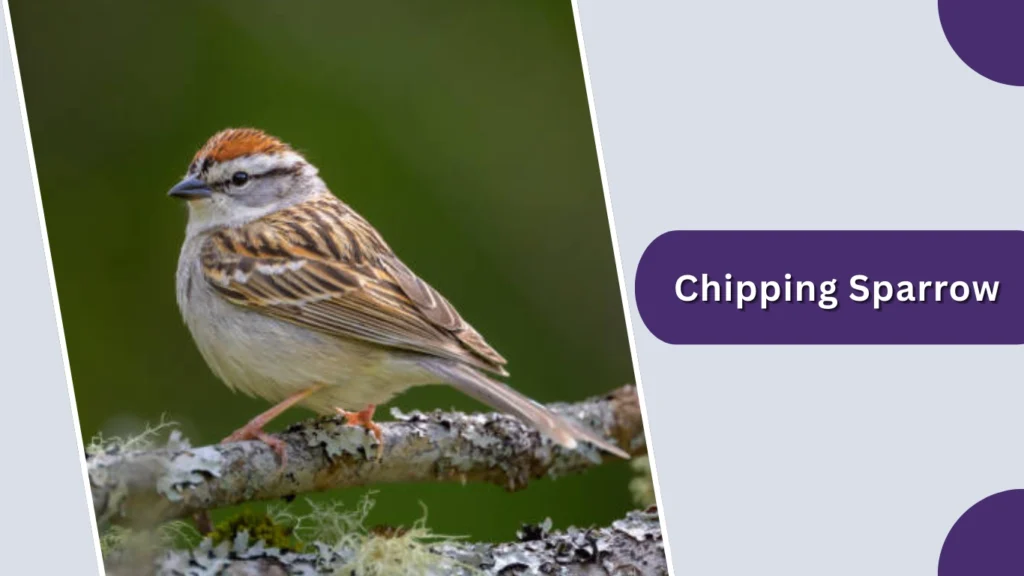
The Chipping Sparrow is a small, neat-looking songbird commonly seen in open woodlands, lawns, and gardens. Its crisp appearance and simple, dry song make it easy to recognize, especially during the breeding season when it is most active and vocal.
Identification
- Chestnut-colored crown
- Clean gray face with a bold black eye line
- Pale gray underparts
- Slim body with a long tail
- Small, pointed bill
Habitat
Chipping Sparrows prefer open habitats with scattered trees, such as woodland edges, parks, lawns, orchards, and suburban neighborhoods. They often nest in coniferous trees or shrubs and adapt well to human-modified environments.
Behaviors
These birds are usually seen foraging on the ground or low vegetation. During breeding season, males sing a rapid, repetitive trill from exposed perches. Outside the breeding season, Chipping Sparrows form loose flocks and are generally quiet and less territorial.
Diet
Their diet includes seeds, grains, insects, and spiders. Insects are especially important during the breeding season, providing protein for growing chicks.
Lifespan
Chipping Sparrows typically live 3–5 years in the wild, though some individuals have been recorded living up to 9 years.
21. Northern Mockingbird
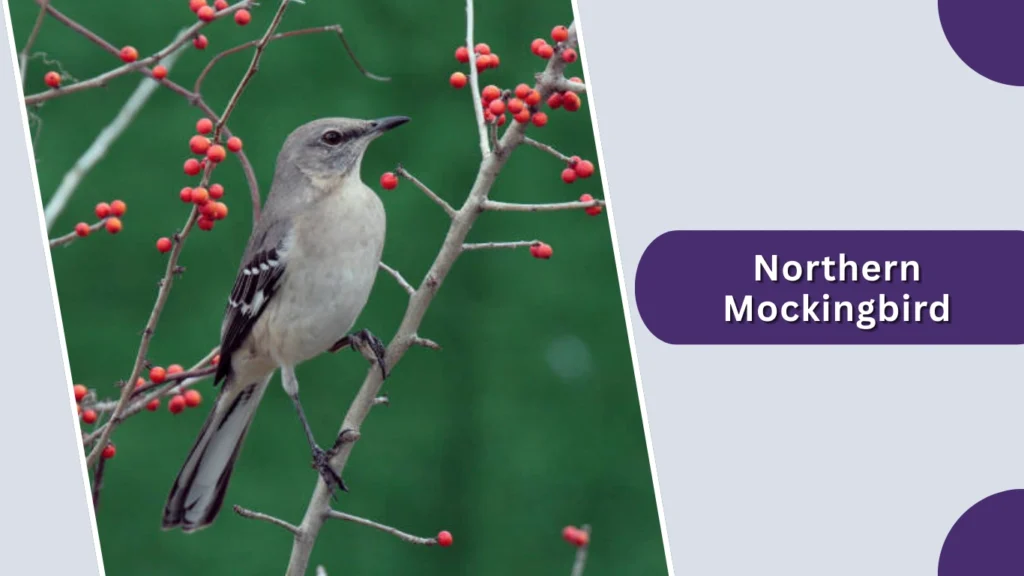
The Northern Mockingbird is a highly intelligent and vocal songbird, famous for its ability to mimic the songs and calls of other birds, as well as various environmental sounds. Energetic and confident, it is often seen perched prominently while singing or actively defending its territory.
Identification
- Gray upperparts with pale underparts
- Long legs and long tail
- White wing patches visible in flight
- Slightly curved, slender bill
- Medium-sized, slender body
Habitat
Northern Mockingbirds inhabit open and semi-open areas such as suburbs, gardens, parks, farmlands, woodland edges, and deserts. They thrive in human-dominated landscapes, especially where shrubs and small trees are present for nesting and feeding.
Behaviors
These birds are highly territorial and fearless, especially during breeding season. They aggressively chase away intruders, including much larger birds and animals. Mockingbirds sing complex, repetitive songs and may sing both day and night, particularly during mating season.
Diet
Their diet includes insects, spiders, berries, fruits, and seeds. In warmer months, insects dominate their diet, while fruits and berries become more important during fall and winter.
Lifespan
Northern Mockingbirds typically live 3–8 years in the wild, though some individuals have been recorded surviving over 20 years.
FAQs
Why do Northern Mockingbirds sing so much?
Northern Mockingbirds sing frequently to defend territory and attract mates. Males may repeat songs for long periods, sometimes even at night, especially during breeding season. Their wide song range helps signal strength and experience to rivals and potential partners.
Can Northern Mockingbirds really mimic other sounds?
Yes, they are excellent mimics. Northern Mockingbirds can copy the songs of other birds, frogs, insects, and even mechanical sounds like alarms. An individual bird may learn and perform dozens, sometimes hundreds, of different sounds throughout its life.
Are Northern Mockingbirds aggressive?
Northern Mockingbirds are known for strong territorial behavior, particularly during nesting season. They may dive-bomb or chase away intruders, including cats, dogs, and humans, if they perceive a threat near their nest.
What attracts Northern Mockingbirds to backyards?
They are attracted to yards with shrubs, small trees, open space, and fruit-bearing plants. Providing berries, water sources, and safe nesting areas can encourage them to visit and stay.
Do Northern Mockingbirds migrate?
Migration varies by region. Some Northern Mockingbirds migrate short distances, while many remain year-round residents, especially in southern and temperate areas where food is available throughout the year.
