
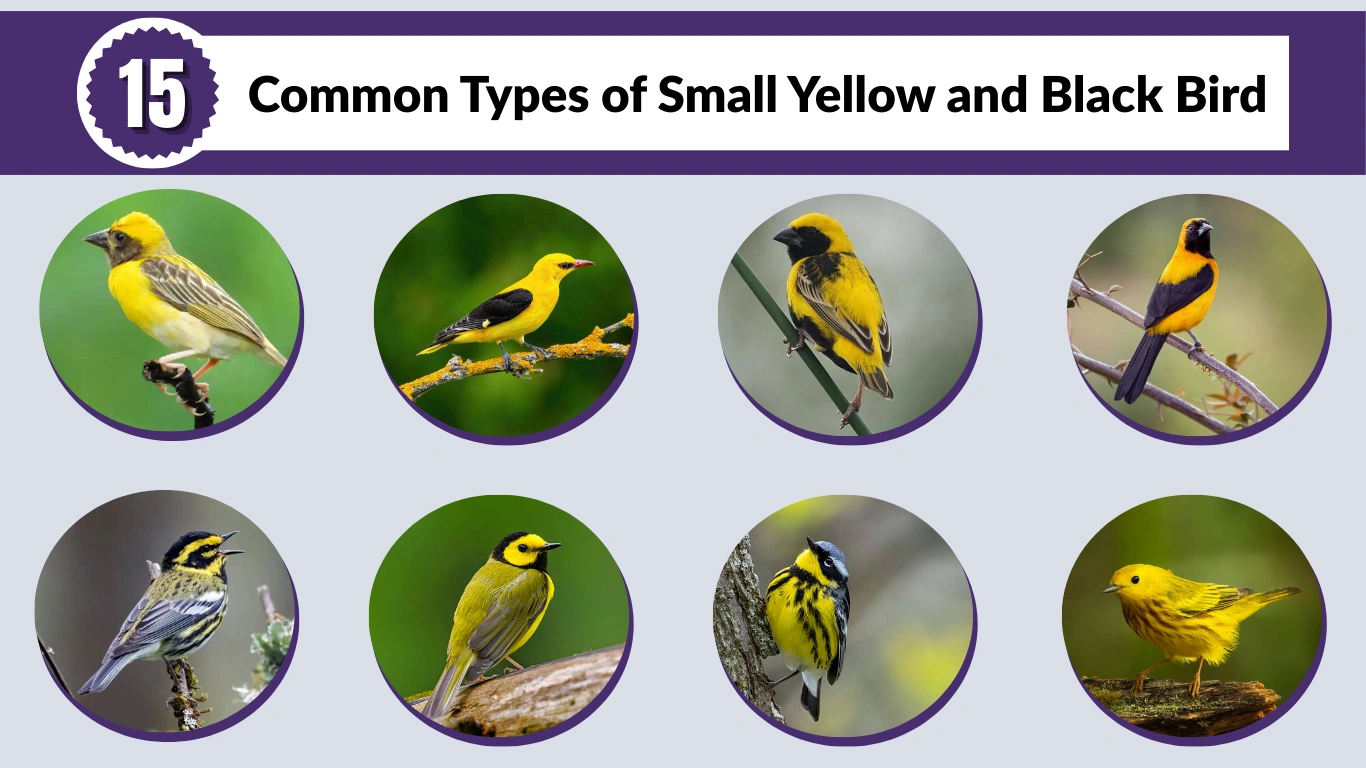
Small yellow and black birds are among the most eye-catching and lively species in the natural world. Their bright yellow feathers combined with bold black markings make them easy to spot as they move through trees, shrubs, and open fields. These birds include finches, warblers, orioles, and weavers found across many continents. Despite their small size, they play an important ecological role by controlling insect populations, spreading seeds, and pollinating flowers, while their songs and colors add beauty to both wild and urban landscapes.
1. American Goldfinch
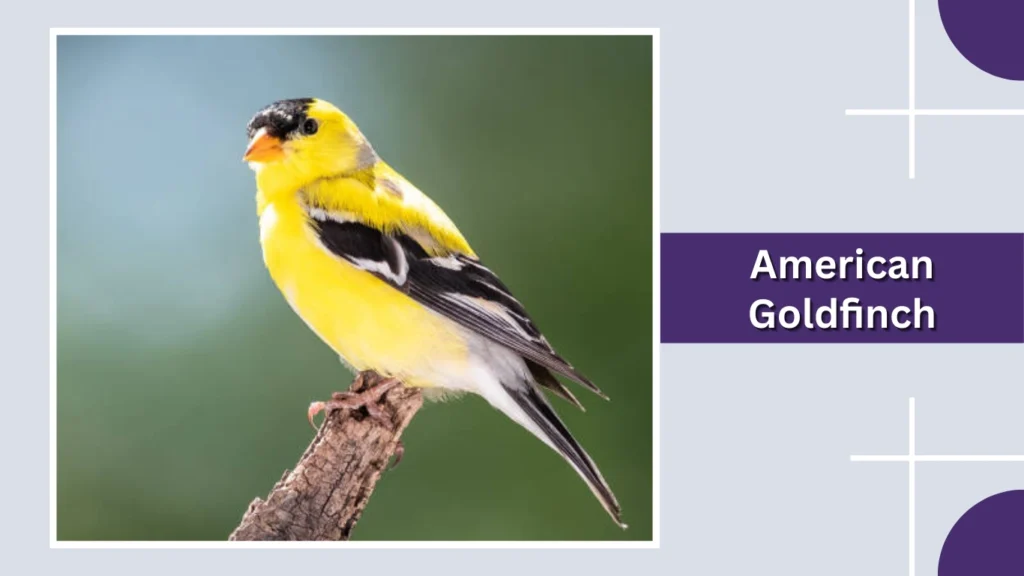
The American Goldfinch is a small, cheerful songbird famous for its bright yellow body contrasted with black wings, black cap, and white markings. It is one of the most common and recognizable yellow-and-black birds in North America, often seen fluttering through open fields, gardens, and backyards in lively flocks.
Identification
- Small, slim finch with short neck
- Bright yellow body (male in breeding season)
- Black cap on the forehead
- Black wings with bold white bars
- Short, conical bill adapted for seeds
Habitat
American Goldfinches live in open woodlands, meadows, fields, roadsides, orchards, and suburban gardens. They prefer areas with grasses and seed-bearing plants and are very common around bird feeders.
Behaviors
They are social birds, often seen in flocks, especially outside the breeding season. Their flight is bouncy and undulating, and they are well known for their musical calls and sweet, twittering songs.
Diet
Their diet consists mainly of seeds, especially from sunflowers, thistles, and dandelions. They also eat small insects during the breeding season.
2. Lesser Goldfinch
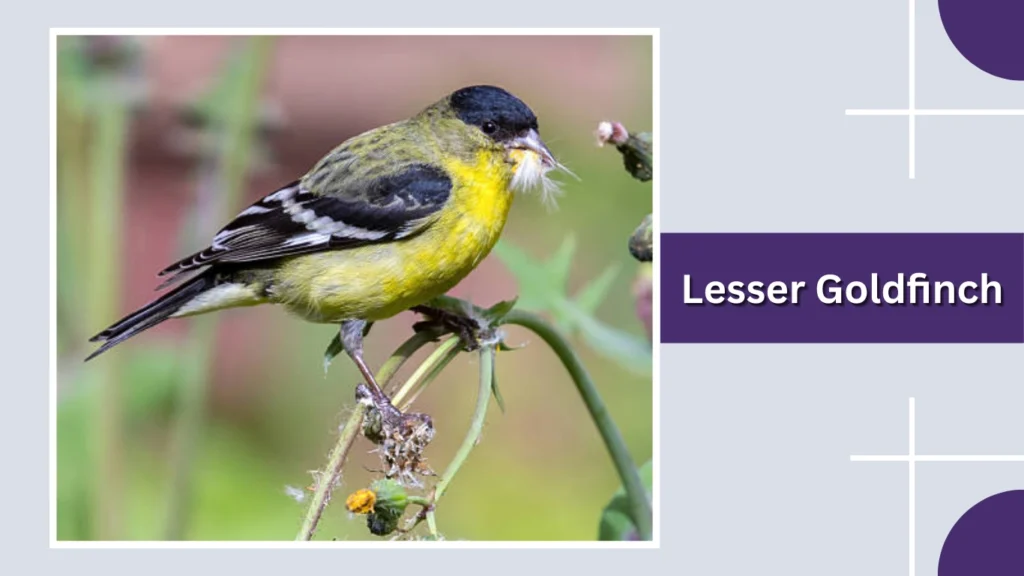
The Lesser Goldfinch is a small, lively yellow-and-black finch commonly found in the western and southwestern regions of North America. It is slightly smaller than the American Goldfinch and is known for its energetic movements, sweet calls, and frequent visits to gardens and feeders.
Identification
- Very small finch with short tail
- Bright yellow underparts
- Black crown and back (males), olive back in females
- Black wings with white markings
- Short, thick, conical bill
Habitat
Lesser Goldfinches inhabit open woodlands, scrublands, river edges, deserts with trees, parks, and suburban gardens. They prefer areas with scattered trees and plenty of flowering or seed-producing plants.
Behaviors
These birds are active and social, often seen in small flocks. They move quickly between trees and feeders, giving high-pitched calls. During breeding season, males sing frequently from exposed perches.
Diet
Their diet is mostly seeds from grasses, weeds, and flowers. They also eat buds and small insects, especially in spring and summer.
3. Yellow Warbler
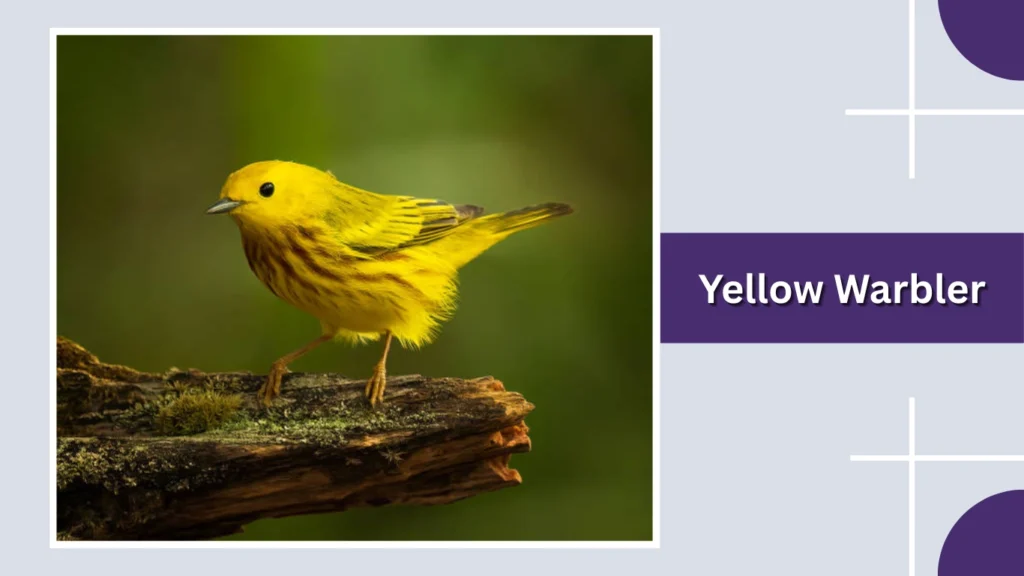
The Yellow Warbler is a tiny, bright yellow songbird often highlighted by soft black markings and a sweet, musical voice. It is widespread across the Americas and commonly found in shrubs and trees near water, where it actively searches for insects.
Identification
- Small, slim-bodied warbler
- Bright yellow overall coloration
- Males show faint reddish or dark streaks on the chest
- Thin, pointed bill
- Rounded wings and medium-length tail
Habitat
Yellow Warblers prefer wetlands, riverbanks, willow thickets, woodland edges, orchards, and gardens. They are especially common near streams and lakes where insect life is abundant.
Behaviors
They are very active foragers, constantly moving through foliage while picking insects from leaves and twigs. Males sing frequently during the breeding season with a sweet, whistled song.
Diet
Their diet consists mainly of insects such as caterpillars, beetles, flies, and spiders. Occasionally, they also eat small berries.
4. Wilson’s Warbler
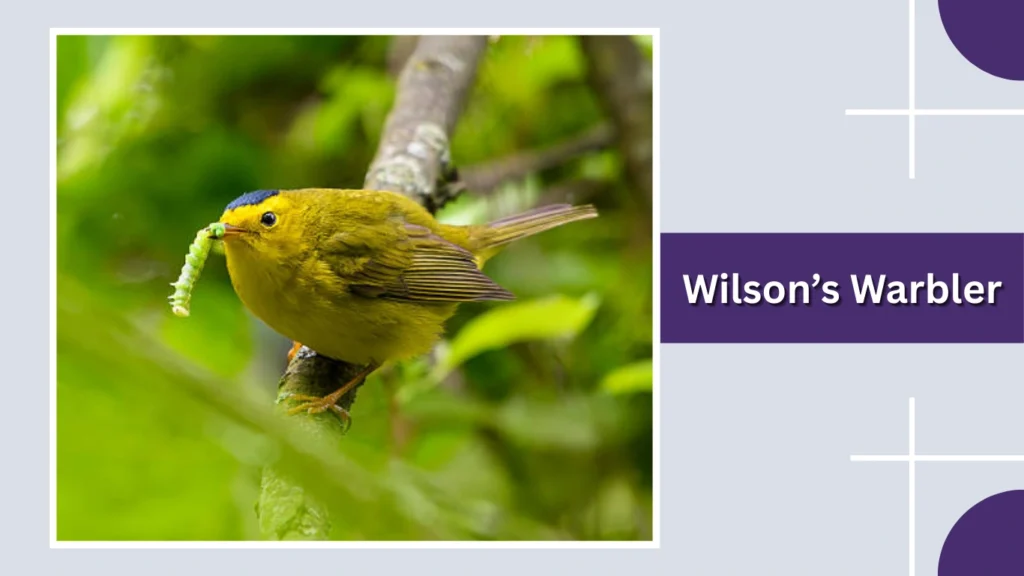
The Wilson’s Warbler is a tiny, energetic yellow songbird best known for its bright yellow body and small black cap. It is a common migrant and breeding bird in many parts of North America, constantly flitting through shrubs and low trees in search of insects.
Identification
- Very small, round-bodied warbler
- Bright yellow face and underparts
- Olive-yellow back
- Small, neat black cap (especially on males)
- Thin, pointed bill
Habitat
Wilson’s Warblers inhabit shrubby areas, forest edges, wetlands, willow thickets, and gardens, especially during migration. They prefer low, dense vegetation near water.
Behaviors
These birds are extremely active, rarely staying still. They flick their wings and tails while foraging and often give sharp “chip” calls. Males sing rapidly from low branches during breeding season.
Diet
They feed mainly on insects and spiders, including flies, beetles, caterpillars, and larvae picked from leaves and twigs.
5. Common Yellowthroat
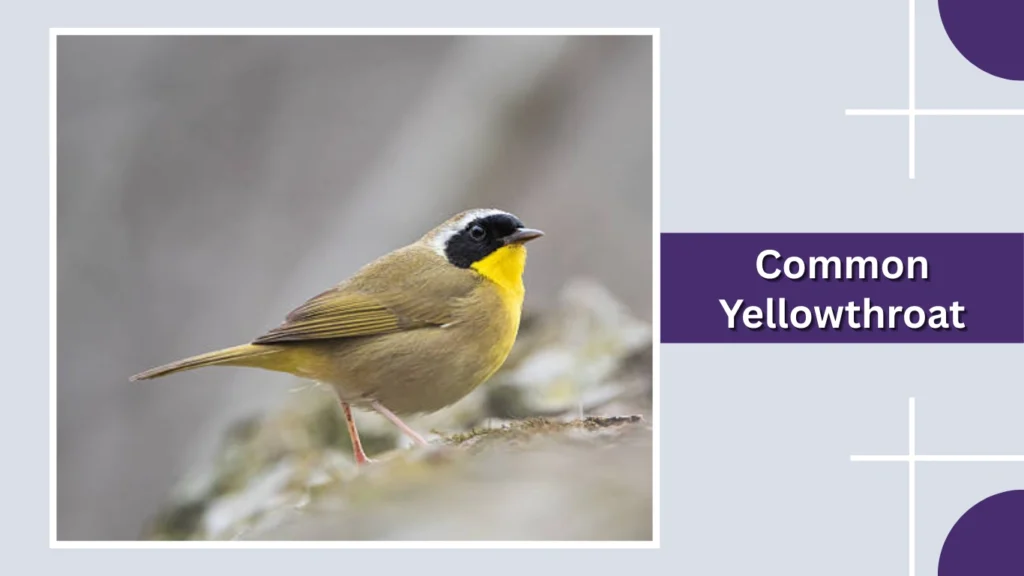
The Common Yellowthroat is a small, secretive warbler with a bright yellow throat and chest contrasted by darker upperparts. Males are especially distinctive because of their bold black facial mask, which makes this bird easy to recognize when it briefly appears from dense vegetation.
Identification
- Small, slim warbler
- Bright yellow throat and upper chest
- Olive-brown back
- Male has a bold black mask with white border
- Thin, pointed bill
Habitat
Common Yellowthroats live in wetlands, marshes, reed beds, moist fields, and dense shrubs. They are strongly tied to thick, low vegetation, especially near water.
Behaviors
They often stay hidden in reeds and bushes, giving their loud “witchety-witchety” song. These birds make short, low flights and quickly drop back into cover when disturbed.
Diet
Their diet is mainly insects and spiders, including beetles, flies, caterpillars, and grasshoppers picked from dense plants.
6. Magnolia Warbler
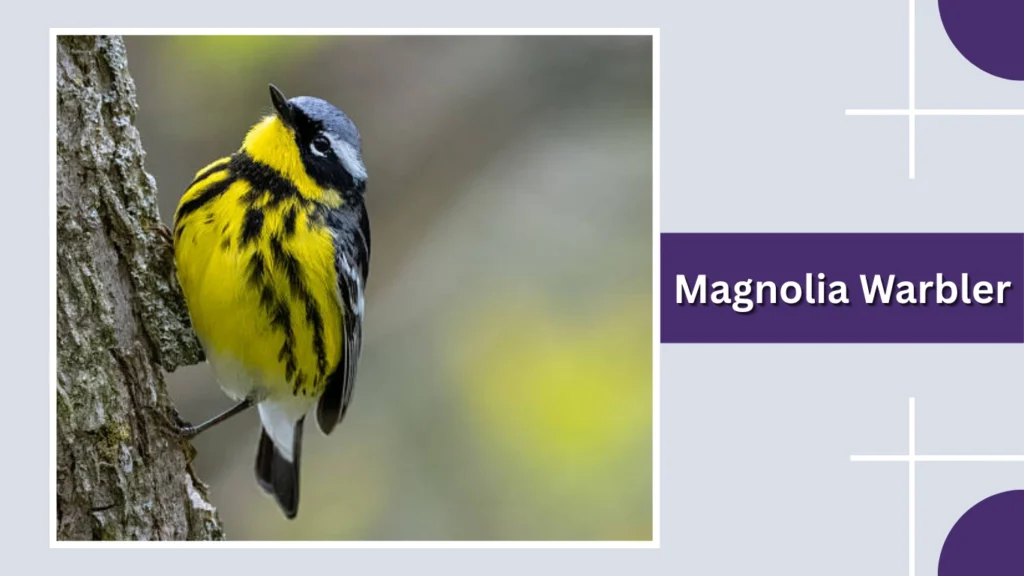
The Magnolia Warbler is a small, brightly colored songbird with striking yellow and black markings. It is especially admired for its bold pattern during the breeding season, when males show a vivid yellow chest streaked with black.
Identification
- Small warbler with slim body
- Bright yellow underparts with bold black streaks
- Gray head with black mask and white eyebrow
- Black back with white wing patches
- Thin, pointed bill
Habitat
Magnolia Warblers breed in young coniferous and mixed forests and are often found in dense evergreens. During migration, they appear in woodland edges, parks, and gardens.
Behaviors
They are active foragers, moving quickly through shrubs and low branches. They often flick their tails and wings while searching for insects. Males sing from mid-level perches during breeding season.
Diet
Their diet consists mainly of insects, caterpillars, spiders, and larvae. They may also eat small berries during migration.
7. Hooded Warbler
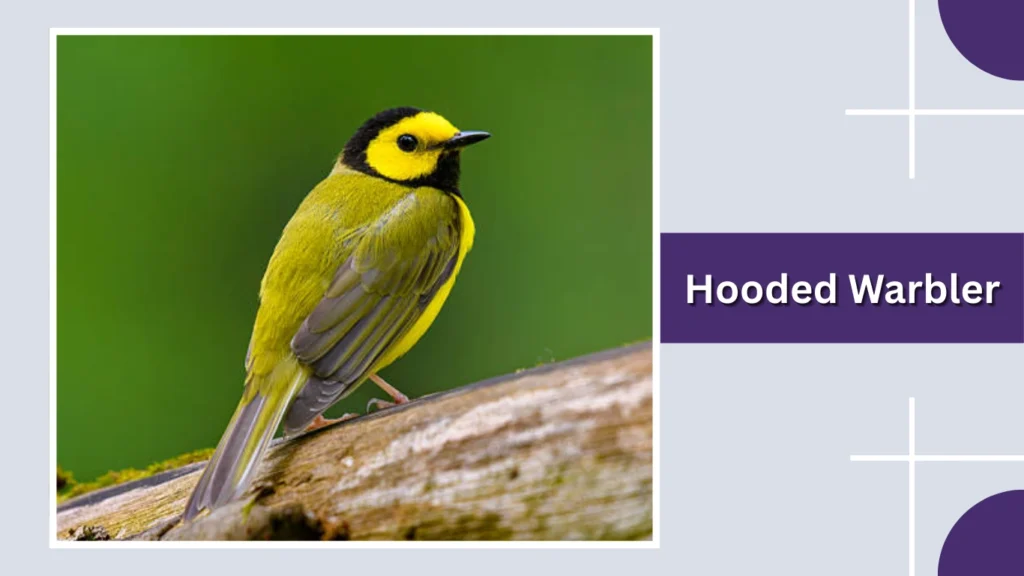
The Hooded Warbler is a striking small songbird known for its bright yellow face and underparts contrasted with a bold black hood and throat in adult males. It is often seen quietly moving through shaded forests, where its vivid colors stand out against the dark green leaves.
Identification
- Small, slim warbler
- Bright yellow face, throat, and underparts
- Bold black hood and throat (adult males)
- Olive-green back and wings
- Thin, pointed bill
Habitat
Hooded Warblers live mainly in mature deciduous forests with dense understory, especially in moist woodlands, ravines, and forest edges. They prefer areas with thick shrubs for nesting and feeding.
Behaviors
They forage low in vegetation, hopping and making short flights while searching leaves for insects. Males sing clear, ringing songs from hidden perches and defend small breeding territories.
Diet
Their diet consists mostly of insects and spiders, including caterpillars, beetles, flies, and larvae picked from foliage and small branches.
8. Scott’s Oriole
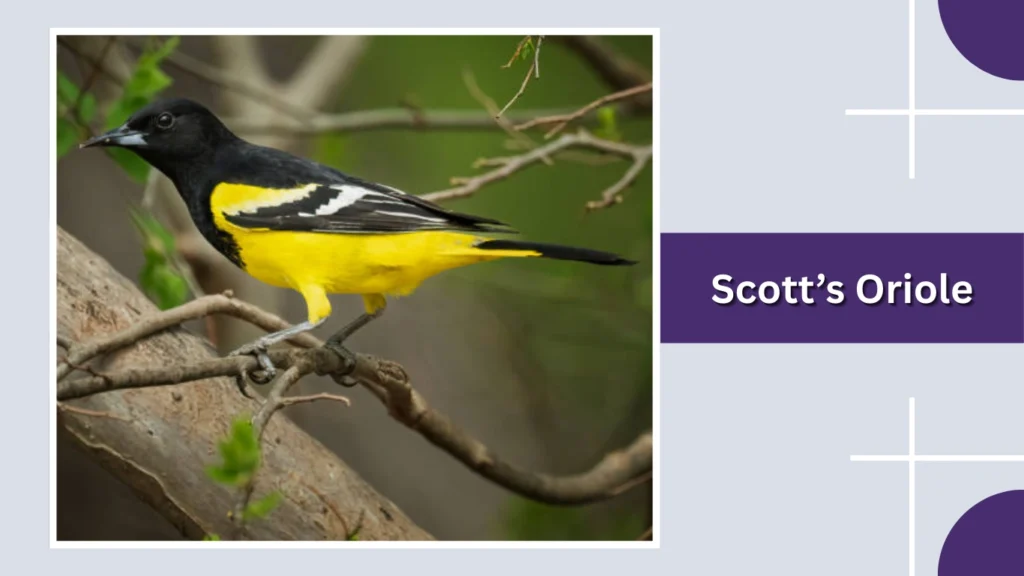
The Scott’s Oriole is a small, striking songbird with bright yellow underparts and bold black upperparts, wings, and throat. It is most often seen in dry, open landscapes, where its sharp calls and vivid colors make it stand out among desert plants.
Identification
- Small to medium-sized oriole
- Bright yellow belly and lower breast
- Black head, throat, back, and wings
- White wing bars
- Long, pointed bill
Habitat
Scott’s Orioles inhabit deserts, open woodlands, mountain foothills, and areas with yucca, agave, and scattered trees. They are commonly found in arid and semi-arid regions.
Behaviors
They are often seen high in trees or on tall plants, moving deliberately while searching for food. Males sing rich, whistled songs from exposed perches during the breeding season.
Diet
Their diet includes insects, caterpillars, spiders, nectar, and some fruits. They frequently probe flowers and bark while feeding.
9. Black-throated Green Warbler
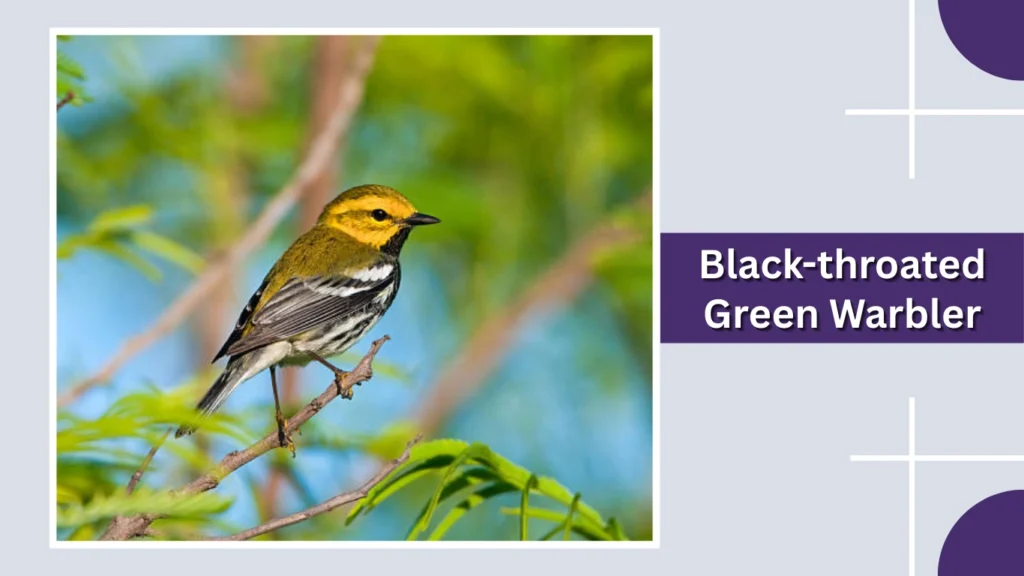
The Black-throated Green Warbler is a small, lively songbird recognized by its bright yellow face, olive back, and bold black throat. It is a common forest warbler, often seen moving quickly through tree canopies while giving its clear, buzzy song.
Identification
- Small, slim-bodied warbler
- Bright yellow face with olive cheeks
- Bold black throat and upper chest (especially males)
- Olive-green back and wings
- Thin, pointed bill
Habitat
Black-throated Green Warblers live in coniferous and mixed forests, especially hemlock and pine woods. During migration, they also appear in parks, gardens, and woodland edges.
Behaviors
They forage actively in treetops and along branches, often creeping and hopping while searching for insects. Males sing frequently during breeding season and defend territories.
Diet
Their diet consists mainly of insects, caterpillars, beetles, spiders, and other small invertebrates. They may also eat small berries during migration.
10. Townsend’s Warbler
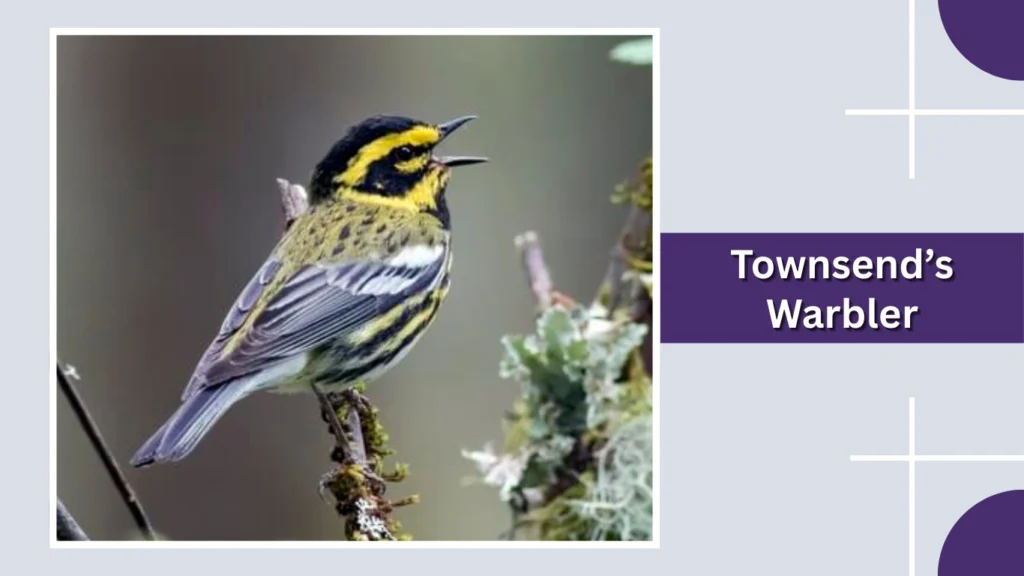
The Townsend’s Warbler is a striking small songbird with a bright yellow face, bold black cheek and breast markings, and an energetic personality. It is commonly found in forests of western North America, where it actively moves through trees in search of insects.
Identification
- Small warbler with slim body
- Bright yellow face with bold black streaks
- Black throat and upper chest
- Olive-green back and wings
- Thin, pointed bill
Habitat
Townsend’s Warblers inhabit coniferous and mixed forests, especially spruce, fir, and pine woodlands. During migration and winter, they can be seen in woodland edges, parks, and gardens.
Behaviors
They are very active foragers, constantly hopping and fluttering among branches. These birds often join mixed feeding flocks and give sharp “chip” calls while searching for insects.
Diet
Their diet is made up mainly of insects, spiders, and caterpillars. In winter, they may also eat small berries and nectar.
11. Yellow-backed Oriole
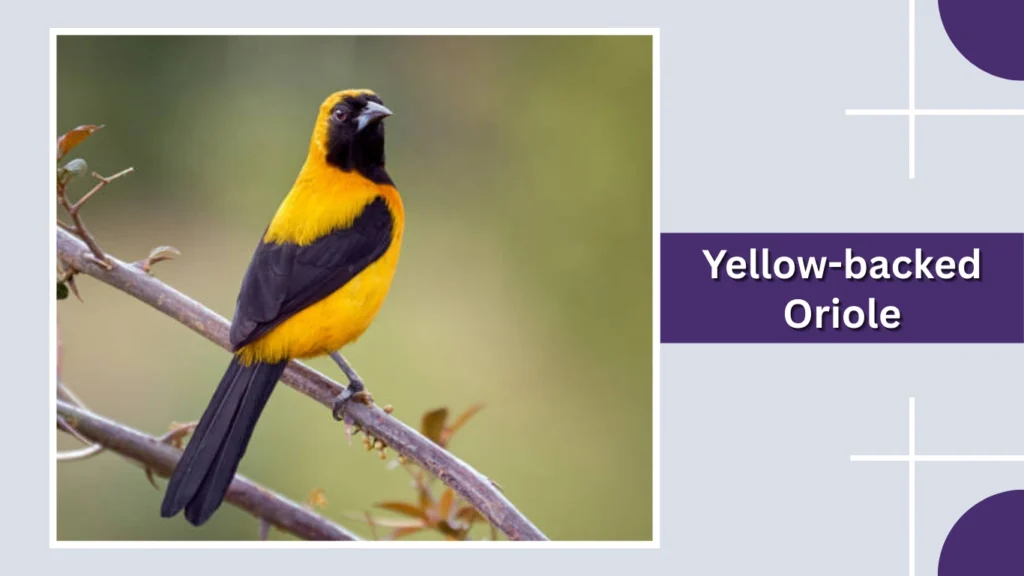
The Yellow-backed Oriole is a small, brightly colored bird with vivid yellow underparts and contrasting black head, wings, and tail. It is well known for its sweet whistling song and its habit of foraging among flowers and leafy branches.
Identification
- Small to medium-sized oriole
- Bright yellow back and underparts
- Black head, wings, and tail
- White wing markings
- Long, slightly curved bill
Habitat
Yellow-backed Orioles inhabit open woodlands, forest edges, orchards, gardens, and areas with flowering trees. They are commonly found in warm, tropical, and subtropical regions.
Behaviors
They move actively through tree canopies, often hanging upside down while feeding. Males sing melodious whistles, especially during the breeding season.
Diet
Their diet includes insects, caterpillars, nectar, and fruits. They frequently visit flowering plants and also hunt insects among leaves and branches.
12. Black-and-yellow Broadbill
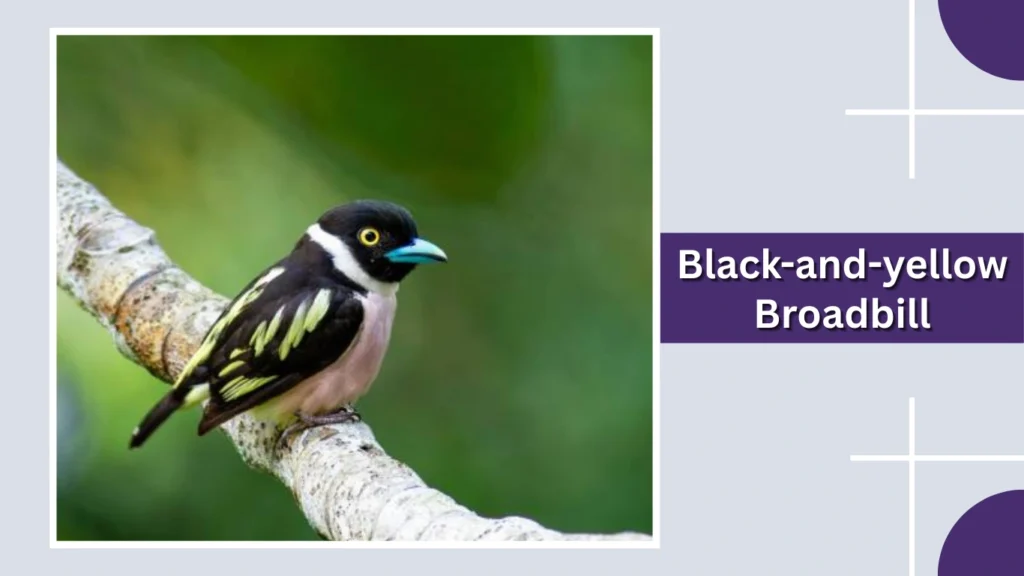
The Black-and-yellow Broadbill is a small, vividly colored bird with bright yellow underparts and bold black markings. It is known for its thick bill, short tail, and habit of perching quietly in forested areas before making quick flights to catch insects.
Identification
- Small, compact body
- Bright yellow underparts
- Black head, back, and wings
- Thick, broad-based bill
- Short tail
Habitat
Black-and-yellow Broadbills live mainly in tropical and subtropical forests, forest edges, and well-wooded gardens. They prefer dense vegetation and are often seen perched in the mid-canopy.
Behaviors
They usually sit still for long periods, then suddenly dart out to catch insects in the air. Their movements are quick but not restless, and they often return to the same perch.
Diet
Their diet consists mainly of insects, including flies, beetles, and caterpillars. Occasionally, they may eat small fruits.
13. Yellow-crowned Weaver
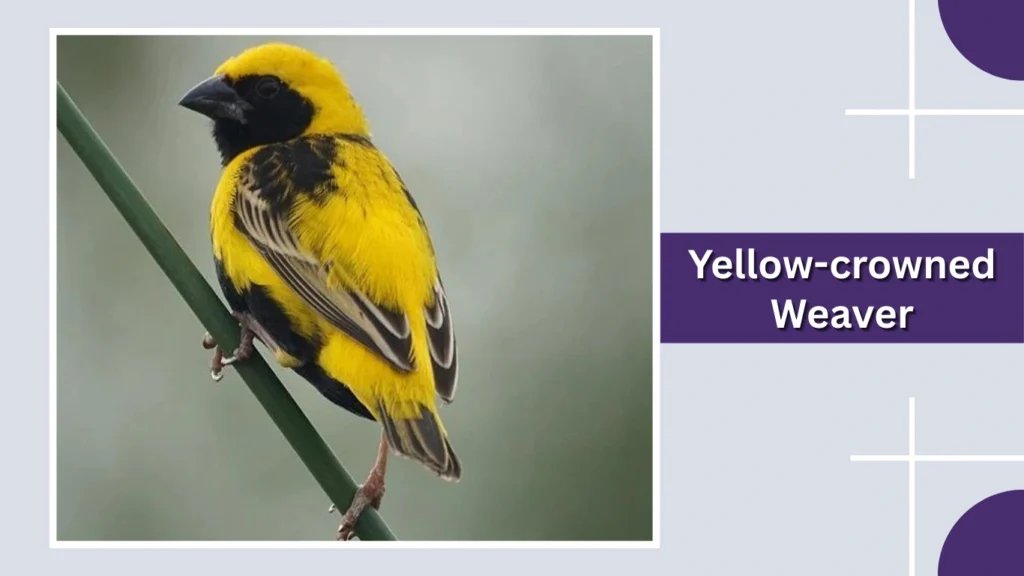
The Yellow-crowned Weaver is a small, bright yellow-and-black bird well known for its active nature and impressive nest-building skills. Males are especially eye-catching, with a vivid yellow crown and contrasting dark face and wings.
Identification
- Small, compact weaver bird
- Bright yellow crown and face
- Black mask and throat
- Yellow underparts with darker wings
- Short, thick, conical bill
Habitat
Yellow-crowned Weavers live in open woodlands, savannas, wetlands, gardens, and farmland areas. They are often found near water and in places with tall grasses or scattered trees suitable for nesting.
Behaviors
They are highly social birds, often seen in small groups or colonies. Males build intricate woven nests and display actively to attract females.
Diet
Their diet mainly includes seeds, grains, and insects. During the breeding season, they eat more insects to provide protein for chicks.
14. Baya Weaver
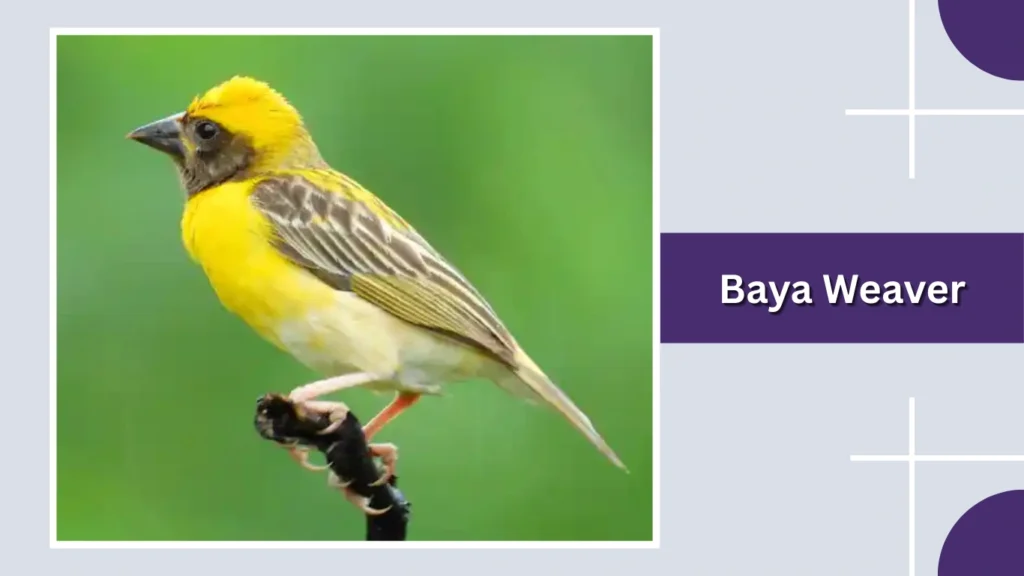
The Baya Weaver is a small, energetic yellow-and-black bird famous for its beautifully woven hanging nests. Males develop bright yellow coloring with black facial markings during the breeding season, making them one of the most recognizable small birds in South Asia.
Identification
- Small, compact bird with short tail
- Bright yellow head and underparts (breeding male)
- Black face mask and throat
- Brownish wings with dark streaks
- Strong, conical bill for seeds
Habitat
Baya Weavers are commonly found in grasslands, open farmland, wetlands, village outskirts, and palm groves. They prefer open areas near water where tall grasses and trees are available for nesting.
Behaviors
They are highly social and often breed in colonies. Males skillfully weave complex hanging nests and perform fluttering displays to attract females. Large flocks are common outside the breeding season.
Diet
Their diet consists mainly of seeds, grains, and grasses. They also eat insects, especially during breeding season, which provide essential protein for growing chicks.
15. Eurasian Golden Oriole
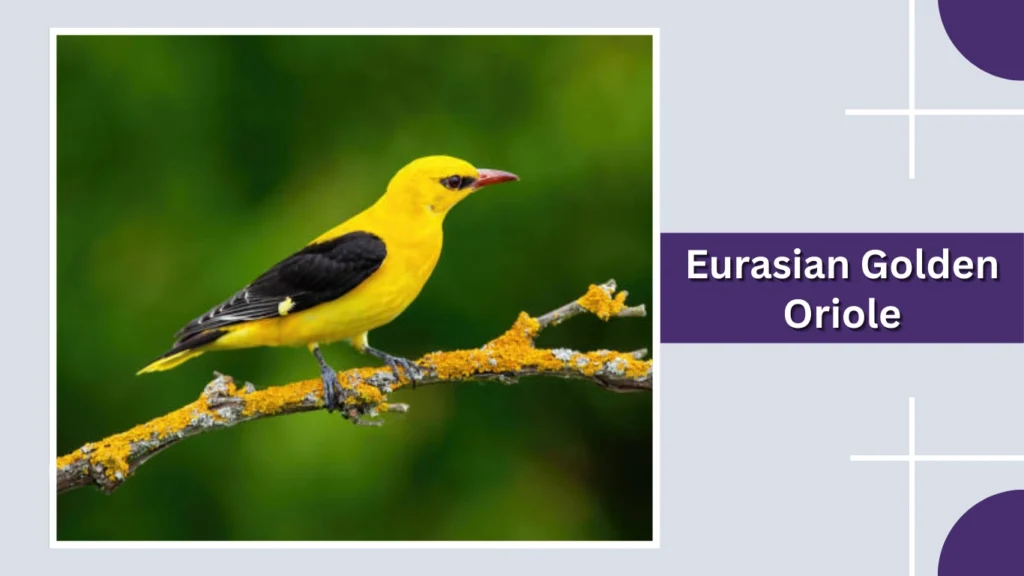
The Eurasian Golden Oriole is a striking yellow-and-black bird admired for its bright golden body, bold black wings, and rich, fluting song. Although often heard more than seen, it stands out clearly when it moves through sunlit treetops.
Identification
- Medium-small, slender bird
- Bright golden-yellow body
- Jet-black wings and tail
- Red to dark pink, slightly curved bill
- Males brighter yellow than females
Habitat
Eurasian Golden Orioles live in open woodlands, deciduous forests, river valleys, orchards, and large gardens. They prefer tall trees near open spaces, especially in warm and temperate regions.
Behaviors
They are shy and usually stay high in tree canopies. Orioles move smoothly through branches and are most noticeable by their loud, musical whistles during the breeding season.
Diet
Their diet includes insects, caterpillars, spiders, and various fruits such as berries and figs. They often pick food from leaves and branches and occasionally catch insects in short flights.
FAQs
What are some common examples of small yellow and black birds?
Common small yellow and black birds include goldfinches, warblers, orioles, weavers, and some broadbills. These birds are popular with birdwatchers because of their bright colors, active movements, and pleasant songs, and they are found across forests, wetlands, gardens, and open landscapes worldwide.
Why are yellow and black colors so common in small birds?
Yellow and black plumage provides strong visual contrast, which helps with mate attraction, species recognition, and communication. Bright yellow often signals good health, while black markings can highlight facial patterns and wing bars that make birds easier to identify among foliage.
Are small yellow and black birds mainly insect eaters?
Most small yellow and black birds eat a mix of insects and plant material. Warblers and orioles rely heavily on insects, especially during breeding season, while finches and weavers focus more on seeds. Many species shift diets seasonally depending on food availability.
Where do small yellow and black birds usually live?
They inhabit a wide range of environments, including forests, woodland edges, wetlands, grasslands, farmland, parks, and home gardens. Some species prefer dense trees, while others live in open areas with shrubs or near water sources.
How can I attract small yellow and black birds to my garden?
You can attract them by planting native flowering and seed-producing plants, providing clean water, and offering feeders with sunflower seeds or nectar. Avoid pesticides so insects remain available, and keep some shrubs or small trees for shelter and nesting.
