
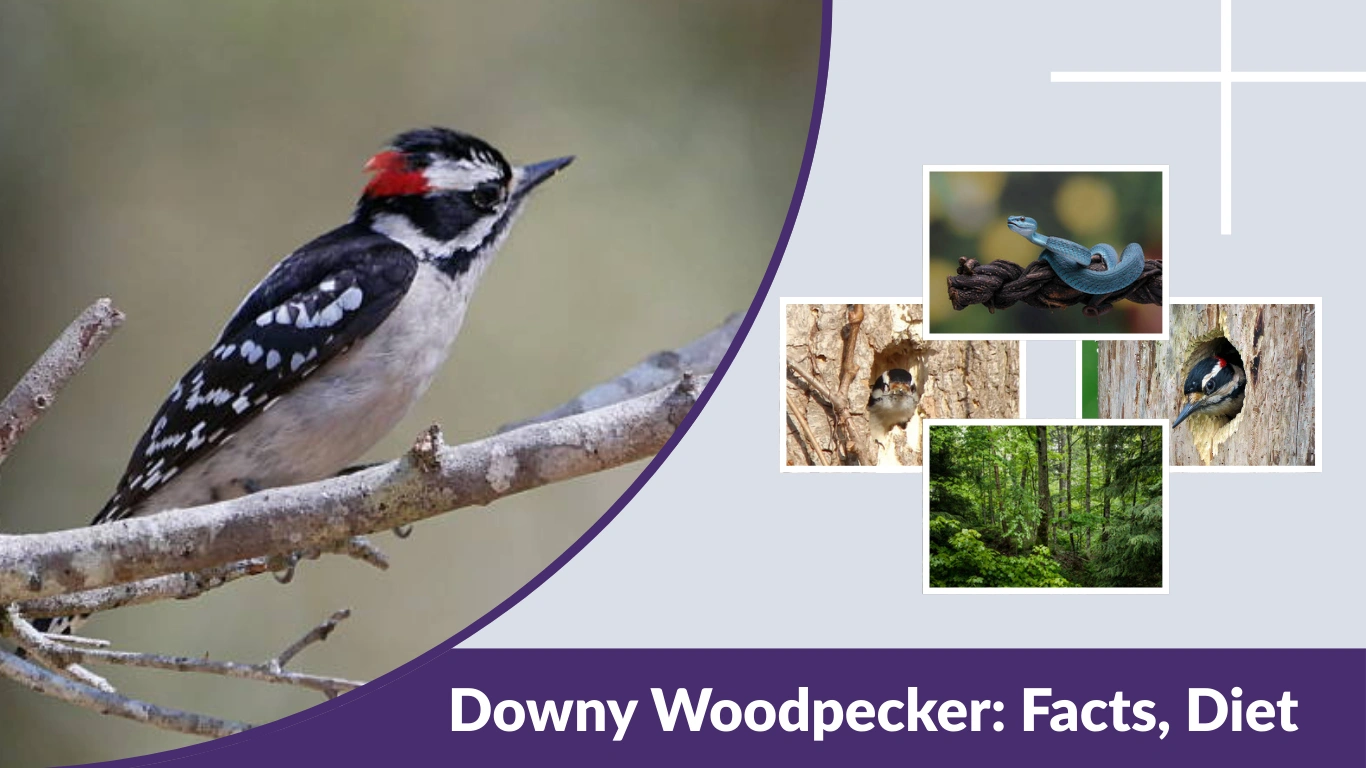
The Downy Woodpecker is the smallest and one of the most familiar woodpeckers in North America. With its bold black-and-white plumage and energetic behavior, this tiny bird is a frequent visitor to backyard feeders, wooded parks, and forest edges. Despite its small size, it plays an important role in controlling insect populations and maintaining tree health. In this guide, you’ll learn how to identify a Downy Woodpecker, where it lives, what it eats, and how it differs from similar species.
Overview of the Downy Woodpecker
The Downy Woodpecker (Dryobates pubescens) belongs to the woodpecker family Picidae. It is widely distributed across North America and is considered a year-round resident in most parts of its range.
Unlike many bird species that migrate long distances, the Downy Woodpecker typically stays close to its breeding territory throughout the year. Its adaptability allows it to thrive in forests, suburban neighborhoods, orchards, and even city parks.
Because of its broad range and comfort around human habitats, it is one of the most commonly observed woodpeckers in the United States and Canada.
How to Identify a Downy Woodpecker
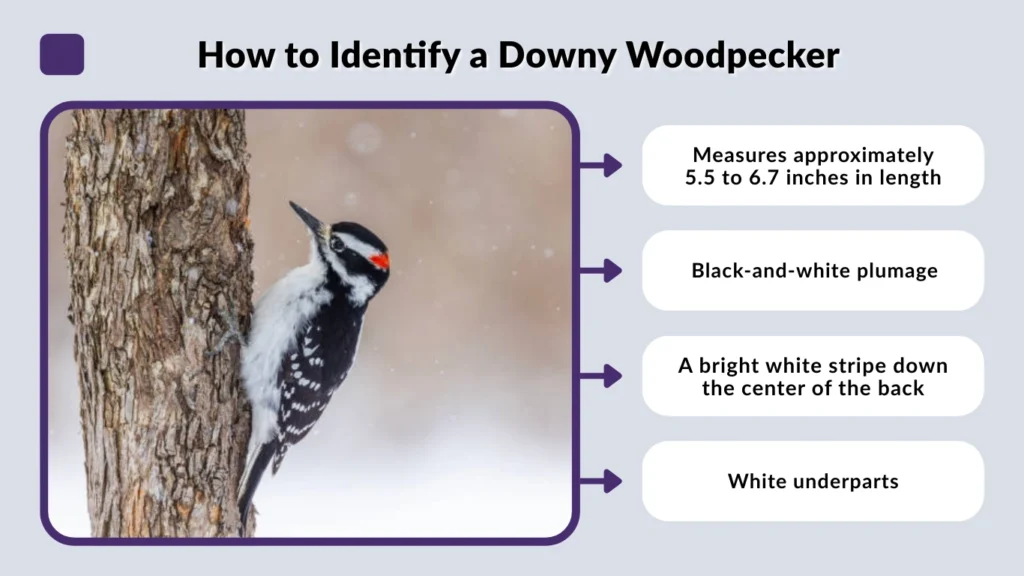
Correct identification is important, especially since the Downy Woodpecker closely resembles the Hairy Woodpecker. Paying attention to size, bill shape, and subtle markings can help you tell them apart.
Size and Physical Characteristics
The Downy Woodpecker measures approximately 5.5 to 6.7 inches in length, making it the smallest woodpecker in North America. Its wingspan ranges from about 9 to 12 inches.
Key physical features include:
- Black-and-white plumage
- A bright white stripe down the center of the back
- White underparts
- Black wings with white spots
- A short, stubby bill
One of the most reliable identification clues is the bill. On a Downy Woodpecker, the bill appears noticeably shorter than the length of its head. This small bill helps distinguish it from similar species.
Male vs Female Differences
Male and female Downy Woodpeckers look almost identical at first glance. However, there is one clear difference:
- Male: A small red patch on the back of the head
- Female: No red patch
This red marking is often the quickest way to determine the bird’s sex when observing it closely.
Downy Woodpecker vs Hairy Woodpecker
The Downy Woodpecker is often confused with the slightly larger Hairy Woodpecker. While their color patterns are nearly identical, there are several important differences:
- Size: The Hairy Woodpecker is larger overall.
- Bill Length: The Hairy’s bill is long and nearly the same length as its head. The Downy’s bill is much shorter.
- Outer Tail Feathers: Downy Woodpeckers often have black spots on the outer white tail feathers, while Hairy Woodpeckers typically do not.
When in doubt, focus on the bill size relative to the head — this is usually the most dependable field mark.
Habitat and Geographic Range
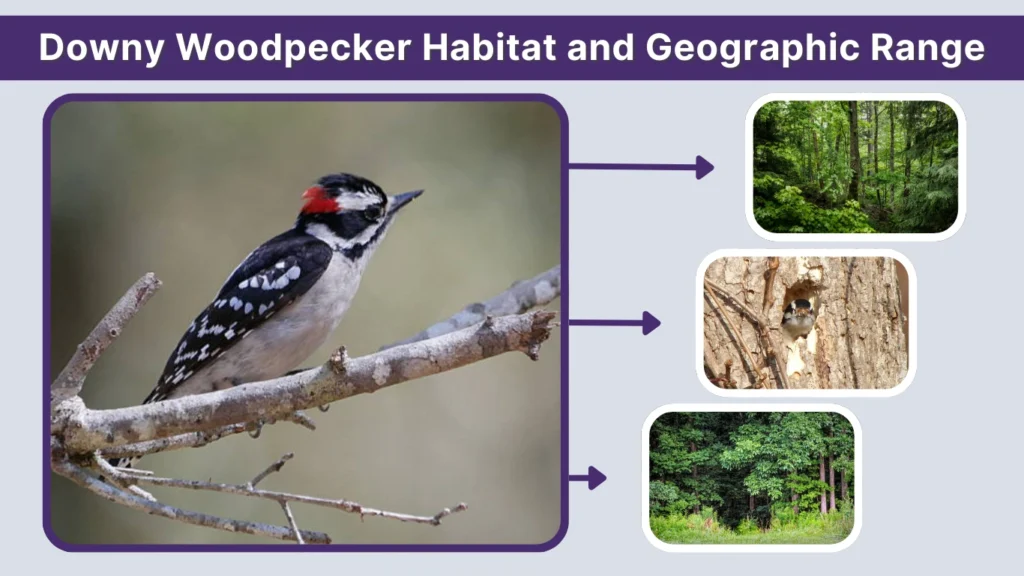
Where Do Downy Woodpeckers Live?
Downy Woodpeckers are found throughout most of the United States and Canada. Their range extends from Alaska across Canada and down through the majority of the continental United States.
They are permanent residents in most areas, meaning they do not migrate far seasonally. Even in colder northern regions, they remain year-round if food sources are available.
Preferred Habitats
This species is highly adaptable and occupies a variety of environments, including:
- Deciduous forests
- Mixed woodlands
- Forest edges
- Orchards
- Suburban yards
- Urban parks
They are especially common in areas with mature trees that provide both food and nesting opportunities.
Seasonal Behavior
During winter, Downy Woodpeckers often join mixed-species flocks with chickadees, nuthatches, and other small birds. This flocking behavior helps them find food and stay alert to predators.
Because they do not migrate long distances, providing consistent food sources such as suet feeders can help support local populations throughout the colder months.
Diet and Feeding Habits
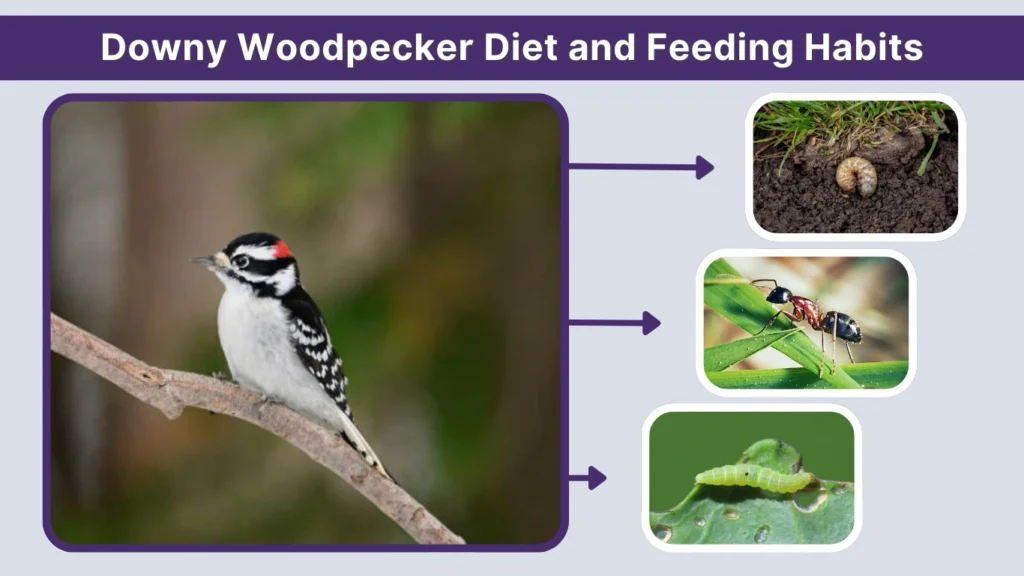
The Downy Woodpecker’s diet primarily consists of insects, making it beneficial to trees and gardens.
Natural Diet in the Wild
In their natural habitat, Downy Woodpeckers feed on:
- Beetle larvae
- Ants
- Caterpillars
- Other insects hidden beneath bark
They also consume small amounts of berries and seeds, especially during winter when insect availability decreases.
Using their sharp bill, they tap and probe tree bark to extract hidden insects. Unlike larger woodpeckers, they typically work on smaller branches and thinner trunks.
Feeding Behavior
Downy Woodpeckers are agile and active feeders. They climb vertically along tree trunks, cling to branches, and sometimes hang upside down while searching for food. Their small size allows them to access areas that larger woodpeckers cannot easily reach.
They may also visit backyard feeders regularly, especially in winter when natural food sources are limited.
Favorite Foods at Bird Feeders
Downy Woodpeckers are frequent visitors to backyard feeders, especially during fall and winter. If you want to attract them, offering the right foods makes a big difference.
Their top feeder favorites include:
- Suet cakes (especially high-energy winter blends)
- Black oil sunflower seeds
- Shelled peanuts or peanut pieces
They prefer feeders that provide sturdy perches or tree trunks nearby for quick escape. Suet feeders attached to trees are particularly attractive because they mimic natural foraging conditions.
Providing food consistently during colder months can encourage them to return daily.
Nesting and Reproduction
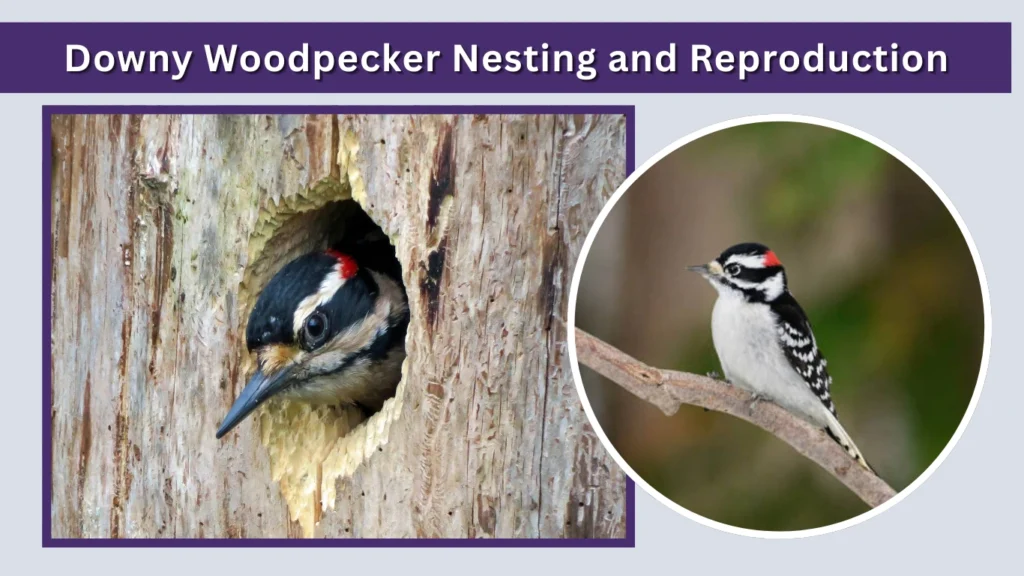
The Downy Woodpecker is a cavity nester, meaning it creates its nest inside a tree rather than building an open cup nest like many songbirds.
Nesting Habits
Both males and females participate in excavating the nest cavity. They typically choose:
- Dead trees (snags)
- Soft or decaying wood
- Tree limbs with heartwood softened by fungus
The entrance hole is small and round, just large enough for the bird to enter. Inside, the cavity extends downward, forming a protected chamber where eggs are laid.
Unlike some birds, they do not bring nesting material into the cavity. Wood chips left from excavation often remain at the bottom to cushion the eggs.
Breeding Season
Breeding season usually begins in spring, typically from April through June, depending on the region.
The female lays between 3 and 8 small white eggs. Both parents share incubation duties, which last about 12 days. This cooperative behavior increases the chances of successful hatching.
Raising the Young
After hatching, both parents work tirelessly to feed the nestlings. They bring insects and larvae back to the cavity multiple times per hour.
The young remain in the nest for about 18 to 21 days before fledging. Even after leaving the nest, fledglings may continue to follow their parents for a short period while learning to forage independently.
Sounds and Communication
Although small, the Downy Woodpecker is quite vocal.
Its most common call is a sharp, high-pitched “pik” sound. This call is often used as a contact note between mates or to signal alertness.
Another recognizable sound is a descending, whinny-like call that trails off in pitch. Birdwatchers often rely on this sound to locate the bird before seeing it.
In addition to vocal calls, Downy Woodpeckers communicate through drumming. Drumming is rapid tapping on resonant surfaces like tree trunks or even metal gutters. Unlike feeding pecks, drumming is:
- Faster
- More rhythmic
- Used to establish territory
- Part of courtship behavior
Each woodpecker species has a slightly different drumming pattern, which experienced birders can recognize.
Lifespan, Predators, and Survival
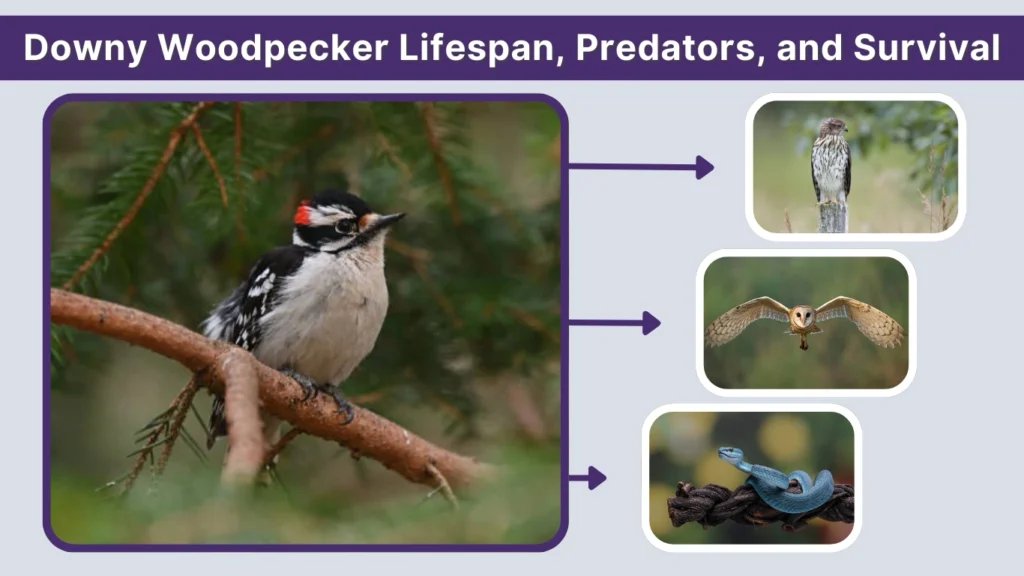
In the wild, Downy Woodpeckers typically live 1 to 3 years, although some individuals can survive longer under favorable conditions.
Common predators include:
- Hawks
- Owls
- Snakes
- Domestic cats
Their black-and-white coloration provides camouflage against tree bark, helping them blend into their surroundings.
One of the most remarkable survival adaptations of woodpeckers is their shock-absorbing skull structure. Specialized bones and tissues protect the brain from repeated impact while pecking. Their long tongue, which wraps around the back of the skull, also helps stabilize and cushion the brain during drilling.
How to Attract Downy Woodpeckers to Your Yard
Because they adapt well to suburban areas, attracting Downy Woodpeckers is relatively simple.
Here are effective strategies:
- Install suet feeders, especially in winter
- Offer black oil sunflower seeds
- Leave dead tree snags when safe to do so
- Plant native trees that support insect populations
- Provide fresh water in a birdbath
Avoid using pesticides, as these reduce the insects that woodpeckers rely on for food.
Consistency is key. Birds are more likely to return to feeders that are regularly maintained and refilled.
Interesting Facts About the Downy Woodpecker
- It is the smallest woodpecker in North America.
- It often joins mixed-species flocks in winter.
- Its tongue can extend far beyond the bill to extract insects.
- It adapts exceptionally well to human-modified environments.
- Despite its small size, it can excavate its own nesting cavity.
FAQs
What is the difference between a Downy Woodpecker and a Hairy Woodpecker?
The main difference is size and bill length. Downy Woodpeckers are smaller and have a short, stubby bill that is noticeably shorter than their head. Hairy Woodpeckers are larger with a bill nearly the same length as their head. Downy Woodpeckers also often have black spots on the outer white tail feathers.
What do Downy Woodpeckers eat?
Downy Woodpeckers primarily eat insects such as beetle larvae, ants, and caterpillars found under tree bark. During winter, they also consume seeds and berries. At feeders, they prefer suet, black oil sunflower seeds, and peanuts, especially when natural insect food is scarce.
Are Downy Woodpeckers migratory?
Downy Woodpeckers are generally non-migratory. Most populations remain in the same area year-round, even in colder northern climates. Instead of migrating, they adapt by joining mixed-species flocks and visiting feeders during winter when insects are harder to find.
How big is a Downy Woodpecker?
A Downy Woodpecker measures about 5.5 to 6.7 inches in length, with a wingspan of approximately 9 to 12 inches. This makes it the smallest woodpecker species in North America, noticeably smaller than the similar-looking Hairy Woodpecker.
How long do Downy Woodpeckers live?
In the wild, Downy Woodpeckers typically live 1 to 3 years, although some individuals may live longer under favorable conditions. Survival depends on food availability, habitat quality, and avoiding predators such as hawks, owls, snakes, and domestic cats.
How can I attract Downy Woodpeckers to my yard?
To attract Downy Woodpeckers, provide suet feeders, black oil sunflower seeds, and peanuts. Keep mature trees if possible and avoid pesticides to preserve insect populations. Offering fresh water and maintaining feeders regularly will increase the chances of consistent visits.
Conclusion
The Downy Woodpecker may be small, but it is one of North America’s most fascinating and beneficial birds. From its distinctive black-and-white markings to its energetic feeding behavior, it plays an important role in controlling insect populations and supporting healthy ecosystems. Whether you spot one in a quiet forest or at your backyard suet feeder, this tiny woodpecker is always worth observing. By providing food, water, and natural habitat, you can help ensure it continues to thrive year-round.