
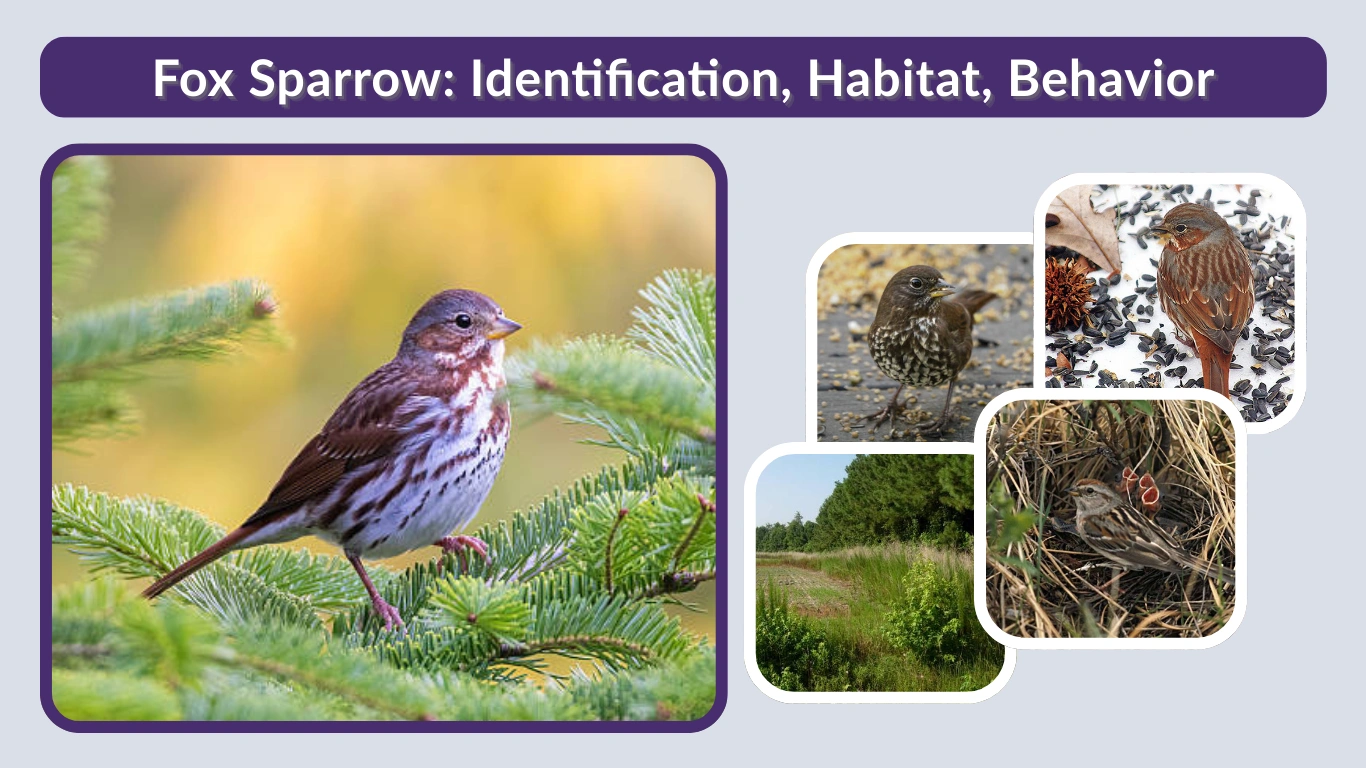
The Fox Sparrow (Passerella iliaca) is one of North America’s largest and most striking native sparrows. Known for its rich reddish-brown plumage and bold breast streaking, this bird often surprises observers with its beauty and melodic song. Although it may appear similar to other streaked sparrows at first glance, closer observation reveals unique field marks and behaviors that set it apart. Found across forests, thickets, and shrublands, the Fox Sparrow is especially noticeable during migration and winter months in many regions.
Fox Sparrow Identification Guide
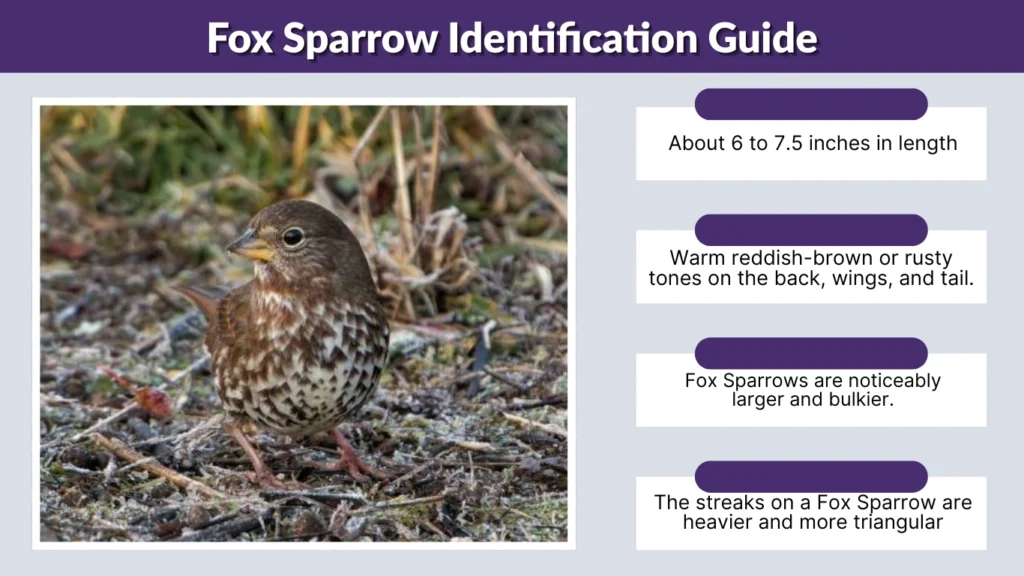
Correctly identifying a Fox Sparrow can be rewarding, especially since it is sometimes confused with smaller, streaky sparrows like the Song Sparrow. Paying attention to size, plumage details, and behavior makes identification much easier.
Size and Physical Characteristics
The Fox Sparrow is a large, chunky sparrow measuring about 6 to 7.5 inches in length, with a wingspan of approximately 10 to 11 inches. It has a rounded body, sturdy legs, and a relatively long tail. Compared to most backyard sparrows, it appears bulkier and more robust.
Its bill is thick and conical, ideal for cracking seeds. The head often appears slightly rounded, giving the bird a gentle but strong profile. When seen on the ground, it may look noticeably larger than nearby Song Sparrows or White-throated Sparrows.
Plumage and Color Variations
One of the Fox Sparrow’s most distinctive features is its rich coloration. Many individuals display warm reddish-brown or rusty tones on the back, wings, and tail. The underparts are typically pale with bold, dark streaks that often converge into a central spot on the chest.
However, coloration varies depending on the subspecies group and geographic region. Some birds appear grayish or darker brown rather than bright red. Regardless of color tone, the heavy streaking and overall chunky appearance are consistent identification clues.
Fox Sparrow vs Song Sparrow
The Fox Sparrow is frequently mistaken for the Song Sparrow because both species share streaked underparts. However, there are several clear differences:
- Size: Fox Sparrows are noticeably larger and bulkier.
- Color: Fox Sparrows often show richer reddish tones, especially in eastern populations.
- Breast Markings: The streaks on a Fox Sparrow are heavier and more triangular, often forming a bold central spot.
- Behavior: Fox Sparrows commonly use a distinctive double-scratch motion when foraging on the ground.
Types of Fox Sparrow (Subspecies Groups)
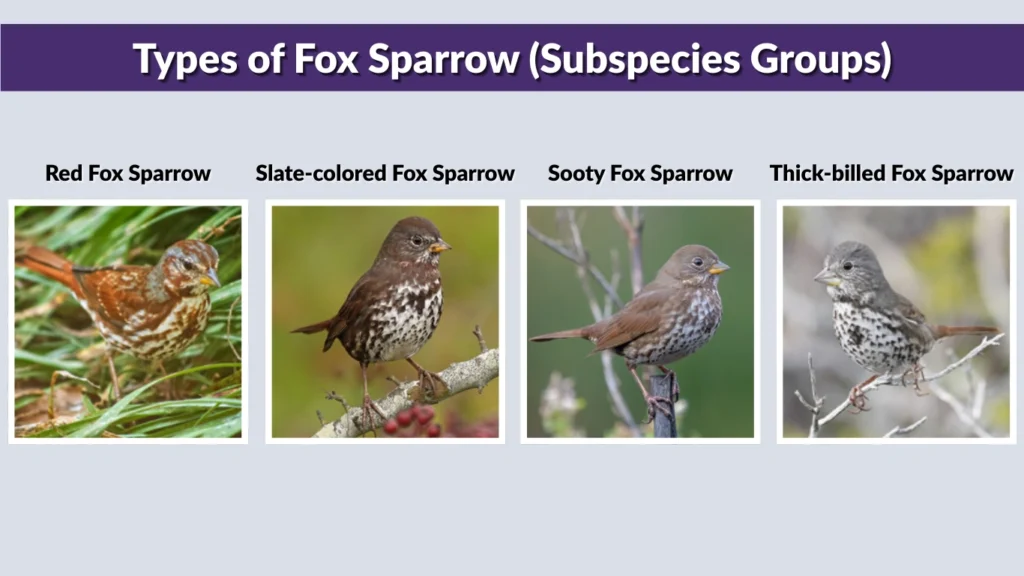
The Fox Sparrow is not just one uniform bird. Ornithologists recognize four main subspecies groups, each with slightly different coloration and regional distribution.
Red Fox Sparrow
The Red Fox Sparrow is the most familiar and widespread group in eastern North America. It features bright rusty-red tones on the back and tail, with bold reddish streaking across the breast. These birds breed in northern Canada and Alaska and migrate southward during winter.
Slate-colored Fox Sparrow
Slate-colored Fox Sparrows are generally found in western mountain regions. Instead of bright red tones, they show gray or slate-brown plumage with darker streaking. Their cooler coloration helps distinguish them from their eastern relatives.
Sooty Fox Sparrow
The Sooty Fox Sparrow inhabits coastal areas of the Pacific Northwest. As its name suggests, it has darker brown plumage overall. It often appears more uniform in color, with less contrast between streaks and background tones.
Thick-billed Fox Sparrow
This group is primarily found in parts of California and nearby regions. The Thick-billed Fox Sparrow has a noticeably larger, heavier bill compared to other groups. Its plumage tends to be grayish-brown with distinct streaking.
Despite these differences, all four groups share similar behavior patterns and feeding styles.
Fox Sparrow Habitat and Range
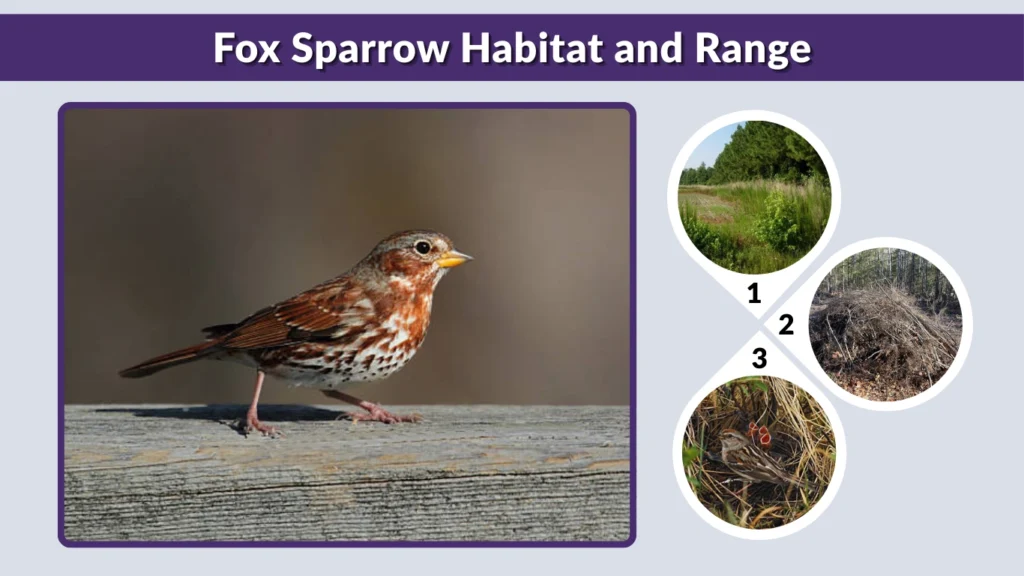
Fox Sparrows occupy a wide geographic range across North America, shifting locations with the seasons.
Breeding Range
During the breeding season, Fox Sparrows are most commonly found in Alaska, Canada, and mountainous western regions of the United States. They prefer remote areas with dense shrubs, coniferous forests, and brushy edges. These habitats provide both nesting cover and access to insects for feeding their young.
Wintering Range
In fall and winter, many Fox Sparrows migrate southward into the United States. They may appear in eastern forests, southern states, and along both coasts. Winter habitats often include woodland edges, overgrown fields, hedgerows, and backyard thickets.
Preferred Habitats
Fox Sparrows thrive in dense, shrubby environments. They favor:
- Forest edges
- Brush piles
- Overgrown clearings
- Thickets near streams
- Shrub-dominated understory
Because they spend much of their time on or near the ground, thick cover is especially important for protection from predators.
Fox Sparrow Behavior and Feeding Habits
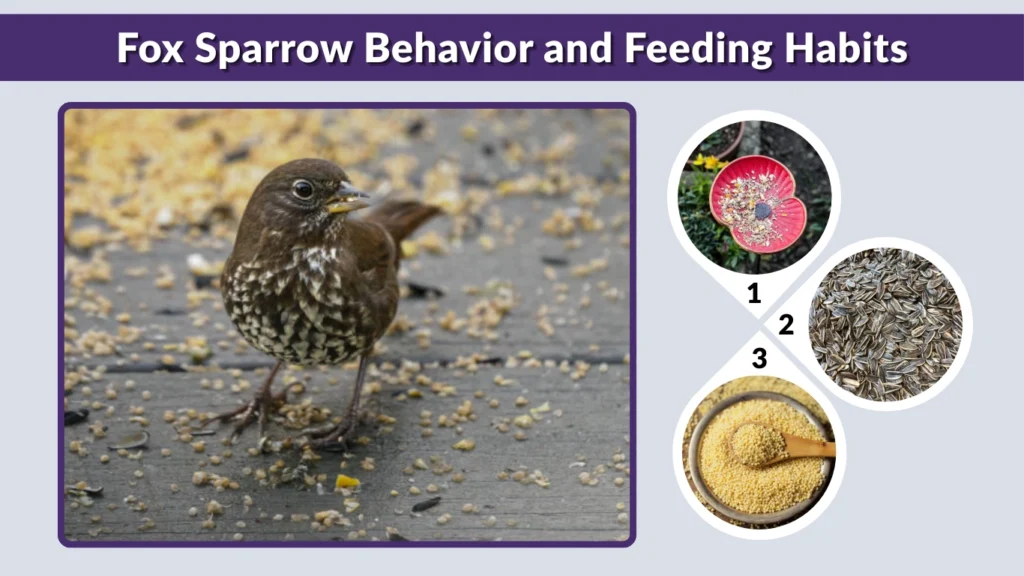
The Fox Sparrow is known for its energetic ground foraging and somewhat shy nature.
Ground-Scratching Feeding Style
One of the most recognizable Fox Sparrow behaviors is its double-scratch method. The bird hops forward and then quickly kicks both feet backward in unison, scattering leaf litter to uncover hidden seeds or insects. This behavior resembles that of towhees and can help birdwatchers identify the species even before seeing it clearly.
Fox Sparrows typically feed on the ground beneath shrubs or trees rather than at elevated feeders.
Diet
The diet of the Fox Sparrow changes with the seasons. In winter, it primarily eats seeds and berries. It readily consumes fallen seeds beneath bird feeders, especially sunflower seeds and millet. During the breeding season, insects become more important, providing necessary protein for growing chicks.
Fox Sparrow Migration Patterns
The Fox Sparrow is considered a partial migrant, meaning migration patterns vary depending on location and subspecies group. Birds that breed in the far north—especially in Alaska and across Canada—typically migrate south for the winter. These individuals may travel thousands of miles to reach more temperate regions of the United States.
Migration usually occurs in early fall (September to October) and again in early spring (March to April). During these periods, Fox Sparrows may appear in areas where they are not commonly seen during summer. Western populations, particularly some coastal groups, may migrate shorter distances or remain closer to their breeding territories year-round.
Weather conditions and food availability play major roles in migration timing. Harsh winters can push birds farther south, while mild conditions may keep them in northern areas longer than usual.
Fox Sparrow Song and Calls
Though sometimes secretive in behavior, the Fox Sparrow has a surprisingly rich and beautiful song. Males sing primarily during the breeding season to establish territory and attract mates.
The song is often described as melodious and warbling, similar in tone to a thrush. It begins with a series of clear notes followed by a cascading mix of musical phrases. In northern forests, their singing can carry impressively through dense vegetation.
In addition to their song, Fox Sparrows produce sharp call notes that sound like a metallic “chimp” or “chink.” These calls are commonly heard when the bird is startled or communicating with others nearby. Listening carefully during spring can greatly improve your chances of locating one.
Conservation Status and Threats
Overall, the Fox Sparrow is not considered endangered, and populations remain relatively stable across much of its range. However, like many shrubland birds, it faces challenges related to habitat loss.
Urban development, agricultural expansion, and forest clearing can reduce the dense understory vegetation that Fox Sparrows depend on for nesting and protection. Climate change may also alter breeding ranges in northern regions over time.
Conserving brushy habitats, maintaining forest edges, and protecting northern breeding grounds are important steps in ensuring this species continues to thrive. Backyard habitat improvements can also contribute to local support during migration and winter months.
How to Attract Fox Sparrows to Your Yard
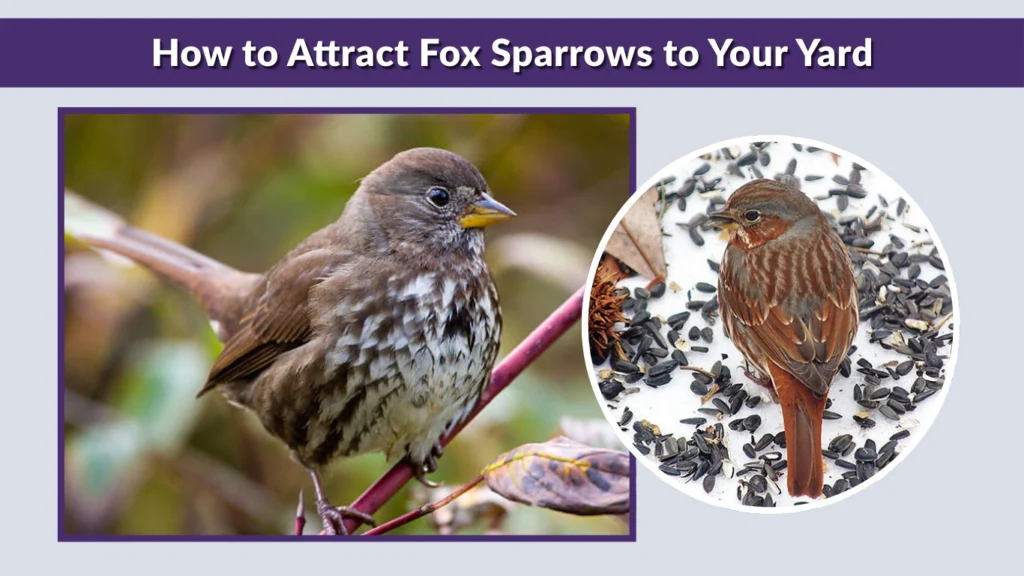
If you live within the winter range of the Fox Sparrow, you may be able to attract one to your yard with the right setup.
Best Foods
Fox Sparrows prefer feeding on the ground. Offering black oil sunflower seeds, white millet, and cracked corn can increase your chances of attracting them. Scatter seed directly on the ground or use a low platform feeder.
They are especially likely to visit areas where seeds accumulate beneath hanging feeders.
Habitat Setup
Creating a bird-friendly yard involves more than just providing food. Dense shrubs, native bushes, and brush piles give Fox Sparrows the cover they need to feel secure. Leaving some leaf litter undisturbed can also encourage natural foraging behavior.
A yard with layered vegetation—ground cover, shrubs, and small trees—closely mimics their natural habitat.
Seasonal Tips
Fox Sparrows are most commonly seen in many parts of the United States during fall and winter. Keep feeders stocked during colder months when natural food sources are limited. Quiet, low-traffic areas of the yard are more likely to attract this somewhat shy species.
FAQs
What does a Fox Sparrow look like?
A Fox Sparrow is a large, chunky sparrow with heavy streaking on its pale breast and rich reddish or brown tones on its back and tail. Most individuals show bold triangular streaks that often form a central chest spot. Coloration varies by region, but the overall build remains robust and rounded.
Where do Fox Sparrows live?
Fox Sparrows breed mainly in Alaska, Canada, and western mountain regions. During winter, many migrate to the United States, where they inhabit forests, thickets, brushy fields, and backyard shrub areas. Their range shifts seasonally depending on climate and food availability.
Is the Fox Sparrow rare?
The Fox Sparrow is not considered rare and maintains a stable overall population. However, it can appear uncommon in certain regions outside migration or winter seasons. Habitat loss in shrubland areas remains a concern, but the species is currently not listed as endangered.
How can I tell a Fox Sparrow from a Song Sparrow?
Fox Sparrows are larger and bulkier than Song Sparrows, with heavier streaking and richer reddish coloration in many populations. Their breast streaks are thicker and often form a bold central spot. They also use a distinctive double-scratch motion while foraging on the ground.
