
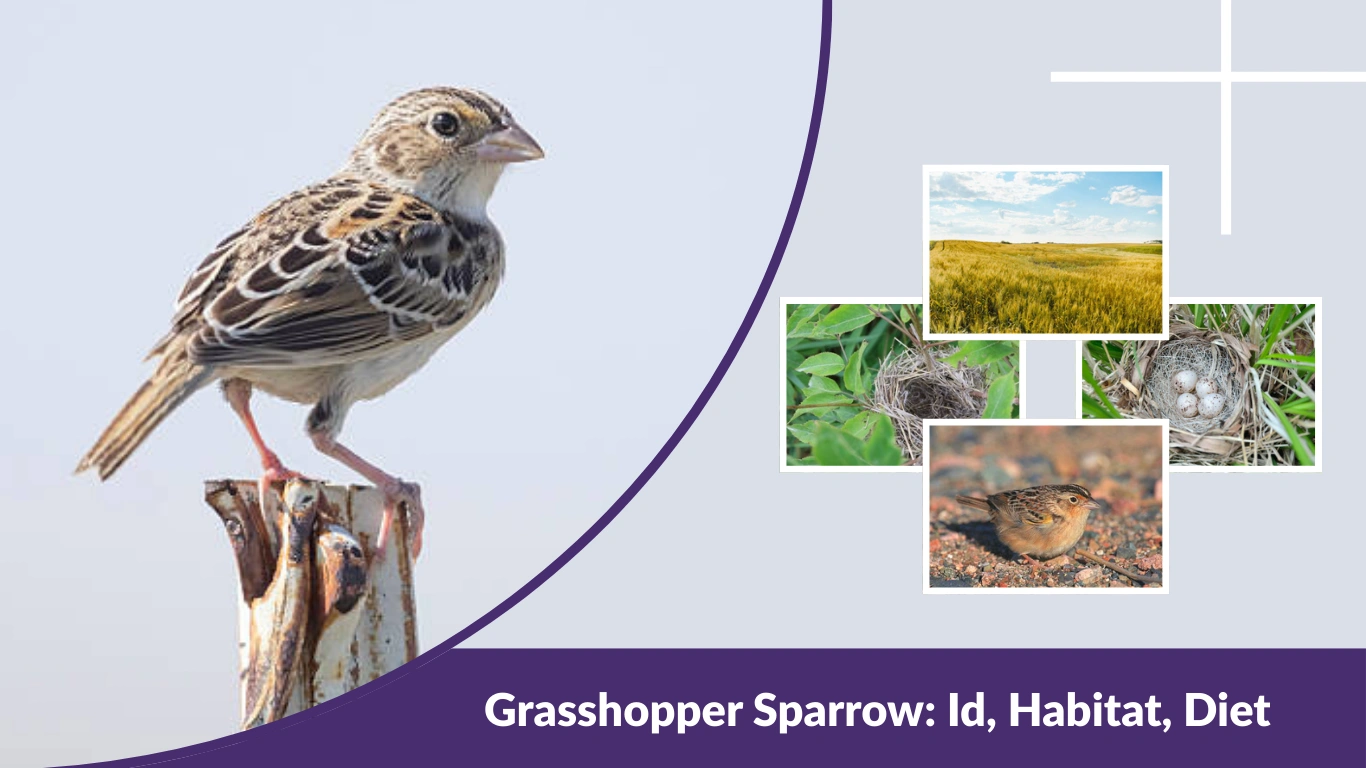
The grasshopper sparrow is a small, secretive grassland bird known for its insect-like song and ground-dwelling habits. Unlike many other sparrows that perch in shrubs or trees, this species spends much of its time running through tall grasses in open fields and prairies. Though modest in appearance, the grasshopper sparrow plays an important role in maintaining healthy grassland ecosystems. From its unique buzzing call to its hidden ground nest, this fascinating bird has several traits that set it apart from other North American sparrows.
Grasshopper Sparrow Scientific Name and Classification
Scientific Name and Meaning
The scientific name of the grasshopper sparrow is Ammodramus savannarum. The genus name Ammodramus comes from Greek roots meaning “sand runner,” which reflects the bird’s habit of moving quickly along the ground. The species name savannarum refers to savannas or open grassy landscapes, highlighting its strong connection to grassland habitats.
Family and Bird Order
The grasshopper sparrow belongs to the family Passerellidae, a group that includes many New World sparrows. It is part of the order Passeriformes, often called perching birds or songbirds. Although it shares similarities with other sparrows, its flat head, short tail, and distinctive song make it relatively easy to distinguish in the field.
How to Identify a Grasshopper Sparrow
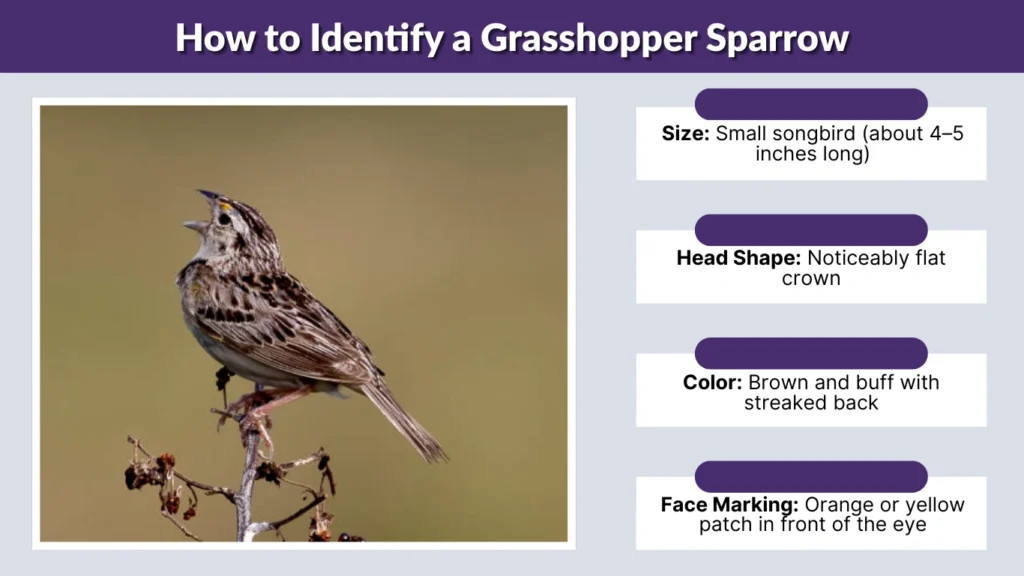
The grasshopper sparrow is a small, flat-headed grassland bird that can be tricky to spot because of its excellent camouflage. It usually stays low in tall grasses and is more often heard than seen. When trying to identify this species, focus on its compact shape, subtle facial markings, and distinctive insect-like song. Unlike many other sparrows, it avoids perching in exposed areas and prefers running along the ground.
Quick Identification Checklist
- Size: Small songbird (about 4–5 inches long)
- Head Shape: Noticeably flat crown
- Tail: Short and slightly notched
- Color: Brown and buff with streaked back
- Face Marking: Orange or yellow patch in front of the eye
- Underparts: Pale buff or light brown
- Song: High-pitched buzzing, like a grasshopper
- Behavior: Runs through grass; flies low and drops quickly
Field Tip
Listen carefully in open prairies or meadows during spring and early summer. If you hear a thin, insect-like buzz coming from the grass, watch for a small, short-tailed bird briefly popping up before disappearing back into the vegetation.
Grasshopper Sparrow Habitat
Preferred Habitats
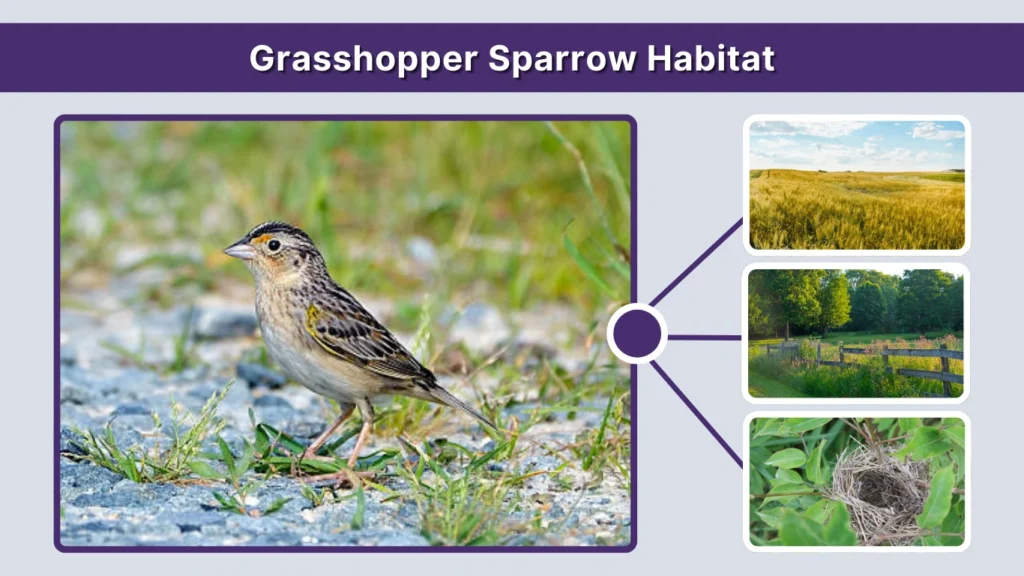
The grasshopper sparrow habitat consists primarily of open grasslands. It thrives in native prairies, meadows, pastures, and hayfields with tall grasses and minimal tree cover. Unlike woodland birds, it avoids dense forests and heavily wooded areas.
These birds prefer landscapes where grasses are moderately tall but not overly thick. They require open ground beneath vegetation for easy movement and foraging. Managed grasslands, such as lightly grazed pastures, can sometimes provide suitable environments if enough natural structure remains.
Habitat Requirements
Healthy grassland ecosystems are essential for the survival of grasshopper sparrows. They depend on a mix of grass heights for nesting and feeding. Areas with scattered shrubs may be tolerated, but too many trees can make the habitat unsuitable. Because grasslands have declined significantly due to agriculture and urban development, the availability of quality habitat has become a growing concern for this species.
Where Do Grasshopper Sparrows Live?
Breeding Range
Grasshopper sparrows are found across much of North America during the breeding season. Their breeding range extends throughout the central and eastern United States, parts of the western U.S., southern Canada, and northern Mexico. They are especially common in the Great Plains, where expansive grasslands provide ideal nesting conditions.
Winter Range and Migration
Many grasshopper sparrows migrate south for the winter. During colder months, they move to the southern United States, Mexico, and parts of Central America. However, some populations in warmer regions of the southern U.S. may remain year-round. Migration patterns can vary depending on climate and local conditions.
Grasshopper Sparrow Diet
What Do Grasshopper Sparrows Eat?
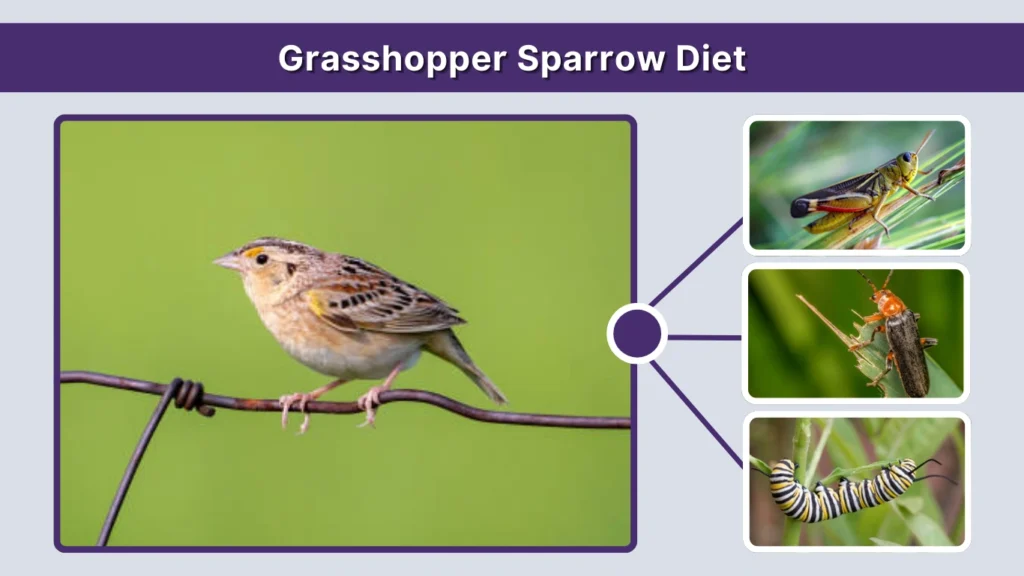
The grasshopper sparrow diet mainly consists of insects, especially during the breeding season. As their name suggests, grasshoppers are a favorite food source. They also eat crickets, beetles, caterpillars, ants, and spiders. These protein-rich insects are particularly important when feeding growing chicks.
Seasonal Diet Changes
In warmer months, insects make up the majority of their diet. However, as temperatures drop and insects become scarce, grasshopper sparrows shift to eating more seeds. They consume seeds from grasses and small plants, which provide essential energy during fall and winter.
Feeding Behavior
Grasshopper sparrows forage mostly on the ground. They move quickly through grasses, pausing to pick insects from stems or the soil surface. Their cryptic coloring allows them to remain well camouflaged while searching for food. Unlike some birds that feed in flocks, they are often seen alone or in small groups outside the breeding season.
Grasshopper Sparrow Nest and Breeding
Nest Location and Structure
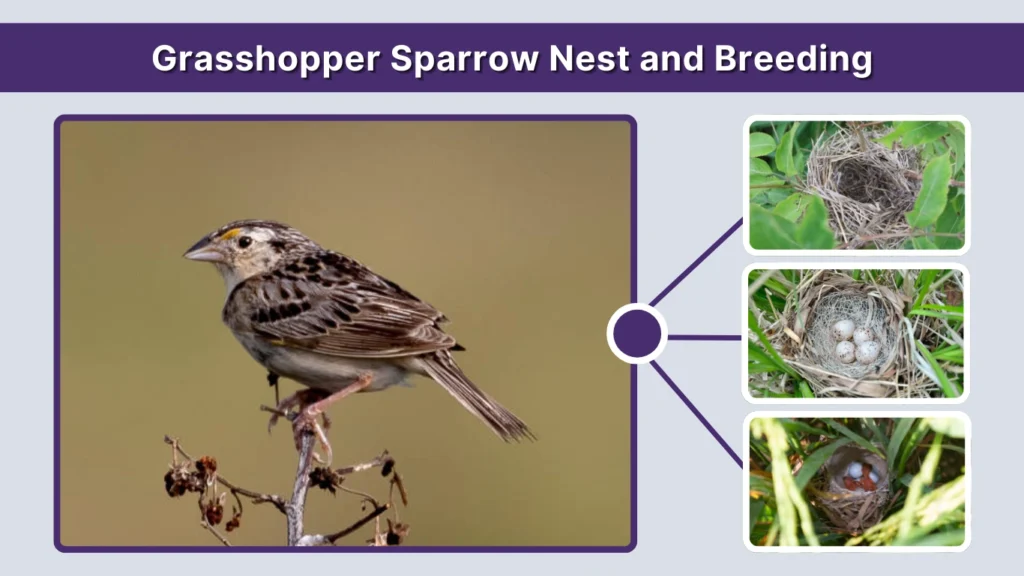
The grasshopper sparrow nest is carefully hidden on the ground, usually at the base of a clump of grass. Unlike many birds that build nests in trees or shrubs, this species relies on dense vegetation for concealment. The nest is often dome-shaped or partially covered, with a side entrance that helps protect eggs and chicks from predators and harsh weather.
Females construct the nest using fine grasses, stems, and plant fibers. The inner cup is lined with softer materials to cushion the eggs. By building directly on the ground and blending the nest into surrounding vegetation, grasshopper sparrows reduce the risk of detection.
Eggs and Incubation
A typical clutch contains three to five eggs. The eggs are small and pale, often speckled with brown markings. The female performs most of the incubation, which lasts about 10 to 12 days. During this time, she remains well hidden, relying on camouflage and stillness for protection.
Once the eggs hatch, both parents participate in feeding the chicks. They bring a steady supply of insects to ensure rapid growth and development.
Fledging and Juvenile Development
Grasshopper sparrow chicks develop quickly. Young birds usually leave the nest about 8 to 10 days after hatching. However, even after fledging, they remain dependent on their parents for food and protection for a short period.
Because nests are located on the ground, they are especially vulnerable to predators and environmental disturbances. As a result, some pairs may attempt multiple broods in a single breeding season to increase their chances of reproductive success.
Behavior and Interesting Facts
Grasshopper sparrows are known for their secretive and cautious behavior. They prefer running through grass rather than flying long distances. When flushed, they typically fly low and drop back into vegetation quickly.
Males are territorial during the breeding season and use their distinctive buzzing song to mark their territory. Despite being songbirds, they are often difficult to spot due to their excellent camouflage and preference for staying hidden.
An interesting fact about this species is that it is more often heard than seen. Birdwatchers frequently locate it by listening for its insect-like trill rising from open fields.
Predators and Conservation Status
Natural Predators
Because they nest on the ground, grasshopper sparrows face numerous natural predators. Snakes, foxes, raccoons, skunks, and domestic cats may raid nests. Birds of prey such as hawks can capture adults or fledglings. Eggs and chicks are particularly vulnerable.
Weather events, including heavy rain or flooding, can also destroy nests built at ground level.
Conservation Concerns
Although the grasshopper sparrow is not currently classified as globally endangered, its population has declined in many areas. The primary threat is habitat loss. Native grasslands have been reduced significantly due to agriculture, urban expansion, and land development.
Modern farming practices, including early mowing of hayfields, can unintentionally destroy nests during breeding season. Fire suppression and conversion of prairies into cropland have also reduced suitable habitat.
Conservation efforts focus on protecting and restoring native grasslands. Sustainable land management practices, such as delayed mowing and controlled grazing, can help maintain the open habitats these birds require. Preserving large tracts of prairie is essential for stabilizing long-term population trends.
FAQs
Why is it called a grasshopper sparrow?
The grasshopper sparrow gets its name from its high-pitched, buzzing song that sounds similar to a grasshopper. Its diet also includes many grasshoppers, which further supports the name.
Are grasshopper sparrows rare?
Grasshopper sparrows are still found across much of North America, but their populations have declined in several regions due to habitat loss. In some areas, they are considered uncommon or locally threatened.
Do grasshopper sparrows migrate?
Many grasshopper sparrows migrate south during winter, traveling to the southern United States, Mexico, and Central America. However, some populations in warmer regions remain year-round.
How can you attract grasshopper sparrows?
Attracting grasshopper sparrows requires suitable grassland habitat rather than feeders. Maintaining open fields with native grasses and avoiding heavy shrub growth increases the likelihood of supporting this species.