
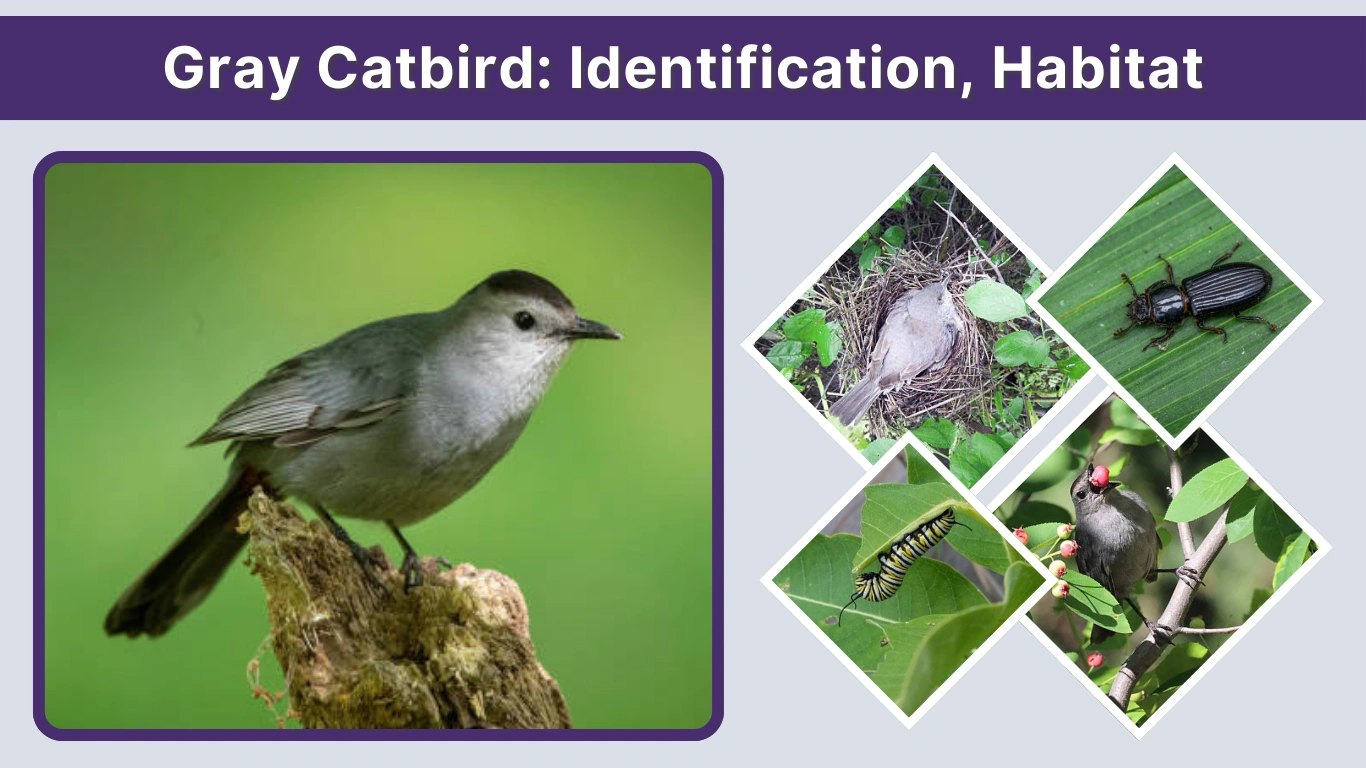
The gray catbird is one of North America’s most recognizable yet often overlooked songbirds. Known for its soft gray body, black cap, and distinctive cat-like “mew” call, this bird stands out as both a skilled vocalist and a clever survivor. Frequently heard before it is seen, the gray catbird thrives in dense shrubs, forest edges, and even suburban gardens. This article explores how to identify the gray catbird, where it lives, how it behaves, and what makes its voice so unique among songbirds.
What Is a Gray Catbird?
The gray catbird (Dumetella carolinensis) is a medium-sized songbird belonging to the Mimidae family, also known as the mimic thrush family. This group includes mockingbirds and thrashers, all famous for their vocal abilities. The name “catbird” comes from its most recognizable call, which closely resembles the meow of a cat.
Gray catbirds are intelligent, alert birds with strong territorial instincts, especially during the breeding season. They are usually seen alone or in pairs rather than large flocks. Although common across much of North America, their secretive nature and preference for dense vegetation often make them more heard than seen.
Physical Characteristics and Identification
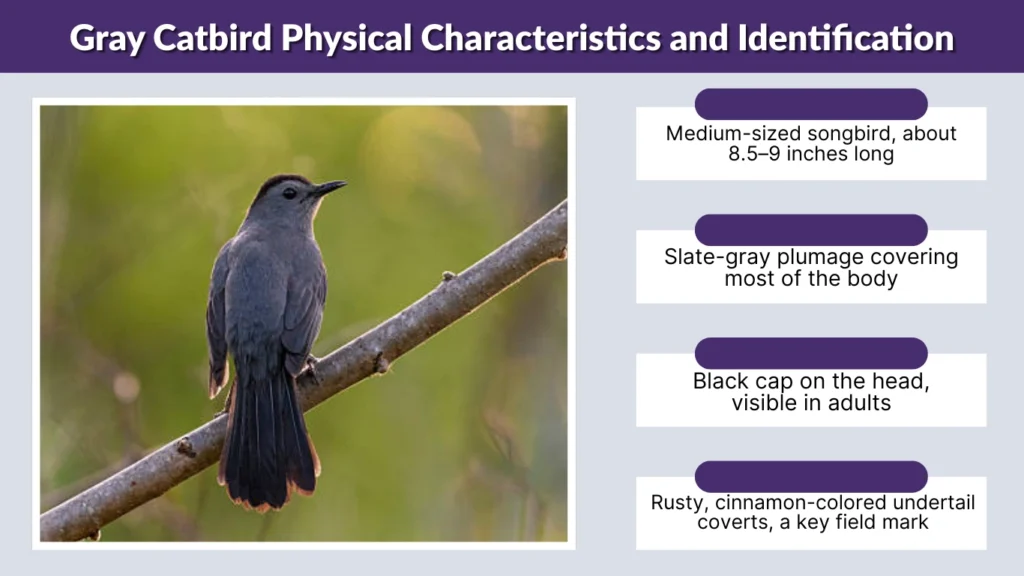
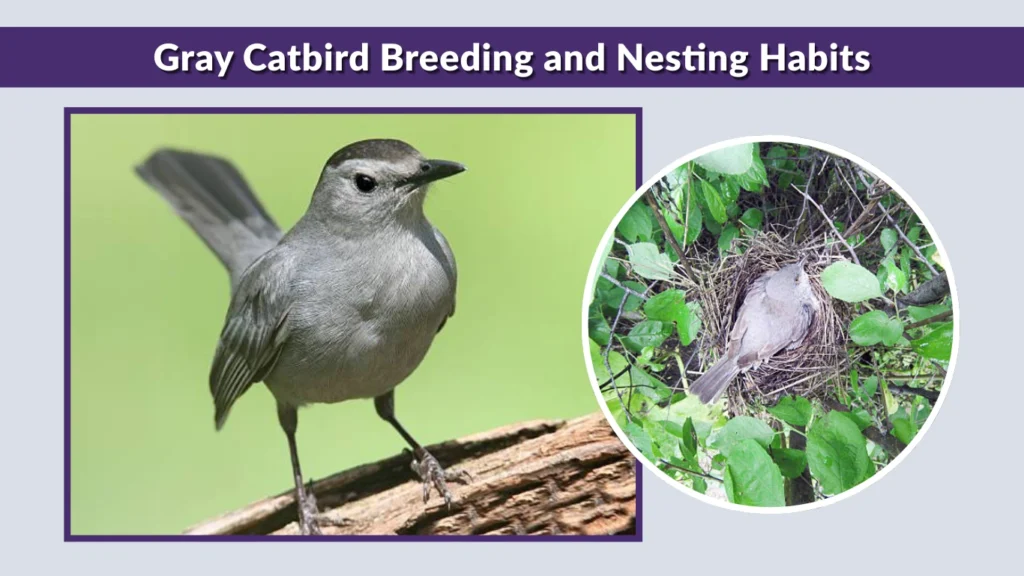
The gray catbird is a medium-sized songbird with subtle but distinctive markings. Its mostly gray body, combined with a black cap and rust-colored undertail, makes it easy to identify once you know what to look for. The bird’s long tail and frequent tail-flicking behavior also help distinguish it from similar species.
- Medium-sized songbird, about 8.5–9 inches long
- Slate-gray plumage covering most of the body
- Black cap on the head, visible in adults
- Rusty, cinnamon-colored undertail coverts, a key field mark
- Long, rounded tail, often flicked downward
- Slender body shape with smooth contours
- Dark eyes and black bill
- Males and females look alike, with no strong visual differences
Gray Catbird Habitat and Range
Preferred Natural Habitats
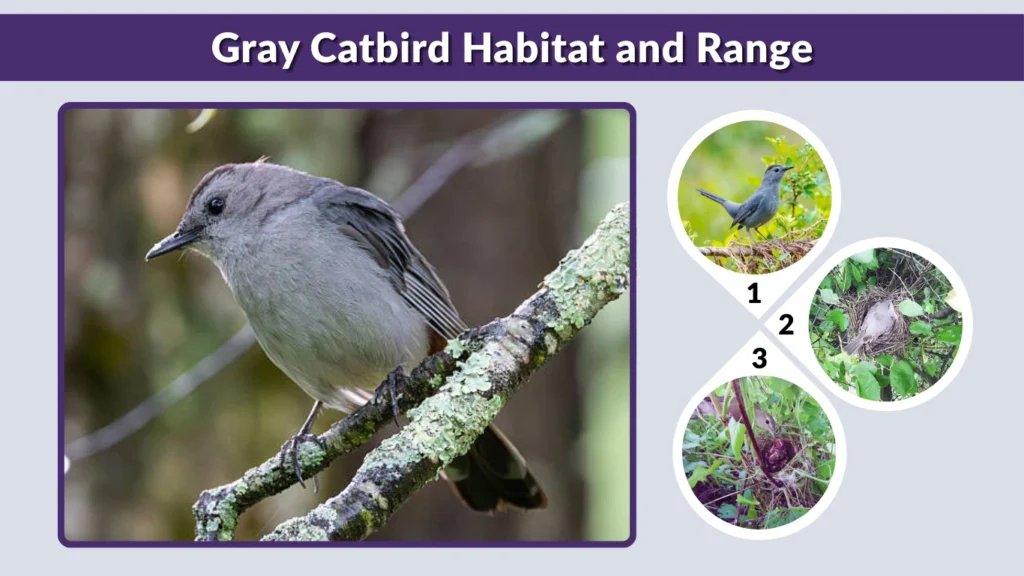
Gray catbirds favor dense, shrubby environments that provide both food and protection. Common habitats include forest edges, woodland thickets, overgrown fields, wetlands, and hedgerows. They prefer areas with thick undergrowth where they can forage close to the ground while remaining hidden from predators.
These birds are rarely found in open spaces. Instead, they rely on tangled vegetation for nesting and cover, making them well adapted to transitional landscapes rather than deep forests.
Urban and Suburban Adaptation
One reason gray catbirds are so widespread is their ability to adapt to human-altered environments. They commonly inhabit suburban neighborhoods, parks, and gardens that contain shrubs, vines, and dense bushes. Backyard hedges, berry-producing plants, and brush piles can easily attract them.
Despite living near people, catbirds remain cautious and often retreat quickly into cover when disturbed.
Migration Patterns and Seasonal Movement
Gray catbirds are migratory birds, although migration patterns vary slightly by region. During the breeding season, they are found throughout much of the eastern and central United States, as well as southern Canada. In fall, most migrate south to the southeastern United States, Mexico, the Caribbean, and Central America.
Spring migration typically occurs from April to May, while fall migration happens between September and October. Some individuals in the southern U.S. may remain year-round, especially where food sources are abundant.
Diet and Feeding Behavior
Natural Diet in the Wild
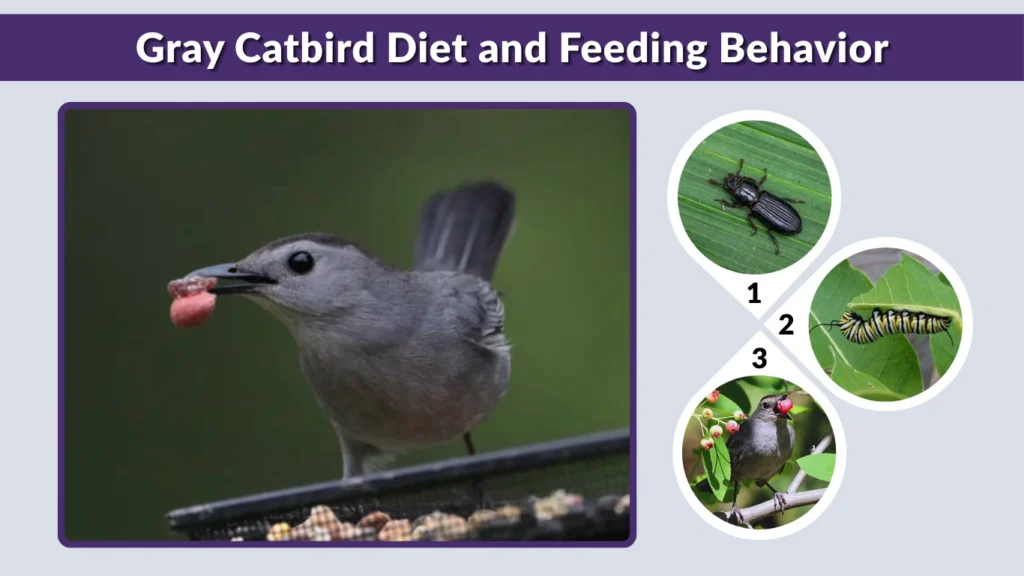
The gray catbird has an omnivorous diet that changes with the seasons. During spring and summer, insects make up a large portion of its food intake. Beetles, caterpillars, ants, grasshoppers, and spiders provide essential protein, especially during breeding.
Seasonal Diet Changes
As summer turns to fall, fruit becomes increasingly important. Gray catbirds feed heavily on berries such as dogwood, elderberry, blackberry, cherry, and holly. This seasonal shift helps them build fat reserves needed for migration and winter survival.
Feeding Habits in Backyards
In backyards, gray catbirds are more likely to visit shrubs and low vegetation than traditional bird feeders. However, they may occasionally feed on platforms offering fruit, mealworms, or suet. They usually forage alone, hopping along the ground or through dense foliage while flicking their tails.
Behavior and Personality
Gray catbirds are known for their bold yet secretive personalities. While they often stay hidden within thick vegetation, they can be surprisingly assertive, especially during the breeding season. Catbirds are highly territorial and will aggressively chase away intruders that come too close to their nests. This behavior includes dive-bombing larger birds, snapping their bills, and producing sharp warning calls.
Outside the breeding season, gray catbirds are generally solitary and quiet, spending much of their time foraging low in shrubs or on the ground. They are active during daylight hours and are quick, agile movers. Their alertness and intelligence help them avoid predators and adapt easily to changing environments.
Gray Catbird Song and Vocalizations
The Famous Cat-Like “Mew” Call
The gray catbird’s most recognizable sound is its nasal, cat-like “mew,” which gives the bird its name. This call is often used as a contact or warning signal and can be heard throughout the day. The sound is especially common when the bird feels threatened or is communicating with its mate.
Vocal Mimicry and Song Complexity
Beyond its mewing call, the gray catbird is an accomplished vocal mimic. It can imitate the songs of other birds, as well as mechanical sounds such as whistles and squeaks. Unlike the northern mockingbird, which often repeats phrases, the catbird strings together long, rambling songs with little repetition. Male catbirds sing more frequently, particularly during early morning hours and the breeding season, using their complex songs to attract mates and defend territory.
Breeding and Nesting Habits
Courtship and Pair Formation
Breeding season begins in late spring, typically from May through July. Male gray catbirds use persistent singing and visual displays to attract females. Once a pair forms, they usually remain together for the season, focusing on nesting and raising their young.
Nest Building and Egg Laying
Nests are built low in dense shrubs or vines, usually 3 to 10 feet above the ground. Both sexes help construct the nest using twigs, grass, leaves, and rootlets. The female lays between two and six pale blue or greenish-blue eggs. Incubation lasts about 12 to 15 days.
Parental Care
After hatching, both parents feed the chicks insects and soft fruits. The young birds grow quickly and typically leave the nest after about 10 days. Even after fledging, the parents continue to care for them until they are able to forage independently.
Predators, Threats, and Survival Challenges
Gray catbirds face a variety of natural predators, including snakes, hawks, owls, raccoons, and domestic cats. Nest predation is a significant threat, especially from snakes and mammals that can access low shrubs.
Human-related dangers also impact catbird populations. Window collisions, habitat loss, and pesticide use reduce survival rates. Despite these challenges, the species has remained resilient due to its adaptability and wide habitat range.
Conservation Status and Population Trends
The gray catbird is currently listed as a species of Least Concern, with stable population numbers across most of its range. Its success is largely due to its flexible diet and ability to live in both natural and human-modified environments. However, continued habitat destruction and the decline of native shrublands could pose long-term risks. Protecting diverse vegetation remains key to maintaining healthy populations.
How to Attract Gray Catbirds to Your Yard
Attracting gray catbirds requires creating a natural, shrub-rich environment rather than relying solely on feeders. Planting native berry-producing shrubs such as elderberry, serviceberry, and dogwood provides both food and shelter. Catbirds also appreciate shallow water sources for drinking and bathing.
Offering mealworms, chopped fruit, or suet on platform feeders can increase visits, especially during migration. Avoid excessive pruning, as dense vegetation is essential for their comfort and safety.
Interesting Facts About the Gray Catbird
Gray catbirds are capable of remembering and reproducing hundreds of different sounds. Unlike many songbirds, they rarely repeat phrases in their songs, making each performance unique. Catbirds can live up to 10 years in the wild, though many have shorter lifespans due to predation. Their intelligence and adaptability place them among the most versatile songbirds in North America.
Conclusion
The gray catbird is a remarkable bird that combines subtle beauty, complex behavior, and impressive vocal skills. From its distinctive cat-like call to its ability to thrive in both wild and suburban landscapes, this species plays an important role in North American ecosystems. By understanding its habits and protecting its habitat, we can continue to enjoy the presence and music of the gray catbird for generations to come.
FAQs
What does a gray catbird eat?
Gray catbirds eat a mixed diet of insects and plant matter. During spring and summer, they primarily feed on beetles, caterpillars, ants, and spiders, which provide protein for breeding and raising young. In fall and winter, their diet shifts toward fruits and berries such as elderberry, dogwood, blackberry, and cherry.
Why is it called a gray catbird?
The gray catbird gets its name from its distinctive vocalization that closely resembles the meow of a cat. This nasal “mew” call is commonly used as a warning or contact sound and is often the first clue that a catbird is nearby, even when it remains hidden in dense vegetation.
Are gray catbirds aggressive?
Gray catbirds can be aggressive, especially during the breeding season. They are highly territorial and will defend their nests by chasing away other birds, animals, or perceived threats. Outside of nesting season, however, they are generally quiet and solitary, focusing on foraging rather than confrontation.
Do gray catbirds migrate?
Yes, most gray catbirds are migratory. They breed across much of the eastern and central United States and southern Canada, then migrate south in fall to the southeastern U.S., Mexico, the Caribbean, and Central America. Some individuals in warmer southern regions may remain year-round if food is available.
How can I attract gray catbirds to my yard?
To attract gray catbirds, focus on providing dense shrubs and native plants rather than traditional bird feeders. Berry-producing plants, brush piles, and thick hedges offer food and shelter. Platform feeders with fruit or mealworms and a shallow water source can also encourage visits.
