
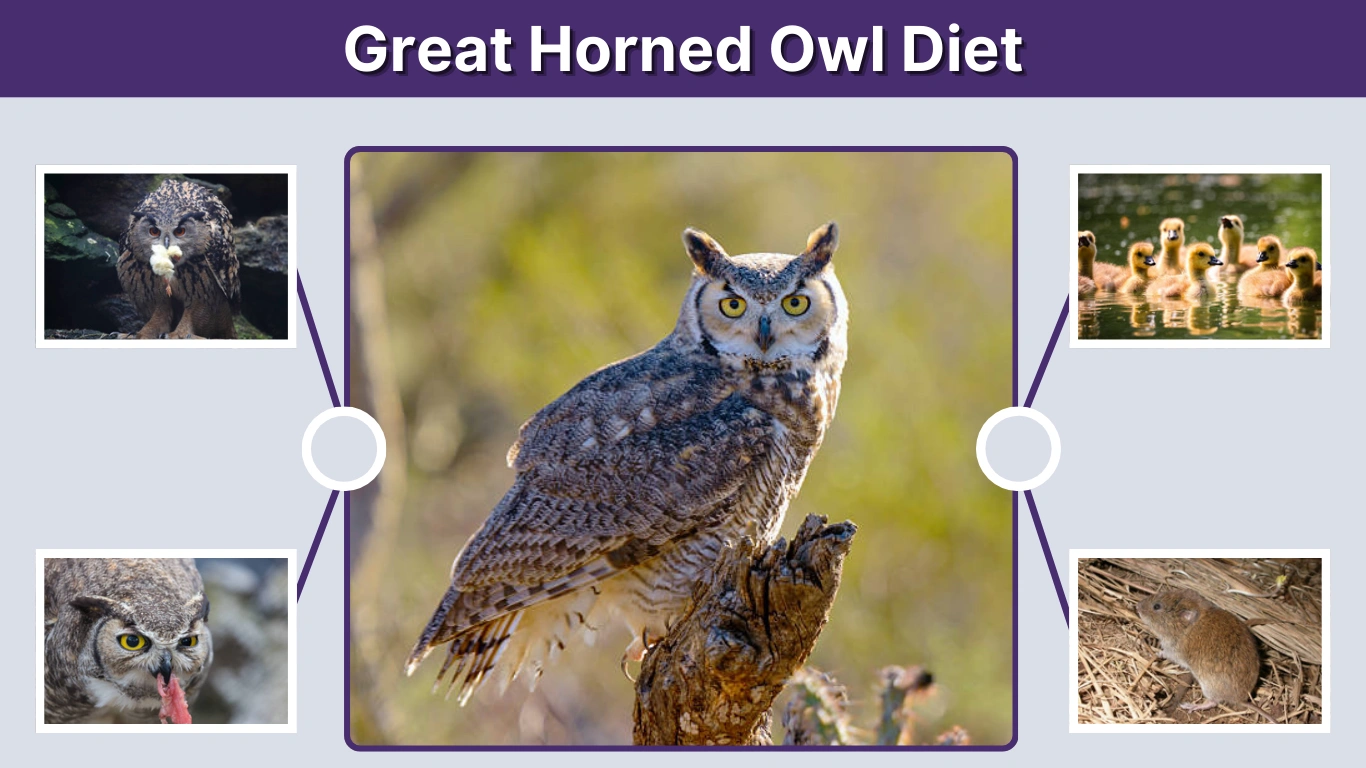
The great horned owl is one of North America’s most powerful and adaptable birds of prey. Known for its striking ear tufts, deep hooting call, and impressive hunting skills, this owl has earned a reputation as a top nocturnal predator. One of the key reasons for its success is its highly varied diet. Unlike many owls that specialize in a narrow range of prey, the great horned owl can hunt and consume a wide assortment of animals, allowing it to thrive in forests, deserts, wetlands, farmlands, and even urban areas. Understanding the great horned owl’s diet provides valuable insight into its behavior, survival strategies, and ecological importance.
Overview of the Great Horned Owl’s Diet
Great horned owls are strictly carnivorous and opportunistic hunters. Rather than relying on a single food source, they consume whatever prey is most available in their environment. This flexibility allows them to survive in regions with harsh winters, seasonal prey shortages, or changing landscapes. Their powerful talons, sharp beak, and excellent night vision enable them to capture prey ranging from tiny insects to animals larger than themselves.
Habitat plays a major role in shaping the great horned owl’s diet. Owls living in woodland areas may rely heavily on rodents and birds, while those near wetlands may include amphibians and fish. Urban and suburban owls often take advantage of abundant rodents and pigeons. This adaptability is one of the defining traits of the species.
What Do Great Horned Owls Eat?
Mammals in the Great Horned Owl Diet
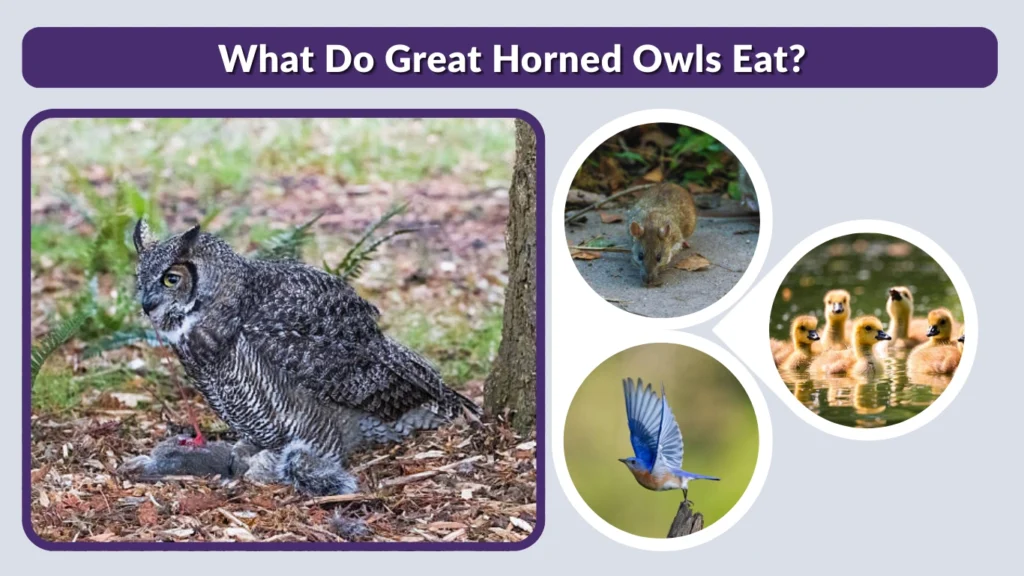
Mammals make up the largest portion of a great horned owl’s diet. Rabbits and hares are among their most important prey items, especially in open habitats such as grasslands and farmland. These mammals provide a high amount of energy, making them ideal meals.
Smaller mammals are also commonly hunted. Mice, rats, voles, and shrews are frequent targets, particularly in areas where larger prey is scarce. Medium-sized mammals such as squirrels, chipmunks, and even skunks may also be captured. The great horned owl is one of the few predators capable of killing skunks, as its relatively weak sense of smell offers protection against the animal’s defensive spray.
Birds as Part of Their Diet
Birds form another significant component of the great horned owl’s diet. These owls are skilled at catching both ground-dwelling and roosting birds during the night. Songbirds, crows, and pigeons are commonly taken, especially in wooded or urban environments.
Great horned owls are also known for preying on larger birds, including ducks, geese, and grouse. In some cases, they even hunt other birds of prey such as hawks, falcons, and smaller owl species. This behavior places the great horned owl at the top of the avian food chain and contributes to its nickname as the “tiger of the sky.”
Reptiles, Amphibians, and Fish
In warmer regions or near water sources, great horned owls may expand their diet to include reptiles and amphibians. Snakes and lizards are occasionally taken, particularly during spring and summer when these animals are more active. Frogs and toads are also consumed in wetland habitats.
Although fish are not a primary food source, great horned owls have been observed catching fish in shallow water. This typically occurs when fish are easy to access and other prey is less available, highlighting the owl’s opportunistic feeding behavior.
Insects and Other Prey
While mammals and birds dominate the great horned owl’s diet, insects can play a supporting role. Large beetles, grasshoppers, and other sizable insects may be eaten, especially by younger owls or during times when larger prey is scarce. Insects are more commonly consumed during warmer months and provide supplemental nutrition rather than serving as a main food source.
Diet Variations by Season
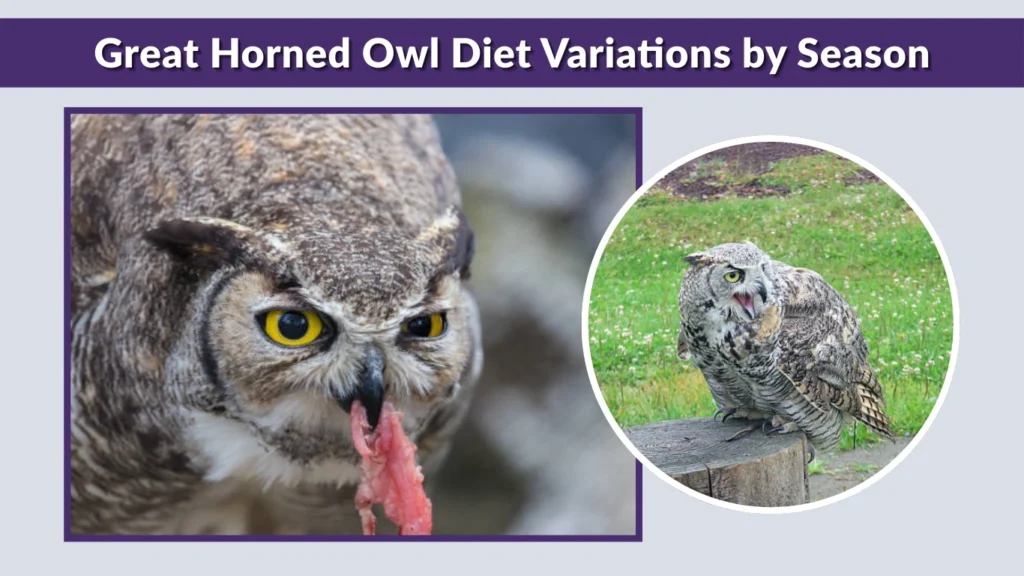
The diet of the great horned owl changes throughout the year in response to prey availability and environmental conditions. Seasonal flexibility helps the species survive in a wide range of climates, from cold northern forests to warm southern deserts.
Winter Diet
During winter, great horned owls rely heavily on mammals, as insects and reptiles are largely unavailable. Rabbits, hares, and rodents become the primary food sources during this time. These owls are well adapted to hunting in cold conditions and can capture prey even in deep snow. Their thick feathers provide insulation, while their exceptional hearing allows them to locate small mammals moving beneath the snow’s surface.
Spring and Summer Diet
Spring and summer bring an increase in prey diversity. Birds become a more important food source as many species nest and raise their young. Great horned owls often take advantage of inexperienced fledglings and nesting birds. The breeding season also increases the demand for food, as adult owls must feed both themselves and their growing owlets.
During warmer months, reptiles, amphibians, and insects appear more frequently in the diet. Frogs, snakes, and large insects are easier to find and can supplement the owl’s regular prey.
Fall Diet
In fall, great horned owls feed opportunistically as they prepare for the colder months ahead. They take advantage of abundant prey and may hunt more frequently to build energy reserves. This season often includes a mix of mammals, birds, and any remaining warm-weather prey.
Diet of Baby Great Horned Owls
What Do Owlets Eat?
Baby great horned owls, known as owlets, depend entirely on their parents for food. At first, owlets are fed small, soft pieces of meat torn from prey by the adults. These pieces are easy to swallow and digest. As the owlets grow stronger, parents gradually introduce larger chunks and eventually whole prey items.
A high-protein diet is essential for rapid growth and feather development. The variety of prey provided helps ensure balanced nutrition during this critical stage of life.
Role of Adult Owls in Feeding
Both parents play important roles in feeding the young. The male is primarily responsible for hunting and delivering prey to the nest, while the female feeds the owlets and protects them. This division of labor allows the young to receive a steady supply of food while remaining safe from predators.
Hunting Behavior and Feeding Techniques
How Great Horned Owls Hunt
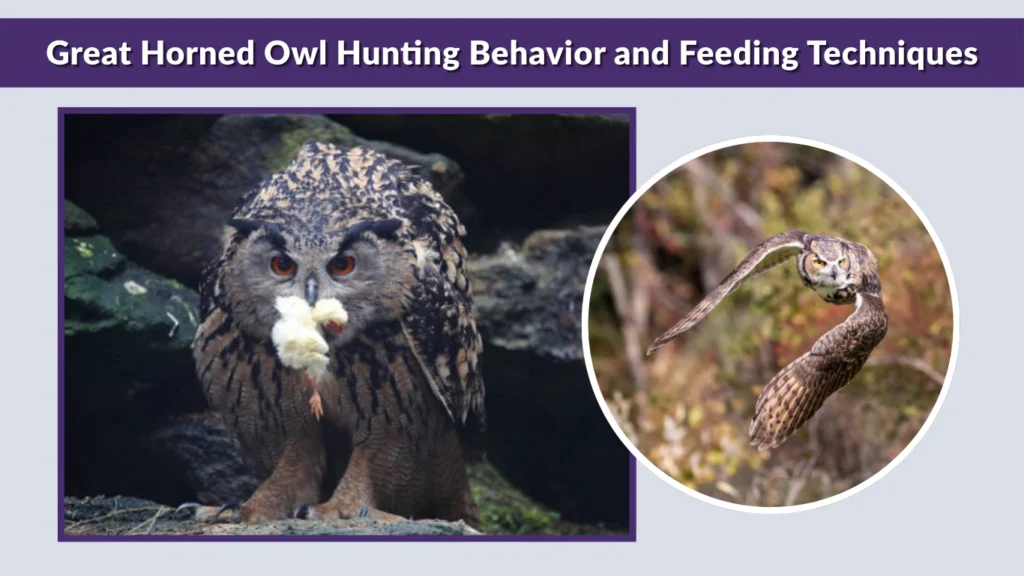
Great horned owls are primarily nocturnal hunters. They rely on silent flight, excellent night vision, and acute hearing to ambush prey. Often, they hunt from a perch, swooping down suddenly to seize their target with powerful talons. Once captured, prey is usually killed quickly and swallowed whole or torn into pieces.
How Much Do Great Horned Owls Eat?
An adult great horned owl typically consumes several ounces of food per day, though this amount can vary based on prey size, season, and energy needs. Larger meals, such as rabbits, may last an owl for more than one feeding session, while smaller prey must be hunted more frequently.
Do Great Horned Owls Eat Pets or Livestock?
Great horned owls are capable of killing small pets, such as cats or very small dogs, but such incidents are rare. Most attacks occur when prey animals resemble natural food sources or are left unattended outdoors at night. Poultry, including chickens and ducks, may also be targeted if left unprotected.
Despite these occasional conflicts, great horned owls pose little threat to humans and generally avoid unnecessary risks.
Ecological Importance of the Great Horned Owl’s Diet
The diverse diet of the great horned owl plays a vital role in maintaining ecological balance. By controlling rodent populations, these owls help reduce crop damage and the spread of disease. Their presence also influences prey behavior, contributing to healthier and more stable ecosystems.
Conclusion
The great horned owl’s diet is a key factor in its success as one of North America’s most widespread and resilient predators. Its ability to consume a wide range of prey allows it to adapt to changing environments and seasonal challenges. By understanding what great horned owls eat, we gain a deeper appreciation for their role in nature and the importance of protecting the habitats that support them.
FAQs
What is the favorite food of a great horned owl?
Great horned owls do not have a single favorite food, but rabbits and hares are among their most commonly eaten prey. These mammals provide a high amount of energy and are widely available in many habitats. When rabbits are scarce, owls readily switch to rodents, birds, or other animals.
Are great horned owls strictly carnivorous?
Yes, great horned owls are strictly carnivorous. Their diet consists entirely of animals, including mammals, birds, reptiles, amphibians, fish, and insects. They do not eat plants, fruits, or seeds.
Can great horned owls eat other owls?
Great horned owls are known to prey on other owl species, especially smaller ones. This behavior is uncommon but well documented and highlights their position as a dominant predator among birds of prey.
How often do great horned owls hunt?
Great horned owls typically hunt every night, though the frequency depends on prey size and availability. A large meal, such as a rabbit, may sustain an owl for more than a day, while smaller prey require more frequent hunting.
Do great horned owls swallow their prey whole?
Great horned owls often swallow small prey whole, while larger animals are torn into pieces before being eaten. Indigestible parts such as bones and fur are later regurgitated as pellets.
What time of day do great horned owls feed?
Great horned owls are mainly nocturnal and do most of their hunting at night. However, they may occasionally hunt during early morning or late evening, especially when feeding young.
