
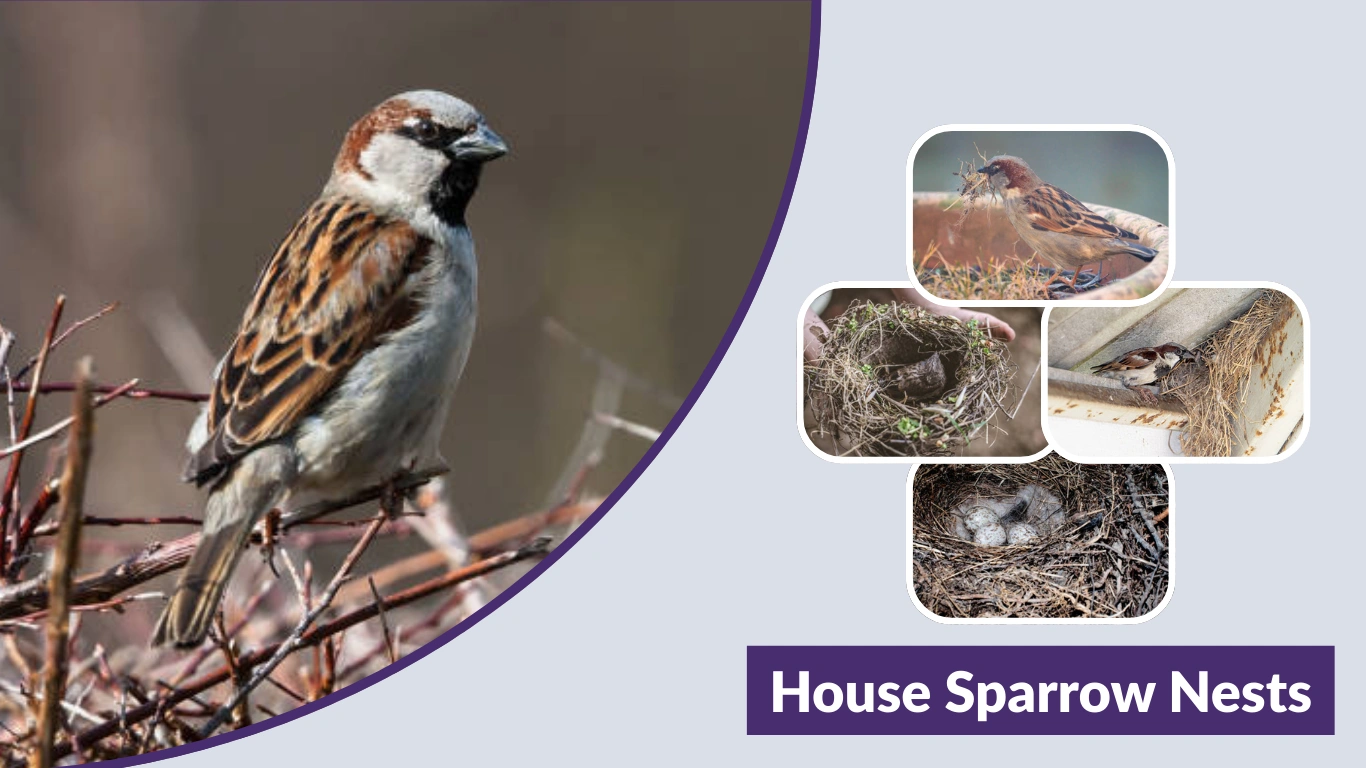
House sparrows are one of the most common cavity-nesting birds in urban and suburban areas. They build nests in roofs, vents, holes, nest boxes, and any sheltered space they can find. Although fascinating to watch, they are an invasive species in many regions and often outcompete native birds like bluebirds. This guide explains everything about house sparrow nests—how to identify them, where they nest, what their eggs look like, nesting habits, whether they reuse nests, and how to safely remove or prevent unwanted nesting.
How to Identify a House Sparrow Nest
- Large, messy, dome-shaped structure
- Built with coarse grasses, twigs, straw, feathers, paper, and trash
- Thick outer ball with a tunnel-like entrance
- Completely fills the cavity or nest box
- Interior lined with feathers for insulation
- Often placed in human structures rather than trees
House sparrow nests are much bulkier and more chaotic than the neat cup nests of native species.
What a House Sparrow Nest Looks Like (Size, Structure, Materials)
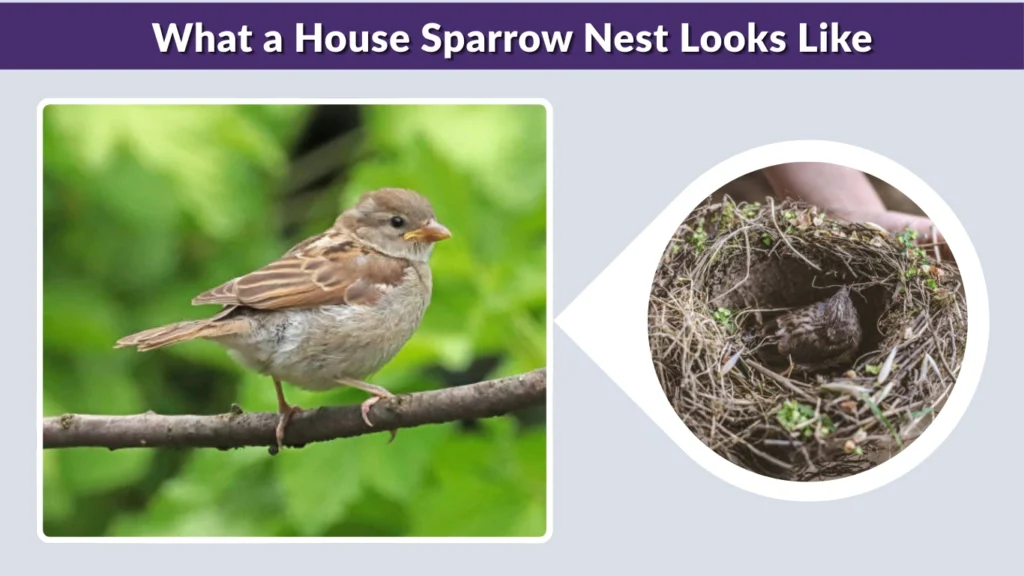
House sparrow nests are distinctive because of their untidy, oversized appearance. A typical nest measures 5–12 inches across and can completely fill the space it occupies. The male usually begins construction, adding layers of dry grass, weeds, string, plastic, feathers, or even bits of cloth. This messy assortment of materials is one of the easiest ways to identify their nests.
Inside, the nest is densely stuffed with soft feathers, forming a warm chamber for eggs. Because sparrows aggressively pack these materials into cavities, the result is a tightly compacted ball rather than a shallow dish. This is a key difference from bluebird and wren nests, which remain open cups.
House Sparrow Eggs: Identification & Nesting Details
House sparrow eggs vary in color but commonly appear:
- White, pale gray, or greenish
- Brown speckled or blotched
- Small and oval, around 0.7–0.9 inches
Clutch size is typically 3–7 eggs, with females laying multiple clutches each year. Incubation lasts 10–14 days, and chicks remain in the nest for 14–17 days before fledging. Because they breed rapidly—often raising 3–4 broods per season—nest management is important to prevent overcrowding and aggressive behavior toward native birds.
Nesting Habits and Behavior of House Sparrows
House sparrows begin nesting early, often in late February or March, and continue through August. They are extremely adaptable and prefer nesting in human-made structures. Males take the lead in choosing sites, filling cavities with loose nesting material and displaying to attract females.
These birds show strong territorial behavior. They frequently invade nest boxes, destroy eggs of native birds, and dominate any available cavity. Their willingness to reuse nests makes them persistent residents near homes. If old nests remain untouched, sparrows may raise multiple broods in the same location throughout the season.
Sparrows also tend to return to successful nesting sites year after year, especially if the cavity remains accessible.
Where House Sparrows Commonly Nest
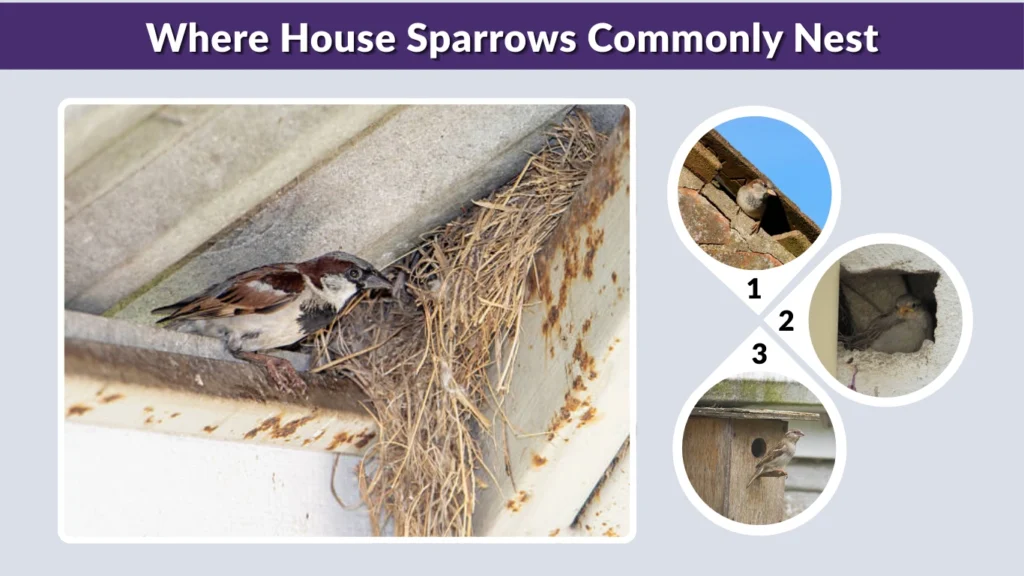
Roofs and Eaves
Roofs, soffits, gutters, and eaves are some of the most common nesting locations. Small gaps or openings along roof edges offer ideal protection from weather and predators. Sparrows push grass and feathers deep into these openings, sometimes causing drainage blockages or fire hazards near electrical fixtures.
House Vents and Openings
Bathroom vents, dryer vents, stove vents, and pipe openings provide warm, sheltered spaces for sparrows to build nests. Their bulky, feather-filled nests can reduce airflow and create sanitation concerns.
Nest Boxes and Birdhouses
Sparrows aggressively occupy birdhouses intended for bluebirds, chickadees, wrens, or swallows. They quickly fill the box with a deep, messy nest, often destroying existing eggs or chicks. This behavior is why many bird enthusiasts use sparrow-resistant designs or manage nest boxes throughout the season.
Trees and Natural Cavities
Although less common, house sparrows may use tree cavities if no urban structures are available. However, they overwhelmingly favor areas close to human activity.
House Sparrow Nest Box Guide
Recommended Dimensions
A typical house sparrow nest box should have:
- Height: 10–12 inches
- Floor: about 5 × 5 inches
- Depth from entrance to floor: 6–7 inches
These dimensions work for sparrows but are also commonly misused to manage populations or study their nesting behavior.
Entrance Hole Size
The ideal hole size for sparrows is 1.25–1.375 inches. Holes larger than this risk attracting starlings, while smaller sizes exclude sparrows entirely.
Do House Sparrows Return to the Same Nest?
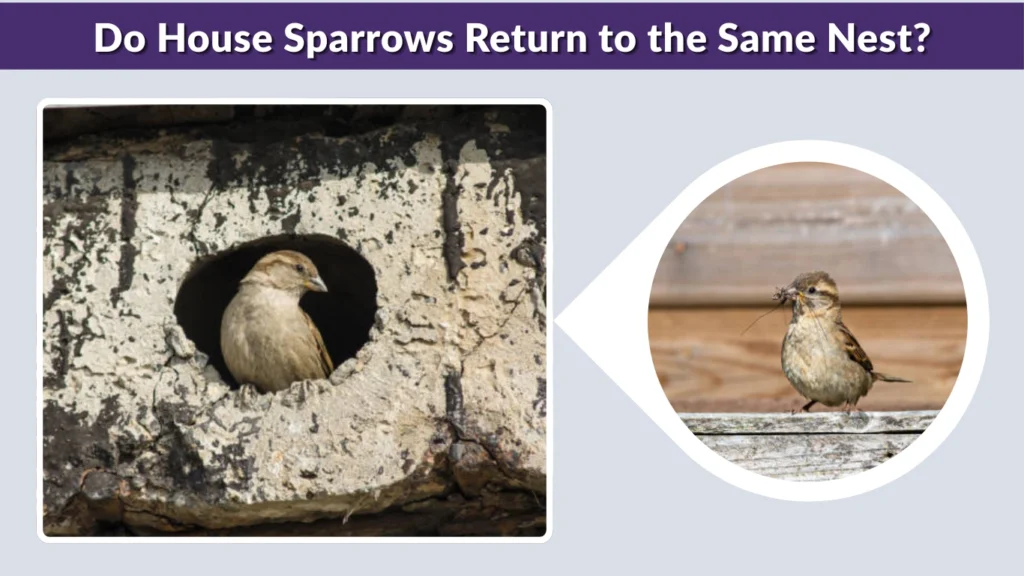
House sparrows frequently return to successful nesting sites year after year. If the cavity remains open and undisturbed, the same pair—or a new pair of sparrows—will often reuse the nesting chamber. Because sparrows produce multiple broods in one season, they commonly use the same nest across several months, adding fresh material each time. This habit leads to large, compacted nest masses that may fill the entire cavity, making their nesting sites very recognizable.
Do House Sparrows Reuse Their Nests?
Yes. Unlike many native birds that build new nests each year, house sparrows readily reuse their old nests for subsequent broods. They may simply add new layers of grass or feathers over old material. This behavior helps them reproduce quickly and explains why sparrow nests often appear extremely thick, heavy, and densely packed by late summer.
Reused nests also contain feathers, droppings, and food scraps, which is why nests can become unsanitary over time—especially when located in vents, roofs, or indoor openings.
House Sparrow Nesting Season Timeline
The nesting season of house sparrows is unusually long and productive. Their breeding cycle generally follows this pattern:
- Late February – March: Males select and begin stuffing potential nest sites
- April – July: Peak nesting season with multiple clutches
- August – September: Late-season broods in warmer climates
- Year-round: Occasional nesting in very warm or urban regions
Sparrows’ ability to nest early gives them an advantage over native birds, allowing them to claim cavities before bluebirds, wrens, or swallows arrive.
How Long Do House Sparrows Stay in the Nest?
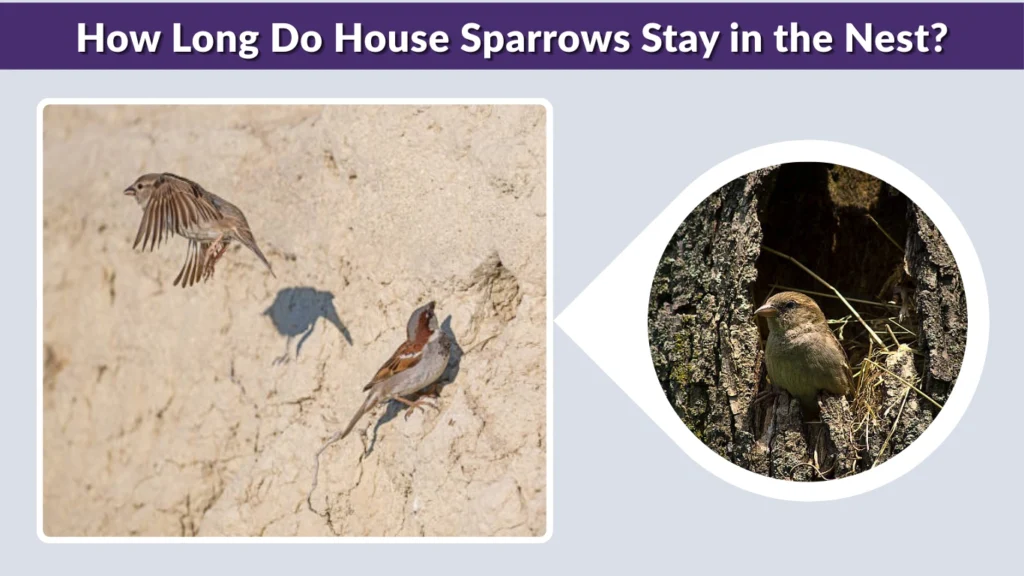
After hatching, house sparrow chicks remain in the nest for 14–17 days. During this time, both parents feed the young constantly with insects and softened seeds. Fledglings often remain close to the nest for several days as they learn to forage. Because sparrows breed multiple times per year, you may see chicks leaving nests from spring through late summer.
If a nest contains 4–7 eggs, hatching typically occurs within two weeks. Chicks grow rapidly and begin fluttering at around 10 days old, strengthening their wings inside the nest chamber.
House Sparrow Nest vs Bluebird Nest
Confusion between sparrow and bluebird nests is extremely common, especially among people monitoring nest boxes. Several clear differences help tell them apart.
| Feature | House Sparrow Nest | Bluebird Nest |
| Shape | Dome-shaped, messy, often fills entire box | Neat, open cup |
| Materials | Coarse grass, feathers, trash, weeds | Fine grasses only |
| Entrance | Tunnel-like | No tunnel |
| Egg color | Speckled brown/gray | Solid blue or white |
| Aggression | Highly aggressive, may attack other birds | Non-aggressive |
Bluebird nests are tidy, shallow, and made only of dry grasses. House sparrow nests look chaotic and bulky by comparison.
House Sparrow Nesting Materials
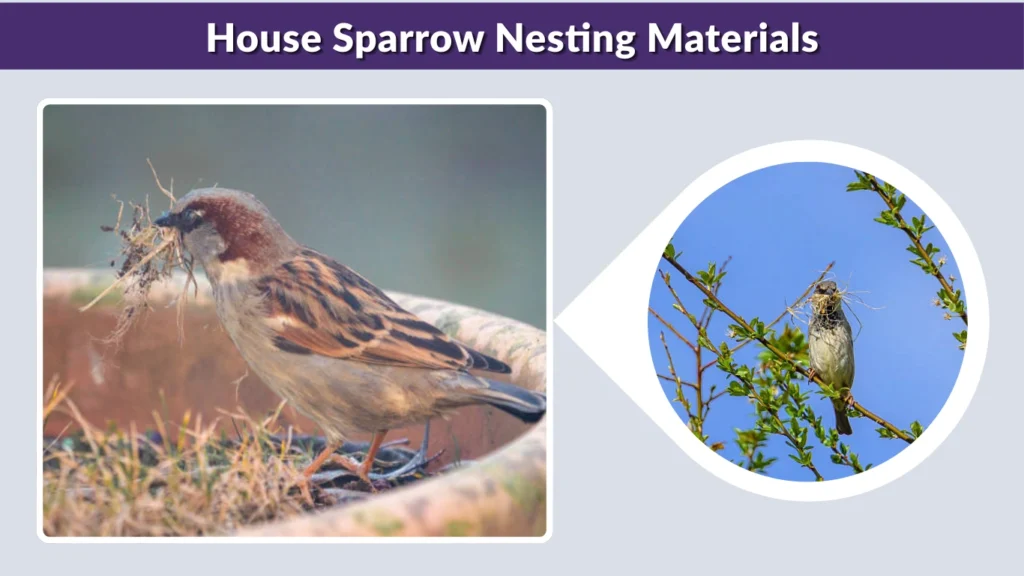
Sparrows use almost anything available, which makes their nests easy to identify. Common materials include:
- Grass stems
- Weeds and hay
- Feathers
- Straw pieces
- Paper scraps
- Plastic bits
- String or twine
- Cloth fibers
- Cotton or soft insulation
The presence of human-made objects like cigarette filters, food wrappers, or fabric threads is especially characteristic of sparrow nests.
House Sparrows Nesting in Roofs and Eaves
Sparrows gravitate toward roofs and eaves because these locations offer warmth, tight cavities, and shelter from predators. Roof intersections, soffit gaps, loose shingles, and attic openings all serve as ideal nesting sites. The deep cavities allow sparrows to build large dome nests while remaining hidden.
Nesting in roofs can become a year-round activity in urban areas where warmth from homes creates a stable micro-climate. In such cases, sparrows may raise more broods than usual.
Cultural Beliefs: Sparrow Nests in Houses
Across many cultures, sparrows nesting inside a house carry symbolic meaning:
- Vastu and Indian traditions: Often considered good luck or a sign of prosperity
- Astrology beliefs: Seen as a positive omen tied to harmony and family unity
- European folklore: Sparrows near homes symbolize protection and companionship
Although these beliefs vary widely, the sparrow is generally viewed positively in traditional symbolism—even though the species is considered invasive in many regions today.
Baby House Sparrow Fell Out of Nest: What It Means
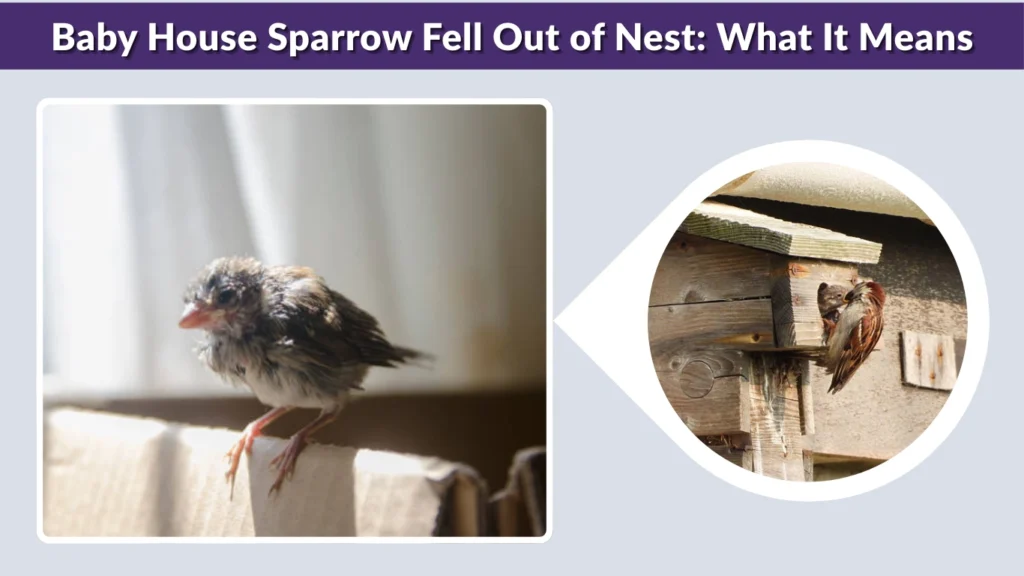
Sparrow chicks sometimes flutter out early, especially around 10–12 days old. If a baby sparrow is found on the ground:
- If it has feathers and is hopping, it’s a fledgling, and the parents are likely nearby.
- If it is featherless or eyes closed, it is a nestling, and typically requires placement back in its nest if possible.
Because house sparrows are not protected in many areas, wildlife centers may not take them, so people often step in to assist when necessary.
Sparrows Nesting in Bluebird Houses
One of the biggest challenges for bluebird enthusiasts is sparrow takeover. House sparrows aggressively dominate bluebird nest boxes, often destroying eggs and killing chicks. Signs a sparrow has taken over a bluebird house include:
- Nest filled completely to the top
- Trash material or feathers packed tightly
- Male sparrow chirping loudly from the roof of the box
- Territorial guarding of the entrance hole
Understanding nest differences is essential for protecting bluebirds during monitoring season.
FAQ
What do house sparrow nests look like?
They are large, messy, dome-shaped nests made of grasses, feathers, and trash, usually filling the entire cavity.
Do male house sparrows build nests?
Yes. Males begin constructing a loose nest to attract females, who then refine and line the interior.
Do house sparrows steal nests from other birds?
Yes. They often evict bluebirds, wrens, and swallows, sometimes destroying eggs or chicks.
How long do sparrow chicks stay in the nest?
Typically 14–17 days before fledging, though parents may care for them nearby afterward.
Do house sparrows use nest boxes?
Absolutely—they prefer nest boxes and often outcompete native birds for these spaces.
