
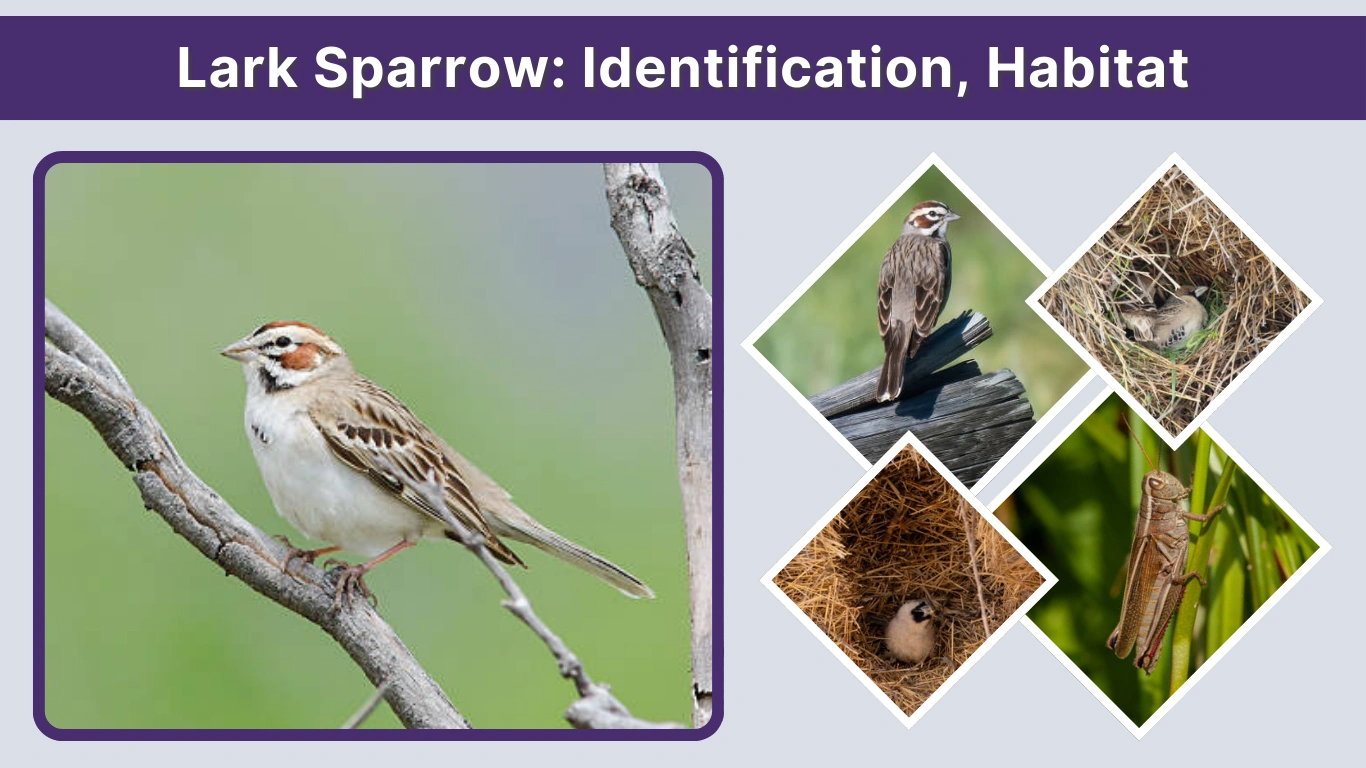
The Lark Sparrow (Chondestes grammacus) is one of the most strikingly patterned sparrows in North America. Recognized for its bold facial markings and long tail with white corners, this medium-sized songbird stands out in open grasslands and prairies. Unlike many plain-colored sparrows, the Lark Sparrow combines chestnut, black, and white markings that make it easier to identify in the field. Found across much of the United States and parts of Canada and Mexico, this adaptable bird thrives in open habitats. In this guide, you’ll learn how to identify the Lark Sparrow, where it lives, and what it eats.
What Is a Lark Sparrow?
The Lark Sparrow belongs to the New World sparrow family, a diverse group of ground-feeding songbirds found throughout North America. Its scientific name, Chondestes grammacus, loosely translates to “songster with markings,” an appropriate description for this boldly patterned species.
Unlike forest-dwelling sparrows, the Lark Sparrow prefers open landscapes such as prairies, grasslands, and agricultural fields. It is often seen perched on fences, shrubs, or low tree branches, scanning the ground for food.
The species is known for its distinctive song—a series of clear whistles, buzzes, and trills that carry across open country. During breeding season, males become more vocal and visible as they defend territory and attract mates.
Though widespread, the Lark Sparrow depends on healthy grassland ecosystems, which makes habitat quality important for its long-term stability.
Lark Sparrow Identification
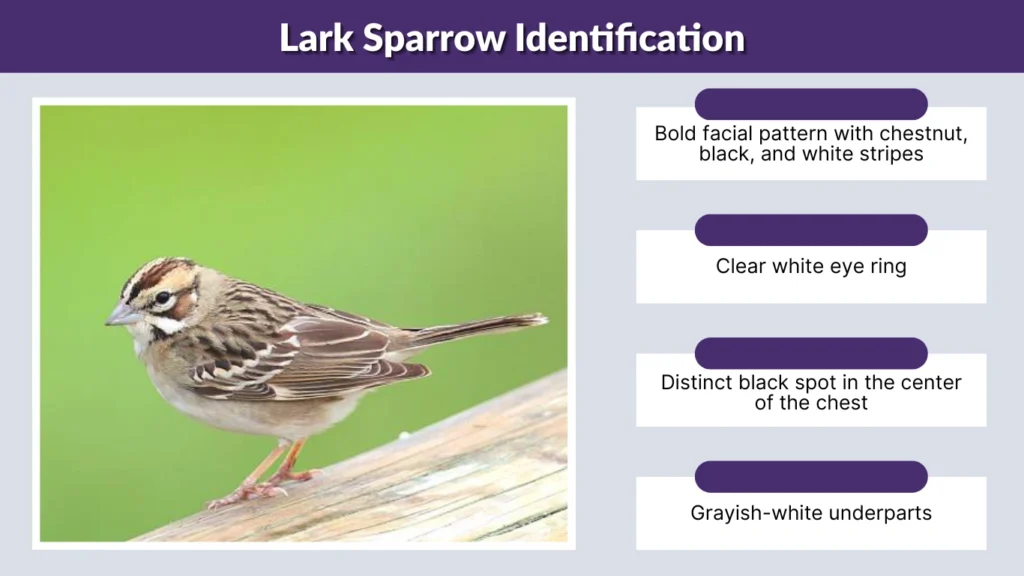
The Lark Sparrow is considered one of the easiest sparrows to identify due to its bold facial pattern and unique chest marking.
Physical Appearance
The Lark Sparrow is medium-sized, measuring about 6 to 7 inches in length. It has a relatively long, rounded tail that shows white outer feathers, especially noticeable in flight.
Key identification features include:
- Bold facial pattern with chestnut, black, and white stripes
- Clear white eye ring
- Distinct black spot in the center of the chest
- Grayish-white underparts
- Brown, streaked back
- Long tail with white corners
Its striking facial markings help separate it from many other grassland sparrows, which often appear more uniformly brown.
When the bird flies, the white edges of the tail flash noticeably, making it easier to spot in open fields.
Male vs Female Differences
Male and female Lark Sparrows look very similar in plumage. Both sexes share the same bold facial markings and chest spot.
However:
- Males may be slightly larger
- Males tend to sing more frequently during breeding season
- Plumage may appear slightly brighter in fresh breeding condition
Because visual differences are subtle, behavior is often the best way to distinguish males from females in the field.
Juvenile Identification
Juvenile Lark Sparrows differ somewhat from adults. They often show:
- Softer, less defined facial markings
- Faint streaking on the breast
- A less prominent central chest spot
As young birds mature, their facial pattern becomes sharper and more contrasted.
Similar Species Comparison
Although distinctive, the Lark Sparrow can occasionally be confused with other open-country sparrows.
- Chipping Sparrow: Smaller, with a rusty cap and no bold facial striping.
- Song Sparrow: Heavier streaking on the chest and no strong facial contrast.
- Vesper Sparrow: More subtle facial pattern and lacks the central chest spot.
The combination of a bold face pattern and a single black chest spot is unique among North American sparrows.
Lark Sparrow Habitat and Range
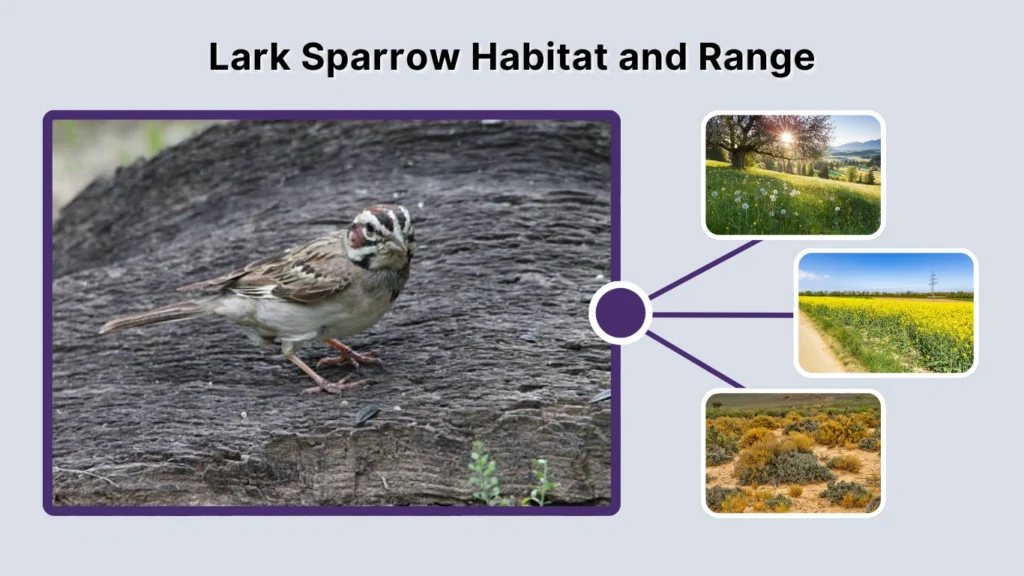
The Lark Sparrow thrives in open landscapes and avoids dense forests or heavily wooded areas.
Preferred Habitat
This species prefers:
- Native prairies
- Open grasslands
- Farmland edges
- Desert scrub
- Open woodlands with scattered trees
- Roadside fields and pasturelands
It is particularly common in areas with short to moderate vegetation and scattered shrubs or fence posts for perching.
Unlike strictly grassland birds, the Lark Sparrow tolerates some human-altered environments, including agricultural fields and ranchlands, as long as open space is available.
Geographic Range
The Lark Sparrow has a broad distribution across North America. Its breeding range includes:
- Southern Canada
- Most of the central and western United States
- Parts of the eastern U.S.
In winter, many populations move south into:
- The southern United States
- Northern and central Mexico
Because of this wide range, the Lark Sparrow is one of the more widespread sparrow species in North America.
Migration and Seasonal Movement
Lark Sparrows are migratory in northern parts of their range. Birds breeding in Canada and the northern United States typically migrate south for winter.
In warmer regions of the southern U.S., some populations remain year-round. Migration patterns vary depending on climate and food availability.
During migration, Lark Sparrows may gather in small flocks, especially in open agricultural areas.
Lark Sparrow Diet
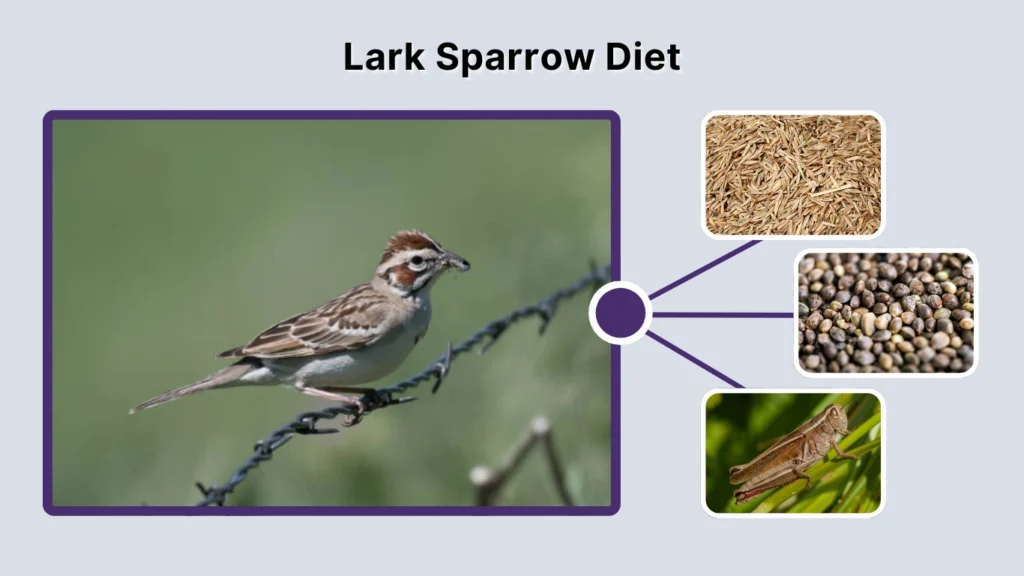
The Lark Sparrow has a varied diet that changes with the seasons.
Main Food Sources
Its primary food sources include:
- Grass seeds
- Weed seeds
- Small grains
- Grasshoppers
- Beetles
- Caterpillars
- Spiders
During the breeding season, insects are especially important because they provide protein needed for growing chicks.
Seasonal Diet Changes
In spring and summer, insects make up a larger portion of the diet. During fall and winter, seeds become the dominant food source.
This seasonal flexibility helps the Lark Sparrow survive across a wide geographic range.
Feeding Behavior
Lark Sparrows typically forage on the ground. They move with quick hops and may scratch lightly at the soil to uncover seeds or insects.
They often feed in small groups outside of breeding season, especially in harvested fields or open pastures.
Their preference for open ground makes them relatively easy to observe while feeding.
Lark Sparrow Nesting Habits
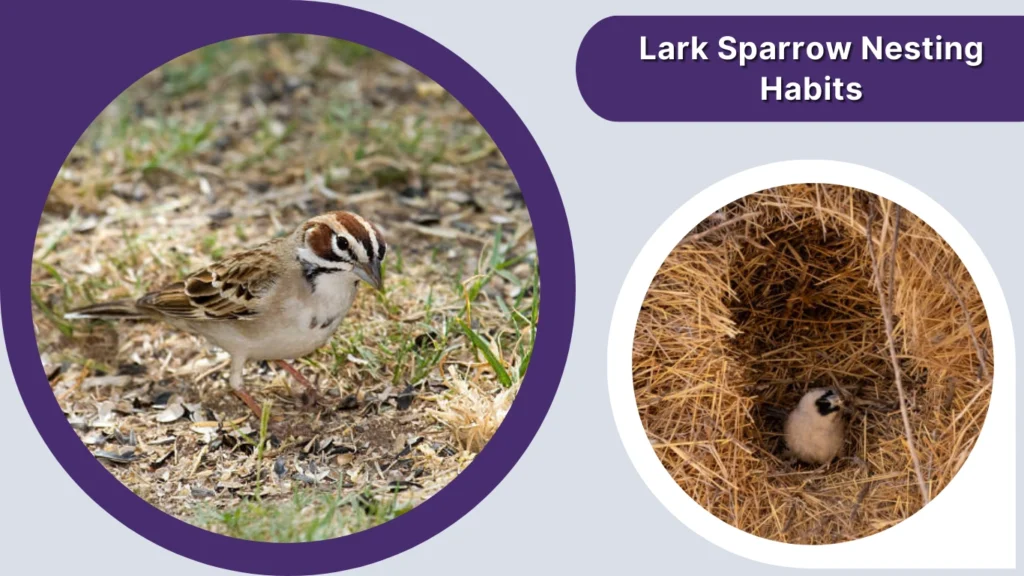
Nesting season for the Lark Sparrow typically begins in late spring and continues through mid-summer. During this time, pairs establish territories in open habitats with suitable ground cover for nesting.
Nest Location
The Lark Sparrow most commonly builds its nest on the ground. Nests are usually placed:
- At the base of a grass clump
- Beneath a small shrub
- Under low brush for concealment
In some cases, especially in areas with limited ground cover, nests may be built slightly above ground in low shrubs or small trees. Ground placement, however, remains the most typical strategy.
The surrounding vegetation provides camouflage and protection from predators.
Nest Structure
The nest is cup-shaped and constructed primarily by the female. Materials commonly used include:
- Dry grasses
- Plant stems
- Rootlets
- Small twigs
The interior is lined with finer grasses or soft plant fibers to create a comfortable surface for the eggs. The nest is compact but sturdy enough to withstand wind in open environments.
Breeding Season and Eggs
Breeding usually occurs from May through July, though timing may vary depending on region and climate.
A typical clutch contains 3 to 6 eggs. The eggs are pale with brown or gray speckles, helping them blend into the surrounding vegetation.
Incubation lasts about 11 to 12 days and is primarily performed by the female. After hatching, both parents feed the chicks. Young birds usually fledge about 9 to 10 days after hatching but may remain dependent on adults for a short period afterward.
Parental Care and Defense
Both parents participate in feeding the nestlings, bringing insects to provide high-protein nutrition.
If a predator approaches, adults may perform distraction displays, such as fluttering along the ground or giving alarm calls to lure the threat away from the nest site.
Ground nesting increases vulnerability to predators, but camouflage and defensive behavior help improve nesting success.
Behavior and Vocalizations
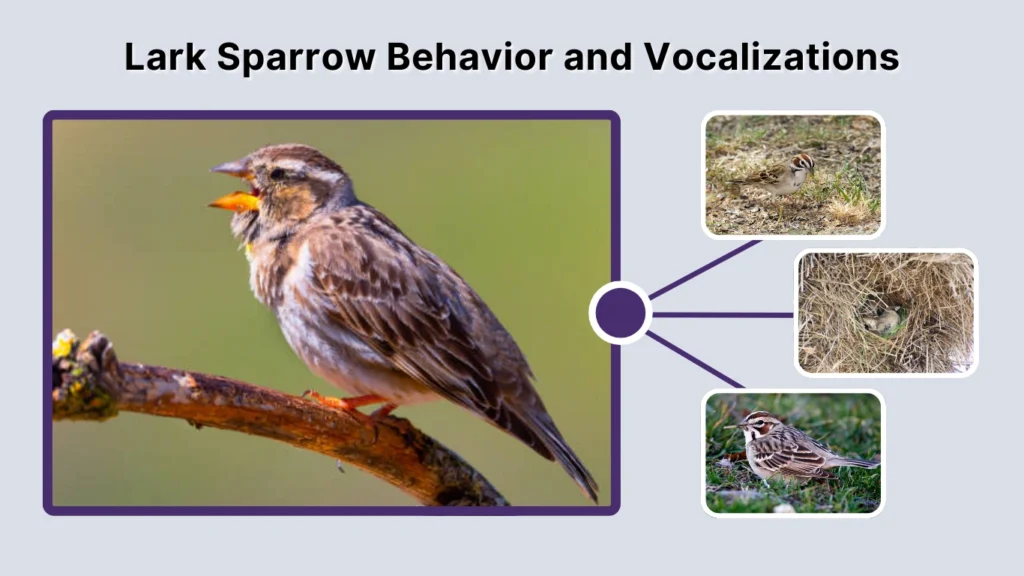
The Lark Sparrow is known for its lively song and active behavior, particularly during the breeding season.
Song Description
The song of the Lark Sparrow is clear and musical, often described as a mixture of whistles, trills, and buzzes. Phrases may vary, giving the song a slightly improvisational quality.
Males usually sing from:
- Fence posts
- Shrub tops
- Low tree branches
Singing from elevated perches helps project their voice across open landscapes.
Territorial Behavior
During breeding season, males defend territories through song and visual displays. If another male enters the area, vocal exchanges may occur, sometimes followed by brief chases.
Territories are generally located in open habitats with adequate nesting cover and food supply.
Social Behavior
Outside of breeding season, Lark Sparrows are more social. They may form loose flocks, especially during migration or in wintering areas.
In agricultural fields or open grasslands, small groups can often be seen foraging together on the ground.
Conservation Status and Threats
Overall, the Lark Sparrow is considered a species of relatively low conservation concern. However, regional declines have been observed in some areas.
Population Trends
Across much of its range, the Lark Sparrow remains widespread and locally common. Its adaptability to some human-modified landscapes, such as farmland, has helped maintain stable populations in certain regions.
Still, long-term monitoring is important, especially in areas where grasslands are shrinking.
Major Threats
Key threats to the Lark Sparrow include:
- Loss of native grasslands
- Agricultural intensification
- Urban development
- Fragmentation of open habitats
Ground nesting also makes the species vulnerable to mowing, grazing pressure, and predation in disturbed landscapes.
Conservation Efforts
Efforts to conserve grassland ecosystems benefit the Lark Sparrow and many other open-country birds. Important actions include:
- Prairie preservation
- Sustainable grazing management
- Maintaining native vegetation buffers
Protecting large, connected areas of open habitat remains essential for long-term stability.
FAQs
How do you identify a Lark Sparrow?
You can identify a Lark Sparrow by its bold facial pattern of chestnut, black, and white stripes, along with a distinct black spot in the center of its chest. Its long tail with white edges is also noticeable in flight.
Where do Lark Sparrows live?
Lark Sparrows live in open habitats such as grasslands, prairies, farmland edges, and desert scrub. They are found across much of the United States, southern Canada, and parts of Mexico.
What does a Lark Sparrow eat?
They eat seeds and insects. Insects like grasshoppers and beetles are especially important during breeding season, while seeds become the primary food source in fall and winter.
Do Lark Sparrows nest on the ground?
Yes, they usually build cup-shaped nests on the ground under grass or shrubs. Occasionally, nests may be placed in low bushes.
Is the Lark Sparrow migratory?
Lark Sparrows are migratory in northern parts of their range. Many move south for winter, though some southern populations remain year-round.
