
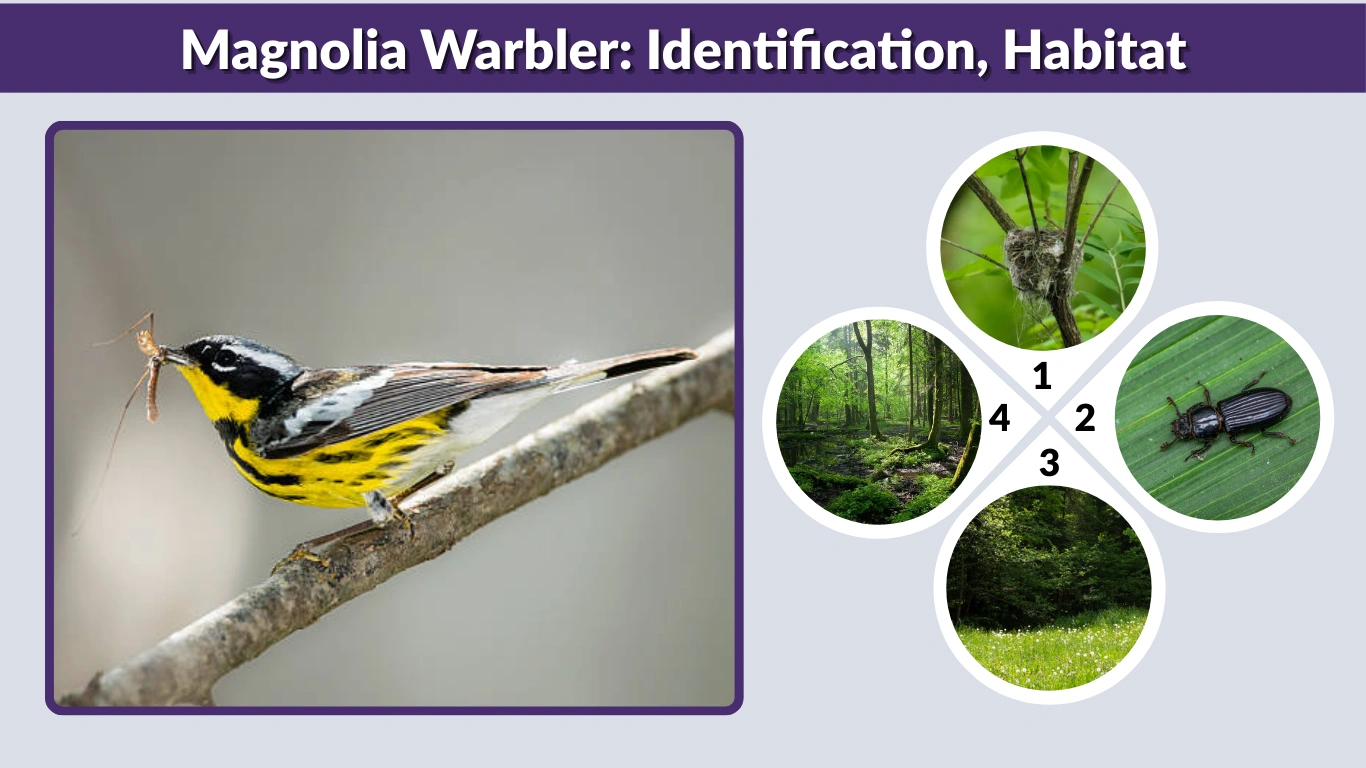
The Magnolia Warbler is one of the most striking and recognizable songbirds in North America. With its bright yellow underparts, bold black streaks, and contrasting gray back, this small warbler captures the attention of birdwatchers each spring and fall. Despite its delicate size, the Magnolia Warbler undertakes an impressive long-distance migration between northern breeding grounds and tropical winter habitats. In this guide, you’ll learn how to identify a Magnolia Warbler, where it lives, how it behaves, and what makes it unique among North American warblers.
Magnolia Warbler Overview
The Magnolia Warbler (Setophaga magnolia) belongs to the wood-warbler family Parulidae, a group known for colorful plumage and active behavior. It was first described in the early 19th century and was mistakenly associated with magnolia trees during migration, which inspired its common name. Interestingly, it does not rely specifically on magnolia trees for habitat.
This species is a small songbird, measuring about 4.5 to 5 inches in length with a wingspan of roughly 6.5 to 8 inches. It typically weighs between 6 and 12 grams. Like many warblers, it has a slender body, a thin pointed bill for catching insects, and quick, energetic movements.
Magnolia Warblers are considered a species of low conservation concern, and their populations remain relatively stable across much of their range. However, habitat changes in both breeding and wintering areas can still influence local populations.
How to Identify a Magnolia Warbler
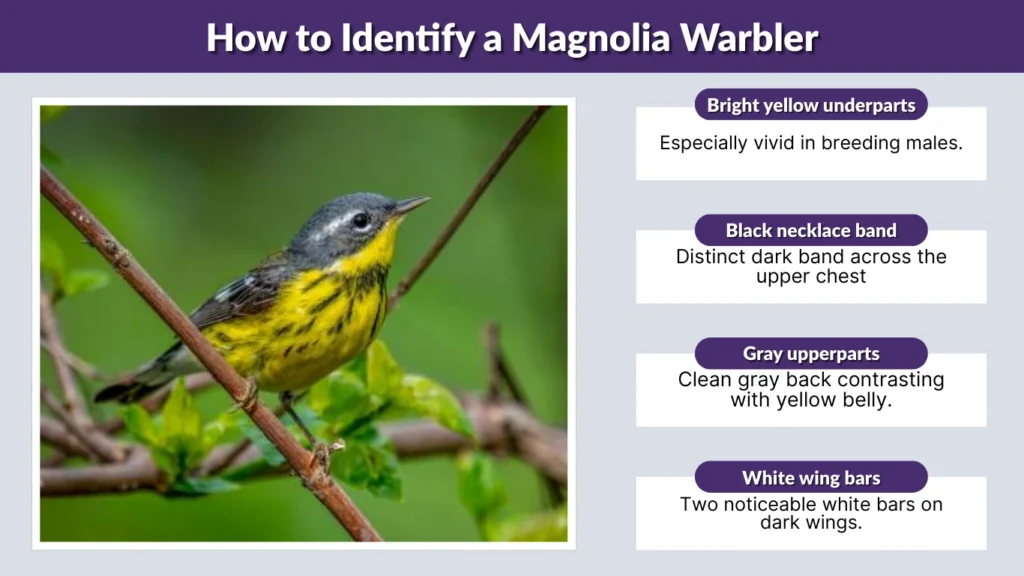
The Magnolia Warbler is one of the easier warblers to identify once you know its key field marks. Its bright yellow coloring, bold black streaks, and active tail movements help it stand out among other small songbirds. While plumage can vary slightly by season and sex, several consistent features make identification reliable in both spring and fall.
Here are the main characteristics to look for:
- Bright yellow underparts – Especially vivid in breeding males.
- Black streaking on chest and sides – Heavy, bold streaks in males; lighter in females.
- Black necklace band – Distinct dark band across the upper chest (breeding males).
- Gray upperparts – Clean gray back contrasting with yellow belly.
- White wing bars – Two noticeable white bars on dark wings.
- White tail patches – Visible when the bird fans or flicks its tail.
- Small, slender body – Typical warbler shape with a thin pointed bill.
- Active foraging behavior – Frequently flicks tail and moves through lower branches.
For best results, watch for a combination of yellow coloring, chest streaking, and flashing white tail patches. These three features together strongly indicate a Magnolia Warbler.
Magnolia Warbler Habitat and Range
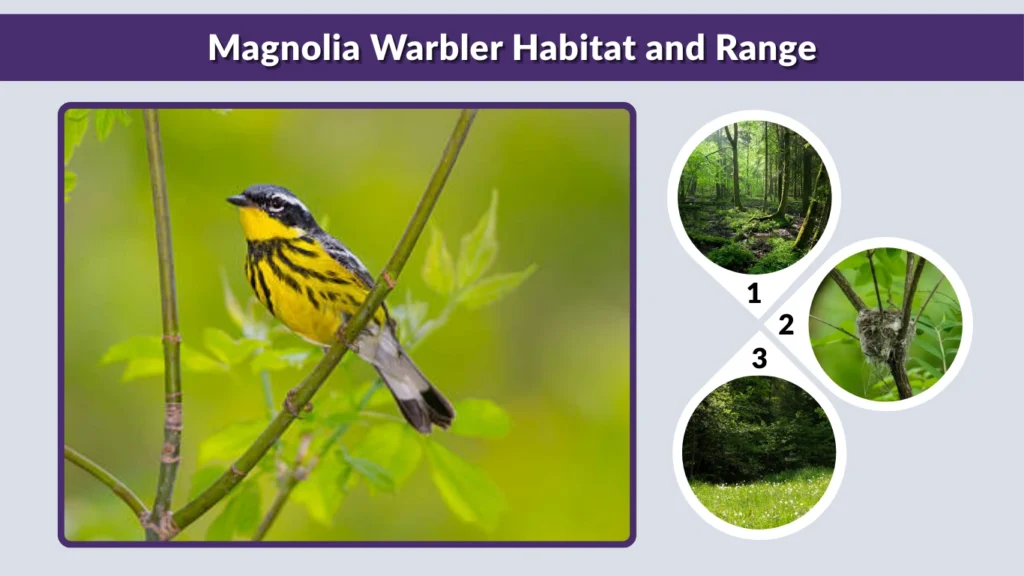
The Magnolia Warbler has a wide distribution across North America, with clearly defined breeding and wintering areas.
Breeding Range
During the breeding season, Magnolia Warblers are primarily found in the northern United States and across much of Canada. They prefer dense coniferous forests, particularly spruce and fir stands in boreal regions.
These birds often choose young or regenerating forests where thick vegetation provides both nesting sites and abundant insect prey. They typically remain within forest interiors but can also be found near edges and clearings.
Winter Range
As autumn approaches, Magnolia Warblers migrate south to spend the winter in southern Mexico, Central America, and parts of the Caribbean. In these regions, they occupy tropical forests, forest edges, and shaded coffee plantations.
Their ability to adapt to different forest types during winter helps support stable populations. However, ongoing deforestation in tropical regions can affect suitable habitat availability.
Migration Patterns
Magnolia Warblers are long-distance migrants. In spring, they begin moving northward as early as April, with peak migration often occurring in May. During this time, they can be seen in woodlands, parks, and even suburban areas as they stop to rest and feed.
Fall migration typically begins in August and continues through September. During migration, they may appear in habitats that differ from their breeding preferences, making them more visible to birdwatchers in a variety of settings.
Behavior and Feeding Habits
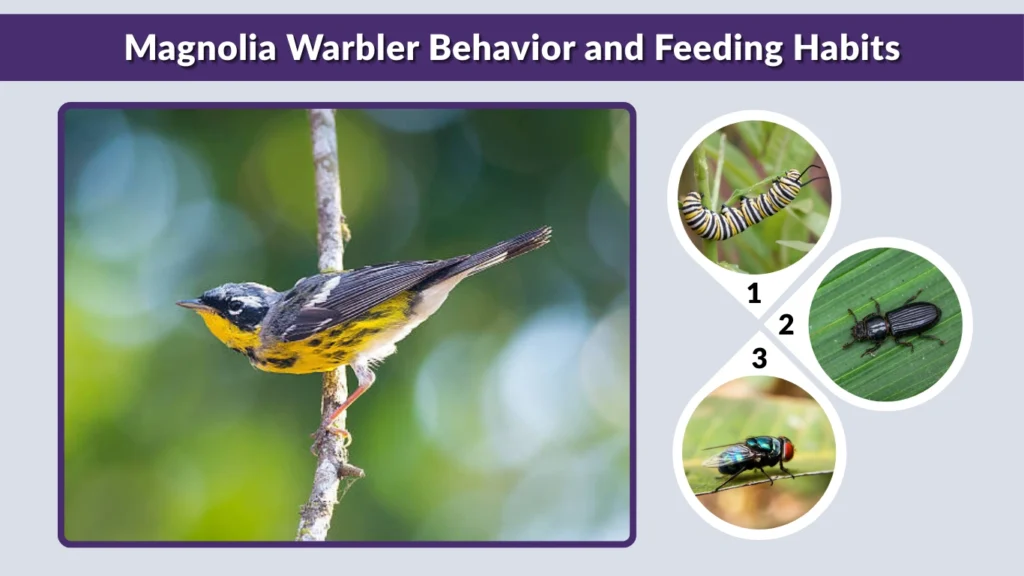
Magnolia Warblers are energetic and constantly on the move. Like many wood-warblers, they rarely stay still for long, making quick hops and short flights as they search for food among branches and leaves. Their active behavior, combined with their bright coloring, often makes them easier to spot than more secretive warbler species.
Diet
The Magnolia Warbler is primarily insectivorous, especially during the breeding season. Its diet consists mainly of caterpillars, beetles, flies, moths, and spiders. These protein-rich insects are essential for supporting breeding adults and growing chicks.
During migration and in winter, their diet becomes more varied. In addition to insects, they may consume berries and small fruits. This seasonal flexibility helps them survive in habitats where insect availability changes throughout the year.
Foraging Behavior
Unlike some warblers that feed high in the canopy, Magnolia Warblers often forage at mid-levels or in lower branches. They frequently glean insects from the undersides of leaves and small twigs. Occasionally, they hover briefly to snatch prey or make short sallies into the air to catch flying insects.
One noticeable behavior is tail flicking. As they move through foliage, they often fan or flick their tails, revealing white patches underneath. This motion may help flush insects or serve as a visual signal.
Vocalizations
The song of the Magnolia Warbler is clear and whistled, often described as a series of sweet, rising notes followed by a sharper ending. Birders sometimes interpret it as sounding like “weeta-weeta-weetsee.”
Males sing most actively during the breeding season to defend territory and attract mates. Their call notes are shorter and sharper, used for communication and alerts. Learning their song can greatly improve your chances of locating them in dense forest habitats.
Nesting and Reproduction
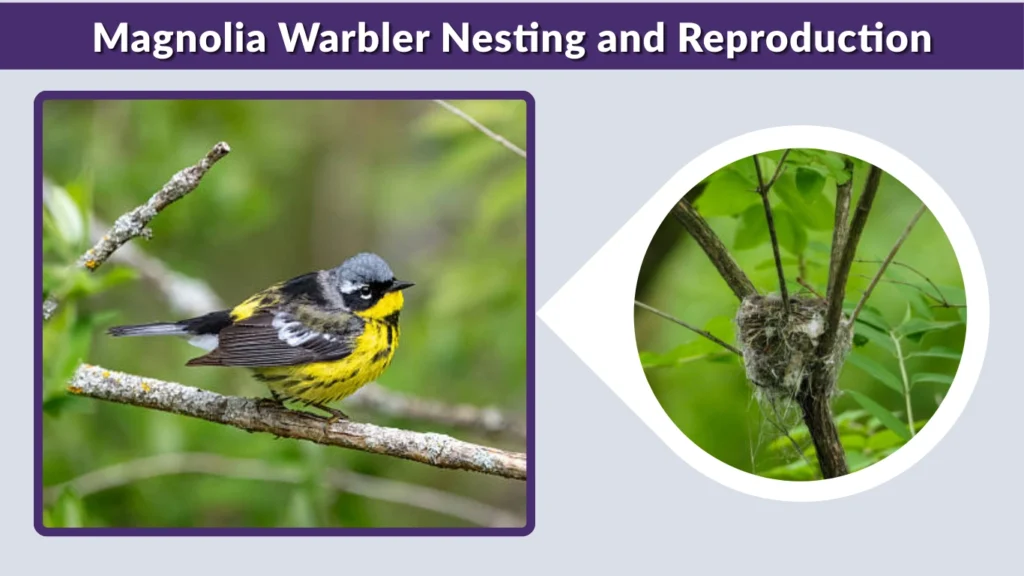
Magnolia Warblers typically nest in dense coniferous trees, especially spruce and fir. The nest is usually placed several feet above the ground, often well hidden among thick branches for protection.
The female builds a small, cup-shaped nest using grasses, bark strips, and fine plant materials. She lines the interior with softer materials to insulate the eggs. A typical clutch consists of three to five eggs, which are pale with small speckles.
Incubation lasts around 11 to 13 days and is primarily performed by the female. After hatching, both parents help feed the chicks. The young usually leave the nest within 9 to 12 days but may remain nearby while they continue to develop flight skills and independence.
When and Where to See Magnolia Warblers
The best time to observe Magnolia Warblers depends on your location. In northern regions, late spring and early summer offer the best opportunities, as males sing frequently during the breeding season.
For many birdwatchers in the United States, spring and fall migration provide the easiest viewing chances. During these periods, Magnolia Warblers may stop in parks, woodland edges, and even well-vegetated backyards. Their tendency to forage at lower levels makes them more visible than canopy-dwelling species.
Listening carefully for their distinctive song and watching for flashes of yellow and white tail patches can greatly improve your success.
Conservation Status and Threats
The Magnolia Warbler is currently considered a species of low conservation concern, and overall populations remain stable. However, habitat loss remains a long-term threat.
Logging and development in northern boreal forests can reduce breeding habitat, while deforestation in Central America may impact wintering grounds. Climate change may also shift suitable breeding areas further north over time, potentially altering migration patterns.
Continued forest conservation efforts in both North America and Central America are important for maintaining healthy populations.
Interesting Facts About the Magnolia Warbler
Despite its name, the Magnolia Warbler does not depend on magnolia trees. Early naturalists observed it in magnolias during migration and assumed a connection.
Another fascinating trait is its distinctive tail pattern. The white patches underneath are often visible when the bird fans its tail, helping birders confirm identification. Additionally, Magnolia Warblers tend to forage lower than many other warbler species, making them one of the more accessible warblers to observe.
FAQs
What does a Magnolia Warbler look like?
The Magnolia Warbler has bright yellow underparts, bold black streaks on the chest and sides, and a gray back. Breeding males show a distinct black necklace across the chest. Both sexes have white wing bars and noticeable white patches on the tail, often visible when the bird flicks its tail.
Where does the Magnolia Warbler live?
Magnolia Warblers breed in the northern United States and Canada, especially in dense spruce and fir forests. During winter, they migrate to southern Mexico, Central America, and parts of the Caribbean, where they inhabit tropical forests and woodland edges.
What does a Magnolia Warbler eat?
They primarily eat insects such as caterpillars, beetles, flies, and spiders. During migration and winter, they may also consume berries and small fruits. Their diet shifts seasonally depending on food availability in breeding and wintering habitats.
When can I see a Magnolia Warbler?
The best time to see Magnolia Warblers is during spring and fall migration, typically April–May and August–September. In northern breeding areas, they are most visible in late spring and early summer when males sing actively to defend territories.
Is the Magnolia Warbler rare?
No, the Magnolia Warbler is not considered rare. It is classified as a species of low conservation concern, and its overall population is stable. However, habitat loss in breeding and wintering areas can still pose localized threats.
Conclusion
The Magnolia Warbler is a vibrant and energetic songbird that stands out among North America’s wood-warblers. From its bold yellow plumage and streaked chest to its impressive migratory journey, this small bird offers both beauty and fascination for birdwatchers of all experience levels. By learning its key identification features, habitat preferences, and seasonal movements, you can greatly improve your chances of spotting one in the wild and appreciating its remarkable life cycle.