
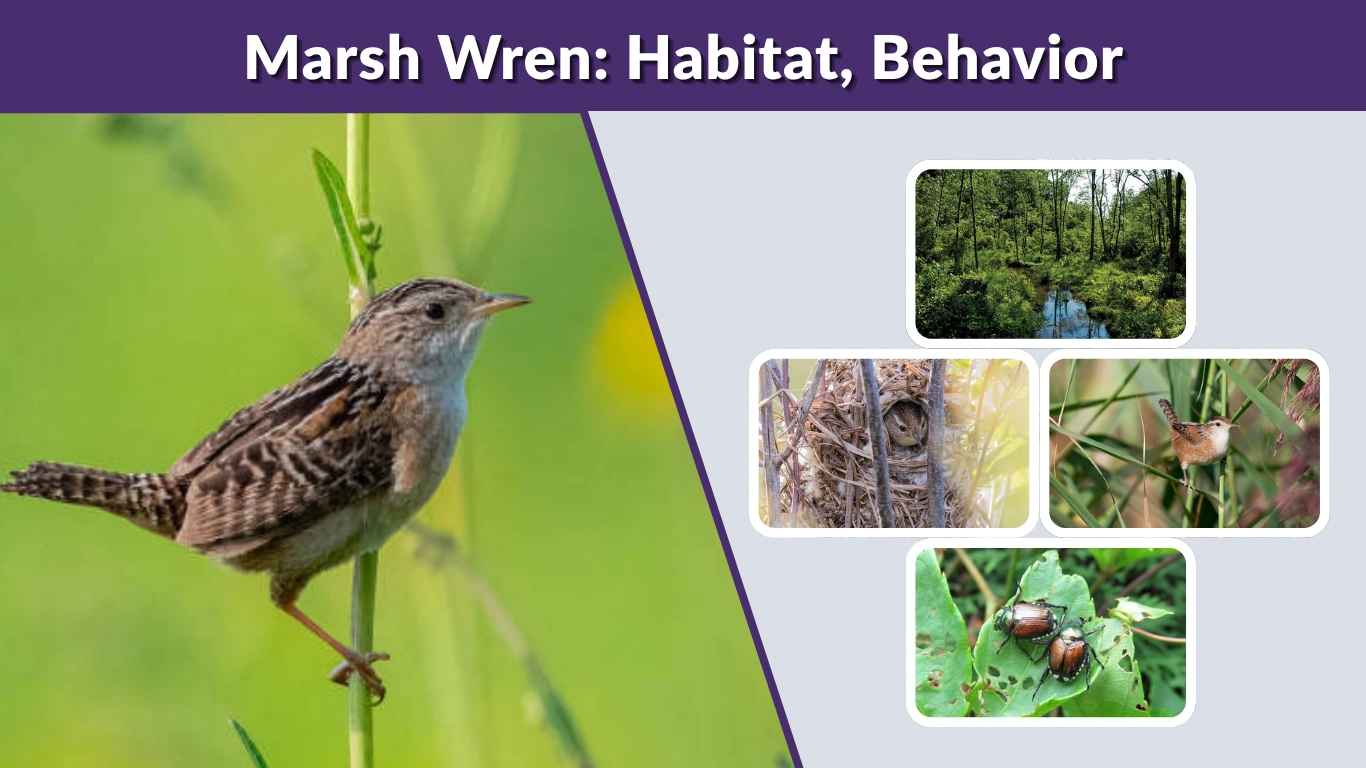
The Marsh Wren is a small yet remarkably lively bird that thrives in wetland habitats across North America. Known for its energetic behavior and distinctive bubbling song, this bird is often heard before it is seen. It weaves skillfully through reeds and cattails, displaying both agility and boldness. Beyond its charming appearance, the Marsh Wren is notable for its unusual nesting habits and territorial nature, making it an intriguing subject for birdwatchers and nature enthusiasts alike.
What is a Marsh Wren?
The Marsh Wren (Cistothorus palustris) is a small songbird belonging to the wren family, Troglodytidae. It is widely distributed across North America, especially in freshwater and coastal marshes where dense vegetation provides ideal shelter. Despite its modest size, this bird is highly active and vocal, often dominating its surroundings with a loud and complex song.
Marsh Wrens are well adapted to life in wetlands, using their strong legs and curved claws to cling to vertical stems. Their behavior and physical traits make them perfectly suited for navigating dense reed beds, where they spend most of their time hidden from predators.
Key Characteristics
One of the defining traits of the Marsh Wren is its energetic personality. It rarely stays still, constantly moving among reeds in search of food or defending its territory. Unlike some other wrens, it prefers wetland environments almost exclusively. Another notable characteristic is its surprisingly loud voice, which helps it communicate over long distances in noisy marsh habitats.
Physical Description
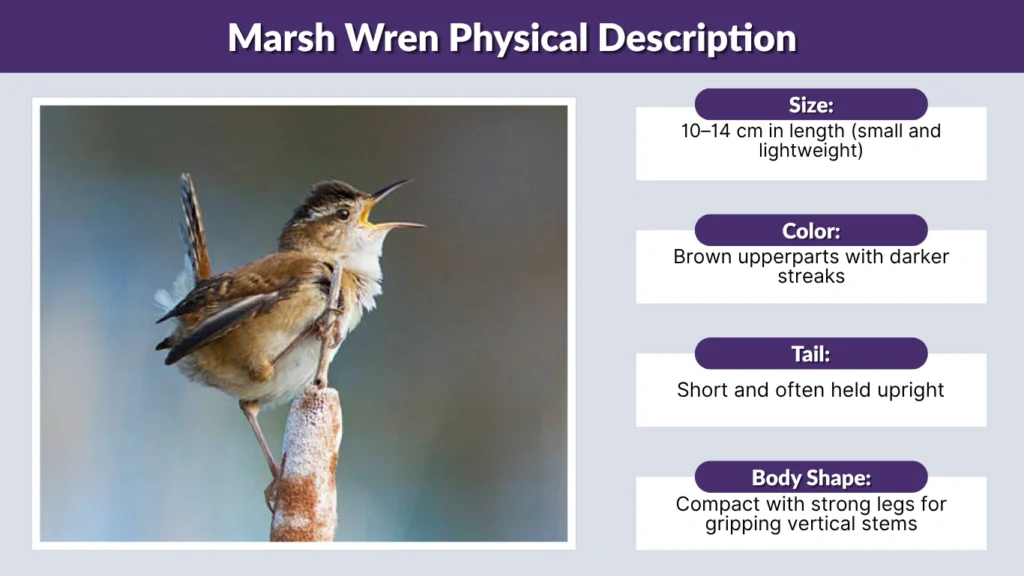
The Marsh Wren is a small, compact songbird perfectly adapted to life in dense wetland vegetation. Its body structure allows it to move quickly through reeds and cattails, while its natural coloring helps it stay hidden from predators. Though modest in size, it has distinct features that make it recognizable to birdwatchers.
Key Physical Features
- Size: 10–14 cm in length (small and lightweight)
- Color: Brown upperparts with darker streaks; pale or buff underside
- Eyebrow Stripe: Prominent white stripe above the eye
- Tail: Short and often held upright
- Bill: Thin, slightly curved, ideal for catching insects
- Body Shape: Compact with strong legs for gripping vertical stems
Quick Identification Tips
- Moves rapidly among reeds rather than flying in open spaces
- Often clings sideways to tall grasses or cattails
- Blends easily into brown and green wetland surroundings
- Frequently accompanied by its loud, bubbling song
This combination of subtle coloring and active movement makes the Marsh Wren both challenging and rewarding to identify in the wild.
Habitat and Distribution
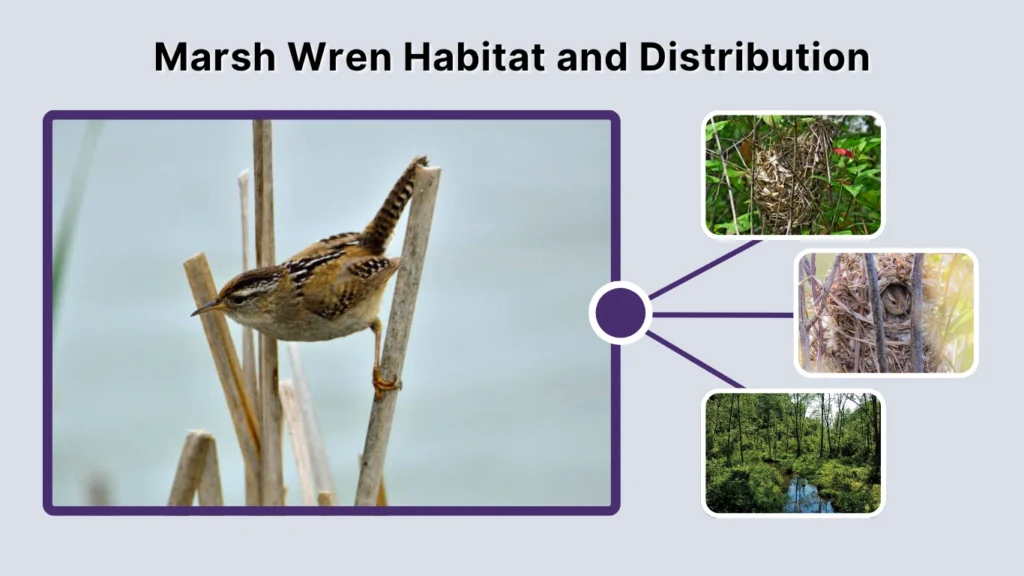
Marsh Wrens are strongly associated with wetland environments, particularly those filled with cattails, reeds, and tall grasses. They are commonly found in freshwater marshes, but they can also inhabit brackish and coastal wetlands. These habitats provide both food and protection, making them essential for the bird’s survival.
Geographically, Marsh Wrens are widespread across North America. During the breeding season, they are found throughout much of the United States and parts of Canada. Their distribution depends heavily on the availability of suitable wetland habitats.
Seasonal Distribution
The Marsh Wren’s range changes with the seasons. In warmer months, they migrate northward to breed in temperate regions where wetlands are abundant. As temperatures drop, many populations move south to avoid harsh winter conditions.
In winter, Marsh Wrens are commonly found in the southern United States and parts of Mexico. Some populations, particularly those in milder climates, may remain in the same area year-round if conditions are favorable.
Behavior and Lifestyle
Daily Activity
The Marsh Wren is highly active throughout the day. It spends most of its time moving through dense vegetation, climbing up and down reeds with ease. Its movements are quick and purposeful, often accompanied by bursts of song.
Feeding is an important part of its daily routine. The bird searches for insects and small invertebrates hidden among plant stems, using its sharp bill to capture prey efficiently.
Territorial Behavior
Despite its small size, the Marsh Wren is known for being fiercely territorial. Males, in particular, defend their breeding areas aggressively, often chasing away intruders and even destroying the nests of competing birds.
This territorial nature plays a key role during the breeding season, ensuring access to resources and increasing the chances of reproductive success. The Marsh Wren’s bold behavior makes it one of the more assertive species within its habitat.
Unique Nesting Habits
Multiple Nest Building
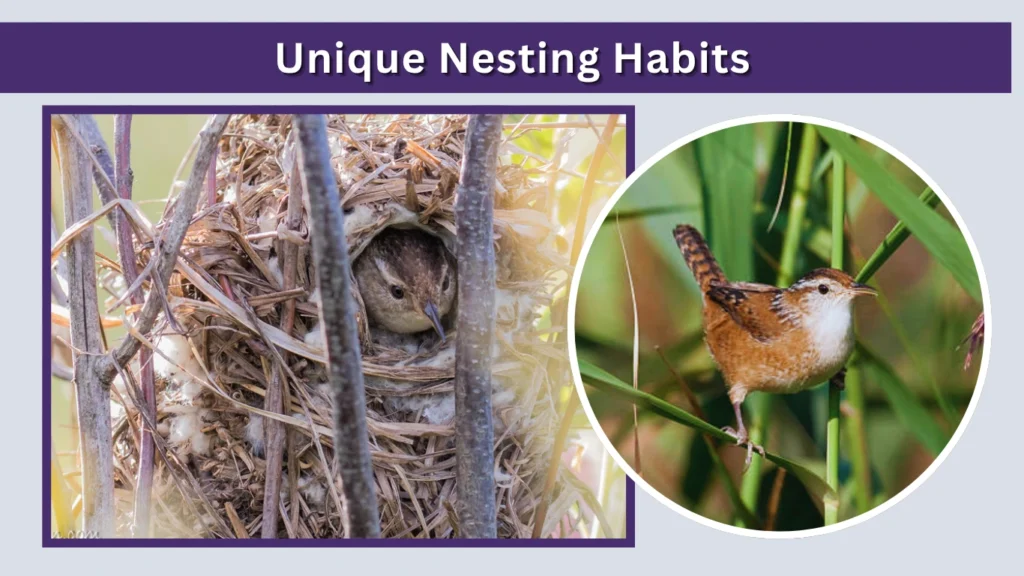
One of the most fascinating aspects of the Marsh Wren is its nesting behavior. Male Marsh Wrens build multiple nests within their territory, even though only one may be used for raising young. These additional nests, often called “dummy nests,” serve several purposes.
They may help attract females by showcasing the male’s strength and suitability as a mate. Additionally, these extra nests can confuse predators, reducing the risk of eggs or chicks being discovered.
Breeding Behavior
Once a female selects a mate, she chooses one of the male’s nests and modifies it for egg-laying. The chosen nest is carefully lined with softer materials such as grasses and feathers to provide comfort and insulation.
The female typically lays several eggs, which she incubates while the male continues to defend the territory. During this time, the male may keep building additional nests to attract more mates. This behavior reflects a polygynous mating system, where one male may mate with multiple females in a single breeding season.
The nests themselves are usually attached to reeds or cattails, slightly above the water level. This placement helps protect the eggs from ground predators and flooding, increasing the chances of successful hatching.
Diet and Feeding Habits
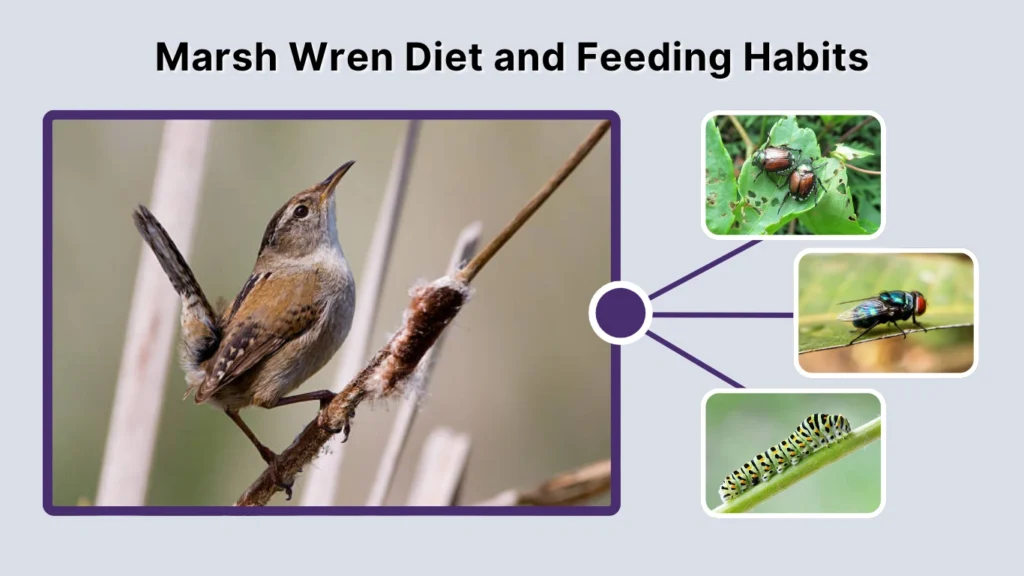
The Marsh Wren primarily feeds on insects and other small invertebrates. Its diet includes beetles, flies, spiders, and caterpillars, all of which are abundant in wetland environments.
Using its sharp, slender bill, the Marsh Wren probes into crevices and vegetation to locate hidden prey. It may also pick insects directly from plant surfaces or capture them mid-air. This feeding behavior not only sustains the bird but also plays a role in controlling insect populations within its habitat, contributing to ecological balance.
Song and Communication
Vocal Characteristics
The Marsh Wren is best known for its loud and complex song. Despite its small size, it produces a surprisingly powerful series of rapid, bubbling notes that can carry across the marsh. Its song is often continuous and energetic, especially during the breeding season.
Males are particularly vocal, singing frequently to establish their presence. The song may include a mix of trills, rattles, and chatters, making it one of the most distinctive sounds in wetland environments.
Purpose of Calls
The primary purpose of the Marsh Wren’s song is to attract mates and defend territory. By singing loudly and persistently, males signal their strength and claim ownership of a specific area.
Vocalizations also help maintain communication between mates and may serve as warnings when predators are nearby. This constant use of sound is essential in dense marsh habitats where visibility is limited.
Migration Patterns
Marsh Wrens display a range of migratory behaviors depending on their geographic location. Northern populations tend to migrate south during the winter months, while those in milder regions may remain in place year-round.
Migration usually occurs in response to temperature changes and food availability. During winter, Marsh Wrens seek warmer climates where insects are still accessible. Their ability to adapt to seasonal changes allows them to survive in a variety of environments across North America.
Marsh Wren vs Other Wrens
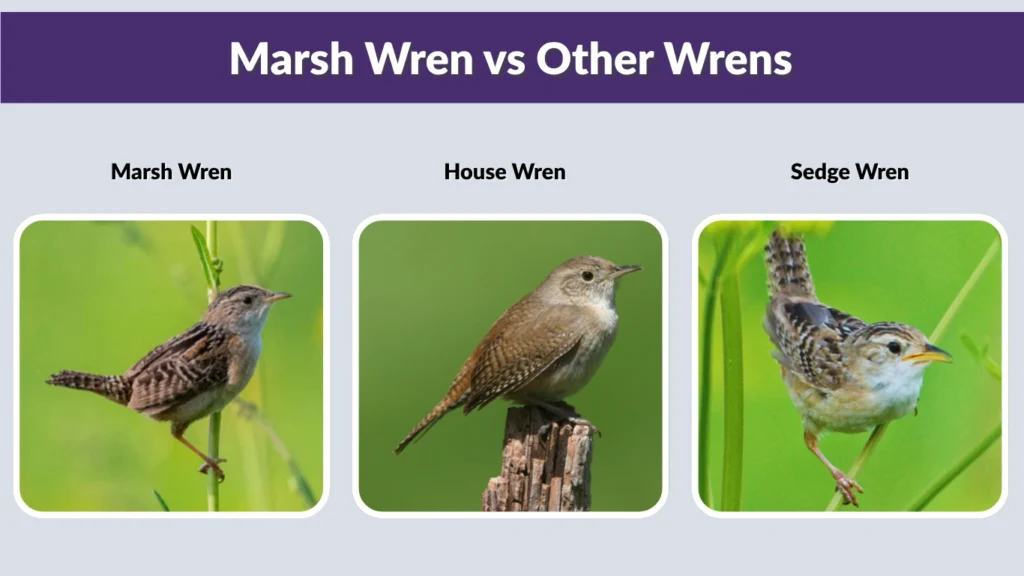
Marsh Wren vs House Wren
The Marsh Wren differs significantly from the House Wren in both habitat and behavior. While Marsh Wrens are almost exclusively found in wetlands, House Wrens prefer forests, gardens, and urban areas.
In terms of behavior, Marsh Wrens are more specialized for climbing reeds and navigating dense marsh vegetation. House Wrens, on the other hand, are more adaptable and can thrive in a wider range of environments.
Marsh Wren vs Sedge Wren
The Sedge Wren is another species that may be confused with the Marsh Wren. However, Sedge Wrens are generally less tied to permanent wetlands and often inhabit grassy fields and meadows.
Additionally, Marsh Wrens are more aggressive and territorial compared to Sedge Wrens. Their nesting behavior is also more elaborate, particularly in the construction of multiple nests.
Ecological Importance
The Marsh Wren plays a vital role in maintaining the health of wetland ecosystems. By feeding on insects and small invertebrates, it helps regulate populations that might otherwise become pests.
Furthermore, the presence of Marsh Wrens often indicates a healthy and functioning wetland environment. Because they rely on dense vegetation and clean water, their populations can serve as indicators of ecological quality. Protecting this species therefore contributes to the broader conservation of wetland biodiversity.
Threats and Conservation
Like many wetland species, the Marsh Wren faces threats primarily from habitat loss. Wetlands are often drained or altered for agriculture, urban development, and other human activities, reducing the available habitat for these birds.
Climate change also poses a risk by altering water levels and affecting the availability of food sources. Despite these challenges, conservation efforts aimed at preserving wetlands have helped maintain stable populations in many areas. Protecting marsh habitats remains essential for the long-term survival of the Marsh Wren and other species that depend on these ecosystems.
Interesting Facts About Marsh Wren
The Marsh Wren is full of surprising traits that make it stand out among small birds. One of the most unusual is its habit of building multiple nests, many of which are never used. This behavior is rare and serves both reproductive and defensive purposes.
Another interesting fact is its loud voice, which seems disproportionate to its size. Additionally, Marsh Wrens are known to be aggressive, sometimes destroying the eggs of other birds within their territory. These unique behaviors highlight the complexity of this small but remarkable species.
How to Spot a Marsh Wren
Spotting a Marsh Wren can be challenging due to its small size and preference for dense vegetation. However, listening for its distinctive song is often the best way to locate it.
Birdwatchers should look for Marsh Wrens in wetlands filled with cattails and reeds, especially during early morning or late afternoon when the birds are most active. Patience and careful observation are key, as the bird tends to move quickly and remain partially hidden among the plants.
Conclusion
The Marsh Wren is a remarkable bird that combines energy, intelligence, and adaptability within a small frame. From its complex songs to its unusual nesting habits, it offers a fascinating glimpse into the diversity of wetland life. As wetlands continue to face environmental pressures, protecting habitats for species like the Marsh Wren becomes increasingly important. Observing this bird in its natural environment not only enriches our understanding of nature but also highlights the need for ongoing conservation efforts.
FAQs
What does a Marsh Wren look like?
The Marsh Wren is a small brown bird with dark streaks on its back, a pale underside, and a distinctive white stripe above its eye. It has a short tail that is often held upright and a thin, slightly curved bill.
Where do Marsh Wrens live?
Marsh Wrens primarily live in wetlands, including freshwater marshes, cattail stands, and reed beds. They are commonly found across North America, especially in areas with dense vegetation.
Why do Marsh Wrens build multiple nests?
Male Marsh Wrens build several nests, known as “dummy nests,” to attract females and confuse predators. This behavior increases their chances of successful breeding.
What do Marsh Wrens eat?
Marsh Wrens mainly eat insects and small invertebrates such as spiders, beetles, and caterpillars. They forage by searching through reeds and vegetation.
Are Marsh Wrens migratory birds?
Yes, many Marsh Wrens are migratory. Northern populations move south during winter, while some birds in milder climates may stay in the same area year-round.
