
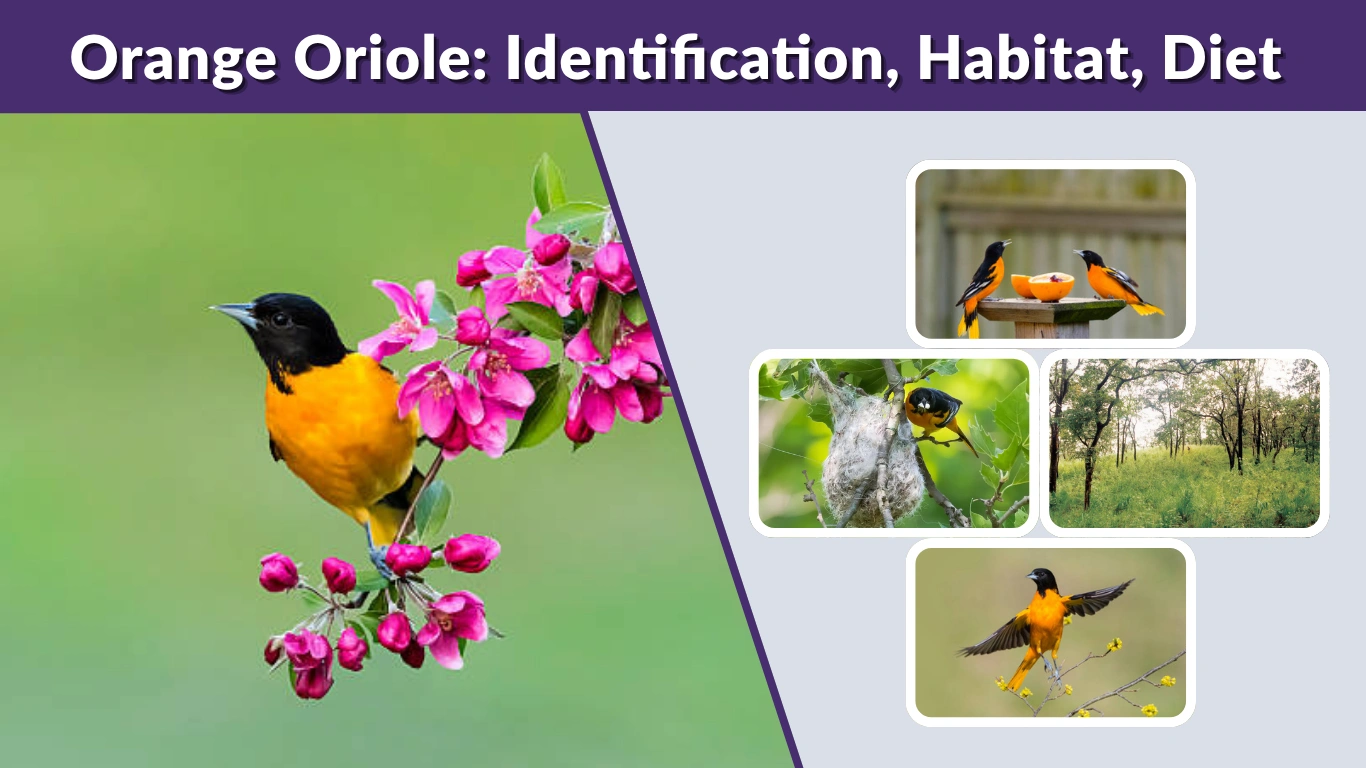
The orange oriole is one of the most striking and colorful songbirds, easily recognized by its bright orange plumage and contrasting black markings. These birds are a favorite among birdwatchers due to their beauty, melodious songs, and fascinating behaviors. Found across different regions, orange orioles are known for their unique nesting style and fruit-loving diet. In this guide, you’ll learn how to identify them, explore their types, and understand where they live and what they eat.
What Is an Orange Oriole?
An orange oriole refers to several species of orioles that display vibrant orange coloring in their feathers. Orioles belong to the Icteridae family, a group of New World songbirds that includes blackbirds and meadowlarks.
These birds are admired for their bright appearance and musical calls, making them a highlight in gardens and forests alike. While “orange oriole” is not a single species name, it commonly describes species like the Baltimore oriole and Altamira oriole, which share similar coloration.
Key Characteristics
Orange orioles share several defining traits that make them easy to recognize:
- Bright orange and black plumage that stands out in trees
- Slender body shape with a slightly curved, pointed beak
- Medium size, typically around 7–9 inches long
- Melodious, flute-like songs used for communication
These features help distinguish them from other birds, especially blackbirds, which may have similar shapes but lack the vivid orange tones.
Types of Orange Orioles
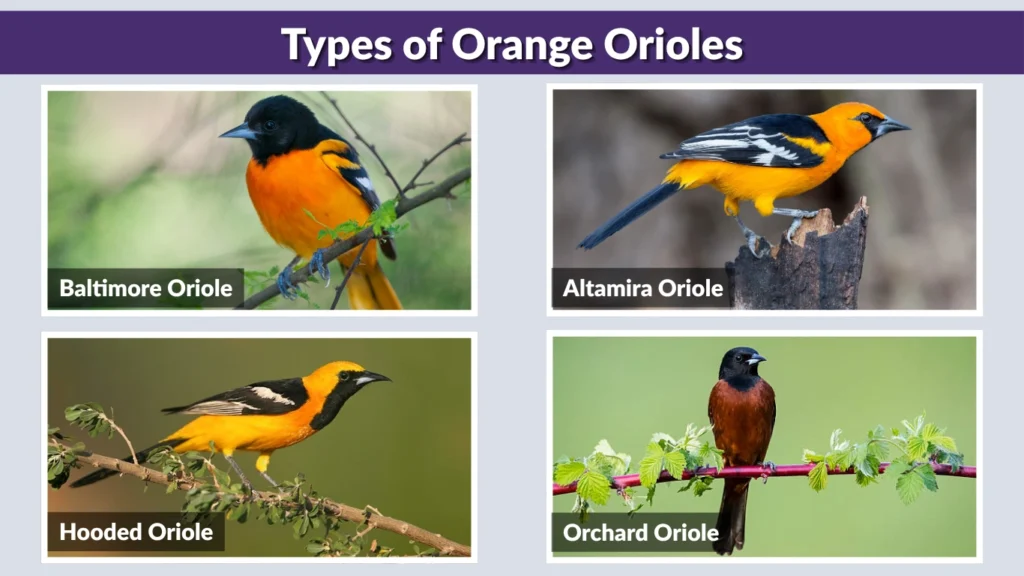
There are several species commonly referred to as orange orioles. Each has unique features, but all share that signature warm coloration.
Baltimore Oriole
The Baltimore oriole is the most well-known orange oriole species. It is famous for its bright orange body contrasted with a black head and wings.
- Found mainly in North America
- Known for its sweet, whistling song
- Frequently visits backyard feeders
Altamira Oriole
The Altamira oriole is one of the largest oriole species and is mostly found in southern regions such as Mexico and parts of Texas.
- Larger body size compared to other orioles
- Bright orange with bold black markings
- Builds large, hanging nests
Hooded Oriole
The hooded oriole has a slightly lighter, more yellow-orange color compared to other species.
- Common in warm and dry climates
- Prefers palm trees for nesting
- Males have a distinct black “hood”
Orchard Oriole
The orchard oriole is smaller and darker than other orange orioles. Its color appears more chestnut or burnt orange.
- Smaller size
- Subtle coloring compared to Baltimore orioles
- Often found in orchards and open fields
How to Identify an Orange Oriole
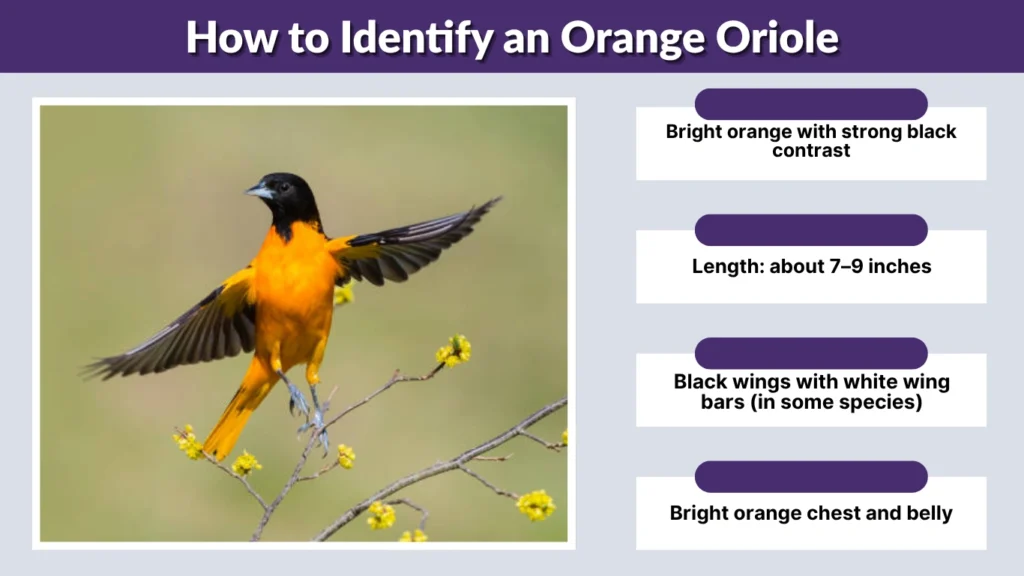
Identifying an orange oriole can be simple once you know what to look for. Their bold colors and unique features make them stand out among other birds.
Male vs Female Differences
One of the easiest ways to identify orioles is by comparing males and females:
- Males: Bright orange with strong black contrast
- Females: More subdued, often yellowish or pale orange
- Females may lack the bold black head seen in males
Size and Shape
Orange orioles are medium-sized birds with a sleek appearance:
- Length: about 7–9 inches
- Slender, elongated body
- Long tail and pointed wings
Their shape helps them move quickly through trees while searching for food.
Distinctive Markings
Look for these markings when identifying an orange oriole:
- Black wings with white wing bars (in some species)
- Bright orange chest and belly
- Sharp, pointed beak suited for fruit and insects
These visual cues are especially helpful for beginners trying to distinguish orioles from similar birds.
Orange Oriole Habitat and Distribution
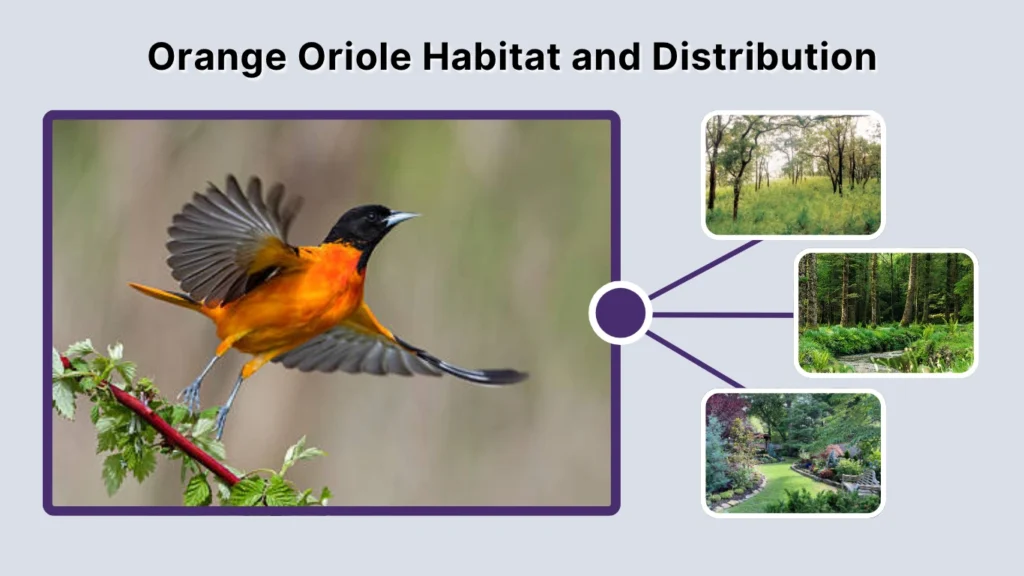
Orange orioles are widely distributed across different regions, depending on the species. They are adaptable birds that thrive in both natural and human-influenced environments.
Geographic Range
Most orange orioles are found in:
- North America, including the United States and southern Canada
- Central America, where some species live year-round
- Parts of northern South America
Different species may migrate or stay in one region depending on the climate.
Preferred Habitats
Orange orioles prefer environments where food and nesting sites are abundant:
- Open woodlands
- Forest edges
- Gardens and backyards
- Areas near water sources like rivers and streams
They are often seen perched high in trees, especially during feeding or singing.
Migration Patterns
Many orange orioles are migratory birds:
- They travel south during winter to warmer regions
- Return north during spring for breeding
- Migration distances can be thousands of miles
This seasonal movement makes them a special sight during certain times of the year.
Orange Oriole Diet and Feeding Habits
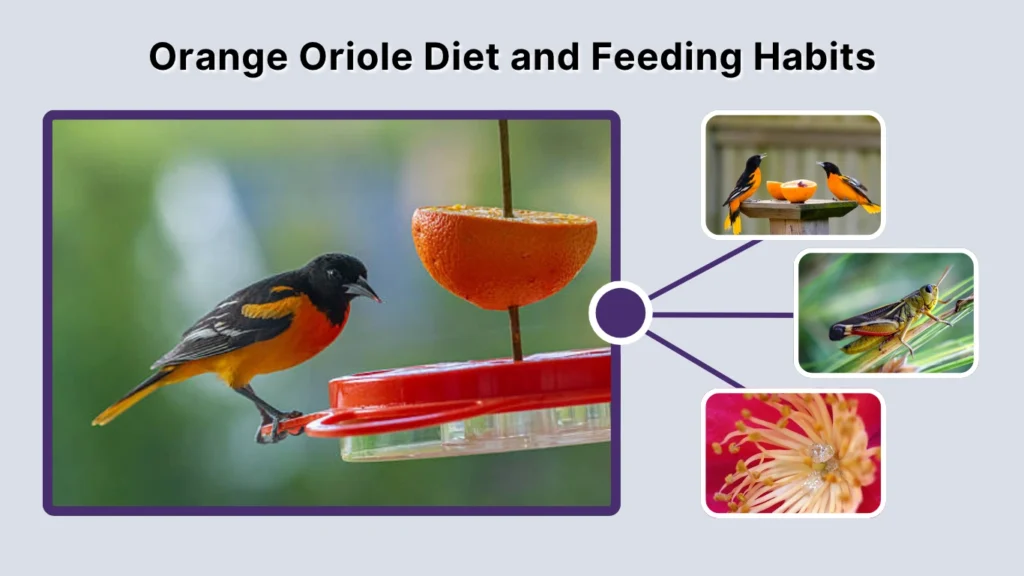
Orange orioles have a diverse diet that includes both plant-based and animal-based foods. Their feeding habits play an important role in maintaining ecological balance.
Natural Diet
In the wild, orange orioles commonly eat:
- Fruits such as oranges, berries, and figs
- Insects like caterpillars, beetles, and grasshoppers
- Nectar from flowers
Their love for sweet foods is one reason they are attracted to backyard feeders.
Feeding Behavior
Orange orioles are active and agile feeders:
- They usually feed in trees rather than on the ground
- Use their sharp beaks to pick insects from leaves
- Often hang upside down while feeding
Their energetic feeding style makes them interesting to watch.
Role in Ecosystem
Orange orioles contribute to the environment in several ways:
- Help control insect populations
- Assist in pollination while feeding on nectar
- Aid in seed dispersal through fruit consumption
These roles make them valuable members of their ecosystems.
How to Attract Orange Orioles to Your Backyard
Attracting orange orioles to your backyard can be a rewarding experience, especially for bird lovers. With the right setup and food, these colorful birds will visit regularly and may even nest nearby.
Best Foods to Offer
Orange orioles are especially attracted to sweet foods. You can easily bring them in by offering:
- Fresh orange halves or slices placed on feeders
- Grape jelly, which is a favorite treat
- Sugar-water nectar, similar to hummingbird food but less concentrated
Providing a consistent food source increases your chances of repeat visits.
Choosing the Right Feeder
Using the correct feeder is essential for attracting orioles:
- Use oriole-specific feeders with wide perches
- Bright orange-colored feeders can help catch their attention
- Place feeders in visible but safe locations, away from predators
Keeping feeders clean is also important to prevent disease.
Creating a Bird-Friendly Environment
Beyond food, habitat matters too. To make your yard more appealing:
- Plant fruit-bearing trees and shrubs
- Provide a clean water source like a birdbath
- Avoid using pesticides, which can harm birds and reduce insect food
A natural, safe environment encourages orioles to stay longer.
Orange Oriole Behavior and Nesting Habits
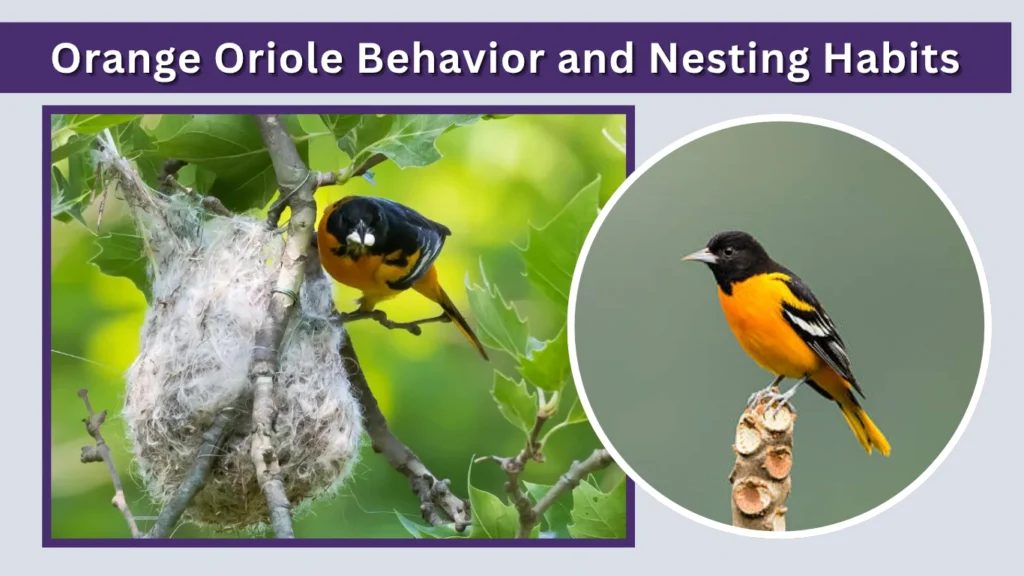
Orange orioles are known for their unique behaviors, especially their impressive nest-building skills.
Nesting Style
One of the most fascinating features of orioles is their nests:
- They build hanging, pouch-like nests
- Nests are woven from grass, fibers, and plant materials
- Usually suspended from tree branches
These nests are both strong and flexible, protecting eggs from predators and weather.
Breeding Behavior
During the breeding season:
- Males attract females through songs and displays
- Females typically build the nest
- Eggs are laid and incubated for about two weeks
Both parents may help in feeding the chicks after hatching.
Songs and Communication
Orange orioles are excellent singers:
- Produce flute-like, whistling sounds
- Songs are used to defend territory and attract mates
- Calls can vary slightly between species
Their pleasant songs are one of the reasons they are so loved by birdwatchers.
Interesting Facts About Orange Orioles
Orange orioles are not only beautiful but also full of fascinating traits.
Migration Distance
- Some species travel thousands of miles each year
- Migration occurs between breeding and wintering grounds
Lifespan
- Typically live 6–10 years in the wild
- Survival depends on habitat and food availability
Unique Traits
- Known for their advanced weaving skills when building nests
- Strong preference for bright-colored foods like oranges
- Often return to the same feeding spots
These traits make them both unique and memorable birds.
Common Problems and Tips for Birdwatchers
Even with the right setup, you might face challenges when trying to attract orioles.
Why Orioles May Not Visit
There are several reasons why orioles might not appear:
- Lack of proper food sources
- Feeders placed in hidden or unsafe areas
- Seasonal timing (they may not have migrated yet)
Understanding these factors can help you adjust your approach.
How to Keep Them Coming Back
Once orioles visit, you’ll want them to return:
- Keep food fresh and consistent
- Clean feeders regularly
- Maintain a quiet, safe environment
Consistency is key to building trust with these birds.
FAQs
What colors attract orange orioles the most?
Orange orioles are highly attracted to bright colors, especially orange and red. Using feeders or decorations in these colors can help draw them into your yard more quickly.
Do orange orioles eat only fruit?
No, they do not eat only fruit. While they love sweet foods like oranges and berries, they also consume insects and nectar, making their diet well-balanced.
Where do orange orioles build their nests?
They usually build their nests high in trees, hanging from thin branches. These nests are carefully woven and shaped like small pouches.
Are orange orioles aggressive birds?
Orange orioles are generally not aggressive. However, they may become territorial during the breeding season, especially around nesting areas.
Can orange orioles live in urban areas?
Yes, orange orioles can adapt to urban and suburban environments, especially if there are trees, food sources, and safe nesting spots available.
Conclusion
Orange orioles are among the most beautiful and fascinating birds you can observe. From their bright orange feathers to their unique hanging nests and sweet songs, they bring life and color to any environment. By understanding their habits, diet, and preferred habitats, you can easily attract them to your backyard. With a little effort and the right setup, enjoying the presence of these vibrant songbirds can become a regular and rewarding experience.
