
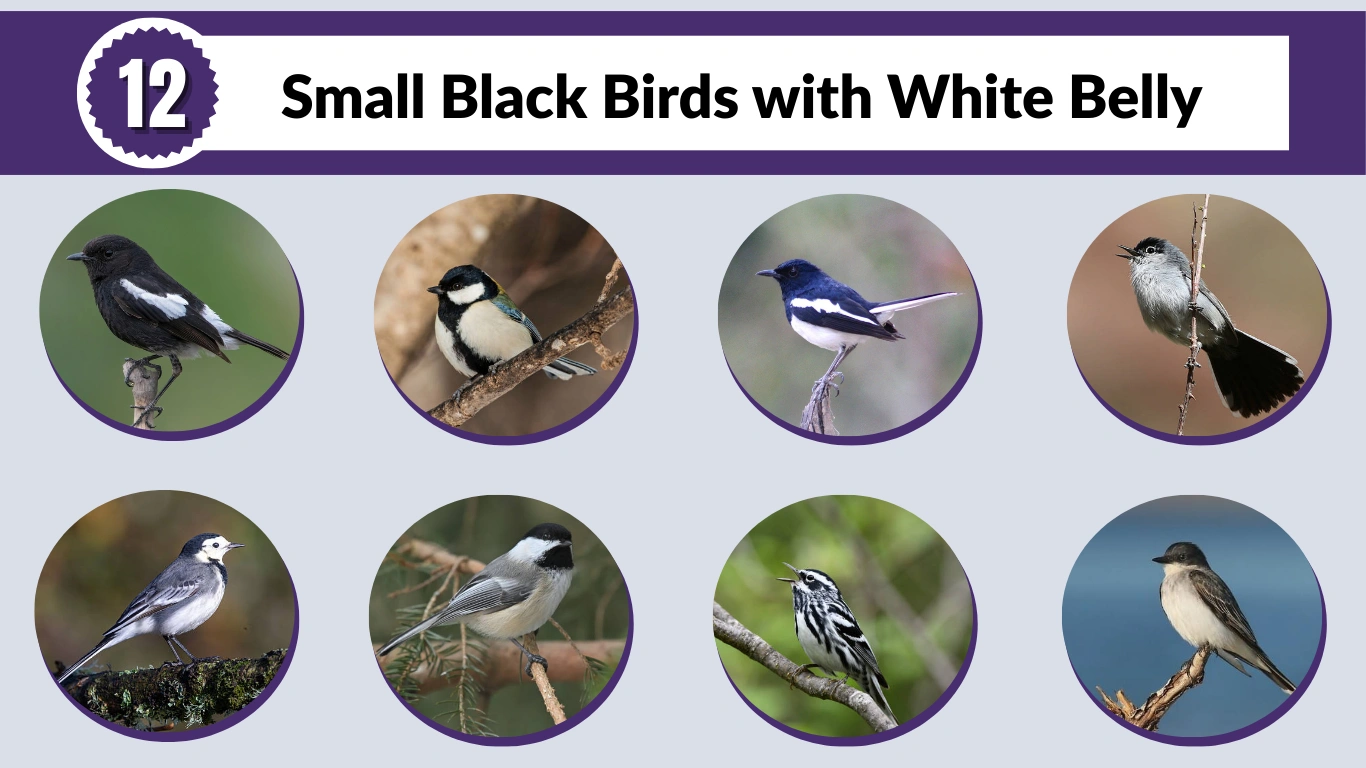
Small black birds with white bellies are among the most striking and easily recognizable songbirds. Their strong color contrast, lively movements, and pleasant calls make them favorites for birdwatchers around the world. These birds include wagtails, flycatchers, chickadees, fantails, and robins that live across forests, wetlands, grasslands, and even urban gardens. Despite their small size, they play an important role in nature by controlling insect populations and adding constant motion and life to both wild and human-dominated landscapes.
1. Black Phoebe
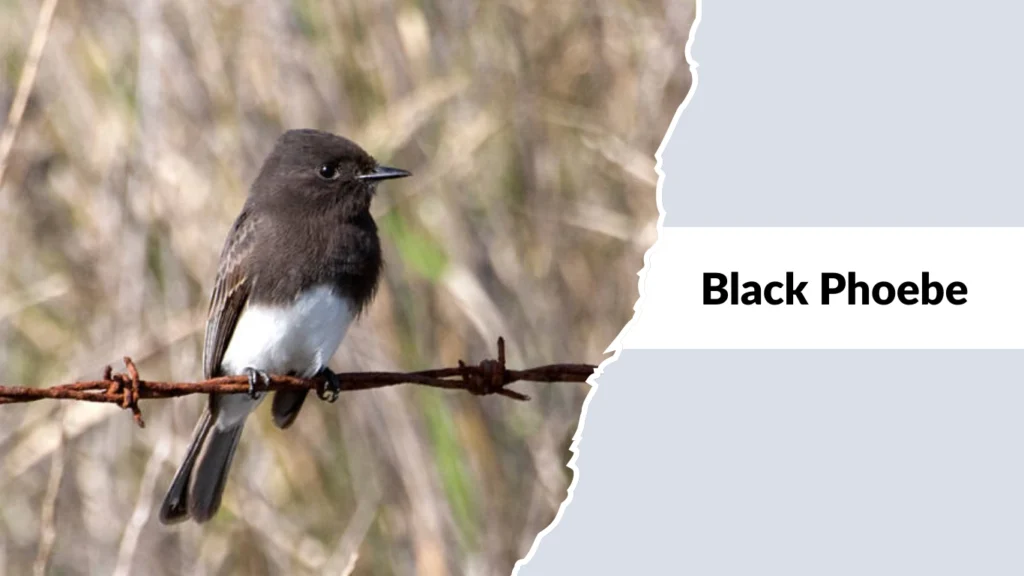
The Black Phoebe is a small, striking bird with a sooty black body and a clean white belly, making it one of the easiest black-and-white birds to recognize. It is commonly seen perched near water or open areas, quietly watching for insects before darting out to catch them.
Identification
- Small, slim-bodied flycatcher
- Mostly black head, chest, and back
- Bright white belly and undertail coverts
- Medium-length tail often flicked downward
- Thin, straight black bill
Habitat
Black Phoebes are strongly associated with water and are often found near streams, rivers, ponds, wetlands, and coastal areas. They also adapt well to farms, bridges, parks, and suburban neighborhoods where suitable perches are available.
Behaviors
This species frequently perches in the open and makes short flights to snatch insects from the air. Tail-bobbing is a constant behavior. Black Phoebes are usually solitary or seen in pairs and are known to defend small feeding territories.
Diet
Their diet consists mainly of flying insects such as flies, mosquitoes, beetles, and moths. They also eat spiders and occasionally pick aquatic insects from the water’s surface.
2. Eastern Kingbird
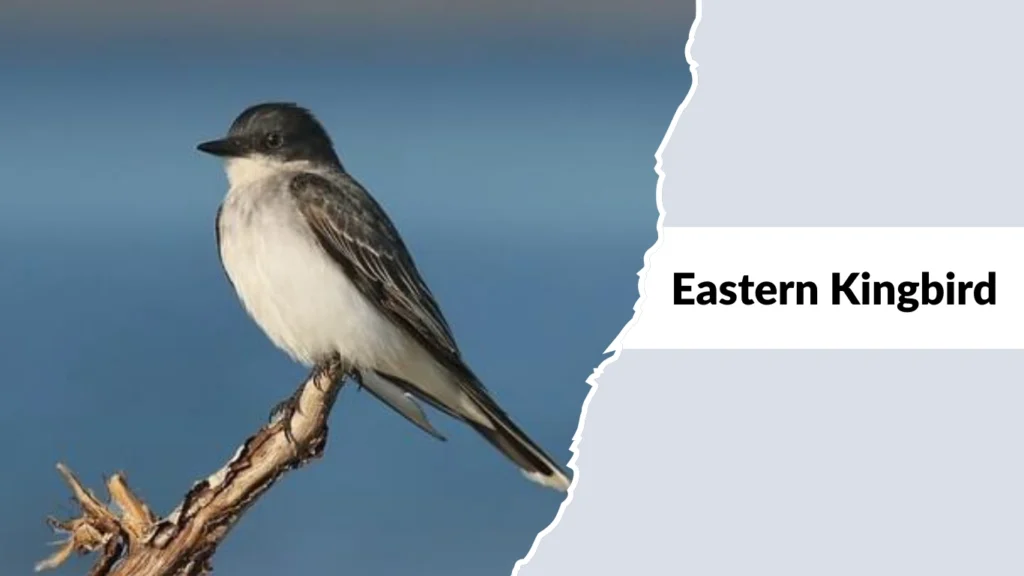
The Eastern Kingbird is a small, bold flycatcher with a dark black body and a bright white belly. It is well known for its fearless nature, often chasing much larger birds away from its territory during the breeding season.
Identification
- Medium-small flycatcher with strong posture
- Black to dark charcoal head, back, and chest
- Bright white underparts
- Slightly forked tail with thin white tip
- Stout, straight bill
Habitat
Eastern Kingbirds inhabit open woodlands, fields, farmlands, river edges, and lakeshores. They prefer open areas with scattered trees or shrubs where they can perch and watch for flying insects.
Behaviors
They often perch upright on exposed branches or wires and sally out to catch insects in midair. Eastern Kingbirds are highly territorial and aggressive in defense of nests, frequently mobbing hawks and crows.
Diet
Their diet consists mostly of flying insects such as bees, wasps, beetles, and flies. They also eat berries and small fruits, especially later in the season.
3. White-breasted Nuthatch
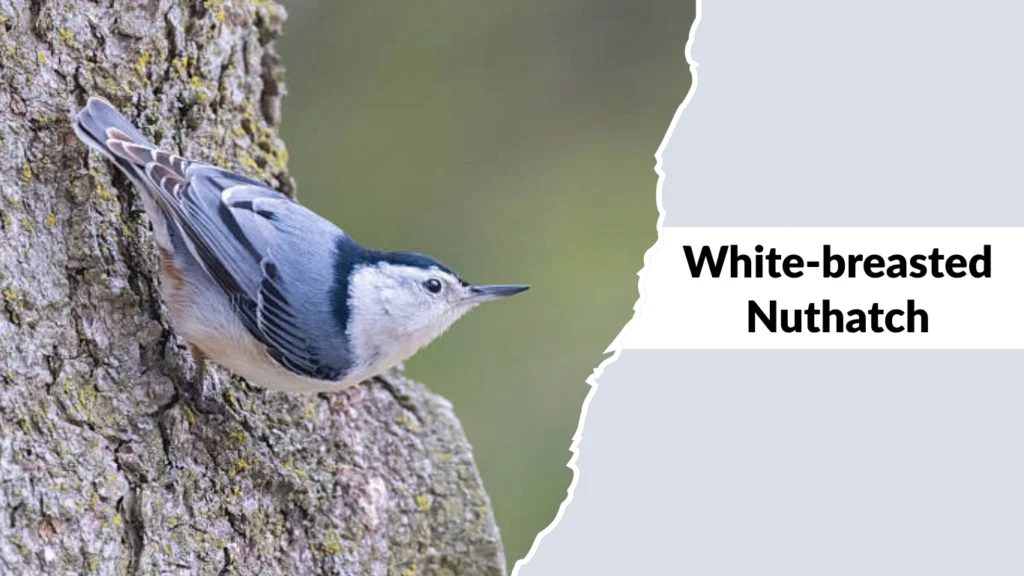
The White-breasted Nuthatch is a small, compact bird with a black or dark gray cap, blue-gray back, and a bright white belly. It is easily recognized by its habit of creeping headfirst down tree trunks while searching for insects hidden in the bark.
Identification
- Small, stocky body with short tail
- Black or dark gray cap
- Bright white face, throat, and belly
- Blue-gray back and wings
- Long, slightly upturned bill
Habitat
White-breasted Nuthatches live in mature deciduous and mixed forests, woodlands, city parks, and suburban gardens. They prefer areas with large trees that provide both food and nesting cavities.
Behaviors
They are famous for walking head-down along trunks and branches. Usually seen alone or in pairs, they often join mixed feeding flocks in winter and communicate with loud, nasal “yank-yank” calls.
Diet
Their diet includes insects, spiders, beetles, and larvae in warmer months. In fall and winter, they eat more seeds and nuts, often wedging them into bark and hammering them open.
4. Black-and-white Warbler
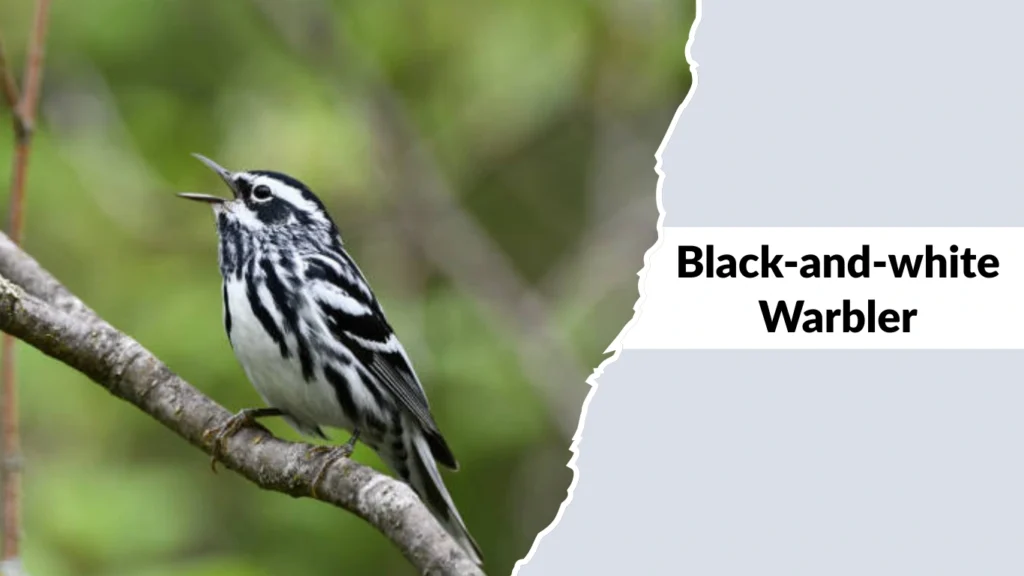
The Black-and-white Warbler is a small, boldly patterned bird with dark upperparts and a pale, whitish belly marked with black streaks. Unlike most warblers, it creeps along tree trunks and large branches, searching for hidden insects.
Identification
- Small, slim-bodied warbler
- Bold black and white stripes over head, back, and wings
- Whitish belly with dark streaking
- Thin, pointed bill
- Long legs suited for creeping
Habitat
Black-and-white Warblers inhabit deciduous and mixed forests, woodland edges, and wooded parks. During migration, they may also appear in gardens and shrubby areas.
Behaviors
They move like nuthatches, climbing up, down, and around trunks and branches. Usually solitary, they actively probe bark crevices and rarely stay still while foraging.
Diet
Their diet consists mainly of insects, larvae, ants, and spiders picked from tree bark. Occasionally, they also eat small berries.
5. Pied Wagtail
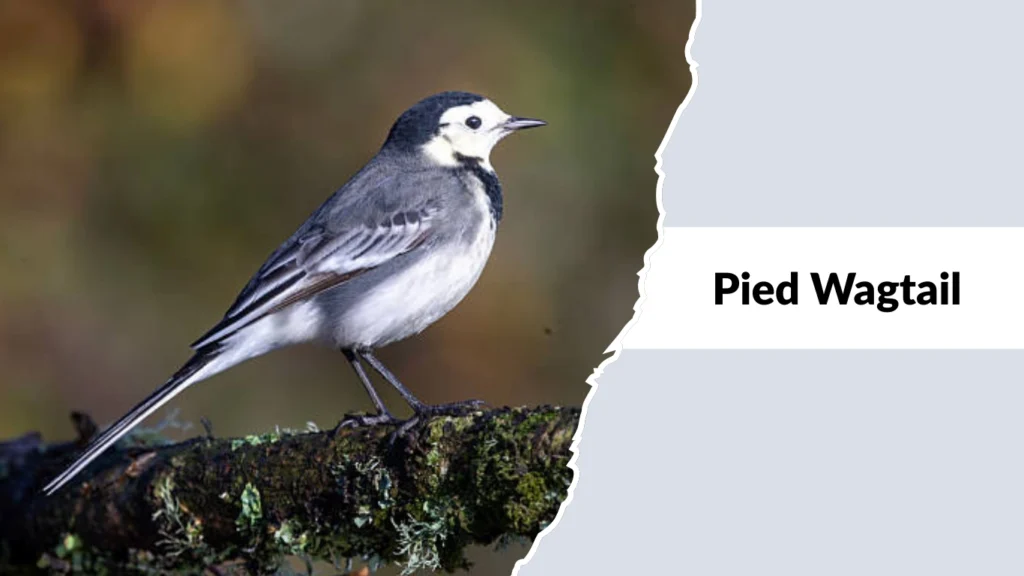
The Pied Wagtail is a slender, black-and-white bird easily recognized by its long tail, which it constantly wags up and down. It has dark upperparts and a clean white belly, and is commonly seen running along the ground in open areas.
Identification
- Small, slim-bodied bird
- Black head, chest, and back
- Bright white face and belly
- Very long tail, often wagged
- Thin, pointed bill and long legs
Habitat
Pied Wagtails inhabit open countryside, farmland, riverbanks, wetlands, city parks, and urban streets. They are highly adaptable and often live close to human settlements.
Behaviors
They spend much of their time on the ground, walking or running rather than hopping. Tail-wagging is a constant behavior. Pied Wagtails are alert birds and often gather in flocks, especially outside the breeding season.
Diet
Their diet includes insects, spiders, small worms, and aquatic invertebrates caught on the ground or near water.
6. Black-capped Chickadee
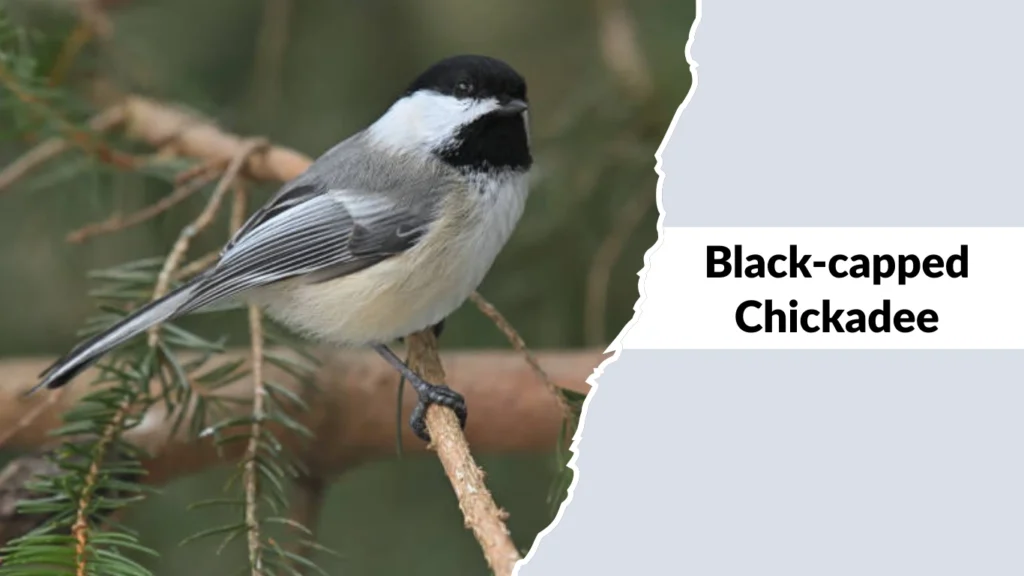
The Black-capped Chickadee is a tiny, round-bodied bird with a glossy black cap and bib contrasted by bright white cheeks and a pale belly. It is one of the most familiar small birds in North America and is loved for its fearless, curious nature.
Identification
- Very small, round-bodied bird
- Distinct black cap and black throat patch
- Bright white cheeks
- Soft gray back and white belly
- Short tail and small, sharp bill
Habitat
Black-capped Chickadees live in deciduous and mixed forests, woodland edges, parks, and suburban gardens. They are highly adaptable and commonly visit backyard feeders.
Behaviors
They are extremely active and acrobatic, often hanging upside down while foraging. Chickadees move in small flocks and communicate with a variety of chips and the familiar “chick-a-dee-dee-dee” call.
Diet
Their diet consists mainly of insects, spiders, seeds, and berries. They also store food in bark crevices to eat later, especially in winter.
7. Black-tailed Gnatcatcher
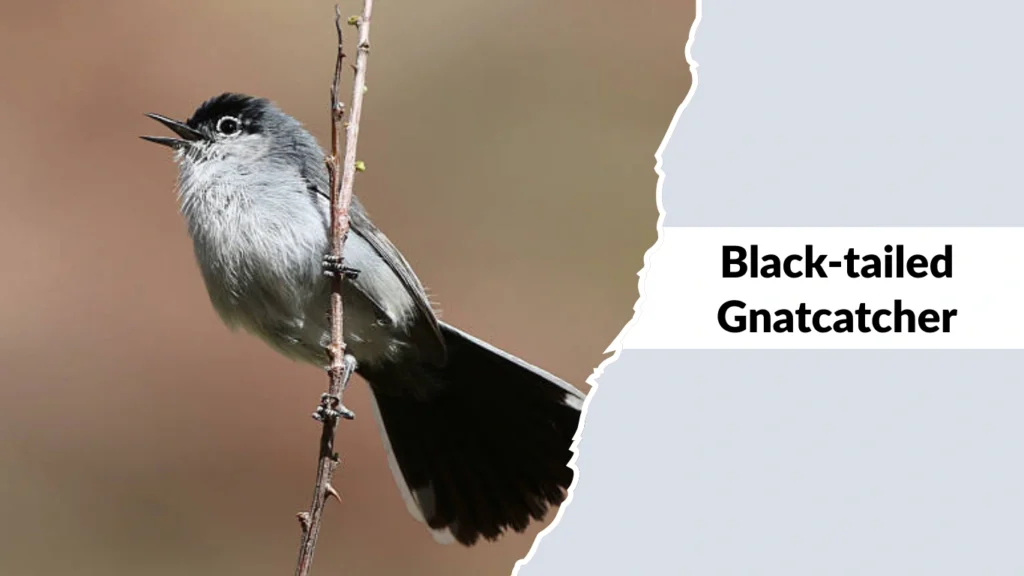
The Black-tailed Gnatcatcher is a very small, active bird with dark upperparts and a pale, whitish belly. It is often seen flitting through shrubs, constantly flicking its long tail while searching for tiny insects.
Identification
- Very small, slim-bodied bird
- Dark gray to blackish upperparts
- Whitish belly and throat
- Long, narrow tail with black outer feathers
- Thin, needle-like bill
Habitat
Black-tailed Gnatcatchers prefer dry, open habitats such as desert scrub, thorny bushes, semi-arid woodlands, and low shrubs. They are usually found in warm regions with sparse vegetation.
Behaviors
They are restless birds, constantly moving through low plants and giving soft scolding calls. Tail-flicking is a typical behavior, and they often approach intruders out of curiosity.
Diet
Their diet consists mainly of very small insects and spiders, including gnats, aphids, beetles, and caterpillars picked from leaves and twigs.
8. Oriental Magpie-Robin
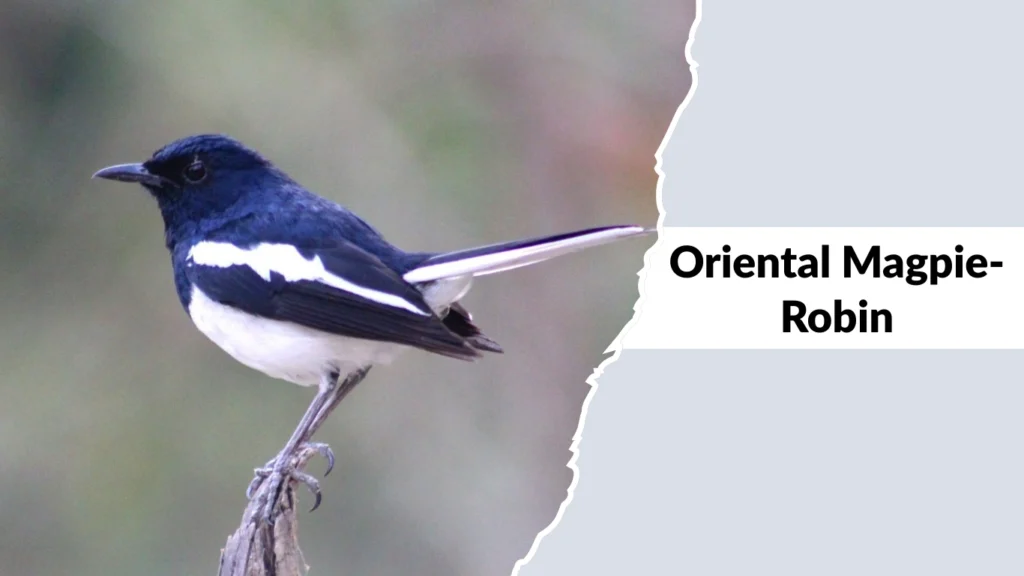
The Oriental Magpie-Robin is a small, elegant black bird with a bright white belly and bold white wing patches. It is well known for its rich, musical songs and is a familiar sight in gardens, villages, and forest edges across South and Southeast Asia.
Identification
- Small, slim-bodied songbird
- Glossy black head, back, and chest
- Bright white belly
- White wing bars and outer tail feathers
- Thin, pointed bill
Habitat
Oriental Magpie-Robins live in open woodlands, gardens, farmlands, parks, and forest edges. They are highly adaptable and often nest close to human homes.
Behaviors
They are active and alert, frequently flicking their tails and singing from exposed perches. Males are strong singers and defend territories, especially during the breeding season.
Diet
Their diet consists mainly of insects, worms, spiders, and small invertebrates. They also eat some berries and soft fruits.
9. Willie Wagtail
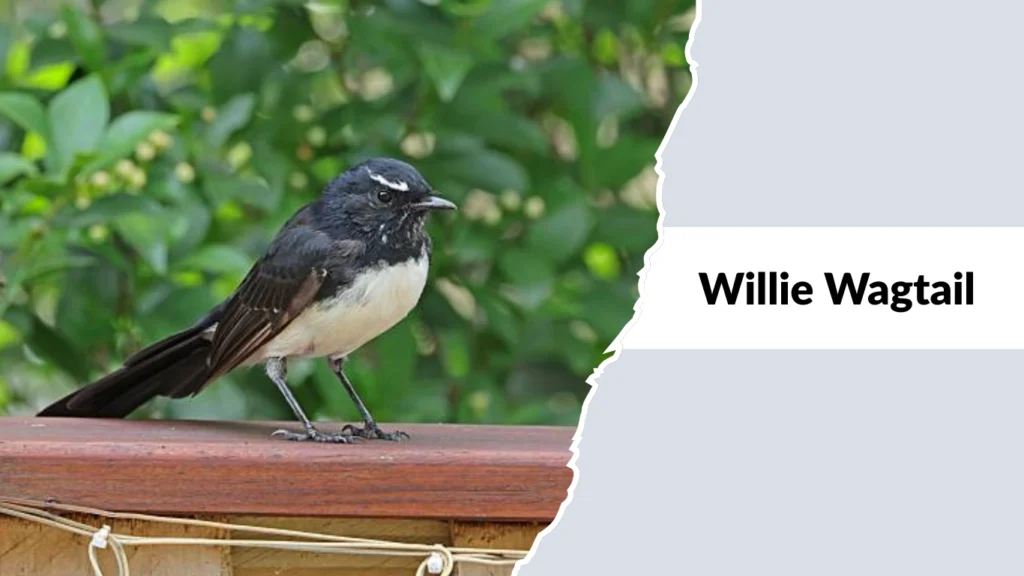
The Willie Wagtail is a small, lively black bird with a crisp white belly and white eyebrow, famous for its constant tail-wagging and fearless personality. It is one of the most familiar small birds in Australia and nearby regions.
Identification
- Small, slim-bodied bird
- Glossy black head, back, and chest
- Bright white belly and eyebrow
- Long black tail with white edges
- Thin, pointed bill
Habitat
Willie Wagtails live in open woodlands, grasslands, wetlands, farmlands, parks, and urban gardens. They prefer open areas where insects are easy to catch.
Behaviors
They are extremely active and bold, often approaching people and animals to catch insects stirred from the ground. Tail-flicking is constant. They frequently fan their tails and make short chasing flights.
Diet
Their diet consists mainly of flying and ground insects such as flies, beetles, moths, and grasshoppers. They also eat spiders and other small invertebrates.
10. Black-and-white Fantail
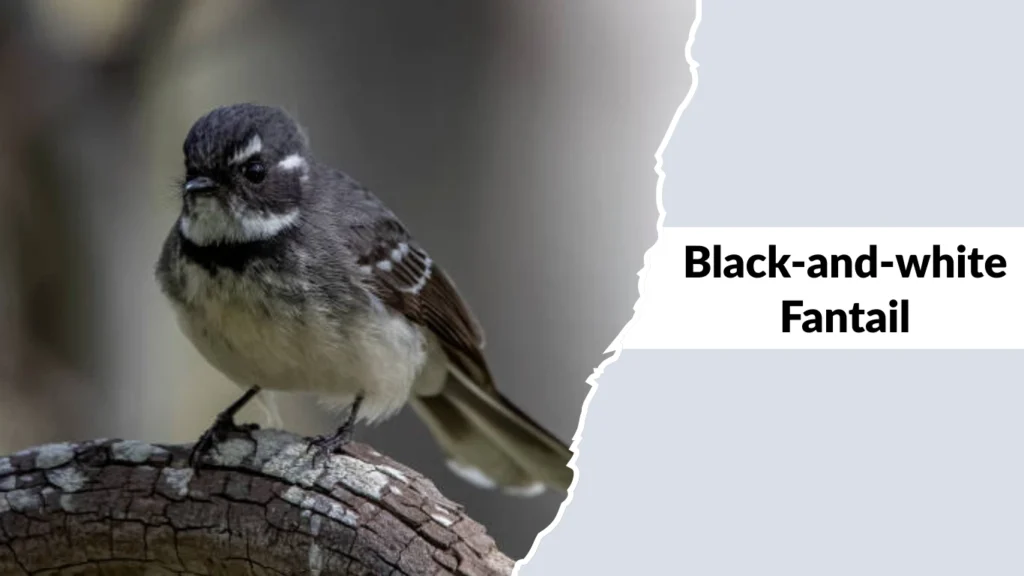
The Black-and-white Fantail is a small, energetic bird with a black upper body and a bright white belly. It is best known for constantly spreading and fanning its tail while darting through the air to catch insects.
Identification
- Small, slim bird
- Black head, back, and chest
- Bright white belly
- Long, fan-shaped tail with white edges
- Thin, pointed bill
Habitat
Black-and-white Fantails inhabit forests, woodland edges, mangroves, parks, and gardens. They prefer areas with trees and open spaces for catching flying insects.
Behaviors
Fantails are extremely active and often fan their tails widely while foraging. They frequently follow people or animals to catch insects disturbed from vegetation. Their flight is quick and highly agile.
Diet
Their diet consists mainly of flying insects such as flies, mosquitoes, moths, and beetles. They also pick spiders and small insects from leaves and branches.
11. Japanese Tit
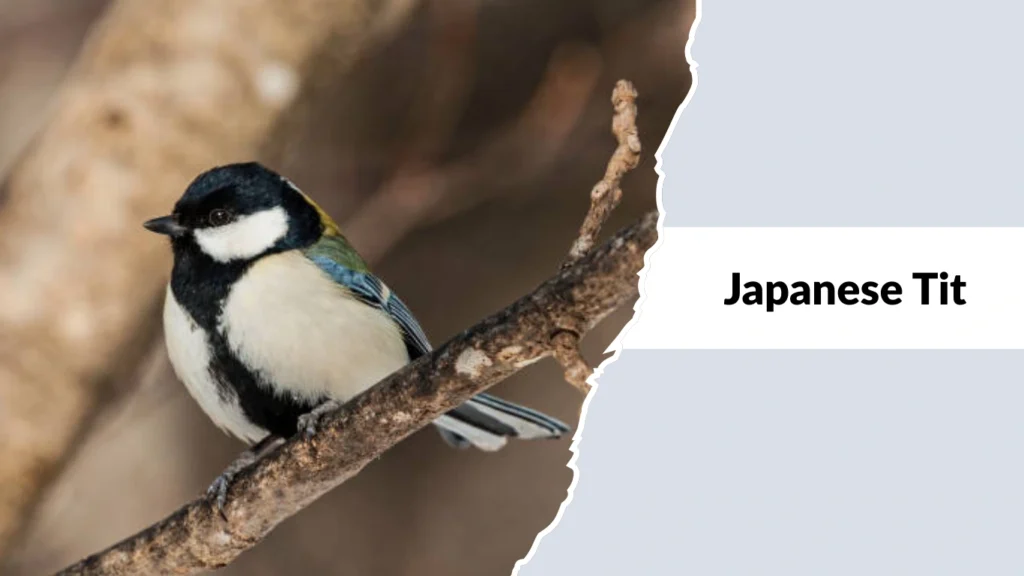
The Japanese Tit is a small, lively black-and-white songbird with a glossy black head, white cheeks, and a pale belly. Closely related to chickadees and great tits, it is commonly seen flitting through trees and shrubs in forests, parks, and gardens.
Identification
- Small, round-bodied bird
- Glossy black head and throat
- Bright white cheeks
- Gray back with whitish belly
- Short tail and small, pointed bill
Habitat
Japanese Tits inhabit deciduous and mixed forests, woodland edges, city parks, and suburban gardens. They prefer areas with plenty of trees, where natural cavities and insects are abundant.
Behaviors
They are very active and acrobatic, often hanging upside down while searching for food. Japanese Tits usually move in pairs or small flocks and communicate with a variety of sharp calls and songs.
Diet
Their diet consists mainly of insects, caterpillars, spiders, and other small invertebrates. Seeds and berries become more important in colder months, and they may also visit bird feeders.
12. Pied Bushchat
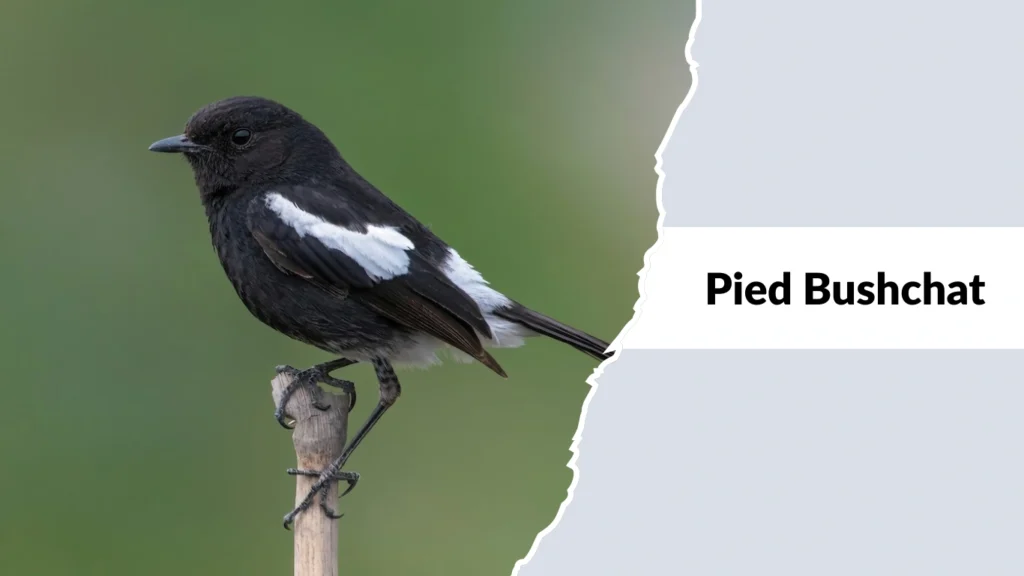
The Pied Bushchat is a small, upright songbird with a glossy black body and a clean white belly. It is often seen perched on low bushes, fence posts, or tall grasses, where it watches the ground carefully before dropping down to catch insects.
Identification
- Small, slim bird with upright stance
- Glossy black head, back, and chest (male)
- Bright white belly
- Distinct white shoulder patch
- Thin, pointed bill and long legs
Habitat
Pied Bushchats live in open grasslands, scrublands, farmland, roadsides, and bushy open areas. They prefer habitats with low vegetation and scattered perches for hunting.
Behaviors
They frequently flick their tails and wings while perched. Pied Bushchats hunt by dropping to the ground to seize insects, then returning to a low perch. Males are territorial and often sing from exposed spots.
Diet
Their diet consists mainly of insects such as beetles, ants, flies, and grasshoppers. They also eat spiders and other small invertebrates.
FAQs
What are small black birds with white bellies commonly called?
There is no single group name, but many flycatchers, wagtails, chickadees, fantails, and robins fit this description. They are often grouped together by birdwatchers because of their similar color pattern rather than close scientific relationship.
Why do some black birds have white bellies?
The black-and-white pattern helps with camouflage and communication. A dark back blends with shadows from above, while a white belly can make the bird less visible from below against the bright sky, reducing the risk of predation.
Are small black birds with white bellies insect eaters?
Most of them mainly eat insects such as flies, beetles, caterpillars, and spiders. This makes them very helpful in controlling insect populations in gardens, forests, and farmland areas.
Where are small black-and-white birds usually found?
They live in many habitats including forests, wetlands, grasslands, parks, gardens, and farmlands. Some prefer trees, others stay close to water, and some spend much of their time on the ground or low shrubs.
Can these birds be attracted to home gardens?
Yes. Providing clean water, native plants, and insect-friendly environments can attract them. Some species also visit feeders for seeds or suet, while shrubs and small trees offer shelter and nesting places.
