
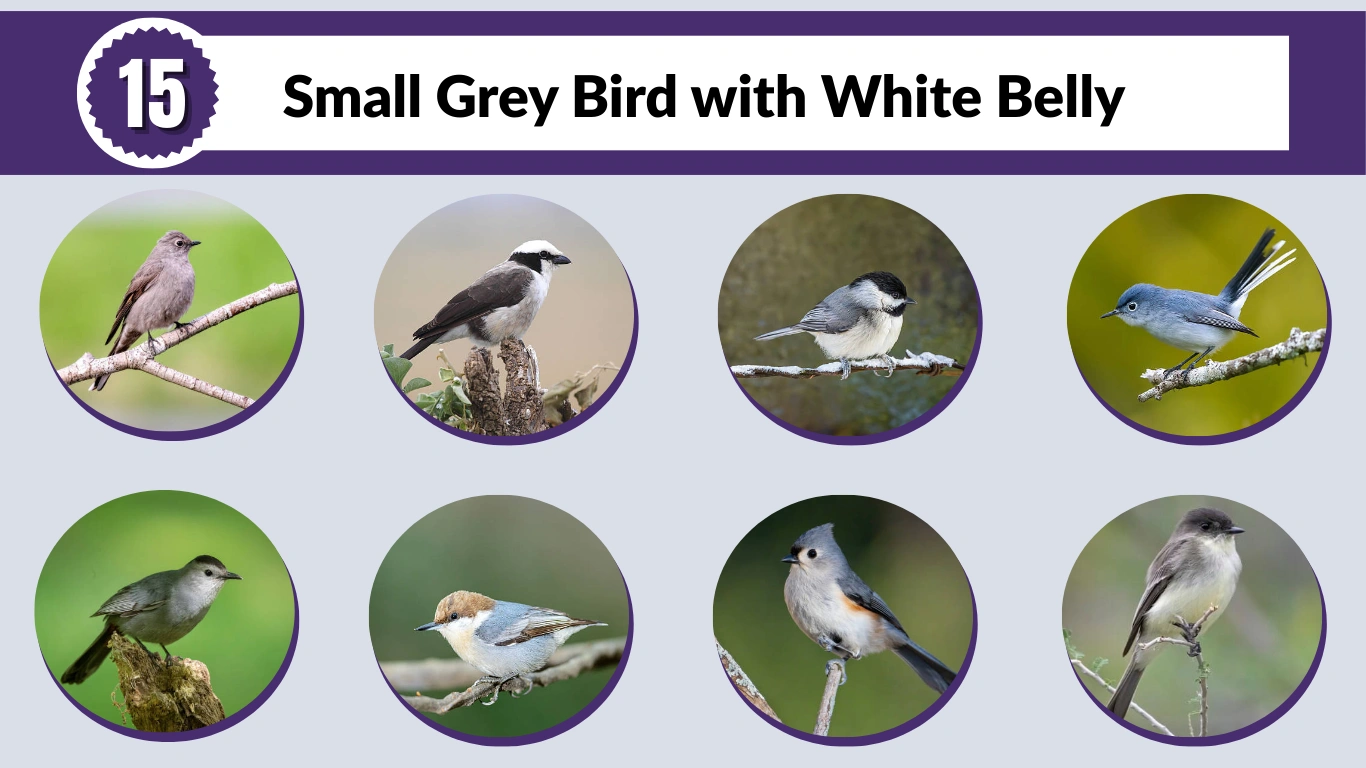
Small grey birds with white bellies are among the most familiar and charming sights in gardens, woodlands, and open landscapes. Though their colors may seem subtle, these birds show remarkable variety in shape, behavior, and habitat. From energetic chickadees and nuthatches to insect-catching phoebes and elegant solitaires, each species brings its own unique traits. Learning to recognize these birds helps deepen appreciation for everyday wildlife and makes birdwatching more enjoyable and rewarding.
1. Dark-eyed Junco
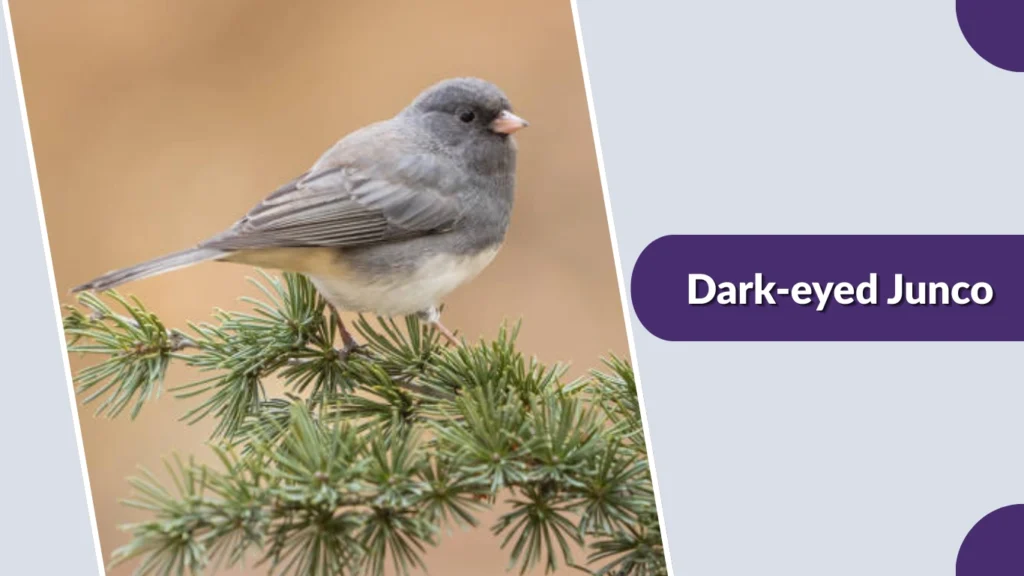
The Dark-eyed Junco is one of the most familiar small gray birds in North America, especially during winter when large flocks appear around homes, gardens, and forest edges. With its soft gray tones and clean white belly, this sparrow-like bird is easy to recognize and widely loved by birdwatchers.
Identification
- Small, round-bodied songbird with a pale white belly
- Upperparts usually slate gray, sometimes brownish depending on the type
- Distinct white outer tail feathers visible in flight
- Short, pinkish bill and dark eyes
- Typically 12–16 cm (4.7–6.3 in) long
Habitat
Dark-eyed Juncos live in a wide range of habitats, including open woodlands, forest edges, mountain forests, and suburban areas. During breeding season, they prefer coniferous or mixed forests. In winter, they often move into lower elevations, visiting backyards, parks, and fields.
Diet
Their diet mainly consists of seeds, especially from grasses and weeds, which they often find by hopping on the ground. During spring and summer, they also eat insects and small invertebrates, providing extra protein during the breeding season and helping control pest populations.
Behavior
Dark-eyed Juncos are active ground feeders and are often seen hopping rather than walking. They form loose flocks outside the breeding season and frequently visit bird feeders. Their call is a sharp “tick,” and their song is a simple, musical trill.
2. Northern Mockingbird
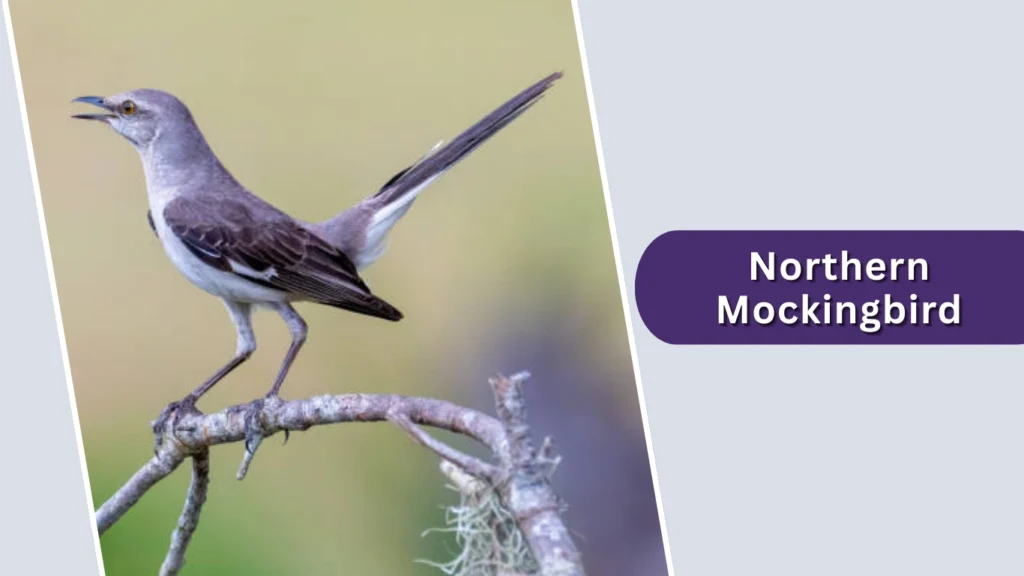
The Northern Mockingbird is a slim, pale gray bird with a noticeably lighter, almost white belly. Famous for its ability to mimic the songs of other birds, this intelligent species is commonly seen perched on wires, fences, and treetops, often singing loudly throughout the day and even at night.
Identification
- Medium-small, slender bird with light gray upperparts and a white belly
- Long tail with white outer feathers, often flashed in flight
- Thin, slightly curved black bill
- Dark eyes with faint pale eye markings
- White wing patches visible when wings are spread
Habitat
Northern Mockingbirds thrive in open and semi-open areas such as gardens, city parks, farmland, woodland edges, and suburban neighborhoods. They prefer places with shrubs and scattered trees that provide both nesting sites and open ground for feeding.
Diet
They are omnivorous, feeding on insects, spiders, and earthworms during warmer months. In fall and winter, their diet shifts more toward fruits and berries, including holly, mulberry, and wild grapes, making them important seed dispersers.
Behavior
Northern Mockingbirds are bold, territorial, and highly vocal. They aggressively defend nesting areas, often chasing away much larger birds. Their famous mimicry allows them to copy dozens of different bird songs, as well as mechanical and environmental sounds.
3. Eastern Phoebe
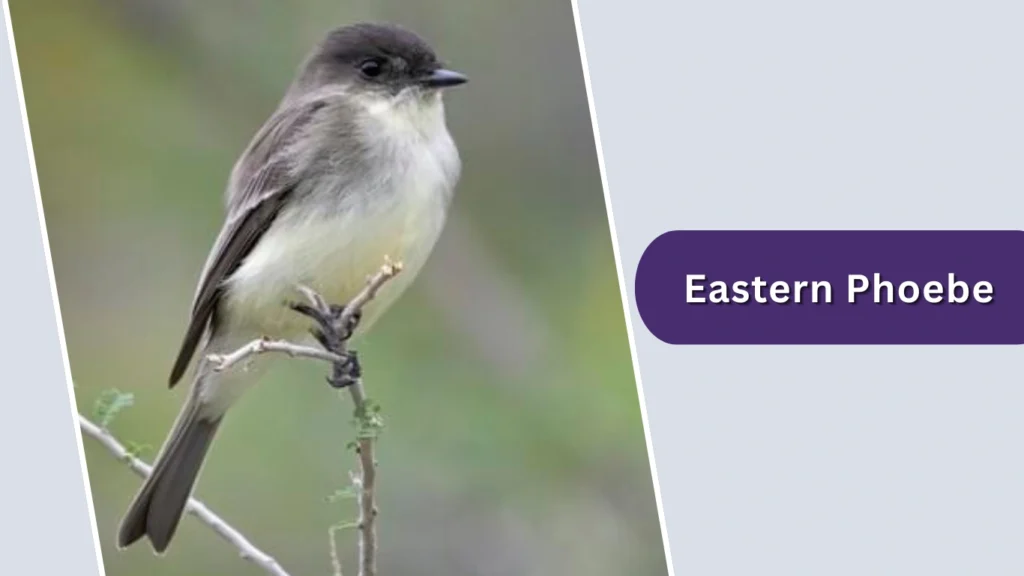
The Eastern Phoebe is a small, quietly colored flycatcher with soft gray upperparts and a clean white belly. It is often noticed not by bright colors, but by its constant tail-bobbing and its habit of perching in open spots before darting out to catch insects.
Identification
- Small, slender bird with gray-brown upperparts and a white belly
- Slightly darker head with a subtle cap
- Thin, straight black bill
- Long tail frequently pumped up and down
- Typically about 14–17 cm (5.5–6.7 in) long
Habitat
Eastern Phoebes favor open woodlands, forest edges, farms, bridges, and buildings where they can attach their mud-and-moss nests. They are commonly found near water, such as streams and ponds, but also adapt well to human structures.
Diet
Their diet is mainly insects, including flies, beetles, moths, and wasps, which they catch in midair. They also eat small fruits and berries, especially in late summer and fall when insect numbers decline.
Behavior
Eastern Phoebes are sit-and-wait hunters. They perch quietly, then suddenly fly out to snatch passing insects before returning to the same spot. Their simple, raspy “fee-bee” call is often heard in early spring, making them one of the first flycatchers to return from migration.
4. Western Phoebe
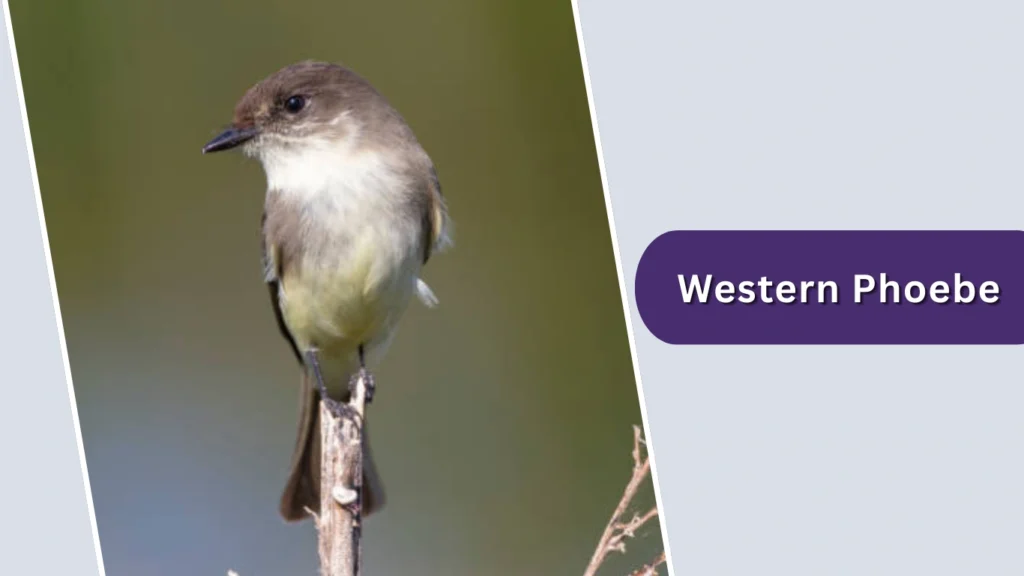
The Western Phoebe is a small, understated flycatcher with gray upperparts and a pale, whitish belly. It closely resembles the Eastern Phoebe but is more common in western North America, where it is often seen perched on rocks, fences, and buildings near open areas.
Identification
- Small flycatcher with gray-brown upperparts and a pale white belly
- Slightly darker head and chest compared to the lower belly
- Thin, straight dark bill
- Long tail that is frequently flicked downward
- Usually about 14–17 cm (5.5–6.7 in) in length
Habitat
Western Phoebes prefer open country, canyons, deserts, farmland, and suburban areas. They are especially fond of cliffs, bridges, and buildings for nesting, often placing their nests on ledges or sheltered structures.
Diet
Their diet consists mostly of flying insects such as flies, bees, butterflies, and beetles. They catch prey by flying out from a perch, grabbing the insect midair, and returning to the same or a nearby perch.
Behavior
Western Phoebes are calm, alert birds that often wag or pump their tails while perched. They are frequently seen alone or in pairs and may return to the same nesting sites year after year, showing strong site loyalty.
5. Black Phoebe
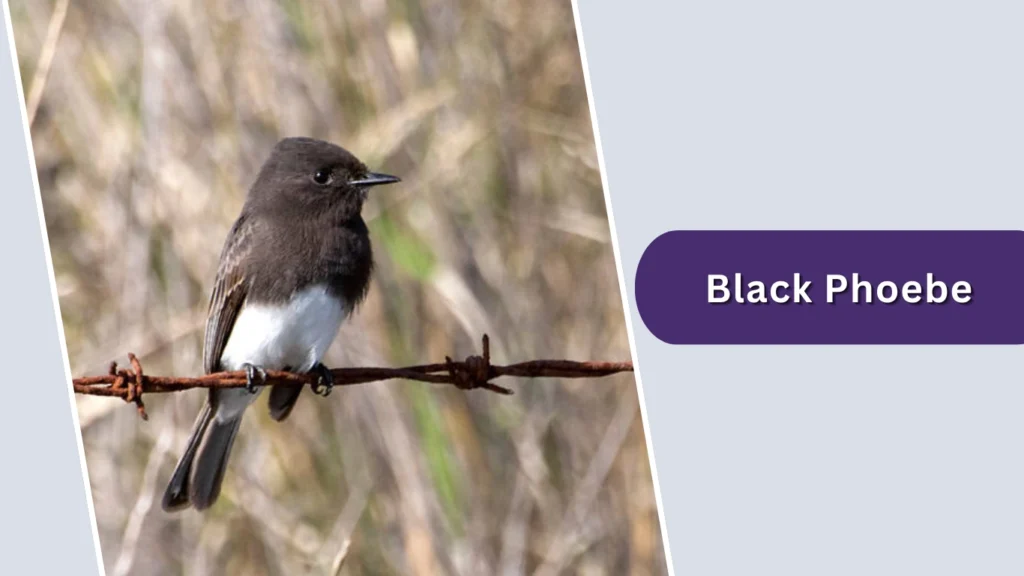
The Black Phoebe is a striking small bird with dark gray to black upperparts and a bright white belly. It is commonly seen near water, where it perches on low branches, rocks, or structures before flying out to catch insects.
Identification
- Small flycatcher with sooty black head, chest, and back
- Clean white belly and undertail area
- Thin, straight black bill
- Long tail often pumped while perched
- About 16–18 cm (6.3–7.1 in) long
Habitat
Black Phoebes are strongly associated with water and are often found along streams, rivers, ponds, and coastal areas. They also adapt well to human environments, nesting on buildings, bridges, and culverts.
Diet
They mainly eat flying insects such as flies, mosquitoes, beetles, and wasps. Occasionally, they also take small fish and other aquatic insects, especially when hunting close to water surfaces.
Behavior
Black Phoebes are active, alert birds that frequently flick their tails and make short, quick flights from a perch to snatch prey. They are territorial during the breeding season and often return to favored nesting spots year after year.
6. Tufted Titmouse
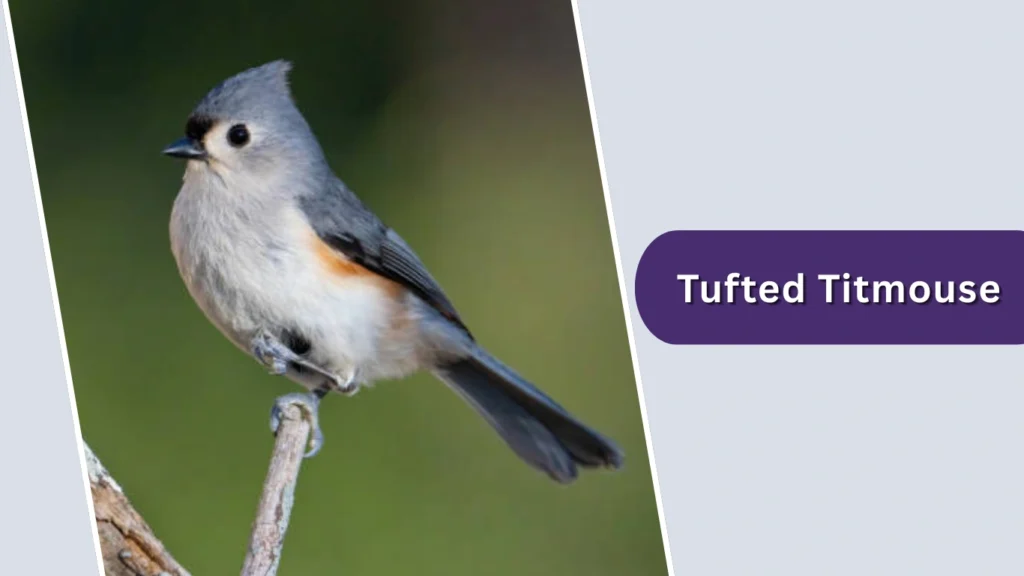
The Tufted Titmouse is a small, energetic songbird with soft gray upperparts and a pale white belly. Its pointed crest, large dark eyes, and quick movements make it easy to recognize in woodlands and backyard feeders.
Identification
- Small gray bird with a distinct pointed crest
- Pale white to light gray belly
- Large dark eyes and a short, stout bill
- Subtle rusty or peach tones on the flanks
- About 14–16 cm (5.5–6.3 in) long
Habitat
Tufted Titmice inhabit deciduous and mixed forests, woodland edges, parks, and suburban neighborhoods. They readily visit bird feeders, especially those offering sunflower seeds, suet, and peanuts.
Diet
Their diet includes insects, spiders, seeds, nuts, and berries. In warmer months, insects make up a large part of their food, while in winter they rely more on seeds and stored food caches.
Behavior
Tufted Titmice are curious and bold birds that often travel in small mixed-species flocks with chickadees and nuthatches. They are known for their clear, whistled “peter-peter-peter” calls and their habit of carrying seeds away to crack them open elsewhere.
7. White-breasted Nuthatch
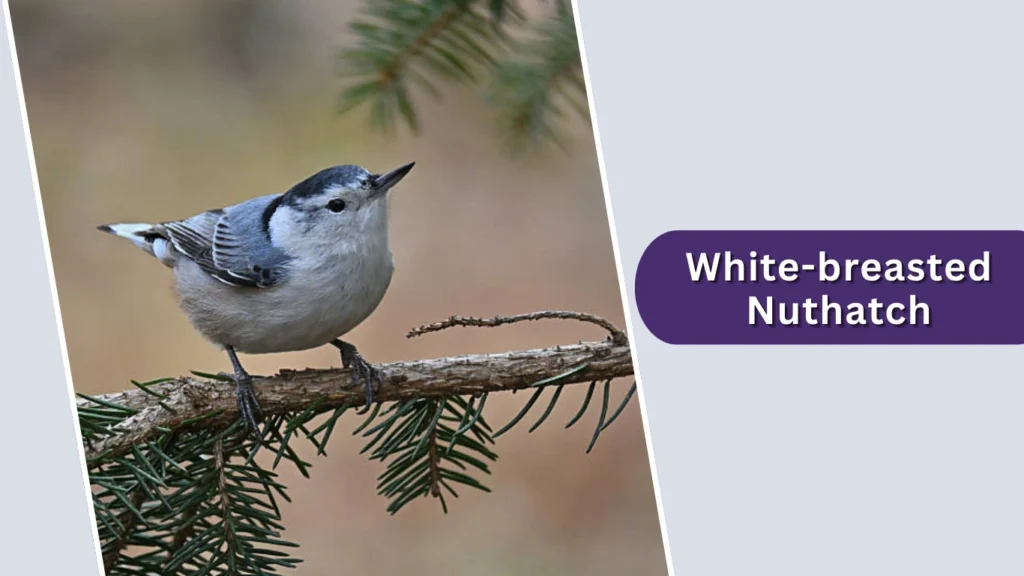
The White-breasted Nuthatch is a small, compact bird with blue-gray upperparts and a bright white belly. It is famous for its unusual habit of walking headfirst down tree trunks while searching for insects hidden in the bark.
Identification
- Small bird with blue-gray back and wings
- Clean white face, throat, and belly
- Black or dark gray cap on the head
- Short tail and strong, straight bill
- About 13–15 cm (5.1–5.9 in) long
Habitat
White-breasted Nuthatches are common in mature deciduous and mixed forests, woodland edges, city parks, and large gardens. They prefer areas with big trees that provide natural cavities for nesting and foraging.
Diet
They feed mainly on insects, spiders, and other invertebrates during spring and summer. In fall and winter, they switch to seeds and nuts, especially acorns and sunflower seeds, which they often wedge into bark to hammer open.
Behavior
These birds are agile and acrobatic, frequently seen climbing both up and down trunks and branches. They are often part of mixed winter flocks and communicate with nasal, honking calls that sound like “yank-yank.”
8. Brown-headed Nuthatch
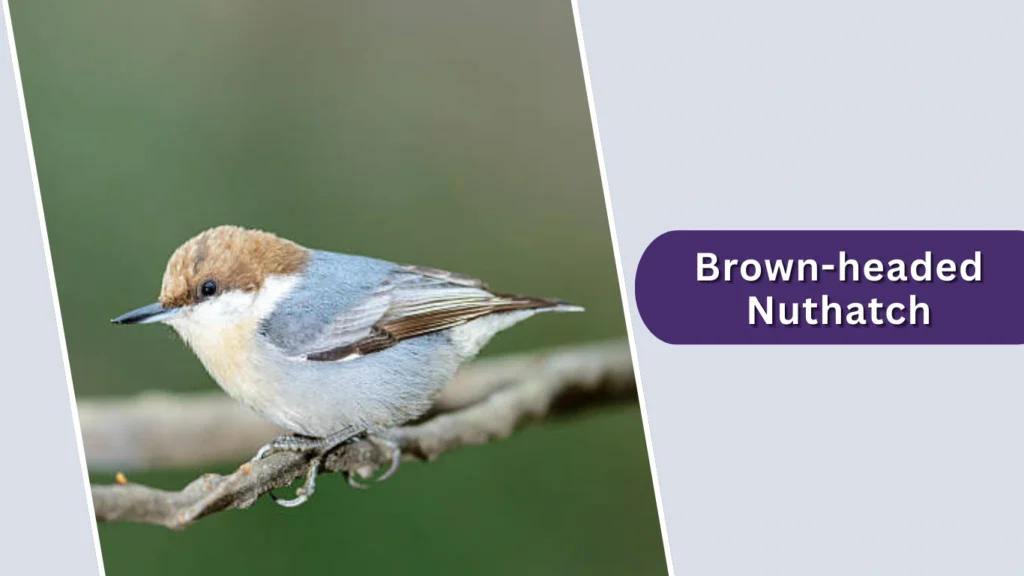
The Brown-headed Nuthatch is a tiny, soft gray bird with a pale white belly and a warm brown cap. It is most easily recognized by its high, squeaky calls and its habit of creeping along pine trunks and branches.
Identification
- Very small bird with gray back and wings
- Light white to buffy belly
- Distinct warm brown cap on the head
- Short tail and sharp, straight bill
- Usually about 10–11 cm (3.9–4.3 in) long
Habitat
Brown-headed Nuthatches are strongly tied to pine forests, especially mature pine woodlands of the southeastern United States. They are also found in pine plantations, open pine savannas, and sometimes large parks with pine trees.
Diet
Their diet consists mainly of insects, spiders, and pine-associated invertebrates. They also eat seeds, especially pine seeds, and will visit feeders for peanuts and sunflower chips.
Behavior
These nuthatches are social birds, often moving in family groups rather than large flocks. They sometimes use small pieces of bark as tools to pry insects from crevices, a rare behavior among North American birds.
9. Mountain Chickadee
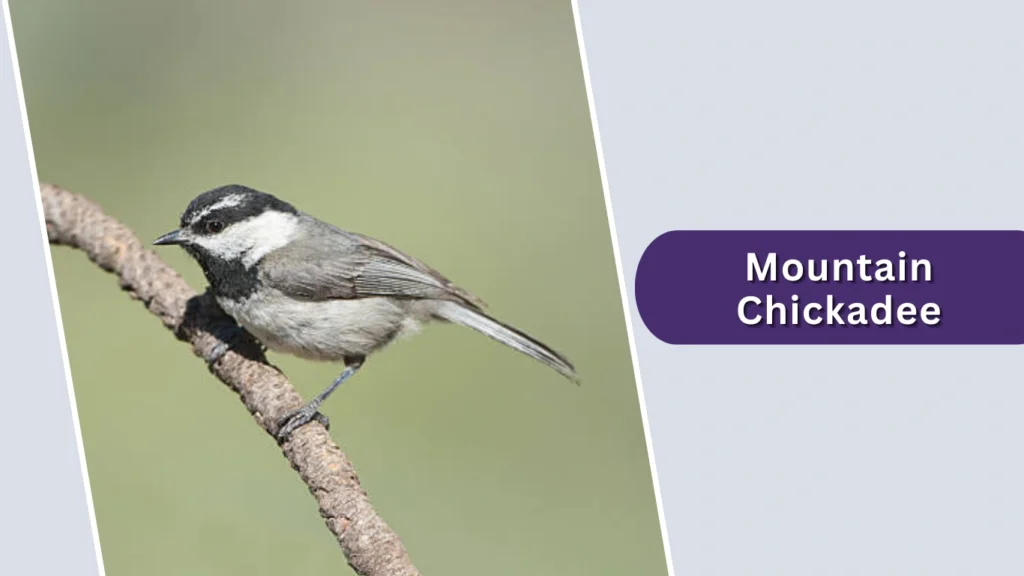
The Mountain Chickadee is a small, lively gray bird with a white belly and bold black-and-white head pattern. It is most distinctive for the bright white eyebrow stripe that sets it apart from other chickadee species.
Identification
- Small, round-bodied bird with gray back and wings
- White belly and throat
- Black cap and bib with a clear white eyebrow stripe
- Short, stout bill and long, narrow tail
- About 12–14 cm (4.7–5.5 in) long
Habitat
Mountain Chickadees live mainly in coniferous forests, especially pine, fir, and spruce woods in mountainous regions. They are common in high-elevation forests, forest edges, and sometimes visit feeders in mountain towns.
Diet
They eat insects, spiders, and larvae during warmer months. In fall and winter, seeds and pine nuts become more important. Like other chickadees, they often store food in bark crevices to use later.
Behavior
Mountain Chickadees are active and acrobatic, constantly hopping through branches and hanging upside down while foraging. They travel in small flocks outside the breeding season and are known for their nasal “chick-a-dee-dee” calls and clear whistled songs.
10. Carolina Chickadee
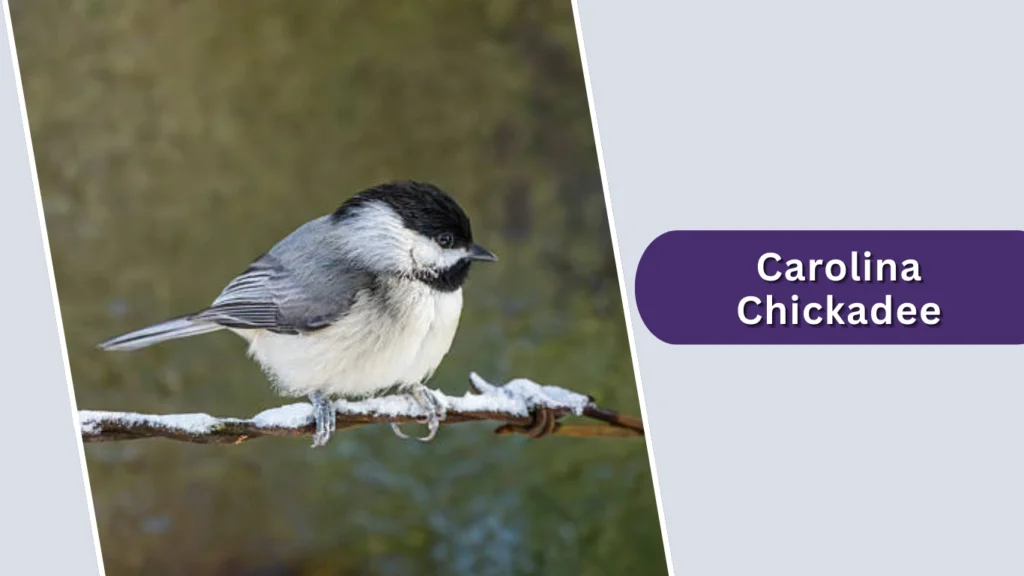
The Carolina Chickadee is a tiny gray songbird with a white belly and a bold black cap and throat. Very similar to the Black-capped Chickadee, it is more common in the southeastern United States and is a frequent visitor to backyard feeders.
Identification
- Very small bird with soft gray upperparts
- Clean white belly and cheeks
- Black cap and black throat patch
- Short, stubby bill and long tail
- About 11–13 cm (4.3–5.1 in) long
Habitat
Carolina Chickadees live in deciduous and mixed forests, woodland edges, parks, and suburban gardens. They adapt well to human environments and readily nest in tree cavities or nest boxes.
Diet
They feed mainly on insects, spiders, and caterpillars in spring and summer. In colder months, they rely more on seeds and berries and commonly visit feeders for sunflower seeds, peanuts, and suet.
Behavior
These chickadees are energetic, social birds that move in small flocks outside the breeding season. They are known for their quick movements, curiosity, and distinctive “chick-a-dee-dee-dee” calls used to communicate and warn of predators.
11. Gray Catbird
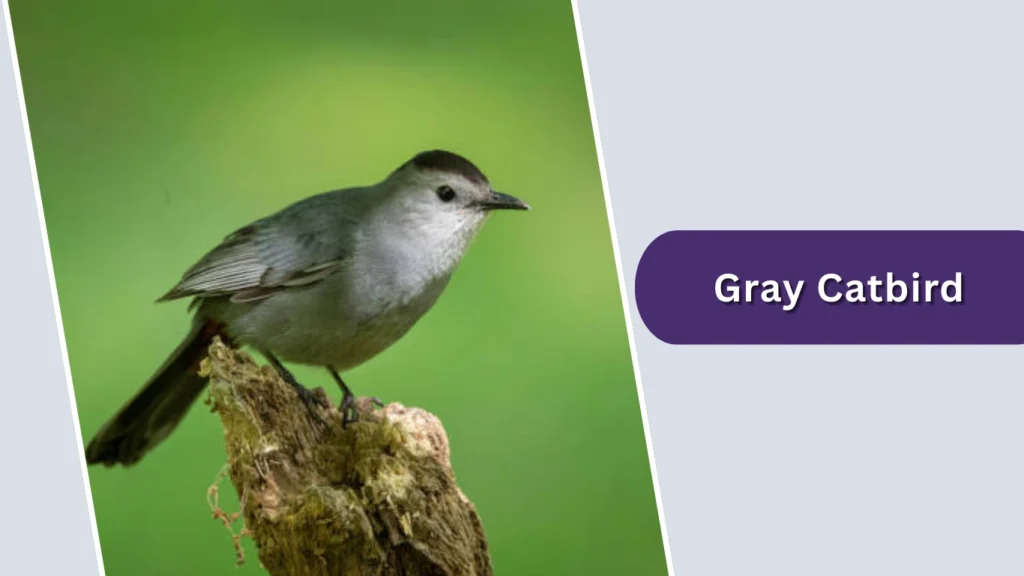
The Gray Catbird is a medium-small, smooth gray bird with a slightly lighter belly and a long, dark tail. Although its belly is not bright white, its overall gray body and paler underside often make it fit the “gray bird with white belly” group.
Identification
- Slim bird with uniform gray upperparts
- Paler gray to whitish belly
- Long blackish tail and black cap
- Reddish-brown patch under the tail
- About 20–23 cm (7.9–9 in) long
Habitat
Gray Catbirds favor dense shrubs, forest edges, thickets, gardens, and hedgerows. They are especially common in areas with thick undergrowth where they can hide and forage.
Diet
They eat a wide variety of insects, including beetles, ants, and caterpillars, along with many fruits and berries. In late summer and fall, fruit can make up a large portion of their diet.
Behavior
Gray Catbirds are known for their cat-like “mew” call, which gives them their name. They are also skilled singers and mimics, producing long, rambling songs. These birds are usually secretive but become bold when defending their nests.
12. Blue-gray Gnatcatcher
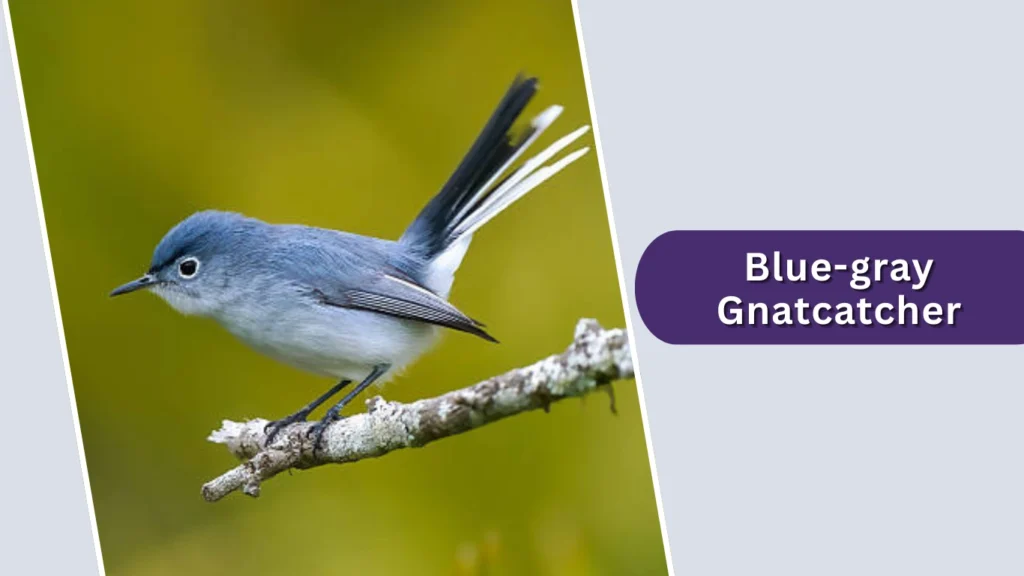
The Blue-gray Gnatcatcher is a very small, slim bird with pale gray upperparts and a clean white belly. Its long tail, often flicked from side to side, and its soft, whispery calls make it distinctive in woodlands and gardens.
Identification
- Tiny, slender bird with blue-gray back and wings
- White belly and undertail
- Long black-and-white tail often held upright
- Thin, sharp bill and white eye ring
- About 10–13 cm (3.9–5.1 in) long
Habitat
Blue-gray Gnatcatchers live in open woodlands, forest edges, scrub, and suburban areas with trees. They prefer habitats with a mix of tall trees and open space for catching insects.
Diet
Their diet consists almost entirely of small insects and spiders, which they actively glean from leaves and branches. They also catch tiny flying insects in short, quick flights.
Behavior
These birds are restless and constantly moving, flicking their tails and giving soft nasal calls. They often build neat, cup-shaped nests covered with lichens, making them blend beautifully with tree branches.
13. Northern Shrike
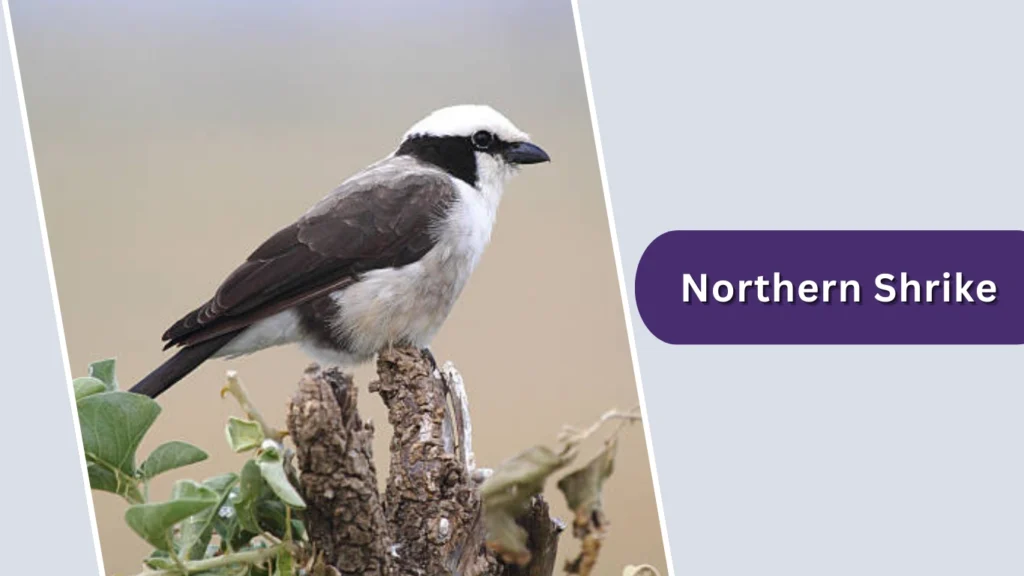
The Northern Shrike is a medium-small gray bird with a pale belly and a bold black facial mask. Often called a “butcher bird,” it is known for its unusual hunting behavior, impaling prey on thorns or sharp branches.
Identification
- Smooth gray upperparts with a pale white to light gray belly
- Distinct black mask across the eyes
- Black wings with white patches
- Long tail with white outer edges
- About 22–26 cm (8.7–10.2 in) long
Habitat
Northern Shrikes breed in open northern forests, tundra edges, and taiga. In winter, they move south into open countryside, fields, pastures, and shrublands where scattered trees or fences provide hunting perches.
Diet
They feed on large insects, small birds, rodents, and lizards. Unlike most songbirds, shrikes are predators and use their hooked bills to kill prey.
Behavior
Northern Shrikes hunt from exposed perches, scanning the ground for movement before swooping down on prey. They often store food by impaling it, allowing them to return later to feed. Their flight is strong and direct.
14. Townsend’s Solitaire
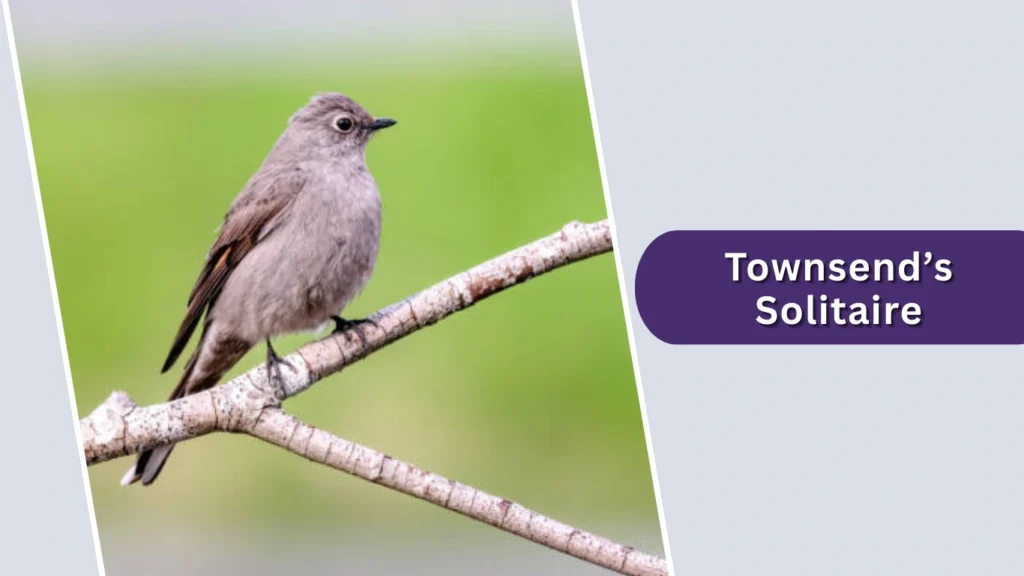
The Townsend’s Solitaire is a slim, soft gray bird with a pale white belly and subtle white markings in the wings and tail. Quiet and elegant, it is most often seen alone, perched upright in open woodland or mountainous areas.
Identification
- Slender gray bird with pale white to light gray belly
- Thin white eye ring
- Long tail with white edges
- Dark wings with pale buff wing patches visible in flight
- About 20–23 cm (7.9–9 in) long
Habitat
Townsend’s Solitaires live mainly in mountainous regions, especially in coniferous forests, juniper woodlands, and open pine slopes. In winter, they may move into lower elevations, including valleys, open fields, and even towns with berry-producing trees.
Diet
Their diet is heavily based on insects during warmer months. In fall and winter, they rely strongly on berries, especially juniper berries, which they often defend aggressively from other birds.
Behavior
These birds are often solitary and territorial, particularly around winter food sources. They fly out from high perches to catch insects and produce a beautiful, clear, flute-like song that echoes through mountain forests.
15. Rock Wren
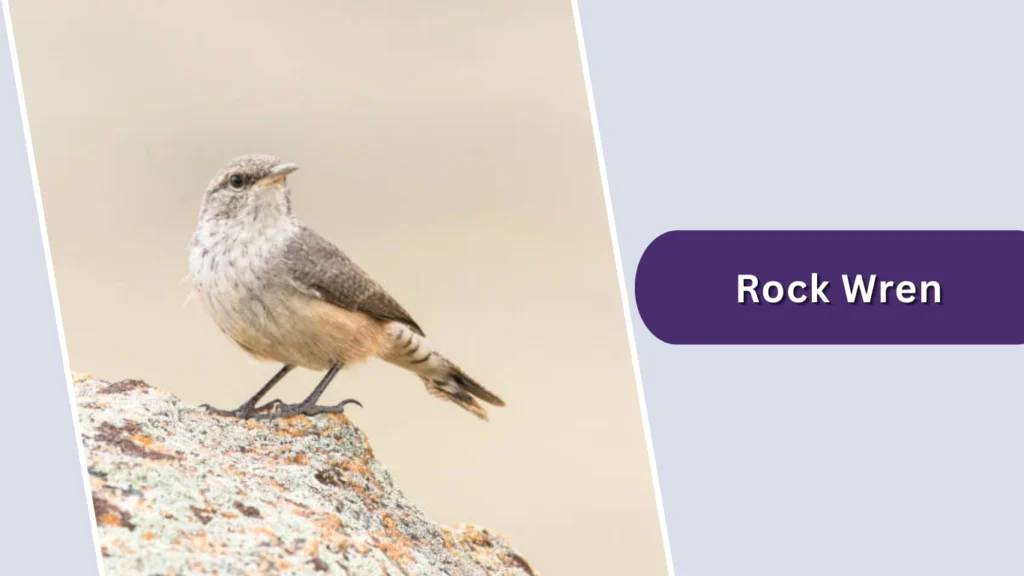
The Rock Wren is a small, pale gray-brown bird with a light, whitish belly and fine speckling. Although more patterned than some others on this list, its gray tones and pale underside fit well among small gray birds with white bellies.
Identification
- Small, slim bird with pale gray-brown upperparts
- Whitish belly with fine dark speckles
- Long, slightly curved bill
- Tail often cocked upward, showing pale tips
- About 12–15 cm (4.7–5.9 in) long
Habitat
Rock Wrens prefer dry, rocky environments such as cliffs, canyons, rocky hillsides, deserts, and rubble-strewn slopes. They are rarely found far from stones or rock piles.
Diet
They feed mainly on insects and spiders, picking prey from rocks and ground surfaces. Beetles, ants, grasshoppers, and small larvae make up much of their diet.
Behavior
Rock Wrens are active foragers, constantly hopping over stones and into crevices. They are known for their rich, bubbling songs and their habit of placing small stones around the entrance of their nests.
FAQs
What is the most common small grey bird with a white belly?
One of the most common small grey birds with a white belly is the Dark-eyed Junco. It is widely found across North America, especially in winter, visiting gardens, parks, and forest edges. Its round body, soft gray color, and bright white belly make it easy to recognize.
How can I identify a small grey bird with a white belly in my backyard?
Look for overall body shape, size, and behavior along with color. Many small grey birds have white bellies, but details such as head markings, tail movement, bill shape, and habitat help narrow it down. Observing feeding style and listening to calls can also greatly improve identification.
Do small grey birds with white bellies migrate?
Some species migrate while others stay year-round. Dark-eyed Juncos and some phoebes migrate seasonally, while birds like Tufted Titmice and White-breasted Nuthatches are mostly resident. Migration depends on species, food availability, and climate conditions in their breeding regions.
What do small grey birds with white bellies usually eat?
Most feed on insects, seeds, and small invertebrates. In warmer months, insects and larvae dominate their diet, helping control pests. During colder seasons, many switch to seeds, nuts, and berries, which is why they often visit backyard feeders.
Where are small grey birds with white bellies commonly found?
They are commonly found in woodlands, forest edges, gardens, parks, and sometimes rocky or mountainous areas. Some prefer areas near water, while others favor pine forests or suburban environments. Their wide habitat range is one reason these birds are frequently seen by people.