
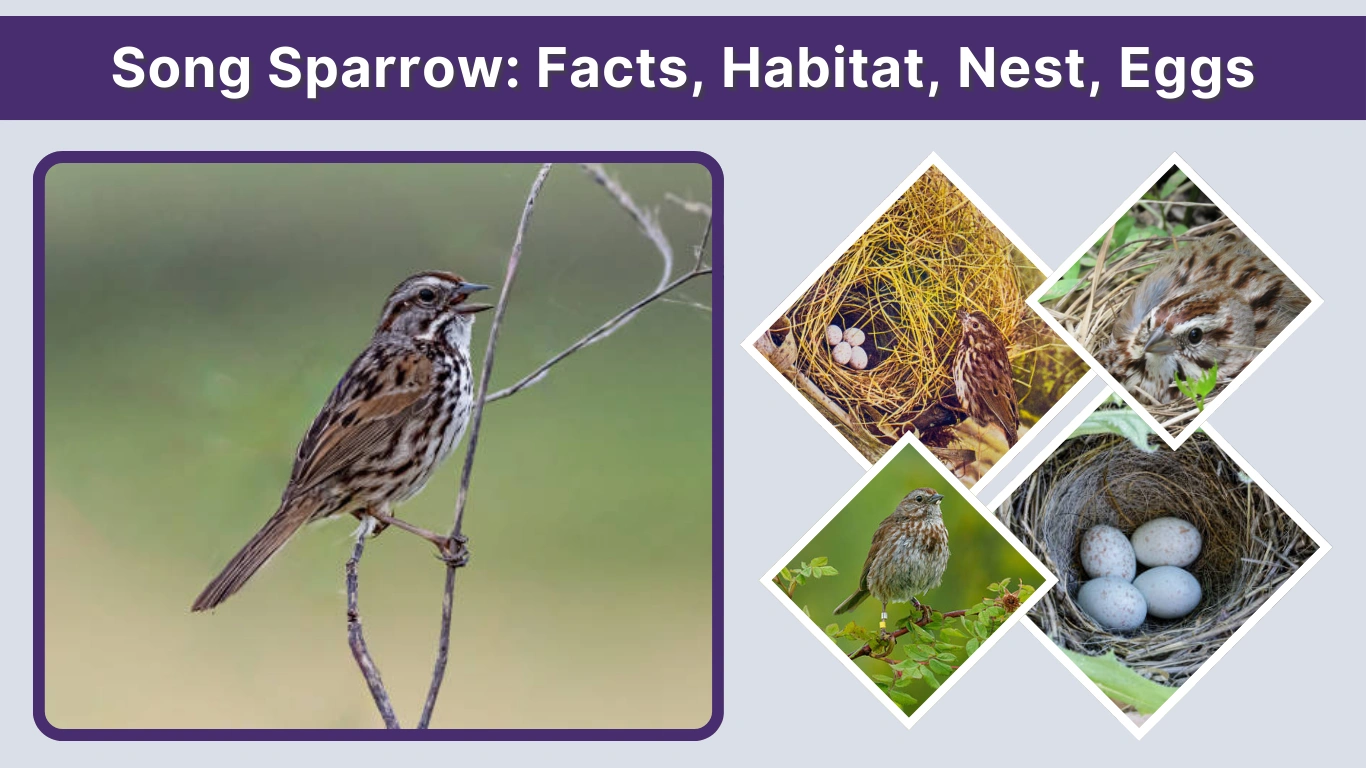
The song sparrow is one of the most widespread and recognizable sparrows in North America. Known for its rich, melodic song and streaked brown appearance, this adaptable bird thrives in wetlands, brushy fields, and even suburban backyards. Whether you’re trying to identify a single sparrow juvenile, locate a nest, or learn about its eggs and diet, understanding this species helps you better appreciate its role in local ecosystems. Here’s a detailed look at the song sparrow’s identification, habitat, and nesting behavior.
What Is a Song Sparrow?
The song sparrow (Melospiza melodia) is a medium-sized New World sparrow found across much of North America. It is especially common near water, in marshes, and in areas with dense shrubs or brush.
The bird gets its name from its distinctive and varied song. Unlike some sparrows that produce simple trills, the song sparrow sings a complex melody made up of clear notes followed by buzzes and trills. Males often sing from exposed perches to establish territory and attract mates.
Highly adaptable, song sparrows can live in rural, suburban, and coastal habitats. Their ability to adjust to different environments has helped them remain abundant throughout their range.
Song Sparrow Identification
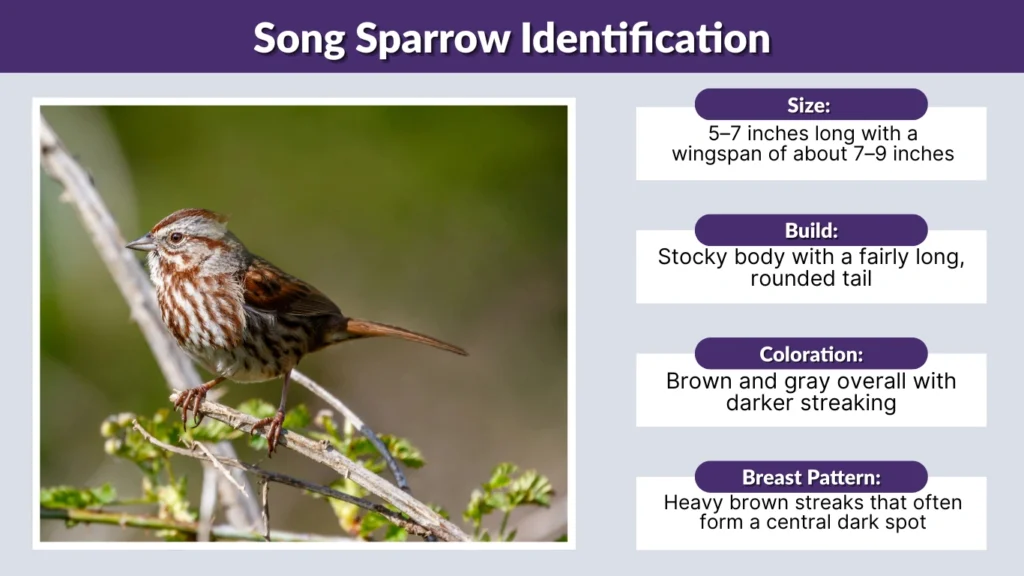
The song sparrow is a medium-sized, heavily streaked sparrow that can vary in color depending on region. While individuals may look slightly different across North America, several key field marks make identification easier. Paying attention to chest markings, facial pattern, and behavior will help distinguish this species from other similar sparrows.
Here are the main identification features to look for:
- Size: 5–7 inches long with a wingspan of about 7–9 inches
- Build: Stocky body with a fairly long, rounded tail
- Coloration: Brown and gray overall with darker streaking
- Breast Pattern: Heavy brown streaks that often form a central dark spot
- Face Markings: Gray eyebrow (supercilium) with brown striping on the cheeks
- Bill: Medium-sized and slightly conical, suited for seeds and insects
- Tail: Rounded and often pumped or flicked while perched
- Song: Melodic and varied, starting with clear notes followed by trills and buzzes
- Habitat Clue: Usually found near dense shrubs, wetlands, or brushy areas
Juvenile song sparrows look similar to adults but may appear fluffier with softer facial markings and heavier streaking. Observing both plumage details and behavior—especially their rich, complex song—makes identification much easier in the field.
Song Sparrow Habitat
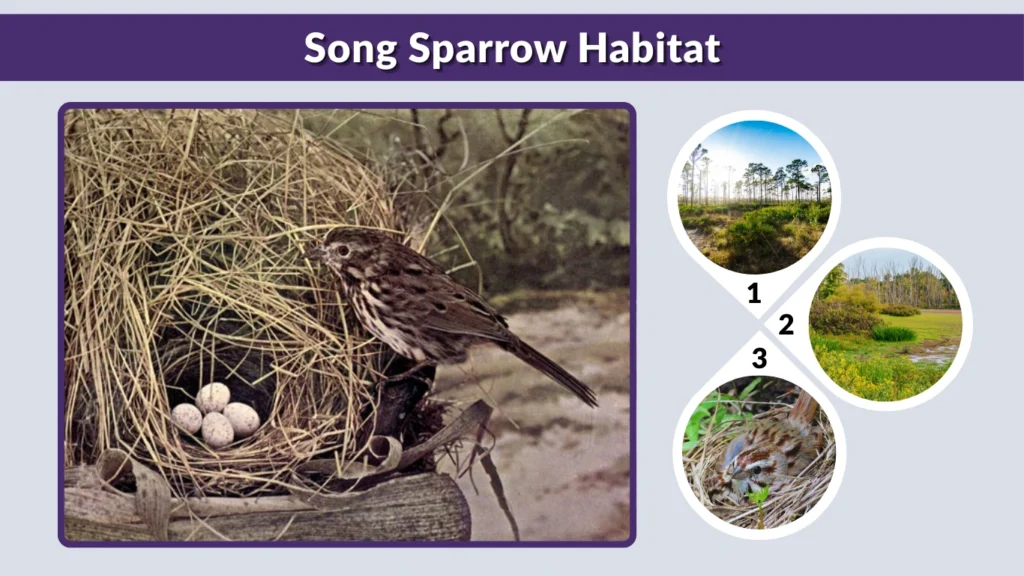
Song sparrows are closely associated with dense vegetation and moisture-rich environments.
Preferred Habitats
They are most commonly found in marshes, wetlands, and brushy fields. They also inhabit forest edges, hedgerows, coastal dunes, and shrubby backyard gardens.
Song sparrows prefer areas with thick cover near open ground, allowing them to forage safely while staying close to protection from predators. In suburban settings, they often hide within dense ornamental shrubs.
Geographic Range
The song sparrow has one of the broadest ranges of any North American sparrow. It can be found throughout most of the United States and Canada.
Some northern populations migrate south for winter, while many populations in milder regions remain year-round residents. Coastal populations often stay in place, benefiting from relatively stable climates.
Seasonal Habitat Changes
During the breeding season, song sparrows become territorial and defend small areas of suitable habitat. In winter, they are less aggressive and may form loose feeding groups, particularly in areas where food sources are concentrated.
Song Sparrow Nest
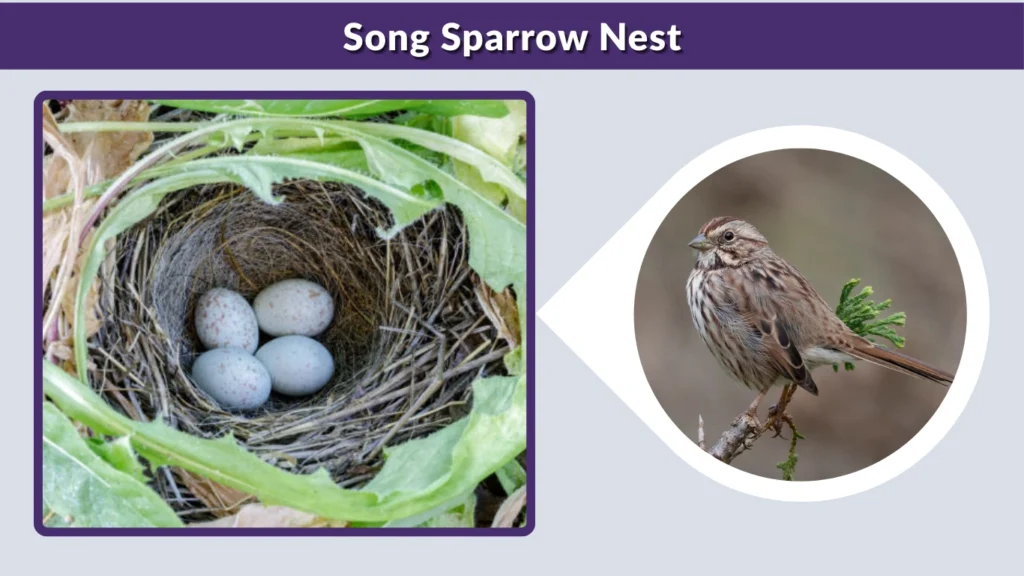
The song sparrow nest is well concealed and carefully built to protect both eggs and young.
What Does a Song Sparrow Nest Look Like?
The nest is cup-shaped and constructed primarily from grasses, leaves, and strips of bark. It is often lined with finer grasses, rootlets, or animal hair to create a soft interior for the eggs.
Compared to some sparrow species that nest higher in trees, the song sparrow frequently builds its nest low to the ground, making concealment especially important.
Nest Placement
Song sparrow nests are typically located in low shrubs, tall grasses, or dense brush. In some cases, they may even be built directly on the ground, especially in marshy habitats.
Most nests are positioned within a few feet of the ground, hidden among thick vegetation. The location helps shield the nest from predators and harsh weather conditions.
Nest Construction
The female is primarily responsible for building the nest. Construction usually takes several days, during which she gathers materials from nearby vegetation. Once complete, the nest is sturdy yet flexible, providing protection throughout the incubation period.
Song Sparrow Eggs
The breeding cycle continues once the nest is ready.
Egg Appearance
Song sparrow eggs are small and oval-shaped. They typically range in color from pale greenish-blue to grayish-white. Brown, reddish, or purple speckles are often scattered across the surface, sometimes concentrated at the larger end.
The variation in coloration helps camouflage the eggs within the nest lining.
Clutch Size and Incubation
A typical clutch contains three to five eggs. The female incubates the eggs for approximately 12 to 14 days. During this time, the male may guard the territory and occasionally assist in feeding the female.
Once the eggs hatch, both parents contribute to feeding the nestlings.
Nestling and Fledging Stage
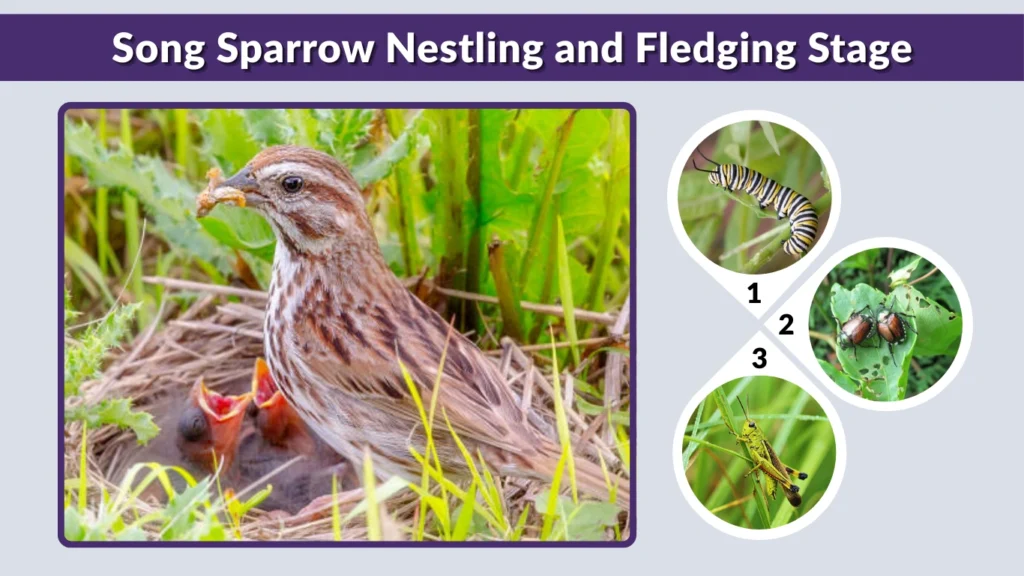
After hatching, song sparrow chicks grow rapidly. The nestlings remain in the nest for about 9 to 12 days. During this period, both parents feed them a steady supply of insects, including caterpillars, beetles, and spiders. This high-protein diet is essential for healthy development.
As the young birds approach fledging age, they begin exercising their wings inside the nest. Once they leave, they stay hidden in nearby vegetation while continuing to receive food and protection from their parents. Within a couple of weeks, the fledglings become more independent and gradually learn to forage on their own.
Song Sparrow Diet
The song sparrow diet varies by season, ensuring survival in changing conditions.
Summer Diet
During spring and summer, song sparrows rely heavily on insects. They eat caterpillars, beetles, grasshoppers, ants, and spiders. Insects provide essential nutrients for both adults and growing chicks.
They forage primarily on the ground, hopping and scratching through leaf litter to uncover prey. This ground-feeding behavior makes them especially common in brushy areas and along marsh edges.
Winter Diet
In fall and winter, the diet shifts mainly to seeds. Song sparrows consume grass seeds, weed seeds, grains, and occasionally small berries. In backyard environments, they may visit feeders offering millet, cracked corn, or sunflower chips.
They usually feed on the ground beneath feeders rather than perching directly on them, often staying close to shrubs for quick cover.
Foraging Behavior
Song sparrows typically forage alone or in small groups during winter. They use a distinctive double-scratch method, hopping backward with both feet to move debris aside while searching for food. Their preference for dense cover helps protect them from predators while feeding.
Song Sparrow Behavior and Breeding Habits
Song sparrows are known for their strong territorial behavior during breeding season. Males defend their territory by singing from exposed perches and chasing away rivals. Their song not only attracts females but also signals ownership of nesting space.
Courtship involves singing displays and short flights near the female. Once paired, the birds focus on nesting and raising young. Song sparrows often raise two or even three broods in a single breeding season, especially in regions with long summers.
Both parents participate in feeding nestlings, though the female handles incubation. If threatened, adults may perform distraction displays to lure predators away from the nest.
Outside the breeding season, song sparrows become less territorial and more tolerant of others, particularly around reliable food sources.
Interesting Song Sparrow Facts
Song sparrows are one of the most variable bird species in North America, with numerous recognized subspecies. Plumage color and size can differ significantly depending on region.
Another fascinating trait is their regional song dialects. Birds in different areas develop slightly different song patterns, much like accents in human speech.
Despite being common, song sparrows are important ecological contributors. They help control insect populations and disperse seeds, supporting plant growth in their habitats.
Their adaptability to wetlands, coastal regions, and suburban areas has helped maintain stable populations across much of their range.
FAQs
Do song sparrows migrate?
Some song sparrows migrate, especially those breeding in northern regions. They travel south during winter to areas with milder climates. However, many populations in the United States remain year-round residents.
How do you identify a song sparrow juvenile?
A juvenile song sparrow looks similar to an adult but often appears fluffier with heavier streaking and softer facial markings. The central breast spot is usually visible, helping distinguish it from other sparrow species.
Where do song sparrows build their nests?
Song sparrows typically build nests low in shrubs, tall grasses, or dense brush. In marshy areas, nests may even be placed directly on the ground. Concealment within thick vegetation is a key factor in nest placement.
What do song sparrow eggs look like?
Song sparrow eggs are pale greenish-blue or grayish with brown or reddish speckles. The speckles may be scattered or concentrated toward one end of the egg.
What do song sparrows eat in winter?
In winter, song sparrows primarily eat seeds, including grass and weed seeds. They may also visit backyard feeders for millet or cracked corn while staying close to protective cover.