
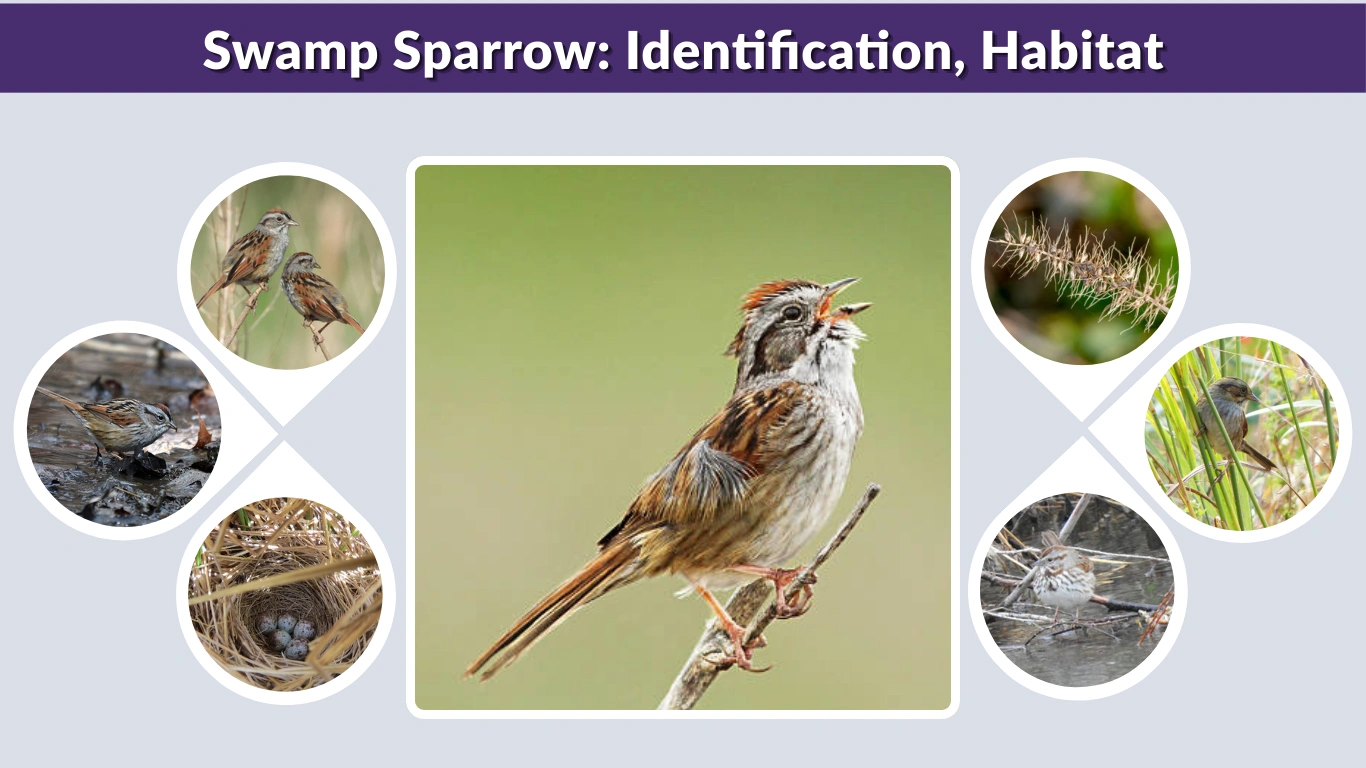
The Swamp Sparrow (Melospiza georgiana) is a small, secretive songbird commonly found in wetlands across North America. Often heard before it is seen, this sparrow is known for its clear, musical trill and preference for marshy habitats. Though it may resemble other brown sparrows at first glance, the Swamp Sparrow has several distinctive features that make it easier to identify. In this guide, you’ll learn how to recognize this bird, where it lives, and what makes it unique among North American sparrows.
What Is a Swamp Sparrow?
The Swamp Sparrow is a medium-sized New World sparrow that thrives in freshwater wetlands. It belongs to the family Passerellidae, a group that includes many ground-feeding sparrows native to North America.
Scientific Classification
- Scientific name: Melospiza georgiana
- Family: Passerellidae
- Genus: Melospiza
The Swamp Sparrow is closely related to the Song Sparrow and Lincoln’s Sparrow. While these species share similarities in size and shape, they differ noticeably in plumage, habitat preference, and song patterns.
Physical Appearance
The Swamp Sparrow measures about 5 to 6 inches in length, with a wingspan of approximately 7 to 9 inches. It has a rounded body, a long tail, and a short, conical bill designed for eating seeds and insects.
Key physical features include:
- Reddish-brown (rusty) wings
- Clean gray face and breast
- Dark crown or cap (especially visible in breeding season)
- Minimal streaking on the chest
During the breeding season, adults display richer colors, with a more defined dark cap and brighter rufous wings. In winter, their plumage becomes duller, and the crown may appear less distinct. Juveniles often show more streaking, which can make identification slightly more challenging.
How to Identify a Swamp Sparrow
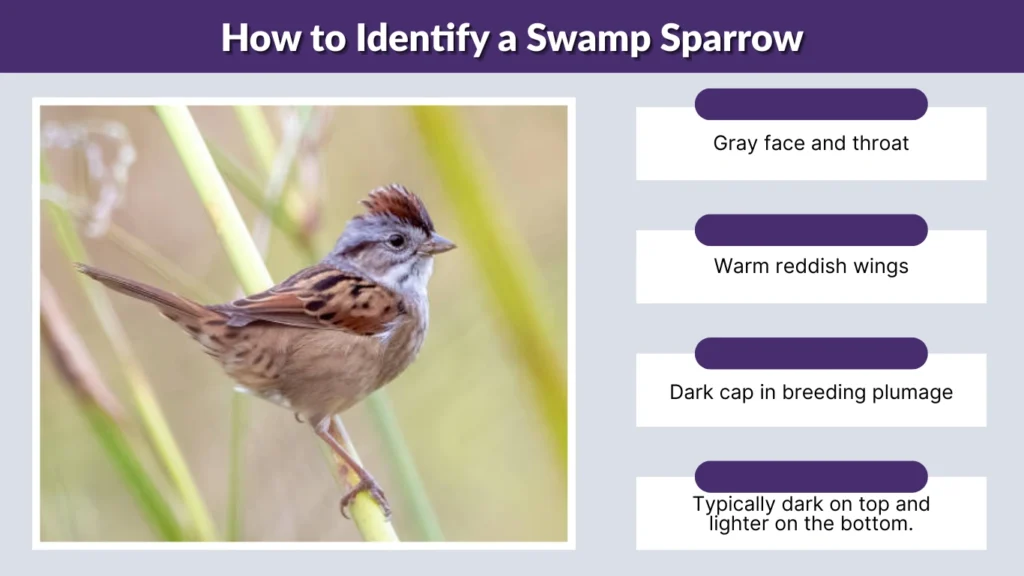
Identifying a Swamp Sparrow can be tricky because many sparrows share similar brown tones. However, careful observation of field marks and habitat can make identification much easier.
Key Field Marks
One of the most reliable features of the Swamp Sparrow is its clean, gray underparts. Unlike many other sparrows, it lacks heavy streaking across the chest. The bird’s:
- Gray face and throat
- Warm reddish wings
- Dark cap in breeding plumage
are strong identification clues.
The bill is typically dark on top and lighter on the bottom. When perched, the bird often flicks its tail subtly while staying low in marsh vegetation.
Listening can also help. Its song is a simple, clear trill, slower and more even than many other sparrow species.
Swamp Sparrow vs Song Sparrow
The Swamp Sparrow is frequently confused with the Song Sparrow. However, several differences stand out:
Chest Markings:
- Swamp Sparrow: Mostly plain gray chest
- Song Sparrow: Heavy brown streaks with a central dark spot
Habitat Preference:
- Swamp Sparrow: Prefers marshes, wetlands, and bogs
- Song Sparrow: Found in a wider range of habitats, including gardens and open fields
Song:
- Swamp Sparrow: Simple, steady trill
- Song Sparrow: More complex and varied song phrases
Paying attention to both habitat and plumage will significantly improve identification accuracy.
Swamp Sparrow Habitat and Range
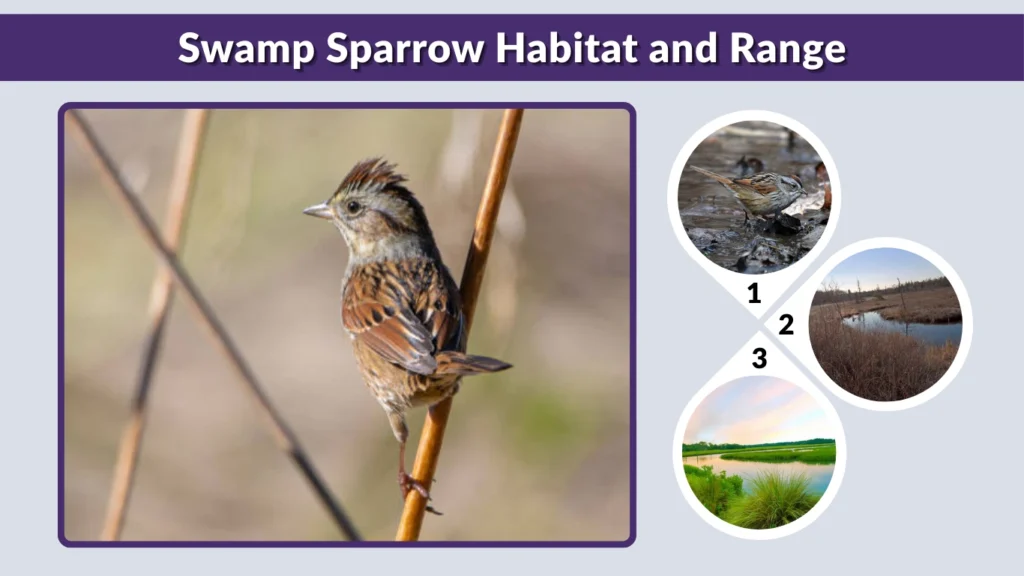
As its name suggests, the Swamp Sparrow is strongly associated with wet environments. It is rarely found far from water during the breeding season.
Preferred Habitat
Swamp Sparrows thrive in:
- Freshwater marshes
- Wet meadows
- Swamps
- Bogs
- Edges of ponds and slow-moving streams
They favor areas with dense vegetation such as cattails, sedges, and tall grasses. These environments provide both protection from predators and suitable nesting sites.
Unlike some sparrows that prefer dry, open fields, the Swamp Sparrow is highly adapted to moist environments. It often forages close to the ground or among low shrubs near standing water.
Geographic Range
The Swamp Sparrow is widely distributed across eastern and central North America.
Breeding Range:
- Southern Canada
- Northern United States
- Great Lakes region
- Northeastern states
Winter Range:
- Southeastern United States
- Gulf Coast
- Parts of the lower Mississippi Valley
In winter, they move to milder climates but still remain close to wetlands, coastal marshes, and damp fields.
Migration Patterns
Swamp Sparrows are considered partial migrants. Northern populations migrate south in the fall, while some birds in milder regions may remain year-round.
Migration typically occurs:
- Fall: September to November
- Spring: March to May
During migration, they may be seen in brushy fields, roadside ditches, and other moist habitats as they travel between breeding and wintering grounds.
What Do Swamp Sparrows Eat?
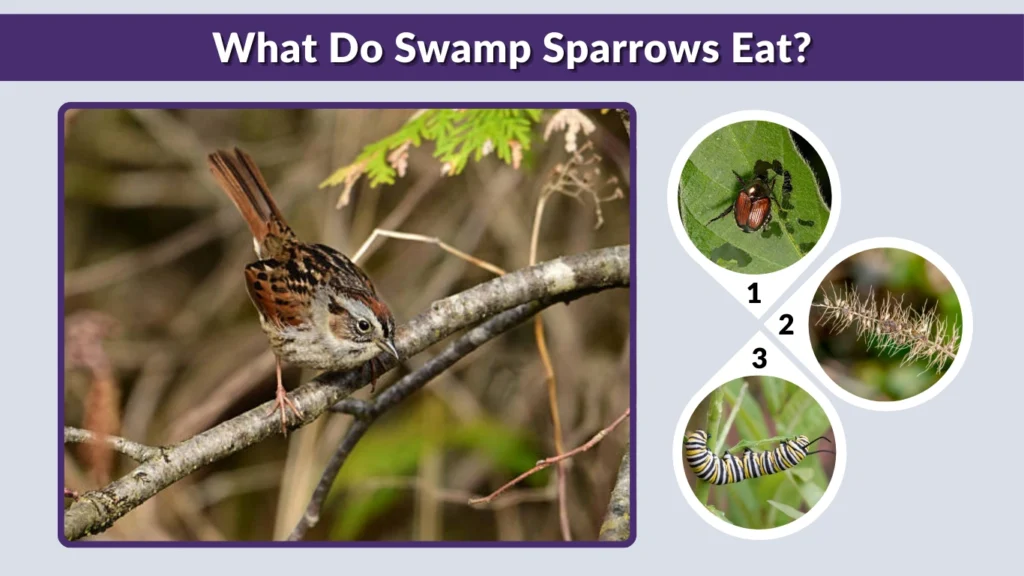
The Swamp Sparrow has a flexible diet that changes with the seasons. Like many sparrows, it adapts its feeding habits depending on food availability and breeding needs.
Summer Diet
During the breeding season, Swamp Sparrows primarily feed on:
- Insects
- Spiders
- Beetles
- Caterpillars
- Other small invertebrates
Protein-rich insects are especially important during this time because they support egg production and help nestlings grow quickly. Adults actively search for insects among marsh vegetation and along the ground.
Winter Diet
In fall and winter, their diet shifts more toward plant material, including:
- Seeds of grasses and sedges
- Aquatic plant seeds
- Small grains
This seasonal shift allows them to survive when insects become scarce. They may also forage in damp fields and along marsh edges where seeds remain accessible.
Foraging Behavior
Swamp Sparrows typically forage low to the ground. They:
- Hop through dense grasses
- Probe muddy edges
- Pick food from vegetation
- Occasionally scratch lightly in leaf litter
Unlike some birds, they rarely forage high in trees. Their comfort in wet habitats even allows them to feed near shallow water, showing their strong adaptation to marsh environments.
Behavior and Song
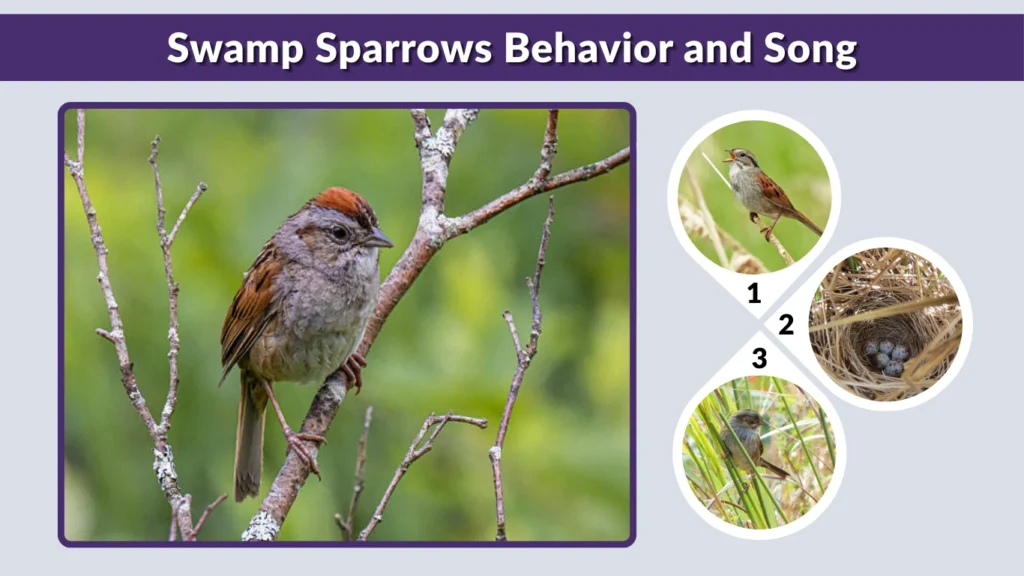
Swamp Sparrows are often more easily heard than seen. Their vocalizations play an important role in territory defense and communication.
Vocalizations
The Swamp Sparrow’s song is a clear, simple trill. It usually consists of a steady series of repeated notes delivered at an even pace. While the song may seem simple compared to other songbirds, it carries well across marshes.
They also produce a sharp, metallic “chip” call, often used as an alarm signal or contact call.
Interestingly, Swamp Sparrows can develop slight regional variations, or “dialects,” in their songs depending on their geographic location.
Breeding Behavior
During the breeding season, males become territorial. They sing frequently from exposed perches such as shrubs or tall reeds to:
- Defend their territory
- Attract mates
- Warn off rival males
Courtship may include short flights, wing displays, and persistent singing. Once paired, both birds remain close to their nesting area throughout the breeding season.
Nesting Habits
Swamp Sparrows build cup-shaped nests hidden low in marsh vegetation. Nests are typically:
- Constructed in reeds or grasses
- Positioned just above water or damp ground
- Made of grasses, sedges, and fine plant material
The female usually builds the nest. A typical clutch contains 3 to 5 eggs, which are incubated for about two weeks. After hatching, nestlings remain in the nest for roughly 8 to 10 days before fledging.
Dense vegetation helps protect the nest from predators such as snakes, raccoons, and larger birds.
Conservation Status and Threats
The Swamp Sparrow is currently considered a species of least concern, with stable overall population numbers. However, like many wetland birds, it faces ongoing environmental challenges.
The primary threat to Swamp Sparrows is wetland habitat loss. Drainage for agriculture, urban development, and pollution can reduce suitable breeding and wintering areas.
Climate change may also affect water levels and vegetation patterns in marsh ecosystems. Protecting wetlands through conservation programs plays a critical role in maintaining healthy populations of this species and many other marsh-dependent birds.
Tips for Birdwatchers
If you want to observe a Swamp Sparrow in the wild, timing and location are key.
- Visit freshwater marshes in spring or early summer.
- Listen for their clear, steady trill.
- Watch for movement in low grasses and reeds.
- Bring binoculars for better views through dense vegetation.
Early mornings are often the best time to hear singing males during the breeding season.
Patience is important, as these birds tend to stay low and may remain partially hidden in thick marsh growth.
Interesting Facts About the Swamp Sparrow
- Swamp Sparrows are specially adapted to wet habitats and may even wade in shallow water while foraging.
- Their legs are relatively long compared to some other sparrows, helping them move through marsh vegetation.
- They can develop regional song dialects, meaning their trill may sound slightly different depending on where they live.
- Despite their name, they also use wet meadows and brushy wetlands—not just swamps.
FAQs
What does a Swamp Sparrow look like?
A Swamp Sparrow is a small brown sparrow with reddish wings, a gray face and chest, and a dark cap during breeding season. Unlike many other sparrows, it has mostly clean underparts with little streaking, making it easier to identify in marsh habitats.
Where do Swamp Sparrows live?
Swamp Sparrows live primarily in freshwater marshes, wetlands, bogs, and wet meadows. They breed in northern parts of the United States and southern Canada and migrate to the southeastern United States for the winter.
Do Swamp Sparrows migrate?
Yes, most northern populations migrate south in fall to warmer regions. However, some birds in milder climates may remain year-round. Migration usually occurs between September and November in fall and March to May in spring.
What is the difference between a Swamp Sparrow and a Song Sparrow?
The main difference is chest markings. Swamp Sparrows have a mostly plain gray chest, while Song Sparrows show heavy brown streaking and often a central dark spot. Their songs also differ, with the Swamp Sparrow producing a simple trill.
