
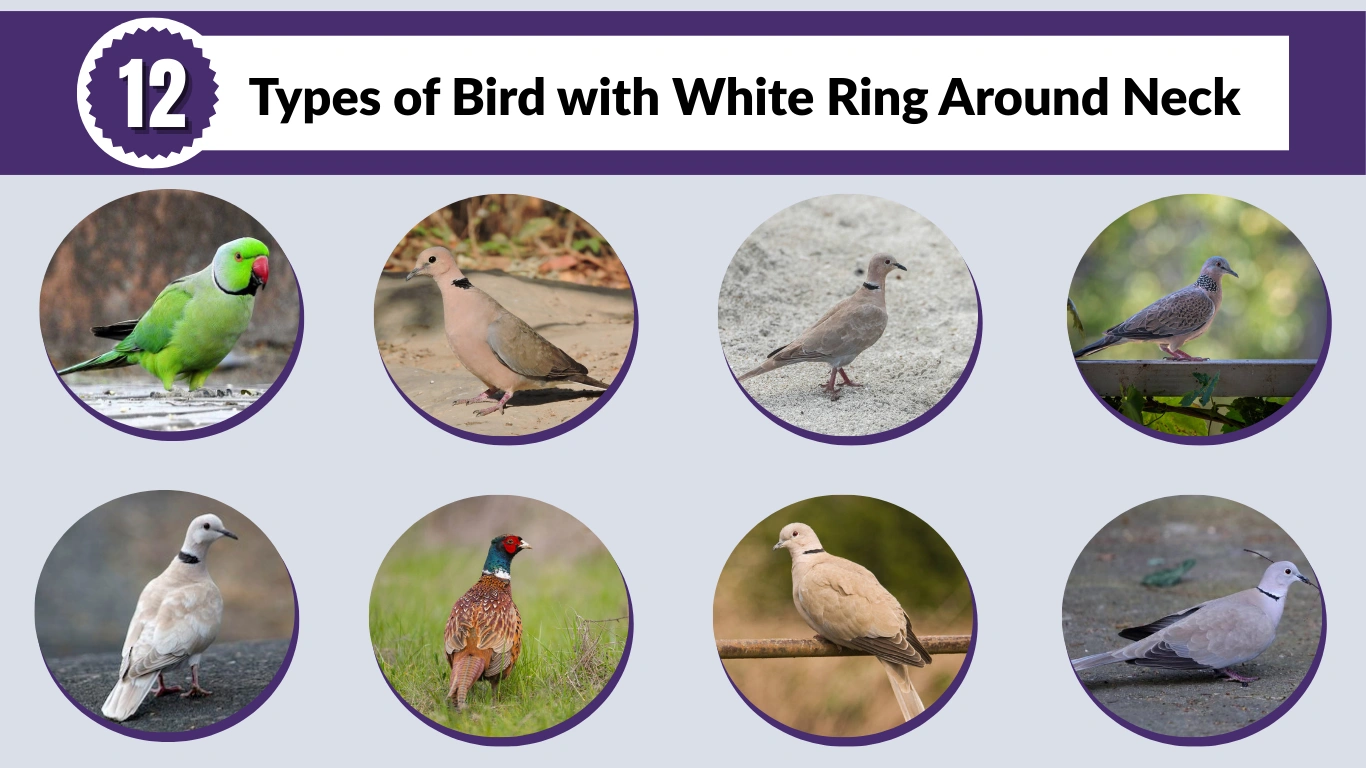
Birds with a white ring around the neck are some of the easiest and most elegant species to recognize in the wild. This distinctive marking helps separate closely related birds and often plays a role in identification, courtship, or display. From gentle doves commonly seen in gardens to colorful parrots and even waterfowl, these birds inhabit a wide range of environments. Below, you’ll discover notable species that share this eye-catching neck feature.
1. Eurasian Collared-Dove
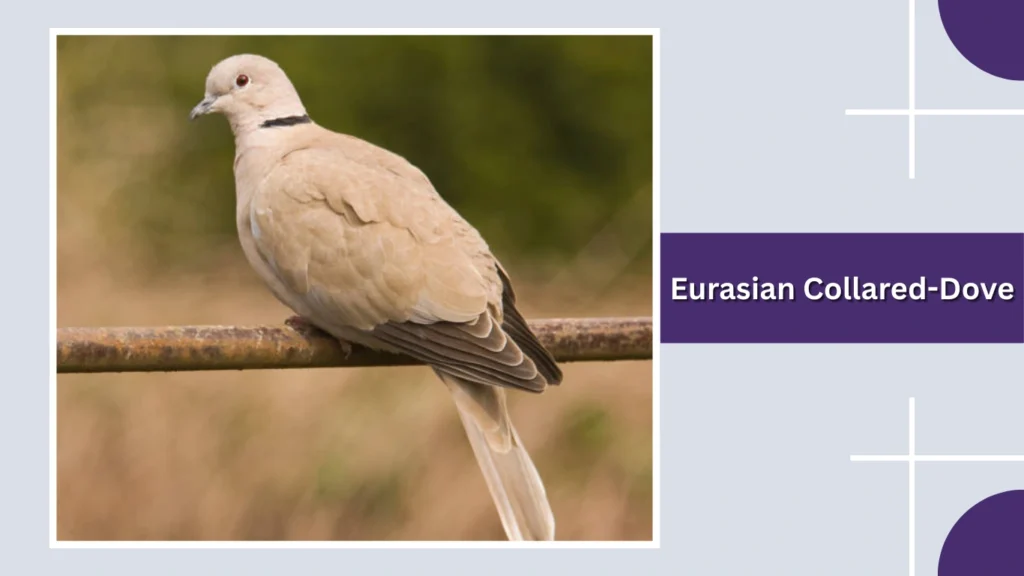
The Eurasian Collared-Dove is a medium-sized dove recognized for the narrow black collar edged in white on the back of its neck. Soft gray-buff plumage, a gentle expression, and a calm nature make it one of the most familiar doves in towns and countryside alike. Native to parts of Europe and Asia, it has spread rapidly across many continents and is now a common sight around human settlements.
Identification
- Pale gray to light buff body
- Distinct black neck ring with a thin white border
- Long, squared tail with white outer edges
- Dark eyes and a slightly rounded head
- Slender black bill and pinkish legs
Habitat
Eurasian Collared-Doves are highly adaptable and occupy a wide range of open and semi-open habitats. They are commonly found in farmland, villages, towns, city parks, gardens, and suburban neighborhoods. Unlike many wild birds, they are comfortable living close to people and often nest on buildings, trees, or utility poles. Their ability to thrive in modified landscapes has played a major role in their rapid global expansion.
Behaviors
These doves are generally calm, social, and non-aggressive. They are often seen alone, in pairs, or in small flocks, especially near feeding areas. Their flight is direct and steady, with rapid wingbeats. The species is well known for its repetitive three-note cooing call, which is frequently heard throughout the day. They may perch on rooftops, wires, or tree branches while calling.
Diet and Lifespan
The Eurasian Collared-Dove primarily feeds on seeds, grains, cereals, and agricultural crops, foraging mostly on the ground. Occasionally, it may consume small insects or plant matter. In the wild, its average lifespan ranges from 5 to 10 years, though some individuals live longer in favorable conditions.
2. African Collared-Dove
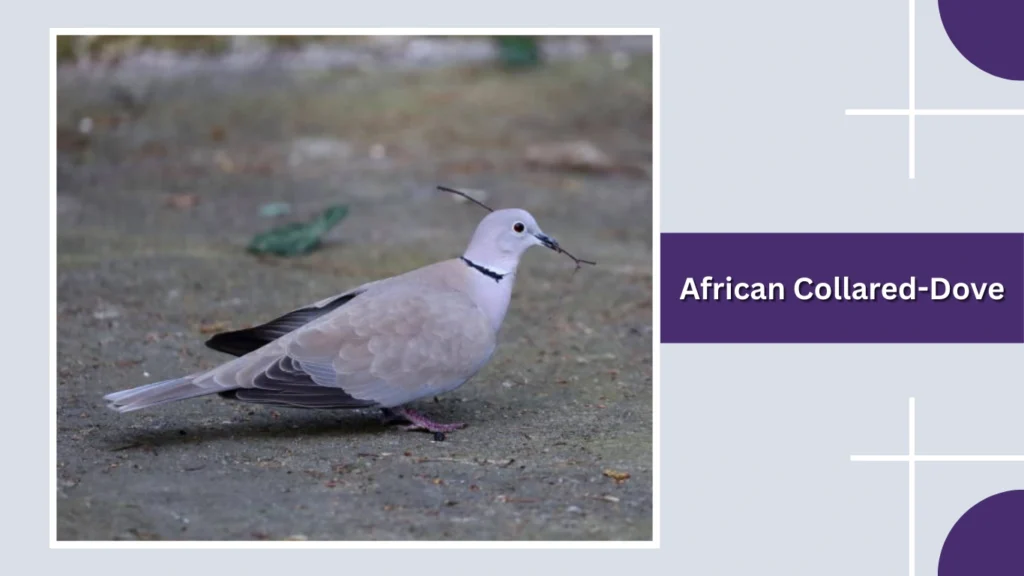
The African Collared-Dove is a slim, graceful dove known for the black collar marked with small white spots on the back of its neck. It has a soft gray-brown body and a gentle appearance. Native to sub-Saharan Africa, this species is commonly seen in open woodlands and human-influenced landscapes, where it often lives peacefully alongside people.
Identification
- Pale gray to brownish body
- Black neck ring with white spotting
- Long tail with dark center and pale edges
- Dark eyes with a subtle eye-ring
- Slender black bill and pinkish legs
Habitat
African Collared-Doves prefer open habitats such as savannas, dry woodlands, farmland, gardens, and village outskirts. They adapt well to human settlements and are frequently seen near homes, farms, and roadsides. The species avoids dense forests, favoring open spaces with scattered trees where nesting and feeding are easier.
Behaviors
This dove is generally quiet, calm, and often observed alone or in pairs. It has a soft, rhythmic cooing call that is lower and less repetitive than that of the Eurasian Collared-Dove. African Collared-Doves spend much of their time walking on the ground while foraging and will quickly fly to nearby trees when disturbed.
Diet and Lifespan
Its diet mainly consists of seeds, grains, and small fruits, with occasional insects. Feeding usually occurs on the ground in open areas. In the wild, African Collared-Doves typically live between 6 and 12 years, depending on habitat quality and predation pressures.
3. Ring-necked Pheasant
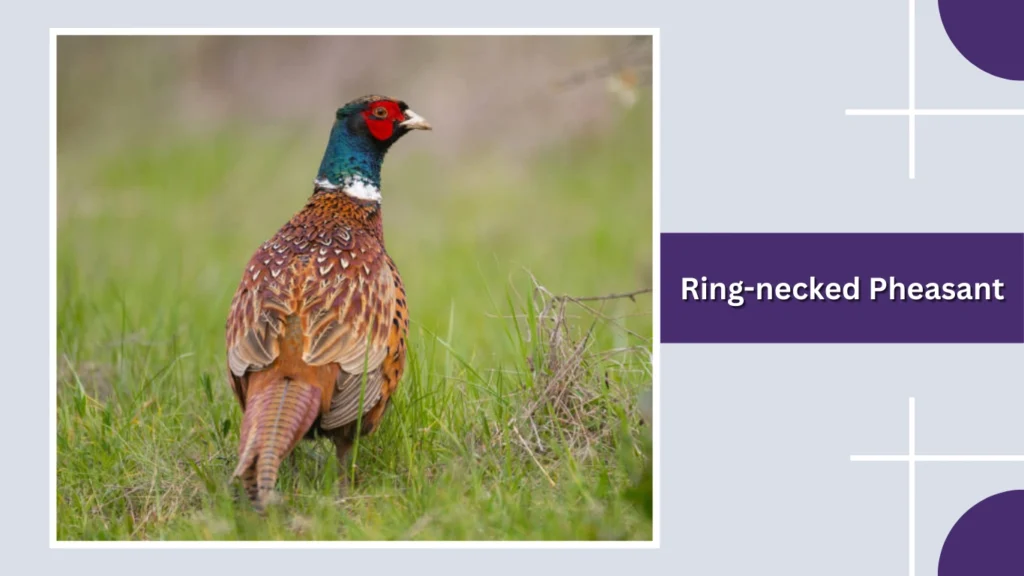
The Ring-necked Pheasant is a large, ground-dwelling bird best known for the bright white ring around the neck of the male. Males are especially colorful, with iridescent green heads and long, pointed tails, while females are more subtly patterned for camouflage. Native to Asia, this species has been widely introduced elsewhere and is now common in many rural landscapes.
Identification
- Male has a bold white neck ring
- Glossy green head with red facial patches (male)
- Long, pointed tail with dark barring
- Females are mottled brown with no bright colors
- Strong legs adapted for ground movement
Habitat
Ring-necked Pheasants favor open countryside with a mix of grasslands, agricultural fields, hedgerows, and light woodland edges. They rely on tall grasses and dense vegetation for nesting and shelter while using nearby open areas for feeding. Farmland with crops such as wheat or corn provides ideal cover and food sources throughout the year.
Behaviors
These birds spend most of their time on the ground, walking or running rather than flying. When startled, they burst into sudden, noisy flight before quickly dropping back into cover. Males are territorial during the breeding season and may display aggressively to rivals. Outside breeding periods, pheasants are usually solitary or seen in small groups.
Diet and Lifespan
Their diet includes seeds, grains, berries, leaves, and agricultural crops, along with insects and other small invertebrates, especially during summer. In the wild, Ring-necked Pheasants typically live 3–5 years, though many face high predation rates early in life.
4. Ring-necked Parakeet
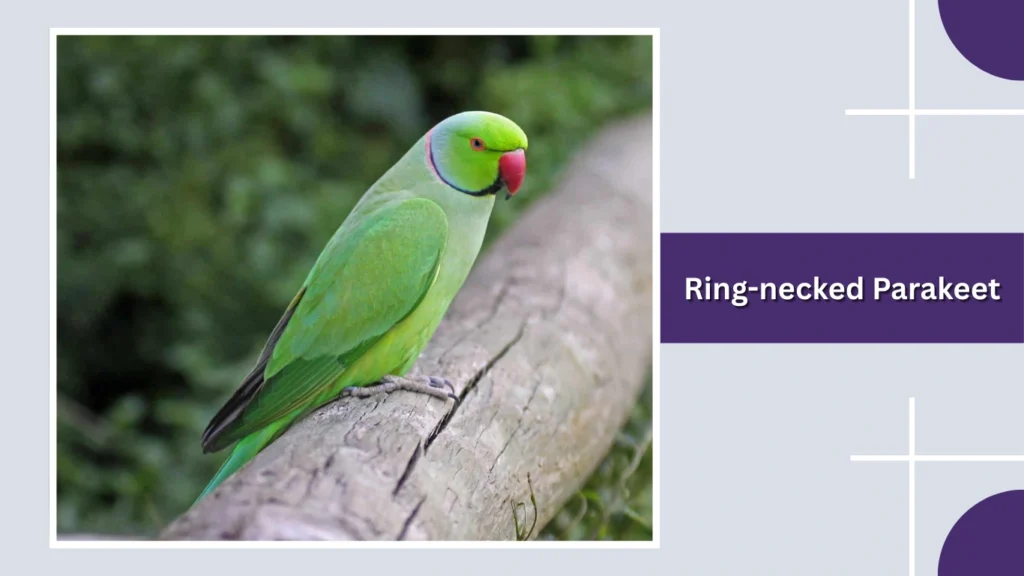
The Ring-necked Parakeet is a brightly colored, medium-sized parrot famous for the thin black and rose-colored ring around the neck of adult males. With its vivid green plumage and long tail, this bird is easily recognizable. Native to Africa and South Asia, it has established thriving populations in many cities around the world.
Identification
- Bright green body with a long, tapering tail
- Adult males have a black and rose-colored neck ring
- Females and juveniles lack a full neck ring
- Red, slightly curved bill
- Pale yellow eyes
Habitat
Ring-necked Parakeets inhabit open woodlands, forest edges, farmlands, parks, and urban areas. They are especially successful in cities, where they nest in tree cavities and sometimes buildings. Their adaptability allows them to survive in both warm and cooler climates, provided food is available.
Behaviors
These parakeets are highly social and often gather in noisy flocks. They are strong, agile fliers and are frequently seen flying between feeding and roosting sites. Ring-necked Parakeets are intelligent birds known for their ability to mimic human speech and other sounds. At dusk, large groups often roost together in trees.
Diet and Lifespan
Their diet consists of fruits, seeds, nuts, buds, and grains, along with cultivated crops. In urban settings, they readily use bird feeders. In the wild, they typically live 20–30 years, with some individuals surviving even longer under favorable conditions.
5. Barbary Dove
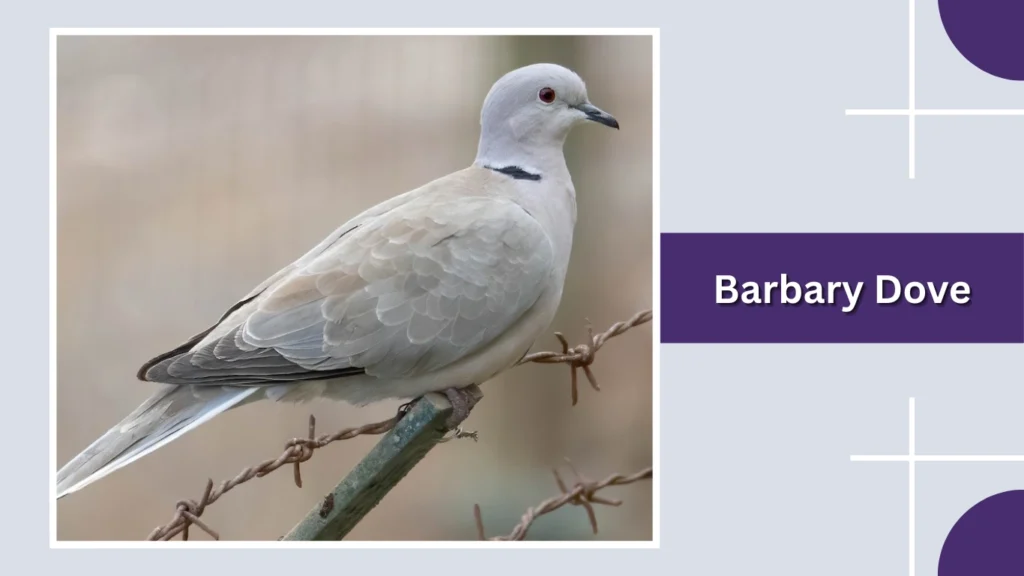
The Barbary Dove is a small, pale dove known for the thin black half-ring on the back of its neck. Often seen in domestic and feral forms, it has a gentle appearance and soft coloration. Although closely related to the African Collared-Dove, the Barbary Dove is most commonly associated with human settlements and captivity.
Identification
- Light cream to pale gray body
- Narrow black neck ring
- Slender body with a long tail
- Dark eyes and a small black bill
- Pinkish legs
Habitat
Barbary Doves are frequently found in towns, villages, gardens, farms, and around buildings. Many populations are semi-domestic or feral, originating from birds kept in captivity. They adapt well to human environments and often nest on ledges, rooftops, or trees near homes.
Behaviors
This species is calm, tolerant, and social, often seen in pairs or small groups. Barbary Doves have a soft, rolling coo that is quieter than that of many wild doves. They spend much of their time walking on the ground while foraging and readily return to the same nesting sites year after year.
Diet and Lifespan
Their diet mainly includes seeds, grains, and small plant materials, often supplemented by food provided by humans. In both wild and captive conditions, Barbary Doves commonly live 10–15 years, with some individuals living even longer when well cared for.
6. Spotted Dove
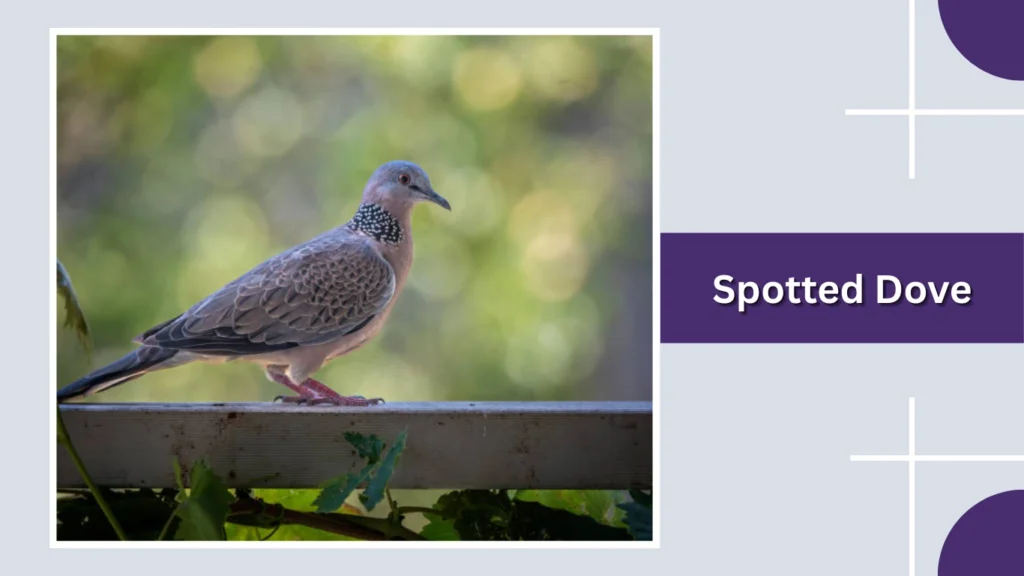
The Spotted Dove is a medium-sized dove recognized by the distinctive black patch on the back of its neck, covered with white spots. Its soft brownish-gray body and gentle demeanor make it easy to identify. Native to South and Southeast Asia, it has been introduced to many other regions and is commonly seen near human habitation.
Identification
- Brownish-gray body with pinkish tones
- Black neck patch marked with white spots
- Long tail with white-tipped edges
- Dark eyes with a pale eye-ring
- Slender dark bill
Habitat
Spotted Doves thrive in open woodlands, farmlands, gardens, parks, and urban areas. They prefer semi-open environments rather than dense forests and are frequently found close to houses, roads, and cultivated land. Their adaptability has allowed them to establish stable populations in towns and cities.
Behaviors
These doves are usually seen alone, in pairs, or small flocks. They are calm and approachable, often feeding on the ground. The Spotted Dove has a distinctive three-part cooing call that rises and falls in pitch. When flushed, it flies away with strong, steady wingbeats and often perches nearby.
Diet and Lifespan
Their diet mainly consists of seeds, grains, and fallen plant matter, with occasional small insects. Spotted Doves typically live 7–10 years in the wild, although lifespan can vary depending on habitat quality and predation.
7. Red Collared-Dove
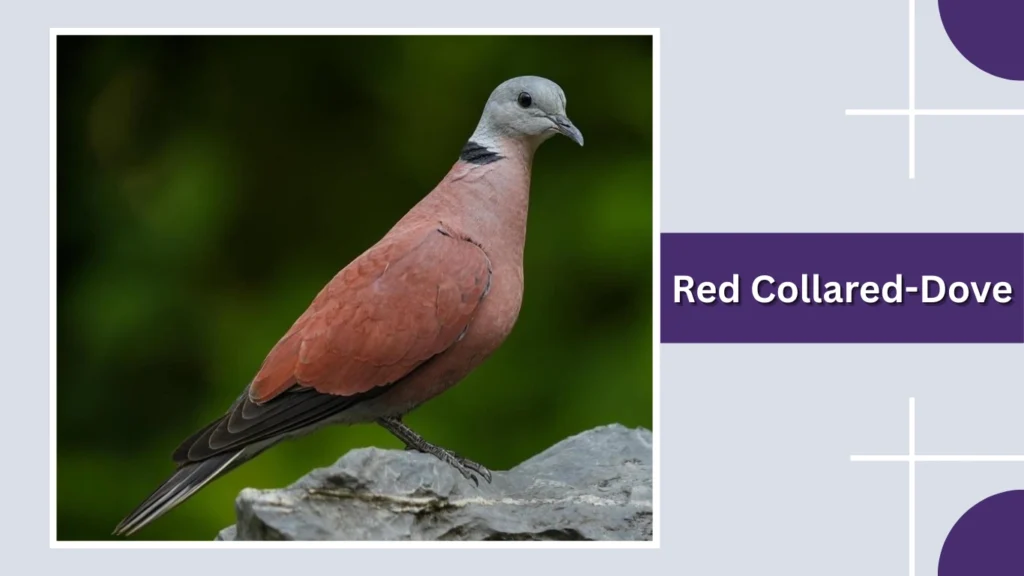
The Red Collared-Dove is a slender, warm-toned dove distinguished by a black collar edged with pale markings on the back of its neck. Its soft reddish-brown coloration gives the species its name. Native to parts of Southeast Asia, this dove is commonly found in open landscapes and near rural settlements.
Identification
- Reddish-brown to pinkish-buff body
- Black neck ring with pale edging
- Long tail with darker central feathers
- Dark eyes and a slim black bill
- Pinkish legs
Habitat
Red Collared-Doves inhabit open woodlands, scrublands, farmland, and village outskirts. They prefer drier, open areas rather than dense forests and are often seen near agricultural fields and rural homes. Trees and shrubs provide nesting sites and roosting cover.
Behaviors
This species is generally quiet and shy compared to other collared doves. It is most often seen alone or in pairs, spending much of its time foraging on the ground. Its call is a soft, repetitive coo that blends easily into the background of rural environments.
Diet and Lifespan
The Red Collared-Dove feeds mainly on seeds, grains, and small fruits, occasionally taking insects. It typically lives around 5–8 years in the wild, though lifespan varies based on environmental conditions and predation.
8. Vinaceous Dove
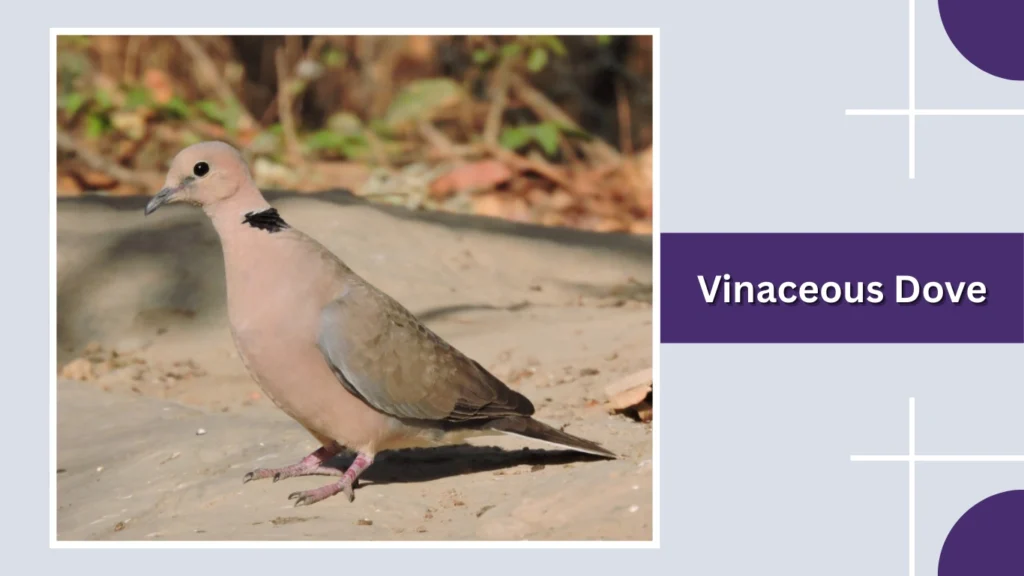
The Vinaceous Dove is a medium-sized dove named for its soft wine-colored, or vinaceous, plumage. A subtle black collar on the back of the neck gives it a refined appearance rather than a bold contrast. This species is widespread across sub-Saharan Africa and is commonly seen in open, lightly wooded habitats.
Identification
- Warm vinaceous pink to grayish-brown body
- Thin black neck ring, often faint
- Long tail with pale outer edges
- Dark eyes with a calm expression
- Slender dark bill and pinkish legs
Habitat
Vinaceous Doves favor open woodlands, savannas, dry forests, farmland, and cultivated areas. They are especially common in regions with scattered trees and access to water. The species adapts well to agricultural landscapes and can often be found near villages and rural settlements.
Behaviors
These doves are generally peaceful and social, often seen in pairs or small groups. They spend much of their time walking on the ground while foraging and will fly up into trees when disturbed. Their call is a deep, rhythmic coo that is frequently heard during the early morning and evening.
Diet and Lifespan
The Vinaceous Dove primarily feeds on seeds, grains, and fallen fruits, occasionally supplementing its diet with small insects. In the wild, it typically lives between 6 and 10 years, depending on habitat quality and environmental pressures.
9. Cape Turtle Dove
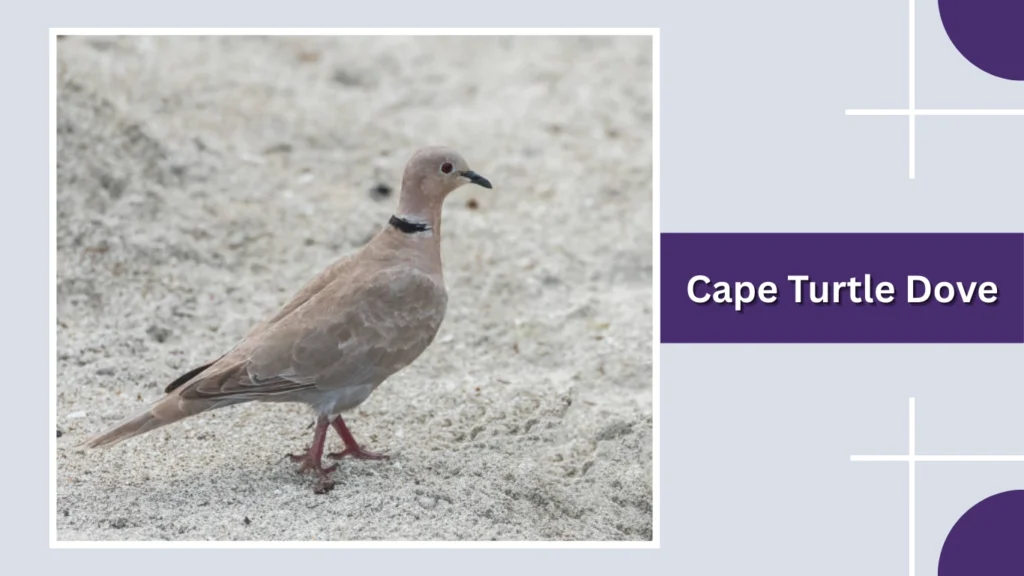
The Cape Turtle Dove is a large, attractive dove known for the black collar marked with white spots on the back of its neck. Its pinkish-gray body and long tail give it an elegant appearance. Native to sub-Saharan Africa, this species is widespread and often seen in both natural and human-altered environments.
Identification
- Pinkish-gray to mauve body
- Black neck patch with white spots
- Long tail with pale edges
- Dark eyes with a gentle expression
- Slim black bill and reddish legs
Habitat
Cape Turtle Doves inhabit open woodlands, savannas, farmland, gardens, and village areas. They prefer regions with scattered trees rather than dense forests. The species is highly adaptable and frequently seen near human settlements, especially where food and water are readily available.
Behaviors
These doves are calm and social, usually found in pairs or small flocks. They are strong fliers and often travel between feeding and roosting sites. Their call is a deep, rolling coo that carries over long distances, especially in the early morning.
Diet and Lifespan
Their diet mainly consists of seeds, grains, and fallen fruits, with occasional insects. Cape Turtle Doves typically live around 7–12 years in the wild, depending on environmental conditions and predation.
10. Ringed Teal
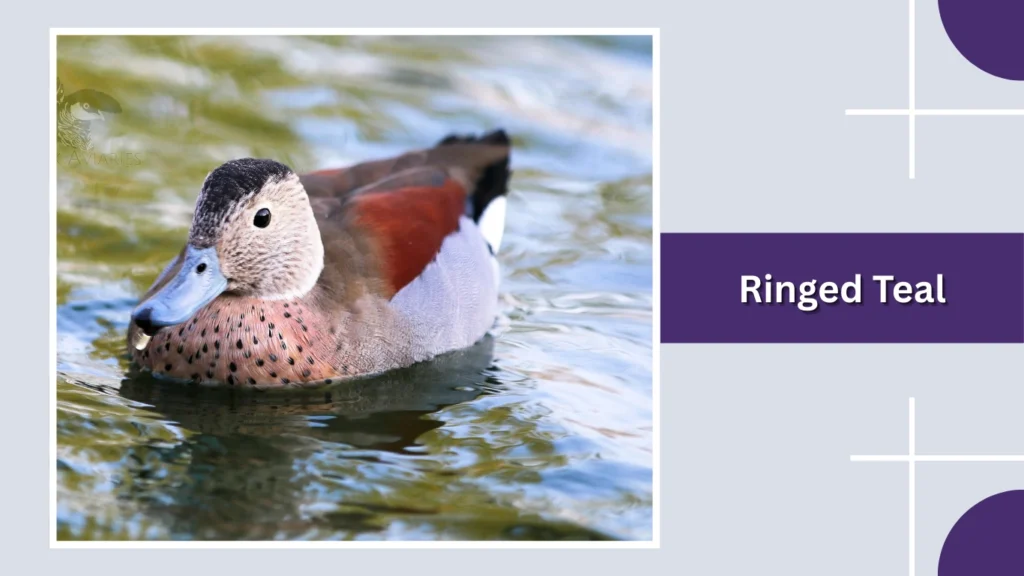
The Ringed Teal is a small, striking duck recognized by the thin white ring around the neck of the male. Unlike the previous birds on this list, it is a waterfowl species, admired for its compact size and intricate plumage patterns. Native to South America, it is often seen on calm freshwater bodies.
Identification
- Small duck with compact body
- Male has a narrow white neck ring
- Dark chest with fine white markings (male)
- Female is more muted brown-gray
- Short bill and rounded head
Habitat
Ringed Teals inhabit freshwater wetlands such as ponds, lakes, marshes, slow-moving rivers, and flooded grasslands. They prefer quiet waters with abundant vegetation along the edges, which provide both food and cover. The species is also found in forested wetlands and seasonally flooded areas.
Behaviors
These ducks are generally quiet and shy, often resting near vegetation or along the water’s edge. They are strong swimmers and capable fliers, though they tend to take short flights when disturbed. Ringed Teals are usually seen in pairs or small groups rather than large flocks.
Diet and Lifespan
Their diet includes aquatic plants, seeds, grasses, and small invertebrates such as insects and crustaceans. In the wild, Ringed Teals typically live 8–12 years, depending on environmental conditions and predation levels.
11. Indian Ringneck Parrot
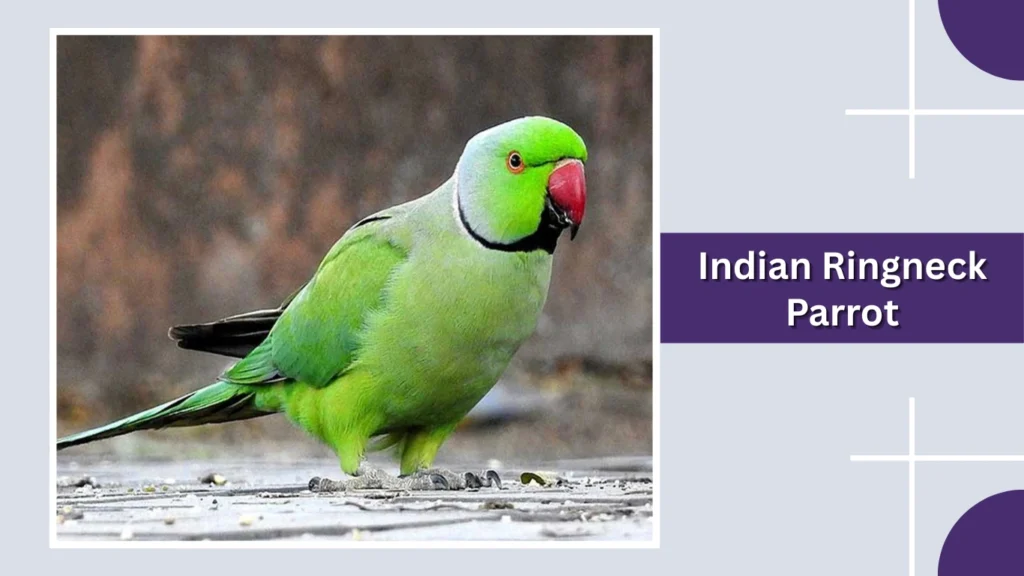
The Indian Ringneck Parrot is a colorful, intelligent parrot best known for the bold black and rose-colored ring around the neck of adult males. Its bright green plumage and long tail make it highly recognizable. Native to the Indian subcontinent, this species is popular both in the wild and as a companion bird.
Identification
- Bright green body with a long, narrow tail
- Adult males have a black and rose neck ring
- Females and juveniles lack a distinct ring
- Red curved bill
- Pale yellow eyes
Habitat
Indian Ringneck Parrots live in open woodlands, forest edges, farmlands, orchards, parks, and urban areas. They adapt easily to human environments and are often seen in cities, where they roost in large numbers in trees.
Behaviors
These parrots are social, vocal, and highly intelligent. They often travel in flocks and are known for loud calls, especially during flight. Indian Ringnecks are excellent mimics and can learn to reproduce human speech and sounds. They are active during daylight hours and spend much time foraging.
Diet and Lifespan
Their diet includes fruits, seeds, nuts, buds, grains, and cultivated crops. In the wild, they typically live 20–30 years, while some individuals live even longer in captivity with proper care.
12. Ring-necked Duck
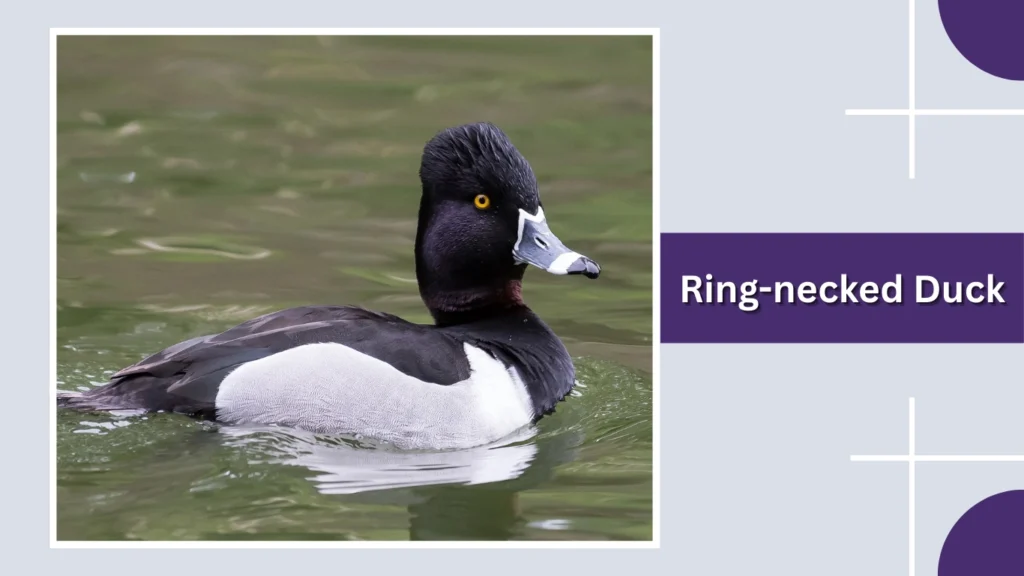
The Ring-necked Duck is a medium-sized diving duck named for the subtle chestnut-colored ring around the base of its neck, which is often hard to see. Despite its name, the ring is not always obvious. Native to North America, this species is commonly found on freshwater lakes and wetlands.
Identification
- Medium-sized diving duck
- Male has a glossy black head with a faint chestnut neck ring
- Gray sides with bold white markings (male)
- Female is brown with a pale eye-ring
- Short bill with a light band near the tip
Habitat
Ring-necked Ducks inhabit freshwater ponds, lakes, marshes, and wooded wetlands. During migration and winter, they may also be found in coastal bays and sheltered estuaries. They prefer waters with submerged vegetation, which provides food and cover.
Behaviors
These ducks are strong divers, often disappearing underwater to feed. They usually form small to medium-sized flocks, especially outside the breeding season. When alarmed, they take off quickly from the water with rapid wingbeats and fly low over the surface.
Diet and Lifespan
Their diet consists mainly of aquatic plants, seeds, and roots, along with insects and small mollusks. In the wild, Ring-necked Ducks typically live around 8–15 years, depending on habitat conditions and predation.
FAQs
What birds are most commonly known for having a white ring around the neck?
Birds such as the Eurasian Collared-Dove, African Collared-Dove, Spotted Dove, and Ring-necked Parakeet are among the most well-known species with a visible white or pale ring around the neck.
Is the white neck ring present in both male and female birds?
In many dove species, both males and females have similar neck markings. However, in birds like the Ring-necked Parakeet and Indian Ringneck Parrot, the neck ring is usually present only in adult males.
Does the neck ring help in bird identification?
Yes, the neck ring is a key identification feature. It helps birdwatchers quickly distinguish similar-looking species, especially among doves and parrots with otherwise plain body colors.
Do birds with neck rings live close to humans?
Many of these birds, particularly collared doves and ring-necked parakeets, adapt well to human environments and are often found in towns, gardens, farms, and city parks.
Is the white ring used for communication or mating?
In some species, the neck ring plays a role in visual signaling during courtship and territorial displays. In others, it may simply be a species-specific marking rather than a direct communication tool.
