
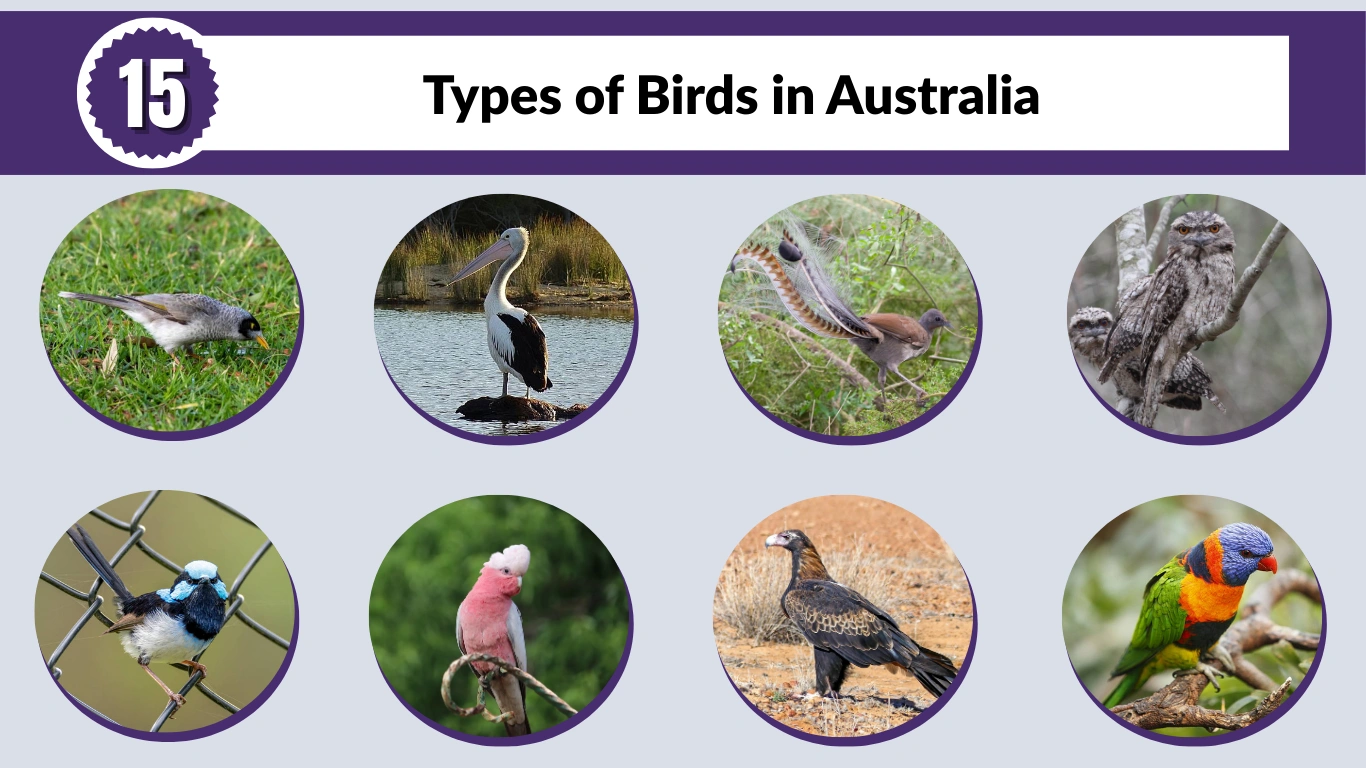
Australia is home to one of the most diverse and fascinating bird populations in the world. Isolated for millions of years, the continent has produced unique species with striking colors, unusual behaviors, and distinctive calls. From large, flightless birds roaming open plains to brilliantly colored parrots and powerful birds of prey, Australian birds inhabit forests, wetlands, deserts, and cities alike. This list highlights some of the most well-known and remarkable bird species found across Australia.
1. Emu
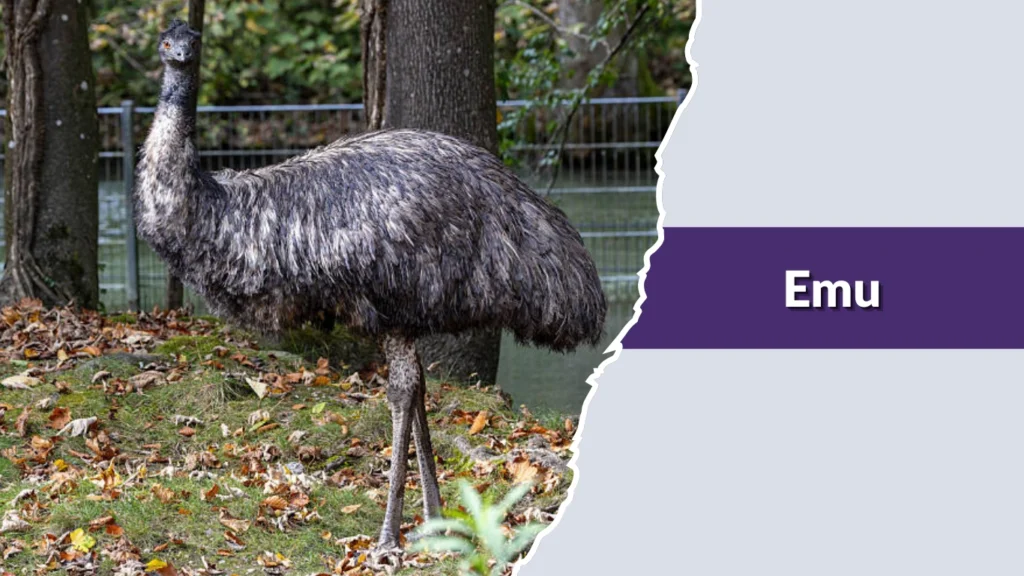
The Emu is Australia’s largest native bird and one of the most iconic species on the continent. Although it cannot fly, the Emu is a powerful runner capable of covering long distances across open landscapes. Its tall stature, shaggy feathers, and curious nature make it instantly recognizable in the Australian wild.
Identification
- Very large, flightless bird with long legs and neck
- Soft, shaggy brown to gray feathers
- Small head with dark eyes
- Strong legs adapted for fast running
- Height up to about 6 feet (1.8 meters)
Habitat
Emus are found across most of mainland Australia, favoring open environments such as grasslands, savannas, woodlands, and semi-arid regions. They avoid dense forests and extremely dry deserts but can travel long distances to find food and water. Their wide range reflects their strong adaptability to different climates.
Behaviors
Emus are mostly solitary but may form loose groups when food is abundant. They are active during the day and spend much of their time walking in search of food. When threatened, they rely on speed rather than aggression, running swiftly to escape predators. During breeding season, males take on nesting and chick-rearing duties.
Diet and Lifespan
The Emu is omnivorous, feeding on seeds, fruits, leaves, insects, and other small invertebrates. It also swallows stones to help grind food in its digestive system. In the wild, Emus typically live between 10 and 20 years, depending on environmental conditions.
2. Kookaburra
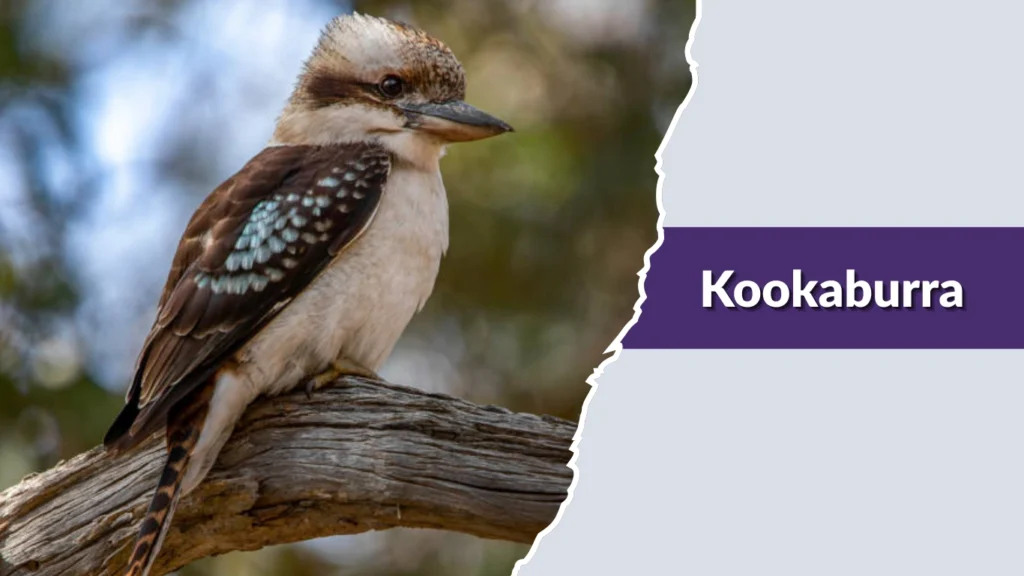
The Kookaburra is one of Australia’s most famous birds, best known for its loud, laughing call that echoes through forests and suburbs alike. With a stocky body and large head, this bird is a member of the kingfisher family, even though it is rarely seen near water.
Identification
- Stocky bird with a large head and thick bill
- Brown and white plumage with dark eye stripe
- Short tail and strong legs
- Pale eyes giving a striking appearance
Habitat
Kookaburras live in open forests, woodlands, parks, farmland, and suburban areas. They readily adapt to human environments and are often seen perched on fences, wires, or tree branches while scanning for prey.
Behaviors
This species is highly territorial and often lives in family groups. Their famous “laughing” call is used to defend territory and communicate with group members. Kookaburras hunt by watching from a perch and swooping down on prey.
Diet and Lifespan
Kookaburras feed on insects, worms, small reptiles, rodents, and occasionally small birds. In the wild, they usually live 10–15 years, with some individuals living longer in protected environments.
3. Sulphur-crested Cockatoo
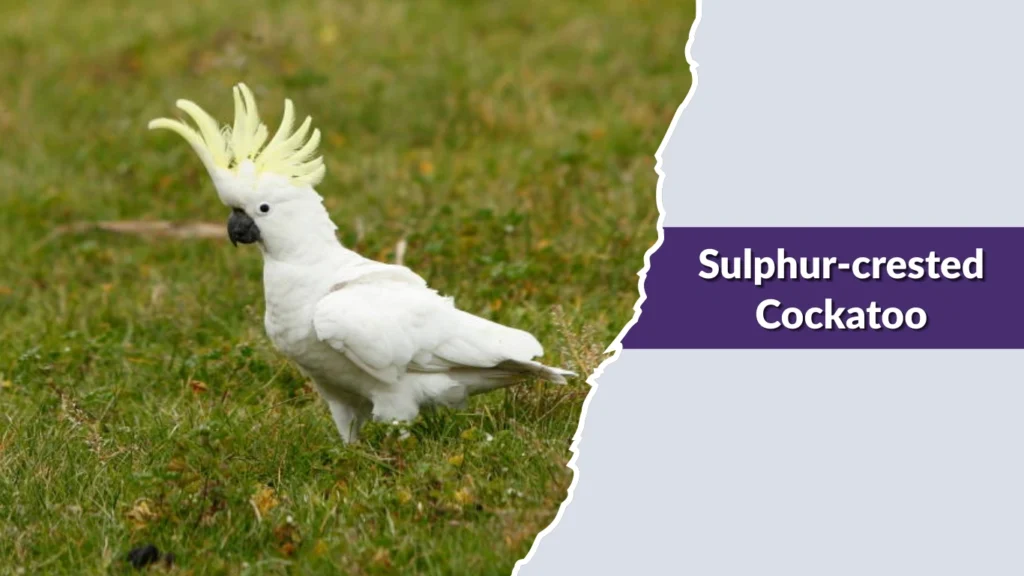
The Sulphur-crested Cockatoo is a large, intelligent parrot instantly recognized by its bright white feathers and striking yellow crest. Loud, social, and highly expressive, this bird is a familiar sight in Australian cities as well as natural landscapes. Its playful personality and strong social bonds make it one of the most charismatic birds in Australia.
Identification
- Large white parrot with a bold yellow crest
- Strong, curved black bill
- Dark eyes with bare white skin around them
- Broad wings and short tail
- Crest raised when excited or alarmed
Habitat
Sulphur-crested Cockatoos inhabit open woodlands, forests, farmland, parks, and urban areas. They adapt exceptionally well to city life and are often seen in large flocks in suburban neighborhoods, gardens, and public spaces.
Behaviors
These cockatoos are highly social and noisy, often gathering in large groups. They communicate through loud screeches and expressive body language, especially by raising their crests. Known for their intelligence, they can solve problems, use tools, and interact closely with their environment.
Diet and Lifespan
Their diet includes seeds, nuts, fruits, roots, berries, and cultivated crops. In urban areas, they may forage in gardens or feed from human sources. Sulphur-crested Cockatoos are long-lived birds, commonly reaching 40–60 years in the wild, and sometimes longer in captivity.
4. Laughing Kookaburra
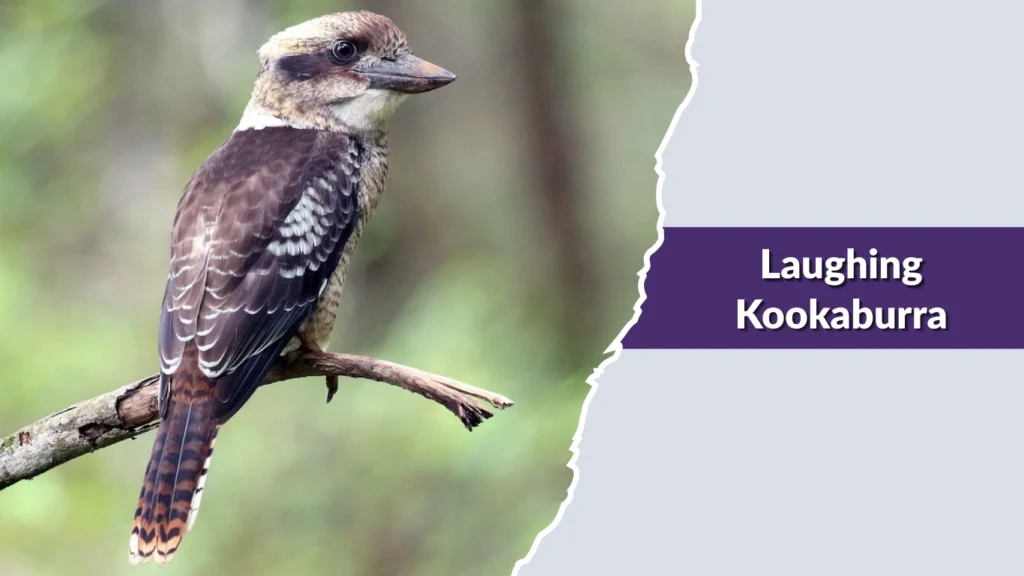
The Laughing Kookaburra is a well-known Australian bird famous for its loud, rolling laugh that sounds like human laughter. As the largest member of the kingfisher family, it is easily recognized by its sturdy build and bold markings. Its call is often heard at dawn and dusk.
Identification
- Large, stocky body with a big head
- Brown and white plumage with dark eye stripe
- Strong, heavy bill
- Short tail and powerful legs
Habitat
Laughing Kookaburras live in open forests, woodlands, farmland, parks, and suburban areas. They prefer habitats with scattered trees and open ground for hunting, and they are highly adaptable to human-modified environments.
Behaviors
This species is territorial and usually lives in family groups. Its iconic laughing call helps establish territory and strengthen social bonds. Laughing Kookaburras hunt by perching quietly and swooping down on prey on the ground.
Diet and Lifespan
Their diet consists of insects, worms, snakes, lizards, small mammals, and occasionally young birds. In the wild, Laughing Kookaburras typically live 10–15 years, though some may live longer in safe environments.
5. Australian Magpie
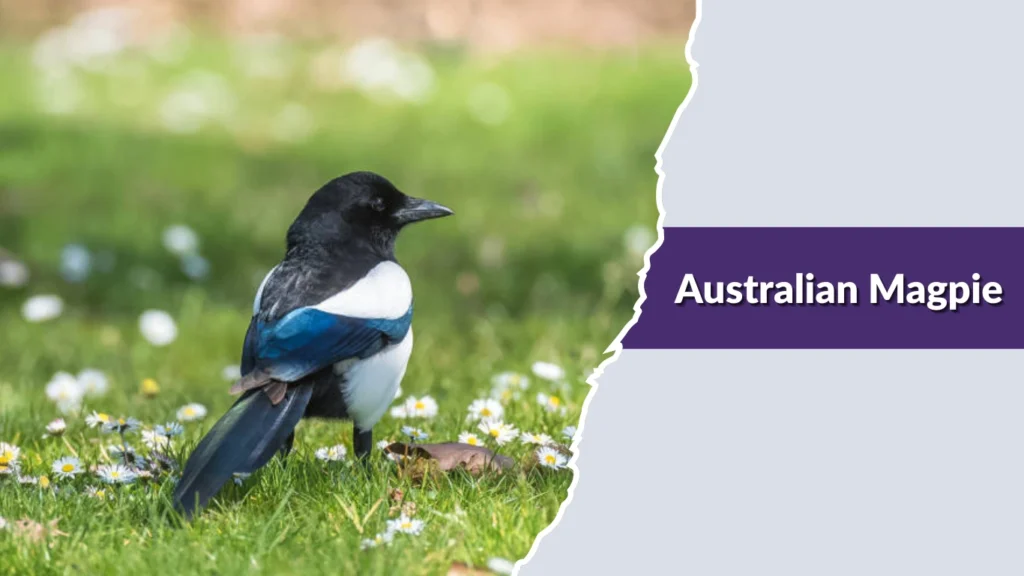
The Australian Magpie is a highly intelligent and confident bird, well known for its rich, musical calls and bold black-and-white plumage. Common across Australia, it is both admired for its singing and respected for its strong territorial instincts, especially during breeding season.
Identification
- Medium to large bird with black-and-white plumage
- White nape and shoulders (varies by region)
- Strong, straight bill with a pale tip
- Red or brown eyes
- Long legs suited for ground walking
Habitat
Australian Magpies inhabit a wide range of open environments, including grasslands, farmland, parks, gardens, and suburban areas. They prefer open spaces with scattered trees, which provide both nesting sites and clear ground for foraging.
Behaviors
Magpies are usually seen alone, in pairs, or in small family groups. They are highly territorial and may aggressively defend their nests during breeding season. Known for their complex vocalizations, they produce flute-like songs and can mimic other sounds. They spend much of their time walking confidently on the ground.
Diet and Lifespan
Their diet mainly consists of insects, worms, larvae, small reptiles, and occasionally seeds or scraps. Australian Magpies typically live 20–30 years in the wild, making them one of Australia’s longer-lived native birds.
6. Rainbow Lorikeet
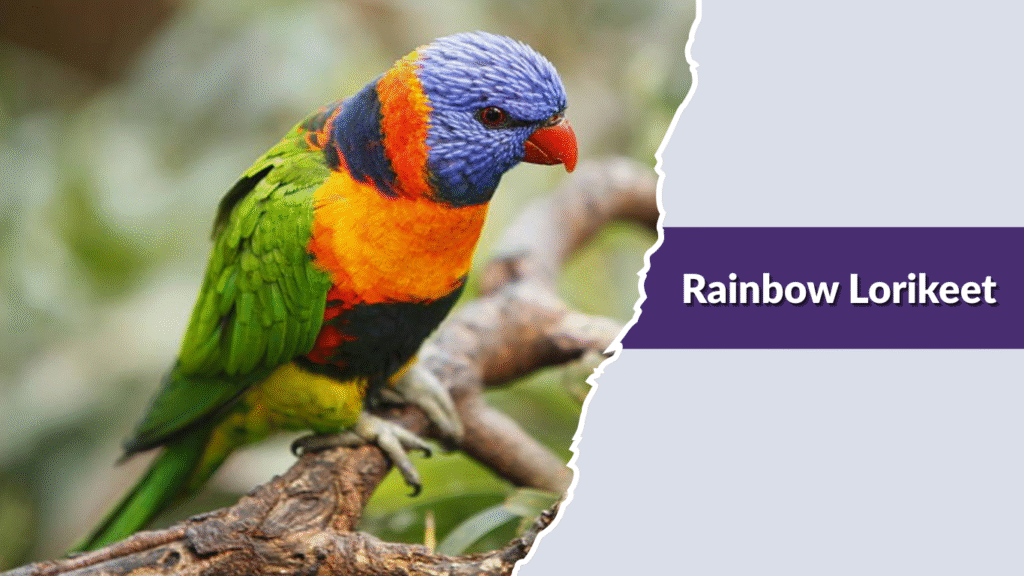
The Rainbow Lorikeet is one of Australia’s most colorful and eye-catching birds, instantly recognized by its vivid plumage. With bright blues, greens, reds, and yellows, it brings a splash of color to urban parks and forests alike. Its energetic behavior and loud calls make it hard to miss.
Identification
- Bright green wings and back
- Deep blue head and face
- Red breast with yellow and orange bands
- Orange curved bill
- Long, pointed tail
Habitat
Rainbow Lorikeets are found in coastal and eastern Australia, living in open forests, woodlands, rainforests, parks, and suburban gardens. They are especially common in areas with flowering trees, including eucalyptus, where food is abundant.
Behaviors
These birds are highly social and active, often seen in noisy flocks. They move quickly through treetops, chasing each other and vocalizing loudly. Rainbow Lorikeets are agile climbers and often hang upside down while feeding on flowers.
Diet and Lifespan
Their diet mainly consists of nectar, pollen, fruits, and blossoms. A specialized brush-tipped tongue helps them collect nectar efficiently. In the wild, Rainbow Lorikeets typically live 20–25 years, depending on habitat quality and food availability.
7. Galah
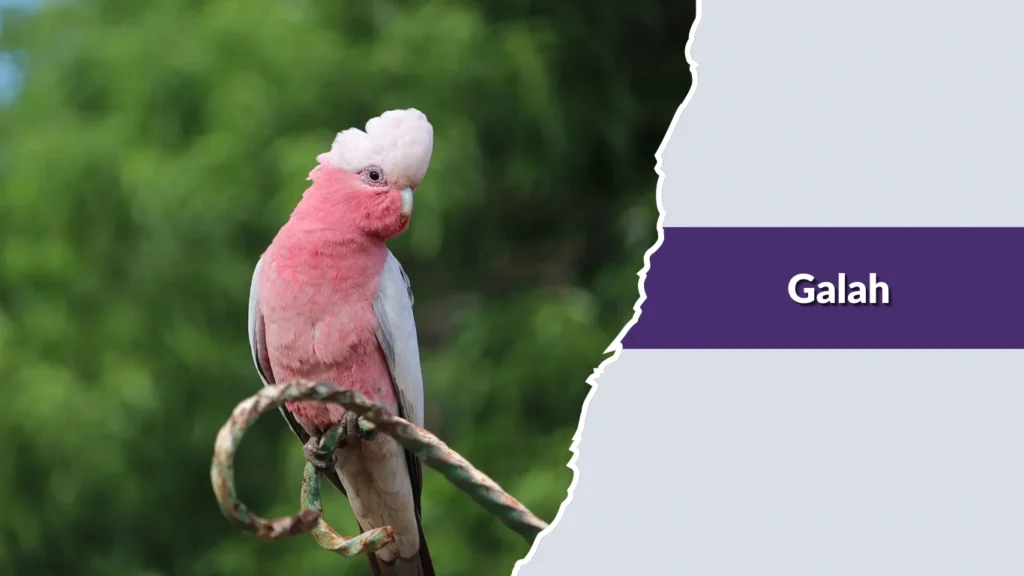
The Galah is a familiar and much-loved Australian cockatoo, easily recognized by its soft pink chest and face contrasted with pale gray wings. Sociable, playful, and highly adaptable, galahs are commonly seen in large flocks across much of Australia, both in the wild and around towns.
Identification
- Pink face, chest, and underparts
- Pale gray wings and back
- Short, rounded crest
- Strong pale bill
- Dark eyes
Habitat
Galahs inhabit open woodlands, grasslands, farmland, roadsides, and urban areas. They prefer open spaces with nearby trees for nesting and roosting. Their ability to adapt to agricultural and suburban environments has allowed their population to thrive.
Behaviors
These birds are highly social and usually seen in large, noisy flocks. They are playful and acrobatic, often seen hanging upside down from branches or wires. Galahs are intelligent and curious, frequently interacting with their surroundings and each other.
Diet and Lifespan
Their diet consists mainly of seeds, grains, grasses, roots, and some fruits. Galahs typically live 20–40 years in the wild, with longer lifespans possible in captivity under good care.
8. Wedge-tailed Eagle
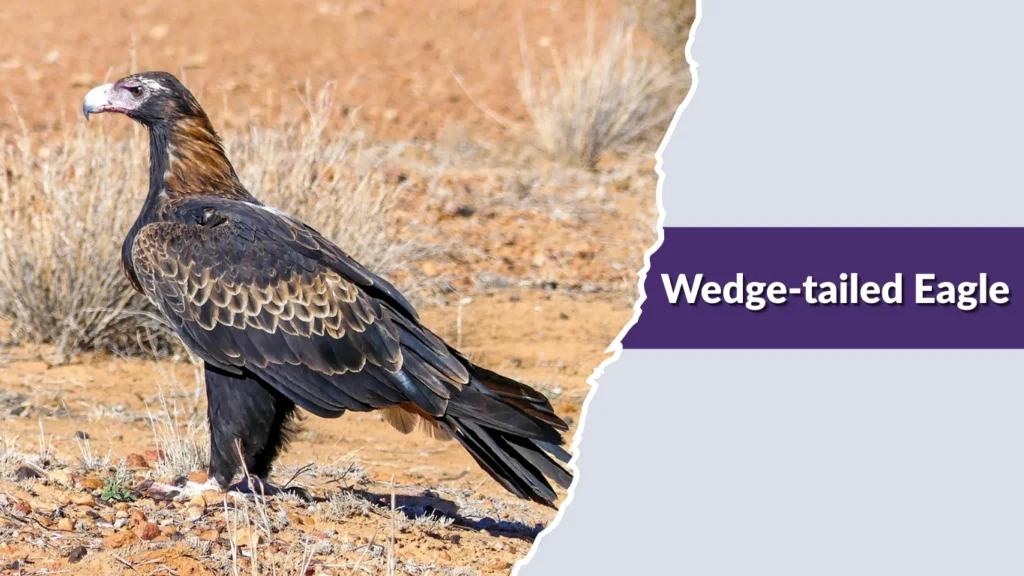
The Wedge-tailed Eagle is Australia’s largest bird of prey and one of the most powerful raptors in the Southern Hemisphere. With its massive wingspan and distinctive wedge-shaped tail, it is an impressive sight when soaring high above open landscapes.
Identification
- Very large eagle with long, broad wings
- Distinctive wedge-shaped tail
- Dark brown to black plumage
- Powerful hooked bill
- Strong yellow legs with sharp talons
Habitat
Wedge-tailed Eagles inhabit a wide range of environments, including open woodlands, grasslands, mountains, deserts, and farmland. They require large territories with tall trees or cliffs for nesting and open areas for hunting.
Behaviors
These eagles are usually seen alone or in pairs, soaring effortlessly on thermal currents. They are skilled hunters and also feed on carrion. During the breeding season, they perform spectacular aerial displays and fiercely defend their nesting territory.
Diet and Lifespan
Their diet includes mammals such as rabbits and wallabies, birds, reptiles, and carrion. In the wild, Wedge-tailed Eagles can live 30–40 years, making them one of Australia’s longest-living birds of prey.
9. Superb Fairywren
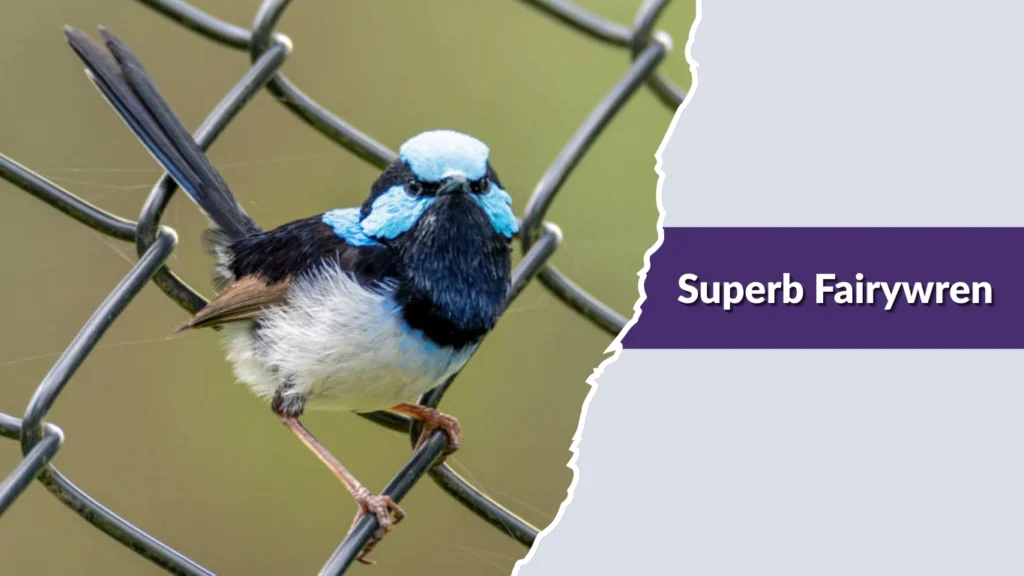
The Superb Fairywren is a small, energetic bird admired for the brilliant blue plumage of breeding males. Despite its tiny size, it has a bold personality and is commonly seen flitting through shrubs and gardens across southeastern Australia.
Identification
- Small bird with long tail
- Breeding male has bright blue head, back, and tail
- Black throat and mask (breeding male)
- Female and non-breeding birds are brown
- Slender bill and legs
Habitat
Superb Fairywrens live in forests, woodlands, shrublands, gardens, and parks. They prefer areas with dense undergrowth, which provides protection from predators and nesting sites.
Behaviors
These birds are highly active and social, usually living in family groups. They move quickly through low vegetation and often flick their tails while foraging. Superb Fairywrens are known for their complex social behavior and cooperative breeding systems.
Diet and Lifespan
Their diet consists mainly of insects and small invertebrates, which they catch while hopping along the ground or low shrubs. In the wild, Superb Fairywrens typically live 5–8 years.
10. Crimson Rosella
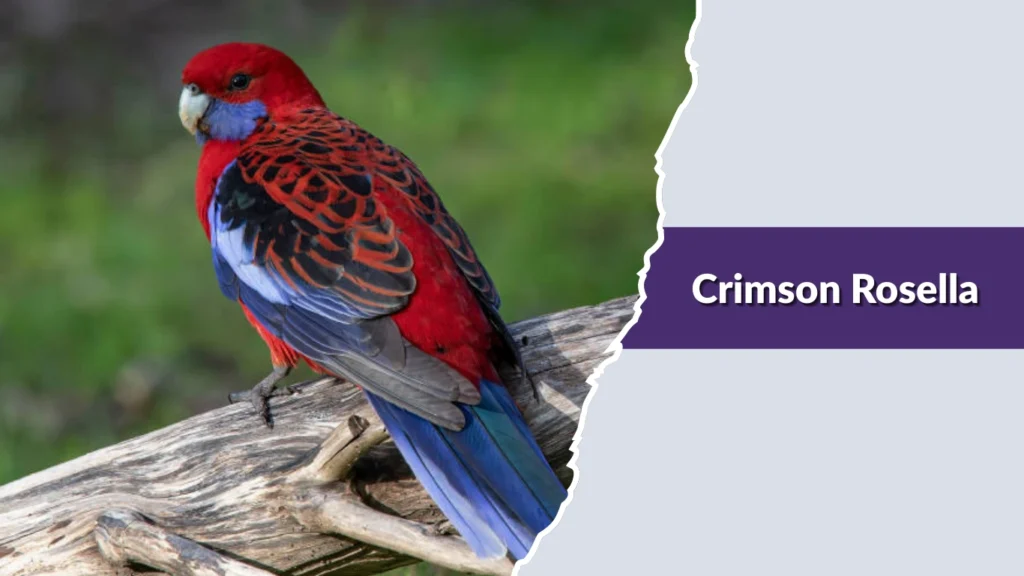
The Crimson Rosella is a striking parrot known for its deep red plumage contrasted with blue wings and tail. Its bold colors and calm demeanor make it one of the most recognizable parrots in Australia, often seen feeding quietly in trees or on the ground.
Identification
- Bright crimson red head and body
- Blue wings, tail, and cheeks
- Pale bill
- Dark eyes
- Medium-sized parrot with broad wings
Habitat
Crimson Rosellas inhabit forests, woodlands, gardens, and parklands, particularly in eastern and southeastern Australia. They prefer wooded areas with open ground beneath for feeding.
Behaviors
These parrots are usually seen alone or in pairs, though small groups may form around good food sources. They are generally quieter than many other parrots and move deliberately while feeding. Crimson Rosellas often forage on the ground as well as in trees.
Diet and Lifespan
Their diet includes seeds, fruits, berries, blossoms, and insects. In the wild, Crimson Rosellas typically live 15–25 years, depending on environmental conditions.
11. Tawny Frogmouth
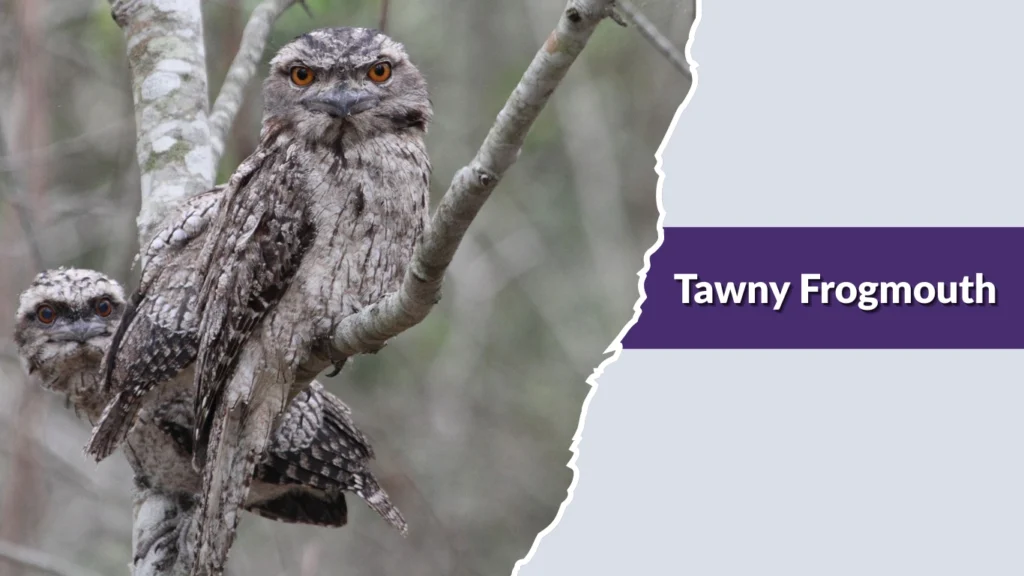
The Tawny Frogmouth is a master of camouflage and is often mistaken for an owl at first glance. With its wide, flat bill and mottled plumage, it blends perfectly with tree branches. This nocturnal bird is found throughout Australia and is more often heard or overlooked than seen.
Identification
- Large head with a wide, flat bill
- Mottled gray, brown, and black plumage
- Large dark eyes
- Short neck and stocky body
- Excellent camouflage when perched
Habitat
Tawny Frogmouths inhabit forests, woodlands, scrublands, parks, and suburban gardens. They prefer areas with trees for roosting and open spaces nearby for hunting at night.
Behaviors
These birds are nocturnal and spend daylight hours resting motionless on branches, relying on camouflage to avoid detection. At night, they become active hunters, perching quietly and swooping down on prey. They are usually seen alone or in pairs.
Diet and Lifespan
Their diet consists mainly of insects, spiders, worms, and small reptiles. Tawny Frogmouths typically live around 10–14 years in the wild, depending on habitat conditions and threats.
12. Lyrebird
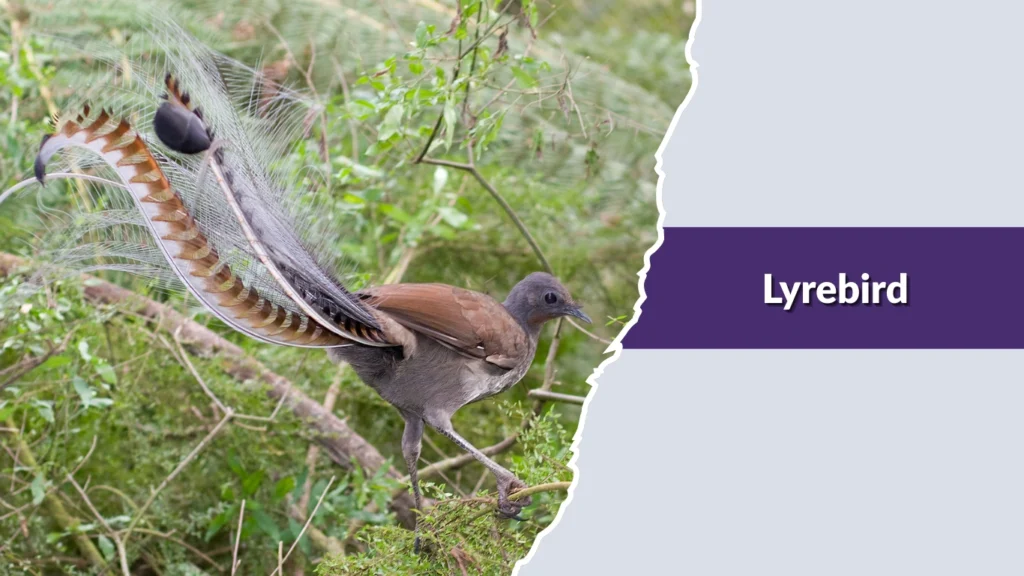
The Lyrebird is one of Australia’s most remarkable birds, famous for its extraordinary ability to mimic natural and artificial sounds. Males are especially known for their elaborate tail feathers, which resemble the shape of a lyre. This secretive bird is mainly found in dense forests.
Identification
- Medium to large ground-dwelling bird
- Brown to gray plumage
- Male has long, ornate tail feathers
- Strong legs adapted for scratching leaf litter
- Slender bill
Habitat
Lyrebirds live in dense forests, rainforests, and moist woodlands, particularly in southeastern Australia. They prefer areas with thick undergrowth and deep leaf litter, which support their foraging habits.
Behaviors
These birds are shy and elusive, spending most of their time on the forest floor. Males perform complex courtship displays, raising and fanning their tails while mimicking a wide range of sounds, including other birds and environmental noises.
Diet and Lifespan
Their diet consists of insects, spiders, worms, and other invertebrates found in leaf litter. Lyrebirds typically live 15–20 years in the wild.
13. Australian Pelican
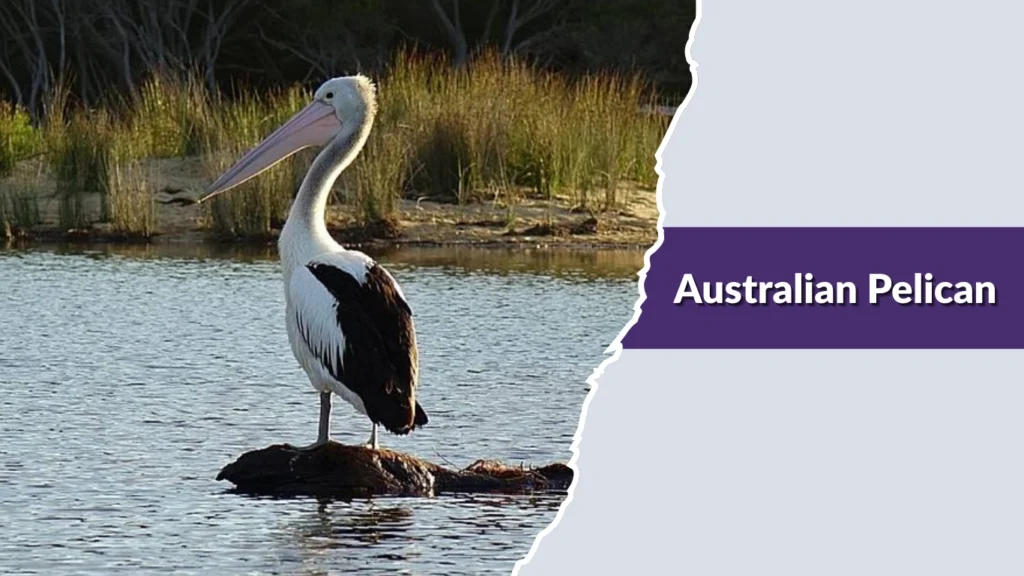
The Australian Pelican is a large, unmistakable waterbird known for its enormous bill and throat pouch. Graceful in flight yet comical on land, it is commonly seen along coastlines, lakes, rivers, and wetlands across Australia.
Identification
- Very large bird with long wingspan
- Massive pale bill with expandable throat pouch
- White body with black wings
- Long neck and short legs
- Dark eyes
Habitat
Australian Pelicans inhabit coastal waters, estuaries, lakes, rivers, reservoirs, and wetlands. They are highly mobile and can travel long distances in search of suitable feeding grounds and water bodies.
Behaviors
These birds are social and often seen in groups. They are strong fliers, soaring effortlessly on air currents. Pelicans feed cooperatively, herding fish into shallow water before scooping them up with their bills.
Diet and Lifespan
Their diet mainly consists of fish, which they catch using their large bills and expandable pouches. Australian Pelicans typically live 10–25 years in the wild, depending on environmental conditions.
14. Noisy Miner
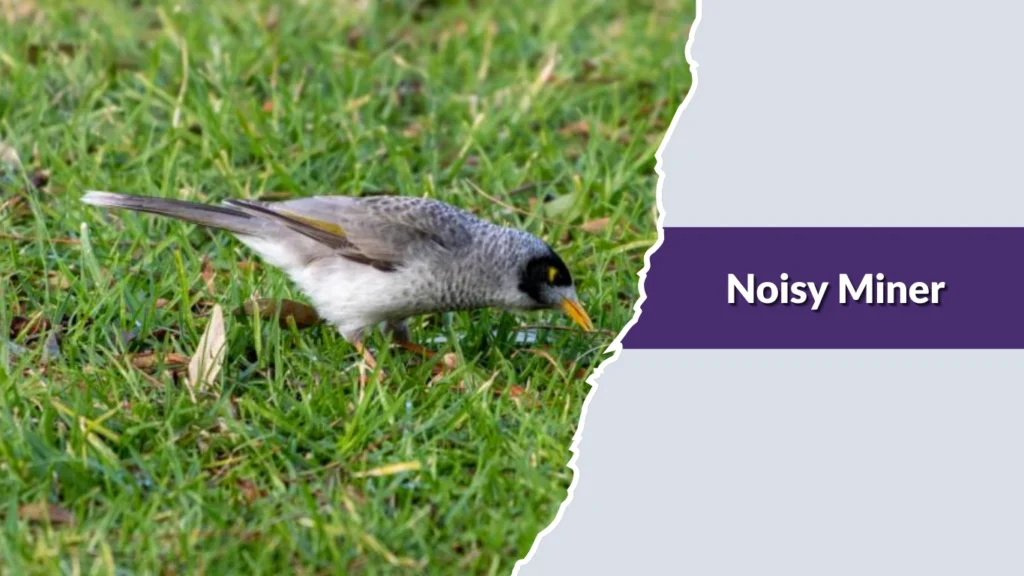
The Noisy Miner is a bold, vocal honeyeater commonly seen in eastern Australia. Known for its aggressive behavior and constant calling, it often dominates open woodland and suburban habitats, driving away other bird species from its territory.
Identification
- Medium-sized gray bird
- Yellow bill, eye-ring, and legs
- Black face mask
- Pale gray body with darker wings
- White tips on tail feathers
Habitat
Noisy Miners inhabit open forests, woodlands, parks, gardens, and suburban areas. They prefer areas with open ground and scattered trees rather than dense vegetation.
Behaviors
These birds live in large, cooperative colonies and are highly territorial. They aggressively chase away other birds, even much larger species. Noisy Miners communicate constantly using a wide range of calls, alarms, and chatter.
Diet and Lifespan
Their diet includes nectar, insects, fruits, and human food scraps. In the wild, Noisy Miners typically live around 10–15 years.
15. Black Swan
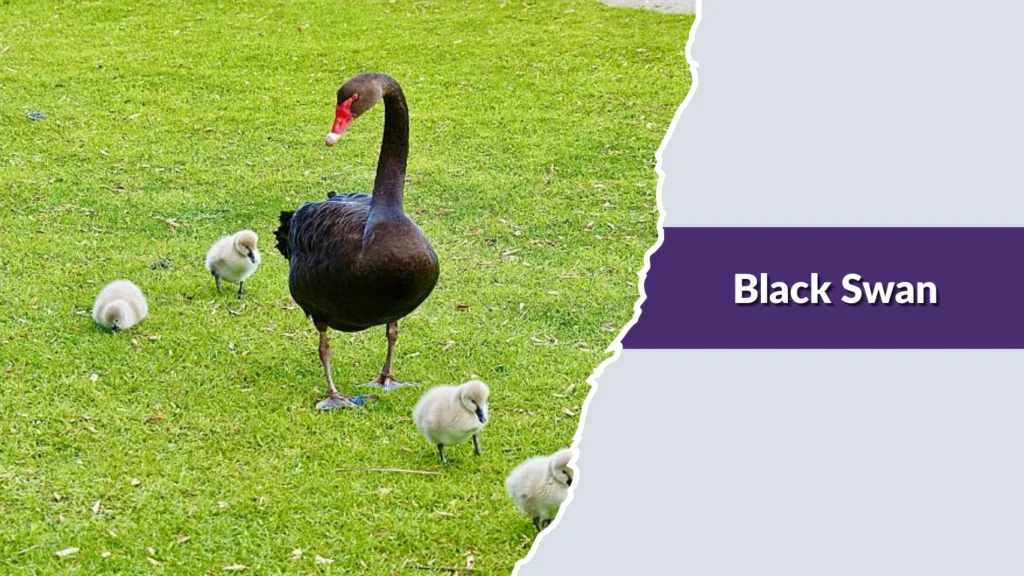
The Black Swan is one of Australia’s most elegant and iconic waterbirds, instantly recognized by its entirely black plumage and striking red bill. Graceful on the water and powerful in flight, it is commonly associated with wetlands, lakes, and rivers across much of the country.
Identification
- Large waterbird with all-black plumage
- Bright red bill with a pale tip
- Long, curved neck
- Broad wings with white flight feathers visible in flight
- Dark eyes
Habitat
Black Swans inhabit freshwater lakes, rivers, swamps, lagoons, and estuaries. They prefer permanent bodies of water with abundant aquatic vegetation and are found throughout Australia, including some coastal and inland wetlands.
Behaviors
These swans are usually seen in pairs or large flocks, especially outside the breeding season. They are strong swimmers and capable fliers, often traveling between wetlands. Black Swans form long-term pair bonds and may nest in loose colonies near water.
Diet and Lifespan
Their diet consists mainly of aquatic plants, algae, and submerged vegetation, which they reach by dipping or upending in shallow water. In the wild, Black Swans typically live 20–30 years under favorable conditions.
FAQs
What makes Australian birds unique compared to birds from other regions?
Australian birds evolved in isolation for millions of years, leading to many unique species found nowhere else. This isolation has resulted in unusual behaviors, bright colors, distinctive calls, and specialized adaptations to Australia’s diverse landscapes.
Are most Australian birds found only in Australia?
Many Australian birds, such as the Emu, Lyrebird, and Superb Fairywren, are endemic and found only in Australia. However, some species also occur in nearby regions or have been introduced to other parts of the world.
Which Australian birds are commonly seen in cities and suburbs?
Birds like the Kookaburra, Rainbow Lorikeet, Galah, Australian Magpie, and Noisy Miner adapt very well to urban environments and are frequently seen in parks, gardens, and residential areas.
Are Australian birds generally aggressive toward humans?
Most Australian birds are not aggressive, but some, like the Australian Magpie and Noisy Miner, may defend their nests during breeding season. Such behavior is usually temporary and aimed at protecting their young.
What do most Australian birds eat?
Australian birds have diverse diets depending on the species. Some feed on nectar and pollen, others on insects, seeds, fish, or small animals. This variety allows many species to thrive across different habitats.
