
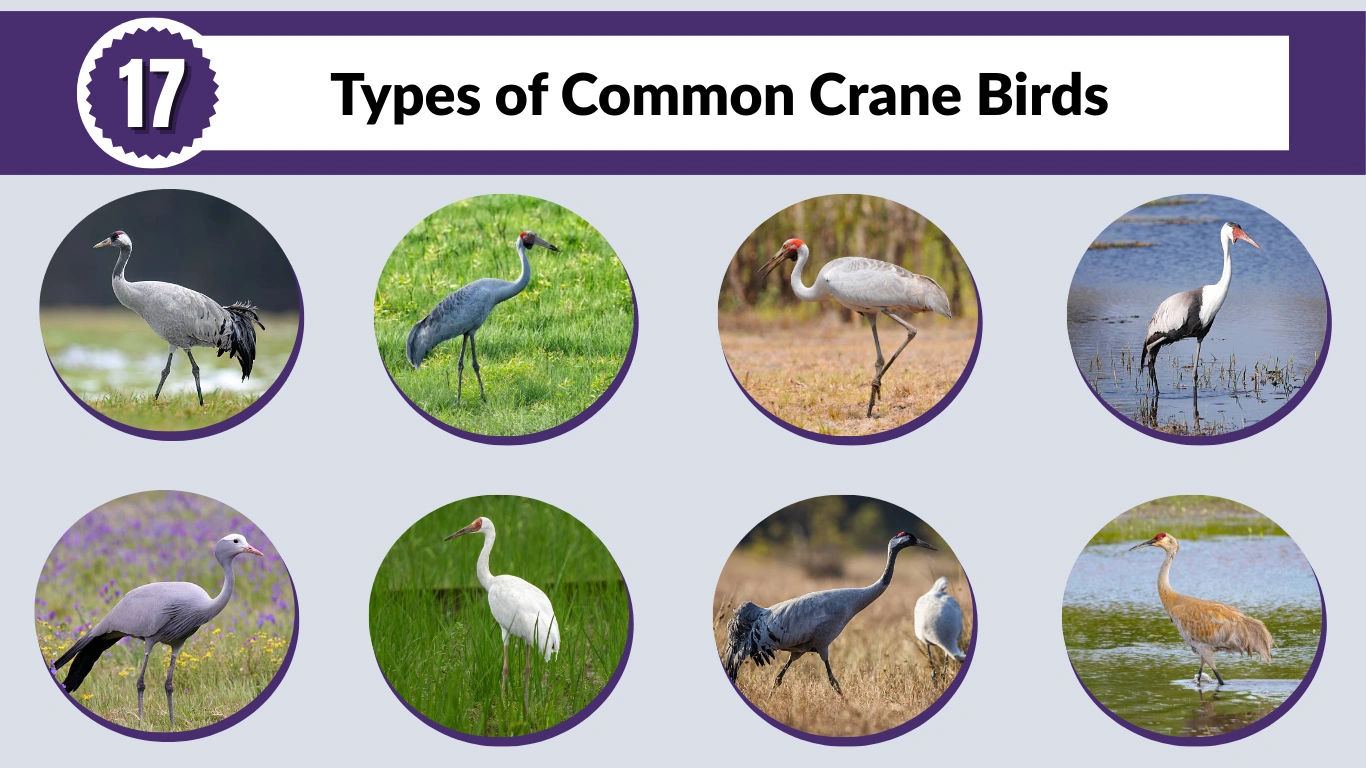
Crane birds are among the most elegant and fascinating species in the avian world, admired for their tall stature, graceful movements, and powerful vocal calls. Found across wetlands, grasslands, and open landscapes on several continents, cranes play an important role in maintaining healthy ecosystems. Many species are known for their elaborate courtship dances and strong lifelong pair bonds, which have made them symbols of loyalty and longevity in various cultures. Despite their beauty and significance, several crane species face threats from habitat loss and environmental change, making conservation efforts increasingly important worldwide.
1. Sandhill Crane
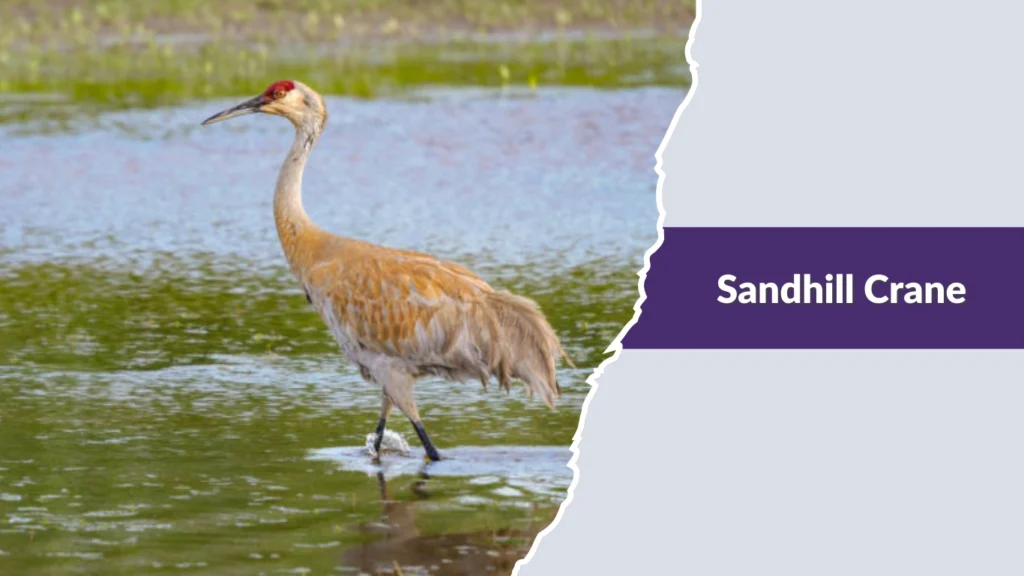
The Sandhill Crane is one of the most widespread and well-known crane species in the world. Recognized for its tall body, elegant posture, and distinctive trumpeting call, this crane plays an important role in wetland ecosystems. It is especially famous for its spectacular migration gatherings and graceful courtship dances.
Identification
- Tall, long-legged bird with an upright stance
- Overall gray plumage, often stained brown or rust-colored
- Distinct red patch on the forehead
- Long neck and straight, pointed bill
- Broad wings with dark tips, wingspan up to 7 feet
Habitat
Sandhill Cranes inhabit a wide range of open environments. They are commonly found in marshes, wetlands, wet meadows, grasslands, prairies, and shallow lakes. During migration and winter, they often move into agricultural fields, river valleys, and flooded farmlands where food is abundant. They rely heavily on wetlands for nesting and roosting, as shallow water helps protect them from predators.
Behaviors
These cranes are highly social birds and are often seen in pairs or large flocks. They are best known for their elaborate courtship dances, which include jumping, wing spreading, bowing, and tossing sticks or grass into the air. Sandhill Cranes are strong flyers and migrate long distances in large, noisy groups, communicating with loud, rolling calls.
Diet and Lifespan
Sandhill Cranes are omnivores. Their diet includes grains, seeds, berries, roots, insects, worms, small mammals, reptiles, and amphibians. In the wild, they typically live 20–30 years, and some individuals can live even longer under favorable conditions.
2. Whooping Crane
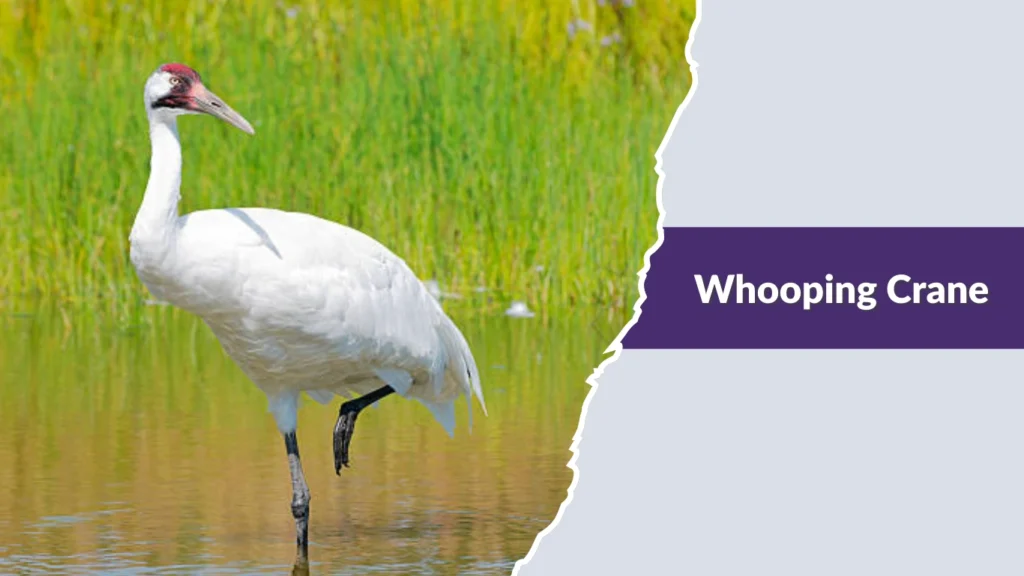
The Whooping Crane is one of the rarest and most iconic crane species in the world. Known for its striking white plumage and loud, resonant calls, this species has become a powerful symbol of wildlife conservation due to its recovery from near extinction.
Identification
- Very tall bird with long legs and neck
- Bright white body with black wingtips visible in flight
- Red crown and black facial markings
- Long, dark, pointed bill
- Wingspan up to 7.5 feet
Habitat
Whooping Cranes depend heavily on wetland ecosystems. During the breeding season, they nest in shallow freshwater marshes with dense vegetation. In winter, they move to coastal marshes, estuaries, and shallow bays. These habitats provide both protection from predators and access to food. Open water areas are especially important for nighttime roosting.
Behaviors
This species is usually seen in pairs or small family groups rather than large flocks. Whooping Cranes form strong lifelong pair bonds and perform synchronized courtship dances that include head bobbing, wing spreading, and graceful leaps. They are long-distance migrants, traveling thousands of miles between breeding and wintering grounds while using loud calls to stay in contact.
Diet and Lifespan
Whooping Cranes are omnivores, feeding on crustaceans, insects, small fish, amphibians, mollusks, berries, and aquatic plants. In the wild, they can live 20–25 years, with some individuals surviving longer under protected conditions.
3. Common Crane
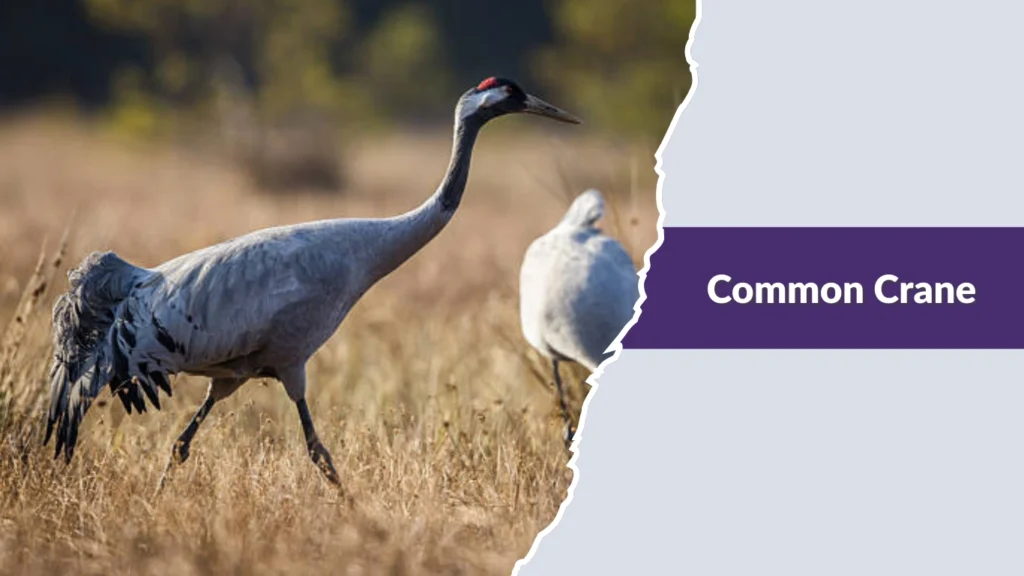
The Common Crane is a large, elegant crane species widely distributed across Europe, Asia, and parts of North Africa. Known for its graceful appearance and powerful trumpeting calls, it is one of the most frequently observed cranes during migration seasons.
Identification
- Tall body with long legs and slender neck
- Mostly gray plumage with black and white markings
- Black throat and neck with a white stripe running down the sides
- Red patch on the crown
- Long, straight bill and broad wings
Habitat
Common Cranes favor open landscapes with access to wetlands. During the breeding season, they inhabit marshes, bogs, wet meadows, and shallow lakes surrounded by vegetation. Outside the breeding period, they are commonly found in agricultural fields, grasslands, and open plains where they forage during the day and return to wetlands to roost at night.
Behaviors
These cranes are highly social and often gather in large flocks, especially during migration and winter. They perform elaborate courtship dances that involve leaping, wing flapping, bowing, and vocal displays. Common Cranes are strong, high-altitude migrants and are known for flying in large, noisy formations.
Diet and Lifespan
Common Cranes are omnivorous and adaptable feeders. Their diet includes grains, seeds, roots, tubers, insects, worms, small mammals, reptiles, and amphibians. In the wild, they typically live 20–30 years, depending on environmental conditions and predation risks.
4. Demoiselle Crane
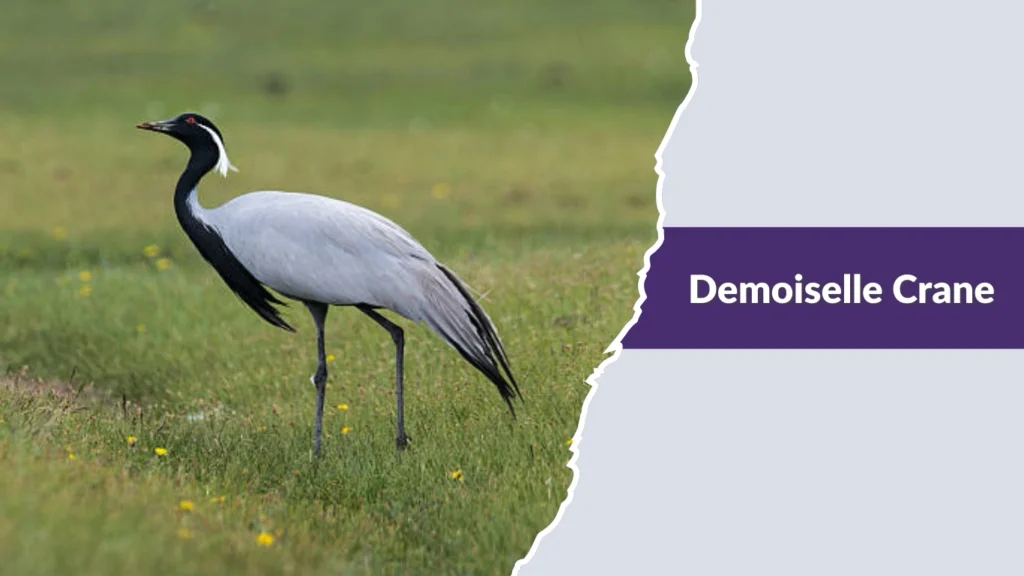
The Demoiselle Crane is the smallest crane species and is admired for its delicate appearance and graceful movements. It is widely distributed across central Eurasia and is especially well known for its long migratory journeys over challenging landscapes.
Identification
- Slender, lightweight body with long legs
- Bluish-gray plumage
- Black neck and chest with white feather plumes behind the eyes
- Shorter bill compared to other crane species
- Elegant, streamlined silhouette
Habitat
Demoiselle Cranes prefer open, dry environments more than most other cranes. They are commonly found in grasslands, steppes, semi-deserts, and cultivated fields. During the breeding season, they choose open plains near shallow water sources. In winter, they migrate to warmer regions and often occupy agricultural lands and open savannas.
Behaviors
This species is highly social and often seen in flocks, particularly during migration. Demoiselle Cranes are famous for their remarkable migrations, including flights over the Himalayas at extremely high altitudes. Courtship displays include jumping, bowing, wing spreading, and tossing vegetation, usually performed in pairs.
Diet and Lifespan
Demoiselle Cranes are omnivores. Their diet consists of seeds, grains, grasses, insects, worms, small reptiles, and amphibians. In the wild, they generally live 15–25 years, depending on habitat quality and environmental pressures.
5. Siberian Crane
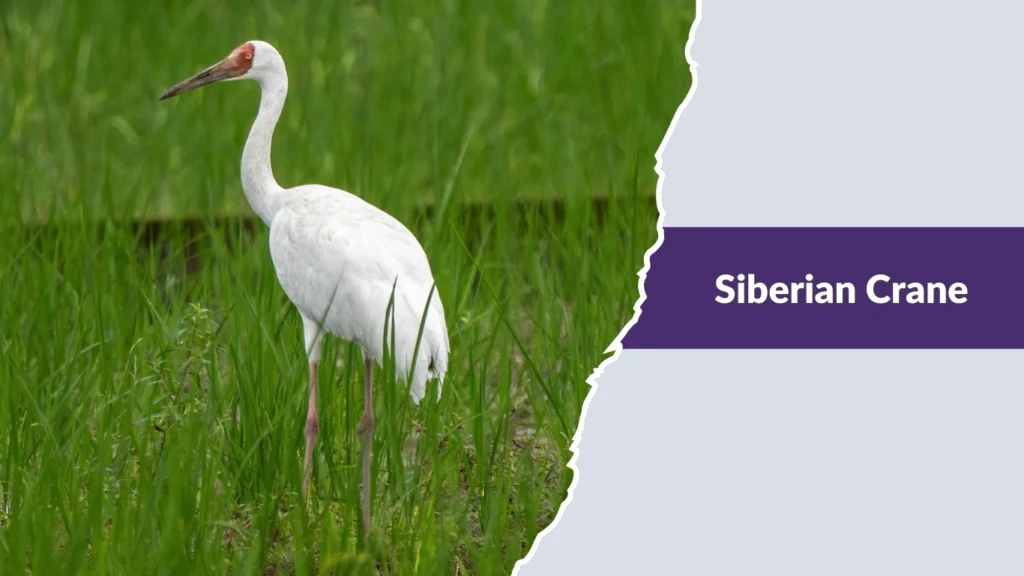
The Siberian Crane is a striking and highly specialized crane species, known for its pure white plumage and strong dependence on wetland habitats. It is one of the most threatened crane species due to habitat loss along its migratory routes.
Identification
- Medium to large crane with long legs and neck
- Almost entirely white plumage
- Bare red skin around the face and eyes
- Long, straight, reddish bill
- Black primary feathers visible only in flight
Habitat
Siberian Cranes are closely tied to freshwater wetlands. They breed in remote Arctic tundra wetlands with shallow water and abundant vegetation. During migration and winter, they rely on lakes, marshes, river deltas, and flooded grasslands. These habitats provide essential food resources and safe roosting sites, making them extremely sensitive to wetland degradation.
Behaviors
This species is usually seen in pairs or small family groups rather than large flocks. Siberian Cranes are long-distance migrants, traveling thousands of miles between breeding and wintering areas. They are known for their loud, trumpeting calls and strong pair bonds, with mates often engaging in synchronized displays and vocalizations.
Diet and Lifespan
Siberian Cranes are primarily herbivorous compared to other cranes. Their diet consists mainly of aquatic plant roots, tubers, rhizomes, and occasionally insects or small aquatic animals. In the wild, they typically live 20–30 years, though survival depends heavily on the availability of intact wetland habitats.
6. Hooded Crane
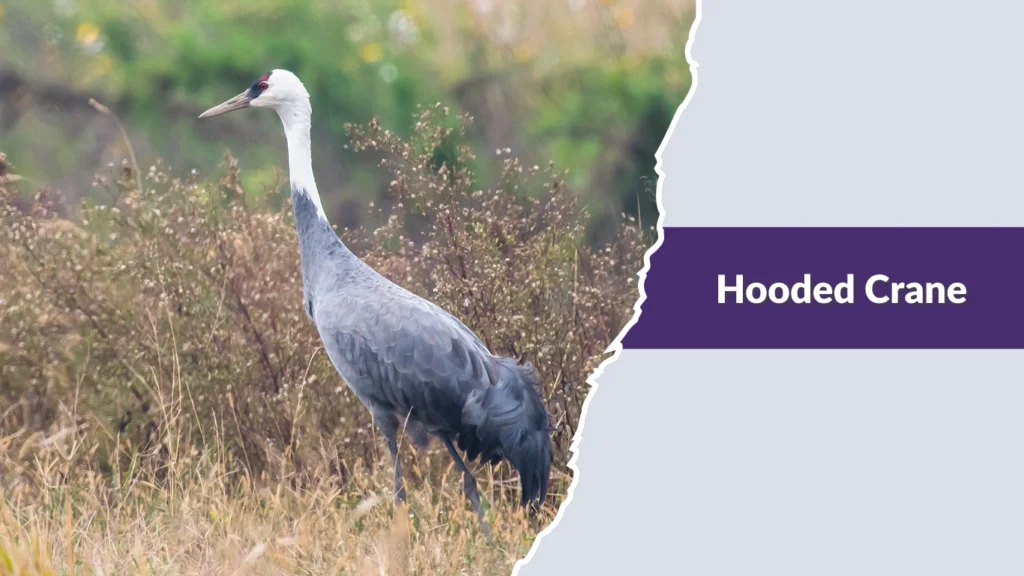
The Hooded Crane is a medium-sized crane recognized for its elegant contrast of light gray plumage and a distinctive white head. It is native to East Asia and is commonly observed during migration and wintering periods.
Identification
- Medium-sized crane with slender build
- Pale gray body feathers
- White head and upper neck forming a “hood” appearance
- Dark gray to black lower neck and face
- Straight, pointed bill and long legs
Habitat
Hooded Cranes breed in remote wetlands of southeastern Siberia and northeastern China, favoring marshes, bogs, and shallow freshwater areas surrounded by vegetation. During winter, they migrate to warmer regions, inhabiting river floodplains, rice paddies, wetlands, and coastal marshes. These habitats provide both feeding opportunities and safe roosting sites.
Behaviors
They are social birds and often form small to medium-sized flocks, especially outside the breeding season. Hooded Cranes are known for graceful courtship dances that include bowing, leaping, wing spreading, and coordinated movements between pairs. During migration, they travel in organized groups and communicate using loud, resonant calls.
Diet and Lifespan
Hooded Cranes are omnivorous. Their diet includes grains, seeds, berries, roots, aquatic plants, insects, mollusks, and small vertebrates. In natural conditions, they typically live 15–25 years, with lifespan influenced by habitat quality and human disturbance.
7. White-naped Crane
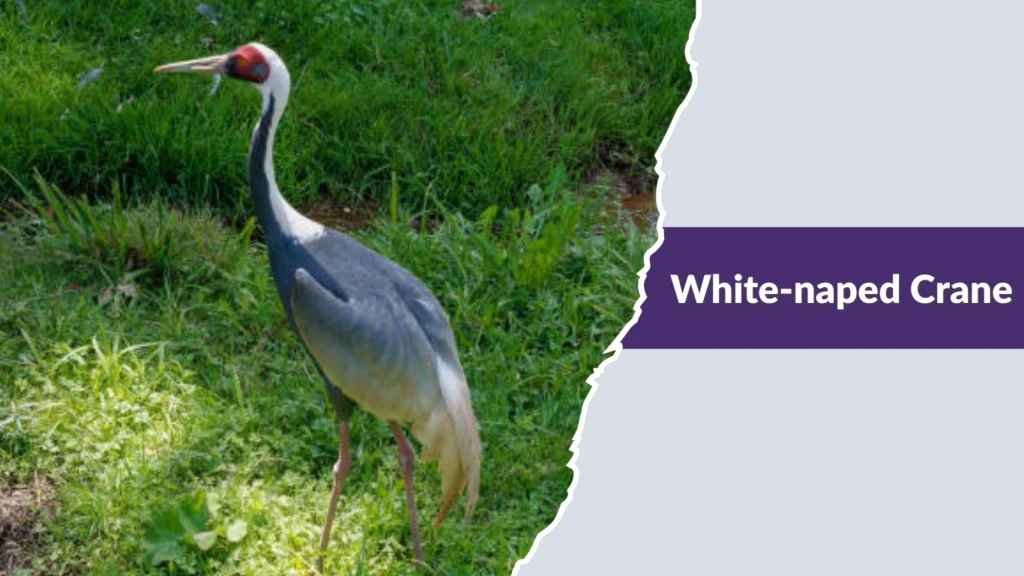
The White-naped Crane is a graceful and striking crane species native to East Asia. It is named for the distinctive white stripe that runs from the back of its head down the neck, giving it a refined and elegant appearance.
Identification
- Large crane with long legs and neck
- Gray body with darker wing feathers
- White stripe running from the nape down the sides of the neck
- Red patch on the crown
- Long, straight bill
Habitat
White-naped Cranes breed in wetlands of northeastern Mongolia, China, and southeastern Siberia. They favor marshes, wet meadows, and shallow lakes with surrounding grasslands. During winter, they migrate to river basins, floodplains, rice fields, and coastal wetlands, where food is abundant and roosting sites are available.
Behaviors
These cranes are usually seen in pairs or small family groups during the breeding season and form larger flocks during migration and winter. They are known for strong pair bonds and expressive courtship dances that involve synchronized jumping, wing flapping, and vocal displays. Their loud calls help maintain contact within flocks.
Diet and Lifespan
White-naped Cranes are omnivorous, feeding on grains, seeds, roots, aquatic plants, insects, fish, and small animals. In the wild, they generally live 20–30 years, depending on environmental conditions and protection from human threats.
8. Red-crowned Crane
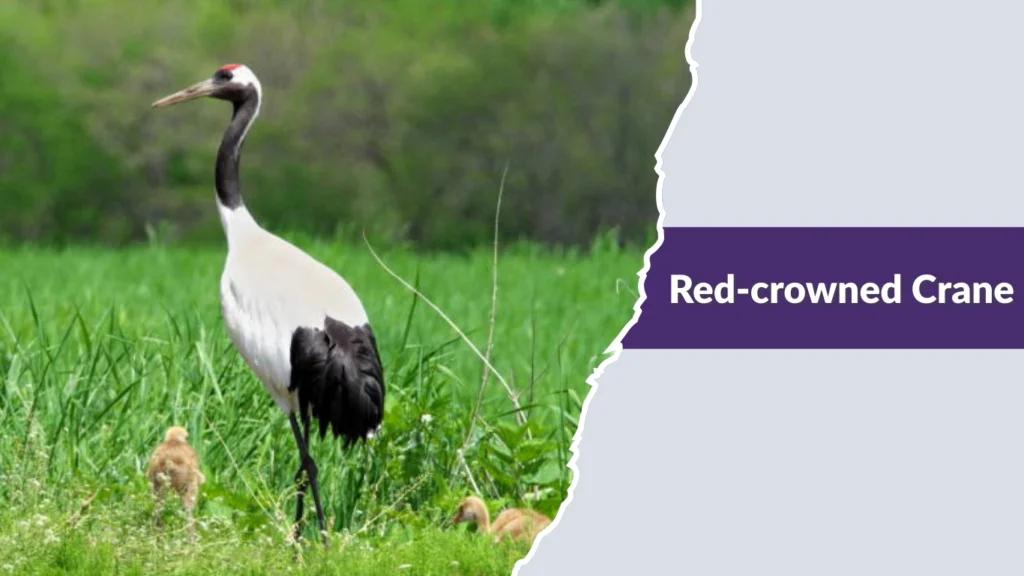
The Red-crowned Crane is one of the most iconic and culturally significant crane species in the world. Revered in East Asia as a symbol of longevity and good fortune, it is admired for its striking appearance and elegant behavior.
Identification
- Large crane with tall, slender body
- Mostly white plumage with black neck and wing feathers
- Bright red patch of bare skin on the crown
- Long, black bill and legs
- Broad wings with strong flight feathers
Habitat
Red-crowned Cranes inhabit wetlands in northeastern Asia. They breed in marshes, bogs, and wet meadows with tall vegetation. Some populations are non-migratory and remain year-round in coastal marshes, river mouths, and tidal flats, while migratory groups move to river basins and agricultural fields during winter.
Behaviors
These cranes are often seen in pairs or small family groups. They form strong lifelong bonds and are famous for synchronized courtship dances featuring bowing, leaping, wing spreading, and vocal calls. Red-crowned Cranes are generally calm and deliberate in movement, reinforcing their reputation for elegance.
Diet and Lifespan
Red-crowned Cranes are omnivorous. Their diet includes fish, amphibians, insects, crustaceans, small mammals, grains, and aquatic plants. In the wild, they can live 30–40 years, making them one of the longest-lived crane species.
9. Black-necked Crane
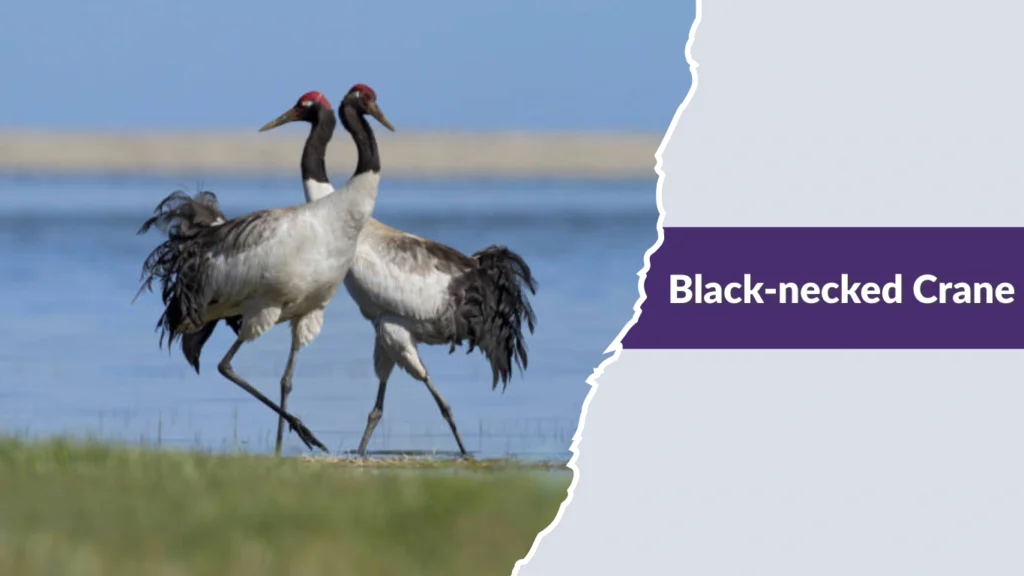
The Black-necked Crane is the only crane species adapted to life at high altitudes. It is native to the Tibetan Plateau and surrounding regions, where it thrives in cold, open landscapes.
Identification
- Medium to large crane with sturdy build
- Pale gray body plumage
- Distinct black head, neck, and upper chest
- Red patch on the crown
- Long legs and straight bill
Habitat
Black-necked Cranes inhabit high-altitude wetlands, alpine marshes, river valleys, and grasslands, often at elevations above 3,000 meters. They breed near shallow lakes and marshes on the Tibetan Plateau and migrate seasonally to lower valleys and agricultural areas during winter.
Behaviors
These cranes are usually seen in pairs or small family groups and gather in larger flocks during migration and winter. They are known for strong pair bonds and elaborate courtship dances that include leaping, wing spreading, and synchronized movements. Their calls are loud and carry long distances in open mountain terrain.
Diet and Lifespan
Black-necked Cranes are omnivorous. Their diet includes roots, tubers, grasses, grains, insects, small mammals, and amphibians. In the wild, they typically live 20–30 years, depending on environmental conditions and habitat protection.
10. Blue Crane
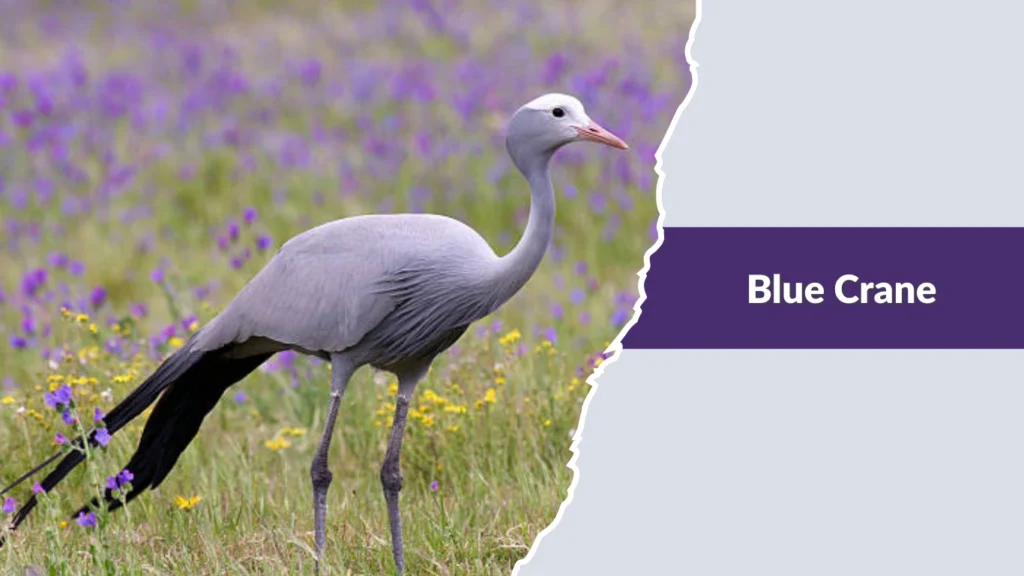
The Blue Crane is South Africa’s national bird and is known for its elegant appearance and flowing plumage. Unlike many other crane species, it favors drier habitats and open landscapes.
Identification
- Medium-sized crane with a slim, graceful build
- Pale bluish-gray plumage
- Long, drooping wing feathers that nearly touch the ground
- Relatively small head with a short, pointed bill
- Dark eyes and long legs
Habitat
Blue Cranes primarily inhabit open grasslands, dry plains, agricultural fields, and lightly grazed pastures. They prefer areas with low vegetation that allow clear visibility. Breeding usually occurs in quiet grassland regions, while non-breeding birds may move seasonally in response to rainfall and food availability.
Behaviors
These cranes are usually seen in pairs or small family groups, though larger flocks may form outside the breeding season. Blue Cranes are known for graceful courtship dances that include slow stepping, wing lifting, and jumping. They are generally less dependent on wetlands than other crane species.
Diet and Lifespan
Blue Cranes are omnivorous, feeding on seeds, grains, grasses, insects, small reptiles, and rodents. In the wild, they typically live 20–25 years, with survival closely linked to habitat stability and low disturbance.
11. Wattled Crane
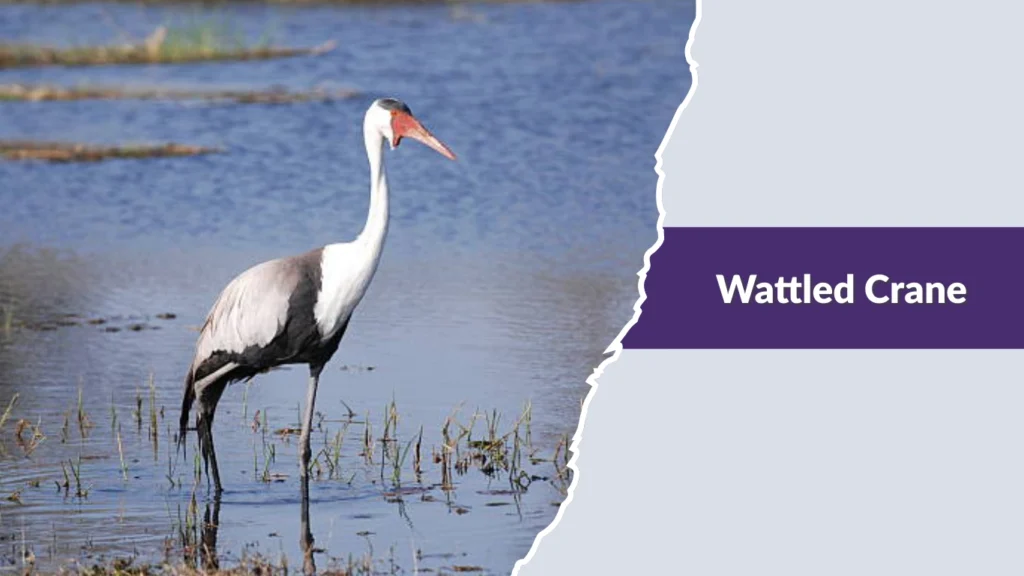
The Wattled Crane is one of the largest and most striking crane species, named for the distinctive hanging skin folds, or wattles, on its face. It is native to sub-Saharan Africa and is closely associated with wetland ecosystems.
Identification
- Very large crane with long legs and neck
- Gray body with white upper wings
- Prominent white wattles hanging from the face
- Red facial skin around the eyes
- Strong, straight bill
Habitat
Wattled Cranes inhabit shallow wetlands, floodplains, marshes, and river basins. They prefer areas with slow-moving or standing water and abundant aquatic vegetation. Breeding usually occurs in remote wetlands with minimal human disturbance, while seasonal movements are influenced by water levels.
Behaviors
This species is often seen in pairs or small family groups and is known for strong lifelong pair bonds. Wattled Cranes perform elaborate courtship dances involving synchronized movements, wing spreading, and loud calls. They are territorial during the breeding season and may defend nesting areas aggressively.
Diet and Lifespan
Wattled Cranes are omnivorous but rely heavily on aquatic plants. Their diet includes tubers, roots, grasses, seeds, insects, and small aquatic animals. In the wild, they typically live 20–30 years, though habitat loss can significantly affect survival.
12. Grey Crowned Crane
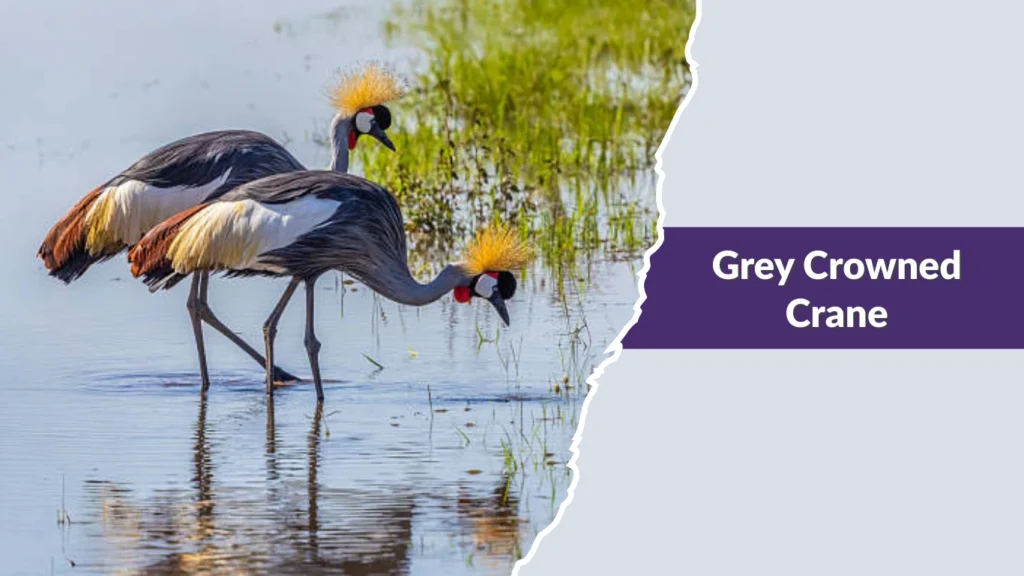
The Grey Crowned Crane is a striking and colorful crane species, best known for the golden crown of stiff feathers on its head. It is widely distributed across eastern and southern Africa and is admired for its unique appearance.
Identification
- Medium-sized crane with elegant posture
- Gray body plumage with white wings
- Distinctive golden crown of bristly feathers
- White cheeks with a red throat patch
- Slender bill and long legs
Habitat
Grey Crowned Cranes inhabit a variety of wet and dry environments. They are commonly found in wetlands, marshes, wet grasslands, savannas, and agricultural fields. Unlike many other cranes, they often roost in trees, which is possible due to their strong hind toes.
Behaviors
These cranes are social birds and often appear in pairs or small flocks. They are known for energetic and elaborate courtship dances that include jumping, bowing, wing flapping, and vocal displays. Grey Crowned Cranes are generally non-migratory but may move locally in response to rainfall and food availability.
Diet and Lifespan
Grey Crowned Cranes are omnivores, feeding on seeds, grains, insects, worms, small reptiles, and amphibians. In the wild, they usually live 20–25 years, though their lifespan can be affected by habitat loss and human activity.
13. Black Crowned Crane
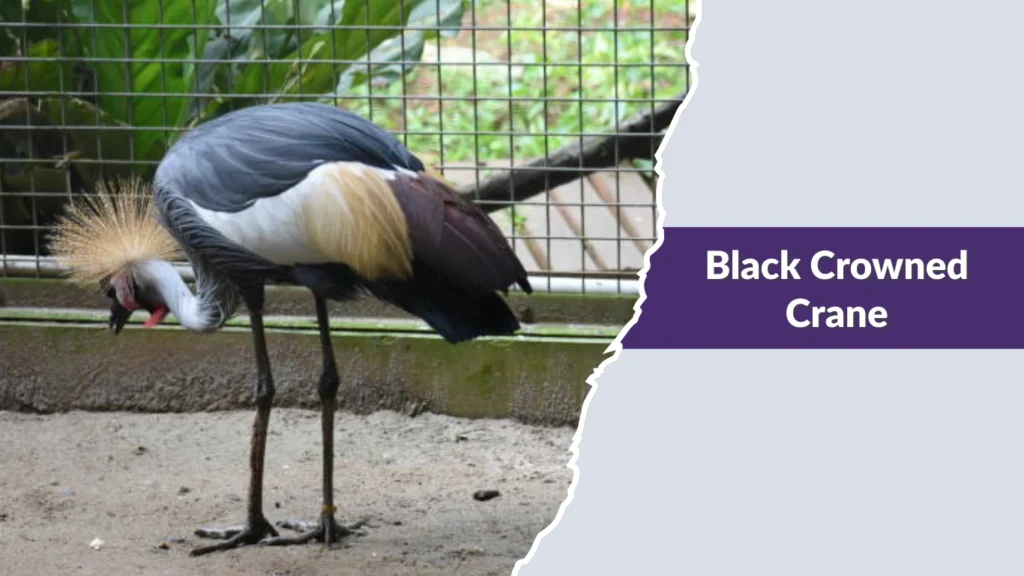
The Black Crowned Crane is a visually striking African crane species, closely related to the Grey Crowned Crane. It is known for its elegant posture, colorful facial markings, and distinctive golden crown.
Identification
- Medium-sized crane with slender build
- Dark gray to black body plumage
- Bright golden crown of stiff feathers
- White cheeks with red and black facial patches
- Long legs and straight bill
Habitat
Black Crowned Cranes are commonly found in wetlands, floodplains, marshes, wet grasslands, and savannas of West and Central Africa. They also adapt well to agricultural landscapes such as rice fields, where food is plentiful. Trees near wetlands are often used for roosting.
Behaviors
These cranes are social and are usually seen in pairs or small groups. They are well known for lively courtship dances that involve jumping, wing spreading, bowing, and calling. Unlike many other crane species, Black Crowned Cranes frequently perch in trees due to their strong hind toes.
Diet and Lifespan
Black Crowned Cranes are omnivorous, feeding on seeds, grains, insects, worms, small mammals, reptiles, and amphibians. In the wild, they typically live 20–25 years, depending on habitat quality and human disturbance.
14. Sarus Crane
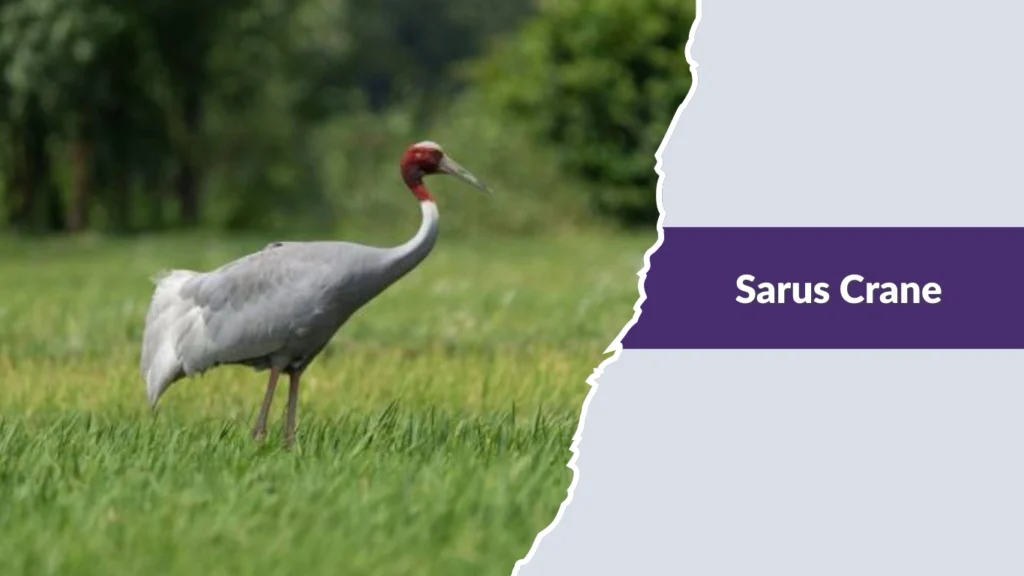
The Sarus Crane is the tallest flying bird in the world and is admired for its impressive height and strong pair bonds. Native to parts of South and Southeast Asia and Australia, it is often associated with wetland landscapes and cultural symbolism.
Identification
- Very tall crane with long legs and neck
- Gray body plumage
- Bare red skin on the head and upper neck
- Strong, straight bill
- Broad wings with powerful flight feathers
Habitat
Sarus Cranes inhabit wetlands, marshes, floodplains, and shallow lakes, as well as nearby grasslands and agricultural fields. They often breed in flooded areas with tall vegetation, which provides protection for nests. In some regions, they are non-migratory and remain in the same areas year-round.
Behaviors
This species is usually seen in pairs and is famous for lifelong monogamous bonds. Sarus Cranes perform elaborate and synchronized courtship dances involving bowing, jumping, wing spreading, and loud calling. They are generally territorial during the breeding season.
Diet and Lifespan
Sarus Cranes are omnivorous, feeding on aquatic plants, roots, tubers, grains, insects, fish, amphibians, and small reptiles. In the wild, they typically live 20–30 years, with longevity influenced by habitat stability and human interactions.
15. Brolga
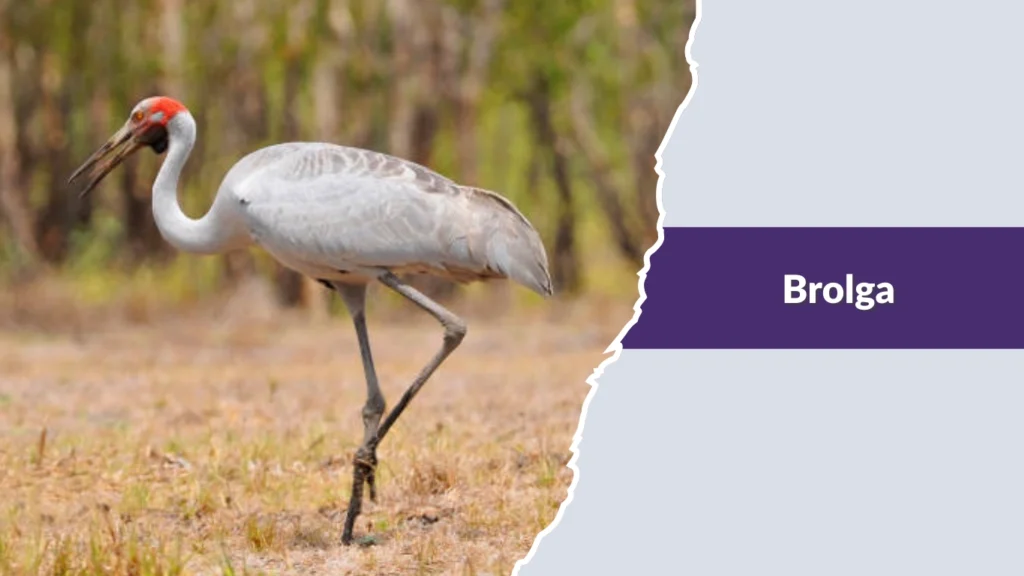
The Brolga is a large, elegant crane native to Australia and New Guinea. Closely related to the Sarus Crane, it is well known for its loud calls, graceful movements, and strong presence in Australian wetlands. The Brolga holds cultural importance for many Indigenous Australian communities and is often featured in traditional stories and dances.
Identification
- Large crane with tall, upright posture
- Silver-gray body plumage
- Bare red skin on the head and throat
- Long, slender neck and legs
- Broad wings with dark tips visible in flight
Habitat
Brolgas are strongly associated with wetlands and open landscapes. They inhabit freshwater marshes, shallow lakes, floodplains, wet grasslands, and agricultural areas such as rice fields. During the breeding season, they prefer isolated wetlands with tall vegetation for nesting. Outside breeding periods, they may move widely across grasslands and farmlands depending on rainfall and water availability.
Behaviors
Brolgas are highly social birds and are often seen in pairs or small groups, forming larger flocks during non-breeding seasons. They are famous for their elaborate courtship dances, which include leaping, bowing, wing spreading, and tossing grass into the air. These dances strengthen pair bonds and are sometimes performed outside the breeding season. Brolgas are strong flyers and vocal communicators, producing loud trumpeting calls that carry over long distances.
Diet and Lifespan
Brolgas are omnivorous and opportunistic feeders. Their diet includes grasses, sedges, grains, seeds, aquatic plants, insects, mollusks, small reptiles, and amphibians. In the wild, they typically live 20–30 years, with survival closely tied to wetland conservation and low human disturbance.
16. Australian Crane
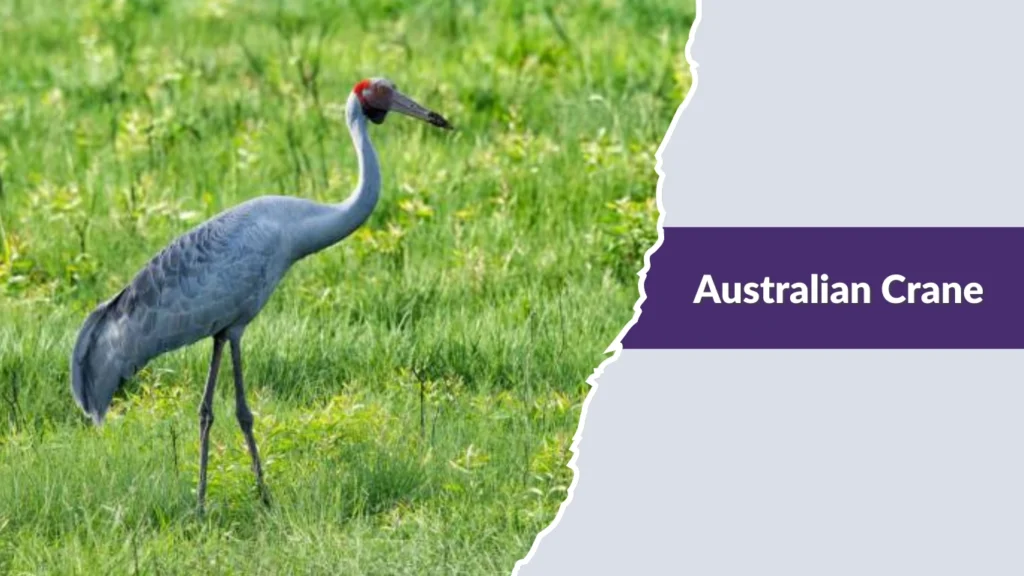
The Australian Crane, commonly known as the Brolga, is one of Australia’s most recognizable crane species. It is admired for its tall stature, resonant calls, and elegant behavior, especially in open wetland landscapes across northern and eastern Australia.
Identification
- Large crane with a tall, upright body
- Pale gray to silver plumage
- Bare red skin on the head and throat
- Long neck, legs, and straight bill
- Dark wing tips visible during flight
Habitat
Australian Cranes are primarily found in freshwater wetlands, marshes, floodplains, and shallow lakes. They also make use of open grasslands and agricultural fields, especially outside the breeding season. Breeding typically occurs in isolated wetlands with dense vegetation, while seasonal movements depend on rainfall and water levels.
Behaviors
These cranes are usually seen in pairs or small family groups, forming larger flocks during non-breeding periods. They are famous for their elaborate courtship dances involving jumping, wing spreading, bowing, and tossing vegetation. Australian Cranes are vocal birds, using loud trumpeting calls to communicate over long distances.
Diet and Lifespan
Australian Cranes are omnivorous, feeding on grasses, seeds, grains, aquatic plants, insects, mollusks, reptiles, and amphibians. In the wild, they typically live 20–30 years, with longevity influenced by habitat quality and protection from human threats.
17. Eurasian Crane
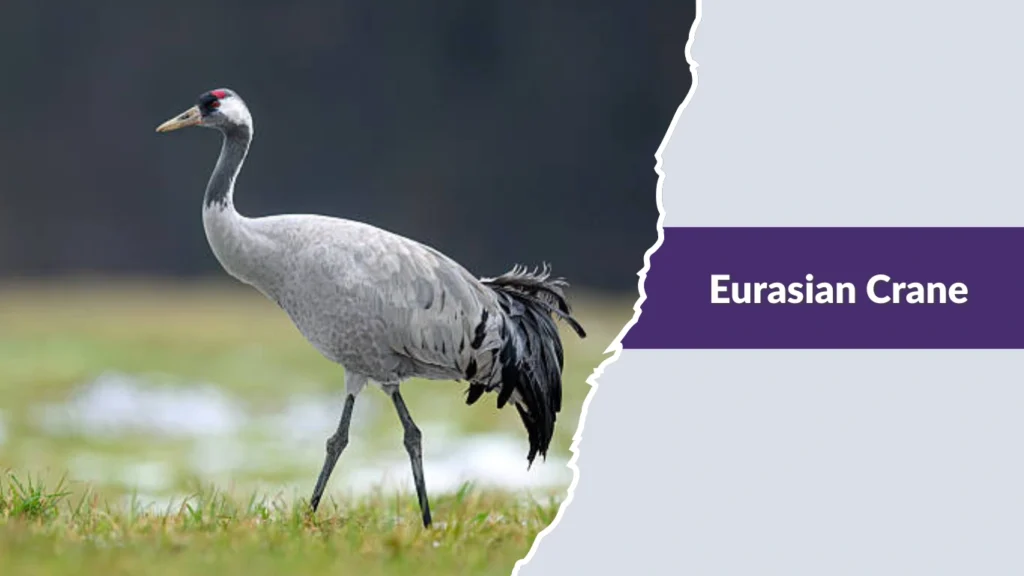
The Eurasian Crane, also known as the Common Crane, is one of the most widely distributed crane species in the world. Found across Europe and Asia, it is admired for its powerful flight, loud trumpeting calls, and impressive long-distance migrations. Large gatherings during migration make it a spectacular species to observe.
Identification
- Tall, long-legged crane with an elegant posture
- Overall gray plumage with darker wing feathers
- Black neck and throat with a white stripe down the sides
- Distinct red patch on the crown
- Long, straight bill and broad wings
Habitat
Eurasian Cranes rely heavily on wetlands but also use a variety of open landscapes. During the breeding season, they inhabit marshes, bogs, wet meadows, and shallow lakes surrounded by dense vegetation. Outside breeding periods, they are commonly found in agricultural fields, grasslands, and open plains, using wetlands mainly for roosting at night. Safe roosting sites with shallow water are essential for protection from predators.
Behaviors
These cranes are highly social and often form large flocks during migration and winter. They are famous for elaborate courtship dances involving jumping, wing flapping, bowing, and synchronized movements. Eurasian Cranes are strong, high-altitude migrants and communicate constantly with loud, rolling calls that can be heard from great distances.
Diet and Lifespan
Eurasian Cranes are omnivorous and highly adaptable feeders. Their diet includes grains, seeds, roots, tubers, berries, insects, worms, amphibians, reptiles, and small mammals. In the wild, they typically live 20–30 years, with some individuals reaching even greater ages in protected environments.
FAQs
What is the largest crane species in the world?
The Sarus Crane is the largest crane species and the tallest flying bird in the world. Adult Sarus Cranes can reach heights of up to 1.8 meters, making them noticeably taller than other crane species.
How long do crane birds usually live?
Most crane species have a long lifespan, typically living 20–30 years in the wild. Some species, such as the Red-crowned Crane, can live up to 40 years under favorable conditions.
Are all crane species migratory?
No, not all cranes migrate long distances. Some species, like the Blue Crane and certain populations of the Red-crowned Crane, are mostly non-migratory, while others travel thousands of miles seasonally.
What do crane birds eat?
Cranes are generally omnivorous. Their diet includes grains, seeds, roots, aquatic plants, insects, small mammals, fish, amphibians, and reptiles, depending on habitat and availability.
Why are crane dances important?
Crane dances play a key role in courtship and pair bonding. These dances also help strengthen long-term relationships between mates and may be performed outside the breeding season.
