
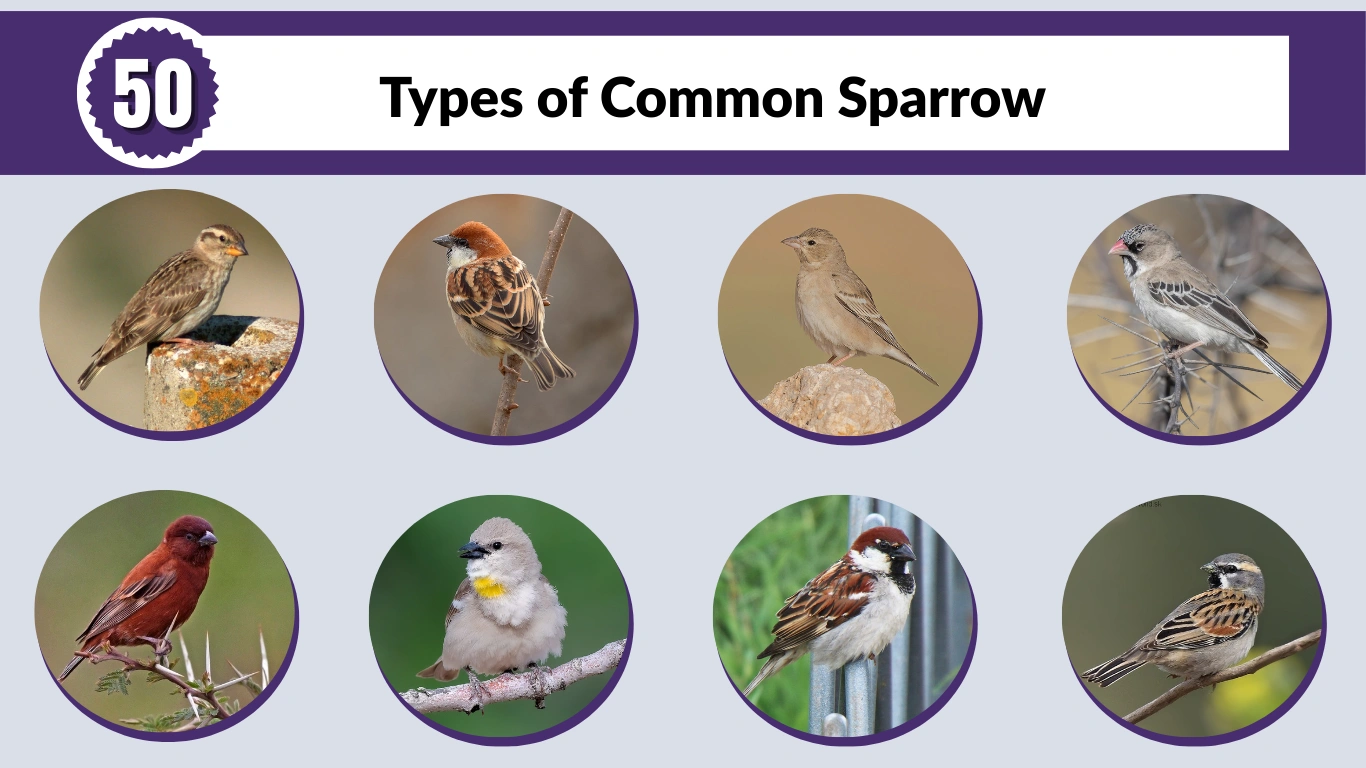
Sparrows are among the most familiar and widespread birds across the globe, easily recognized for their lively behavior, adaptable nature, and charming chirps. Found in cities, farmland, forests, and deserts, these small songbirds display surprising diversity across different regions. From well-known species like the House Sparrow to rare, habitat-specific birds such as the Saltmarsh Sparrow, each one shows unique traits and adaptations. This collection highlights 50 common types of sparrows, giving you a clear look at their names and key characteristics.
1. House Sparrow
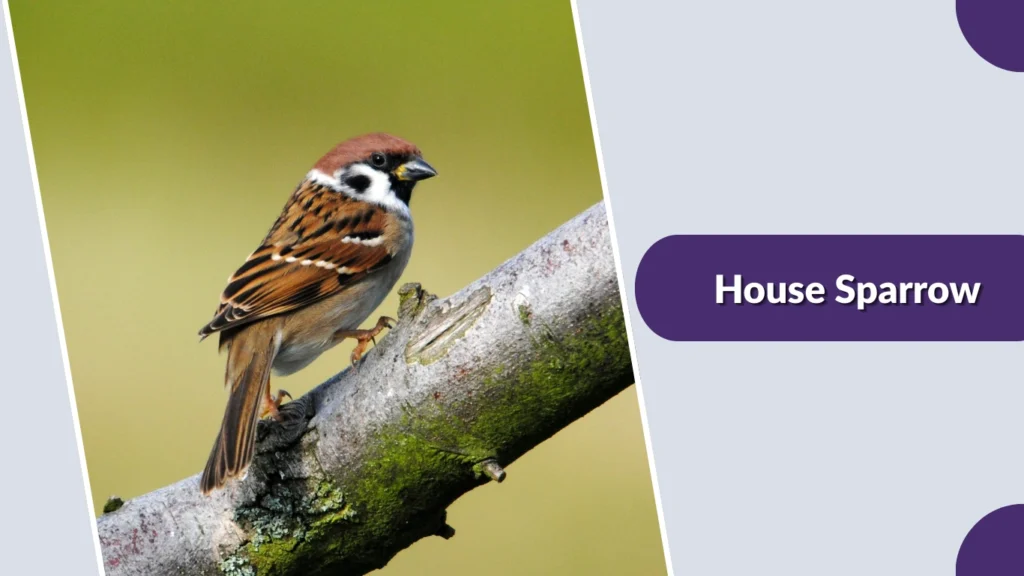
The House Sparrow is one of the most widespread and familiar small birds in the world, commonly found near human settlements. Known for its adaptability, social behavior, and distinctive plumage, it thrives in cities, villages, and farmland habitats across many continents.
Identification
- Small, chunky sparrow with a stout, conical bill
- Males have gray crowns, black bibs, and chestnut napes
- Females are brown overall with pale streaking
- Short tail and rapid, fluttery flight
- Often seen in noisy, active flocks around buildings
Habitat
The House Sparrow prefers areas close to humans, including urban centers, rural villages, and farms. It often nests in crevices on buildings, roofs, and other structures. Open spaces with scattered vegetation and abundant food sources help support their populations.
Behavior
House Sparrows are highly social, forming flocks almost year-round. They show boldness around people, frequently visiting markets, gardens, and outdoor dining spots. Their chirping calls are constant, and they exhibit strong site fidelity, often returning to the same nesting area for years.
Diet
Their diet consists mainly of seeds, grains, and small insects. In human-dominated areas, they readily consume food scraps and crumbs. During the breeding season, they increase insect intake to feed their chicks, providing essential protein for growth.
2. Eurasian Tree Sparrow
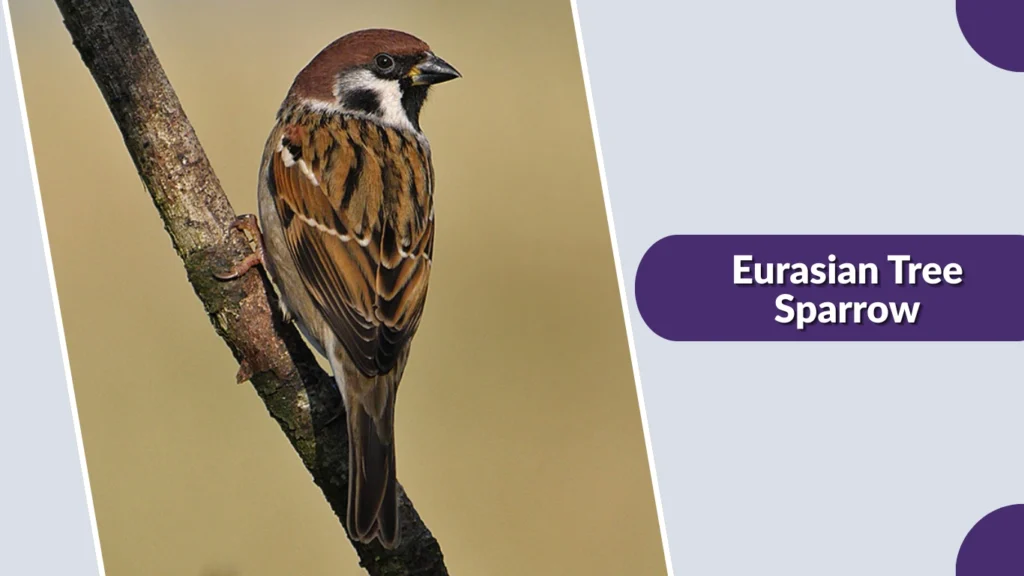
The Eurasian Tree Sparrow is a small, active sparrow widely found across Europe and Asia. Recognizable by its neat plumage and preference for woodland edges, farmlands, and gardens, it often forms tight-knit flocks and adapts well to rural and semi-urban environments.
Identification
- Rich chestnut-brown crown
- Distinct black cheek spot on clean white cheeks
- Black bib on throat (smaller than House Sparrow)
- Slimmer and more delicate build than House Sparrow
- Short tail and fluttering flight pattern
Habitat
This species typically inhabits farmlands, orchards, forest edges, and countryside villages. It prefers areas with scattered trees and shrubs, rarely venturing deep into urban centers. It nests in tree holes, nest boxes, and sometimes building crevices.
Behavior
Eurasian Tree Sparrows are social and often travel in small flocks. They are agile, quick movers, and frequently forage on the ground or low vegetation. Their “chip-chip” calls are soft but constant, and they show strong pair bonds throughout the year.
Diet
Their diet mainly consists of seeds, grains, and grasses. They also consume insects—especially during the breeding season—to feed their chicks. They forage actively in open fields, around farms, and in garden feeding areas.
3. American Tree Sparrow
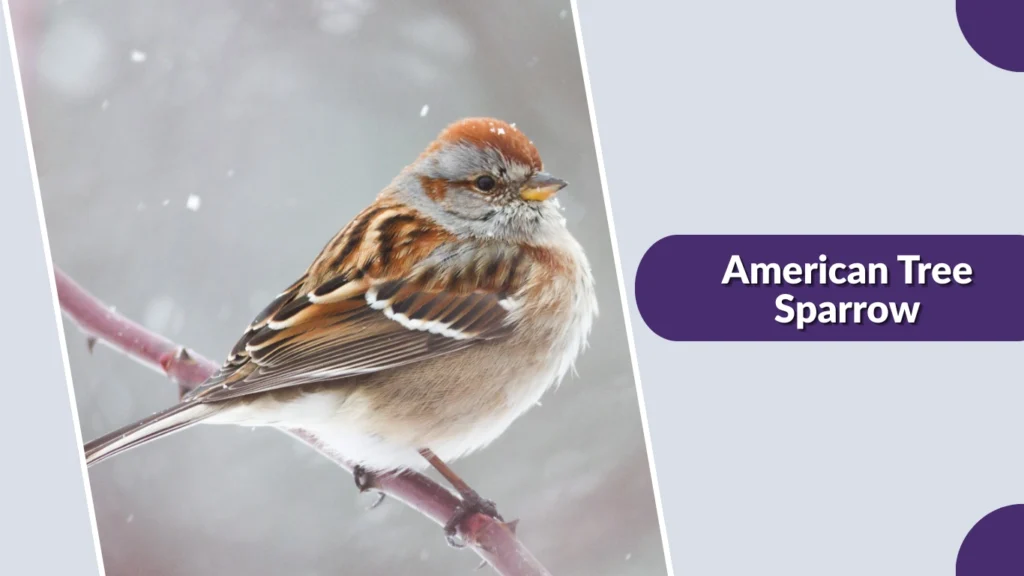
The American Tree Sparrow is a graceful winter visitor across much of North America. Known for its gentle appearance and soft calls, it thrives in open fields, tundra edges, and shrubby habitats, especially during migration and winter months.
Identification
- Rusty cap with a contrasting gray face
- Distinct dark spot on the center of the chest
- Two crisp white wing bars
- Bicolored bill: dark upper, yellow lower
- Slender body with a long tail
Habitat
This sparrow breeds in Arctic tundra and northern shrublands, then migrates south to prairies, fields, marsh edges, and weedy open areas. It favors habitats with low shrubs and plenty of seed sources during winter.
Behavior
American Tree Sparrows are active and social, often forming mixed-species winter flocks. Their song is soft and musical, and they spend much time foraging on or near the ground. With a gentle temperament, they are frequent visitors to backyard feeders.
Diet
Seeds make up the majority of their diet, particularly grasses and weeds. During the breeding season, they rely more heavily on insects for protein. They forage by hopping along the ground, flicking through snow or debris for food.
4. Chipping Sparrow
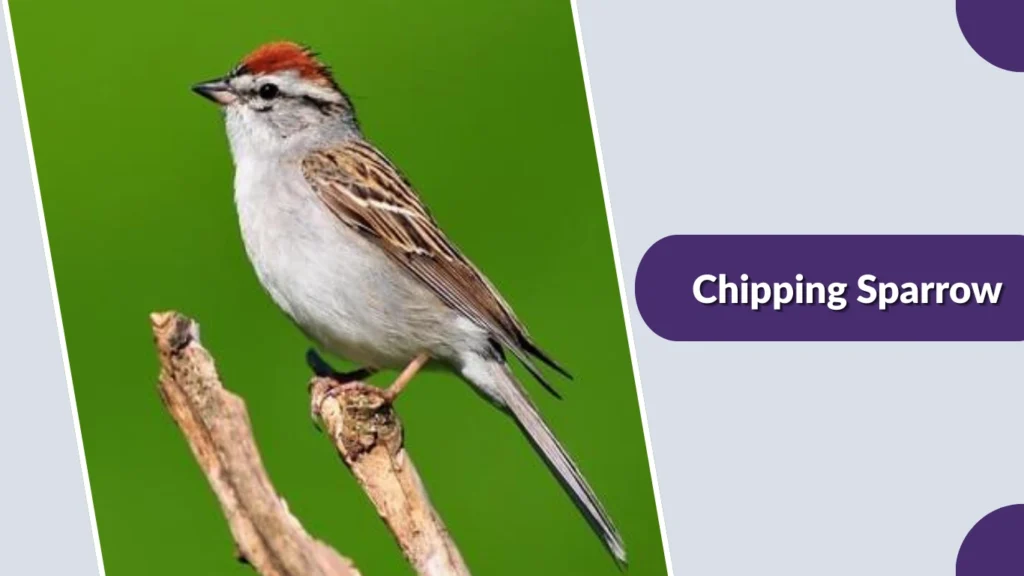
The Chipping Sparrow is a tidy, bright-eyed sparrow commonly seen across North America, especially in open woodlands and suburban areas. Its crisp markings and distinctive trill make it easy to recognize during spring and summer.
Identification
- Rusty-red crown (breeding adults)
- Clear gray face with a bold black eye line
- Slim body with a clean, pale underbelly
- Two subtle wing bars
- Nonbreeding birds appear browner overall
Habitat
Chipping Sparrows inhabit open forests, parks, residential yards, and grassy clearings. They prefer areas with scattered trees and shrubs for nesting and open ground for foraging. They readily adapt to human presence and commonly visit feeders.
Behavior
These sparrows are quick and energetic, often seen flitting between trees and hopping across lawns. Their song is a rapid, dry trill. During the breeding season, males defend small territories, while outside the season they form loose flocks.
Diet
Their diet includes seeds, especially grass and weed seeds, along with insects such as caterpillars and beetles during breeding. They frequently forage on the ground and will also take advantage of backyard bird feeders.
5. Song Sparrow
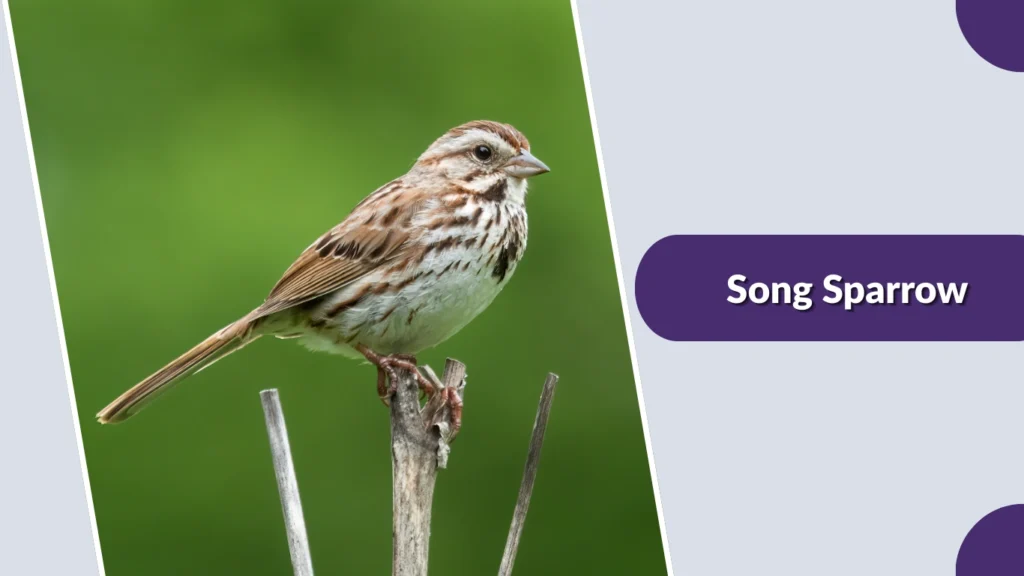
The Song Sparrow is one of North America’s most widespread and vocal sparrows. Known for its rich, melodious song and heavily streaked plumage, it thrives in marshes, gardens, woodland edges, and suburban areas.
Identification
- Brown-streaked body with a bold central breast spot
- Gray face with brown markings
- Long, rounded tail often pumped while perching
- Thick, conical bill
- Highly variable plumage across regions
Habitat
Song Sparrows inhabit marshes, thickets, brushy fields, and backyards. They prefer moist environments but can adapt to many habitats, provided there is dense vegetation for cover and nesting.
Behavior
These sparrows are active and vocal, frequently singing from elevated perches. Males are territorial during breeding, while outside the season they are more tolerant. They forage close to the ground, scratching through leaf litter for food.
Diet
They feed mainly on seeds and small insects, especially beetles, caterpillars, and spiders. During summer, insects form a major part of their diet to support chick development. They also occasionally eat small fruits and berries.
6. Savannah Sparrow
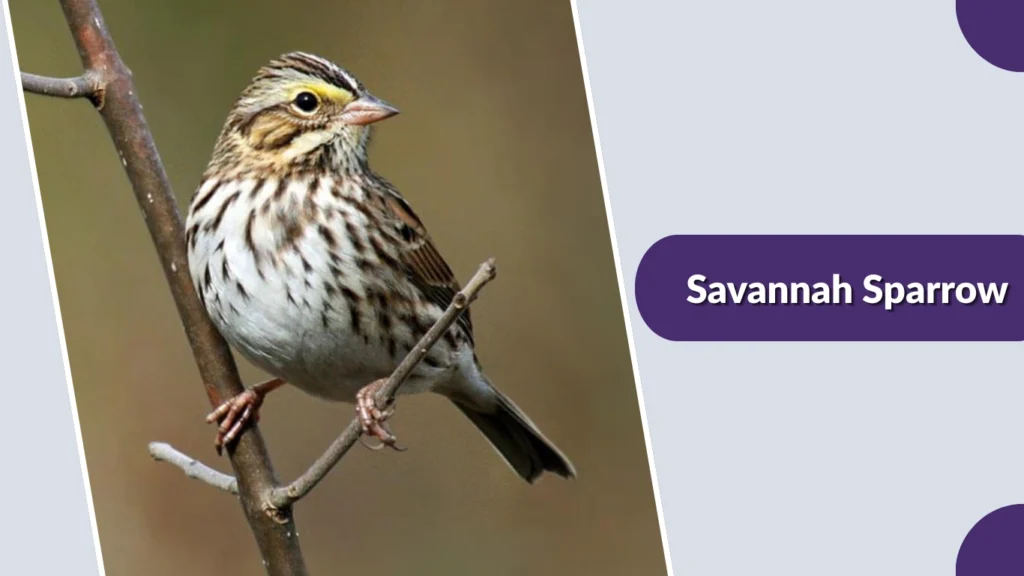
The Savannah Sparrow is a streaked, ground-dwelling sparrow found across open habitats in North America. Its subtle plumage and distinctive yellow eyebrow spot make it recognizable to experienced birders.
Identification
- Brown, streaked body with fine chest streaks
- Distinct yellowish patch in front of the eye
- Short tail with a slight notch
- Slender build with a sharp, conical bill
- Crisp facial patterning
Habitat
This species favors grasslands, meadows, coastal marshes, tundra, and agricultural fields. It selects open spaces with scattered low vegetation and often nests on or near the ground.
Behavior
Savannah Sparrows are shy and typically remain low in grasses, making short flights when disturbed. They sing from low perches such as fence posts. Outside the breeding season, they often form loose flocks.
Diet
Their diet consists mostly of seeds and insects. Grass seeds dominate in winter, while insects—especially beetles and flies—become essential during the breeding season. They forage by walking or hopping through grasses and low vegetation.
7. Lincoln’s Sparrow
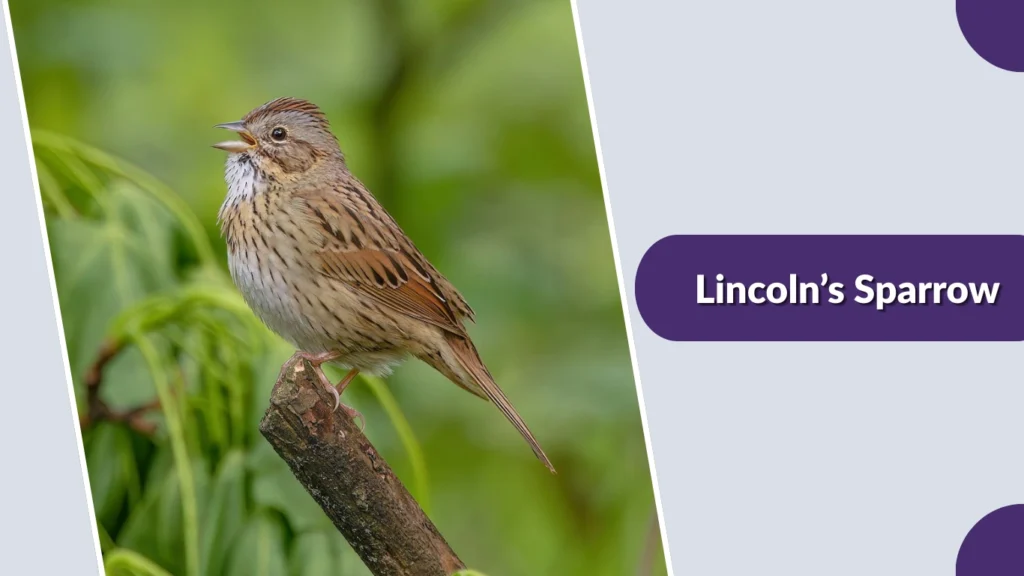
The Lincoln’s Sparrow is a shy and beautifully patterned sparrow known for its finely streaked plumage and sweet, musical song. It inhabits dense, brushy areas across North America, especially during migration.
Identification
- Fine, crisp streaking on breast with a buffy wash
- Gray face with a buff eye ring and whisker pattern
- Slight crest or rounded crown shape
- Slim build with a narrow tail
- Delicate, refined appearance compared to similar sparrows
Habitat
Lincoln’s Sparrows prefer wet meadows, willow thickets, montane shrubs, and bog edges. During migration, they use dense vegetation for cover and forage in quiet, brushy spots.
Behavior
These sparrows are secretive and often remain hidden until flushed. They hop close to the ground, flicking their tails as they forage. Their song is a beautiful, tinkling melody delivered from low perches.
Diet
Their diet includes seeds, small insects, and spiders. In summer, they shift to insect-heavy feeding to nourish their young. They often feed quietly among grasses and shrubs.
8. Fox Sparrow
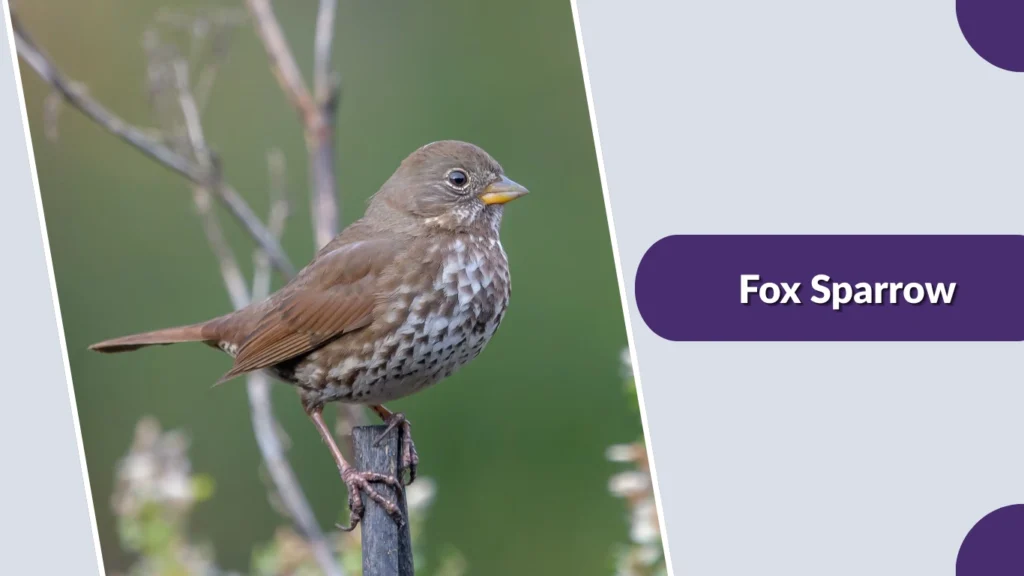
The Fox Sparrow is a large, robust sparrow known for its rich reddish tones and powerful scratching behavior. Found across northern and western North America, it varies significantly among regional forms.
Identification
- Reddish or “foxy” plumage (varies by subspecies)
- Bold chest streaks forming a central spot
- Thick, strong bill
- Large, chunky body
- Frequently seen vigorously kicking leaf litter while foraging
Habitat
Fox Sparrows inhabit forest understories, brushy slopes, thickets, and coastal scrub. They prefer dense cover, especially in coniferous or mixed forests, and winter in shrubby, low-elevation areas.
Behavior
They are energetic foragers, using powerful double-scratches to uncover insects and seeds. Fox Sparrows are generally shy but may sing loudly from hidden perches. They migrate early, with northern breeders traveling long distances.
Diet
Their diet includes seeds, berries, and insects. They rely heavily on insects during summer and switch to seeds and small fruits during winter. Fox Sparrows are ground feeders, often rummaging noisily through leaf litter.
9. White-crowned Sparrow
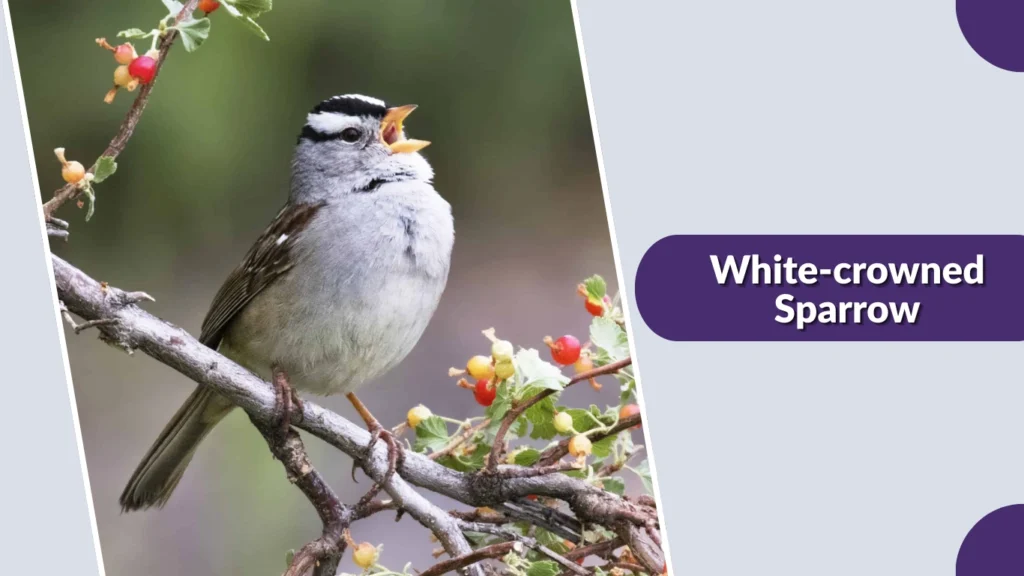
The White-crowned Sparrow is a striking, boldly marked sparrow recognized by its crisp black-and-white head pattern. Widespread across North America, it frequents brushy habitats, forest edges, and suburban areas during migration and winter.
Identification
- Bold black-and-white striped crown
- Gray face and underparts
- Long tail with a slender body
- Pink or yellowish bill (varies by region)
- Clean, crisp plumage with minimal streaking
Habitat
White-crowned Sparrows inhabit tundra, shrublands, coastal scrub, and open woodlands. During migration and winter, they visit gardens, hedgerows, and parks, often staying close to dense shrubs for protection.
Behavior
These sparrows are calm but alert, often feeding on the ground in small groups. Their song is clear and whistled, varying by region. They migrate long distances, with some traveling from Alaska to southern U.S. and Mexico.
Diet
Their diet consists of seeds, buds, and insects. During breeding, they rely more heavily on insects, while winter diets shift toward seeds and berries. They also forage beneath feeders for fallen grains.
10. White-throated Sparrow
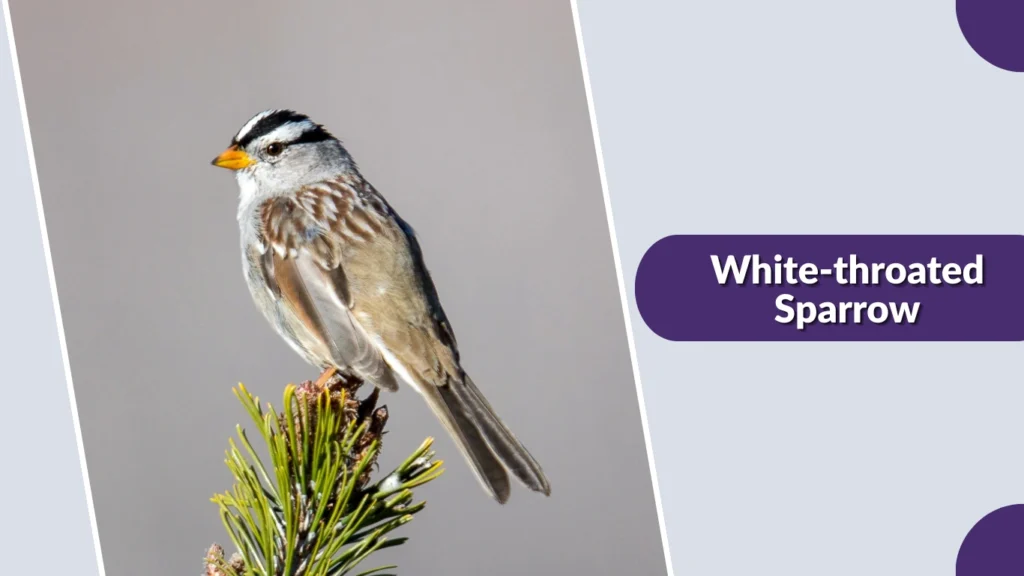
The White-throated Sparrow is a beautiful, melodic sparrow known for its distinctive “Old-Sam-Peabody-Peabody” song. Its bold facial pattern and bright throat patch make it one of North America’s easiest sparrows to identify.
Identification
- Bright white throat patch
- Black-and-white or tan-striped crown (two color morphs)
- Yellow lores in front of the eyes
- Brown body with streaked flanks
- Long, rounded tail
Habitat
White-throated Sparrows breed in northern forests, favoring spruce, fir, and mixed woodlands. In winter, they frequent brushy fields, woodland edges, gardens, and hedgerows, especially in the eastern United States.
Behavior
These sparrows are social and often found in small flocks. They scratch through leaf litter for food and may become quite tame near feeders. Their whistled song is iconic and commonly heard during spring migration.
Diet
Their diet includes seeds, insects, and berries. They feed heavily on seeds in winter and switch to insects during the breeding season. They also forage on fallen berries and plant buds.
11. Golden-crowned Sparrow
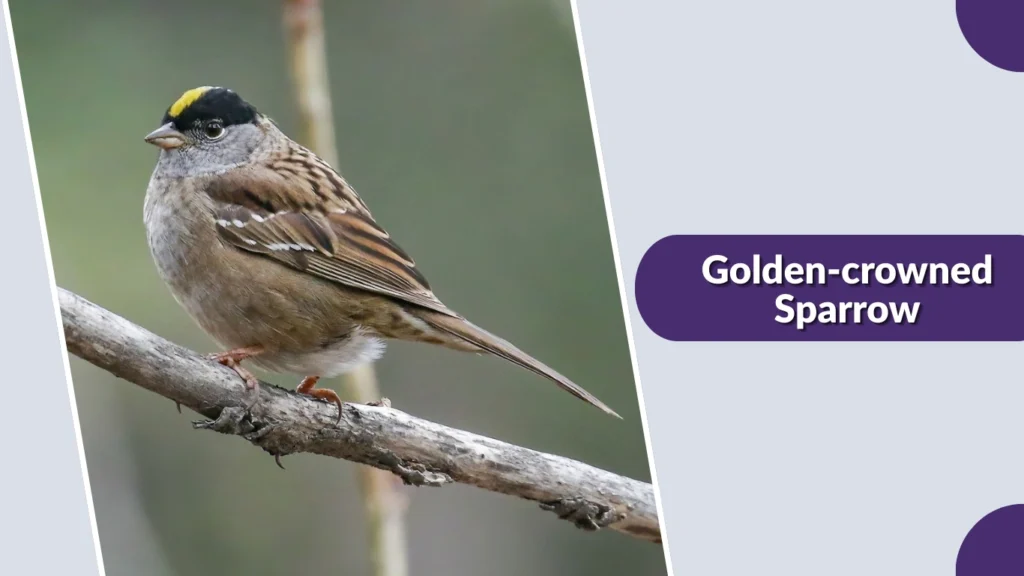
The Golden-crowned Sparrow is a distinctive western North American sparrow recognized by its bright yellow crown patch. It is a common migrant and winter visitor along the Pacific Coast, favoring brushy habitats and coastal scrub.
Identification
- Yellow crown bordered by bold black stripes
- Gray face and chest with a brown-streaked back
- Medium-sized sparrow with a long tail
- Bill typically dark and slender
- Winter plumage duller but still shows yellow crown
Habitat
Golden-crowned Sparrows inhabit coastal shrubs, forest edges, chaparral, and weedy fields. During migration, they use brushy thickets and open woodland margins, often staying near dense cover for safety.
Behavior
These sparrows forage quietly on the ground, often in small groups. Their call is a plaintive, descending whistle. They are shy but may visit feeders in winter, especially in the Pacific Northwest and California.
Diet
They primarily eat seeds, buds, and berries. Insects become more important during breeding season. They forage among leaf litter and low vegetation, occasionally hopping into shrubs for berries.
12. Field Sparrow
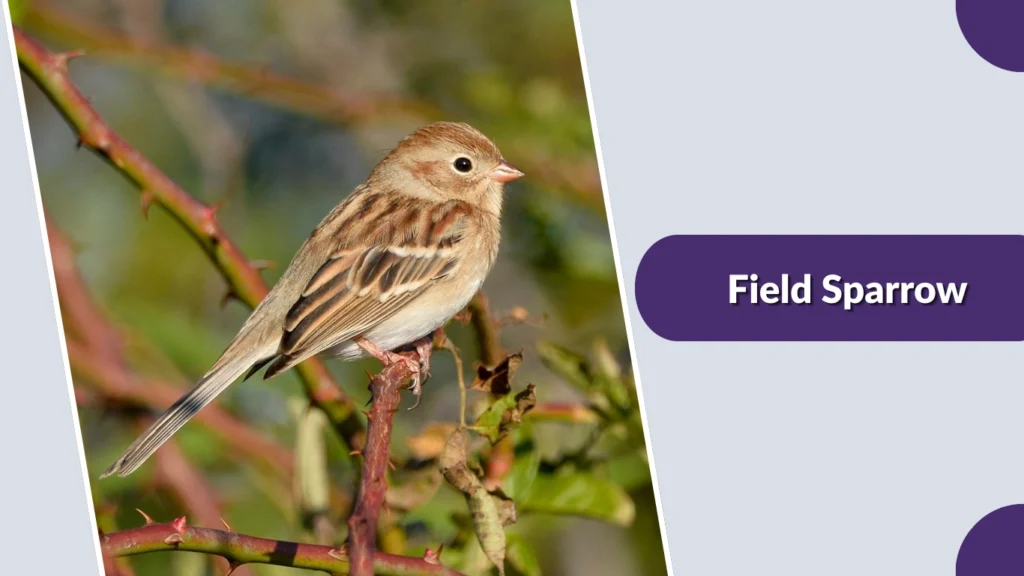
The Field Sparrow is a gentle, pink-billed sparrow common in grassy fields, old pastures, and shrubby openings across eastern and central North America. Its sweet, accelerating song is often associated with quiet countryside habitats.
Identification
- Pink bill and pale face
- Warm brown back with fine streaks
- Clear, unstreaked chest
- Thin white eye ring
- Small, delicate build
Habitat
Field Sparrows prefer open fields, meadows, prairies, and overgrown pastures with scattered shrubs. They nest close to the ground and rely on low cover for protection during breeding.
Behavior
These sparrows are calm and often solitary or found in small groups. Their song is a clear series of whistles that accelerates into a trill. They forage mainly on or near the ground, moving quietly through grasses.
Diet
Their diet includes seeds, especially from grasses and weeds. In breeding season, they consume insects such as caterpillars and beetles. They often pick food from the ground or low plants.
13. Vesper Sparrow
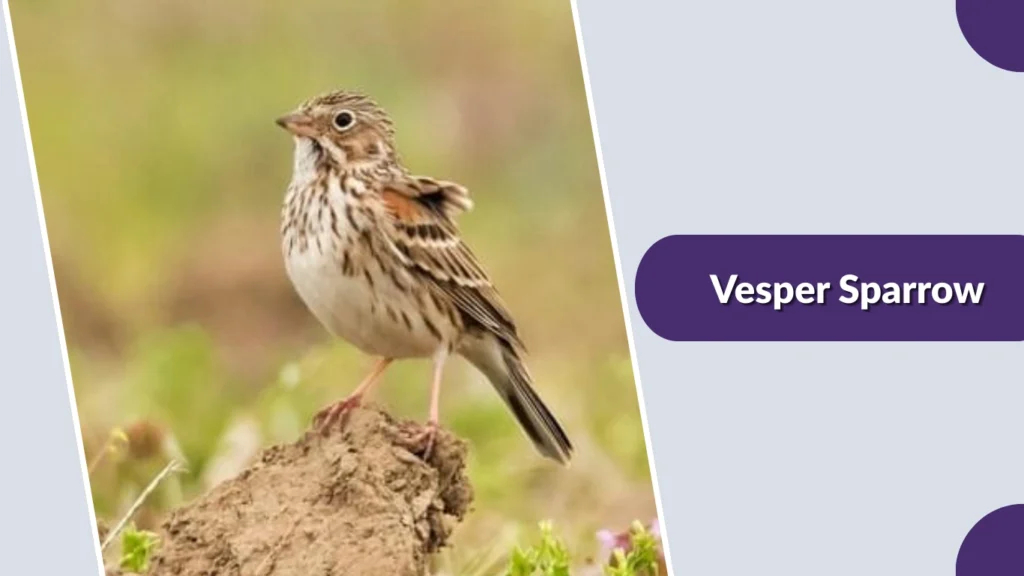
The Vesper Sparrow is a graceful, long-tailed sparrow known for its musical evening song. Found in open fields and prairies across North America, it is recognized by its subtle plumage and distinctive white outer tail feathers.
Identification
- White outer tail feathers visible in flight
- Fine streaking on chest and sides
- Pale eye ring and chestnut patch on shoulder
- Slender body with a long tail
- Pinkish bill
Habitat
Vesper Sparrows inhabit open grasslands, prairies, pastures, and agricultural fields. They prefer areas with sparse shrubs or fence lines for perching and nesting.
Behavior
They often sing at dusk, giving them the name “Vesper.” They forage on the ground in a calm, deliberate manner. When flushed, they typically fly low, flashing their white tail edges.
Diet
Their diet consists of grass and weed seeds, along with insects during summer. They feed mostly on the ground, searching through grasses and bare soil.
14. Grasshopper Sparrow
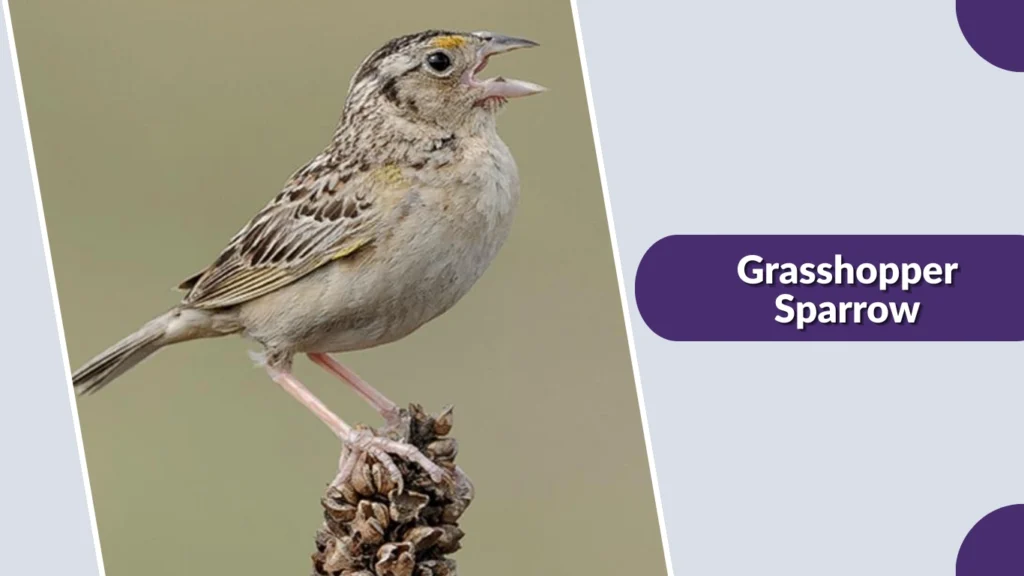
The Grasshopper Sparrow is a small, elusive sparrow best known for its insect-like buzzing song. It inhabits grasslands and prairies throughout much of North America.
Identification
- Flat-headed appearance
- Pale face with orange-buff wing coverts
- Short tail and stubby bill
- Streak-free breast
- Subtle patterning with a clean, tidy look
Habitat
Grasshopper Sparrows require open, dry grasslands, prairies, and reclaimed fields with low, sparse vegetation. They prefer habitats with little shrub growth.
Behavior
These sparrows are shy and stay low in grass, running rather than flying when disturbed. Their song is a high, insect-like trill. They perch on fence posts or grass stems when singing.
Diet
They feed mainly on insects—especially grasshoppers, which inspired their name. Seeds become more important outside the breeding season. They forage quietly on the ground in open grassy areas.
15. Henslow’s Sparrow
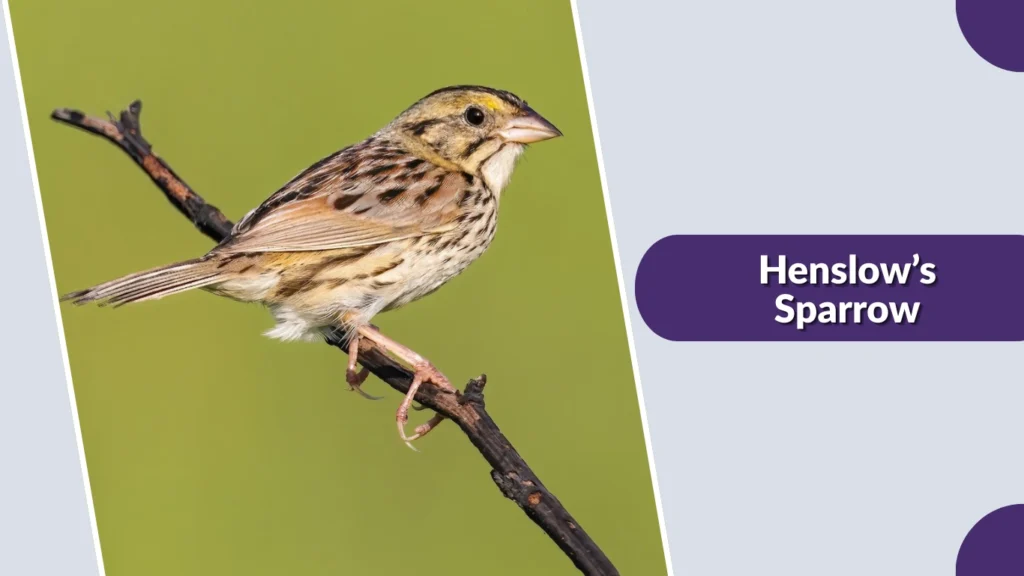
The Henslow’s Sparrow is a secretive grassland sparrow known for its tiny, insect-like song and preference for dense, tall prairie vegetation. It is considered one of North America’s more elusive sparrows due to its shy behavior.
Identification
- Olive-green wash on head and nape
- Fine streaking on chest and sides
- Short tail and flat-headed profile
- Pale mustache stripe and thin eye ring
- Small, delicate bill
Habitat
Henslow’s Sparrows inhabit tallgrass prairies, wet meadows, and overgrown fields with dense, rank vegetation. They choose areas with thick ground cover for nesting and concealment.
Behavior
These birds are extremely secretive, often remaining hidden in grass. Their song is a short, insect-like “tsi-lick.” They seldom fly unless flushed and prefer to run through vegetation.
Diet
Their diet includes insects such as beetles, grasshoppers, and caterpillars, with seeds becoming more important in winter. They forage low in grass, often on the ground.
16. LeConte’s Sparrow
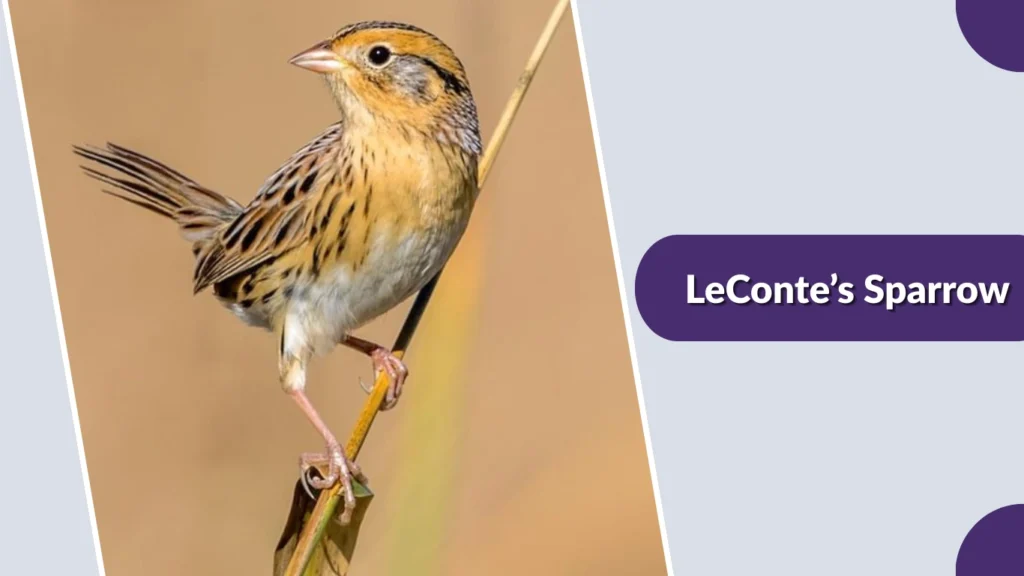
The LeConte’s Sparrow is a beautifully patterned but highly secretive sparrow of northern wetlands and grasslands. Known for its buffy coloration and shy nature, it is often difficult to spot in the wild.
Identification
- Buffy-orange face and chest
- Crisp streaking on sides and back
- Gray nape with fine lines
- Short tail and compact body
- Clean, pale central breast area
Habitat
LeConte’s Sparrows prefer wet meadows, sedge marshes, and moist grasslands. They thrive in areas with dense ground vegetation and limited shrubs.
Behavior
They are elusive and tend to stay hidden deep in grasses. When disturbed, they run rather than fly. Their thin, high song is often heard at dawn and dusk from concealed perches.
Diet
They feed mainly on seeds from grasses and sedges. During breeding, they consume small insects such as beetles and spiders. Foraging occurs low in vegetation or on the ground.
17. Nelson’s Sparrow
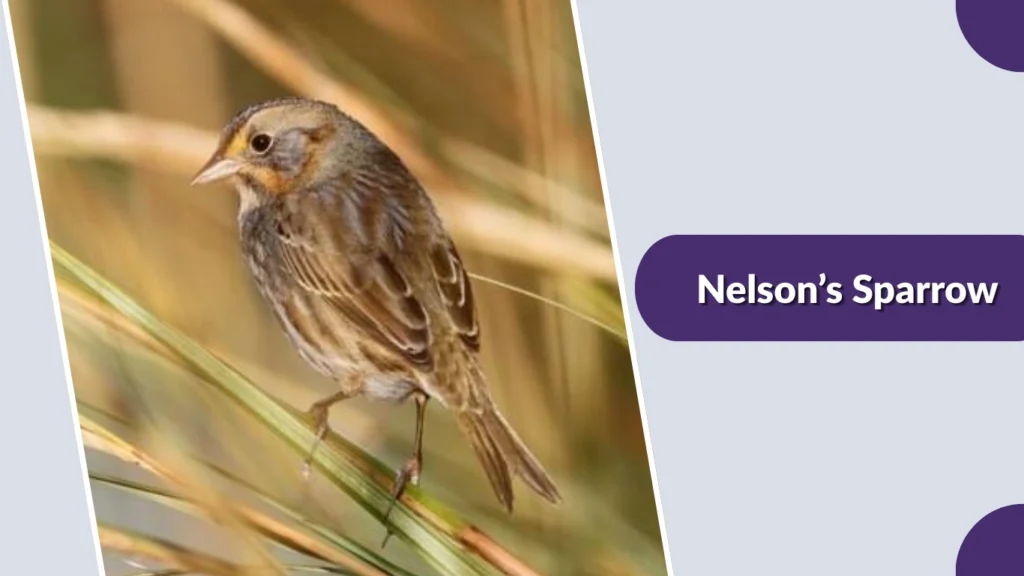
The Nelson’s Sparrow is a secretive marsh-dwelling sparrow known for its warm orange face and preference for coastal and inland wetlands. Its soft, hiss-like song often blends into the sounds of marsh grasses.
Identification
- Bright orange face and breast
- Gray cheeks and nape
- Crisp streaking on sides
- Short tail and compact build
- Subtle but distinctive facial pattern
Habitat
Nelson’s Sparrows inhabit coastal salt marshes, brackish marshes, and inland marshy grasslands. They prefer dense stands of grasses or sedges, especially near water.
Behavior
These birds skulk low in marsh grass, rarely flying unless flushed. Their song is a soft buzz mixed with clicks. They often forage at the bases of grass stems and along mud edges.
Diet
Their diet includes insects, spiders, and small crustaceans, with seeds becoming more important in winter. They feed low among marsh vegetation or directly on mudflats.
18. Saltmarsh Sparrow
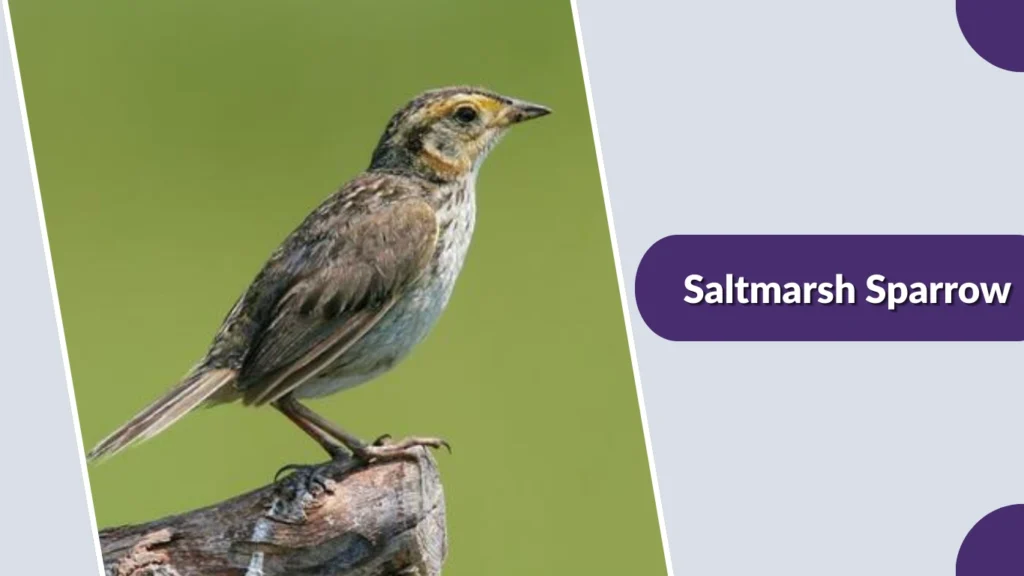
The Saltmarsh Sparrow is a specialized coastal bird found exclusively in salt marshes along the Atlantic Coast. It is known for its dusky plumage, secretive behavior, and dependence on tidal habitats.
Identification
- Orange-washed face with gray cheeks
- Heavy streaking on breast and sides
- Brown back with fine markings
- Short tail and slender bill
- Faint central breast area
Habitat
Saltmarsh Sparrows inhabit tidal salt marshes dominated by cordgrass and other coastal vegetation. They rely heavily on areas that flood regularly, nesting above high-tide lines.
Behavior
These sparrows move quietly through marsh grass, often running rather than flying. Their song is a short, insect-like hiss. They are sensitive to habitat changes and rising sea levels.
Diet
They feed on insects, small marine invertebrates, and seeds. Foraging occurs close to the ground, in grass bases, or on exposed mud.
19. Seaside Sparrow
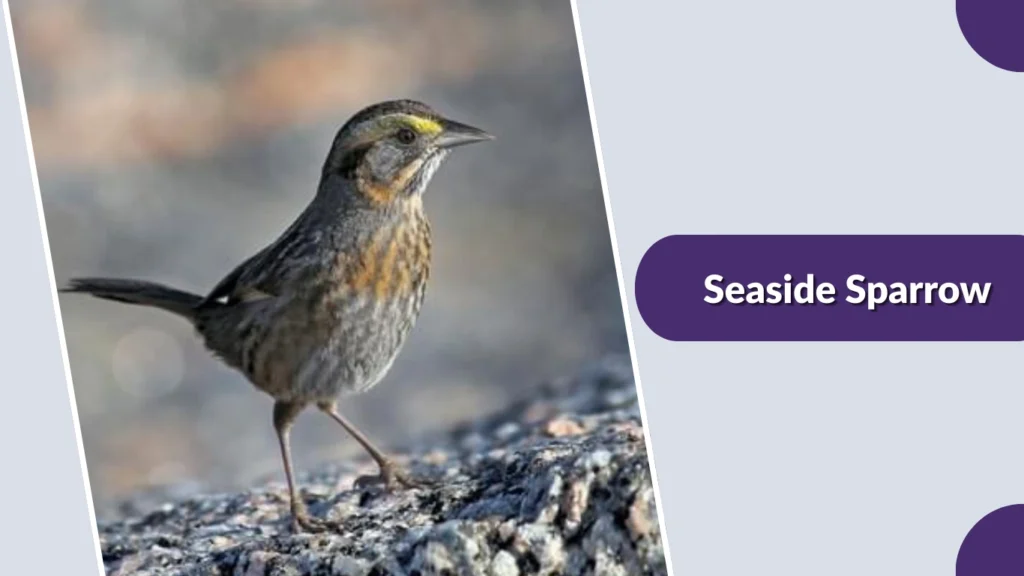
The Seaside Sparrow is a coastal specialist found mainly along the Atlantic and Gulf coasts. Its dark plumage and marsh-habitat preference distinguish it from many other sparrows.
Identification
- Dusky gray body with subtle streaking
- Yellow spot in front of the eye
- Long tail and robust build
- Thick bill adapted for coastal foraging
- Overall darker appearance than most sparrows
Habitat
Seaside Sparrows inhabit salt marshes, brackish marshes, and coastal wetlands. They prefer areas dominated by cordgrass and other tall marsh vegetation.
Behavior
These sparrows stay low in dense marsh plants and often run rather than fly. Their song is a buzzy trill. They are territorial during breeding and closely tied to tidal cycles.
Diet
Their diet includes insects, marine invertebrates, seeds, and small snails. They forage among grass stems and along muddy edges.
20. Clay-colored Sparrow
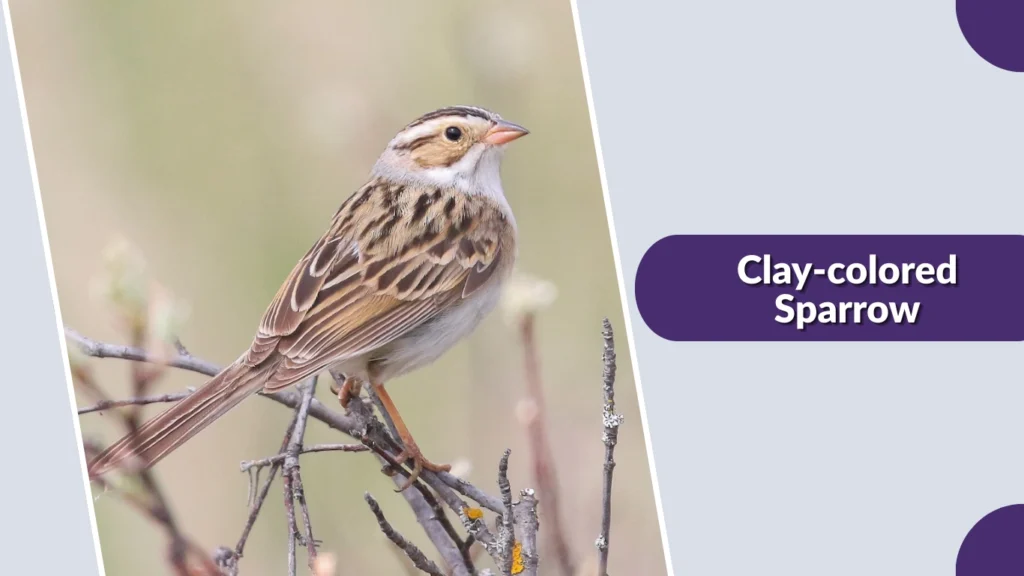
The Clay-colored Sparrow is a small, pale sparrow recognized for its clean facial pattern and preference for shrubby grasslands. It breeds in northern prairies and migrates through central and southern North America.
Identification
- Pale face with sharp dark cheek line
- Buff-colored nape
- Thin crown stripes
- Clear, unstreaked breast
- Slender body and fine bill
Habitat
Clay-colored Sparrows inhabit shrubby prairies, young forests, and overgrown fields. They prefer areas with scattered low shrubs and open ground for foraging.
Behavior
They are active and often travel in loose flocks during migration. Their song is a series of soft, insect-like buzzes. They frequently perch on shrubs and low trees.
Diet
Their diet consists mainly of seeds from grasses and weeds. Insects become important during summer, especially for feeding chicks. They forage on the ground and low vegetation.
21. Brewer’s Sparrow
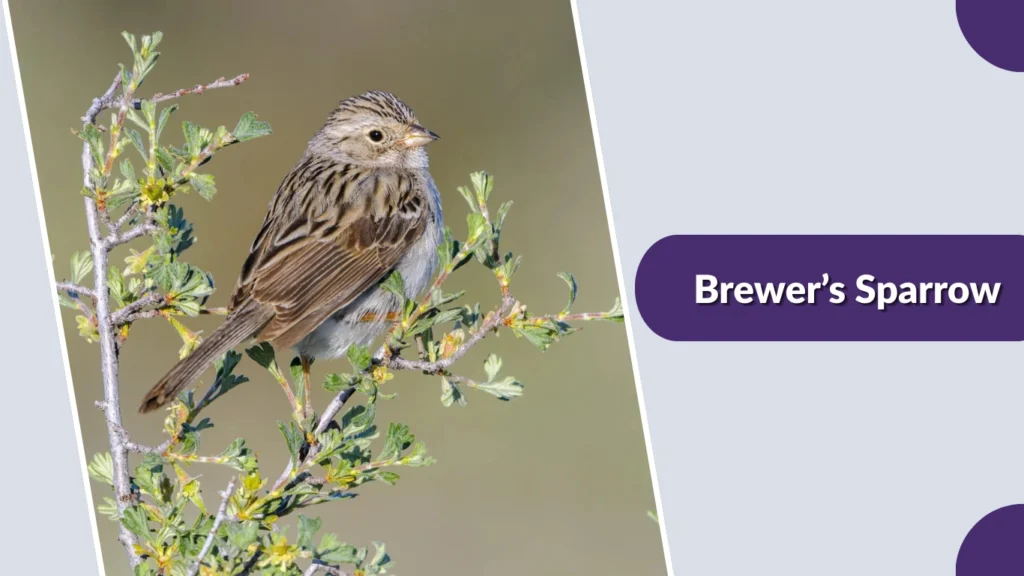
The Brewer’s Sparrow is a subtle, grayish sparrow of the western sagebrush plains. Despite its plain appearance, it is an important species of arid shrubland ecosystems.
Identification
- Overall gray-brown plumage
- Fine streaking on back
- Plain gray face with minimal markings
- Slim build with a long tail
- Thin, sharp bill
Habitat
Brewer’s Sparrows inhabit sagebrush flats, desert shrublands, and open arid regions. They are closely tied to healthy sagebrush ecosystems for nesting and cover.
Behavior
These sparrows are agile and often forage low in shrubs or on the ground. Their song is a long, musical series of trills. They migrate in loose flocks and are most active during early morning.
Diet
Their diet includes seeds, especially from grasses and sagebrush, and insects during breeding season. They forage quietly among shrubs and grasses.
22. Black-chinned Sparrow
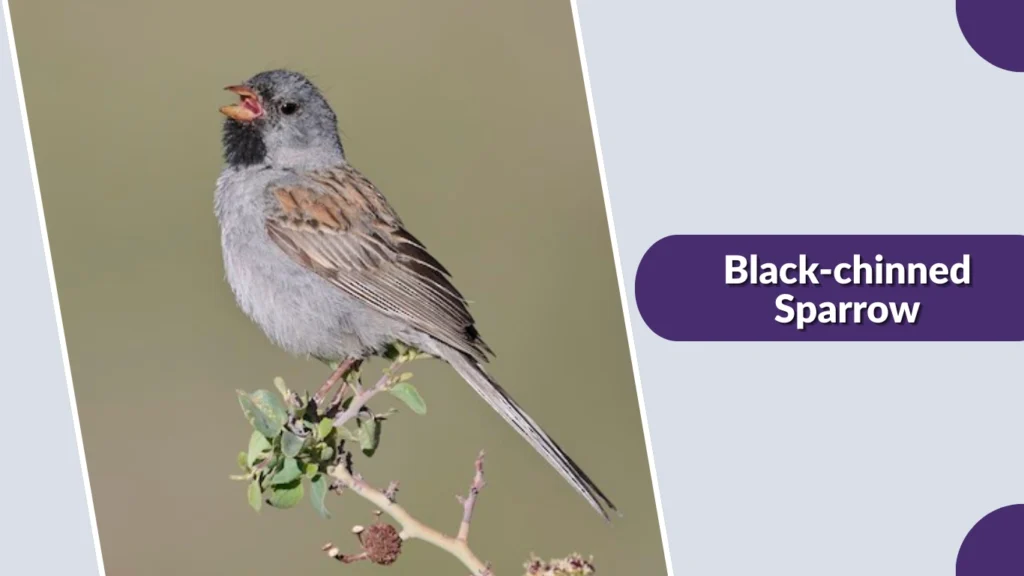
The Black-chinned Sparrow is a delicate songbird of southwestern deserts and chaparral habitats. It is known for its sleek appearance and clear, whistled song.
Identification
- Slate-gray body
- Distinct black chin (adult males)
- Rusty-brown back with light streaking
- Long tail and slender shape
- Pale, conical bill
Habitat
Black-chinned Sparrows inhabit arid shrublands, desert foothills, and chaparral. They prefer areas with sparse shrubs mixed with open ground.
Behavior
These sparrows are active and alert, often flitting among shrubs. Males sing from elevated perches during breeding season. They tend to form small flocks in winter.
Diet
Their diet includes seeds from grasses and shrubs, along with insects during summer. They forage on or near the ground, moving quickly between shrubs.
23. Black-throated Sparrow
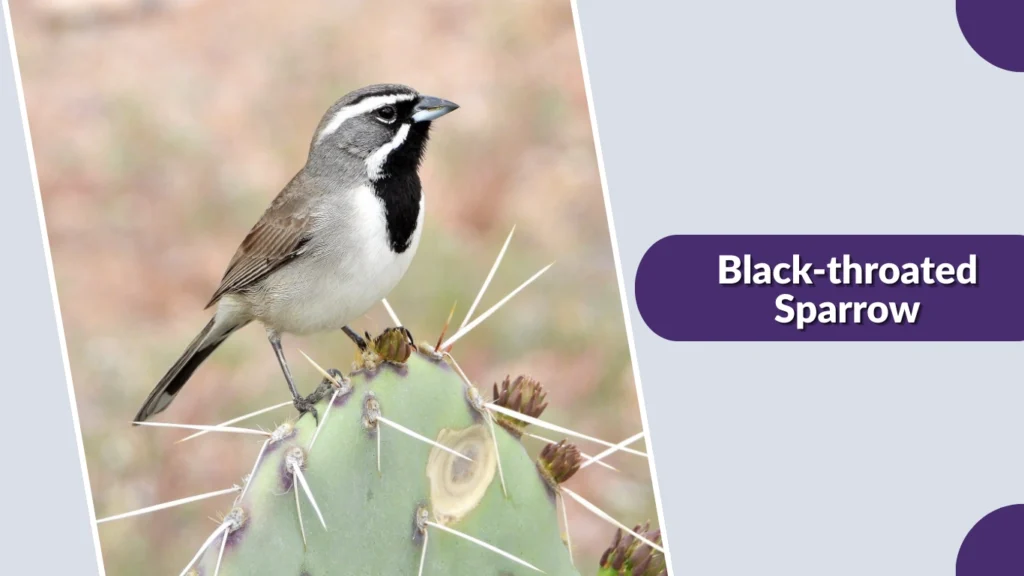
The Black-throated Sparrow is a striking desert bird easily recognized by its bold facial pattern and crisp black throat patch. It is commonly found across the arid southwestern United States and northern Mexico.
Identification
- Prominent black throat bordered by white arcs
- Gray head with bold white eyebrow and malar stripes
- Pale underparts and gray-brown back
- Small, sleek body with a long tail
- Distinctive, sharp facial contrast
Habitat
Black-throated Sparrows inhabit deserts, rocky hillsides, arid scrublands, and open canyon areas. They prefer dry habitats with scattered shrubs and bare ground.
Behavior
These sparrows are active and often perch on exposed rocks or shrubs. Their song is a series of clear, sweet whistles. They are ground foragers, moving quickly between sparse plants.
Diet
Their diet includes seeds from desert grasses and shrubs, along with insects during the breeding season. They forage mainly on the ground, especially in early morning.
24. Lark Sparrow
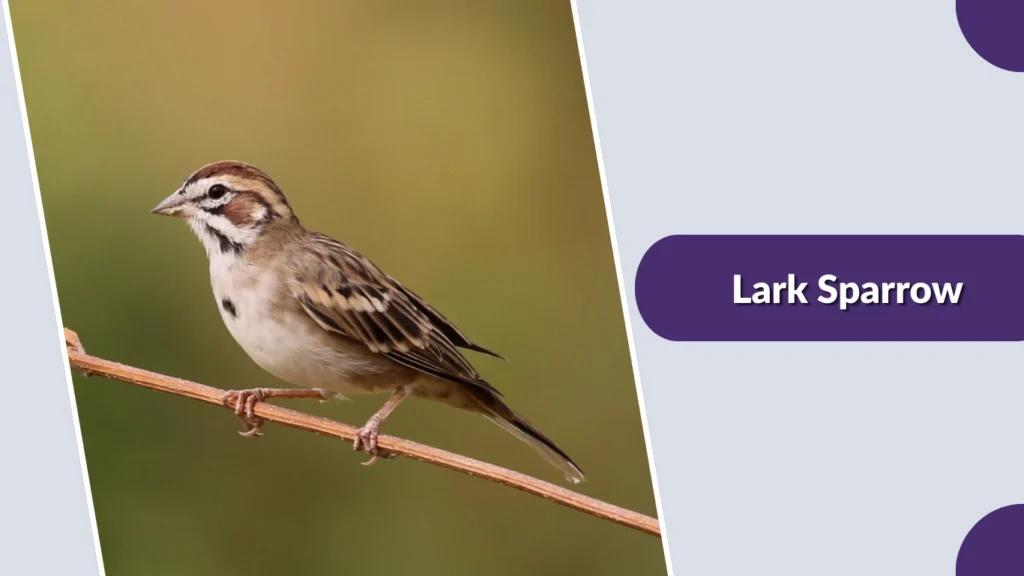
The Lark Sparrow is a beautifully patterned sparrow known for its bold facial stripes and unique courtship displays. It is widespread across grasslands, farmlands, and open woodlands.
Identification
- Chestnut, black, and white facial pattern
- White tail edges visible in flight
- Clear breast with a central spot
- Long tail and sturdy build
- Striking, unmistakable head markings
Habitat
Lark Sparrows inhabit open fields, prairies, savannas, and agricultural areas. They prefer habitats with scattered trees or shrubs and plenty of open ground.
Behavior
Lark Sparrows are known for their courtship display, where males offer grass stems while fluttering their wings. They forage on the ground and may form small flocks outside the breeding season.
Diet
Their diet includes seeds, insects, and small fruits. During breeding, they rely heavily on insects such as beetles and grasshoppers. They forage on bare soil, in grasses, and along field edges.
25. Sagebrush Sparrow
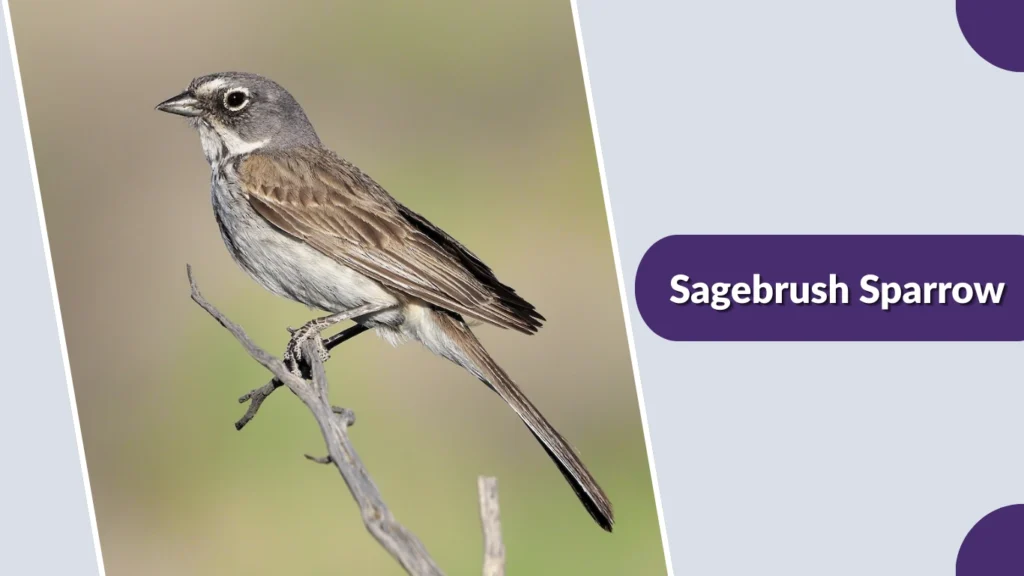
The Sagebrush Sparrow is a specialist of the western sagebrush plains, known for its clean plumage and preference for vast, open shrublands. It is closely tied to healthy sagebrush ecosystems.
Identification
- Gray head with a crisp white eye ring
- Pale underparts with a faint central spot
- Brown back with fine streaks
- Long tail with white edges
- Clean, contrasting facial pattern
Habitat
Sagebrush Sparrows inhabit expansive sagebrush flats, desert shrublands, and arid plains. They avoid densely vegetated areas and depend heavily on sagebrush for nesting and cover.
Behavior
They are active ground foragers, often running between shrubs rather than flying long distances. Males sing from the tops of sagebrush during early morning. They migrate in small flocks.
Diet
Their diet includes sagebrush seeds, grasses, and small insects. During breeding, insects become essential for chick development. They forage low among shrubs and in open sandy areas.
26. Baird’s Sparrow
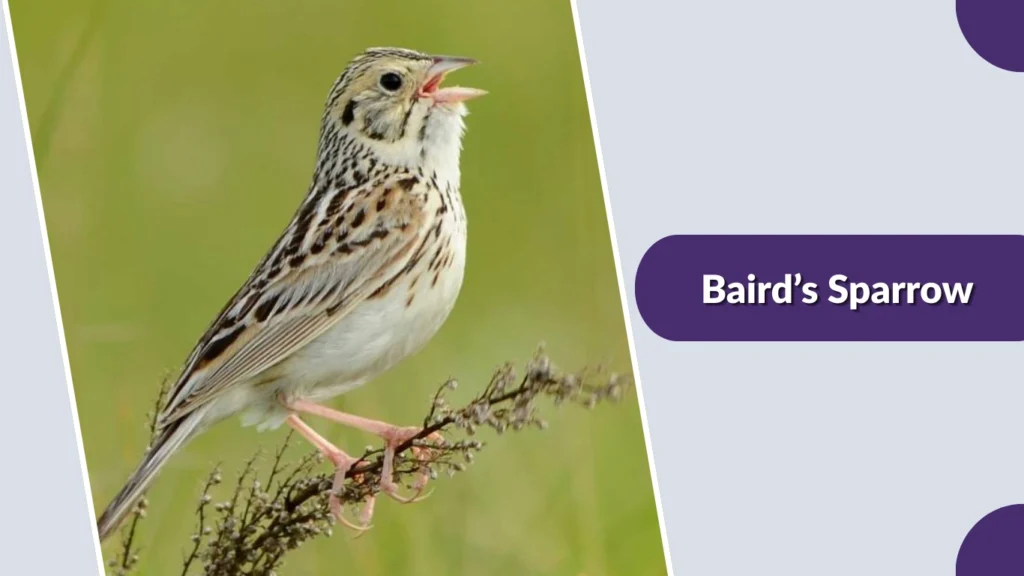
The Baird’s Sparrow is a prairie specialist known for its soft, tinkling song and warm, buff-colored plumage. It is typically found in the northern Great Plains.
Identification
- Warm buff face and breast
- Fine streaking on sides
- Distinct dark spot on the crown
- Slender body with a short tail
- Subtle but clean facial markings
Habitat
Baird’s Sparrows inhabit tall and mixed-grass prairies with scattered forbs and low shrubs. They prefer undisturbed native grasslands.
Behavior
These sparrows are shy and often stay hidden in tall grasses. Their song is a soft, musical trill. They fly short distances when flushed and prefer to forage quietly on the ground.
Diet
Their diet consists mainly of seeds from grasses and weeds. During summer, insects—especially grasshoppers and beetles—form a significant part of their diet. They forage at or near the ground.
27. Rufous-collared Sparrow
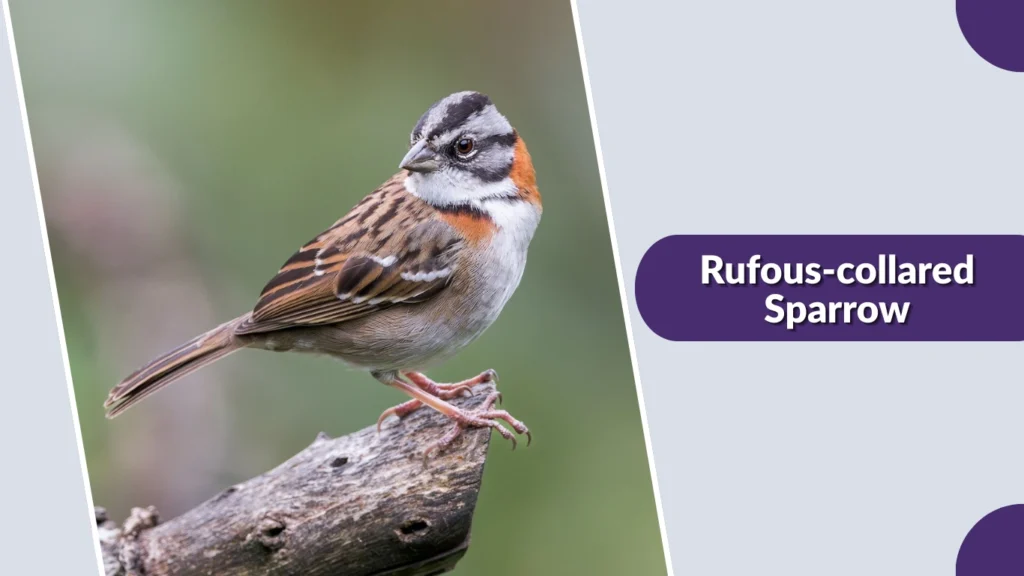
The Rufous-collared Sparrow is a widespread South American species known for its bold rufous collar and clear, whistled song. It thrives in a variety of habitats from mountains to city parks.
Identification
- Distinct rufous collar around the neck
- Black-and-white striped head pattern
- Gray face and breast
- Brown back with fine streaks
- Medium-sized sparrow with a sharp bill
Habitat
Rufous-collared Sparrows inhabit grasslands, gardens, forest edges, farmland, and urban areas throughout Central and South America. They adapt well to human presence and are often seen in parks.
Behavior
They are active, tame, and frequently sing from low perches. Their calls include musical whistles and trills. They forage on the ground in small groups or pairs.
Diet
Their diet includes seeds, small insects, and plant material. They often forage around human settlements for crumbs and grain.
28. Cape Sparrow
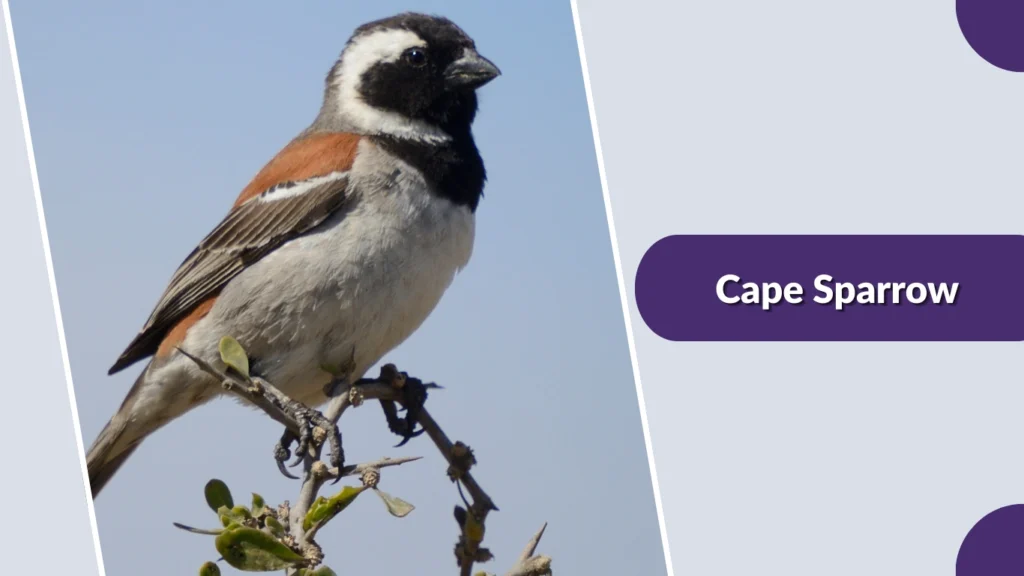
The Cape Sparrow is a striking southern African sparrow known for its strong facial pattern and preference for dry, open habitats. It often forms small, noisy flocks.
Identification
- Bold black throat and face mask (males)
- Chestnut nape and gray crown
- Females are brown with a pale face
- Sturdy build with a thick bill
- White wing patches visible in flight
Habitat
Cape Sparrows inhabit savannas, shrublands, farmlands, and urban edges across southern Africa. They commonly nest in cavities or abandoned weaver nests.
Behavior
They are social and often found in small flocks near feeding areas. Their calls are sharp and chattering. They forage both on the ground and in low vegetation.
Diet
Their diet includes seeds, grains, small insects, and occasionally fruit. They frequently visit farms and gardens in search of food.
29. Desert Sparrow
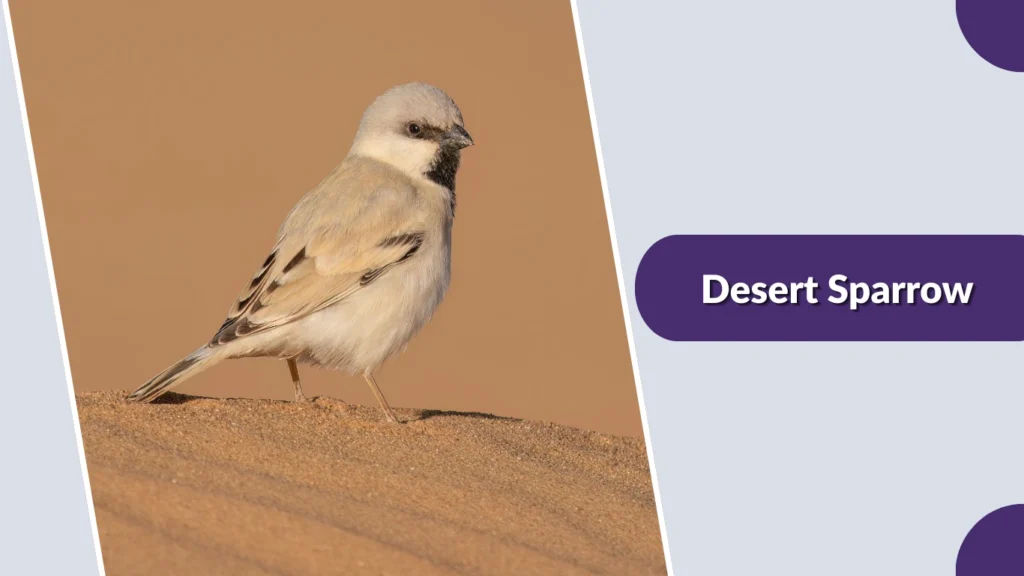
The Desert Sparrow is a pale, desert-adapted species found in the arid regions of North Africa. Its sandy coloration helps it blend seamlessly into its environment.
Identification
- Pale sandy-brown plumage
- Grayish head with subtle markings
- Black bill
- Slender body with a long tail
- Light, clean underparts
Habitat
Desert Sparrows inhabit arid deserts, oases, and dry riverbeds. They prefer areas with scattered shrubs and minimal vegetation.
Behavior
These sparrows are active and often forage near human settlements in desert villages. They move quickly across open sand and frequently perch on low shrubs.
Diet
Their diet includes seeds, desert plant material, and small insects. They forage on the ground, often near shrubs or water sources.
30. Socotra Sparrow
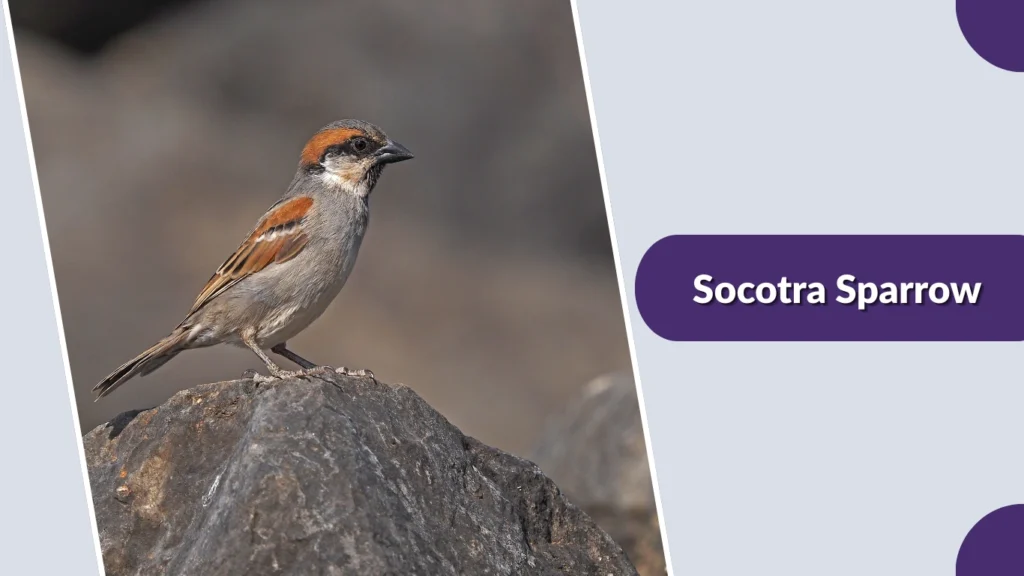
The Socotra Sparrow is an island species found only on Socotra and nearby islands in the Arabian Sea. It is well adapted to the region’s semi-arid landscapes.
Identification
- Gray head with a distinctive pale cheek
- Brown back with fine streaks
- Pale underparts
- Small, sturdy bill
- Compact body shape
Habitat
Socotra Sparrows inhabit dry shrublands, rocky hillsides, and areas near human settlements. They nest in shrubs, small trees, and sometimes structures.
Behavior
They are social and often found in small groups, foraging close to the ground. Their calls are soft and chirping, typical of many sparrow species.
Diet
Their diet includes seeds, grains, and small insects. They forage on the ground or in low vegetation.
31. Spanish Sparrow
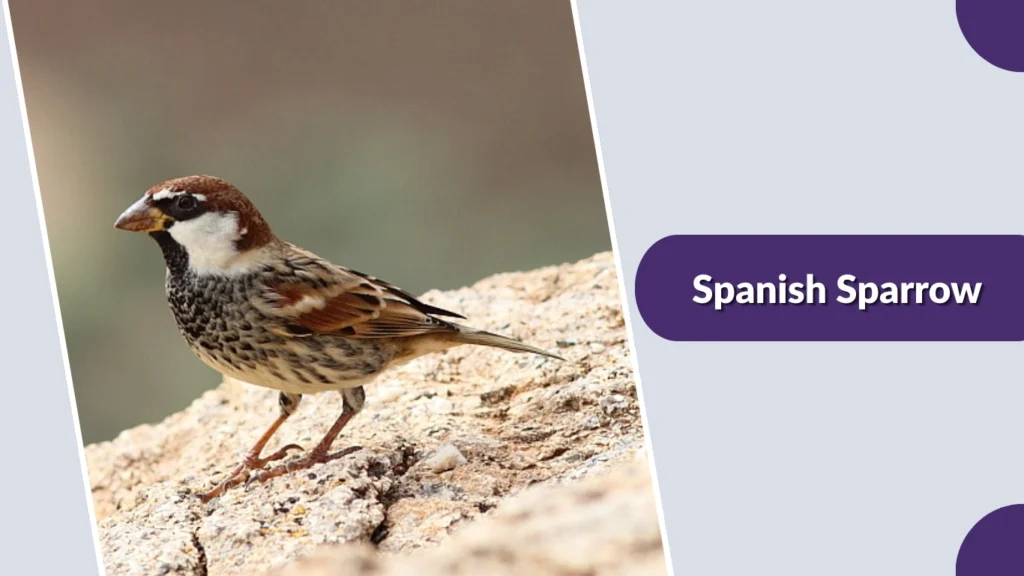
The Spanish Sparrow is a bold, social sparrow found across southern Europe, North Africa, and parts of the Middle East. It often forms large colonies and is easy to recognize by its striking plumage.
Identification
- Chestnut crown
- Heavily streaked underparts
- Bold black bib
- White cheeks with crisp facial markings
- Sturdier and darker than the House Sparrow
Habitat
Spanish Sparrows inhabit farmlands, orchards, grasslands, villages, and open countryside. They favor areas with scattered trees and water sources.
Behavior
Highly social, they form large nesting colonies in trees or structures. Their calls are loud and repetitive. They forage in flocks, especially near agricultural fields.
Diet
They feed on seeds, grains, insects, and crop plants. During breeding, they rely heavily on insects for chick nourishment.
32. Italian Sparrow
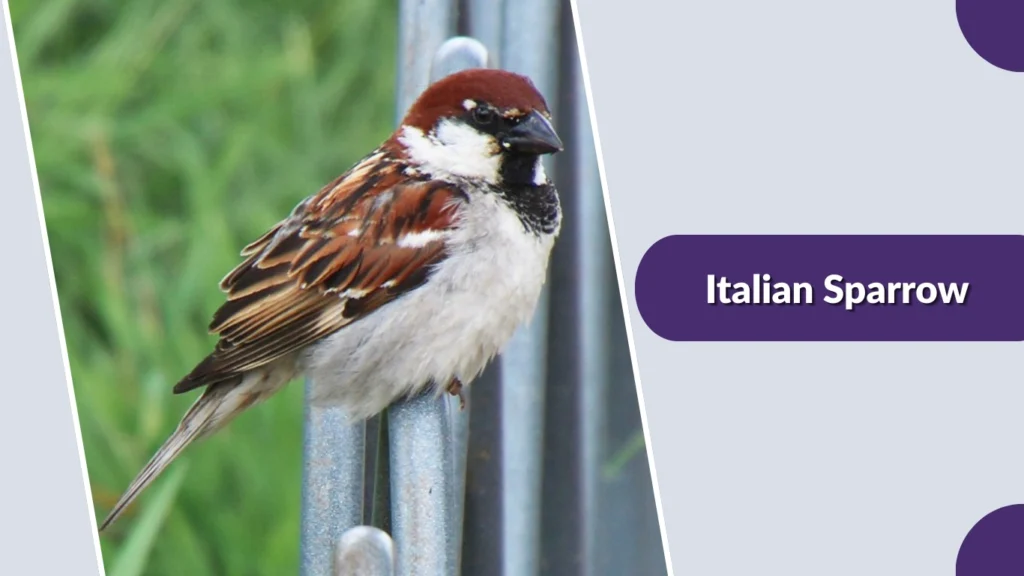
The Italian Sparrow is a unique hybrid-origin species found primarily in Italy and nearby islands. Its appearance is intermediate between House and Spanish Sparrows.
Identification
- Chestnut crown
- Gray breast and underparts
- Defined black bib
- Brown wings with streaks
- Intermediate size and coloration between House & Spanish Sparrow
Habitat
Italian Sparrows inhabit villages, towns, farmland, and open countryside. They are strongly associated with human settlements.
Behavior
They are social and active, often forming flocks around markets, buildings, and gardens. Their vocalizations resemble those of the House Sparrow.
Diet
Their diet includes grains, seeds, insects, and human food scraps. In breeding season, they consume more insects to feed their young.
33. Dead Sea Sparrow
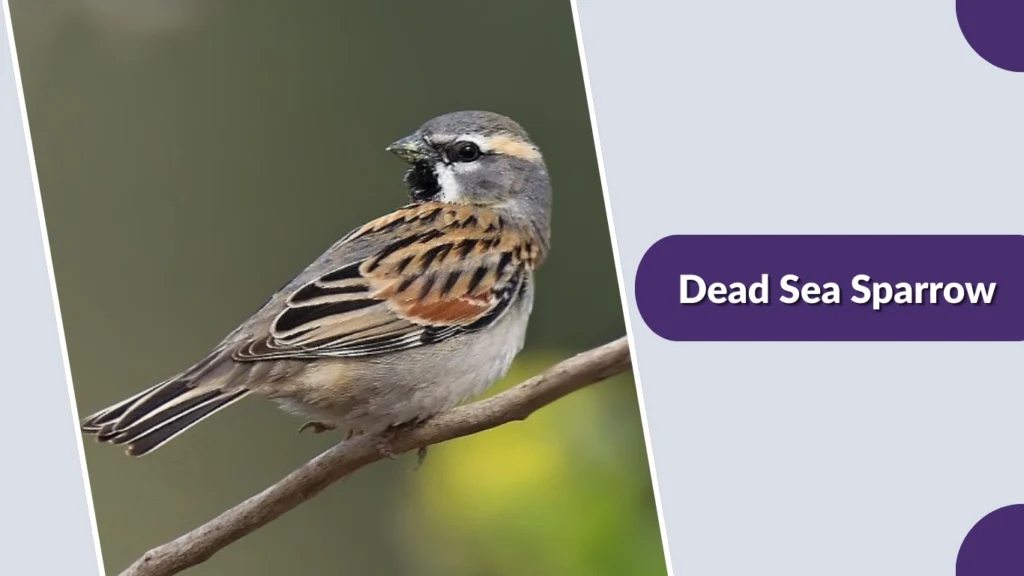
The Dead Sea Sparrow is a small, warm-toned sparrow native to parts of the Middle East, especially around the Dead Sea basin. It favors dry, shrubby habitats close to water sources.
Identification
- Brown back with fine streaking
- Pale gray underparts
- Warm buff face and breast
- Small, sharp bill
- Males show black around the eye in breeding season
Habitat
Dead Sea Sparrows inhabit desert shrubs, tamarisk thickets, riverbanks, and irrigated farmlands. They remain close to dense vegetation near water.
Behavior
They are social and active, often moving through shrubs in small flocks. Their calls are soft and high-pitched. They forage quietly on the ground and low branches.
Diet
Their diet includes seeds, buds, and small insects. During breeding, insects become essential for feeding chicks.
34. Great Sparrow
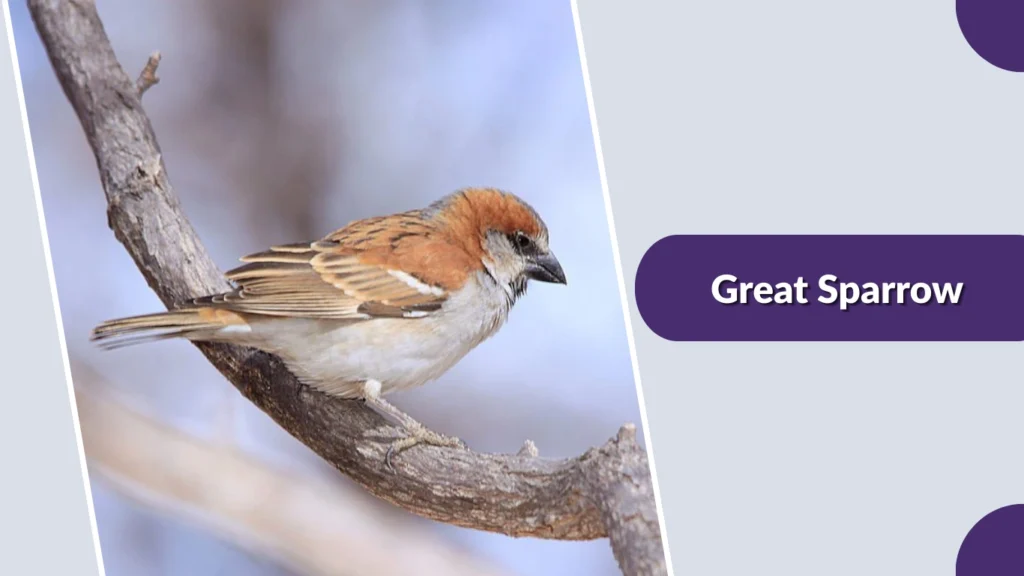
The Great Sparrow is a robust southern African species often mistaken for the House Sparrow but larger and more richly colored.
Identification
- Rich chestnut head (males)
- Gray cheeks and nape
- Brown, streaked back
- Strong, thick bill
- Females more uniformly brown
Habitat
Great Sparrows inhabit savannas, dry woodlands, towns, and agricultural regions. They readily use buildings for nesting.
Behavior
They are social, often forming small flocks around feeding areas. Their calls are sharp and chattering. They frequently perch on trees, fences, and rooftops.
Diet
Their diet includes seeds, grains, insects, and small fruits. They forage mainly on the ground near vegetation or human settlements.
35. Kenya Sparrow
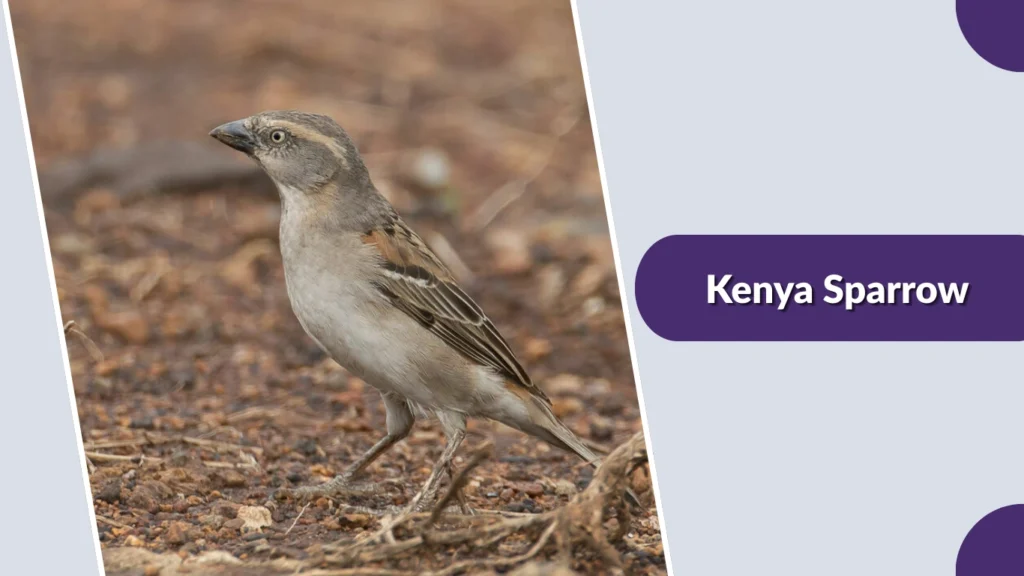
The Kenya Sparrow is a widespread East African sparrow commonly found in savannas, grasslands, and human-inhabited areas. It is closely related to several African sparrow species and adapts well to open habitats.
Identification
- Brown upperparts with fine streaking
- Pale gray underparts
- Warm buff face and eyebrow
- Slender body with a medium-length tail
- Small, conical bill
Habitat
Kenya Sparrows inhabit open grasslands, savannas, farmland, and villages. They often nest in buildings, shrubs, or small trees.
Behavior
They are active and social, frequently foraging in small groups. Their calls are typical sparrow-like chirps. They move quickly between ground and low vegetation.
Diet
Their diet includes grass seeds, small grains, and insects. During breeding, they increase insect consumption to feed chicks.
36. Kittlitz’s Sparrow
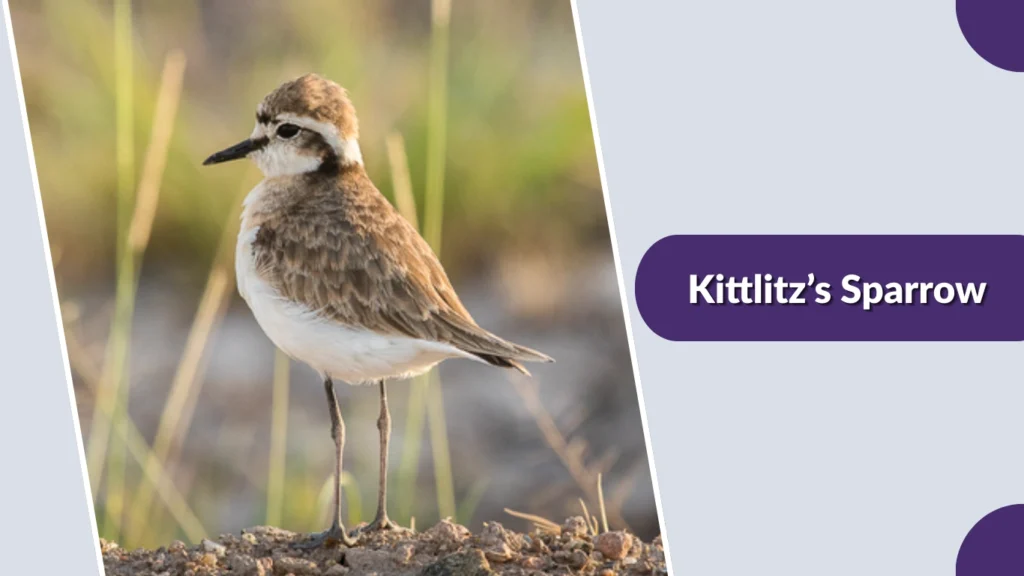
The Kittlitz’s Sparrow is an uncommon East African species found mainly in Ethiopia and surrounding regions. It is known for its distinctive facial markings and preference for open shrublands.
Identification
- Pale face with bold dark cheek patch
- Brown back with streaks
- Buff underparts with light streaking
- Short tail and compact build
- Pale eye ring
Habitat
Kittlitz’s Sparrows inhabit dry shrublands, rocky plains, and highland grasslands. They prefer areas with scattered bushes and open ground.
Behavior
These sparrows are shy and often stay close to shrubs for cover. Their calls are soft and high-pitched. They forage on the ground in pairs or small groups.
Diet
They feed on seeds, insects, and small plant material. Foraging occurs mainly on the ground, especially in early mornings and late afternoons.
37. Parrot-billed Sparrow
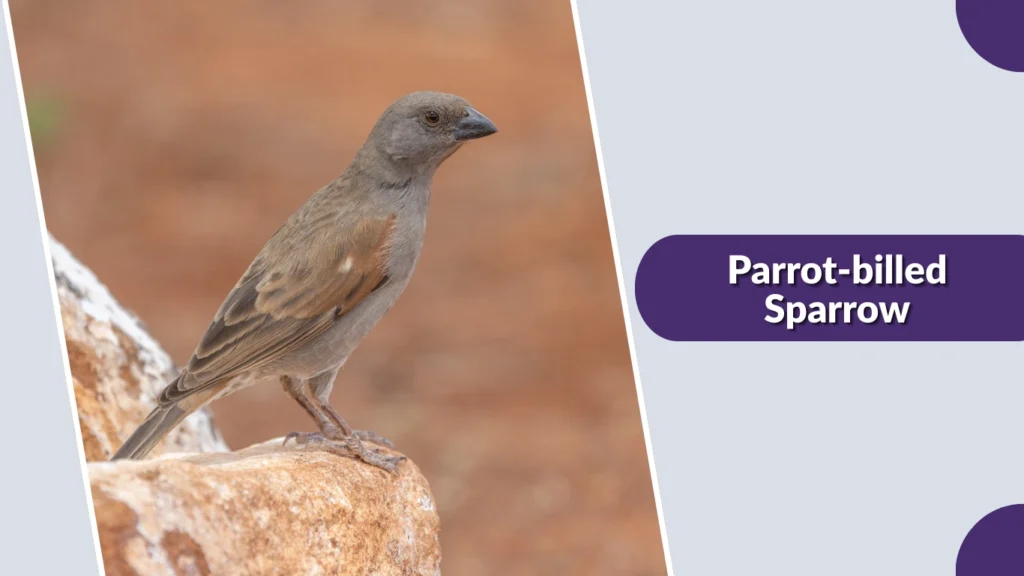
The Parrot-billed Sparrow is a striking African sparrow named for its unusually thick, parrot-like bill. It inhabits dry savannas and shrublands across eastern Africa.
Identification
- Very thick, heavy bill resembling a small parrot’s
- Gray head with a pale eye line
- Brown wings with fine streaking
- Buff underparts
- Sturdy body with a medium-length tail
Habitat
Parrot-billed Sparrows inhabit arid savannas, thornscrub, and dry open woodlands. They often favor regions with scattered acacia trees.
Behavior
These sparrows are active and often forage in small groups. Their powerful bill allows them to crack tough seeds. They frequently perch on shrubs and low branches.
Diet
Their diet consists mainly of hard seeds, grains, and small insects. They forage on the ground and in low vegetation.
38. Swahili Sparrow
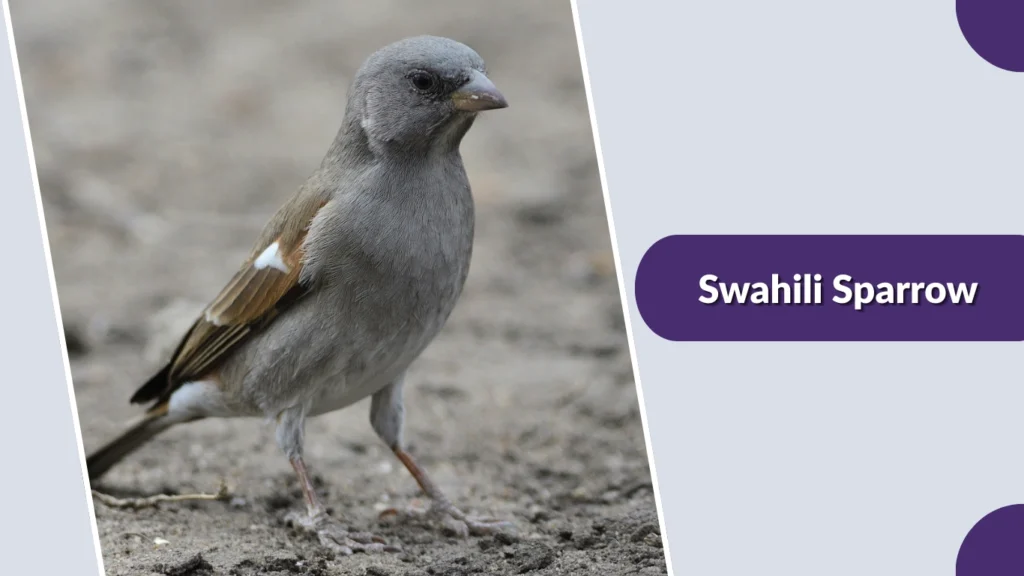
The Swahili Sparrow is an East African species found mainly along coastal and inland open habitats. It is closely related to the House Sparrow but has distinct regional adaptations.
Identification
- Gray crown and nape (males)
- Pale cheeks and throat
- Brown back with fine streaks
- Females more uniformly brown
- Slender shape with a medium-length tail
Habitat
Swahili Sparrows inhabit coastal scrub, grasslands, farms, and human settlements. They nest in buildings, shrubs, and occasionally in palm trees.
Behavior
They are social and often gather in small flocks. Their calls resemble those of the House Sparrow. They forage on the ground near human activity and vegetation.
Diet
Their diet includes grains, seeds, insects, and food scraps. They adapt well to agricultural and village environments.
39. Northern Grey-headed Sparrow
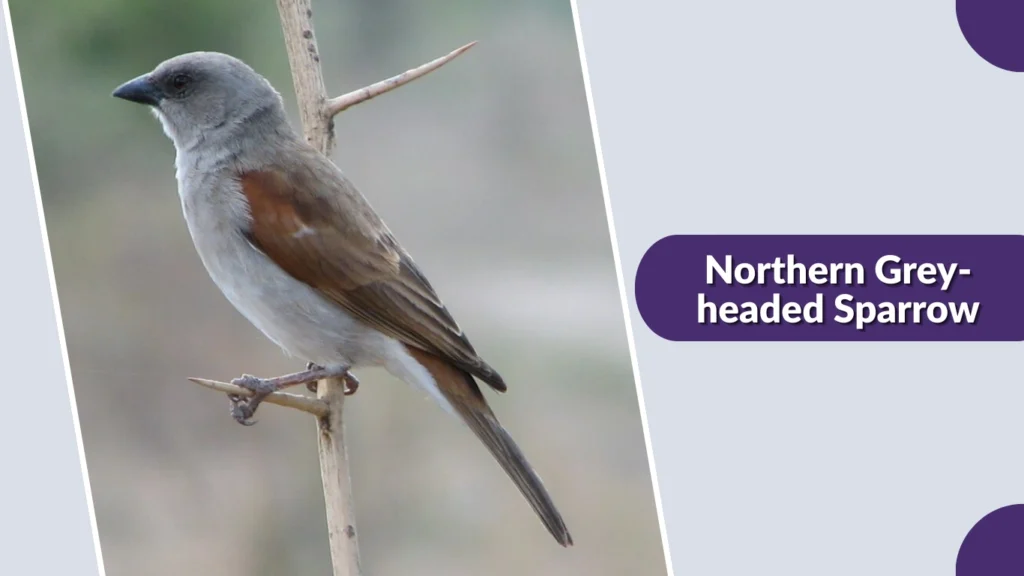
The Northern Grey-headed Sparrow is a common sub-Saharan African species often seen around villages, farms, and savannas. It is known for its simple gray head and adaptability to human environments.
Identification
- Plain gray head and throat
- Brown back and wings with light streaks
- Pale underparts
- Medium-length tail
- Small, conical bill
Habitat
Northern Grey-headed Sparrows inhabit savannas, open woodlands, agricultural lands, and urban areas. They nest in buildings, tree cavities, and sometimes old weaver nests.
Behavior
They are social and often forage in small groups, especially around villages. Their calls are sharp and chirping. They frequently hop on the ground and perch on fences and rooftops.
Diet
Their diet includes seeds, grains, small insects, and plant matter. They readily forage around human settlements for food.
40. Southern Grey-headed Sparrow
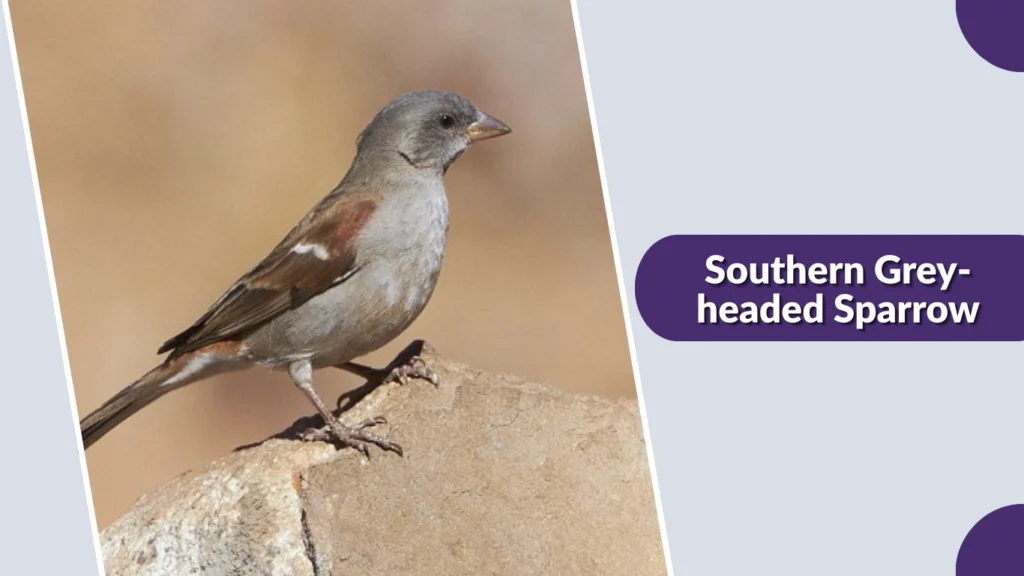
The Southern Grey-headed Sparrow is a widespread African sparrow found throughout southern and eastern regions of the continent. It closely resembles its northern counterpart but occupies different geographic areas.
Identification
- Smooth gray head and chest
- Brown wings and back
- Pale belly with minimal streaking
- Small, sturdy bill
- Medium-sized, with clean, simple plumage
Habitat
Southern Grey-headed Sparrows inhabit savannas, grasslands, farmlands, and towns. They are frequently seen around human dwellings and grazing areas.
Behavior
These sparrows are active, social, and often gather in flocks. They perch on wires, trees, and rooftops. Their calls are typical sparrow chirps, and they nest in cavities and structures.
Diet
Their diet includes seeds, grains, insects, and small fruits. They forage mostly on the ground and commonly visit feeding areas near people.
41. Yellow-throated Sparrow
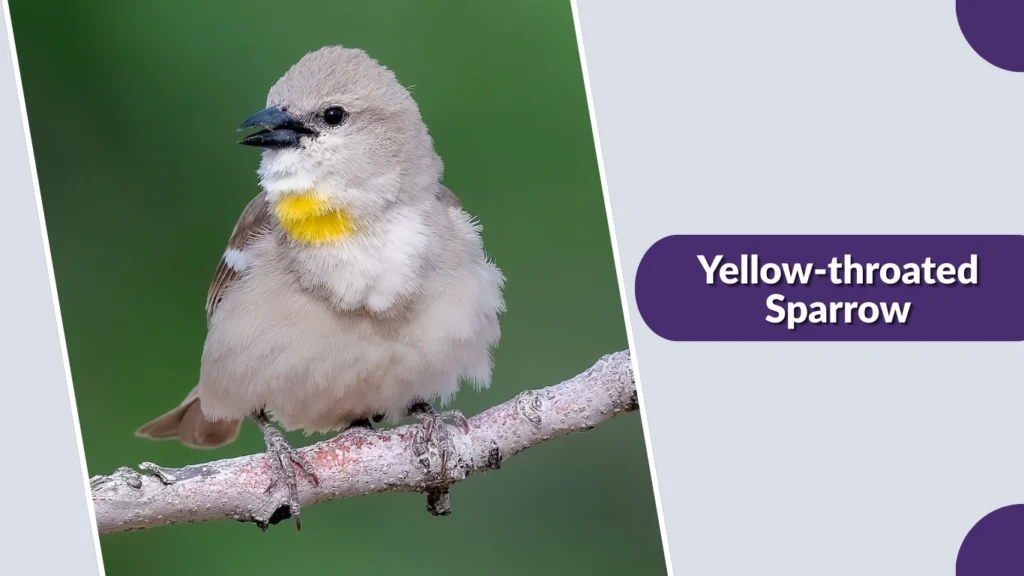
The Yellow-throated Sparrow, also known as the Chestnut-shouldered Petronia, is a common species across the Middle East and South Asia. It is easily recognized by its subtle yellow throat patch.
Identification
- Small yellow spot on the throat
- Gray head with a pale eyebrow
- Brown wings with chestnut shoulder patches
- Pale underparts
- Medium-length tail and sturdy bill
Habitat
Yellow-throated Sparrows inhabit dry woodlands, scrublands, orchards, and villages. They often nest in tree cavities, buildings, and old woodpecker holes.
Behavior
They are social and often found in loose flocks. Their calls are soft chirps, and they frequently forage near people. They also gather in communal roosts.
Diet
Their diet includes seeds, grains, insects, and flower buds. They forage on the ground, in trees, and near agricultural fields.
42. Chestnut Sparrow
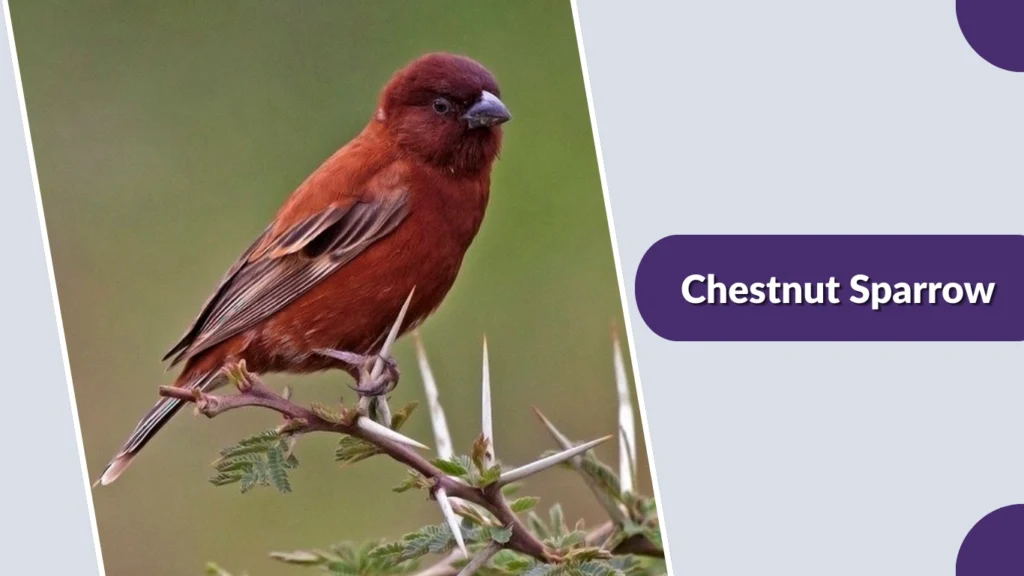
The Chestnut Sparrow is a striking African sparrow known for the rich chestnut coloration of the males. It is commonly found in arid and semi-arid regions of East Africa.
Identification
- Males have deep chestnut-colored bodies
- Females are sandy-brown with faint streaks
- Short tail and compact build
- Pale bill with a slight curve
- Distinctive, warm coloration
Habitat
Chestnut Sparrows inhabit dry savannas, shrublands, and grasslands. They also associate with weaver colonies, often nesting among them.
Behavior
These sparrows are social and often found in mixed-species flocks. Males perform fluttering displays during breeding. They forage mainly on or near the ground.
Diet
Their diet consists of seeds, grasses, and small insects. They often feed in groups in open dry areas.
43. Swainson’s Sparrow
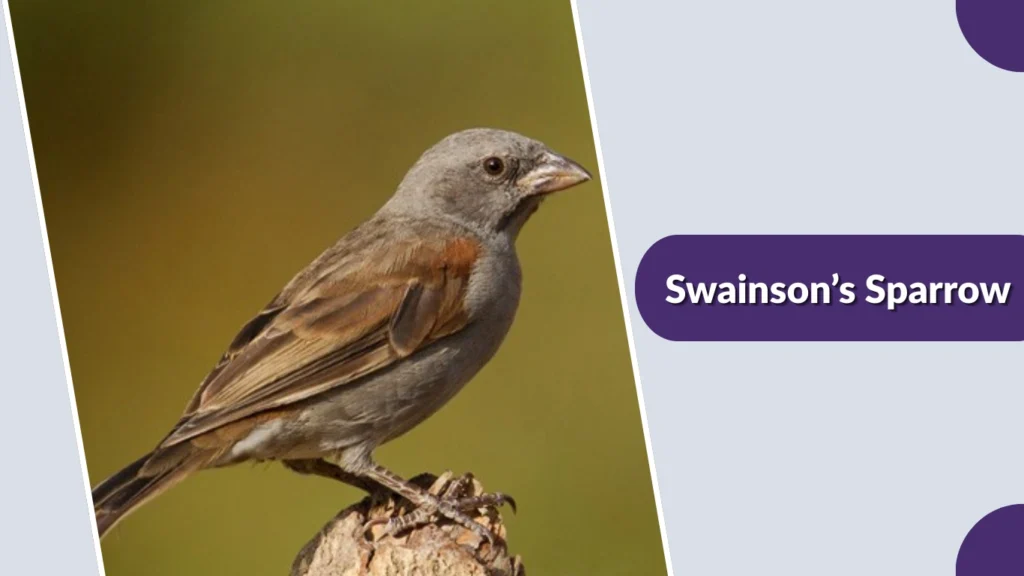
The Swainson’s Sparrow is an East African species commonly found in highland regions, especially in Ethiopia. Its simple plumage and social behavior make it a familiar sight in rural areas.
Identification
- Plain brown upperparts
- Pale gray underparts
- Subtle facial markings with a faint eyebrow
- Medium-length tail
- Short, sturdy bill
Habitat
Swainson’s Sparrows inhabit highland fields, villages, farmlands, and open shrublands. They often stay close to human settlements and agricultural lands.
Behavior
These sparrows are social and active, forming small flocks that forage in open areas. Their calls are sharp and frequent. They often perch on rooftops, wires, and shrubs.
Diet
Their diet includes seeds, grains, and insects. They frequently forage in fields and around villages.
44. Somali Sparrow
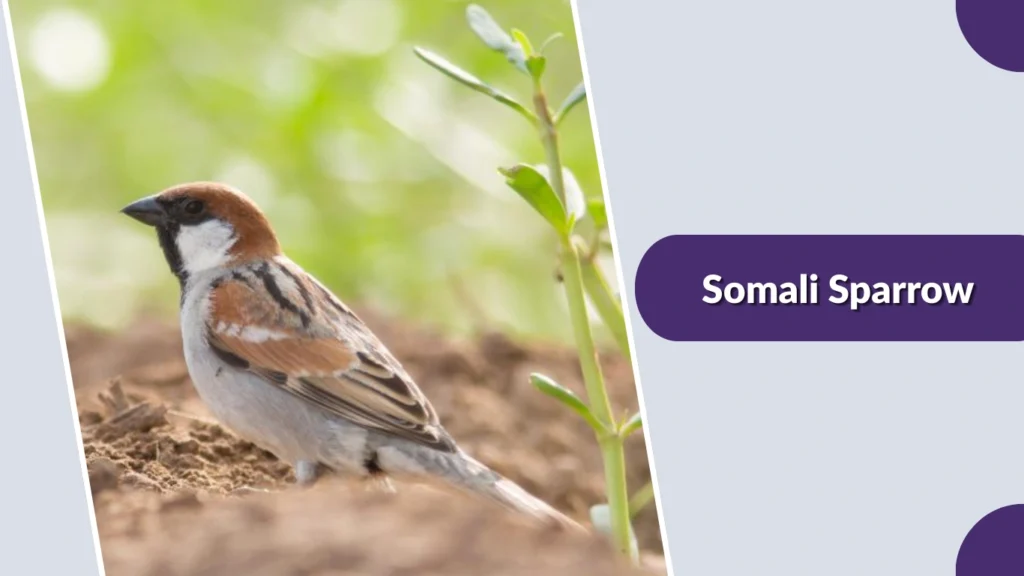
The Somali Sparrow is a localized species found mainly in Somalia and nearby regions of eastern Africa. It thrives in dry, open environments and sparsely vegetated landscapes.
Identification
- Pale gray head with minimal markings
- Brown back with faint streaks
- Pale underparts
- Medium-length tail
- Thick, conical bill
Habitat
Somali Sparrows inhabit dry shrublands, semi-desert plains, and areas around human settlements. They prefer places with scattered bushes and open ground.
Behavior
These sparrows are usually seen in small groups, hopping on the ground in search of food. They are relatively quiet, producing simple chirping calls.
Diet
Their diet includes seeds, small plant material, and insects. They forage mainly on the ground, especially around shrubs and dry vegetation.
45. White-browed Sparrow-Weaver
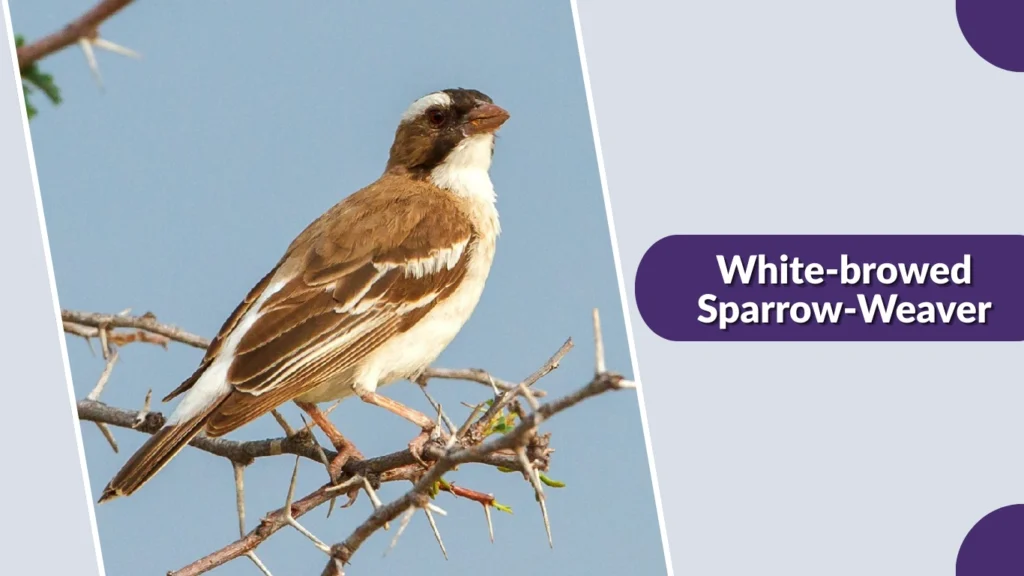
The White-browed Sparrow-Weaver is a social, colony-nesting bird common across eastern and southern Africa. It is easily recognized by its bold white eyebrow and cooperative breeding behavior.
Identification
- Bold white eyebrow stripe
- Black cheek patch
- Brown back with white wing edges
- Pale underparts
- Medium-sized with a strong bill
Habitat
White-browed Sparrow-Weavers inhabit savannas, dry woodlands, shrublands, and villages. They build large, communal nests in acacia trees.
Behavior
These birds are highly social and live in cooperative family groups. They build multiple nest chambers and communicate with loud, varied calls. They forage on the ground in small groups.
Diet
Their diet includes seeds, insects, small fruits, and plant material. They often forage near shrubs and grassy patches.
46. Scaly-feathered Finch (Sparrow-Finch)
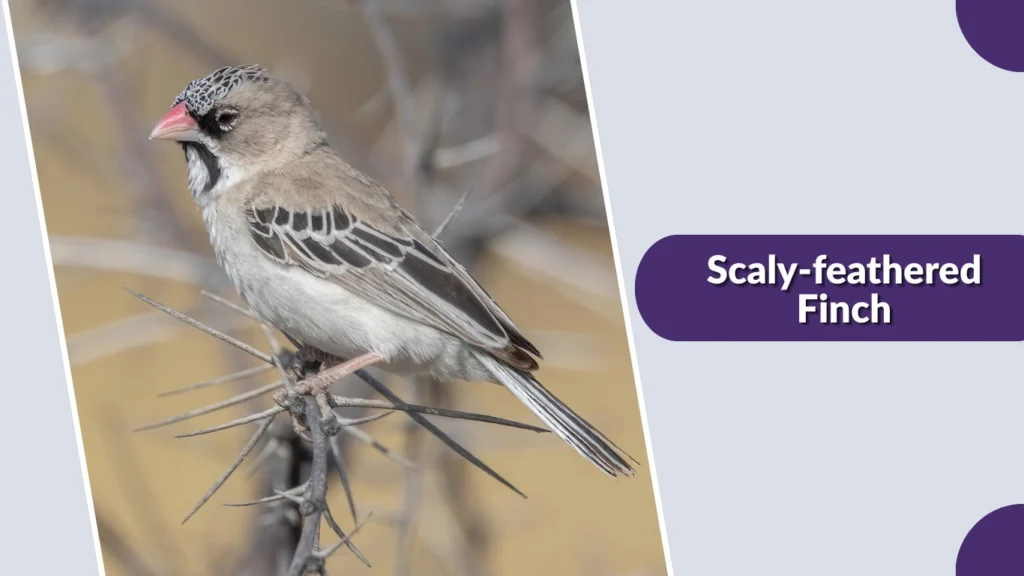
The Scaly-feathered Finch, also known as the Sparro-Finch, is a small southern African species recognized for its scaly-patterned plumage and tiny size.
Identification
- Unique scaly pattern on head and chest
- Pale bill and round, compact body
- Short tail
- Brown wings with light streaking
- Very small sparrow-like appearance
Habitat
These finches inhabit dry savannas, thornscrub, and semi-desert regions. They prefer areas with scattered shrubs and grasses.
Behavior
Scaly-feathered Finches are social and often form small flocks. Their calls are soft and high-pitched. They build intricate ball-shaped nests.
Diet
Their diet includes grass seeds, small grains, and insects. They forage mainly on the ground.
47. Mountain Sparrow
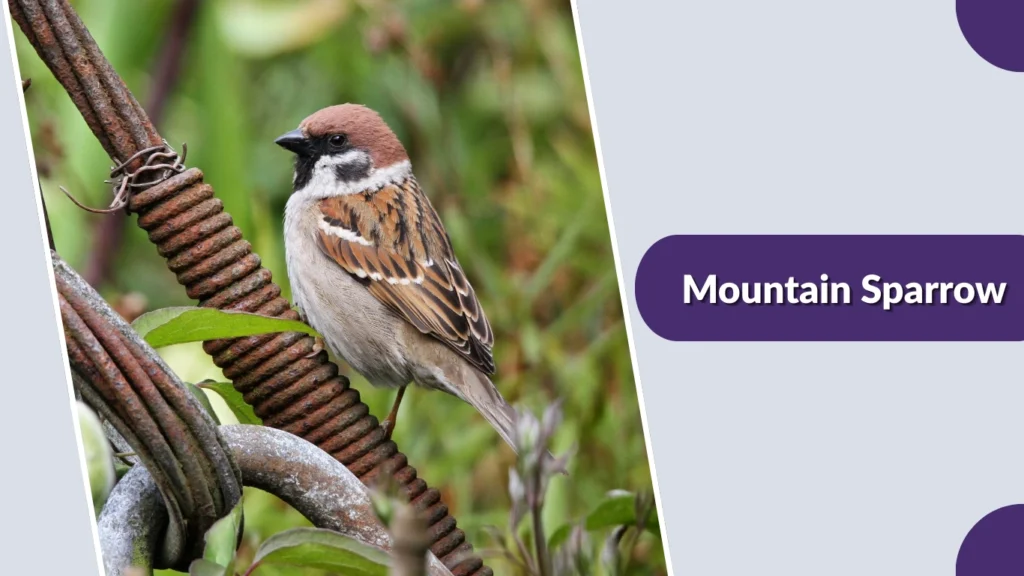
The Mountain Sparrow is a localized Asian species found mainly in high-altitude regions. It resembles the House Sparrow but prefers cooler, mountainous terrain.
Identification
- Brown upperparts with fine streaking
- Grayish underparts
- Pale eyebrow with a subtle facial pattern
- Medium-sized sparrow with a stout bill
- Slightly bulkier than similar species
Habitat
Mountain Sparrows inhabit high-altitude villages, rocky slopes, open forests, and scrub-covered hillsides. They often stay near human settlements in mountainous regions.
Behavior
These sparrows are social and often forage in small groups. They move actively across ground and rocks, perching on shrubs and low branches. Their calls are sharp and similar to House Sparrows.
Diet
Their diet includes seeds, grains, insects, and small plant materials. They frequently forage around villages and terraced fields.
48. Russet Sparrow
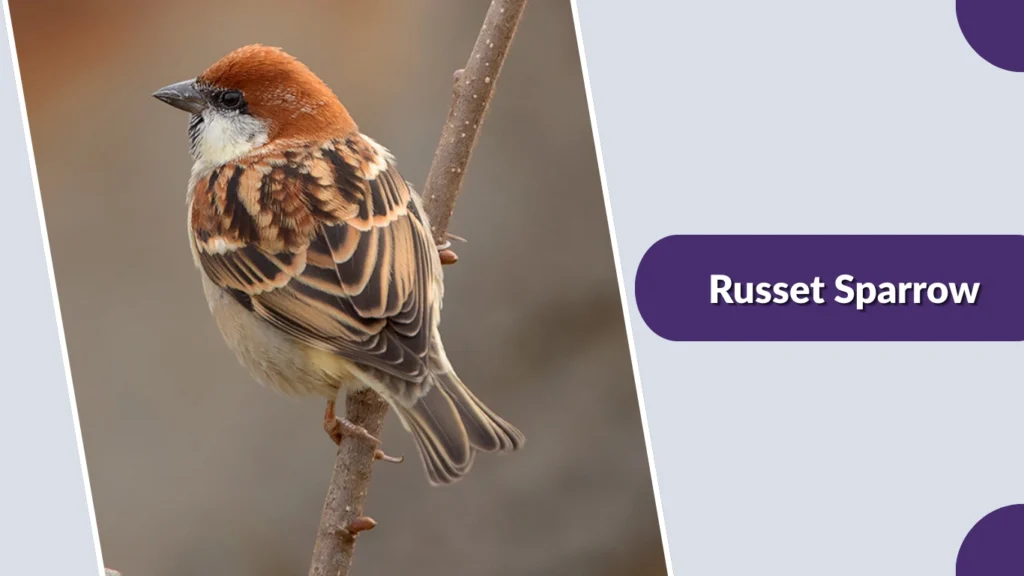
The Russet Sparrow is a colorful Asian sparrow found across the Himalayas, Southeast Asia, and parts of China. It is known for its warm, russet-toned plumage.
Identification
- Males have rich russet crown and back
- Black eye stripe and white cheek
- Pale underparts
- Females are browner with subtle markings
- Small, compact body
Habitat
Russet Sparrows inhabit forests, villages, farmland, and foothill regions. They prefer wooded areas and highland settlements.
Behavior
They are active and social, often forming small flocks. Their calls are soft, chirping notes. They frequently perch on branches, wires, and rooftops.
Diet
Their diet includes seeds, grains, buds, and insects. They forage in trees, on shrubs, and on the ground.
49. Pale Rock Sparrow
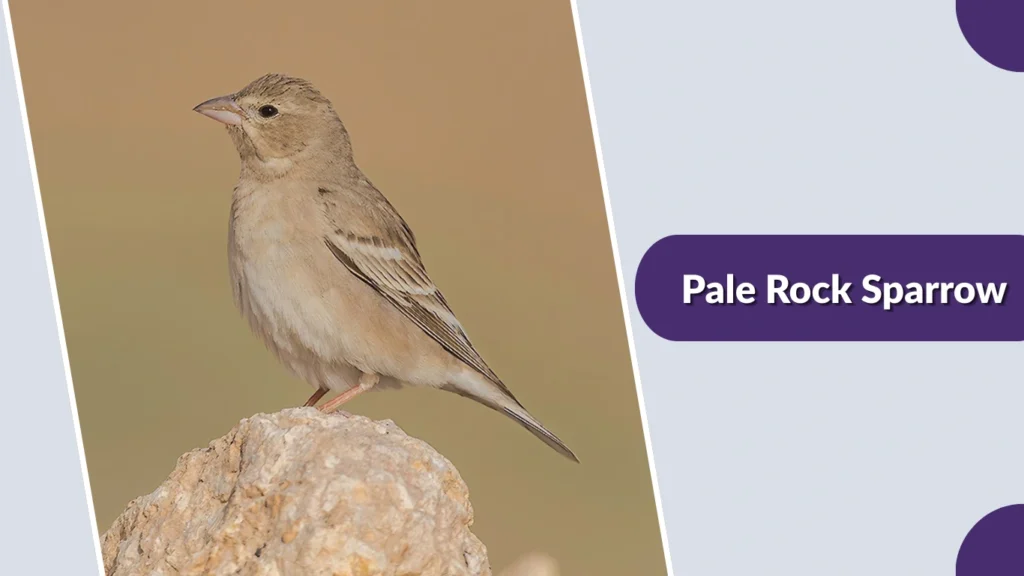
The Pale Rock Sparrow is a slender, pale-toned species found in rocky, arid regions of the Middle East and Central Asia. Its subtle coloration helps it blend seamlessly into stony landscapes.
Identification
- Pale sandy-brown plumage
- Light eyebrow and faint facial markings
- Slender body with a medium-length tail
- Fine, pointed bill
- Minimal streaking compared to many sparrows
Habitat
Pale Rock Sparrows inhabit rocky hillsides, arid plains, desert edges, and stony scrublands. They prefer open, sparsely vegetated terrain.
Behavior
These sparrows are active ground foragers, often running between rocks rather than taking long flights. Their calls are high and thin, typically heard at dawn and dusk.
Diet
Their diet includes seeds, desert plants, and small insects. They forage mainly on the ground, especially among stones and sparse grasses.
50. Rock Sparrow
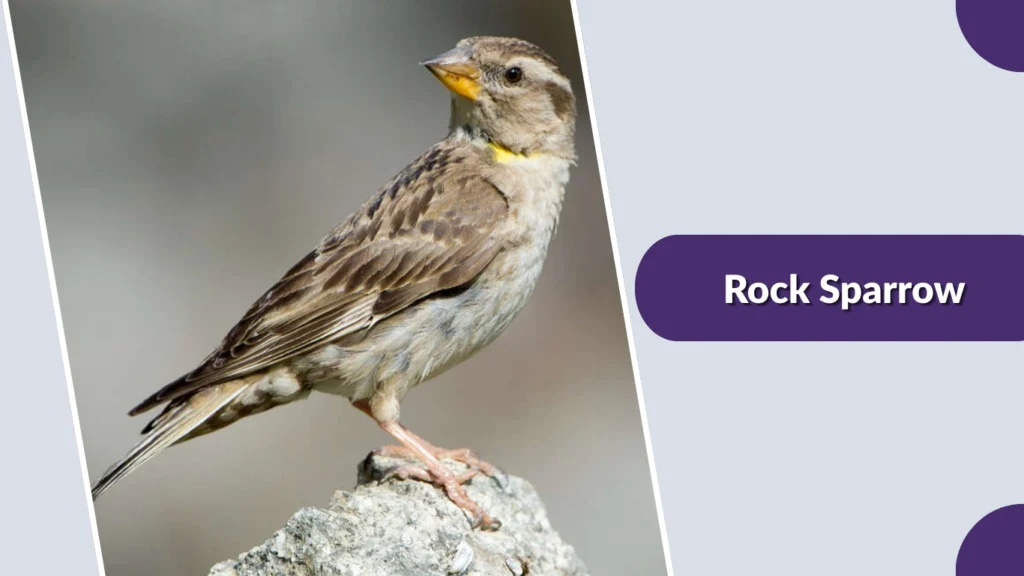
The Rock Sparrow is a robust, large sparrow found across southern Europe and parts of Asia. It favors rocky cliffs, scrublands, and open, rugged landscapes.
Identification
- Brown-streaked back
- Bold yellow throat patch (breeding season)
- Thick, strong bill
- Pale underparts with subtle streaks
- Sturdy body with a long tail
Habitat
Rock Sparrows inhabit rocky hillsides, cliffs, canyons, and open shrublands. They often nest in crevices, old walls, and stone structures.
Behavior
They are social, forming small flocks outside the breeding season. Their calls are sharp and metallic. They often perch on rocks or low shrubs.
Diet
Their diet includes seeds, grains, buds, and insects. They forage on rocky ground, shrubs, and low vegetation.
