
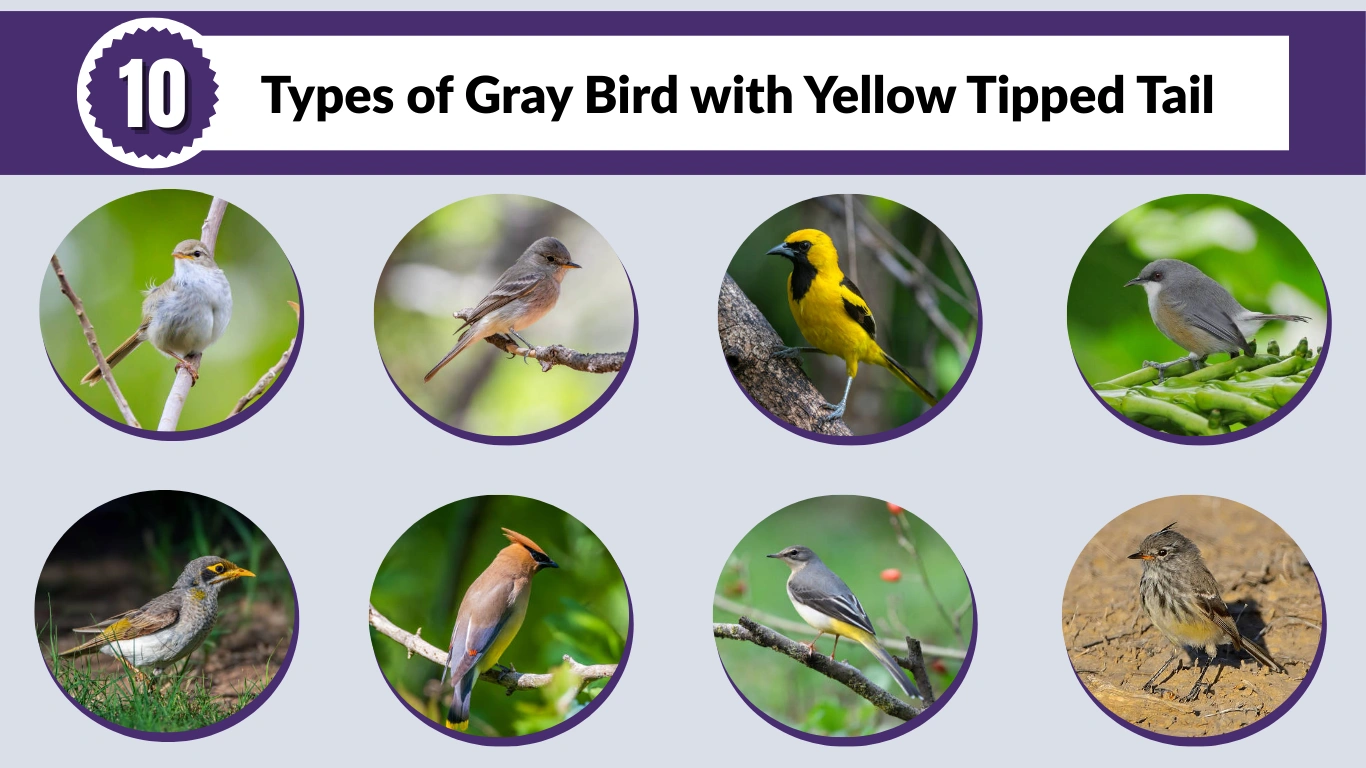
Gray birds with yellow-tipped tails offer a beautiful contrast of soft, neutral tones and bright flashes of color. These birds are often easy to recognize in flight, when the yellow edges or tips of the tail suddenly stand out against a gray body. Found across many parts of the world, they live in forests, riverbanks, shrublands, and open woodlands. Some are social flocking birds, while others are shy and secretive, but all add subtle charm to natural landscapes.
1. Cedar Waxwing
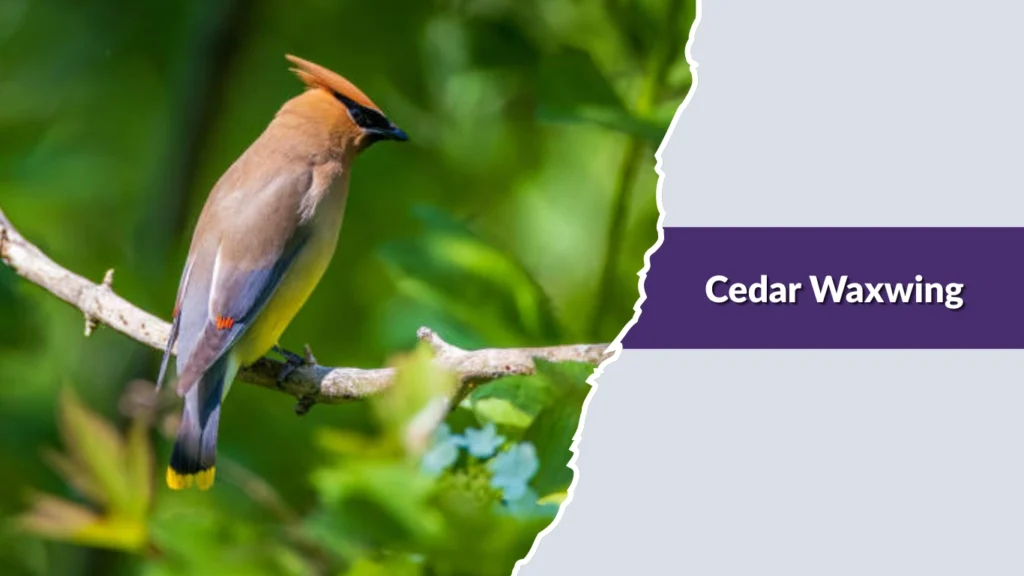
The cedar waxwing is a sleek, soft-colored songbird known for its smooth gray-brown body, black facial mask, and distinctive yellow tips on the tail feathers. Often seen in flocks, this bird is common across North America, especially around fruiting trees, open woodlands, and suburban gardens.
Identification
- Medium-sized gray-brown bird with a silky appearance
- Black mask bordered by thin white lines on the face
- Crest on the head that slopes gently backward
- Bright yellow band at the tip of the tail
- Some individuals show red, wax-like tips on wing feathers
Habitat
Cedar waxwings live in open woodlands, forest edges, orchards, riversides, and urban parks. They prefer areas with plenty of fruiting trees and shrubs. Because their food sources change with the seasons, they are highly nomadic and move frequently.
Diet
Their diet is heavily fruit-based, including berries, cherries, mulberries, and juniper fruits. During warmer months, they also eat insects such as flies, beetles, and ants, which provide protein, especially for growing chicks.
Behavior
Cedar waxwings are very social birds and often travel in large, fast-moving flocks. They are known for passing berries from one bird to another before eating. Their flight is smooth and direct, and they often perch quietly in treetops.
Range
They are found throughout North America, breeding mainly in the northern United States and Canada. In winter, many populations move south into the southern U.S., Mexico, and Central America, depending on fruit availability.
2. Gray Wagtail
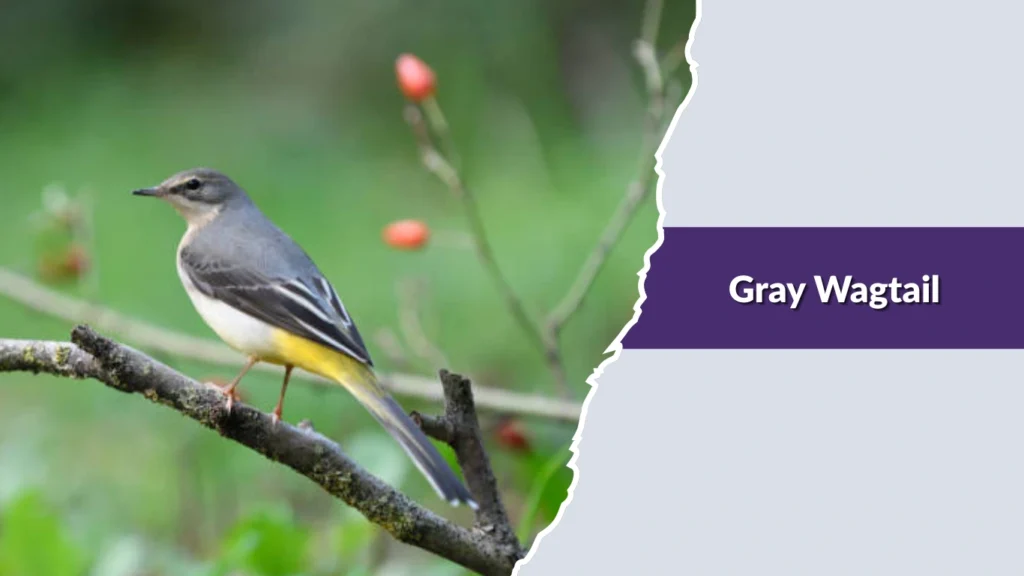
The gray wagtail is a slim, long-tailed bird recognized for its graceful movements and bright yellow coloring beneath the tail. Although its back appears mostly gray, the yellow undertail and tail edges create a striking contrast, especially when the bird constantly wags its tail near streams and rivers.
Identification
- Slender gray bird with a long, narrow tail
- Bright yellow undertail and yellow underparts
- White eyebrow line above the eye
- Black throat in breeding males
- Frequently wags tail up and down
Habitat
Gray wagtails are closely associated with freshwater habitats. They are most often seen along fast-flowing streams, rivers, waterfalls, and rocky shorelines. Outside the breeding season, they may also visit lakesides, wetlands, and even urban canals.
Diet
Their diet mainly consists of insects and small invertebrates. They feed on flies, mayflies, beetles, and aquatic larvae, which they catch by running along the ground or making short aerial flights over water surfaces.
Behavior
Gray wagtails are active and restless birds. They are almost constantly in motion, pumping their tails while walking or perching. They are agile flyers and often follow watercourses, darting after insects with quick, precise movements.
Range
They are widely distributed across Europe and Asia. Many populations migrate south in winter, reaching parts of Africa, South Asia, and Southeast Asia, especially where open water remains available.
3. Yellow-tailed Fantail
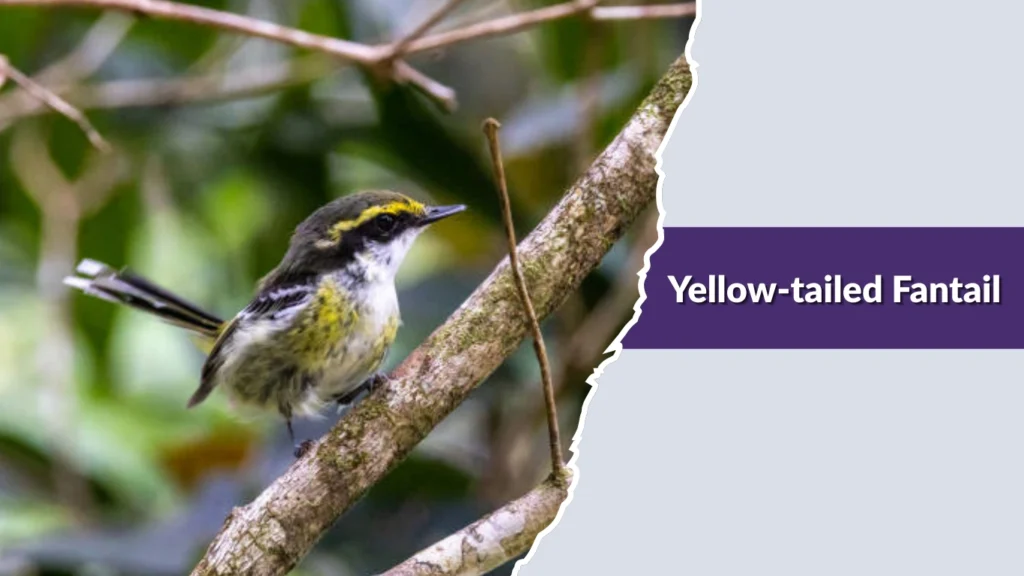
The yellow-tailed fantail is a small, lively bird with soft gray plumage and a distinctive tail that often flashes yellow tones near the tips. Famous for constantly spreading and fanning its tail, this bird is easy to recognize as it flits through forest edges and open woodlands.
Identification
- Small gray bird with a compact, rounded body
- Long tail frequently fanned open
- Yellowish tones near the tail tips and undertail area
- Dark eyes with a fine, delicate bill
- Quick, fluttering flight style
Habitat
Yellow-tailed fantails are commonly found in open forests, woodland edges, gardens, and shrublands. They prefer areas with scattered trees and open spaces that make it easier to catch flying insects.
Diet
Their diet is mainly made up of insects such as flies, moths, beetles, and mosquitoes. They catch prey in midair, often making short, acrobatic flights from low perches.
Behavior
These birds are extremely active and curious. They frequently fan their tails while foraging, which helps flush insects from leaves. They often approach people and animals to catch disturbed insects.
Range
Yellow-tailed fantails are found mainly in parts of Australia and nearby island regions. They are generally resident birds, staying within the same broad area year-round.
4. Yellow-tailed Tyrant
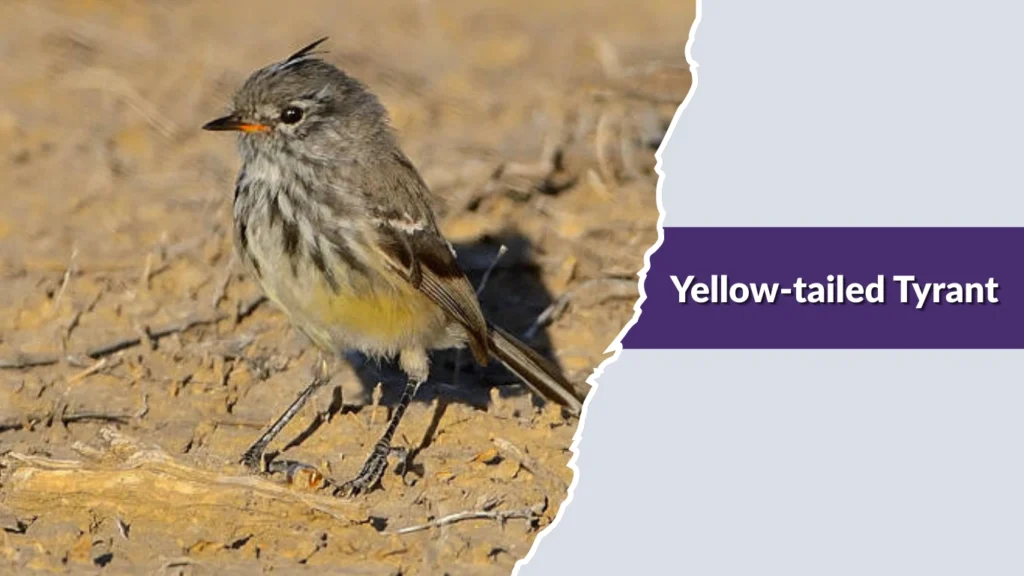
The yellow-tailed tyrant is a small gray flycatcher-like bird best known for its bright yellow undertail and tail edges that contrast sharply with its gray upperparts. It is often seen perched upright on low shrubs, making short flights to catch insects.
Identification
- Small gray bird with pale underparts
- Bright yellow undertail and yellow tail edges
- Short, straight bill suited for catching insects
- Dark eyes with a subtle facial pattern
- Frequently flicks and spreads its tail
Habitat
This species prefers open habitats such as grasslands, savannas, wetlands, and open shrublands. It is commonly found near marshes, ponds, and seasonally flooded fields.
Diet
Yellow-tailed tyrants feed mainly on insects, including flies, grasshoppers, beetles, and small moths. They usually hunt by watching from a perch and then flying out quickly to grab prey.
Behavior
They are alert, upright birds that often return to the same perch after each hunting flight. Tail-flicking is common and is used both for balance and possibly to flush insects.
Range
The yellow-tailed tyrant is native to South America, where it occurs in countries such as Argentina, Uruguay, Brazil, and Paraguay.
5. Gray-headed Canary-Flycatcher
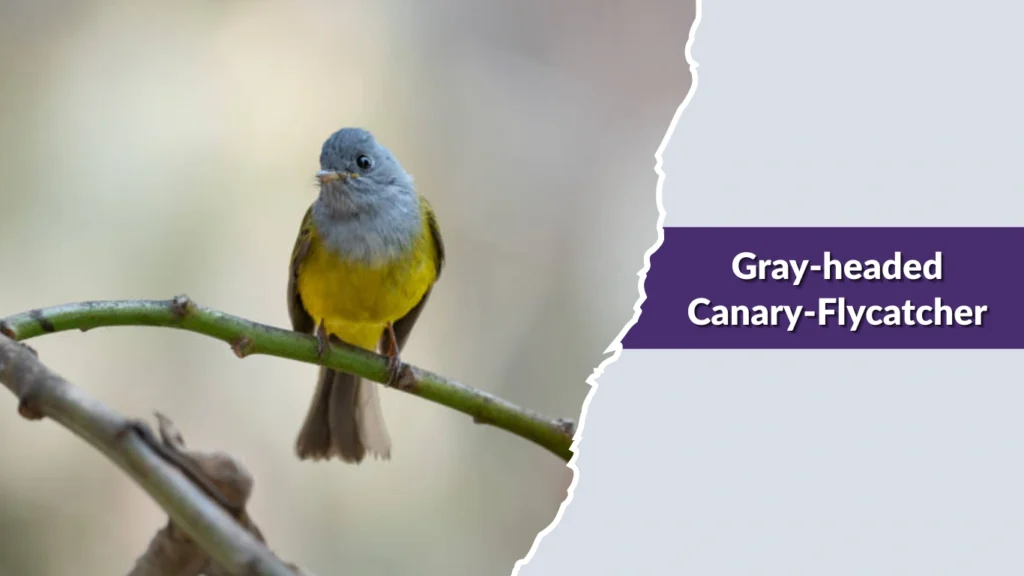
The gray-headed canary-flycatcher is a slim, gray-and-yellow bird with a soft gray head and noticeable yellow tones toward the tail and underparts. Its long tail and delicate movements make it easy to recognize in forest edges and woodland canopies.
Identification
- Gray head and upperparts with lighter underparts
- Yellowish undertail and yellow tones on the tail edges
- Long, narrow tail often held slightly fanned
- Thin, pointed bill
- Pale eye ring giving a gentle facial expression
Habitat
This bird lives in subtropical and tropical forests, forest edges, plantations, and wooded gardens. It prefers mid to upper tree levels where insects are abundant.
Diet
Its diet consists mainly of insects such as flies, caterpillars, beetles, and small spiders. It often forages actively among leaves and branches, picking prey from foliage.
Behavior
Gray-headed canary-flycatchers are active and restless, constantly moving through branches. They frequently flick their tails and make short, darting flights to catch insects.
Range
They are found across parts of South and Southeast Asia, including India, Sri Lanka, Nepal, southern China, and Southeast Asian countries.
6. Yellow-tailed Miner
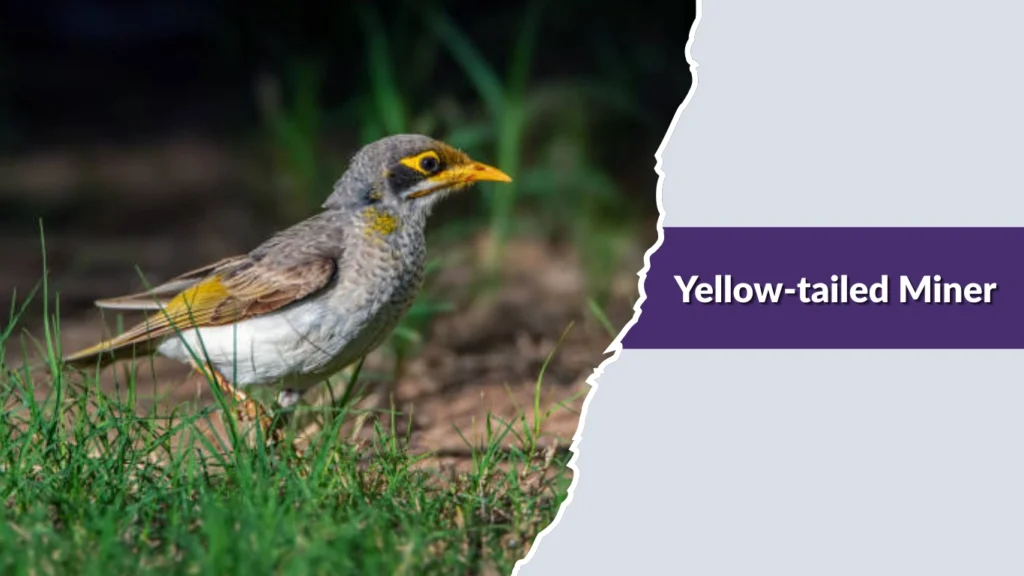
The yellow-tailed miner is a medium-sized grayish bird with a striking yellow tail tip that stands out when it flies. It is a ground-loving species, often seen walking or hopping across open, dry landscapes in small groups.
Identification
- Gray to gray-brown body with a sturdy build
- Bright yellow tip on the tail, clearly visible in flight
- Strong, slightly curved bill
- Long legs adapted for walking on the ground
- Pale eyes and an alert posture
Habitat
Yellow-tailed miners prefer arid and semi-arid regions such as dry scrublands, open plains, deserts, and sparsely vegetated countryside. They are commonly found in open areas with scattered bushes and bare ground.
Diet
Their diet includes insects, seeds, small fruits, and occasionally nectar. They forage mainly on the ground, probing soil and leaf litter for food.
Behavior
These birds are social and often move in loose groups. They spend much of their time on the ground, running quickly between bushes and taking short, low flights when disturbed.
Range
The yellow-tailed miner is native to Australia, where it is widely distributed across dry inland and coastal regions.
7. Gray-backed Camaroptera
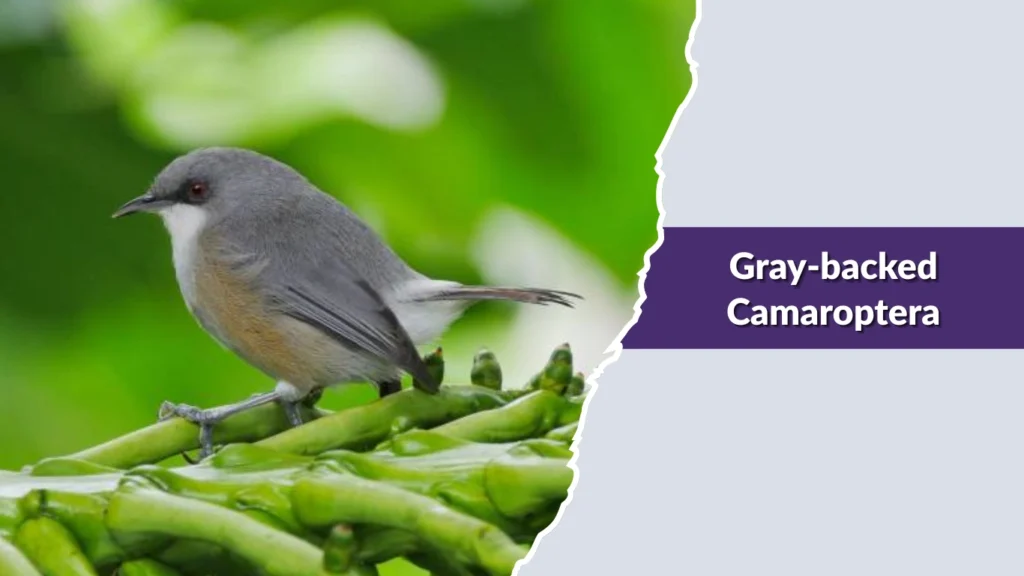
The gray-backed camaroptera is a small, energetic bird with soft gray upperparts and subtle yellow tones under the tail. Although tiny, it is easy to notice due to its constant movement and sharp calls from dense shrubs.
Identification
- Small bird with gray back and head
- Yellowish undertail area and tail edges
- Short, rounded wings
- Slender, pointed bill
- Active posture with frequent tail flicking
Habitat
This species lives in thickets, forest undergrowth, woodland edges, and bushy gardens. It prefers dense vegetation where it can move quickly between low branches and leaves.
Diet
Gray-backed camaropteras mainly eat insects and spiders. They forage by creeping through bushes, picking small prey from leaves, stems, and bark.
Behavior
They are highly active and secretive birds. Most of the time, they stay low in vegetation, moving rapidly and flicking their tails while making short, quick flights.
Range
They are found across sub-Saharan Africa, especially in woodland, savanna, and scrub regions.
8. Yellow-tailed Oriole
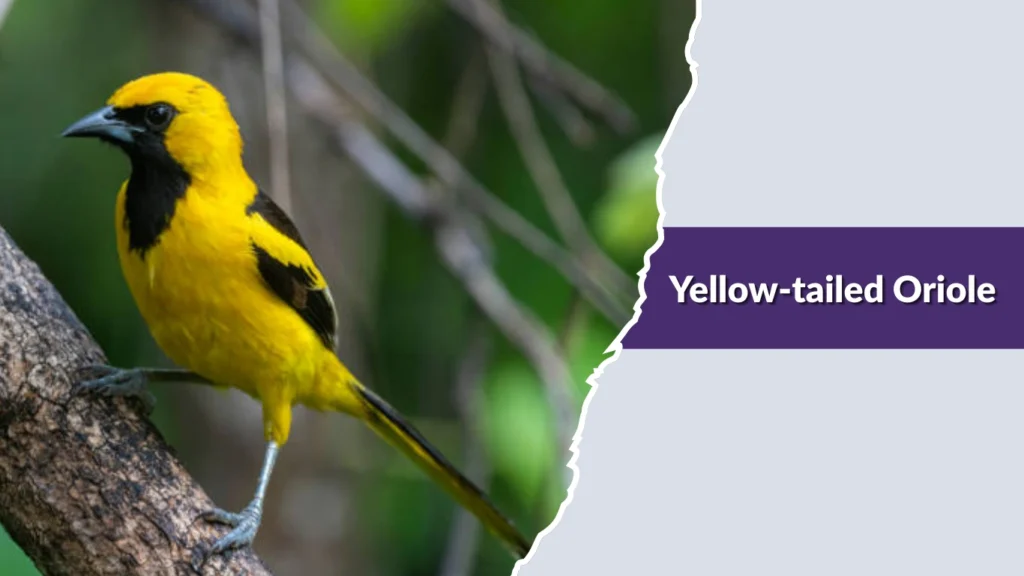
The yellow-tailed oriole is a slender, medium-sized bird with grayish tones on the body and a noticeable yellow wash near the tail. Its long tail and graceful movements make it stand out among treetops and forest edges.
Identification
- Slender bird with gray to gray-olive body
- Bright yellow undertail and yellow tail edges
- Long tail and slightly curved bill
- Dark eyes with a smooth facial profile
- Strong, clear whistling voice
Habitat
This bird prefers open woodlands, forest edges, riverine forests, and well-wooded gardens. It spends much of its time high in trees, especially where fruiting plants are available.
Diet
Yellow-tailed orioles eat fruits, berries, nectar, and insects. They often probe flowers and foliage, playing an important role in both insect control and seed dispersal.
Behavior
They are active canopy birds that move deliberately among branches. Although not always in large flocks, they may gather where fruit is abundant. Their calls are rich and musical.
Range
They are found mainly in tropical and subtropical regions, particularly across parts of Africa and Southeast Asia.
9. Gray Flycatcher
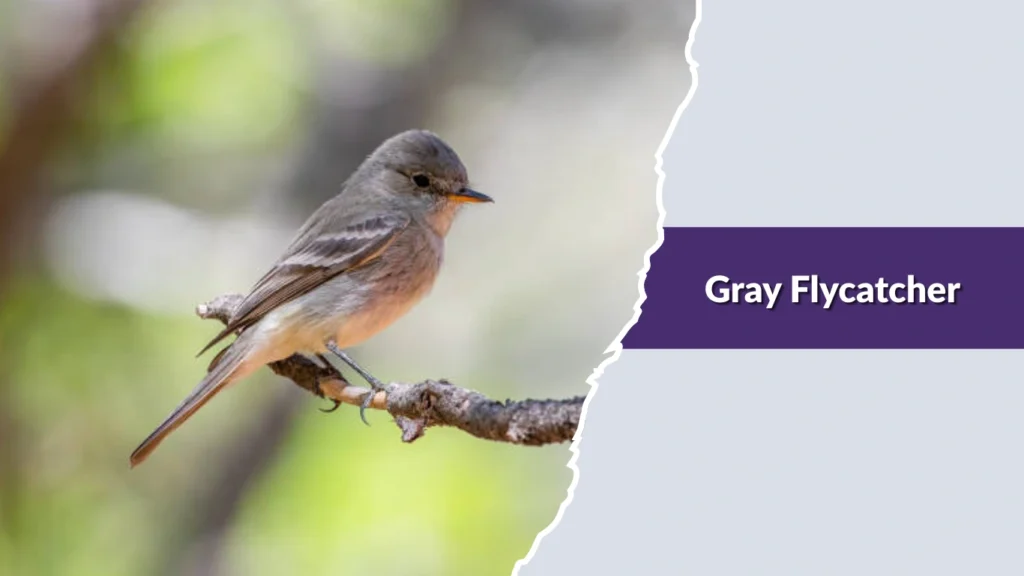
The gray flycatcher is a subtle, soft-gray bird with faint yellow tones near the base and edges of the tail. Although its colors are understated, its constant tail dipping and flycatching behavior make it recognizable.
Identification
- Plain gray to gray-brown body
- Faint yellow wash on undertail and tail edges
- Thin, straight bill
- Long tail frequently dipped downward
- Dark eyes with a gentle facial look
Habitat
Gray flycatchers are usually found in open woodlands, dry forests, scrublands, and lightly wooded areas. They often perch on low branches or fences from where they hunt insects.
Diet
They feed almost entirely on insects, including flies, beetles, moths, and small wasps. They catch prey by making short flights from a perch and returning to the same spot.
Behavior
A key behavior is its slow, repeated tail dipping, often done while perched. It is usually solitary or found in pairs and is not very noisy.
Range
The gray flycatcher occurs mainly in western North America, including parts of the United States and Mexico.
10. Yellow-tailed Bush Warbler
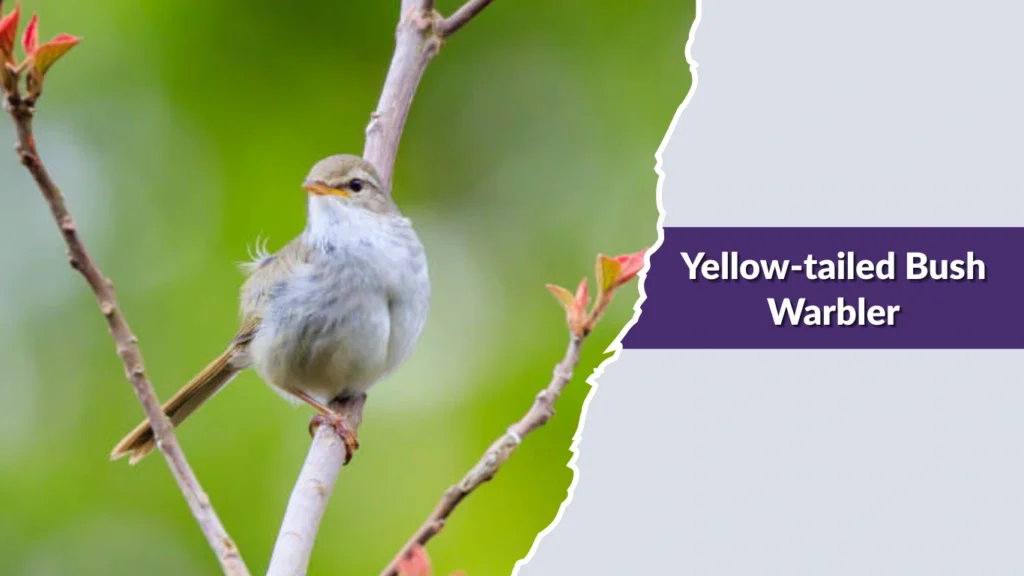
The yellow-tailed bush warbler is a small, shy bird with soft gray-brown plumage and subtle yellow coloring near the tail tip. It is more often heard than seen, as it prefers staying hidden in thick undergrowth.
Identification
- Small gray to gray-brown body
- Yellowish undertail and faint yellow tail tip
- Short, rounded wings
- Slender, pointed bill
- Long tail often held slightly cocked
Habitat
This bird inhabits dense shrubs, bamboo thickets, forest edges, and mountain undergrowth. It prefers moist, well-covered areas where it can remain concealed while foraging.
Diet
Yellow-tailed bush warblers feed mainly on insects, larvae, and small invertebrates. They pick prey from leaves, grass, and low branches.
Behavior
They are secretive and fast-moving birds that stay close to the ground. They move in quick hops through vegetation and give sharp, repetitive calls.
Range
They are found in parts of East and South Asia, including China, Nepal, Bhutan, and northern India.
FAQs
What makes a bird’s tail tip appear yellow?
A yellow tail tip usually comes from natural feather pigments called carotenoids. These pigments are obtained from the bird’s diet, especially fruits and insects. Bright tail colors can help with species recognition, courtship displays, and signaling during flight.
Are gray birds with yellow-tipped tails rare?
They are not extremely rare, but they are less common than solid-colored gray birds. This color combination appears in different bird families across the world, especially among flycatchers, wagtails, and woodland songbirds.
Do yellow tail tips help birds survive?
Yes, in many species the bright tail edges or tips can startle insects, helping birds flush prey while hunting. In other cases, the color may distract predators or play a role in mating displays.
Where are gray birds with yellow tail tips usually found?
They are found across many regions, including North America, South America, Africa, Asia, and Australia. Most live in woodlands, riverbanks, shrublands, and forest edges where insects and fruits are plentiful.
Can tail color change with seasons or age?
Yes, in some birds the yellow coloring becomes brighter during the breeding season or as juveniles mature into adults. Molting can also affect how strong or faded the yellow tail tip looks.
