
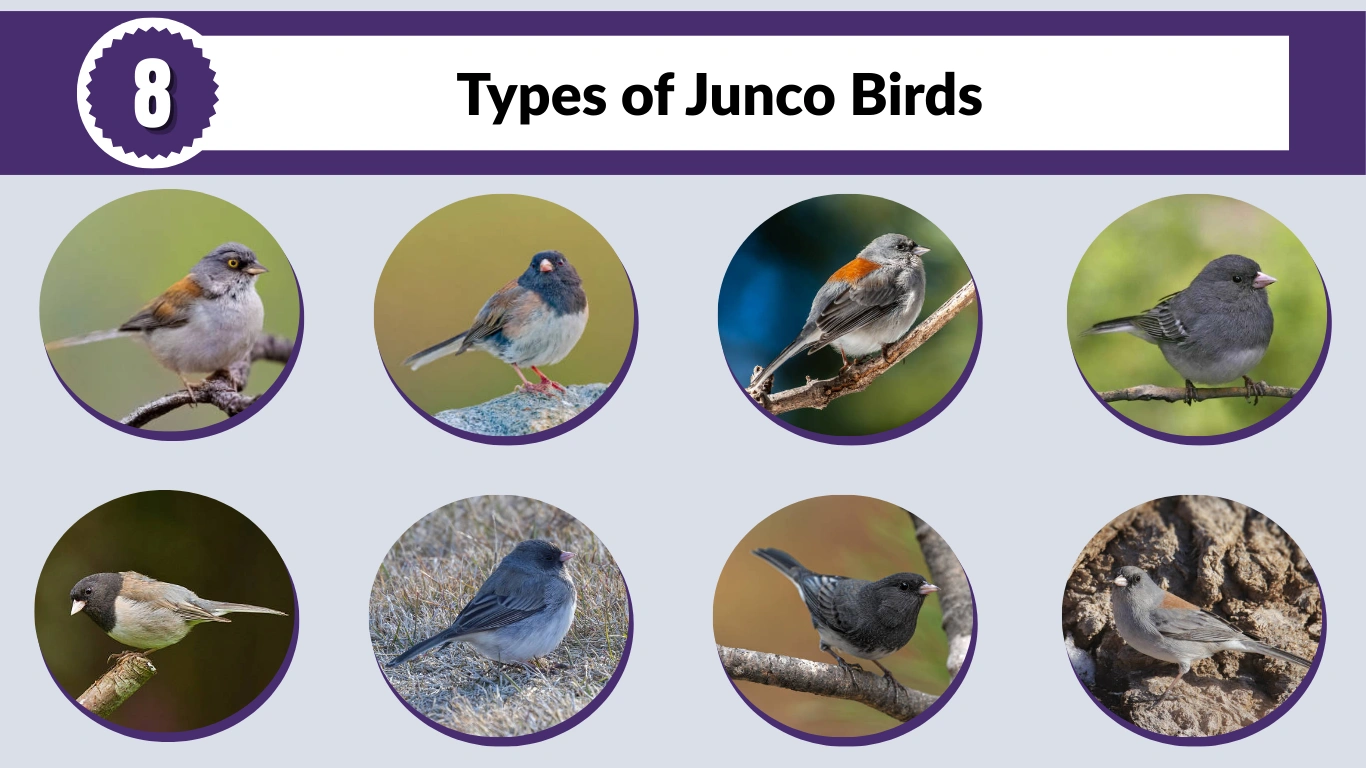
Juncos are small, energetic songbirds best known for their winter appearances and ground-feeding habits. Often called “snowbirds,” they are among the first birds people notice when colder weather arrives. While many junco types belong to the Dark-eyed Junco group, they display a surprising variety of colors and regional patterns across North America. From forested mountains to suburban backyards, juncos adapt well to different environments. This guide explores eight types of junco birds, highlighting their identification, habitats, behaviors, and diets.
1. Dark-eyed Junco (Junco hyemalis)
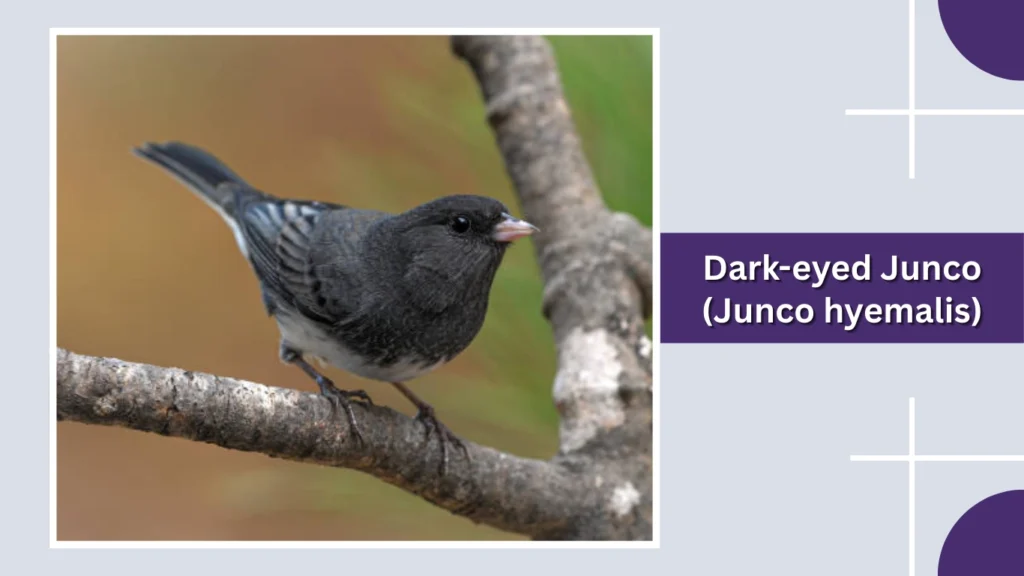
The Dark-eyed Junco is one of the most widespread and recognizable songbirds in North America. Often referred to as the “snowbird,” it commonly appears in backyards and open woodlands during winter. Its clean color contrast, active ground-feeding behavior, and flashing white tail feathers make it easy to notice, even for beginner birdwatchers.
Identification
- Small, sparrow-sized bird with a rounded body
- Head and upperparts range from dark gray to nearly black
- Clean white belly and undertail coverts
- Pale pink or flesh-colored bill
- Long, dark tail with bright white outer feathers
- Males are usually darker than females
Habitat
Dark-eyed Juncos breed primarily in coniferous and mixed forests across Canada, Alaska, and mountainous regions of the western and northeastern United States. They favor areas with dense ground cover, fallen logs, and shrubs that provide shelter and nesting sites. During winter, they migrate southward and to lower elevations, becoming common in open woodlands, forest edges, fields, parks, gardens, and suburban neighborhoods. They readily adapt to human presence and are frequent visitors to backyard feeders, especially where seeds are available.
Behaviors
Dark-eyed Juncos are ground-oriented birds that hop rather than walk while foraging. They are often seen scratching at leaf litter with a two-footed backward hop to uncover seeds and insects. In winter, they gather in loose flocks that may include other sparrow species. When startled, they quickly fly upward, flashing their white tail feathers as a visual signal. During the breeding season, males become territorial and use trills and short songs to defend nesting areas and attract mates.
Diet and Lifespan
Their diet consists mainly of seeds and grains, particularly in fall and winter. Common foods include grass seeds, weed seeds, and millet from feeders. During spring and summer, insects and spiders become an important food source, especially for feeding nestlings. Dark-eyed Juncos typically live 3–5 years in the wild, though some individuals have been recorded living over 10 years under ideal conditions.
2. Slate-colored Junco (Junco hyemalis hyemalis)
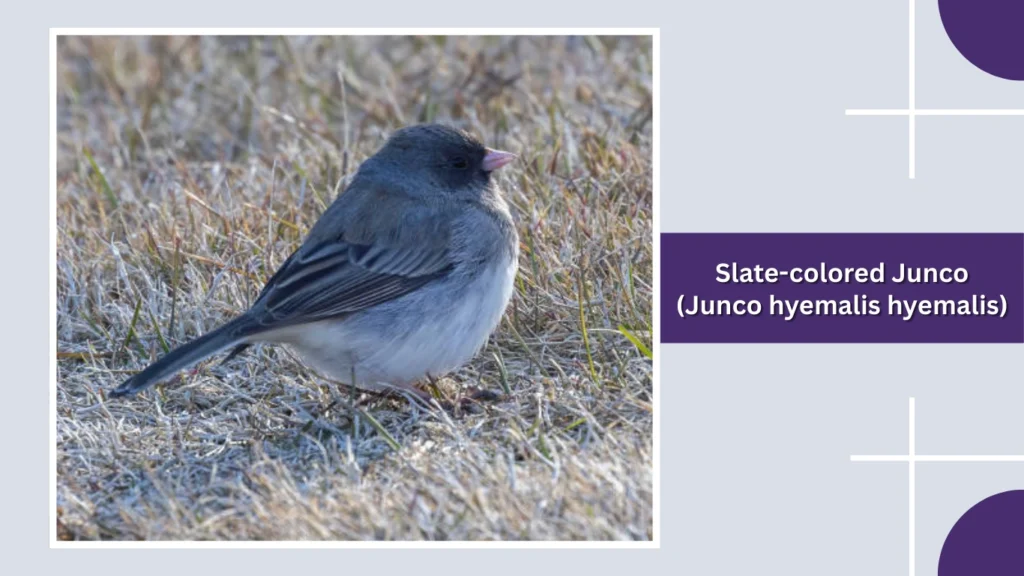
The Slate-colored Junco is one of the best-known forms of the Dark-eyed Junco group and is especially common across eastern and northern North America. It is often the first junco people notice in winter, when flocks suddenly appear in yards, parks, and forest edges as colder weather arrives.
Identification
- Small, compact songbird with a rounded body
- Uniform slate-gray head, back, and chest
- Bright white belly and undertail coverts
- Pale pink or flesh-colored bill
- Long dark tail with bold white outer feathers
- Females appear slightly browner than males
Habitat
Slate-colored Juncos breed mainly in boreal forests, mixed woodlands, and mountainous regions of Canada and the northeastern United States. They prefer forests with dense ground cover, moss, and fallen branches for nesting. During winter, they migrate southward and are commonly found in open woodlands, forest edges, hedgerows, fields, parks, and suburban areas. They adapt easily to human-altered landscapes and frequently visit backyard feeders, especially in colder months.
Behaviors
These juncos are active ground foragers, often seen hopping and scratching through leaf litter in search of food. They typically feed in loose flocks during winter, sometimes alongside other sparrows. When flushed, they fly low and fast, flashing their white tail feathers. During the breeding season, males become territorial and sing clear, musical trills from low branches or treetops to defend nesting areas.
Diet and Lifespan
Slate-colored Juncos feed primarily on seeds, including grass and weed seeds, as well as grains from feeders. Insects, spiders, and larvae become an important part of their diet during spring and summer. In the wild, they usually live around 3–6 years, though some individuals have been recorded living significantly longer.
3. Oregon Junco (Junco hyemalis oreganus)
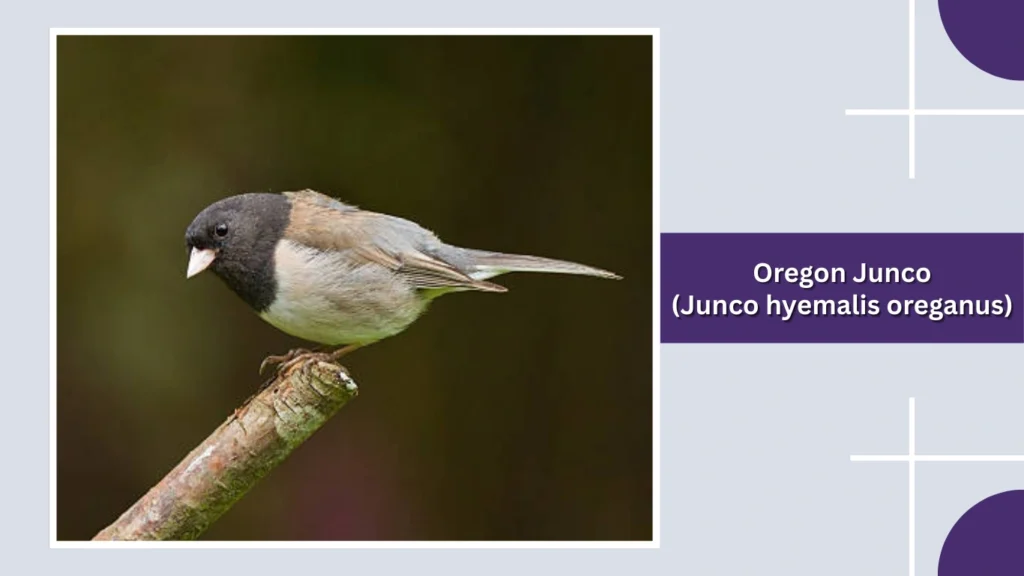
The Oregon Junco is a striking and well-known form of the Dark-eyed Junco group, commonly found in western North America. Its bold contrast between the dark hood and warm brown back makes it one of the easiest juncos to identify in the field.
Identification
- Small, rounded songbird
- Black to dark charcoal head and upper chest
- Rich brown back and wings
- Clean white belly
- Pale pink bill
- Long tail with prominent white outer feathers
- Females are slightly duller than males
Habitat
Oregon Juncos breed in coniferous forests, mixed woodlands, and mountainous regions of the western United States and southwestern Canada. They favor areas with dense understory, fallen logs, and shrubs for nesting. During winter, many move to lower elevations and are commonly found in open woodlands, forest edges, parks, gardens, and suburban areas. They are frequent visitors to backyard feeders, especially where seeds are available.
Behaviors
These juncos are energetic ground foragers, often seen hopping and scratching in leaf litter. They form loose flocks during winter, sometimes mixing with other junco types and sparrows. When startled, they quickly fly up, flashing their white tail feathers. During the breeding season, males sing musical trills from exposed perches to defend territory and attract mates.
Diet and Lifespan
Oregon Juncos feed mainly on seeds and grains during fall and winter. In spring and summer, their diet shifts toward insects and spiders, which provide essential protein for growing chicks. In the wild, they typically live around 3–6 years, though some individuals may live longer under favorable conditions.
4. White-winged Junco (Junco hyemalis aikeni)
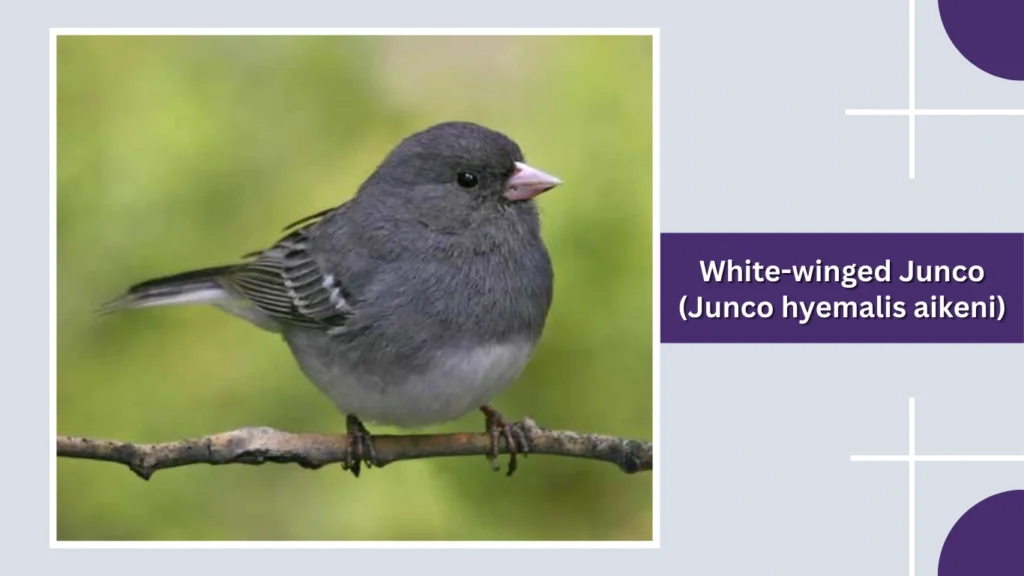
The White-winged Junco is one of the most distinctive and localized forms of the Dark-eyed Junco group. It is best known for the bold white wing bars that set it apart from other juncos and make it easy to recognize, even from a distance.
Identification
- Small, rounded songbird
- Pale gray head, chest, and upperparts
- Bright white belly
- Two bold white wing bars
- Pinkish bill
- Long dark tail with white outer feathers
- Females are slightly duller than males
Habitat
White-winged Juncos have a relatively limited breeding range, primarily in the Black Hills of South Dakota and Wyoming. They prefer open pine forests, woodland edges, and forest clearings with grassy ground cover. During winter, they migrate short distances to lower elevations and nearby plains, where they can be found in open woodlands, fields, and suburban areas. They readily visit backyard feeders in winter.
Behaviors
Like other juncos, White-winged Juncos are ground feeders that hop rather than walk. They often forage in small flocks during winter, sometimes mixing with other Dark-eyed Junco forms. When startled, they fly quickly, flashing their white tail feathers. During the breeding season, males become territorial and sing clear trilling songs from trees or shrubs.
Diet and Lifespan
Their diet consists mainly of seeds, including grass and weed seeds, especially in winter. Insects and spiders become more important during the breeding season. White-winged Juncos typically live around 3–6 years in the wild, though individuals may survive longer in protected habitats.
5. Gray-headed Junco (Junco hyemalis caniceps)
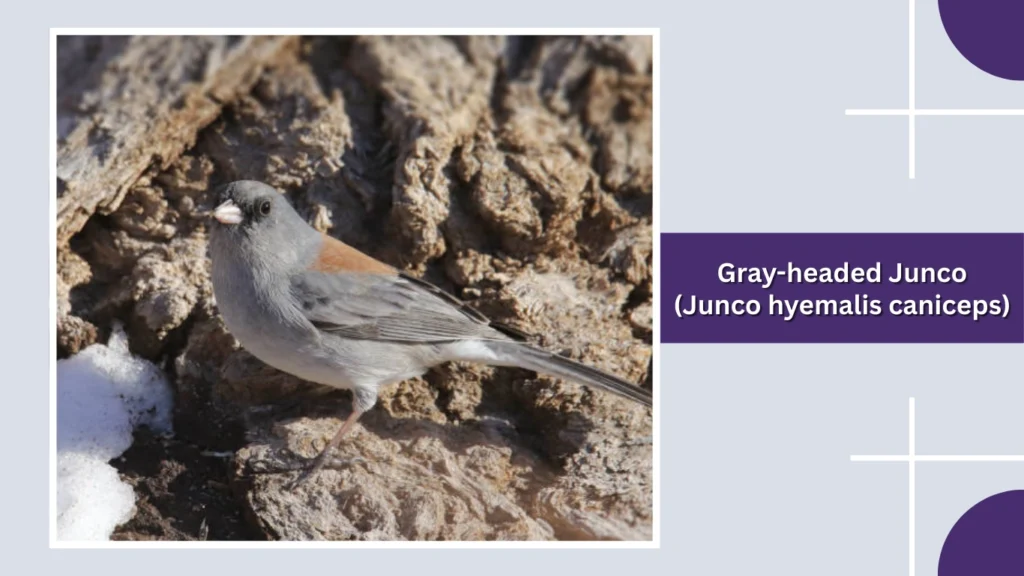
The Gray-headed Junco is a distinctive and elegant member of the Dark-eyed Junco group, mainly found in the Rocky Mountain region. Its pale gray head and contrasting rufous back give it a softer, more muted appearance compared to other junco forms.
Identification
- Small, compact songbird
- Pale gray head and chest
- Warm reddish-brown (rufous) back
- White belly and undertail coverts
- Pale pink bill
- Long dark tail with white outer feathers
- Females appear slightly duller than males
Habitat
Gray-headed Juncos breed in montane coniferous and mixed forests, especially in the Rocky Mountains of the western United States. They favor forest edges, open woodlands, and areas with dense ground cover for nesting. During winter, they move to lower elevations and are commonly found in foothills, open woodlands, brushy areas, and suburban neighborhoods, where food is more readily available.
Behaviors
These juncos are active ground foragers, often seen hopping and scratching through leaf litter. In winter, they form loose flocks that may include other junco types. When flushed, they fly low and quickly, flashing white tail feathers. During the breeding season, males sing clear trilling songs from elevated perches to defend territories and attract mates.
Diet and Lifespan
Gray-headed Juncos feed mainly on seeds and grains, particularly in fall and winter. Insects, spiders, and larvae are important during spring and summer, especially for feeding young. In the wild, they typically live around 3–6 years, though some individuals may live longer under favorable conditions.
6. Red-backed Junco (Junco hyemalis dorsalis)
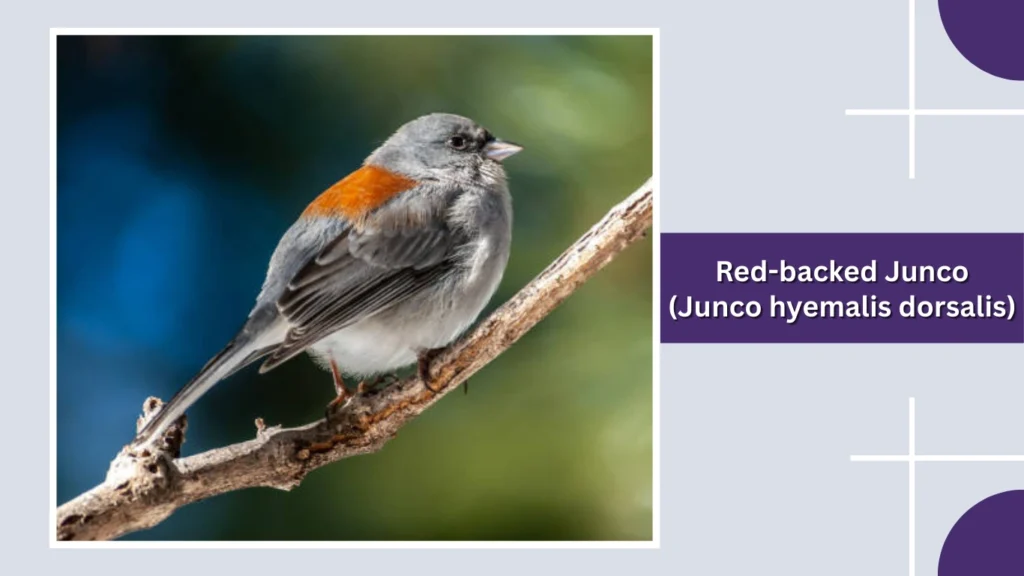
The Red-backed Junco is a bold and eye-catching form of the Dark-eyed Junco group, mainly found in the southwestern United States and parts of Mexico. Its striking reddish back and strong contrast in coloration make it one of the most visually distinctive juncos.
Identification
- Small, rounded songbird
- Dark gray to black head and upper chest
- Rich reddish-brown (rufous) back
- Clean white belly
- Pale pink bill
- Long dark tail with white outer feathers
- Females are slightly paler than males
Habitat
Red-backed Juncos breed primarily in montane forests of the southwestern United States, including pine, oak, and mixed conifer woodlands. They favor areas with dense ground cover, shrubs, and fallen logs for nesting. During winter, many individuals move to lower elevations and can be found in open woodlands, brushy hillsides, forest edges, and suburban areas, often near bird feeders.
Behaviors
These juncos are active ground foragers, hopping and scratching through leaf litter in search of food. In winter, they form loose flocks that may include other junco forms and sparrow species. When disturbed, they flush quickly, flying low and flashing their white tail feathers. During the breeding season, males sing clear, musical trills from exposed branches to establish territory and attract mates.
Diet and Lifespan
Red-backed Juncos feed mainly on seeds and grains during fall and winter. Insects, spiders, and other small invertebrates become important during the breeding season, especially for feeding nestlings. In the wild, they typically live around 3–6 years, though some individuals may survive longer in favorable environments.
7. Pink-sided Junco (Junco hyemalis mearnsi)
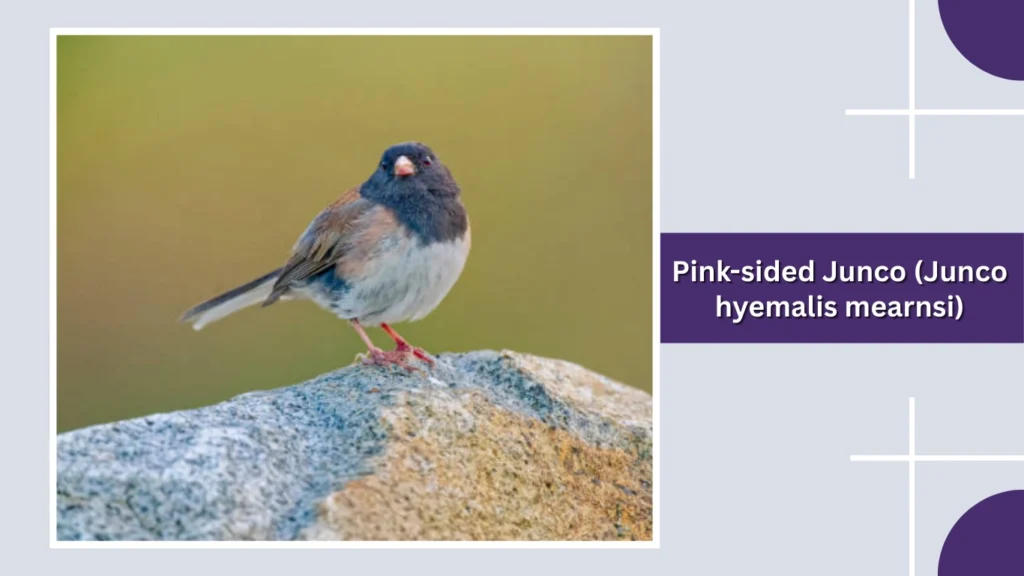
The Pink-sided Junco is a softly colored and attractive form of the Dark-eyed Junco group, mainly found in the northern Rocky Mountains. Its subtle pink wash along the sides gives it a gentle appearance that distinguishes it from other junco types.
Identification
- Small, rounded songbird
- Dark gray to black head and upper chest
- Soft brown back
- White belly with noticeable pinkish sides
- Pale pink bill
- Long dark tail with bright white outer feathers
- Females are slightly browner and less contrasting than males
Habitat
Pink-sided Juncos breed in coniferous and mixed forests of the northern Rocky Mountains, including areas with spruce, fir, and pine. They prefer forest edges, clearings, and areas with thick ground cover for nesting. During winter, they migrate to lower elevations and are commonly found in open woodlands, brushy hillsides, parks, and suburban neighborhoods, especially where bird feeders are present.
Behaviors
These juncos are ground-oriented birds, often seen hopping and scratching through leaf litter to uncover seeds and insects. In winter, they form loose flocks that may include other junco forms. When startled, they flush quickly, flying low and flashing their white tail feathers. During the breeding season, males sing clear, musical trills from elevated perches to defend territories.
Diet and Lifespan
Pink-sided Juncos feed primarily on seeds and grains in fall and winter. Insects and spiders become an important part of their diet during spring and summer, particularly for feeding young. In the wild, they typically live around 3–6 years, though some individuals may live longer under favorable conditions.
8. Yellow-eyed Junco (Junco phaeonotus)
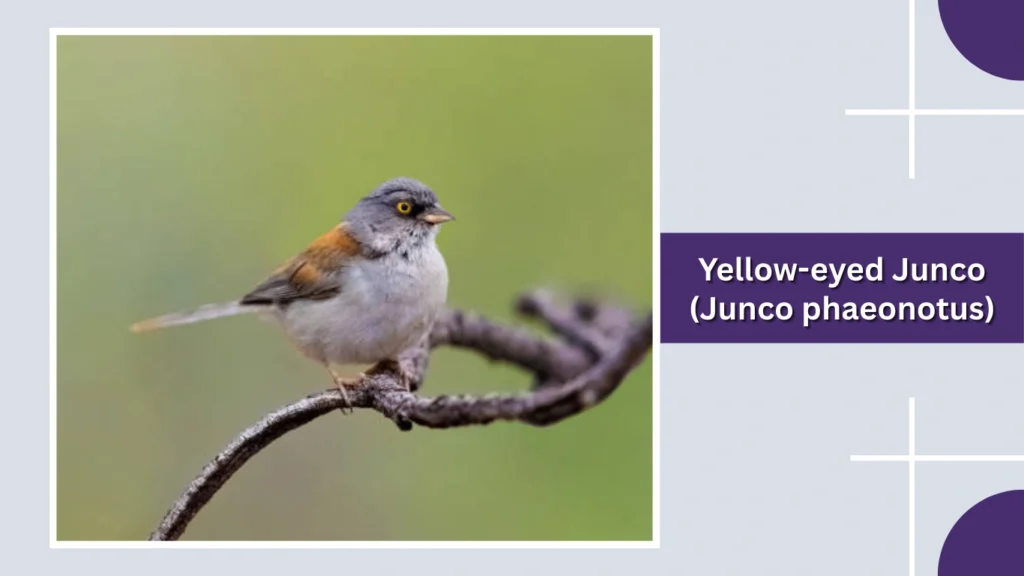
The Yellow-eyed Junco is a striking and unique junco species found mainly in the mountainous regions of the southwestern United States, Mexico, and Central America. Unlike other juncos, it is not part of the Dark-eyed Junco group and is easily recognized by its vivid yellow eyes and distinctive markings.
Identification
- Medium-sized junco with a sturdy build
- Gray head and chest
- Rich chestnut or rufous back
- Bright yellow eyes
- Pale pinkish bill
- Long dark tail with white outer feathers
- Females are slightly duller in color than males
Habitat
Yellow-eyed Juncos inhabit pine-oak forests, montane woodlands, and forest edges at higher elevations. They prefer cool, shaded environments with dense ground cover for nesting. Unlike many other juncos, most populations are non-migratory and remain in mountainous regions year-round, though some may move slightly downslope in winter.
Behaviors
These juncos are often seen in pairs or small family groups rather than large winter flocks. They forage mainly on the ground, hopping and scratching through leaf litter. Yellow-eyed Juncos are more secretive than Dark-eyed Juncos and tend to stay close to cover. Males sing clear, trilling songs during the breeding season to defend territories.
Diet and Lifespan
Their diet includes seeds, insects, spiders, and other small invertebrates. Insects are especially important during the breeding season. In the wild, Yellow-eyed Juncos typically live around 4–7 years, with some individuals surviving longer in suitable habitats.
FAQs
What is the most common junco species?
The Dark-eyed Junco is the most common and widespread junco species in North America. It is frequently seen in winter across much of the United States and southern Canada, especially in backyards, parks, and open woodlands.
Are all junco types separate species?
No, most junco types are forms or subspecies of the Dark-eyed Junco. Only the Yellow-eyed Junco is considered a separate species, while others differ mainly in color patterns and geographic range.
Why are juncos called “snowbirds”?
Juncos are often called “snowbirds” because many populations move south or to lower elevations in winter and appear in large numbers when cold weather begins, often coinciding with the first snowfall.
What do juncos eat?
Juncos primarily eat seeds and grains, especially in winter. During spring and summer, they also consume insects and spiders, which provide important protein for breeding and raising young.
How long do junco birds live?
In the wild, most juncos live between 3 and 6 years. Some individuals, particularly those in stable habitats with fewer predators, can live significantly longer.
