
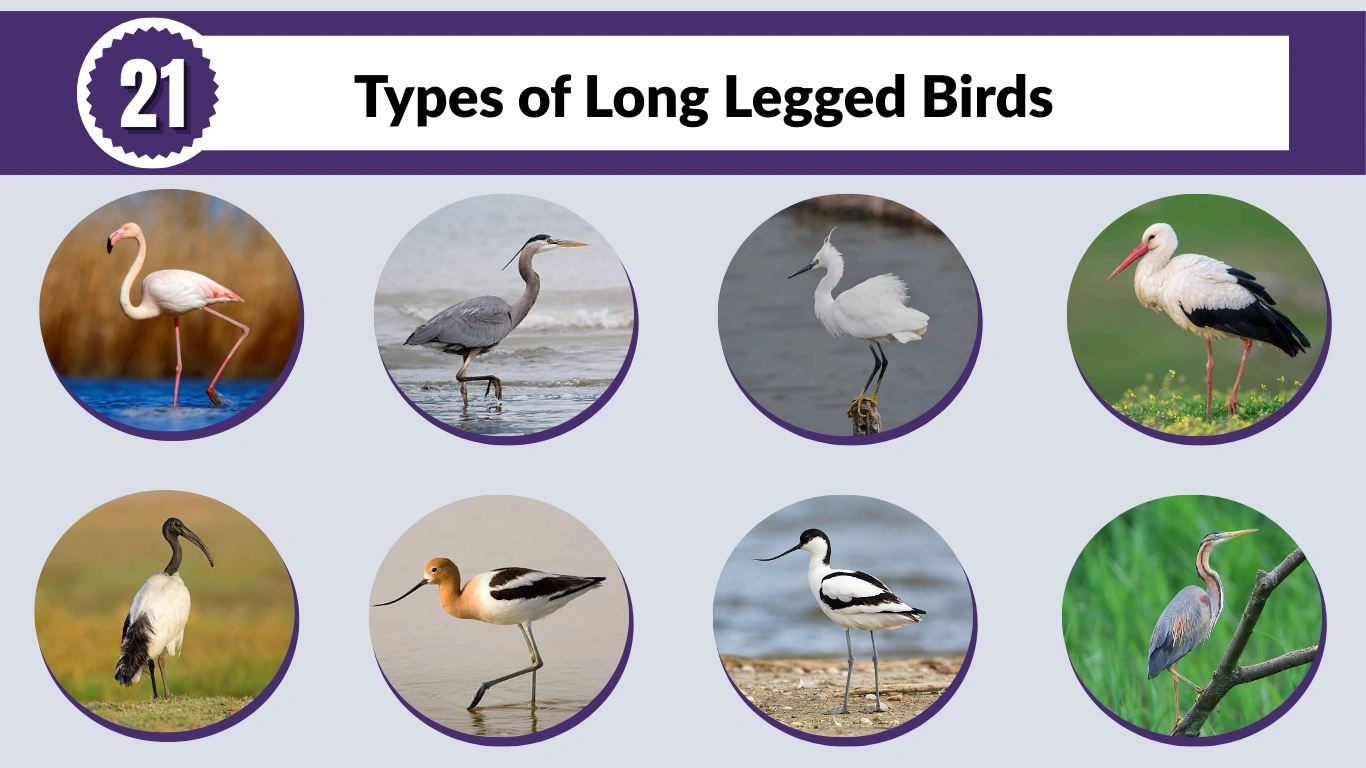
Long-legged birds are some of the most graceful and easily recognizable birds in the world, often seen walking slowly through shallow water or standing motionless along wetland edges. Their extended legs help them move through marshes, rivers, and coastal areas while hunting fish, insects, and other small creatures. From colorful flamingos to towering cranes and powerful storks, these birds play an important role in wetland ecosystems and are admired for their beauty, behavior, and unique adaptations.
1. Flamingo
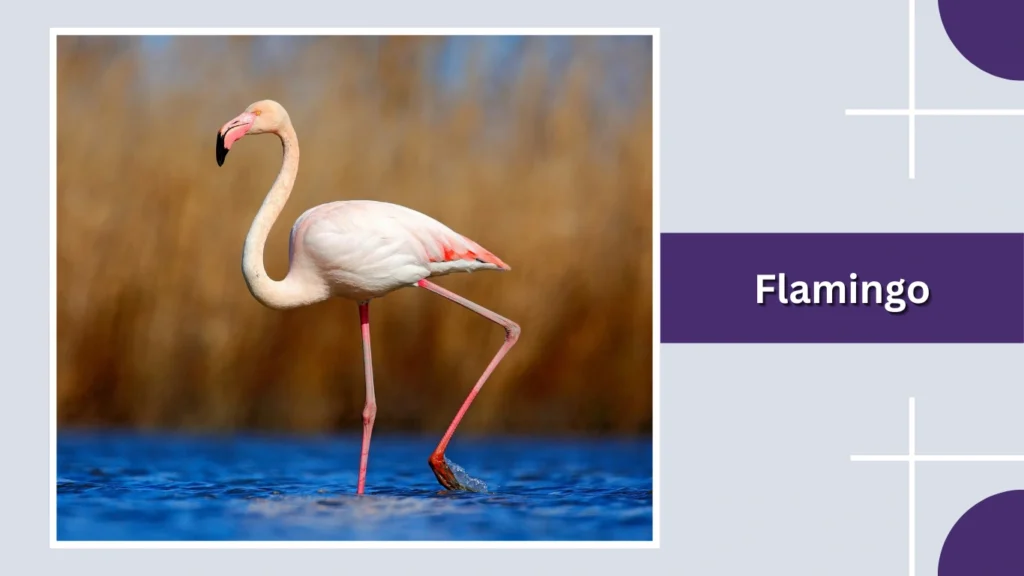
Flamingos are iconic long-legged wading birds known for their bright pink plumage, slender necks, and graceful posture. They are commonly found in shallow lakes, lagoons, and coastal wetlands, where they feed in groups. Their long legs allow them to walk easily through water while filtering food from mud and saltwater.
Identification
- Very long, thin legs adapted for wading
- Curved, downward-bent bill with a black tip
- Pink to reddish plumage (color comes from diet)
- Long S-shaped neck
- Webbed feet for walking on soft mud
Habitat
Flamingos live mainly in shallow saline or alkaline lakes, coastal lagoons, mudflats, and estuaries. They are widely distributed across Africa, parts of Asia, southern Europe, the Caribbean, and South America. They prefer open wetlands with minimal vegetation.
Diet
Their diet consists mostly of algae, microscopic organisms, small crustaceans, and plankton. Flamingos feed by lowering their heads upside down in water and filtering food through specialized plates inside their beaks.
Behavior
Flamingos are highly social birds and usually live in large colonies that can include thousands of individuals. They are known for synchronized group displays, which play a role in courtship and pair bonding.
Lifespan
In the wild, flamingos can live 20 to 30 years, and in protected environments, some individuals have been recorded living over 40 years.
2. Great Blue Heron

The Great Blue Heron is one of the largest and most recognizable long-legged birds in the world. It is famous for its tall posture, slow wingbeats, and patient hunting style. This bird is commonly seen standing motionless in shallow water, waiting to strike fish with lightning-fast precision.
Identification
- Tall body with very long legs
- Blue-gray plumage with darker flight feathers
- Long, sharp, yellowish bill
- White face with a black stripe above the eye
- Long S-shaped neck, often folded in flight
Habitat
Great Blue Herons live near wetlands, lakes, rivers, marshes, coastal shores, and ponds. They are widely distributed across North and Central America and can adapt well to both natural wetlands and human-made water bodies.
Diet
Their diet mainly includes fish, but they also eat frogs, snakes, insects, small mammals, and crustaceans. They hunt by standing still or slowly stalking prey before spearing it with their long bill.
Behavior
These birds are usually solitary feeders but nest in colonies called heronries. They are excellent flyers and often seen gliding slowly with deep wingbeats and their neck pulled back in an “S” shape.
Lifespan
Great Blue Herons typically live around 15 years in the wild, though some individuals have been recorded surviving more than 20 years under favorable conditions.
3. Little Egret
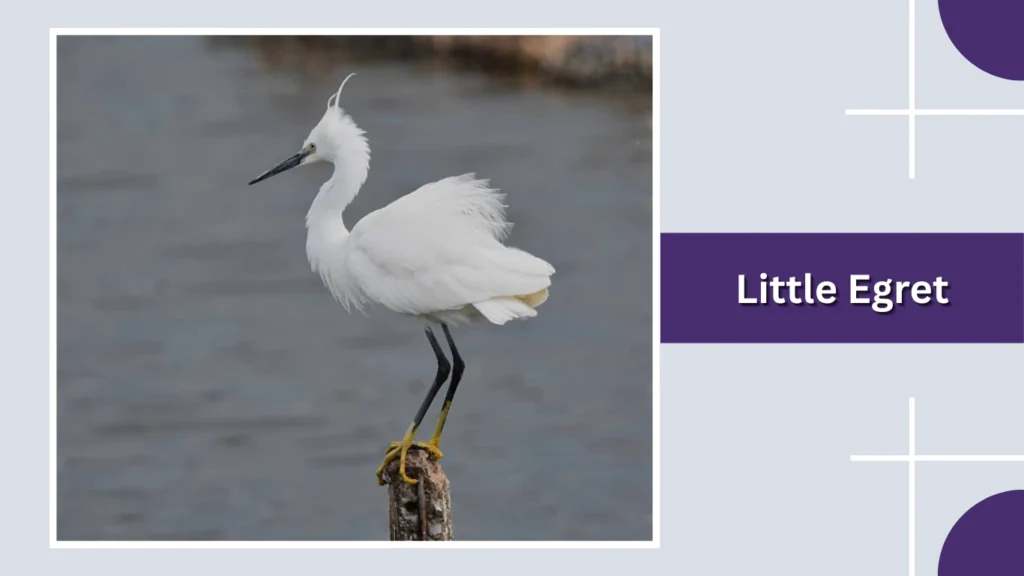
The Little Egret is a slim, elegant long-legged bird recognized for its bright white plumage and active feeding style. It is often seen along shorelines and wetlands, quickly moving through shallow water while searching for prey. Its graceful appearance and contrasting dark legs make it one of the easiest egrets to identify.
Identification
- Pure white feathers over the entire body
- Long, slender black legs
- Bright yellow feet that stand out clearly
- Thin black bill
- Slender neck and lightweight body
Habitat
Little Egrets are found in coastal lagoons, mudflats, marshes, rivers, lakes, and rice fields. They are widely distributed across Europe, Africa, Asia, and parts of Australia, preferring shallow wetlands with abundant food.
Diet
Their diet includes small fish, frogs, insects, crustaceans, and aquatic invertebrates. They actively chase prey, often running, stirring the water with their feet, or suddenly darting forward to catch food.
Behavior
Unlike many herons that hunt slowly, Little Egrets are energetic feeders. They are usually seen alone or in small groups and often mix with other wading birds. During breeding season, they gather in colonies.
Lifespan
Little Egrets generally live 10 to 15 years in the wild, though some individuals can survive longer in safe environments with stable food sources.
4. Sandhill Crane
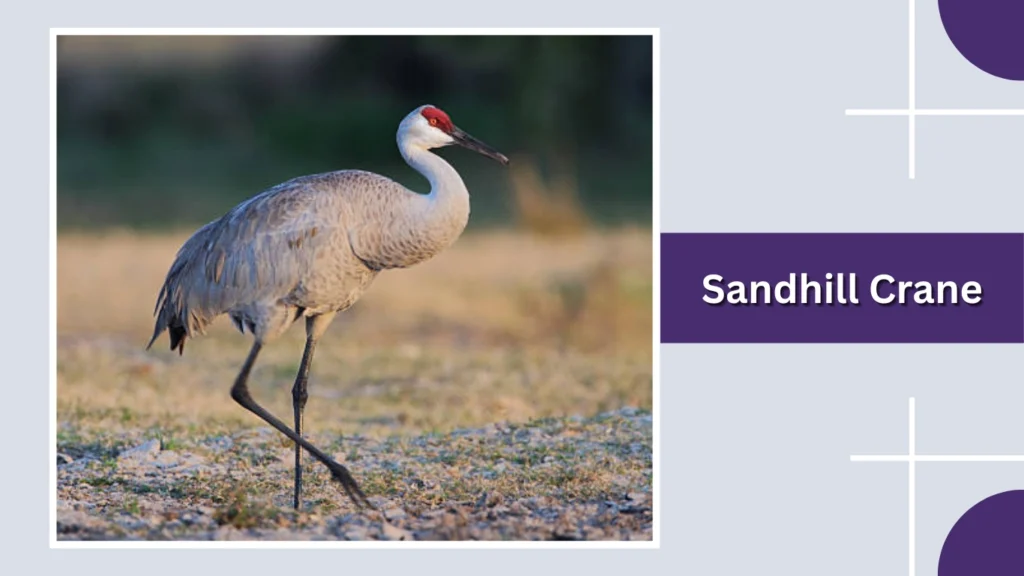
The Sandhill Crane is a tall, long-legged bird famous for its loud calls and elegant dancing displays. With its gray body, red crown, and slow, powerful flight, it is one of the most impressive wetland birds in open landscapes. These cranes often travel in large flocks, especially during migration.
Identification
- Very tall body with long, thin legs
- Gray plumage, sometimes stained brown
- Red patch on the forehead
- Long, straight bill
- Broad wings with dark tips
Habitat
Sandhill Cranes inhabit marshes, wetlands, grasslands, agricultural fields, and shallow lakes. They are found mainly in North America and parts of Siberia, preferring open areas near water for feeding and nesting.
Diet
They are omnivorous and feed on grains, seeds, roots, insects, small reptiles, amphibians, and occasionally small mammals. They often forage by probing the ground or picking food from the surface.
Behavior
Sandhill Cranes are well known for their courtship dances, which include jumping, bowing, and wing spreading. They are social birds that migrate in large flocks and form strong lifelong pair bonds.
Lifespan
In the wild, Sandhill Cranes commonly live 20 to 25 years, and some individuals have been recorded reaching over 30 years of age.
5. Whooping Crane
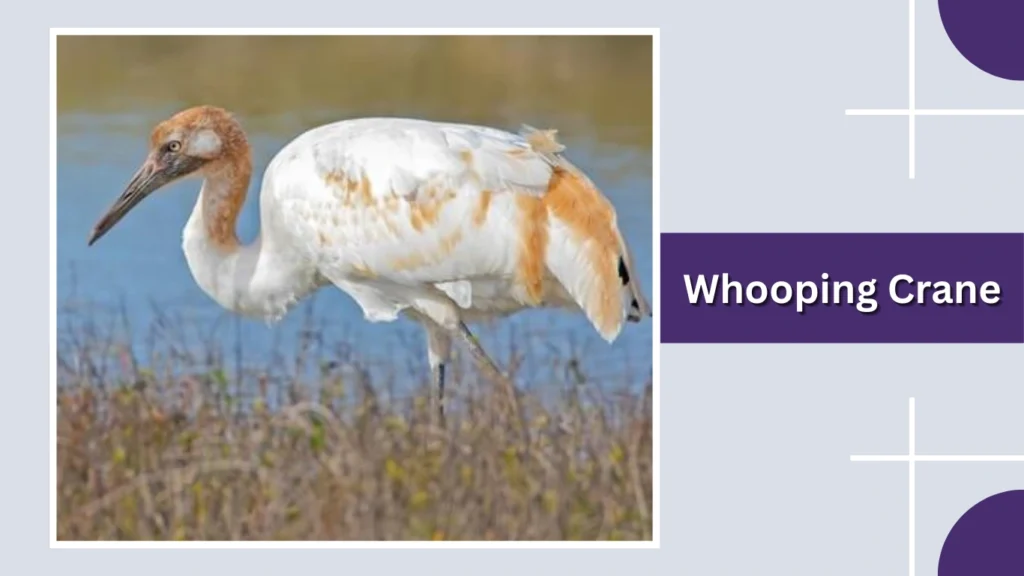
The Whooping Crane is one of the tallest and rarest long-legged birds in the world. It is best known for its striking white body, black wing tips, and loud, trumpeting calls that can be heard from far away. Because of strong conservation efforts, this species has slowly recovered from near extinction.
Identification
- Very tall white body with extremely long legs
- Black wing tips visible in flight
- Long, straight, pointed bill
- Red patch on the crown
- Long neck held straight while flying
Habitat
Whooping Cranes live in freshwater marshes, shallow wetlands, coastal prairies, and tidal flats. They breed mainly in northern Canada and migrate to southern coastal regions, especially along the Gulf Coast, during winter.
Diet
Their diet includes insects, small fish, frogs, crabs, clams, snails, and plant roots. They forage by slowly walking through shallow water and probing the mud with their long bills.
Behavior
Whooping Cranes form strong lifelong pairs and perform elaborate dances that involve bowing, jumping, and wing spreading. They are territorial during breeding season and migrate in small family groups.
Lifespan
In the wild, Whooping Cranes can live 20 to 30 years, and under protected conditions, some individuals have lived even longer.
6. White Stork
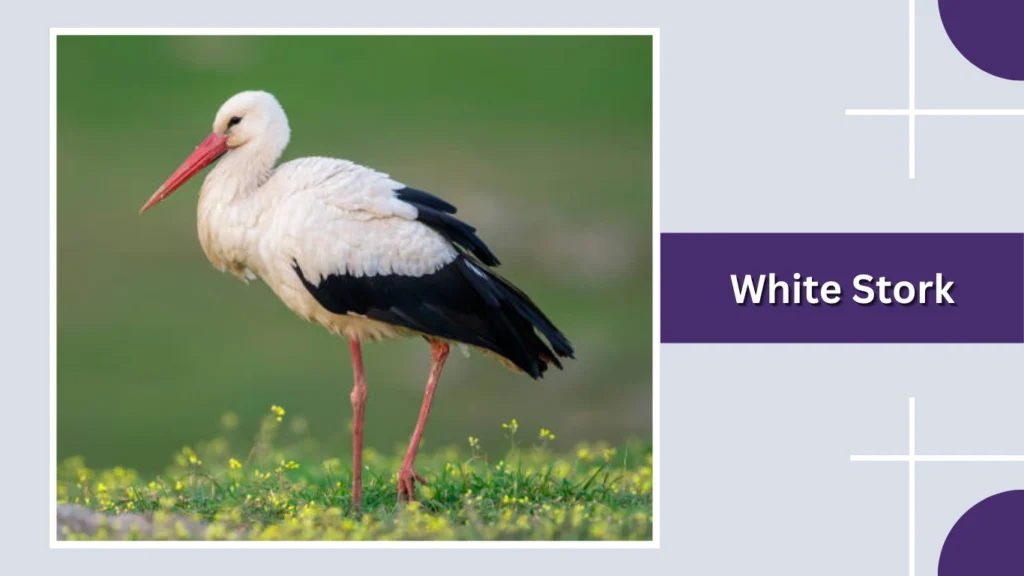
The White Stork is a large, long-legged bird famous for its snow-white body, contrasting black wing feathers, and bright red bill. It is closely associated with wetlands, farmlands, and even human settlements, where it often nests on rooftops, trees, and tall structures.
Identification
- Tall body with very long red legs
- White plumage with black flight feathers
- Long, straight red bill
- Broad wings for soaring
- Long neck held straight in flight
Habitat
White Storks are found in wetlands, floodplains, meadows, agricultural fields, and shallow lakes. They breed across Europe and parts of Asia and migrate to Africa during winter, favoring open landscapes with easy access to food.
Diet
They feed on insects, frogs, fish, small reptiles, rodents, and earthworms. White Storks often forage on the ground in fields or walk slowly through shallow water searching for prey.
Behavior
These birds are known for their bill-clattering displays instead of vocal calls. They are strong gliders, frequently seen soaring on thermal air currents, and they often return to the same nesting sites year after year.
Lifespan
White Storks usually live 15 to 25 years in the wild, though some banded individuals have been recorded living over 30 years.
7. Black Stork
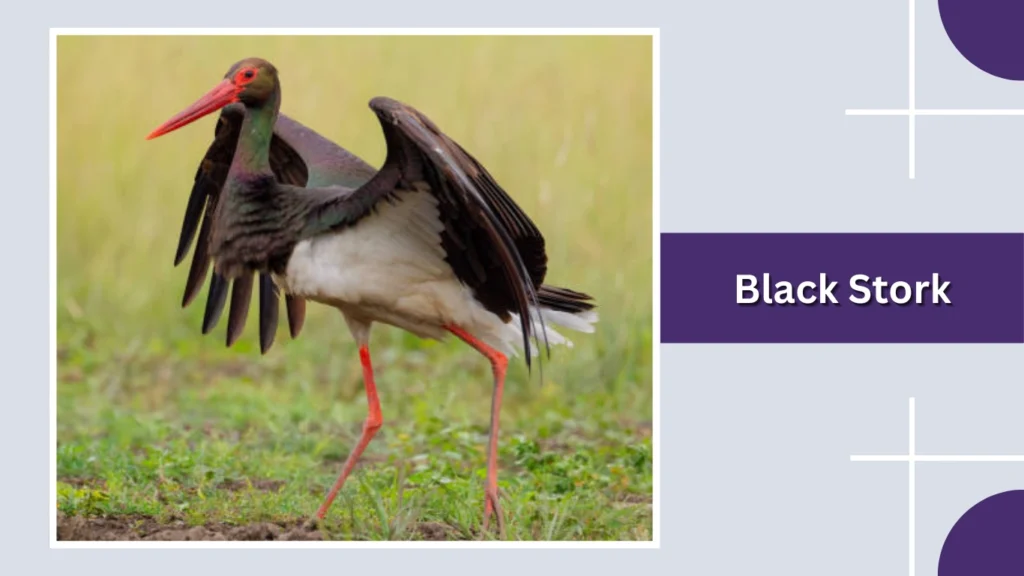
The Black Stork is a shy and elegant long-legged bird, easily recognized by its glossy black upperparts and bright white underbody. Unlike the White Stork, it avoids human settlements and prefers quiet, undisturbed wetlands and forested river valleys.
Identification
- Tall body with long red legs
- Glossy black upperparts with greenish-purple sheen
- White belly and underparts
- Long red bill
- Slender neck and broad wings
Habitat
Black Storks inhabit forested wetlands, rivers, streams, swamps, and secluded lakes. They breed across Europe and Asia and migrate to Africa and South Asia in winter, choosing remote areas with minimal disturbance.
Diet
Their diet includes fish, frogs, insects, crustaceans, and small reptiles. They forage quietly in shallow water, slowly walking and watching before quickly snapping up prey.
Behavior
Black Storks are mostly solitary or found in pairs. They are strong migratory birds and often soar high in the sky during long-distance seasonal movements.
Lifespan
In the wild, Black Storks typically live 15 to 25 years, with some individuals reaching over two decades of age.
8. Roseate Spoonbill
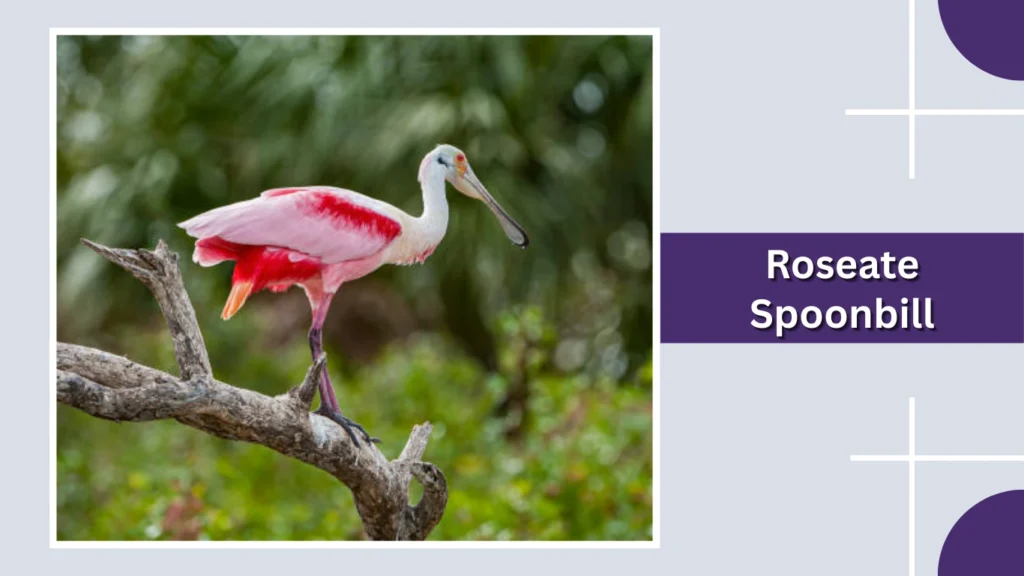
The Roseate Spoonbill is a striking long-legged bird known for its bright pink plumage and unique spoon-shaped bill. Its colorful appearance and slow, sweeping feeding style make it one of the most eye-catching wading birds in wetlands and coastal regions.
Identification
- Bright pink body with deeper rose-colored wings
- Long grayish legs
- Flat, spoon-shaped bill
- Bare, pale head in adults
- Broad wings with slow, steady flight
Habitat
Roseate Spoonbills live in coastal marshes, mangroves, lagoons, tidal flats, and shallow freshwater wetlands. They are mainly found in the Americas, especially in the southern United States, the Caribbean, and parts of South America.
Diet
They feed mostly on small fish, shrimp, insects, and aquatic invertebrates. The spoon-shaped bill is swept side to side in shallow water, snapping shut when prey is detected.
Behavior
These birds often feed in groups and nest in colonies with other wading birds. They are generally quiet but become more vocal during breeding season and when defending nests.
Lifespan
Roseate Spoonbills usually live around 10 to 15 years in the wild, though some individuals have been recorded surviving longer in protected habitats.
9. Glossy Ibis
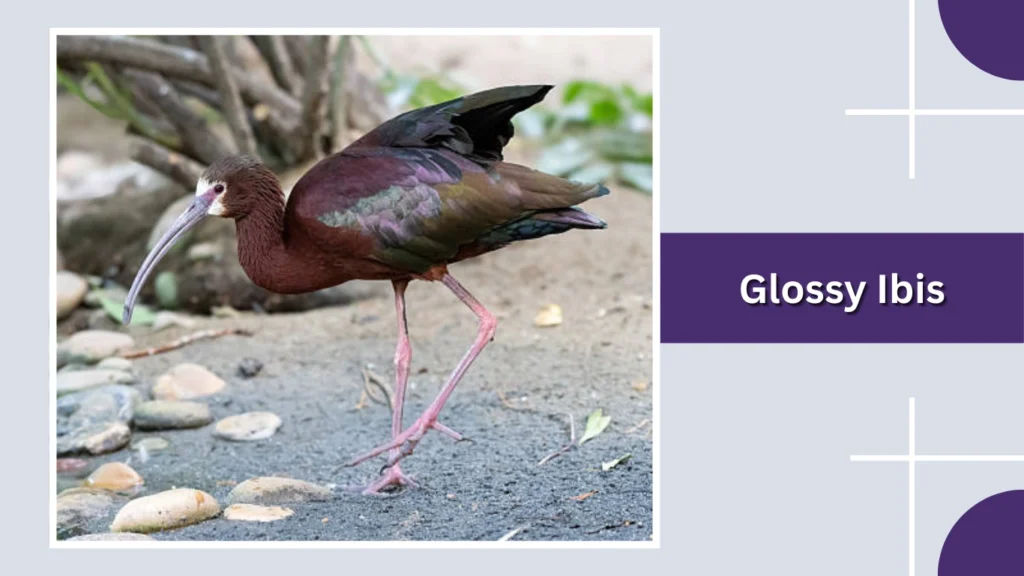
The Glossy Ibis is a slender, long-legged wading bird admired for its dark, iridescent feathers that shine green and purple in sunlight. It is often seen slowly walking through shallow wetlands, probing the mud with its curved bill in search of food.
Identification
- Slim body with long dark legs
- Long, downward-curved bill
- Dark chestnut-brown plumage with greenish sheen
- Long neck and narrow wings
- Bare grayish skin around the face
Habitat
Glossy Ibises live in marshes, swamps, flooded fields, lagoons, and shallow lakes. They are widely distributed across warm regions of Europe, Africa, Asia, Australia, and the Americas, preferring wetlands with soft mud.
Diet
Their diet consists mainly of insects, crustaceans, worms, small fish, and amphibians. They feed by probing their bills into mud and shallow water, feeling for prey.
Behavior
Glossy Ibises are social birds and are often found in flocks, especially outside the breeding season. They commonly nest in colonies and may travel long distances between feeding and nesting sites.
Lifespan
In the wild, Glossy Ibises typically live 15 to 20 years, depending on habitat quality and predation pressure.
10. Sacred Ibis
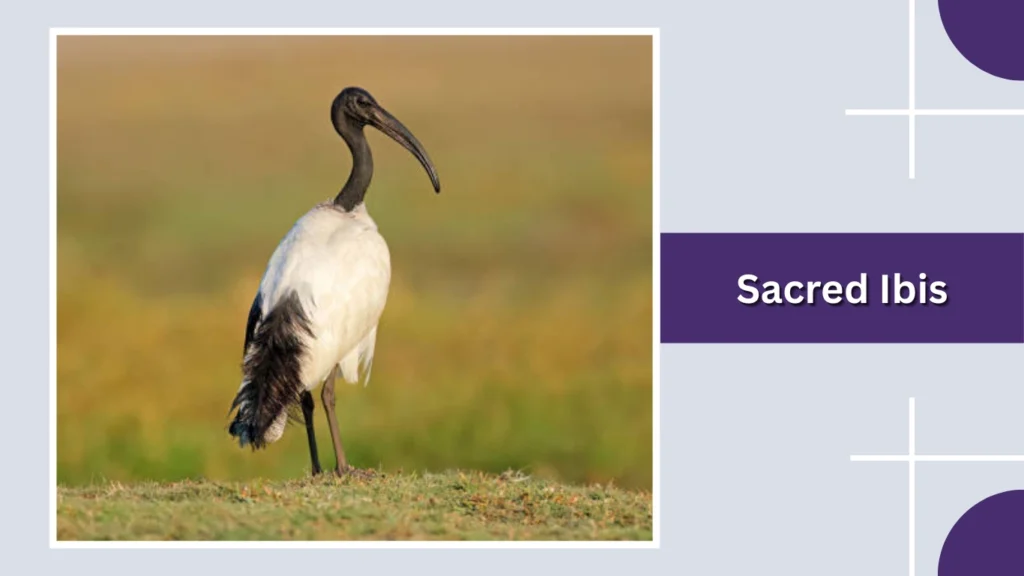
The Sacred Ibis is a large, long-legged wading bird recognized for its white body, black head, and long curved bill. It has been admired since ancient times and is often seen walking slowly through wetlands, grasslands, and riverbanks while searching for food.
Identification
- White body with contrasting black head and neck
- Long, downward-curved black bill
- Long black legs adapted for wading
- Broad wings with black tips
- Bald face and head
Habitat
Sacred Ibises inhabit marshes, swamps, lakeshores, floodplains, agricultural fields, and coastal wetlands. They are mainly found across Africa, the Middle East, and parts of Asia, preferring open wet areas near fresh or brackish water.
Diet
Their diet includes insects, frogs, small fish, crustaceans, reptiles, and carrion. They forage by probing mud, picking prey from the ground, or following livestock and human activity to find exposed food.
Behavior
Sacred Ibises are social birds often seen in flocks. They commonly nest in large colonies and are strong flyers, traveling long distances between feeding and roosting sites.
Lifespan
In the wild, Sacred Ibises usually live around 15 to 20 years, though some individuals may survive longer under favorable conditions.
11. American Avocet
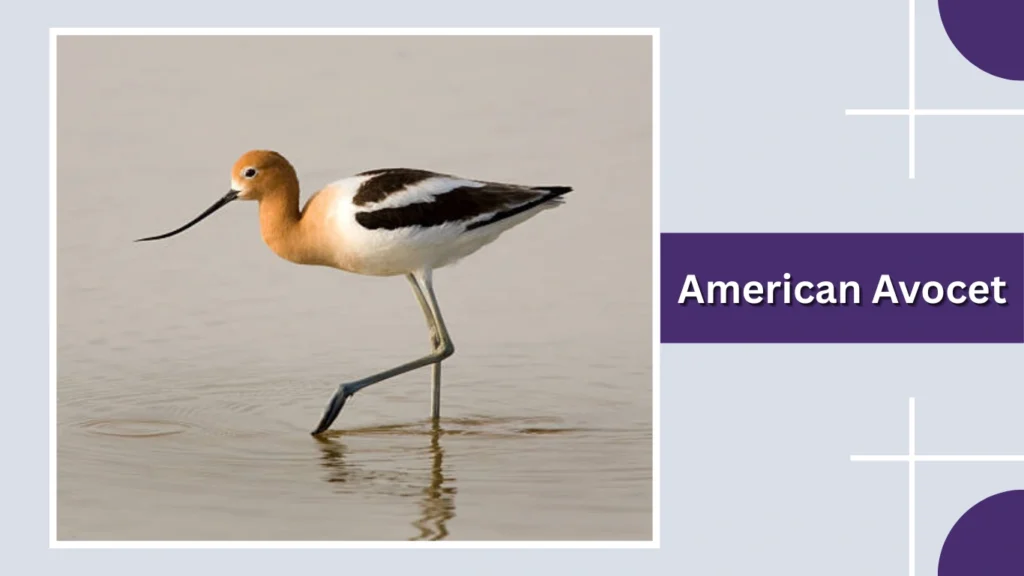
The American Avocet is a graceful long-legged shorebird known for its thin, upturned bill and striking black-and-white wing pattern. During breeding season, its head and neck take on a warm cinnamon color, making it especially attractive in shallow wetlands.
Identification
- Very long, bluish-gray legs
- Thin, slightly upturned black bill
- Black-and-white wings with pale body
- Long neck and slender body shape
- Cinnamon-colored head and neck in breeding season
Habitat
American Avocets are found in shallow lakes, marshes, mudflats, salt ponds, and coastal lagoons. They breed mainly in western and central North America and migrate to southern coastal regions during winter.
Diet
They feed on aquatic insects, crustaceans, worms, and small mollusks. Avocets often sweep their bills side to side in shallow water to capture prey.
Behavior
These birds are usually seen in small groups and can be aggressive in defending nesting areas. They are strong, agile flyers and are often noticed by their sharp, repeated calls.
Lifespan
American Avocets typically live 9 to 15 years in the wild, though some individuals have been recorded living longer.
12. Black-winged Stilt
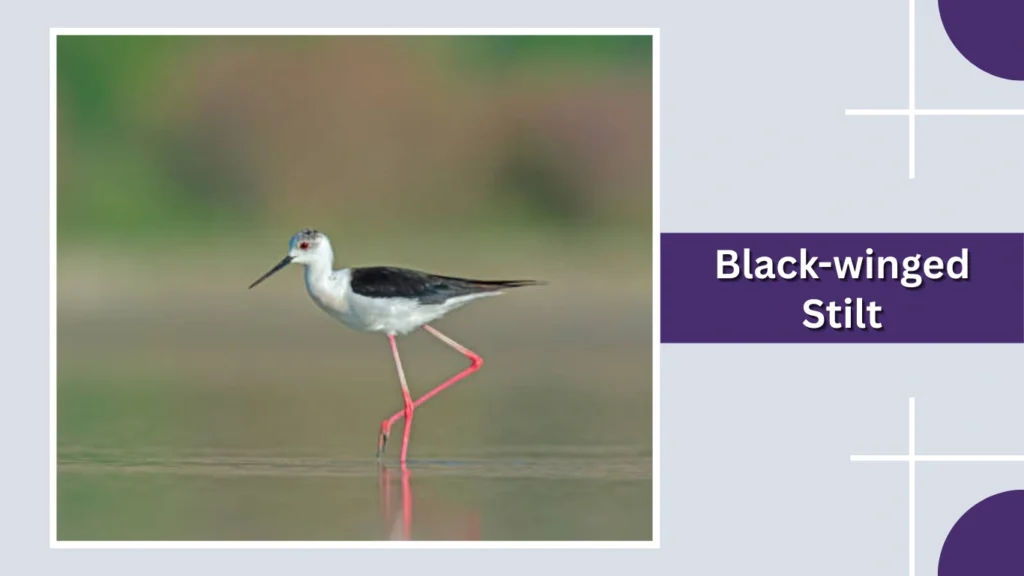
The Black-winged Stilt is a slim, elegant long-legged bird easily recognized by its extremely long red legs and contrasting black-and-white plumage. It often appears delicate in shape, yet it is an active and agile wader in shallow wetlands.
Identification
- Extremely long, thin red or pink legs
- Black wings and back with white underparts
- Long, straight black bill
- Slender neck and lightweight body
- Long wings extending past the tail
Habitat
Black-winged Stilts live in shallow lakes, salt pans, marshes, mudflats, and lagoons. They are widely distributed across Europe, Africa, Asia, and Australia, preferring open wetlands with minimal vegetation.
Diet
Their diet consists mainly of insects, crustaceans, worms, tadpoles, and small mollusks. They feed by picking prey from the water’s surface or probing shallow mud.
Behavior
These birds are social and often seen in noisy flocks. They aggressively defend nests and will perform distraction displays to lead predators away from their young.
Lifespan
Black-winged Stilts usually live around 10 to 15 years in the wild, depending on habitat conditions and predation.
13. Pied Avocet
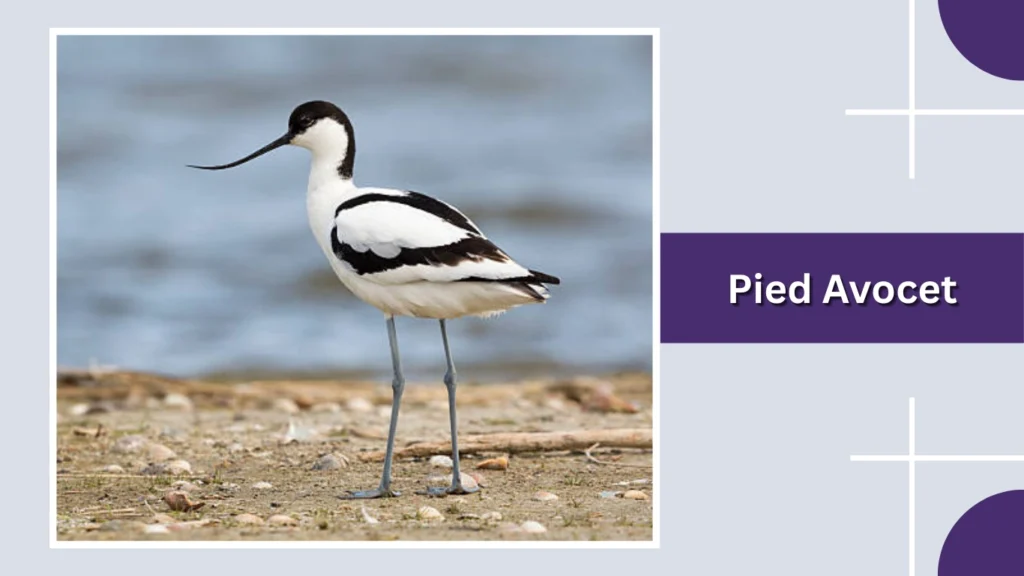
The Pied Avocet is a distinctive long-legged wading bird known for its striking black-and-white plumage and elegant, upcurved bill. Its graceful shape and sweeping feeding motion make it a familiar sight in shallow coastal wetlands and salt marshes.
Identification
- Long bluish-gray legs
- Thin, upturned black bill
- Bold black-and-white body pattern
- Slender neck and lightweight build
- Long wings with black patches
Habitat
Pied Avocets are found in coastal lagoons, mudflats, estuaries, salt pans, and shallow inland lakes. They breed mainly in Europe and parts of Central Asia and migrate to warmer coastal regions in winter.
Diet
They feed on small crustaceans, insects, worms, and aquatic invertebrates. Using their upturned bills, they sweep side to side through shallow water to detect and catch prey.
Behavior
Pied Avocets are social birds often seen in flocks. They are known for their strong territorial defense during breeding season and their loud, ringing calls.
Lifespan
In the wild, Pied Avocets typically live 10 to 15 years, though some individuals can survive longer under favorable conditions.
14. Limpkin
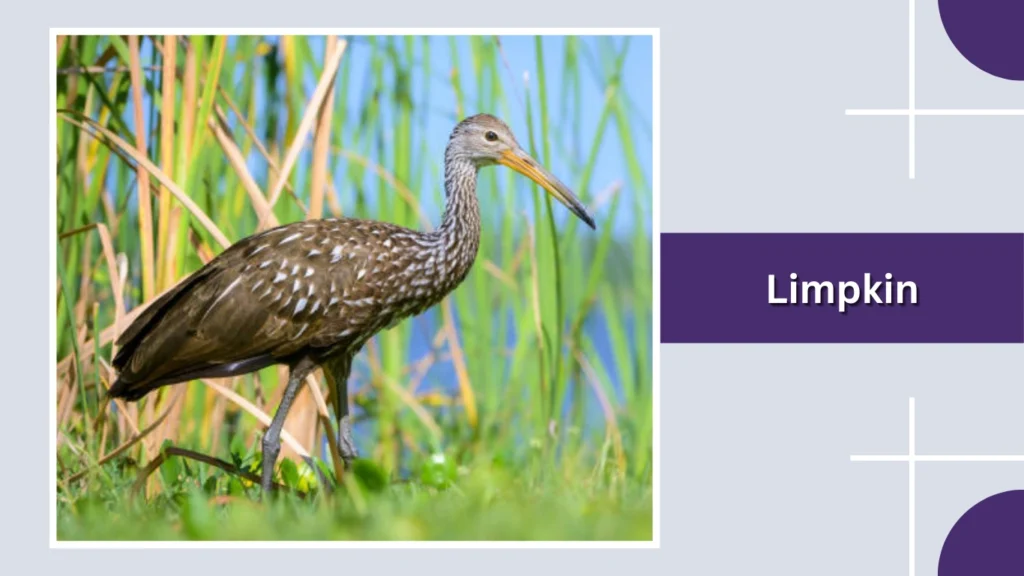
The Limpkin is a unique long-legged bird best known for its loud, wailing calls and strong association with apple snails. Its streaked brown plumage and heron-like shape make it stand out in freshwater wetlands.
Identification
- Long dark legs adapted for wading
- Brown body heavily streaked with white
- Long, slightly curved yellowish bill
- Large feet and long toes
- Slender neck and rounded wings
Habitat
Limpkins live in freshwater marshes, swamps, slow-moving rivers, lakes, and wet grasslands. They are mainly found in the southeastern United States, Central America, South America, and the Caribbean.
Diet
Their diet consists almost entirely of apple snails, though they may occasionally eat mussels, insects, and small aquatic animals. They use their specialized bills to extract snails from their shells.
Behavior
Limpkins are often solitary and are most active at dawn and dusk. They are famous for their haunting screams, which are often heard at night near wetlands.
Lifespan
Limpkins usually live around 10 to 15 years in the wild, depending on food availability and environmental conditions.
15. Grey Heron
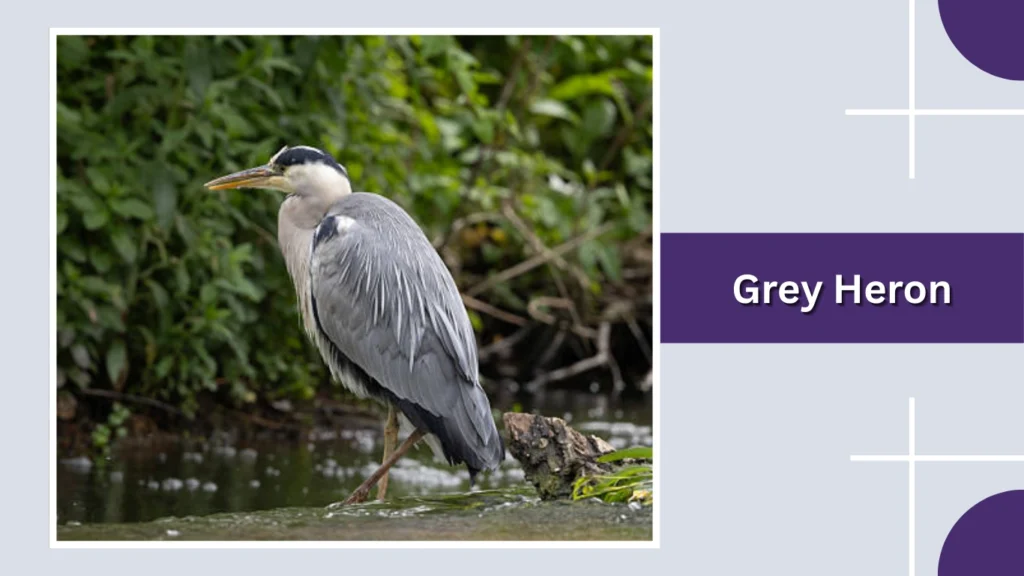
The Grey Heron is a tall, powerful long-legged bird widely known for its slow, graceful movements and patient hunting style. It is one of the most familiar herons across wetlands, lakes, and rivers, often seen standing motionless before striking at prey.
Identification
- Tall body with very long gray legs
- Gray and white plumage with black head markings
- Long, sharp yellow bill
- Black stripe extending from eye to crest
- Long S-shaped neck
Habitat
Grey Herons live around lakes, rivers, marshes, ponds, estuaries, and coastal shores. They are widely distributed across Europe, Asia, and parts of Africa, adapting well to both natural wetlands and areas near human settlements.
Diet
They mainly eat fish but also feed on frogs, insects, small mammals, reptiles, and crustaceans. They hunt by standing still or slowly stalking before spearing prey with their sharp bill.
Behavior
Grey Herons are usually solitary hunters but nest in colonies called heronries. They are strong flyers and are often seen gliding slowly with deep wingbeats.
Lifespan
In the wild, Grey Herons typically live 15 to 25 years, though some individuals have been recorded living longer in safe environments.
16. Goliath Heron

The Goliath Heron is the largest heron species in the world, known for its massive size, powerful bill, and slow, deliberate movements. Its towering height and deep chestnut and gray plumage make it an impressive sight along large rivers and wetlands.
Identification
- Extremely tall body with very long dark legs
- Massive, thick yellowish bill
- Chestnut head and neck with gray wings
- Broad wings and heavy body
- Long neck held in an S-shape
Habitat
Goliath Herons inhabit large lakes, rivers, deltas, mangroves, and coastal estuaries. They are mainly found in sub-Saharan Africa and parts of South and Southeast Asia, preferring quiet wetlands with abundant fish.
Diet
They feed mostly on large fish but also take frogs, reptiles, small mammals, and crustaceans. They hunt alone, standing motionless before delivering a powerful strike.
Behavior
Goliath Herons are generally solitary and highly territorial while feeding. They fly slowly with deep wingbeats and often perch in tall trees near water.
Lifespan
In the wild, Goliath Herons usually live around 15 years, though some individuals may survive longer under favorable conditions.
17. Purple Heron
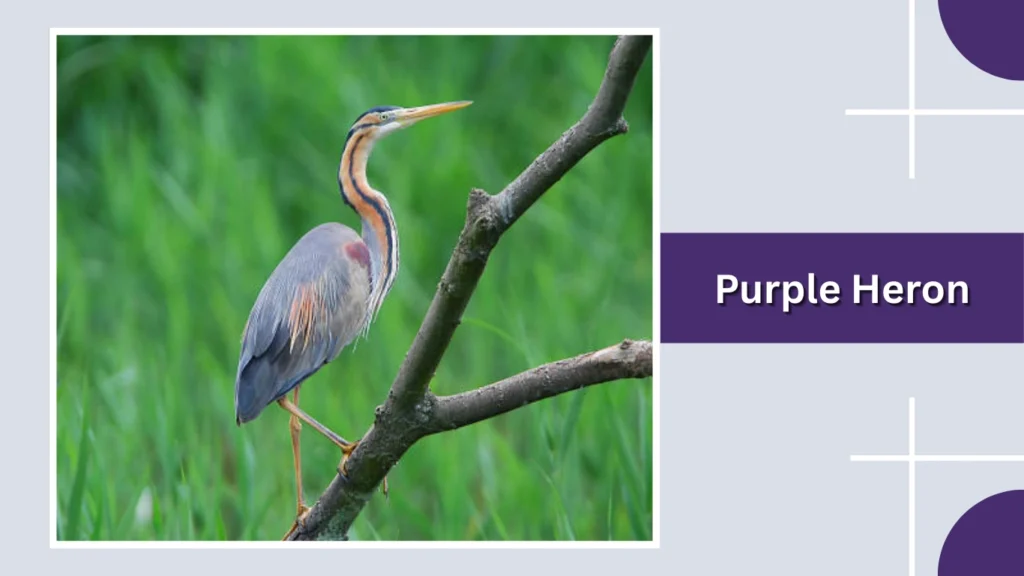
The Purple Heron is a tall, slender long-legged bird with rich chestnut and gray coloring. It is more secretive than many herons and is often seen slowly moving through reed beds and dense wetland vegetation.
Identification
- Tall body with long yellowish legs
- Chestnut neck with dark streaks
- Dark gray to purplish wings and back
- Long, sharp yellow bill
- Slender neck and narrow body shape
Habitat
Purple Herons prefer freshwater marshes, reed beds, swamps, lakesides, and slow-flowing rivers. They are found across Europe, Africa, and Asia, favoring wetlands with tall vegetation.
Diet
Their diet includes fish, frogs, insects, small reptiles, and small mammals. They hunt by stalking prey quietly through dense vegetation.
Behavior
These herons are more secretive than Grey Herons and often remain hidden in reeds. They are mostly solitary hunters but nest in colonies, sometimes mixed with other heron species.
Lifespan
Purple Herons generally live 15 to 20 years in the wild, depending on habitat quality and food availability.
18. Jabiru Stork
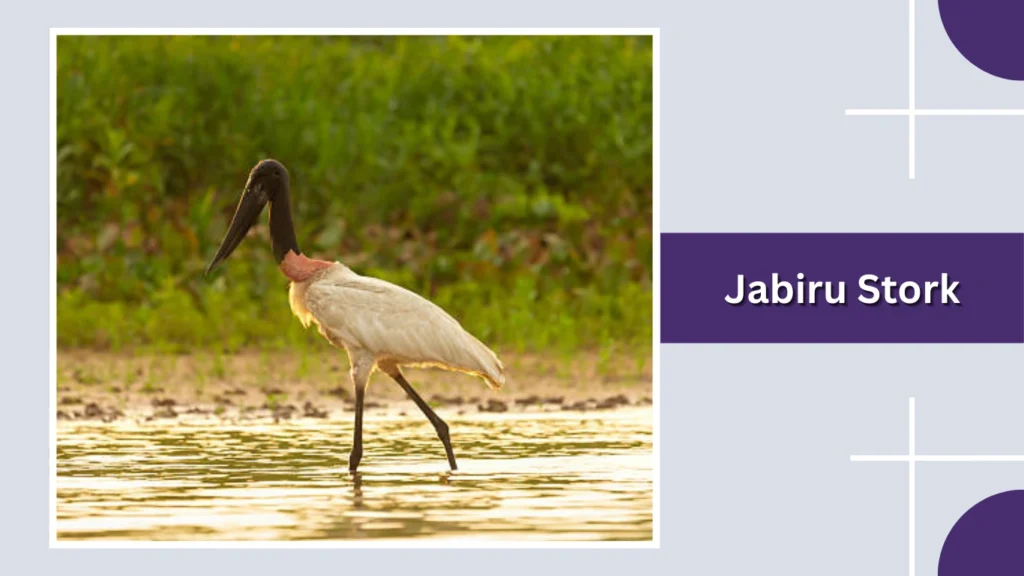
The Jabiru Stork is a massive long-legged bird known for its powerful bill and striking black-and-white coloration. It is one of the tallest flying birds in the Americas and is often seen standing motionless in shallow wetlands.
Identification
- Very tall body with long black legs
- White body with black head and neck
- Thick, slightly upturned black bill
- Red band at the base of the neck
- Broad wings for soaring
Habitat
Jabiru Storks live in marshes, flooded savannas, swamps, riverbanks, and shallow lakes. They are mainly found from Mexico through Central America and across much of South America.
Diet
They feed on fish, frogs, reptiles, insects, and small mammals. Jabirus forage by wading slowly and capturing prey with quick, powerful bill strikes.
Behavior
These birds are often solitary or seen in pairs. They build very large nests in tall trees and are strong soarers, using thermal air currents to travel long distances.
Lifespan
In the wild, Jabiru Storks typically live 20 to 30 years, making them one of the longer-living stork species.
19. Marabou Stork
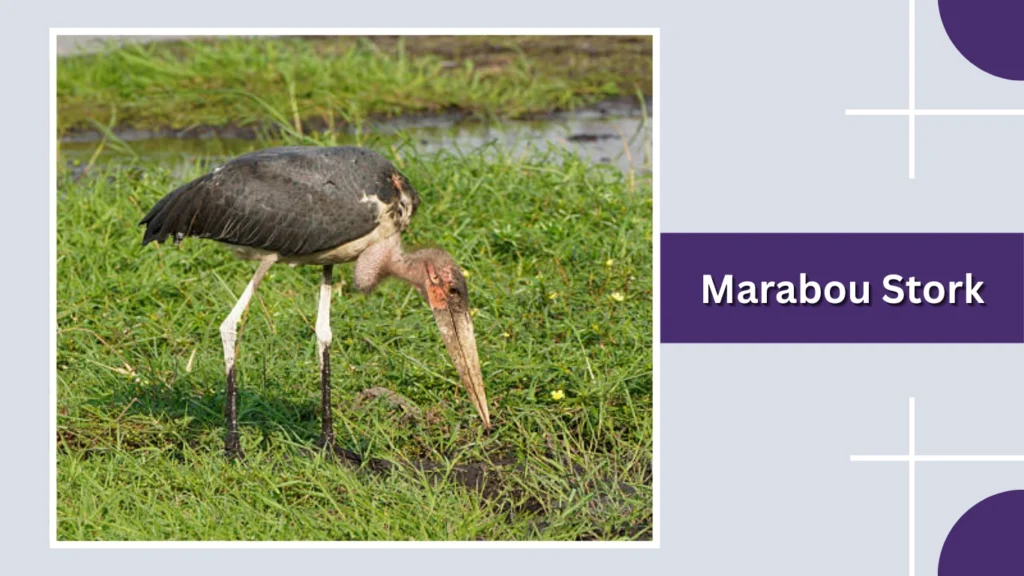
The Marabou Stork is a huge, long-legged bird known for its bald head, massive bill, and scavenging lifestyle. Although its appearance is often described as unattractive, it plays an important ecological role by cleaning up carcasses and waste.
Identification
- Very tall body with long dark legs
- Large, thick, pale bill
- Bald pinkish head and neck
- Black wings with white underparts
- Loose throat pouch
Habitat
Marabou Storks are found in open savannas, wetlands, riverbanks, lakeshores, and even near human settlements and garbage dumps. They are widely distributed across sub-Saharan Africa.
Diet
They are opportunistic feeders, eating carrion, fish, insects, small mammals, reptiles, and food scraps. Their strong bills allow them to tear flesh and capture a wide range of prey.
Behavior
Marabou Storks are often seen soaring high or gathering in large groups near food sources. They are mostly silent birds, communicating mainly through bill-clattering and body displays.
Lifespan
Marabou Storks generally live 20 to 25 years in the wild, and sometimes longer in protected environments.
20. Yellow-crowned Night Heron
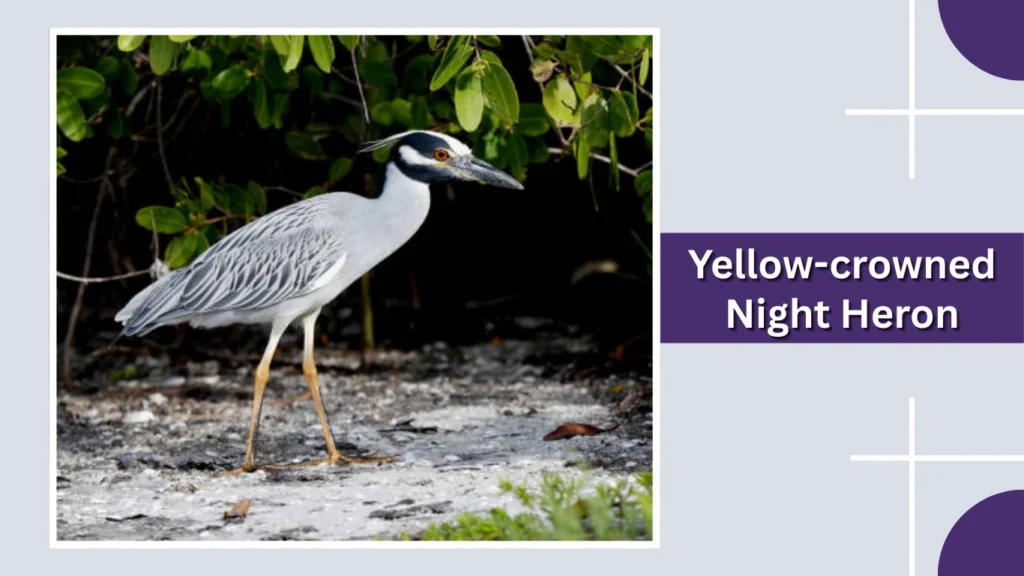
The Yellow-crowned Night Heron is a stocky long-legged bird best known for its nighttime feeding habits and preference for crustaceans. Its gray body, black head, and pale yellow crown make it distinctive among herons.
Identification
- Sturdy body with relatively long gray legs
- Black head with pale yellow crown and face markings
- Thick, dark bill
- Gray wings and back
- Red eyes, especially visible at night
Habitat
Yellow-crowned Night Herons live in coastal marshes, mangroves, swamps, riverbanks, and wetlands. They are found mainly in the Americas but also occur in parts of West Africa.
Diet
Their diet is dominated by crabs and crayfish, along with insects, small fish, and other aquatic animals. They often hunt at dusk or at night, using slow, deliberate movements.
Behavior
These herons are mostly nocturnal and roost in trees or dense vegetation during the day. They are usually solitary feeders but nest in small colonies.
Lifespan
In the wild, Yellow-crowned Night Herons typically live around 10 to 15 years.
21. Eurasian Crane
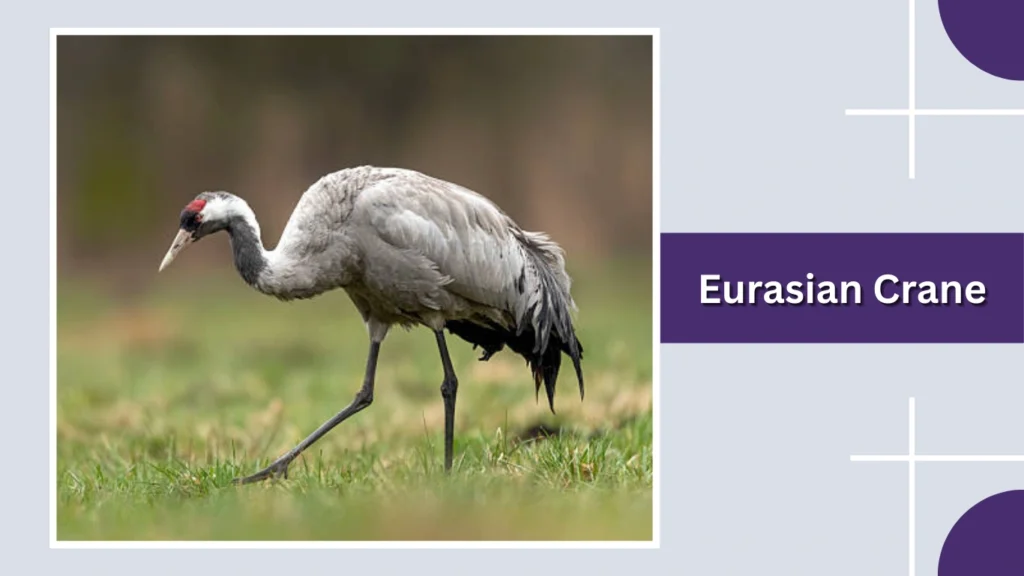
The Eurasian Crane is a tall, elegant long-legged bird known for its graceful movements, loud trumpeting calls, and spectacular courtship dances. It is one of the most widespread crane species and a familiar sight in open wetlands and grasslands across Europe and Asia.
Identification
- Very tall body with long black legs
- Gray plumage with black neck and wing feathers
- Red patch on the crown
- Long, straight bill
- Broad wings used for soaring flight
Habitat
Eurasian Cranes inhabit marshes, bogs, wet meadows, shallow lakes, and open grasslands near water. They breed across northern Europe and Asia and migrate to warmer regions during winter.
Diet
They are omnivorous, feeding on grains, seeds, roots, insects, frogs, small mammals, and fish. They forage by walking slowly and probing the ground or shallow water.
Behavior
These cranes are famous for elaborate dancing displays used in courtship and social bonding. They migrate in large flocks and maintain strong pair bonds.
Lifespan
In the wild, Eurasian Cranes typically live 20 to 30 years, with some individuals recorded living even longer under protected conditions.
FAQs
What makes a bird “long-legged”?
Long-legged birds are species with noticeably extended legs adapted for wading, walking through shallow water, or moving across wetlands and mudflats. These long legs help them hunt fish, insects, and small aquatic animals while keeping their bodies above water.
Why do many long-legged birds live near water?
Most long-legged birds depend on wetlands because these habitats provide fish, insects, crustaceans, and plants. Shallow water makes it easier for them to walk, spot prey, and strike quickly without needing to swim.
Are all long-legged birds good flyers?
Yes, most long-legged birds are strong flyers. Species like cranes, storks, and herons migrate long distances and use thermal air currents to glide. Their long wings balance their tall bodies and support soaring flight.
What do long-legged birds usually eat?
Their diet commonly includes fish, frogs, insects, crustaceans, worms, and small reptiles. Some species, such as cranes and storks, also eat seeds, grains, and small mammals, making them opportunistic feeders.
Do long-legged birds live alone or in groups?
Many long-legged birds feed alone but gather in groups for nesting or migration. Cranes, storks, and spoonbills often form large flocks, while herons and ibises may nest together in colonies near wetlands.
