
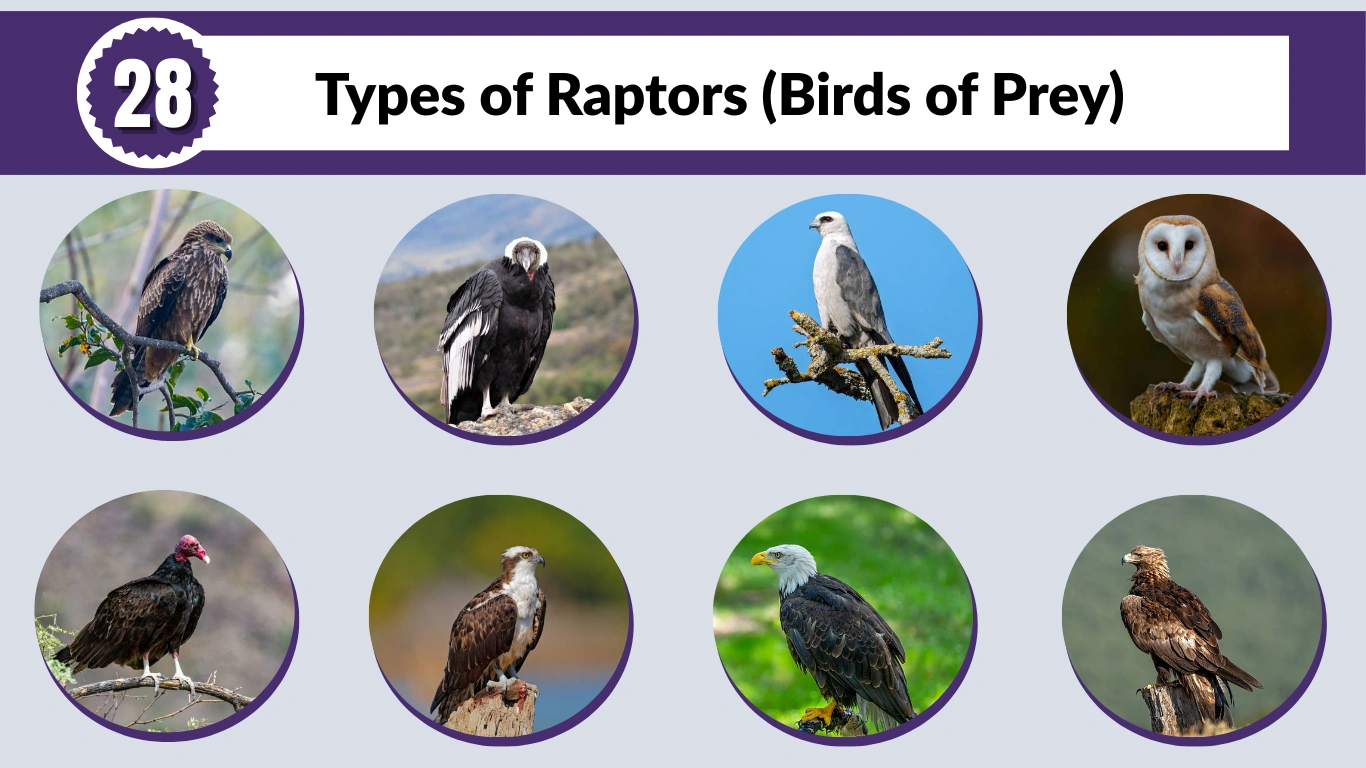
Raptors, commonly known as birds of prey, are some of the most powerful and fascinating birds in the natural world. Equipped with sharp talons, hooked beaks, and extraordinary eyesight, these birds are expert hunters and scavengers. Raptors play a vital role in maintaining healthy ecosystems by controlling prey populations and removing carrion. From soaring eagles and swift falcons to silent owls and massive vultures, raptors display remarkable diversity in size, behavior, and habitat, making them an essential and captivating group of birds worldwide.
1. Bald Eagle
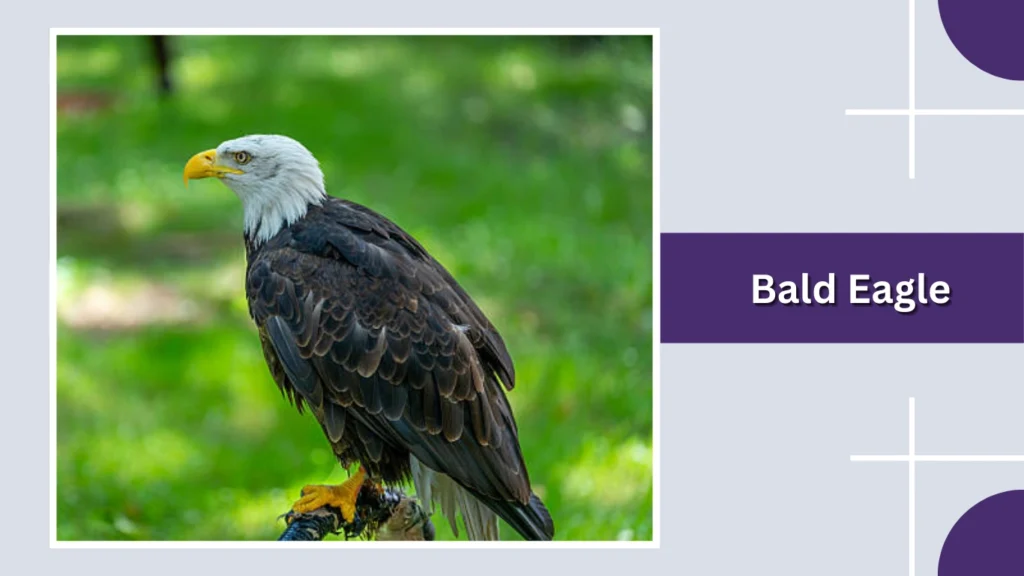
The Bald Eagle is one of the most iconic birds of prey in the world and the national bird of the United States. Easily recognized by its white head and tail contrasted against a dark brown body, this powerful raptor represents strength, freedom, and resilience. Bald Eagles are expert hunters with excellent eyesight and are most often associated with large bodies of water, where they can find their primary food source. Their population once declined sharply but has since recovered due to strong conservation efforts.
Identification
- White head and tail with dark brown body and wings
- Large, hooked yellow beak
- Yellow eyes, legs, and talons
- Broad wings with a wingspan of 6 to 7.5 feet
- Females are larger than males
Habitat
Bald Eagles are commonly found near rivers, lakes, wetlands, and coastal shorelines. They prefer areas with abundant fish and tall trees or cliffs for nesting. Although native to North America, they can adapt to a wide range of environments as long as food and nesting sites are available.
Behaviors
These birds are strong and graceful fliers, often seen soaring at great heights or gliding low over water while hunting. Bald Eagles are territorial during the breeding season and may aggressively defend their nests. They are also known for kleptoparasitism, stealing food from other birds, especially ospreys.
Diet and Lifespan
Bald Eagles primarily feed on fish but will also eat waterfowl, small mammals, reptiles, and carrion. In the wild, they typically live between 20 and 30 years, though some individuals have been recorded living longer in protected environments.
2. Golden Eagle
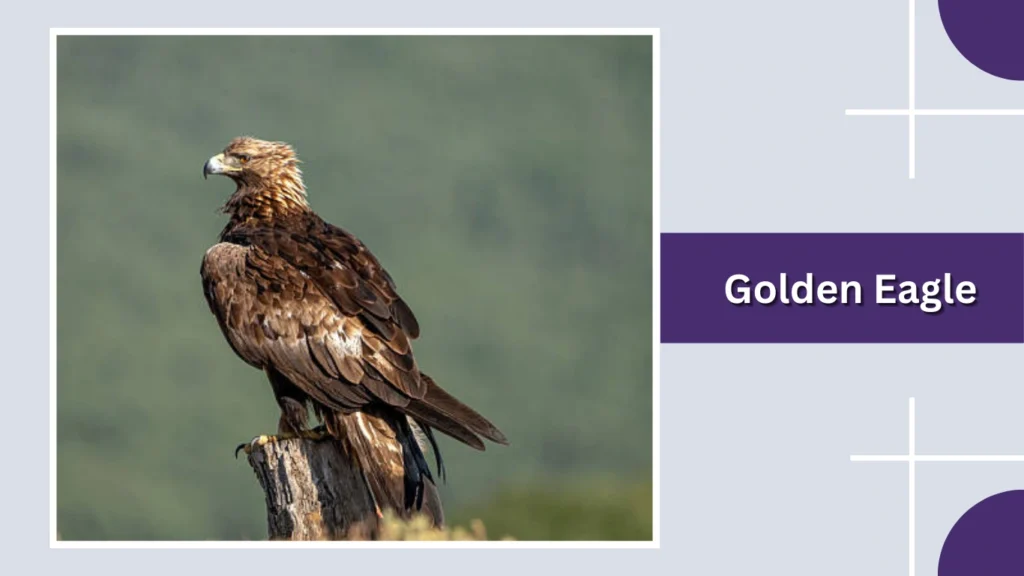
The Golden Eagle is one of the largest and most powerful birds of prey in the Northern Hemisphere. Renowned for its speed, strength, and agility, this majestic raptor is a skilled hunter capable of taking down large prey. Its dark brown plumage with golden feathers on the back of the head and neck gives the species its name. Golden Eagles are often associated with rugged landscapes and wide open spaces.
Identification
- Dark brown body with golden-brown feathers on head and neck
- Large hooked bill, dark at the tip
- Strong yellow legs with fully feathered tarsi
- Broad wings with a wingspan of 6 to 7.7 feet
- Juveniles have white patches on wings and tail
Habitat
Golden Eagles inhabit open and semi-open regions such as mountains, cliffs, grasslands, deserts, and tundra. They prefer remote areas with minimal human disturbance and suitable high vantage points for nesting and hunting.
Behaviors
These eagles are solitary and highly territorial, especially during breeding season. They are exceptional fliers, often soaring for hours using thermal currents. Golden Eagles hunt primarily by sight, diving at high speeds to capture prey with powerful talons.
Diet and Lifespan
Golden Eagles mainly feed on small to medium-sized mammals such as rabbits, hares, and ground squirrels, but they may also hunt birds and reptiles or scavenge carrion. In the wild, they typically live 20–25 years, with longer lifespans possible in protected conditions.
3. Harpy Eagle
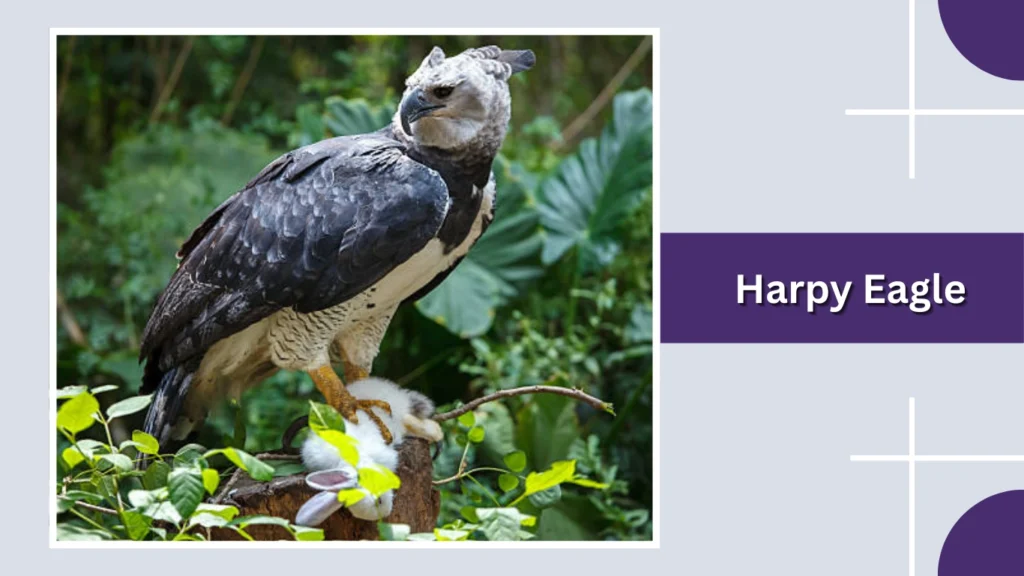
The Harpy Eagle is one of the largest and most powerful raptors in the world, dominating the tropical rainforests of Central and South America. Known for its massive size and fierce appearance, this eagle has an imposing facial disk and a distinctive crown of feathers that can be raised when alert. Despite its intimidating look, the Harpy Eagle is a highly specialized forest hunter adapted for maneuvering through dense canopy.
Identification
- Slate-gray upperparts with white underside
- Large head with a double crest of feathers
- Extremely powerful legs with massive talons
- Short, broad wings and long tail
- Females are significantly larger than males
Habitat
Harpy Eagles inhabit lowland tropical rainforests, preferring large, undisturbed forest areas with tall emergent trees for nesting. They are most commonly found in the Amazon Basin but also occur in parts of Central America.
Behaviors
These eagles are generally solitary and maintain large territories. Unlike many soaring raptors, Harpy Eagles rely on short, powerful flights through forest vegetation to ambush prey. They are slow breeders, often raising only one chick every two to three years.
Diet and Lifespan
Harpy Eagles primarily feed on tree-dwelling mammals such as sloths and monkeys, along with large birds and reptiles. Their lifespan in the wild is estimated at 25–35 years, though habitat loss poses a significant threat to their long-term survival.
4. White-tailed Eagle
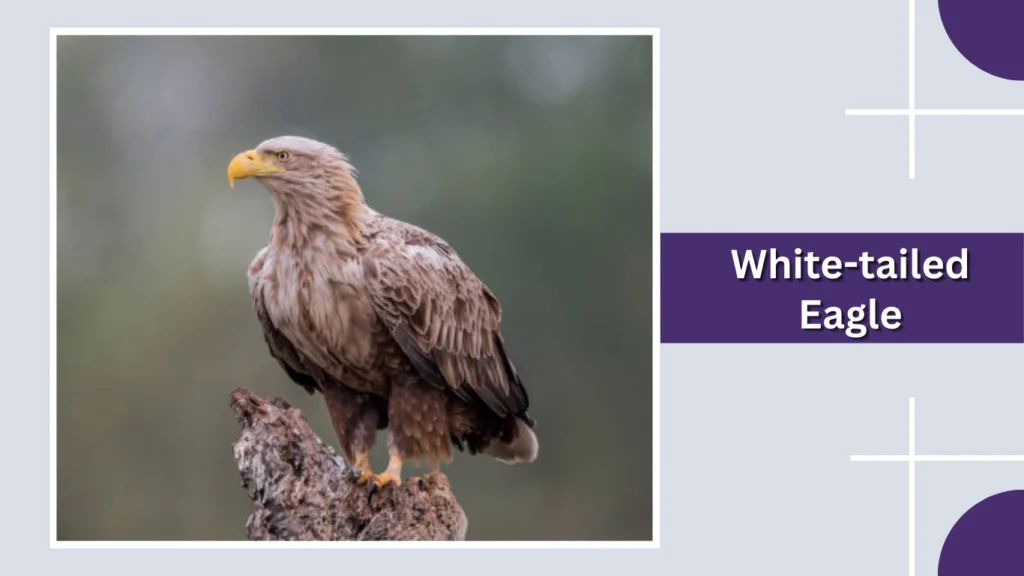
The White-tailed Eagle is a massive and impressive bird of prey often referred to as the “sea eagle” of Europe and Asia. With its broad wings and commanding presence, this raptor is one of the largest eagles in the world. It is closely associated with coastal regions and large inland waters, where it can be seen soaring, gliding, or perched prominently while searching for food.
Identification
- Large brown body with pale head and neck
- Distinctive short, wedge-shaped white tail in adults
- Large yellow hooked beak
- Powerful yellow legs and talons
- Immature birds have darker tails and plumage
Habitat
White-tailed Eagles are commonly found along coastlines, estuaries, large lakes, and rivers. They prefer areas with minimal disturbance and tall trees or rocky cliffs suitable for nesting near water.
Behaviors
These eagles are strong, slow wing-beat fliers that rely heavily on soaring. They are territorial during breeding season but may gather in larger numbers where food is abundant. White-tailed Eagles often steal food from other birds and are opportunistic hunters.
Diet and Lifespan
Their diet consists mainly of fish and waterbirds, though they also feed on small mammals and carrion. In the wild, White-tailed Eagles typically live 20–25 years, with some individuals reaching over 30 years under favorable conditions.
5. Red-tailed Hawk
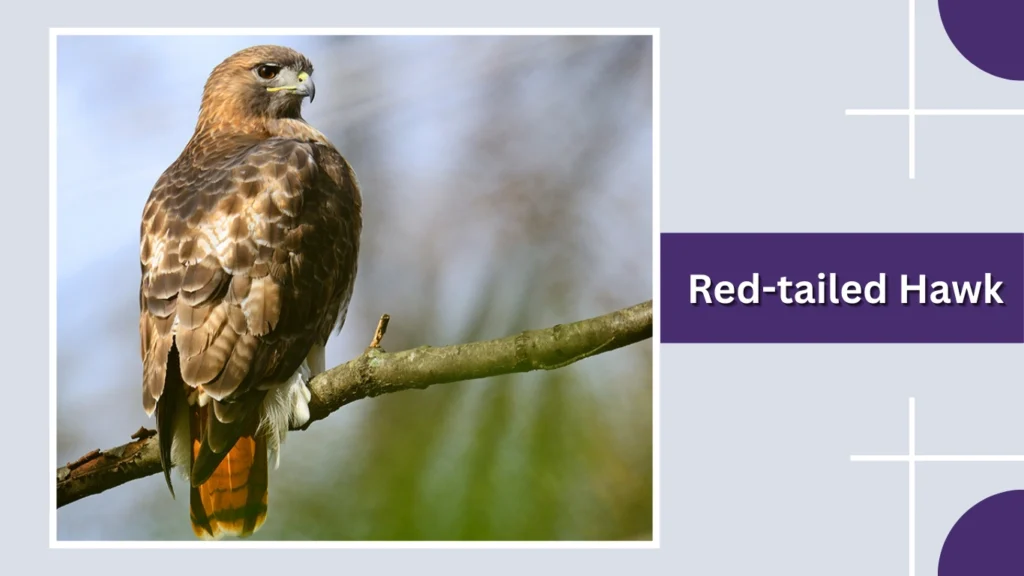
The Red-tailed Hawk is one of the most widespread and familiar birds of prey in North America. Known for its adaptability and piercing scream, this raptor is often seen soaring over open landscapes or perched along roadsides and fence posts. Its broad wings and robust build make it a highly efficient hunter across a variety of habitats.
Identification
- Rich brown upperparts with pale underside
- Distinctive reddish-brown tail in adults
- Broad, rounded wings with dark leading edges
- Short, hooked yellow beak
- Females are larger than males
Habitat
Red-tailed Hawks inhabit open and semi-open areas such as grasslands, deserts, farmlands, forests, and urban edges. They require elevated perches like trees, poles, or cliffs for hunting and nesting.
Behaviors
These hawks are often seen soaring in wide circles or sitting quietly while scanning the ground for prey. They are highly territorial during the breeding season and use loud vocalizations to defend their territory. Red-tailed Hawks are adaptable and tolerate human activity better than many other raptors.
Diet and Lifespan
Their diet mainly includes small mammals such as mice, voles, and rabbits, but they also hunt birds, reptiles, and amphibians. In the wild, Red-tailed Hawks usually live 15–20 years, with some individuals surviving longer in protected environments.
6. Cooper’s Hawk
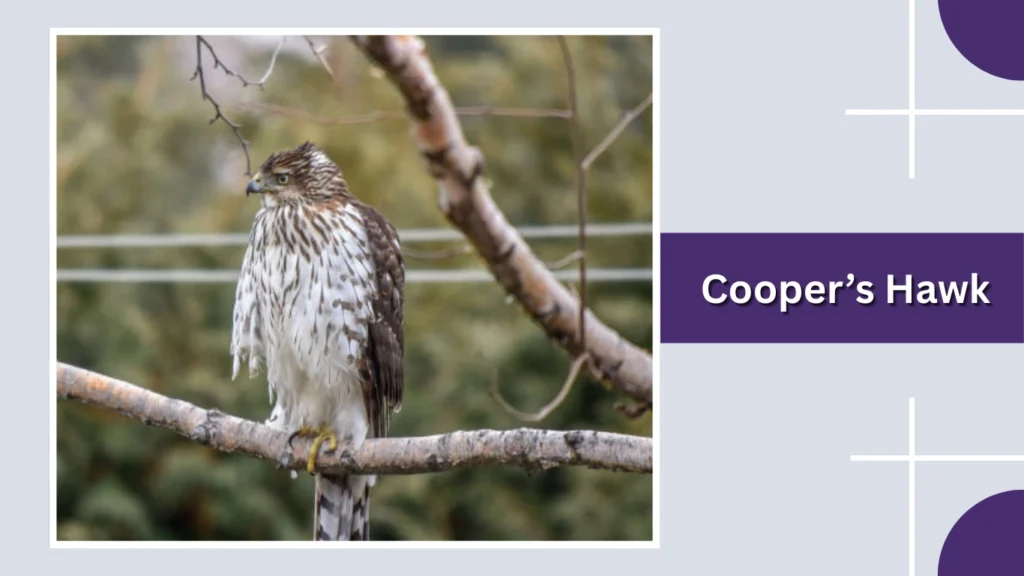
Cooper’s Hawk is a medium-sized raptor best known for its speed, agility, and skill at hunting birds in flight. Often seen darting through trees or suburban neighborhoods, this hawk has adapted well to human-altered landscapes. Its streamlined body and long tail allow it to maneuver quickly through dense vegetation while pursuing prey.
Identification
- Blue-gray back with reddish barred chest
- Long, rounded tail with dark bands and white tip
- Short, rounded wings
- Red eyes in adults, yellow eyes in juveniles
- Females are noticeably larger than males
Habitat
Cooper’s Hawks are commonly found in woodlands, forest edges, parks, and suburban areas. They prefer habitats with dense tree cover for nesting and open spaces nearby for hunting.
Behaviors
These hawks are stealthy and aggressive hunters, often ambushing prey with sudden bursts of speed. During the breeding season, they become highly territorial and may vigorously defend their nests. Cooper’s Hawks are increasingly common in cities, where bird feeders attract their prey.
Diet and Lifespan
Cooper’s Hawks primarily feed on medium-sized birds such as doves, pigeons, and songbirds, though they also eat small mammals and reptiles. In the wild, they typically live 12–15 years, with some individuals reaching longer lifespans under favorable conditions.
7. Sharp-shinned Hawk
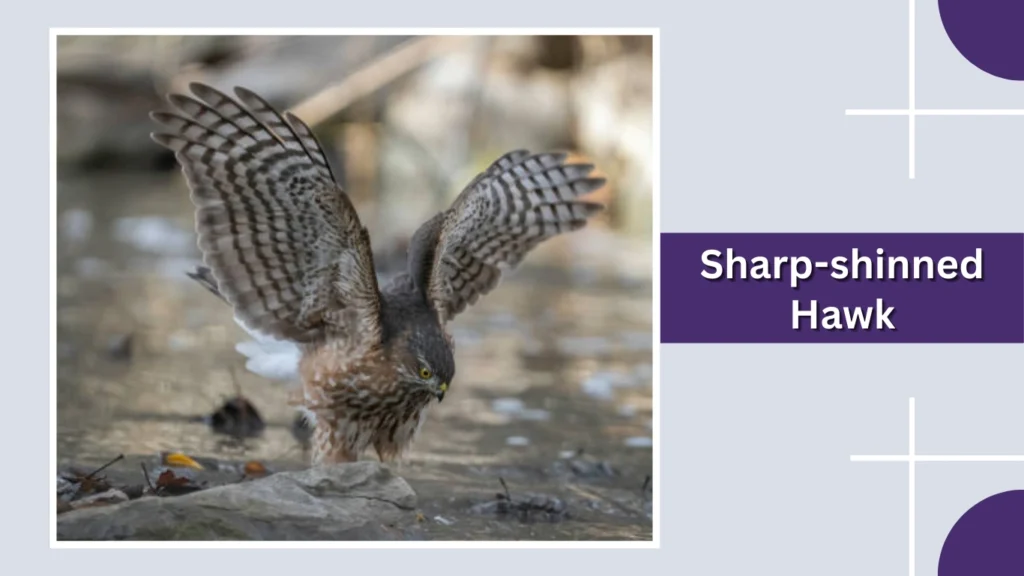
The Sharp-shinned Hawk is the smallest hawk in North America and a highly agile forest predator. Despite its small size, it is a fierce and determined hunter, specializing in chasing smaller birds through dense vegetation. This raptor is often seen near bird feeders during migration seasons, where it takes advantage of abundant prey.
Identification
- Blue-gray upperparts with pale, finely barred underparts
- Long, narrow tail with square or slightly notched tip
- Short, rounded wings
- Thin yellow legs giving the species its name
- Adults have red eyes; juveniles have yellow eyes
Habitat
Sharp-shinned Hawks prefer dense forests and woodlands, especially areas with coniferous trees. During migration and winter, they may also be found in suburban and urban areas where prey is plentiful.
Behaviors
These hawks rely on surprise and speed rather than soaring. They fly low and fast, weaving through trees while pursuing prey. Sharp-shinned Hawks are generally solitary and are more often seen during migration than the breeding season.
Diet and Lifespan
Their diet consists mainly of small birds such as sparrows and finches, though they occasionally eat insects, reptiles, and small mammals. In the wild, Sharp-shinned Hawks typically live 7–10 years, with survival heavily influenced by migration hazards and predation.
8. Ferruginous Hawk
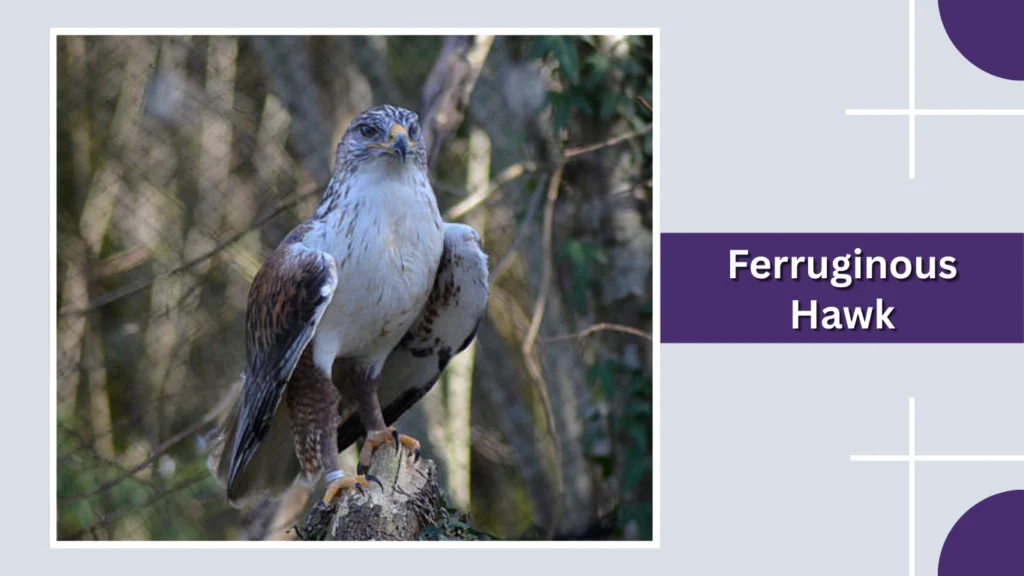
The Ferruginous Hawk is the largest hawk in North America and is named for its rust-colored (ferruginous) plumage. This powerful raptor is closely tied to open landscapes and is known for its broad wings and calm, soaring flight. Because it relies heavily on grassland ecosystems, the Ferruginous Hawk is considered an important indicator of prairie health.
Identification
- Pale body with rust-colored back and shoulders
- White underparts with dark “V” markings on wings
- Large head and heavy, hooked bill
- Feathered legs, unlike most hawks
- Broad wings with long wing tips
Habitat
Ferruginous Hawks inhabit open grasslands, prairies, deserts, and agricultural areas with minimal tree cover. They often nest on cliffs, rock outcrops, low trees, or even man-made structures in treeless regions.
Behaviors
These hawks are less agile than forest hawks but excel at soaring over wide open areas. They hunt by flying low over the ground or perching while scanning for prey. Ferruginous Hawks are territorial during breeding season but generally tolerant of other species outside that period.
Diet and Lifespan
Their diet mainly consists of small to medium-sized mammals such as prairie dogs, ground squirrels, and rabbits. They may also eat birds and reptiles. In the wild, Ferruginous Hawks typically live 15–20 years, though habitat loss poses a major threat to their populations.
9. Peregrine Falcon
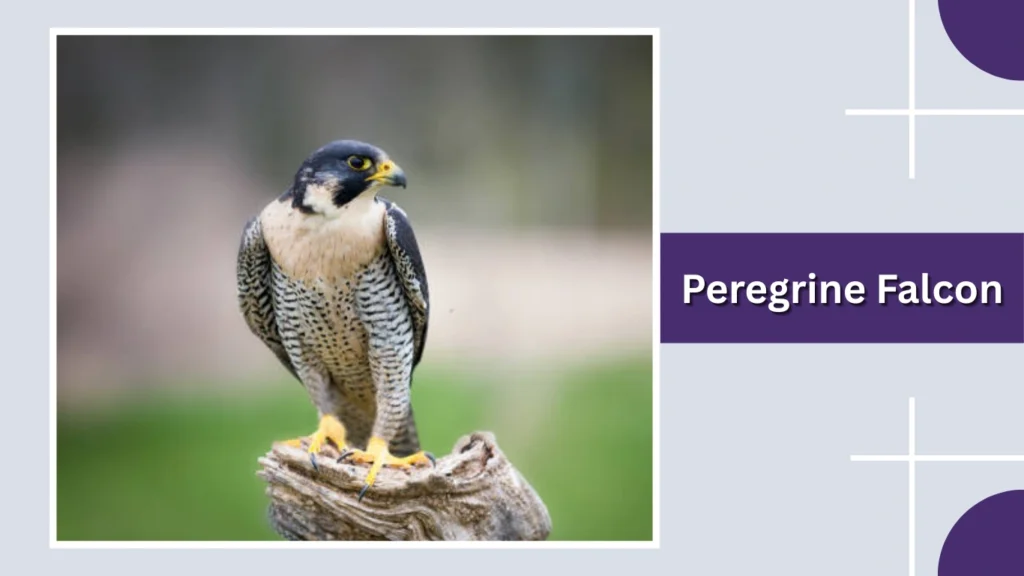
The Peregrine Falcon is widely regarded as the fastest bird in the world, capable of reaching astonishing speeds during its hunting dive, known as a stoop. Sleek, powerful, and highly adaptable, this raptor is found on every continent except Antarctica. Once endangered due to pesticide use, the Peregrine Falcon has made a remarkable recovery and is now a conservation success story.
Identification
- Blue-gray upperparts with pale underside
- Distinct dark “helmet” and bold facial markings
- Long, pointed wings and short tail
- Yellow eye ring, cere, and feet
- Compact, muscular body
Habitat
Peregrine Falcons inhabit a wide range of environments, including cliffs, mountains, coastlines, wetlands, and urban areas. In cities, they often nest on tall buildings that resemble natural cliff faces.
Behaviors
These falcons are powerful fliers and hunt almost exclusively in the air. They spot prey from great heights and dive at extreme speeds to strike birds mid-flight. Peregrine Falcons are territorial during breeding season and may aggressively defend nesting sites.
Diet and Lifespan
Their diet consists mainly of medium-sized birds such as pigeons, ducks, and songbirds. Peregrine Falcons typically live 13–20 years in the wild, with longer lifespans possible in protected environments.
10. American Kestrel
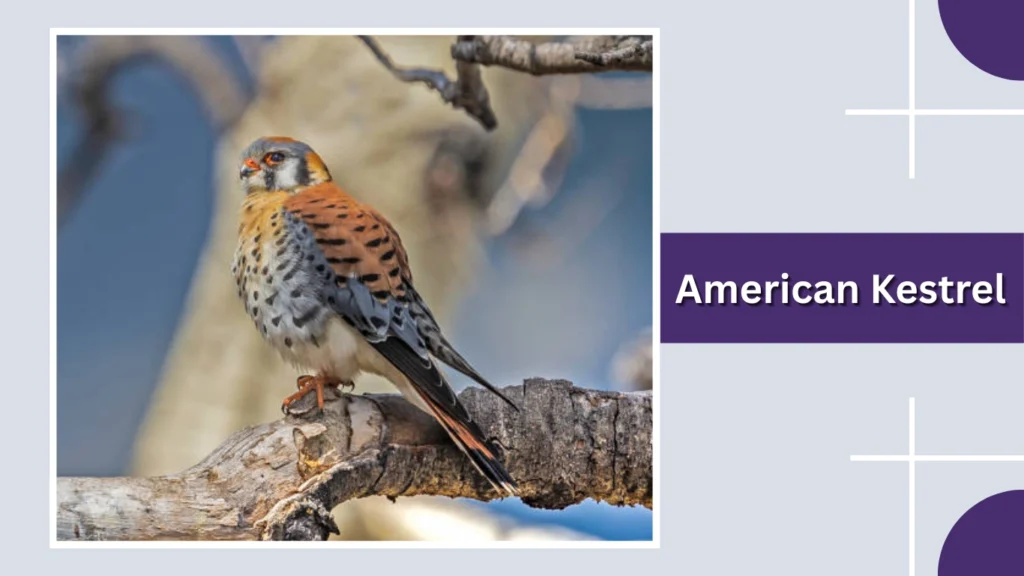
The American Kestrel is the smallest and most colorful falcon in North America. Despite its small size, it is a fierce and efficient hunter, often seen hovering in midair while scanning the ground for prey. Its striking plumage and adaptability to open and urban environments make it one of the most familiar raptors across the continent.
Identification
- Reddish-brown back and tail with black barring
- Blue-gray wings in males; brown wings in females
- Two bold black facial stripes
- Long, narrow wings and tail
- Small hooked bill
Habitat
American Kestrels inhabit open areas such as grasslands, farmlands, deserts, and urban spaces. They rely on cavities for nesting, often using tree holes, cliffs, or nest boxes provided by humans.
Behaviors
These falcons are commonly seen perched on wires or hovering while hunting. They are territorial during breeding season and aggressively defend nest sites. American Kestrels are agile fliers and can adjust quickly to changing prey availability.
Diet and Lifespan
Their diet includes insects, small mammals, birds, and reptiles. In the wild, American Kestrels typically live 5–10 years, though some individuals survive longer under favorable conditions.
11. Gyrfalcon
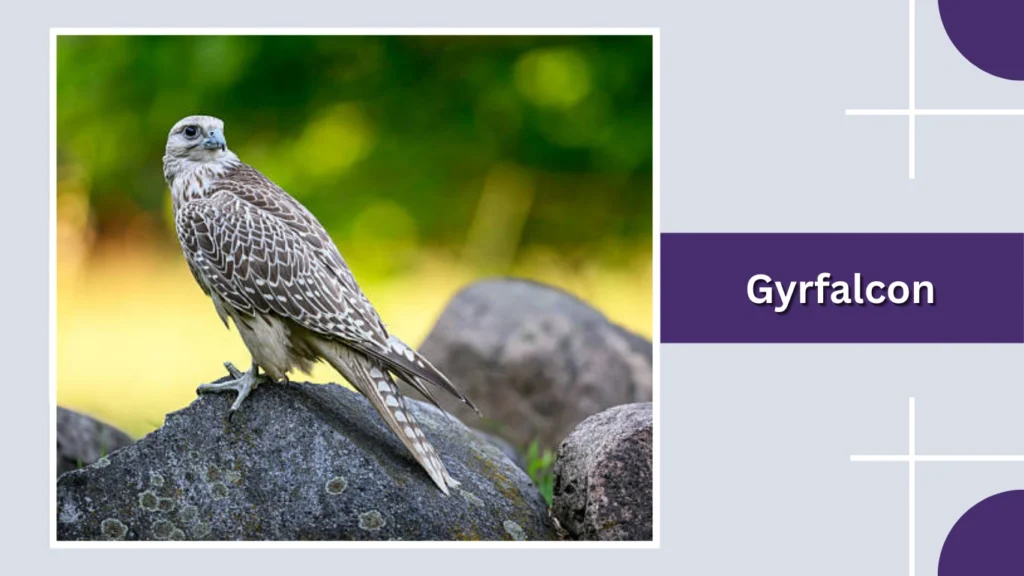
The Gyrfalcon is the largest of all falcon species and a dominant predator of the Arctic skies. Powerful, swift, and highly resilient, this raptor is perfectly adapted to cold, harsh environments. Its plumage varies greatly in color, ranging from almost pure white to dark gray, allowing it to blend into snowy or rocky landscapes.
Identification
- Large, robust falcon with broad wings
- Plumage varies from white to dark gray or brown
- Heavily streaked or barred underparts
- Yellow cere, eye ring, and feet
- Long, pointed wings and strong chest
Habitat
Gyrfalcons inhabit Arctic tundra, coastal cliffs, and mountainous regions of the far north. They prefer remote, open landscapes with minimal human disturbance and often nest on cliffs or rocky outcrops.
Behaviors
These falcons are powerful and direct fliers, relying on strength rather than speed alone. They often pursue prey over long distances rather than using steep diving attacks. Gyrfalcons are generally solitary and maintain large hunting territories.
Diet and Lifespan
Their primary prey includes ptarmigan and other Arctic birds, though they may also hunt small mammals. In the wild, Gyrfalcons typically live 10–15 years, with survival closely tied to prey availability and environmental conditions.
12. Prairie Falcon
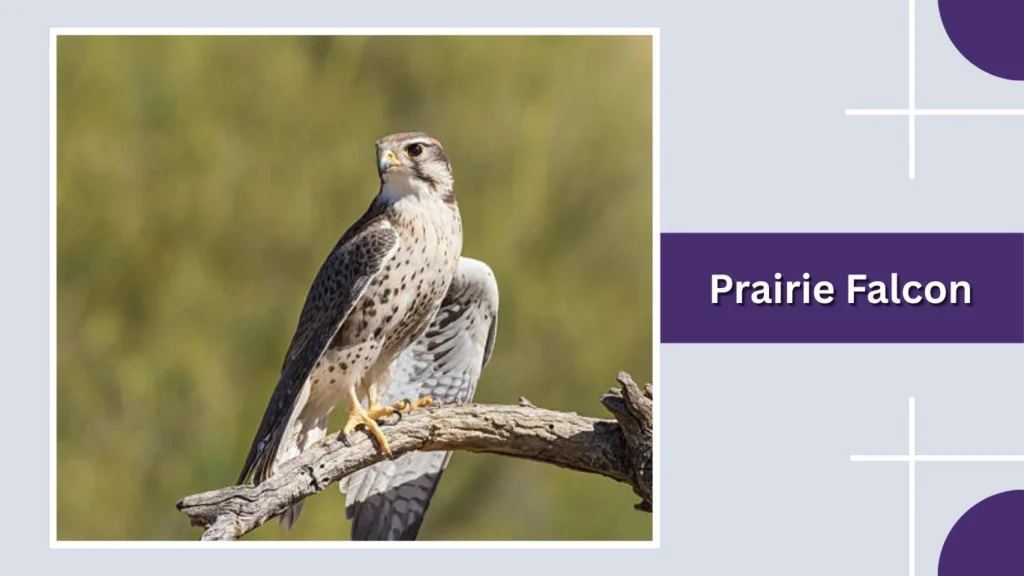
The Prairie Falcon is a powerful and agile raptor adapted to open, arid landscapes. Often compared to the Peregrine Falcon, it is slightly slimmer and more closely tied to deserts and grasslands. Known for its speed and endurance, the Prairie Falcon is an efficient hunter that thrives in wide, open spaces with minimal tree cover.
Identification
- Pale brown to gray upperparts
- Light underside with dark spotting
- Distinct dark “armpit” markings on underwings
- Narrow, pointed wings and long tail
- Dark facial markings with a faint mustache
Habitat
Prairie Falcons are most commonly found in deserts, grasslands, shrublands, and open plains. They typically nest on cliff ledges or rocky outcrops and prefer habitats that provide expansive views for hunting.
Behaviors
These falcons are fast, strong fliers and hunt both in level pursuit and shallow dives. They are territorial during the breeding season and may aggressively defend nesting areas. Prairie Falcons often hunt alone but may tolerate others when prey is abundant.
Diet and Lifespan
Their diet mainly consists of small to medium-sized birds, ground squirrels, and other small mammals. Prairie Falcons generally live 8–15 years in the wild, with lifespan influenced by habitat quality and prey availability.
13. Osprey

The Osprey is a unique bird of prey specially adapted for catching fish and is found almost worldwide near water. Often called the “fish hawk,” this raptor is instantly recognizable by its bold markings and dramatic plunge-diving hunting style. Its close association with aquatic environments sets it apart from most other raptors.
Identification
- Dark brown upperparts with white underparts
- White head with bold dark eye stripe
- Long, narrow wings with bent “M” shape in flight
- Sharp, curved talons with reversible outer toes
- Yellow eyes
Habitat
Ospreys live near coastlines, lakes, rivers, and wetlands where fish are abundant. They nest in tall trees, on cliffs, or on man-made structures such as poles and platforms close to water.
Behaviors
These birds are famous for hovering briefly before diving feet-first into the water to catch fish. Ospreys are migratory in many regions and often travel long distances between breeding and wintering grounds. They are generally tolerant of other birds but defend nesting sites vigorously.
Diet and Lifespan
Ospreys feed almost exclusively on fish, which they carry headfirst to reduce air resistance. In the wild, they typically live 15–25 years, with survival depending on water quality and food availability.
14. Northern Goshawk
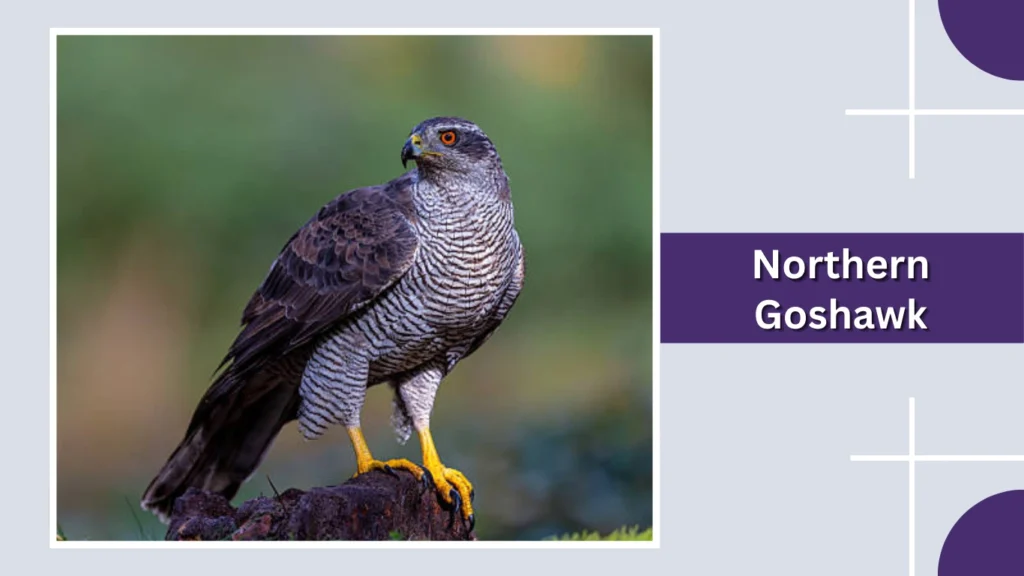
The Northern Goshawk is a powerful, secretive raptor of dense forests, known for its fierce hunting style and aggressive defense of its territory. As the largest accipiter species, it combines strength with remarkable agility, allowing it to pursue prey through thick woodland at high speed. Its intense gaze and bold flight make it a formidable presence in its habitat.
Identification
- Slate-gray upperparts with pale, finely barred underparts
- Bold white eyebrow stripe above red or orange eyes
- Broad wings with rounded tips
- Long tail with dark bands
- Robust body and thick legs
Habitat
Northern Goshawks inhabit mature forests, including coniferous, deciduous, and mixed woodlands. They favor large, continuous forest tracts with minimal disturbance and nearby open areas for hunting.
Behaviors
These hawks are highly territorial and are known to aggressively defend their nests, sometimes even attacking intruders. They hunt by flying low through trees or from concealed perches, using speed and surprise to capture prey. Outside the breeding season, they are more elusive and wide-ranging.
Diet and Lifespan
Northern Goshawks feed on medium-sized birds and mammals such as grouse, rabbits, and squirrels. In the wild, they typically live 10–15 years, though some individuals may survive longer in undisturbed habitats.
15. Eurasian Sparrowhawk
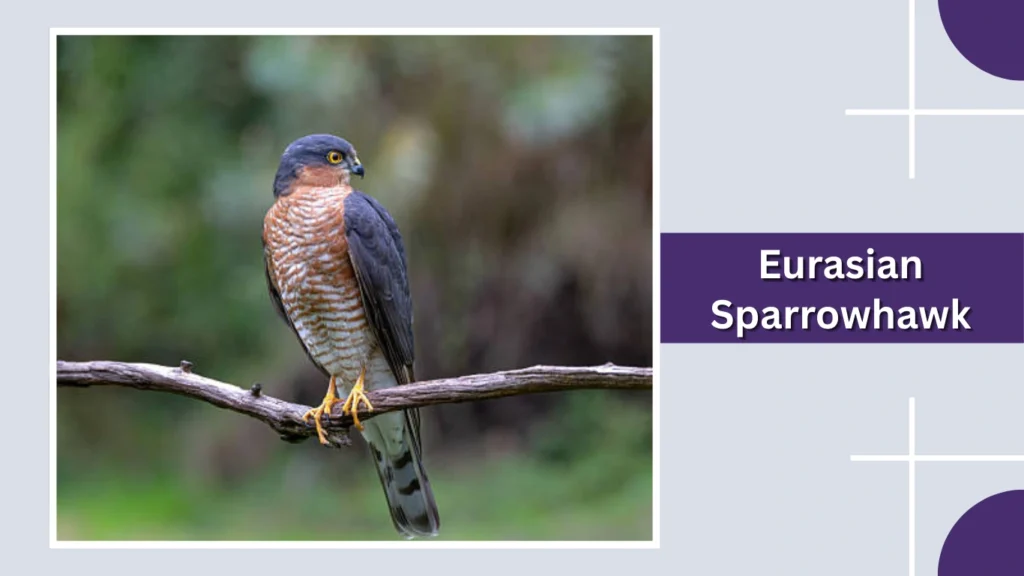
The Eurasian Sparrowhawk is a small but fierce bird of prey widely distributed across Europe and Asia. Despite its modest size, it is an exceptionally skilled hunter, specializing in catching small birds in rapid, surprise attacks. Its slim body and long tail make it perfectly suited for agile flight through woodlands and gardens.
Identification
- Blue-gray upperparts in males; brown in females
- Reddish barred underparts in males; brown streaked in females
- Long tail with dark bands
- Short, rounded wings
- Yellow eyes and legs
Habitat
Eurasian Sparrowhawks inhabit woodlands, forest edges, farmland, and urban areas. They are highly adaptable and often nest in trees close to human settlements where prey is abundant.
Behaviors
These hawks hunt by flying low and fast, using cover to ambush prey. They are solitary and territorial during the breeding season. Eurasian Sparrowhawks have adapted well to urban environments and are frequently seen hunting in gardens and parks.
Diet and Lifespan
Their diet consists mainly of small birds such as sparrows, finches, and tits. Occasionally, they eat small mammals and insects. In the wild, Eurasian Sparrowhawks typically live 4–10 years, with survival influenced by food availability and environmental conditions.
16. Great Horned Owl
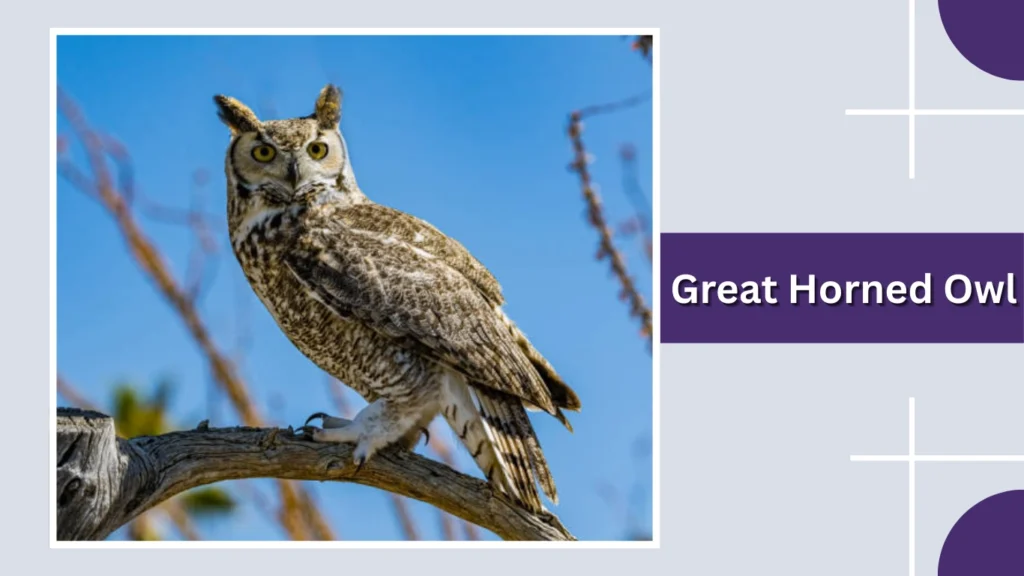
The Great Horned Owl is one of the most powerful and adaptable owls in the Americas. Easily recognized by its prominent ear tufts and deep, resonant hooting call, this formidable nocturnal predator occupies a wide range of habitats. Its strength, stealth, and broad diet have earned it the nickname “tiger of the air.”
Identification
- Large, stocky body with mottled brown and gray plumage
- Prominent ear tufts or “horns”
- Large yellow eyes set in a facial disk
- Strong feet with massive talons
- White throat patch often visible when calling
Habitat
Great Horned Owls inhabit forests, deserts, grasslands, wetlands, and urban areas. They are highly adaptable and often use abandoned nests of other large birds or natural cavities for nesting.
Behaviors
These owls are primarily nocturnal and rely on silent flight to ambush prey. They are highly territorial and will aggressively defend their nesting areas. Great Horned Owls are known for their distinctive hooting calls, which are used for communication and territory defense.
Diet and Lifespan
Their diet is extremely varied and includes mammals, birds, reptiles, amphibians, and even other raptors. In the wild, Great Horned Owls typically live 13–25 years, with some individuals reaching longer lifespans in protected environments.
17. Barn Owl
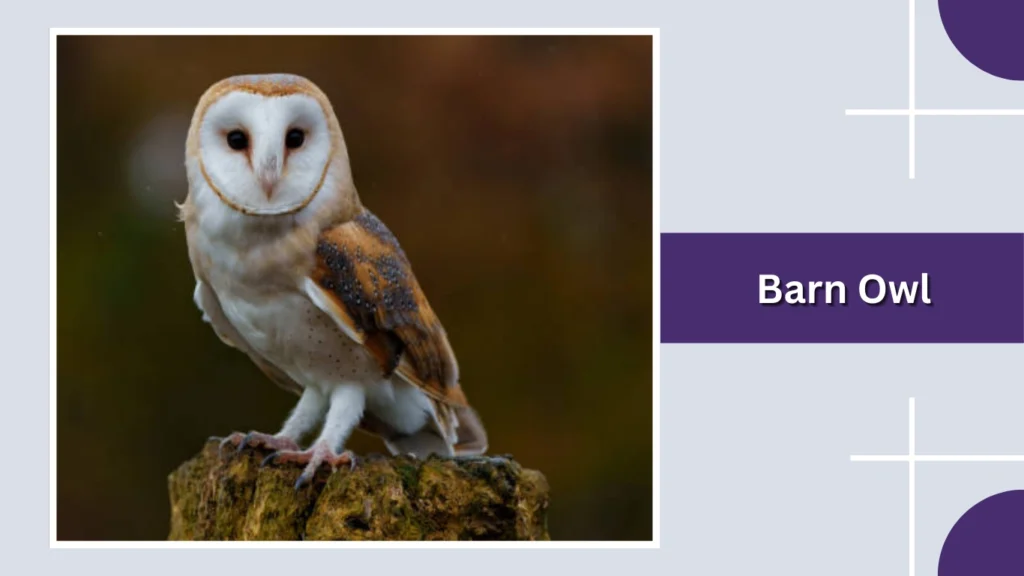
The Barn Owl is one of the most widespread and easily recognized owls in the world. Known for its ghostly appearance and heart-shaped face, this nocturnal hunter is highly effective at controlling rodent populations. Its silent flight and exceptional hearing make it a formidable predator, even in complete darkness.
Identification
- Pale, heart-shaped facial disk
- White to buff underside with light spotting
- Golden-brown upperparts with gray mottling
- Dark eyes, unlike most owls
- Long legs and wings
Habitat
Barn Owls inhabit open landscapes such as farmlands, grasslands, wetlands, and rural areas. They often nest in barns, abandoned buildings, tree cavities, or cliffs, taking advantage of sheltered spaces near open hunting grounds.
Behaviors
These owls are strictly nocturnal and rely heavily on sound to locate prey. They fly low over fields with slow, buoyant wingbeats. Barn Owls are generally solitary and do not hoot like other owls, instead producing screeches and hisses.
Diet and Lifespan
Barn Owls primarily feed on small mammals, especially mice, voles, and rats. They occasionally eat small birds and insects. In the wild, Barn Owls typically live 4–8 years, though some individuals may survive longer in safe, food-rich environments.
18. Snowy Owl
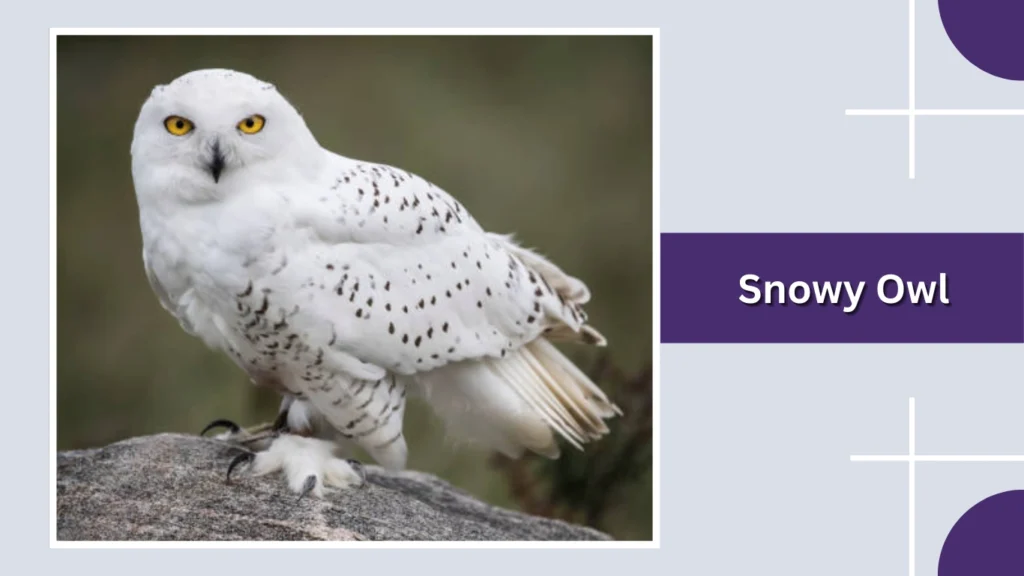
The Snowy Owl is a striking and powerful raptor of the Arctic, famous for its bright white plumage and piercing yellow eyes. Unlike most owls, it is often active during the day, especially in summer. Its appearance and behavior make it one of the most recognizable owl species in the world.
Identification
- Mostly white plumage with dark barring
- Females and juveniles have heavier markings
- Large round head without ear tufts
- Bright yellow eyes
- Thickly feathered legs and feet
Habitat
Snowy Owls breed on Arctic tundra and migrate south during winter, sometimes appearing in open fields, coastal areas, and airports. They prefer wide, open landscapes that resemble their native tundra habitat.
Behaviors
These owls are strong fliers and often hunt from elevated perches or while flying low over the ground. They are highly territorial during the breeding season but more nomadic in winter, moving in response to prey availability.
Diet and Lifespan
Snowy Owls mainly feed on lemmings but also hunt birds and small mammals when lemmings are scarce. In the wild, they typically live 10–15 years, with lifespan closely tied to food supply and harsh environmental conditions.
19. Long-eared Owl
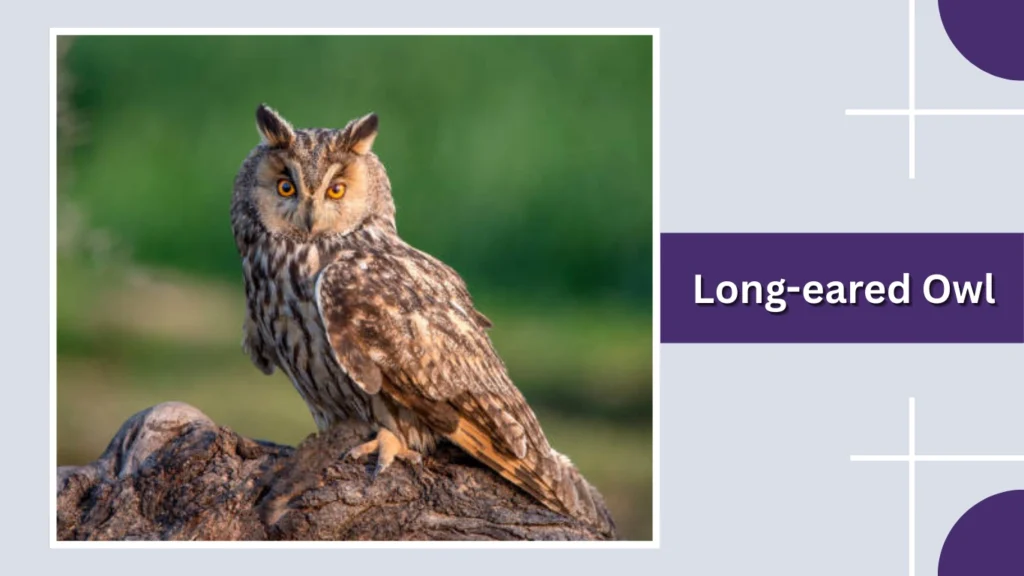
The Long-eared Owl is a slender, medium-sized owl known for its tall ear tufts and secretive nature. Although widespread, it is rarely seen due to its excellent camouflage and preference for roosting quietly in dense foliage during the day. This owl is most active at night, when it hunts silently over open ground.
Identification
- Slim body with long, upright ear tufts
- Mottled brown, gray, and buff plumage
- Orange to yellow eyes
- Distinct facial disk outlined in pale feathers
- Long wings and tail
Habitat
Long-eared Owls inhabit woodlands, forest edges, shelterbelts, and groves near open fields or grasslands. They often nest in abandoned nests of other birds, especially crows and hawks.
Behaviors
These owls are nocturnal and rely on stealth and silent flight to capture prey. During winter, they may roost communally in dense vegetation. Long-eared Owls are generally quiet, but males produce low hoots during the breeding season.
Diet and Lifespan
Their diet consists mainly of small mammals such as voles, mice, and shrews, with occasional small birds. In the wild, Long-eared Owls typically live 10–15 years, depending on habitat quality and prey availability.
20. Short-eared Owl
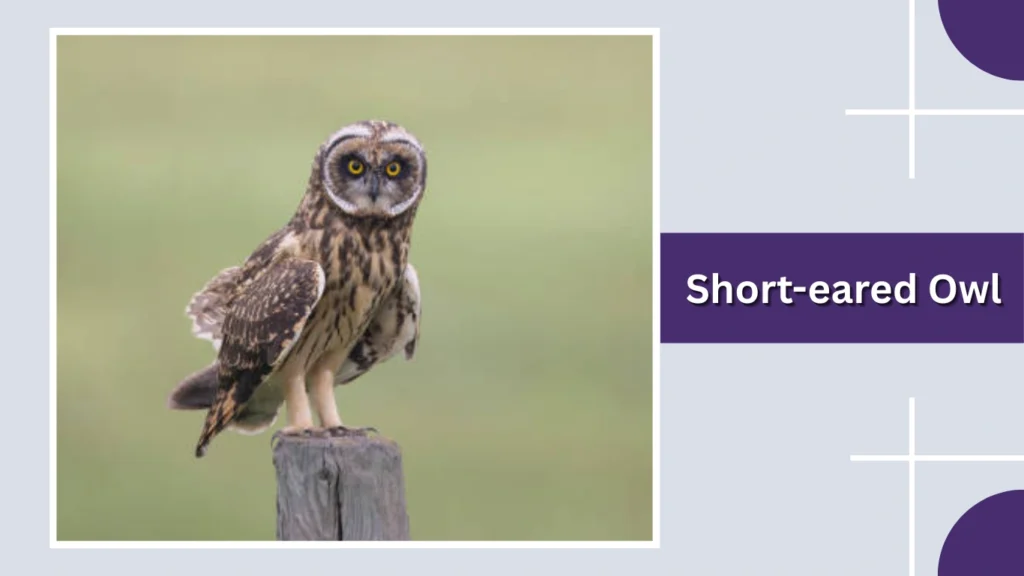
The Short-eared Owl is a medium-sized owl known for its daytime activity and preference for open landscapes. Unlike many owls, it is often seen flying low over fields and marshes in broad daylight, especially during dawn and dusk. Its erratic flight and wide wings make it easy to identify in its preferred habitats.
Identification
- Mottled brown and buff plumage
- Pale facial disk with dark eye patches
- Small, often invisible ear tufts
- Yellow eyes with black outlines
- Long, broad wings
Habitat
Short-eared Owls inhabit open areas such as grasslands, marshes, tundra, coastal dunes, and agricultural fields. They nest on the ground, making them vulnerable to habitat disturbance.
Behaviors
These owls are crepuscular and often diurnal, hunting during daylight hours. They fly low while searching for prey and may hover briefly before striking. Short-eared Owls are less territorial than other owls and may gather in loose groups when food is plentiful.
Diet and Lifespan
Their diet mainly includes small mammals such as voles and mice, with occasional birds. In the wild, Short-eared Owls typically live 10–13 years, though survival depends heavily on prey abundance and habitat conditions.
21. Turkey Vulture
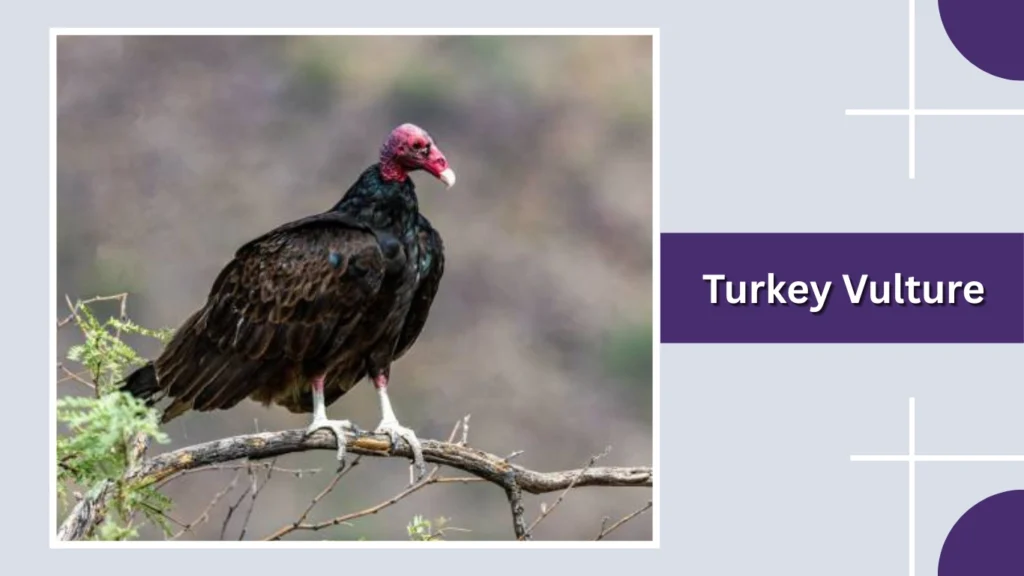
The Turkey Vulture is a large scavenging bird of prey best known for its role in cleaning up the environment by feeding on carrion. With its bald red head and broad wings, it is often seen soaring effortlessly on thermal air currents. Although not a hunter like other raptors, the Turkey Vulture is a vital part of many ecosystems.
Identification
- Large dark body with long, broad wings
- Bald red head in adults; gray in juveniles
- Pale underside of wings with dark edges
- Long tail extending beyond folded wings
- Hooked, pale-colored bill
Habitat
Turkey Vultures inhabit a wide range of environments, including forests, grasslands, deserts, wetlands, and suburban areas. They prefer open areas for foraging and roost in trees, cliffs, or structures.
Behaviors
These birds are strong soarers and rarely flap their wings, relying on thermals to stay aloft. They have an exceptional sense of smell, allowing them to locate carcasses hidden from view. Turkey Vultures are generally social and often roost in groups.
Diet and Lifespan
Their diet consists almost entirely of carrion, including dead mammals, birds, and reptiles. In the wild, Turkey Vultures typically live 16–20 years, with some individuals surviving longer in protected conditions.
22. Black Vulture
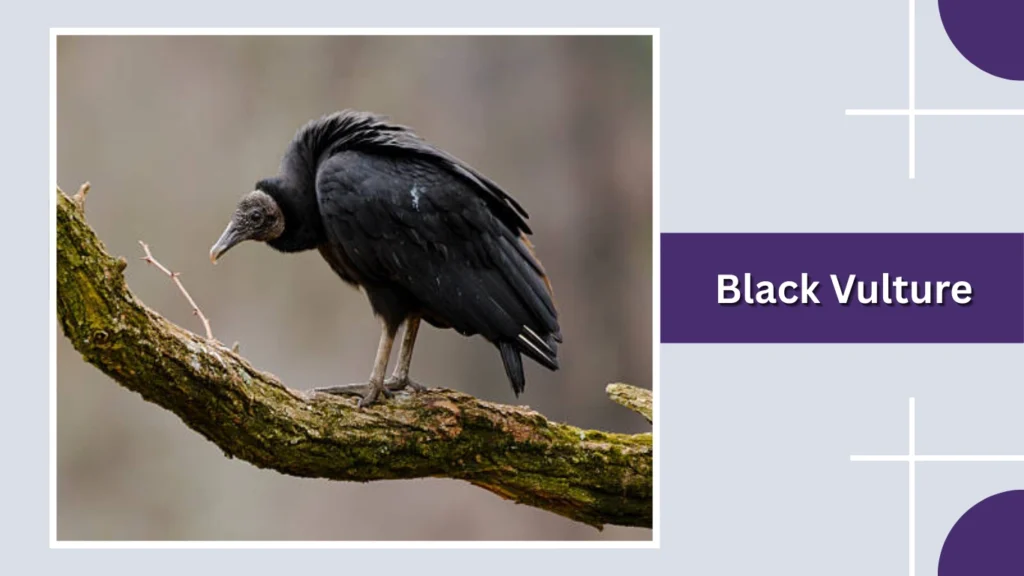
The Black Vulture is a robust scavenging raptor commonly found in the Americas, often seen soaring alongside Turkey Vultures. More aggressive and social than its red-headed relative, this species relies heavily on sight rather than smell to locate food. Its strong bill and assertive behavior allow it to dominate carcasses despite its scavenger lifestyle.
Identification
- Entirely black plumage
- Short, square tail
- Silvery-white patches near the tips of wings
- Bald gray to black head
- Stocky build with broad wings
Habitat
Black Vultures inhabit open and semi-open areas such as forests, farmland, wetlands, and urban regions. They adapt well to human-altered landscapes and often nest in abandoned buildings, hollow trees, or dense thickets.
Behaviors
These vultures are highly social and often forage in groups. They soar on thermals but flap more frequently than Turkey Vultures. Black Vultures may follow other scavengers to food sources and aggressively displace them once a carcass is found.
Diet and Lifespan
Their diet consists mainly of carrion, though they may occasionally eat eggs, small animals, or human refuse. In the wild, Black Vultures typically live 10–15 years, with longer lifespans possible in safe environments.
23. Andean Condor
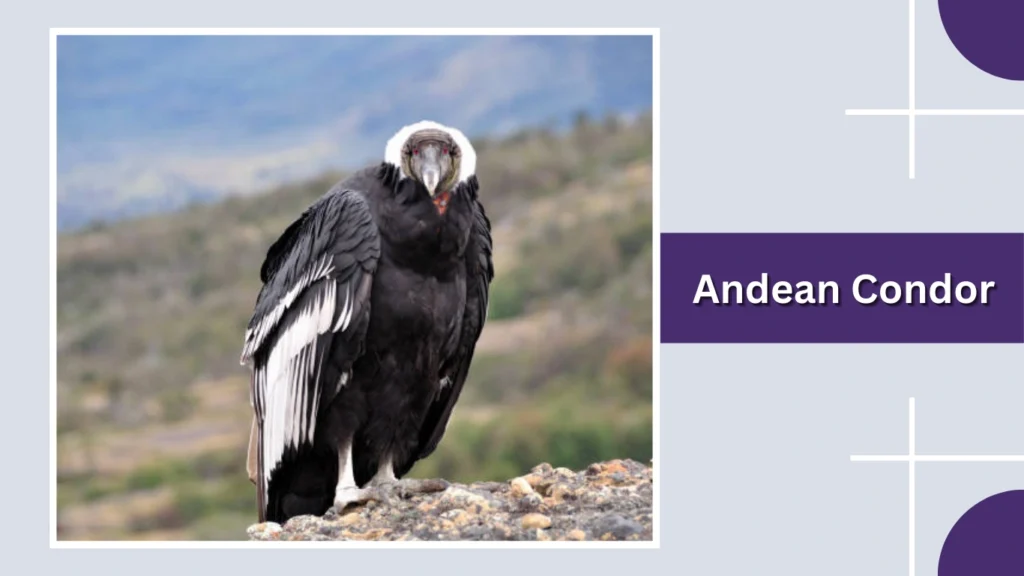
The Andean Condor is one of the largest flying birds in the world and a legendary raptor of South America. Revered in many Andean cultures, this massive scavenger is a symbol of power and freedom. With its enormous wingspan and effortless soaring flight, the Andean Condor dominates the mountain skies and plays a crucial role in high-altitude ecosystems.
Identification
- Massive black body with white wing patches
- Distinct white collar at the base of the neck
- Bare reddish head and neck
- Males have a large comb on the head
- Wingspan reaching up to 10.5 feet
Habitat
Andean Condors inhabit high mountain regions, cliffs, and open grasslands along the Andes Mountains. They prefer rugged, remote landscapes with strong air currents that help them soar while searching for food.
Behaviors
These condors spend much of the day soaring on thermal currents with minimal wing flapping. They are social birds and often gather at communal roosts or feeding sites. Andean Condors are slow breeders, producing a single chick every two years.
Diet and Lifespan
Their diet consists almost entirely of carrion, including large dead mammals. Andean Condors are among the longest-living birds, often reaching 50 years or more in the wild, with even longer lifespans recorded in captivity.
24. California Condor
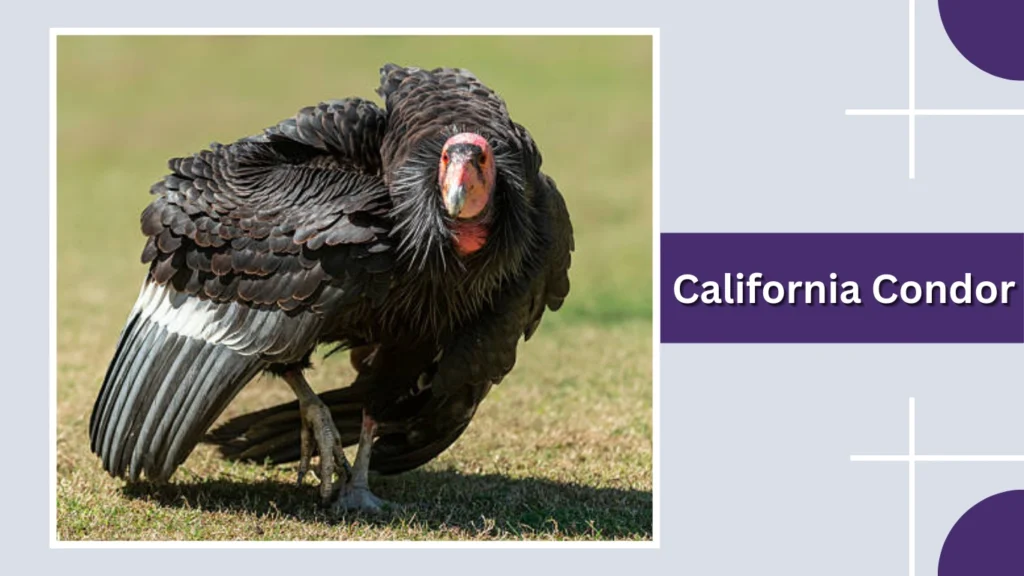
The California Condor is one of the rarest and largest birds of prey in North America. Once on the brink of extinction, this massive scavenger has become a powerful symbol of wildlife conservation success. With its enormous wingspan and slow, graceful flight, the California Condor is an awe-inspiring presence in the skies of the western United States.
Identification
- Large black body with white patches under the wings
- Bald head that is pink, orange, or yellow
- Heavy hooked bill adapted for scavenging
- Broad wings with fingered tips
- Wingspan up to 9.5 feet
Habitat
California Condors inhabit rocky cliffs, canyons, and open grasslands. They require large, undisturbed areas for soaring and nesting, often using caves or cliff ledges as nest sites.
Behaviors
These condors are social and often gather at communal roosts. They soar for hours using thermal currents to locate food over vast distances. California Condors are slow breeders, usually raising one chick every two years, which makes population recovery challenging.
Diet and Lifespan
Their diet consists entirely of carrion, primarily large mammals. California Condors are among the longest-living birds, often reaching 40–60 years, though they remain highly vulnerable to environmental threats such as lead poisoning.
25. Secretarybird
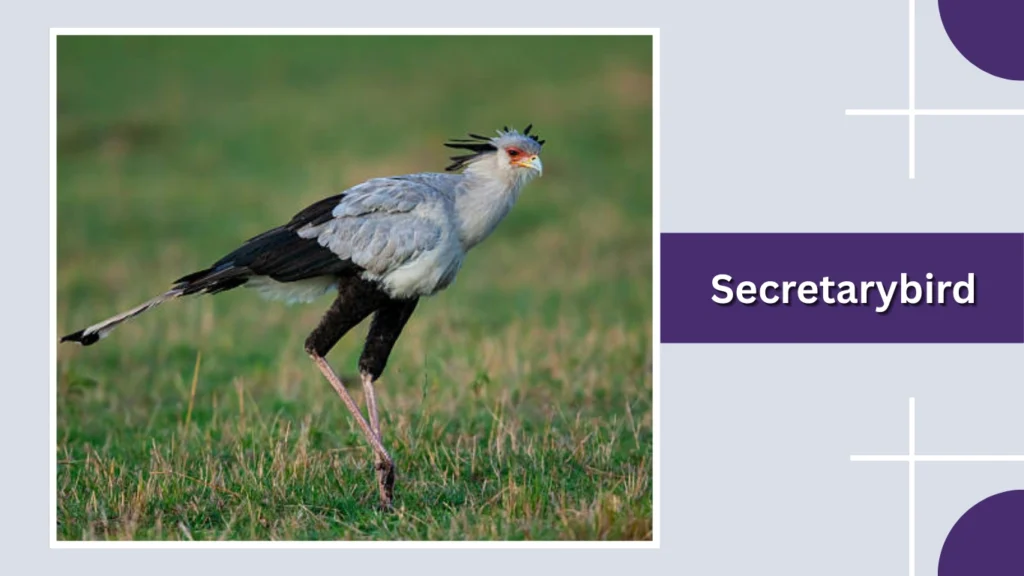
The Secretarybird is a unique and unmistakable bird of prey found in sub-Saharan Africa. Unlike most raptors, it hunts primarily on foot, striding across open landscapes on long, crane-like legs. Its elegant appearance and unusual hunting style make it one of the most distinctive birds of prey in the world.
Identification
- Tall, long-legged body with crane-like stance
- Gray body with black flight feathers
- Bare orange face with yellow eyes
- Crest of long black feathers behind the head
- Wingspan up to 7 feet
Habitat
Secretarybirds inhabit open savannas, grasslands, and semi-desert regions. They prefer wide, open spaces that allow them to walk freely while searching for prey on the ground.
Behaviors
These birds are famous for stomping and kicking prey, including snakes, with powerful legs. They spend most of the day walking and only fly when necessary. Secretarybirds are territorial and build large nests in trees despite their ground-based hunting habits.
Diet and Lifespan
Their diet includes snakes, lizards, small mammals, insects, and birds. In the wild, Secretarybirds typically live 10–15 years, with longer lifespans possible in protected environments.
26. Mississippi Kite
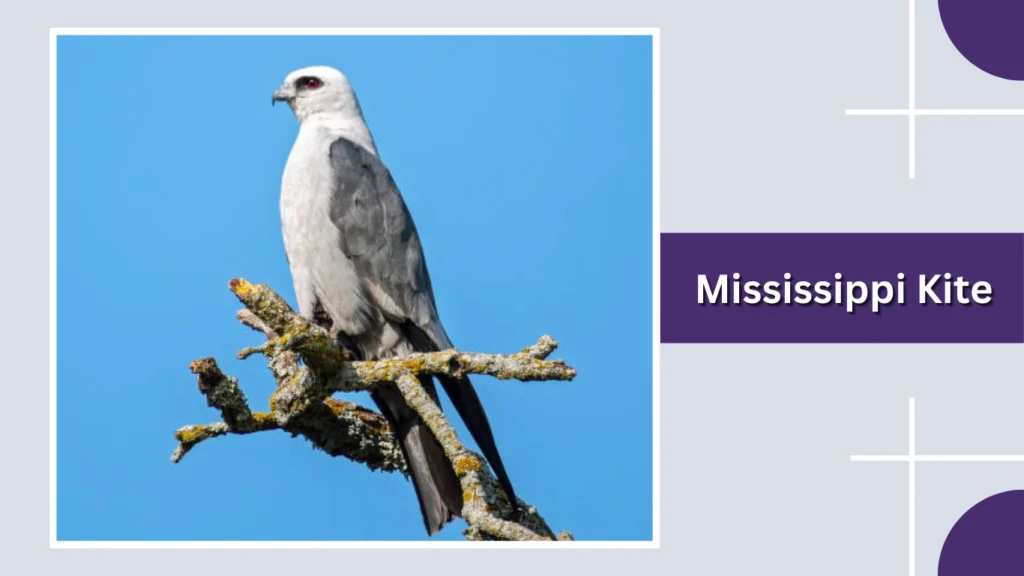
The Mississippi Kite is a graceful, medium-sized raptor known for its smooth, buoyant flight and insect-eating habits. Often seen gliding effortlessly above treetops or urban neighborhoods, this kite is highly aerial and spends much of its time on the wing. Its calm appearance contrasts with its bold behavior during the breeding season.
Identification
- Pale gray body with darker gray wings
- Slightly darker head and back
- Long, pointed wings and short tail
- Red eyes in adults; brown in juveniles
- Slender, streamlined build
Habitat
Mississippi Kites inhabit open woodlands, river edges, savannas, and increasingly, suburban and urban areas. They nest in tall trees near open spaces where flying insects are abundant.
Behaviors
These kites are agile fliers, often catching prey midair with their talons. During nesting season, they can become aggressive and may dive at intruders near their nests. Outside of breeding, they are generally social and may be seen in small groups.
Diet and Lifespan
Their diet consists mainly of large insects such as cicadas, dragonflies, and grasshoppers, along with small birds and reptiles. In the wild, Mississippi Kites typically live 10–15 years.
27. Swallow-tailed Kite
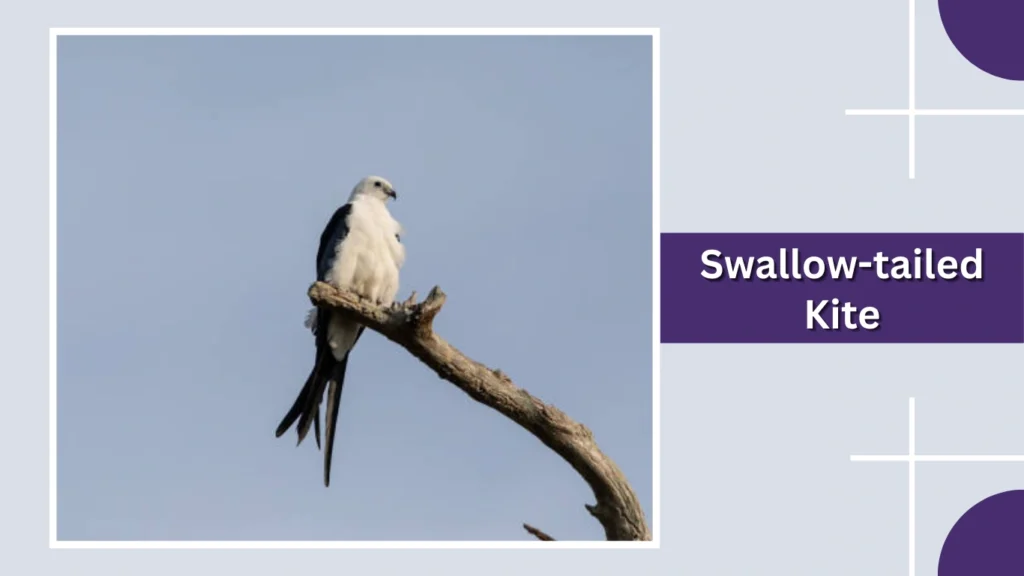
The Swallow-tailed Kite is one of the most elegant and eye-catching birds of prey in the Americas. Famous for its deeply forked tail and graceful flight, this raptor spends much of its life soaring effortlessly above forests and wetlands. Its acrobatic movements in the air make it a favorite among birdwatchers.
Identification
- Striking black-and-white plumage
- Long, deeply forked tail
- Slender body with long, pointed wings
- Small hooked bill
- Bright, alert eyes
Habitat
Swallow-tailed Kites inhabit open woodlands, river valleys, wetlands, and forest edges. They are most commonly found near water and large expanses of mature forest, where they can forage and nest high in treetops.
Behaviors
These kites are superb fliers and often glide, twist, and roll while catching prey in midair. They are social outside the breeding season and may form small flocks. Swallow-tailed Kites rarely perch for long and spend much of the day on the wing.
Diet and Lifespan
Their diet includes insects, small reptiles, amphibians, and occasionally small birds, all often caught in flight. In the wild, Swallow-tailed Kites typically live 10–12 years, depending on habitat quality and food availability.
28. Black Kite
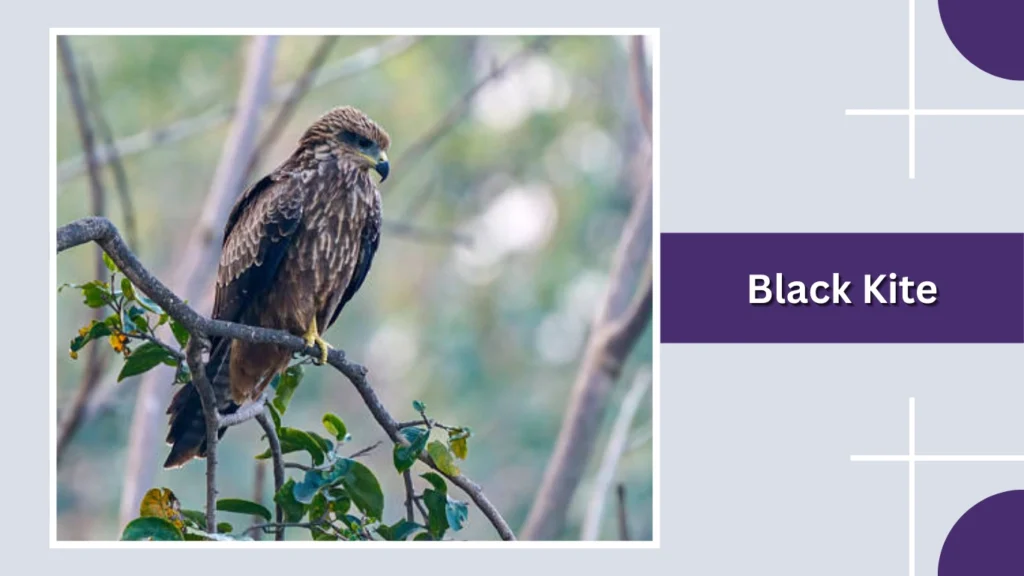
The Black Kite is a highly adaptable and widespread bird of prey found across Europe, Asia, Africa, and Australia. Known for its opportunistic feeding habits and graceful soaring flight, this raptor thrives in both natural and human-dominated landscapes. It is often seen circling high in the sky or gathering in large numbers near food sources.
Identification
- Dark brown body with paler head
- Long, slightly forked tail
- Narrow wings with fingered tips
- Yellow legs and hooked bill
- Lighter patches on underwings
Habitat
Black Kites inhabit a wide range of environments, including wetlands, rivers, grasslands, cities, and agricultural areas. They often nest in trees or on cliffs and are highly tolerant of human presence.
Behaviors
These kites are strong soarers and frequently form large communal roosts. They are known for their bold and opportunistic behavior, often stealing food from other birds or scavenging near human settlements. Black Kites are migratory in some regions and resident in others.
Diet and Lifespan
Their diet is varied and includes fish, small mammals, birds, insects, and carrion. In the wild, Black Kites typically live 12–15 years, though some individuals may survive longer in favorable conditions.
FAQs
What is a raptor?
A raptor, also known as a bird of prey, is a bird that hunts and feeds on other animals. Raptors are characterized by sharp talons, hooked beaks, and excellent eyesight, which help them capture and consume prey efficiently.
Are all owls considered raptors?
Yes, all owls are classified as raptors. Although they differ from hawks and eagles in behavior and appearance, owls share the same predatory traits, including talons, hooked beaks, and a carnivorous diet.
What is the difference between hawks, eagles, and falcons?
Hawks are generally medium-sized raptors adapted for soaring and ambush hunting, eagles are larger and more powerful with broader wings, and falcons are fast, agile fliers that hunt primarily in midair using speed.
Do all raptors hunt live prey?
No, not all raptors hunt live prey. While many actively hunt, some species such as vultures and condors are primarily scavengers that feed on carrion rather than killing prey themselves.
Which raptor has the best eyesight?
Eagles are known to have the best eyesight among raptors. Their vision can be up to eight times sharper than that of humans, allowing them to spot prey from great distances.
