
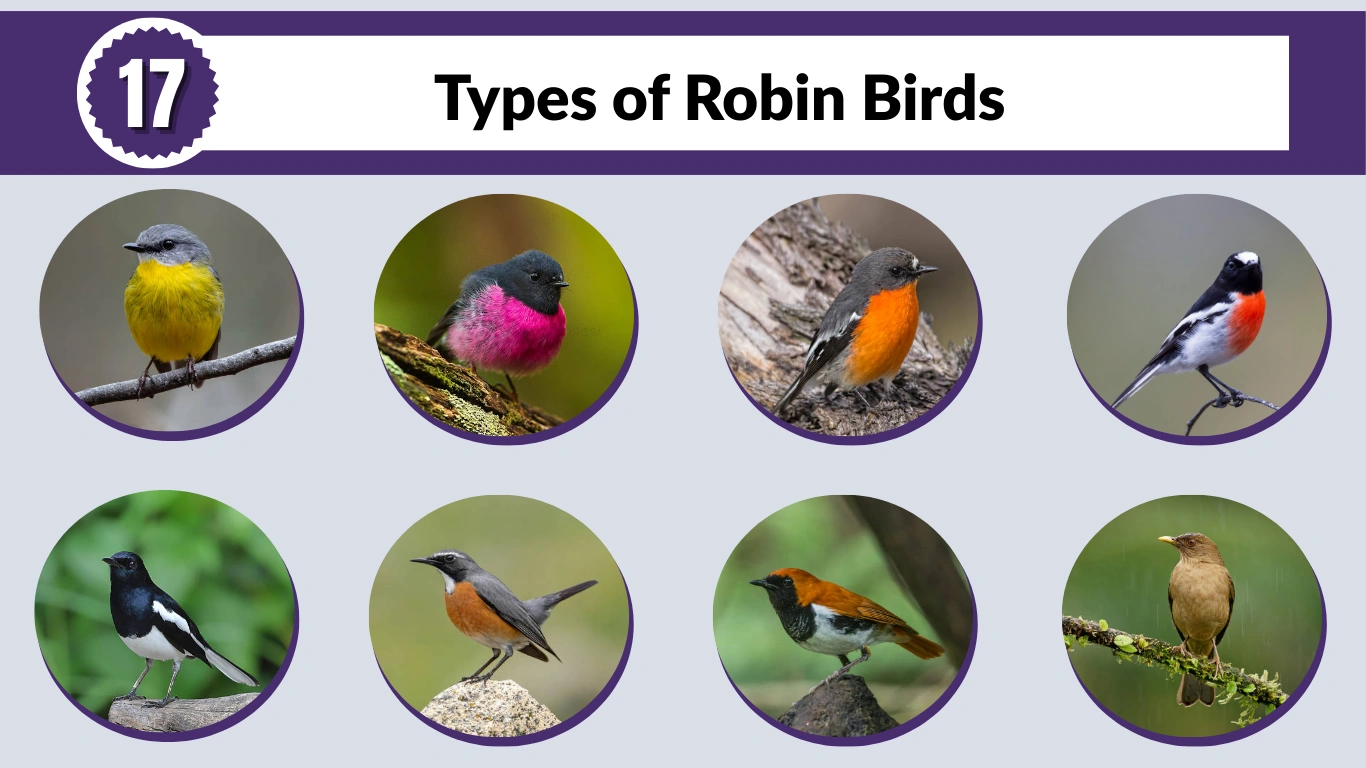
Robins are among the most beloved and recognizable birds in the world, known for their colorful breasts, sweet songs, and active behavior. Found across North America, Europe, Asia, Africa, and Australia, different robin species vary greatly in size, color, habitat, and habits. In this guide, you’ll discover 17 types of robin birds and learn how to identify each species by its key features, habitat preferences, and unique characteristics.
1. American Robin
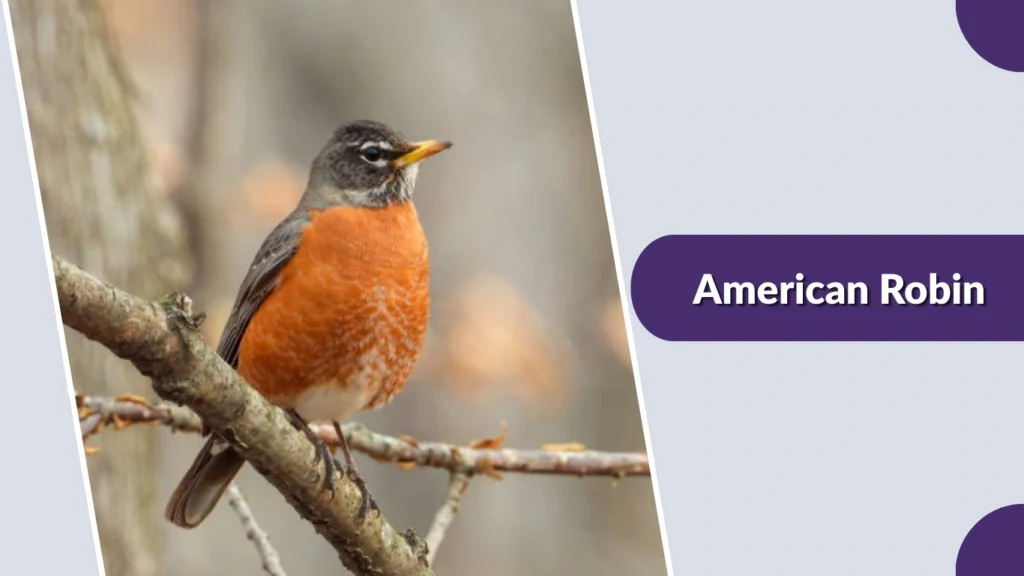
The American Robin (Turdus migratorius) is one of the most familiar and widespread songbirds in North America. Known for its bright orange-red breast and cheerful springtime song, this robin is often seen hopping across lawns and open fields. It thrives in a wide range of habitats, from forests and parks to suburban backyards, making it one of the easiest robin species to recognize.
Identification
- Bright orange to reddish breast
- Dark gray to black head and back
- White throat with black streaks
- Yellow bill
- White eye ring
- Medium-sized thrush with a rounded body
Habitat
American Robins live in woodlands, gardens, parks, lawns, and open fields. They prefer areas with short grass for foraging and trees or shrubs for nesting. During winter, they may move south or gather in large flocks in wooded areas with abundant fruit.
Diet
Their diet mainly consists of earthworms, insects, and other invertebrates during spring and summer. In fall and winter, they switch to berries and fruits. Robins are often seen tugging earthworms from the ground after rain.
Behavior
American Robins are active and social birds. They are known for their melodious, whistling song, especially during early mornings. During breeding season, they become territorial, while in winter they may form large feeding flocks.
2. European Robin
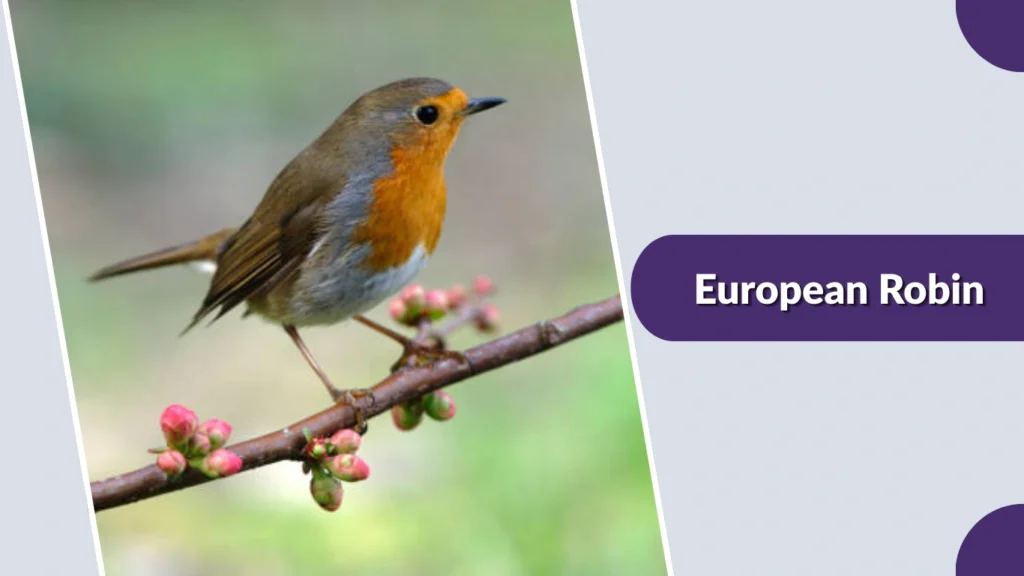
The European Robin (Erithacus rubecula) is a small, charming songbird commonly found across Europe. Famous for its bright orange face and breast, this robin is often associated with winter scenes and holiday cards. Unlike the American Robin, it is much smaller and has a rounder appearance with a delicate build.
Identification
- Bright orange-red face and breast
- Brown back and wings
- Whitish belly
- Thin, pointed dark bill
- Round body shape
- Large dark eyes
Habitat
European Robins prefer woodlands, gardens, hedgerows, and parks. They are comfortable around humans and frequently visit backyard feeders. During winter, they may also move into more open habitats in search of food.
Diet
Their diet includes insects, spiders, worms, and small invertebrates. In colder months, they also eat berries and seeds. They often forage on the ground, flicking leaves aside to find hidden prey.
Behavior
European Robins are known for their sweet, melodic song, which they sing throughout the year. They are highly territorial, especially during winter, and may aggressively defend feeding areas from other robins.
3. Rufous-backed Robin
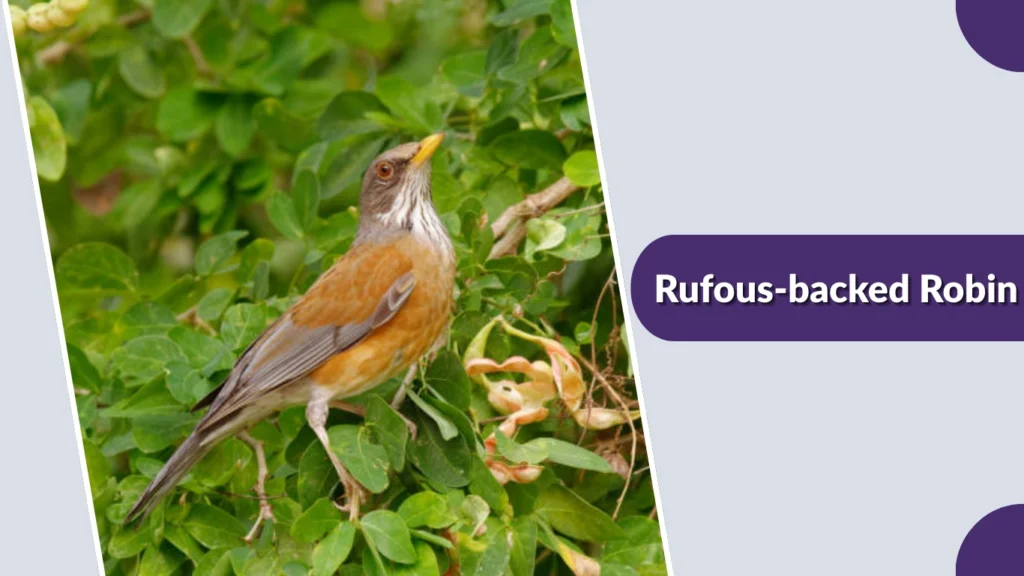
The Rufous-backed Robin (Turdus rufopalliatus) is a medium-sized thrush found mainly in Mexico and parts of the southwestern United States. It is recognized for its warm rufous (reddish-brown) back and gray head. This species prefers open woodlands and semi-arid environments.
Identification
- Gray head and upper chest
- Warm rufous-colored back and shoulders
- Pale underparts
- Yellow bill
- White throat with faint streaks
- Medium-sized thrush body
Habitat
Rufous-backed Robins inhabit open forests, thorn scrub, woodland edges, and suburban areas. They are commonly seen in parks and gardens within their range, especially where fruiting trees are present.
Diet
They feed on insects, earthworms, and various fruits. During fruiting seasons, they may gather in groups to feed on berries and other soft fruits.
Behavior
This robin species is active and often seen hopping on the ground while searching for food. They have a rich, melodious song similar to other thrushes and may become territorial during the breeding season.
4. Clay-colored Robin
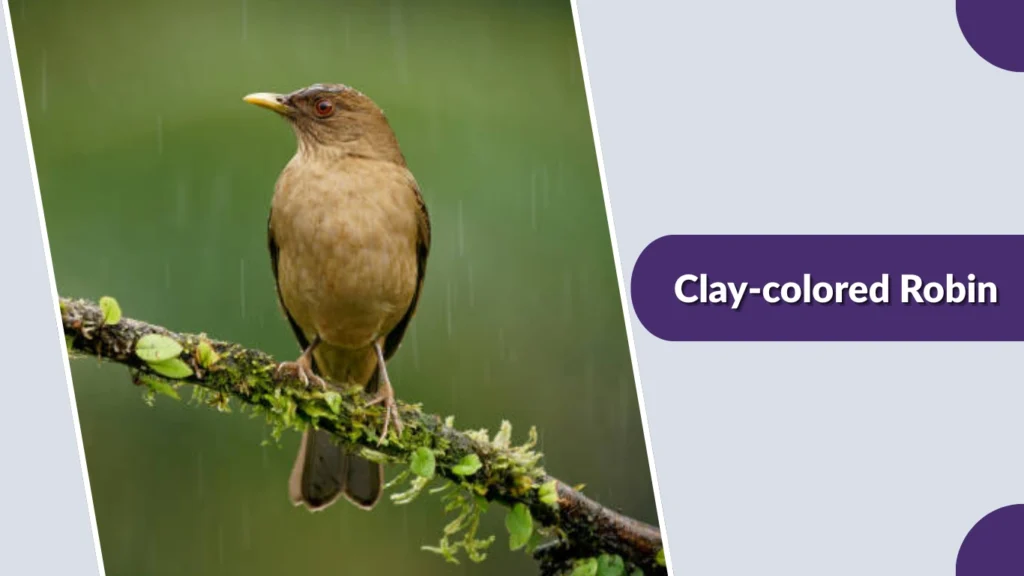
The Clay-colored Robin (Turdus grayi) is a common and widespread bird in Central America. It is the national bird of Costa Rica and is well known for its plain brown appearance and loud, melodious song. Although less colorful than other robins, it is easy to recognize within its range.
Identification
- Plain brown upperparts
- Pale grayish-brown underparts
- Faint streaking on the throat
- Yellow to orange bill
- Pale eye ring
- Medium-sized thrush with a slender build
Habitat
Clay-colored Robins are found in gardens, plantations, forest edges, and open woodlands. They adapt well to human presence and are frequently seen in towns and suburban areas.
Diet
Their diet includes insects, earthworms, and a wide variety of fruits. They often forage on lawns and in trees, especially where fruit is abundant.
Behavior
They are active and vocal birds, especially during the breeding season. Their loud, musical song is commonly heard at dawn and dusk. They may form loose groups outside the breeding season.
5. White-throated Robin
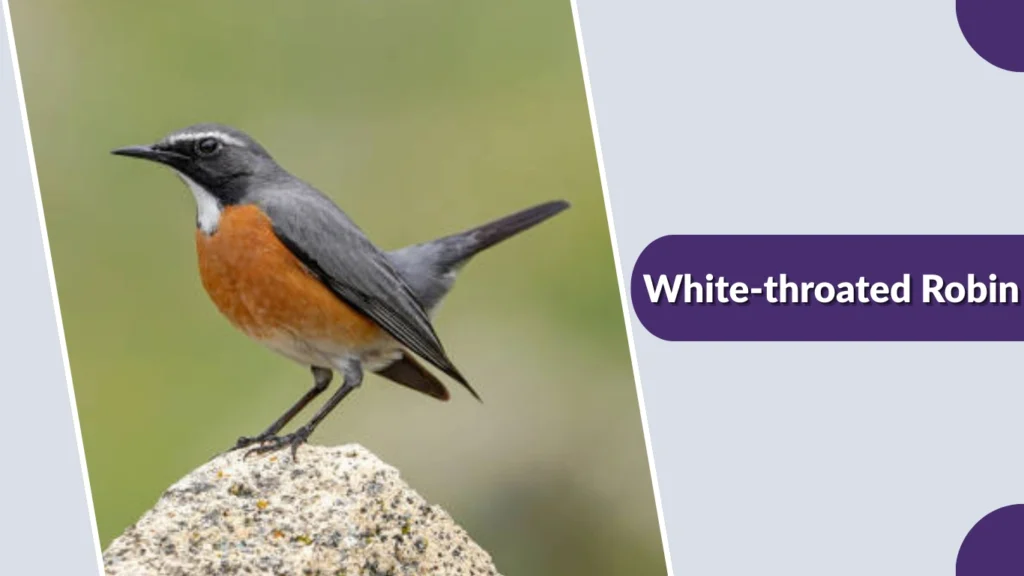
The White-throated Robin (Irania gutturalis) is a striking migratory robin found in parts of the Middle East and Central Asia. Males are particularly eye-catching with strong color contrasts, while females are more subdued in appearance.
Identification
- Bold white throat
- Black face and upperparts (male)
- Orange breast (male)
- Grayish-brown body (female)
- Slender black bill
- Upright posture
Habitat
White-throated Robins prefer rocky hillsides, scrublands, and mountainous regions. During migration, they may also be seen in open countryside and gardens.
Diet
They mainly feed on insects and other small invertebrates. During migration and in non-breeding areas, they may also consume berries.
Behavior
This species is often seen perched upright on rocks or low shrubs. Males sing from exposed perches during the breeding season. They are migratory birds, traveling long distances between breeding and wintering grounds.
6. Indian Robin
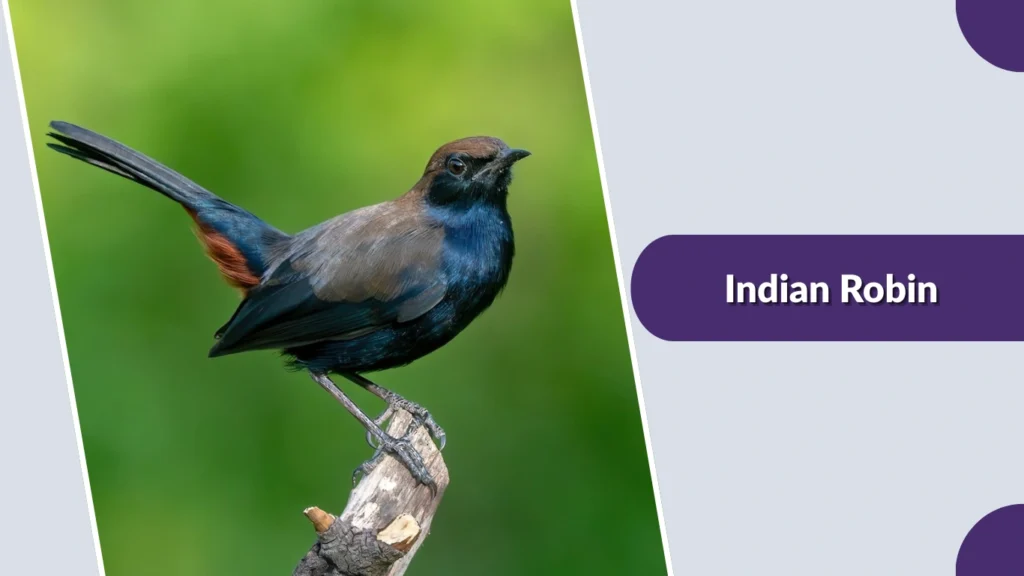
The Indian Robin (Copsychus fulicatus) is a small, striking robin native to the Indian subcontinent. It is commonly found in open scrublands, rocky areas, farmland, and even urban environments. Males are especially noticeable due to their glossy dark plumage and contrasting white shoulder patches, while females appear more brownish-gray. This adaptable species thrives in dry habitats and is frequently seen perched on low walls, rocks, or fences.
Identification
- Glossy black body in males
- Prominent white shoulder patch
- Chestnut or rufous patch under the tail
- Dark brown to gray plumage in females
- Slender black bill
- Long tail often held upright
Habitat
Indian Robins prefer dry open habitats such as scrublands, rocky hillsides, agricultural fields, and village outskirts. They are highly adaptable and often live close to human settlements. Unlike many forest-dwelling robins, this species avoids dense forests and prefers more open terrain.
Diet
Their diet mainly consists of insects such as beetles, ants, grasshoppers, and termites. They also feed on small invertebrates found on the ground. Indian Robins typically forage by hopping along the ground or making short flights to catch prey.
Behavior
Indian Robins are active and alert birds. Males are territorial during the breeding season and often sing from exposed perches. They frequently flick and fan their tails, revealing the chestnut patch beneath. Their song is a series of sweet whistles and varied notes. They build nests in crevices, walls, or sheltered ground locations.
7. Oriental Magpie-Robin
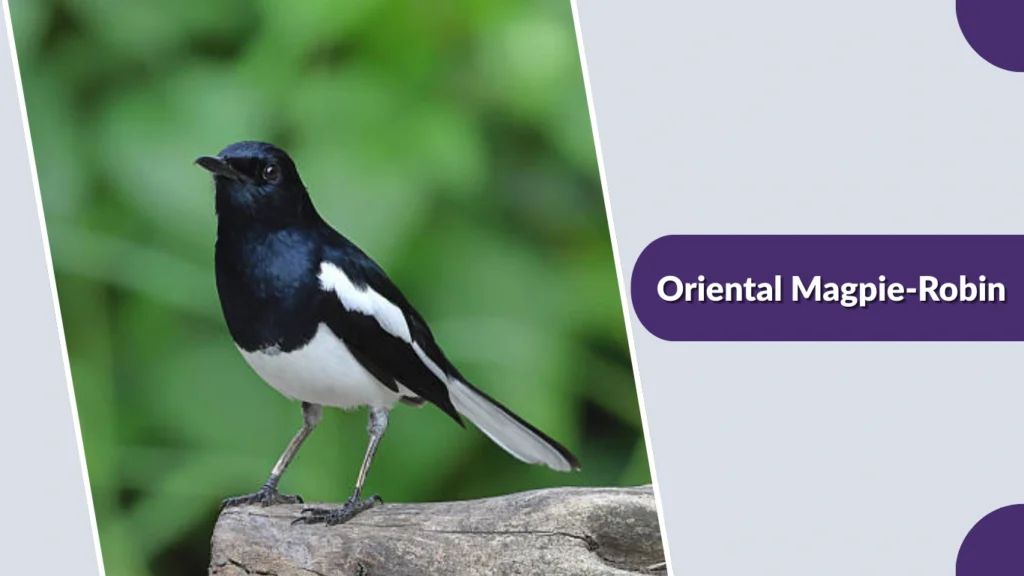
The Oriental Magpie-Robin (Copsychus saularis) is a well-known songbird across South and Southeast Asia. Recognized for its bold black-and-white coloration and melodious song, this robin is commonly found in gardens, parks, woodlands, and urban areas. It is admired for its vocal abilities and is even kept as a cage bird in some regions due to its rich and varied song.
Identification
- Glossy black head, back, and chest (male)
- Bright white wing patches
- White underparts
- Grayish coloration in females
- Long black-and-white tail
- Slender black bill
Habitat
Oriental Magpie-Robins inhabit open forests, gardens, plantations, and city parks. They are comfortable around human settlements and are often seen perched on rooftops, fences, and tree branches. They prefer areas with scattered trees and open ground for feeding.
Diet
They feed primarily on insects, including beetles, caterpillars, and ants. Occasionally, they may consume small fruits and seeds. They usually forage on the ground, hopping and pausing to scan for movement.
Behavior
This species is known for its beautiful and complex song, especially during the breeding season. Males sing loudly from high perches to defend territory and attract mates. They often raise and fan their long tails while moving. Oriental Magpie-Robins are generally solitary or seen in pairs, particularly during nesting season.
8. Japanese Robin
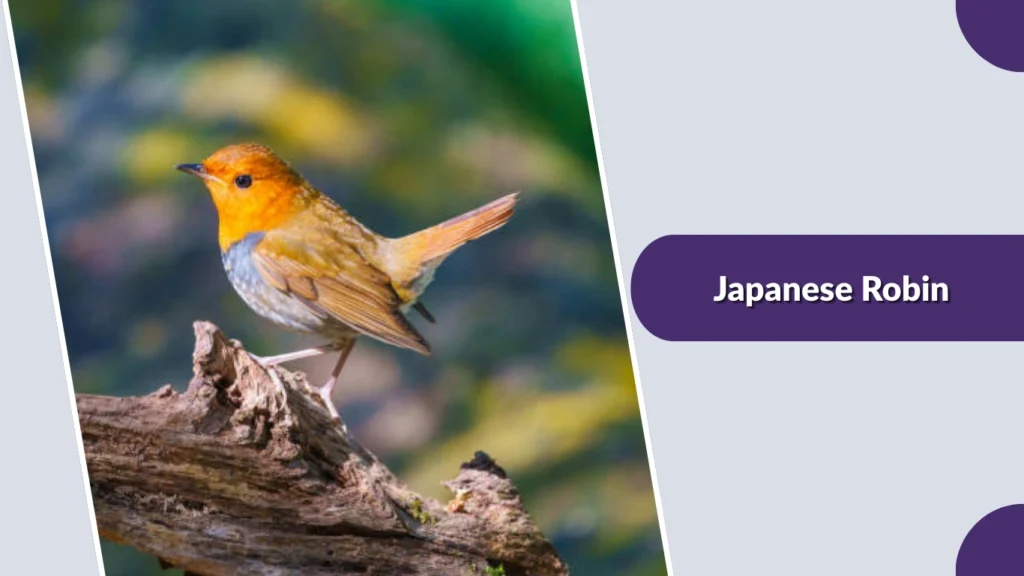
The Japanese Robin (Larvivora akahige) is a beautifully colored woodland robin native to Japan and nearby islands. It prefers dense forests and is more often heard than seen due to its shy nature. Males are especially striking with their rich orange-red underparts and dark upper body, creating a strong contrast that makes them stand out in dim forest light.
Identification
- Bright orange-red face and breast (male)
- Dark gray to black upperparts (male)
- Paler brown upperparts (female)
- Whitish lower belly
- Thin dark bill
- Compact body with medium-length tail
Habitat
Japanese Robins inhabit dense forests, especially broadleaf and mixed woodlands. They favor shaded understories with thick vegetation. During migration, they may also appear in gardens and wooded parks.
Diet
Their diet mainly consists of insects, spiders, worms, and other small invertebrates. They forage on or near the ground, turning over leaves to uncover hidden prey. Occasionally, they may eat berries.
Behavior
Japanese Robins are shy and secretive. Males sing a clear, melodious song from concealed perches during the breeding season. They are migratory birds, moving to warmer regions in winter. When alarmed, they quickly retreat into thick vegetation.
9. Ryukyu Robin
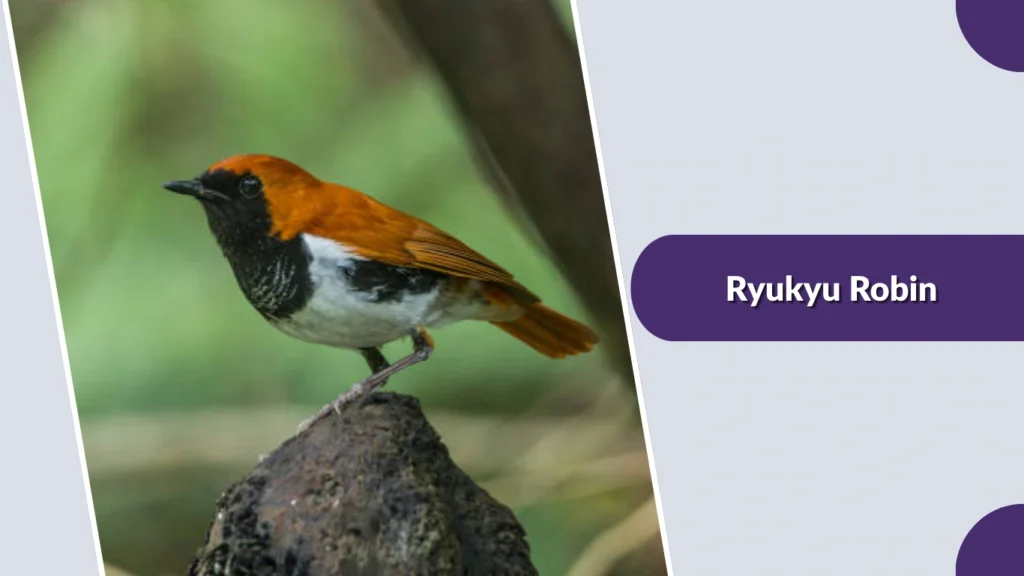
The Ryukyu Robin (Larvivora komadori) is a colorful robin species found in the Ryukyu Islands of Japan. It closely resembles the Japanese Robin but is even more vibrant in appearance. This species is often associated with subtropical forests and is known for its sweet and varied song.
Identification
- Deep orange-red face, throat, and breast (male)
- Dark bluish-black upperparts (male)
- Brownish upperparts in females
- Pale belly
- Slender dark bill
- Small to medium-sized forest robin
Habitat
Ryukyu Robins prefer subtropical evergreen forests with dense undergrowth. They are typically found in shaded, humid woodland environments and are less commonly seen in open areas.
Diet
They primarily feed on insects, larvae, spiders, and other small invertebrates. Foraging usually takes place on the forest floor among fallen leaves. They may also consume small fruits during certain seasons.
Behavior
Ryukyu Robins are active but often remain hidden in thick vegetation. Males sing from low branches during the breeding season, producing clear and pleasant notes. They are territorial during nesting and generally solitary outside the breeding period.
10. Black Robin
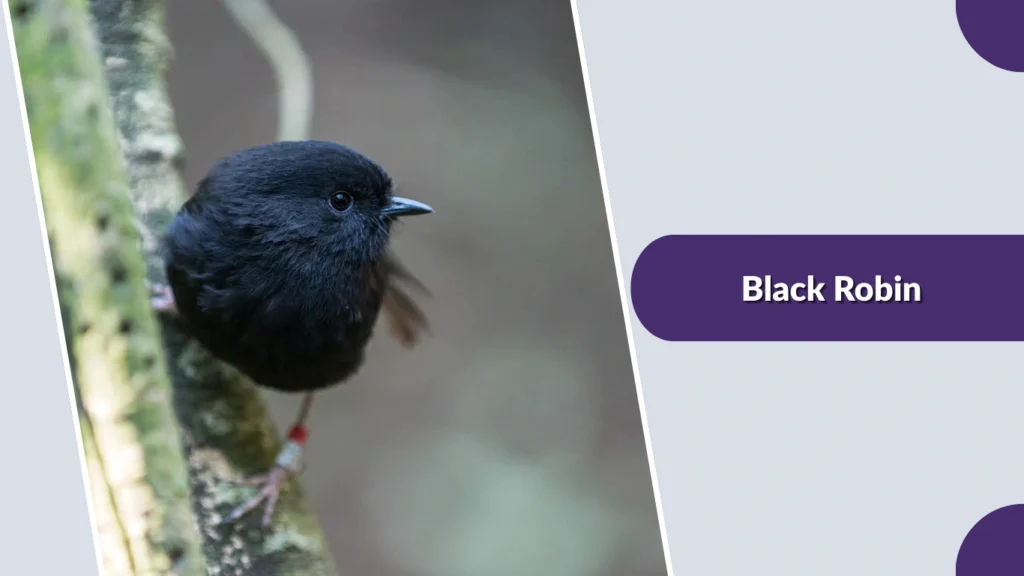
The Black Robin (Petroica traversi) is one of the rarest robin species in the world and is native to the Chatham Islands of New Zealand. This small, entirely dark bird became famous for its remarkable conservation recovery after its population dropped to just a handful of individuals in the 20th century. Today, it remains a conservation success story.
Identification
- Entirely black plumage
- Small, compact body
- Short, straight black bill
- Dark legs
- Rounded wings
- Short tail
Habitat
Black Robins live in native forest habitats on predator-free islands. They prefer dense vegetation with plenty of ground cover for nesting and foraging. Conservation efforts have helped restore suitable habitat within their limited range.
Diet
Their diet mainly consists of insects, spiders, and other small invertebrates. They forage on the forest floor, picking prey from leaves, bark, and low vegetation.
Behavior
Black Robins are relatively tame and curious due to their isolated habitat. They forage actively on the ground and build nests in tree branches. Intensive conservation management, including nest monitoring and habitat protection, has been key to their survival.
11. White-browed Robin-Chat
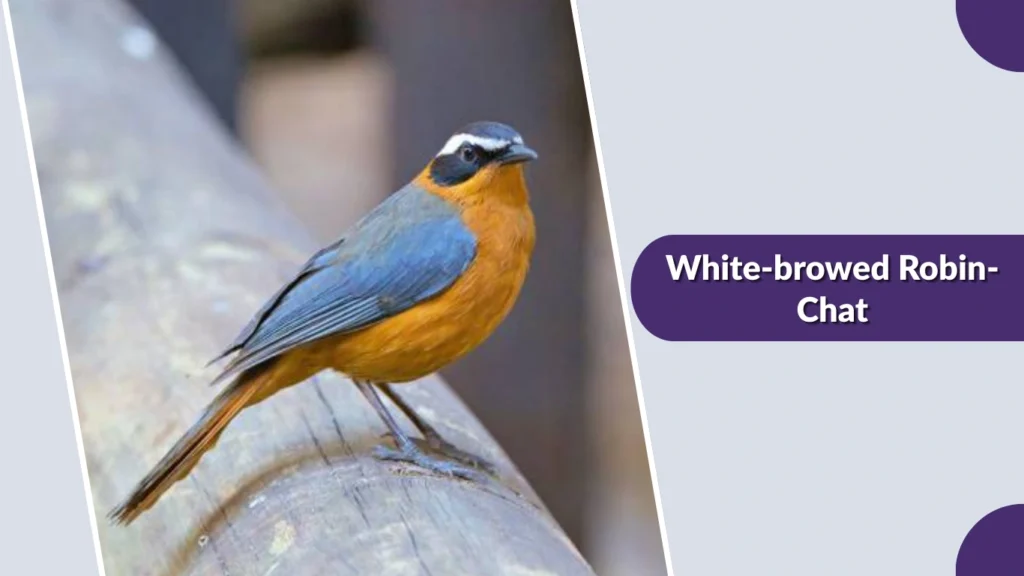
The White-browed Robin-Chat (Cossypha heuglini) is a striking African robin species known for its bold facial markings and beautiful song. It is commonly found in eastern and southern Africa, especially in gardens, woodlands, and riverine forests.
Identification
- Distinct white eyebrow stripe
- Black face mask
- Bright orange breast and belly
- Brown upperparts
- Slender black bill
- Medium-sized, upright posture
Habitat
White-browed Robin-Chats inhabit woodlands, forest edges, riverbanks, and well-vegetated gardens. They adapt well to suburban areas and are often seen in parks and residential gardens with dense shrubs.
Diet
They feed on insects, worms, and other small invertebrates. Occasionally, they also eat fruits and berries. They forage mostly on the ground or in low vegetation.
Behavior
This species is well known for its rich, melodious song, often delivered from concealed perches. They are usually seen alone or in pairs and can be quite territorial during breeding season. Their upright stance and flicking tail are typical robin-chat behaviors.
12. Cape Robin-Chat
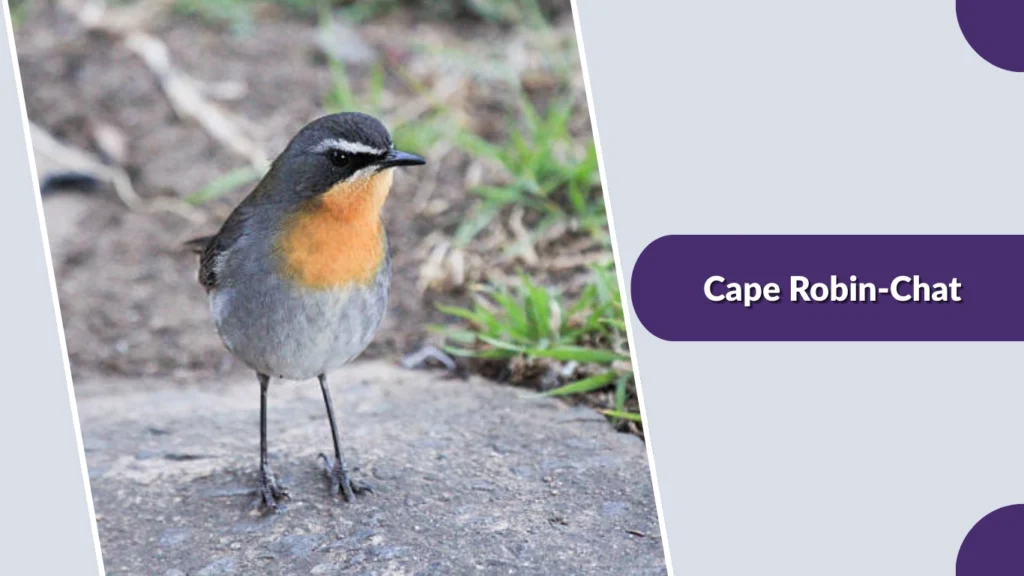
The Cape Robin-Chat (Dessonornis caffer) is a familiar and friendly robin species found in southern Africa. It is well known for its confident behavior and beautiful song. Often seen in gardens and parks, this robin has adapted well to urban environments and is one of the most commonly observed robin species in its range.
Identification
- Gray head and upperparts
- Bright orange throat and upper breast
- White eyebrow stripe
- Pale belly
- Slender black bill
- Medium-sized body with upright posture
Habitat
Cape Robin-Chats live in gardens, forest edges, riverine thickets, and shrublands. They prefer areas with dense vegetation for nesting but also need open ground nearby for feeding. Their adaptability allows them to thrive in both natural and suburban habitats.
Diet
Their diet mainly includes insects, worms, beetles, and other small invertebrates. They may also eat fruits and berries, especially when insects are less available.
Behavior
Cape Robin-Chats are known for their loud, clear, and varied songs, often heard at dawn and dusk. They are generally solitary or seen in pairs. During the breeding season, they become territorial and actively defend their nesting area.
13. Scarlet Robin
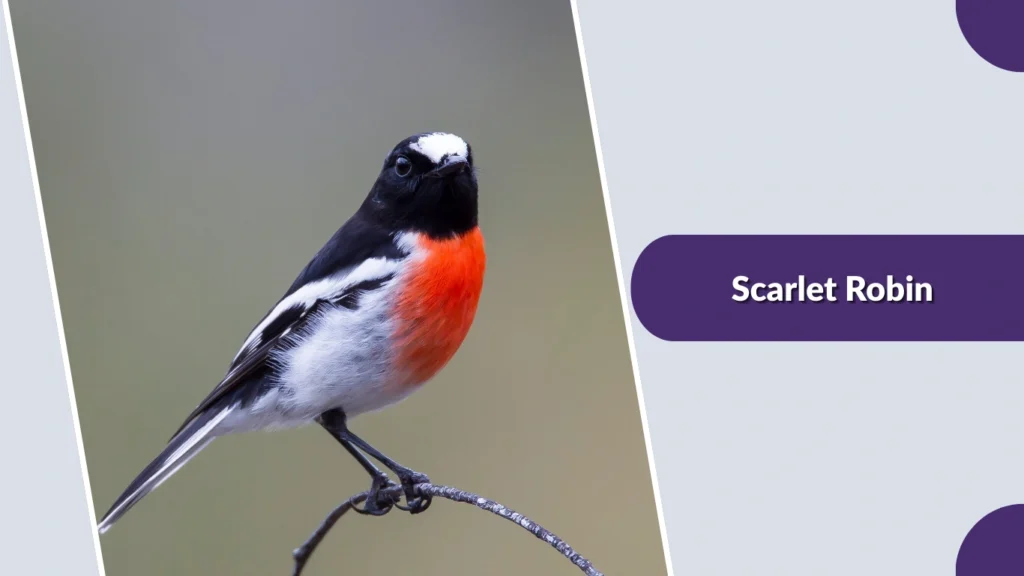
The Scarlet Robin (Petroica boodang) is a small, colorful bird native to Australia. Males are especially striking with their bright red chest contrasting against black and white plumage. This species is often found in open forests and woodlands, where it perches quietly before darting out to catch insects.
Identification
- Bright scarlet-red chest (male)
- Black head and upperparts (male)
- White forehead patch
- Gray-brown coloration in females
- Small, compact body
- Thin black bill
Habitat
Scarlet Robins inhabit open forests, woodlands, and sometimes farmland with scattered trees. They prefer areas with clear ground beneath trees, which allows them to easily spot insects.
Diet
They primarily feed on insects and other small invertebrates. Scarlet Robins often hunt by perching on a low branch and flying down to capture prey on the ground.
Behavior
This species is usually seen alone or in pairs. Males sing a soft, musical song during the breeding season. They are relatively quiet compared to some other robin species but remain active and alert while foraging.
14. Flame Robin
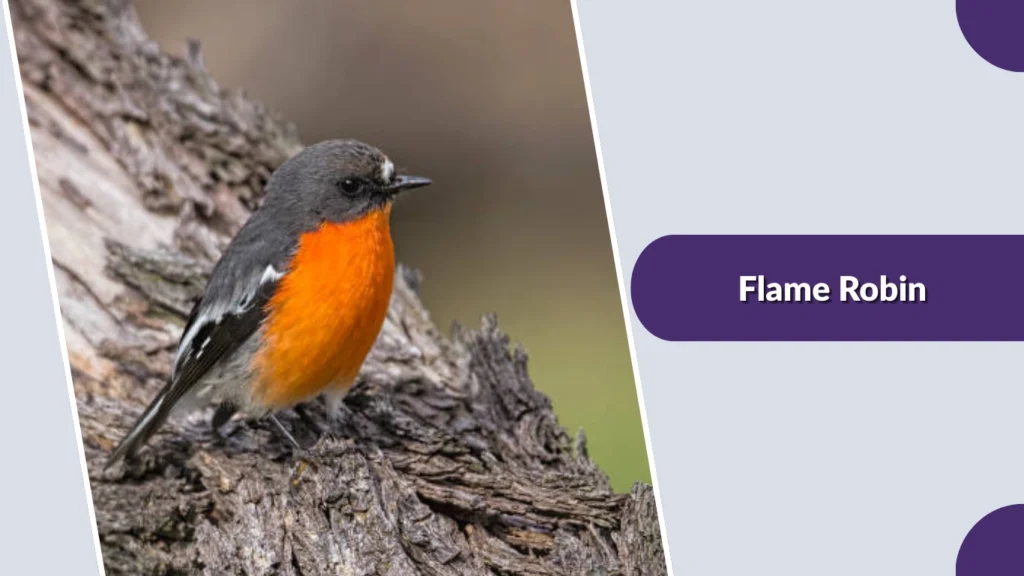
The Flame Robin (Petroica phoenicea) is a striking Australian robin known for the male’s brilliant fiery-orange chest. This small bird is often seen in open woodlands, grasslands, and lightly wooded areas. During winter, Flame Robins may move to lower elevations and more open habitats, making them easier to observe.
Identification
- Bright flame-orange chest (male)
- Dark gray to black upperparts (male)
- White forehead patch
- Brownish-gray plumage (female)
- Small, rounded body
- Thin black bill
Habitat
Flame Robins prefer open forests, grassy clearings, woodland edges, and farmland with scattered trees. In colder months, they migrate to open plains and coastal areas.
Diet
They mainly feed on insects and other small invertebrates. Flame Robins often perch on low branches or fence posts before swooping down to catch prey on the ground.
Behavior
These robins are generally quiet but active. Males sing a soft, pleasant song during breeding season. They are often seen alone or in pairs, especially when nesting.
15. Pink Robin
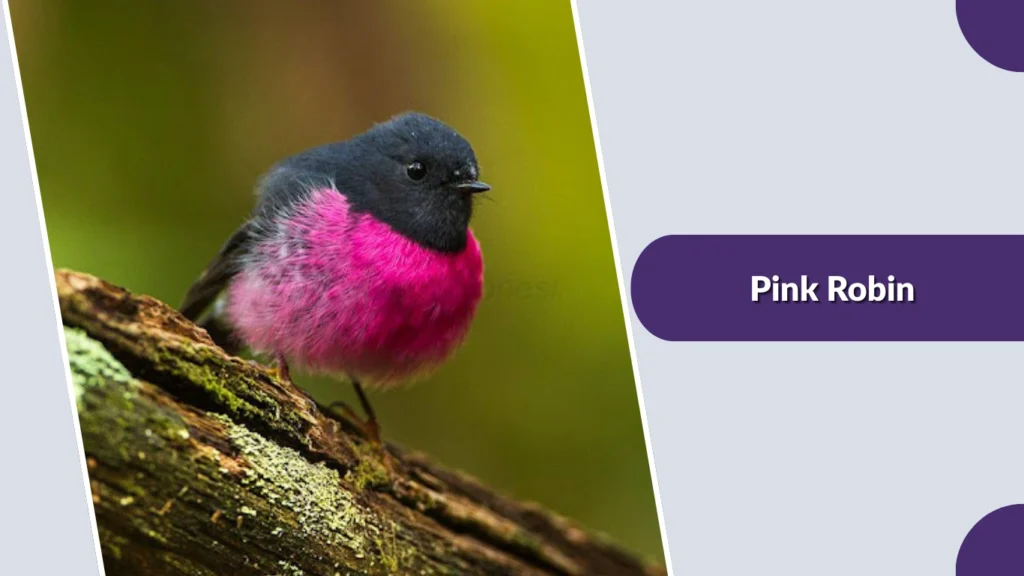
The Pink Robin (Petroica rodinogaster) is a small and colorful robin species native to southeastern Australia. Males are especially attractive with their soft pink breast and dark upperparts. This species prefers cooler, moist forests and is usually found in dense vegetation.
Identification
- Soft pink breast (male)
- Dark gray to black head and back (male)
- White lower belly
- Brownish-gray coloration (female)
- Small, compact body
- Slender dark bill
Habitat
Pink Robins inhabit temperate rainforests, wet forests, and dense gullies. They prefer shaded environments with thick undergrowth and are less common in open areas.
Diet
Their diet mainly includes insects, spiders, and small invertebrates. They typically forage in low shrubs or near the forest floor, searching carefully among leaves and branches.
Behavior
Pink Robins are usually quiet and secretive. Males produce a gentle, musical song during breeding season. They are often seen singly or in pairs and tend to remain within dense forest cover.
16. Yellow Robin
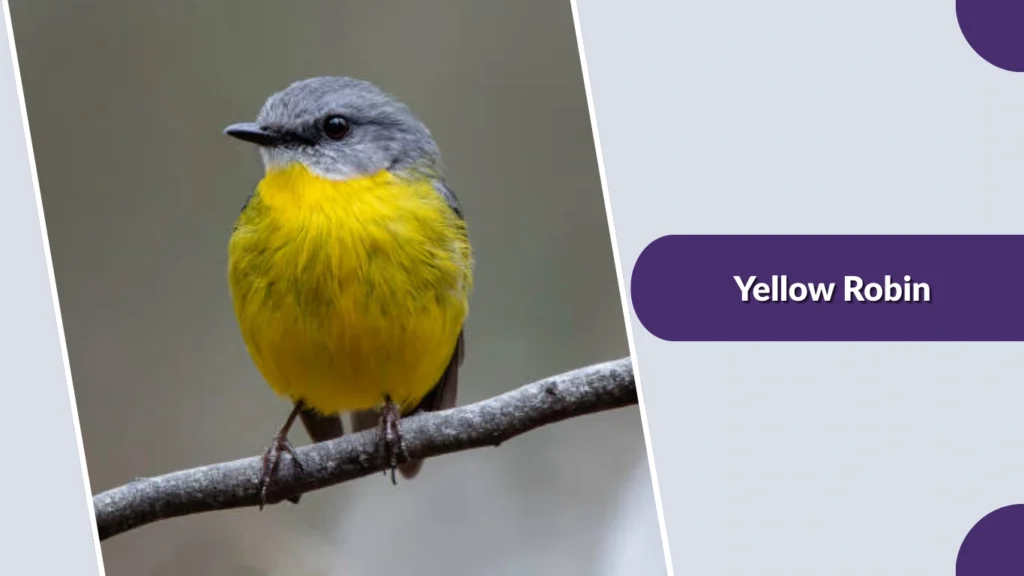
The Yellow Robin (genus Eopsaltria) is a group of Australian robins known for their bright yellow underparts and upright posture. The most well-known species include the Eastern Yellow Robin and Western Yellow Robin. These birds are common in forests and woodlands across Australia and are easily recognized by their bold coloring and ground-feeding habits.
Identification
- Bright yellow belly and breast
- Gray head and upperparts
- White throat
- Medium-sized, upright stance
- Straight, medium-length bill
- Rounded wings and moderate tail
Habitat
Yellow Robins are typically found in eucalyptus forests, woodlands, and forest edges. They prefer habitats with a mix of trees and open ground, allowing them to forage easily while remaining close to cover.
Diet
Their diet mainly consists of insects, spiders, and other small invertebrates. They usually hunt by perching on a tree trunk and dropping down to catch prey on the ground or along bark.
Behavior
Yellow Robins are known for their upright posture and patient hunting style. They are often seen perched at mid-level on tree trunks. During breeding season, males sing soft, whistling songs to defend their territory.
17. Black-throated Robin
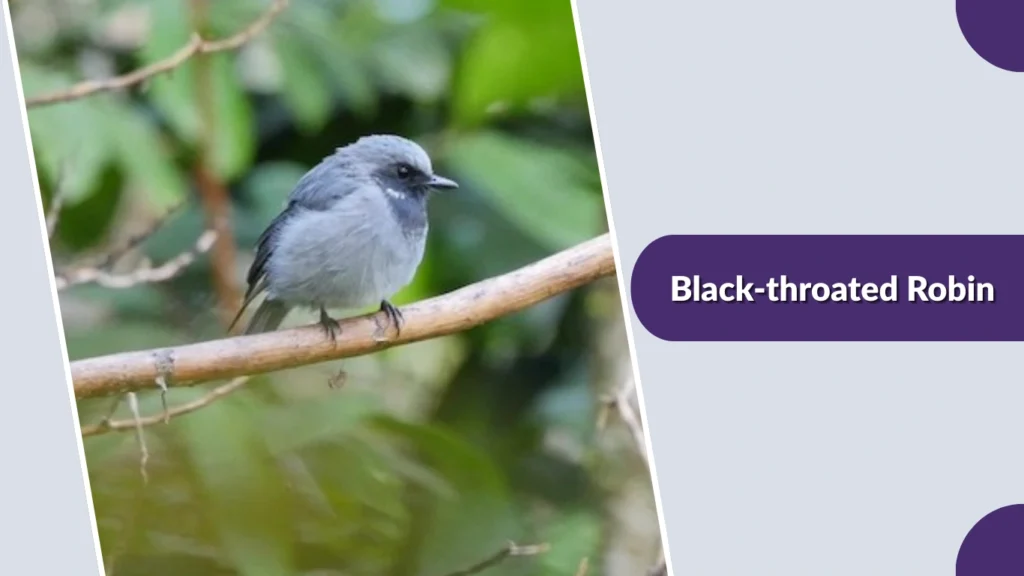
The Black-throated Robin (Irania gutturalis – female and male variation commonly referenced, though closely related species are sometimes separated) is a striking migratory robin found in parts of Central Asia and the Middle East. Males are particularly eye-catching with strong color contrasts, while females are more subdued.
Identification
- Distinct black throat (male)
- Gray upperparts
- Orange breast
- White belly
- Slender dark bill
- Upright posture
Habitat
Black-throated Robins prefer rocky hillsides, scrublands, and open mountainous regions during breeding season. During migration, they may also be seen in gardens and open countryside.
Diet
They primarily feed on insects and small invertebrates. During migration and winter, they may supplement their diet with berries and small fruits.
Behavior
This species is often observed perched on rocks or low shrubs. Males sing from exposed positions during breeding season. They are migratory birds, traveling long distances between breeding and wintering grounds.
