
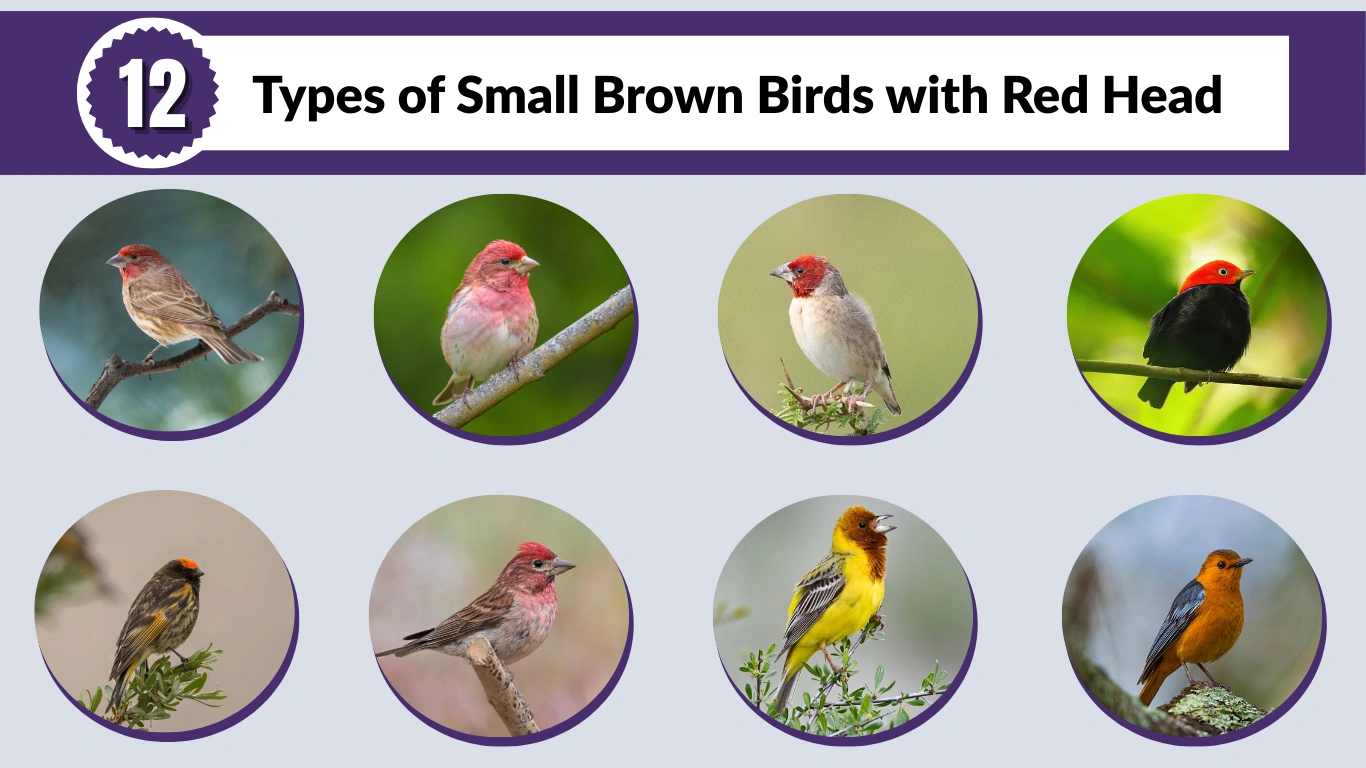
Small brown birds with red heads are some of the most eye-catching yet commonly spotted songbirds around the world. Their warm brown bodies blend easily into trees and shrubs, while the bright red on the head or face makes them stand out, especially during the breeding season. These birds are often seen in gardens, forests, grasslands, and farmlands, where they feed on seeds, fruits, and insects. From finches to buntings, this group includes many fascinating and easily recognizable species.
1. House Finch
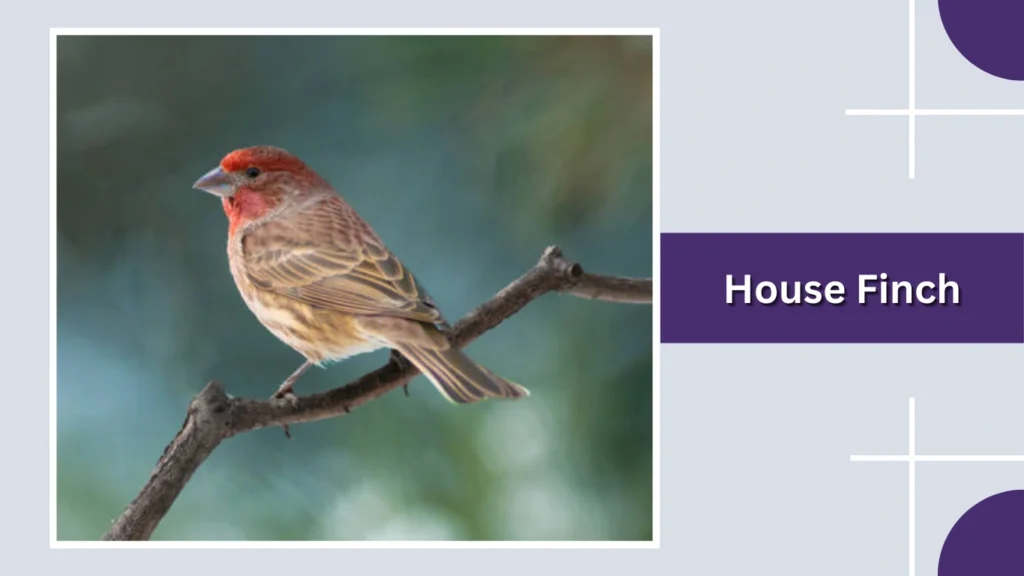
The House Finch is one of the most familiar small brown birds with a red head, especially in towns, gardens, and forest edges. Males are known for their rosy-red face and forehead, while females are mostly brown and streaked. This adaptable finch is often seen at feeders, rooftops, and shrubs.
Identification
- Small, slim-bodied finch with a slightly notched tail
- Brown, heavily streaked back and underparts
- Male has red on the forehead, face, throat, and upper chest
- Female lacks red and appears plain brown and streaked
- Short, thick, cone-shaped beak
Size & Shape
House Finches are small songbirds, usually about 5 to 6 inches long. They have a rounded head, short neck, and a gently curved bill made for cracking seeds. Their wings are moderately long, giving them a soft, fluttery flight.
Habitat & Range
They are commonly found across North America in cities, suburbs, farms, open woodlands, and desert edges. House Finches easily adapt to human environments and often nest on buildings, hanging plants, and ledges.
Behavior & Diet
House Finches are social birds that often gather in noisy flocks. They feed mainly on seeds, buds, fruits, and occasionally insects. At feeders, they prefer sunflower seeds and can spend long periods eating and calling softly.
2. Purple Finch
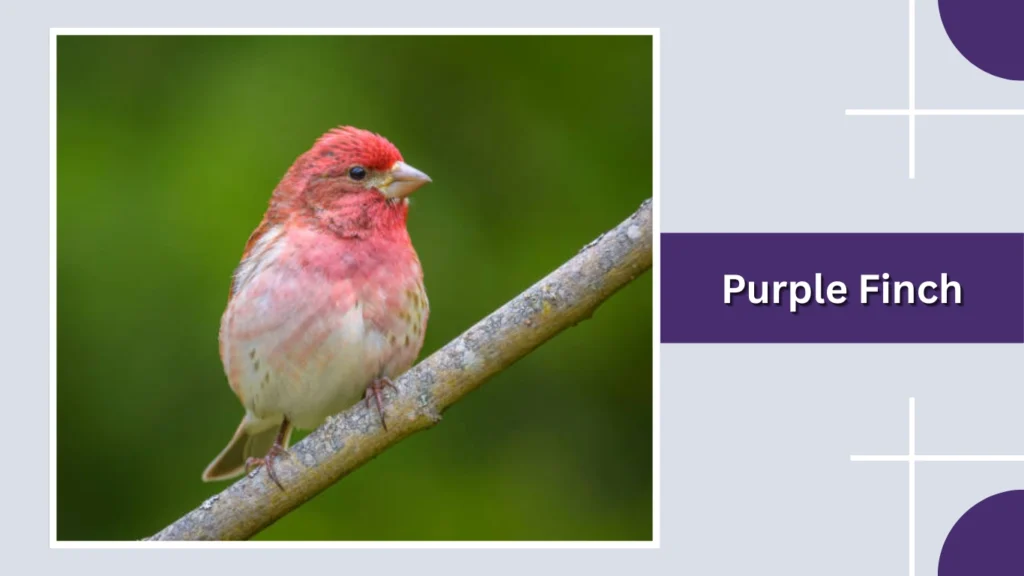
The Purple Finch is a small brown finch with a rich red head and face, often described as looking “dipped in raspberry juice.” Males show a deeper, more widespread red than House Finches, while females are brown and heavily streaked. They are common in forests, woodland edges, and backyard feeders.
Identification
- Small, chunky finch with a slightly forked tail
- Brown back with bold streaking on sides and belly
- Male has deep red on head, face, throat, and upper chest
- Female is brown with strong facial stripes and no red
- Thick, powerful bill adapted for cracking seeds
Size & Shape
Purple Finches are about 5.5 to 6 inches long, with a stockier body than many finches. They have a rounded head, broad chest, and a shorter, thicker beak that gives them a heavier look.
Habitat & Range
They are mainly found in coniferous and mixed forests, forest edges, and wooded suburbs. During winter, they often move south and are frequent visitors to backyard feeders.
Behavior & Diet
Purple Finches are active, musical birds with a rich, warbling song. Their diet includes seeds, buds, berries, and insects. At feeders, they favor sunflower seeds and often feed high in trees as well as on platforms.
3. Common Redpoll
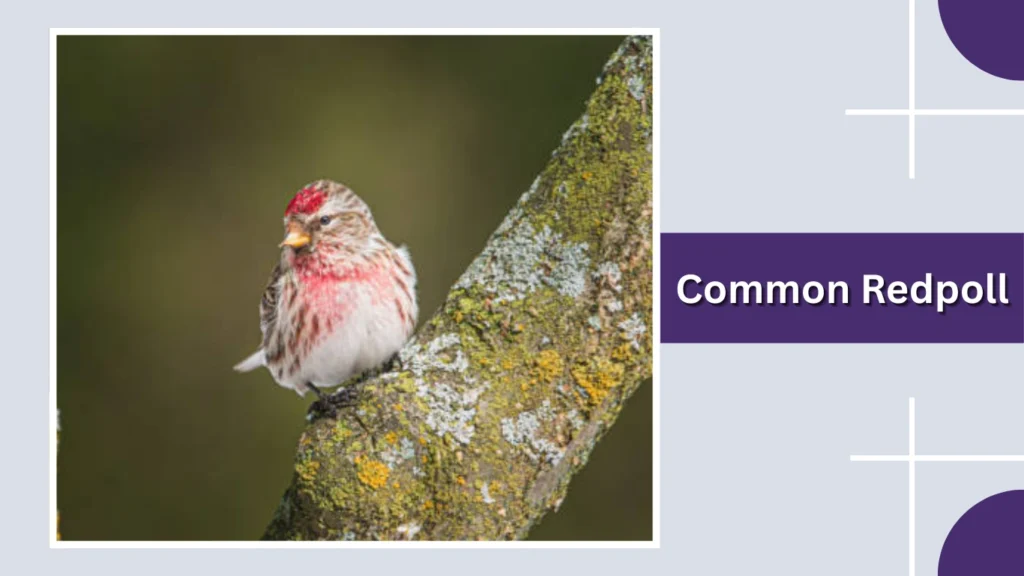
The Common Redpoll is a tiny brown finch recognized by its bright red cap and subtle red wash on the face and chest. It breeds in the Arctic and moves south in winter, sometimes appearing in large, energetic flocks. Despite its small size, it is very hardy and active.
Identification
- Very small, round-bodied finch
- Brown and white streaked back and sides
- Bright red patch on the top of the head
- Black chin patch with a short, pointed yellow bill
- Slightly forked tail with pale wing bars
Size & Shape
Common Redpolls are only about 4.5 to 5.5 inches long. They have a compact body, short tail, and small conical bill, giving them a delicate but busy appearance.
Habitat & Range
They breed in Arctic tundra and northern shrublands. In winter, they move into northern forests, open fields, weedy areas, and backyard feeders across Canada, the northern United States, and parts of Europe and Asia.
Behavior & Diet
These birds are highly social and usually seen in restless flocks. They feed on tiny seeds, especially birch and alder, along with weeds and occasional insects. At feeders, they readily take nyjer and small seeds.
4. Lesser Redpoll
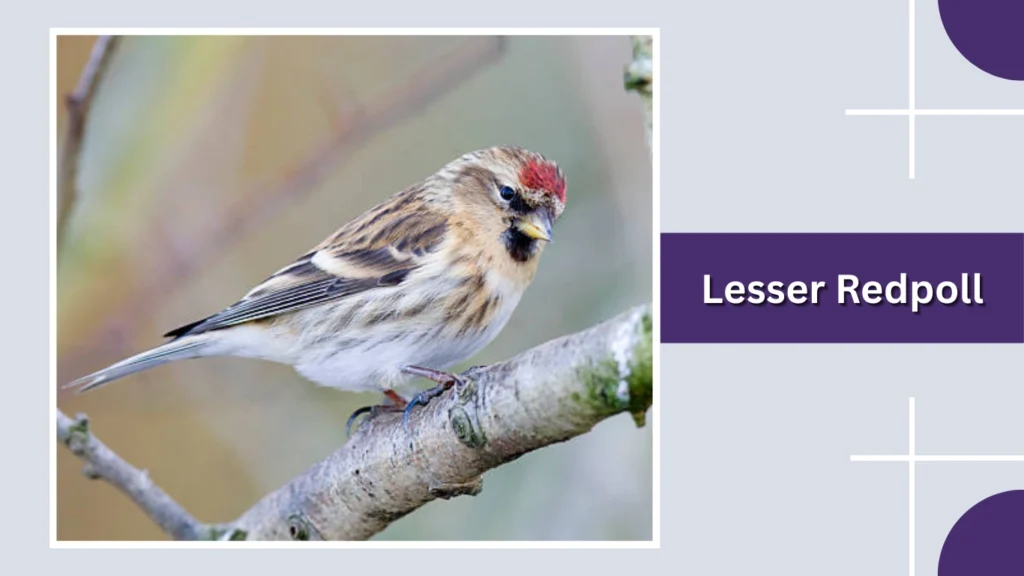
The Lesser Redpoll is a small, streaky brown finch with a neat red cap, closely related to the Common Redpoll. It is mainly found across Europe and parts of Asia, where it frequents open woodlands, birch forests, and gardens. Its delicate build and active feeding style make it easy to recognize.
Identification
- Tiny finch with a slim, compact body
- Brown and buff streaking across back and underparts
- Bright red patch on the crown
- Small black chin and pale, pointed bill
- Two pale wing bars visible in flight
Size & Shape
Lesser Redpolls are very small, around 4.5 to 5 inches long. They have a fine, pointed bill, short neck, and lightly forked tail, giving them a neat, lightweight appearance.
Habitat & Range
They are common in birch woods, heathlands, forest edges, and urban parks across much of Europe. In winter, they often move into open countryside, farmland, and garden feeders.
Behavior & Diet
Lesser Redpolls are energetic and social, often forming chattering flocks. They feed mainly on seeds from birch, alder, and weeds, along with occasional insects. At feeders, they prefer nyjer and finely cracked seeds.
5. Cassin’s Finch
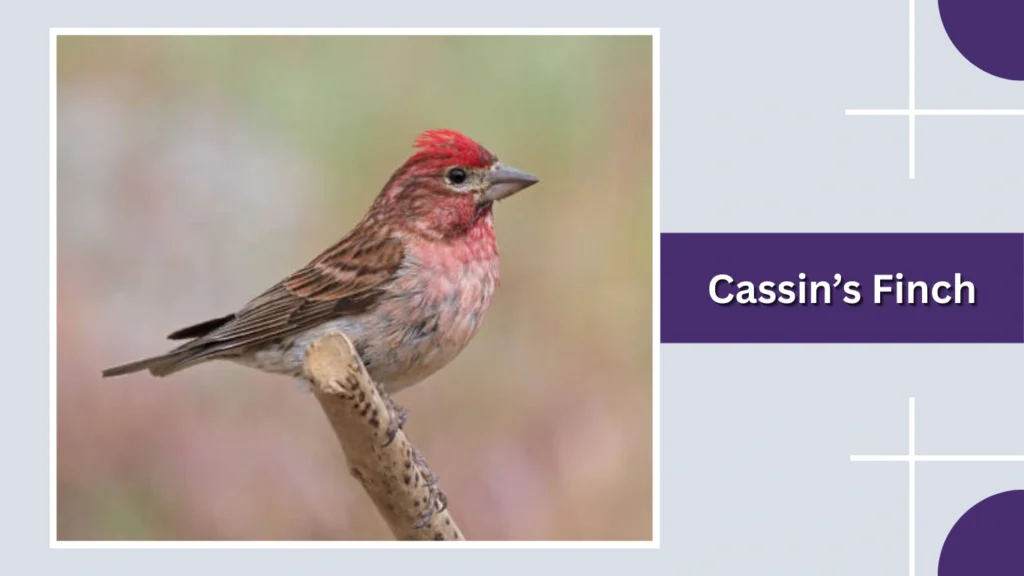
The Cassin’s Finch is a small brown finch with a bright red crown and face, native to the mountainous regions of western North America. Males show a crisp red cap and rosy tones on the head and chest, while females are brown and heavily streaked. It is less common at feeders than House or Purple Finches.
Identification
- Medium-small finch with a long, slightly notched tail
- Brown, streaked back and pale underparts
- Bright red crown and face on males
- Thick, pointed bill suited for seeds
- Subtle wing bars and clean facial pattern
Size & Shape
Cassin’s Finches are about 6 inches long, with a slimmer body and longer wings than many finches. Their peaked crown and straight bill give them a sharper, more angular look.
Habitat & Range
They live mainly in high-elevation coniferous forests, pine woodlands, and mountain slopes. During winter, some move to lower elevations and may visit backyard feeders.
Behavior & Diet
These finches are often seen in small flocks, quietly feeding in treetops. Their diet consists of seeds, buds, berries, and insects. At feeders, they prefer sunflower seeds and tend to be less aggressive than other finches.
6. Red-headed Weaver
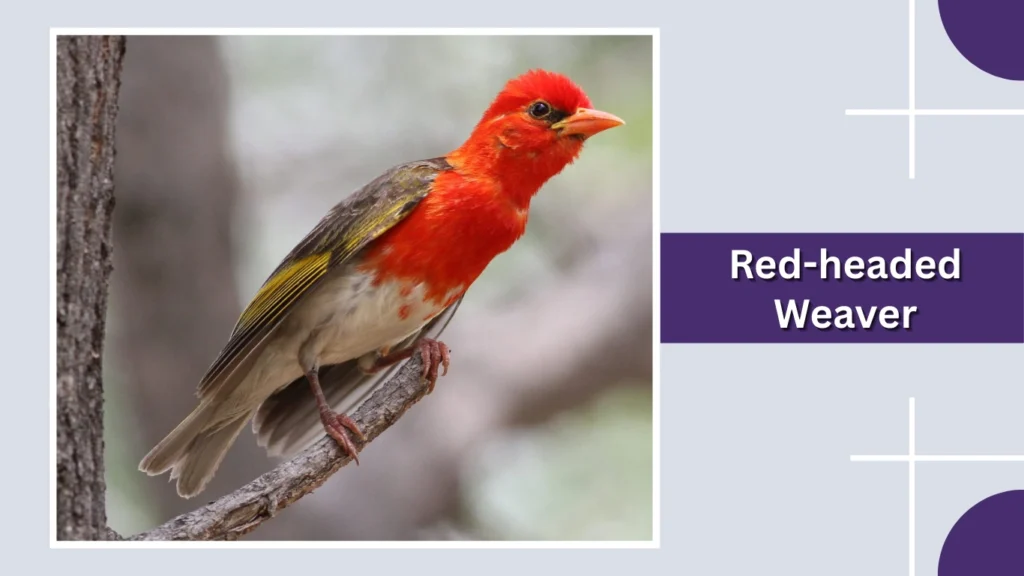
The Red-headed Weaver is a small brownish bird best known for the male’s bright red head during the breeding season. Outside breeding time, the red fades and the bird appears mostly brown and streaked. It is native to sub-Saharan Africa and is often seen around grasslands, farms, and village edges.
Identification
- Small, compact weaver with a short tail
- Brown, streaked body with a conical seed-eating bill
- Male shows a vivid red head and face in breeding season
- Non-breeding birds appear mostly brown and dull
- Strong, pale beak adapted for seeds and grains
Size & Shape
Red-headed Weavers are about 5 to 5.5 inches long. They have a rounded body, short neck, and thick bill, giving them a chunky finch-like appearance.
Habitat & Range
They are widely distributed across central and eastern Africa, living in open woodlands, savannas, farmlands, and areas close to human settlements where food is easy to find.
Behavior & Diet
These birds are social and often feed in small flocks. They eat mainly grass seeds, grains, and insects. During breeding season, males become very active, displaying and defending small nesting areas.
7. Red-headed Bunting
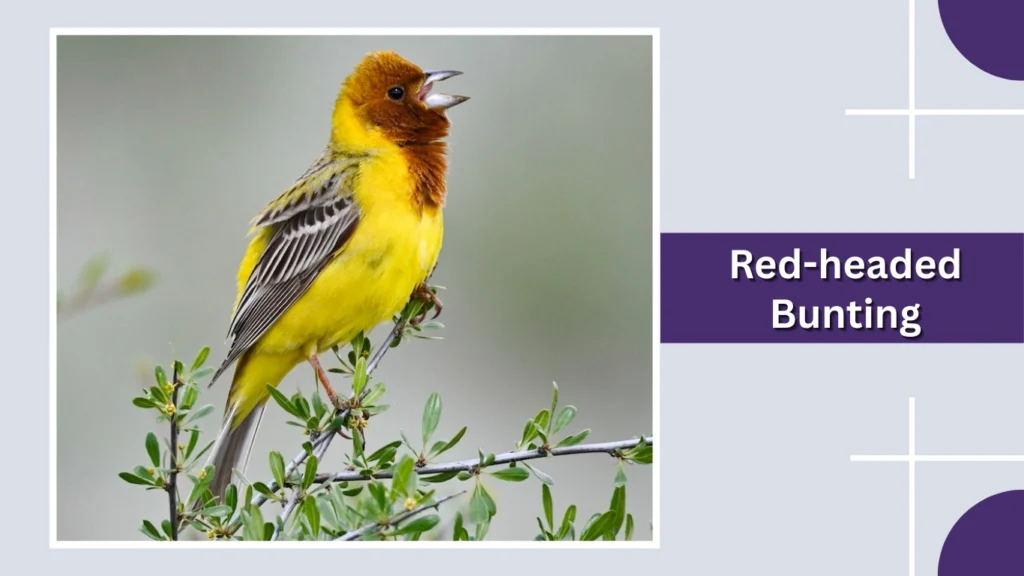
The Red-headed Bunting is a small, slim songbird where the male shows a striking red head combined with warm brown upperparts. It breeds in parts of central and southern Asia and is often found in scrublands, open forests, and farmland edges. Females are duller, mostly brown and streaked.
Identification
- Small bunting with a fine, pointed bill
- Male has a deep red head and face
- Brown back with darker streaks
- Pale, lightly streaked underparts
- Long tail with pale outer edges
Size & Shape
Red-headed buntings are about 5.5 to 6 inches long. They have a slender body, rounded head, and a narrow tail, giving them a delicate, graceful look compared to finches.
Habitat & Range
They breed in dry open woodlands, scrub, and agricultural areas across parts of Asia. During winter, they migrate south to warmer regions, often appearing in open countryside and grasslands.
Behavior & Diet
These buntings usually forage on or near the ground. They feed mainly on seeds, grains, and small insects, especially during the breeding season when protein is needed for chicks.
8. Red-capped Robin-Chat
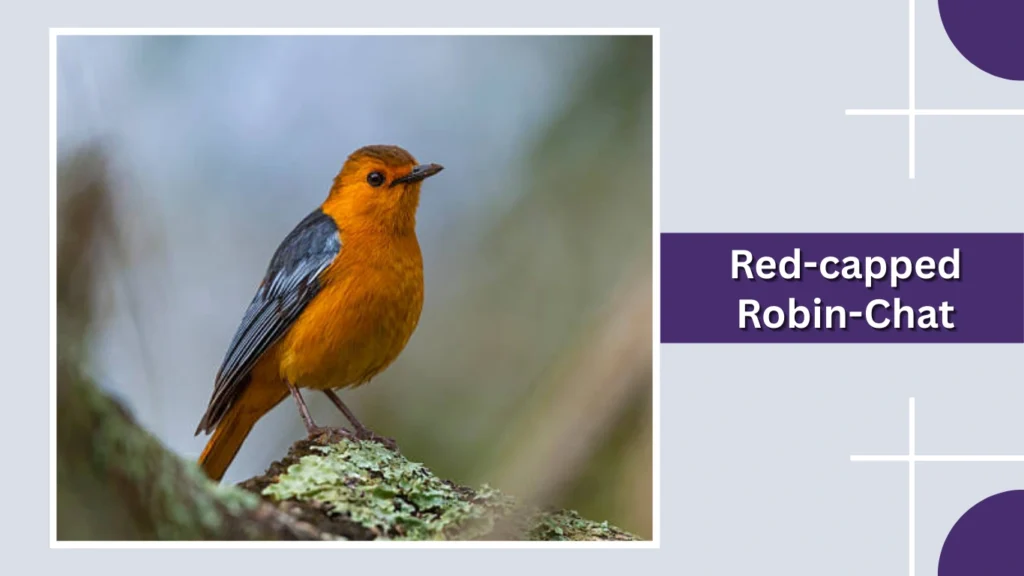
The Red-capped Robin-Chat is a small bird with a noticeable reddish head and a brownish body, native to parts of East Africa. Although more colorful on the underparts, it fits the group because of its small size and red head. It is often seen hopping through low vegetation and forest edges.
Identification
- Small, upright songbird with long legs
- Reddish to orange-red crown and face
- Brown upperparts with warmer-toned wings
- Slender, pointed bill for insects
- Often flicks tail while perched
Size & Shape
This bird measures about 5.5 to 6 inches long. It has a slim body, long legs, and a fairly long tail, giving it a robin-like posture.
Habitat & Range
Red-capped Robin-Chats live in forest edges, riverine thickets, gardens, and dense shrubs across parts of Kenya, Tanzania, and nearby regions.
Behavior & Diet
They are mostly solitary and shy, feeding on insects, spiders, and small invertebrates. They forage close to the ground and are known for their pleasant, varied songs.
9. Red-headed Quelea
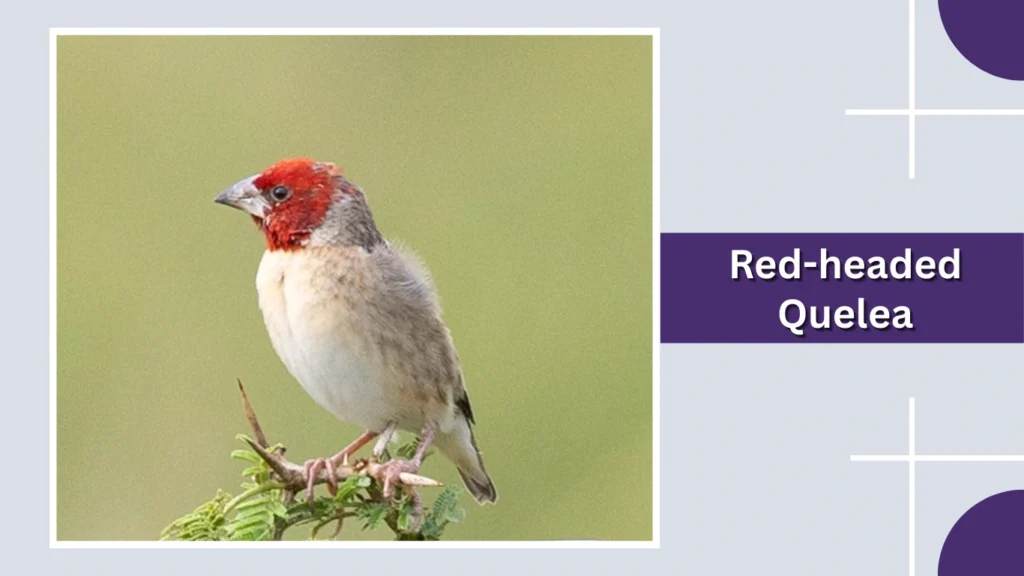
The Red-headed Quelea is a small, sparrow-sized bird where breeding males show a bright red head and face, contrasted with a brown, streaked body. It is native to sub-Saharan Africa and is famous for forming huge flocks, sometimes numbering in the thousands.
Identification
- Small, stocky bird with a short tail
- Brown, streaked back and buff underparts
- Male has a vivid red head in breeding season
- Thick, pale bill designed for seeds
- Females and non-breeding males mostly brown
Size & Shape
Red-headed Queleas are about 4.5 to 5 inches long. They have a compact body, rounded head, and short conical bill, giving them a sparrow-like silhouette.
Habitat & Range
They inhabit grasslands, savannas, agricultural fields, and open woodland across much of sub-Saharan Africa, often near water sources.
Behavior & Diet
These birds are extremely social and feed mainly on grass seeds and grains. They forage in dense flocks and are known for synchronized movements and loud, continuous chattering calls.
10. Red-headed Malimbe
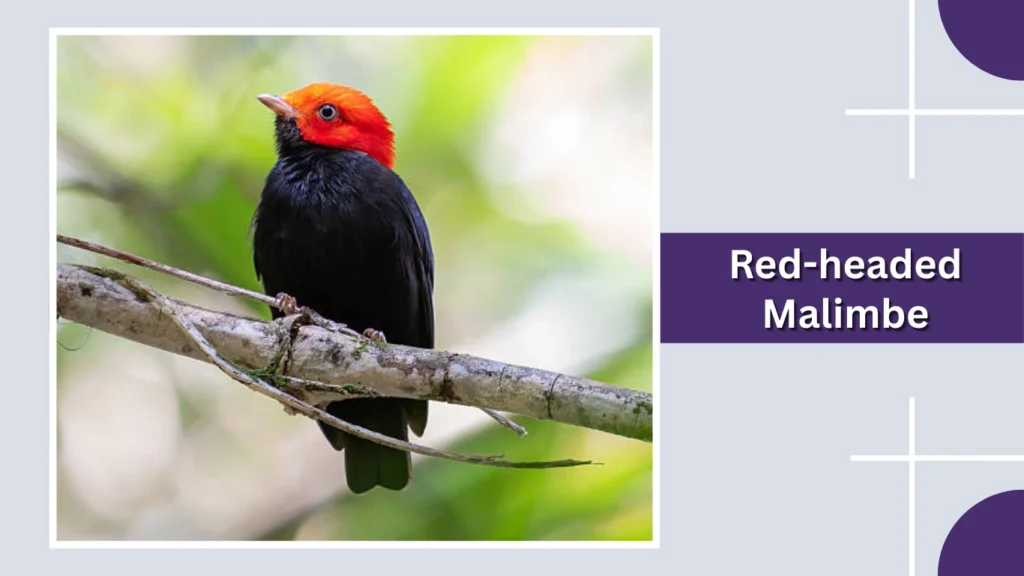
The Red-headed Malimbe is a small African forest bird where males show a striking red head combined with darker, often brownish to blackish upperparts. Although more colorful than most finches, it fits this group because of its small size and distinct red head. It is usually seen high in the forest canopy.
Identification
- Small, compact weaver-type bird
- Bright red head on males
- Dark brown to blackish upperparts
- Short, thick bill suited for insects and seeds
- Often seen in pairs or small groups
Size & Shape
Red-headed Malimbes are around 5 to 6 inches long. They have a sturdy body, short neck, and a strong conical bill, giving them a solid, compact look.
Habitat & Range
They live mainly in tropical rainforests of West and Central Africa, especially in dense, humid forest canopies and edges.
Behavior & Diet
These birds are active canopy foragers. They feed on insects, small fruits, and seeds, often hanging upside down while picking food from leaves and branches.
11. Red-fronted Serin
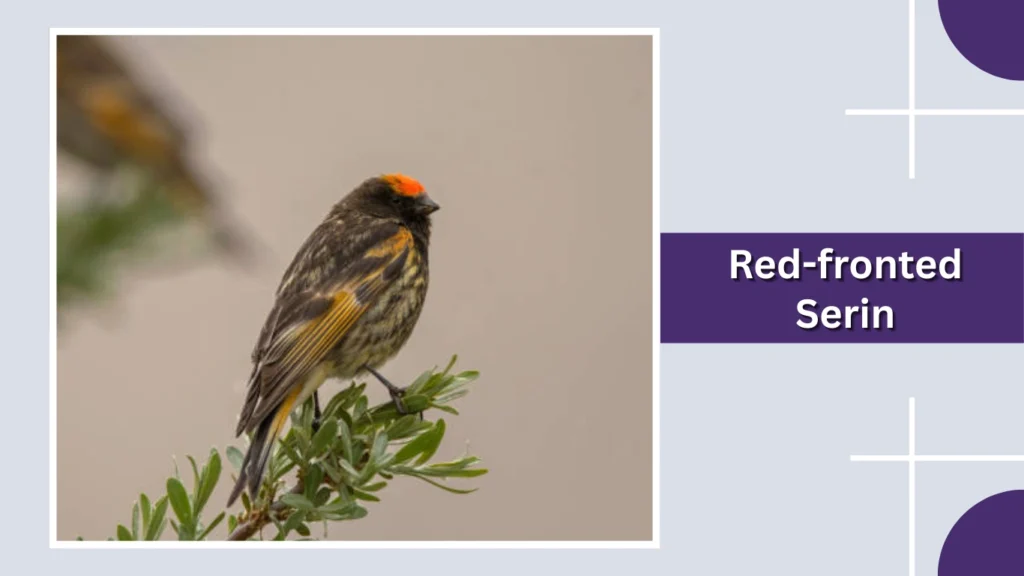
The Red-fronted Serin is a tiny finch-like bird with a noticeable red patch on the forehead and a mostly brown, streaked body. It is native to parts of southern Africa and is often found in dry scrublands, open woodland, and gardens.
Identification
- Very small, slim finch
- Brown and gray streaked upperparts
- Distinct red patch on the forehead
- Pale underparts with fine streaking
- Short, pointed seed-eating bill
Size & Shape
Red-fronted Serins are only about 4 to 4.5 inches long. They have a delicate body, short tail, and small conical bill, making them one of the smaller birds in this group.
Habitat & Range
They are commonly seen in arid scrub, savannas, open forests, and around human settlements in parts of southern Africa.
Behavior & Diet
These birds usually move in pairs or small flocks. They feed mainly on small seeds and grasses, along with occasional insects, especially during the breeding season.
12. Red-headed Manakin
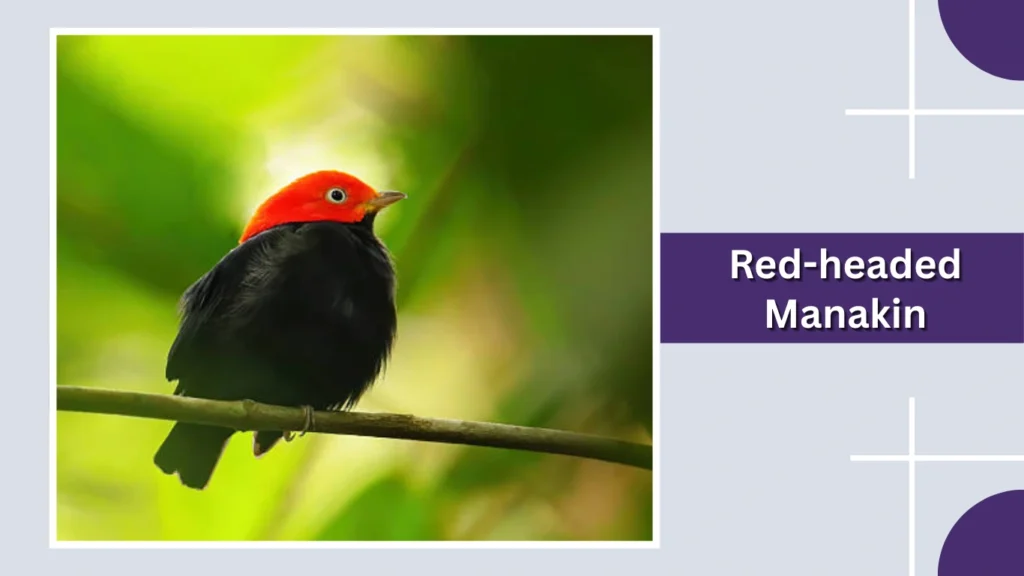
The Red-headed Manakin is a very small tropical bird where the male displays a bright red head with a mostly brownish-olive body. It is native to Central and South America and is well known for its energetic movements and quick hops through forest understory.
Identification
- Very small, compact bird with short tail
- Bright red head on males
- Brownish to olive upperparts
- Short, thick bill
- Females duller, mostly brownish-green
Size & Shape
Red-headed Manakins are about 3.5 to 4 inches long, making them one of the tiniest birds on this list. They have a round body, short wings, and a stubby tail.
Habitat & Range
They live mainly in tropical rainforests, forest edges, and dense understory across parts of Central and northern South America.
Behavior & Diet
These birds feed mostly on small fruits and berries, along with tiny insects. Males are famous for their courtship displays, performing rapid hops and wing snaps to attract females.
FAQs
What are small brown birds with red heads usually called?
Small brown birds with red heads are often finches, buntings, or weaver-type birds. Common examples include House Finches, Purple Finches, and redpolls. The red color is usually brighter in males and is often linked to attracting mates and signaling good health.
Why do some small brown birds have red heads?
The red head coloration comes from pigments in their diet, especially carotenoids found in seeds, fruits, and plants. Birds with access to better food often develop brighter red tones. This color helps in mate attraction and species recognition during the breeding season.
Are small brown birds with red heads found all over the world?
Yes, these birds are found across many continents, including North America, Europe, Africa, and parts of Asia and South America. Different species occupy forests, grasslands, gardens, and even cities, depending on their food sources and nesting needs.
Do female small brown birds also have red heads?
In most species, females have little to no red on the head. They are usually brown and streaked, which helps with camouflage while nesting. The bright red coloration is typically more developed in males, especially during the breeding season.
What do small brown birds with red heads usually eat?
Most of these birds feed mainly on seeds, grains, and small fruits. During warmer months, many also eat insects and spiders for extra protein. At backyard feeders, they are commonly attracted to sunflower seeds and nyjer seeds.
