
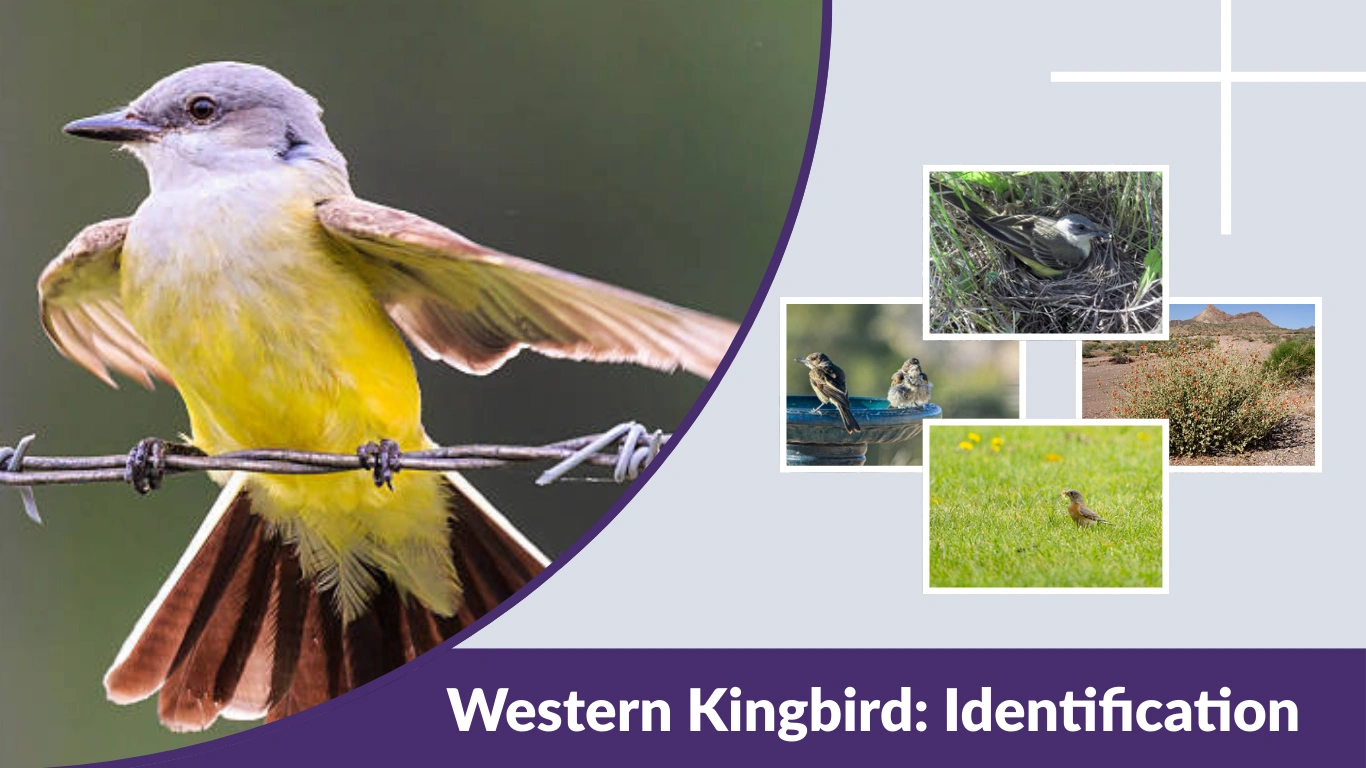
The Western Kingbird (Tyrannus verticalis) is one of the most recognizable flycatchers in western North America. With its smooth gray head, bright yellow belly, and bold personality, this bird stands out in open fields and along rural roads. Known for fearlessly chasing hawks and perching on fence wires, the Western Kingbird is both striking and entertaining to watch. This guide covers identification, range, sounds, behavior, and key facts to help you understand this energetic species.
What Is a Western Kingbird?
The Western Kingbird belongs to the tyrant flycatcher family (Tyrannidae), a group known for aerial insect hunting and assertive territorial behavior.
Scientific name: Tyrannus verticalis
Order: Passeriformes
Family: Tyrannidae
It is sometimes called the “yellow kingbird” because of its bright underparts.
Quick Facts
- Length: 8–9 inches
- Wingspan: 15–16 inches
- Weight: About 1.3–1.6 ounces
- Lifespan: Up to 6 years in the wild
- Conservation status: Least Concern
Western Kingbirds are common across much of their breeding range and are regularly reported on platforms like eBird.
Western Kingbird Identification
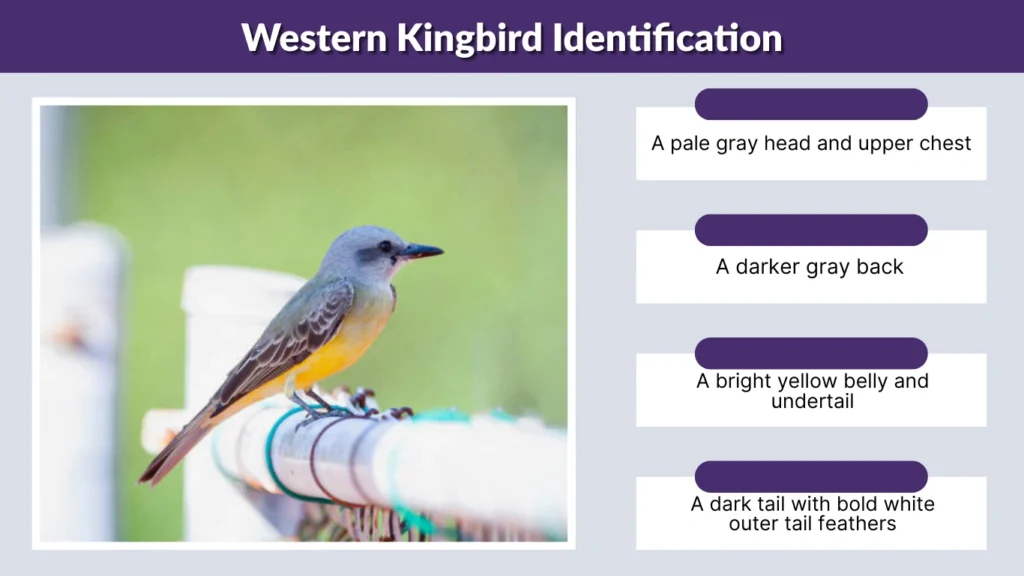
Correct identification is important because several similar species share overlapping ranges.
What Does a Western Kingbird Look Like?
A Western Kingbird has:
- A pale gray head and upper chest
- A darker gray back
- A bright yellow belly and undertail
- A dark tail with bold white outer tail feathers
- Dark wings edged subtly in pale tones
The white outer tail feathers are especially noticeable in flight and are one of the best field marks.
Western Kingbird Size and Wingspan
This medium-sized flycatcher measures about 8–9 inches long with a wingspan reaching 16 inches. It appears slim with a relatively large head and straight, sturdy bill suited for catching insects midair.
Western Kingbird in Flight
In flight, the bird shows:
- Strong, direct wingbeats
- White edges on the tail
- Occasional hovering before dropping onto prey
They often launch from a high perch, catch insects in the air, and return to the same spot — a feeding behavior known as “perch-and-sally.
Male vs Female Western Kingbird
One common question is how to tell a male Western Kingbird from a female.
In reality, males and females look nearly identical. There are no strong color differences between the sexes. Males may appear slightly larger or behave more aggressively during breeding season, but visual identification is difficult without observing behavior.
This lack of obvious differences means most sightings are simply recorded as Western Kingbirds without sex identification.
Juvenile and Young Western Kingbirds
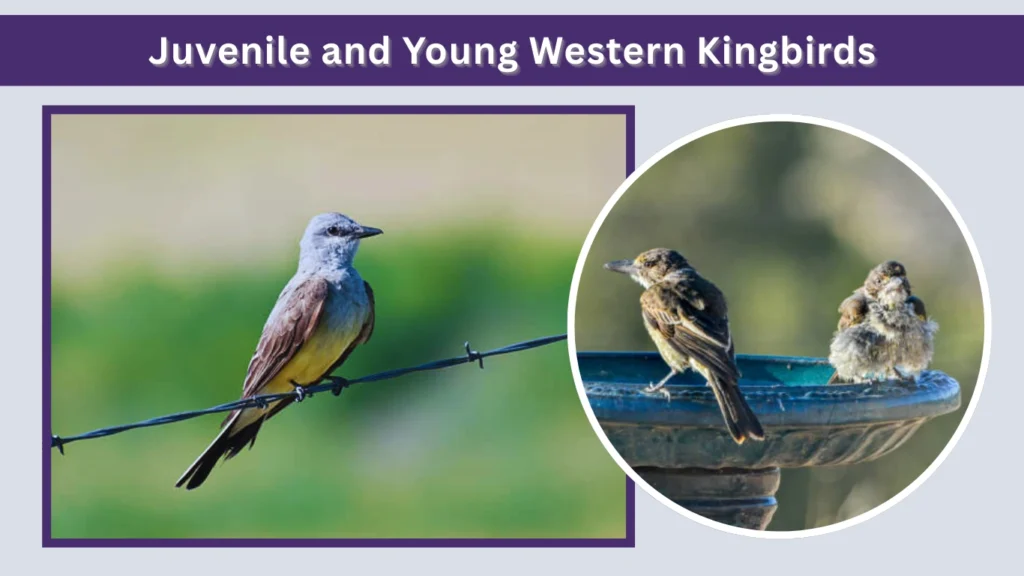
Juvenile Western Kingbirds look similar to adults but often show:
- Softer, more muted colors
- Pale edging on wing feathers
- Slightly buffy tones on the chest
Fledglings may appear fluffier and less sleek than adults. Young birds often stay near nesting areas while learning to catch insects independently.
Western Kingbird Range and Distribution
The Western Kingbird breeds widely across the western United States and parts of southern Canada.
Breeding Range
During spring and summer, they are common in:
- Texas
- Arizona
- California
- Colorado
- Utah
- Nebraska
- Kansas
- Oklahoma
- New Mexico
- Idaho
- Oregon
- Alberta (southern regions)
They prefer open landscapes rather than dense forests.
Migration and Winter Range
Western Kingbirds are migratory. In fall, they travel south to spend the winter in:
- Mexico
- Central America
Occasionally, individuals are spotted outside their normal range, including in eastern states such as Florida, Georgia, or the Carolinas, but these are considered rare sightings.
Western Kingbird Habitat
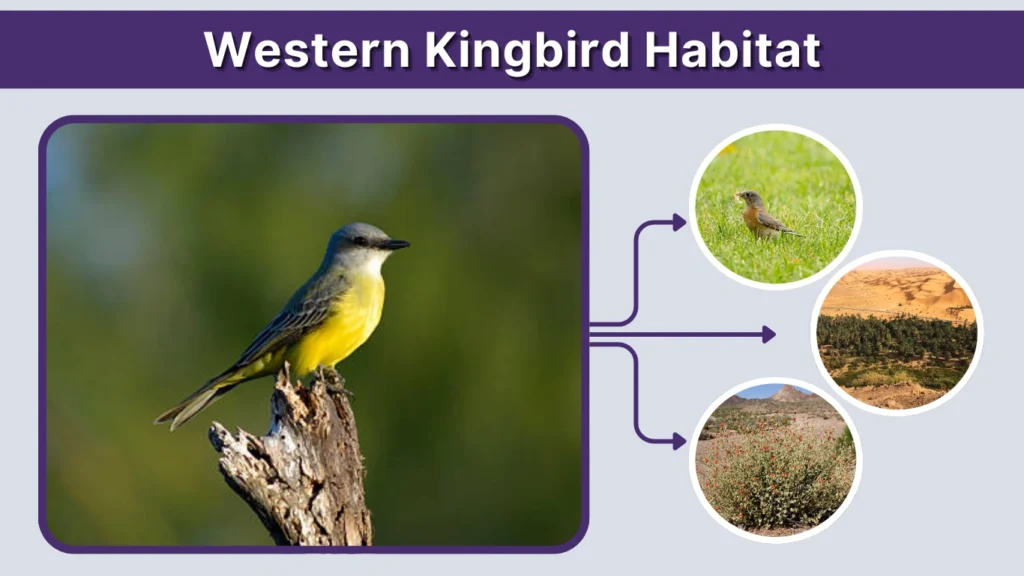
Western Kingbirds thrive in open environments. Typical habitats include:
- Grasslands
- Farmlands
- Desert edges
- Prairie regions
- Roadsides with scattered trees
- Urban outskirts
They prefer areas with scattered trees, utility poles, or fence posts that provide high vantage points for spotting insects.
Western Kingbird Behavior
Western Kingbirds are known for bold and aggressive behavior.
Territorial Nature
They fiercely defend nesting territories and will chase away:
- Crows
- Hawks
- Ravens
- Even much larger birds
This fearless defense behavior is one reason they are called “kingbirds.”
Feeding Behavior
Western Kingbirds eat mostly flying insects such as:
- Bees
- Wasps
- Grasshoppers
- Beetles
- Flies
They also consume berries occasionally, especially during migration.
Their feeding style involves watching from a perch, flying out to catch prey, and returning to the perch.
Western Kingbird Sounds
Understanding their vocalizations helps with identification.
Western Kingbird Call
The call is typically a sharp, chattering series of notes, often described as “kip-kip-kip” or “kit-kit-kit.” These calls are frequently heard during territorial disputes.
Western Kingbird Song
The song is less musical than many other birds. It consists of:
- Rapid, sputtering notes
- Harsh, buzzy phrases
- Quick chatter sequences
When alarmed, their calls become louder and more intense.
Western Kingbird Nesting Habits
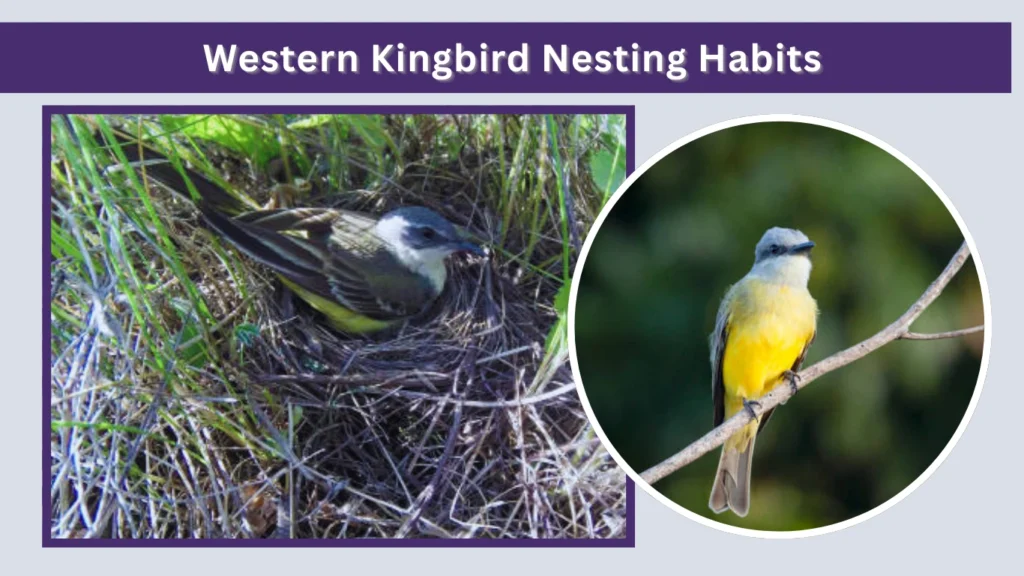
Western Kingbirds begin breeding in late spring after arriving on their breeding grounds.
Western Kingbird Nest
The nest is typically built:
- In trees or shrubs
- On utility poles
- On fence posts
- On building ledges or man-made structures
They prefer open areas with scattered trees rather than dense forests.
The nest itself is a sturdy cup made of:
- Twigs
- Grass
- Plant fibers
- Occasionally string or human-made materials
It is usually placed 5–30 feet above the ground.
Western Kingbird Eggs
A typical clutch contains 3–5 eggs.
- Color: Creamy white to pale pink
- Markings: Brown or reddish speckles
- Incubation period: About 12–14 days
Both parents help defend the nest aggressively. Once hatched, chicks remain in the nest for about 16–18 days before fledging.
Breeding Season
The breeding season usually runs from:
- May through July (in most of the U.S.)
- Slightly later in northern regions like Alberta
Western Kingbirds may raise one or two broods per season depending on climate and food availability.
Western Kingbird Predators
Despite their boldness, Western Kingbirds face natural threats.
Common predators include:
- Snakes
- Hawks
- Crows and ravens
- Domestic cats
However, their aggressive behavior often helps reduce nest predation. They will repeatedly dive at intruders to drive them away.
Western Kingbird vs Similar Birds
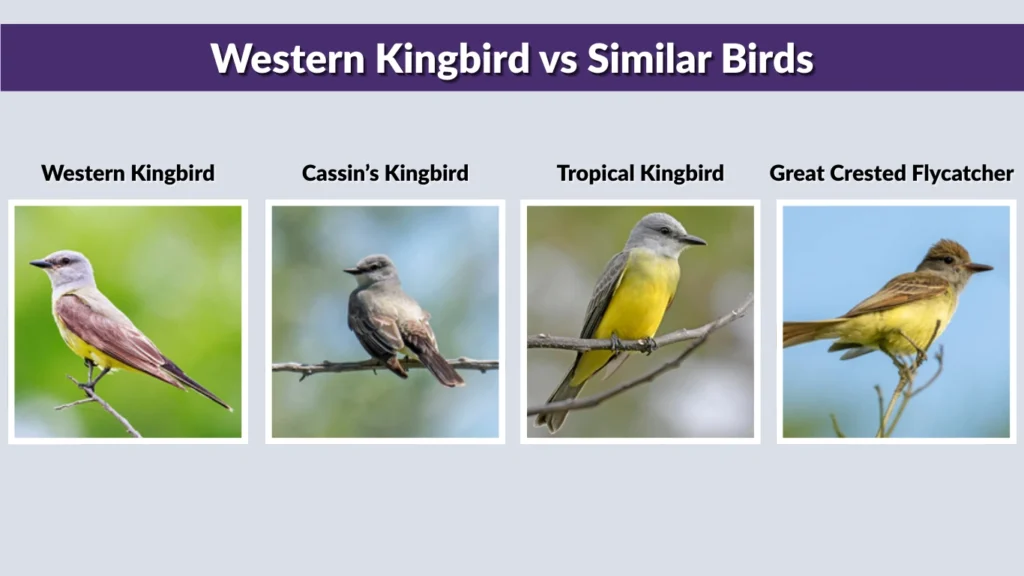
Several species look similar, especially in overlapping ranges.
Eastern vs Western Kingbird
Key differences:
- Eastern Kingbird has a solid black tail with a white tip.
- Western Kingbird has white outer tail feathers, not just a white tip.
- Eastern Kingbirds have a darker, nearly black head.
Their ranges overlap slightly in central states, but habitat preference can help distinguish them.
Cassin’s Kingbird vs Western Kingbird
Cassin’s Kingbird can be confusing in the Southwest.
Differences:
- Cassin’s has a darker gray chest that blends into the belly.
- Western Kingbird shows a sharper contrast between gray chest and yellow belly.
- Cassin’s bill appears slightly heavier.
Listening to vocalizations can also help separate them.
Tropical Kingbird vs Western Kingbird
In southern Texas and parts of Arizona, Tropical Kingbirds may overlap.
Differences:
- Tropical Kingbird is slightly larger.
- It has a longer bill.
- Its call is sharper and more ringing.
- Western Kingbird shows more obvious white in the tail.
Western Kingbird vs Great Crested Flycatcher
The Great Crested Flycatcher differs noticeably:
- Brighter yellow belly
- Rust-colored tail
- Larger size
- Distinct loud “wheep” call
They are not true kingbirds, though both are flycatchers.
Western Kingbird Migration
Western Kingbirds are long-distance migrants.
Fall Migration
In late summer and early fall:
- Birds gather in small groups
- They move south through Mexico
- Continue into Central America
Spring Return
They typically return to:
- Texas and the Southwest by March or April
- Northern states by late April or May
Migration timing can vary depending on weather patterns.
Western Kingbird Population and Conservation
The Western Kingbird is currently classified as Least Concern.
- Populations remain stable across much of their range.
- They benefit from open agricultural landscapes.
- Utility poles and fence lines provide ideal perching spots.
They are protected under the Migratory Bird Treaty Act in the United States.
Western Kingbird Symbolism and Meaning
Many bird enthusiasts associate symbolic meaning with sightings.
Spiritual Meaning of Western Kingbird
The Western Kingbird is often seen as a symbol of:
- Courage
- Fearlessness
- Protection
- Confidence
Its habit of chasing much larger birds can represent standing up for oneself.
What Does It Mean When You See a Western Kingbird?
Some interpret sightings as a reminder to:
- Defend your boundaries
- Speak confidently
- Act boldly when necessary
While these meanings are symbolic rather than scientific, they reflect the bird’s striking personality.
Western Kingbird Fun Facts
- They will attack hawks many times their size.
- They sometimes eat berries during migration.
- Their scientific name Tyrannus means “tyrant,” referring to their bold nature.
- They frequently perch on wires, fences, and road signs.
- The white outer tail feathers flash clearly in flight.
FAQs
What does a Western Kingbird eat?
Western Kingbirds eat mostly flying insects such as bees, wasps, beetles, grasshoppers, and flies. They catch prey in midair using a perch-and-sally technique. During migration and late summer, they may also consume small berries to supplement their diet.
What does a Western Kingbird look like?
A Western Kingbird has a pale gray head, darker gray back, bright yellow belly, and a dark tail with white outer tail feathers. It is medium-sized with a sturdy bill and often perches upright on wires or fence posts.
Where does the Western Kingbird live?
Western Kingbirds live in open habitats across the western United States and southern Canada during breeding season. In winter, they migrate to Mexico and Central America. They prefer grasslands, farms, desert edges, and areas with scattered trees.
What does a Western Kingbird sound like?
Its call is a sharp, chattering series of notes often described as “kip-kip-kip.” The song consists of rapid, buzzy phrases and sputtering chatter. Calls become louder and more intense when defending territory.
Is the Western Kingbird aggressive?
Yes, Western Kingbirds are highly territorial during breeding season. They frequently chase crows, hawks, and other birds away from their nests, even when the intruder is much larger.
How can you tell a male from a female Western Kingbird?
Males and females look nearly identical in color and size. Visual differences are minimal, making it difficult to distinguish them in the field without observing behavior during breeding season.
