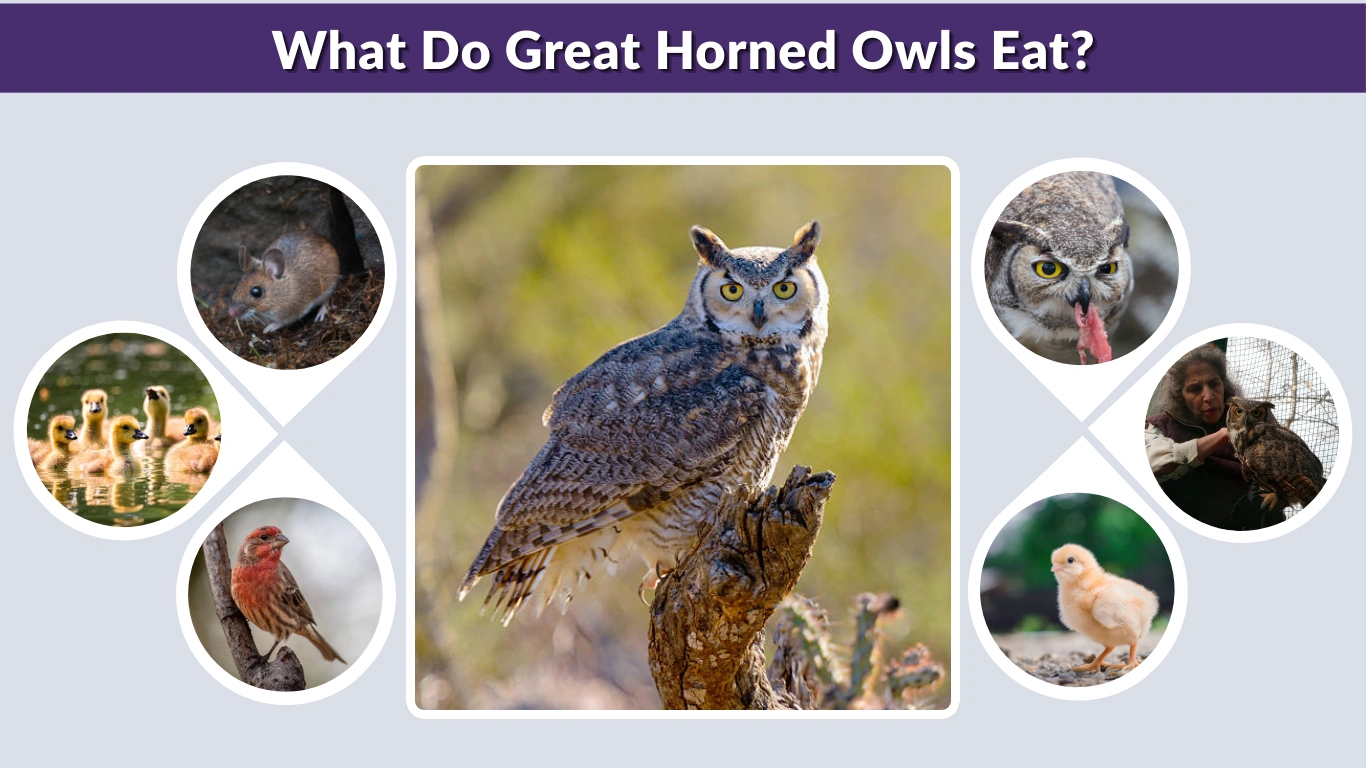
The great horned owl is one of North America’s most powerful and adaptable birds of prey. Known for its piercing yellow eyes and distinctive ear tufts, this owl sits near the top of the nighttime food chain. Unlike picky predators, great horned owls eat a wide variety of animals, allowing them to survive in forests, deserts, wetlands, farmland, and even suburban areas. Understanding what great horned owls eat reveals not only how they survive but also why they play such an important role in maintaining ecological balance.
Overview of the Great Horned Owl’s Diet
Great horned owls are strict carnivores, meaning they eat only animal-based foods. They are considered apex predators, facing very few natural threats as adults. What makes their diet remarkable is its flexibility. These owls eat whatever prey is most available in their habitat, ranging from tiny rodents to animals larger than themselves.
Because they are opportunistic hunters, great horned owls do not rely on a single food source. This adaptability allows them to thrive in changing environments and harsh conditions, including cold winters and areas with limited prey diversity.
Common Foods in a Great Horned Owl’s Diet
Mammals
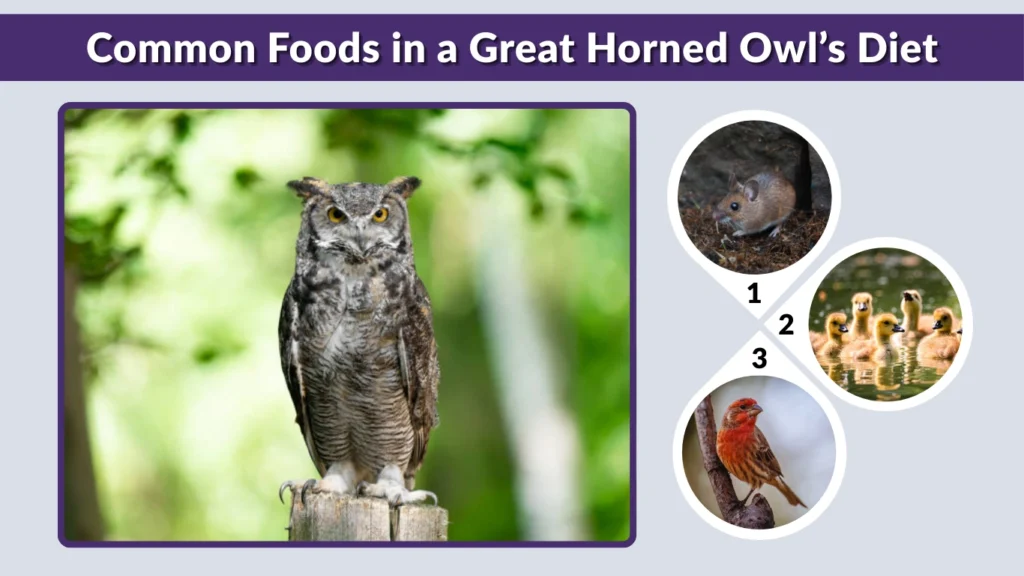
Mammals make up the largest portion of a great horned owl’s diet. Small mammals are especially important because they are abundant and easy to hunt at night.
Common mammalian prey includes mice, rats, voles, and shrews. These small animals provide a steady and reliable food source throughout the year. Larger mammals such as rabbits and hares are also frequent targets and can sustain an owl for an extended period after a successful hunt.
Great horned owls are also known for hunting squirrels, raccoons, and skunks. Their ability to prey on skunks is particularly impressive, as most predators avoid them due to their strong odor. The owl’s weak sense of smell gives it a unique advantage, allowing it to hunt prey that other animals avoid.
Birds
Birds are another major component of the great horned owl’s diet. These owls are powerful enough to capture prey in mid-flight or ambush birds while they are roosting.
They commonly hunt ducks, geese, pigeons, and doves. Smaller birds, including songbirds, may also be taken when available. In some cases, great horned owls prey on other raptors, including hawks and even smaller owls. This dominance has earned them a reputation as one of the most formidable avian predators in North America.
Reptiles and Amphibians
In warmer regions or during certain seasons, great horned owls also feed on reptiles and amphibians. Snakes are a frequent target, especially in grasslands and desert environments. Lizards may be eaten when mammals are scarce.
Frogs and toads are commonly consumed near wetlands, ponds, and marshes. These prey items are especially important during warmer months when amphibians are more active at night.
Insects and Other Prey
Although not a primary food source, large insects occasionally supplement the great horned owl’s diet. Beetles, grasshoppers, and other sizable insects may be eaten, particularly by younger or less experienced owls.
Great horned owls have also been observed catching crayfish and other small aquatic animals in shallow water. These prey items are typically consumed opportunistically rather than as a consistent food source.
Do Great Horned Owls Eat Pets?
There is widespread concern about whether great horned owls pose a threat to household pets. While attacks on pets are rare, they can occur under certain conditions. Small cats and very small dogs are most at risk, particularly if they are left outside at night.
Most pet-related incidents happen in areas where natural prey is limited or where owls have become accustomed to human environments. Keeping pets indoors at night and supervising them outdoors greatly reduces any risk.
What Do Baby Great Horned Owls Eat?
Diet of Owl Chicks
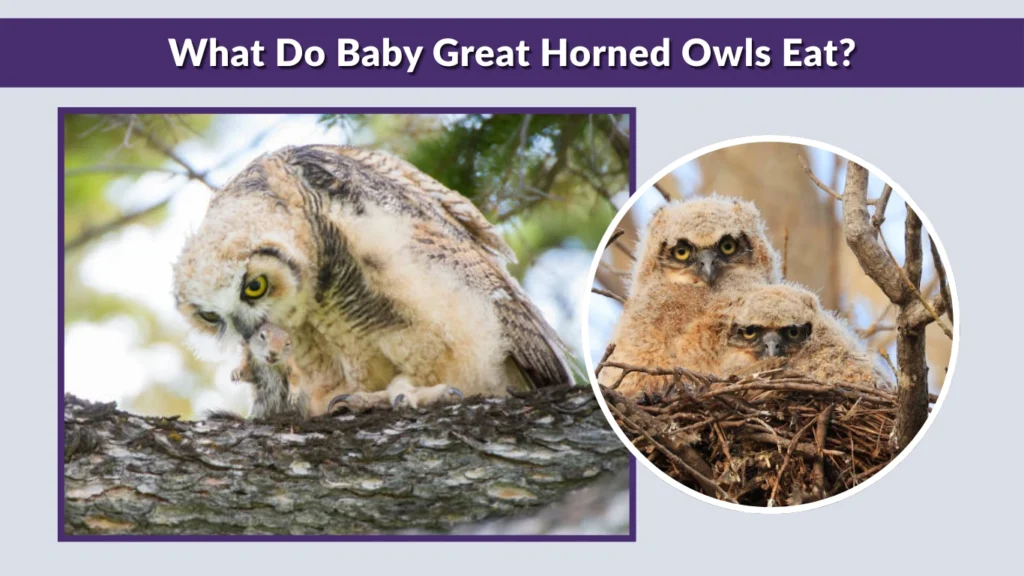
Baby great horned owls, known as owlets, rely entirely on their parents for food. Adult owls hunt and deliver prey to the nest, tearing it into smaller, manageable pieces for the chicks. Early in life, owlets consume soft tissues and small prey items that are easy to swallow and digest.
Feeding Frequency and Growth
As owlets grow, their feeding needs increase rapidly. During the first few weeks, baby great horned owls are fed multiple times throughout the night. Parents gradually introduce larger prey items as the chicks develop stronger beaks and digestive systems. By the time owlets begin branching—leaving the nest to explore nearby branches—they are capable of swallowing larger pieces of prey. Eventually, young owls learn to tear apart whole animals on their own, preparing them for independent hunting.
Seasonal Changes in Diet
Spring and Summer Feeding Habits
During spring and summer, food is usually abundant. Small mammals, birds, reptiles, and amphibians are more active, making them easier to catch. This period is also when great horned owls are raising their young, so adults hunt more frequently to meet the increased demand for food. Rodents and rabbits dominate the diet during these warmer months because they provide enough nutrition to sustain both adults and growing owlets.
Fall and Winter Feeding Habits
In fall and winter, prey becomes harder to find, especially in snowy or frozen landscapes. Great horned owls adapt by targeting larger prey that can provide more energy in a single meal. Rabbits, skunks, and other medium-sized mammals become especially important. These owls are capable of hunting in complete darkness and deep snow, using their exceptional hearing to locate prey beneath the surface. When food is scarce, they may also scavenge from carrion.
How Great Horned Owls Hunt Their Prey
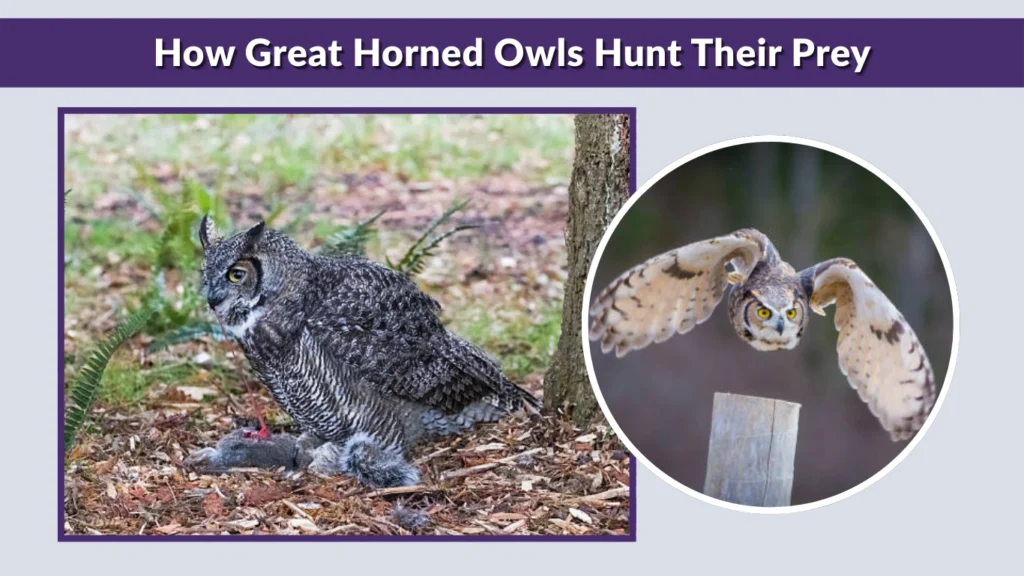
Great horned owls are nocturnal hunters, relying on darkness to their advantage. Their specialized feathers allow for nearly silent flight, enabling them to approach prey without being detected. Once a target is located, the owl swoops down and grasps it with powerful talons capable of exerting tremendous pressure.
The owl’s hooked beak is used to kill and dismember prey before consumption. Great horned owls can carry prey that weighs almost as much as they do, often flying to a perch or nest before feeding. This combination of strength, stealth, and precision makes them one of the most effective predators in the night sky.
How Much Does a Great Horned Owl Eat?
A great horned owl typically consumes the equivalent of several small mammals per night, depending on prey size. On average, an adult owl may eat between two and five rodents daily or an equivalent amount of larger prey spread over several days.
Food intake varies based on factors such as weather, availability of prey, age, and breeding season. During colder months or while feeding chicks, owls require significantly more food to maintain energy levels and body heat.
What Do Great Horned Owls Eat in Captivity?
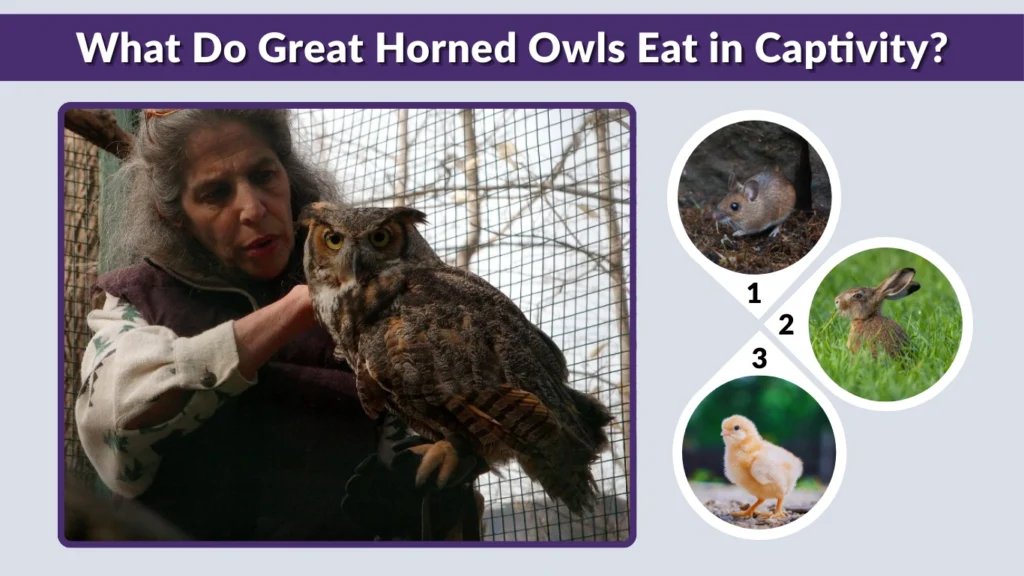
In captivity, great horned owls are fed diets designed to closely resemble what they would eat in the wild. Zoos and wildlife rehabilitation centers commonly provide mice, rats, rabbits, and chicks. Prey is often frozen and thawed to ensure safety and prevent injury to the owl.
Nutritional supplements may be added to captive diets to replace nutrients that wild prey naturally provides. Captive feeding practices aim to maintain the owl’s health while encouraging natural feeding behaviors.
What Eats Great Horned Owls?
Adult great horned owls have very few natural predators due to their size and strength. However, eggs and young owlets are more vulnerable. Raccoons, crows, ravens, and other large birds may prey on nests if left unguarded.
Human-related threats pose the greatest danger to great horned owls. Vehicle collisions, habitat loss, and exposure to pesticides significantly impact their survival.
Why the Great Horned Owl’s Diet Matters
Great horned owls play a crucial role in controlling populations of rodents and other small animals. By keeping prey numbers in check, they help protect crops and reduce the spread of disease. Their presence is a strong indicator of a healthy ecosystem, making them an important species for conservation efforts.
Conclusion
The great horned owl’s diet is as powerful and adaptable as the bird itself. From rodents and rabbits to birds, reptiles, and even skunks, these owls eat a wide range of prey that allows them to thrive in diverse environments. Their hunting skill and dietary flexibility make them vital to ecological balance. Understanding what great horned owls eat helps us appreciate their role in nature and the importance of protecting the habitats they depend on.
FAQs
What is the favorite food of a great horned owl?
Great horned owls do not have a single favorite food, but small to medium-sized mammals are their most common prey. Rabbits, mice, rats, and squirrels make up a large portion of their diet because these animals are widely available and provide high nutritional value.
Are great horned owls carnivores?
Yes, great horned owls are strict carnivores. They eat only animal-based foods and rely on hunting live prey to survive. Their diet includes mammals, birds, reptiles, amphibians, and occasionally insects.
Do great horned owls eat cats?
In rare cases, great horned owls may attack small cats, especially if the cats are outdoors at night. However, such incidents are uncommon and usually occur when natural prey is scarce. Keeping cats indoors at night greatly reduces any risk.
How often does a great horned owl eat?
A great horned owl typically eats every night, though it may not catch prey every single night. On average, an adult owl consumes the equivalent of several small rodents per day or a larger animal every few days, depending on prey size.
Do great horned owls eat skunks?
Yes, great horned owls are one of the few predators known to regularly hunt skunks. Their poor sense of smell allows them to avoid being affected by the skunk’s spray, making skunks a viable prey option.