
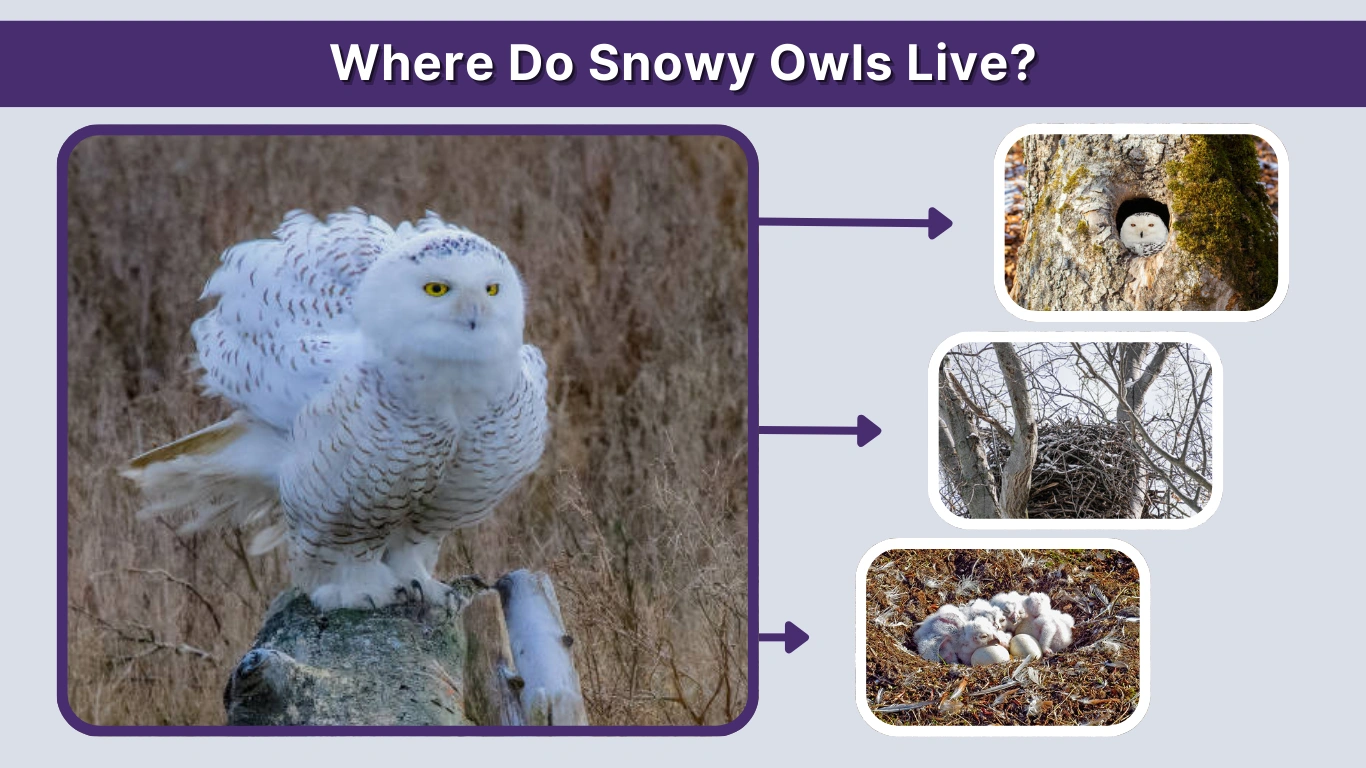
Snowy owls are one of the most recognizable birds in the world, famous for their white plumage and piercing yellow eyes. These powerful owls are closely associated with icy landscapes and open spaces, making them symbols of the Arctic wilderness. Unlike many owl species that prefer forests, snowy owls live in wide, treeless regions where they can spot prey from long distances.
Understanding where snowy owls live helps explain their behavior, diet, and migration patterns. Their habitat changes throughout the year as they move between breeding and wintering grounds. From the frozen Arctic tundra to open fields and coastlines farther south, snowy owls are highly adaptable birds that rely on specific landscape features rather than trees.
Overview of Snowy Owl Habitat
Snowy owls are native to the Northern Hemisphere and are most strongly associated with the Arctic tundra. Their preferred habitats are open, flat areas with little vegetation, which allow them to hunt efficiently and avoid predators. These environments closely resemble the tundra, even when snowy owls move outside the Arctic.
Unlike forest-dwelling owls that rely on trees for nesting and roosting, snowy owls nest directly on the ground. This makes open terrain essential for their survival. They often choose slightly elevated areas, such as ridges or small mounds, that provide a clear view of the surrounding landscape.
Snowy owls are well adapted to extremely cold climates. Their thick feathers, including feathered feet, provide insulation against freezing temperatures and strong Arctic winds. These adaptations allow them to remain active in environments where few other birds can survive.
Primary Habitat of Snowy Owls
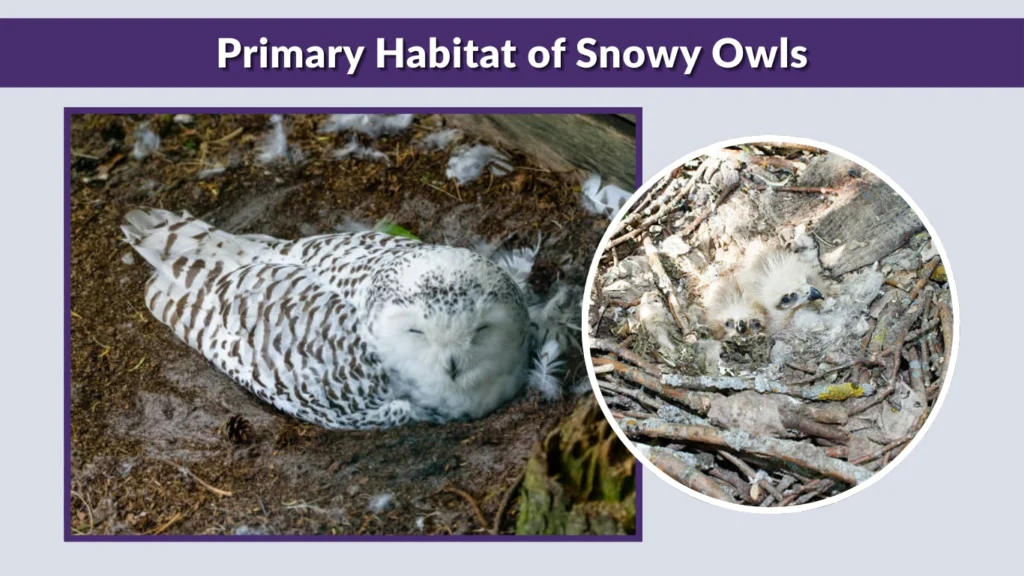
Arctic Tundra: The Main Home of Snowy Owls
The Arctic tundra is the primary and most important habitat for snowy owls. This region is characterized by vast, open plains, permafrost, and a lack of trees. Summers are short but productive, providing an abundance of prey such as lemmings, which are crucial for snowy owl breeding.
Snowy owls prefer tundra areas with low vegetation, such as grasses, mosses, and lichens. These landscapes allow them to scan for prey while perched on the ground or small rises. The long daylight hours of Arctic summers also support their hunting style, as snowy owls often hunt during the day.
During the breeding season, snowy owls establish territories across the tundra. They select nesting sites that offer visibility and protection from flooding, often choosing dry, elevated ground.
Countries and Regions Where Snowy Owls Live
Snowy owls are distributed across several Arctic regions in the Northern Hemisphere. Their breeding range includes northern Canada, Alaska, Greenland, northern Russia (Siberia), and parts of Scandinavia. These areas provide the cold climate and open landscapes snowy owls require.
In Canada, snowy owls are commonly found in the Arctic Archipelago and northern mainland tundra. Alaska supports breeding populations along its northern coast, while Siberia contains some of the largest and least disturbed snowy owl habitats. Greenland and northern Scandinavia also offer suitable tundra environments for nesting and hunting.
Although their breeding range is limited to the far north, snowy owls may be seen much farther south during certain times of the year.
Where Do Snowy Owls Live During the Breeding Season?
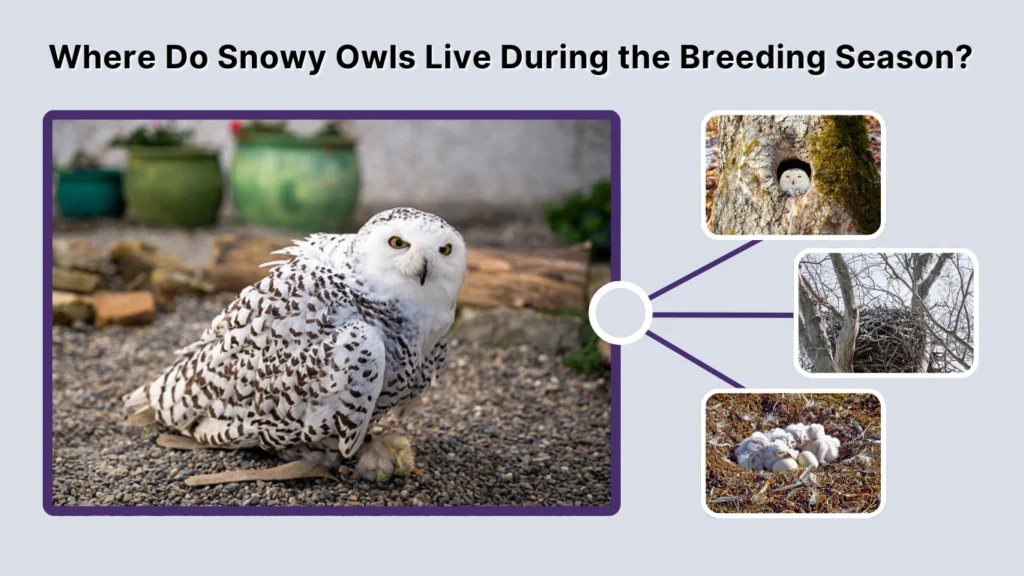
Snowy owls breed during the short Arctic summer, typically between late spring and early summer. During this time, they remain in the tundra, where food is abundant and daylight is nearly continuous. The availability of prey, especially lemmings, plays a major role in determining whether snowy owls will breed in a given year.
Nesting occurs directly on the ground, with the female creating a shallow scrape rather than building a traditional nest. These nesting sites are usually located in open areas that provide good visibility and easy access to hunting grounds. Breeding territories may be reused in years when conditions are favorable.
Snowy owls are highly sensitive to changes in prey populations during the breeding season. If food is scarce, they may abandon breeding efforts altogether or move to different regions in search of better conditions.
Where Do Snowy Owls Live in Winter?
As winter approaches and food becomes scarce in the Arctic, many snowy owls migrate south in search of better hunting opportunities. Unlike some birds that follow strict migration routes, snowy owl movements are irregular and depend largely on prey availability. In years when lemming populations decline, large numbers of snowy owls may move farther south than usual.
During winter, snowy owls can be found across southern Canada and the northern United States. They favor open landscapes that resemble the tundra, such as grasslands, agricultural fields, marshes, and frozen lakes. These areas provide clear sightlines and suitable hunting conditions similar to their Arctic home.
Coastal regions are especially attractive winter habitats. Snowy owls are often spotted along beaches, sand dunes, and shorelines, where seabirds and other prey are available. Harbors and ice-covered coastlines also offer resting and hunting opportunities.
Do Snowy Owls Live in Forests?
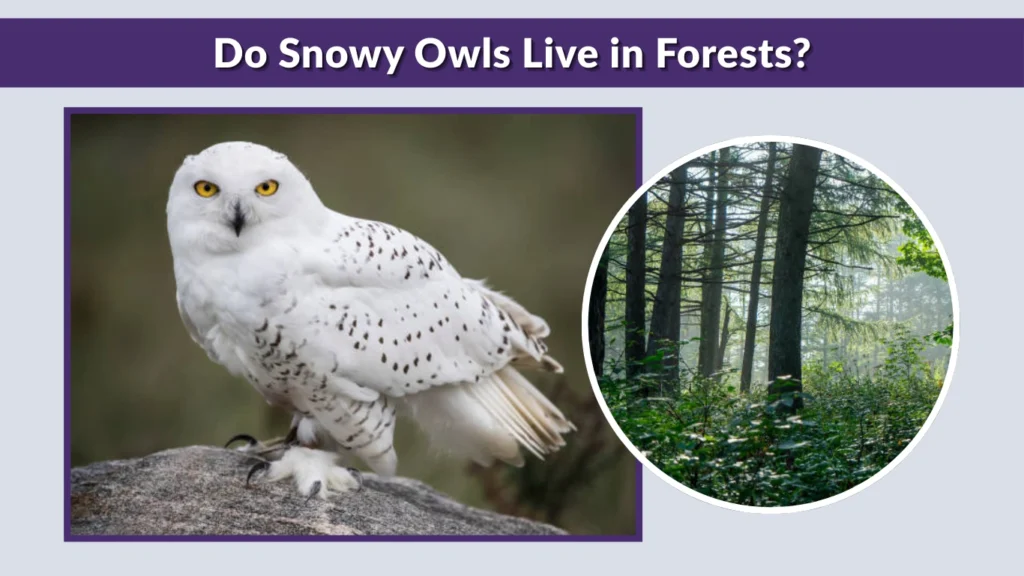
Snowy owls generally avoid forests and densely wooded areas. Their hunting style and physical adaptations are better suited to open spaces where they can spot prey from a distance. Trees can obstruct their view and limit their ability to take off and land efficiently.
Unlike many owl species that rely on trees for nesting, snowy owls nest on the ground. Forested environments do not provide the open terrain or visibility they need. While a snowy owl may occasionally pass through wooded areas during migration, it is uncommon to see one living or hunting deep within a forest.
Coastal vs Inland Habitats
Snowy owls are highly flexible when choosing winter habitats, often occupying both coastal and inland regions. Coastal snowy owls tend to feed on seabirds, shorebirds, and occasionally fish. These owls may roost on beaches, rocky outcrops, or even man-made structures near the water.
Inland snowy owls, on the other hand, usually rely on rodents such as mice and voles. Open farmland, prairies, and airports are common inland locations because they closely resemble tundra landscapes. Airports, in particular, attract snowy owls due to wide-open spaces and abundant prey.
How Snowy Owls Adapt to Their Habitat
Snowy owls have several adaptations that allow them to thrive in cold, open environments. Their thick plumage provides excellent insulation, covering even their legs and feet to protect against freezing temperatures. This makes them one of the most cold-tolerant owl species in the world.
Their white feathers offer effective camouflage in snowy surroundings, helping them avoid detection by prey. Snowy owls also have excellent vision and hearing, allowing them to locate prey over long distances or beneath snow cover. Unlike nocturnal owls, they are comfortable hunting during daylight, an essential trait in the Arctic where daylight can last nearly 24 hours.
Do Snowy Owls Live Near Humans?
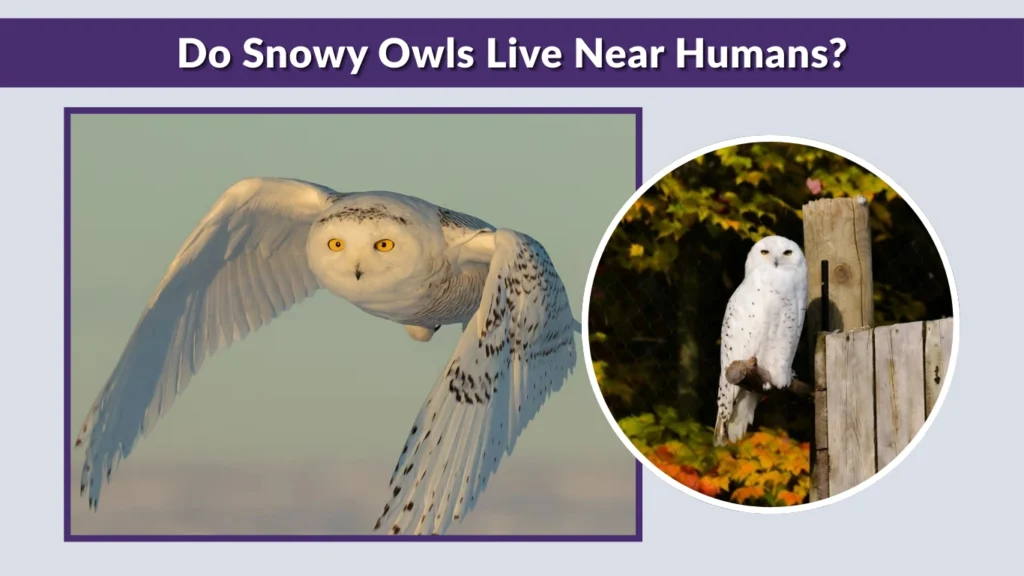
Snowy owls occasionally live near human-populated areas, especially during winter. Open industrial land, airfields, and coastal towns may attract snowy owls because they provide unobstructed views and easy access to prey. These areas mimic natural tundra conditions more closely than forests or urban centers.
Although snowy owls may appear comfortable near humans, they remain wild animals and prefer minimal disturbance. Conservation efforts often focus on protecting both their Arctic breeding grounds and safe winter habitats away from heavy human activity.
Snowy Owl Range and Population Movement
Snowy owls have a wide but uneven global range across the Northern Hemisphere. Their populations fluctuate based on prey availability and environmental conditions. In some years, known as irruption years, unusually large numbers of snowy owls migrate south, drawing significant attention from birdwatchers.
Climate change poses a growing threat to snowy owl habitats. Warming temperatures can alter tundra ecosystems and affect prey populations, potentially reducing suitable breeding areas over time.
Conclusion
Snowy owls live primarily in the Arctic tundra, where open landscapes and abundant prey support breeding and survival. During winter, they migrate south to open fields, coastlines, and tundra-like environments across North America. Their ability to adapt to different regions highlights their resilience, but ongoing habitat changes make understanding and protecting their living spaces more important than ever.
FAQs
Where do snowy owls live most of the year?
Snowy owls spend most of the year in the Arctic tundra, especially during the breeding season. This region provides open landscapes and abundant prey, which are essential for nesting and raising young. Outside of breeding season, many snowy owls move south depending on food availability.
Do snowy owls live in Antarctica?
No, snowy owls do not live in Antarctica. They are native to the Arctic regions of the Northern Hemisphere. Antarctica is located in the Southern Hemisphere and is home to very different wildlife species.
Where do snowy owls live in winter?
In winter, snowy owls can be found across southern Canada and the northern United States. They prefer open habitats such as grasslands, agricultural fields, frozen lakes, and coastal areas that resemble the tundra.
Can snowy owls live in warm climates?
Snowy owls are adapted to cold environments and do not typically live in warm climates. While they may temporarily pass through milder regions during migration, long-term survival in hot climates is unlikely due to their thick insulation and hunting preferences.
Do snowy owls live in forests?
Snowy owls generally avoid forests. They prefer wide, open spaces where they can easily hunt and spot prey. Dense trees interfere with their hunting style and nesting behavior.
